The best countertop water filter for a US kitchen in 2026 is the AquaTru Classic reverse-osmosis purifier — it is the most independently NSF-certified no-plumbing pick of the six systems we ranked, covering lead, PFAS, chlorine, fluoride, and microplastics in one box. The Bluevua RO100ROPOT is the best value reverse-osmosis pick, the Big Berkey is the best no-electricity option, and the ZeroWater dispenser is the cheapest PFAS- and lead-certified pick, but it is not certified for microplastics. For whole-home coverage instead, see our full water filter guide.
Reviewed August 30, 2026 against the latest IAPMO and WQA certification listings for each pick — the ranking is cross-checked against the World Health Organization’s 2019 review, Microplastics in Drinking-Water.
Tap water across the United States carries microplastics — nearly every study that has looked has found them — and so does bottled water. The microplastics in your tap water come from aging pipes, road runoff, and the atmosphere settling into the supply. A countertop filter is the most practical fix for renters and anyone who can’t install an under-sink or whole-house system: it sits on the counter, needs no plumbing, and — if it’s the right type — removes the same contaminants the plumbed systems do. For an even cheaper no-install route that clamps onto the tap you already have, see our best faucet water filters.
The catch is that “countertop water filter” covers three very different technologies, and they are not equal at removing plastic particles. This guide ranks the six best, explains which technology actually works, and flags the certification caveats honestly — including which popular pick is not certified for microplastics at all.
Compare all 6 picks
Every pick side by side — tap a name to jump to the full review, or check today's price.
| Pick | Why it wins | |
|---|---|---|
 Best OverallAquaTru Classic Countertop RO Purifier |
Reverse OsmosisNSF 53 / 58 / 401 / P473 |
Check price → |
 Best Compact / GlassAquaTru Carafe Countertop RO Purifier |
Reverse OsmosisNSF-Tested |
Check price → |
 Best Value ROBluevua RO100ROPOT Countertop RO System |
Reverse OsmosisRemineralization |
Check price → |
 Best Budget ROWaterdrop C1S Countertop RO System |
Reverse OsmosisPlug & Play |
Check price → |
 Best No-ElectricityBig Berkey Gravity-Fed Water Filter |
Gravity / No PowerStainless Steel |
Check price → |
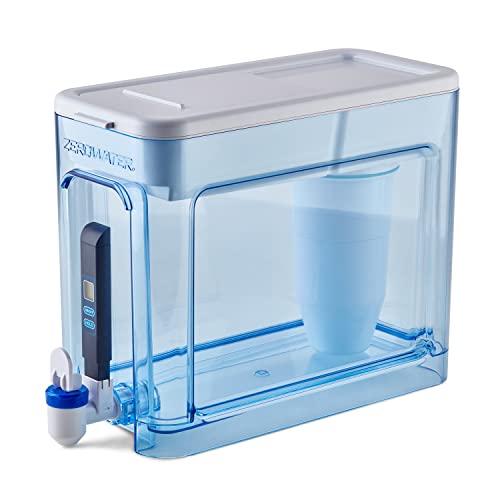 Best Budget (Non-RO)ZeroWater 5-Stage Countertop Dispenser |
NSF 42 / 53 / 401PFAS + Lead Certified |
Check price → |
Best countertop water filter for microplastics: what the science and certifications show
If you want the best countertop water filter for microplastics, buy a certified reverse-osmosis unit. Only a physical membrane fine enough to sieve particles below 1 micron will consistently catch microplastics, and a reverse-osmosis membrane operates at roughly 0.0001 micron — about ten thousand times smaller than the lower size bound of a microplastic particle. Our top pick is the AquaTru Classic (independently certified to NSF/ANSI 53, 58, 401, and P473, the four standards that together cover lead, RO performance, emerging contaminants including microplastics, and PFOA/PFOS). The Bluevua RO100ROPOT is the best value RO. The Big Berkey is the strongest pick that needs no electricity or plumbing.
Here’s how the technology inside each countertop filter type compares against microplastic-sized particles, using each media’s effective particle-size rating and the certification standards that actually verify microplastic reduction:
| Filter technology | Effective pore size | Removes microplastics? | Available certification |
|---|---|---|---|
| Reverse osmosis membrane | ~0.0001 µm (0.1 nm) | Up to ~99.9% — incl. nanoplastics | NSF/ANSI 58, 401, P473 |
| Ultrafiltration / hollow fiber | ~0.01–0.1 µm | ≥99% of particles ≥1 µm | NSF/ANSI 401, P473 (on rated units) |
| Gravity carbon-composite (Berkey Black) | Sub-micron composite media | Yes — strong reduction in independent tests | Manufacturer lab tests + NSF 42/372 on media |
| Activated-carbon dispenser (plain) | Not particle-rated (adsorption) | Only partial — ~50–70% in lab tests | Rarely; mostly NSF 42/53 for chlorine/lead |
Two published measurements make the case for filtering in the first place. A 2018 PLOS ONE study by Kosuth, Mason, and Wattenberg tested 159 tap water samples from 14 countries and found synthetic microplastic fibers in 81% of them, at an average of 5.45 particles per liter (about 9.24 particles per liter in US samples). A 2024 Proceedings of the National Academy of Sciences study by Qian et al., using stimulated Raman scattering microscopy, detected up to 240,000 nano- and microplastic particles per liter in bottled water, with roughly 90% of those particles smaller than 1 micron — the nanoplastic size range that only a reverse-osmosis membrane reliably blocks. Both studies are why the certification and the pore size on the box matter more than the marketing.
A third, larger body of evidence lines up the same way. The 2020 PLOS ONE systematic review by Danopoulos, Twiddy, and Rotchell pooled results from every published drinking-water microplastic study to that date and found microplastics in every water type tested — tap and bottled — with concentrations ranging from 0 to 61 particles per liter and the highest counts in single-use plastic bottles. And the World Health Organization’s 2019 report on microplastics in drinking-water concluded that treatment processes that already remove other small particles — specifically reverse osmosis, nanofiltration, and ultrafiltration — can remove particles above 1 micron with greater than 90% efficacy, and often above 99%. That is the science reason the picks below with a genuine RO membrane (AquaTru, Bluevua, Waterdrop) sit above the plain-carbon dispenser in the ranking.
Do countertop water filters remove microplastics?
It depends entirely on the technology. Reverse osmosis is the gold standard: water is forced through a semipermeable membrane whose pores are so small that microplastics, nanoplastics, PFAS, lead, and dissolved solids are physically blocked. Activated carbon — the media in most pitchers and basic countertop filters — only partially captures microplastics; lab data puts plain carbon in the rough range of 50–70%, and ordinary carbon filters are generally not certified for microplastics. The category’s most-owned example is Brita, which is NSF-certified for chlorine and (on the Elite) lead but not for microplastics — see our full Brita filter microplastics breakdown for Brita’s certified 0.5–1 micron floor and what each cartridge does and doesn’t catch. Gravity systems (like Berkey) use proprietary carbon-composite elements and, in independent lab tests, report strong microplastic and PFAS reduction without any electricity. For how a Brita pitcher, a Berkey gravity system, and reverse osmosis stack up side by side, see our Brita vs Berkey vs reverse osmosis comparison.
The single most useful thing to look for is NSF/ANSI 401 certification, the standard for “emerging contaminants,” which includes microplastics. A 401-certified filter has been independently tested to reduce at least 85% of microplastic particles in the 0.5–1.0 micron range. A marketing claim of “removes microplastics” is not the same thing as a 401 listing — and even a 401-listed product may only be certified for a subset of the 15 emerging contaminants that standard covers, so always read the actual scope on the certifier’s public database, not just the slogan.
The best countertop water filter for microplastics is, in short, the one whose technology and paperwork both match what the mainstream drinking-water authorities recommend. The World Health Organization’s 2019 report Microplastics in Drinking-Water reviewed the evidence on removal during drinking-water treatment and concluded that treatment processes designed for particle removal — including membrane filtration — are highly effective at removing microplastic particles from drinking water; a countertop reverse-osmosis unit brings that same membrane-filtration approach onto a kitchen counter, without plumbing. The picks in the table above are ranked by that exact match: real RO membrane, plus third-party certification that names microplastics in its scope.
Which of the six countertop picks are actually certified for microplastic reduction
Ranked by the strength of the microplastic-specific proof each pick actually publishes — from full accredited third-party reduction certification down to marketing claim only:
| Pick | Technology | Microplastic-specific evidence | Strength |
|---|---|---|---|
| AquaTru Classic | Reverse osmosis (4-stage) | IAPMO-listed to NSF/ANSI 401 (emerging contaminants incl. microplastics), 58 (RO), P473 (PFOA/PFOS), and 53 (lead) | Full accredited certification |
| AquaTru Carafe | Reverse osmosis (compact) | Same RO membrane technology; manufacturer states “NSF-tested” but the listed scope on the Carafe is narrower than the Classic — confirm on the current listing | Same technology, thinner paperwork |
| Bluevua RO100ROPOT | Reverse osmosis (5-stage) | Real RO membrane; WQA-certified only to NSF/ANSI 372 for lead-free materials, plus SGS lab-tested reduction claims (materials cert ≠ reduction cert) | Proven tech, materials-only cert |
| Waterdrop C1S | Reverse osmosis (6-stage) | Real RO membrane; NSF/ANSI 372 certified for lead-free materials only | Proven tech, materials-only cert |
| Big Berkey | Gravity carbon-composite | Independent lab testing on Black Berkey elements reports >99.9% microplastic reduction; media meets NSF/ANSI 42/372, but the system itself is not NSF-certified for reduction | Lab-tested, not NSF system-certified |
| ZeroWater Dispenser | 5-stage ion exchange + carbon | NSF/ANSI 42/53/401 listed, but the 401 scope is chosen contaminants (PFOA/PFOS, chemical & pharmaceutical residues) — not microplastics | Not certified for microplastics |
Two things read straight off that table. First, the honest short list of countertop water filters with third-party certification specifically for microplastic reduction is a short one — the AquaTru Classic is the only pick here with a full accredited 401 + 58 stack on the microplastic side. Second, for buyers on a tight budget, an RO membrane still beats a cheap non-RO with better paperwork: the Waterdrop C1S and Bluevua RO100ROPOT both use the technology WHO named for removing particles above 1 micron with >90% efficacy, even though their published certification is materials-only. If the paperwork alone is what you are optimizing for on microplastics specifically, AquaTru Classic is the answer.
Some products sold as countertop “coolers” with the strongest filtration actually connect to your cold-water line — that’s an installation, not a true no-plumbing unit. And several no-install countertop coolers use carbon-and-UV only, which is weak for microplastics. If a unit doesn’t clearly say reverse osmosis or gravity filtration, treat microplastic claims with skepticism.
Reverse osmosis vs. gravity vs. carbon
Reverse osmosis removes the most — micro/nanoplastics, PFAS, lead, fluoride, arsenic — and is the best-documented option. The trade-offs: it produces some wastewater, most units use a small pump (so they need an outlet), they take up counter space, and they strip minerals (better units add them back). Gravity filters need no electricity or plumbing and show strong independent test data, but rely on carbon-composite media rather than a membrane. Plain carbon dispensers are the cheapest and fine for chlorine and taste — and some are certified for lead and PFAS — but they are the weakest category specifically for microplastics. If forever chemicals are your priority, our best PFAS water filter guide ranks the picks with proven, third-party PFAS certification.
The 6 best countertop water filters (2026)
Each pick below needs no plumbing. Where a certification claim is limited or unverified, we say so plainly — this is a category where the marketing often runs ahead of the testing. Prices are approximate and move often; tap through for the live Amazon price.
1. AquaTru Classic — Best Overall
Best Overall
Owners praise the taste and the plug-and-go simplicity, saying "Water tastes great! Easy 2 use & clean!!" and "we love the taste and the ease of use, and knowing we always have quality water to drink," and their dissolved-solids meters back it up, dropping from the 300-460 range down to the 20s. The honest downsides: tank leaking onto the counter is the single most recurring gripe ("I had trouble with aqua-tru Tank leaking all over my countertop"), customer service after the warranty draws complaints, it is large and bulky with a low spout that tall bottles will not fit under, and a batch of a dozen cups takes 12 to 15 minutes and slows as the tank empties.
It is the only pick here with the full NSF 53/58/401/P473 certification stack — the closest thing to proof, rather than a claim, with microplastics covered under 401 and PFOA/PFOS under P473.
Why it stands out: reverse-osmosis membrane filtration physically blocks micro/nanoplastics, PFAS, and lead, backed by accredited third-party testing.
Check Today’s Price on Amazon →Amazon prices change daily — tap to see today’s price and any active discount.
- Free delivery & returns for Prime members
- Sold & shipped by Amazon
- Thousands of verified reviews
If you only remember one name from this guide, make it the AquaTru Classic. Reverse osmosis is the technology that actually removes microplastics, and AquaTru pairs it with the most complete independent certification in the no-plumbing category. It is an investment, but it replaces both bottled water and a plumbed system.
2. AquaTru Carafe — Best Compact / Glass
Best Compact / Glass
The glass-carafe version wins on footprint and taste, with owners calling it "phenomenal," saying "It has a small footprint and it's easy to use," and liking that the filtered water sits in dishwasher-safe glass rather than plastic; testing shows about 98% dissolved-solids reduction. Unlike the Classic, owners report no leaking on this model. The honest downsides: the carafe is small, so "it need refilling every time" and heavy users buy a second to keep in the fridge, the remineralization filter can taste off until you swap back to plain carbon, and on very hard water some report it wearing out within six months to a year.
RO-grade water that lands in glass, not a plastic tank — the cleanest storage of any pick here, in a footprint that fits a small counter.
Why it stands out: reverse-osmosis filtration plus glass storage removes both the contaminants in the water and the plastic it would otherwise sit in.
Check Today’s Price on Amazon →Amazon prices change daily — tap to see today’s price and any active discount.
- Free delivery & returns for Prime members
- Sold & shipped by Amazon
- Thousands of verified reviews
The Carafe makes sense if counter space is tight or if you specifically want your finished water in glass. It trades some capacity and certification breadth versus the Classic, but keeps the reverse-osmosis core that does the real work.
3. Bluevua RO100ROPOT — Best Value RO
Best Value RO
This mainstream pick draws steady praise for cleaner taste and zero-install setup, with the filtered water described as tasting "like purified water," "odorless" with "a perfectly clean taste," and a "low hum comparable to a small desktop fan," inside a borosilicate glass carafe owners call sturdy and well built, with a real-time purity display. Buyer verbatims are a little thinner here. The honest downsides: it has a large countertop footprint, needs four to five refills a day for an average household, runs a wastier roughly 2-to-1 drain ratio that owners notice, and a minority report leaking or filtration stopping mid-cycle.
You get the technology that actually removes microplastics — reverse osmosis — plus remineralization and glass storage, for meaningfully less than the category leader.
Why it stands out: a genuine RO membrane (not carbon-only) at a mid-range price, with minerals added back for taste.
Check Today’s Price on Amazon →Amazon prices change daily — tap to see today’s price and any active discount.
- Free delivery & returns for Prime members
- Sold & shipped by Amazon
- Thousands of verified reviews
The Bluevua is the value sweet spot: real reverse osmosis with remineralization and a glass carafe. The honest trade-off versus AquaTru is certification depth — Bluevua publishes materials certification and third-party lab testing rather than the full NSF reduction stack — but the core filtration technology is the same kind that removes microplastics.
4. Waterdrop C1S — Best Budget RO
Best Budget RO
Owners love how little space it takes, calling it "about the size of a standard Keurig" with a "clean design," and praise the taste ("The water tastes excellent... I notice other water doesn't taste good to me anymore") plus a best-in-class roughly 3-to-1 pure-to-drain ratio and an accurate on-screen purity readout. The honest downsides: it is "a very loud machine" with "a low grumbling that lasts several seconds" and periodic self-cycling, the small feed tank means one to four refills a day, and a design quirk means it "cannot be used if the tank is removed," which is awkward since the clean tank is meant to chill in the fridge.
It brings reverse-osmosis filtration — the technology that removes microplastics — to the lowest price point on this list.
Why it stands out: a genuine RO membrane in a small, no-install body, for budget-minded buyers.
Check Today’s Price on Amazon →Amazon prices change daily — tap to see today’s price and any active discount.
- Free delivery & returns for Prime members
- Sold & shipped by Amazon
- Thousands of verified reviews
The C1S is the budget entry into real reverse osmosis: a 6-stage membrane system that is NSF/ANSI 372 certified and needs no plumbing. If you want the technology that removes microplastics without the AquaTru price, this is the value floor.
5. Big Berkey — Best No-Electricity (Gravity)
Best No-Electricity
The gravity system earns near-universal praise on taste, with a three-year owner saying "it makes the water taste great" and reviewers liking "just how simple and effective it is" with no electricity or plumbing. The honest downsides are real: priming the elements is tedious ("Priming all 4 filters took at least an hour... extremely time-consuming"), owners report it "prone to leaking" over the years, the optional fluoride filters are "a nightmare to screw on" and slow the flow, it is not third-party certified yet costs "almost $400," and buyers should know a regulatory stop-sale has made replacement elements hard to get in the US, so confirm filter availability before buying.
It filters with zero electricity and huge capacity — the only pick here that works in a power outage or off-grid.
Why it stands out: gravity carbon-composite elements with independent test data showing strong microplastic and PFAS reduction, in a durable stainless body.
Check Today’s Price on Amazon →Amazon prices change daily — tap to see today’s price and confirm availability.
- Free delivery & returns for Prime members
- No electricity required
- Independent lab-tested elements
Berkey is the answer when you want filtration that doesn’t depend on an outlet — for everyday use, emergencies, or off-grid living. Just go in informed: the regulatory situation around its filters is unsettled, and it cannot ship to California or Iowa, so confirm availability for your address first.
6. ZeroWater Dispenser — Best Budget (Non-RO)
Best Budget (Non-RO)
This gravity dispenser is bought for one thing and delivers it: taking taste out and hitting a zero reading, with owners saying "It genuinely removes all taste from water," that it can "produce better water than you can buy in bottles," and confirming the included meter reads 0.00. The honest downsides: the filters exhaust fast at about 20 gallons each and are the most expensive per gallon of the group, a spent filter throws a well-known "fishy" or sour "lemon" smell that catches buyers off guard, the spigot "can easily lead to spillage" and cracks over time, and because it is ion exchange, a zero reading does not mean it removes bacteria.
It is the cheapest way to get independently certified PFAS and lead reduction — ideal for renters or a tight budget.
Why it stands out: real NSF 401/53 certification for PFAS and lead at a fraction of RO pricing, with a TDS meter included.
Check Today’s Price on Amazon →Amazon prices change daily — tap to see today’s price and any active discount.
- Free delivery & returns for Prime members
- Sold & shipped by Amazon
- Thousands of verified reviews
ZeroWater is the value pick for PFAS and lead, and it’s honest about it — the certification is real. Just match it to the right job: if your priority is specifically microplastics, step up to one of the reverse-osmosis units above, which are the proven technology for plastic particles.
How to choose the right countertop filter
Start with your priority. If it’s microplastics and PFAS, choose reverse osmosis (AquaTru, Bluevua, or Waterdrop) — the membrane is the only technology that reliably removes plastic particles. If you want no electricity or emergency readiness, choose the gravity Berkey. If you’re on a tight budget and care most about PFAS and lead, the ZeroWater is certified and cheap, with the microplastic caveat noted.
Then weigh three practical things: counter space (RO units are bulky), whether you mind a small amount of wastewater and a plug (RO), and ongoing filter cost. Whatever you choose, store and drink the filtered water from glass or stainless — filtering your water and then pouring it into a plastic bottle reintroduces the problem you just solved. See our guide to the best stainless steel water bottles for plastic-free vessels.
Want under-sink and whole-home options too?
Countertop is the simplest start. If you want a permanent, plumbed-in fix but don’t want to waste water like RO does, our best under-sink water filters guide covers carbon-block and ultrafiltration systems that block microplastics and lead without a drain line. For plumbed reverse osmosis systems reviewed side by side and whole-house systems that remove microplastics, PFAS, and heavy metals, see our complete guides. And because chlorine and microplastics are also absorbed through the skin and inhaled as steam, a shower filter for microplastics and chlorine covers the exposure a countertop unit can’t.
The bottom line: what to buy
- AquaTru Classic — best overall; the most independently certified countertop unit for microplastics and PFAS. Buy this if you want proof, not promises.
- Bluevua RO100ROPOT — best value reverse osmosis, with remineralization and a glass carafe (materials-certified).
- AquaTru Carafe — best compact RO and the cleanest storage (glass), for small kitchens.
- Waterdrop C1S — best budget RO; a certified 6-stage membrane system at the lowest price.
- Big Berkey — best no-electricity / emergency option (check availability and your state).
- ZeroWater — cheapest PFAS- and lead-certified pick; not certified for microplastics.
A countertop filter is also a far better deal than bottled water, which a 2024 study found can contain up to 240,000 nano- and microplastic particles per liter — see does bottled water have microplastics. If a pitcher fits your budget better than a countertop unit, our best water filter pitcher guide covers the proven hollow-fiber options.
Want the Full Home Protection Guide?
Water is one room. The Complete Plasticproof Guide covers every microplastic exposure source in your home — kitchen, nursery, bathroom, bedroom — with 80+ product picks backed by 47+ studies.
Frequently Asked Questions
Countertop reverse-osmosis filters do — their membrane pore size is about 0.0001 micron, thousands of times smaller than a microplastic particle, and studies report RO removing up to roughly 99.9% of micro- and nanoplastics. Plain carbon filters and most pitchers capture only a portion (around 50–70% for activated carbon) and usually aren’t certified for microplastics. Look for reverse osmosis, or NSF/ANSI 401 certification.
The AquaTru Classic — a no-plumbing 4-stage reverse-osmosis purifier independently certified (IAPMO) to NSF/ANSI standards covering lead, PFAS, chlorine, fluoride, and microplastics. The Bluevua RO100ROPOT is the best value RO, and the Big Berkey is the best no-electricity choice. ZeroWater is the cheapest PFAS- and lead-certified pick but is not certified for microplastics.
For microplastics and PFAS, a countertop reverse-osmosis unit removes substantially more than a typical carbon pitcher, because RO uses a membrane rather than adsorption. A good hollow-fiber pitcher still removes most microplastics for far less money, so the choice depends on budget and how much removal you want. Countertop RO is the stronger but pricier option.
No — true countertop filters need no plumbing. Reverse-osmosis units like the AquaTru and Bluevua are fill-and-dispense: pour tap water into a tank and the system filters it into a carafe. Gravity systems like the Big Berkey need no electricity at all. Watch out for some “countertop” coolers that actually connect to your cold-water line — those require a hookup.
Yes — reverse osmosis removes most dissolved minerals along with contaminants, so RO water has very low mineral content. Many countertop RO units (such as the Bluevua) add a remineralization stage to restore calcium and magnesium for taste. The small amount of minerals lost is easily replaced by a normal diet.
NSF/ANSI 401 is the standard for “emerging contaminants,” and it includes microplastics: a 401-certified filter has been independently tested to reduce at least 85% of microplastic particles in the 0.5–1.0 micron range. It’s the certification to look for if microplastic removal is your goal — a marketing claim alone is not the same as a 401 listing.
The Waterdrop C1S is the cheapest countertop unit here with a real reverse-osmosis membrane — the technology the WHO’s 2019 review credits with removing microplastic particles at greater than 99% efficacy. If you need something even cheaper, the ZeroWater dispenser is genuinely NSF-certified for lead and PFAS but is not certified for microplastics. For budget microplastic protection specifically, the RO membrane is the honest answer.
For a four-person US household drinking about 3 L of tap and cooking water a day, a certified countertop reverse-osmosis unit intercepts roughly 40,000 microplastic particles a year — from the 9.24 particles/L US mean measured by Kosuth et al. (2018), at the ~99.9% RO removal efficacy reported in the WHO’s 2019 Microplastics in Drinking-Water review. Swapping in single-use bottled water instead pushes that number into the billions, because bottled water averaged 240,000 particles/L in Qian et al. (2024).
Sources
- NSF International. “NSF/ANSI 401: Emerging Compounds/Incidental Contaminants” (where the microplastic particle claim sits) and “NSF/ANSI P473: PFOA & PFOS.” Standard definitions.
- Kosuth M, Mason SA, Wattenberg EV. “Anthropogenic contamination of tap water, beer, and sea salt.” PLOS ONE, 2018. journals.plos.org. (Microplastic fibers in 81% of 159 tap water samples across 14 countries; ~5.45 particles/L global mean.)
- Qian N, et al. “Rapid single-particle chemical imaging of nanoplastics by SRS microscopy.” Proceedings of the National Academy of Sciences, 2024. pnas.org. (Up to 240,000 nano/microplastic particles per liter in bottled water; ~90% in the <1 µm range.)
- Studies on reverse-osmosis removal of micro- and nanoplastics, Water Research and related peer-reviewed literature (RO removal up to ~99.9%).
- Peer-reviewed and standards references on activated-carbon microplastic removal (partial reduction, ~50–70%).
- IAPMO / WQA third-party test listings for AquaTru, Bluevua, and ZeroWater (NSF/ANSI 42, 53, 58, 372, 401, P473 as applicable).
- Independent laboratory testing of gravity (Berkey-type) elements for PFAS and microplastic reduction; manufacturer Phoenix-element NSF/ANSI 42 and 372 listings.
Certifications and prices reflect manufacturer and retailer information at publication and can change — verify the current Amazon listing before buying. As an Amazon Associate we may earn from qualifying purchases.