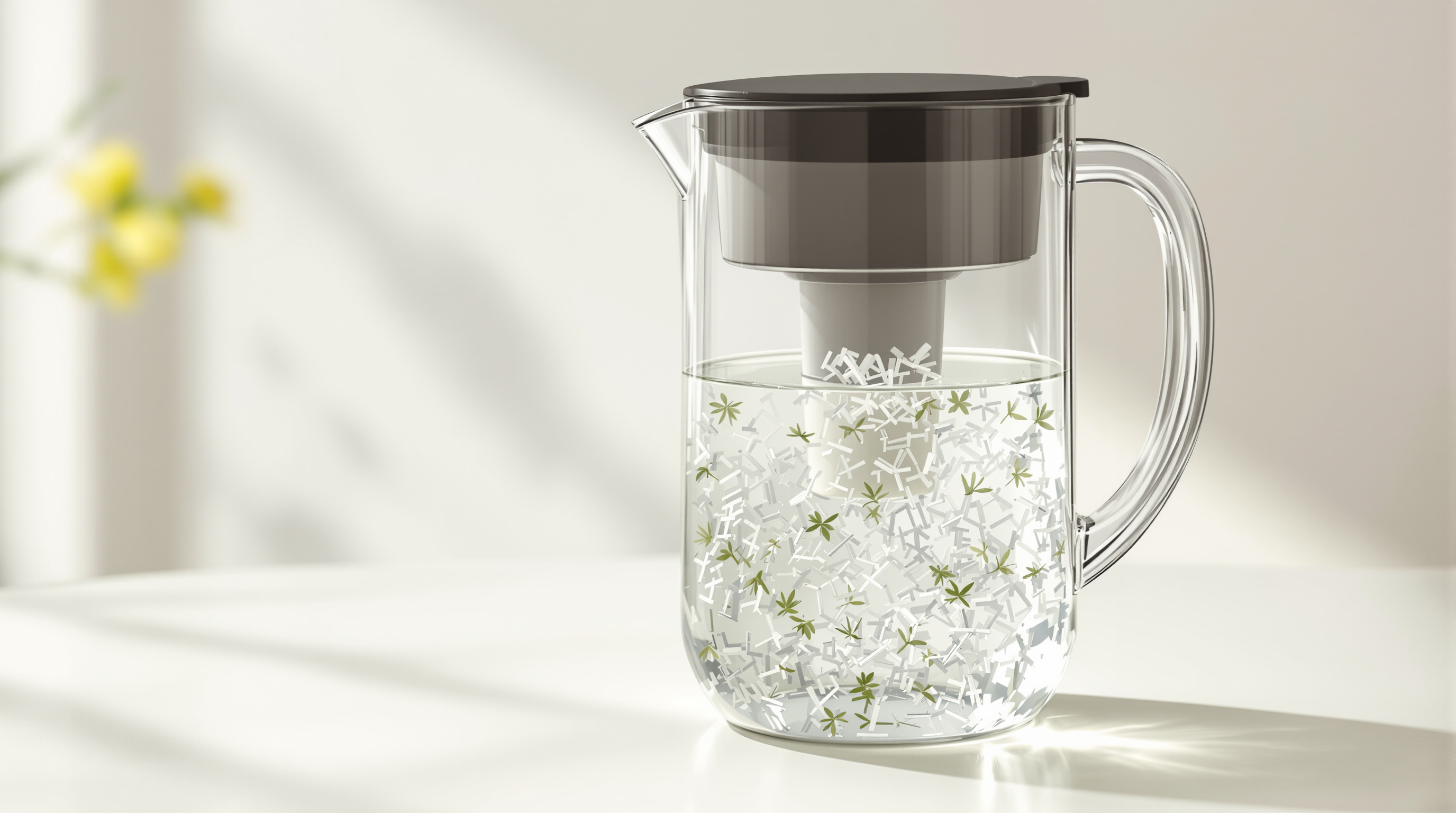
The best water filter for microplastics in 2026 is the AquaTru Carafe Countertop RO (~$299) — the only countertop reverse-osmosis unit with a glass collection carafe, NSF/ANSI 58 certified, no installation. If you just want a pitcher, the LifeStraw Home (~$70) is the only pitcher with NSF-244 for 99.999% microplastic reduction. Full ranked list, then which to skip:
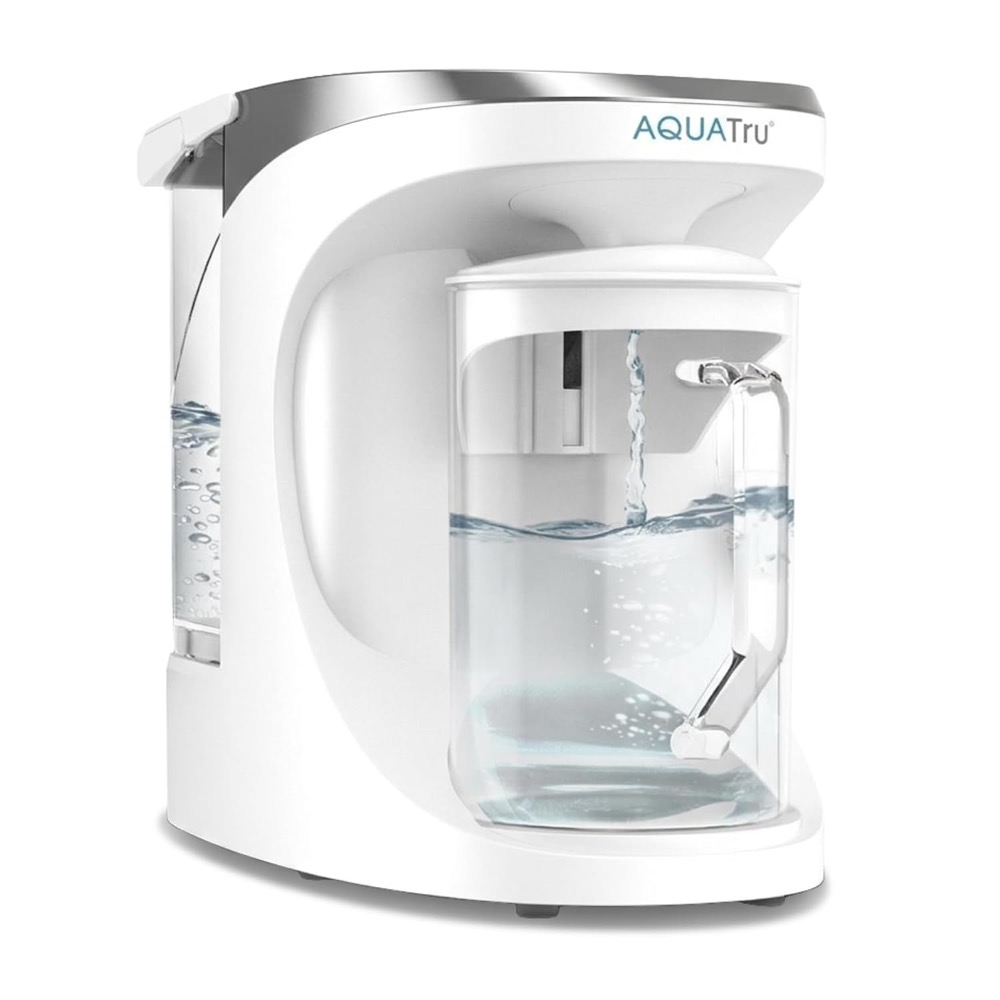
- AquaTru Carafe Countertop RO (~$299) — Best overall. NSF/ANSI 58, glass carafe, no plumbing. Details →
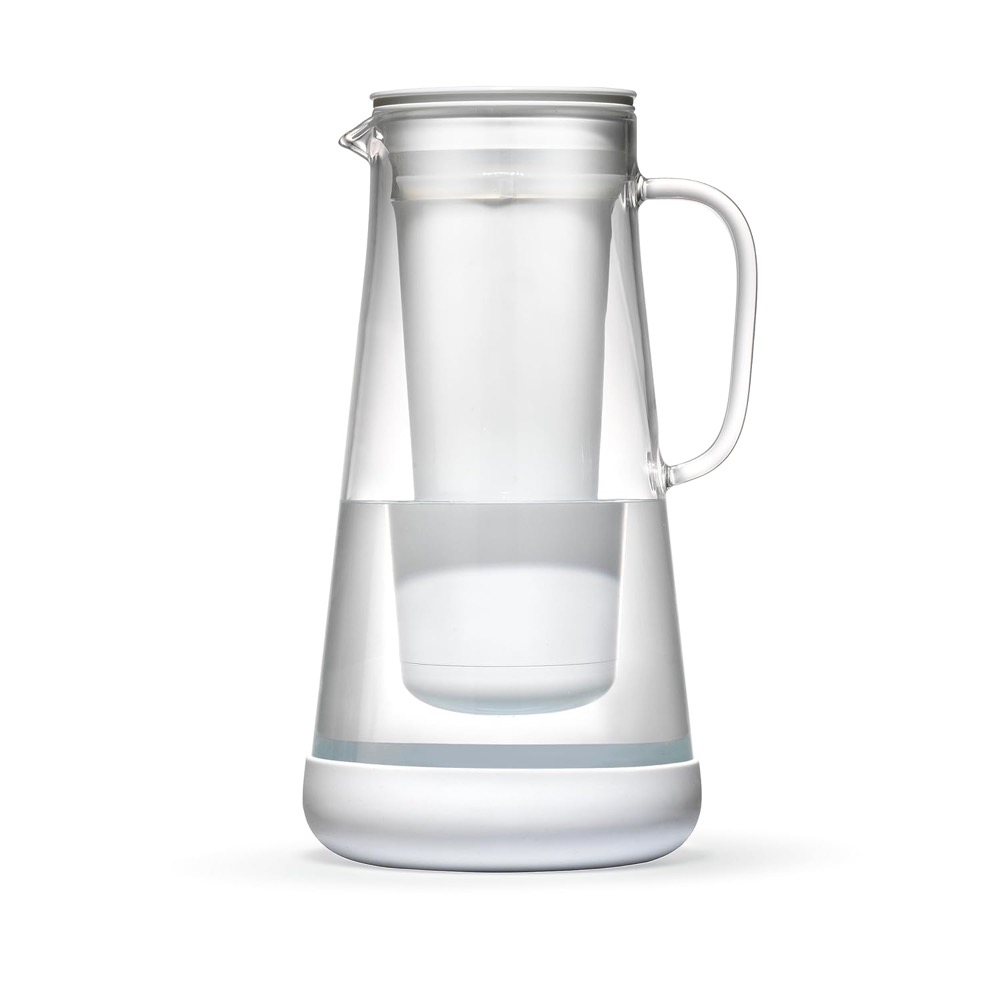
- LifeStraw Home Pitcher (~$70) — Best pitcher. Only pitcher with NSF-244 for microplastics; glass body. Details →
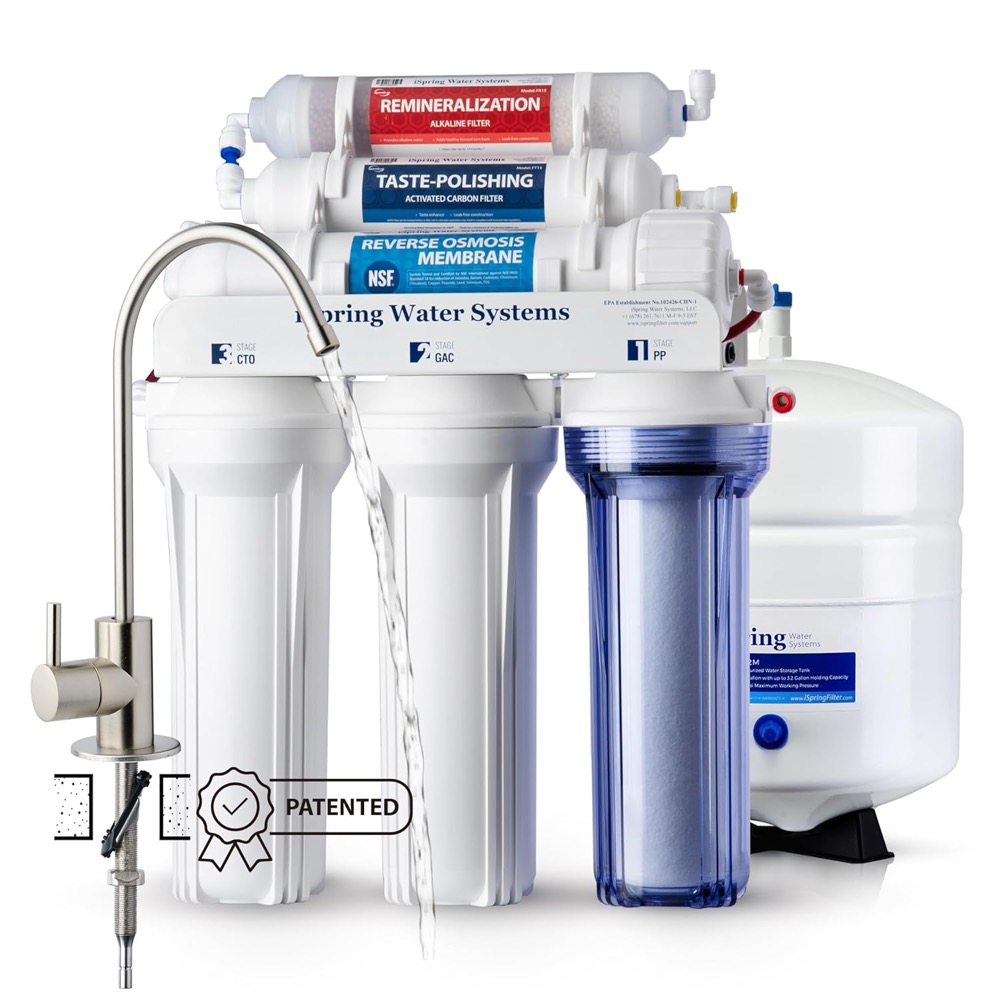
- iSpring RCC7AK (~$200) — Best under-sink RO. 6-stage NSF/ANSI 58; the value benchmark. Details →
- Waterdrop G3P600 (~$350) — Best tankless RO. 600 GPD, smart filter monitor, small footprint. Details →
- Clearly Filtered Pitcher (~$90) — Best budget pitcher. 99.9% microplastic removal in independent lab tests across 270+ contaminants. Details →
- British Berkefeld (~$250) — Best gravity/off-grid. NSF/ANSI 401, stainless-steel body, no power needed. Details →
Skip these for microplastics: Brita Basic, Brita Standard, Brita Longlast+, PUR Basic, most fridge filters, and any filter labeled "NSF 42 only" (chlorine/taste). One exception — the Brita Elite (OB06, ~$40) is WQA-certified to NSF/ANSI 401 for 85%+ microplastic reduction, making it the cheapest certified pitcher.
Check Today’s Price on AquaTru →Full head-to-head details of all six filters below, including certifications, cost per gallon, and real owner-review notes.
Quick Navigation
The water filtration industry has a problem: most of what's marketed as healthy water filtration does very little for microplastics. Activated carbon removes chlorine and taste issues. It does almost nothing for plastic particles.
See also: Microplastics by the numbers — the key statistics across water, food, and the human body, each linked to its study.
This guide covers only filters that have been independently tested for microplastic removal — with the certifications to prove it. Want to measure your own tap first? Our at-home water testing guide walks through the DIY strips and certified lab kits.
New in 2024: Yu et al. (Environmental Science & Technology Letters, 2024, 11, 273–279) reported that boiling naturally hard tap water and then filtering out the limescale can capture up to 84% of nano- and microplastics in the calcium-carbonate crust. It's the cheapest partial-fix ever documented — but it only works with hard water and it's inconsistent. If you want reliable removal regardless of what comes out of your tap, use one of the certified filters below.
Compare all 6 picks
Every pick side by side — tap a name to jump to the full review, or check today's price.
| Pick | Rating | Why it wins | |
|---|---|---|---|
 Best OverallAquaTru Carafe Countertop RO |
4.87out of 5 | NSF/ANSI 58 CertifiedRemoves Nanoplastics |
Check price → |
 Best PitcherLifeStraw Home Pitcher |
4.69out of 5 | NSF-244 Certified99.999% Microplastics |
Check price → |
 Best Under-SinkiSpring RCC7AK 6-Stage Under-Sink RO |
4.6out of 5 | NSF/ANSI 58 CertifiedWQA Gold Seal |
Check price → |
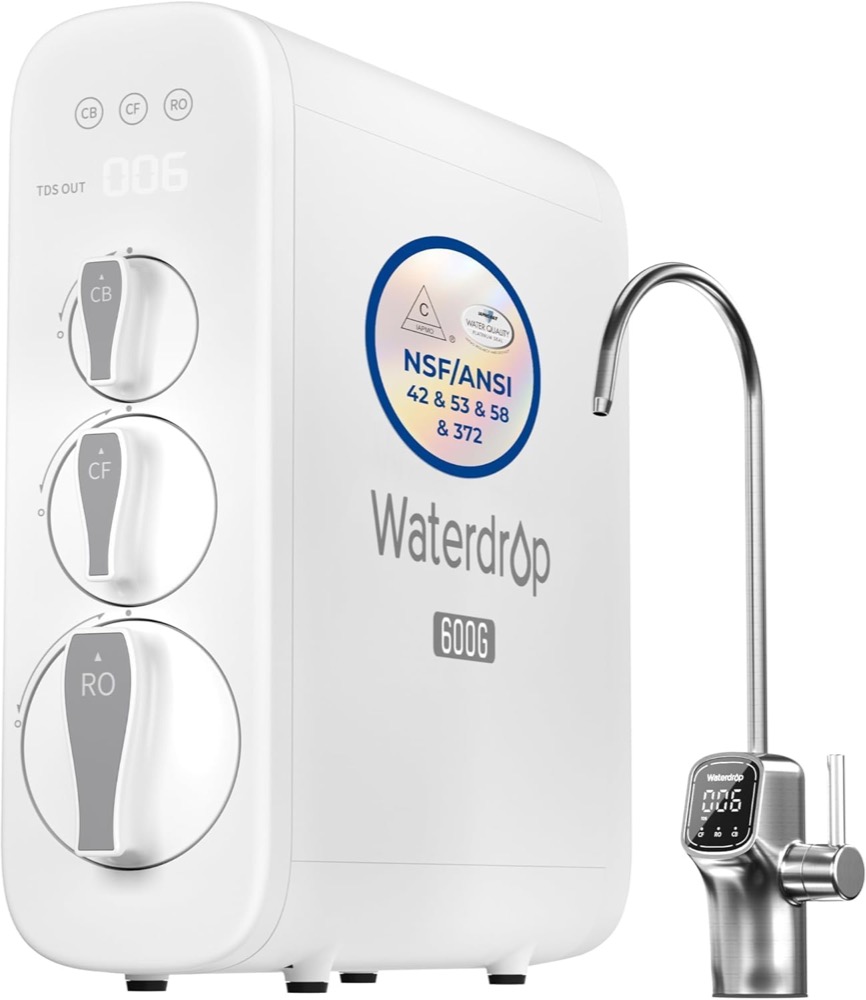 Best Tankless ROWaterdrop G3P600 Reverse Osmosis |
4.9out of 5 | NSF/ANSI 58 CertifiedTankless Design |
Check price → |
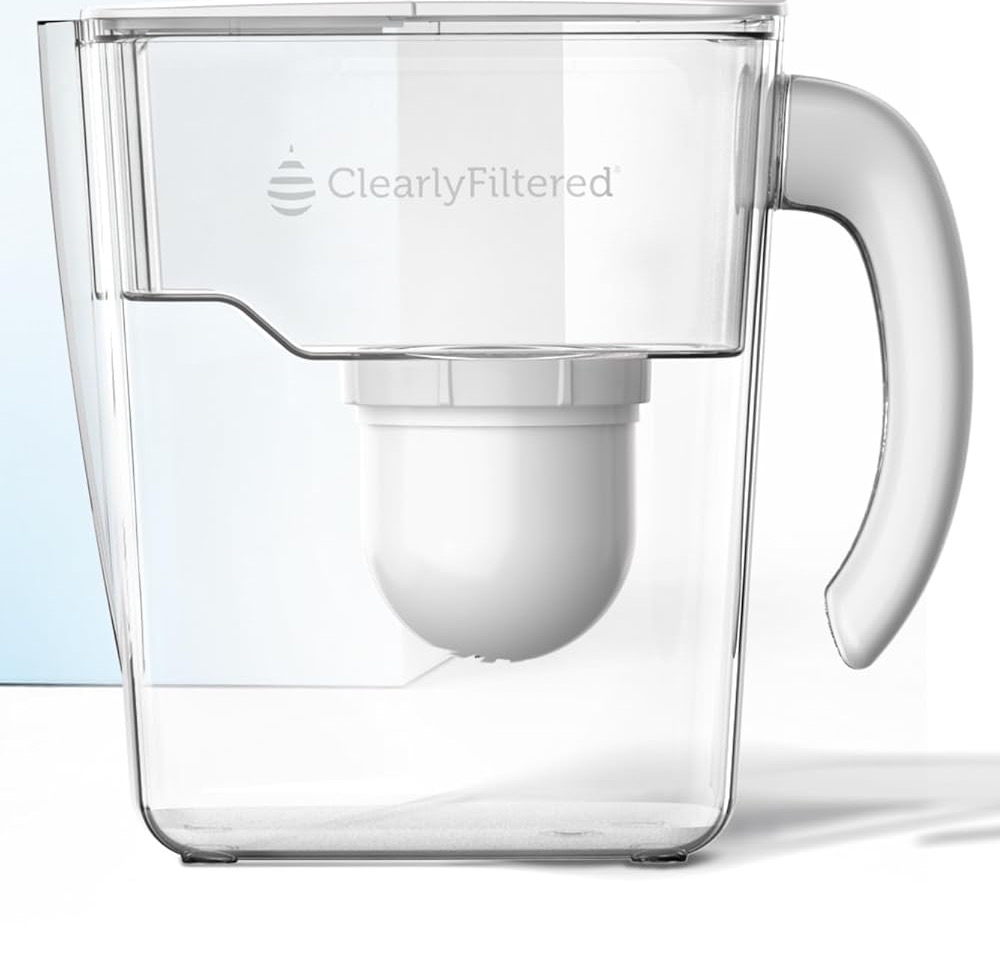 Budget PickClearly Filtered Water Pitcher |
4.1out of 5 | 99.9% Microplastics (tested)270+ Contaminants |
Check price → |
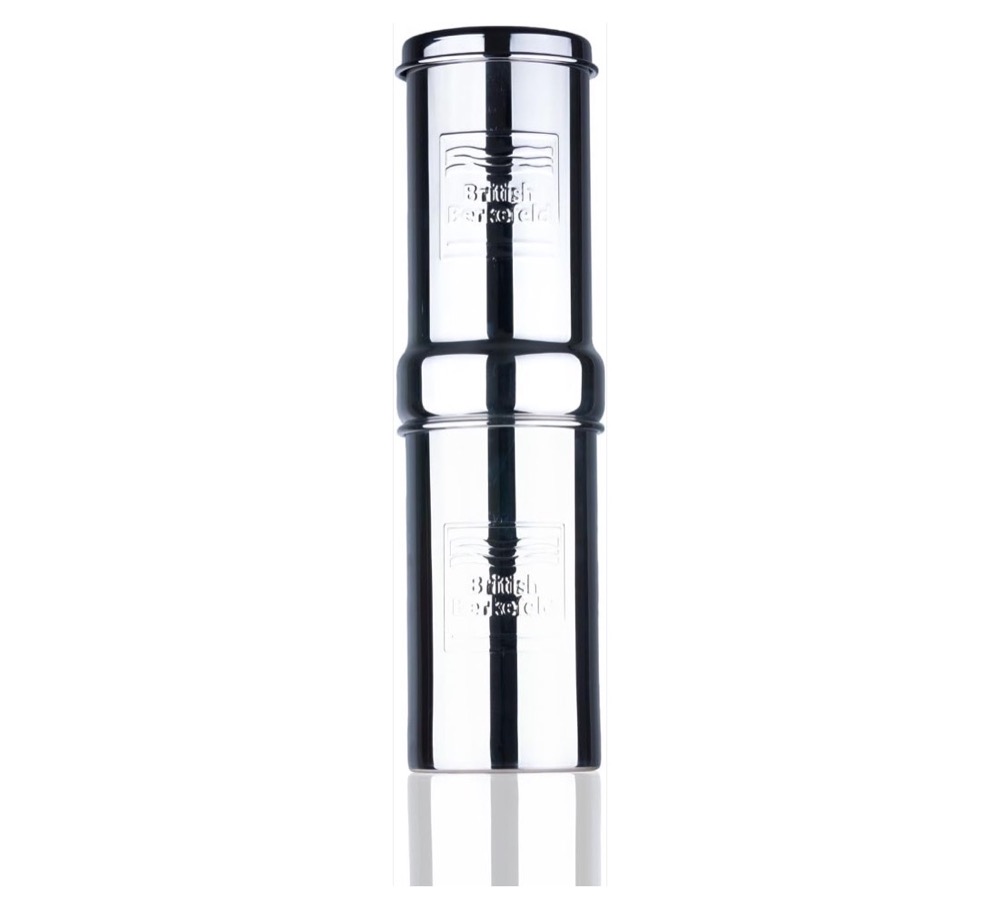 Best Gravity FilterBritish Berkefeld with Super Sterasyl Filters |
4.8out of 5 | NSF/ANSI 401 Certified85%+ Microplastics |
Check price → |
Which Filter Technologies Work (and Which Don't)
| Technology | Removes microplastics? | Removes nanoplastics? | Examples |
|---|---|---|---|
| Reverse osmosis (RO) | ✓ Yes (99.9%+) | ✓ Yes (RO membrane = 0.0001 micron) | AquaTru, iSpring, Waterdrop |
| Sub-micron pitcher/gravity | ✓ Yes (certified) | Partial (some nanoplastics) | Brita Elite, LifeStraw Home, Clearly Filtered |
| Standard activated carbon | ✗ No | ✗ No | Brita Basic/Standard, PUR Basic |
| UV sterilization | ✗ No (kills bacteria, not particles) | ✗ No | Most countertop UV devices |
| Ceramic filters | Partial (depends on pore size) | ✗ No | Berkey (with Super Sterasyl) |
The NSF certification to look for: NSF/ANSI 58 covers reverse osmosis systems. NSF/ANSI 401 covers emerging contaminants including microplastics in pitcher and under-sink filters. The LifeStraw Home is the only pitcher certified to NSF-244 specifically for microplastic reduction. For a side-by-side comparison of every certified pitcher option, see our water filter pitcher guide.
1. AquaTru Carafe — Best Overall
Best Overall
A real RO system that sits on the counter and plugs in — no under-sink plumbing. The 0.0001-micron membrane removes microplastics and nanoplastics (the particles most likely to reach the bloodstream), plus PFAS, arsenic, nitrates, chlorine, fluoride, and heavy metals — 82+ contaminants in total, certified to NSF/ANSI 58. Filtered water collects in a glass carafe, so the water never touches plastic after it leaves the filter.
The trade-offs are honest: it costs $300+ upfront, the RO process wastes some water, and the carafe refills in about 15 minutes rather than instantly. Filter replacements run roughly $70/year. For most households that want the deepest filtration without a contractor, it is the easiest path to genuinely clean water.
"I am now a complete water snob. All water is inferior and it's not even close." AquaTru owners talk like converts, and the buying pattern backs it up — people get one, then buy more for parents and grown kids. Owners who test with home water-purity meters report readings dropping to single digits, and a common move is buying a second glass carafe so one is always cold in the fridge. The fair warnings from reviews: hard water is its enemy (descale on schedule — damage from skipping it isn't covered), the glass carafe is on the thin side, and a thirsty household will refill the tap-water tank daily.
Reverse-osmosis purity you can set on the counter today — then store the result in glass, never plastic.
Why it's safe: The 4-stage RO membrane is NSF/ANSI 58 certified to remove microplastics, nanoplastics, PFAS, lead, arsenic, and chlorine — and the glass carafe means zero plastic contact at the point of use.
Check Today’s Price on Amazon →Amazon prices change daily — tap to see today's price and any active discount.
- Free delivery & returns for Prime members
- Sold & shipped by Amazon
- Thousands of verified reviews
2. LifeStraw Home — Best Pitcher Filter
Best Pitcher
If you want the most credentialed pitcher you can buy, this is it. NSF-244 is the certification written specifically for microplastic reduction, and LifeStraw is the only pitcher maker to hold it. It is also certified to NSF/ANSI 42 and 53 for chlorine, lead, and other health and aesthetic contaminants, and the borosilicate glass body keeps your filtered water off plastic.
It will not reliably catch nanoplastics — for those you need reverse osmosis — and it fills a little slower than a gravity unit. The filter lasts about two months (40 gallons) at a reasonable ongoing cost. At around $70, it is the easiest, no-install upgrade for anyone who just wants certified microplastic protection.
The comparison in nearly every review is Brita: "tossed out my Brita pitcher," with owners saying it "tastes way better and 'cleaner'" than carbon-only pitchers that can leave a plasticky taste. One owner reports every guest commenting on how good the water is; another says the chemical smell left the tap water so completely that the dog started drinking again. Backpackers who trust LifeStraw's outdoor straws bring that trust into the kitchen. The honest downsides: it filters noticeably slower than a Brita — owners treat it as a "start it, walk away, come back" pitcher — and it does not remove fluoride, if that is on your list.
The only pitcher actually certified for microplastics — pour-through clean water with no plumbing and no power.
Why it's safe: NSF-244 certified for 99.999% microplastic reduction, plus NSF/ANSI 42 and 53 for chlorine and lead — and the water is held in a borosilicate glass body, not plastic.
Check Today’s Price on Amazon →Amazon prices change daily — tap to see today's price and any active discount.
- Free delivery & returns for Prime members
- Sold & shipped by Amazon
- Thousands of verified reviews
3. iSpring RCC7AK — Best Under-Sink RO
Best Under-Sink
This is the workhorse for households ready to install a dedicated drinking-water tap. The 0.0001-micron RO membrane removes 99%+ of microplastics and nanoplastics along with lead, fluoride, chlorine, and dissolved solids, and it carries both NSF/ANSI 58 certification and the WQA Gold Seal. The sixth stage remineralizes the water with calcium and magnesium and restores pH, fixing the one common complaint about RO — flat taste.
Installation runs about $150 with a plumber — though many owners handle it themselves in an hour or two using iSpring's videos and the color-coded tubing — and it needs under-sink space, since like all RO it sends about three gallons to drain per filtered gallon. Filters are replaced annually. If you want the deepest filtration permanently plumbed in, this is the value benchmark.
"It tastes really freaking good. All other water is now garbage to me. Which in a lot of ways sucks, but damn it's nice when I'm at home." The longevity reports run long — "have been using since 2013" — and several owners have installed the same system in two or three houses. Customer service earns rare named-employee praise, with a real person answering the phone and parts shipped free. The fair warnings: it is a pressurized system, so a rushed install can leak (check every fitting), the tank and six canisters claim most of the cabinet, and you flush the first few gallons before drinking.
Plumbed-in reverse osmosis that strips microplastics and nanoplastics — then puts the good minerals back so it tastes great.
Why it's safe: A 0.0001-micron membrane, NSF/ANSI 58 certified and WQA Gold Seal verified, removes microplastics, nanoplastics, lead, fluoride, and chlorine — and the alkaline remineralization stage restores healthy calcium and magnesium.
Check Today’s Price on Amazon →Amazon prices change daily — tap to see today's price and any active discount.
- Free delivery & returns for Prime members
- Sold & shipped by Amazon
- Thousands of verified reviews
4. Waterdrop G3P600 — Best Tankless RO
Best Tankless RO
The G3P600 swaps the bulky pressure tank for a tankless design, which means no standing water and a smaller footprint under the sink. Its 600 GPD flow is the fastest in the category, the 9-stage filtration is NSF/ANSI 58 certified to remove microplastics, nanoplastics, lead, and dissolved solids, and a smart display tracks each filter's remaining life so you never guess. It also runs an efficient 3:1 pure-to-drain ratio.
It is the priciest under-sink option at $350+, it requires installation, and the filters are proprietary so replacements cost a bit more. If you want RO-level purity with instant dispensing and minimal clutter, it earns the premium.
"Our undersink reverse osmosis system was the best thing we ever added to our house." Owners love the faucet's live purity readout — reports of tap water dropping from a 450 reading to 12 are typical — and people upgrading from tank-style systems say filter changes are easier and the space savings are real. One owner's plumber husband recommends Waterdrop systems to his clients. The fair warnings from reviews: it needs a power outlet under the sink, a small number of owners report drip leaks or an automatic rinse cycle that would not stop (replacements were sent, but it happens), and hard-water households see shorter filter life than advertised.
RO-grade purity with no tank and no wait — 600 gallons a day of microplastic-free water on demand.
Why it's safe: The 9-stage tankless membrane is NSF/ANSI 58 certified to remove microplastics, nanoplastics, lead, and chlorine, and the tankless design means no stagnant stored water sitting between uses.
Check Today’s Price on Amazon →Amazon prices change daily — tap to see today's price and any active discount.
- Free delivery & returns for Prime members
- Sold & shipped by Amazon
- Thousands of verified reviews
5. Clearly Filtered Pitcher — Best Budget Pitcher
Budget Pick
Clearly Filtered does not carry NSF-244 (it is certified to NSF/ANSI 42 and 53), but its own independent lab testing shows 99.9% microplastic removal across 270+ contaminants, including PFAS, lead, fluoride, and chlorine. The housing is BPA-free, medical-grade Tritan, and it is widely stocked on Amazon — just know that deep filtration means a slower pour than a basic carbon pitcher. At roughly $90 it sits between a basic Brita and a full RO system.
The catch is filter life: each cartridge lasts only about 100 gallons (roughly two months), so the annual filter cost runs higher than the LifeStraw. If you want strong, independently tested microplastic protection without spending on RO, it is the value play.
"Absolutely worth every penny. Water tastes so clean and fresh" — and "no more bottled water for us" is the recurring result. The classic convert story is someone whose Brita could not fix a metallic taste and this pitcher did. Owners also like that it keeps the natural minerals, so water tastes "clean without being empty" the way reverse-osmosis water can; the most devoted send their own samples to labs to double-check that it is working. The honest gripes: new filters need a priming step owners genuinely hate, a full pitcher can take half an hour to filter through, replacement filters are pricey and bought several times a year, and the loose lid is a running joke even among fans.
Lab-tested 99.9% microplastic removal at pitcher prices — no install, no RO system, no plumber.
Why it's safe: Independent lab testing shows 99.9% removal of microplastics plus PFAS, lead, and chlorine across 270+ contaminants, and the pitcher housing is BPA-free, medical-grade Tritan.
Check Today’s Price on Amazon →Amazon prices change daily — tap to see today's price and any active discount.
- Free delivery & returns for Prime members
- Sold & shipped by Amazon
- Thousands of verified reviews
6. British Berkefeld — Best Gravity Filter
Best Gravity Filter
The British Berkefeld is the choice when you want certified filtration that works anywhere. It is NSF/ANSI 401 certified for emerging contaminants with 85%+ microplastic reduction, the entire body is stainless steel so filtered water never touches plastic, and the Super Sterasyl elements last two-plus years before replacement. Because it is gravity-fed it needs no electricity or installation, which makes it equally at home on a countertop, at a cabin, or in a go-bag.
It fills slowly, you refill it by hand, and it will not remove nanoplastics (that still requires RO). At $250+ it is an investment, but the multi-year element life keeps the long-run cost low. For resilience and zero-plastic contact, nothing else here matches it.
The dominant story in reviews is former Berkey owners switching over after Berkey's regulatory troubles — and deciding the original design was better all along: "Had a Berkey and it was a nightmare... No priming needed. Just screw them on." The ritual owners describe is topping it off at night so a full tank of filtered water is waiting by morning, no electricity involved — some run theirs off rain barrels. A small repeated delight: pets drinking more water. The fair warnings: it is slow by design (roughly a liter per hour per filter candle), new candles need several flush cycles before the water is ready, and it takes real counter space.
Certified microplastic filtration with no power and no plumbing — stainless steel from top to bottom, ready for the counter or off-grid.
Why it's safe: NSF/ANSI 401 certified for 85%+ microplastic reduction plus bacteria, chlorine, and lead — and the all-stainless-steel chambers mean your filtered water never sits against plastic.
Check Today’s Price on Amazon →Amazon prices change daily — tap to see today's price and any active discount.
- Free delivery & returns for Prime members
- Sold & shipped by Amazon
- Thousands of verified reviews
Does Brita Filter Microplastics?
This is the most-searched question in this space, and the honest answer is: it depends entirely on which Brita filter you use.
Standard Brita pitchers use activated carbon filters. These are effective at improving taste and removing chlorine, but the Basic and Standard filters are not certified for microplastic reduction — their pore size isn't verified for it.
The Brita Longlast+ filter performs better in some independent tests but is also not certified for microplastics. The exception is the Brita Elite filter (model OB06): it is WQA-certified to NSF/ANSI 401 — the independent standard for emerging contaminants — for at least 85% microplastic reduction. At around $40 it is the cheapest certified pitcher option available, so "does Brita filter microplastics?" really has two answers — the Basic and Longlast+ filters do not, but the Brita Elite does. If you are deciding between a Brita pitcher, a Berkey gravity system, and reverse osmosis, our Brita vs Berkey vs reverse osmosis comparison breaks down which actually removes microplastics.
Bottom line: For a pitcher, two options are independently certified for microplastics — the Brita Elite (NSF/ANSI 401, the cheapest at ~$40) and the LifeStraw Home (NSF-244). For nanoplastics (the particles most likely to reach the brain and bloodstream), reverse osmosis is the only reliable technology — the countertop AquaTru Carafe is also NSF/ANSI 401 certified for microplastics. Not sure which pitcher is right for you? Our dedicated pitcher filter comparison tests six certified models head-to-head.
What About Bottled Water?
Bottled water is the wrong solution. A 2024 Columbia University study found that bottled water contains an average of 240,000 plastic particles per liter — 90% of them nanoplastics shed from the plastic bottle itself during storage and handling. See the full breakdown of how many microplastics are in a bottle of water, sized from a 250 ml hotel bottle up to a 24-pack case.
Glass-bottled water (Perrier, Volvic, Mountain Valley Spring) significantly reduces this. But at $2–4 per bottle for daily use, it is expensive and ecologically wasteful. Filtered tap water from a certified system is substantially cheaper, equivalent or better in quality, and produces no plastic waste.
Get the full Plasticproof guide
Water filters are step one. The guide covers kitchen, bedroom, air, and baby — all 50+ swaps, free.
Get the free guide