The short answer
The best water filter for fluoride in 2026 is the AquaTru Countertop Reverse Osmosis purifier (~$449). Reverse osmosis is one of the few home methods that actually reduces fluoride — typically 85–95%+ — and AquaTru delivers it with zero installation. For a permanent under-sink RO, the Waterdrop G3P600 or the value APEC ROES-50; for near-total removal, the Megahome distiller; for a no-install pitcher with published fluoride lab data, the Clearly Filtered, or the Epic Pure on a budget. The one rule that matters: fluoride is removed by reverse osmosis, distillation, or a filter specifically lab-tested for it. A standard Brita does not remove fluoride.
Quick Navigation
- What is the best water filter for fluoride?
- Why is fluoride in my tap water — and why filter it?
- Which filter types actually remove fluoride?
- What does NOT remove fluoride (Brita, boiling)
- Quick comparison: all 7 fluoride filters
- Best overall: AquaTru Countertop RO
- Best under-sink RO: Waterdrop G3P600
- Best value RO: APEC ROES-50
- Best distiller: Megahome Countertop
- Best pitcher: Clearly Filtered
- Best budget pitcher: Epic Pure
- Best ion-exchange: ZeroWater
- Buyer's guide
- FAQ
Compare all 7 picks
Every pick side by side — tap a name to jump to the full review, or check today's price.
| Pick | Rating | Why it wins | |
|---|---|---|---|
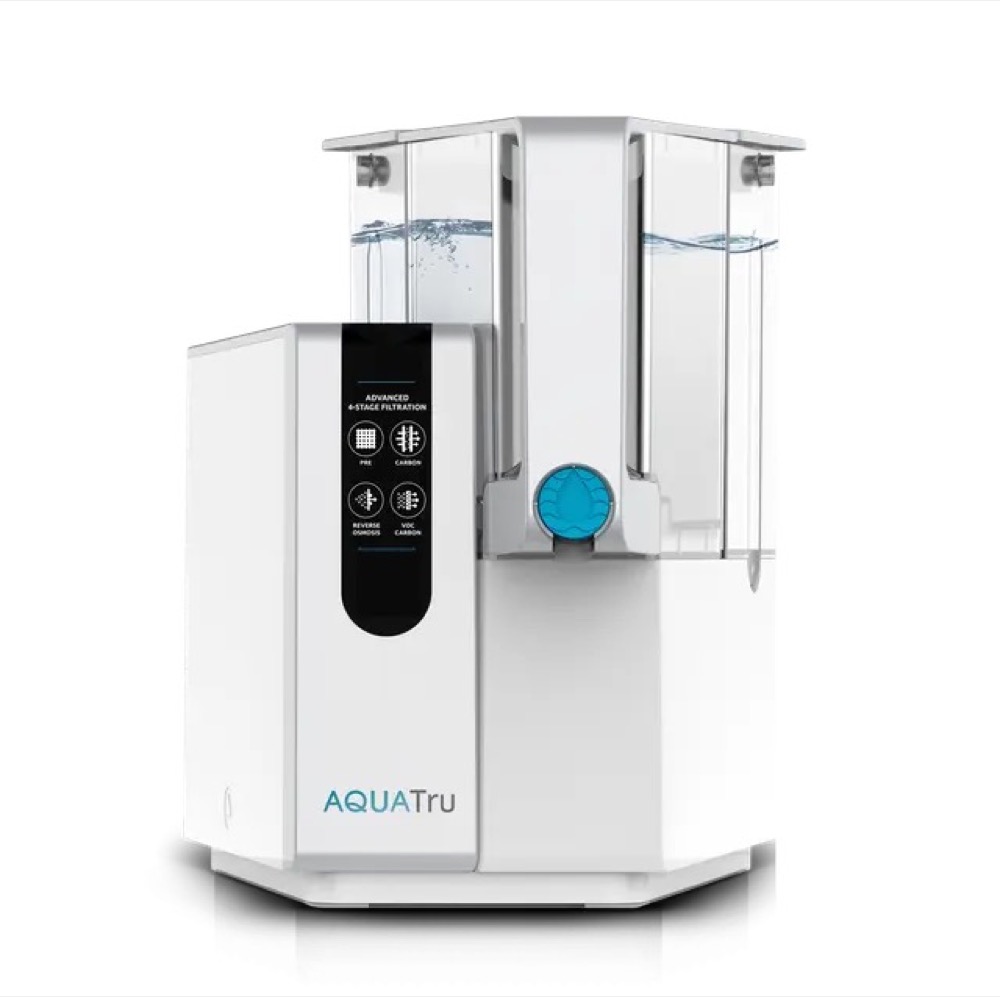 Best OverallAquaTru Countertop Reverse Osmosis Purifier |
4.7out of 5 | NSF 42/53/58/4014-Stage Reverse Osmosis |
Check price → |
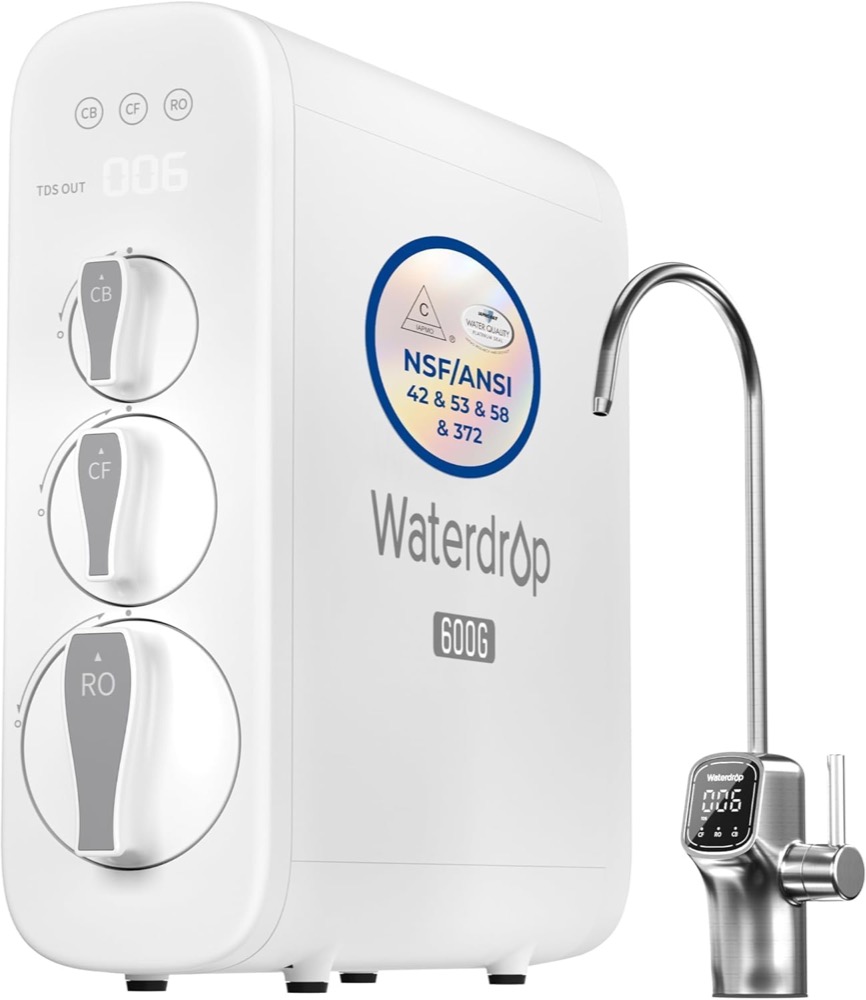 Best Under-Sink ROWaterdrop G3P600 Tankless Reverse Osmosis System |
4.8out of 5 | NSF/ANSI 58600 GPD tankless |
Check price → |
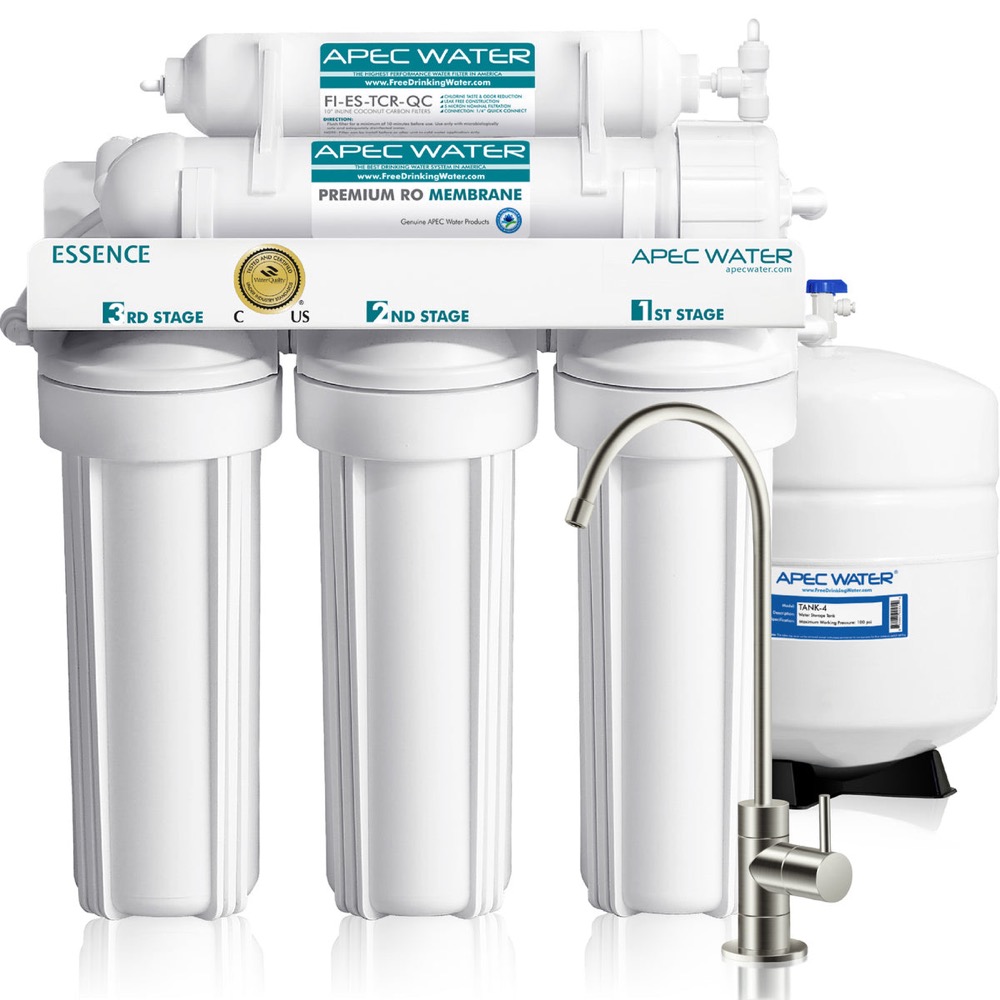 Best Value ROAPEC Water ROES-50 Under-Sink 5-Stage RO |
4.7out of 5 | WQA Gold Seal5-Stage RO |
Check price → |
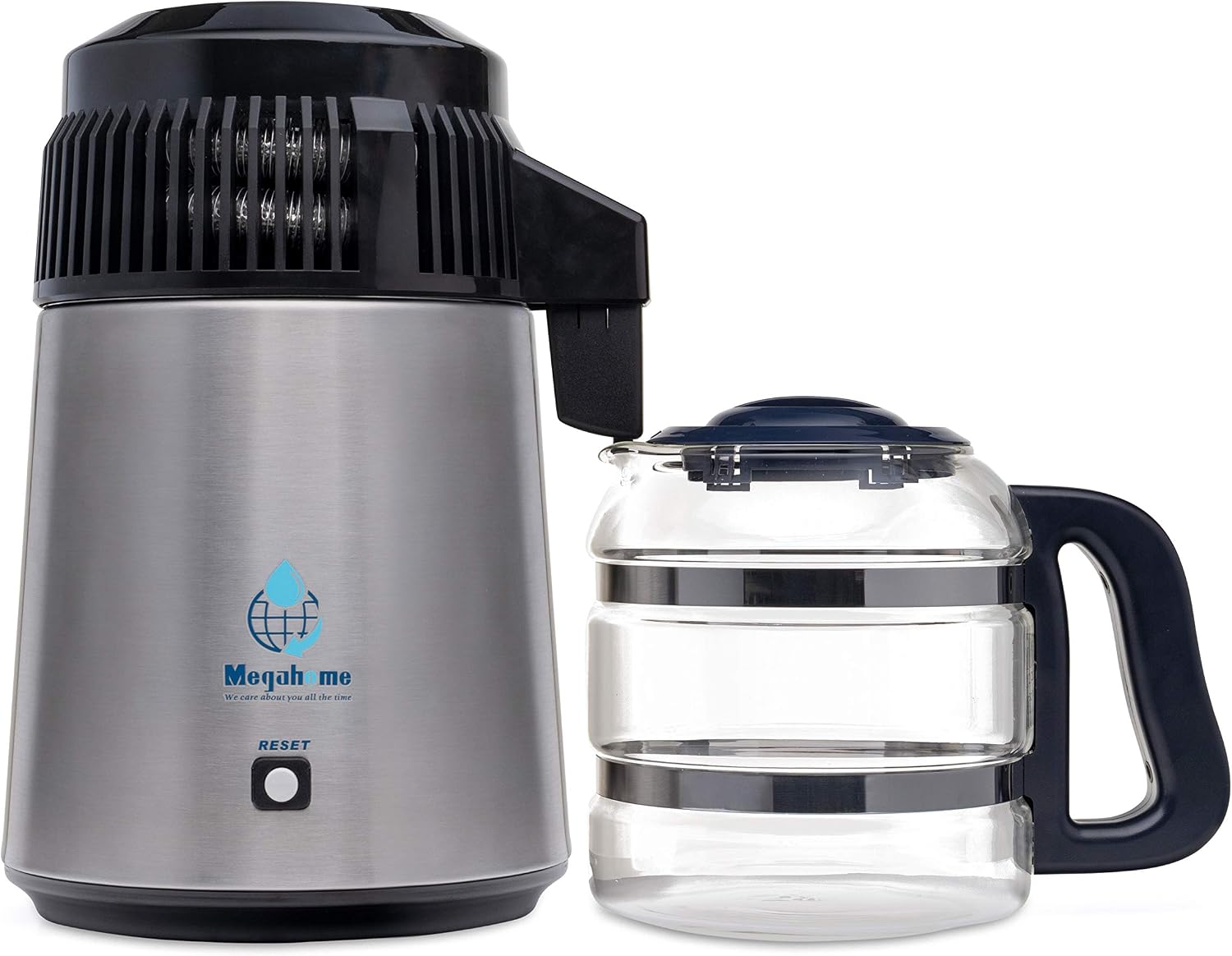 Most Complete RemovalMegahome Countertop Water Distiller (Stainless, Glass Collection) |
4.6out of 5 | 316L Stainless BoilerGlass Carafe |
Check price → |
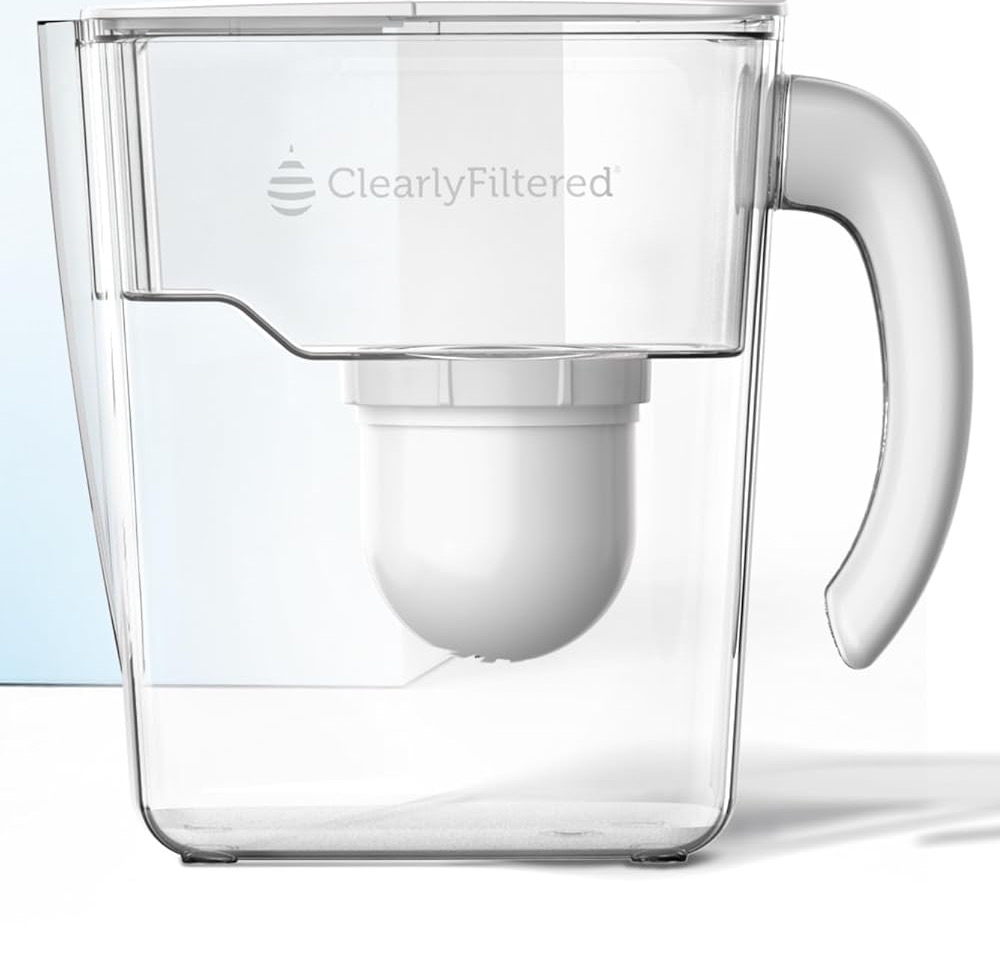 Best PitcherClearly Filtered Water Pitcher |
4.1out of 5 | Affinity® filtration3rd-party fluoride lab data |
Check price → |
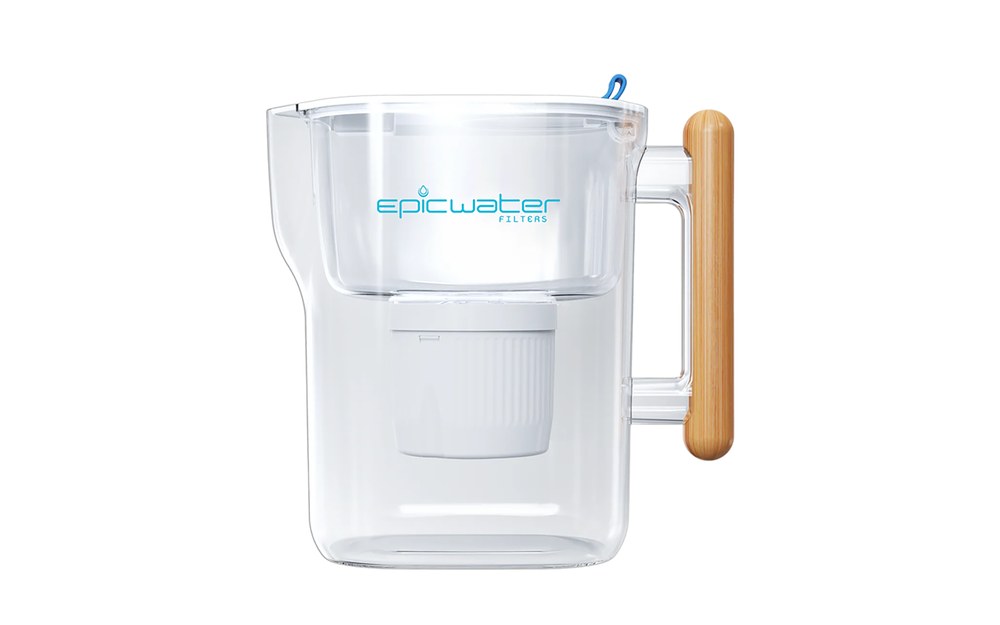 Best Budget PitcherEpic Pure Water Filter Pitcher |
4.9out of 5 | Solid carbon blockPublished fluoride lab data |
Check price → |
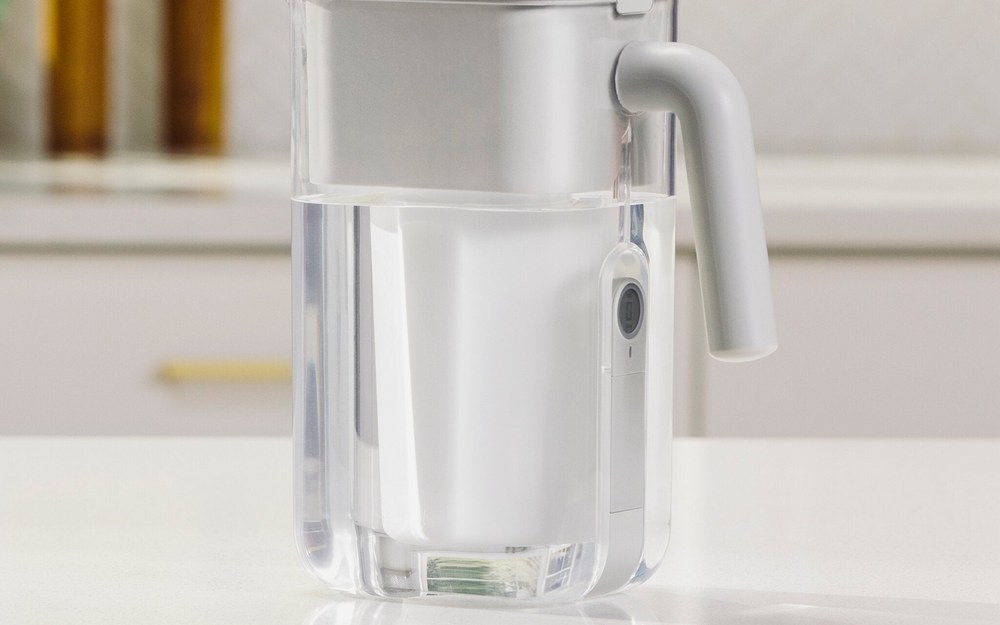 Best Ion-ExchangeZeroWater 10-Cup Pitcher with TDS Meter |
4.5out of 5 | 5-Stage Ion-ExchangeTDS Meter Included |
Check price → |
What Is the Best Water Filter for Fluoride?
The best water filter for fluoride in 2026 is the AquaTru Countertop Reverse Osmosis purifier, because reverse osmosis is one of the few home technologies that actually reduces fluoride — and AquaTru delivers it with no plumbing at all. For a permanent under-sink system the Waterdrop G3P600 tankless RO or the value APEC ROES-50 is the pick; for near-complete removal, the Megahome countertop distiller; for a no-install pitcher with published fluoride lab data, the Clearly Filtered, or the Epic Pure on a budget. What every good pick has in common is a real removal mechanism — RO, distillation, or a specialty adsorption media that has been lab-tested for fluoride specifically.
Why Is Fluoride in My Tap Water — and Why Filter It?
Fluoride reaches most U.S. taps two ways. About two-thirds of Americans on public water receive fluoridated water, deliberately dosed to roughly 0.7 milligrams per liter — the level the U.S. Public Health Service recommended in 2015 to reduce tooth decay. The rest can have naturally occurring fluoride that leaches from rock into groundwater, which in some wells and regions runs well above that. The EPA's enforceable maximum is 4.0 mg/L, with a secondary guideline of 2.0 mg/L.
At the 0.7 mg/L used in fluoridation, decades of public-health guidance treat fluoride as safe and good for teeth, so this is not a safety emergency. This guide is for the many people who have simply decided they want to lower or remove fluoride — because their natural level is high, because they're mixing infant formula, or by personal preference — and who have discovered the frustrating part: you can't taste, smell or see fluoride, and the filter most people already own does nothing to it. The one thing you fully control is the filter on your own tap. If you're still deciding whether your water needs treatment at all, start with is tap water safe to drink? and your utility's Consumer Confidence Report.
The rule that matters: only a few home methods are proven to reduce fluoride — reverse osmosis (the most practical for daily use), distillation (the most complete), and a small number of specialty media: activated alumina, bone char, and the tested adsorption/ion-exchange filters in products like Clearly Filtered, Epic Pure and ZeroWater. A standard refrigerator filter or a basic Brita is designed for chlorine taste and does not remove fluoride. If a filter can't show you a certification or an independent lab report naming fluoride and a percent reduction, treat its fluoride claim as unproven.
Which Filter Types Actually Remove Fluoride?
Reverse osmosis is the most practical: it forces water through a semipermeable membrane that rejects the fluoride ion by size and charge, typically removing 85–95%+. Distillation is the most thorough — boiling water to steam and re-condensing it leaves fluoride (and nearly everything else) behind in the boiling chamber, removing close to all of it. Beyond those two, only specific adsorption media work: activated alumina and bone char bind fluoride, and a handful of pitcher filters (Clearly Filtered and Epic Pure) pair proprietary media with published lab data showing fluoride reduction. ZeroWater's ion-exchange resin reduces it too, though its capacity drops fast. What does not work: ordinary activated carbon (chlorine taste only), water softeners, sediment filters, and boiling — which slightly concentrates fluoride as water evaporates. RO also strips microplastics and most other contaminants along the way; see our best water filters for microplastics for that angle.
What Does NOT Remove Fluoride
This is where most people waste money. A standard Brita, PUR or refrigerator filter uses granular activated carbon built for chlorine, taste and odor — it is not designed or certified to reduce fluoride, and independent testing confirms it barely moves the number (we cover the related surprise in does Brita remove microplastics?). Boiling does not help either: fluoride does not evaporate, so as water boils off, the fluoride that remains is slightly more concentrated. Freezing, letting water sit out, and water softeners do nothing for fluoride. If lowering fluoride is your goal, only reverse osmosis, distillation, or a filter specifically lab-tested for fluoride will get you there — everything else is a taste upgrade, not a fluoride filter.
Quick Comparison: All 7 Fluoride Filters
| Filter | Type | Fluoride method | Certification / proof | Install |
|---|---|---|---|---|
| AquaTru | Countertop RO | Reverse osmosis | NSF 42/53/58/401 | None (plug in) |
| Waterdrop G3P600 | Under-sink RO | Reverse osmosis | NSF/ANSI 58 | Under-sink |
| APEC ROES-50 | Under-sink RO | Reverse osmosis | WQA Gold Seal (RO) | Under-sink |
| Megahome | Countertop distiller | Distillation | Removes ~99% (all dissolved solids) | None (plug in) |
| Clearly Filtered | Pitcher | Affinity® media | 3rd-party lab (fluoride) | None |
| Epic Pure | Pitcher | Solid carbon block | Published fluoride lab data | None |
| ZeroWater | Pitcher | Ion-exchange resin | Reduces fluoride (short capacity) | None |
Reverse osmosis and distillation remove the most fluoride; lab-tested pitchers reduce it without an install. Tap any pick below for today's Amazon price.
1. AquaTru Countertop Reverse Osmosis Purifier — Best Overall
Best Overall
Reverse osmosis works by pushing water through a semipermeable membrane that rejects the fluoride ion (and most other dissolved contaminants) by size and charge, rather than adsorbing it onto a carbon surface that can eventually saturate. RO systems typically remove 85–95%+ of fluoride, which is why the CDC lists RO among the effective home methods. AquaTru pairs that membrane with pre- and post-carbon stages and holds NSF/ANSI certifications for standards 42, 53, 58 and 401 — so the same unit also handles chlorine, lead, PFAS and microplastics. If you want to see how the leading units stack up against each other, our reverse osmosis reviews compare six systems head-to-head, and our best countertop water filter for microplastics ranks AquaTru alongside every other no-plumbing option, including the gravity Berkey and the budget Waterdrop C1S.
The honest trade-offs of any RO system apply here: it wastes some water to drain (AquaTru's ratio is better than most, but it isn't zero), it strips beneficial minerals along with the fluoride, and the finished water sits in a plastic dispense tank — decant into glass if that matters to you. Filters are a recurring cost. But for a renter or anyone who wants the RO result without cutting into a water line, nothing else on this list is this thorough and this easy.
AquaTru owners talk like converts — one common line is "I am now a complete water snob. All water is inferior," and the buying pattern backs it up: people get one, then buy more for family. Owners who test with a home purity meter report readings dropping to single digits, and many keep a second glass carafe cold in the fridge. The honest downsides from reviews: hard water is its weak point (descale on schedule, since damage from skipping it is not covered), the glass carafe is on the thin side, and a thirsty household refills the tap-water tank daily.
The most thorough fluoride reduction available without installation — countertop RO, NSF-certified, no plumbing.
On fluoride: Reverse osmosis is one of the methods the CDC lists as effective for reducing fluoride; AquaTru's membrane rejects the fluoride ion by size and charge rather than trying to adsorb it onto carbon.
Check Today’s Price on Amazon →Amazon prices change daily — tap to see today's price and any active discount.
- Free delivery & returns for Prime members
- Ships free with Prime on eligible items
- Thousands of verified reviews
2. Waterdrop G3P600 Tankless Reverse Osmosis System — Best Under-Sink RO
Best Under-Sink RO
The G3P600 carries NSF/ANSI 58 certification — the standard specifically written for reverse-osmosis systems — and its RO membrane rejects fluoride the same way AquaTru's does: by physical exclusion at the membrane. The tankless architecture avoids the stagnant storage tank of older RO units, and the front-panel display tells you exactly when each of the filter stages needs changing, so performance never quietly degrades.
You'll need a little under-sink space and a basic install (or a plumber for an hour). Like all RO it sends some water to drain and remineralizes nothing on its own, which is why people ask whether demineralized RO water is actually safe to drink every day — many owners add an inline remineralization cartridge for taste (note that a remineralizer adds minerals back but does not put fluoride back). For a household that drinks a lot of water and wants fluoride handled invisibly and permanently, this is the upgrade from a countertop unit. It's also our top pick in the best under-sink water filters guide.
Owners frequently call an under-sink reverse-osmosis system the best upgrade they have made to the house, and they love this one's live purity readout on the faucet — reports of tap water dropping from a 450 reading to around 12 are typical. People upgrading from older tank systems say filter changes are easier and the tankless design frees up cabinet space. The honest warnings: it needs a power outlet under the sink, a minority of owners report drip leaks or an automatic rinse cycle that would not stop (replacements were sent, but it happens), and hard-water homes see shorter filter life than advertised.
Under-sink reverse osmosis with a fast 600 GPD tankless flow — NSF/ANSI 58 certified, out of sight, and built for daily volume.
On fluoride: As a certified reverse-osmosis system its membrane physically rejects the fluoride ion by size — the same proven RO route used by the countertop AquaTru, just plumbed in.
Check Today’s Price on Amazon →Amazon prices change daily — tap to see today's price and any active discount.
- Free delivery & returns for Prime members
- Ships free with Prime on eligible items
- Thousands of verified reviews
3. APEC Water ROES-50 Under-Sink 5-Stage RO — Best Value RO
Best Value RO
APEC is a California manufacturer that builds its systems domestically. The ROES-50 is a straightforward 5-stage RO carrying the WQA Gold Seal — the independent equivalent of NSF/ANSI 58 for reverse-osmosis performance. Its RO membrane rejects fluoride the same physical way every RO on this list does, along with 99%+ of other dissolved contaminants including lead, arsenic and microplastics. No smart display, no remineralization, no app — just the dependable RO mechanism that actually lowers fluoride, at the price of a good pitcher-plus.
The honest trade-offs: a slower 50 GPD output with a storage tank (versus the tankless G3P600), roughly three gallons to drain per gallon made, a larger under-sink footprint, and a basic faucet. For buyers who value a domestically built system and real human support over gadgets — and who want RO fluoride reduction without the premium — it's the pick. It's also our value choice in the best reverse-osmosis systems guide.
Buyers with basic DIY skills say they had it installed in well under a day and noticed cleaner, better-tasting water right away, and APEC's customer service gets repeated praise as polite and responsive. The honest gripes: it sends about three gallons to the drain for every gallon it makes, some owners had to grab a couple of extra plumbing fittings from the hardware store to finish, and the most serious complaint is filter housings cracking where the fittings join, which soaked a few people's under-sink cabinets.
US-built, WQA Gold Seal-certified RO with a 2-year warranty and lifetime support — the cheapest route to genuine reverse-osmosis fluoride reduction.
On fluoride: The WQA Gold Seal independently verifies the RO membrane's performance to the same bar as NSF/ANSI 58, and RO membranes physically reject the fluoride ion — the proven mechanism, just at a lower price.
Check Today’s Price on Amazon →Amazon prices change daily — tap to see today's price and any active discount.
- Free delivery & returns for Prime members
- Ships free with Prime on eligible items
- Thousands of verified reviews
4. Megahome Countertop Water Distiller — Most Complete Removal
Most Complete Removal
Fluoride does not evaporate, so when water is boiled to steam and re-condensed, the fluoride stays behind in the boiling chamber — distillation removes close to all of it, along with lead, arsenic, nitrate and microplastics — that arsenic-and-nitrate pairing is the signature of untreated well water, where distillation and RO are the only reliable fixes. The Megahome's 316L medical-grade stainless boiling chamber resists pitting from constant boiling, and its porcelain nozzle liner stops vapor from touching any painted or coated surface on the way out. Crucially, the finished water — which is chemically aggressive because it has no minerals — condenses into a real glass carafe, so no plastic ever contacts it.
The honest trade-offs: it's slow (about 5.5 hours for a gallon), it uses electricity (roughly $150/year at average U.S. rates if you distill daily), and like RO it strips beneficial minerals along with the fluoride, leaving flat-tasting water some people re-mineralize with a pinch of trace-mineral drops. The included carbon post-filter is a small ongoing cost, and the glass carafe is fragile. But for near-total fluoride removal with zero plumbing, nothing beats it — see the best water distillers guide for the full field.
Long-time owners consistently praise the Megahome's simplicity — "no electronics to break." Owners with hard water report the boiler pot showing chalky mineral deposits after every cycle (that's the point, it's the contaminants you would have drunk) and appreciate that a monthly citric-acid rinse restores it to like-new. The honest gripes that repeat: the fan is audibly noisier than premium units, the plastic top-cap latch feels less premium than the price, and the porcelain nozzle liner can chip if the boiler pot is dropped during cleaning. Replacement glass carafes are readily available.
The most complete fluoride removal on this list — distillation leaves fluoride behind in the chamber and finishes into a glass carafe, no plumbing required.
On fluoride: Distillation is one of the CDC-listed effective methods; because fluoride does not evaporate, boiling to steam and re-condensing removes close to all of it — the most thorough route short of nothing.
Check Today’s Price on Amazon →Amazon prices change daily — tap to see today's price and any active discount.
- Free delivery & returns for Prime members
- Ships free with Prime on eligible items
- Thousands of verified reviews
5. Clearly Filtered Water Pitcher — Best Pitcher
Best Pitcher
Most pitchers do nothing to fluoride. Clearly Filtered's Affinity® filtration is different: it's tested by accredited third-party labs against a long contaminant list including fluoride, with published reports showing high reduction. That documentation is what separates it from a generic carbon pitcher — you can read exactly which compounds were tested and by how much they dropped, rather than trusting a vague claim.
The trade-offs are those of any dense filter: flow is slower than a basic Brita, and the filter costs more and needs replacing on schedule to keep performing. It sits in a plastic pitcher body, so decant to glass if you prefer. Unlike RO and distillation, it leaves the water's beneficial minerals in place — a plus for taste. As a no-tools, no-plumbing way to get lab-documented fluoride reduction, it's the pitcher to beat, and it doubles as a strong microplastics filter (see our best water-filter pitcher guide).
The recurring result owners report is "no more bottled water for us" — the classic story is someone whose Brita could not fix a metallic taste and this pitcher did. Owners also like that it keeps the natural minerals, so the water tastes "clean without being empty" the way reverse-osmosis water can. The honest gripes: new filters need a priming step owners genuinely dislike, a full pitcher can take 30 to 40 minutes to filter through, replacement filters are pricey and bought several times a year, and the loose lid is a running joke even among fans.
The best-documented fluoride pitcher — independent lab reports show high fluoride reduction, no installation required, minerals kept.
On fluoride: Third-party lab testing (not just marketing) shows the Affinity® media reduces fluoride — insist on exactly that kind of documentation from any pitcher, because most reduce none.
Check Today’s Price on Amazon →Amazon prices change daily — tap to see today's price and any active discount.
- Free delivery & returns for Prime members
- Ships free with Prime on eligible items
- Thousands of verified reviews
6. Epic Pure Water Filter Pitcher — Best Budget Pitcher
Best Budget Pitcher
Epic's filter is a solid carbon block rather than loose granules, which gives it far more contact area and a tighter path than a standard pitcher cartridge — that's what lets it target fluoride, lead and microplastics rather than just chlorine taste. Each filter treats roughly 150 gallons before replacement, and Epic backs the performance with published third-party testing that names fluoride and its percent reduction, so you can read the proof before you buy.
As with any dense pitcher filter, flow is slower than a basic model and the cartridge is the ongoing cost. It's a plastic pitcher body, so decant to glass if you prefer. For a household that wants lab-backed fluoride reduction at the lowest entry price on this list — and that also cares about lead and microplastics — the Epic Pure is the value pick.
Owners choose Epic Pure for its long contaminant list — it is the pitcher people reach for when they want lead, PFAS, and fluoride reduction in one no-install unit — and most say the filtered water tastes clean and noticeably better than the tap. The honest downsides that come up most: it drips through slowly (a "fill it and walk away" pitcher, not instant), the flip-top spout lid can feel sticky or leak if overfilled, and the filters are not cheap and need fairly frequent replacement to keep the flow up.
Documented fluoride reduction at the lowest pitcher price here — a solid carbon block also tested for lead, PFAS and microplastics.
On fluoride: Epic publishes independent lab data naming fluoride and its percent reduction — the standard of proof to demand from any pitcher, since ordinary carbon does nothing to fluoride.
Check Today’s Price on Amazon →Amazon prices change daily — tap to see today's price and any active discount.
- Free delivery & returns for Prime members
- Ships free with Prime on eligible items
- Thousands of verified reviews
7. ZeroWater 10-Cup Pitcher with TDS Meter — Best Ion-Exchange
Best Ion-Exchange
ZeroWater's 5-stage cartridge finishes with an ion-exchange resin that pulls dissolved ions — fluoride among them — out of the water, which is how it reaches a 0 ppm TDS reading no ordinary carbon pitcher can match. The included meter is genuinely useful here: it shows exactly when the resin is exhausted, because ion-exchange capacity runs out rather than gradually fading, and an exhausted filter stops reducing fluoride.
That's also the catch, and we won't hide it: capacity is short. In hard or high-TDS water a filter can be spent in 25–40 gallons (every one to three weeks for a family), and the honest fix is to replace on the meter reading, not a calendar. Stripping everything can leave the water tasting flat or slightly acidic. For steady, high-volume fluoride reduction, RO or distillation is more economical — but as the cheapest no-install way to actually pull fluoride down to zero, with a meter proving it, ZeroWater earns its spot.
The signature draw is the included meter reading 000, and owners write "We love it love it" about getting the dissolved-solids count to zero. But stripping minerals has a cost: the water can taste "flat" and slightly acidic, and the filter life is short at roughly 25 to 40 gallons, so a family swaps filters every one to three weeks. The honest downsides: many report a "fishy, sour, metallic or chemical" smell once the meter climbs, that "the filters take much too long to pass the water," and that the lid falls off when pouring — with filter cost the number-one long-term complaint.
The cheapest no-install way to pull fluoride toward zero — a 5-stage ion-exchange pitcher with a TDS meter that proves when the filter is spent.
On fluoride: The ion-exchange resin removes dissolved ions including fluoride to a 0 ppm TDS reading — but only until the resin is exhausted, so replace on the meter, not the calendar.
Check Today’s Price on Amazon →Amazon prices change daily — tap to see today's price and any active discount.
- Free delivery & returns for Prime members
- Sold & shipped by Amazon
- Thousands of verified reviews
Fluoride Filter Buyer's Guide: How to Choose
Start with your fluoride level
Pull your utility's Consumer Confidence Report (or test a well). If your water is fluoridated at the standard ~0.7 mg/L and you just want it gone, any proven method here works — pick on convenience and budget. If your natural fluoride runs high (some groundwater exceeds 2 mg/L), lean toward the most complete methods: reverse osmosis or distillation, which remove the most and don't depend on a media's remaining capacity the way a pitcher does.
Countertop vs. under-sink vs. pitcher vs. distiller
Renters and anyone who can't modify plumbing should look at the countertop AquaTru, the Megahome distiller, or a lab-tested pitcher. Homeowners who drink a lot of water and want it invisible should plumb in the Waterdrop G3P600 or the value APEC ROES-50 under-sink. Want the single most thorough result and don't mind waiting a few hours? The distiller. Want the cheapest entry and a meter that proves the number? The ZeroWater — just replace it often. There's no single right answer, only the right match for your kitchen, your fluoride level, and your patience.
The real cost is per-gallon, not sticker price
Reverse-osmosis and distillation cost more up front (RO wastes some water to drain; a distiller uses electricity), but their per-gallon fluoride removal is the most economical over time because a membrane or a boil is not a consumable media that saturates. Pitchers are cheapest to buy but have the highest per-gallon filter cost and the slowest flow — and an ion-exchange pitcher like ZeroWater burns through cartridges fastest in hard water. Whatever you choose, a fluoride filter only works if you change it on schedule: a lapsed cartridge or a saturated resin is an unfiltered tap. Budget for replacements the day you buy.
Our recommendation: For the most complete fluoride reduction with zero installation, the AquaTru Countertop RO is the pick. Want it permanent and out of sight? The Waterdrop G3P600, or the value APEC ROES-50. Want the most thorough removal of all? The Megahome distiller. Want a no-install pitcher with published fluoride lab data? The Clearly Filtered, or the Epic Pure on a budget. And once your drinking water is handled, keep going room by room with our microplastics filter guide and is tap water safe to drink?
Frequently Asked Questions
Sources & further reading
- U.S. CDC — About Community Water Fluoridation (the 0.7 mg/L recommended level; home methods that reduce fluoride).
- U.S. EPA — Drinking Water Regulations (fluoride enforceable maximum of 4.0 mg/L; secondary guideline 2.0 mg/L).
- U.S. Public Health Service (2015) — Recommendation for Fluoride Concentration in Drinking Water (0.7 mg/L).
- NSF International — NSF/ANSI 53 and 58 water-treatment certification standards.