The short answer
The best PFAS water filter in 2026 is the AquaTru Countertop Reverse Osmosis purifier (~$449). Reverse osmosis removes the widest range of forever chemicals of any home method, and AquaTru is NSF-certified and independently tested to cut PFOA/PFOS by 99%+ with zero installation. For a permanent under-sink RO, the Waterdrop G3P600 is the pick; for a pitcher with published PFAS lab data, the Clearly Filtered; on a budget, the Epic Pure. The one rule that matters: only trust a filter certified to NSF/ANSI 53 (carbon) or 58 (RO) for PFOA/PFOS, or one with independent lab reports. A standard Brita does not remove PFAS — and on the Brita microplastics question the answer is the same: a Brita Elite is certified against NSF/ANSI 53 for PFOA and PFOS specifically, which is two compounds rather than the PFAS family.
Quick Navigation
- What is the best water filter for PFAS?
- What is PFAS and why is it in my tap water?
- Which filter types actually remove PFAS?
- How do I know a filter is certified for PFAS?
- Quick comparison: all 7 PFAS filters
- Best overall: AquaTru Countertop RO
- Best under-sink RO: Waterdrop G3P600
- Best pitcher: Clearly Filtered
- Best budget pitcher: Epic Pure
- Best certified carbon: Aquasana AQ-5300+
- Best membrane pitcher: LifeStraw Home
- Best off-grid gravity: British Berkefeld
- Buyer's guide
- FAQ
Compare all 7 picks
Every pick side by side — tap a name to jump to the full review, or check today's price.
| Pick | Rating | Why it wins | |
|---|---|---|---|
 Best OverallAquaTru Countertop Reverse Osmosis Purifier |
4.7out of 5 | NSF 42/53/58/4014-Stage Reverse Osmosis |
Check price → |
 Best Under-Sink ROWaterdrop G3P600 Tankless Reverse Osmosis System |
4.8out of 5 | NSF/ANSI 58600 GPD tankless |
Check price → |
 Best PitcherClearly Filtered Water Pitcher |
4.1out of 5 | Affinity® filtration3rd-party PFAS lab data |
Check price → |
 Best Budget PitcherEpic Pure Water Filter Pitcher |
4.9out of 5 | Solid carbon blockPublished PFAS lab data |
Check price → |
 Best Certified Carbon Under-SinkAquasana AQ-5300+ Max Flow Claryum 3-Stage |
4.6out of 5 | NSF 42/53/401/P473Claryum 3-stage |
Check price → |
 Best Membrane PitcherLifeStraw Home Water Filter Pitcher |
4.7out of 5 | Membrane microfilterTested for PFOA/PFOS |
Check price → |
 Best Off-Grid GravityBritish Berkefeld Gravity Water Filter |
— | Ceramic + carbon candlesNo electricity or plumbing |
Check price → |
What Is the Best Water Filter for PFAS?
The best water filter for PFAS in 2026 is the AquaTru Countertop Reverse Osmosis purifier, because reverse osmosis removes the widest range of forever chemicals of any home technology and AquaTru delivers it with no plumbing at all. For a permanent under-sink system the Waterdrop G3P600 tankless RO is the pick; for a no-install pitcher with published PFAS lab data, the Clearly Filtered; on a budget, the Epic Pure. What every good pick has in common is proof — a certification or an independent lab report that names PFOA and PFOS specifically.
What Is PFAS and Why Is It in My Tap Water?
PFAS — per- and polyfluoroalkyl substances — are a family of thousands of synthetic "forever chemicals" used since the 1940s in nonstick pans, waterproof fabrics, food packaging and firefighting foam. They're called forever chemicals because the carbon-fluorine bond barely breaks down, so they persist in the environment and accumulate in the human body over years.
They reach tap water through industrial discharge, landfill runoff and firefighting-foam sites that seep into groundwater. A 2023 U.S. Geological Survey study estimated that at least 45% of U.S. tap water contains one or more PFAS. In April 2024 the EPA finalized the first enforceable national drinking-water limits for six PFAS, setting PFOA and PFOS at just 4 parts per trillion — a level so low it signals how seriously regulators now treat these compounds. You can't taste, smell or see PFAS, and boiling won't help (it concentrates them as water evaporates). The one thing you fully control is the filter on your own tap. This is the same "the fix is the water you control" logic behind PFAS in paper straws and PFAS in parchment paper — but drinking water is where a filter does the most good.
The rule that matters: only three technologies are proven to reduce PFAS — reverse osmosis (the most complete), activated carbon certified to NSF/ANSI 53 for PFOA/PFOS, and anion-exchange resin. A standard refrigerator filter or a basic Brita is designed for chlorine taste and is not certified for PFAS. If a filter can't show you a certification or an independent lab report naming PFOA and PFOS, treat its PFAS claim as unproven.
Which Filter Types Actually Remove PFAS?
Reverse osmosis is the most complete: it forces water through a membrane whose pores are smaller than a PFAS molecule, physically rejecting short- and long-chain PFAS alike (typically 94–99%+). Certified activated carbon is the second route — it adsorbs the well-studied long-chain PFAS like PFOA and PFOS onto its surface, which is highly effective as long as the filter is genuinely certified to NSF/ANSI 53 and changed on schedule. Anion-exchange resin, often used alongside carbon, grabs the negatively charged PFAS molecules. What does not work: boiling (concentrates PFAS), softeners, sediment filters, or basic carbon pitchers sold only for taste and odor.
How Do I Know a Filter Is Certified for PFAS?
Look for one of two marks. For carbon filters, NSF/ANSI 53 certification with a PFOA/PFOS reduction claim; for reverse-osmosis systems, NSF/ANSI 58. If a product isn't third-party certified, demand a published independent lab report that names the exact PFAS compounds tested and the percent reduction — the way Clearly Filtered and Epic Pure both do. Vague language like "reduces contaminants" or "advanced filtration" with no certification and no lab report should be read as no proof at all. When in doubt, reverse osmosis is the safest default because it removes the broadest PFAS range regardless of chain length.
Quick Comparison: All 7 PFAS Filters
| Filter | Type | PFAS method | Certification / proof | Install |
|---|---|---|---|---|
| AquaTru | Countertop RO | Reverse osmosis | NSF 42/53/58/401 | None (plug in) |
| Waterdrop G3P600 | Under-sink RO | Reverse osmosis | NSF/ANSI 58 | Under-sink |
| Clearly Filtered | Pitcher | Affinity® carbon | 3rd-party lab (PFOA/PFOS 99%+) | None |
| Epic Pure | Pitcher | Solid carbon block | Published PFAS lab data | None |
| Aquasana AQ-5300+ | Under-sink carbon | Certified carbon | NSF 42/53/401/P473 | Under-sink |
| LifeStraw Home | Pitcher | Membrane + carbon | Tested for PFOA/PFOS | None |
| British Berkefeld | Gravity | Ceramic + carbon | Maker-tested (not NSF-certified) | None (off-grid) |
RO systems remove the widest PFAS range; certified NSF/ANSI 53 carbon reliably targets PFOA/PFOS. Tap any pick below for today's Amazon price.
1. AquaTru Countertop Reverse Osmosis Purifier — Best Overall
Best Overall
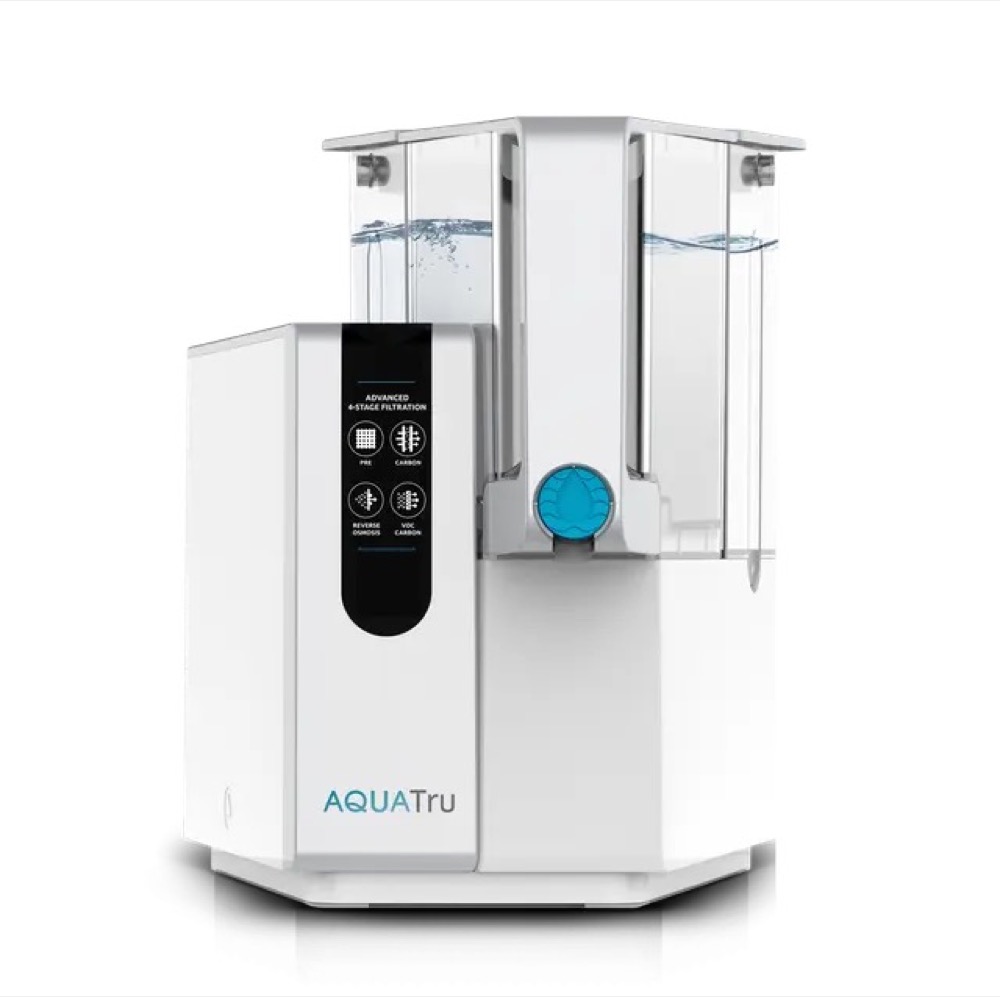
Reverse osmosis works by pushing water through a semipermeable membrane whose pores are far smaller than a PFAS molecule, so short- and long-chain PFAS are physically rejected rather than adsorbed onto a surface that can eventually saturate. AquaTru pairs that membrane with pre- and post-carbon stages and holds NSF/ANSI certifications for standards 42, 53, 58 and 401. AquaTru's own third-party testing reports 99%+ reduction of PFOA and PFOS, the two PFAS the EPA now regulates most tightly. For a closer look at how specific units perform, see our head-to-head reverse osmosis reviews, or the wider no-plumbing category in our best countertop water filter for microplastics and PFAS guide, which ranks AquaTru against Bluevua, Waterdrop, Berkey, and ZeroWater.
The honest trade-offs of any RO system apply here: it wastes some water to drain (AquaTru's ratio is better than most, but it isn't zero), it strips beneficial minerals along with the bad stuff, and the finished water sits in a plastic dispense tank — decant into glass if that matters to you. Filters are a recurring cost. But for a renter or anyone who wants the RO result without cutting into a water line, nothing else on this list is this thorough and this easy.
AquaTru owners talk like converts — one common line is "I am now a complete water snob. All water is inferior," and the buying pattern backs it up: people get one, then buy more for family. Owners who test with a home purity meter report readings dropping to single digits, and many keep a second glass carafe cold in the fridge. The honest downsides from reviews: hard water is its weak point (descale on schedule, since damage from skipping it is not covered), the glass carafe is on the thin side, and a thirsty household refills the tap-water tank daily.
The most thorough PFAS removal available without installation — countertop RO, NSF-certified, tested to 99%+ PFOA/PFOS reduction.
On PFAS: Reverse osmosis is named by the U.S. EPA as one of the most effective ways to reduce PFAS in drinking water; AquaTru's membrane rejects the molecules by size and charge rather than adsorbing them.
Check Today’s Price on Amazon →Amazon prices change daily — tap to see today's price and any active discount.
- Free delivery & returns for Prime members
- Ships free with Prime on eligible items
- Thousands of verified reviews
2. Waterdrop G3P600 Tankless Reverse Osmosis System — Best Under-Sink RO
Best Under-Sink RO
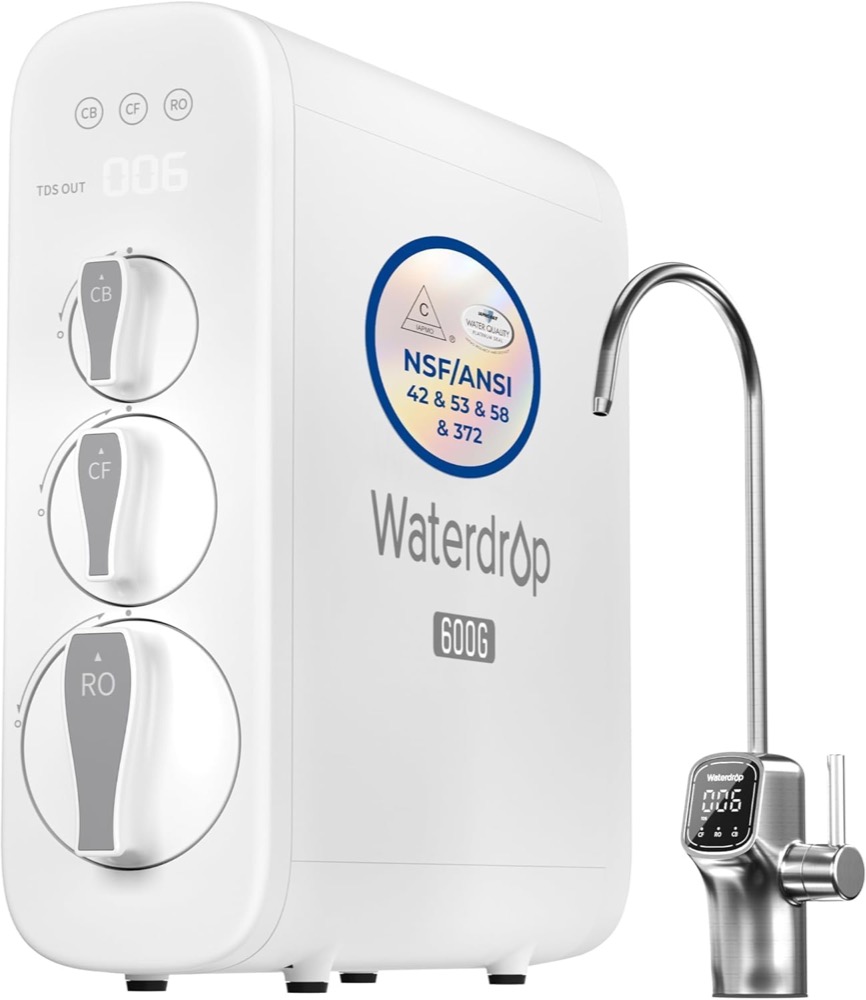
The G3P600 carries NSF/ANSI 58 certification — the standard specifically written for reverse-osmosis systems — and its RO membrane rejects PFAS the same way AquaTru's does: by physical exclusion. The tankless architecture avoids the stagnant storage tank of older RO units, and the front-panel display tells you exactly when each of the filter stages needs changing, so performance never quietly degrades.
You'll need a little under-sink space and a basic install (or a plumber for an hour). Like all RO it sends some water to drain and remineralizes nothing on its own — many owners add an inline remineralization cartridge for taste. For a household that drinks a lot of water and wants PFAS handled invisibly and permanently, this is the upgrade from a countertop unit. For a no-plumbing option that screws onto the tap instead, see our guide to the best faucet water filters.
Owners frequently call an under-sink reverse-osmosis system the best upgrade they have made to the house, and they love this one's live purity readout on the faucet — reports of tap water dropping from a 450 reading to around 12 are typical. People upgrading from older tank systems say filter changes are easier and the tankless design frees up cabinet space. The honest warnings: it needs a power outlet under the sink, a minority of owners report drip leaks or an automatic rinse cycle that would not stop (replacements were sent, but it happens), and hard-water homes see shorter filter life than advertised.
Under-sink reverse osmosis with a fast 600 GPD tankless flow — NSF/ANSI 58 certified, out of sight, and built for daily volume.
On PFAS: As a certified reverse-osmosis system its membrane physically rejects PFAS by size; RO is the EPA-recognized gold standard for the widest range of forever chemicals.
Check Today’s Price on Amazon →Amazon prices change daily — tap to see today's price and any active discount.
- Free delivery & returns for Prime members
- Ships free with Prime on eligible items
- Thousands of verified reviews
3. Clearly Filtered Water Pitcher — Best Pitcher
Best Pitcher
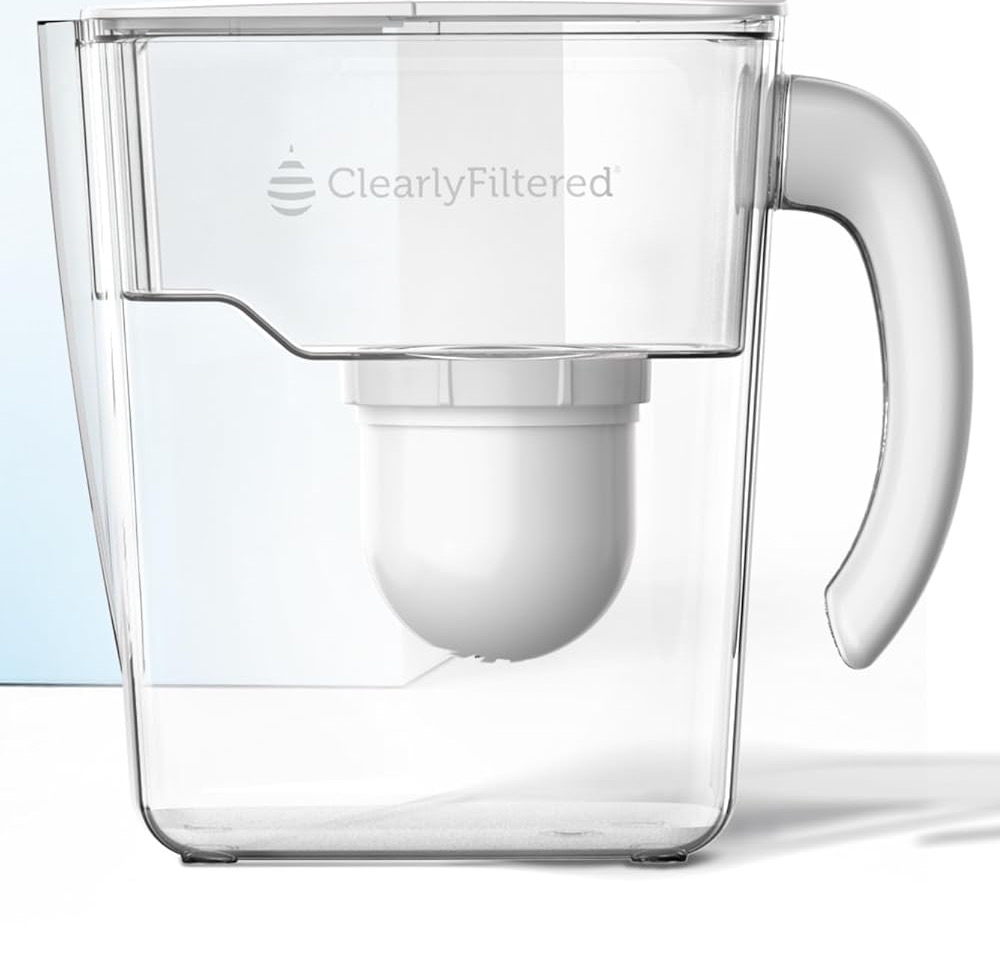
Clearly Filtered's Affinity® filtration technology is tested by accredited third-party labs against a long contaminant list, including PFOA and PFOS, with published reports showing greater than 99% reduction. That documentation is what separates it from a generic carbon pitcher — you can read exactly which compounds were tested and by how much they dropped.
The trade-offs are the trade-offs of every dense filter: flow is slower than a basic Brita, and the filter costs more and needs replacing on schedule to keep performing. It also sits in a plastic pitcher body. But as a no-tools, no-plumbing way to get lab-documented PFAS reduction, it's the pitcher to beat — and it doubles as a strong microplastics filter (see our best water-filter pitcher guide).
The recurring result owners report is "no more bottled water for us" — the classic story is someone whose Brita could not fix a metallic taste and this pitcher did. Owners also like that it keeps the natural minerals, so the water tastes "clean without being empty" the way reverse-osmosis water can. The honest gripes: new filters need a priming step owners genuinely dislike, a full pitcher can take 30 to 40 minutes to filter through, replacement filters are pricey and bought several times a year, and the loose lid is a running joke even among fans.
The best-documented PFAS pitcher — independent lab reports show 99%+ PFOA/PFOS reduction, no installation required.
On PFAS: Third-party lab testing (not just marketing) shows the Affinity® media reduces PFOA and PFOS by more than 99% — insist on that kind of documentation from any pitcher.
Check Today’s Price on Amazon →Amazon prices change daily — tap to see today's price and any active discount.
- Free delivery & returns for Prime members
- Ships free with Prime on eligible items
- Thousands of verified reviews
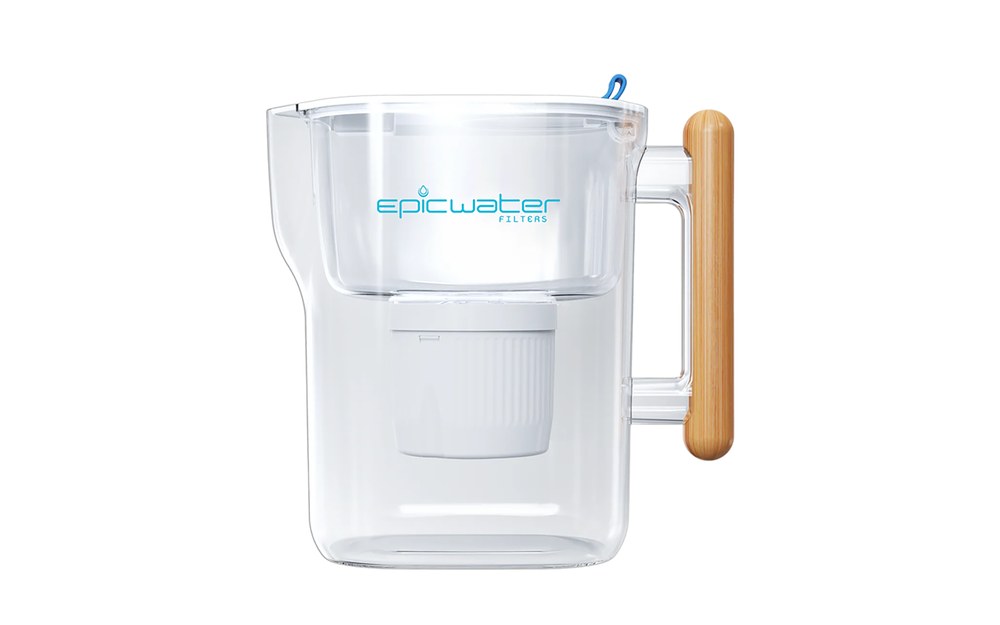
4. Epic Pure Water Filter Pitcher — Best Budget Pitcher
Best Budget Pitcher
Epic's filter is a solid carbon block rather than loose granules, which gives it far more contact area and a tighter path than a standard pitcher cartridge — that's what lets it target PFAS and microplastics rather than just chlorine taste. Each filter treats roughly 150 gallons before replacement, and Epic backs the performance with published third-party testing you can read before you buy.
As with any dense pitcher filter, flow is slower than a basic model and the cartridge is the ongoing cost. It's a plastic pitcher body, so decant to glass if you prefer. For a household that wants lab-backed PFAS reduction at the lowest entry price on this list, the Epic Pure is the value pick.
Owners choose Epic Pure for its long contaminant list — it is the pitcher people reach for when they want lead, PFAS, and fluoride reduction in one no-install unit — and most say the filtered water tastes clean and noticeably better than the tap. The honest downsides that come up most: it drips through slowly (a "fill it and walk away" pitcher, not instant), the flip-top spout lid can feel sticky or leak if overfilled, and the filters are not cheap and need fairly frequent replacement to keep the flow up.
Documented PFAS reduction at the lowest pitcher price here — a solid carbon block tested for PFOA/PFOS/PFNA/PFHxS.
On PFAS: Epic publishes independent lab data naming the specific PFAS compounds reduced (PFOA, PFOS, PFNA, PFHxS) — the standard of proof to demand from any carbon pitcher.
Check Today’s Price on Amazon →Amazon prices change daily — tap to see today's price and any active discount.
- Free delivery & returns for Prime members
- Ships free with Prime on eligible items
- Thousands of verified reviews
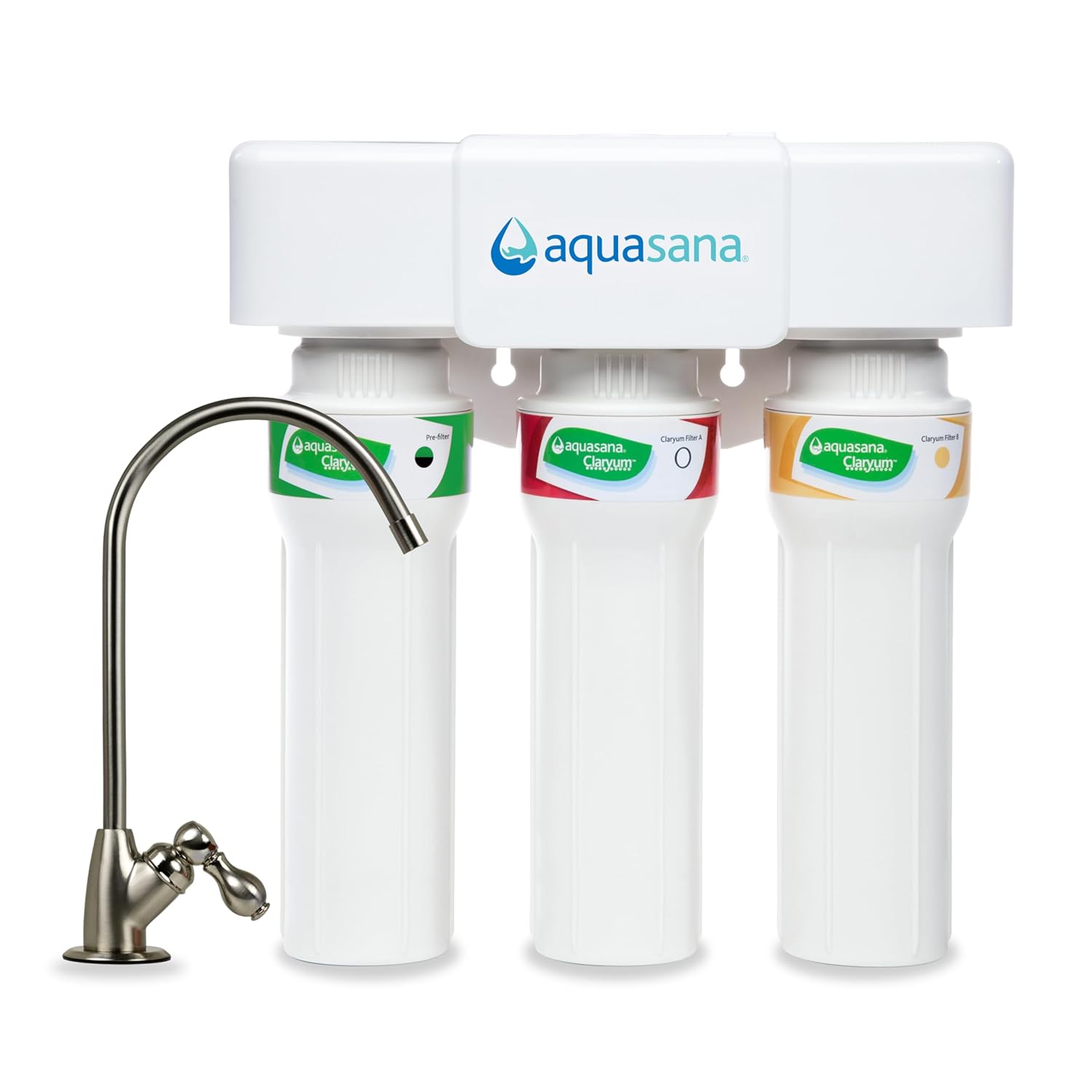
5. Aquasana AQ-5300+ Max Flow Claryum 3-Stage — Best Certified Carbon Under-Sink
Best Certified Carbon Under-Sink
Certified activated carbon is the second technology (after RO) recognized for reducing the two most common PFAS. The Aquasana Claryum three-stage holds NSF/ANSI 42, 53, 401 and P473 certifications and is rated by Aquasana to reduce PFOA and PFOS, all while keeping beneficial minerals in the water and delivering full faucet flow with no storage tank. It installs under the sink with its own dedicated tap.
The honest caveat: certified carbon reliably targets the well-studied long-chain PFAS like PFOA and PFOS, whereas reverse osmosis and distillation remove a wider range of PFAS chain lengths. If your utility report flags a broad PFAS mix, an RO system is more complete; if PFOA/PFOS are the concern and you want to keep minerals and flow, the AQ-5300+ is the smart under-sink choice. Compare it against the field in our best under-sink filter guide.
What owners praise most is the fast flow from the dedicated faucet — reviewers who had used "lethargic" systems before call this one genuinely quick — plus an easy setup and a clear improvement in chlorine taste and smell. The honest complaints are consistent in the reviews: leaks are the main one (tubing popping out, O-rings failing, the housing top popping off), the filters do not always lock solidly in place, and flow can drop sharply right after a filter change until everything reseats. Following the install instructions closely heads off most of the leak reports.
The most-certified carbon under-sink filter here — NSF 42/53/401/P473, reduces PFOA/PFOS, and keeps your water's minerals and flow.
On PFAS: Certified activated carbon (NSF/ANSI 53) is the recognized carbon-based route for reducing PFOA and PFOS; RO covers a wider PFAS range if your water shows a broad mix.
Check Today’s Price on Amazon →Amazon prices change daily — tap to see today's price and any active discount.
- Free delivery & returns for Prime members
- Ships free with Prime on eligible items
- Thousands of verified reviews
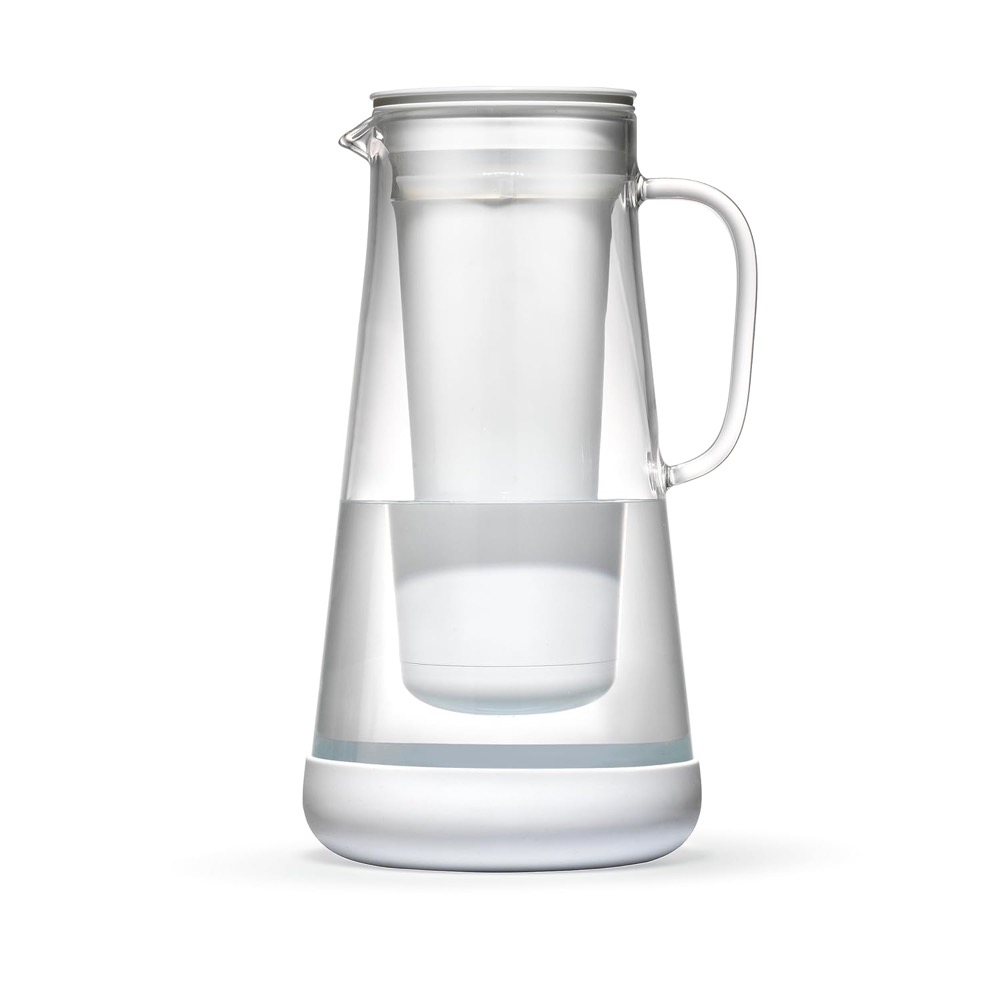
6. LifeStraw Home Water Filter Pitcher — Best Membrane Pitcher
Best Membrane Pitcher
The membrane stage physically strains out particles down to the size that stops bacteria, parasites and microplastics, while the carbon-plus-ion-exchange stage handles chemical contaminants; LifeStraw tests the Home pitcher to reduce PFOA and PFOS along with lead, chlorine and 30+ other contaminants. It's a genuinely broad filter in a no-install format.
As with every dense two-stage pitcher, flow is slower than a basic model and there are two elements to replace on schedule. The body is plastic. But if you value a wide safety net — the same brand trusted for backcountry and emergency water — the LifeStraw Home is the most versatile pitcher on this list.
The near-universal comparison owners make is Brita: they say this "tastes way better and cleaner," and several mention tossing their old carbon pitcher after switching. The glass body is a repeated buy-reason for people avoiding plastic, and backpackers who trust LifeStraw's outdoor filters bring that trust into the kitchen. The honest downsides: it filters noticeably slower than a Brita — owners treat it as a "start it, walk away, come back" pitcher — and it does not remove fluoride, if that is on your list.
The widest safety net in a pitcher — membrane microfilter plus carbon, tested for PFOA/PFOS and also removing bacteria, parasites and microplastics.
On PFAS: The Home pitcher is tested to reduce PFOA and PFOS; its membrane stage adds protection against bacteria, parasites and microplastics that a carbon-only pitcher can't match.
Check Today’s Price on Amazon →Amazon prices change daily — tap to see today's price and any active discount.
- Free delivery & returns for Prime members
- Ships free with Prime on eligible items
- Thousands of verified reviews
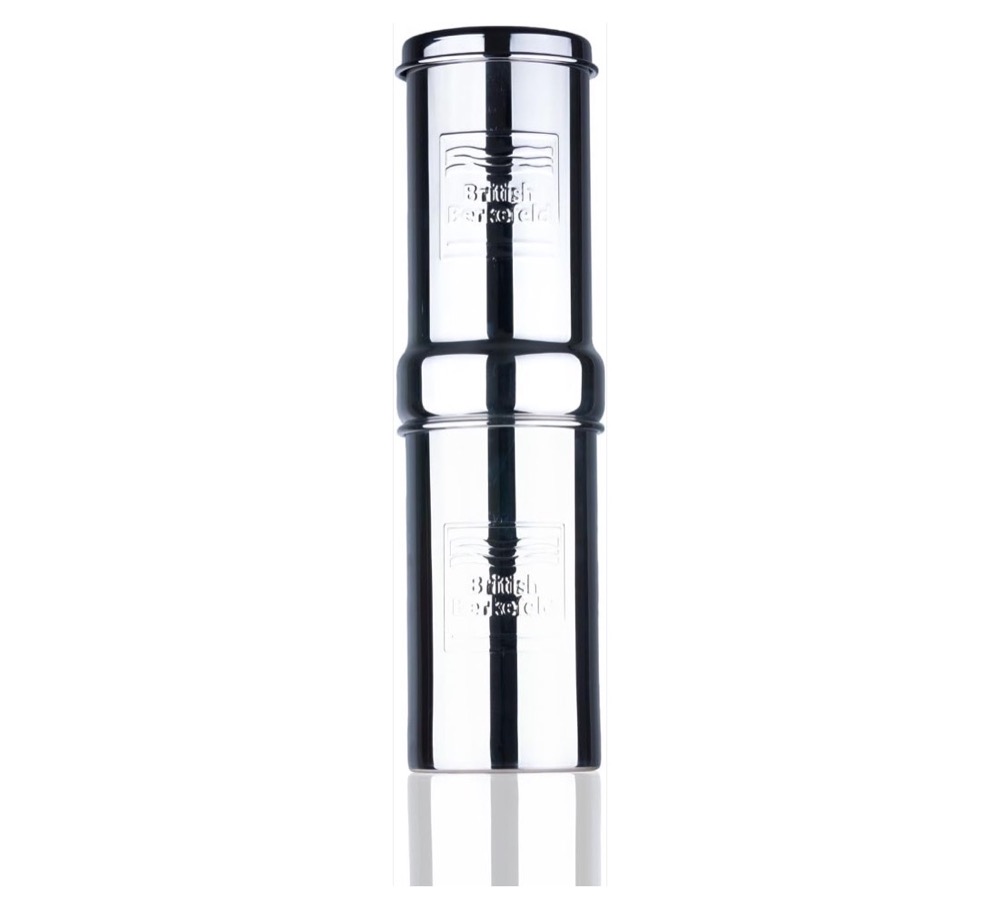
7. British Berkefeld Gravity Water Filter — Best Off-Grid Gravity
Best Off-Grid Gravity
The British Berkefeld's stainless chambers hold ceramic candle elements with an activated-carbon and ion-exchange core. The maker's laboratory testing reports reduction of PFAS (including PFOA and PFOS) along with a long list of other contaminants, and the ceramic shell also strains out sediment, bacteria and microplastics. Because it's gravity-fed, it needs no power and no water line — the reason gravity filters are a staple for emergency and off-grid kitchens.
The honest caveat matters here: gravity filters like this rely on manufacturer and independent lab testing rather than an NSF/ANSI PFAS certification, so if certification is your bar, choose an RO or NSF-53 carbon pick above. Flow is slow (it's gravity), and the candles need periodic scrubbing. But for resilience — PFAS reduction that survives a blackout — nothing else on this list compares.
The dominant story in reviews is former Berkey owners switching over and deciding the original design was better all along — "no priming needed, just screw them on." The ritual owners describe is topping it off at night so a full tank of filtered water is waiting by morning, no electricity involved, and some run theirs off rain barrels. A small repeated delight: pets drinking more water. The honest warnings: it is slow by design (roughly a liter per hour per filter candle), new candles need several flush cycles before the water is ready, and it takes real counter space.
PFAS reduction with zero power or plumbing — a stainless gravity filter that keeps working off-grid or in an outage.
On PFAS: The maker's lab testing reports PFAS reduction, but this system is not NSF-certified for PFAS specifically — pick an RO or NSF/ANSI 53 carbon filter above if third-party certification is your requirement.
Check Today’s Price on Amazon →Amazon prices change daily — tap to see today's price and any active discount.
- Free delivery & returns for Prime members
- Ships free with Prime on eligible items
- Thousands of verified reviews
PFAS Filter Buyer's Guide: How to Choose
Match the technology to your water report
Start with your utility's Consumer Confidence Report or an at-home PFAS test. If it shows a broad mix of PFAS chain lengths, choose reverse osmosis (AquaTru or Waterdrop G3P600) — it doesn't care which PFAS is present, it rejects them all by size. If PFOA and PFOS are the named concern and you'd rather keep your water's minerals and full flow, a certified NSF/ANSI 53 carbon filter (Aquasana AQ-5300+, or the Clearly Filtered / Epic Pure pitchers) is efficient and simpler.
Countertop vs. under-sink vs. pitcher
Renters and anyone who can't modify plumbing should look at the countertop AquaTru or a pitcher. Homeowners who drink a lot of water and want it invisible should plumb in the Waterdrop G3P600 or Aquasana under-sink. If you want resilience during outages or off-grid, the gravity-fed British Berkefeld keeps filtering with no power. There's no single right answer — only the right match for your kitchen and your certainty about proof.
The real cost is per-gallon, not sticker price
Reverse-osmosis systems cost more up front and use some water to drain, but their per-gallon PFAS removal is unmatched. Pitchers are cheapest to buy but have the highest per-gallon filter cost and the slowest flow. Whatever you choose, the recurring cost is the filter cartridge — and a PFAS filter only works if you actually change it on schedule. A lapsed cartridge is an unfiltered tap. Budget for replacements the day you buy.
Our recommendation: For the most complete PFAS removal with zero installation, the AquaTru Countertop RO is the pick. Want it permanent and out of sight? The Waterdrop G3P600. Want a no-install pitcher with published lab data? The Clearly Filtered, or the Epic Pure on a budget. And once your drinking water is handled, the same forever-chemicals logic applies elsewhere in the kitchen — see our guide to PFAS in straws and PFAS-free parchment paper.
Frequently Asked Questions
Sources & further reading
- U.S. EPA — Key EPA Actions to Address PFAS, including drinking water regulation.
- U.S. EPA — Reducing PFAS in Drinking Water with Treatment Technologies (RO, activated carbon, ion exchange).
- U.S. Geological Survey (2023) — Tap Water Study Detects PFAS 'Forever Chemicals' Across the US.
- NSF International — NSF/ANSI 53 and 58 water-treatment certification standards.