The short answer
The best water filter for lead in 2026 is the AquaTru Countertop Reverse Osmosis Purifier (~$449) — NSF/ANSI 53 certified for lead reduction, and removes more than 99% of it with no plumbing. For a no-install pitcher, the Clearly Filtered; for a permanent under-sink RO, the tankless Waterdrop G3P600; for a $30 tap-mount that cuts lead in minutes, the PUR Plus faucet filter; for the value under-sink RO, APEC ROES-50; for a budget pitcher with published lead lab data, Epic Pure. The one rule that matters: only a filter carrying NSF/ANSI 53 or NSF/ANSI 58 certified for lead is actually a lead filter. A standard white-cartridge Brita and most fridge filters are not.
Quick Navigation
- What is the best water filter for lead?
- Why is lead in my tap water — and why filter it?
- Which filter types actually remove lead?
- What does NOT remove lead (Brita, boiling)
- Quick comparison: all 7 lead filters
- Best overall: AquaTru Countertop RO
- Best pitcher: Clearly Filtered
- Best under-sink RO: Waterdrop G3P600
- Best faucet mount: PUR Plus
- Best value RO: APEC ROES-50
- Best budget pitcher: Epic Pure
- Best ion-exchange: ZeroWater
- Buyer's guide
- FAQ
Compare all 7 picks
Every pick side by side — tap a name to jump to the full review, or check today's price.
| Pick | Rating | Why it wins | |
|---|---|---|---|
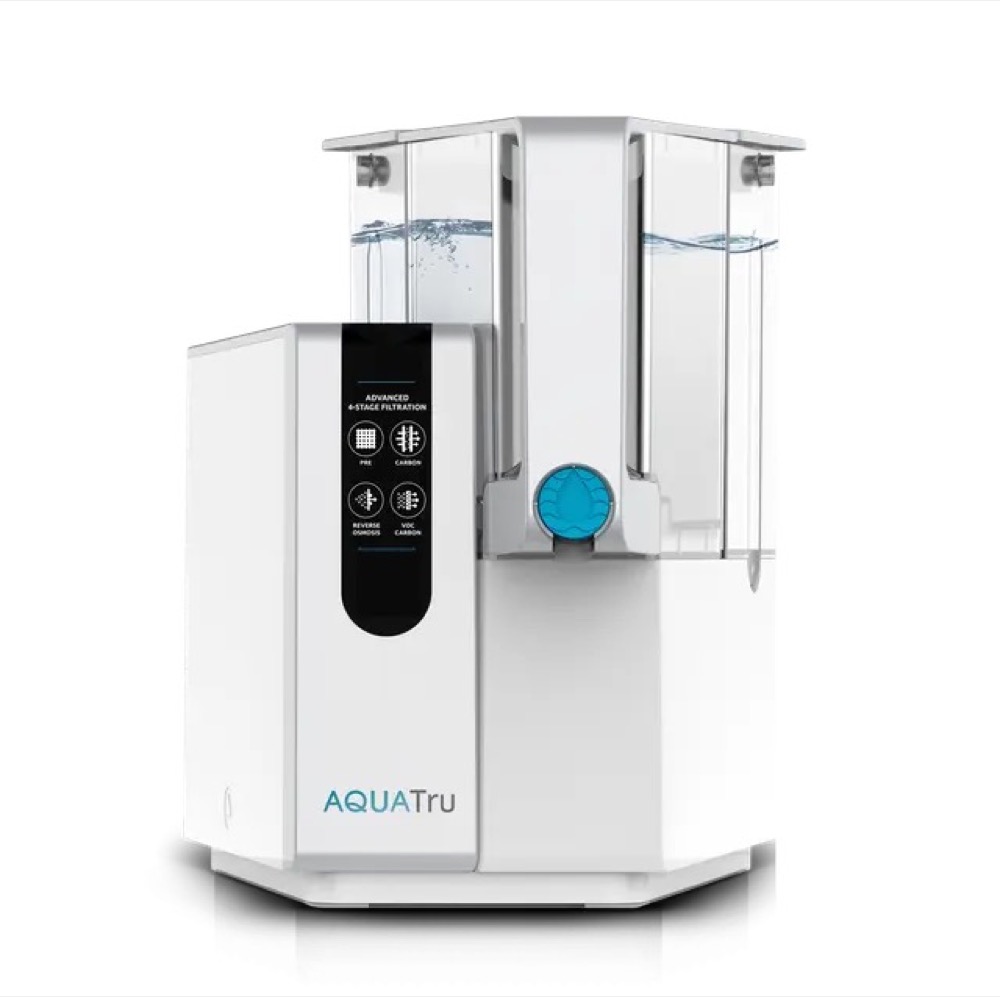 Best OverallAquaTru Countertop Reverse Osmosis Purifier |
4.7out of 5 | NSF/ANSI 53 (lead)NSF 42, 58, 401 |
Check price → |
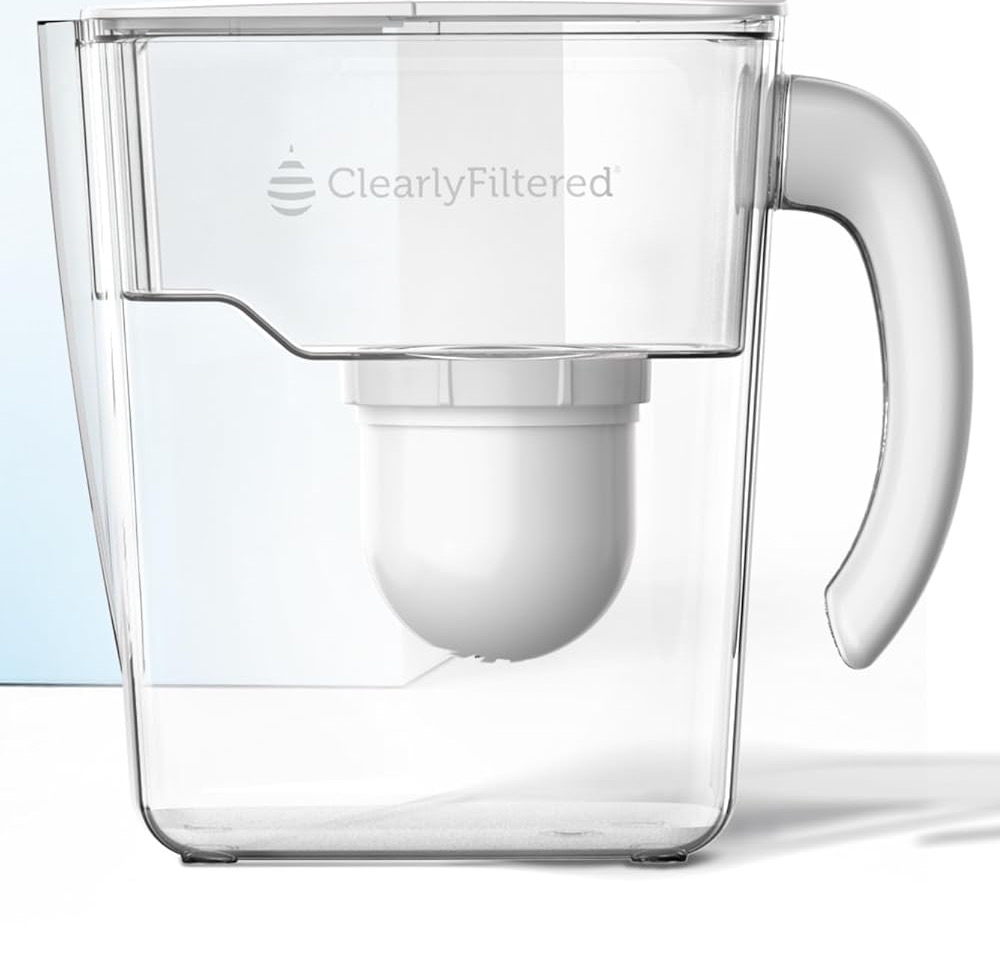 Best PitcherClearly Filtered Water Pitcher |
4.1out of 5 | Affinity® multi-media3rd-party lab: >99.5% lead |
Check price → |
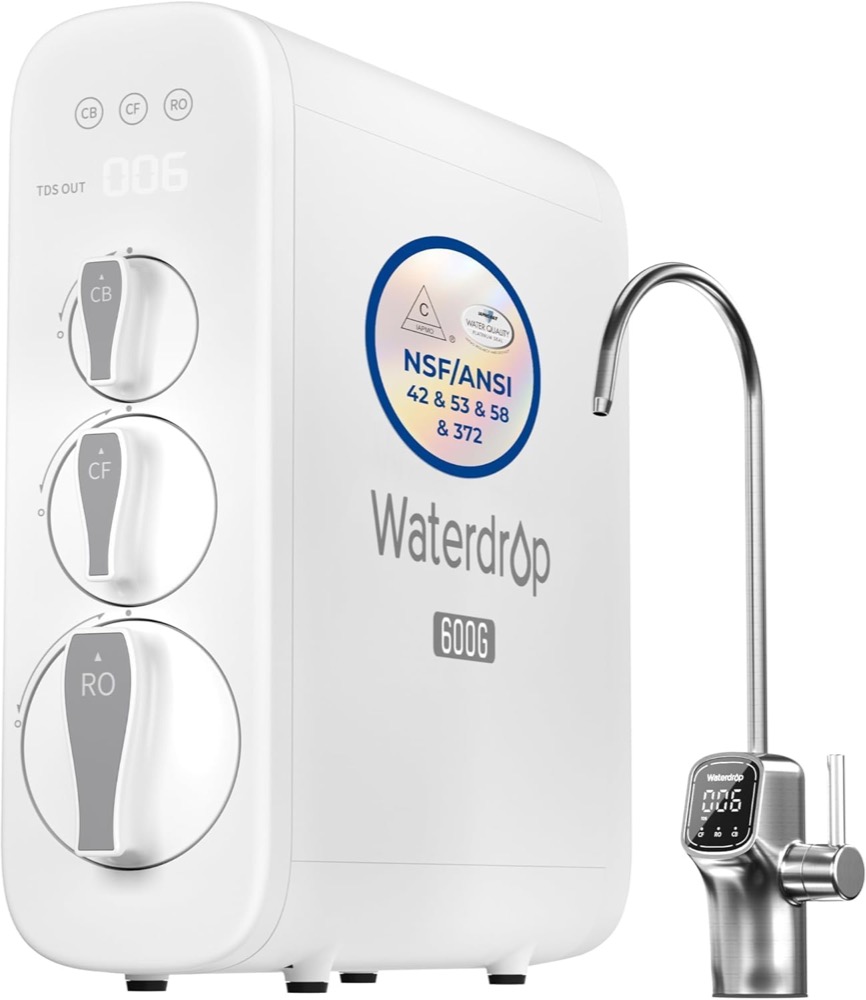 Best Under-Sink ROWaterdrop G3P600 Tankless Reverse Osmosis System |
4.8out of 5 | NSF/ANSI 58 (RO)600 GPD tankless |
Check price → |
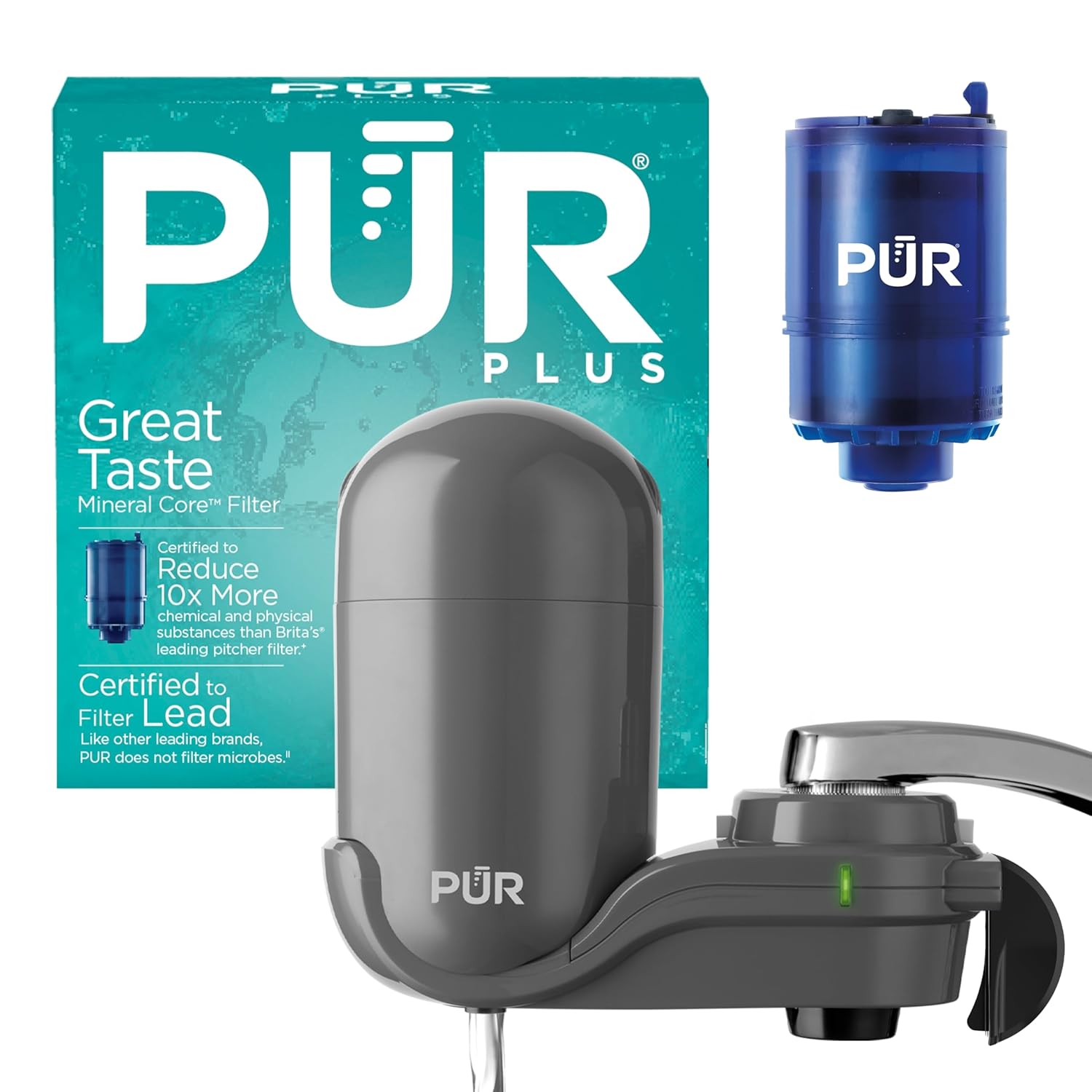 Best Faucet MountPUR Plus Vertical Faucet Mount Water Filter |
4.5out of 5 | NSF/ANSI 42 & 53Certified for lead |
Check price → |
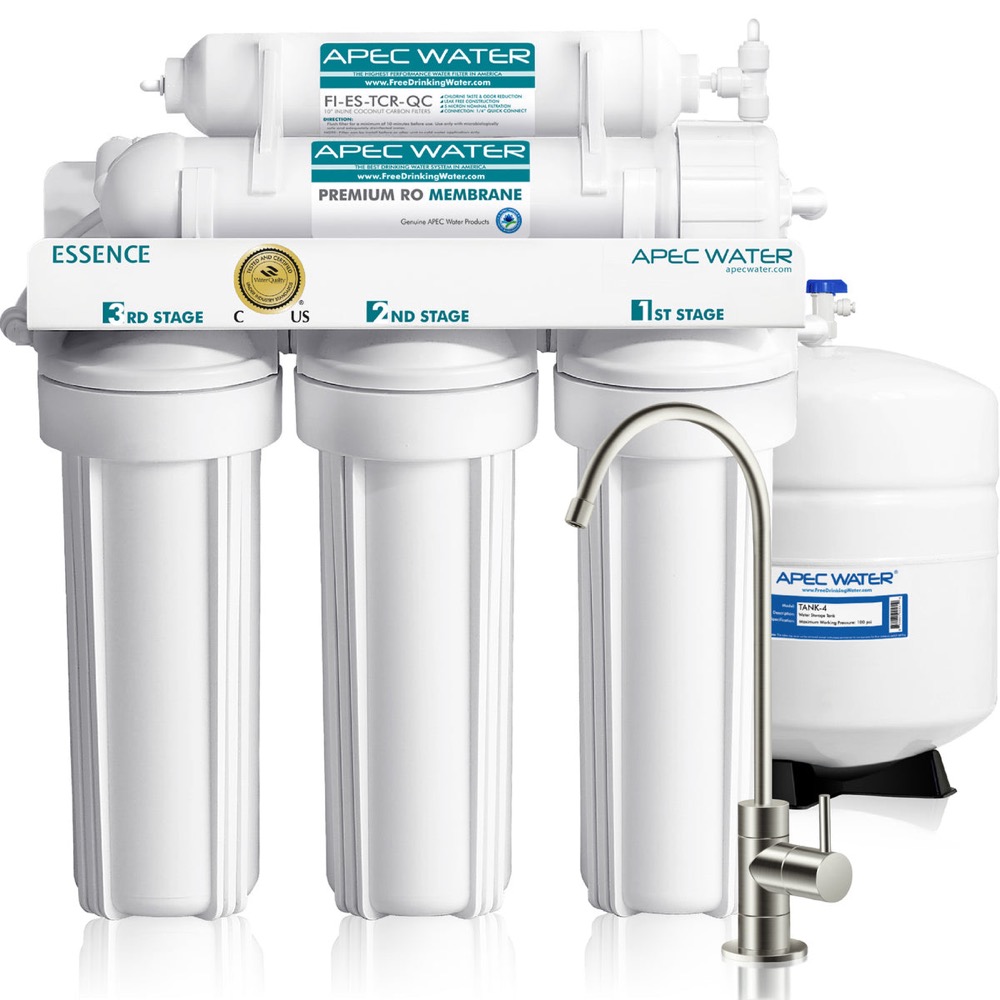 Best Value ROAPEC Water ROES-50 Under-Sink 5-Stage RO |
4.7out of 5 | WQA Gold Seal (RO)5-Stage RO |
Check price → |
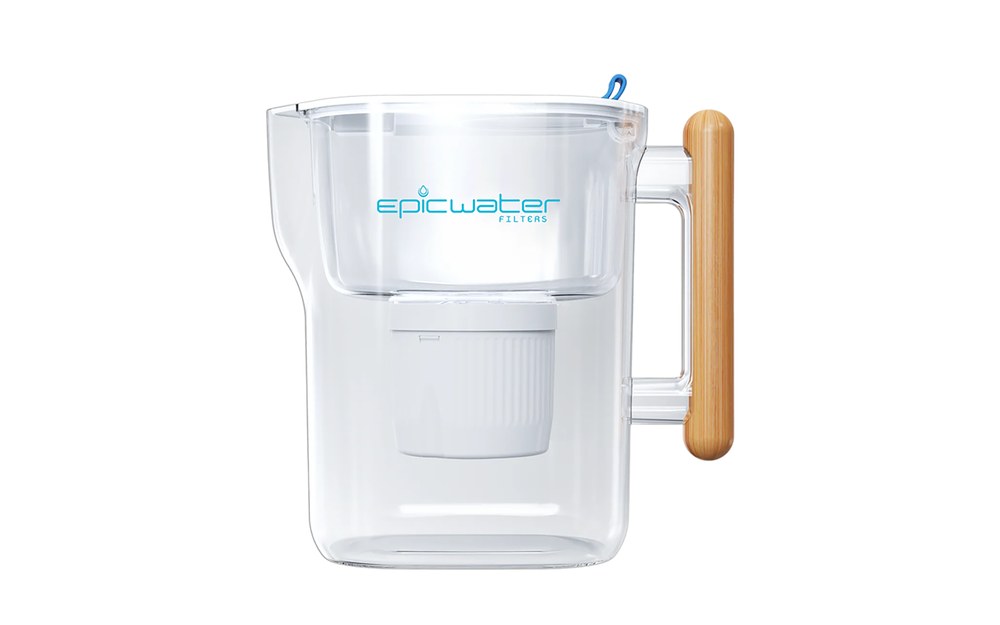 Best Budget PitcherEpic Pure Water Filter Pitcher |
4.9out of 5 | Solid carbon blockPublished lab: >99% lead |
Check price → |
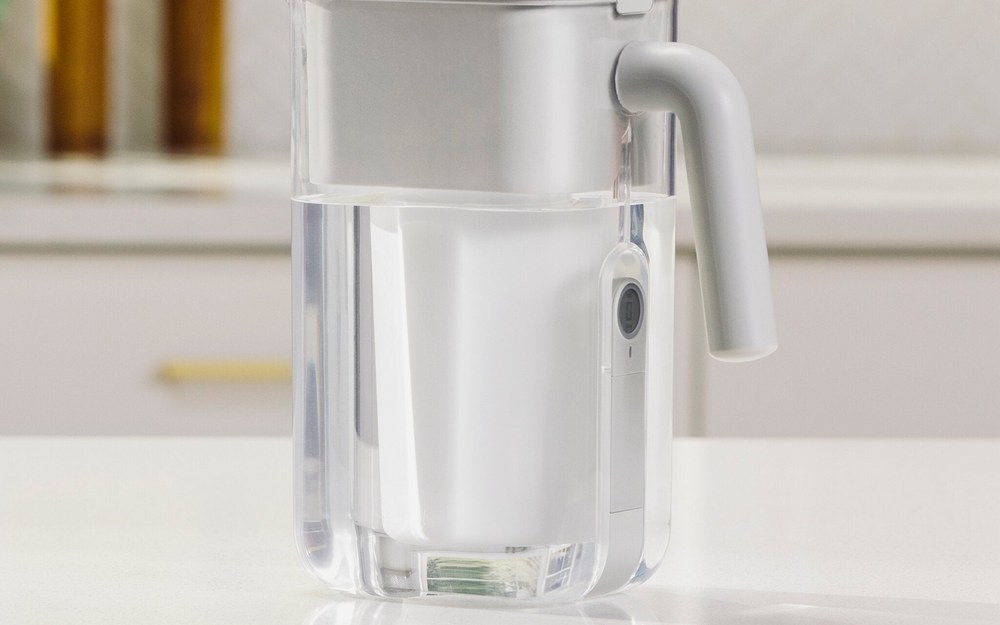 Best Ion-ExchangeZeroWater 10-Cup Pitcher with TDS Meter |
4.5out of 5 | NSF/ANSI 53 (lead)5-Stage Ion-Exchange |
Check price → |
What Is the Best Water Filter for Lead?
The best water filter for lead in 2026 is the AquaTru Countertop Reverse Osmosis Purifier, because it carries an NSF/ANSI 53 certification specifically for lead reduction and delivers reverse osmosis with no plumbing at all. For a no-install pitcher, the Clearly Filtered Water Pitcher is the pick — its Affinity® filtration is independently lab-tested against lead.
For a permanent under-sink RO, the Waterdrop G3P600 tankless system; for a $30 tap-mount that cuts lead in minutes, the PUR Plus faucet filter; on value, the APEC ROES-50 under-sink RO; on a budget, the Epic Pure pitcher. What every real lead filter here has in common is a proven mechanism — a reverse-osmosis membrane, a carbon block certified to NSF/ANSI 53 for lead, or ion-exchange — and third-party proof that names lead, not marketing copy.
Why Is Lead in My Tap Water — and Why Filter It?
Lead almost never comes from the water your utility sends. It dissolves out of the plumbing between the water main and your kitchen glass — a lead service line, lead solder at copper joints (banned in 1986 but still in millions of older homes), or brass fixtures that historically contained up to 8% lead.
Corrosive water — soft or acidic — pulls a little more lead into the water on its way to the tap. Hot water dissolves more than cold, and water that sits stagnant in the pipes overnight is worst of all. That is why the EPA tells families to draw cold water for drinking and cooking, and to flush the tap for 30 seconds to two minutes after long stagnation.
Under the EPA's Lead and Copper Rule, the Maximum Contaminant Level Goal (MCLG) for lead is 0 — because there is no known safe blood-lead level, especially for pregnant people, infants, and young children. Even low-level exposure can affect a child's IQ, attention span, and academic performance — which is why, if you mix formula, our best water filter for baby formula guide ranks picks specifically for infant water.
The 15-parts-per-billion "action level" utilities operate under isn't a safety threshold; it's a compliance trigger for corrosion control. The 2024 Lead and Copper Rule Improvements are lowering it to 10 ppb and requiring every U.S. utility to replace lead service lines within a decade. Until that happens, the one lever families fully control is the filter on the last few feet of pipe — the one under, over, or next to their kitchen sink. If your utility flagged elevated lead, a certified home test (about $30) tells you your exact number; either way, the filters below reduce it to essentially undetectable.
The rule that matters: the only filter that meaningfully removes lead is one certified to NSF/ANSI 53 for lead reduction (activated-carbon block, ion-exchange, or a combined system) or NSF/ANSI 58 for reverse osmosis. Those two markings are the entire story. A refrigerator filter, a basic Brita, or a generic "water purifier" without either standard printed on the packaging does not reduce lead. If a filter can't show a certification or an independent lab report naming lead and a percent reduction — usually >99% — treat its lead claim as unproven marketing.
Which Filter Types Actually Remove Lead?
Three home methods reliably remove lead when they are certified to do it. First, an activated-carbon block filter with the pore size and contact time to meet NSF/ANSI 53 for lead — this covers most tested pitchers (Clearly Filtered, Epic Pure, Brita Elite), NSF-certified faucet mounts (PUR Plus), and better under-sink cartridges. Carbon-block lead removal works two ways: mechanically trapping particulate lead in the tight pore structure, and chemically binding dissolved lead ions through adsorption.
Second, reverse osmosis: the semipermeable membrane physically rejects the lead ion by size and charge, and a well-designed RO system pairs it with pre- and post-carbon stages that catch dissolved lead complexes. RO typically removes 99%+ of lead — the completest home method. Third, ion-exchange resin (as in ZeroWater's 5-stage cartridge) captures dissolved lead until its capacity is used up. Distillation also removes lead completely, though it's slow and most people who buy a distiller do it for a different contaminant. See our water distiller guide if that route appeals.
What Does NOT Remove Lead
This is where money is wasted. A standard white-cartridge Brita, PUR classic, or refrigerator filter uses granular activated carbon built for chlorine taste and odor — it is not NSF/ANSI 53 lead-certified and does not meaningfully reduce lead. Brita's newer Elite (blue) filter IS certified for lead reduction and does work; the confusion is understandable, and it's why the certification marking matters more than the brand. Boiling makes lead worse: lead does not evaporate, so as water boils off, the lead that remains is more concentrated per liter.
Water softeners exchange calcium and magnesium for sodium — they do nothing for lead, and by making water softer they can actually be slightly more corrosive to plumbing downstream. Letting water sit, freezing, or running it through a whole-house sediment filter is not a lead solution either. If lead is your reason, look for NSF/ANSI 53 or NSF/ANSI 58 printed on the package. Nothing else counts. (For a related surprise about what basic filters miss, see does Brita remove microplastics?).
Quick Comparison: All 7 Lead Filters
| Filter | Type | Lead method | Certification / proof for lead | Install |
|---|---|---|---|---|
| AquaTru | Countertop RO | Reverse osmosis + carbon | NSF/ANSI 42, 53 (lead), 58, 401 | None (plug in) |
| Clearly Filtered | Pitcher | Affinity® multi-media | 3rd-party lab: >99.5% lead reduction | None |
| Waterdrop G3P600 | Under-sink RO | Reverse osmosis + carbon | NSF/ANSI 58 (RO) | Under-sink |
| PUR Plus | Faucet mount | MAXION® carbon + ion-exchange | NSF/ANSI 42 & 53 (lead) | Screws onto tap |
| APEC ROES-50 | Under-sink RO | Reverse osmosis + carbon | WQA Gold Seal (RO) | Under-sink |
| Epic Pure | Pitcher | Solid carbon block | Published lead lab data (>99%) | None |
| ZeroWater | Pitcher | 5-stage ion-exchange | NSF/ANSI 53 (lead) — short capacity | None |
Reverse osmosis removes the most lead; NSF/ANSI 53 certified pitchers and faucet mounts reduce it without an install. Tap any pick below for today's Amazon price.
1. AquaTru Countertop Reverse Osmosis Purifier — Best Overall for Lead
Best Overall
Reverse osmosis is the completest home method for lead: the semipermeable membrane physically rejects the lead ion by size and charge, and AquaTru sandwiches it between pre-carbon and post-carbon stages that catch any dissolved lead complexes. NSF/ANSI 53 is the standard specifically written for health-related contaminants including lead, and AquaTru's independent test data shows the system reduces lead from a challenge level of 150 ppb down to essentially undetectable — more than 99% removal. That is the number to hold every filter on this list against. To see how six full RO systems compare on removal, cost and hassle, read our reverse osmosis reviews.
The honest trade-offs of any RO system apply here: it sends some water to drain (AquaTru's recovery ratio is better than most under-sink RO, but it isn't zero), it strips beneficial minerals along with the lead, and the finished water sits in a plastic dispense tank — decant into a glass carafe if that matters to you. Filters are a recurring cost. But for a renter, an apartment, or anyone who wants the RO result without cutting into a water line, nothing else on this list matches AquaTru's certification depth or how effortless it is to set up.
AquaTru owners talk like converts — one common line is "I am now a complete water snob. All water is inferior," and the buying pattern backs it up: people get one, then buy more for family. Owners with older homes and a home lead test kit report the meter reading dropping from a scary starting point to essentially nothing, and many keep a second glass carafe cold in the fridge. The honest downsides from reviews: hard water is its weak point (descale on schedule; damage from skipping is not covered), the included dispense tank is plastic, and a thirsty household refills the tap-water tank daily.
The most thorough lead reduction available with zero installation — countertop RO, NSF/ANSI 53 certified for lead, no plumbing.
On lead: AquaTru carries the NSF/ANSI 53 certification specifically for lead reduction; its RO membrane physically rejects the lead ion, and independent testing puts removal above 99%.
Check Today’s Price on Amazon →Amazon prices change daily — tap to see today's price and any active discount.
- Free delivery & returns for Prime members
- Ships free with Prime on eligible items
- Thousands of verified reviews
2. Clearly Filtered Water Pitcher — Best Pitcher for Lead
Best Pitcher
Most pitchers do not remove lead. Clearly Filtered's Affinity® filtration is different: rather than the loose granular carbon in a basic Brita, it layers seven filter media — including catalytic carbon and ion-exchange resin — tested by accredited third-party labs against a 270-contaminant list including lead, with published reports showing greater than 99.5% reduction. That documentation is what separates it from a generic carbon pitcher: you can read exactly which lead concentration was tested and how far it dropped, rather than trust a vague claim.
The trade-offs are those of any dense multi-media filter: flow is much slower than a basic Brita — a full pitcher takes 15 to 25 minutes to filter — and the filter costs more and needs replacing on schedule to keep performing. It sits in a plastic pitcher body, so decant to glass if you prefer. Unlike RO, it leaves the water's beneficial minerals in place, which most tasters prefer. As a no-tools, no-plumbing way to get lab-documented lead reduction, this is the pitcher to beat, and it doubles as a strong microplastics and PFAS filter — see our best water-filter pitcher guide.
The recurring result owners report is "no more bottled water for us" — the classic story is a family in an older home whose Brita could not fix a metallic tap taste and this pitcher did. Owners also like that it keeps the natural minerals, so the water tastes "clean without being empty" the way reverse-osmosis water can. The honest gripes: new filters need a priming step owners genuinely dislike, a full pitcher can take 30 to 40 minutes to filter through, replacement filters are pricey and bought several times a year, and the loose lid is a running joke even among fans.
The best-documented lead pitcher — third-party lab shows >99.5% lead reduction, no install, natural minerals kept.
On lead: Clearly Filtered's Affinity® media is independently lab-tested for lead at >99.5% reduction — insist on that class of documentation from any pitcher, because most reduce very little.
Check Today’s Price on Amazon →Amazon prices change daily — tap to see today's price and any active discount.
- Free delivery & returns for Prime members
- Ships free with Prime on eligible items
- Thousands of verified reviews
3. Waterdrop G3P600 Tankless Reverse Osmosis System — Best Under-Sink RO
Best Under-Sink RO
The G3P600 carries NSF/ANSI 58 certification — the standard specifically written for reverse-osmosis systems and the marker to look for on any RO — and its RO membrane rejects lead the same physical way AquaTru's does: by size and charge at the membrane, plus dual carbon stages that mop up any dissolved lead complexes. The tankless architecture avoids the stagnant pressure tank of older RO units (a hidden hygiene upgrade in a lead conversation, since stagnant water is exactly how lead accumulates), and the front-panel display tells you exactly when each of the filter stages needs changing, so performance never quietly degrades.
You'll need a little under-sink space and a basic install (a competent DIYer, or a plumber for an hour). Like all RO it sends some water to drain and remineralizes nothing on its own — some owners add an inline remineralization cartridge for taste. For a household in an older home with a suspected lead service line who wants the problem handled permanently and out of sight, this is the upgrade from a countertop unit. It's also our top pick in the best under-sink water filters guide.
Owners frequently call an under-sink reverse-osmosis system the best upgrade they have made to the house, and they love this one's live purity readout on the faucet — reports of tap water dropping from a 450 TDS reading to around 12 are typical. People upgrading from older tank systems say filter changes are easier and the tankless design frees up cabinet space. The honest warnings: it needs a power outlet under the sink, a minority of owners report drip leaks or an automatic rinse cycle that would not stop (replacements were sent, but it happens), and hard-water homes see shorter filter life than advertised.
Under-sink reverse osmosis with a fast 600 GPD tankless flow — NSF/ANSI 58 certified, out of sight, and built for daily volume.
On lead: As a certified NSF/ANSI 58 reverse-osmosis system, the membrane physically rejects the lead ion — the same proven RO route used by the countertop AquaTru, just plumbed in and running at higher volume.
Check Today’s Price on Amazon →Amazon prices change daily — tap to see today's price and any active discount.
- Free delivery & returns for Prime members
- Ships free with Prime on eligible items
- Thousands of verified reviews
4. PUR Plus Vertical Faucet Mount Filter — Best Faucet Mount for Lead
Best Faucet Mount
The PUR Plus is one of the few faucet-mount filters that has been certified by IAPMO (an NSF-recognized standards body) against both NSF/ANSI 42 for chlorine and NSF/ANSI 53 for lead reduction — the same lead standard the AquaTru holds. Its MAXION® filter combines a carbon block (which mechanically traps particulate lead in tight pores) with an ion-exchange resin (which chemically binds dissolved lead), and PUR's certification data shows >99% lead reduction across a 100-gallon rated filter life. It also handles chlorine taste, chloramine, mercury, and 60+ other contaminants — a real filter, not a taste polisher.
The trade-offs of any faucet mount: it does not fit specialty faucets (pull-out sprayers, some square modern taps, or handheld sprayers), the plastic housing is not the prettiest thing on the sink, and filter capacity is smaller than a pitcher — a family of four typically replaces every 2 to 3 months. But at ~$30 for the housing and ~$15 per filter, it is the lowest possible dollar-cost entry into certified lead reduction. Buy this while you plan a permanent under-sink or countertop system.
Owners describe it as "the cheapest possible way to sleep at night" after a lead notice — installed in under five minutes, working immediately. Praise centers on the on/off diverter (so the filter isn't burned by dishwater), the visible filter-change indicator, and the taste change. The honest gripes: it does not fit every faucet (measure the aerator threads first), some homes with high pressure get drips at the seal ring, and the filters run short in a heavy-use kitchen — a family of four often gets six weeks, not the rated three months. Change on the indicator, not the calendar.
A ~$30 NSF/ANSI 53 certified lead filter that installs in under five minutes — the fastest cheap way into certified lead reduction.
On lead: PUR Plus is IAPMO-certified against NSF/ANSI 42 and NSF/ANSI 53 — the two standards that actually name lead. Its MAXION® media reduces lead by more than 99%.
Check Today’s Price on Amazon →Amazon prices change daily — tap to see today's price and any active discount.
- Free delivery & returns for Prime members
- Ships free with Prime on eligible items
- Thousands of verified reviews
5. APEC Water ROES-50 Under-Sink 5-Stage RO — Best Value RO
Best Value RO
APEC is a California manufacturer that builds its systems domestically. The ROES-50 is a straightforward 5-stage RO carrying the WQA Gold Seal — the independent equivalent of NSF/ANSI 58 for reverse-osmosis performance, awarded only after audited testing and a factory inspection. Its RO membrane rejects lead the same physical way every certified RO on this list does, and the paired carbon pre-filter and post-filter capture any dissolved lead complexes and residual chlorine that would otherwise shorten membrane life. There is no smart display, no remineralization, no app — just the dependable RO mechanism that actually lowers lead, at roughly the price of a good pitcher plus its first year of filters.
The honest trade-offs: a slower 50 GPD output paired with a small pressure tank (versus the tankless G3P600), roughly three gallons to drain per gallon made, a larger under-sink footprint, and a basic faucet. For buyers who value a domestically built system and real human support over gadgets — and who want RO lead reduction without the premium — it's the pick. It's also our value choice in the best reverse-osmosis systems guide.
Buyers with basic DIY skills say they had the ROES-50 installed in well under a day and noticed cleaner, better-tasting water right away, and APEC's customer service gets repeated praise as polite and responsive. The honest gripes: it sends about three gallons to the drain for every gallon it makes, some owners had to grab a couple of extra plumbing fittings from the hardware store to finish, and the most serious complaint is filter housings cracking where the fittings join — which soaked a few people's under-sink cabinets. Hand-tighten only.
US-built, WQA Gold Seal-certified RO with a 2-year warranty and lifetime support — the cheapest route to genuine reverse-osmosis lead reduction.
On lead: The WQA Gold Seal independently verifies RO performance to the same bar as NSF/ANSI 58, and an RO membrane physically rejects the lead ion — the proven mechanism, just at a lower price.
Check Today’s Price on Amazon →Amazon prices change daily — tap to see today's price and any active discount.
- Free delivery & returns for Prime members
- Ships free with Prime on eligible items
- Thousands of verified reviews
6. Epic Pure Water Filter Pitcher — Best Budget Pitcher
Best Budget Pitcher
Epic's filter is a solid carbon block rather than loose granules, which gives it far more contact area and a tighter pore path than a standard pitcher cartridge — that's what lets it meaningfully reduce lead rather than just chlorine taste. Solid carbon block is exactly the media type the NSF/ANSI 53 standard is built around: mechanical entrapment for particulate lead plus adsorption for dissolved lead. Each filter treats roughly 150 gallons before replacement, and Epic backs the performance with published third-party testing that names lead and its percent reduction (>99%), so you can read the proof before you buy.
As with any dense pitcher filter, flow is slower than a basic model and the cartridge is the ongoing cost. It's a plastic pitcher body, so decant to glass if you prefer. For a household that wants lab-backed lead reduction at the lowest entry price on this list — and that also cares about PFAS and microplastics — the Epic Pure is the value pick.
Owners choose Epic Pure for its long contaminant list — it is the pitcher people reach for when they want lead, PFAS, and fluoride reduction in one no-install unit — and most say the filtered water tastes clean and noticeably better than the tap. The honest downsides that come up most: it drips through slowly (a "fill it and walk away" pitcher, not instant), the flip-top spout lid can feel sticky or leak if overfilled, and the filters are not cheap and need fairly frequent replacement to keep the flow up.
Documented lead reduction at the lowest pitcher price here — a solid carbon block also tested for PFAS, microplastics and fluoride.
On lead: Epic publishes independent lab data naming lead and its percent reduction (>99%). That is the standard of proof to demand from any pitcher — the marketing claim alone is not enough.
Check Today’s Price on Amazon →Amazon prices change daily — tap to see today's price and any active discount.
- Free delivery & returns for Prime members
- Ships free with Prime on eligible items
- Thousands of verified reviews
7. ZeroWater 10-Cup Pitcher with TDS Meter — Best Ion-Exchange
Best Ion-Exchange
ZeroWater's 5-stage cartridge finishes with an ion-exchange resin that pulls dissolved ions — including the lead ion — out of the water, and its cartridge carries the NSF/ANSI 53 certification for lead reduction. That is how it reaches a 0 ppm TDS reading no ordinary carbon pitcher can match. The included meter is genuinely useful here: because ion-exchange capacity runs out rather than gradually fading, an exhausted filter suddenly stops reducing lead, and the meter is the only reliable way to know before your morning glass.
That's also the catch, and we won't hide it: capacity is short. In hard or high-TDS water a filter can be spent in 25 to 40 gallons — every one to three weeks for a family — and the honest fix is to replace on the meter reading, not a calendar. Stripping everything can leave the water tasting flat or slightly acidic. For steady, high-volume lead reduction the RO systems and Clearly Filtered pitcher are more economical — but as the cheapest way to combine a certified lead pitcher with a proof-of-capacity meter, ZeroWater earns its spot.
The signature draw is the included meter reading 000, and owners write "We love it love it" about getting the dissolved-solids count to zero. But stripping minerals has a cost: the water can taste "flat" and slightly acidic, and the filter life is short at roughly 25 to 40 gallons, so a family swaps filters every one to three weeks. The honest downsides: many report a "fishy, sour, metallic or chemical" smell once the meter climbs, that "the filters take much too long to pass the water," and that the lid falls off when pouring — with filter cost the number-one long-term complaint.
The cheapest way to pair a certified lead pitcher with a real TDS meter — proof, in real time, that the filter is still working.
On lead: ZeroWater's 5-stage cartridge carries the NSF/ANSI 53 certification for lead reduction, and the ion-exchange resin captures dissolved lead — but only until the resin is exhausted, so replace on the meter, not the calendar.
Check Today’s Price on Amazon →Amazon prices change daily — tap to see today's price and any active discount.
- Free delivery & returns for Prime members
- Sold & shipped by Amazon
- Thousands of verified reviews
Lead Filter Buyer's Guide: How to Choose
Start with your home's plumbing
Before you buy anything, pull your utility's Consumer Confidence Report and check whether your address is on the utility's Lead Service Line Inventory (utilities are required to publish one under the Lead and Copper Rule Improvements). If your service line is lead or "unknown," or your home was built before 1986 (lead solder ban), assume there's lead in your plumbing until a certified home test proves otherwise. That single fact matters more than which pitcher you buy — a real lead filter on a service line that's flushed properly beats a fancy filter no one changes on schedule.
Countertop vs. under-sink vs. pitcher vs. faucet mount
Renters and anyone who can't modify plumbing should look at the countertop AquaTru, a lab-tested pitcher (Clearly Filtered or Epic Pure), the PUR Plus faucet mount, or the ZeroWater 10-cup — none of them touch the sink hardware. Homeowners drinking a lot of water and wanting lead handled invisibly and forever should plumb in the Waterdrop G3P600 or the value APEC ROES-50 under-sink RO. Living somewhere temporarily and just need a certified lead filter this weekend? The $30 PUR Plus is 3 minutes of work and buys you time to plan.
The real cost is per-gallon, not the sticker price
Reverse-osmosis systems cost more up front and send some water to drain, but their per-gallon lead removal is the most economical over time because an RO membrane is not a consumable media that saturates — the pre- and post-carbon filters are the small ongoing cost, not the whole system.
Pitchers and faucet mounts are cheapest to buy but have the highest per-gallon filter cost and the slowest flow — and an ion-exchange pitcher like ZeroWater burns through cartridges fastest in hard water. Whatever you choose, a lead filter only works if you change it on schedule: a lapsed cartridge or a saturated resin is an unfiltered tap. Budget for replacements the day you buy, and set a phone reminder — this is the failure mode that puts lead back into a family's water.
Flush the tap before you drink, always
Even with a certified filter, the EPA recommends running cold water for 30 seconds to 2 minutes when the tap has sat idle more than six hours, and always using cold water for drinking and cooking — never hot from the tap, which leaches more lead. Filter or not, that habit removes the first slug of water that has sat in contact with your plumbing overnight, which is the water carrying the most lead.
Our recommendation: For the most complete lead reduction with zero installation, the AquaTru Countertop RO is the pick. For a permanent under-sink solution, the Waterdrop G3P600, or the value APEC ROES-50. For a no-install pitcher with the best independent lead lab data, the Clearly Filtered, or the Epic Pure on a budget. For the fastest cheap fix on any standard faucet, the PUR Plus. And once drinking water is handled, keep going room by room with our microplastics filter guide, our PFAS filter guide, and is tap water safe to drink?
Frequently Asked Questions
Sources & further reading
- U.S. EPA — Basic Information about Lead in Drinking Water (MCLG of 0; sources of lead in tap water; flushing guidance).
- U.S. EPA — Lead and Copper Rule & 2024 LCRI (15 ppb action level; move to 10 ppb; service-line replacement mandate).
- NSF International — NSF/ANSI 53 and 58 water-treatment certification standards (the two markings that actually name lead).
- U.S. CDC — Lead in Drinking Water (childhood exposure and health effects; cold-water flushing).
- American Academy of Pediatrics — Prevention of Childhood Lead Toxicity (no safe blood-lead level).