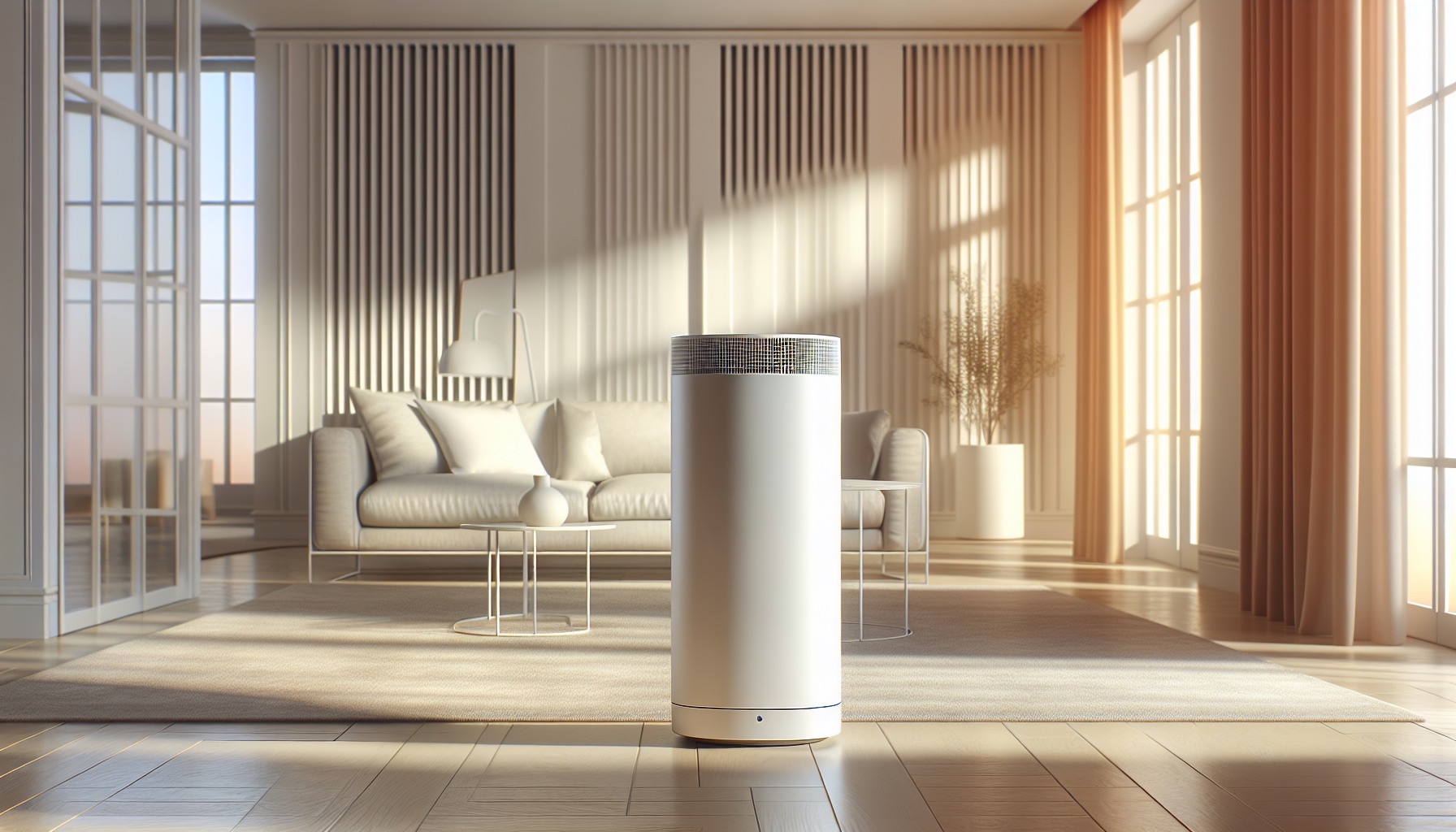
Microplastics aren't just in your water and food — they're in every breath you take indoors — and in the household dust that settles on every surface. A 2022 study published in Environment International detected microplastic particles embedded in living human lung tissue for the first time, confirming what researchers had long suspected: we are breathing in plastic, and it's accumulating in our bodies.
The sources are everywhere in your home. Synthetic clothing sheds microfibers every time you move. Polyester bedding releases particles while you sleep. Carpets, curtains, upholstery, plastic food containers, and even paint on walls all contribute to a constant cloud of airborne microplastic particles. A 2023 study in Environmental Science & Technology estimated that the average person inhales approximately 16.2 microplastic particles per hour — with indoor concentrations consistently higher than outdoor levels.
The good news: unlike microplastics in your blood or organs, airborne microplastics can be physically captured and removed before you breathe them in. But not every air purifier works. This guide covers which technologies actually remove airborne microplastics — and which popular types are a waste of money.
Compare all 5 picks
Every pick side by side — tap a name to jump to the full review, or check today's price.
| Pick | Rating | Why it wins | |
|---|---|---|---|
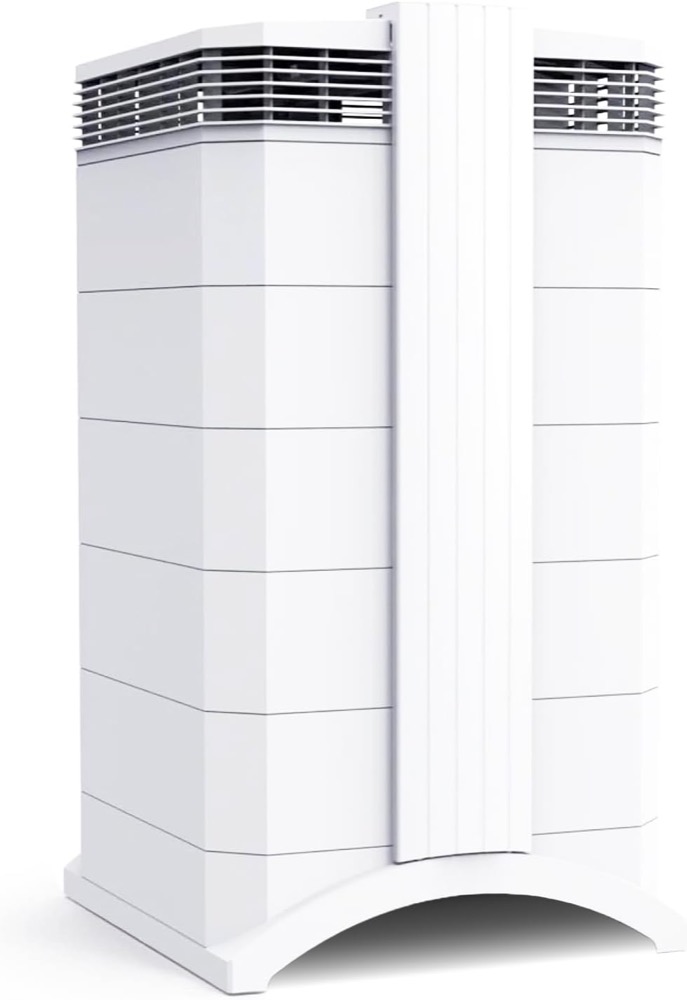 Best OverallIQAir HealthPro Plus |
4.6out of 5 | HyperHEPA 0.003µmMedical-Grade |
Check price → |
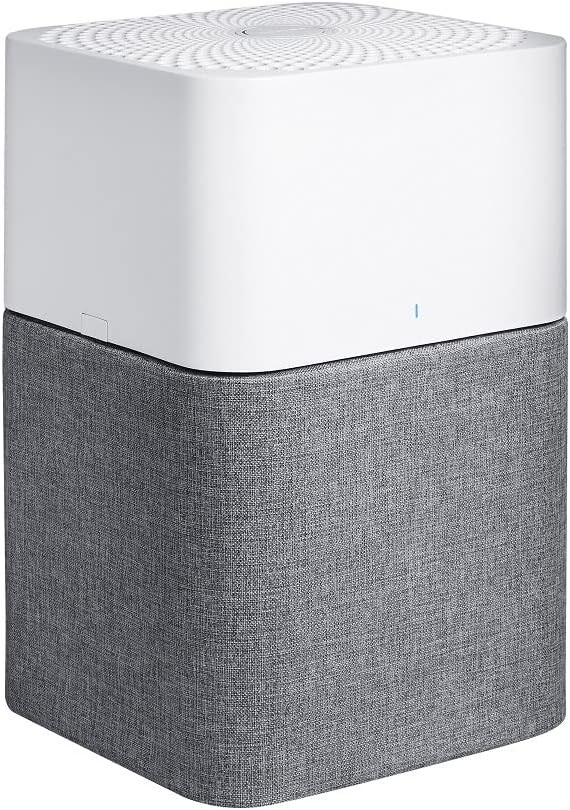 Best Large RoomBlueair Blue Pure 211+ Auto |
4.4out of 5 | HEPASilent 0.1µmEnergy Star |
Check price → |
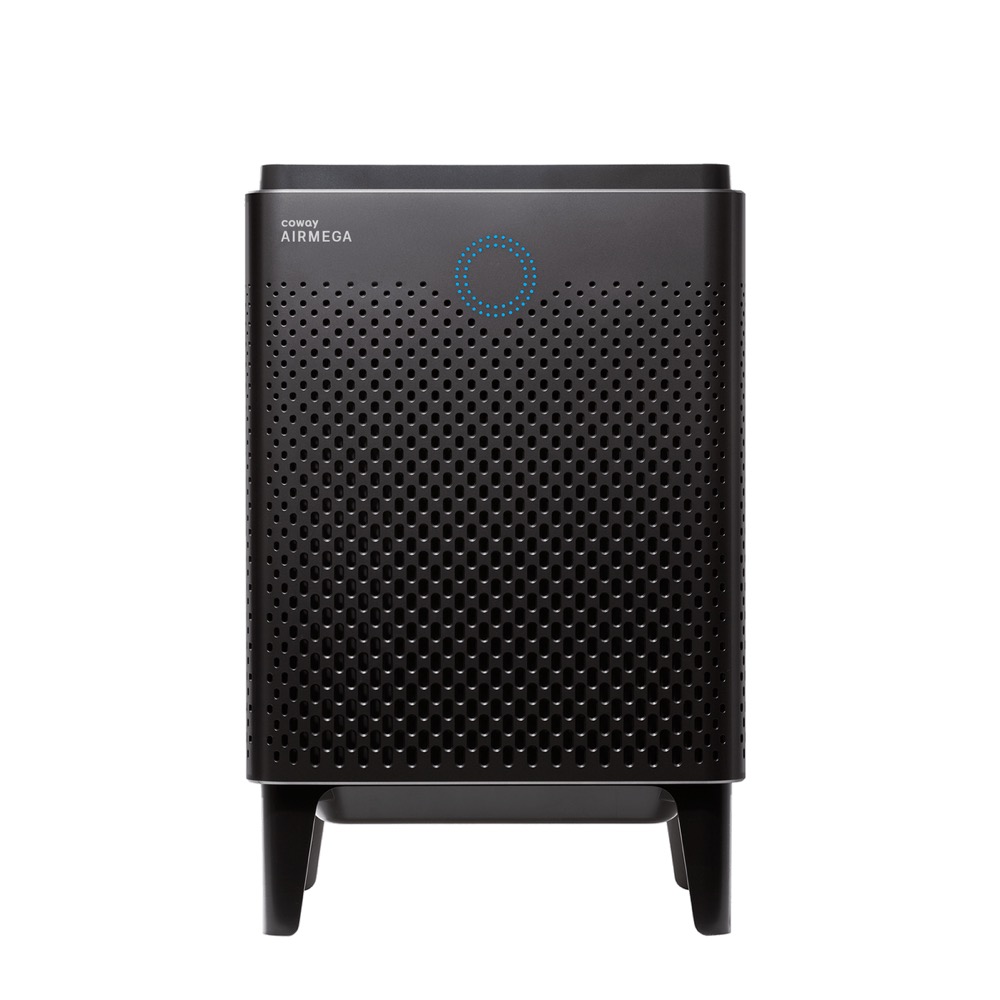 Best Whole HomeCoway Airmega 400 |
4.4out of 5 | True HEPA 0.3µmDual Filters |
Check price → |
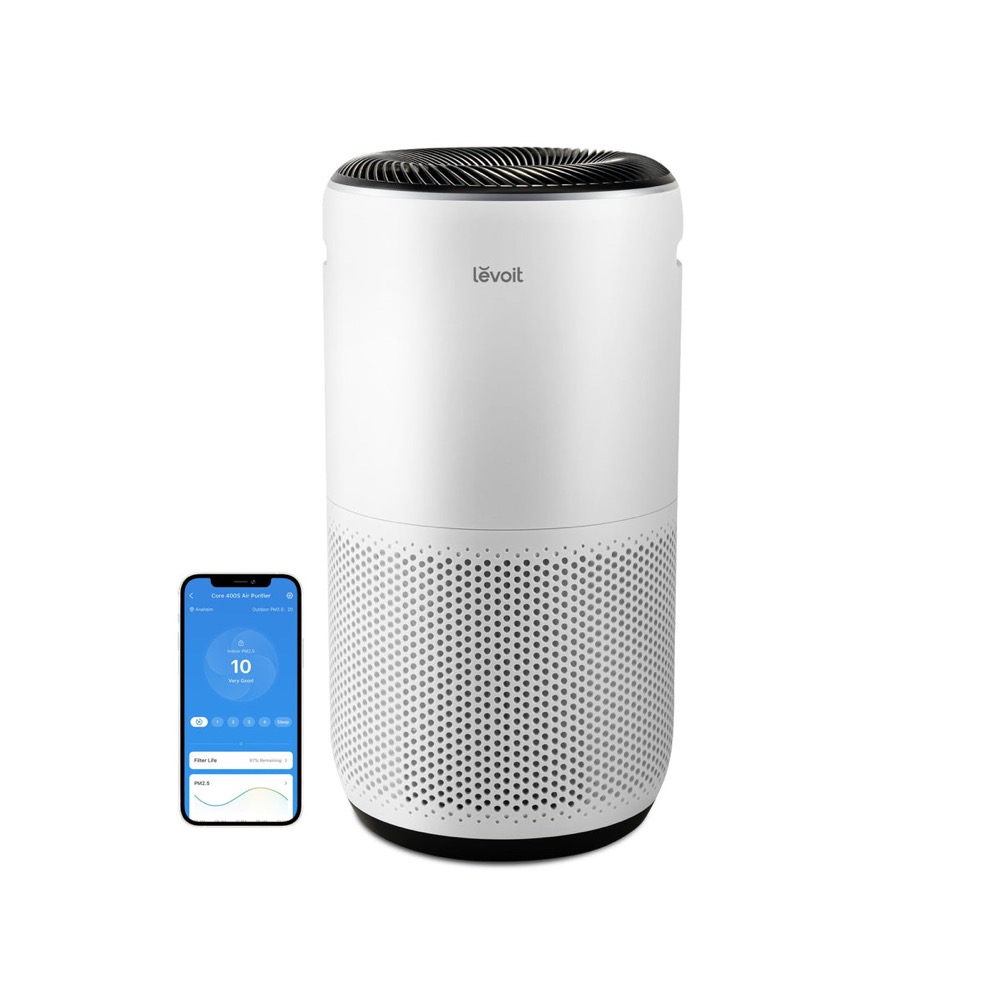 Best Smart PurifierLevoit Core 400S |
4.6out of 5 | True HEPA H13Laser Sensor |
Check price → |
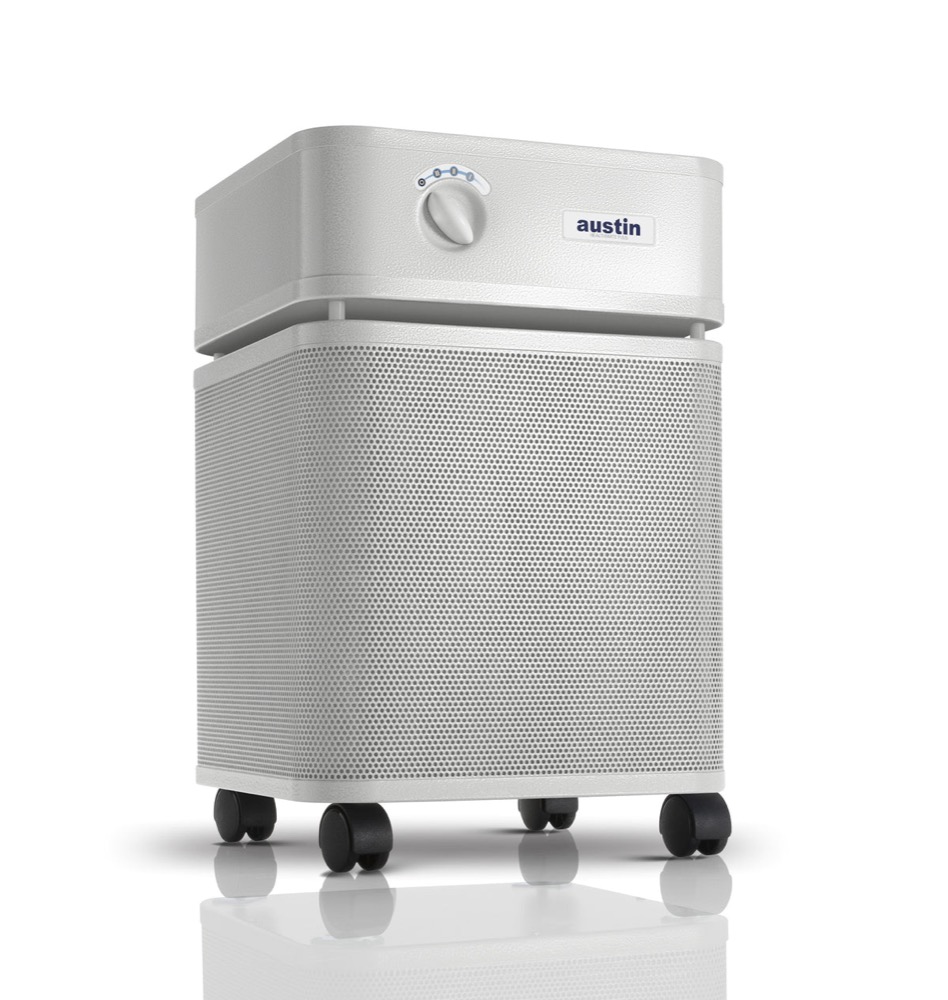 Best Medical-Grade BudgetAustin Air HealthMate Plus |
4.8out of 5 | True HEPA 0.3µm15 lb Activated Carbon |
Check price → |
Do Air Purifiers Actually Remove Microplastics?
Short answer: yes — but only if they use mechanical HEPA filtration. Airborne microplastic particles typically range from 1 to 5,000 microns in size, with most indoor fibers falling between 5 and 200 microns. A True HEPA (H13) filter captures 99.97% of particles down to 0.3 microns — well below the size of virtually all microplastic particles.
For ultrafine particles and nanoplastics (below 0.3 microns), you need HyperHEPA technology, which filters down to 0.003 microns. This is 100 times smaller than standard HEPA and captures particles that other filters miss entirely.
The key is mechanical filtration — physically trapping particles in a dense filter media. Any purifier that relies solely on ionization, UV light, or ozone generation will not remove microplastics from your air.
Ionizers charge particles to make them stick to surfaces — they don't remove microplastics, they just move them from air to your walls and furniture. UV-only purifiers kill germs with ultraviolet light but have no mechanism to capture physical particles. Ozone generators are ineffective for particles and produce harmful ozone gas that can damage your lungs. If a purifier doesn't have a HEPA or HyperHEPA filter, it will not remove microplastics from your indoor air.
The five purifiers below all use mechanical HEPA filtration (or better) and are ranked by their effectiveness at capturing the smallest particles, room coverage, noise levels, and overall value.
The 5 Best Air Purifiers for Microplastics in 2026
#1 — IQAir HealthPro Plus — Best Overall
Best Overall
"Worth every penny" is the phrase that keeps appearing in owner threads — usually from people who have run the same unit continuously for 6, 10, even 15 years and call it the only true buy-it-for-life option in the category. The most common real-world report is relief you can feel: allergy symptoms fading within days, one owner going "from a sore throat to clear breathing in 1 day" during wildfire smoke. The consistent gripes match the ones we flagged — the upfront and filter costs sting, it needs the louder mid-to-high speeds to do its best work, and nobody calls it pretty. Owners buy it anyway, and then often buy a second.
The only consumer purifier that captures particles down to 0.003 microns — so the ultrafine plastics and nanoplastics that slip through ordinary HEPA get trapped here.
Why it's safe: True mechanical HyperHEPA plus an activated-carbon stage physically traps fine and ultrafine particles and microplastics — with no ozone-generating ionizer that would just move particles around the room.
Check Today’s Price on Amazon →Amazon prices change daily — tap to see today's price and any active discount.
- Free delivery & returns for Prime members
- Sold & shipped by Amazon
- Thousands of verified reviews
The IQAir HealthPro Plus is the gold standard for indoor air purification and our top pick for microplastic removal. Its proprietary HyperHEPA filter is the only consumer-grade technology that captures particles down to 0.003 microns — that's 100 times smaller than what standard True HEPA filters achieve. This means it captures not only all microplastic fibers and fragments, but also ultrafine particles and nanoplastics that pass through conventional HEPA filters.
The Swiss-made system uses a 4-stage filtration process: a pre-filter for large particles, a V5-Cell gas and odor filter with activated carbon and alumina, and the HyperHEPA filter for ultrafine particle removal. It's used in hospitals, clean rooms, and by allergy specialists worldwide.
The trade-off is price. At roughly $900, it's the most expensive purifier on this list. Filter replacements run $70–$200 depending on the stage, with the HyperHEPA element lasting approximately 4 years under normal use. But for anyone who wants the absolute best particle removal available in a home unit, nothing else comes close.
Best for: Anyone who wants the highest level of particle filtration available, allergy and asthma sufferers, homes near highways or industrial areas, nurseries and children's rooms.
#2 — Blueair Blue Pure 211+ Auto — Best Large Room
Best Large Room
In long-term reviews the 211+ reads like the appliance you forget is there: one button, quiet on the lower speeds, and still running after seven years in some households. What owners mention most is smell — cooking and pet odors clearing within the hour, and the tell-tale sign it's working: "If I do not have mine on, I can smell my dogs and everything feels dirty." Pet owners treat the washable fabric pre-filter as the star feature, vacuuming a coat of dog hair off it weekly while the main filter stays clean. The fair warnings from reviews: the top speed is genuinely loud (most people live on low or medium), and replacement filters are not cheap.
It senses particle spikes — cooking, vacuuming, folding laundry — and ramps up on its own, then quiets down once the air is clean again.
Why it's safe: HEPASilent mechanical filtration plus an activated-carbon layer captures fine particles and microplastic fibers down to 0.1 microns, with no ozone-producing ionizer.
Check Today’s Price on Amazon →Amazon prices change daily — tap to see today's price and any active discount.
- Free delivery & returns for Prime members
- Sold & shipped by Amazon
- Thousands of verified reviews
Blueair's HEPASilent technology is a clever hybrid: it combines mechanical HEPA filtration with an electrostatic charge that pre-charges incoming particles, making them easier for the filter to capture. The result is 99.97% removal down to 0.1 microns — slightly above standard HEPA spec — while maintaining lower noise and energy consumption than purely mechanical systems.
The 211+ Auto covers up to 540 square feet, making it ideal for large living rooms, open-plan kitchens, or master bedrooms. The auto mode uses built-in sensors to detect particle levels and adjusts fan speed accordingly — it ramps up when you're cooking, cleaning, or folding laundry (all activities that release microplastic fibers), and quiets down when the air is clean.
The washable fabric pre-filter is a nice touch: it captures large particles like pet hair and dust before they reach the main filter, extending its life. Pre-filters come in multiple colors, so the unit doesn't look like a medical device in your living room.
Best for: Large living areas, open-plan homes, anyone who wants strong HEPA performance with low noise and modern design at a mid-range price.
#3 — Coway Airmega 400 — Best for Whole Home
Best Whole Home
"Built like a tank" is the phrase owners reach for. The pattern in long-term threads: people run it 24 hours a day for five-plus years — many since the 2019 wildfire seasons — and report it has held up without complaint. Day to day, the auto sensor is what they actually talk about: it kicks itself into high gear the moment cooking or vacuuming spikes the particle count, then settles back down on its own. Two honest notes that recur in reviews: official replacement filters aren't cheap (many owners use compatible third-party filters for far less), and almost everyone advises buying the unit on sale rather than at full retail.
One unit covers an open floor plan — and the color-coded LED ring shows you exactly when particle levels spike from vacuuming or laundry.
Why it's safe: Dual True HEPA layers physically capture fine particles and microplastics down to 0.3 microns, each paired with activated carbon — pure mechanical filtration, no ozone.
Check Today’s Price on Amazon →Amazon prices change daily — tap to see today's price and any active discount.
- Free delivery & returns for Prime members
- Sold & shipped by Amazon
- Thousands of verified reviews
If you have a large home or an open floor plan, the Coway Airmega 400 delivers the widest coverage on this list at 1,560 square feet. It uses dual HEPA filters — one on each side of the unit — which allows it to process more air volume per cycle than single-filter designs. Each filter combines a True HEPA layer with an activated carbon layer for gas and odor removal.
The real-time air quality indicator is particularly useful for microplastic awareness: its color-coded LED ring shows you exactly when particle levels spike — which often happens during activities like folding laundry, vacuuming, or when kids play on synthetic carpets. Eco mode detects when air quality is consistently clean and automatically shuts off the fan to save energy, reactivating when particles are detected again.
Filter replacement runs approximately $80–$100 for a pair of combined HEPA/carbon filters, with a recommended replacement interval of 12 months. The unit is more compact than you'd expect for its coverage area, with a modern design that won't dominate a room.
Best for: Large homes, open floor plans, families who want a single unit to cover the most square footage, anyone who wants real-time air quality feedback.
#4 — Levoit Core 400S — Best Smart Purifier
Best Smart Purifier
Levoit owners talk about sleep more than specs. The near-silent sleep mode is why this unit ends up in bedrooms — and why people who start with one often add another for each bedroom. The most repeated reports: noticeably less dust and cooking odor, and allergy sufferers waking up clearer. The honest downsides from reviews: a minority of owners notice a faint high-pitched whine on the lowest speeds, the WiFi app can be flaky about staying connected, and fresh replacement filters can smell plasticky for a day or two until they air out.
At 24dB on its lowest setting it's quieter than a whisper — ideal for the bedroom, where synthetic bedding sheds the most microplastic fiber overnight.
Why it's safe: A True HEPA H13 filter plus activated carbon mechanically captures fine particles and microplastics down to 0.3 microns — no ozone, just real filtration you can watch drop on the app.
Check Today’s Price on Amazon →Amazon prices change daily — tap to see today's price and any active discount.
- Free delivery & returns for Prime members
- Sold & shipped by Amazon
- Thousands of verified reviews
The Levoit Core 400S delivers genuine True HEPA H13 filtration — the same grade used in hospitals — at the most accessible price point on this list. At $180–$220, it's less than a quarter of the IQAir's price while still capturing 99.97% of particles at 0.3 microns, which includes all standard microplastic fibers and fragments.
What sets it apart from budget competitors is the laser particle sensor. Unlike cheaper purifiers that use basic dust sensors, the Core 400S uses a laser to count actual particle concentrations in real time. The auto mode uses this data to adjust fan speed — you can literally watch particle counts drop on the VeSync app after activities like vacuuming or shaking out bedding.
At its lowest setting, the Core 400S produces just 24 decibels — quieter than a whisper. This makes it ideal for bedrooms, where you spend 8 hours breathing and where synthetic bedding is a primary source of microplastic fiber shedding — layering a natural-fiber wool or latex mattress topper over a foam mattress, and switching synthetic bedding for breathable organic cotton sheets, cuts that shedding at the source. WiFi connectivity lets you schedule the unit to ramp up before bedtime and settle into quiet mode while you sleep.
Best for: Budget-conscious buyers, bedrooms, tech-savvy households, anyone who wants smart home integration with genuine HEPA performance.
#5 — Austin Air HealthMate Plus — Best Medical-Grade Budget
Best Medical-Grade Budget
Austin owners talk in decades — "ran like a champ for six years non stop," "still working after 19 years." What they say it does that others can't: actually remove smoke and chemical smells. Apartment dwellers with smoking neighbors credit the 15 pounds of activated carbon with making home bearable again, and the 5-year filter is how nearly every owner justifies the upfront price. The fair warnings: it is loud on high (think box fan), and it is a heavy steel drum on casters with zero smart features — though long-term owners tend to count the no-electronics simplicity as exactly why it refuses to die.
One filter lasts five years instead of being replaced every 6–12 months — the lowest total cost of ownership of any unit here, with no plastic in the air path.
Why it's safe: A massive True HEPA bed plus 15 lb of activated carbon mechanically captures fine particles and microplastics — a steel-housed, no-ozone design with no plastic touching the airstream.
Check Today’s Price on Amazon →Amazon prices change daily — tap to see today's price and any active discount.
- Free delivery & returns for Prime members
- Sold & shipped by Amazon
- Thousands of verified reviews
Austin Air takes a different approach: instead of smart features and sleek design, they put everything into filter size and longevity. The HealthMate Plus contains 60 square feet of True HEPA media — more filter surface area than any other consumer purifier on the market. More surface area means more particle capture capacity and longer filter life: 5 years before replacement is needed.
That 5-year filter life fundamentally changes the cost equation. While the upfront price ($595–$715) is significant, the replacement filter costs approximately $250 every 5 years. Compare that to purifiers requiring $50–$100 filter replacements every 6–12 months, and the Austin Air's total cost of ownership over 5 years is often lower than budget units.
The HealthMate Plus is made entirely in Buffalo, New York, with a powder-coated steel housing and no plastic components in the air path. The filter combination includes True HEPA for particles plus 15 pounds of military-grade activated carbon and potassium iodide impregnated carbon for chemical gases, VOCs, and formaldehyde — making it one of the most comprehensive air cleaning systems available for homes.
Best for: Anyone who hates replacing filters, large homes up to 1,500 sq ft, chemically sensitive individuals, homes with off-gassing concerns from new furniture or renovations, buy-it-and-forget-it households.
Purifiers That Don't Work for Microplastics
It's just as important to know what doesn't work. These popular purifier types are not effective at removing airborne microplastics:
- Ionizers (ionic purifiers): These charge particles so they stick to nearby surfaces — walls, furniture, floors. They don't remove microplastics from your home; they just relocate them from the air to surfaces you touch. Some ionizers also produce trace ozone as a byproduct.
- UV-C purifiers (UV-only): Ultraviolet light kills bacteria and viruses by damaging their DNA. It has zero effect on physical particles like microplastics. A UV-only purifier will not capture, trap, or remove any plastic particles from your air.
- Ozone generators: These produce ozone gas, which is marketed as an "air cleaner" but is actually a lung irritant at high concentrations. Ozone does not capture particles — and at the levels needed to affect pollutants, it can cause respiratory damage. The EPA explicitly warns against ozone generators for home use.
- Activated carbon-only filters: Carbon is excellent for absorbing gases, VOCs, and odors — if that's your priority, see our guide to the best air purifiers for VOCs, smoke, and off-gassing. It does not capture physical particles like microplastics. Purifiers that use only carbon filtration without HEPA will not reduce airborne microplastic levels.
- Desktop/personal purifiers without HEPA: Many cheap personal air purifiers under $50 use basic mesh filters or ionization. Without True HEPA (H13 grade), they will not meaningfully reduce microplastic particle counts in your breathing zone.
The bottom line: if a purifier doesn't have a True HEPA (H13) or HyperHEPA filter, it will not remove microplastics from your indoor air — regardless of marketing claims about "99% purification" or "advanced air cleaning technology."
Comparison Table: At a Glance
| Purifier | HEPA Grade | Room Size | Noise Level | Price |
|---|---|---|---|---|
| IQAir HealthPro Plus | HyperHEPA (0.003μm) | 1,125 sq ft | 22–59 dB | $$$ |
| Blueair 211+ Auto | HEPASilent (0.1μm) | 540 sq ft | 23–56 dB | $$ |
| Coway Airmega 400 | True HEPA (0.3μm) | 1,560 sq ft | 22–52 dB | $$$ |
| Levoit Core 400S | True HEPA H13 (0.3μm) | 403 sq ft | 24–52 dB | $ |
| Austin Air HealthMate+ | True HEPA (0.3μm) | 1,500 sq ft | 35–65 dB | $$$ |
Price tiers: $ = budget · $$ = mid-range · $$$ = premium. Tap any “Check Today’s Price” button for the live Amazon price.
Our Pick by Room & Household Type
- Bedroom (single/couple): Levoit Core 400S ($180–$220) — ultra-quiet at 24dB, perfect for overnight use where you breathe in the most microplastics from synthetic bedding
- Large living room / open plan: Blueair Blue Pure 211+ Auto ($300) — 540 sq ft coverage, auto-adjusts to particle levels, modern design
- Whole house (single unit): Coway Airmega 400 ($450–$550) — 1,560 sq ft coverage, dual HEPA filters, eco mode for efficiency
- Nursery / baby's room: IQAir HealthPro Plus ($900) — HyperHEPA captures the smallest particles including nanoplastics, medical-grade protection for developing lungs
- Allergies + chemical sensitivity: Austin Air HealthMate Plus ($595–$715) — 60 sq ft of HEPA media plus 15 lbs military-grade carbon for chemicals, 5-year filter life. If pollen, dust mites or pet dander are your main triggers, our best air purifier for allergies, pets and dust ranks these same units for allergy relief; and if you're fighting a musty smell or a damp basement, that same deep carbon bed makes it our top pick in the best air purifier for mold guide; and for the bedroom, our best air purifier for a bedroom ranks them for quiet overnight use.
- Budget, first purifier: Levoit Core 400S ($180–$220) — genuine H13 HEPA at the lowest price, smart features, laser particle sensor
- Money is no object: IQAir HealthPro Plus ($900) in every bedroom + Coway Airmega 400 ($450–$550) for main living area
"Focus on the bedroom first. You spend 8 hours there every night, breathing deeply, often with synthetic bedding shedding microfibers inches from your face. A good HEPA purifier in the bedroom delivers more microplastic reduction per dollar than anywhere else in your home."
How We Evaluated These Purifiers
Every air purifier on this list was evaluated against five criteria:
- Filtration grade: Does it use True HEPA (H13) or better? What is the smallest particle size it captures? Marketing claims without HEPA certification were disqualified.
- Particle capture for microplastics: Since airborne microplastic particles range from 1 to 5,000 microns, any True HEPA filter will capture them. We ranked higher for purifiers that also capture ultrafine and nanoplastic particles below 0.3 microns.
- Room coverage: Clean Air Delivery Rate (CADR) and manufacturer-stated coverage area. We verified CADR ratings against independent testing where available.
- Noise level: Since we recommend running purifiers continuously (especially in bedrooms), low noise at the lowest effective setting is critical. We prioritized purifiers under 30dB on their lowest setting.
- Total cost of ownership: Upfront price plus ongoing filter replacement costs over a 5-year period. A cheap purifier with expensive, frequent filter changes can cost more than a premium unit with long-lasting filters.
We specifically excluded purifiers that rely on ionization, UV-only, ozone generation, or non-HEPA filtration from this guide. We also excluded purifiers with HEPA-type, HEPA-like, or HEPA-style marketing language — only True HEPA (H13 grade) and above made the cut.
Want the Full Home Protection Guide?
Air filtration is one piece of the puzzle. The Complete Plasticproof Guide covers every room — kitchen, nursery, bathroom, bedroom — with 47+ peer-reviewed studies and 80+ product recommendations.
Frequently Asked Questions
Yes. True HEPA (H13) filters capture 99.97% of particles down to 0.3 microns, which includes most airborne microplastic fibers and fragments. Since microplastic particles in indoor air typically range from 1 to 5,000 microns, a True HEPA filter will capture virtually all of them. For ultrafine particles and nanoplastics below 0.3 microns, HyperHEPA technology (like IQAir's HealthPro Plus) filters down to 0.003 microns.
Studies have found that the average person inhales approximately 16.2 bits of microplastic per hour indoors — roughly 7,000 to 16,000 particles per cubic meter of indoor air. A 2022 study published in Environment International confirmed microplastic particles in human lung tissue for the first time. Indoor concentrations are typically higher than outdoor levels due to synthetic textiles, carpeting, plastic furniture, and poor ventilation.
No. Ionizers charge particles to make them stick to surfaces, but they don't remove microplastics from your environment — they just move them from the air to your walls, floors, and furniture. UV-only purifiers are designed to kill bacteria and viruses using ultraviolet light, but they have no mechanism to capture or remove physical particles like microplastics. Ozone generators are similarly ineffective and can create harmful ozone gas. Only mechanical HEPA filtration physically captures and removes microplastic particles from the air.
For maximum microplastic reduction, run your HEPA air purifier continuously, 24/7. Microplastic fibers are constantly shed from synthetic clothing, bedding, carpets, and plastic household items. Most quality air purifiers have energy-efficient low settings designed for continuous operation — the Levoit Core 400S uses less energy than a lightbulb on its lowest setting. Focus on bedrooms (where you spend 8 hours breathing) and living areas with the most synthetic materials.
Sources
- Jenner LC, et al. "Detection of microplastics in human lung tissue using μFTIR spectroscopy." Environment International, 2022.
- Vianello A, et al. "Simulating human exposure to indoor airborne microplastics using a Breathing Thermal Manikin." Scientific Reports, 2019.
- Dris R, et al. "A first overview of textile fibers, including microplastics, in indoor and outdoor environments." Environmental Pollution, 2017.
- Marfella R, et al. "Microplastics and Nanoplastics in Atheromas and Cardiovascular Events." New England Journal of Medicine, 2024.
- Zhang J, et al. "Microplastics in the indoor air of residences: characteristics, sources, and health risks." Environmental Science & Technology, 2023.
- Prata JC. "Airborne microplastics: Consequences to human health?" Environmental Pollution, 2018.
- US EPA. "Ozone Generators that are Sold as Air Cleaners." EPA Indoor Air Quality, 2023.
- Amato-Lourenco LF, et al. "Microplastics in the olfactory bulb of the human brain." JAMA Network Open, 2024.
Protect Every Room in Your Home
From the kitchen to the nursery to the bedroom — the Complete Plasticproof Guide covers every swap that matters, backed by 47+ studies.