
The short answer
The best well-water setup is layered, not a single filter. Start with a certified well test, then match the stages to what it finds. For iron, sediment and rotten-egg smell, the Home Master HMF3SDGFEC whole-house filter; for city-grade whole-house filtration on a budget, the iSpring WGB32B-KS; to kill bacteria, UV like the Aquasana EQ-1000-AST-UV. Then at the kitchen tap, add reverse osmosis (the AquaTru countertop or APEC ROES-50 under-sink) or a Megahome distiller for nitrates and arsenic — the two dangerous contaminants a whole-house carbon filter does not remove. For a high-volume home, the tankless Waterdrop G3P600 under-sink RO.
Quick Navigation
- What is the best water filter for well water?
- Why well water needs a different approach
- Test your well first — it's not optional
- Which filter removes which contaminant?
- Quick comparison: all 7 well-water systems
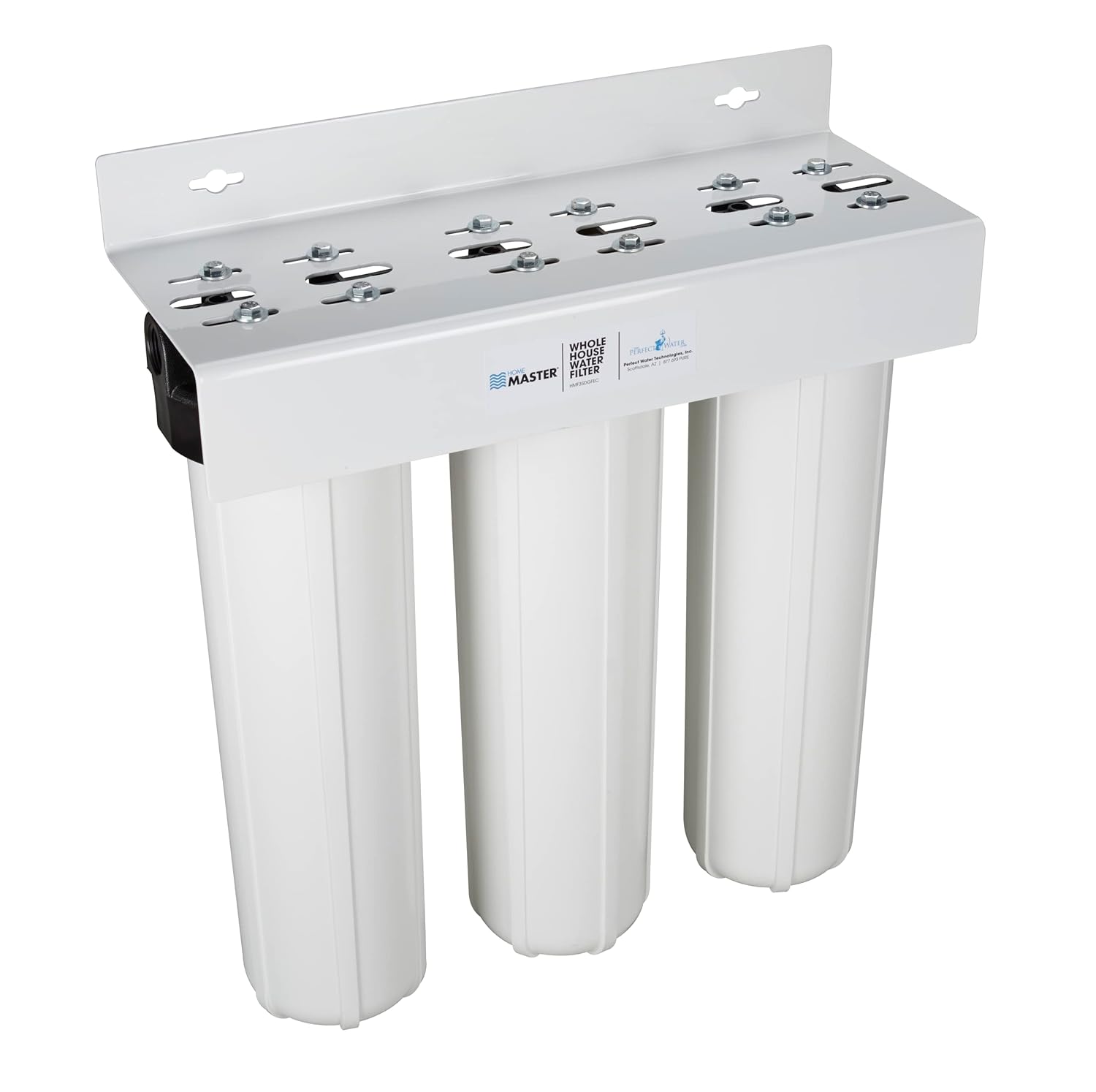
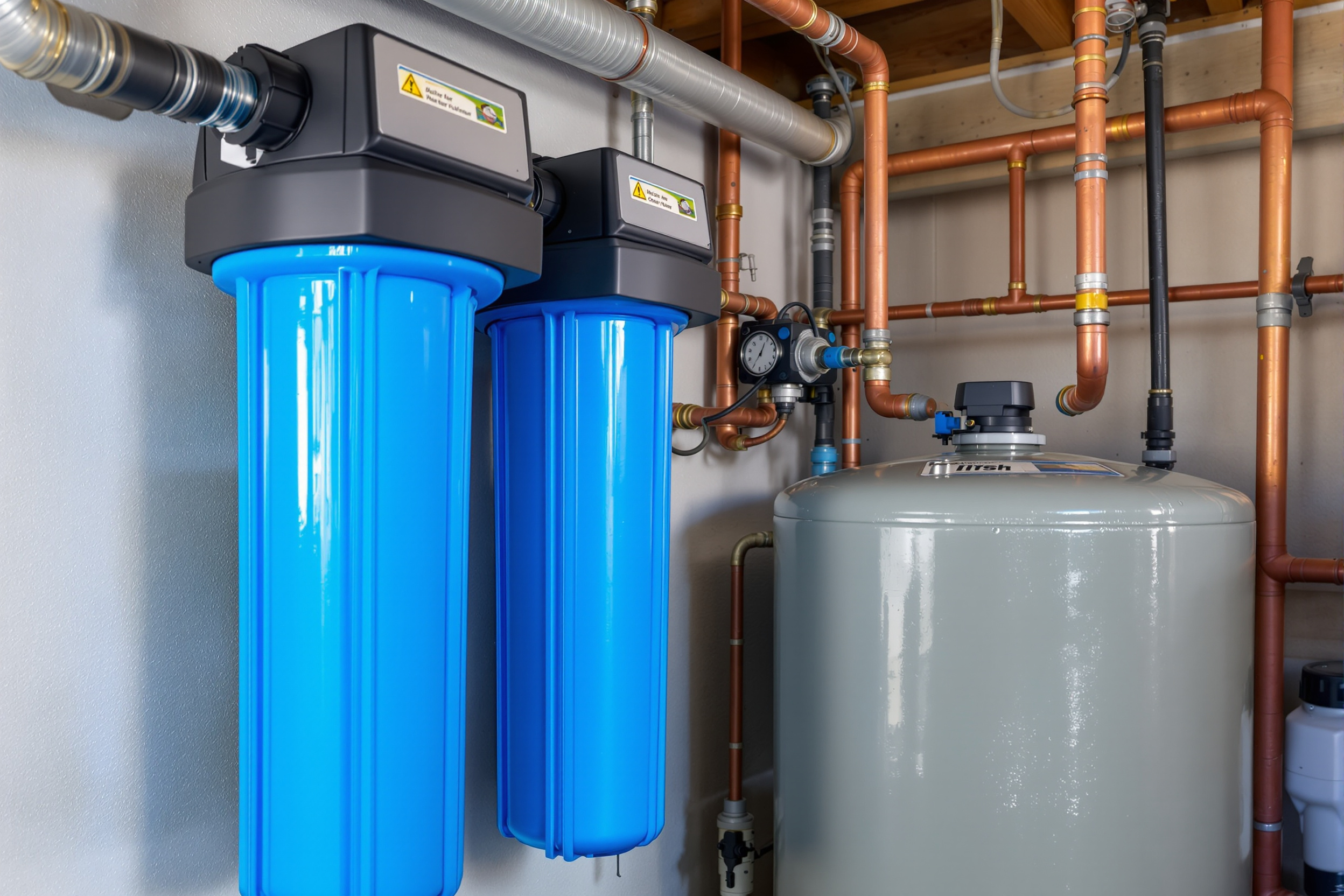
- Best for well water: Home Master HMF3SDGFEC
- Best value whole-house: iSpring WGB32B-KS
- Best for bacteria (UV): Aquasana EQ-1000-AST-UV
- Best point-of-use RO: AquaTru Countertop
- Best value under-sink RO: APEC ROES-50
- Most complete: Megahome Distiller
- Best high-flow RO: Waterdrop G3P600
- Buyer's guide
- FAQ
Compare all 7 picks
Every pick side by side — tap a name to jump to the full review, or check today's price.
| Pick | Rating | Why it wins | |
|---|---|---|---|
 Best for Well WaterHome Master HMF3SDGFEC 3-Stage Whole House Well Water Filter |
4.5out of 5 | Components NSF/ANSI 42, 61~95,000 gallons / 1 yr |
Check price → |
| 4.6out of 5 | Components NSF/ANSI 42, 61~100,000 gallons |
Check price → | |
 Best for BacteriaAquasana EQ-1000-AST-UV Whole House Water Filter with UV |
4.4out of 5 | NSF/ANSI 42, 61 + UV Certified1,000,000 gallons |
Check price → |
 Best for Nitrates & ArsenicAquaTru Countertop Reverse Osmosis Purifier |
4.7out of 5 | NSF 42/53/58/4014-Stage Reverse Osmosis |
Check price → |
 Best Value Under-Sink ROAPEC Water ROES-50 Under-Sink 5-Stage RO |
4.7out of 5 | WQA Gold Seal5-Stage RO |
Check price → |
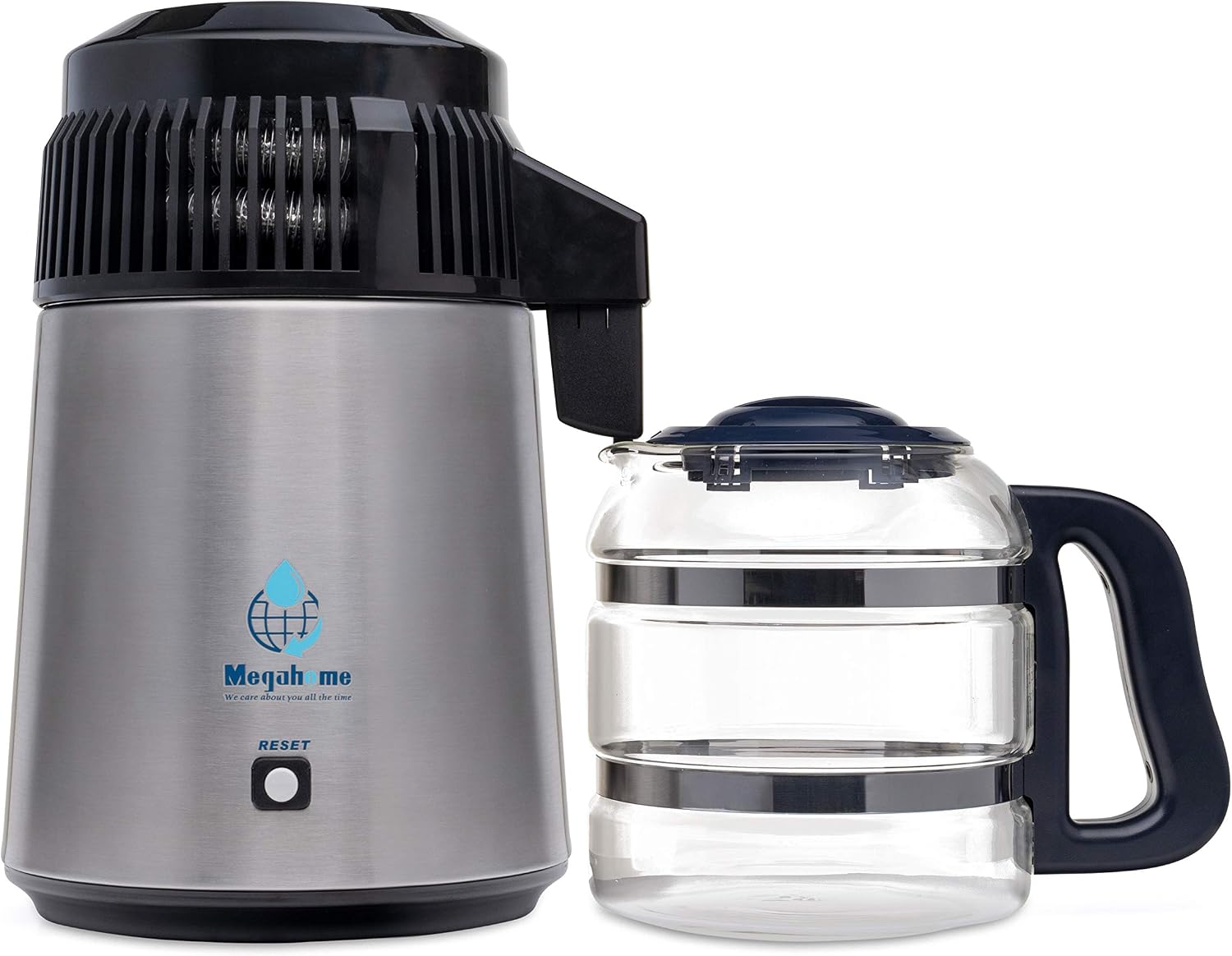 Most Complete RemovalMegahome Countertop Water Distiller (Stainless, Glass Collection) |
4.6out of 5 | 316L Stainless BoilerGlass Carafe |
Check price → |
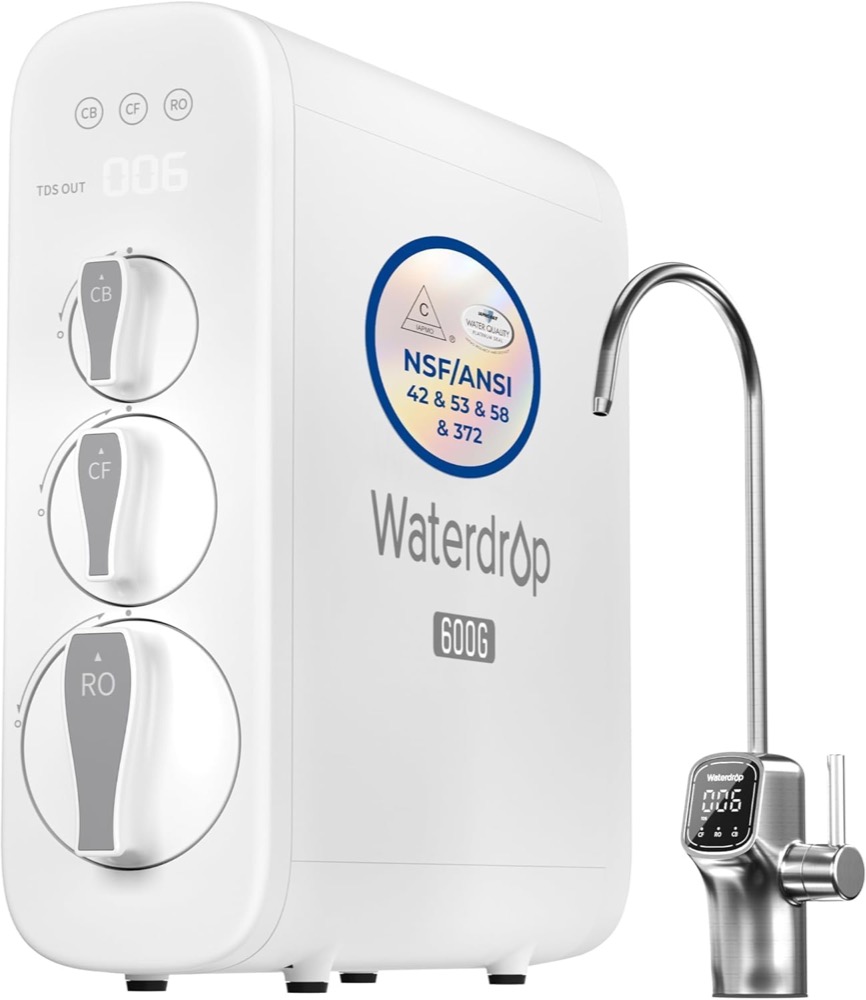 Best High-Flow ROWaterdrop G3P600 Tankless Reverse Osmosis System |
4.8out of 5 | NSF/ANSI 58600 GPD tankless |
Check price → |
What Is the Best Water Filter for Well Water?
The best water filter for well water is a layered, multi-barrier system matched to your well's test results — not a single product. A private well can carry sediment, iron, hydrogen sulfide, bacteria, nitrates and arsenic at the same time, and no one filter removes all of those. The reliable formula is: a whole-house filter for particles, iron and taste (the Home Master HMF3SDGFEC is the well-water specialist here); disinfection with UV if bacteria are present; and a point-of-use reverse-osmosis system or distiller at the kitchen tap for the water you drink and cook with, because RO and distillation are the only home methods that remove nitrates and arsenic.
If you install just one thing and your well is bacteria-free, make it a point-of-use RO like the AquaTru — it protects your drinking water from the contaminants that actually matter for health (nitrate, arsenic, lead) at low cost. But the correct order of operations is always the same: test, then treat. Buying a whole-house carbon filter because your water "tastes bad" while ignoring a nitrate or arsenic problem you can't taste is the most common well-water mistake — and the most dangerous one.
Why Well Water Needs a Different Approach Than City Water
City water arrives already disinfected and tested to federal standards. Well water does not. More than 40 million Americans — roughly 23 million households — drink from private wells, and the EPA does not regulate them. That means no chlorination, no fluoride, no utility lab checking your water, and no Consumer Confidence Report. Whatever is in the ground around your well is in your glass, and the only person responsible for finding it and fixing it is you.
That flips the whole filtering strategy. On city water the usual worries are chlorine taste, lead from old pipes, and microplastics — and the counter-pitcher most people reach for is not built for the last one, as our guide to whether a Brita filter removes microplastics spells out. On well water the list is longer and comes from geology and land use: iron and manganese leaching from bedrock, hydrogen sulfide (the rotten-egg smell), sediment and grit, hardness, and — most seriously — bacteria from surface runoff or a failing septic system, nitrates from fertilizer and livestock, and naturally occurring arsenic, uranium or radon from the rock itself. A carbon filter handles taste and some of the metals but does nothing for bacteria, nitrate or arsenic. That's why well water almost always needs more than one stage.
The rule that matters: a whole-house sediment/carbon filter cleans up the water you shower and wash in, but it does not disinfect and does not remove nitrates or arsenic. For bacteria you need UV or chlorination; for nitrates and arsenic you need reverse osmosis or distillation at the tap. Treat any filter that claims to "purify well water" in a single cartridge with deep suspicion.
Test Your Well First — It's Not Optional
You cannot choose a well-water filter without a lab test, because you cannot taste, smell or see the contaminants that matter most. Nitrate, arsenic and bacteria are all invisible and odorless. The CDC and EPA recommend testing a private well at least once a year for total coliform bacteria, nitrates and pH, plus a one-time test for arsenic, lead, uranium and radon (these come from local geology and change slowly). Re-test after any flooding, a new nearby septic system, or a change in taste, color or smell.
Order a state-certified lab test kit (your county health department often subsidizes them) or use a certified mail-in lab. The results are your shopping list: they tell you whether you need an iron filter, whether you need UV, and whether your drinking water needs RO for nitrate or arsenic. If you also want to check for the newer concerns — microplastics and PFAS — our guides on how to test your water at home and the best PFAS filters cover those, and is tap water safe to drink? puts the whole picture in context.
Which Filter Removes Which Contaminant?
Match the technology to the contaminant, because each one has a job it does and jobs it can't. Sediment filters catch grit and protect everything downstream. Carbon and KDF reduce chlorine, taste, VOCs, pesticides and some heavy metals. Iron/manganese filters (radial-flow or air-injection) clear staining and rotten-egg smell. UV kills bacteria and viruses but removes no chemicals. Reverse osmosis and distillation are the heavy hitters — they remove nitrates, arsenic, fluoride, lead and dissolved solids that nothing else on the list touches. Because RO and distillation are point-of-use (they treat one tap slowly), you pair them with a whole-house filter for the water you shower and wash in, and reserve them for what you drink and cook with. It's the same certified-removal logic behind our reverse osmosis guide and water distiller guide. And for the water you actually shower in, a point-of-use shower filter for microplastics and chlorine handles chlorine and sediment right at the fixture.
Quick Comparison: All 7 Well-Water Systems
| System | Type | Targets | Certification / proof | Install |
|---|---|---|---|---|
| Home Master HMF3SDGFEC | Whole-house | Iron, manganese, sulfur, sediment | Components NSF/ANSI 42, 61 | Main line |
| iSpring WGB32B-KS | Whole-house | Sediment, chlorine, some metals | Components NSF/ANSI 42, 61 | Main line (DIY) |
| Aquasana EQ-1000-AST-UV | Whole-house + UV | Bacteria, viruses, chlorine, scale | NSF/ANSI 42, 61 + UV | Main line (pro) |
| AquaTru | Countertop RO | Nitrate, arsenic, lead, fluoride | NSF 42/53/58/401 | None (plug in) |
| APEC ROES-50 | Under-sink RO | Nitrate, arsenic, lead, TDS | WQA Gold Seal (RO) | Under-sink |
| Megahome | Countertop distiller | Nitrate, arsenic, everything dissolved | Removes ~99% of dissolved solids | None (plug in) |
| Waterdrop G3P600 | Under-sink RO | Nitrate, arsenic, lead, TDS | NSF/ANSI 58 | Under-sink |
Whole-house filters treat every tap; RO and distillation treat drinking water for nitrate and arsenic; UV disinfects. Most wells need two of these together. Tap any pick below for today's Amazon price.
1. Home Master HMF3SDGFEC — Best for Well Water (Iron, Manganese & Sulfur)
Best for Well Water
The HMF3SDGFEC is a well-water specialist, and that's exactly why it leads this guide instead of a city-water filter. Stage 1 is a 4-layer graded-density sediment cartridge (25 to 1 micron) that holds roughly 3× the grit of a standard cartridge before clogging — important because well water carries far more sediment than treated city water. Stage 2 is a radial-flow iron and manganese filter rated to remove up to 3 ppm combined of iron, manganese, and hydrogen sulfide (the rotten-egg smell). Stage 3 is a large radial-flow GAC carbon cartridge that catches pesticides, herbicides, VOCs and residual taste. Individual cartridges are NSF/ANSI 42 and 61 certified.
Flow is a real 15 GPM through 1″ ports, so it won't choke a large home. The honest limits are important: it does not disinfect (no bacteria or virus kill — pair it with UV below if your test shows coliform), it does not remove nitrate or arsenic (add a point-of-use RO for those), and it does not soften hard water. If your well tests over 3 ppm iron you'll need a dedicated air-injection iron filter upstream. Used for what it's built for, though, nothing on this list fixes the classic well complaints — orange staining, metallic taste, sulfur smell — as directly. See the full field in our best whole-house water filter guide.
Well-water owners repeatedly describe the same three-part before-and-after: orange staining in toilets and tubs stops within days, the sulfur smell in the shower disappears, and cartridge changes reveal how much the sediment stage was catching (many report the first-stage cartridge is a startling shade of brown by month three). The honest gripes: the iron cartridge is the wear item — on high-iron water it might last 4–6 months rather than the advertised 12; a few owners hit small leaks at the port fittings that were fixed with an extra wrap of thread tape; and Home Master's paperwork is clear that untreated water over 3 ppm iron will overwhelm the system, so a real well test is a prerequisite before buying.
Iron, manganese, and hydrogen sulfide gone — the plain-carbon whole-house filters can't do this job. Made specifically for well water.
Why it's safe: Cartridges are NSF/ANSI 42 (chlorine, taste, odor) and NSF/ANSI 61 (materials safety) certified. The radial-flow design lets more water contact the iron and carbon media than an axial cartridge, so contact time actually meets spec at 15 GPM.
Check Today’s Price on Amazon →Amazon prices change daily — tap to see today's price and any active discount.
- Free delivery & returns for Prime members
- Sold & shipped by Amazon
- Thousands of verified reviews
2. iSpring WGB32B-KS — Best Value Whole-House Filter
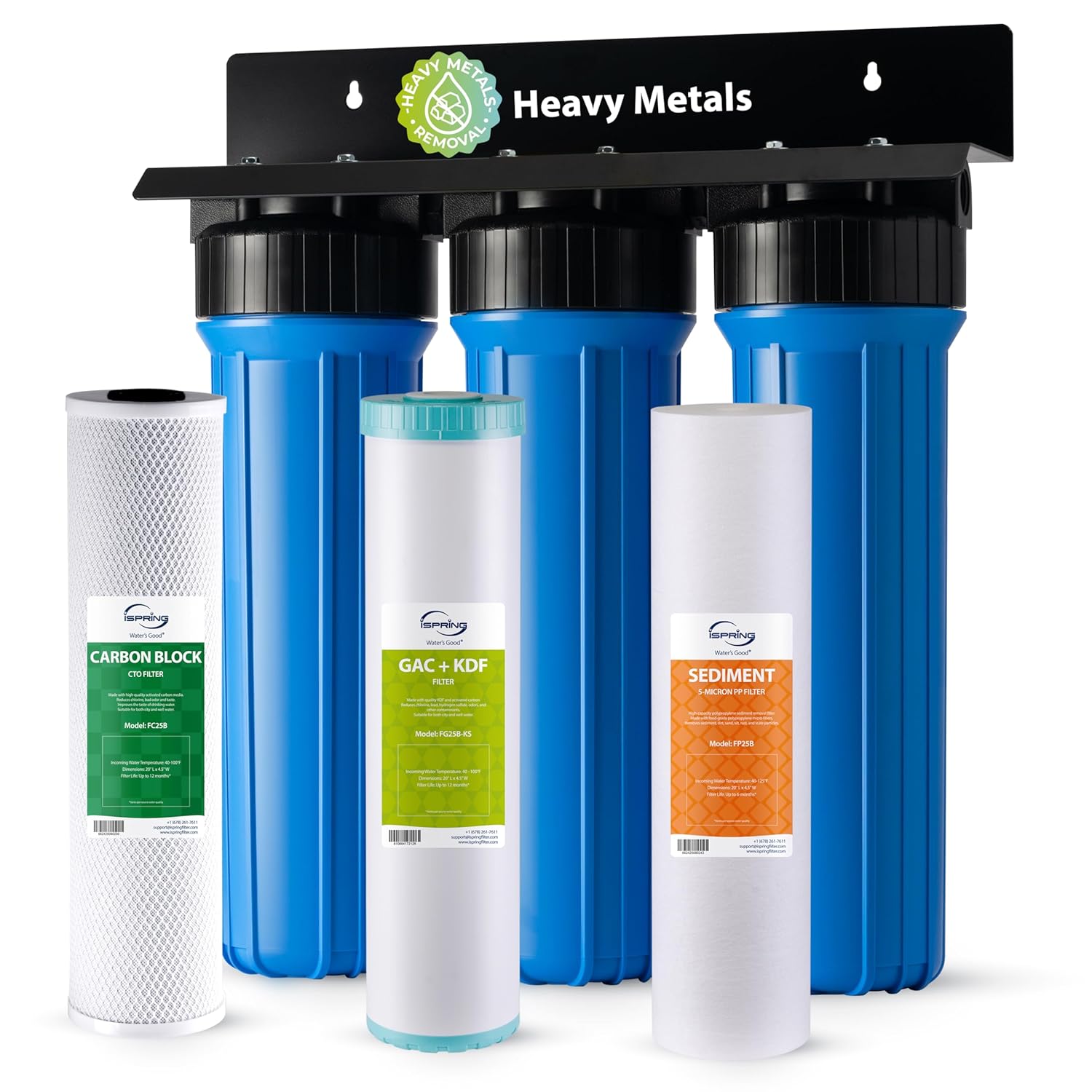 Best Value
The KS variant swaps a plain carbon third stage for a KDF-55-plus-carbon cartridge, which is what makes it a genuine heavy-metal and chloramine filter rather than a chlorine-and-taste filter. All three cartridges are 20″ big-blue standard sizes, so replacements are widely available at roughly $80–$120 for a full annual set. Rated capacity is around 100,000 gallons or 12 months of typical family-of-four use. Individual filter components are certified to NSF/ANSI 42 and 61.
Flow is a real 15 GPM — the highest on this list — so it can supply a large home without measurable pressure drop, and buyers with basic plumbing skill routinely report 2–3 hour DIY installs on 1″ main lines. The honest catches for well owners: it does not remove iron, manganese or hardness (so it's the wrong pick if your water stains — get the Home Master instead), it does not disinfect, and its sediment cartridge can clog faster on gritty well water unless you add a spin-down pre-filter upstream. For a clean, low-iron well or a city-water home, it's the best value whole-house filter you can buy.
Owners describe a real drop in chlorine smell within a day and softer, cleaner skin in the shower — and repeatedly praise iSpring's US-based support, which will walk a first-timer through the install by phone. Multi-year buyers say cartridge changes take 15 minutes with the included filter wrench. The honest downsides come up too: a handful reported cracked housings after several years (iSpring's warranty covered most); a few had to add extra thread tape to stop small drips at the fittings; and because the cartridges are big-blue 20″ standards, some buyers say the sediment cartridge clogs faster on well water than the spec implies, though a pre-installed spin-down sediment filter fixes that.
A real 3-stage whole-house filter — including KDF-55 for chloramine and heavy metals — at roughly a quarter of a premium system's price, with 15 GPM to run every faucet at once.
Why it's safe: Filter components carry NSF/ANSI 42 (chlorine, taste) and NSF/ANSI 61 (materials safety) certification. KDF-55 is the media that actually reduces chloramine and heavy metals like lead — standard carbon-only whole-house filters do not.
Check Today’s Price on Amazon →Amazon prices change daily — tap to see today's price and any active discount.
- Free delivery & returns for Prime members
- Sold & shipped by Amazon
- Thousands of verified reviews
3. Aquasana EQ-1000-AST-UV — Best for Bacteria (UV Disinfection)
Best for Bacteria
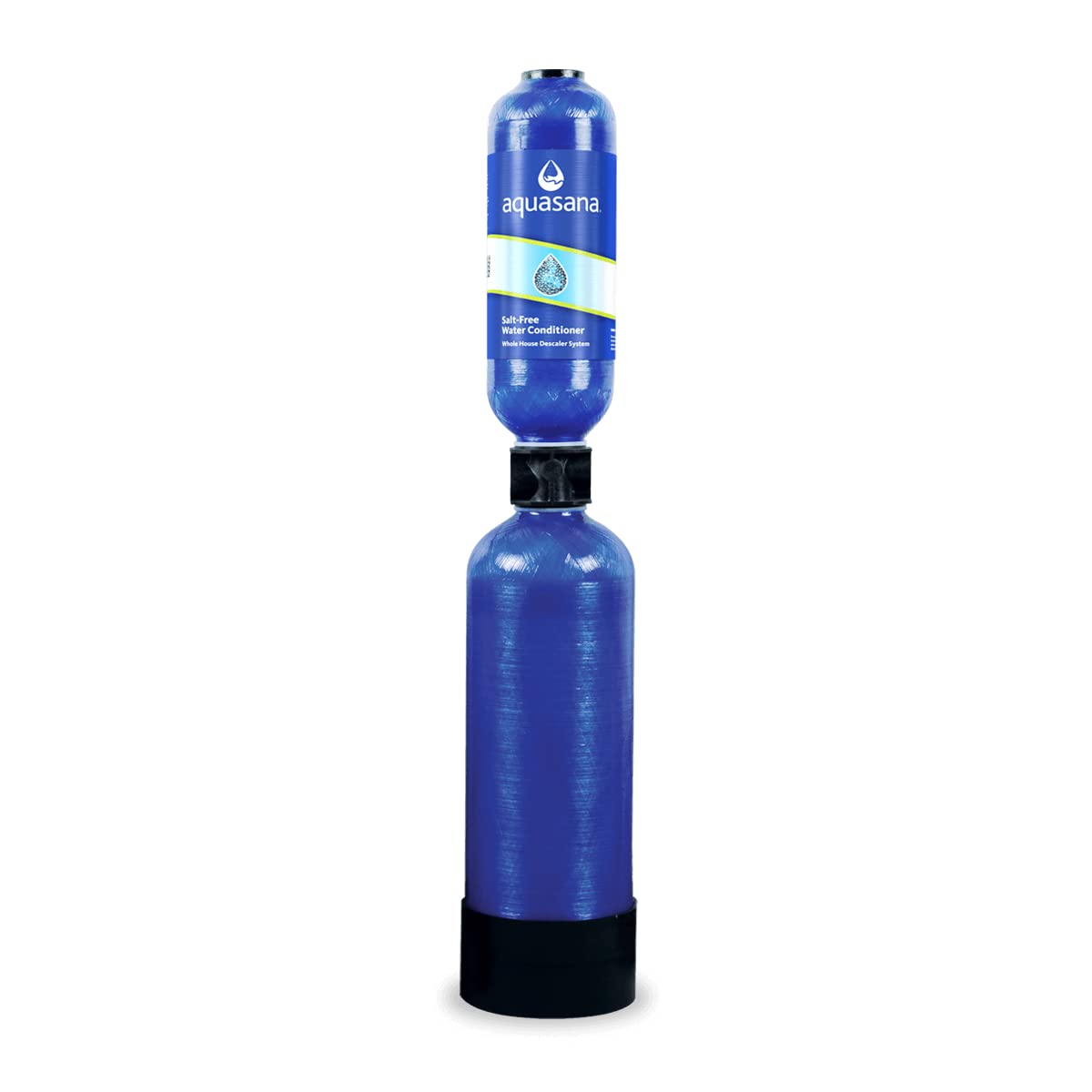
Bacteria are the well-water risk a carbon or sediment filter can never solve, and coliform is one of the most common findings on a well test. The AST-UV variant answers it directly with an integrated UV chamber that inactivates up to 99.99% of bacteria, viruses and cysts as water passes the lamp — the same disinfection principle municipal plants use, sized for a house. On top of that it delivers the standard Rhino's 1,000,000-gallon carbon-and-KDF filtration plus a salt-free scale conditioner that reduces limescale on your water heater and fixtures. Flow is 14.6 GPM.
The honest catches matter here. UV only works on water that's already clear — turbidity and iron shield bacteria from the light — so on a dirty well the UV goes after the sediment and iron stages, not instead of them. The lamp draws power continuously and needs replacing about once a year (roughly $80–$120). Salt-free scale conditioning genuinely reduces scale but is not a true softener, and professional installation is recommended. But when your test says "bacteria present," this is the whole-house system that actually addresses it.
Owners on borderline water — older wells, well plus surface runoff, homes that have had a boil-water scare — describe this as the “never have to think about the water” upgrade, and the UV lamp on/off indicator gets specific praise. The honest downsides: install is not trivial (professional plumber recommended), the physical footprint is real, and the salt-free scale portion is oversold in Aquasana's marketing — some owners with very hard water still see visible scale, which is expected because template-assisted crystallization changes the crystal shape rather than removing hardness.
Full whole-house filtration plus UV bacterial/viral disinfection plus salt-free scale control in one system — the maximum-protection build for a well with a bacteria problem.
Why it's safe: Tank certified to NSF/ANSI 42 and NSF/ANSI/CAN 61 for materials safety; the UV module is independently rated to reduce up to 99.99% of bacteria, viruses and cysts (NSF/ANSI 55 Class B equivalent). Salt-free scale control keeps calcium and magnesium in the water rather than replacing them with sodium.
Check Today’s Price on Amazon →Amazon prices change daily — tap to see today's price and any active discount.
- Free delivery & returns for Prime members
- Sold & shipped by Amazon
- Thousands of verified reviews
4. AquaTru Countertop Reverse Osmosis Purifier — Best for Nitrates & Arsenic (Point-of-Use)
Best for Nitrates & Arsenic
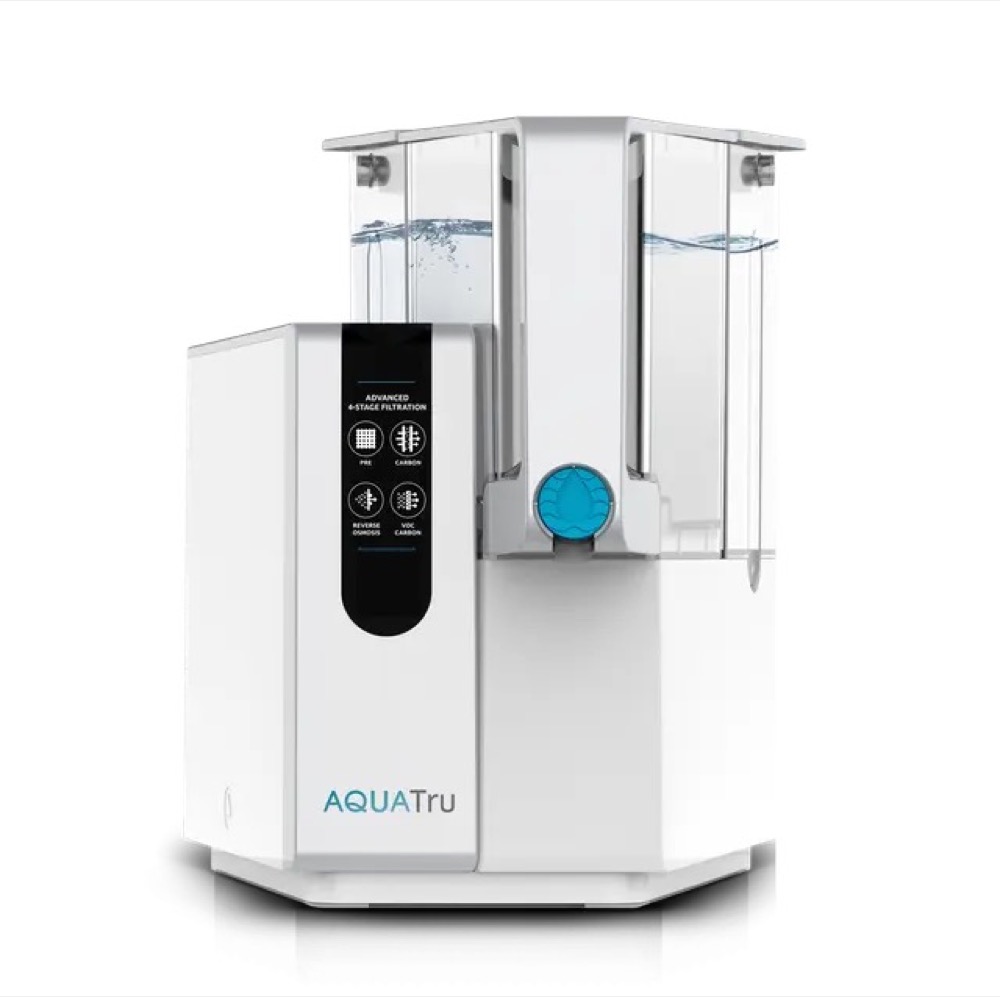
Reverse osmosis forces water through a semipermeable membrane that rejects contaminants by size and charge — including the nitrate and arsenate ions that whole-house media leave behind, plus lead, fluoride and dissolved solids. That's why RO is the non-negotiable final stage for well water: it's the barrier standing between your family and the invisible chemistry in the aquifer. Nitrate is the reason this matters most for the youngest members of the household — high-nitrate well water is the classic cause of infant methemoglobinemia (“blue-baby syndrome”), so if you mix formula with well water, RO or distillation is essential (see our best water filters for baby formula). AquaTru pairs the membrane with pre- and post-carbon stages and holds NSF/ANSI certifications for standards 42, 53, 58 and 401, and it sits on the counter and plugs into the wall — no under-sink work.
The honest trade-offs of any RO apply: it sends some water to drain (AquaTru's ratio is better than most), it strips beneficial minerals along with the contaminants, and the finished water sits in a plastic tank — decant into glass if that matters to you. One well-specific note: RO membranes don't disinfect, so if your well has bacteria, keep the UV stage upstream. But for the drinking water that goes into glasses, coffee and infant formula, nothing beats the ease of a countertop RO. It's also our top no-install pick in the reverse osmosis guide and a strong performer for lead and fluoride.
AquaTru owners talk like converts — one common line is "I am now a complete water snob. All water is inferior," and the buying pattern backs it up: people get one, then buy more for family. Owners who test with a home purity meter report readings dropping to single digits, and many keep a second glass carafe cold in the fridge. The honest downsides from reviews: hard water is its weak point (descale on schedule, since damage from skipping it is not covered), the glass carafe is on the thin side, and a thirsty household refills the tap-water tank daily.
The point-of-use barrier that removes nitrate, arsenic and lead from your drinking water — countertop RO, NSF-certified, no plumbing.
On well water: Reverse osmosis is one of the EPA-listed effective methods for both nitrate and arsenic; AquaTru's membrane rejects those ions by size and charge rather than trying to adsorb them onto carbon, which is why it succeeds where whole-house filters can't.
Check Today’s Price on Amazon →Amazon prices change daily — tap to see today's price and any active discount.
- Free delivery & returns for Prime members
- Ships free with Prime on eligible items
- Thousands of verified reviews
5. APEC Water ROES-50 Under-Sink 5-Stage RO — Best Value Under-Sink RO
Best Value Under-Sink RO
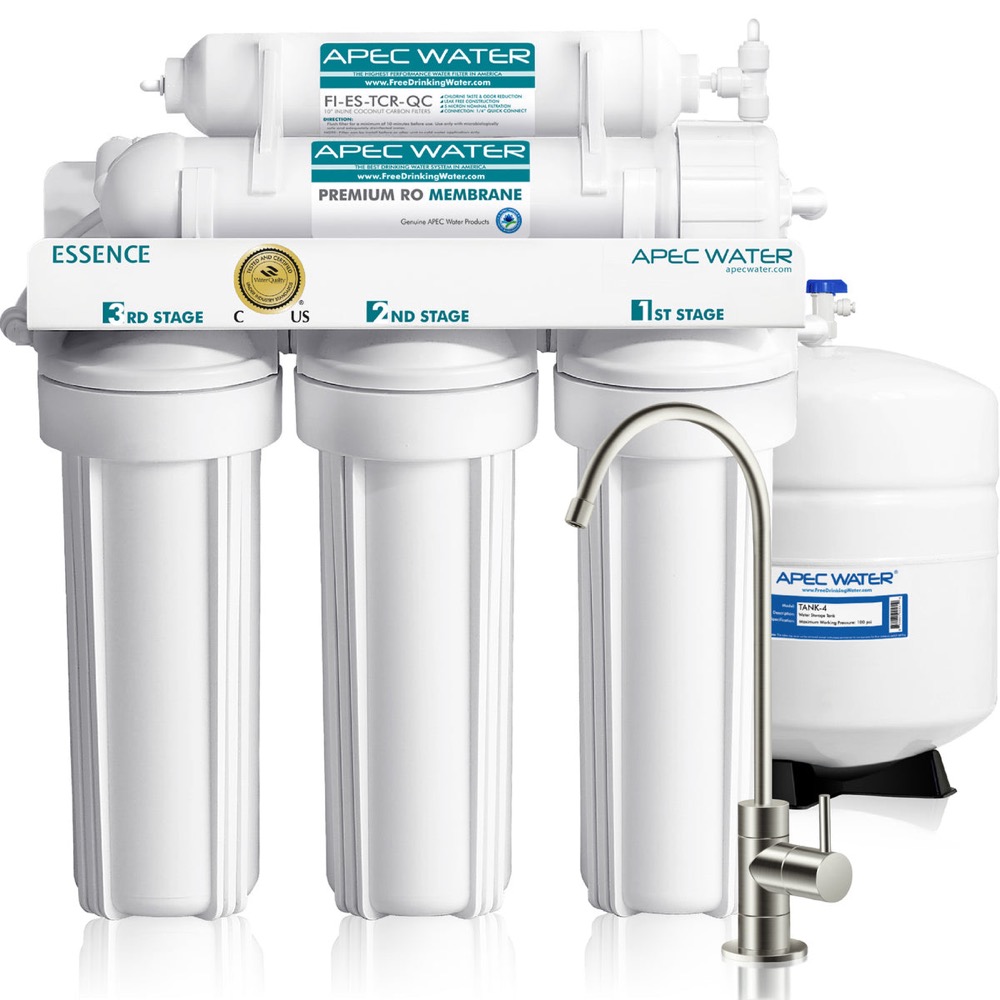
APEC is a California manufacturer that builds its systems domestically. The ROES-50 is a straightforward 5-stage RO carrying the WQA Gold Seal — the independent equivalent of NSF/ANSI 58 for reverse-osmosis performance. Its membrane rejects nitrate, arsenic, lead and 99%+ of other dissolved contaminants the same physical way every RO does. No smart display, no app — just the dependable RO mechanism that actually removes the well contaminants carbon can't, at the price of a good pitcher-plus, mounted under the sink with its own faucet.
The honest trade-offs: a slower 50 GPD output with a storage tank, roughly three gallons to drain per gallon made, a larger under-sink footprint, and a basic faucet. Like all RO it doesn't disinfect, so keep UV upstream if your well has bacteria. For well owners who want a permanent, domestically built RO with real human support over gadgets — and who want nitrate and arsenic handled at the tap for less — it's the pick, and our value choice in the best under-sink water filters guide.
Buyers with basic DIY skills say they had it installed in well under a day and noticed cleaner, better-tasting water right away, and APEC's customer service gets repeated praise as polite and responsive. The honest gripes: it sends about three gallons to the drain for every gallon it makes, some owners had to grab a couple of extra plumbing fittings from the hardware store to finish, and the most serious complaint is filter housings cracking where the fittings join, which soaked a few people's under-sink cabinets.
US-built, WQA Gold Seal-certified RO with a 2-year warranty and lifetime support — the cheapest route to permanent under-sink nitrate and arsenic removal.
On well water: The WQA Gold Seal independently verifies the RO membrane's performance to the same bar as NSF/ANSI 58, and RO membranes physically reject nitrate and arsenic — the proven mechanism, just at a lower price.
Check Today’s Price on Amazon →Amazon prices change daily — tap to see today's price and any active discount.
- Free delivery & returns for Prime members
- Ships free with Prime on eligible items
- Thousands of verified reviews
6. Megahome Countertop Water Distiller — Most Complete Removal
Most Complete Removal
Distillation is uniquely suited to well water because it doesn't care what the contaminant is — nitrate, arsenic, lead, uranium and dissolved solids all stay behind in the boiling chamber when the water leaves as steam, and the boiling itself deals with bacteria. The Megahome's 316L medical-grade stainless boiling chamber resists pitting from constant boiling, and its porcelain nozzle liner stops vapor from touching any painted surface on the way out. Crucially, the finished water — which is mineral-free and chemically aggressive — condenses into a real glass carafe, so no plastic ever contacts it.
The honest trade-offs: it's slow (about 5.5 hours per gallon), it uses electricity (roughly $150/year if you distill daily), it produces only a gallon at a time (so it's a drinking-and-cooking-water solution, not whole-house), and like RO it strips beneficial minerals — many owners re-mineralize with a pinch of trace-mineral drops. But for near-total removal of uncertain well contaminants with zero plumbing, nothing is more thorough. See the full field in the best water distillers guide.
Long-time owners consistently praise the Megahome's simplicity — "no electronics to break." Owners with hard well water report the boiler pot showing chalky mineral deposits after every cycle (that's the point, it's the contaminants you would have drunk) and appreciate that a monthly citric-acid rinse restores it to like-new. The honest gripes that repeat: the fan is audibly noisier than premium units, the plastic top-cap latch feels less premium than the price, and the porcelain nozzle liner can chip if the boiler pot is dropped during cleaning. Replacement glass carafes are readily available.
The most complete single-method treatment on this list — distillation leaves nitrate, arsenic and metals behind in the chamber and finishes into a glass carafe, no plumbing required.
On well water: Because contaminants don't evaporate, boiling to steam and re-condensing removes close to all of them — nitrate and arsenic included — making distillation the most thorough route when you're not certain what your well holds.
Check Today’s Price on Amazon →Amazon prices change daily — tap to see today's price and any active discount.
- Free delivery & returns for Prime members
- Ships free with Prime on eligible items
- Thousands of verified reviews
7. Waterdrop G3P600 Tankless Reverse Osmosis System — Best High-Flow Under-Sink RO
Best High-Flow RO
The G3P600 carries NSF/ANSI 58 certification — the standard written specifically for reverse-osmosis systems — and its membrane rejects nitrate, arsenic, lead and dissolved solids the same physical way the AquaTru's does, just plumbed in and out of sight. The tankless architecture avoids the stagnant storage tank of older RO units, and the front-panel display tells you exactly when each filter stage needs changing, so performance never quietly degrades on a well that runs hard on its filters.
You'll need a little under-sink space and a basic install (or a plumber for an hour), plus a power outlet under the sink. Like all RO it sends some water to drain and doesn't remineralize on its own — many owners add an inline remineralization cartridge for taste. And like every RO, it doesn't disinfect, so keep the UV stage upstream if your well has bacteria. For a high-volume household that wants well-water nitrate and arsenic handled permanently, it's the upgrade from a countertop unit — and our top pick in the best under-sink water filters guide.
Owners frequently call an under-sink reverse-osmosis system the best upgrade they have made to the house, and they love this one's live purity readout on the faucet — reports of tap water dropping from a 450 reading to around 12 are typical. People upgrading from older tank systems say filter changes are easier and the tankless design frees up cabinet space. The honest warnings: it needs a power outlet under the sink, a minority of owners report drip leaks or an automatic rinse cycle that would not stop (replacements were sent, but it happens), and hard-water homes see shorter filter life than advertised.
Under-sink reverse osmosis with a fast 600 GPD tankless flow — NSF/ANSI 58 certified, out of sight, and built for a well household's daily volume.
On well water: As a certified reverse-osmosis system its membrane physically rejects nitrate, arsenic and lead by size — the same proven RO route as the countertop AquaTru, just plumbed in for higher flow.
Check Today’s Price on Amazon →Amazon prices change daily — tap to see today's price and any active discount.
- Free delivery & returns for Prime members
- Ships free with Prime on eligible items
- Thousands of verified reviews
Well-Water Filter Buyer's Guide: How to Choose
Start with the test, then build in layers
Your well test is the whole plan. Read it in this order: (1) Bacteria — if coliform or E. coli is present, disinfection with UV or chlorination comes first, because nothing else on this list makes unsafe water safe to drink. (2) Iron, manganese, sulfur, sediment — if your water stains or smells, a whole-house iron filter like the Home Master fixes the everyday nuisance and protects downstream stages. (3) Nitrate and arsenic — invisible and health-critical, removed only by point-of-use reverse osmosis or a distiller. Most wells need two of these three, layered in that order.
Whole-house vs. point-of-use — you'll likely want both
A whole-house filter treats every tap (showers, laundry, sinks) but works too fast to remove dissolved ions like nitrate and arsenic. A point-of-use RO or distiller treats one tap slowly and removes those ions completely. They solve different problems, so the standard well setup pairs them: a whole-house Home Master or iSpring for the water you wash in, plus an AquaTru countertop or APEC under-sink RO for the water you drink and cook with. If your budget only covers one stage today and your water is bacteria-free, start with the point-of-use RO — it protects the water that goes inside you.
Match the stage to the contaminant — and don't over-buy
The cost trap in well water runs both ways: people over-spend on a premium whole-house system while leaving nitrate untreated, or under-spend on a carbon pitcher that does nothing for arsenic. Use the test to buy only what you need. A clean, low-iron well may need nothing but a point-of-use RO. A high-iron, sulfur-smelling well needs the Home Master first. A well with bacteria needs UV no matter what else you add. Whatever you install, every stage is a consumable — cartridges, membranes and UV lamps only work if you replace them on schedule, so budget for replacements the day you buy.
Our recommendation: Test first, then layer. For the classic stained, metallic, rotten-egg well, start with the Home Master HMF3SDGFEC whole-house filter; on a cleaner, low-iron well the iSpring WGB32B-KS is the value pick. If your test shows bacteria, add UV (the Aquasana EQ-1000-AST-UV). Then protect your drinking water from nitrate and arsenic with a point-of-use AquaTru countertop or APEC ROES-50 under-sink RO, or the Megahome distiller for the most thorough single method. For a high-volume household, the tankless Waterdrop G3P600 under-sink RO handles nitrate and arsenic at higher flow. Then keep going with our microplastics filter guide and is tap water safe to drink?
Frequently Asked Questions
Sources & further reading
- U.S. EPA — Private Drinking Water Wells (wells are not regulated by the EPA; testing and treatment are the owner's responsibility).
- U.S. CDC — Private Wells: Testing & Water Treatment (annual testing for coliform, nitrate and pH; contaminant guidance).
- U.S. EPA — National Primary Drinking Water Regulations (nitrate MCL 10 mg/L; arsenic MCL 0.010 mg/L).
- NSF International — NSF/ANSI 53, 55 and 58 water-treatment certification standards (contaminant reduction, UV, and reverse osmosis).