Brita filter microplastics — the honest one-line answer: the Brita Elite (blue cartridge, model OB06) is certified by WQA against NSF/ANSI 401 for microplastic particles of 0.5 to 1 micron; the Brita Standard (white cartridge, model OB03) carries no microplastic claim. Neither cartridge has any claim below 0.5 micron, so the sub-micron and nanoplastic fraction needs a physical membrane — a hollow-fiber pitcher rated near 1 micron, a reverse osmosis system, or a countertop water distiller. See the alternatives in our best water filter pitchers for microplastics.
- Elite (OB06): NSF/ANSI 401 for microplastics 0.5–1 µm; NSF/ANSI 53 for lead (99.5–99.6% reduction) and PFOA/PFOS.
- Standard (OB03): NSF/ANSI 42 only (chlorine, taste, odor); no microplastic, lead, or PFAS claim.
- What neither covers: anything below 0.5 micron — the sub-micron fragments and nanoplastics found in bottled and tap water.
- Verified fresh on August 16, 2026: Brita’s Elite performance data sheet still lists microplastic particles of 0.5 to 1 micron as the certified NSF/ANSI 401 claim on the Elite (OB06) cartridge; the Standard (OB03) cartridge still carries no microplastic claim. If the cartridge in your pitcher is white, its Brita filter microplastics performance is undocumented; a blue Elite is the only Brita with the claim. The one number to hold onto is Brita’s certified 0.5-micron floor — every “brita microplastics” question below is answered by whether the particle in question sits above or below it.
- Why the size floor matters: the systematic review by Koelmans and colleagues in Water Research 2019 pooled 50 drinking-water studies and concluded that most sampling methods have detection limits at or above 20 microns, meaning particles smaller than that are systematically under-counted in the peer-reviewed record (Koelmans AA, Mohamed Nor NH, Hermsen E, Kooi M, Mintenig SM, De France J, Water Research 155: 410–422, 2019). The Brita Elite’s 0.5–1 µm certified band therefore sits below the size that most tap-water studies can even see — a genuinely fine claim, but a narrow one, and a claim about a slice of the load rather than the whole of it.
Brita filter microplastics: the plain answer
If you searched “brita filter microplastics” hoping the pitcher on your counter is already handling them, the answer depends entirely on which cartridge is in it. Both cartridges are certified to NSF/ANSI 42 (chlorine, taste and odor). Only the Elite goes further: Brita’s performance data sheet shows it certified by WQA against NSF/ANSI 53 (lead) and NSF/ANSI 401, and the 401 claim list includes microplastic particles of 0.5 to 1 micron. What that really means for your kitchen:
Brita Standard vs. Brita Elite, side by side
The two cartridges look almost identical on the shelf and cost about the same over a year, but they answer the “brita microplastics” question very differently. Every figure below is from Brita’s own performance data sheet:
| Brita cartridge | Microplastic claim | Lead reduction | PFOA / PFOS | Certifying body | Filter life |
|---|---|---|---|---|---|
| Brita Standard (white filter, model OB03) | None — no NSF/ANSI 401 claim | Not certified | Not certified | NSF (Standard 42 only) | ~40 gallons (~2 months) |
| Brita Elite / Longlast+ (blue filter, model OB06) | Yes — NSF/ANSI 401, particles 0.5–1µm | 99.5–99.6% (NSF/ANSI 53) | Certified (NSF/ANSI 53) | WQA (42, 53, 401) + IAPMO R&T (53 for PFOA/PFOS) | ~120 gallons (~6 months) |
Bottom line for “brita microplastics”: if your pitcher holds a white Standard filter, its microplastic performance is undocumented and uncertified. If it holds a blue Elite / Longlast+, you have a certified claim down to 0.5 micron and nothing below that. The Elite refill runs a few dollars more per cartridge but lasts three times as long, so the annual cost is comparable — and it is the only Brita you should keep in a pitcher if microplastics are the reason you bought one.
- Standard Brita cartridge: no microplastic claim, no published microplastic test data, ~40-gallon life. Job it’s built for: better taste, less chlorine.
- Brita Elite (Longlast+): everything above, plus certified lead reduction (99.5–99.6% on Brita’s sheet), a 120-gallon life, an NSF/ANSI 401 certification whose claims include microplastic particles of 0.5 to 1 micron, and IAPMO R&T certification against NSF/ANSI 53 for PFOA and PFOS.
- What the size limit means: the microplastic claim under NSF/ANSI 401 is tested at 0.5 to 1 micron. Plenty of tap-water microplastic is larger than that and is covered. What is not covered is everything below it — the sub-micron fragments and nanoplastics, which no claim list reaches and only a fine membrane physically blocks. (NSF P473, often quoted in this context, is the PFOA/PFOS protocol, not a microplastics test.)
- What goes finer: a hollow-fiber pitcher such as the Waterdrop Chubby, or the Epic Pure with its published lab data showing 99.9% removal at ≥1 micron, filters by pore size rather than by claim list — and reverse osmosis goes finer again. All cost about the same as a Brita Elite starter kit and drop into the same countertop spot.
Brita is the default water filter in the American kitchen. If you already own one, it’s reasonable to assume it’s handling the microplastics you keep reading about. The honest position is narrower than that assumption and wider than “no”: with the Elite cartridge there is a real certified claim, and it stops at 0.5 micron. On the specific “brita microplastics” question, what matters is which cartridge you have and how small the particles you care about are.
The confusion is understandable. A Brita visibly improves your water: chlorine taste disappears, and the water looks and tastes cleaner. But taste and particle filtration are two different jobs. Microplastics are in nearly every tap water sample ever studied, and they’re small — often between 1 and 100 microns. Removing them takes a physical barrier fine enough to catch them, and that’s not the technology inside a standard Brita.
Brita microplastics, by the numbers
- 0.5–1 micron — the microplastic particle size range certified for the Brita Elite filter under NSF/ANSI 401, per Brita’s own performance data sheet. The standard cartridge has no microplastic claim.
- 94.4% of U.S. tap water samples contained microplastic in the landmark 2018 study by Kosuth, Mason & Wattenberg in PLOS ONE — a mean of 4.8 fibers per liter across 159 samples from 14 countries.
- ~1 micron — the pore size a home filter needs to reliably block microplastic particles. Standard Brita uses granular activated carbon, which is not a rated micron barrier.
- 99%+ removal at ≥1 micron — what a hollow fiber pitcher (Waterdrop Chubby) or an Epic Pure with published lab data delivers, at roughly the same counter footprint as a Brita.
What size are the microplastics in tap water — and where does Brita’s certified range fall?
The “brita microplastics” question depends entirely on particle size. Tap water microplastics span a wide range of sizes, and Brita’s certification covers a specific slice of that spectrum. Three sourced benchmarks frame the picture:
- The WHO 2019 drinking-water review (Microplastics in Drinking-Water) found that conventional municipal treatment largely removes particles above 150 microns — so your tap water contains disproportionately the smaller fraction below that threshold.
- Kosuth, Mason and Wattenberg (PLOS ONE, 2018) found microplastic in 94.4% of U.S. tap water samples at a mean of 4.8 fibers per liter — with fibers typically measured in the 1–100 micron range, exactly where many municipal granular-activated-carbon systems offer incomplete removal.
- Pivokonsky et al. (Sci. Total Environ., 2018) found microplastic in every treated drinking-water sample even after coagulation, sand filtration, and granular activated carbon — confirming that some particles reliably pass through full-scale plant treatment and into finished drinking water.
| Particle size | Typical status in tap water | Brita Standard | Brita Elite |
|---|---|---|---|
| >150µm (large fragments) | Largely removed by municipal treatment before reaching homes (WHO 2019) | No claim | No claim needed at this size |
| 1–150µm (fine microplastics — the bulk of what drinking-water studies find) | Present in every treated-water sample studied (Pivokonsky 2018) | No certified claim; no published data | No certified claim at this size range |
| 0.5–1µm (very fine microplastics) | Present; below most conventional detection thresholds before 2020 | No claim | Certified — WQA, NSF/ANSI 401 |
| <0.5µm (nanoplastics) | ∼240,000 particles/L in bottled water (Qian et al., PNAS 2024); levels in tap water less studied | No claim | No claim |
The practical read: the bulk of what drinking-water studies document in the United States falls in the 1–150 micron range — too large for nanoplastic detection methods to miss, too small to be reliably removed by municipal treatment, and outside the size range either Brita cartridge is certified for. The Elite’s NSF/ANSI 401 certification is tested at 0.5 to 1 micron — a real certified claim — but at a finer size than the particles most reliably documented in finished tap water. For the 1–150 micron range and for nanoplastics below 0.5 micron, a hollow-fiber pitcher or a reverse osmosis system is the documented answer.
Does a Brita filter remove microplastics?
The standard Brita: not reliably, and not by design. A standard Brita pitcher filter is built to reduce chlorine (the taste-and-smell job) and a handful of metals using activated carbon and an ion-exchange resin. If that taste-and-smell job is your main goal, a purpose-built pick from our best water filters for chlorine and chloramine guide does it more thoroughly — and, unlike a Brita, some also handle chloramine. Granular activated carbon is not a fine-pore membrane rated to catch particles at a specific micron size, so the standard filter makes no documented claim about plastic particles. The Brita Elite is the exception: it holds a real WQA certification against NSF/ANSI 401 for microplastic particles of 0.5 to 1 micron. For the broader 1–150 micron range that drinking-water studies most reliably document, however, neither Brita cartridge carries a published claim.
That doesn’t mean zero plastic is captured. Activated carbon is porous, and the largest plastic fragments can get physically caught or adsorbed as water passes through. But “some larger particles sometimes” is not the same as reliable removal — and the microplastics that matter most for exposure are the smallest ones, which slip straight through. Without published test data or certification, you have no way to know how much your Brita is (or isn’t) removing, which is exactly why it can’t be counted as a microplastic filter.
“With the Elite cartridge, Brita has a certified microplastic claim — and it stops at 0.5 micron. Everything below that is a job for a membrane.”
What does a Brita filter actually remove?
More than most people realize, and the two cartridges are not close. Brita publishes a performance data sheet for each, and it is worth reading before any review site: it names the certifying body, the standards, and the reduction percentages.
- Standard Brita filter: NSF-certified to reduce chlorine taste and odor plus metals including copper, cadmium, mercury, and zinc. Lasts about 40 gallons (roughly one to two months).
- Brita Elite (Longlast+) filter: everything above plus certified lead reduction at 99.5–99.6%, a 120-gallon life (about six months), WQA certification against NSF/ANSI 42, 53 and 401 — the 401 claims include microplastic particles of 0.5 to 1 micron — and IAPMO R&T certification against NSF/ANSI 53 for PFOA and PFOS.
- Neither filter is certified for PFAS as a class — the Elite’s claim covers PFOA and PFOS specifically — and neither reaches the sub-micron nanoplastic fraction.
So a Brita genuinely improves your water — better taste, less chlorine, and on the Elite, certified lead reduction, two forever chemicals, and microplastic particles down to 0.5 micron. What it is not is a membrane: below that size the claims run out, and that is the honest edge of what the pitcher on your counter is doing.
How much microplastic does a Brita filter actually catch?
For the standard cartridge, which carries no microplastic claim and no published microplastic data, the honest number is unknown. For the Elite, the answer is bounded rather than open: certified against NSF/ANSI 401 for particles of 0.5 to 1 micron, and silent below that. What is known — and peer-reviewed — is the size of the problem the filter is being asked to solve. The landmark 2018 tap-water study by Kosuth, Mason and Wattenberg in PLOS ONE tested 159 tap water samples from 14 countries and found microplastic in 94.4% of U.S. samples, at a mean of 4.8 plastic fibers per liter in the American subset (Kosuth et al., PLOS ONE, 2018). That is the baseline any filter has to work against — and the fibers measured in those studies sit largely inside the size range the Elite is certified for, while the finer fragments below it are not covered by any pitcher claim.
Brita water filter microplastics: a worked example for one adult, per day
To ground the “brita water filter microplastics” question in a number a household can use, here is what the peer-reviewed literature implies for one adult drinking exclusively filtered tap water. Cox and colleagues estimated the total human microplastic intake at roughly 39,000 to 52,000 particles per person per year from food and drinking water combined (Cox et al., Environmental Science & Technology, 2019), which works out to about 107–142 particles per person per day before any filter. The drinking-water share of that daily count is dominated by particles in the 1–100 µm band that Kosuth actually measured in U.S. tap water — the range that sits above Brita’s certified 0.5–1 µm band. What that means, pitcher by pitcher, on the same tap:
| Pitcher in front of the tap | What the certified claim covers | Where the daily 107–142 particles land |
|---|---|---|
| Brita Standard (white filter, OB03) | No microplastic claim at any size | Unquantified — nothing on Brita’s data sheet applies |
| Brita Elite (blue filter, OB06) | Only the 0.5–1 µm slice, per NSF/ANSI 401 | The 1–100 µm fibers Kosuth measured fall above the certified band; only the small sub-1 µm fraction is covered |
| Hollow fiber pitcher (Epic Pure, Waterdrop Chubby) | Physical pore near 1 µm, 99%+ capture at ≥1 µm (maker lab data) | Removes essentially all of the 1–100 µm fibers — the bulk of the measured daily load |
| Reverse osmosis (under-sink) | Membrane ~0.0001 µm, 99%+ including nanoplastics (Enfrin et al., 2019) | Removes the 1–100 µm fibers and the sub-0.5 µm nanoplastic fraction |
Two things fall out of that math. First, a Brita water filter’s microplastics claim — when it exists at all, on the Elite — covers a real but narrow slice of the daily load, not the majority. Second, the “brita water filter microplastics” question changes shape entirely depending on which cartridge is in the pitcher: with an OB03 Standard, none of the daily 107–142 particles are being counted or captured on any Brita data sheet; with an OB06 Elite, the sub-1 µm slice is, and the larger fibers are not.
Brita microplastics, size by size: the peer-reviewed systematic review by Koelmans and colleagues pooled 50 drinking-water microplastic studies and found that most sampling methods have detection limits at or above 20 microns (Koelmans AA et al., Water Research 155: 410–422, 2019). In plain terms: the Elite’s certified 0.5–1 micron band sits below the size that most peer-reviewed tap-water studies can even see, so it is a genuinely fine claim but a narrow one — a slice of the load, not the whole load. The larger fibers that Kosuth actually measured (typically 1–100 microns, with a mean of 4.8 per liter in U.S. tap water) fall above the Elite’s upper bound of 1 micron, and Brita publishes no claim for that range.
The nearest apples-to-apples data on granular-activated-carbon filtration comes from municipal treatment plants, not pitchers, but it puts a firm ceiling on what a Brita-style carbon can do. Pivokonsky, Cermakova, Novotna, Peer, Cajthaml and Janda measured microplastic in the raw and treated water of three Czech drinking-water treatment plants and detected microplastic in every treated sample; the multi-stage plants (coagulation, sand filtration, and granular activated carbon) removed roughly 70–83% of particles overall, leaving ~17–30% of the microplastic load in the finished tap water that reaches customers (Pivokonsky et al., Science of the Total Environment, 643: 1644–1651, 2018). Two things follow. First, even a full-scale plant using activated carbon downstream of coagulation and sand cannot fully strip microplastic from tap water — so a home carbon pitcher, which has none of that pretreatment, cannot be expected to. Second, a Brita sits downstream of that treatment: whatever municipal treatment let through is what a Brita cartridge is asked to catch, using loose granular carbon that has no rated micron cut-off.
What different filter media actually measure, side by side
Here is the same question — how much microplastic does this actually remove? — put to the three main filter categories, with a sourced number for each. Standard granular activated carbon is the technology inside a Brita:
| Filter media (as used in a pitcher or plant) | Measured microplastic removal | Independent source |
|---|---|---|
| Granular activated carbon (full municipal plant: coagulation + sand + GAC) | ~70–83% overall; microplastic still detected in every treated sample | Pivokonsky et al., Sci. Total Environ., 2018 |
| Granular activated carbon (Brita-style pitcher, no pretreatment, no rated pore size) | Standard cartridge: no claim, no published data. Elite cartridge: certified for particles 0.5–1µm | Brita performance data sheet (WQA, NSF/ANSI 401) |
| Hollow-fiber membrane (~0.1–1µm, e.g. Waterdrop Chubby, Epic Pure) | 99%+ removal of particles ≥1µm across full filter life | Manufacturer certification (Waterdrop); published lab report (Epic) |
| Reverse osmosis membrane (~0.0001µm, under-sink) | 99.9%+ removal, including nanoplastics down to hundreds of nanometers | Enfrin, Dumée, Lee, Water Research, 161: 621–638, 2019 (review of membrane processes) |
The gap between rows one and two is not a rounding error. Municipal-plant GAC works within a train of prior steps that already removed most of the load; it also uses fresh, tightly packed media beds tens of centimeters deep, replaced on a schedule. A Brita cartridge is loose granular carbon a few centimeters thick, with no coagulation upstream and no independent record of what it captures. That is why the honest answer for the “brita filter microplastics” question is bounded rather than unknown: with an Elite cartridge, a certified claim down to 0.5 micron; with the standard cartridge, no claim at all; and with either, nothing below that size.
What Brita’s NSF listing actually covers
Brita’s certifications are public record, and the document to read is Brita’s own performance data sheet for the Elite filter (model OB06) rather than any review site. It states three things people miss. The Elite filter is certified by WQA against NSF/ANSI 42, 53 and 401 — which is why searching the NSF database alone turns up less than you expect, because a WQA certification is not an NSF listing. The Standard 401 claim list on that sheet includes microplastic particles of 0.5 to 1 micron. And the Elite is separately certified by IAPMO R&T against NSF/ANSI 53 for PFOA and PFOS. NSF P473, frequently quoted as the microplastics protocol, is in fact the PFOA/PFOS protocol.
Microplastics in drinking water — what the sourced tests show
Independent researchers have put numbers on both tap and bottled water. Read the middle column as the load a home filter starts from — and note that a Brita cannot show its own row on this table because it has never been tested against any of these methods:
| Water source (measurement method) | Measured microplastic concentration | Published study |
|---|---|---|
| U.S. tap water (Nile-Red staining, 159 samples, 14 countries) | 94.4% of U.S. samples contained microplastic; mean 4.8 fibers/L | Kosuth, Mason & Wattenberg, PLOS ONE, 2018 |
| U.S. adult intake (dietary + drinking-water estimate, tap-water drinkers) | ~39,000–52,000 microplastic particles per person per year | Cox et al., Environmental Science & Technology, 2019 |
| Bottled water (nano- and micro-plastic combined, SRS microscopy) | Mean ~240,000 particles per liter | Qian et al., PNAS, 2024 |
| Boiled hard tap water (calcium co-precipitation with limescale, then strained) | Up to 90% of nano- and microplastic removed | Yu, Wang et al., Environmental Science & Technology Letters, 2024 |
| WHO drinking-water review (particle size and treatment-plant removal) | Conventional treatment can remove >90% of particles >150μm; particles ≤150μm are still poorly characterized in finished tap water | World Health Organization, Microplastics in drinking-water, 2019 |
Two facts do the heavy lifting here. First, U.S. tap water reliably contains microplastic — the Kosuth measurement is roughly one plastic particle per average glass. Second, a Brita filter has never been independently tested against these research methods — its microplastic evidence is the NSF/ANSI 401 claim on Brita’s data sheet, tested at 0.5 to 1 micron. Meanwhile, the certified hollow-fiber and reverse-osmosis pitchers in the next section publish their own particle-capture data: 99%+ removal at ≥1 micron for hollow fiber (Waterdrop, Epic), and 99%+ at ≥0.0001 micron for reverse osmosis, which also catches nanoplastics. That is the meaningful difference on this page — not that Brita fails the microplastics test, but that Brita has never taken it in writing.
Where a Brita’s microplastic claim stops
Because it uses the wrong kind of filtration for the job. Microplastic removal is fundamentally a physical barrier problem: you need a membrane with pores small enough (around 1 micron or finer) to physically block the particles. A standard Brita relies on granular activated carbon, which is optimized for adsorbing dissolved chemicals and chlorine, not for sieving out particles at a controlled size.
The claim that matters here sits under NSF/ANSI 401, and Brita’s Elite filter carries it: microplastic particles of 0.5 to 1 micron, certified by WQA. What a claim list cannot do is reach below the size it was tested at. A membrane can, because its pore size is the barrier rather than a tested claim. Filters that are — hollow fiber pitchers and reverse osmosis systems — use a mechanical membrane as the primary barrier, which is why they can make the claim and back it with data. For a head-to-head on the main filter types, see our Brita vs. Berkey vs. reverse osmosis comparison.
Which water filters actually remove microplastics?
If microplastic removal is your goal, you want a physical membrane filter — and the good news is that several pitchers do it for a similar price to a Brita, without the countertop plumbing of a reverse osmosis unit. A hollow fiber pitcher blocks particles down to ~1 micron in any water and also removes the chlorine, lead, and PFAS a certified model targets. Below are six filters that are genuinely built for the job; each has independent data or formal certification behind its microplastic performance. For the full ranking, see our best water filter pitchers for microplastics guide and the complete water filter guide. If you want to know your own water’s microplastic load first, our guide to testing for microplastics in water at home covers the DIY and lab options.
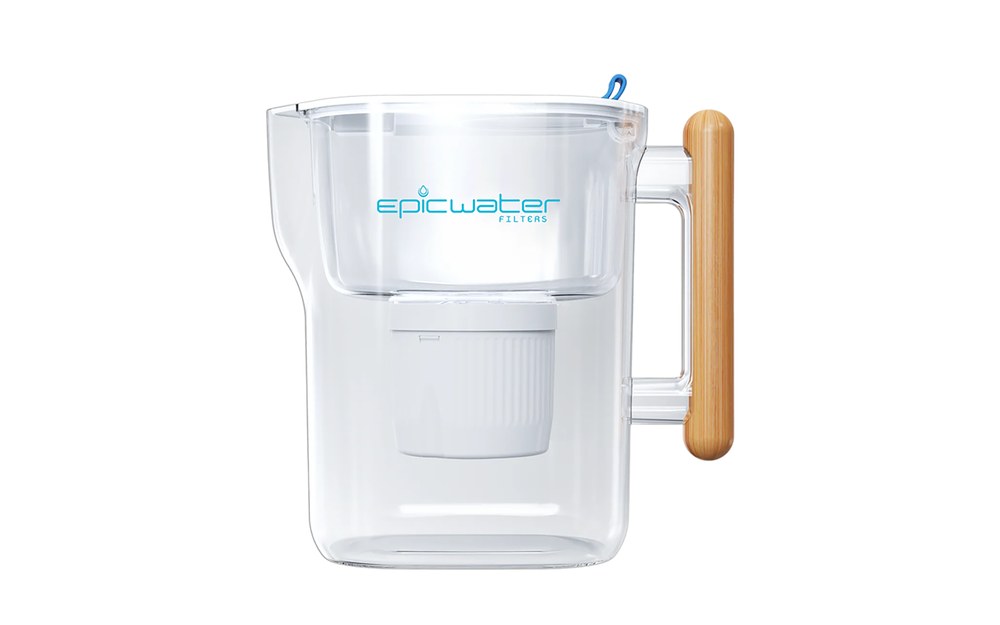
1. Epic Pure Pitcher — Best Overall for Microplastics
 Best Overall
Owners like that Epic publishes its lab results and that the water tastes clean, and several describe the slow pour as reassuring rather than annoying -- one common line is that the deliberate rate lets them know it is working. A fresh filter can take one to two hours to run through at first, then speeds up to roughly 15 to 30 minutes once broken in. The honest gripes: the flow is slow by design and frustrates anyone in a hurry, some buyers report cracked plastic or a spout flap that does not open cleanly, and a few had water leak or spill when pouring.
The clearest evidence on this list: Epic posts its independent lab results publicly, so you can see the 99.9% microplastic-removal data instead of trusting a slogan on the box.
Why it's safe: The hollow fiber membrane physically blocks microplastic particles down to ~1 micron, while the carbon stage handles chlorine, lead, and PFAS — all in a BPA-free Tritan body.
Check Today’s Price on Amazon →Amazon prices change daily — tap to see today's price and any active discount.
- Free delivery & returns for Prime members
- Sold & shipped by Amazon
- Thousands of verified reviews
The Epic Pure is the most straightforward upgrade for anyone who bought a Brita hoping to reduce microplastics. The dual-stage design uses a hollow fiber membrane as the primary microplastic barrier, then activated carbon to address chlorine, chloramines, and taste. Epic publishes its independent IAPMO lab test results on its website, which is a transparency standard most competitors — Brita included — don’t meet.
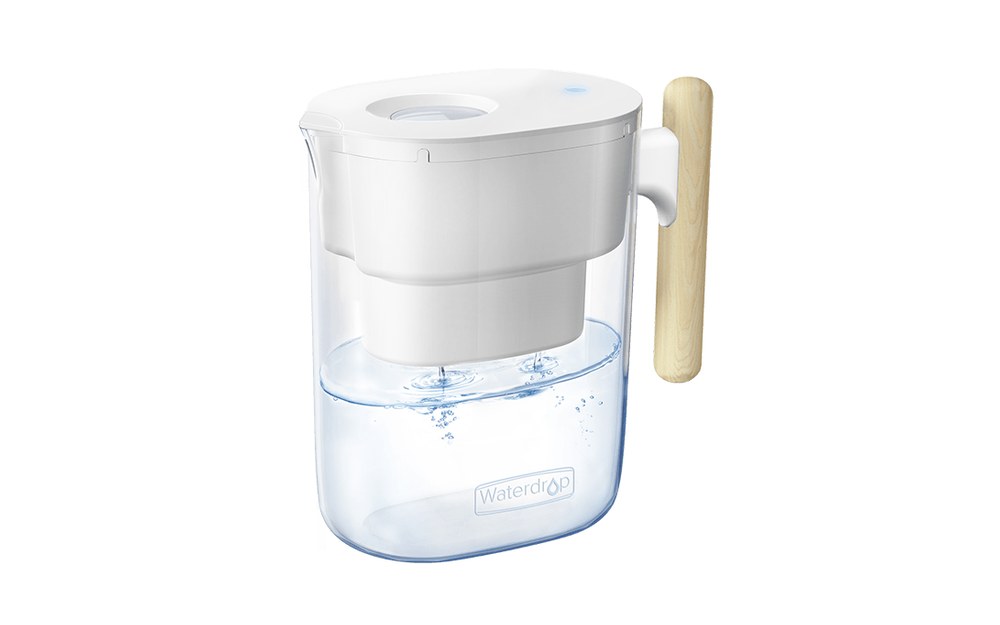
2. Waterdrop Chubby 10-Cup Pitcher — Best Filter Life
 Best Filter Life
The Chubby draws praise for being one of the few pitchers people want to leave out on the counter, and hands-on testers clocked it filtering a full reservoir in under three minutes, faster than most rivals. Owners also point to the 200-gallon filter life as the reason the running cost stays low. The honest gripes: the pour spout is small, so a full pitcher has to be tipped slowly or it makes a mess; new filters trap air bubbles and run slow until you soak and tap them; and the trap-door spring is metal, which a few long-term owners worry could rust over the years.
A hollow fiber membrane blocks particles by pore size rather than by claim list, and the 200-gallon filter runs about 4 to 5 months — the lowest ongoing cost here.
Why it's safe: A hollow fiber membrane is a physical barrier to particles, and the carbon composite handles chlorine, heavy metals and PFAS, in a BPA/BPS-free body. The removal percentages are Waterdrop’s own published lab results, not a certification listing.
Check Today’s Price on Amazon →Amazon prices change daily — tap to see today's price and any active discount.
- Free delivery & returns for Prime members
- Sold & shipped by Amazon
- Thousands of verified reviews
What the Waterdrop Chubby gives you that a Brita does not is a membrane: a physical pore size rather than a tested claim list, plus the longest filter life here at 200 gallons (about 4 to 5 months for most households). The “filter while you pour” design means you never wait for water to drip through — it works just like a Brita on the counter, but with a membrane that’s actually rated for microplastics.
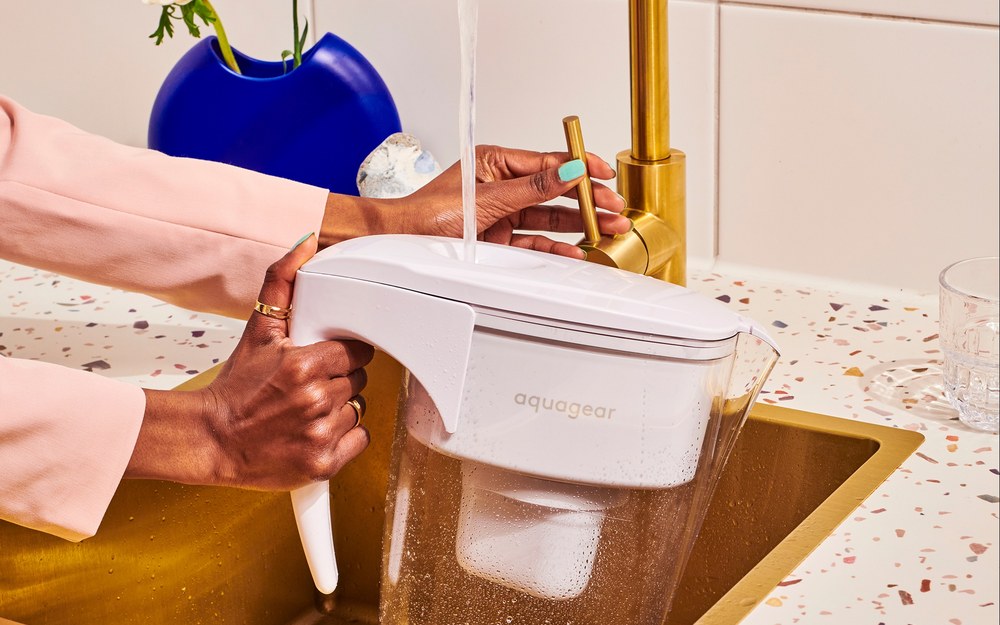
3. Aquagear Water Filter Pitcher — Best Filter Life
 Best Filter Life
Buyers rate Aquagear well for taste and its wide contaminant list, and the company backs it with a strong warranty. The most repeated complaint by far is speed -- reviewers say filtration drags, with some waiting minutes and others reporting close to two hours for a pitcher once the cartridge ages. The honest gripes: filters clog and cannot just be rinsed clean, the lid does not fit well and can pop off when pouring, and the pour-spout cover tends to stick or fall out of place.
Change the filter half as often as most pitchers — 150 gallons per cartridge means fewer replacements, lower annual cost, and less to remember.
Why it's safe: A 5-stage filter with a sub-micron membrane stage captures microplastics, lead, fluoride, and chlorine, in a BPA-free body with USA-made filter media.
Check Today’s Price on Amazon →Amazon prices change daily — tap to see today's price and any active discount.
- Free delivery & returns for Prime members
- Sold & shipped by Amazon
- Thousands of verified reviews
The Aquagear pitcher costs more upfront but its 150-gallon filter life means lower annual replacement costs than most competitors, and the pitcher body is guaranteed for life. Aquagear uses a 5-stage filter with a sub-micron membrane stage specifically targeting microplastics, heavy metals, and fluoride. Good for families who don’t want to track filter changes constantly.
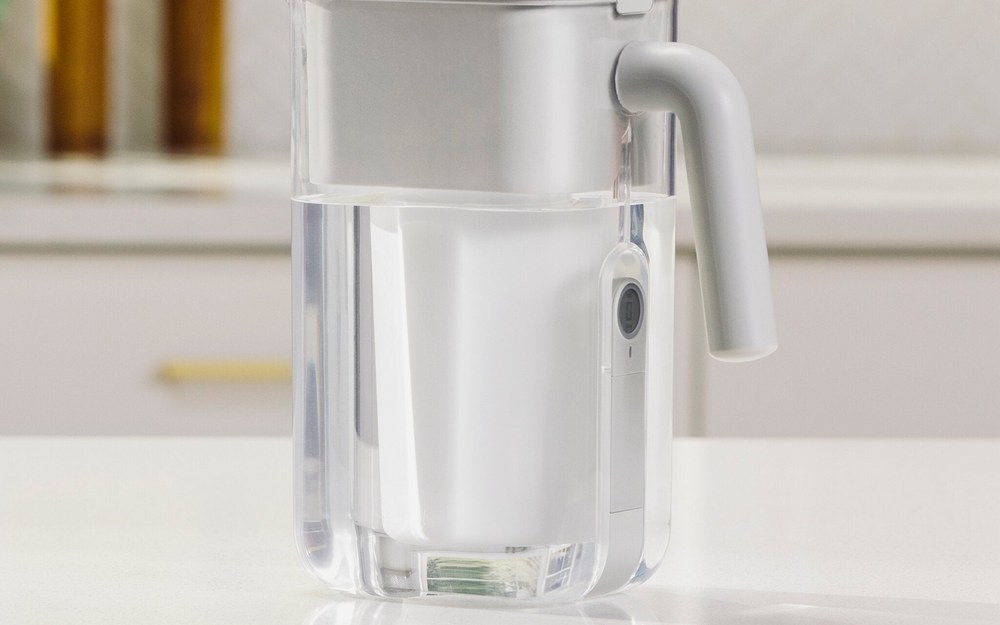
4. ZeroWater 10-Cup Pitcher with TDS Meter — Best for Hard Water / TDS Reduction
 Best for Hard Water
Owners buy ZeroWater for the included TDS meter and the fact that it reads 000 straight from the tap, and many say nothing else gets water this clean. The honest gripes: the ion-exchange resin can throw off a fishy, sour, or lemony smell as it wears out; filter life is short, tapping out around 15 to 40 gallons, so replacements come often and the cost adds up; and the lid can fall off if you pour too fast or tip it too steeply.
The included TDS meter shows the exact moment your filter is spent — so you replace on data, not a calendar guess, which matters most in hard-water homes.
Why it's safe: Five mechanical and ion-exchange stages capture microplastic particles and strip dissolved solids to 0 ppm, and the pitcher is built from BPA-free plastic.
Check Today’s Price on Amazon →Amazon prices change daily — tap to see today's price and any active discount.
- Free delivery & returns for Prime members
- Sold & shipped by Amazon
- Thousands of verified reviews
ZeroWater’s 5-stage system is the most comprehensive multi-layer design in the pitcher category, combining coarse and ultra-fine screens, activated carbon, and an ion-exchange resin. It removes virtually all dissolved solids and captures physical particles. The included TDS meter makes it easy to know exactly when to replace the filter — a practical edge over the calendar-guess approach Brita relies on. In hard-water areas, replace filters on the TDS reading, not a fixed schedule.
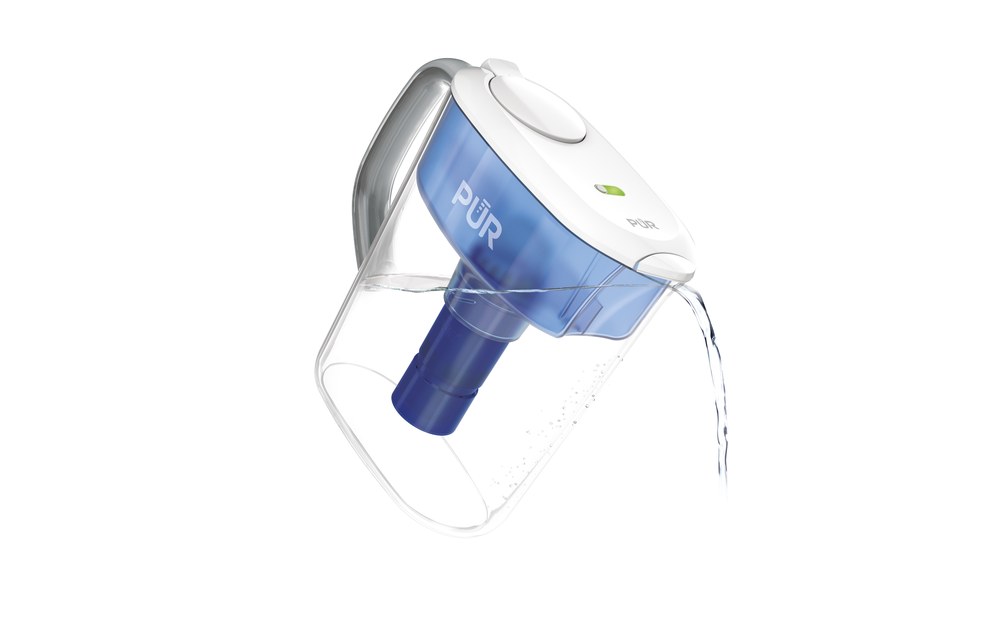
5. PUR Ultimate 11-Cup Pitcher — Best NSF-Certified Budget Pick
 Best Budget NSF
PUR fans like the NSF-certified lead and microplastic claims and say the water tastes noticeably better than straight tap. The honest gripes are consistent and loud: the filtering drags, with owners reporting close to 30 minutes per tank; the cartridges are known to clog and slow to a crawl; and pouring can be a mess -- if the top tank still holds unfiltered water or the pitcher is full, the whole lid can push off and spill.
The cheapest way onto NSF-certified ground — independently certified to reduce 70+ contaminants, including lead and many chemicals, for around the price of a couple of bottled-water cases.
Why it's safe: The Ultimate filter pairs a denser carbon block with an ion-exchange layer in a BPA-free body, NSF-certified to reduce lead, chlorine, and 70+ other contaminants.
Check Today’s Price on Amazon →Amazon prices change daily — tap to see today's price and any active discount.
- Free delivery & returns for Prime members
- Sold & shipped by Amazon
- Thousands of verified reviews
The PUR Ultimate is the most affordable certified pick on this list and the closest analog to a Brita in price and format. PUR’s “Ultimate” filter uses a denser carbon block with an ion-exchange layer, giving better particulate capture than a standard carbon filter. PUR has not published specific microplastic test data, so it’s best when budget is a priority and your main concern is chemical contaminants plus general particulates — not as your primary microplastic defense if that’s the goal.
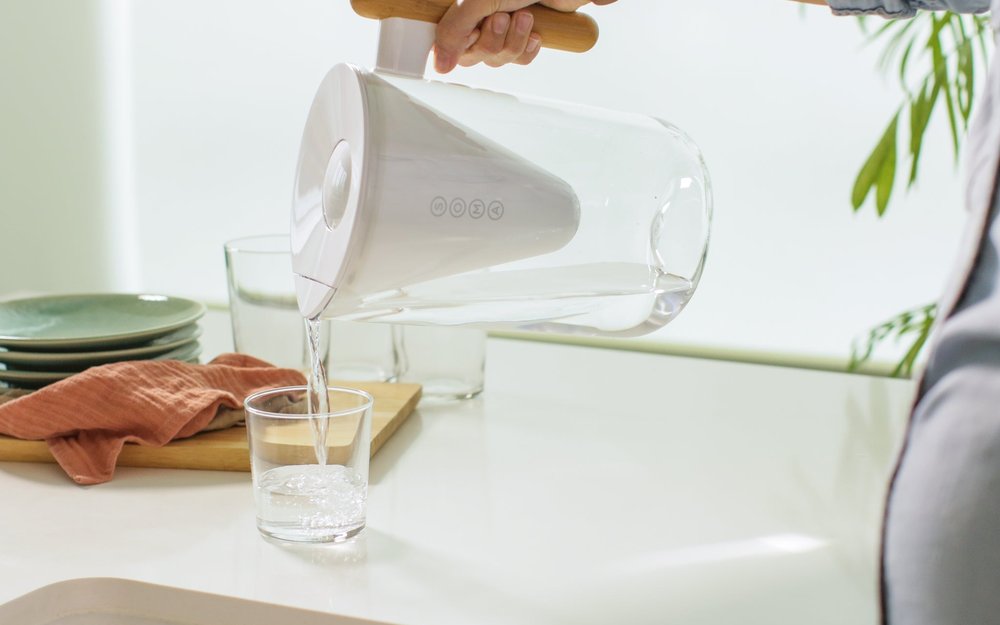
6. Soma 8-Cup Pitcher — Best Plastic-Minimizing Design
 Best Design
Soma gets picked for looks, with the bamboo handle and clean design, and buyers like the coconut-shell carbon taste. The honest gripes stack up on function: the drip is slow, with owners reporting 30 minutes to an hour to fill, the pitcher clogs from trapped air bubbles even after following the setup steps, mold builds up around the filter rim, and some units arrived with a cracked bamboo handle.
The glass carafe version solves a problem most pitchers ignore — storing filtered water for hours in plastic. Soma stores it in glass instead, with a sustainable wood handle.
Why it's safe: A plant-based coconut-carbon filter (NSF 42+53 certified) removes chlorine and common contaminants, and the glass carafe option keeps your filtered water out of contact with plastic entirely.
Check Today’s Price on Amazon →Amazon prices change daily — tap to see today's price and any active discount.
- Free delivery & returns for Prime members
- Sold & shipped by Amazon
- Thousands of verified reviews
Soma takes a different angle: reducing the plastic contact between filtered water and the pitcher vessel itself. The glass carafe version is the most meaningful option if you’ve thought about the fact that most pitchers — Brita included — are plastic, and you’re storing water in them for hours. The plant-based carbon filter removes chlorine and common contaminants effectively, though Soma has not published microplastic-specific lab data. It’s the pick for people focused on minimizing all plastic contact, not just microplastics in the source water.
Brita vs. certified microplastic filters: how they compare
A standard Brita and a certified microplastic filter look similar on the counter, but they’re doing different jobs. Here’s how the common options stack up specifically for plastic particles:
| Filter | Microplastic Removal | Certified for Microplastics? | Also Removes | Format |
|---|---|---|---|---|
| Standard Brita pitcher | Unverified / incidental | No | Chlorine, taste, some metals | Pitcher (carbon) |
| Brita Elite (Longlast+) | Certified — 0.5–1µm (NSF/ANSI 401) | Yes — WQA-certified, 0.5–1µm only | Above + certified lead + PFOA/PFOS | Pitcher (carbon) |
| Hollow fiber pitcher (Epic, Waterdrop) | 99%+ (≥1µm) | Yes (membrane / lab data) | Chlorine, lead, PFAS | Pitcher (membrane) |
| Reverse osmosis (under-sink) | 99%+ (≥0.0001µm) | Yes, incl. nanoplastics | Nearly everything dissolved | Under-sink system |
Reverse osmosis is the gold standard — its semi-permeable membrane filters down to about 0.0001 micron, removing essentially everything including nanoplastics. A hollow fiber pitcher operates at ~0.1–0.2 micron, capturing microplastics 1 micron and larger while staying as convenient as a Brita. Both beat a standard carbon pitcher on microplastics by a wide margin. For the full breakdown of whole-home and under-sink options, see our complete water filter guide and the best reverse osmosis systems.
How to actually cut microplastics in your tap water
You don’t have to overhaul your kitchen. If reducing microplastics is the goal, three moves do most of the work — and only one of them is buying a filter:
- Swap to a membrane filter. Replace a standard carbon pitcher with a hollow fiber pitcher (Epic, Waterdrop) or a reverse osmosis system (six reviewed here). This is the single highest-impact change, and it also handles chlorine, lead, and PFAS.
- Store filtered water in glass or stainless steel. Pouring freshly filtered water into a plastic bottle reintroduces the problem you just solved. See our guide to the best stainless steel water bottles.
- Skip bottled water. A 2024 study found bottled water can carry up to 240,000 nano- and microplastic particles per liter — far more than filtered tap. See does bottled water have microplastics.
A Brita makes water taste cleaner because it removes chlorine — but microplastics are odorless, colorless, and invisible. Clean-tasting water tells you nothing about its plastic-particle load. The only way to know your water is being cleared of microplastics is to use a filter that’s certified or independently tested for exactly that.
Want the highest removal rate for your home?
A hollow fiber pitcher, or a certified faucet-mount filter (the PUR Plus is NSF/ANSI 401-certified for the emerging-contaminant range where microplastics live), is the easiest Brita upgrade. For a permanent fix, see our under-sink water filters and whole-home options that remove microplastics, nanoplastics, heavy metals, and PFAS in one system. And if PFAS “forever chemicals” are your main worry, see our best PFAS water filters guide.
The bottom line: is a Brita enough?
If your goal is better-tasting, less-chlorinated water — and, with the Elite filter, less lead, two forever chemicals, and microplastic particles down to 0.5 micron — a Brita does its job, and the Elite cartridge is the cheapest real upgrade in this category. If your goal is the finer fraction below that size, a pitcher claim list is the wrong tool: you want a pore size. The good news is that switching costs about the same as a Brita. If you buy one thing:
- Waterdrop Chubby — hollow fiber membrane plus the longest filter life here (200 gallons), on Waterdrop’s own published lab data rather than a certification listing. Works exactly like a Brita on the counter.
- Epic Pure — published independent lab data showing 99.9% microplastic removal, IAPMO certified, the most transparently documented hollow fiber pitcher.
- Aquagear — 150-gallon filter life and a lifetime pitcher guarantee, for people who don’t want to think about filter changes.
- ZeroWater — a 5-stage design with a TDS meter, ideal for hard-water homes since it tells you exactly when to swap the filter.
- PUR Ultimate — the budget pick, NSF certified for 70+ contaminants, if chemical reduction is your priority alongside particle capture.
- Soma glass carafe — best if minimizing plastic contact with your stored water matters as much as the source water.
Whatever you choose, pair it with a stainless steel or glass bottle for storage and drinking — filtering your water and then drinking it from a plastic bottle reintroduces the problem you just solved. And if you’re still weighing the big filter categories, our Brita vs. Berkey vs. reverse osmosis comparison lays them out side by side.
Water is also not the largest measured source of daily microplastic exposure most people have. A 2025 Ecotoxicology and Environmental Safety study (Wang et al., DOI 10.1016/j.ecoenv.2025.118694) measured a conventional nylon-bristle toothbrush releasing roughly 2.33 million microplastic particles per person, per year — roughly 19 to 30 times the entire measured food-plus-air baseline for an adult. Switching to a microplastic free toothbrush (plant-based bristles, not just a bamboo handle) is the single-largest one-time swap available on that ledger — a natural next step once the tap water is handled.
Want the Full Home Protection Guide?
Water filtration is one piece of the puzzle. The Complete Plasticproof Guide covers every microplastic exposure source in your home — kitchen, nursery, bathroom, bedroom — with 80+ product recommendations backed by 47+ studies.
Frequently Asked Questions
It depends which cartridge is in the pitcher. The standard Brita filter improves taste and reduces chlorine and a few metals, and carries no microplastic claim. The Brita Elite does: per Brita’s performance data sheet it is certified by WQA against NSF/ANSI 401, whose claims include microplastic particles of 0.5 to 1 micron. Below that size neither filter makes a claim, so for the finer fraction you want a hollow fiber pitcher or a reverse osmosis system.
Partly, and only with the Elite filter. Brita’s own performance data sheet shows the Elite (Longlast+) cartridge certified by WQA against NSF/ANSI 42, 53 and 401, and the Standard 401 claim list on that sheet includes microplastic particles of 0.5 to 1 micron. The standard cartridge carries no microplastic claim. What neither covers is the sub-micron and nanoplastic fraction — a hollow-fiber pitcher or a reverse osmosis system filters those by pore size.
A standard Brita pitcher filter is certified to reduce chlorine taste and odor plus metals like copper, cadmium, mercury and zinc. The upgraded Brita Elite (formerly Longlast+) filter adds certified lead reduction, lasts about 120 gallons, and per Brita’s performance data sheet is certified by WQA against NSF/ANSI 42, 53 and 401 — the 401 list includes microplastic particles of 0.5 to 1 micron — plus IAPMO R&T certification against NSF/ANSI 53 for PFOA and PFOS. Neither filter covers PFAS as a class or the sub-micron nanoplastic fraction.
Yes, and on microplastics it is the only one of the two with a claim at all: Brita’s data sheet shows the Elite certified against NSF/ANSI 401, whose claims include microplastic particles of 0.5 to 1 micron. The standard cartridge has no microplastic claim. If you want the finer sub-micron fraction as well, a hollow fiber pitcher or a reverse osmosis system filters by pore size rather than by claim list.
A physical membrane filter is what reliably removes microplastics. A hollow fiber pitcher blocks particles down to about 1 micron and captures 99%+ of microplastics, while an under-sink reverse osmosis system filters down to roughly 0.0001 micron and removes nanoplastics too. For a pitcher, look for a microplastics claim certified under NSF/ANSI 401, and note the particle size it is tested at; NSF P473, often quoted here, is the PFOA/PFOS protocol.
A certified membrane filter removes far more than either boiling or a standard Brita. Boiling only helps in hard water and only after you strain out the limescale, and a standard Brita is not a microplastic filter at all. A hollow fiber or reverse osmosis filter physically blocks the particles regardless of your water and also removes chlorine, lead, and PFAS. See our guide on whether boiling water removes microplastics.
No. Both Brita cartridges — the Standard (OB03) and the Elite (OB06) — stop at 0.5 micron on Brita’s own performance data sheet, and the sub-micron nanoplastic fraction sits below Brita’s certified 0.5-micron floor. That is the same floor that keeps every activated-carbon pitcher out of the nanoplastic conversation: without a physical membrane, nothing on the shelf catches particles that small. The single-particle SRS microscopy study by Qian and colleagues in PNAS 2024 measured roughly 240,000 nano- and microplastic particles per liter in bottled water, with the majority in the nano range (Qian et al., PNAS 121(3), 2024). Reaching that fraction at home takes a physical membrane: reverse osmosis (pore size roughly 0.0001 micron) is the only home filter that captures nanoplastics down to hundreds of nanometers, and the peer-reviewed review by Enfrin, Dumée and Lee in Water Research 2019 puts membrane removal at greater than 99% (Water Research 161: 621–638, 2019).
The long-term health effects are still being studied, but microplastics have been detected in human blood, lungs, and placenta, and a 2024 New England Journal of Medicine study by Marfella and colleagues found microplastic or nanoplastic material in 58.4% of carotid-artery plaques from 257 patients undergoing endarterectomy; those patients had a 4.53-fold higher hazard of nonfatal heart attack, nonfatal stroke, or death from any cause over a mean 33.7 months of follow-up (Marfella et al., N Engl J Med 390: 900–910, 2024). Because the exposure is cumulative, reducing daily intake is the sensible move: filter your tap water with a certified membrane filter and store it in glass or stainless steel rather than plastic.
Sources
- NSF International. “Certified Drinking Water Treatment Units database” — searchable list of every filter and manufacturer certified under NSF/ANSI 42, 53, 401 and P473, including all current Brita cartridges.
- NSF International. “NSF/ANSI P473: Drinking Water Treatment Units — PFOA & PFOS” — the protocol verifying PFOA and PFOS reduction. It is frequently quoted as a microplastics test; it is not. Microplastic claims for pitchers sit under NSF/ANSI 401.
- Brita. Performance Data Sheet for the Brita system with Elite filter (model OB06) — certified by WQA against NSF/ANSI 42, 53 and 401 (the 401 list includes microplastic particles 0.5–1 micron); lead reduction 99.5–99.6%; certified by IAPMO R&T against NSF/ANSI 53 for PFOA/PFOS.
- Kosuth M, Mason SA, Wattenberg EV. “Anthropogenic contamination of tap water, beer, and sea salt.” PLOS ONE 13(4): e0194970, 2018. (94.4% of U.S. tap water samples contained microplastic; mean 4.8 fibers/L.)
- Cox KD, et al. “Human consumption of microplastics.” Environmental Science & Technology 53(12): 7068–7074, 2019. (Estimated 39,000–52,000 particles/person/year from food and water alone in the U.S.)
- Qian N, et al. “Rapid single-particle chemical imaging of nanoplastics by SRS microscopy.” PNAS 121(3), 2024. (~240,000 nano/microplastic particles per liter in bottled water.)
- Yu Z, Wang J-J, Liu L-Y, Li Z, Zeng EY. “Drinking boiled tap water reduces human intake of nanoplastics and microplastics.” Environmental Science & Technology Letters, 2024. (Boiling + straining hard tap water removes up to 90% of nano- and microplastic.)
- World Health Organization. “Microplastics in drinking-water.” WHO, Geneva, 2019. (Global review of microplastic occurrence, sources and treatment removal in drinking water; particles >150μm largely removed by conventional treatment while smaller particles remain poorly characterized.)
- Pivokonsky M, Cermakova L, Novotna K, Peer P, Cajthaml T, Janda V. “Occurrence of microplastics in raw and treated drinking water.” Science of the Total Environment 643: 1644–1651, 2018. (Three multi-stage Czech drinking-water plants removed ~70–83% of microplastic particles; microplastic was still detected in every treated sample.)
- Koelmans AA, Mohamed Nor NH, Hermsen E, Kooi M, Mintenig SM, De France J. “Microplastics in freshwaters and drinking water: Critical review and assessment of data quality.” Water Research 155: 410–422, 2019. (Systematic pooled review of 50 studies; most sampling methods have detection limits ≥20µm, so particles below that size — including everything a Brita Elite’s 0.5–1µm claim addresses — are systematically underreported.)
- Enfrin M, Dumée LF, Lee J. “Nano/microplastics in water and wastewater treatment processes — origin, impact and potential solutions.” Water Research 161: 621–638, 2019. (Review of removal performance for coagulation, sand filtration, ultrafiltration, and reverse-osmosis membranes; RO removes >99% including nanoplastics.)
- Leslie HA, et al. “Discovery and quantification of plastic particle pollution in human blood.” Environment International 163: 107199, 2022.
- Ragusa A, et al. “Plasticenta: First evidence of microplastics in human placenta.” Environment International 146: 106274, 2021.
- Marfella R, Prattichizzo F, Sardu C, et al. “Microplastics and nanoplastics in atheromas and cardiovascular events.” New England Journal of Medicine 390(10): 900–910, 2024. (Microplastic or nanoplastic material detected in 58.4% of carotid-artery plaques from 257 endarterectomy patients; 4.53-fold higher hazard of MI, stroke, or death over a mean 33.7 months of follow-up.)