The short answer
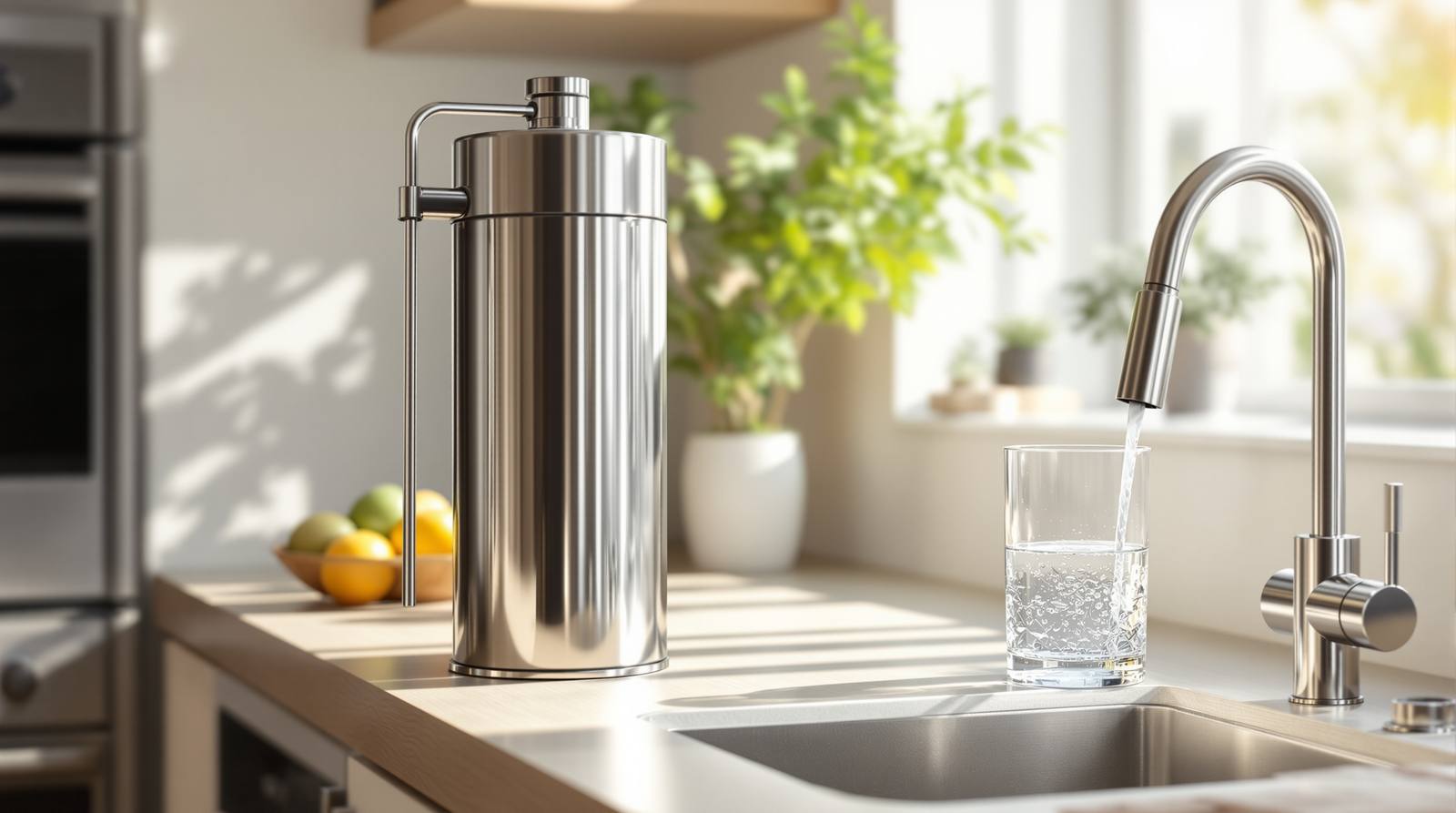
Almost any carbon filter removes chlorine — pick the format for the tap you care about, and check whether your water is chlorine or chloramine. For the whole house (and for chloramine), the Aquasana Rhino EQ-1000 catalytic-carbon system. For drinking water plumbed in, the Aquasana AQ-5300+ under-sink block; on the counter with no plumbing, the AquaTru RO. Cheapest at the tap: the PUR Plus faucet mount. No-install pour-through: the Epic Pure pitcher, or the ZeroWater 10-Cup for a 0 ppm reading. And for the exposure people forget — chlorine off your skin and hair — the Jolie filtered showerhead.
Quick Navigation
- What is the best water filter for chlorine?
- Chlorine vs. chloramine: the difference that decides your filter
- Do you actually need to filter chlorine?
- Which type of filter removes chlorine best?
- Quick comparison: all 7 chlorine filters
- Best for chloramine: Aquasana Rhino EQ-1000
- Best under-sink: Aquasana AQ-5300+
- Best countertop: AquaTru RO
- Best faucet mount: PUR Plus
- Best pitcher: Epic Pure
- Best for showers: Jolie
- Best value: ZeroWater 10-Cup
- Buyer's guide
- FAQ
Compare all 7 picks
Every pick side by side — tap a name to jump to the full review, or check today's price.
| Pick | Rating | Why it wins | |
|---|---|---|---|
 Best for ChloramineAquasana Rhino EQ-1000 Whole House Water Filter |
4.6out of 5 | NSF/ANSI 42, 61, 401, P4731,000,000 gallons |
Check price → |
 Best Under-SinkAquasana AQ-5300+ Max Flow Claryum 3-Stage |
4.6out of 5 | NSF 42/53/401/P4733-Stage Claryum |
Check price → |
 Best CountertopAquaTru Countertop Reverse Osmosis Purifier |
4.7out of 5 | NSF 42/53/58/4014-Stage Reverse Osmosis |
Check price → |
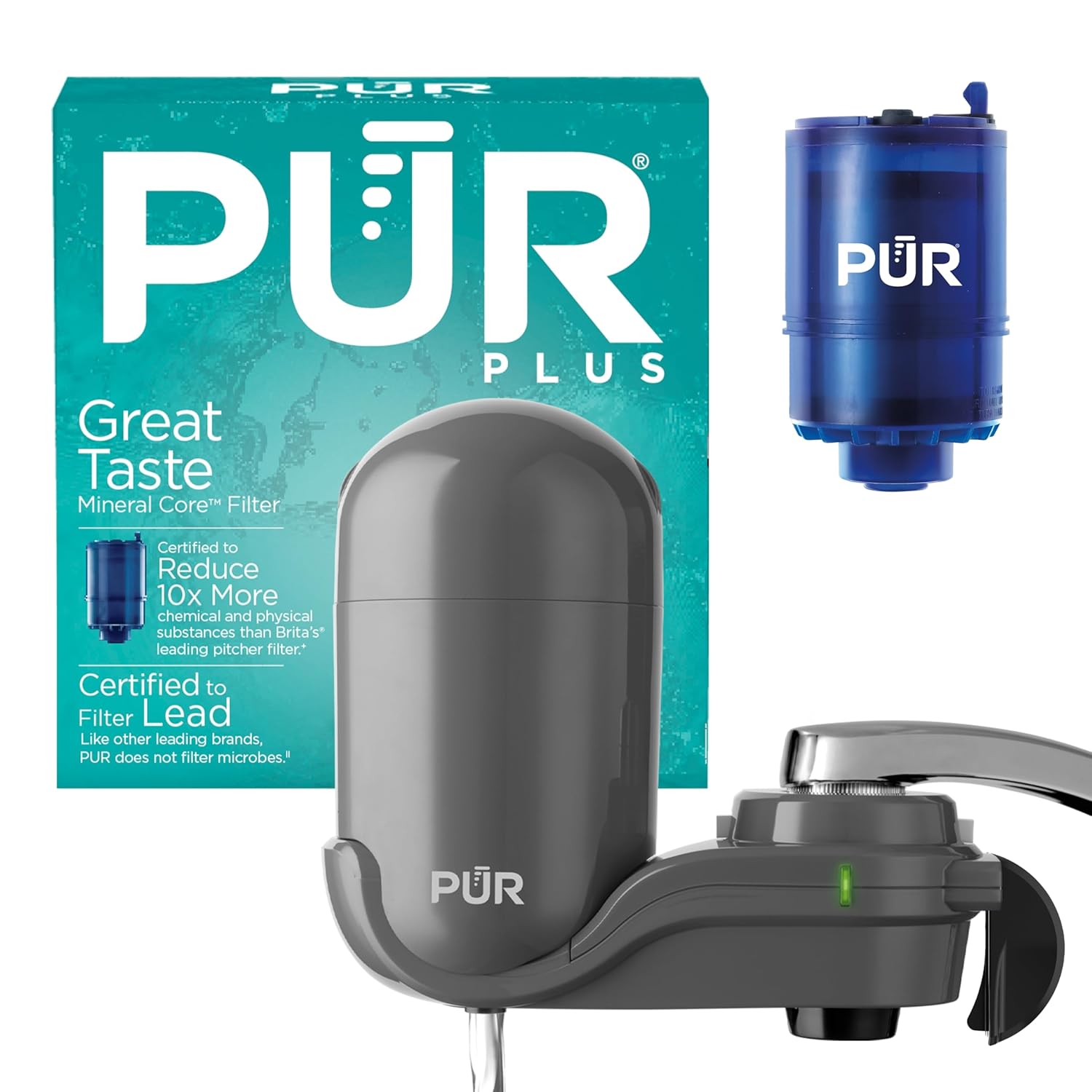 Best Faucet MountPUR Plus Vertical Faucet Water Filter |
4.5out of 5 | NSF/ANSI 42NSF/ANSI 53 |
Check price → |
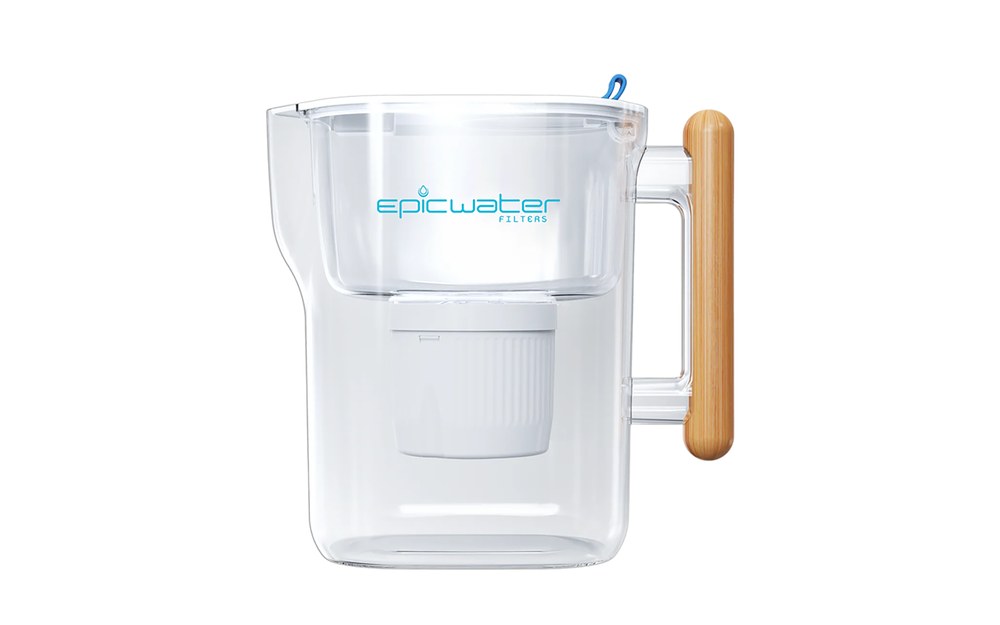 Best PitcherEpic Pure Water Filter Pitcher |
4.9out of 5 | Solid carbon blockPublished fluoride lab data |
Check price → |
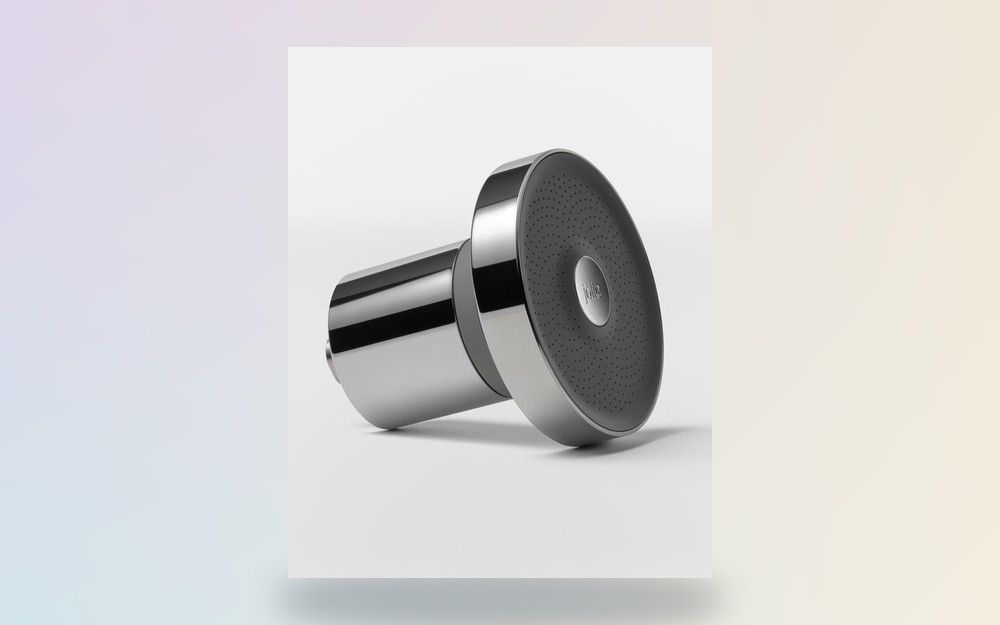 Best for ShowersJolie Filtered Showerhead |
4.8out of 5 | KDF-55Calcium Sulfite |
Check price → |
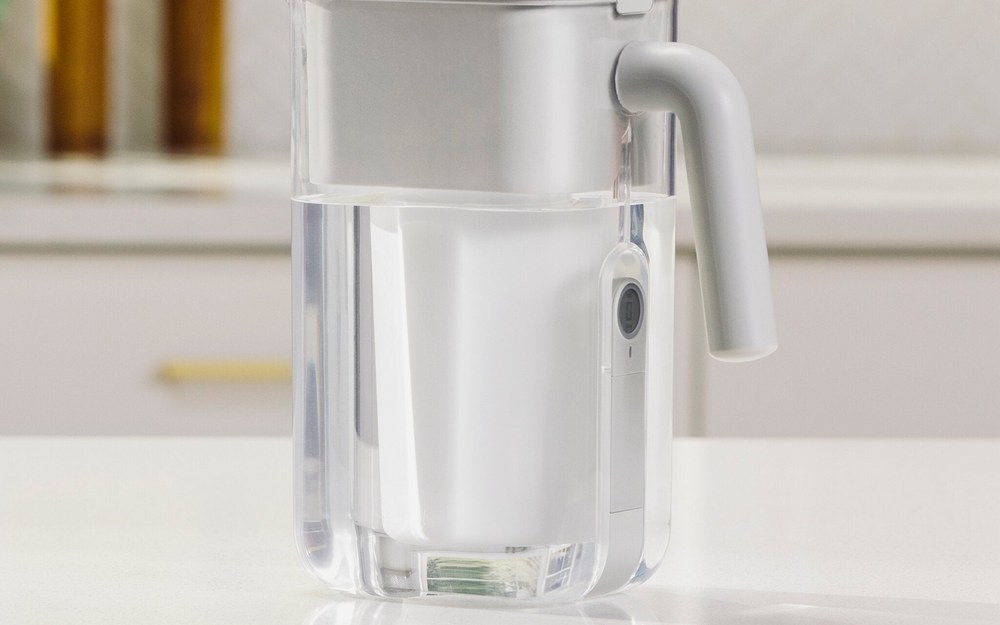 Best ValueZeroWater 10-Cup Pitcher with TDS Meter |
4.5out of 5 | 5-Stage Ion-ExchangeTDS Meter Included |
Check price → |
What Is the Best Water Filter for Chlorine?
The best water filter for chlorine is an activated-carbon filter — and the good news is that almost every home filter qualifies, because carbon adsorbs chlorine easily. Chlorine is the one contaminant even a $30 pitcher removes reliably. So the real decision isn't whether a filter removes chlorine; it's which format fits the tap you care about and whether your water is chlorine or chloramine, because that single fact changes which carbon you need.
If you want chlorine gone from every faucet and shower in the house, a whole-house system like the Aquasana Rhino EQ-1000 is the answer. If you only care about the water you drink and cook with, a point-of-use option is cheaper and simpler: an under-sink carbon block, a countertop reverse-osmosis unit, a faucet mount, or a pitcher. And there's one exposure most guides skip entirely — the chlorine your skin and hair soak up in a hot shower — which needs its own filter at the showerhead.
Chlorine vs. Chloramine: The Difference That Decides Your Filter
This is the single most important thing to know before you buy, and it's the reason cheap filters disappoint some people. Chlorine is the traditional disinfectant — a dissolved gas that carbon grabs almost instantly. Chloramine is chlorine bonded to ammonia, and a growing share of U.S. utilities have switched to it because it stays active far longer in the distribution pipes. The problem: chloramine is much more stable, so ordinary granular carbon removes it slowly and incompletely.
To remove chloramine you need catalytic carbon — a specially processed activated carbon that chemically breaks the chloramine bond — plus enough contact time for the reaction to finish. That's why a fast-flowing faucet filter or a thin fridge cartridge may cut chlorine taste but leave chloramine behind, while a dense carbon block or a large whole-house tank handles both. Reverse osmosis also removes chloramine (its carbon pre-filter does the work before the membrane). Before you spend anything, look up your water utility's most recent annual Consumer Confidence Report — it states plainly whether your system uses chlorine or chloramine. If it's chloramine, buy a filter that names chloramine on its performance sheet, not just "chlorine."
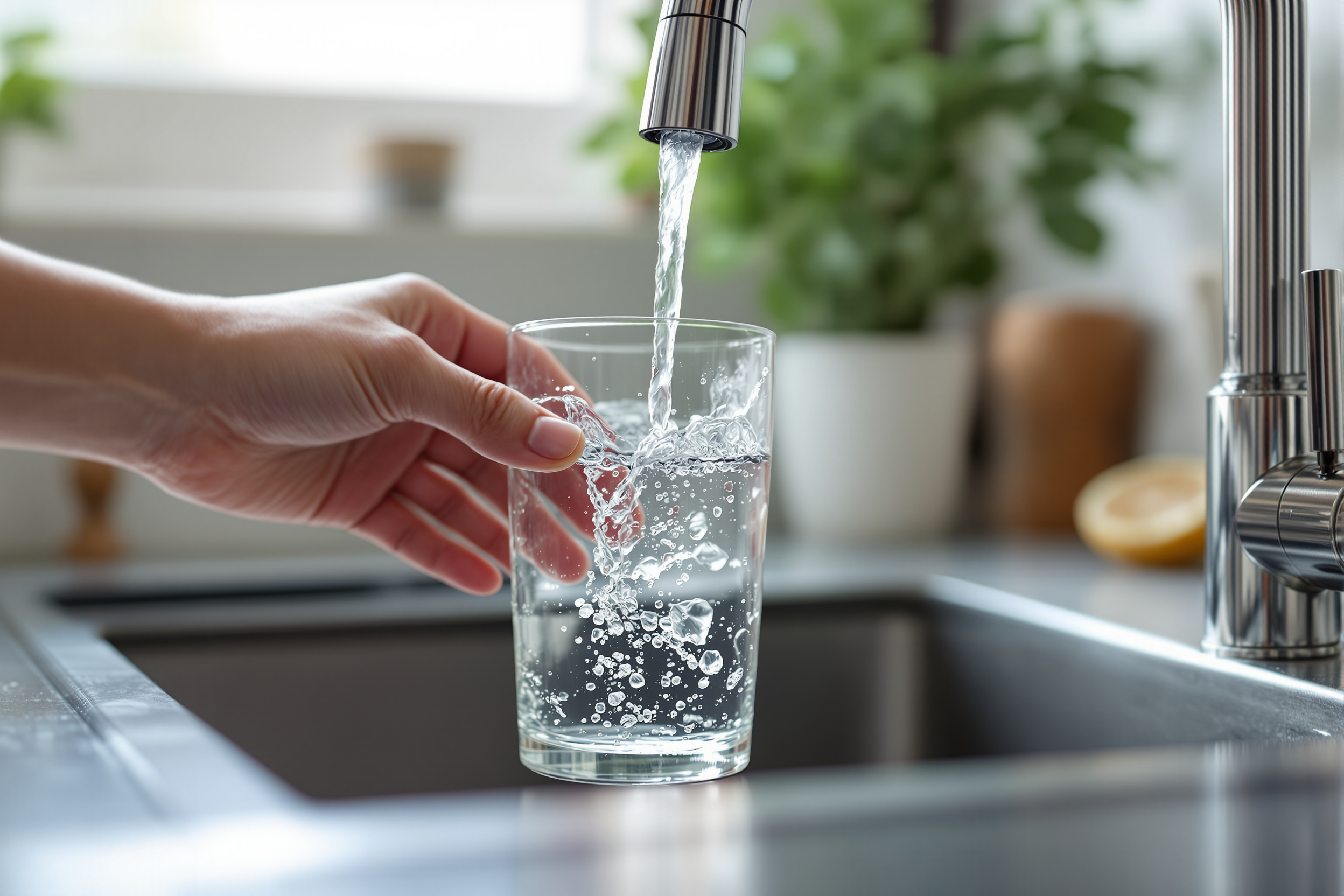
Do You Actually Need to Filter Chlorine?
Chlorine at drinking-water levels is considered safe by the EPA, and disinfection is a genuine public-health triumph — it's why waterborne disease is rare. So filtering chlorine is about quality of life and reducing byproducts, not avoiding an emergency. There are three honest reasons people do it, and all three are legitimate.
Taste and smell. The "swimming pool" taste and odor is the number-one complaint about tap water, and carbon filtration removes it completely. This alone is why most households filter. Skin and hair. A hot shower off-gasses chlorine into the air you breathe and opens skin pores that absorb it; many people with dry skin, eczema, or brittle hair notice a real difference after installing a shower filter. Disinfection byproducts. When chlorine reacts with organic matter in the water, it forms trihalomethanes (THMs) and haloacetic acids — regulated compounds studied for long-term health effects. Removing chlorine at the point of use reduces your exposure to the byproducts too. None of this means your tap water is dangerous; it means filtering has a real, low-cost upside. For the bigger picture on what's in municipal water, see is tap water safe to drink?
The rule that matters: chlorine is easy — carbon removes it, and a basic Brita or fridge filter improves the taste immediately. Chloramine is the one that trips people up, because it needs catalytic carbon and contact time. If you don't know which one your utility uses, that's the first thing to find out.
Which Type of Filter Removes Chlorine Best?
Every format below removes chlorine; they differ in coverage, cost, and how much water they treat. There's no single "best" — there's a best for your situation.
- Whole-house (point-of-entry): treats every tap and shower at once, and the large tank gives the contact time chloramine needs. Highest upfront cost, usually professional install. Best if your water is chloramine or you want protection everywhere. See our whole-house guide.
- Under-sink: a dense carbon block plumbed to a dedicated tap; excellent chlorine and chloramine removal for drinking and cooking water, out of sight, long cartridge life.
- Countertop RO: no plumbing, removes chlorine via its carbon stage and nearly everything else via the membrane. Best for renters who want the most thorough result.
- Faucet mount: the cheapest point-of-use option; clamps onto your existing faucet and kills chlorine taste instantly. Short cartridge life.
- Pitcher: zero install, treats chlorine taste well; a dense carbon-block pitcher also handles lead and microplastics.
- Shower filter: the only way to address chlorine on skin and hair and the chlorine vapor you inhale in the shower. Covered in depth in our shower filter guide.
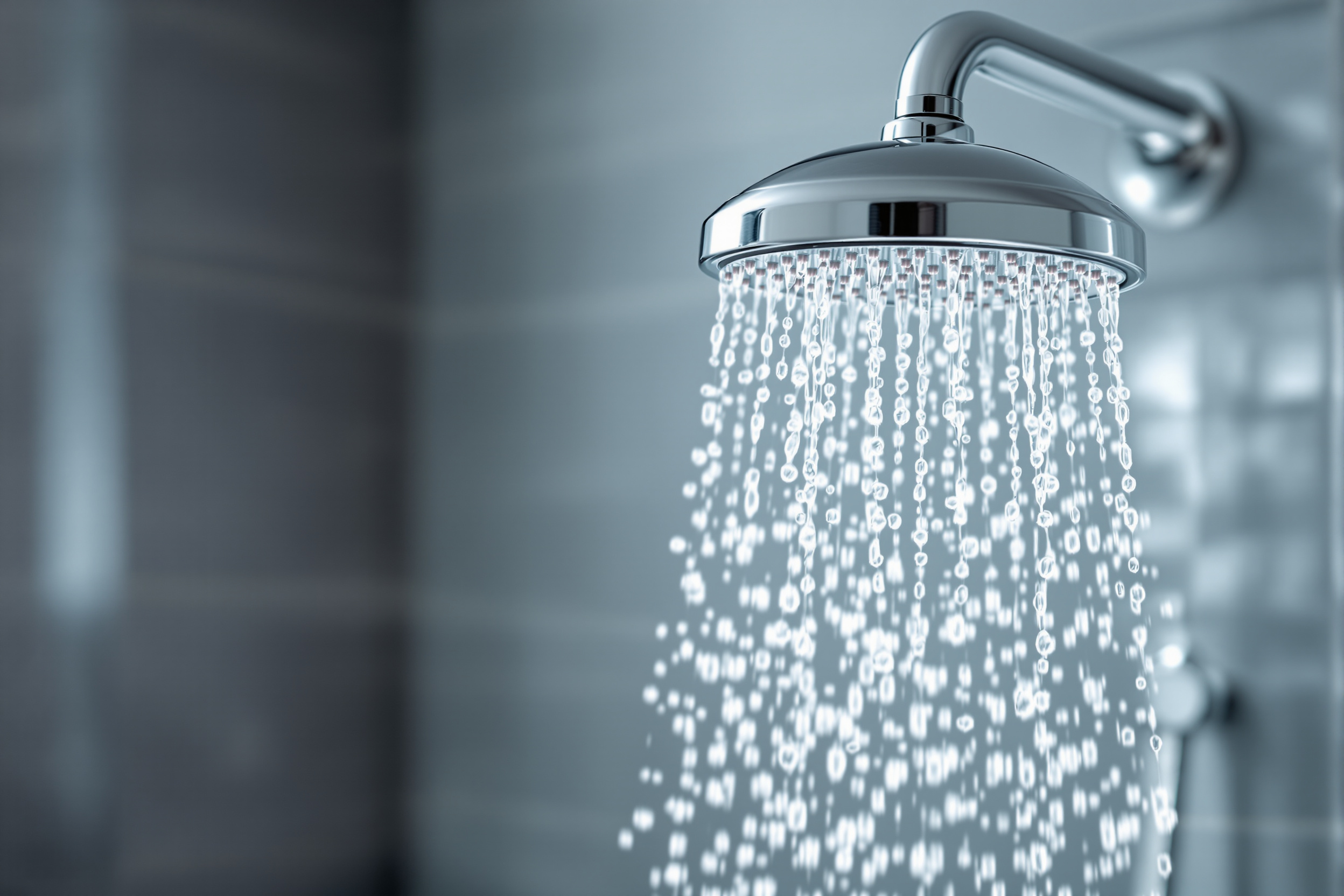
Quick Comparison: All 7 Chlorine Filters
| Filter | Type | Best for | Chloramine? | Rating |
|---|---|---|---|---|
| Aquasana Rhino EQ-1000 | Whole-house | Chlorine + chloramine everywhere | Yes (catalytic + KDF) | 4.6 |
| Aquasana AQ-5300+ | Under-sink | Drinking water, plumbed in | Yes (96% certified) | 4.6 |
| AquaTru | Countertop RO | Renters, most thorough | Yes (carbon + RO) | 4.7 |
| PUR Plus | Faucet mount | Cheapest at the tap | Partial (taste) | 4.5 |
| Epic Pure | Pitcher | No-install pour-through | Yes (solid block) | 4.9 |
| Jolie Showerhead | Shower | Skin & hair | Yes (~95%) | 4.8 |
| ZeroWater 10-Cup | Pitcher | Budget, 0 ppm proof | Partial (taste) | 4.5 |
When you buy through links on this page we may earn an Amazon commission at no extra cost to you. It never changes our rankings — every pick here is chosen on filtration performance and certification, not commission.
1. Aquasana Rhino EQ-1000 — Best for Chlorine & Chloramine (Whole House)
Best for Chloramine
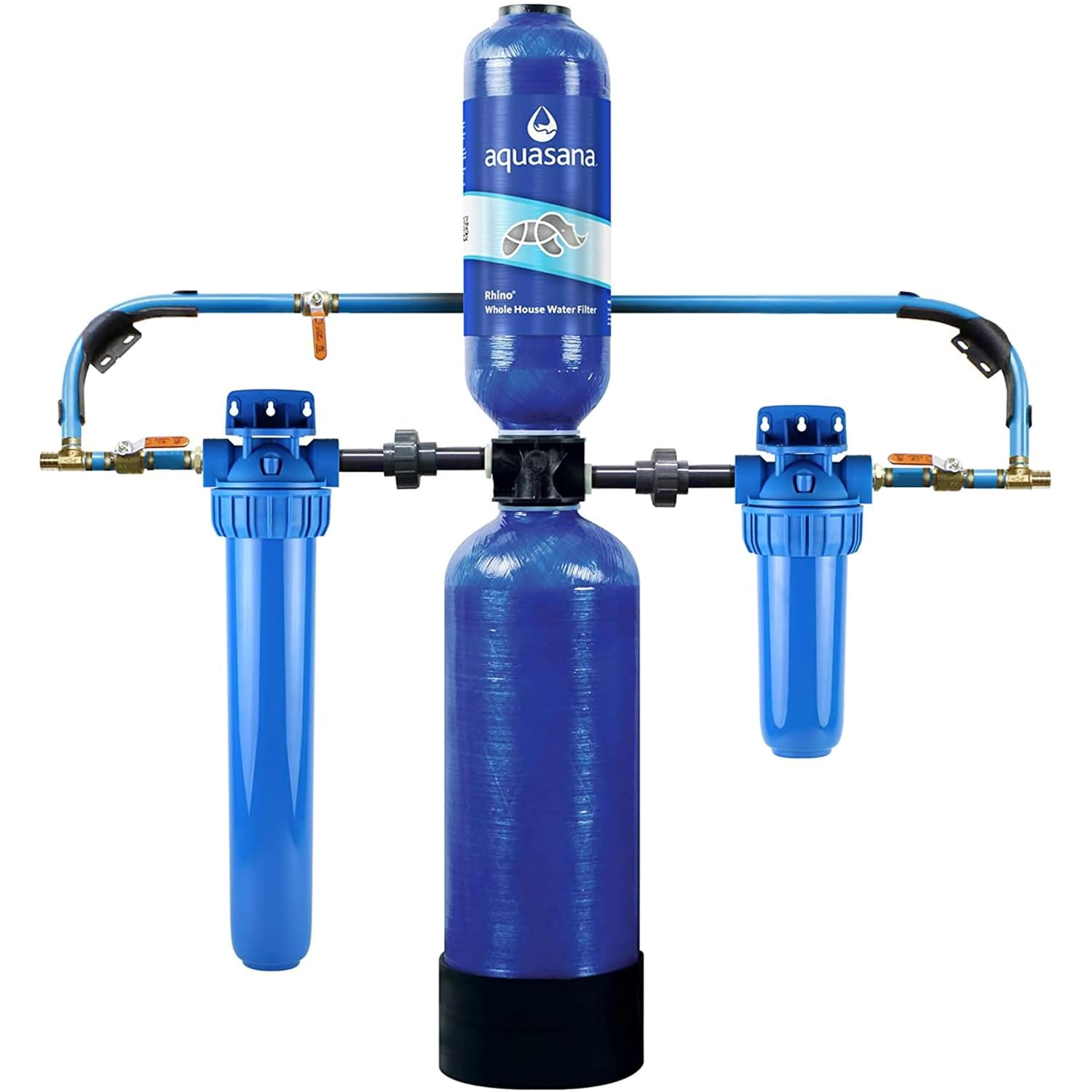
The Aquasana Rhino EQ-1000 is a three-stage point-of-entry system: a 20-micron pre-filter catches sediment, a large dual-tank body with copper-zinc KDF-55 and catalytic carbon media handles chlorine, chloramine, heavy metals, and organic contaminants, and a 0.35-micron post-filter polishes the water on the way out. Aquasana claims 97% chlorine reduction over the tank's 1,000,000-gallon (or 10-year, whichever comes first) life. The system is independently tested to NSF/ANSI Standards 42, 401, and P473, and the Rhino tank itself is WQA-certified to NSF/ANSI/CAN 61 for materials safety.
Flow rate is 7.0 GPM — enough to run two showers and a dishwasher at once in a typical 3-bathroom home without a noticeable pressure drop. The upflow, dual-tank design maximizes contact time with the KDF/carbon media and, per Aquasana, prevents the channeling failure that shortens the life of many single-tank whole home units. It ships with the pro-grade Schedule 80 PVC install kit (shutoff, drain valve, tank connections) and a 10-year limited warranty. The honest catches: it is the most expensive pick on the list, professional installation is strongly recommended and typically adds $300–$600, and it does not remove iron, manganese, or sulfur (for well-water problems like those, see our well-water filter guide and the companion whole-house filter guide).
Long-term owners repeatedly describe the same before-and-after: the pool smell in showers is gone within a day, skin stops feeling stripped, and the ice tastes like nothing. Reviews of the 10-year build praise the pro-grade fittings, the tank change requiring only a valve-swap (not a whole re-plumb), and Aquasana's support. The honest gripes: it is bulky (a full tank plus two filter housings need real utility-room space), professional installation is often described as necessary because the included instructions assume some plumbing experience, and Aquasana pushes the salt-free scale upgrade hard even though it is not a real water softener and won't rescue hard-water appliances the way a salt softener would.
10 years of chlorine-free water at every tap — the most-certified whole home filter on this list, from the brand every plumber knows.
Why it's safe: Independently tested to NSF/ANSI 42, 401, and P473; the Rhino tank is WQA-certified to NSF/ANSI/CAN 61 for materials safety. The KDF-55 stage means it also reduces chloramine (which standard carbon does not) and heavy metals.
Check Today’s Price on Amazon →Amazon prices change daily — tap to see today's price and any active discount.
- Free delivery & returns for Prime members
- Sold & shipped by Amazon
- Thousands of verified reviews
2. Aquasana AQ-5300+ Claryum — Best Under-Sink for Chlorine
Best Under-Sink
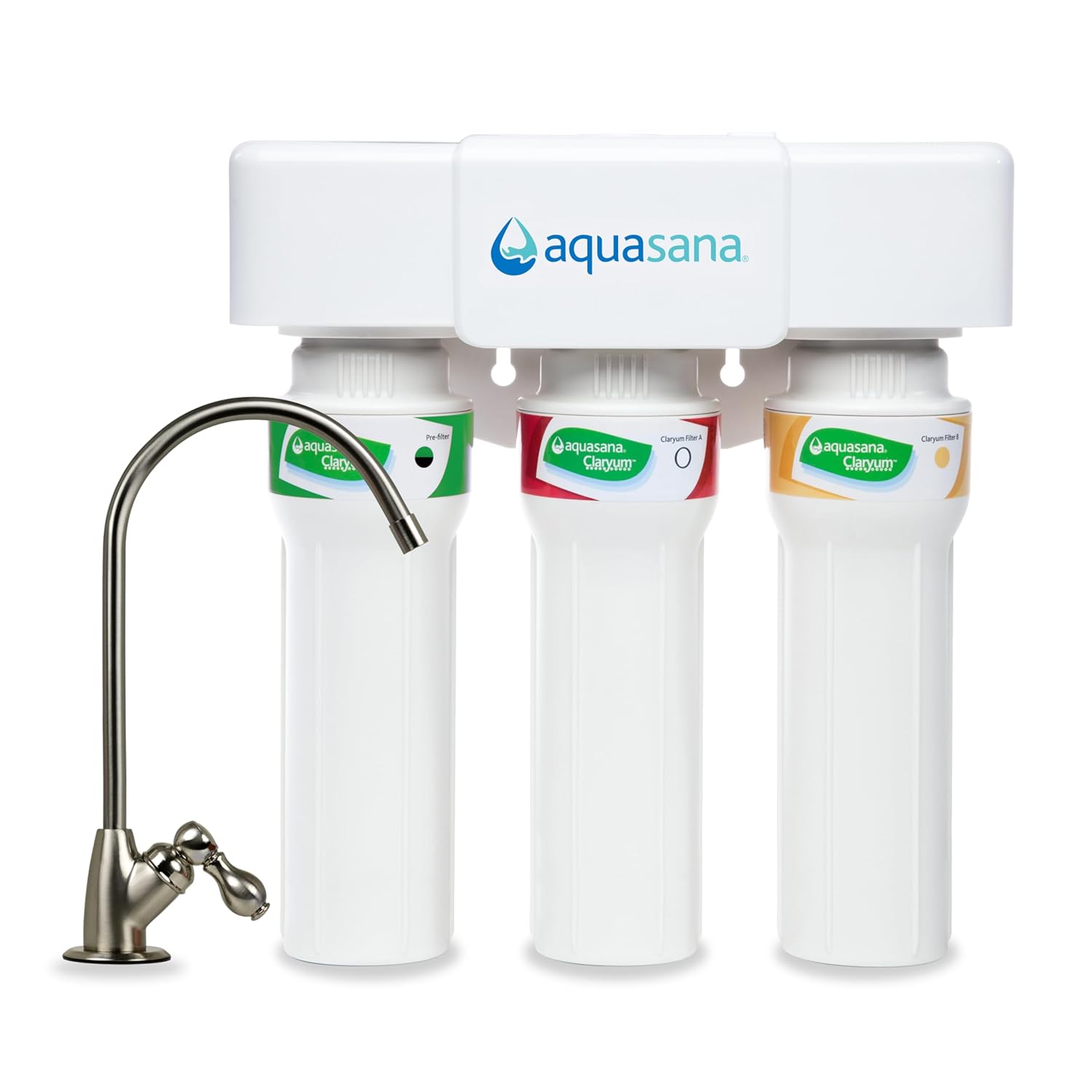
The AQ-5300+ Max Flow is Aquasana's flagship under-sink drinking-water system, built around their proprietary Claryum three-stage cartridge. Stage one is a sediment pre-filter, stage two is a catalytic-carbon and ion-exchange block, and stage three is a sub-micron post-filter that finishes the job. Aquasana publishes third-party lab data showing it reduces 99% of 77+ contaminants — including 96% of chlorine and chloramines, 99.3% of lead, 99% of chromium-6, and 99% of PFOA/PFOS. Because it is a mechanical carbon-block filter, it uses zero waste water and does not need a storage tank or electricity.
Where it earns the top spot: it is the only system in this price class certified to all four of the microplastic-relevant NSF/ANSI standards — 42 (chlorine, taste, odor), 53 (lead, cysts, VOCs), 401 (pharmaceuticals, herbicides, and the particle-size range where microplastics live), and P473 (PFOA/PFOS). The dedicated brushed-nickel faucet is included, and Max Flow refers to the newer 0.72 gpm flow rate that fixes the slow-drip complaint on Aquasana's older AQ-5200.
The honest trade-offs: cartridge life is only 600 gallons (roughly 6 months for a family of four), which is short compared with the Waterdrop TSU or CuZn UC-200. That works out to about $0.30 per gallon of filtered water over the first year — not the cheapest cost per gallon here, but the certification story is the reason to pay for it.
Buyers with well or hard-water homes repeatedly say water tastes noticeably better within a day — many describe it as "bottled-water clean" out of the dedicated tap. Owners with basic DIY skills report installs in 30 to 60 minutes and appreciate the twist-off cartridge changes. The honest gripes: the 6-month cartridge cycle is short and replacements are Aquasana-only (no generics), the included faucet is plastic-lined at the base and a few owners have swapped it for a metal upgrade, and if your incoming water pressure is under 40 psi the flow slows down noticeably as the filter loads up.
96% of chlorine and chloramines gone from a dedicated drinking tap — NSF-certified, no waste water, no electricity, no storage tank.
Why it's safe: Independently certified by NSF/ANSI to reduce 99% of 77+ contaminants — including 99.3% of lead and 99% of PFOA/PFOS — through a sub-micron catalytic-carbon block that leaves beneficial minerals in the water.
Check Today’s Price on Amazon →Amazon prices change daily — tap to see today's price and any active discount.
- Free delivery & returns for Prime members
- Sold & shipped by Amazon
- Thousands of verified reviews
3. AquaTru Countertop RO — Best Countertop, No Plumbing
Best Countertop
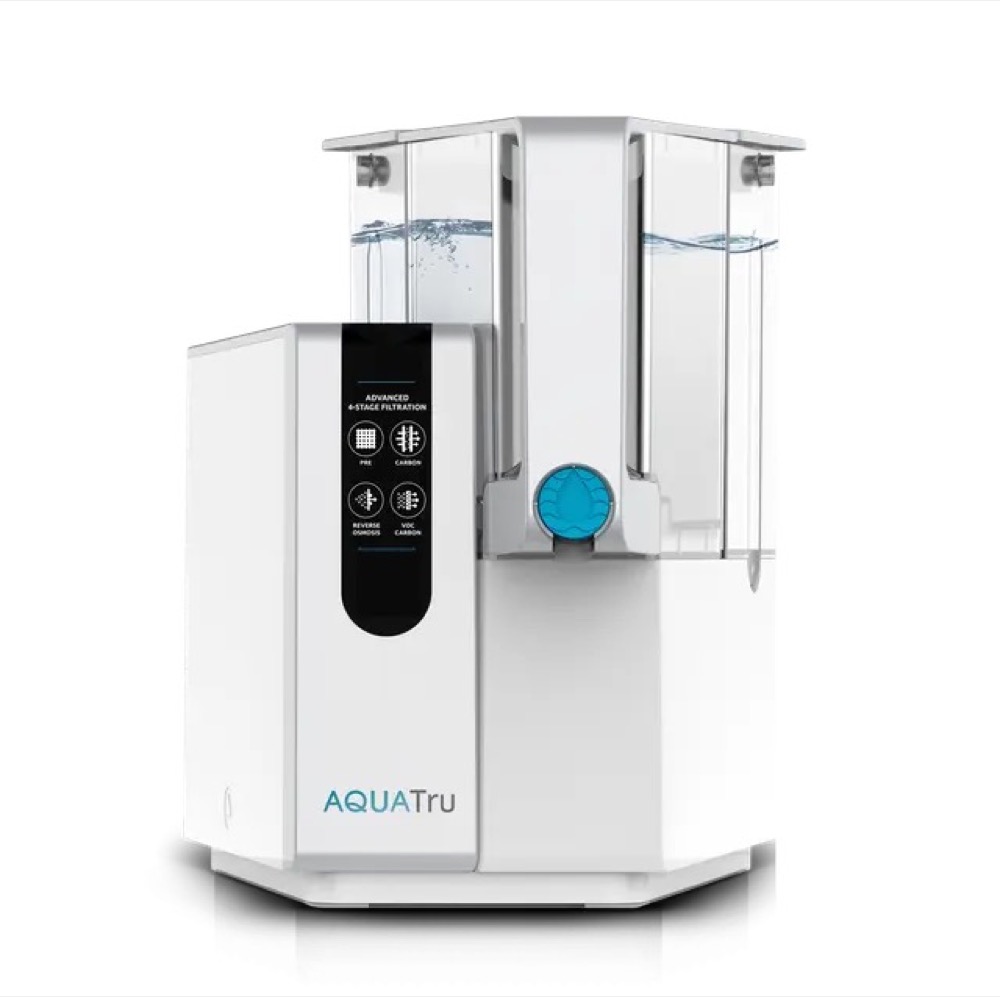
Reverse osmosis works by pushing water through a semipermeable membrane whose pores are far smaller than a PFAS molecule, so short- and long-chain PFAS are physically rejected rather than adsorbed onto a surface that can eventually saturate. AquaTru pairs that membrane with pre- and post-carbon stages and holds NSF/ANSI certifications for standards 42, 53, 58 and 401. AquaTru's own third-party testing reports 99%+ reduction of PFOA and PFOS, the two PFAS the EPA now regulates most tightly.
The honest trade-offs of any RO system apply here: it wastes some water to drain (AquaTru's ratio is better than most, but it isn't zero), it strips beneficial minerals along with the bad stuff, and the finished water sits in a plastic dispense tank — decant into glass if that matters to you. Filters are a recurring cost. But for a renter or anyone who wants the RO result without cutting into a water line, nothing else on this list is this thorough and this easy.
AquaTru owners talk like converts — one common line is "I am now a complete water snob. All water is inferior," and the buying pattern backs it up: people get one, then buy more for family. Owners who test with a home purity meter report readings dropping to single digits, and many keep a second glass carafe cold in the fridge. The honest downsides from reviews: hard water is its weak point (descale on schedule, since damage from skipping it is not covered), the glass carafe is on the thin side, and a thirsty household refills the tap-water tank daily.
Complete chlorine removal with no installation — carbon pre-filtration plus a reverse-osmosis membrane, all on the countertop.
On chlorine: The carbon pre-filter adsorbs chlorine and chloramine before the RO membrane, which then rejects dissolved solids by size — a two-stage approach that leaves no measurable chlorine taste or smell.
Check Today’s Price on Amazon →Amazon prices change daily — tap to see today's price and any active discount.
- Free delivery & returns for Prime members
- Ships free with Prime on eligible items
- Thousands of verified reviews
4. PUR Plus Vertical — Best Faucet Mount
Best Faucet Mount
PUR Plus is unique in the faucet-filter category: it carries three NSF/ANSI certifications, and one of them (401) covers what the industry calls "emerging contaminants" — microplastics, pharmaceutical residues, and pesticide breakdown products. In independent testing, the PUR Plus reduces 99% of lead, chlorine, mercury, and select VOCs, and takes measurable action against microplastic-size particles. The vertical design (as opposed to horizontal) is what lets it fit external aerators and modern high-arc faucets that other faucet filters bounce off of.
The trade-offs are real: cartridge life is only 100 gallons (about 3 months for a two-person household), replacement cartridges cost roughly $15 each so annual filter cost is around $60, and the filter body is plastic. If you want stainless steel and a longer filter life, a Waterdrop stainless faucet filter is an option — but you lose the NSF/ANSI 401 microplastic certification. See the full field in our faucet filter guide.
Across more than 13,000 Amazon reviews the PUR Plus lands at a strong 4.5 stars. The most common praise: chlorine taste is gone the first day, and buyers with older homes report noticeable improvement in test-kit lead readings after switching. The vertical-mount form factor gets specific praise because it fits high-arc modern faucets that horizontal filters cannot. The honest downsides: cartridge life feels short at 100 gallons if you cook with filtered water; the diverter switch feels a bit plasticky and can wear out after 12-18 months of daily flipping; and a subset of owners report drips at the faucet threads until they add extra plumber's tape.
The only faucet filter that is certified to reduce microplastics — plus 99% of lead, chlorine, and 70+ other contaminants.
Why it's safe: Independently certified to NSF/ANSI 42 (aesthetic effects), 53 (health effects like lead), AND 401 (emerging contaminants including microplastics) — a certification stack no other faucet filter matches.
Check Today’s Price on Amazon →Amazon prices change daily — tap to see today's price and any active discount.
- Free delivery & returns for Prime members
- Sold & shipped by Amazon
- 13,000+ verified reviews
5. Epic Pure Pitcher — Best Pitcher for Chlorine Taste
Best Pitcher
Epic's filter is a solid carbon block rather than loose granules, which gives it far more contact area and a tighter path than a standard pitcher cartridge — that's what lets it target fluoride, lead and microplastics rather than just chlorine taste. Each filter treats roughly 150 gallons before replacement, and Epic backs the performance with published third-party testing that names fluoride and its percent reduction, so you can read the proof before you buy.
As with any dense pitcher filter, flow is slower than a basic model and the cartridge is the ongoing cost. It's a plastic pitcher body, so decant to glass if you prefer. For a household that wants lab-backed fluoride reduction at the lowest entry price on this list — and that also cares about lead and microplastics — the Epic Pure is the value pick.
Owners choose Epic Pure for its long contaminant list — it is the pitcher people reach for when they want lead, PFAS, and fluoride reduction in one no-install unit — and most say the filtered water tastes clean and noticeably better than the tap. The honest downsides that come up most: it drips through slowly (a "fill it and walk away" pitcher, not instant), the flip-top spout lid can feel sticky or leak if overfilled, and the filters are not cheap and need fairly frequent replacement to keep the flow up.
Chlorine taste and odor gone at the lowest entry price here — a dense solid carbon block that also captures lead and microplastics.
On chlorine: Solid carbon-block filtration is the textbook method for chlorine and chloramine reduction — the tight, high-contact path removes far more than a loose-granule pitcher can.
Check Today’s Price on Amazon →Amazon prices change daily — tap to see today's price and any active discount.
- Free delivery & returns for Prime members
- Ships free with Prime on eligible items
- Thousands of verified reviews
6. Jolie Filtered Showerhead — Best for Chlorine in the Shower
Best for Showers
Jolie is the "Apple of shower filters" — a direct-to-consumer brand that turned a utility product into a lifestyle purchase. The filter is built into a sleek, all-metal showerhead in polished chrome, brushed steel, or matte black finishes.
Filtration uses a proprietary combination of KDF-55 and calcium sulfite that removes approximately 95% of chlorine and chloramine, plus heavy metals and hydrogen sulfide. The flow rate is a full 2.5 GPM — no perceptible pressure loss.
The tradeoff is cost: it sits at the premium end, and replacement cartridges run roughly every 3 months. You're paying for build quality, aesthetics, and the fact that it replaces your shower head entirely rather than adding a clunky cylinder between the arm and head.
This premium pick has the best-documented skin-and-hair testimonials, with real owners writing "My hair became incredibly soft," "I do shed less hair now," and, on hard water, "this shower head has made a huge difference," while independent testing confirmed it preserves pressure ("I saw no change in water pressure"). The honest downsides: cost is the number-one gripe at "$165 for the head" plus filters that push it "nearly $300 for the first year," the refill changes can be "almost impossible" for some, results are inconsistent (one honest owner saw "a neutral response" on shedding), and it has a single spray setting.
The filter you'd actually leave on display — an all-metal showerhead that removes ~95% of chlorine without sacrificing any water pressure.
Why it's safe: A clinically-tested KDF-55 + calcium sulfite blend strips chlorine, chloramine, heavy metals, and hydrogen sulfide before the water reaches your skin and hair.
Check Today’s Price on Amazon →Amazon prices change daily — tap to see today's price and any active discount.
- Free delivery & returns for Prime members
- Sold & shipped by Amazon
- Thousands of verified reviews
7. ZeroWater 10-Cup — Best Budget All-Rounder
Best Value
ZeroWater's 5-stage cartridge finishes with an ion-exchange resin that pulls dissolved ions — fluoride among them — out of the water, which is how it reaches a 0 ppm TDS reading no ordinary carbon pitcher can match. The included meter is genuinely useful here: it shows exactly when the resin is exhausted, because ion-exchange capacity runs out rather than gradually fading, and an exhausted filter stops reducing fluoride.
That's also the catch, and we won't hide it: capacity is short. In hard or high-TDS water a filter can be spent in 25–40 gallons (every one to three weeks for a family), and the honest fix is to replace on the meter reading, not a calendar. Stripping everything can leave the water tasting flat or slightly acidic. For steady, high-volume fluoride reduction, RO or distillation is more economical — a countertop water distiller leaves fluoride behind in the boiler entirely — but as the cheapest no-install way to actually pull fluoride down to zero, with a meter proving it, ZeroWater earns its spot.
The signature draw is the included meter reading 000, and owners write "We love it love it" about getting the dissolved-solids count to zero. But stripping minerals has a cost: the water can taste "flat" and slightly acidic, and the filter life is short at roughly 25 to 40 gallons, so a family swaps filters every one to three weeks. The honest downsides: many report a "fishy, sour, metallic or chemical" smell once the meter climbs, that "the filters take much too long to pass the water," and that the lid falls off when pouring — with filter cost the number-one long-term complaint.
Chlorine taste gone and dissolved solids driven to zero — the cheapest no-install way to prove your water is clean with a meter.
On chlorine: The activated-carbon stage adsorbs chlorine and chloramine for taste and odor, while the ion-exchange resin strips the remaining dissolved solids — replace on the meter reading, not the calendar.
Check Today’s Price on Amazon →Amazon prices change daily — tap to see today's price and any active discount.
- Free delivery & returns for Prime members
- Sold & shipped by Amazon
- Thousands of verified reviews
How to Choose a Chlorine Filter: A Quick Buyer's Guide
Work through four questions in order and the right filter falls out on its own.
1. Chlorine or chloramine? Check your utility's annual water-quality report. If it's plain chlorine, any carbon filter here works. If it's chloramine, choose one that names chloramine — the Aquasana whole-house or under-sink, the AquaTru, the Epic Pure block, or the Jolie shower filter — and skip thin, fast-flow cartridges that only claim "chlorine taste."
2. Which taps matter? If you only care about drinking water, a pitcher, faucet mount, under-sink, or countertop unit is far cheaper than treating the whole house. If chlorine taste, skin, and hair all bother you throughout the home — or your water is chloramine — a whole-house system pays off. Many people pair a whole-house filter (or nothing) with a dedicated drinking-water filter and a shower filter.
3. Can you install it? Faucet mounts and pitchers need zero tools. A countertop RO plugs into the wall. Under-sink and whole-house systems involve plumbing — DIY-able for some, a plumber for others (budget $150–$600 for whole-house install).
4. Look for NSF/ANSI 42. That's the certification specifically for chlorine, taste, and odor reduction; every serious chlorine filter should carry it. If you also want lead and microplastics handled, look for NSF/ANSI 53 and 401 on top — the PUR Plus and Aquasana AQ-5300+ carry all three. Don't over-buy: if chlorine taste is your only issue, you don't need reverse osmosis. If you're also worried about lead or forever chemicals, see our lead and microplastics guides, which rank several of these same systems for those contaminants.
Frequently Asked Questions
What is the best water filter for chlorine?
Any quality activated-carbon filter removes chlorine well, so the best one depends on where you want it. For the whole house, the Aquasana Rhino EQ-1000 uses catalytic carbon and KDF-55 to handle chlorine and chloramine at every tap. For drinking water only, an under-sink carbon block, a countertop AquaTru, a PUR Plus faucet mount, or an Epic Pure pitcher all work. For the shower, a Jolie filtered showerhead removes about 95%.
Do carbon filters remove chlorine?
Yes — activated carbon is the standard, well-proven way to remove chlorine, which is why almost every pitcher, faucet, under-sink and whole-house filter is carbon-based. Chlorine is the one contaminant even a basic carbon filter handles reliably. The catch is chloramine, which needs catalytic carbon and more contact time.
What's the difference between chlorine and chloramine, and does it matter?
Chlorine is the traditional disinfectant; chloramine is chlorine combined with ammonia, used because it lasts longer in the pipes. It matters a lot: standard carbon removes chlorine fast but is slow and inefficient at chloramine. To remove chloramine you need catalytic carbon and longer contact time, or reverse osmosis. Check your utility's report to see which you have before buying.
Does boiling water remove chlorine?
Boiling removes free chlorine because it's a dissolved gas that evaporates — 15 to 20 minutes of a rolling boil, or leaving water out overnight, off-gasses most of it. But boiling does not reliably remove chloramine, and it wastes time and energy. A carbon filter removes chlorine instantly, cold. For more on what boiling does and doesn't do, see does boiling water remove microplastics?
Do refrigerator and pitcher filters remove chlorine?
Yes — chlorine taste and odor reduction is the one thing nearly every fridge and pitcher filter is certified for (NSF/ANSI 42). A basic Brita or fridge filter noticeably improves chlorine taste. What varies is everything else: a dense carbon-block pitcher like the Epic Pure also captures lead and microplastics, while a basic granular filter mostly just improves taste.
Is chlorine in tap water bad for you?
At disinfection levels chlorine is considered safe by the EPA and has made waterborne disease rare. People filter it mainly for taste and odor, dry skin and hair from showering, and disinfection byproducts — trihalomethanes and haloacetic acids — that form when chlorine reacts with organic matter. Filtering chlorine at the point of use removes the taste and reduces byproduct exposure with no downside.