For most Americans, tap water is legally safe but not contaminant-free. US public water is regulated under the Safe Drinking Water Act and most utilities meet federal standards, yet a landmark study found microplastics in about 94% of US tap water samples, and lead can enter your glass from old pipes no matter how clean the water leaves the plant. PFAS, chlorine byproducts, and nitrates are common too. None of this means you should panic — it means a good filter is one of the highest-value upgrades you can make.
"Is tap water safe to drink?" is one of the most searched health questions in America, and the honest answer is frustratingly nuanced: mostly yes, with real asterisks. The water leaving a modern US treatment plant is among the most tested and regulated in the world. But two things complicate the picture. First, the most talked-about contaminant of the last decade — microplastics — is not regulated at all. Second, what happens between the treatment plant and your faucet, especially in older homes, can add contaminants the utility never put there.
This guide walks through what is actually in typical tap water, how to find out what is in yours specifically, and exactly which kind of filter removes which contaminant — so you can stop guessing and make one good decision.
The bottom line up front: if you do just one thing, filter your drinking water with a certified carbon block or reverse osmosis system. It is cheaper than bottled water, removes the contaminants that matter, and the microplastic particles you are worried about are physically large enough that a quality filter captures them easily. See our best water filters for microplastics guide for tested picks. If a countertop pitcher fits your kitchen best, our best water filter pitchers for microplastics ranks the certified options, and for a filter plumbed in permanently see our best under-sink water filters.
Is tap water safe to drink overall?
For most people in the US, yes — in the legal and microbiological sense. Public water systems are regulated under the Safe Drinking Water Act, tested constantly, and the vast majority meet federal limits for the roughly 90 contaminants the EPA monitors. The catch is that "meets federal standards" is not the same as "contains nothing of concern."
There are three reasons safe-on-paper water can still carry things you would rather not drink. One: some genuinely concerning contaminants, like microplastics, simply are not regulated yet, so a utility can be 100% compliant and still deliver plastic particles. Two: a few contaminants, most notably lead, usually enter the water after it leaves the plant, from your neighborhood's service line or your home's own plumbing. Three: federal limits for some chemicals were set decades ago and are higher than what current science suggests is ideal. So the picture is not "tap water is dangerous" — it is "tap water is generally safe, and also clearly improvable with a filter."
Does tap water contain microplastics?
Yes — this is the most well-established surprise in tap water. A landmark investigation by Orb Media tested tap water from cities across five continents and found microplastic fibers in roughly 83% of samples, with US tap water among the most contaminated at about 94%. Microplastics are now considered effectively ubiquitous in drinking water worldwide.
Those particles come from many sources: synthetic clothing fibers, the breakdown of larger plastic litter, tire dust washed into waterways, and the plastic infrastructure water itself travels through. Because microplastics are not federally regulated in drinking water, no utility is required to remove or even report them — meaning your perfectly compliant tap water can, and statistically probably does, contain them. Swallowed in drinking water, the smallest of those particles are one of the main ways microplastics end up in your blood.
The good news is that microplastics are an easy target for filtration. Compared to dissolved chemicals, plastic particles are physically large, so any filter with a sufficiently fine pore size — a quality carbon block, a reverse osmosis membrane, or a gravity system — captures them. If microplastics are your main worry, you do not need exotic equipment; you need a certified filter. For the full picture on how much you are ingesting, see how many microplastics are in a water bottle broken down by bottle size (spoiler: a single 16.9 oz bottle carries ~120,000 particles, ~90% nanoplastic) and our guide to testing for microplastics in water at home. And once your water is filtered, carry it in a glass or stainless steel bottle rather than single-use plastic, so you are not re-adding the particles you just removed. Refilling that same disposable bottle is worse still: PET leaches more antimony the longer it is reused and can grow bacteria within days, which is why plastic water bottles are not safe to reuse.
Does tap water contain lead?
It can — and lead is the contaminant where your own home matters most. Modern treatment plants do not add lead, and most source water has little to none. The problem is the delivery system: lead service lines connecting older homes to the main, and lead solder or brass fixtures inside the house itself, can leach lead into water as it sits in the pipes.
This is exactly what made Flint, Michigan a national scandal in 2014: a change in water source made the water more corrosive, which stripped lead out of aging service lines and into homes, with no safe level for the children exposed. Flint was extreme, but the underlying risk — lead pipes plus corrosive water — exists in millions of older US homes. The EPA's action level for lead is 15 parts per billion, but the agency itself states there is no known safe level of lead exposure, especially for children and pregnant people.
Homes built before the 1986 federal ban on lead pipes and lead solder are the highest-risk group. If you live in an older home, do not rely only on your utility's report — it reflects water at the plant, not at your faucet. Run cold water for 30–60 seconds before drinking (lead concentrates in water that has sat in pipes overnight), never cook or make baby formula with hot tap water, and test your own tap with a certified kit or state lab. A filter certified for lead removal closes the gap — and if formula is your main concern, our best water filter for baby formula guide ranks the safest picks for infant water.
What other contaminants are in tap water?
Beyond microplastics and lead, three more contaminants come up constantly in water testing, and each behaves differently. Knowing which ones apply to you is the difference between buying the right filter and the wrong one.
PFAS — the "forever chemicals"
PFAS (per- and polyfluoroalkyl substances) are a family of thousands of synthetic chemicals used in nonstick coatings, stain repellents, firefighting foam, and food packaging. They are called "forever chemicals" because they do not break down in the environment or the body, and they have been detected in the drinking water of a large share of US communities. In 2024 the EPA finalized the first-ever national limits for several PFAS compounds, set at very low levels — a sign of how seriously regulators now take them. Standard carbon pitchers remove some PFAS; reverse osmosis and certified PFAS-specific filters remove far more.
Chlorine and disinfection byproducts
Utilities add chlorine or chloramine to kill pathogens — a genuinely good thing that prevents waterborne disease. The trade-off is that these disinfectants react with organic matter in water to form disinfection byproducts such as trihalomethanes, some of which are regulated because of long-term health concerns. Chlorine is also what gives tap water its "pool" taste and smell. A carbon filter removes chlorine and its byproducts easily, which is why filtered tap water usually tastes noticeably better — our guide to the best water filters for chlorine and chloramine ranks the specific systems that do it, including catalytic-carbon options for the harder-to-remove chloramine. Drinking is not the only exposure route, either: you absorb chlorine through your skin and inhale it as vapor during a hot shower, which is why a dedicated shower filter for microplastics and chlorine is worth considering alongside a drinking-water filter.
Nitrates
Nitrates come mainly from agricultural fertilizer runoff and septic systems, so they are most common in rural areas and private wells. High nitrate levels are particularly dangerous for infants, where they can interfere with the blood's ability to carry oxygen. Nitrates are dissolved, so a basic carbon filter does not remove them — you need reverse osmosis or a specific ion-exchange filter. If you are on a private well, nitrate testing is essential.
How do I find out what is in my tap water?
You do not have to guess. Every community water system in the US is required by the EPA to publish an annual Consumer Confidence Report (CCR), also called a water quality report, listing the contaminants detected and how they compare to legal limits. It is usually mailed each summer or posted on your utility's website. For a friendlier version, enter your ZIP code in the EWG Tap Water Database, which translates the data into plain language.
The crucial limitation: the CCR describes water at the treatment plant and in the distribution system — it cannot tell you what your own home's pipes add. If you have older plumbing, a possible lead service line, or you are on a private well (wells are not covered by the CCR at all), the only way to know what comes out of your faucet is to test it directly. Use an EPA-certified or state-lab home test kit, which checks for lead, PFAS, nitrates, hardness, and more from a sample you collect. Our at-home water testing guide walks through the options.
"Your utility's report tells you about the water that left the plant. Only a home test tells you about the water in your glass."
What kind of filter removes what?
This is where most people get stuck, because "water filter" covers wildly different technologies. The right choice depends on which contaminants you are targeting. Here is the plain-English breakdown of the three main filter types and what each actually removes.
| Filter Type | Microplastics | Lead | PFAS | Chlorine | Nitrates |
|---|---|---|---|---|---|
| Carbon block (pitcher / faucet) |
Yes | Yes (if certified) | Some | Yes | No |
| Reverse osmosis (under-sink / countertop) |
Yes | Yes | Yes | Yes | Yes |
| Distillation (countertop distiller) |
Yes | Yes | Most | Yes | Yes |
Carbon block filters — the pitchers and faucet attachments most people own — excel at chlorine, taste, and odor, capture microplastics thanks to their fine pore structure, and many certified models also remove lead. What basic carbon does not reliably remove is dissolved contaminants like nitrates and most PFAS. Reverse osmosis (RO) pushes water through a semipermeable membrane with pores so small that it removes essentially everything in the table, including the dissolved contaminants carbon misses — it is the most thorough option for a whole-contaminant solution. Distillation boils water and recondenses the steam, leaving contaminants behind; it is extremely effective but slow and energy-hungry, so it is less common for everyday home use — see our best countertop water distillers guide if you want the most thorough removal, and our best water filters for fluoride for the full comparison of what actually strips dissolved contaminants.
For the great majority of households, a certified carbon block pitcher (for microplastics, chlorine, and lead) or an under-sink/countertop RO system (for the full spectrum, including PFAS and nitrates) is the right answer. Compare the approaches head-to-head in Brita vs Berkey vs reverse osmosis for microplastics. If you'd rather treat every tap in the house at once — the shower and laundry included — a point-of-entry system is the other route; see our best whole house water filters, and if you're on a private well, our best water filters for well water.
One clarification worth calling out, because millions of American kitchens already own one: the standard Brita and Brita Elite pitchers are not the “certified carbon block pitcher” above. Brita is NSF-certified for chlorine taste and (on the Elite) lead, but no Brita cartridge is NSF-certified for microplastics. See our full Brita microplastics breakdown — which cartridge holds the certified claim, where the 0.5–1 micron floor stops, and the pitchers that actually are.
Not sure which filter is right for your water?
We tested the pitchers, countertop units, and RO systems that actually remove microplastics, lead, and PFAS — ranked by what they remove, not by marketing claims.
The best filters to make tap water safer
These are real, currently-sold filters that target the contaminants covered above — from simple certified pitchers to full reverse osmosis. Match the tool to your water: a pitcher if you mainly want microplastics, chlorine, and lead handled; reverse osmosis if your test shows PFAS or nitrates. Prices and availability change, so check current listings.
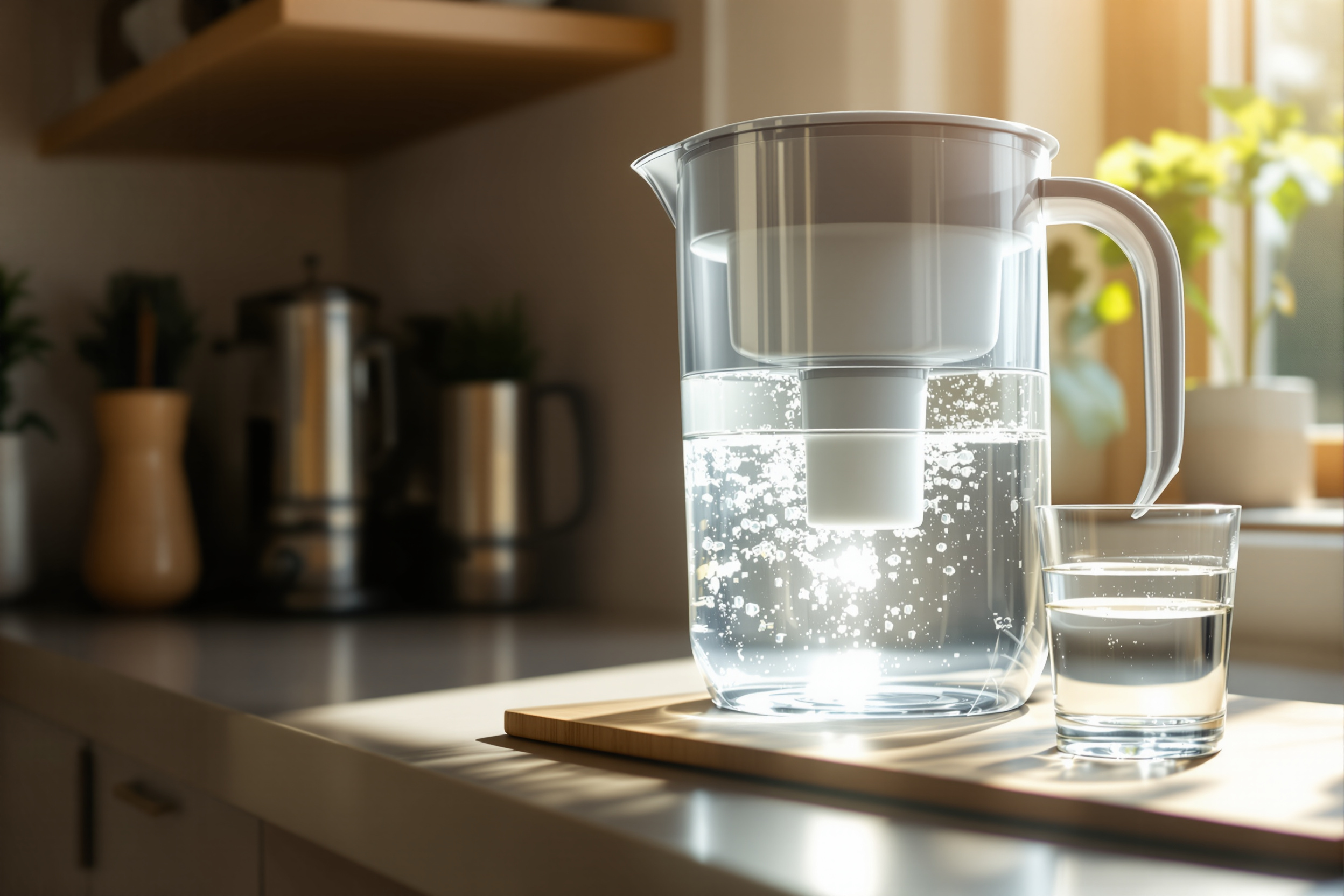
1. Epic Pure Water Filter Pitcher — Best Overall
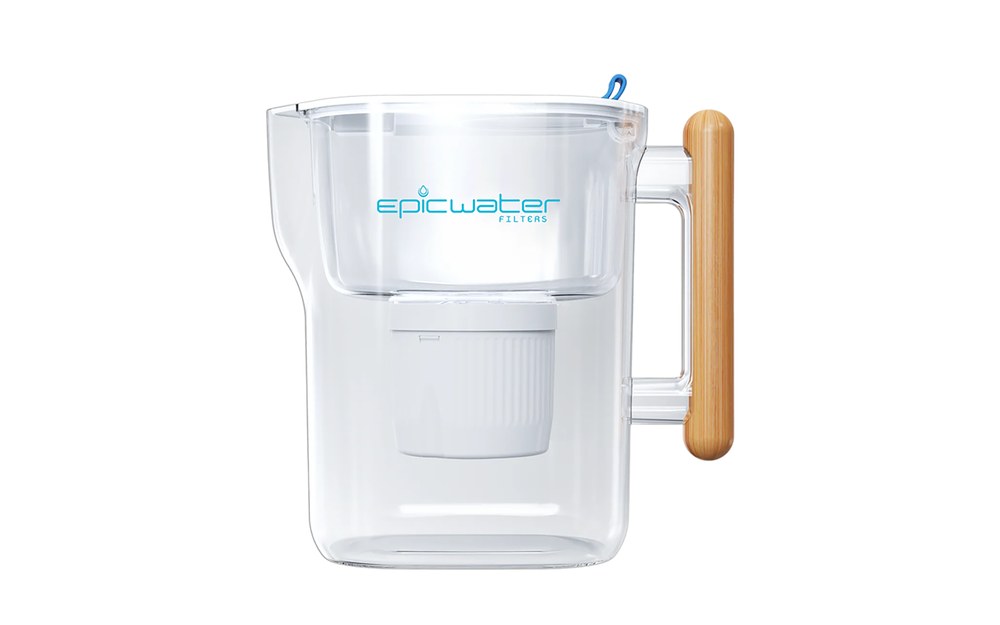 Best Overall
Owners like that Epic publishes its lab results and that the water tastes clean, and several describe the slow pour as reassuring rather than annoying -- one common line is that the deliberate rate lets them know it is working. A fresh filter can take one to two hours to run through at first, then speeds up to roughly 15 to 30 minutes once broken in. The honest gripes: the flow is slow by design and frustrates anyone in a hurry, some buyers report cracked plastic or a spout flap that does not open cleanly, and a few had water leak or spill when pouring.
The clearest evidence on this list: Epic posts its independent lab results publicly, so you can see the 99.9% microplastic-removal data instead of trusting a slogan on the box.
Why it's safe: The hollow fiber membrane physically blocks microplastic particles down to ~1 micron, while the carbon stage handles chlorine, lead, and PFAS — all in a BPA-free Tritan body.
Check Today’s Price on Amazon →Amazon prices change daily — tap to see today's price and any active discount.
- Free delivery & returns for Prime members
- Sold & shipped by Amazon
- Thousands of verified reviews
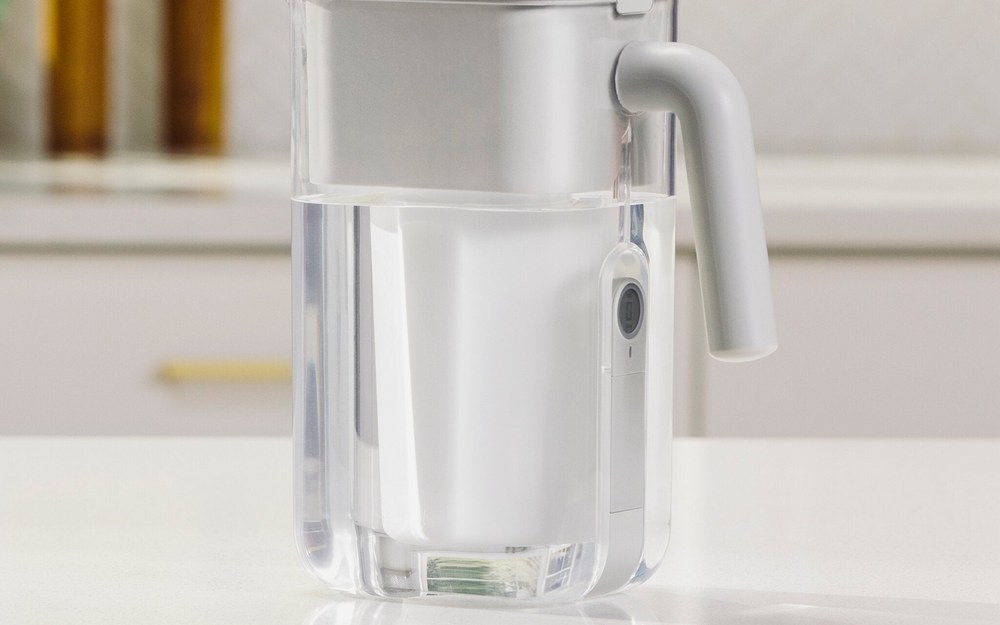
2. ZeroWater 10-Cup Pitcher with TDS Meter — Best for Hard Water / TDS
 Best for Hard Water
Owners buy ZeroWater for the included TDS meter and the fact that it reads 000 straight from the tap, and many say nothing else gets water this clean. The honest gripes: the ion-exchange resin can throw off a fishy, sour, or lemony smell as it wears out; filter life is short, tapping out around 15 to 40 gallons, so replacements come often and the cost adds up; and the lid can fall off if you pour too fast or tip it too steeply.
The included TDS meter shows the exact moment your filter is spent — so you replace on data, not a calendar guess, which matters most in hard-water homes.
Why it's safe: Five mechanical and ion-exchange stages capture microplastic particles and strip dissolved solids to 0 ppm, and the pitcher is built from BPA-free plastic.
Check Today’s Price on Amazon →Amazon prices change daily — tap to see today's price and any active discount.
- Free delivery & returns for Prime members
- Sold & shipped by Amazon
- Thousands of verified reviews
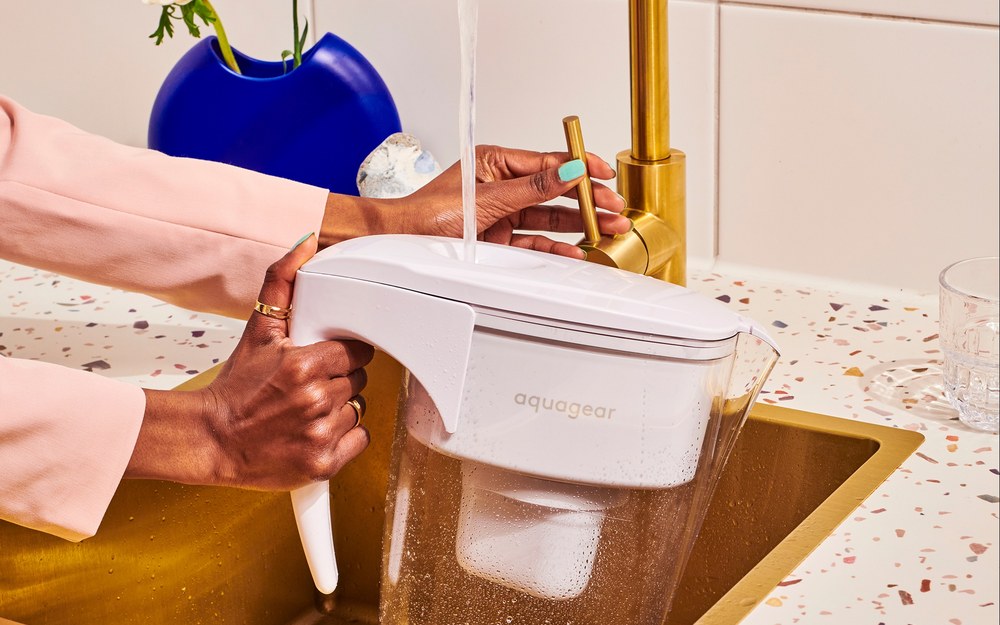
3. Aquagear Water Filter Pitcher — Best Filter Life
 Best Filter Life
Buyers rate Aquagear well for taste and its wide contaminant list, and the company backs it with a strong warranty. The most repeated complaint by far is speed -- reviewers say filtration drags, with some waiting minutes and others reporting close to two hours for a pitcher once the cartridge ages. The honest gripes: filters clog and cannot just be rinsed clean, the lid does not fit well and can pop off when pouring, and the pour-spout cover tends to stick or fall out of place.
Change the filter half as often as most pitchers — 150 gallons per cartridge means fewer replacements, lower annual cost, and less to remember.
Why it's safe: A 5-stage filter with a sub-micron membrane stage captures microplastics, lead, fluoride, and chlorine, in a BPA-free body with USA-made filter media.
Check Today’s Price on Amazon →Amazon prices change daily — tap to see today's price and any active discount.
- Free delivery & returns for Prime members
- Sold & shipped by Amazon
- Thousands of verified reviews
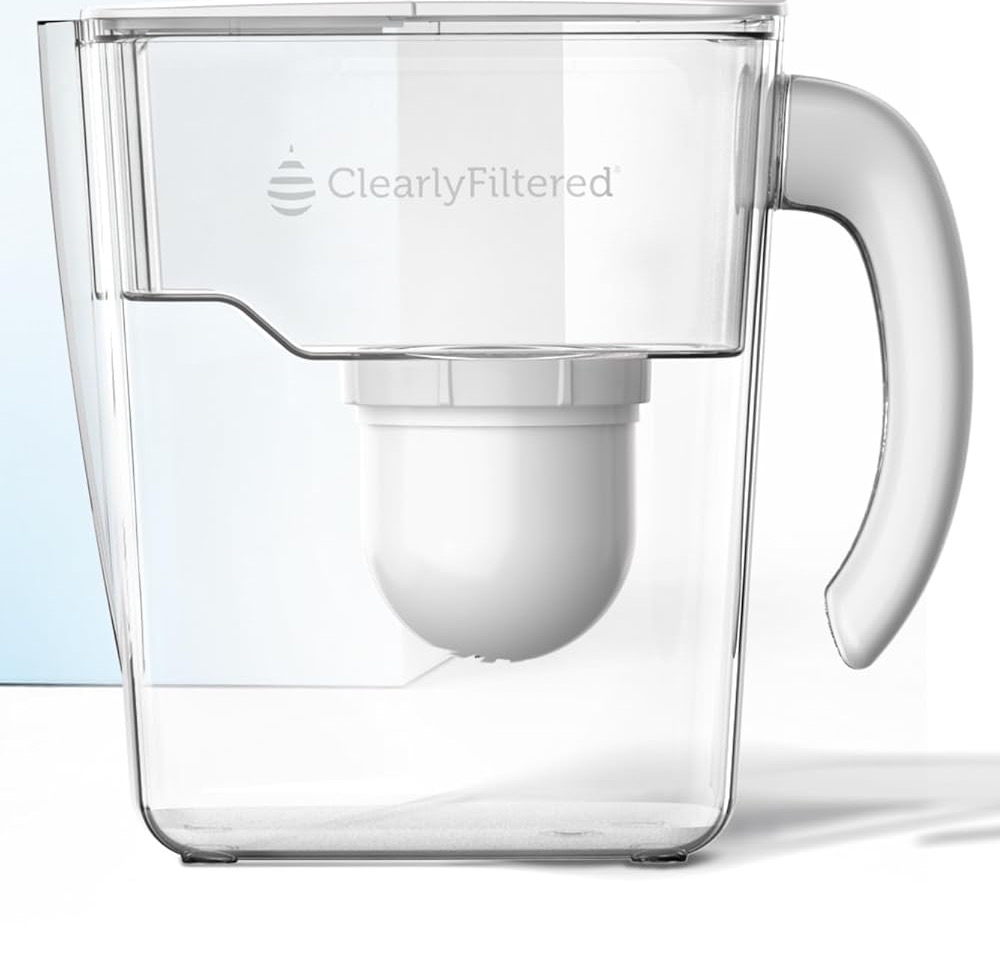
4. Clearly Filtered Water Pitcher — Budget Deep-Filtration Pick
 Budget Pick
Owners pay a premium for Clearly Filtered because it targets one of the widest contaminant lists of any pitcher, and taste reviews are strong. The honest gripes: it is slow, about 15 to 20 minutes for a new filter and stretching to 25 to 35 as it ages; the pitcher and its roughly $50 replacement filters cost three to four times a Brita; and reviewers flag reservoir and lid instability that leads to leaks, plus a heavy, bulky feel.
Lab-tested 99.9% microplastic removal at pitcher prices — no install, no RO system, no plumber.
Why it's safe: Independent lab testing shows 99.9% removal of microplastics plus PFAS, lead, and chlorine across 270+ contaminants, and the pitcher housing is BPA-free, medical-grade Tritan.
Check Today’s Price on Amazon →Amazon prices change daily — tap to see today's price and any active discount.
- Free delivery & returns for Prime members
- Sold & shipped by Amazon
- Thousands of verified reviews
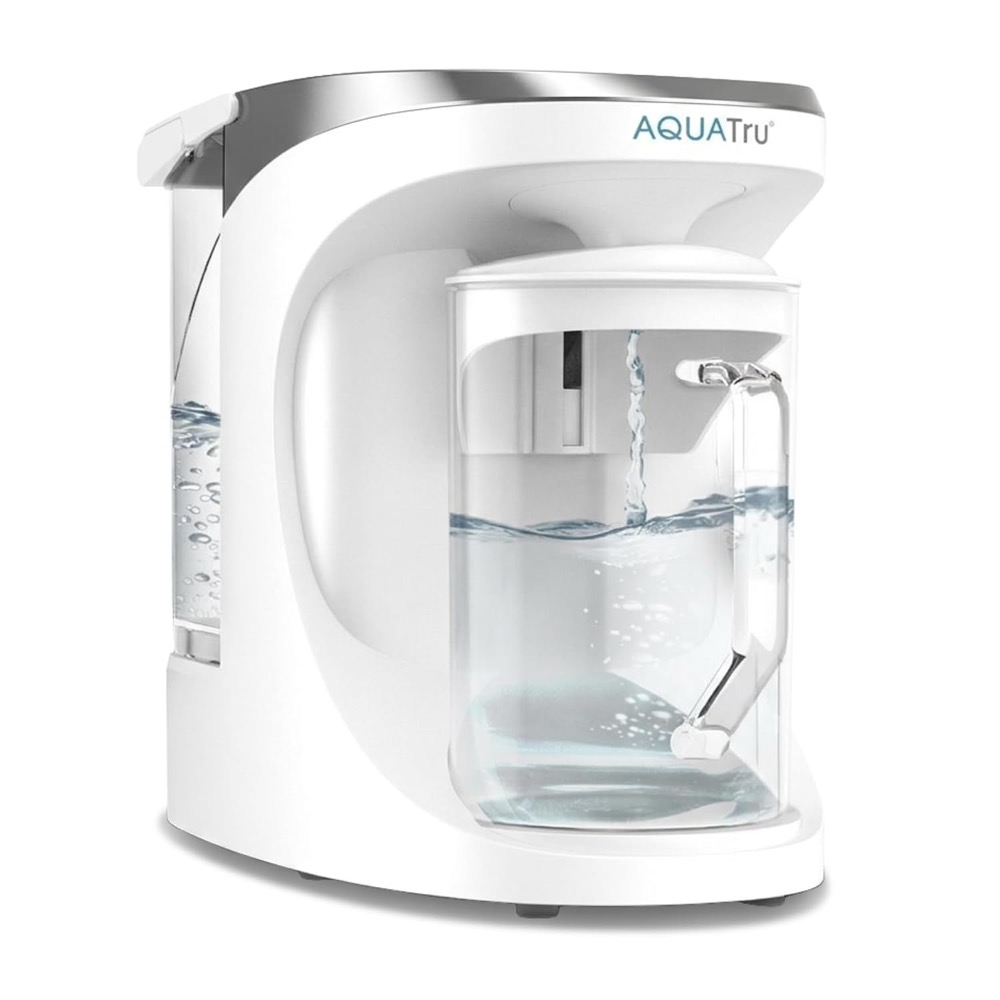
5. AquaTru Carafe Countertop RO — Best Countertop Reverse Osmosis
 Best Countertop RO
The Carafe is the space-saving AquaTru: owners like that it keeps the no-plumbing RO filtration in a smaller footprint at about half the per-gallon cost of most pitchers. The honest gripes: the 2.5-quart tank is small, so frequent refilling became a chore for some; each batch takes 12 to 15 minutes; the reservoir can be finicky to seat on the base; and third-party reviewers flag some short-lived units and buggy Smart-app behavior.
Reverse-osmosis purity you can set on the counter today — then store the result in glass, never plastic.
Why it's safe: The 4-stage RO membrane is NSF/ANSI 58 certified to remove microplastics, nanoplastics, PFAS, lead, arsenic, and chlorine — and the glass carafe means zero plastic contact at the point of use.
Check Today’s Price on Amazon →Amazon prices change daily — tap to see today's price and any active discount.
- Free delivery & returns for Prime members
- Sold & shipped by Amazon
- Thousands of verified reviews
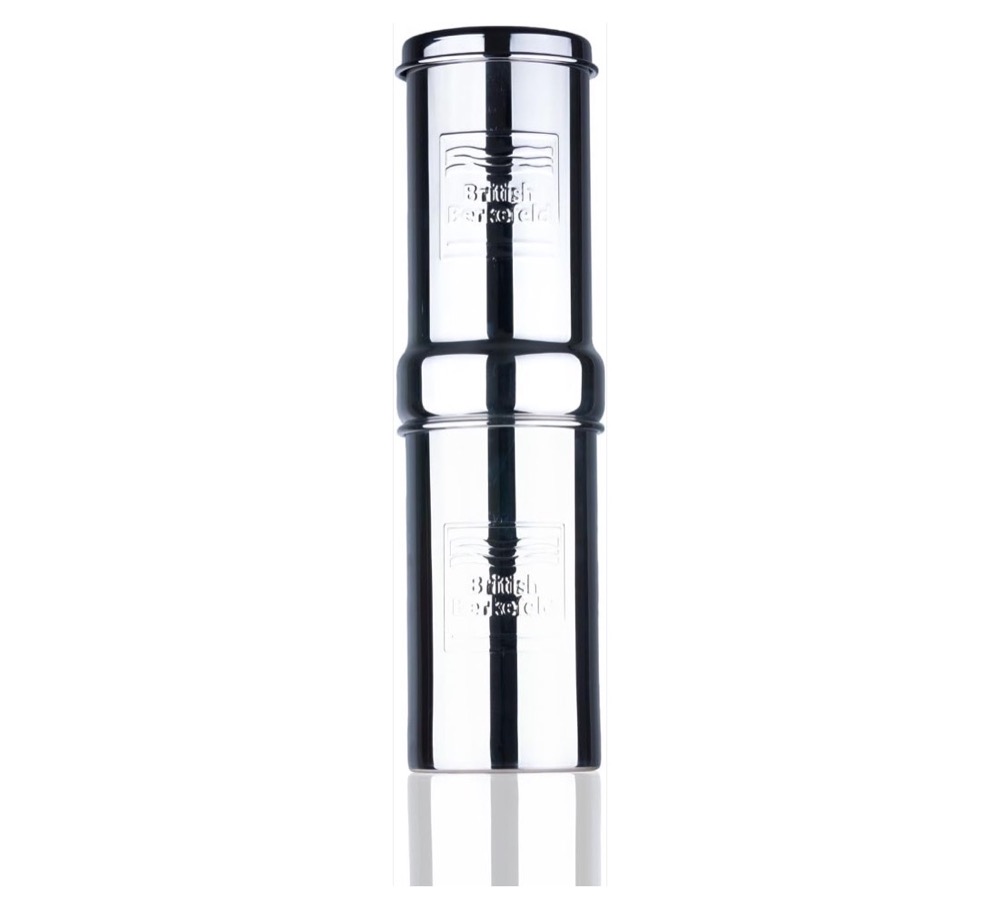
6. British Berkefeld Gravity Filter — Best Gravity / Off-Grid
 Best Gravity Filter
Owners choose British Berkefeld for gravity-fed filtration that needs no power and for the ceramic candles' NSF certifications, and unlike some rivals the candles do not need days of soaking to prime. The honest gripes: it is slow even for a gravity filter, with one test measuring about 0.27 gallons per hour, and over-tightening the wing nut during assembly cracks the ceramic candles, which owners cite as the main failure point.
Certified microplastic filtration with no power and no plumbing — stainless steel from top to bottom, ready for the counter or off-grid.
Why it's safe: NSF/ANSI 401 certified for 85%+ microplastic reduction plus bacteria, chlorine, and lead — and the all-stainless-steel chambers mean your filtered water never sits against plastic.
Check Today’s Price on Amazon →Amazon prices change daily — tap to see today's price and any active discount.
- Free delivery & returns for Prime members
- Sold & shipped by Amazon
- Thousands of verified reviews
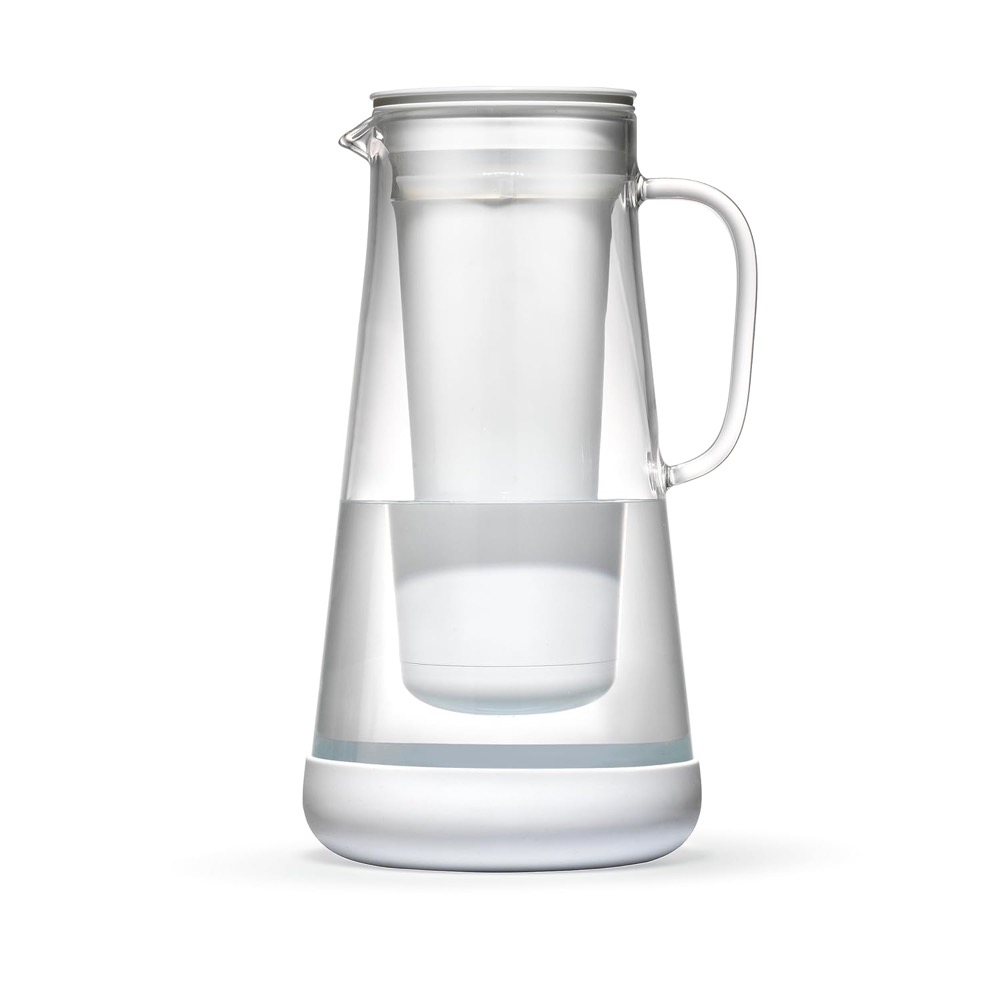
7. LifeStraw Home Pitcher — Best Certified Pitcher
 Best Certified Pitcher
Owners like the glass build, the design, and that it cuts a broad contaminant list including microplastics, lead, and PFAS. The honest gripes: slow flow is the number-one complaint, with one test filling a 7-cup pitcher in about 22 minutes against under two for a Brita; the filter needs replacing roughly every two months; and the filter does not always sit secure, so some owners pour with two hands and report drips or leaks from the spout.
The only pitcher actually certified for microplastics — pour-through clean water with no plumbing and no power.
Why it's safe: NSF-244 certified for 99.999% microplastic reduction, plus NSF/ANSI 42 and 53 for chlorine and lead — and the water is held in a borosilicate glass body, not plastic.
Check Today’s Price on Amazon →Amazon prices change daily — tap to see today's price and any active discount.
- Free delivery & returns for Prime members
- Sold & shipped by Amazon
- Thousands of verified reviews
Want the Full Home Protection Guide?
Your drinking water is one of dozens of daily plastic and contaminant touchpoints. The Complete Plasticproof Guide covers every room — kitchen, nursery, bathroom, bedroom — with 80+ product recommendations backed by 47+ studies.
The honest verdict
Is tap water safe to drink? For most Americans, in the legal and microbiological sense, yes — it is heavily regulated and far safer than the bottled-water industry would like you to believe. But "safe" is not "pure." Microplastics are in most tap water and go unregulated, lead can sneak in through old pipes, and PFAS, chlorine byproducts, and nitrates affect many systems.
The practical takeaway is reassuring rather than alarming: you do not need to fear your tap, and you almost certainly do not need bottled water. You need to know what is in your specific water (read your CCR, test your home if it is older or on a well) and run your drinking water through the right filter. A certified carbon block pitcher handles microplastics, chlorine, and lead for most homes; reverse osmosis covers everything including PFAS and nitrates. Either one makes your tap water cleaner, cheaper, and far less plastic-laden than the bottled alternative. And for water on the go, refilling a stainless steel water bottle keeps you off single-use plastic entirely — or, when you can't trust the tap you're refilling from, a certified filtered water bottle filters as you drink.
Filter the contaminants that actually matter
Skip the guesswork. See the pitchers and systems we tested for microplastic, lead, and PFAS removal — ranked by performance.
Frequently Asked Questions
For most people, yes. US public tap water is regulated under the Safe Drinking Water Act and most utilities meet federal standards. But "meets standards" is not "contains nothing." Microplastics are unregulated and found in most tap water; lead can enter from old pipes regardless of how clean the water leaves the plant; and PFAS, disinfection byproducts, and nitrates affect many systems. So it is generally safe in the legal sense while still carrying contaminants worth filtering.
Yes. A landmark Orb Media investigation found microplastic fibers in about 83% of tap water samples worldwide, with US samples among the highest at roughly 94%. The WHO has confirmed microplastics are widespread in drinking water. They are not regulated in US tap water, so a utility can fully comply with the law and still deliver water containing plastic particles. A quality filter is the practical way to reduce them.
Start with your utility's Consumer Confidence Report (CCR), the annual water quality report every community system must send customers, which lists detected contaminants versus federal limits. You can also enter your ZIP in the EWG Tap Water Database. The CCR will not tell you what your own pipes add, so if you have older plumbing, a lead service line, or a private well, use a certified home test kit or a state-certified lab to test the water as it comes out of your tap.
Microplastic particles are physically large compared to dissolved chemicals, so most well-made fine-pore filters capture them. A quality carbon block, a reverse osmosis (RO) system, or a gravity system like Berkey will all reduce microplastics. RO is the most thorough overall because its membrane also removes dissolved contaminants like lead, PFAS, and nitrates that pass through basic carbon. For most households a certified carbon block pitcher or an under-sink RO system is the right tool. If you're leaning toward RO, our reverse osmosis reviews compare the leading systems in detail.
Boiling kills bacteria and microorganisms, which is why a boil-water advisory tells you to boil. But it does nothing for the contaminants people worry about most: it does not remove lead, PFAS, nitrates, or microplastics, and because it evaporates water it can actually concentrate dissolved contaminants like lead and nitrate. For chemical and particle contaminants, filtration, not boiling, is the answer.
For most people, yes. Bottled water is not necessarily cleaner than tap — that it is remains one of the most stubborn microplastics myths — and research has found bottled water typically contains far more microplastic particles than tap, much of it shed from the bottle and cap themselves. A good home filter gives you water as clean as or cleaner than bottled, at a tiny fraction of the cost and without the plastic waste — usually the better choice on cost, plastic exposure, and environmental impact alike.
Sources
- Kosuth M, Mason SA, Wattenberg EV. "Anthropogenic contamination of tap water, beer, and sea salt." PLOS ONE, 2018 (Orb Media tap water study).
- World Health Organization. "Microplastics in drinking-water." 2019.
- US EPA. "Safe Drinking Water Act" and "National Primary Drinking Water Regulations." epa.gov.
- US EPA. "Lead and Copper Rule" and lead action level (15 ppb); "Basic Information about Lead in Drinking Water." epa.gov.
- US EPA. "Per- and Polyfluoroalkyl Substances (PFAS) National Primary Drinking Water Regulation." 2024.
- Environmental Working Group. "EWG Tap Water Database." ewg.org/tapwater.
- Mason SA, et al. "Synthetic Polymer Contamination in Bottled Water." Frontiers in Chemistry, 2018.