Quick Navigation
How I Compared These Six Systems
There are dozens of RO systems on Amazon, but most are the same three or four Chinese factory designs relabeled. I narrowed the field to six systems that (a) are actually independently certified — not just marketed as certified — and (b) represent every meaningful category a home buyer would choose between: countertop plug-in, under-sink tank, and under-sink tankless.
For each one I pulled the specs from the manufacturer's own datasheet, cross-checked the certification claim in the NSF public listings database or the WQA Gold Seal directory, and then wrote a real pros/cons section — including the trade-offs the brand's marketing skips. If a claim isn't verified, it's not in this review.
Everything on this list uses a true RO membrane, which the peer-reviewed literature is clear about: at roughly 0.0001 microns a well-maintained RO membrane rejects effectively all microplastics and nanoplastics from drinking water. See does reverse osmosis remove microplastics for the full study review, and Brita vs Berkey vs RO for how RO compares against the two other filter categories most people consider.
What "certified" actually means. The certification that matters for RO is NSF/ANSI 58 — the standard specifically for reverse-osmosis units. It verifies TDS rejection and contaminant removal at the system level. The WQA Gold Seal is an equivalent third-party certification from the Water Quality Association. If a listing says "NSF-tested components" or "meets NSF standards" but doesn't name a specific standard (58 or 42/53) and cite a certifier, treat that as marketing, not verification.
Side-by-Side: The Six Systems on Real Specs
| System | Type | GPD | Certification | Remineralization | Price |
|---|---|---|---|---|---|
| AquaTru Countertop | Countertop | ~30 | NSF/ANSI 58 | No | $$$ |
| Waterdrop G3P800 | Tankless under-sink | 800 | NSF/ANSI 58 | Yes | $$ |
| iSpring RCC7AK | Tank under-sink | 75 | NSF/ANSI 58 | Yes (alkaline) | $ |
| APEC ROES-50 | Tank under-sink | 50 | WQA Gold Seal | No | $ |
| Frizzlife PD600-TAM3 | Tankless under-sink | 600 | NSF/ANSI 58 | Yes (alkaline) | $$ |
| Express Water RO5DX | Tank under-sink | 50 | NSF/ANSI 58 | No | $ |
Price guide: $ budget · $$ mid-range · $$$ premium. Tap any pick below for today's exact Amazon price.
1. AquaTru Countertop RO — the "no plumber needed" pick
 Countertop
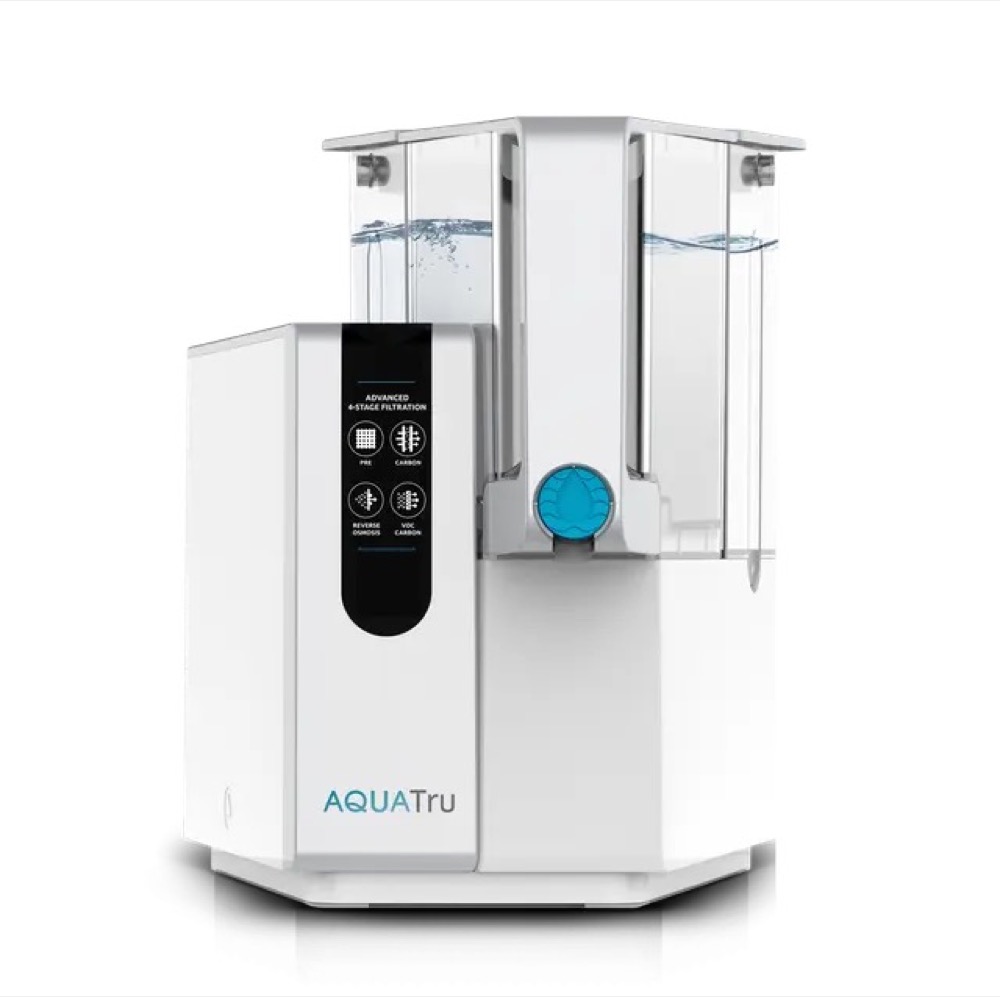
What it actually is. A ~14” countertop unit with a raw-water tank on one side and a clean-water tank on the other. You fill the raw side from the tap, plug it in, and about 15 minutes later the clean side is full. It runs the water through pre-filter → carbon → RO membrane → post-carbon, which is a genuine four-stage RO train — not a "5-stage" filter that's really just carbon.
What’s good. The NSF certification list is unusually deep for a countertop: it’s certified against NSF/ANSI 42 (chlorine/taste), 53 (lead, chromium, cysts), 58 (the RO standard, TDS + arsenic + fluoride), 401 (emerging contaminants like pharmaceuticals), and P473 (PFOA/PFOS). Very few countertop units have that combination — most only carry NSF/ANSI 42 or nothing at all.
What’s not. Three real cons a buyer should know: (1) no remineralization stage, so long-term daily use will taste flatter than a filtered pitcher — a $10 bottle of mineral drops fixes it. (2) the clean tank is 3 quarts and refills in ~15 minutes, which is fine for a couple but slow if you fill water bottles for a whole family. (3) ongoing filter cost is higher per gallon than an under-sink system because the modular cartridges are proprietary.
Owners keep coming back to one line: it removes close to 100 percent of what testers throw at it, with no plumber and less wastewater than an under-sink system. Renters and people without under-sink space call it the one RO they could set up in minutes. The honest downsides: dispensing is slow, a batch runs about a gallon with a roughly 15-minute fill, and remineralization sits behind a paid upgrade. Some buyers reported the clean-water tank leaking onto the counter or the unit quitting after a couple of months, and a few said support was slow to respond and reluctant to replace parts once the warranty lapsed.
Full-strength RO in a countertop box — no drilling, no plumbing, and you can take it to your next apartment.
Why we can recommend it honestly: a real RO membrane plus system-level NSF/ANSI 58 certification — the actual standard for RO — so the microplastic-and-heavy-metal claim isn't just marketing.
Check price on Amazon →Prices change daily — tap for today's price and any active coupon.
2. Waterdrop G3P800 — the "gadget lover's" pick
What it actually is. A tankless under-sink RO — meaning no pressurized storage tank hidden in the cabinet, no bacteria-in-stagnant-water risk, and a compact footprint. Water is filtered on demand at up to 800 gallons per day; a normal glass fills in about 12–15 seconds. The remineralization cartridge adds calcium and magnesium back after the RO stage so it doesn't taste stripped.
What’s good. The smart faucet displays the current TDS reading — that's the total-dissolved-solids number in ppm — plus filter life in months for each stage. NSF/ANSI 58 certification per the manufacturer's documentation. And the 3:1 pure-to-drain ratio is meaningfully better than the 3:1–4:1 you get from an old-school tank system.
What’s not. (1) Filter replacements are proprietary and cost roughly $60–$100/year in ongoing cost — higher than a generic tank system. (2) It needs a power outlet under the sink; if your cabinet doesn't have one, add that to the install cost. (3) The "800 GPD" figure is a lab number at optimal input pressure and temperature; real-world flow is closer to 400–500 GPD, still faster than any tank system but not literally 800.
In hands-on lab testing the G3P800 did strong work on lead, fluoride, and arsenic, and owners like the tankless footprint. The honest gripes are more about the marketing than the water: Waterdrop advertises removal of 1,000-plus contaminants, but the actual NSF 58 certification covers only a short list such as TDS and chromium-6, and one reviewer said support did not produce more documentation when asked. There is no remineralization stage, and Waterdrop says the system is not for untreated well water.
Fast, tankless, and gives you a live number telling you the membrane is working — the "instrumented" RO.
Why we can recommend it honestly: tankless design removes the stagnant-water risk of a storage tank, the RO membrane blocks microplastics and nanoplastics down to 0.0001 microns, and the TDS readout gives you real feedback that most systems don't.
Check price on Amazon →Prices change daily — tap for today's price.
3. iSpring RCC7AK — the "practical family" pick
 Under-sink tank
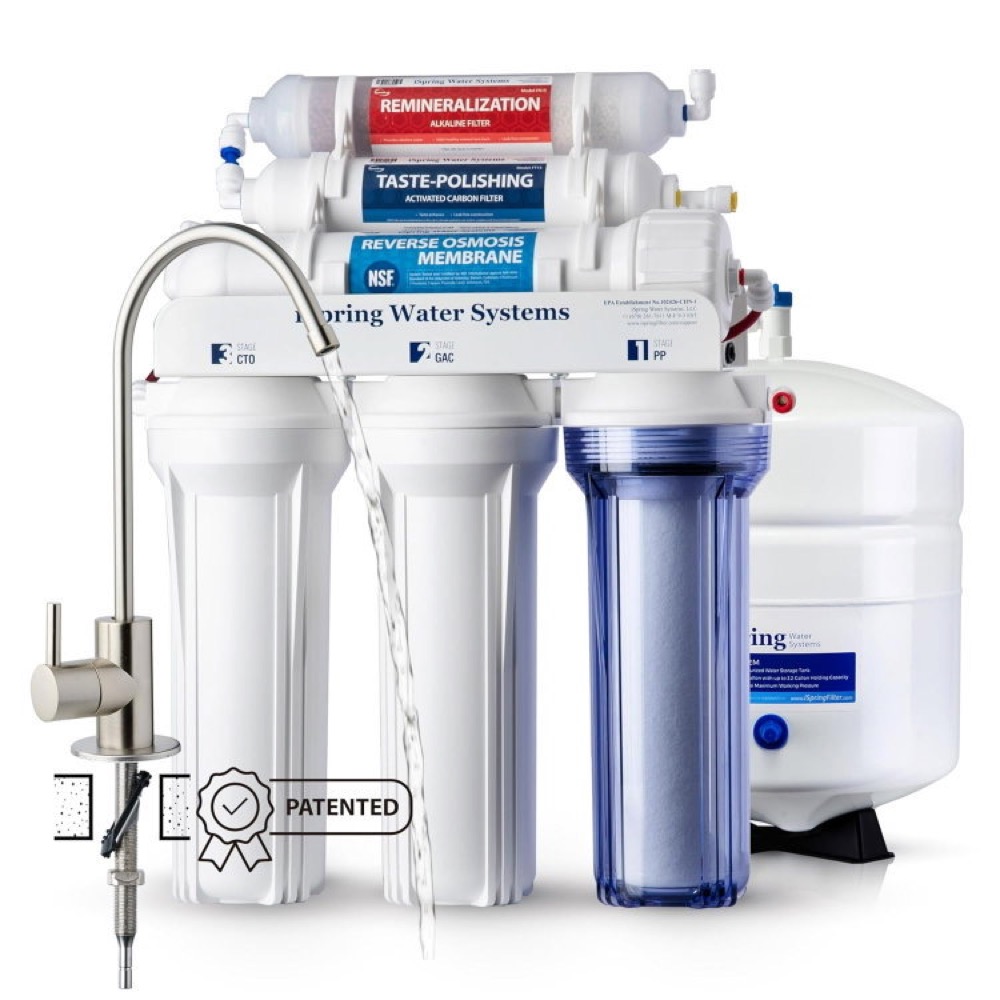
What it actually is. A classic tank-and-membrane under-sink RO with an extra alkaline remineralization stage after the RO membrane. Water pressure fills a 3.2-gallon tank in the cabinet; when you open the dedicated faucet the pre-stored water comes out immediately. The extra alkaline cartridge (that's the "AK" in the model name) adds calcium and magnesium back and nudges the pH from around 6 up to 7.5–8.
What’s good. Replacement filters use standard 10” sediment/carbon sizes, which means a first-year filter set is roughly $30–$40 — the lowest ongoing cost of anything on this list. Six stages is a real advantage over the 4- and 5-stage systems on both membrane life and taste. DIY install with the included instructions runs about an hour if you're comfortable with quick-connect fittings.
What’s not. (1) Under-sink footprint is real — plan on the tank plus a filter housing taking up most of a cabinet. (2) Flow rate is the "book" 75 gallons per day, but the real limit is the tank refill rate: filling a couple of glasses back-to-back is fine; filling six water bottles at once will drain the tank. (3) Waste ratio is roughly 3:1 or 4:1 — you send about three gallons down the drain for each gallon you drink, which is normal for a tank system but worse than the tankless units on this list.
Owners call it economical and quick to install, and independent testing backed up the fluoride reduction at roughly 97 to 99 percent. The built-in leak sensor that shuts the unit off if it detects water gets specific praise, and iSpring's support is described as quick to help. The honest downsides: the cartridges have a shorter rated life than some competitors, offset by their low cost; a handful of owners saw a canister crack and weep after several years; and a few hit a small leak at the flow restrictor while changing filters.
The safe boring pick — low upfront cost, standard-size replacement filters, alkaline remineralization included.
Why we can recommend it honestly: six stages with a proper RO membrane, the alkaline stage restores minerals the RO strips out, and replacement filters are cheap enough that people actually change them on schedule.
Check price on Amazon →Prices change daily — tap for today's price.
4. APEC ROES-50 — the "made in USA, call a real person" pick
 Under-sink tank
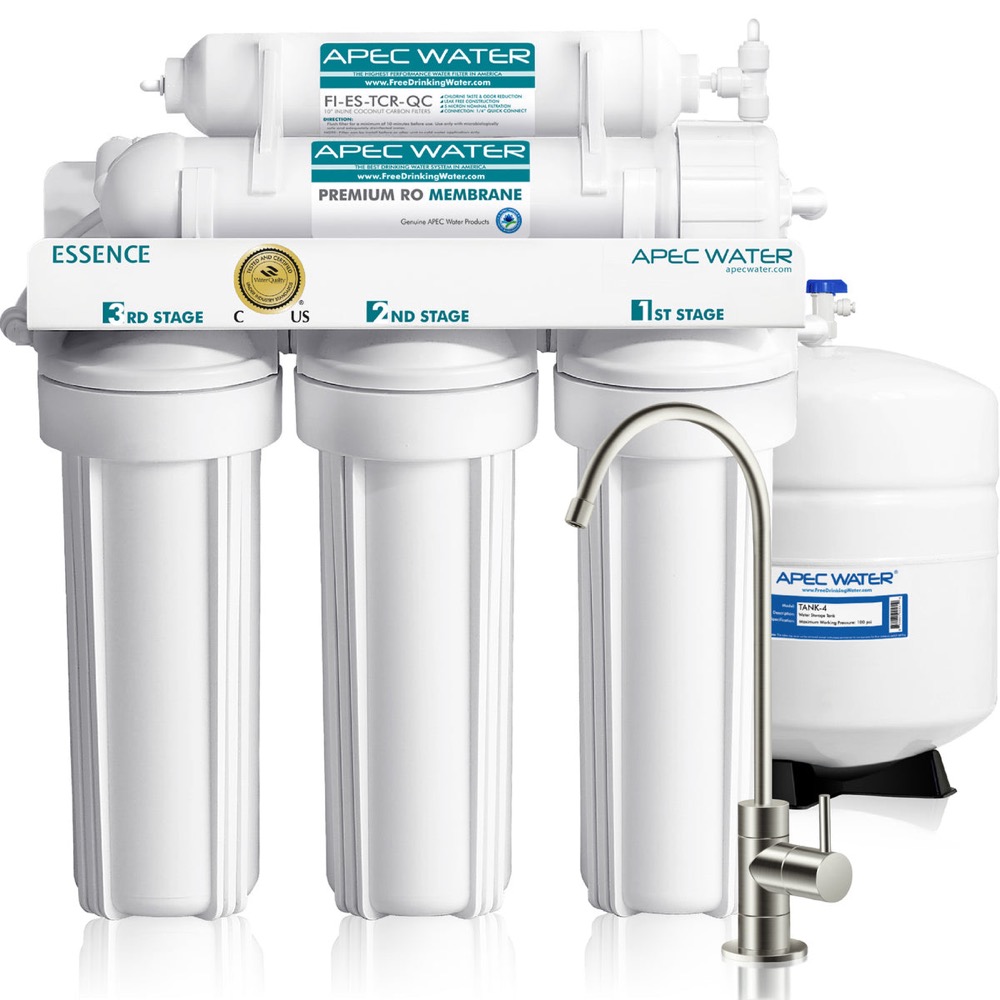
What it actually is. A conventional five-stage under-sink RO — sediment, two carbon stages, RO membrane, then a post-carbon polish. APEC is a small California company that’s been shipping the ROES-series for over a decade; the current unit carries a Water Quality Association Gold Seal, which is the third-party equivalent of NSF/ANSI 58 and appears in the WQA public directory.
What’s good. Two-year warranty and lifetime US-based phone support from APEC directly — that’s the reason this system has such a devoted user base. Standard 10” replacement filter sizes, so cartridges are cheap and available at any hardware store. Build quality on the housings and fittings is noticeably heavier than the ultra-budget systems.
What’s not. (1) No alkaline remineralization stage — you can add the upgraded ROES-PH75 variant for more money, or drop mineral drops in the pitcher. (2) 50 GPD is slower than the iSpring’s 75, so tank refill takes longer. (3) There’s no smart faucet, no display, and no gadgetry — some buyers see that as a plus, but if you like knowing exactly how much filter life is left, this isn’t it.
Buyers with basic DIY skills say they had it installed in well under a day and noticed cleaner, better-tasting water right away, and APEC's customer service gets repeated praise as polite and responsive. The honest gripes: it sends about three gallons to the drain for every gallon it makes, some owners had to grab a couple of extra plumbing fittings from the hardware store to finish, and the most serious complaint is filter housings cracking where the fittings join, which soaked a few people's under-sink cabinets.
Made in the USA, WQA Gold Seal, and a phone number that reaches an actual person — the "grown-up" RO.
Why we can recommend it honestly: the WQA Gold Seal independently verifies the system's contaminant reduction to the same bar as NSF/ANSI 58, and the domestic support means a failed fitting doesn't turn into a month of unanswered emails.
Check price on Amazon →Prices change daily — tap for today's price.
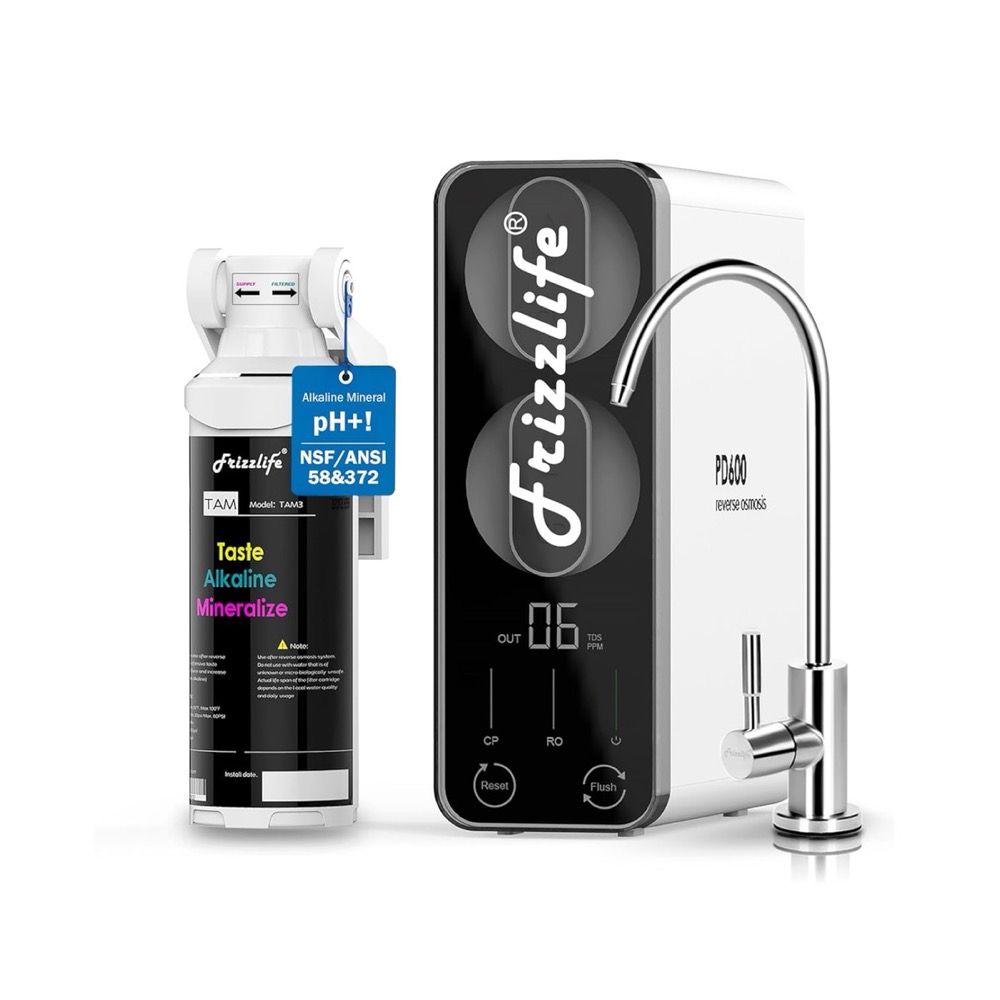
5. Frizzlife PD600-TAM3 — the "small cabinet, big drought" pick
 Tankless
What it actually is. A vertical, wall-hugging tankless RO — about the size of a shoebox stood on end. Water is filtered on demand, so there's no storage tank taking up half the cabinet. The unit ships with an alkaline remineralization stage after the RO membrane and a smart faucet that reads out filter life.
What’s good. The 1.5:1 pure-to-drain ratio is the best on this list by a large margin. Most tank RO systems send 3–4 gallons down the drain for every gallon they purify; this one sends about 1.5. Twist-and-lock filter cartridges are genuinely tool-free — you rotate them off and on in about ten seconds. The vertical footprint is small enough to fit next to a garbage disposal.
What’s not. (1) Needs a power outlet under the sink; it’s a pumped tankless design. (2) "600 GPD" is the lab spec — realistic flow at typical home pressure is closer to 300–400 GPD, still fast enough that you'll never wait, but not literally 600. (3) Proprietary twist-lock cartridges mean you have to buy from Frizzlife, which locks you into their pricing over time.
Tankless fans like that it reclaims the under-sink space a tank would eat, and they give it a 4.6 across more than 1,200 reviews. The honest downsides come with the tankless design: its built-in pump makes it one of the louder systems people have tested, some owners hit leaks or had a unit go bad within a few months, and a few said the filter-life indicator lit up while the filters were still new. One owner tip others echo: the first cup in the morning can read higher TDS, so run the faucet a few seconds before filling your glass.
Half the wasted water of a tank system, a compact vertical footprint, and remineralized water without adding a separate cartridge.
Why we can recommend it honestly: a real RO membrane with NSF/ANSI 58 certification, no stagnant-water storage tank, and a drain ratio that actually respects your water bill.
Check price on Amazon →Prices change daily — tap for today's price.
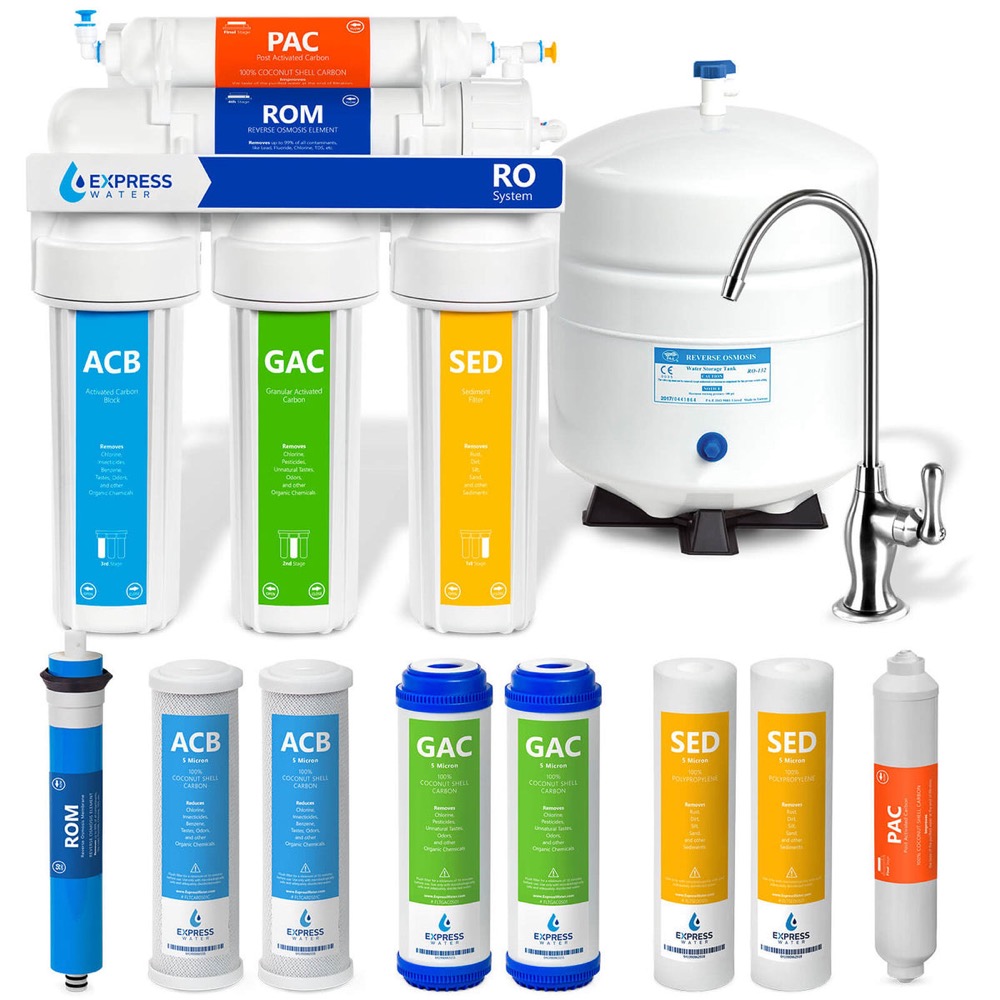
6. Express Water RO5DX — the "just get me into RO" pick
 Budget under-sink
What it actually is. A conventional five-stage tank RO — sediment, GAC carbon, carbon block, RO membrane, post-carbon polish. Storage tank in the cabinet, dedicated faucet on the sink. Everything ships in one box with quick-connect fittings so first-time DIYers can get it running in an afternoon.
What’s good. The lowest upfront cost of anything on this list — often on Amazon for well under half the price of the premium tankless systems. Standard filter sizes mean cheap generic replacements are widely available. The membrane itself is the same 0.0001-micron TFC type used in far more expensive systems, so the core filtration is genuinely comparable.
What’s not. (1) Housings and fittings are the lightest-duty on this list — plan on being gentler with them and checking for weeps after install. (2) No remineralization stage; long-term daily use will taste flat unless you add mineral drops or upgrade to the alkaline variant. (3) Support is by email only and slow. Read this as the trade-off you're making for the price.
Across thousands of reviews the RO5DX lands high, with owners citing the built-in leak-stop shutoff, low-cost replacement filters, and noticeably better taste; most say installation went smoothly. The honest downsides: a few reported the RO membrane clogging or failing after only a couple of months, some had to add extra tightening or plumber's tape to stop small drips at the fittings, and one owner described calling support repeatedly over months about a leak with no resolution.
The cheapest way to get real RO water in your kitchen. Standard-size filters keep the running cost low too.
Why we can recommend it honestly: the same class of RO membrane the premium picks use — the particle rejection down at the microplastic and nanoplastic scale is fundamentally about the membrane, and the membrane here is a real one.
Check price on Amazon →Prices change daily — tap for today's price.
Get the full Plasticproof guide
Water is step one. The complete guide covers kitchen, bedroom, air, and baby — every swap that matters.
Get the free guideWhich One Is Right for You
Six systems is a lot to sift through. Here’s the short-form decision tree that maps a real situation to a real pick — no "our recommendation" hedge, just the honest match.
- You rent, share a wall, or don’t want a plumber. Buy the AquaTru Countertop. It’s the only countertop RO on this list that’s certified against NSF/ANSI 58, and you can pack it up and take it with you.
- You have room under the sink and want the lowest lifetime cost. Buy the iSpring RCC7AK. Standard filter sizes and a proper alkaline stage make it the cheapest to run for the next five years.
- You care about US-based support and a real warranty. Buy the APEC ROES-50. Lifetime phone support from a California team is the pitch — and it delivers.
- You want tankless with a live TDS readout so you know it’s working. Buy the Waterdrop G3P800. The instrumented faucet is genuinely useful.
- You’re on a well, in a drought state, or your water bill hurts. Buy the Frizzlife PD600-TAM3. The 1.5:1 drain ratio is worth real money over years.
- Budget is genuinely the constraint. Buy the Express Water RO5DX. Same membrane category as the premium picks; the trade-off is fittings and support.
What every RO system needs from you
Whichever you choose, the same three maintenance realities apply — and every study of RO performance depends on them:
- Pre-filter every 6–12 months. The pre-filters catch sediment and chlorine before the RO membrane. Skip them and chlorine will destroy a thin-film-composite membrane in a year or two.
- RO membrane every 2–3 years. Membrane life depends on incoming water — hard water shortens it. If your TDS reading (or the Waterdrop's display) creeps up, the membrane is failing.
- Post-carbon filter every 12 months. Cheap, easy to forget, and the biggest driver of taste over time.
Every RO system on this list rejects micro- and nanoplastics on paper — the differences are how long it takes to fill a glass, how much water it wastes, and how much it costs you to keep filters current. See best water filter for microplastics 2026 for how RO stacks up against non-RO alternatives, and why bottled water isn’t the answer if you’re currently drinking out of plastic to avoid tap. If you’d rather skip the membrane, the plumbing, and the wastewater altogether, a countertop water distiller is the main non-filter alternative that strips microplastics and dissolved solids just as completely — it boils water to steam and leaves the contaminants behind.
Bottom line. There isn't one right RO system — there's one right RO system for your situation. Pick from the decision tree above, buy the filters on schedule, and you're done thinking about microplastics in your drinking water for a decade.
Sources & further reading
- NSF International, Certified Drinking Water Treatment Units database (search by NSF/ANSI 58 to verify system-level certification for RO).
- Water Quality Association, Find Products / Gold Seal directory (independent third-party equivalent to NSF listing).
- NSF/ANSI/CAN 58 — Reverse Osmosis Drinking Water Treatment Systems (the actual standard governing RO performance claims).
- Related on this site: does reverse osmosis remove microplastics, Brita vs Berkey vs reverse osmosis, best water filters for fluoride, microplastics in tap water.