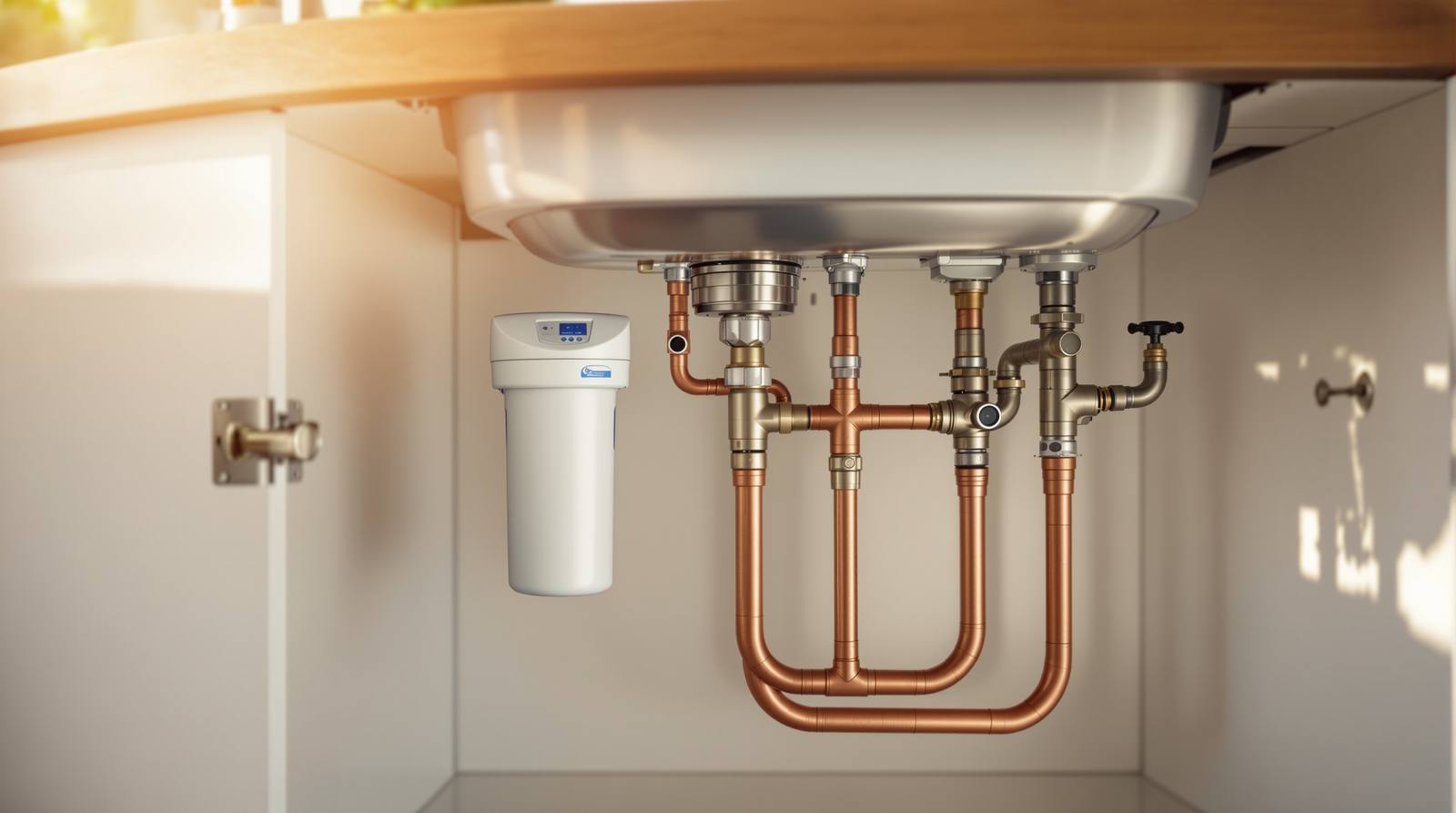
The short answer
The best under-sink water filter in 2026 is the Aquasana AQ-5300+ Max Flow Claryum 3-Stage (~$239, $$$ tier). It is the only under-sink system in this class certified to all four of the NSF/ANSI standards that matter here — 42, 53, 401 (where the microplastic claim sits), and P473 for PFOA/PFOS — and it reduces 99% of 77+ contaminants (microplastics, lead, chlorine, PFOA/PFOS) with zero waste water. On a budget, the Frizzlife MK99 (usually under $140) is the value pick; for the finest particle rejection, the Waterdrop TSU's 0.01-micron ultrafiltration membrane.
Quick Navigation
- Why an under-sink filter (and when to skip RO)
- What is the best under-sink water filter?
- Do under-sink filters remove microplastics?
- Are under-sink filters worth it?
- Quick comparison: all 6 systems
- Best overall: Aquasana AQ-5300+ Max Flow
- Best for microplastics + bacteria: Waterdrop TSU
- Best budget: Frizzlife MK99
- Best value 4-stage: iSpring CU-A4
- Best long-life & no-drill: CuZn UC-200
- Best big-box availability: Culligan US-EZ-4
- Buyer's guide
- FAQ
Compare all 6 picks
Every pick side by side — tap a name to jump to the full review, or check today's price.
| Pick | Rating | Why it wins | |
|---|---|---|---|
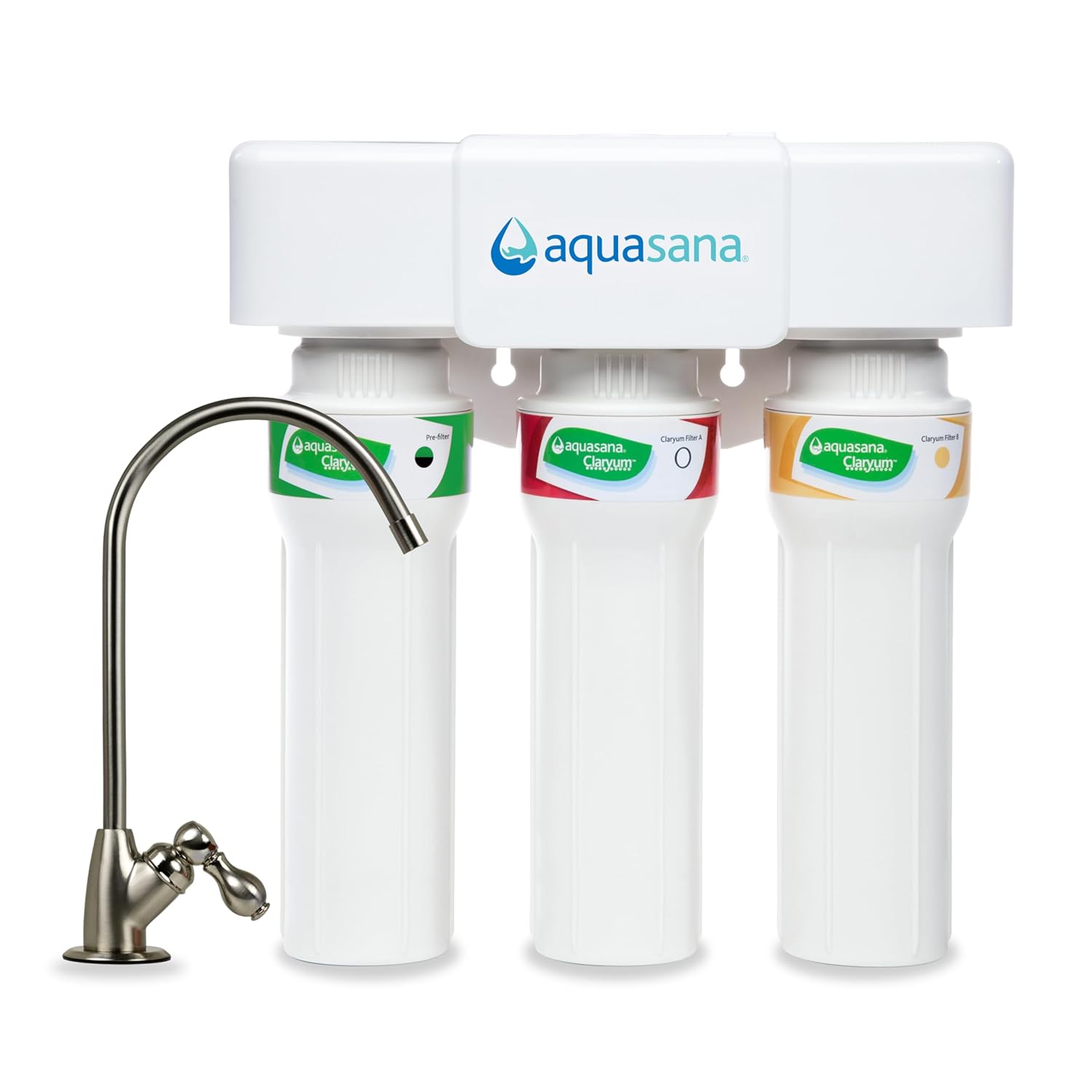 Best OverallAquasana AQ-5300+ Max Flow Claryum 3-Stage |
4.6out of 5 | NSF 42/53/401/P4733-Stage Claryum |
Check price → |
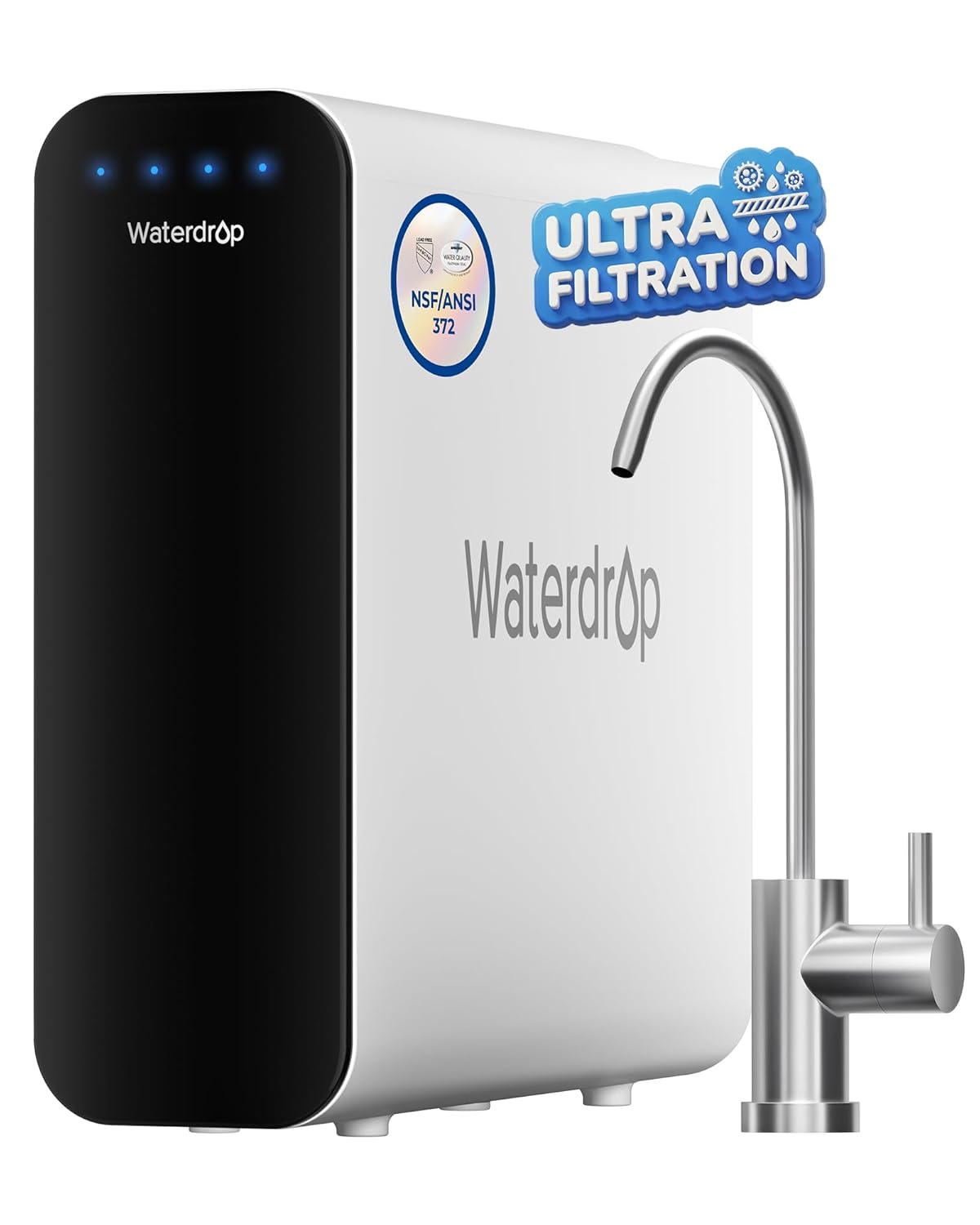 Best UltrafiltrationWaterdrop TSU Ultrafiltration Under-Sink |
4.5out of 5 | NSF 42 Components0.01 Micron UF |
Check price → |
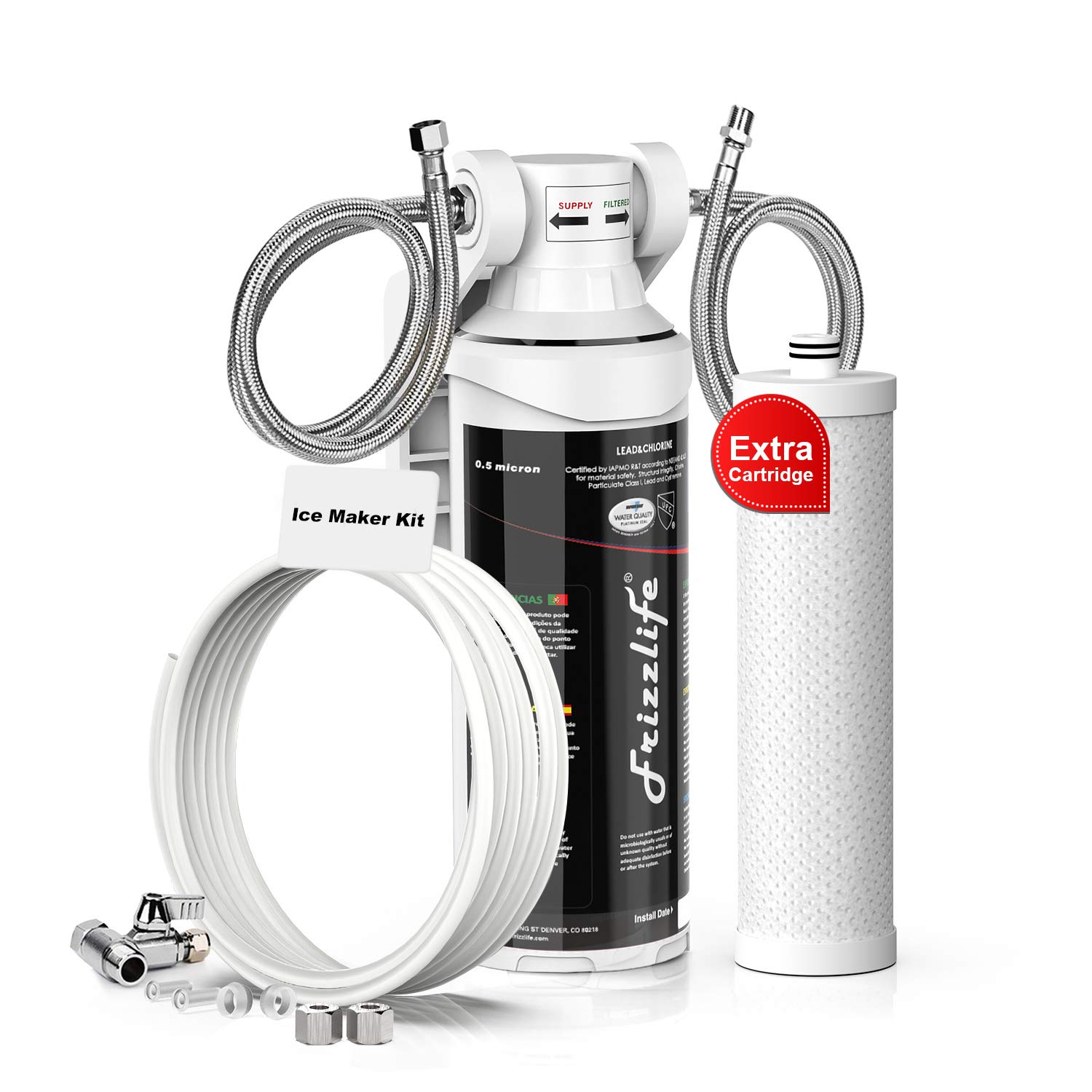 Best BudgetFrizzlife MK99 Under-Sink 0.5 Micron |
4.6out of 5 | NSF 42 & 372 Components0.5 Micron |
Check price → |
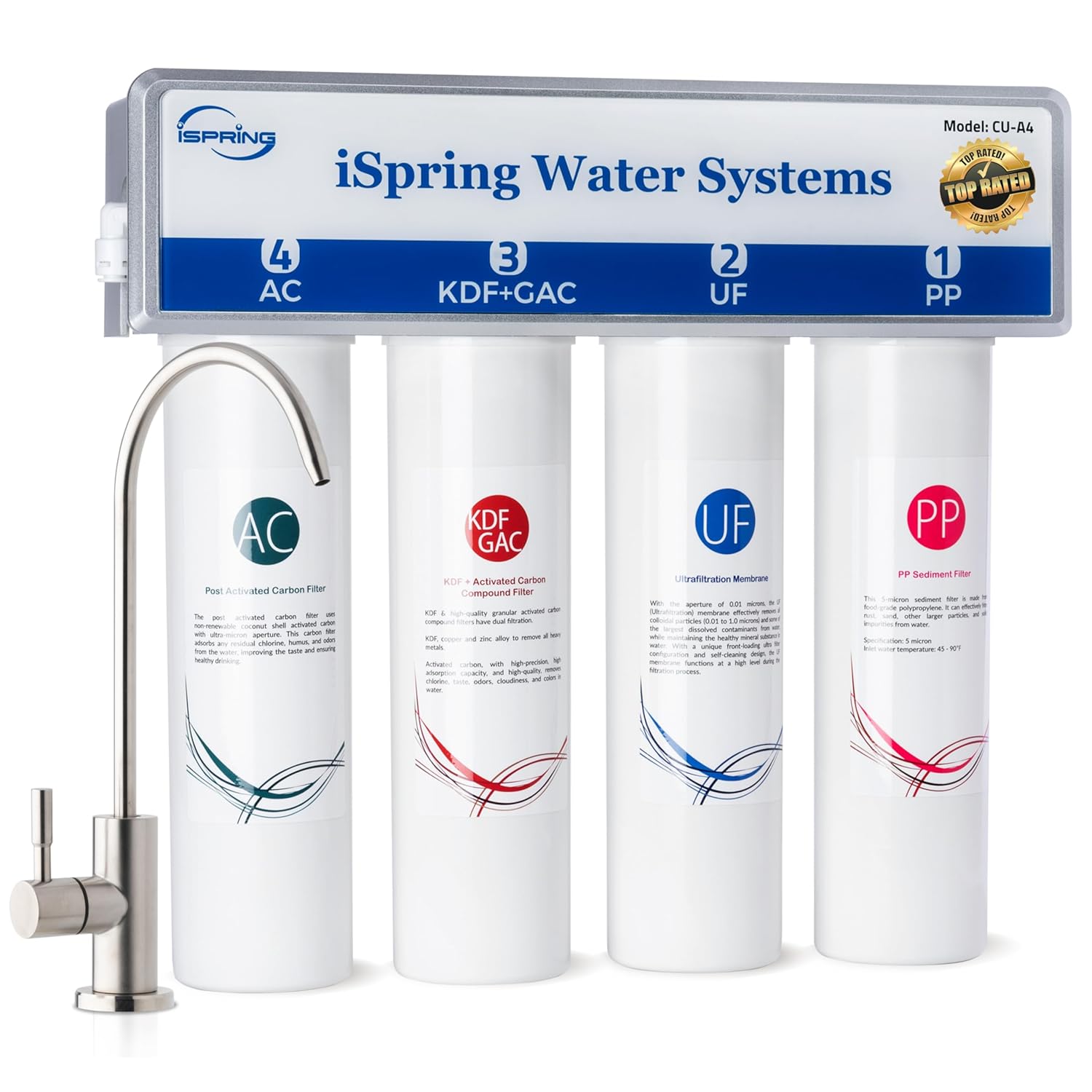 Best Value 4-StageiSpring CU-A4 4-Stage Under-Sink |
4.5out of 5 | Component-tested4-Stage |
Check price → |
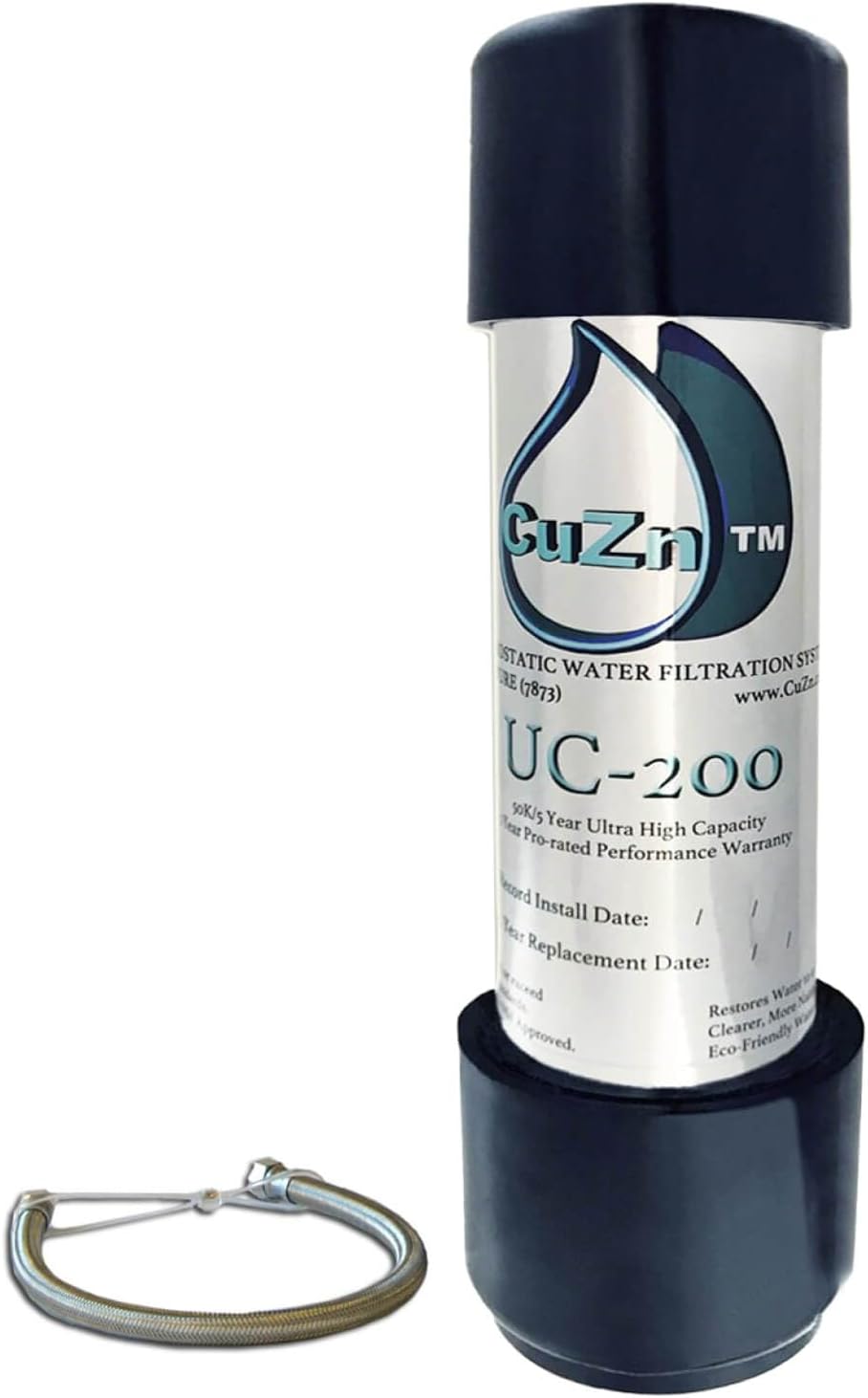 Best Long-LifeCuZn UC-200 Under Sink |
4.2out of 5 | NSF 42 ComponentsUp to 50,000 gal / 5 yr |
Check price → |
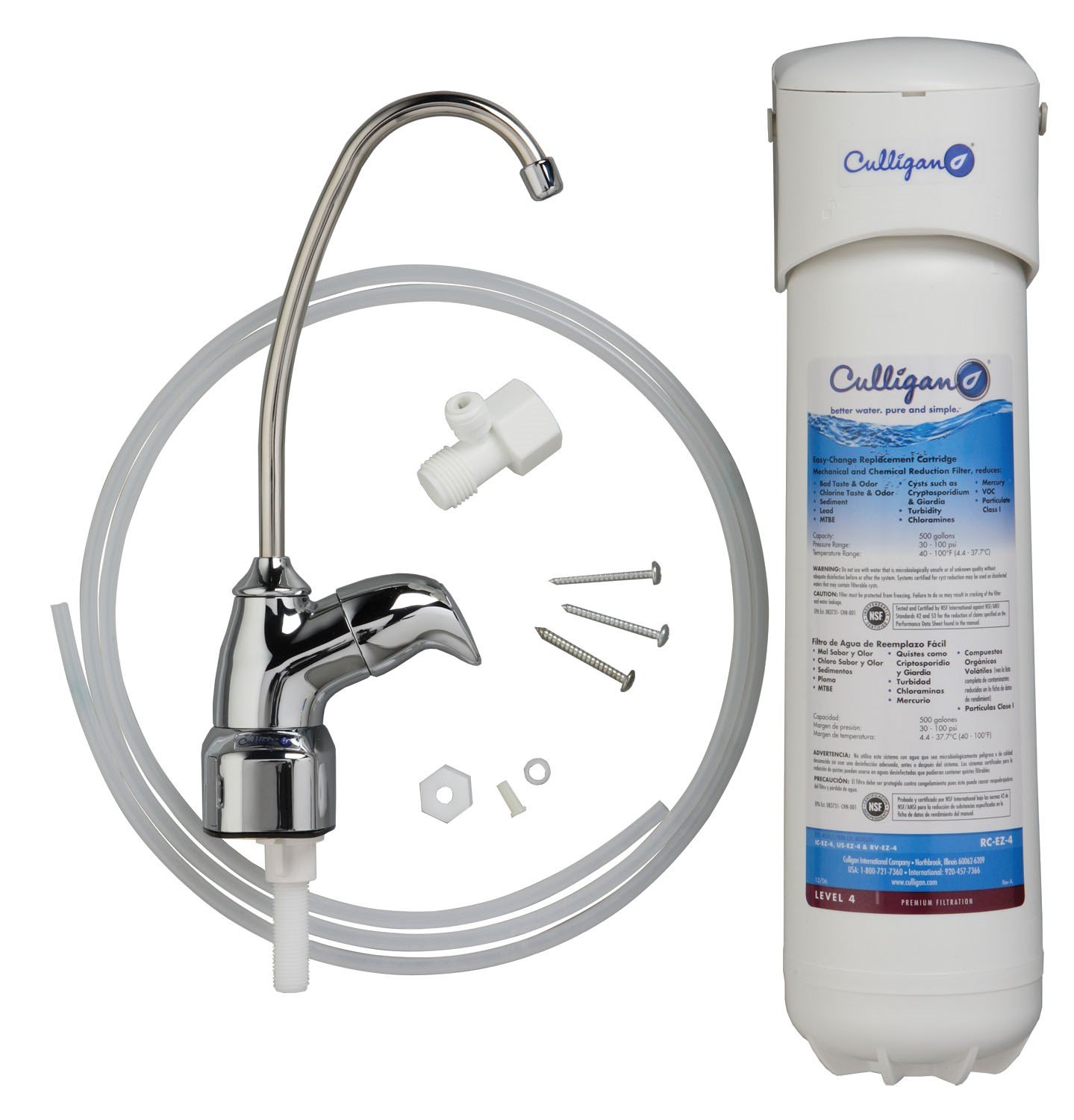 Best Big-BoxCulligan US-EZ-4 4-Stage Under-Sink |
4.3out of 5 | WQA Gold Seal (42/53/372)4-Stage |
Check price → |
Why an Under-Sink Filter (And When to Skip Reverse Osmosis)
Pitcher filters and faucet attachments have a real ceiling: they clog fast, most are certified only for chlorine and taste, and none reliably block the particle-size range that includes microplastics. Reverse osmosis solves that problem — but it also strips out the beneficial minerals (here is what that means for whether RO water is safe to drink), wastes 1.5 to 4 gallons for every gallon it produces, and needs a storage tank or an electrical outlet under the sink. For a lot of households on decent municipal water, RO is more than they need.
A modern under-sink carbon-block or ultrafiltration filter is the middle option. It installs at your cold-water line, feeds a dedicated (or inline) tap, and physically blocks contaminants with a sub-micron cartridge instead of a membrane. No waste water. No electricity. Minerals stay in the water. And it removes exactly the contaminants most municipal-water drinkers care about: microplastics, lead, chlorine, VOCs, PFOA/PFOS, and pharmaceuticals.
The catch is that the certification you need for microplastics is not the same one people quote for RO. Look for NSF/ANSI 401 (the "emerging contaminants" standard that covers the 0.5–1 micron range where drinking-water microplastics show up) alongside NSF/ANSI 42 (chlorine/taste), 53 (lead/cysts), and P473 (PFOA/PFOS). The picks below are ranked by how many of those they actually carry.
The certification to look for: NSF/ANSI 401 is the standard that covers the "incidental contaminants" range where microplastics live. Only two systems on this list are formally certified to 401 by a third-party lab (Aquasana AQ-5300+ and the direct-connect Woder line); the others rely on sub-micron carbon-block or 0.01-micron ultrafiltration that physically excludes microplastic-sized particles but does not carry the 401 seal. Both approaches work — the seal is just extra proof.
What Is the Best Under-Sink Water Filter?
The Aquasana AQ-5300+ Max Flow Claryum 3-Stage (~$239) is our top pick, because it is the only under-sink system in this price class certified to all four of the NSF/ANSI standards that matter here — 42, 53, 401 (where the microplastic claim sits), and P473 for PFOA/PFOS — and it reduces 99% of 77+ contaminants with no waste water. If budget is the deciding factor, the Frizzlife MK99 (usually under $140) delivers a 0.5-micron carbon block with a claimed 99.99% lead reduction. If your top concern is microplastics or bacteria, the Waterdrop TSU uses a 0.01-micron ultrafiltration membrane — the finest particle rejection here without going to reverse osmosis.
Do Under-Sink Filters Remove Microplastics?
The best ones do. Any under-sink filter with a sub-micron carbon block (0.5 microns or smaller) or a 0.01-micron ultrafiltration membrane physically blocks the vast majority of microplastic particles, since the smallest microplastics measured in drinking-water studies are around 1 micron. The Aquasana AQ-5300+ goes a step further with an NSF/ANSI 401 certification that specifically covers the "incidental contaminants" size range where drinking-water microplastics live. An under-sink filter is one of six approaches worth weighing; our guide to how to remove microplastics from water ranks them all, from reverse osmosis and distillation down to what boiling can and can’t do.
Are Under-Sink Filters Worth It?
For most households on municipal water, yes. An under-sink carbon-block or ultrafiltration filter removes microplastics, lead, chlorine, and PFOA/PFOS (the PFAS "forever chemicals") without wasting water or stripping the beneficial minerals that reverse osmosis removes — and cost per gallon runs from about $0.01 (CuZn UC-200) up to $0.30 (Aquasana). The main reasons to skip one are if you rent and cannot modify the plumbing (see our best countertop water filter for microplastics guide for the no-plumbing alternatives), or if your water needs full reverse osmosis to remove dissolved solids like arsenic or fluoride.
Quick Comparison: All 6 Under-Sink Filters
| System | Type | Micron rating | NSF certifications | Cartridge life | Price |
|---|---|---|---|---|---|
| Aquasana AQ-5300+ | 3-stage carbon block | 0.5 | 42, 53, 401, P473 | 600 gal / 6 mo | $$$ |
| Waterdrop TSU | Ultrafiltration + carbon | 0.01 (UF membrane) | 42 (components) | Up to 16,000 gal (UF) | $$ |
| Frizzlife MK99 | 2-stage carbon block | 0.5 | 42, 372 (components) | ~1,600 gal / 12 mo | $ |
| iSpring CU-A4 | 4-stage carbon | ~5 → 0.5 | Component-tested | ~12 mo / stage | $$ |
| CuZn UC-200 | KDF + carbon (inline) | N/A (adsorption) | 42 (components) | Up to 50,000 gal / 5 yr | $ |
| Culligan US-EZ-4 | 4-stage carbon | 0.5 | 42, 53, 372 (WQA) | ~500 gal / 6 mo | $ |
Price guide: $ under $150 · $$ $150–200 · $$$ $200+. Tap any pick below for today's Amazon price.
1. Aquasana AQ-5300+ Max Flow — Best Overall
Best Overall
The AQ-5300+ Max Flow is Aquasana's flagship under-sink drinking-water system, built around their proprietary Claryum three-stage cartridge. Stage one is a sediment pre-filter, stage two is a catalytic-carbon and ion-exchange block, and stage three is a sub-micron post-filter that finishes the job. Aquasana publishes third-party lab data showing it reduces 99% of 77+ contaminants — including 96% of chlorine and chloramines, 99.3% of lead, 99% of chromium-6, and 99% of PFOA/PFOS. Because it is a mechanical carbon-block filter, it uses zero waste water and does not need a storage tank or electricity.
Where it earns the top spot: it is the only system in this price class certified to all four of the microplastic-relevant NSF/ANSI standards — 42 (chlorine, taste, odor), 53 (lead, cysts, VOCs), 401 (pharmaceuticals, herbicides, and the particle-size range where microplastics live), and P473 (PFOA/PFOS). The dedicated brushed-nickel faucet is included, and Max Flow refers to the newer 0.72 gpm flow rate that fixes the slow-drip complaint on Aquasana's older AQ-5200.
The honest trade-offs: cartridge life is only 600 gallons (roughly 6 months for a family of four), which is short compared with the Waterdrop TSU or CuZn UC-200. That works out to about $0.30 per gallon of filtered water over the first year — not the cheapest cost per gallon here, but the certification story is the reason to pay for it.
Buyers with well or hard-water homes repeatedly say water tastes noticeably better within a day — many describe it as "bottled-water clean" out of the dedicated tap. Owners with basic DIY skills report installs in 30 to 60 minutes and appreciate the twist-off cartridge changes. The honest gripes: the 6-month cartridge cycle is short and replacements are Aquasana-only (no generics), the included faucet is plastic-lined at the base and a few owners have swapped it for a metal upgrade, and if your incoming water pressure is under 40 psi the flow slows down noticeably as the filter loads up.
The only under-sink filter here that carries all four NSF certifications for microplastics, lead, PFOA/PFOS, and chlorine — no waste water, no electricity, no storage tank.
Why it's safe: Independently certified by NSF/ANSI to reduce 99% of 77+ contaminants — including 99.3% of lead and 99% of PFOA/PFOS — through a sub-micron catalytic-carbon block that leaves beneficial minerals in the water.
Check Today’s Price on Amazon →Amazon prices change daily — tap to see today's price and any active discount.
- Free delivery & returns for Prime members
- Sold & shipped by Amazon
- Thousands of verified reviews
2. Waterdrop TSU Ultrafiltration — Best for Microplastics + Bacteria
Best Ultrafiltration
The Waterdrop TSU pairs a 5-micron sediment/carbon pre-filter with a proprietary 0.01-micron ultrafiltration (UF) hollow-fiber membrane and a post-carbon polishing stage. That 0.01-micron rating is 50× tighter than a typical 0.5-micron carbon block — small enough to physically block bacteria (E. coli, cryptosporidium cysts) and every microplastic ever measured in drinking-water studies, which bottom out around 1 micron. Unlike RO, the UF membrane does not strip dissolved minerals, so calcium, magnesium, and fluoride pass through and the water still tastes like water.
The membrane is rated for up to 16,000 gallons — roughly 3 years for a typical family — which makes long-term cost per gallon far lower than the Aquasana. Twist-and-lock cartridge changes take under 30 seconds and no tools. Installation is standard under-sink with a dedicated faucet included.
The honest trade-offs: Waterdrop's certifications are at the component level (NSF 42-tested materials) rather than a full system-level NSF/ANSI 401 seal like the Aquasana, so if certification-on-paper matters most to you, the Aquasana still wins. Also, UF alone does not reduce lead as thoroughly as a lead-certified carbon block — if your home is on a lead service line, the Aquasana or Frizzlife MK99 (both lead-certified) is the safer buy.
Owners rave about how quickly they can swap cartridges — most describe it as one twist, no tools, no water shutoff needed thanks to the built-in shutoff valves. Well-water and older-plumbing users say the difference in taste and clarity is dramatic. The honest gripes: the plastic cartridge housing can develop a hairline seep at the top O-ring after a couple of years if you overtighten during installation, and Waterdrop's marketing headline of "1,000+ contaminants removed" is broader than the third-party certifications actually cover — the real proof point is the UF membrane's particle size, not the marketing.
A 0.01-micron UF membrane physically blocks microplastics and bacteria — 50× tighter than a standard carbon block, with 3-year cartridge life and no waste water.
Why it's safe: The ultrafiltration membrane's pore size is smaller than any microplastic ever measured in a drinking-water study — so particles are physically excluded, not just adsorbed onto carbon.
Check Today’s Price on Amazon →Amazon prices change daily — tap to see today's price and any active discount.
- Free delivery & returns for Prime members
- Sold & shipped by Amazon
- Thousands of verified reviews
3. Frizzlife MK99 — Best Budget
Best Budget
The Frizzlife MK99 is a compact two-stage under-sink filter that punches well above its price. Stage one is a sediment/pre-carbon combo, stage two is a 0.5-micron catalytic-carbon block. Frizzlife publishes third-party lab data claiming 99.99% reduction of lead, 99% of chlorine, and reduction across mercury, VOCs, and taste/odor. The components carry NSF/ANSI 42 (chlorine, taste, odor) and NSF/ANSI 372 (lead-free materials) certifications; it does not have the full system-level 401 seal that the Aquasana does.
The installation story is why buyers love it. The compact housing takes up roughly half the under-sink space of the Aquasana, the twist-off cartridge design lets you change filters in under a minute without shutting off the water, and the included dedicated faucet installs through a standard 3/8" sink deck hole. Cartridge life is roughly 1,600 gallons or 12 months — long enough that annual filter cost is under $60, which is materially cheaper per gallon than the Aquasana.
The honest trade-offs: without a system-level NSF 53 or 401 certification, you're relying on Frizzlife's own third-party lab reports rather than an independent seal. That's still meaningful evidence, but it is a lower bar than Aquasana's certifications. And because it's a 2-stage system, it won't handle heavy sediment loads (like private-well water) without an added pre-filter.
Owners consistently call the install and cartridge changes the easiest they've done — 30–45 minutes on install, well under a minute per swap. Water taste and smell improve immediately, especially for anyone on chlorinated municipal water. Honest downsides that repeat: the compact filter housing means the sub-6-month timeline can show up in high-sediment homes even though the rated life is a year, and a small share of owners report the plastic faucet base loosening after a year and needing a re-tighten. Replacement cartridges are Frizzlife-branded (no generics), but they're inexpensive.
A 0.5-micron carbon block with a claimed 99.99% lead reduction for under $140 — the honest budget entry into sub-micron under-sink filtration.
Why it's safe: A 0.5-micron catalytic-carbon block physically blocks particles larger than most drinking-water microplastics, plus published third-party lead and chlorine reductions in the 99%+ range.
Check Today’s Price on Amazon →Amazon prices change daily — tap to see today's price and any active discount.
- Free delivery & returns for Prime members
- Sold & shipped by Amazon
- Thousands of verified reviews
4. iSpring CU-A4 4-Stage — Best Value 4-Stage
Best Value 4-Stage
The iSpring CU-A4 is the four-stage step-up from the Frizzlife MK99. Stage 1 is a 5-micron polypropylene sediment pre-filter (catches rust, silt, sand), stage 2 is granular activated carbon (GAC) for chlorine and taste, stage 3 is a 5-micron carbon block (CTO) for VOCs and finer particulates, and stage 4 is a post-carbon polishing filter. That staged design gives each contaminant class its own dedicated media rather than asking one carbon block to do everything — which is why cartridge life on each stage stays reasonable even on higher-load water.
iSpring is one of the oldest under-sink filter brands in the U.S. and its cartridges use standard 10" housings, so replacements are easy to source (including compatible generics). The dedicated faucet, 1/4" tubing, and quick-connect fittings all come in the box. DIY install typically takes an hour.
The honest trade-offs: no full-system NSF/ANSI 401 seal — like the Frizzlife, you're trusting component-level testing rather than an independent system certification. The 5-micron final rating is looser than the Aquasana's 0.5-micron, so it is not the pick if your top concern is microplastic-sized particles. And four cartridges means four things to replace annually.
Long-time iSpring owners like that they can source cartridges from anywhere and that replacements are inexpensive compared with proprietary brands. Water taste and clarity improve immediately, especially in older homes with lots of pipe scale or chlorine. The honest gripes: with four stages, the whole housing is physically larger than a compact 2-stage system and can crowd smaller under-sink cabinets, and a few owners report that the plastic housings show hairline stress cracks after 3–4 years and need replacement — iSpring's support does send replacements under warranty in most reported cases.
Four discrete stages (sediment, GAC, carbon block, post-carbon) at a 2-stage price — the value pick if your water needs more than one carbon block can handle.
Why it's safe: Each contaminant class gets its own dedicated media instead of loading a single carbon block, and cartridge components are individually tested to lead-free NSF/ANSI 372 standards.
Check Today’s Price on Amazon →Amazon prices change daily — tap to see today's price and any active discount.
- Free delivery & returns for Prime members
- Sold & shipped by Amazon
- Thousands of verified reviews
5. CuZn UC-200 — Best Long-Life & No-Drill
Best Long-Life
The CuZn UC-200 solves two annoyances with most under-sink filters. First, it inlines into your cold-water supply and sends filtered water through your existing kitchen faucet — no dedicated tap, no drilling into stainless steel or granite, no hole to cover if you ever remove it. Second, its FlexPlus 3-stage cartridge combines KDF-55 (a copper-zinc alloy that is bacteriostatic and reduces chlorine, heavy metals, and hydrogen sulfide), coconut-shell activated carbon (for chlorine, VOCs, taste, and odor), and a micro-sediment layer into a single canister rated for up to 50,000 gallons or 5 years — the longest cartridge life on this list by an order of magnitude.
The bacteriostatic KDF layer matters if your incoming water has a chlorine smell or if you're on a lower-flow system where bacterial growth in the filter housing is a real concern; KDF actively suppresses it. And because the cartridge is a single unit, filter changes are one twist, once every few years, with no risk of installing a stage in the wrong order.
The honest trade-offs: CuZn does not publish a specific micron rating — the media works by adsorption more than mechanical particle exclusion, so it is not the pick if your top concern is microplastic-sized particles (choose the Aquasana or the Waterdrop TSU for that). And because it inlines with your existing faucet, hot-water taps still get unfiltered water; you get filtered water only from the cold side.
Renters and people with newer kitchens rave about not having to drill their sink — the install is described as "connect two hoses, done." Owners who reached the 4-5 year cartridge cycle say they're delighted to have essentially forgotten about the filter after the initial install. Water taste and chlorine smell improvements are noted immediately. Honest downsides: because there's no dedicated faucet, filter status is invisible — you have to remember when you installed it — and CuZn recommends periodically running hot water briefly to prevent stagnation. A minority of owners report the housing needing a re-tighten after a year.
Inline — no dedicated faucet, no drilling — with cartridge life up to 50,000 gallons or 5 years. Best if you want a filter you install once and mostly forget.
Why it's safe: KDF-55 bacteriostatic media suppresses microbial growth inside the filter itself, and coconut-shell activated carbon adsorbs chlorine, VOCs, and taste/odor contaminants over the full 5-year cycle.
Check Today’s Price on Amazon →Amazon prices change daily — tap to see today's price and any active discount.
- Free delivery & returns for Prime members
- Sold & shipped by Amazon
- Thousands of verified reviews
6. Culligan US-EZ-4 — Best Big-Box Availability
Best Big-Box
Culligan has been in U.S. household water treatment since 1936, and the US-EZ-4 is its mainstream under-sink product. It is a four-stage design with a sediment pre-filter, GAC, carbon block, and post-carbon polishing stage, matching the iSpring CU-A4 on structure but at a somewhat lower price. WQA Gold Seal certifications cover chlorine taste and odor (NSF/ANSI 42), lead and cyst reduction (NSF/ANSI 53), and lead-free materials (NSF/ANSI 372). The dedicated faucet is included.
The real advantage is availability. Replacement cartridges are sold at every major hardware and big-box retailer in the U.S. — you don't have to remember to reorder online, and if a cartridge fails you can drive somewhere and buy the replacement within an hour. For anyone who has been burned by "the filter my mom bought online is discontinued now," that matters.
The honest trade-offs: the certifications, while real, don't cover the microplastic-relevant NSF/ANSI 401 or PFOA/PFOS's P473 — so it's a step back from the Aquasana on the specific contaminants this site was built for. And cartridge life is on the shorter side of the pack at roughly 500 gallons or 6 months, so per-gallon cost over 5 years is higher than the CuZn or the Waterdrop TSU.
Owners repeatedly cite the availability of replacement cartridges as the reason they picked Culligan over cheaper competitors — "I can walk into any hardware store." The EZ-Change quarter-turn cartridge design is praised for taking under a minute with no tools and no water shutoff. Honest downsides that repeat: the chrome faucet finish shows water spots more than the brushed finishes on other picks, and a small share of owners report the housing dripping slightly at the top O-ring within the first year if it wasn't seated perfectly on install — Culligan's warranty support is generally responsive.
WQA-certified 4-stage filtration with replacement cartridges stocked at every major U.S. hardware chain — the easiest system on this list to keep supplied long-term.
Why it's safe: WQA Gold Seal certified to NSF/ANSI 42 (chlorine), 53 (lead and cysts), and 372 (lead-free materials) — the same independent-testing bar as NSF-certified systems.
Check Today’s Price on Amazon →Amazon prices change daily — tap to see today's price and any active discount.
- Free delivery & returns for Prime members
- Sold & shipped by Amazon
- Thousands of verified reviews
Get the full Plasticproof guide
Water is step one. The complete guide covers kitchen, bedroom, air, and baby — every swap that matters.
Get the free guideBuyer's Guide: How to Choose an Under-Sink Water Filter
Under-sink filter vs pitcher vs reverse osmosis
Pitcher and faucet filters (Brita, PUR, ZeroWater) are cheap and require no plumbing, but the vast majority are certified only to NSF/ANSI 42 for chlorine and taste. They clog quickly, do not have the residence time to reduce lead reliably, and the ~5-micron rating on most cartridges is not tight enough to block the smallest microplastics. Fine as a stopgap; not a long-term microplastics answer. See whether Brita actually removes microplastics for the specific numbers.
Under-sink carbon-block or ultrafiltration filters (this list) install once, feed a dedicated or inline tap, and are physically tight enough at the sub-micron level to block microplastics while leaving the beneficial minerals in the water. No electricity, no waste water, no storage tank. For most households on decent municipal water who want to remove microplastics, lead, chlorine, and PFOA/PFOS without over-engineering, this is the right category.
Reverse osmosis goes one step further by using a 0.0001-micron membrane that strips essentially every dissolved solid — including fluoride, arsenic, and TDS. It is the right choice if you have well water, elevated arsenic or nitrate, or your local water quality report shows contaminants an under-sink carbon system doesn't cover. The cost is 1.5–4 gallons of drain water for every gallon it produces, and a remineralization stage or mineral drops if you want the water to taste like water. For head-to-head sizing between them, see Brita vs Berkey vs reverse osmosis for microplastics. And if the goal is to treat every tap in the house rather than a single sink, a point-of-entry system is the alternative — compare the field in our best whole house water filters guide.
Certifications that matter (for this category specifically)
- NSF/ANSI 42 — Aesthetic reduction: chlorine, taste, odor. This is the easiest bar; every serious filter meets it.
- NSF/ANSI 53 — Health-effects reduction: lead, cysts (cryptosporidium/giardia), VOCs, chromium-6, mercury. This is the one that matters for older plumbing and municipal systems with known lead-service-line risk.
- NSF/ANSI 401 — Emerging contaminants: pharmaceuticals, herbicides, and — critically — the "incidental contaminants" size range where drinking-water microplastics live. This is the seal that matters most for the reason you're on this page.
- NSF/ANSI P473 — Supplementary standard specifically for PFOA and PFOS ("forever chemicals").
- NSF/ANSI 372 — Lead-free materials (the cartridges themselves cannot leach lead).
The Aquasana AQ-5300+ Max Flow is the only pick on this list carrying full system-level certifications to 42, 53, 401, and P473. Other systems on the list rely on component-level testing (individual cartridges tested to NSF standards) — meaningful evidence but a lower bar than a system-level seal.
Cost per gallon (not sticker price) is the real number
Sticker price is only part of the story. The number to compare is cost per gallon of filtered water — sticker plus annual cartridge cost, divided by cartridge-rated life over 5 years:
- CuZn UC-200 — best per-gallon cost by a large margin thanks to the 5-year cartridge. Roughly $0.01 per gallon amortized.
- Waterdrop TSU — very low per-gallon cost because the UF membrane lasts up to 3 years. Roughly $0.03 per gallon.
- Frizzlife MK99 — cheap sticker and 12-month cartridges make it around $0.10 per gallon.
- iSpring CU-A4 / Culligan US-EZ-4 — four cartridges per year puts them around $0.12–0.15 per gallon.
- Aquasana AQ-5300+ — the highest per-gallon at around $0.30 because the cartridges are Aquasana-only and rated for 600 gallons. You pay for the certifications.
Install: DIY or plumber?
Every filter on this list is DIY-installable in 30 to 60 minutes if you can turn a wrench and are comfortable working under the sink. The hardest part is usually drilling a hole for the dedicated faucet — many people repurpose an existing soap-dispenser opening, which skips the drilling. If your sink is stainless steel and you don't want to drill it, choose the CuZn UC-200 (inline, uses your existing faucet). Professional installation runs $100–$200 if you'd rather.
Our recommendation: For most households, the Aquasana AQ-5300+ Max Flow is the pick — the NSF certifications are the strongest of anything in this class and it removes exactly what people concerned about microplastics, lead, and PFOA/PFOS actually want removed. If budget is the deciding factor, get the Frizzlife MK99. If your top concern is microplastics + bacteria and you have well water, get the Waterdrop TSU. If you can't drill your sink, get the CuZn UC-200.
Frequently Asked Questions
Sources & further reading
- NSF International — NSF/ANSI 401 Emerging Compounds/Incidental Contaminants standard.
- NSF International — NSF/ANSI 53 Drinking Water Treatment Units — Health Effects.
- Water Quality Association — Gold Seal Product Certification program.
- Cox et al., Environmental Science & Technology (2019) — Human Consumption of Microplastics.
- Qian et al., PNAS (2024) — Rapid single-particle chemical imaging of nanoplastics in bottled water.