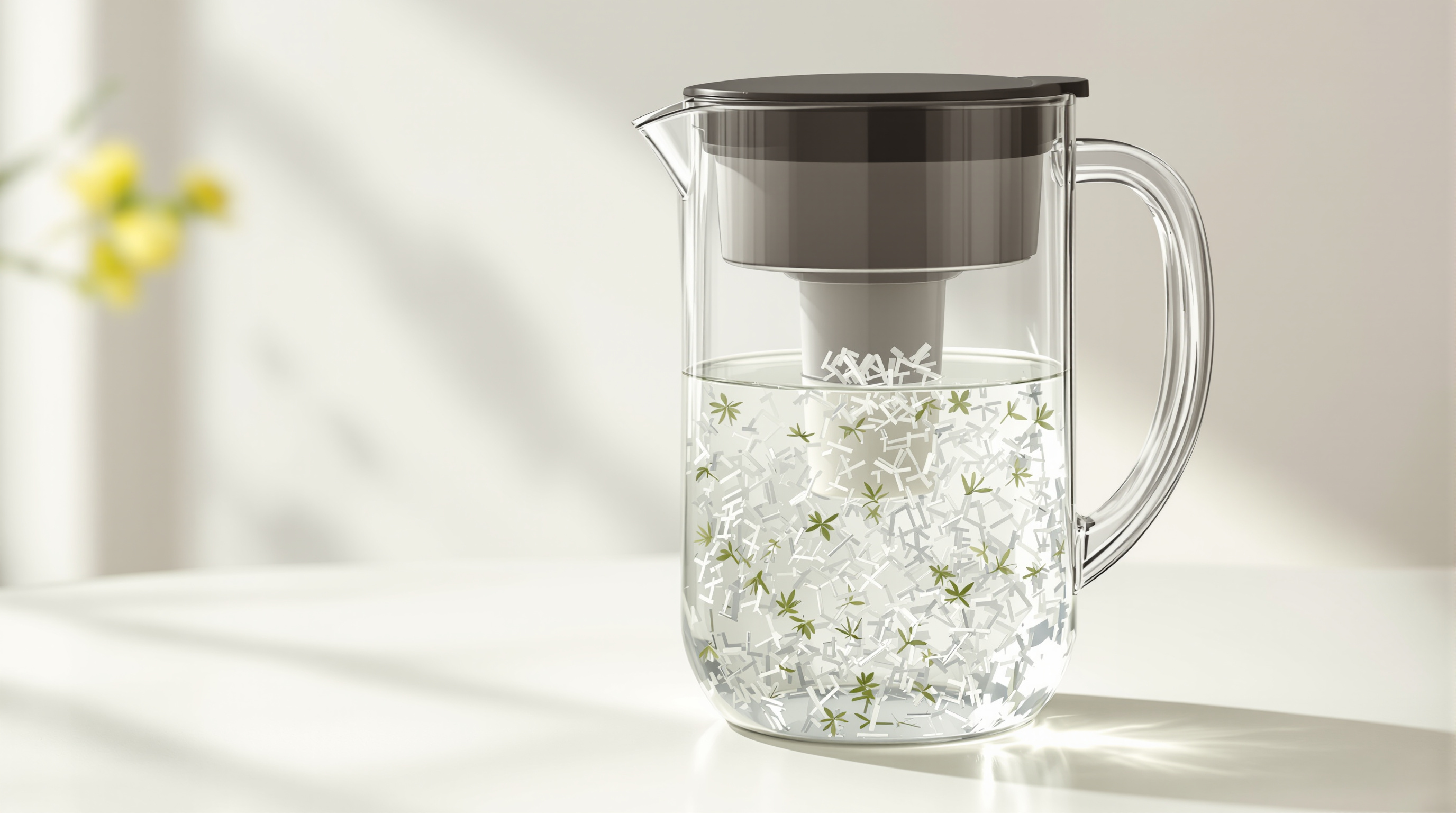
You can test your tap water for microplastics at home. DIY methods using fine filter paper can detect large particles (>20 µm) with a basic microscope. For smaller particles and polymer identification, certified mail-in lab kits using Raman or FTIR spectroscopy are more reliable — expect to pay $60–$200 for meaningful data. Whatever your result, a reverse osmosis or 1-micron carbon block filter is the most effective response to elevated levels.
Microplastics have been detected in tap water on every continent. A 2017 Orb Media analysis found plastic fibers in 83% of tap water samples from 14 countries. U.S. municipal water averaged 9.2 particles per liter in that study — and newer methods using better detection technology have found the counts can be dramatically higher. The particles are real, they’re in most water supplies, and they’re small enough to pass through many conventional treatment steps.
But knowing that microplastics exist in tap water as a category is different from knowing what’s in your water at your specific address. A test gives you a baseline, confirms whether a filter is working, and sometimes reveals contamination hotspots. Here’s how to choose the right approach.
What can a home microplastic test actually tell you?
Any test has a detection floor — the smallest particle or lowest concentration it can register. For home testing, that floor is high. The best DIY methods detect particles larger than about 20–50 micrometers. Standard coffee filter paper has pores around 10–20 micrometers; most airborne and waterborne microplastics measured in studies are smaller than this, down to 1 micrometer or below.
Lab kits overcome this limitation with bench-scale microscopy and spectroscopy. Raman spectroscopy can identify polymers down to 1 µm. Fourier-transform infrared spectroscopy (FTIR) goes to around 10 µm. These techniques also tell you what kind of plastic is present, which matters because polyethylene particles carry different chemical burdens than PVC or polystyrene.
What neither method tells you is the health impact of your specific count. The science on dose-response for microplastic ingestion in humans is still evolving. A test is most useful for two purposes: (1) establishing a baseline before and after installing a filter, and (2) identifying whether your source water is unusually contaminated relative to published averages.
What are the DIY methods for testing microplastics in water at home?
A DIY test can be done for under $20 with items available at a lab supply retailer or a well-stocked hardware store. The basic procedure:
- Get fine filter paper rated to 0.45–1 micron (Whatman Grade 1 is widely available and captures particles >11 µm). Standard coffee filters capture larger particles but miss most microplastics.
- Collect a large sample — 1–2 liters of tap water from your kitchen faucet, collected in a glass or stainless container (never plastic, which would contaminate the sample).
- Filter slowly through the filter paper into a clean glass funnel, then let the filter paper dry completely in a covered container to avoid airborne fiber contamination.
- Examine under magnification — a 10–40x loupe or basic field microscope. You’re looking for colorful synthetic-looking fibers or fragments. Natural fibers will typically be irregular and earthy-colored; synthetic microplastics often appear bright, uniform in color, and may have sharp angular edges.
Visual inspection cannot distinguish a blue polyester fiber from a blue cotton fiber. Only spectroscopy can. A positive DIY test is a meaningful signal; a negative one does not mean your water is clean — your filter may simply not be catching what’s there. Treat DIY results as directional, not definitive.
Which lab kits test for microplastics in water?
Several certified environmental labs now offer consumer-accessible mail-in kits. The field has expanded significantly since 2022 as public interest drove investment in scalable detection methods. Here are the main options:
SimpleWater’s Tap Score is one of the most comprehensive consumer water tests available. The Advanced City Water panel includes microplastic particle count and polymer identification using Raman spectroscopy. You receive a full report with particles-per-liter, size distribution, and detected polymer types. Results in 5–10 business days.
Buyers rate Tap Score highly for a detailed, plain-English report that reads more clearly than a raw lab sheet, and most get results inside the promised five business days. Reviewers give it about four stars across roughly 180 Trustpilot reviews. The honest downsides: it costs more than the strip kits and single-parameter tests sold on Amazon, the price climbs quickly as you add analytes, and a few specialized panels take eight to twelve days rather than five. For a one-time picture of what is in your water, buyers still tend to call it worth the money.
Entry-level consumer kits from labs such as Underwriters Laboratories-certified services provide particle counts (not polymer ID) for a lower price. Good for a before/after filter comparison. Filter paper and sample bottles are included; you mail the sample and receive a PDF report.
Independent reviewers and water labs are blunt about entry-level home kits: as of 2026 no at-home test reliably confirms microplastics. A filter-and-microscope kit shows you that particles exist, but it cannot tell whether a particle is plastic, sand, fiber, mineral, or biological debris, and the dye-staining methods some kits use have high false-positive rates. Buyers who want an actual particle count and polymer identification are pointed toward a mail-in lab that runs Raman or FTIR analysis instead. Treat a low-cost kit as a rough before-and-after screen, not proof of what is in your water.
| Method | Detection Limit | Polymer ID? | Cost | Best For |
|---|---|---|---|---|
| DIY (coffee filter + loupe) | >100 µm | No | ~$5 | Rough visible-particle check |
| DIY (Whatman filter paper) | >11 µm | No | ~$15–$20 | Low-budget baseline, directional only |
| Entry-level lab kit | >1–5 µm | No | $60–$80 | Before/after filter comparison |
| Advanced lab kit (Raman) | >1 µm | Yes | $150–$200 | Full baseline, polymer risk profile |
How accurate are DIY microplastic tests compared to lab analysis?
In studies that compared DIY filtration against certified lab methods on the same water sample, DIY methods consistently undercounted — often by a factor of 10x or more. The gap comes from three sources: filter pore size (DIY filters miss smaller particles), visual misidentification (natural fibers counted as plastic, and vice versa), and sample contamination from airborne fibers during the collection and drying steps.
A 2021 study in Environmental Science & Technology found that airborne fiber contamination alone could account for 25–40% of particles found on control blanks — filter papers exposed to the same lab air but receiving no water. In a typical home environment, contamination rates would likely be higher. This means a positive DIY finding is meaningful (something is clearly present), but the count itself should not be taken literally.
"A DIY test can tell you ‘there’s something here.’ Only a certified lab can tell you how much, what polymer, and what size distribution — the three things that matter for a filter decision."
What microplastic levels in water should concern you?
There is currently no EPA regulatory limit for microplastics in drinking water. The WHO published a 2019 report concluding that current microplastic levels in drinking water do not appear to pose a health risk based on evidence at the time, while noting the evidence base was insufficient for firm conclusions. Subsequent research has moved the needle toward greater concern, particularly for nanoplastics (sub-1 µm) and for people with higher-than-average exposure.
As a practical benchmark: the most contaminated tap water samples published in peer-reviewed literature exceed 1,000 particles per liter. Most treated municipal water in the U.S. and Europe falls in the range of 5–100 particles per liter when tested with fine-detection methods. Well water and surface-sourced water in areas with heavy agricultural or industrial activity can be significantly higher.
If your lab test comes back above 100 particles per liter, that’s a meaningful signal to act on. If it comes back below 20, you’re likely near the average for treated municipal water — installing a good filter is still worthwhile given the cumulative nature of daily exposure, but you’re not facing an acute contamination situation.
What should you do after testing — especially if levels are elevated?
The test is only the diagnostic step. The actionable response is filtration. Here’s what the evidence supports:
- Reverse osmosis (RO): The gold standard. RO membranes have a pore size of 0.0001 micron — far smaller than any microplastic. Independent testing consistently shows 99%+ removal. Our best RO system roundup covers under-sink models for every budget.
- Certified 1-micron carbon block filters: Filters rated to 1 micron (like the Berkey Black Elements or countertop units with NSF/ANSI 53 certification) remove particles above 1 micron. They don’t match RO’s sub-micron performance but are significantly more effective than pitcher filters.
- Standard pitcher filters (Brita, Pur, ZeroWater): Effective at chlorine, heavy metals, and some VOCs, but not specifically rated for microplastic removal. Their activated carbon is granular, not block-pressed, with pore sizes that allow small particles through. See our Brita vs Berkey vs RO comparison for the full breakdown.
A full comparison of certified filters by microplastic removal rate is in our best water filters for microplastics guide. It covers countertop, under-sink, and whole-house options with third-party test data for each.
Ready to filter, not just test?
Testing tells you what’s there. A certified filter removes it. Our guide covers every category — RO, carbon block, gravity — with particle-removal data for each.
Should you test your well water differently than tap water?
Yes. Municipal tap water has already been treated — filtered and chlorinated — before it reaches your faucet. Well water draws directly from groundwater aquifers with no treatment step, which means it can carry higher loads of agricultural plastics (from plastic mulch film breakdown), septic-system-related particles, and road runoff-derived fragments.
If you’re on well water, a full-panel lab test is more justified than for municipal water. Beyond microplastics, well water should be tested annually for nitrates, bacteria, and heavy metals — the Tap Score Advanced Well Water test bundles all of these. Given that microplastics in tap water are higher in some rural regions, this isn’t paranoia; it’s standard practice in communities near large-scale farming or manufacturing.
How often should you retest?
Once you’ve established a baseline and installed a filter, a retest 3–6 months later confirms the filter is performing as rated. After that, annual testing is reasonable. Key retesting triggers:
- You move to a new address or switch from municipal to well water (or vice versa).
- Your filter’s cartridge is approaching or past its rated replacement date.
- You notice a change in water taste, smell, or appearance.
- There is a local flooding event or construction activity near your water source.
- You start using the water for infant formula, and want the highest available confidence level.
Want the Full Home Protection Guide?
Water is one of dozens of daily plastic touchpoints. The Complete Plasticproof Guide covers every room — kitchen, nursery, bathroom, bedroom — with 80+ product recommendations backed by 47+ studies.
Frequently Asked Questions
Yes, with caveats. DIY filter-paper methods catch particles larger than about 20 micrometers and give a directional sense of contamination. For smaller particles and polymer identification, certified mail-in lab kits using Raman spectroscopy detect particles down to 1 micron and tell you what polymer types are present. A negative DIY test doesn't mean clean water — it may just mean your filter isn't fine enough to see what's there.
For the most complete data, Tap Score's Advanced City Water test uses Raman spectroscopy to detect particles down to 1 micron and identifies polymer types. For a lower-cost particle count (without polymer ID), entry-level mail-in kits from certified environmental labs run $60–$80. For a rough DIY check, Whatman filter paper (Grade 1) and a 40x loupe costs under $20 but cannot confirm what it catches is plastic.
Studies vary widely depending on detection method. The 2017 Orb Media study found U.S. tap water averaged 9.2 particles per liter. More recent research using finer detection finds 5–50 particles per liter in most treated municipal water. Well water in agricultural areas can be considerably higher. Your result will depend on your source water, treatment technology, and household plumbing age.
A good lab test gives you: (1) particle count per liter, (2) size distribution, and (3) polymer types. Polymer ID matters because different plastics carry different chemical additives — PVC and polystyrene particles are more concerning than polyethylene on the additive front. Count alone tells you exposure volume; polymer breakdown tells you which chemical families may be leaching.
Yes, with the right filter. Reverse osmosis removes 99%+ of microplastics because the membrane pore size (0.0001 micron) is far smaller than any microplastic particle. Certified 1-micron carbon block filters also remove particles above 1 micron effectively. Standard pitcher filters (Brita, Pur) are not specifically rated for microplastic removal and have larger pore sizes that allow smaller particles through. Our guide explains exactly what a Brita filter does and doesn't remove.
DIY methods are directionally useful but consistently undercount — often by 10x or more — compared to certified lab analysis. The main gaps are filter pore size (misses small particles), visual misidentification (can't distinguish plastic from organic fibers), and airborne contamination during collection and drying. A positive result is meaningful; a negative result is not a clean bill of health.
Sources
- Carney Almroth B, et al. "Quantifying shedding of synthetic fibers from textiles; a source of microplastics released into the environment." Nordic Council of Ministers, 2018.
- Kosuth M, Mason SA, Wattenberg EV. "Anthropogenic contamination of tap water, beer, and sea salt." PLOS ONE, 2018.
- WHO. "Microplastics in Drinking-Water." World Health Organization, 2019.
- Schymanski D, et al. "Analysis of microplastics in water by micro-Raman spectroscopy: Release of plastic particles from different packaging into mineral water." Water Research, 2018.
- Pivokonsky M, et al. "Occurrence of microplastics in raw and treated drinking water." Science of the Total Environment, 2018.
- Mintenig SM, et al. "Identification of microplastic in effluents of waste water treatment plants using focal plane array-based micro-Fourier-transform infrared imaging." Water Research, 2017.
- Qian N, et al. "Rapid single-particle chemical imaging of nanoplastics by SRS microscopy." PNAS, 2024.