The short answer
For the water you feed a baby, choose reverse osmosis first. The AquaTru Countertop RO is our overall pick — it removes lead, nitrate, arsenic and PFAS to below detection, sits on the counter with no plumbing, and holds NSF certifications 42, 53, 58 and 401. If you can plumb one in, the tankless Waterdrop G3P600 handles a high-volume household; the APEC ROES-50 is the sub-$200 permanent option. For the strictest removal on iffy water, the Megahome distiller boils tap water to steam and condenses it into a glass carafe. For a small-space renter, the Clearly Filtered pitcher publishes lab data on 365+ contaminants including PFAS and lead; the Epic Pure pitcher is the budget alternative; and ZeroWater gets tap water to near-zero TDS if nitrate is your main worry. Whichever you use, boil the finished water briefly for babies under three months.
Quick Navigation
- What is the safest water filter for baby formula?
- Is tap water safe for baby formula?
- The 4 contaminants that actually matter for infants
- Which filter technology fits which parent?
- Quick comparison: all 7 formula-safe filters
- Best overall: AquaTru Countertop RO
- Most complete: Megahome Distiller
- Best pitcher (lab-tested): Clearly Filtered
- Best under-sink RO: Waterdrop G3P600
- Best value under-sink RO: APEC ROES-50
- Best budget pitcher: Epic Pure
- Best for TDS & nitrate: ZeroWater 10-Cup
- Buyer's guide
- FAQ
Compare all 7 picks
Every pick side by side — tap a name to jump to the full review, or check today's price.
| Pick | Rating | Why it wins | |
|---|---|---|---|
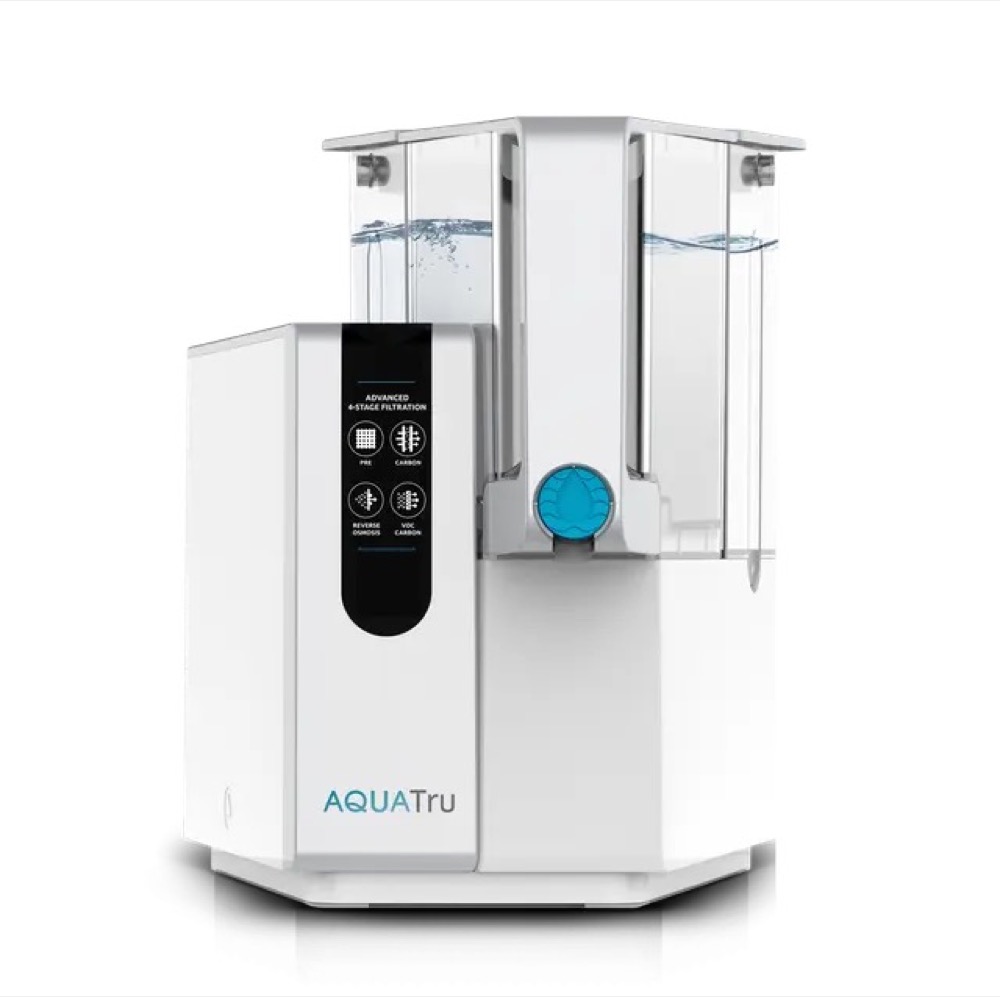 Best OverallAquaTru Countertop Reverse Osmosis Purifier |
4.7out of 5 | NSF 42/53/58/401Removes lead, nitrate, arsenic, PFAS |
Check price → |
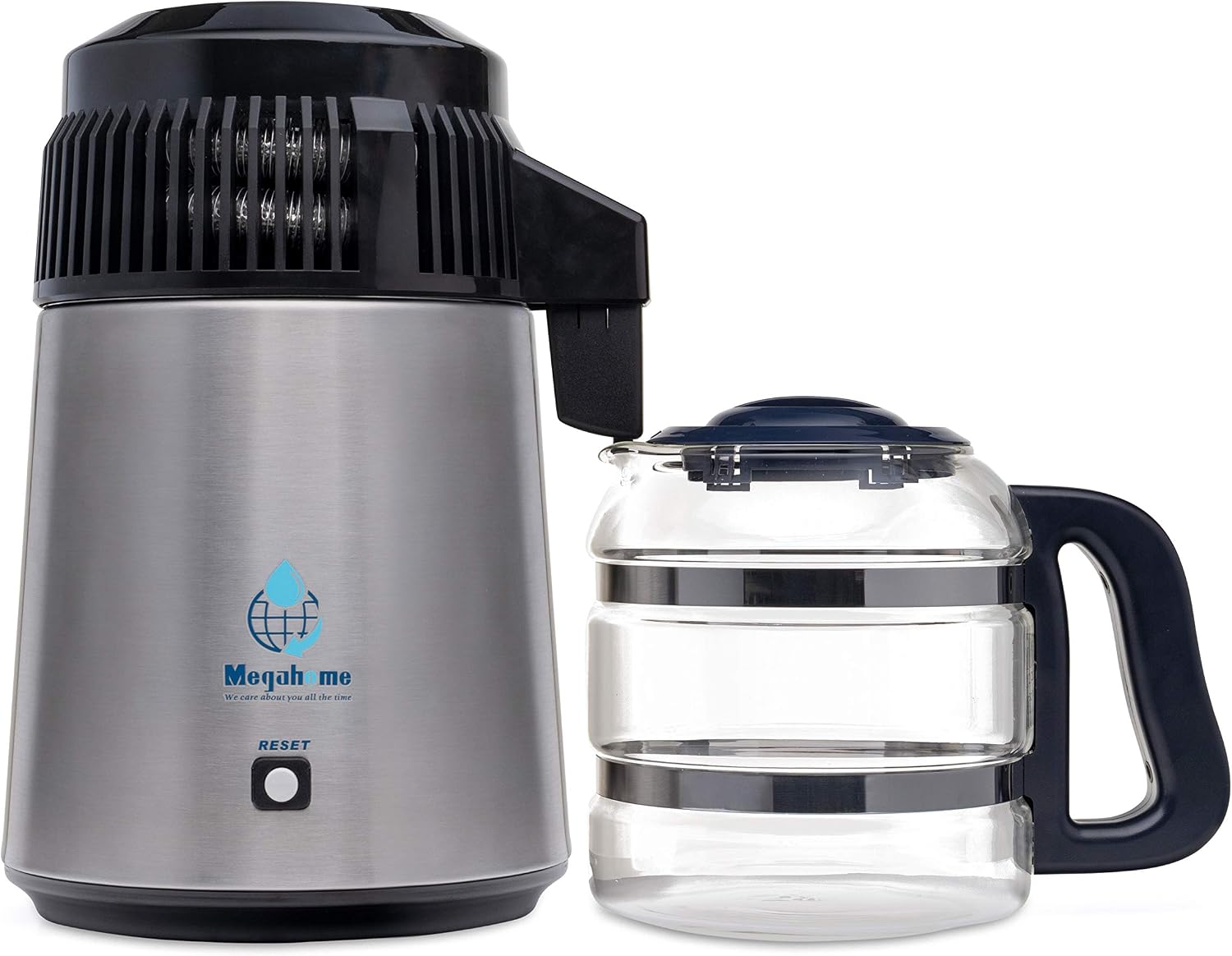 Most Complete RemovalMegahome Countertop Water Distiller (Stainless, Glass Collection) |
4.6out of 5 | 316L Stainless BoilerGlass Collection Carafe |
Check price → |
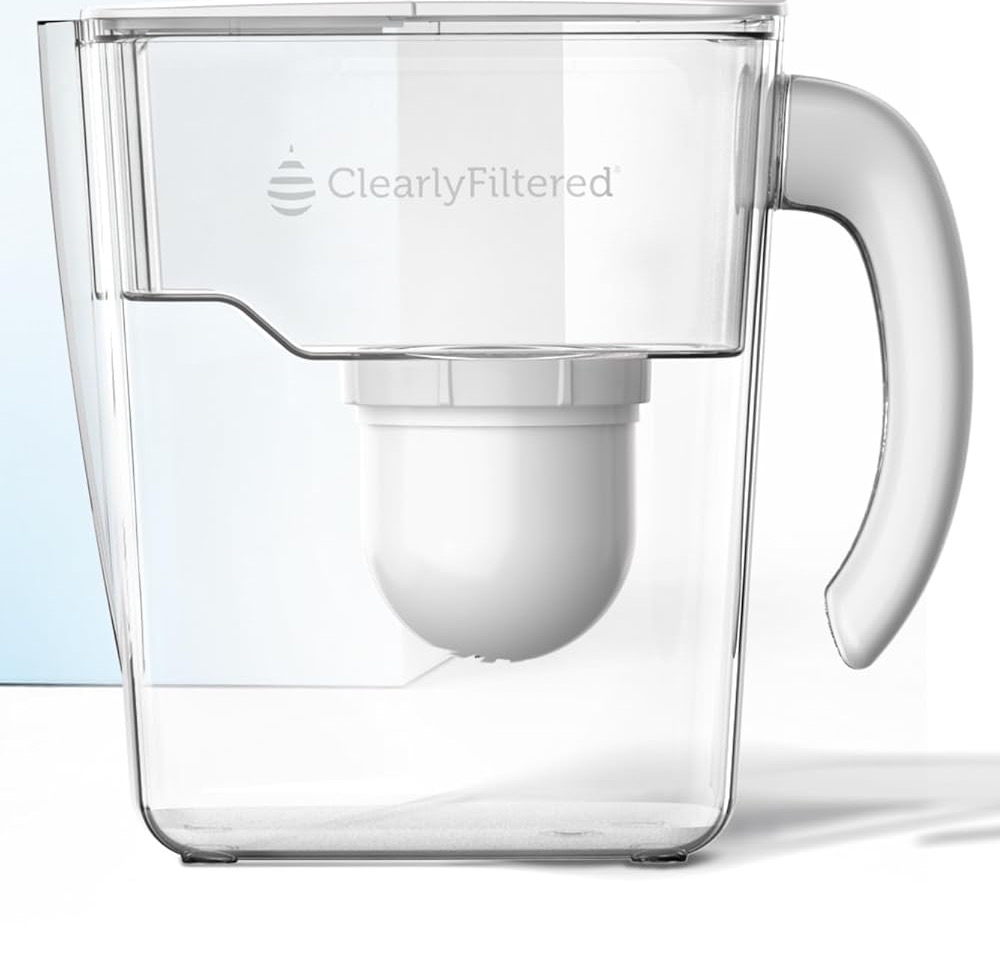 Best Pitcher (Lab-Tested)Clearly Filtered No. 1 Water Filter Pitcher |
4.5out of 5 | Lab-tested vs. 365+ contaminantsLead, PFAS, fluoride reduction |
Check price → |
 Best Under-Sink ROWaterdrop G3P600 Tankless Reverse Osmosis System |
4.8out of 5 | NSF/ANSI 58Removes lead, nitrate, arsenic, PFAS |
Check price → |
 Best Value Under-Sink ROAPEC Water ROES-50 Under-Sink 5-Stage RO |
4.7out of 5 | WQA Gold SealRemoves lead, nitrate, arsenic, PFAS |
Check price → |
 Best Budget PitcherEpic Pure Water Filter Pitcher |
4.4out of 5 | Lab-tested vs. lead, PFAS, fluoride150-gallon cartridge |
Check price → |
 Best for TDS & NitrateZeroWater 10-Cup Ready-Pour Filter Pitcher |
4.5out of 5 | NSF 42/53 (lead, chromium)Reduces nitrate via ion exchange |
Check price → |
What Is the Safest Water Filter for Baby Formula?
The safest water filter for infant formula is a reverse-osmosis system, because RO is the only home technology (short of distillation) that physically rejects every one of the contaminants a baby is most vulnerable to. A powered semipermeable membrane pushes water through pores small enough to catch lead, nitrate, arsenic, PFAS and most fluoride — the exact list the American Academy of Pediatrics and the CDC single out as the developmental risks worth removing before mixing formula. Our overall pick is the AquaTru Countertop RO because it does all of that with no plumbing, holds four NSF certifications, and fits in the corner of a first-time parent's kitchen.
If your kitchen has room for a permanent install, the tankless Waterdrop G3P600 is the same RO barrier out of sight and at higher flow. If your budget is tight, the sub-$200 APEC ROES-50 gives you the same technology and a WQA Gold Seal. If you are worried the tap is truly bad — an older home, a well, a boil-water advisory in your history — a home distiller like the Megahome goes a step further, boiling tap water to steam and condensing it into a glass carafe with essentially zero dissolved anything. And if a $300+ appliance isn't in the cards yet, a tested pitcher — the Clearly Filtered with published third-party lab data, the Epic Pure, or the ion-exchange ZeroWater — can get you through the newborn months on ordinary city water.
Is Tap Water Safe for Baby Formula?
Most US tap water is fine to mix formula with, but "most" hides the households where it is not. The CDC, AAP and the FDA all say cold tap water from a home on public utility water is generally safe for reconstituting formula, provided that home's Consumer Confidence Report (the annual water report your utility mails or posts online) is clean. What they qualify: check the report for lead and nitrate, and if your home was built before 1986, test the tap itself for lead, because service-line and solder lead leaches at the last few feet — the utility can only guarantee the pipe up to your property line.
The bigger safety point isn't chemistry, it's temperature: never draw hot tap water for a bottle. Hot water dissolves more metals off pipe interiors than cold does, so a hot pour can carry many times the lead a cold pour would. Start with cold filtered water, then heat it in a bottle warmer or on the stove. If your baby is under three months, was born preterm, or was born low birth weight, the WHO recommends heating the water to at least 70 °C (158 °F) before mixing powdered formula, then cooling to feeding temperature — this reduces the small but real risk of Cronobacter, a bacterium that can survive on dry powder. See our is tap water safe to drink? guide for the broader context on US municipal water quality.
The rule that matters: a standard Brita or PUR pitcher is only certified for chlorine and taste. It removes almost nothing that harms an infant — and on the Brita microplastics question the Standard cartridge carries no NSF/ANSI 401 claim at all; the Elite is certified only down to 0.5 micron and leaves the sub-micron nanoplastic fraction to a physical membrane. For formula, use a filter that carries NSF/ANSI 53 (lead + heavy metals) and ideally NSF/ANSI 401 (emerging contaminants including PFOA/PFOS), or a filter that publishes independent third-party lab data. A reverse-osmosis system or distiller clears all of it at once.
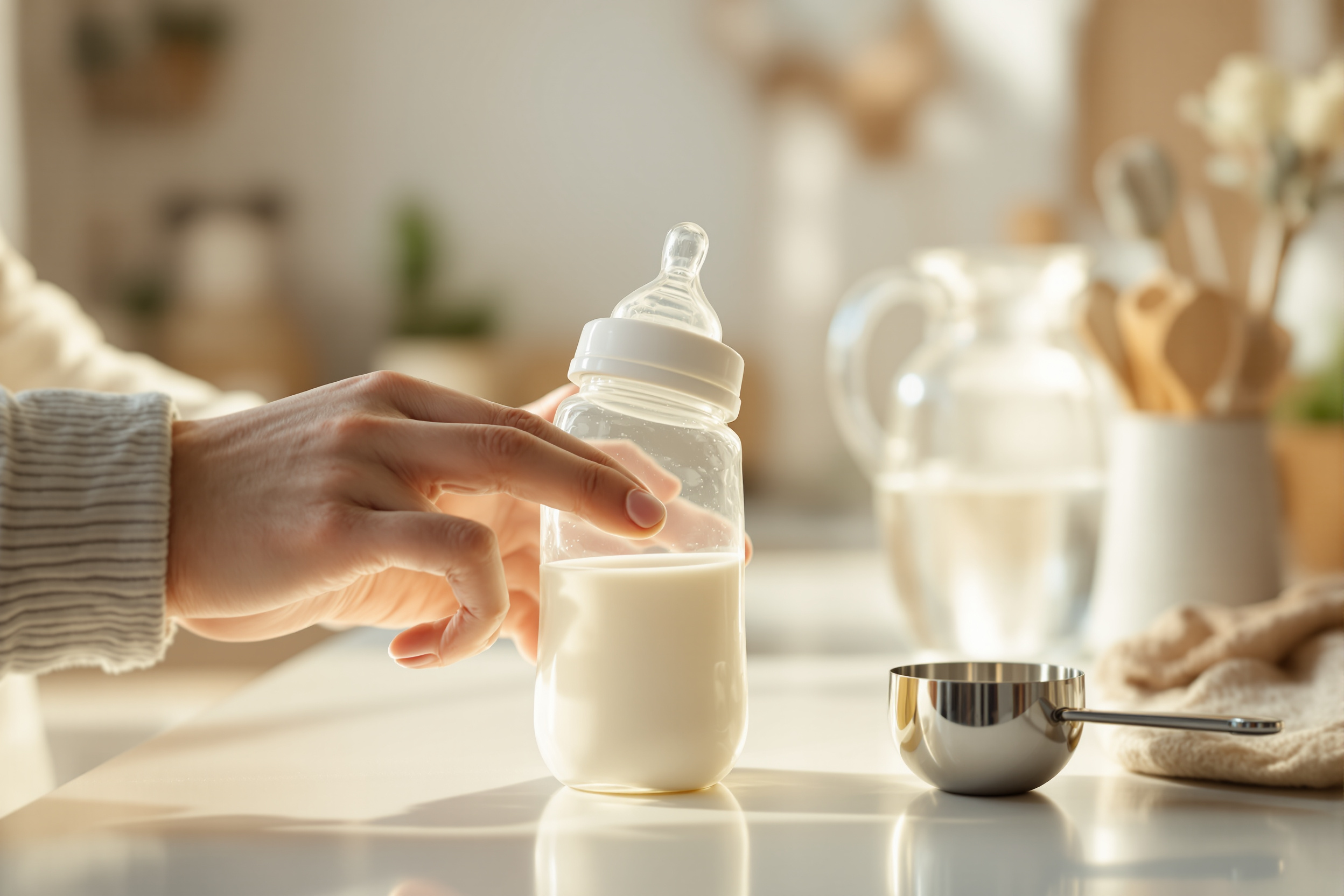
The 4 Contaminants That Actually Matter for Infants
A shopping list is easier than a lecture: for formula, focus on the four contaminants developmental toxicologists watch closest. Skip generic "reduces 200+ contaminants" marketing that doesn't say which 200, and match your filter to this list.
Lead. There is no safe blood-lead level for a child, per the CDC. Infants absorb 4-5× more lead than adults from the same water, and formula-fed babies drink a lot of tap water by body weight. The EPA's action level of 15 ppb is a utility-monitoring threshold, not a safety floor; the AAP effectively targets zero. Any pre-1986 home is a candidate for a tap-side lead test. RO, distillation, and any NSF/ANSI 53 certified filter (Clearly Filtered, ZeroWater, some Epic media) all remove it. Related: best water filter for lead.
Nitrate. Above 10 mg/L (as nitrogen), nitrate in formula water can cause methemoglobinemia — "blue baby syndrome" — in infants under six months, a medical emergency in which the blood cannot carry oxygen. This is the one contaminant the EPA has an infant-specific rationale for. Nitrate comes from fertilizer runoff and livestock, so it is most common on rural municipal supplies and private wells; a standard carbon filter does not remove it. RO, distillation and ZeroWater's ion-exchange resin do.
PFAS ("forever chemicals"). The EPA finalized the first national limit in April 2024 at 4 ppt for PFOA and PFOS. A 2023 USGS study estimated 45% of US tap water carries some PFAS. Prenatal and infant exposure has been associated with reduced vaccine response and lower birth weight in peer-reviewed reviews. Removal requires an NSF/ANSI 53-certified carbon block for PFOA/PFOS, an NSF/ANSI 58 RO membrane for the broadest reduction, or distillation. A standard chlorine-and-taste filter does not touch PFAS. Related: best water filter for PFAS.
Arsenic. Naturally occurring in some US groundwater (parts of New England, the Southwest and the Great Plains), arsenic is a developmental toxin with no safe level for infants. The EPA's MCL is 10 ppb. RO and distillation are the two proven home removals; if you are on a private well or unregulated small system, test for it once. See best water filter for well water for the well-specific playbook.
Which Filter Technology Fits Which Parent?
Every technology on this list can produce formula-safe water — the honest question is which one fits your space, your budget and how many bottles you'll mix a day. Countertop reverse osmosis is the easy default: it sits on the counter, plugs into an outlet, and takes 15 minutes to unbox. It's the right answer for renters, small kitchens, and new parents who don't want to plumb anything. Under-sink reverse osmosis — the Waterdrop G3P600 or APEC ROES-50 — is the same barrier hidden in a cabinet with a dedicated faucet, better for households mixing a lot of bottles or people who want the counter clear.
Distillation (the Megahome) is the strictest single method: because contaminants can't evaporate, boiling to steam and condensing back to liquid leaves nearly everything behind in the chamber. It's slow (~5.5 hours per gallon) and uses electricity, but on iffy tap water it's uniquely thorough, and Megahome finishes into a glass carafe rather than a plastic one. Pitcher filters — Clearly Filtered, Epic Pure, ZeroWater — cost the least and take zero setup, and if the pitcher publishes real NSF-standard or third-party lab data, they can absolutely serve a baby whose home water starts reasonably clean. What matters is not the format but the certifications and the tested contaminant list.
Quick Comparison: All 7 Formula-Safe Filters
| Filter | Type | Removes for baby | Certification / proof | Install |
|---|---|---|---|---|
| AquaTru Countertop | Countertop RO | Lead, nitrate, arsenic, PFAS, fluoride | NSF 42/53/58/401 | None (plug in) |
| Megahome | Countertop distiller | Lead, nitrate, arsenic, PFAS, ~everything dissolved | Removes ~99% dissolved solids | None (plug in) |
| Clearly Filtered | Pitcher | Lead, PFAS, fluoride, arsenic (lab-tested) | NSF 42/53/244/401/473 tested | None |
| Waterdrop G3P600 | Under-sink RO | Lead, nitrate, arsenic, PFAS | NSF/ANSI 58 | Under-sink |
| APEC ROES-50 | Under-sink RO | Lead, nitrate, arsenic, PFAS | WQA Gold Seal (RO) | Under-sink |
| Epic Pure | Pitcher | Lead, PFAS, fluoride (lab-tested) | Third-party lab tested | None |
| ZeroWater 10-Cup | Ion-exchange pitcher | Lead, nitrate, chromium, ~all TDS | NSF 42/53/401 (lead) | None |
Reverse osmosis and distillation are the strictest removals; pitcher options with real lab data cover most infant-critical contaminants on clean tap water. Tap any pick below for today's Amazon price.
1. AquaTru Countertop Reverse Osmosis Purifier — Best Overall for Baby Formula
Best Overall
Reverse osmosis is the only home method (short of distillation) that physically rejects the four infant-critical contaminants at the same time, and AquaTru is the RO the AAP-cited water experts consistently point new parents toward because it delivers all of it on a countertop, no plumbing, no under-sink work. The four-stage cartridge stack combines mechanical pre-filtration, a reverse-osmosis membrane, activated carbon and a VOC-focused post-filter, and it holds independent certifications for NSF/ANSI 42 (chlorine, taste), 53 (lead and heavy metals), 58 (RO performance including nitrate and arsenic) and 401 (emerging contaminants including PFOA and PFOS). For a new parent standing at 3 a.m. mixing a bottle, that certification stack is the point.
Two honest trade-offs for baby use. First, RO water has essentially no minerals, so it will taste "flat" — that does not matter to a baby, because infant formula already contains all the minerals a baby needs (the FDA regulates the mineral content of formula), but it is why you should still drink varied water yourself. Second, AquaTru's clean-water tank is plastic. If you want to eliminate all plastic contact after filtration, decant the water into a glass carafe. See our full breakdown of the technology in the best reverse-osmosis systems guide, and the lead-specific removal data in best water filter for lead.
Parents specifically call out this as their formula-mixing purchase and describe never regretting it — a common phrase is "it paid for itself in nursery water we didn't buy." Owners with a home TDS meter report readings dropping from 300+ into single digits after the first tank, and many keep a second glass carafe cold in the fridge for bottles. The honest downsides from reviews: hard water is the weak point (descale on schedule, because damage from skipping it is not covered under the warranty), the tap-water tank refills often on a heavy day, and the clean-water tank is plastic — a glass carafe fixes that if it matters to you.
Countertop reverse osmosis with four NSF certifications — the strictest single filter you can plug in without calling a plumber, and the one most likely to make water an actively safer part of the bottle.
For formula: RO membranes physically reject lead, nitrate, arsenic and PFAS ions by size and charge; AquaTru's independent certifications on standards 53, 58 and 401 cover the exact contaminant categories the AAP and CDC single out as risks for infants.
Check Today’s Price on Amazon →Amazon prices change daily — tap to see today's price and any active discount.
- Free delivery & returns for Prime members
- Ships free with Prime on eligible items
- Thousands of verified reviews
2. Megahome Countertop Water Distiller — Most Complete Removal
Most Complete Removal
Distillation is uniquely appropriate for formula water because it does not depend on knowing which contaminant you are trying to catch: it just boils and re-condenses, leaving nitrate, lead, arsenic, PFAS, chromium, uranium and every other non-volatile substance behind in the boiling pot. The Megahome's 316L medical-grade stainless boiling chamber is corrosion-resistant to daily boiling; a porcelain nozzle liner keeps the steam path off any painted metal. Crucially for a bottle-mixing routine, the output drips into a real glass carafe, so from the moment the water is purified it never touches a plastic surface until you pour it into the bottle.
The honest catches, which matter if you're going to run it daily: it produces about a gallon in 5.5 hours, so plan a nightly cycle to have tomorrow's bottles ready; it uses roughly the electricity of a hair dryer for the same duration (about $150/year if you distill every day); it removes minerals along with contaminants, which is a non-issue for formula (again, the FDA sets the mineral content of formula and it doesn't matter what the mixing water contains) but means you probably don't want to drink only distilled water yourself. See the full breakdown in the best water distillers guide.
Long-time Megahome owners repeatedly praise how simple it is — there is nothing to fail. Owners with harder tap water report a chalky ring in the boiling pot after every cycle (that's the point — those are the contaminants you would otherwise have drunk) and note that a monthly citric-acid rinse returns it to like-new. The honest gripes that repeat: the fan is audibly louder than premium units, the plastic top-cap latch feels less premium than the price, and the porcelain nozzle liner can chip if the boiler pot is dropped during cleaning. Replacement glass carafes and porcelain nozzles are readily available.
The strictest single-method treatment on this list — distillation leaves lead, nitrate, arsenic and PFAS behind in the chamber, and finishes into a glass carafe, no plumbing.
For formula: Because contaminants don't evaporate, boiling to steam and re-condensing them removes essentially all of the infant-critical list at once. The boiling itself also inactivates Cronobacter and other bacteria on the way through, so distilled Megahome water is effectively ready for formula the moment it comes out.
Check Today’s Price on Amazon →Amazon prices change daily — tap to see today's price and any active discount.
- Free delivery & returns for Prime members
- Ships free with Prime on eligible items
- Thousands of verified reviews
3. Clearly Filtered Water Filter Pitcher — Best Pitcher (Lab-Tested)
Best Pitcher (Lab-Tested)
The point of a pitcher for baby formula is the honesty of the removal list. A standard Brita or PUR pitcher is certified only to NSF/ANSI 42 — chlorine, taste and odor — which is exactly none of the four contaminants that harm infants. Clearly Filtered is different: its Affinity filtration technology uses a proprietary blend of coconut-shell carbon, catalytic granular activated carbon, and a mixed-media adsorbent block that is independently third-party tested against NSF/ANSI 42, 53, 244, 401 and 473. The publicly available lab report documents reduction of lead, arsenic, fluoride, mercury, chromium, glyphosate and 15 different PFAS compounds — the actual infant-relevant list, on a pitcher.
The honest trade-offs: filter cartridges cost about $60 for a set of three (roughly 300 gallons total) which is more per gallon than a Brita, and the flow is slower — the ultra-fine media catches more contaminants but also takes longer per pour, so plan to keep the pitcher topped up. The housing is BPA/BPS-free plastic, not glass; if you want zero plastic contact for the finished formula water, decant into a glass carafe or step up to distillation. For a small-space parent on a treated municipal supply, it's the pitcher that survives the "does it actually remove anything harmful" question.
Long-term owners — especially parents and older-home renters — describe switching to this from a standard Brita and noticing the water tastes lighter, and their at-home TDS or lead-test-strip readings drop within a fill. Owners like that Clearly Filtered publishes actual per-contaminant reduction numbers rather than vague marketing claims. The honest gripes come up honestly too: the fill flow is slower than a Brita (the extra media is the reason), replacement cartridges are pricier per gallon, and a few first-timers say the initial "flush" cycle to prime a new cartridge takes longer than the manual implies.
A pitcher that publishes third-party lab data for the exact contaminants that matter for infants — lead, PFAS, fluoride and arsenic. Zero setup, no plumbing.
For formula: Independent lab testing to NSF/ANSI 42, 53, 244, 401 and 473 covers taste/chlorine, lead and heavy metals, chromium, emerging contaminants (PFOA/PFOS), and fluoride. That is the closest a $70-90 pitcher gets to the RO removal list.
Check Today’s Price on Amazon →Amazon prices change daily — tap to see today's price and any active discount.
- Free delivery & returns for Prime members
- Sold & shipped by Amazon
- Thousands of verified reviews
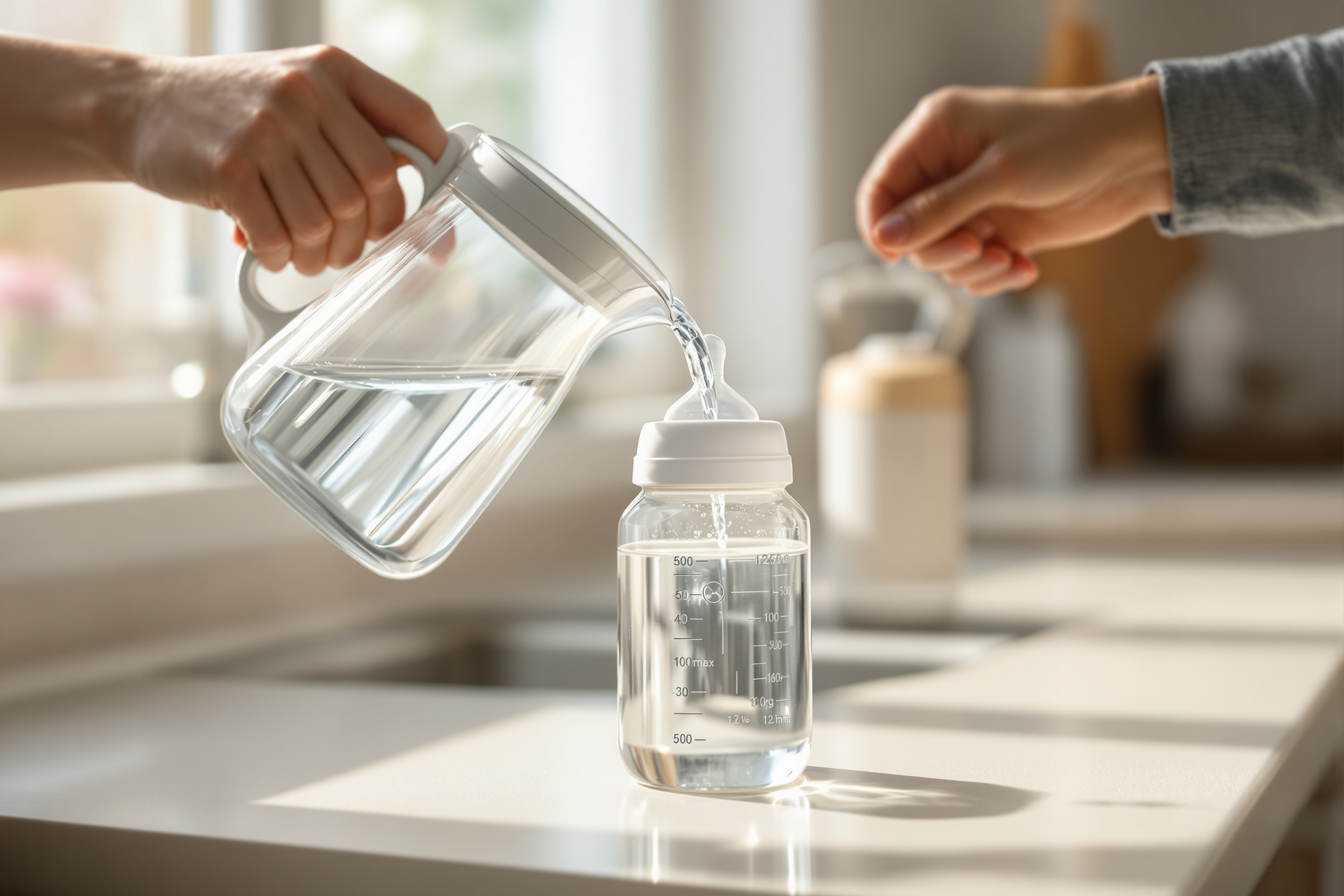
4. Waterdrop G3P600 Tankless Reverse Osmosis System — Best Under-Sink RO
Best Under-Sink RO
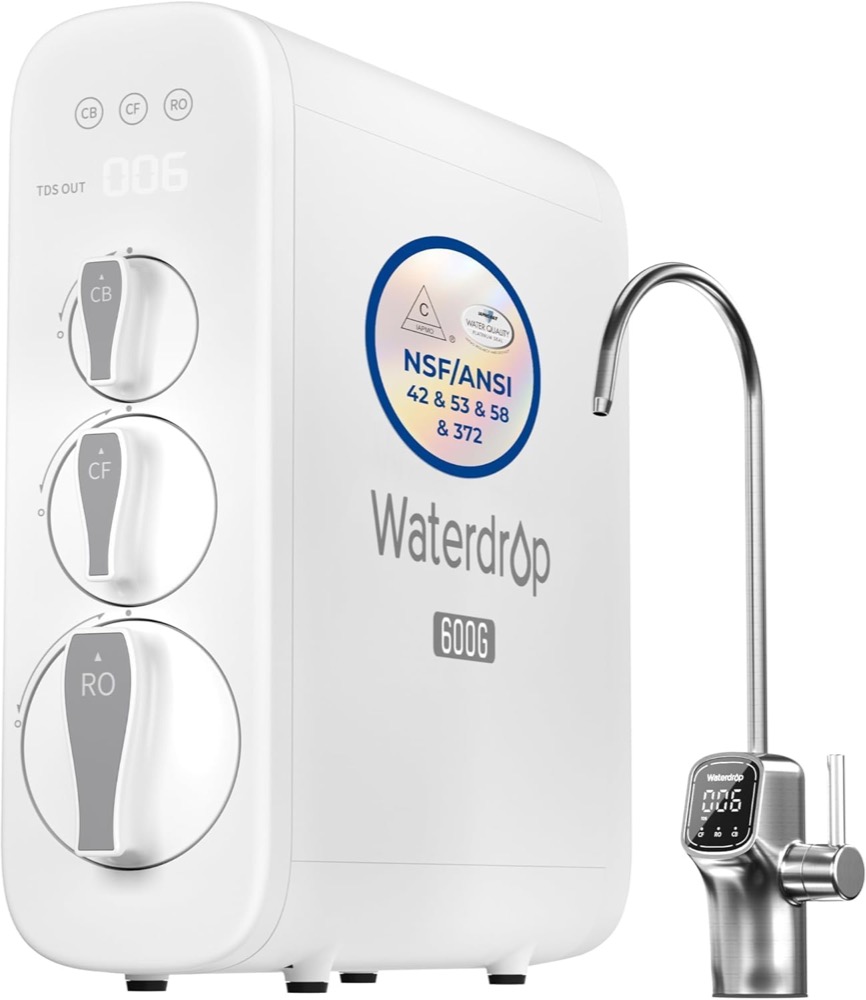
Reverse osmosis is the same technology as the AquaTru; the G3P600 hides it in the cabinet and adds a dedicated faucet. The system carries NSF/ANSI 58 certification — the standard written specifically for reverse-osmosis systems — and its membrane rejects lead, nitrate, arsenic and PFAS by physical size and charge exclusion. Because it is tankless, you don't get the stagnant storage water that older RO systems sit on for days; every pour is freshly made. The smart display on the front tracks the three cartridge stages independently and gives an actual filter-life percentage, so you replace a stage the day it needs it, not "sometime this year."
You'll need a little under-sink space, a power outlet under the sink (it's electric), and either an hour of DIY plumbing or a $150 plumber call. Like every RO, it sends some water to drain (the G3P600's 3:1 pure-to-drain ratio is very good for tankless), and it strips minerals along with contaminants — a non-issue for formula because the formula itself supplies the minerals. Related: full breakdown of tankless vs. tank RO in the best under-sink water filters guide.
Owners frequently call an under-sink RO the best upgrade they have made to their home, and specifically praise this one's live filter-life readout and the way the tankless design frees up the whole cabinet under the sink. Reports of home TDS meter readings dropping from 450 to around 12 are common. The honest gripes: it does need a power outlet under the sink; a minority report drip leaks that were replaced under warranty; and hard-water homes see shorter filter life than the advertised interval (that's normal for any RO and can be mitigated with a softener upstream).
Under-sink reverse osmosis at 600 GPD from a dedicated faucet — NSF/ANSI 58 certified, out of sight, and fast enough that a formula-mixing routine never waits on a tank.
For formula: As a certified RO system, the G3P600's membrane physically rejects lead, nitrate, arsenic and PFAS by size and charge — the same proven mechanism as the countertop AquaTru, at higher flow and permanently plumbed.
Check Today’s Price on Amazon →Amazon prices change daily — tap to see today's price and any active discount.
- Free delivery & returns for Prime members
- Ships free with Prime on eligible items
- Thousands of verified reviews
5. APEC Water ROES-50 Under-Sink 5-Stage RO — Best Value Under-Sink RO
Best Value Under-Sink RO
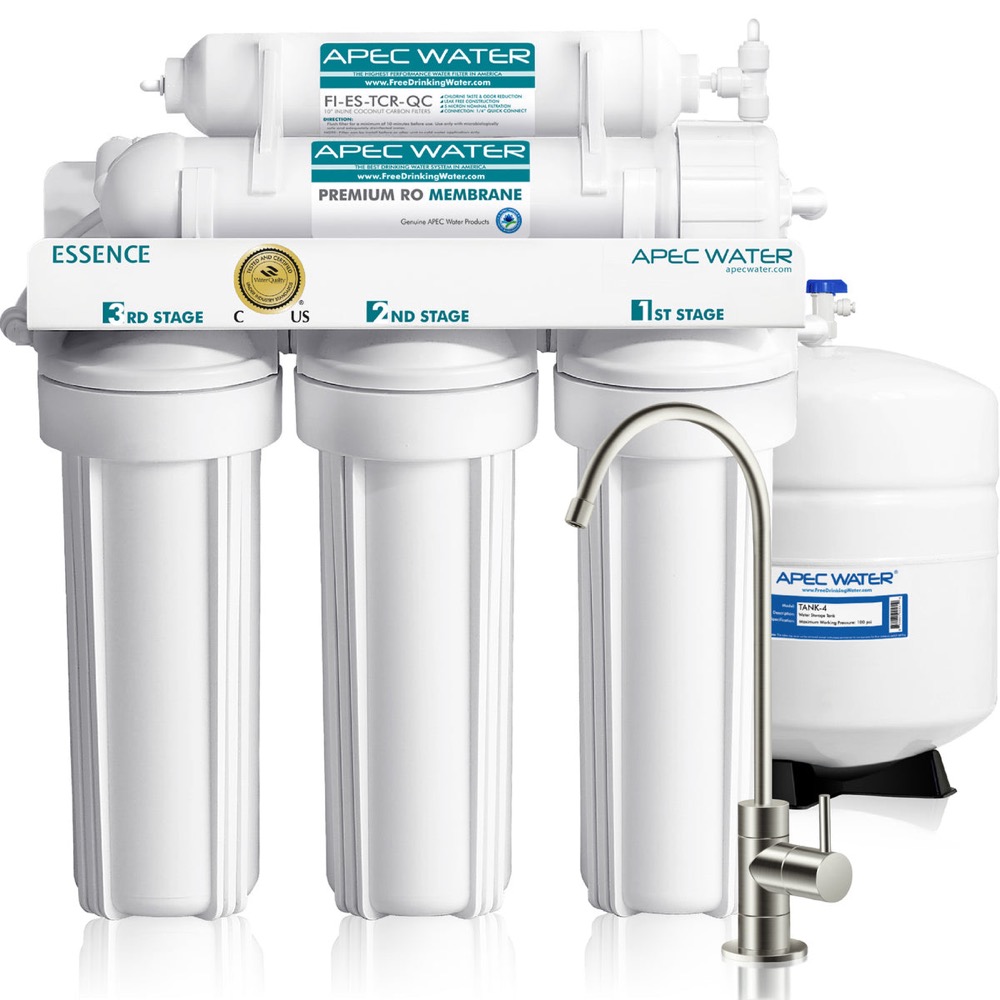
The ROES-50 is a straightforward five-stage reverse-osmosis system with the same fundamental membrane technology as the tankless units above — sediment pre-filter, two carbon-block stages, RO membrane, and a coconut-shell carbon polishing stage. Its WQA Gold Seal is the Water Quality Association's independent third-party certification against the NSF/ANSI 58 standard for reverse-osmosis performance, and the underlying physical mechanism is the one that reliably removes lead, nitrate, arsenic and PFAS. There's no smart display, no app, no LED — just a dependable filter under the sink that does exactly what a much more expensive RO does.
The honest trade-offs are the value-tier ones: a slower 50-gallon-per-day output feeds a small storage tank rather than delivering on demand; the "drain ratio" is roughly 3:1 (three gallons to drain for one gallon filtered); the included faucet is a basic chrome pillar rather than a designer piece. But for a parent who wants safe formula water plumbed in for under $200 and doesn't need bells and whistles, this is the pick. And APEC's US-based customer service is repeatedly praised in reviews.
Buyers with basic DIY skills say they had it installed in under a day and noticed cleaner-tasting water immediately; APEC's US customer service earns repeated praise as unusually polite and responsive for a filter company. The honest gripes: the drain-to-permeate ratio is about 3:1, some owners had to buy a couple of extra plumbing fittings from the hardware store to finish install, and the most serious repeated complaint is filter housings cracking at the fitting joints, which soaked a few cabinets before APEC replaced them under warranty.
US-built, WQA Gold Seal RO with a 2-year warranty and lifetime tech support — the cheapest permanent way to get reverse-osmosis water for formula-mixing.
For formula: The WQA Gold Seal is the independent equivalent of NSF/ANSI 58 for RO performance, and RO membranes physically reject lead, nitrate, arsenic and PFAS by size and charge. Same proven barrier, at value-tier pricing.
Check Today’s Price on Amazon →Amazon prices change daily — tap to see today's price and any active discount.
- Free delivery & returns for Prime members
- Ships free with Prime on eligible items
- Thousands of verified reviews
6. Epic Pure Water Filter Pitcher — Best Budget Pitcher
Best Budget Pitcher
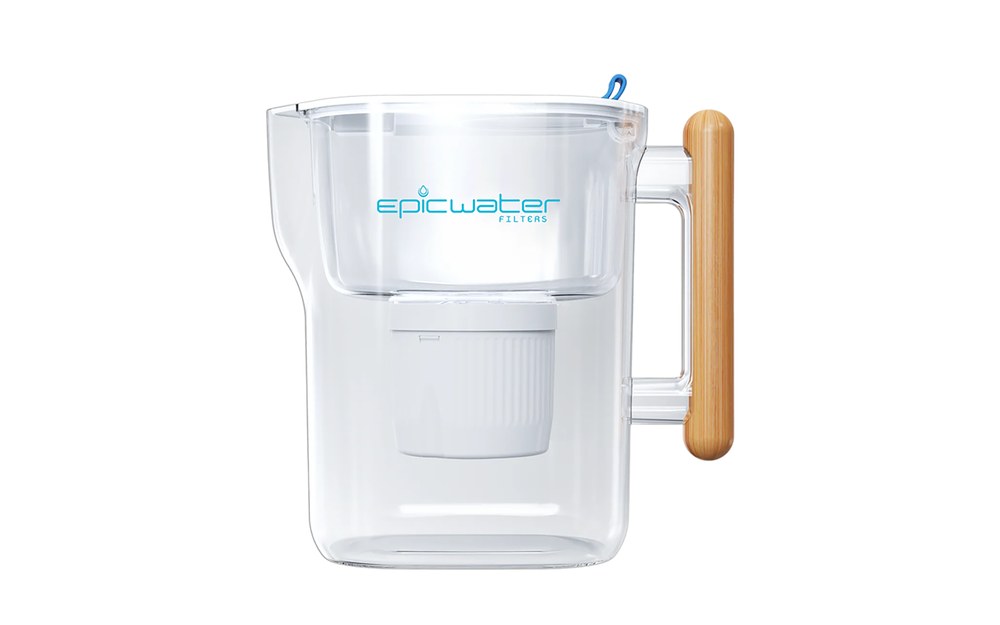
Epic Water Filters is a small US manufacturer that publishes independent third-party lab data on the Epic Pure cartridge for over 200 named contaminants. The solid carbon-block filtration gets lead reduction into the 99%+ range and reduces PFAS (including PFOA/PFOS), fluoride, chromium-6, glyphosate, and a long list of pharmaceutical residues that survive municipal treatment. The pitcher body is BPA-free and Tritan-plastic, and each cartridge is rated for about 150 gallons or roughly three months of typical family use.
The honest catches: it doesn't remove nitrate at meaningful levels (RO or ZeroWater's ion exchange do), the ultra-fine media makes fills feel slow compared to a Brita, and while the plastic is BPA-free it is still plastic in the finished-water reservoir — decant into a glass carafe for zero plastic contact. But at $60-70 with lab-tested reduction of the four infant-critical contaminants minus nitrate, it is the most honest sub-$100 pitcher you can put in a nursery.
Owners praise Epic for actually publishing its per-contaminant reduction numbers, and for having a US-based team that will send the lab report on request; parents specifically call out the fluoride reduction as the reason they chose it over the drugstore-shelf pitchers. The honest gripes are the ones you expect from a tight-media pitcher: pours are slower than a Brita (the reason for the tighter reduction), cartridges are pricier per gallon than budget pitchers, and a small number of buyers had a cartridge-seal issue on first install — Epic replaced them under warranty.
Sub-$70 pitcher with independent lab data for lead, PFAS, fluoride and chromium reduction — the honest budget alternative for a tight nursery week.
For formula: Epic's cartridge is tested against NSF/ANSI 42, 53, 401 and P473, covering the exact infant-relevant categories — taste/chlorine, lead and heavy metals, emerging contaminants, and PFOA/PFOS — on a pitcher small enough to sit on a nursery cart.
Check Today’s Price on Amazon →Amazon prices change daily — tap to see today's price and any active discount.
- Free delivery & returns for Prime members
- Sold & shipped by Amazon
- Thousands of verified reviews
7. ZeroWater 10-Cup Ready-Pour Filter Pitcher — Best for TDS & Nitrate
Best for TDS & Nitrate
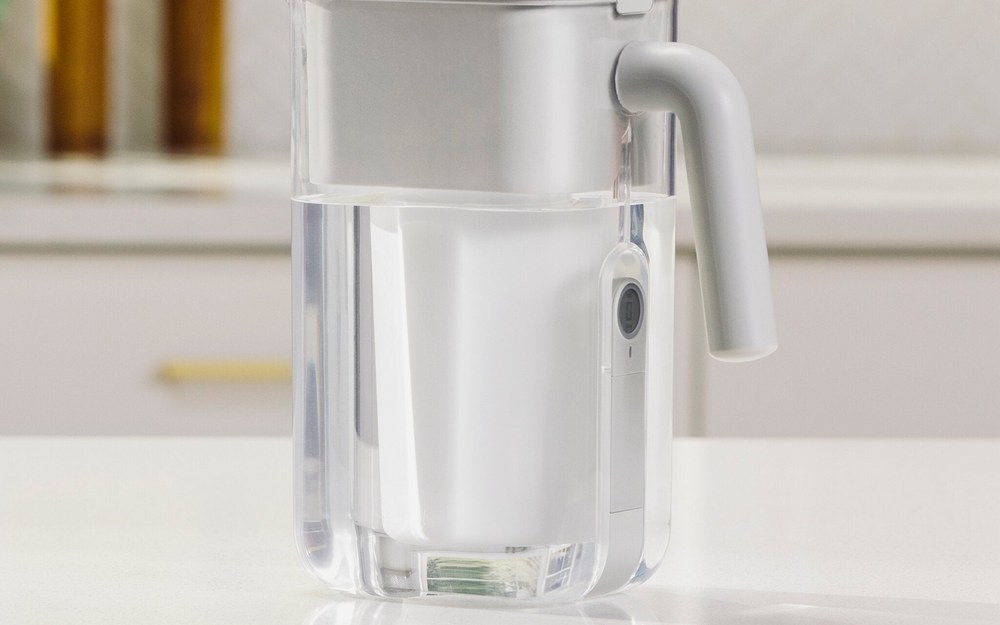
ZeroWater's differentiator is ion-exchange, the same resin chemistry used in laboratory-grade water polishing. Where a carbon-block pitcher removes contaminants by adsorption (chlorine, some heavy metals, PFAS), ion exchange swaps dissolved ions off the water — which is why ZeroWater is the one pitcher that measurably reduces nitrate, along with lead, chromium-6 and total dissolved solids to near zero. It carries NSF/ANSI 42 (chlorine, taste), 53 (lead, chromium) and 401 (some emerging contaminants) certifications, and the included TDS meter lets you verify with your own eyes that the finished water reads 000 ppm.
Two honest catches you must know. First, ion-exchange resin has finite capacity — on hard or high-TDS tap water, cartridges exhaust much faster than the advertised 25-40 gallons; the TDS meter is not a gimmick but a use-it-daily tool, and when TDS starts creeping up, the cartridge is done. Second, exhausted ion-exchange cartridges can develop a fishy taste or smell (organic-acid release from the resin) — if that ever happens, replace the cartridge and rinse. On low-TDS municipal water this is a very effective infant-safety filter. On very hard water the cartridge cost adds up fast.
Owners specifically point to ZeroWater as the pitcher they use for infant formula, coffee and reef tanks — anywhere zero TDS actually matters. The included TDS meter earns repeated praise because it turns filter life into a number you can watch rather than a guess. The most honest gripes: on hard tap water cartridges exhaust in weeks not months (that's chemistry, not a defect); and if you don't watch the meter you can miss the point where an exhausted cartridge releases a fishy off-taste — the meter is the fix, so use it.
The only pitcher on this list that meaningfully reduces nitrate — ideal for rural municipal water or private wells where nitrate is the flagged contaminant — with a TDS meter to prove it worked.
For formula: Ion-exchange resin swaps dissolved ions off the water, which is why ZeroWater reduces nitrate (an ion that carbon can't touch) along with lead and chromium-6. Certified to NSF/ANSI 42, 53 and 401. Watch the TDS meter and replace cartridges the day the reading rises.
Check Today’s Price on Amazon →Amazon prices change daily — tap to see today's price and any active discount.
- Free delivery & returns for Prime members
- Sold & shipped by Amazon
- Thousands of verified reviews
Formula-Water Buyer's Guide: How to Choose
Start with your city's water report, then read your home
Before buying anything, spend 10 minutes on your utility's Consumer Confidence Report. It's mailed once a year and lives on the utility's website; search "[your city] water quality report." Read three lines: lead 90th-percentile (must be under 15 ppb at the tap, and lower is better for infants), nitrate (should be well under 10 mg/L; 5 mg/L is a caution line for formula), and any PFAS figures (the EPA's 4 ppt limit for PFOA/PFOS is the new bar). If any of those is elevated, or if your home was built before 1986, use a lead test kit on the actual tap you'll draw formula water from — utility numbers don't include what leaches from your building's plumbing.
Match the filter to the flag
The report tells you which filter you actually need. If lead or PFAS is your main concern, any RO on this list (AquaTru, Waterdrop, APEC) or the Clearly Filtered pitcher clears the bar. If nitrate is flagged (rural water especially), you need RO, distillation or ZeroWater's ion-exchange — a Brita or Epic pitcher won't touch it. If the report is clean but you just want extra protection, a lab-tested pitcher on tap that already passes the AAP's baseline is the least expensive real upgrade. Over-buying is fine; under-buying (buying a chlorine-and-taste filter for a lead problem) is dangerous.
Small space? A pitcher tonight, an RO later
The best filter is the one that's on your counter the day the baby is here. If a countertop RO isn't practical this week, don't wait — a lab-tested pitcher (Clearly Filtered, Epic Pure, or ZeroWater depending on which contaminants are on your report) is a real upgrade over unfiltered tap water and can carry you through the newborn months. Then step up to an AquaTru countertop or a Waterdrop G3P600 under-sink RO once life allows. Do not use bottled "spring" water as an ongoing formula source without checking its report; bottled water averages roughly 240,000 plastic particles per liter (see how many microplastics are in a water bottle), and some unregulated brands have also tested higher for lead than tap.
Our recommendation: If you're choosing one, buy the AquaTru Countertop RO — four NSF certifications, no plumbing, covers lead, nitrate, arsenic and PFAS in one appliance. If you have time for an install, the tankless Waterdrop G3P600 is the built-in upgrade; the APEC ROES-50 is the sub-$200 value RO. If you want the strictest removal for iffy water, the Megahome distiller finishes into a glass carafe. For a small-space start, Clearly Filtered is the pitcher with the strongest lab data, Epic Pure the honest budget option, and ZeroWater 10-Cup the one that reduces nitrate. Whichever you pick, heat cold filtered water to at least 70 °C to kill Cronobacter, then cool to feeding temperature — the WHO's rule for babies under three months. Related next reads: the safest baby formula brands 2026, safest baby bottles, and the best water filter for lead.
Frequently Asked Questions
Sources & further reading
- American Academy of Pediatrics — How to Safely Prepare Formula With Water (AAP guidance on tap water, lead testing, and fluoridated water for infant formula).
- U.S. CDC — Infant Formula Preparation and Storage: Clinical Overview (CDC formula-prep and water-safety guidance including Cronobacter reduction).
- World Health Organization — Safe Preparation, Storage and Handling of Powdered Infant Formula (WHO 70 °C recommendation for reconstituting powdered formula).
- U.S. EPA — National Primary Drinking Water Regulations (nitrate MCL 10 mg/L; arsenic MCL 0.010 mg/L; lead action level 15 ppb).
- U.S. EPA — Per- and Polyfluoroalkyl Substances (PFAS) (2024 final national limit of 4 ppt for PFOA and PFOS in drinking water).
- NSF International — NSF/ANSI 53, 58 and 401 water-treatment certification standards (heavy-metal reduction, reverse-osmosis performance, and emerging-contaminant claims).