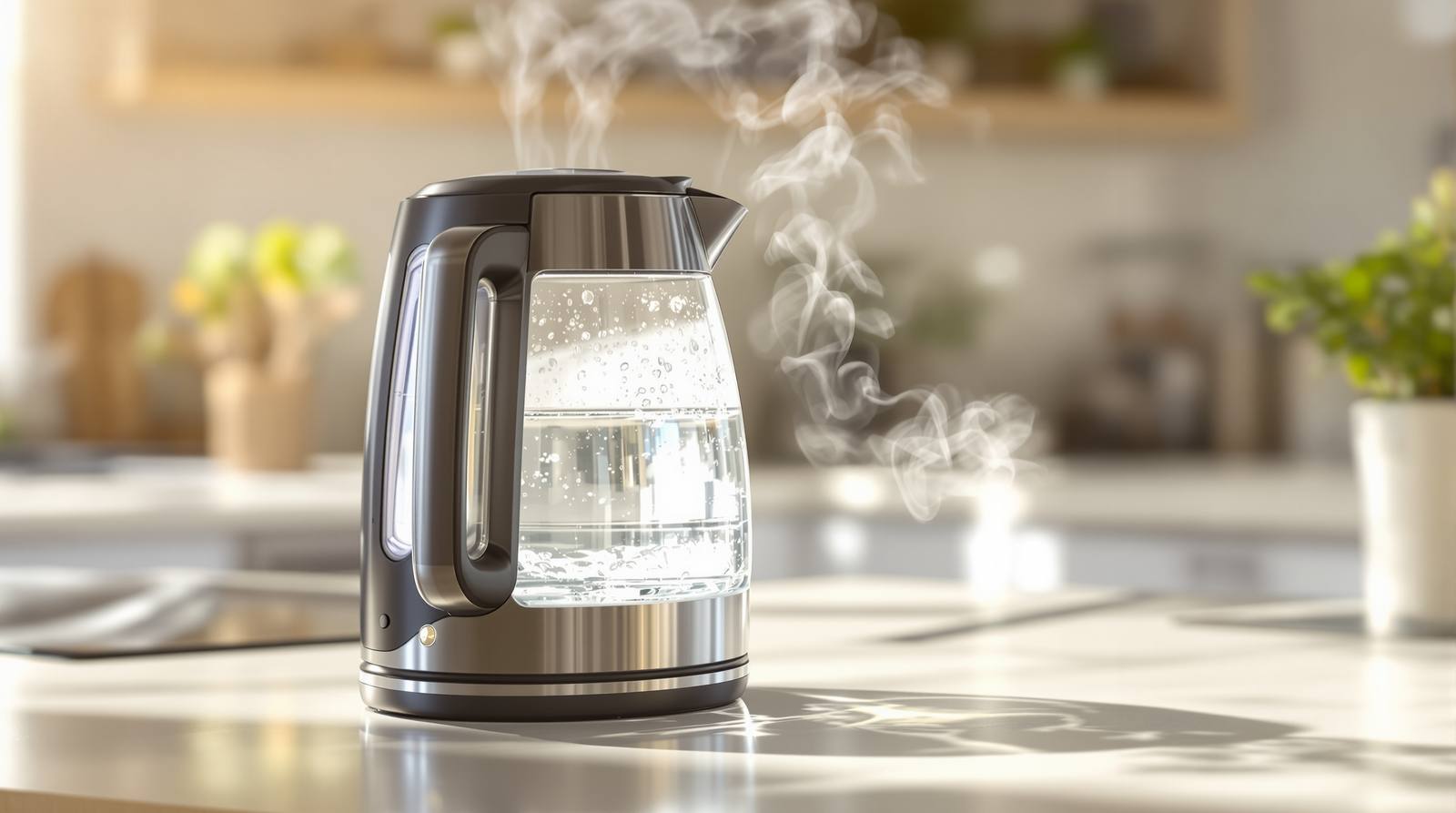
If your electric kettle has plastic parts that touch the hot water, it sheds microplastics into every boil. A 2025 study in npj Emerging Contaminants tested polypropylene plastic kettles and found the first boil in a new kettle released about 12 million nanoparticles per milliliter — roughly 3 billion nano- and microplastic particles in a single 250 ml cup of tea. The release fell sharply with repeated use, but even after hundreds of boils the kettles still shed on the order of 205 million particles per cup. The caveat: the study measured how much plastic is released, not what it does to your body. The reassuring part is that this is one of the easiest sources to remove — a glass or all-stainless kettle simply has no plastic for boiling water to shed.
An electric kettle looks harmless, but think about what it actually does: it holds water and heats it to nearly 100°C, over and over, every single day. If the inside of that kettle is plastic — and most budget kettles use a polypropylene body, lid, or water window — then you're repeatedly pressing near-boiling water against a plastic surface. Heat is exactly the condition that makes plastic shed fastest, which is why the kettle has become one of the most-scrutinized appliances in the kitchen. And that near-boiling water is usually on its way into a drink, which is why plastic keeps turning up in brewed coffee — from the kettle, the pod and the machine alike.
In 2025, researchers finally put a number on it. The picture is consistent with what we already know about heat and plastic: the hotter the water, the more particles come loose from the plastic. This guide walks through what the study found, whether the amounts are worth worrying about (the honest answer is calmer than the headlines), and the simple kettle swaps that remove the problem at the source.
The bottom line up front: a plastic kettle sheds nano- and microplastics into your hot water — most heavily when it's new and every time the water boils. It's a real, measurable source, and unlike many it's easy to fix: switch to a glass or stainless-steel kettle and filter the water you boil. See our full guide to the best non-toxic electric kettles, our ranking of which foods have the most microplastics, and the room-by-room kitchen plastic detox guide.
Do electric kettles have microplastics?
If the kettle has plastic parts in contact with the hot water, yes. In 2025 a team publishing in npj Emerging Contaminants tested polypropylene plastic kettles — the standard material for the body, lid, and water windows of budget models — and confirmed with multiple analytical methods that boiling water pulls both nanoplastics and microplastics off the plastic surface. The first boil in a new kettle released roughly 12 million nanoparticles per milliliter, which works out to about 3 billion particles in a single 250 ml cup.
That number drops off quickly — the biggest burst comes from a brand-new kettle — but it never reaches zero. Even after hundreds of boils, the researchers still measured on the order of 205 million particles per cup. The particles are polypropylene, the same plastic the kettle is made of, and they end up in whatever you pour: your tea, your coffee, your instant oatmeal. It's a close cousin of what happens when you microwave food in plastic — heat plus a plastic surface equals shedding.
How does boiling water pull plastic out of a kettle?
Heat does the work. A 40-55 word answer: when water approaches boiling, the near-100°C temperature physically works microscopic fragments loose from the polypropylene surface — it's mechanical shedding, not a chemical reaction. In the 2025 tests, particle release climbed steeply as the water temperature rose toward boiling, which is exactly why a kettle sheds far more than the same plastic holding a cold drink.
This matters because a kettle is the perfect storm for shedding: maximum heat, applied to a plastic surface, repeated multiple times a day. A cold plastic bottle sheds slowly — though bottled water still carries roughly 240,000 particles per liter; see how many microplastics are in a water bottle — while a plastic kettle at a rolling boil sheds fast. The good news is that the reverse is also true — take the plastic out of the hot-water path, and the mechanism has nothing to act on. That's the whole case for a glass or stainless-steel kettle.
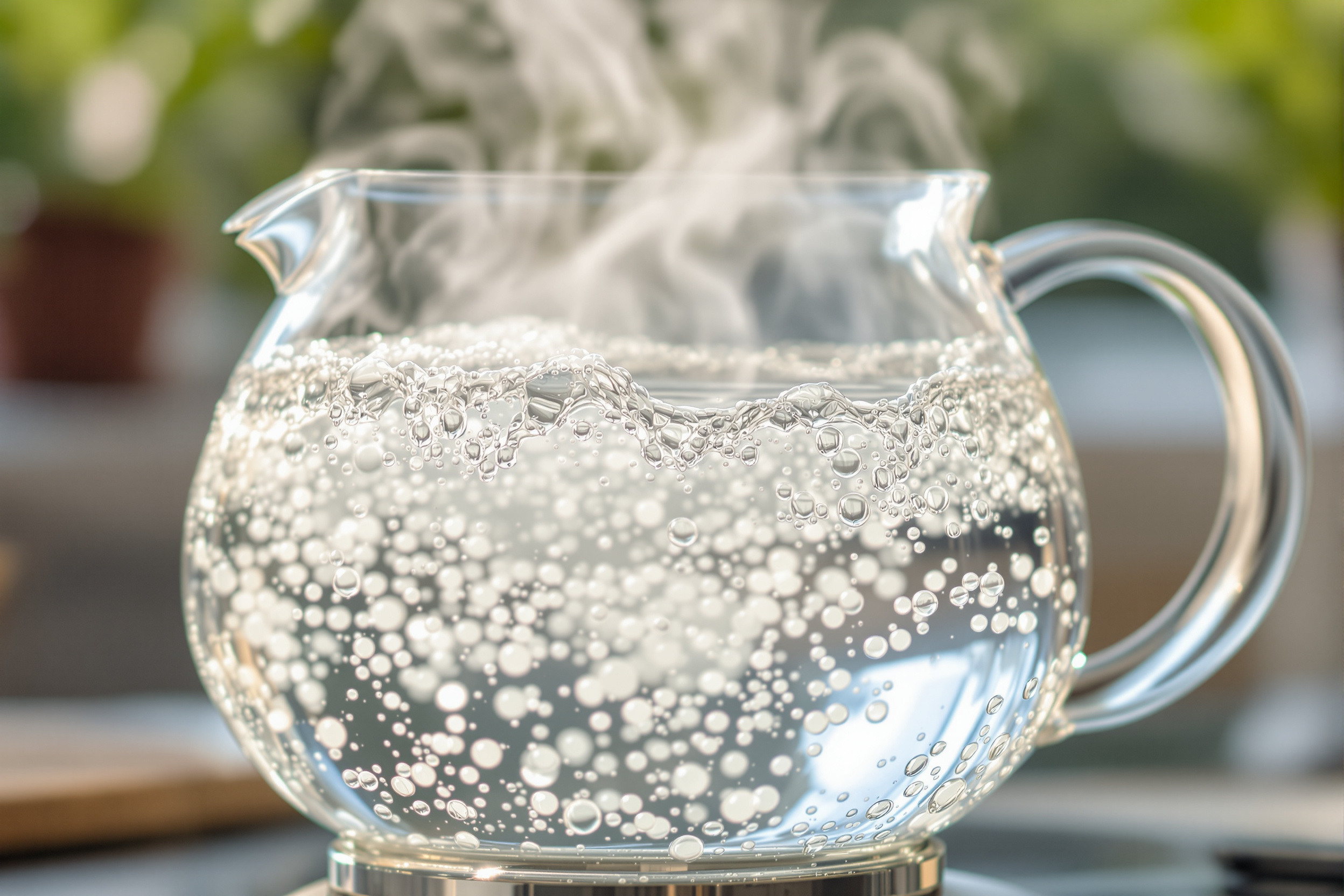
Does a new kettle shed more than an old one — and does hard water help?
Both effects showed up clearly in the research. A brand-new kettle sheds the most, because the freshly-molded plastic surface has loose material and manufacturing residue ready to come off; the release then tapers with use. That's why some manufacturers already tell you to boil and discard the water a few times before first use — it clears the worst of the initial burst.
Hard water helps too, in a way that's almost poetic: the minerals in real tap water gradually form a thin layer of scale inside the kettle, and that scale acts as a barrier between the water and the plastic. In the 2025 work, after about 40 days this mineral film cut microplastic release by more than 89% compared with deionized water. So the limescale you've been scrubbing off is partly protecting you — though a glass or steel kettle is a far more reliable fix than relying on scale build-up.
"The first boils in a new plastic kettle are the dirtiest. But the durable fix isn't discarding water forever — it's a kettle with no plastic for the boil to touch."
| Kettle Type | Plastic in Hot-Water Path | Notes |
|---|---|---|
| Plastic (polypropylene) kettle | High | Body/lid/window shed most when new and every boil; the design to skip |
| "Stainless" kettle with plastic lid or window | Moderate | Steel body helps, but hot water still touches plastic parts — check the lid and spout |
| Glass kettle | Low | Borosilicate body; only a small closure gasket remains, not the water path |
| All-stainless kettle | Lowest | Steel interior, lid, and spout — no polypropylene surface to shed |
Are the microplastics from a kettle dangerous?
Here's where honesty matters. The particle counts are real and large, but the study measured how much plastic is released — not what those particles do once you swallow them. On the specific question of harm from kettle-shed microplastics, the science doesn't have an answer yet, and no one should read a health verdict into numbers that weren't designed to give one.
What we do know is broader: microplastics are increasingly detected throughout the human body, and researchers are still working out what that means. Against that backdrop, the reasonable stance is proportion — not panic. But the kettle is unusual among plastic sources in one respect: it's cheap and permanent to fix. You don't have to prove the particles are harmful to decide that a glass kettle, which sheds nothing into your tea, is the better default.
You don't need to panic over the cup of tea you already drank. But of all the plastic sources in a kitchen, the kettle is one of the simplest to remove for good: a one-time swap to glass or stainless steel takes the plastic out of your daily boil entirely. That's exactly the kind of high-leverage change our kitchen plastic detox guide is built around.
How do you stop your kettle from adding microplastics?
Two moves cover it. First, take the plastic out of the boil: choose a kettle where hot water only ever touches glass or stainless steel — and check the details, because plenty of "stainless" kettles still have a plastic lid, sight window, or spout. Our full guide ranks the best non-toxic electric kettles on exactly this.
Second, clean up the water you’re boiling. Boiling doesn’t remove the microplastics already in your tap water — see our explainer on whether boiling water removes microplastics — so filter first. Not every pitcher qualifies: a standard Brita carries no microplastic certification, while the Brita Elite is certified at 0.5–1 micron under NSF/ANSI 401 — see the full Brita microplastics breakdown. A hollow-fiber pitcher rated near 1 micron cuts particle counts sharply across the full documented range; see the best water filter pitchers for microplastics and the broader water filter roundup. Filter, then boil in glass or steel, and you’ve closed both gaps. The picks below are the simplest, longest-lasting way to do it.
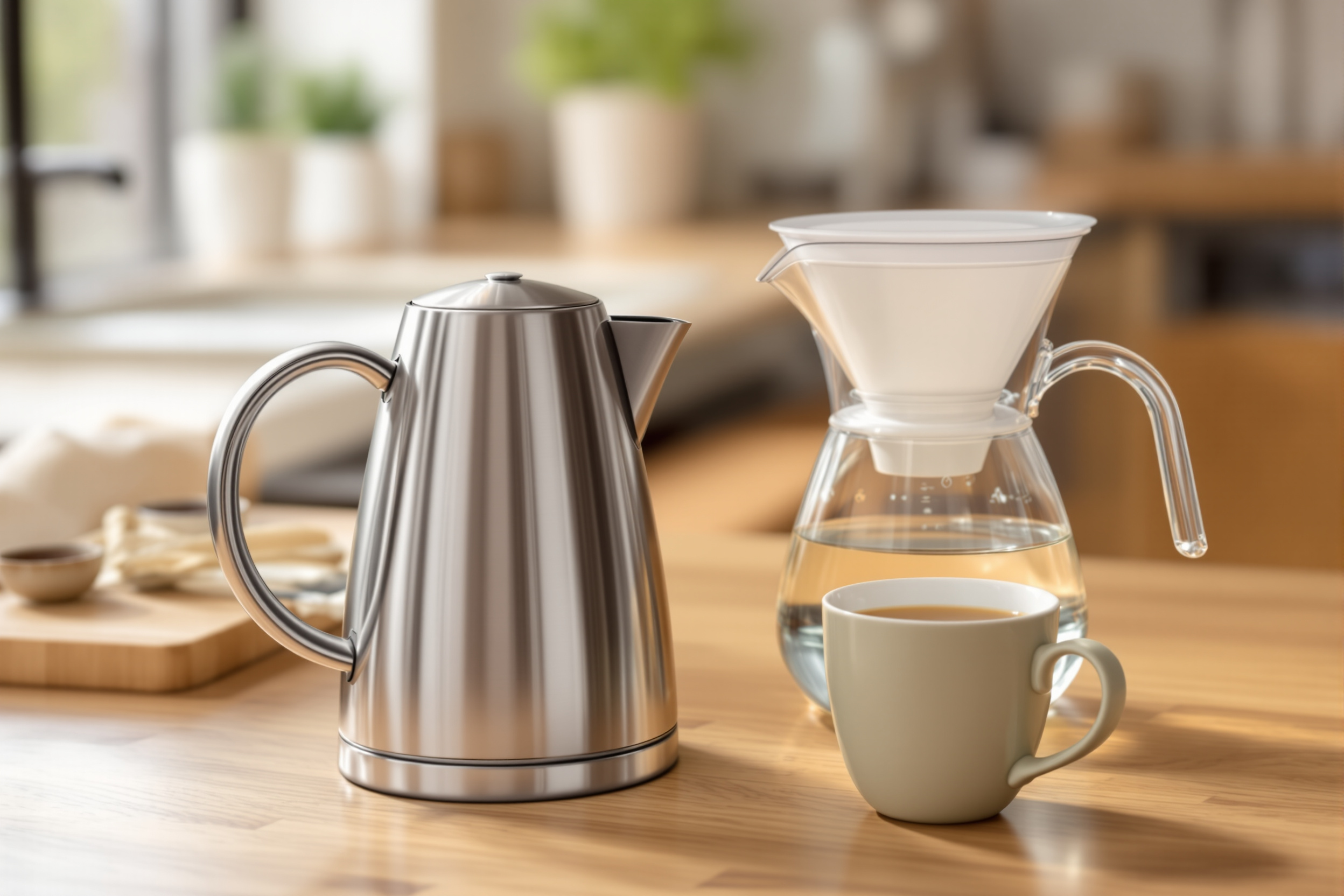
Take the plastic out of your daily boil
The kettle is one of the easiest plastic sources to remove for good. Switch to glass or stainless steel, then filter the water you boil — two one-time swaps that close the gap. And if you carry that tea out the door, pour it into a steel or ceramic mug rather than a disposable paper cup, whose plastic lining sheds microplastics into hot drinks.
The best glass and stainless-steel kettles (and filters) to cut microplastics
The fix for a shedding kettle is a kettle with no plastic in the water path — plus a filter for the water you pour into it. (Boiling water in a kettle to make up bottles? A hot plastic kettle is a poor choice for that job — see our best water filters for baby formula for the safest way to prepare it.) Every product below is a real, currently-sold model: three glass or all-stainless kettles that keep boiling water off plastic, two certified microplastic-reducing filters, and a steel bottle to carry your tea without going back to plastic. Prices and availability change, so check current listings.
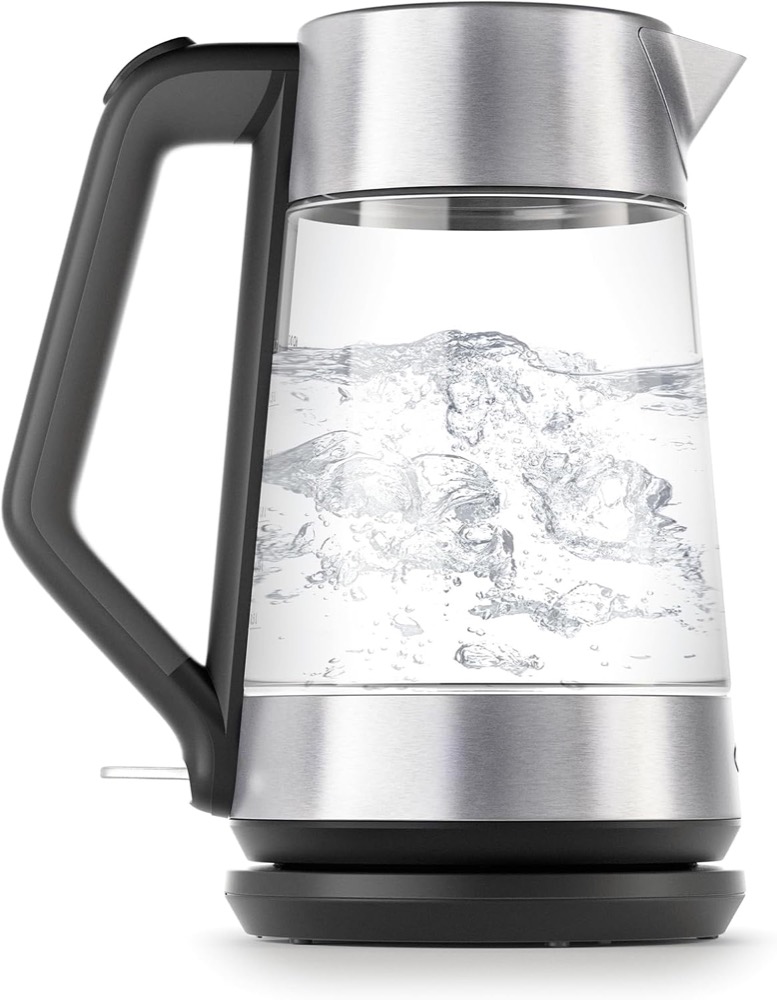
1. OXO Brew Cordless Glass Electric Kettle — Best Overall
 Best Overall
Reviewers rate the OXO around 84 percent favorable and single out how fast it boils compared with a microwave or stovetop, plus a glass body they like being able to see through. The lid is designed to release steam slowly, which several owners find sluggish to open when they are in a hurry. The honest downsides: there is no temperature-control setting, so tea drinkers who want a precise brew temperature look elsewhere; the glass needs care because it can break if dropped; and OXO says the warranty is voided if you do not descale it on schedule, so hard-water households have to keep up with cleaning.
Swap your plastic kettle for glass and the shedding mechanism simply has nothing to act on — boiling water touches only glass and steel, brew after brew, for years.
Why it's safe: The water path is borosilicate glass plus a stainless lid and spout — no polypropylene interior, so near-boiling water has no plastic surface to pull particles from.
Check Today’s Price on Amazon →Amazon prices change daily — tap to see today's price and any active discount.
- Free delivery & returns for Prime members
- Sold & shipped by Amazon
- Thousands of verified reviews
Because the kettle is where the heat meets the plastic, replacing it removes the problem at the source — and a glass kettle is the most reassuring way to do it, since you can literally see that nothing plastic touches the water. The OXO Brew pairs a borosilicate-glass body with a brushed-stainless lid and spout, so the entire hot-water path is glass and steel.
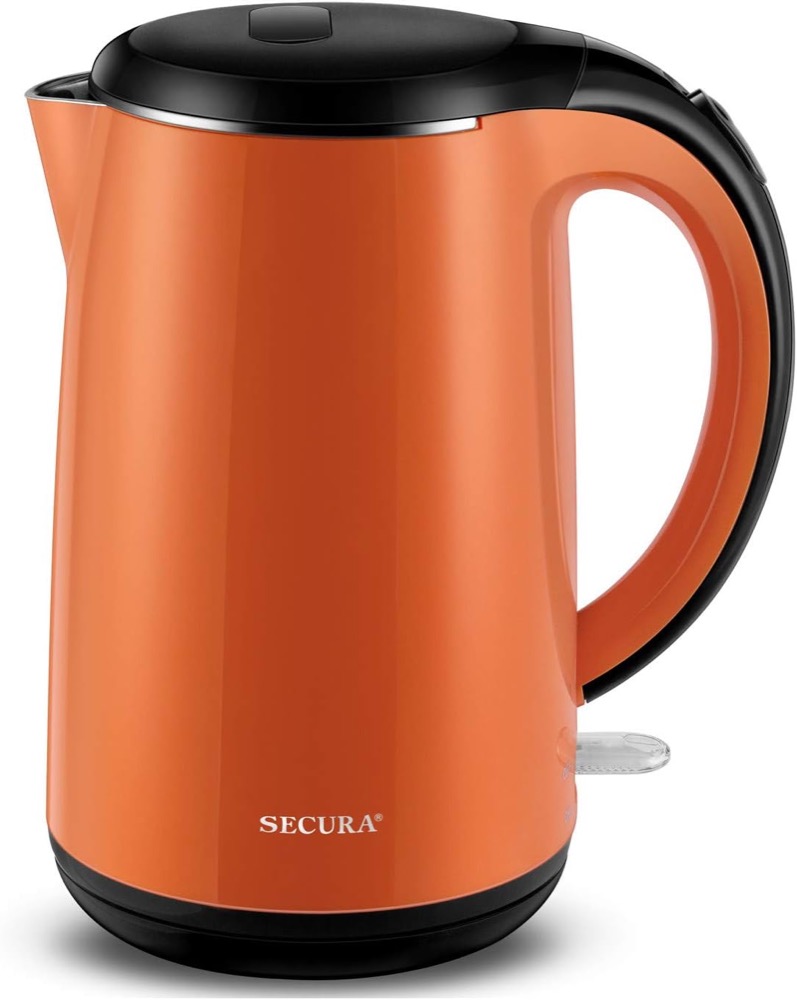
2. Secura Stainless Steel Double-Wall Electric Kettle — Best All-Stainless
 Best All-Stainless
The draw for owners is the double-wall build: hot water only touches stainless steel, the outside stays cool enough to hold, and testers confirmed the faster boil and better heat retention Secura advertises. Reviews split on noise, with some calling it quiet and others saying it rattles loudly until it shuts off. The honest gripes: it is marginal at slow, controlled pours; a few owners reported rust or a fine gray powder in the water after boiling, once even on a replacement unit; and the auto-shutoff relies on the lid, so when the lid broke the shutoff stopped working. Steam also escapes for a stretch before it clicks off, which can mark a wall if the kettle sits under a cabinet.
All the plastic-free benefit of a glass kettle in a body that won't shatter — a 304-stainless interior with a cool-touch outer wall, built to take daily use for years.
Why it's safe: Boiling water touches only 304 food-grade stainless steel — there's no polypropylene interior or sight window, so the heat has no plastic surface to shed from.
Check Today’s Price on Amazon →Amazon prices change daily — tap to see today's price and any active discount.
- Free delivery & returns for Prime members
- Sold & shipped by Amazon
- Thousands of verified reviews
If you'd rather not risk a glass kettle in a busy kitchen, the Secura is the all-metal answer: a 304-stainless interior with no plastic water window, wrapped in a double wall that stays cool to the touch. It's the most durable pick here, and it keeps boiling water on nothing but food-grade steel.
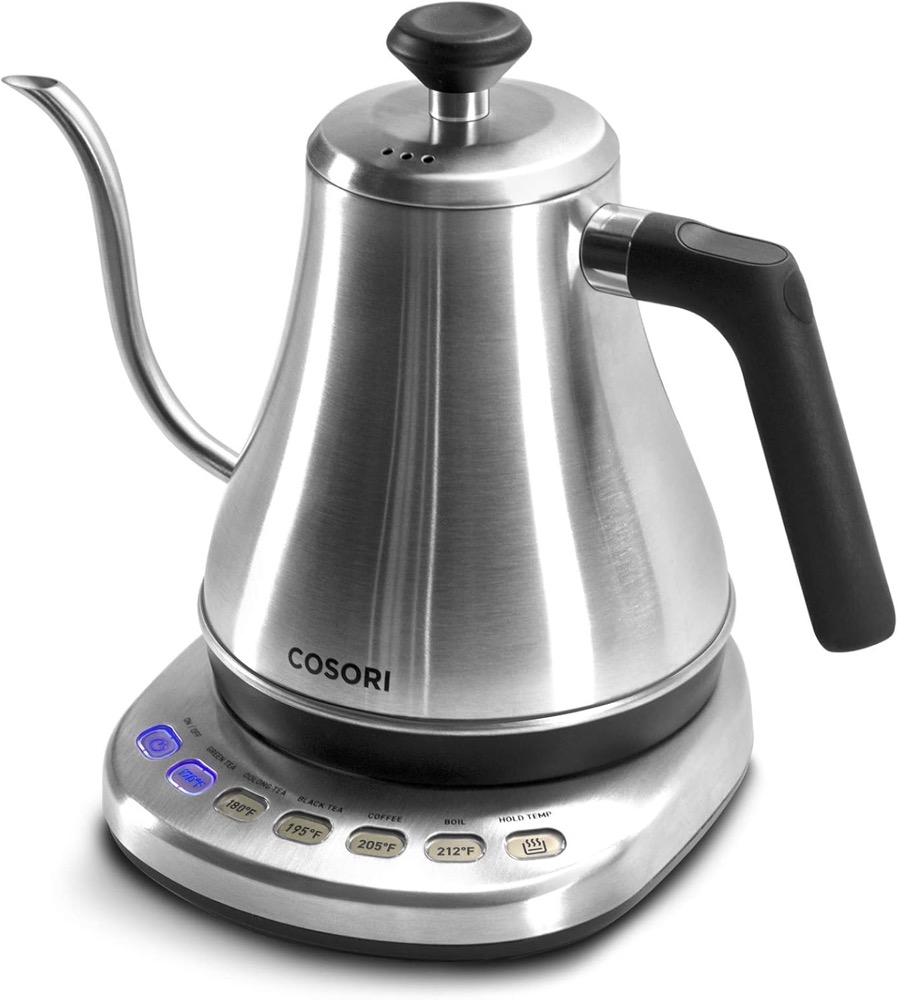
3. COSORI Gooseneck Electric Kettle — Best for Tea & Pour-Over
 Best for Tea & Pour-Over
Pour-over and tea drinkers pick the COSORI for its precise temperature control and quick heating, and many mention it looks good on the counter. The honest downsides show up in daily use: some owners say the controls freeze a couple of times a week and need the kettle unplugged for five seconds to reset; the finished-boil beep is too quiet to hear unless you are standing next to it, and a few report the temperature sensor quitting entirely; and app updates can wipe saved settings. One more small annoyance owners flag is that the lid can be hard to pull off.
Dial in the exact temperature for green tea or a pour-over and pour with control — all on a stainless water path, so precision doesn't come with a plastic tax.
Why it's safe: The inner lid, body, and gooseneck spout are stainless steel — your water contacts metal from base to pour, with no polypropylene surface for the boil to shed.
Check Today’s Price on Amazon →Amazon prices change daily — tap to see today's price and any active discount.
- Free delivery & returns for Prime members
- Sold & shipped by Amazon
- Thousands of verified reviews
Serious tea and coffee drinkers want temperature control and a controlled pour — and the COSORI delivers both on a stainless water path. The gooseneck spout makes it a favorite for pour-over, the presets let you match the heat to the leaf, and because the inner lid, body, and spout are steel, none of that precision comes at the cost of plastic in the boil. Pair it with a brewer that keeps the rest of the process plastic-free — our guide to the best plastic-free coffee makers covers glass pour-overs and all-steel French presses. And to carry that brew out the door on the same plastic-free path, a non-toxic travel mug keeps hot coffee or tea against glass or 18/8 steel instead of a plastic-lined lid.
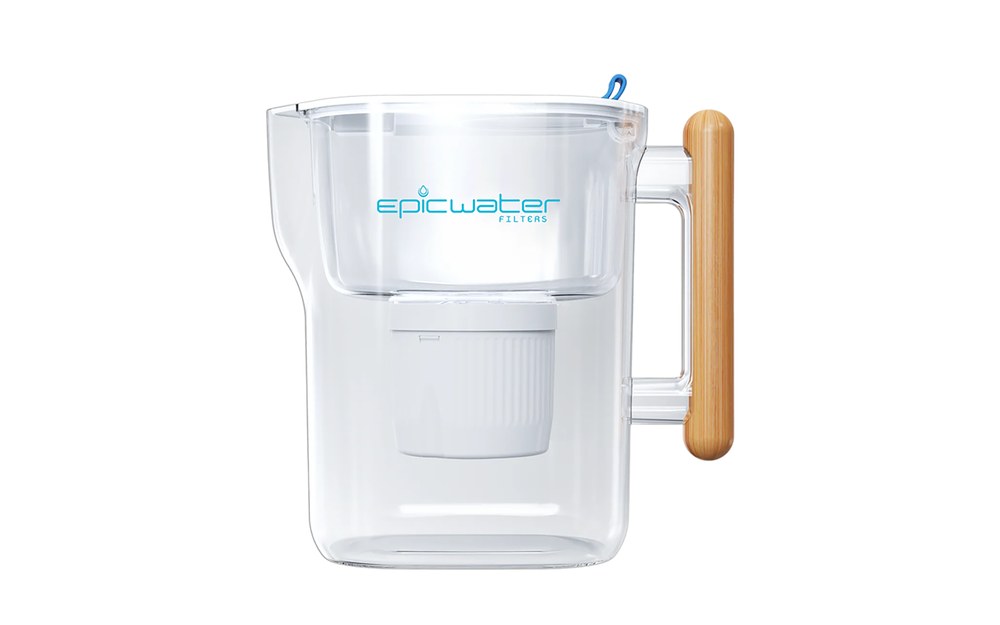
4. Epic Pure Water Filter Pitcher — Best Water Filter
 Best Water Filter
Owners who choose the Epic Pure do it for the filtration, and independent testers back the claim that its dense carbon block pulls out more than most pitcher filters. That thoroughness is also the main complaint: water crawls through it, taking roughly eleven to twelve minutes to fill a pitcher, slower than a ZeroWater. The honest downsides beyond speed: it is awkward to refill and pour when full; the dust flap does not always open cleanly, causing the odd spill; the lid can feel loose while there is still water in the top reservoir; and a few buyers report cracked plastic on the pitcher body.
Boiling won't remove the microplastics already in your tap water — so filter first, then boil in glass or steel. Epic posts its independent lab results publicly, so you can see the 99.9% microplastic-removal data instead of trusting a slogan.
Why it's safe: The hollow fiber membrane physically blocks microplastic particles down to ~1 micron, while the carbon stage handles chlorine, lead, and PFAS — all in a BPA-free Tritan body.
Check Today’s Price on Amazon →Amazon prices change daily — tap to see today's price and any active discount.
- Free delivery & returns for Prime members
- Sold & shipped by Amazon
- Thousands of verified reviews
A better kettle stops your appliance from adding plastic; a filter cleans up what's already in the water. Because boiling doesn't remove microplastics on its own, filtering first is the other half of the fix. The Epic Pure is the clearest choice: its dual-stage design uses a hollow fiber membrane as the primary microplastic barrier, and Epic publishes the independent lab results to back the 99.9% removal claim.
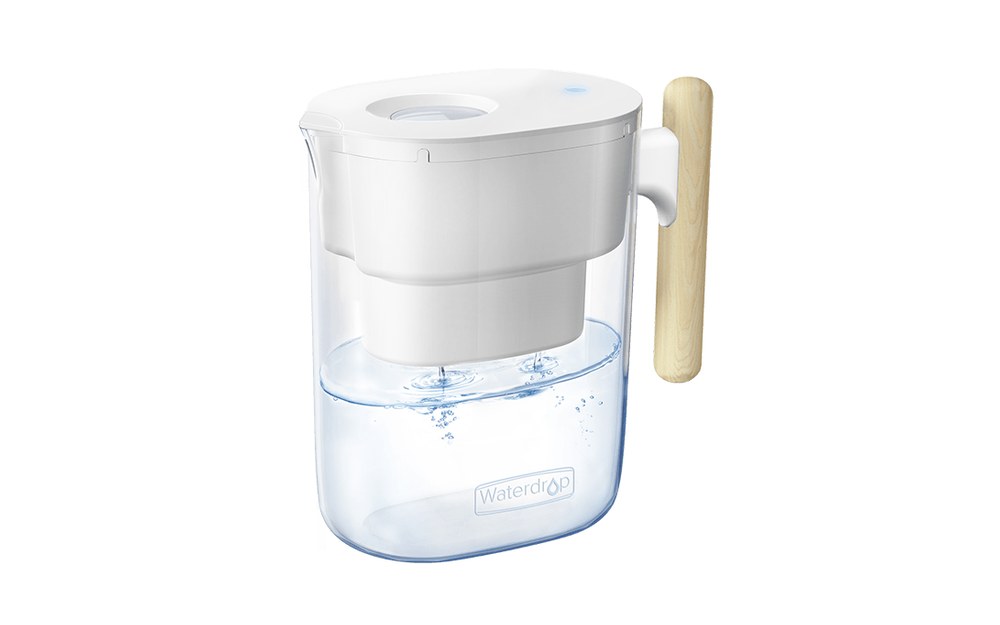
5. Waterdrop Chubby 10-Cup Pitcher — Best Certification (NSF P473)
 Best Filter Life
Around 80 percent of reviews run positive, and owners like that the Chubby cuts chlorine by more than 90 percent, filters a full reservoir in under three minutes, and takes a 200-gallon filter that lasts about three months. The look gets mentioned a lot too. The honest gripes: it is heavy, close to ten pounds full, and that weight stresses the handle, which some owners say can crack, so they lift with two hands; it dribbles down the side when pouring; the change-filter indicator did not light up for one buyer after two months; and a few found loose plastic beads from the filter in the reservoir.
A membrane blocks particles by pore size rather than by claim list, and its 200-gallon filter runs about 4 to 5 months — the lowest ongoing cost on the list.
Why it's safe: A hollow fiber membrane is a physical barrier to particles, while the carbon composite handles chlorine, heavy metals, and PFAS — all in a BPA/BPS-free body.
Check Today’s Price on Amazon →Amazon prices change daily — tap to see today's price and any active discount.
- Free delivery & returns for Prime members
- Sold & shipped by Amazon
- Thousands of verified reviews
If you want a membrane rather than a claim list, the Waterdrop Chubby has it — a hollow fiber pore size, on Waterdrop’s own published lab data — plus the longest filter life on the market at 200 gallons (about 4–5 months for most households). Filter your water with this, then boil it in a glass or steel kettle, and you've closed both gaps at once.
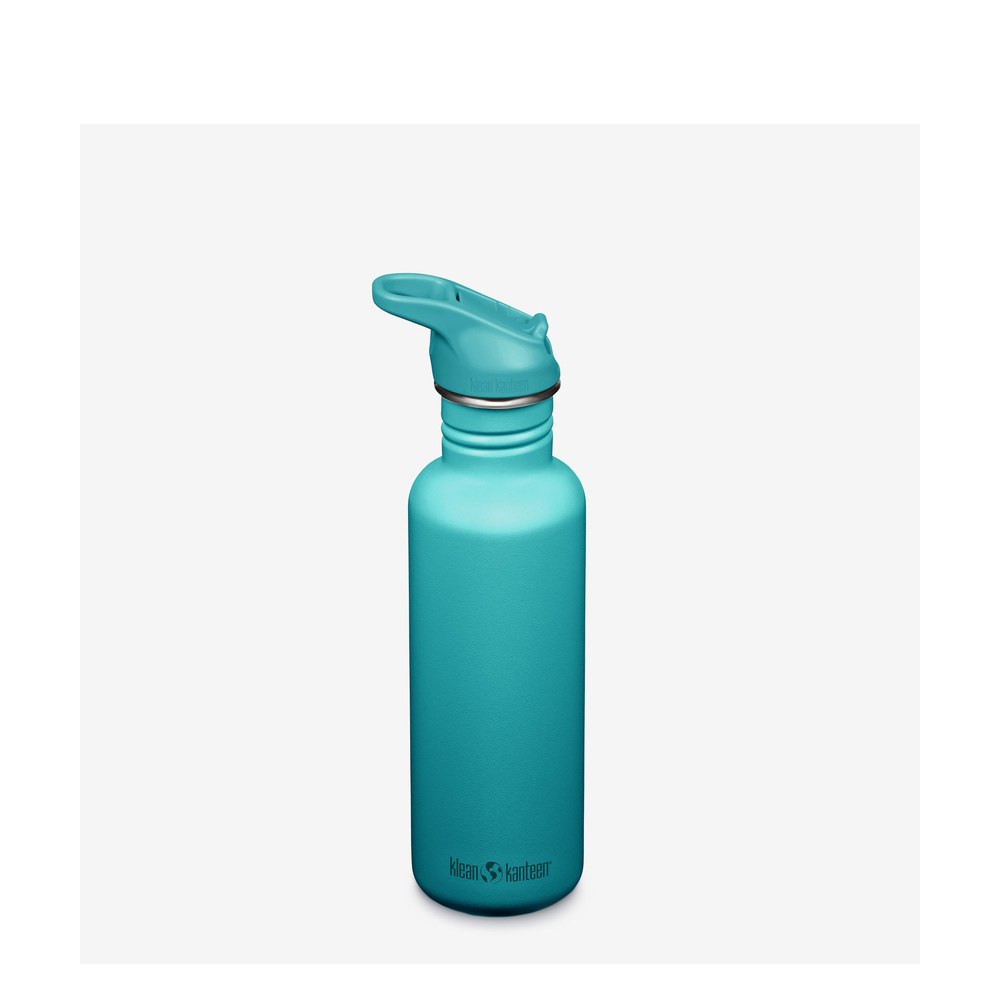
6. Klean Kanteen Classic 27oz — Best for Tea On the Go
 Best for Tea On the Go
Once you've boiled in glass or steel, don't pour it back into plastic. The Klean Kanteen Classic is made from 18/8 food-grade stainless steel with single-wall construction — the interior is nothing but bare metal, with no liner, coating, or plastic contact surface. Pair it with the all-steel Loop Cap and there's no plastic in the drinking path at all; only a small food-grade silicone gasket remains. It's the lightest and cheapest option here, and the simplest to trust: there's simply nothing in it that can shed plastic into your tea or filtered water.
Owners keep the Classic 27oz for years and praise its plain 18/8 stainless build, the size, and a loop cap that survives heavy use. The honest downsides: the optional sport cap draws the most complaints for leaking and wearing out, with some buyers switching brands over it; as a single-wall bottle it warms up in the sun and is not meant to hold temperature; it dents if dropped on a hard floor; and the pop spout can get, in one owner's word, grotty and is fiddly to clean inside. Several also call the price steep for what is a basic bottle.
Carry the tea or filtered water you made plastic-free without undoing it — bare 18/8 steel inside and an all-steel cap option, ideal for the commute or the desk.
Why it's safe: The only thing your drink touches is 18/8 food-grade stainless steel — no plastic lining, no coating, and no microplastic shedding, even after years of daily use.
Check Today’s Price on Amazon →Amazon prices change daily — tap to see today's price and any active discount.
- Free delivery & returns for Prime members
- Sold & shipped by Amazon
- Thousands of verified reviews
Want the Full Home Protection Guide?
The kettle is one plastic touchpoint among dozens in a typical day. The Complete Plasticproof Guide covers every room — kitchen, nursery, bathroom, bedroom — with 80+ product recommendations backed by 47+ studies.
The honest verdict
Do electric kettles have microplastics? If yours has plastic in the water path, yes — the 2025 npj Emerging Contaminants study measured about 3 billion nano- and microplastic particles in a single cup from a new polypropylene kettle's first boil, dropping to roughly 205 million per cup after hundreds of boils but never reaching zero. Heat drives it, new kettles shed the most, and hard-water scale slows it down. That part is real. But the study measured how much plastic is released, not what it does to you — so the accurate takeaway is proportion, not alarm.
What makes the kettle different from most plastic worries is how cheap and permanent the fix is. A one-time swap to a glass or all-stainless kettle takes plastic out of your daily boil for good, and filtering the water first cleans up what your tap already carries. You don't have to prove the particles are harmful to decide that a glass kettle — which sheds nothing into your tea — is simply the better default.
Take plastic out of your daily boil
A glass or steel kettle and a certified filter remove the plastic your appliance adds and the plastic your tap carries — two one-time swaps that stick.
Frequently Asked Questions
If the kettle has plastic parts that touch the hot water, yes. A 2025 study in npj Emerging Contaminants tested polypropylene plastic kettles and found the first boil in a new kettle released about 12 million nanoparticles per milliliter — roughly 3 billion nano- and microplastic particles in a single 250 ml cup. A glass or all-stainless kettle avoids the plastic hot-water contact that drives this.
In the 2025 kettle study, a brand-new polypropylene kettle shed the most on its very first boils — on the order of 3 billion particles per cup. The number fell sharply with repeated use, but even after hundreds of boils the researchers still measured roughly 205 million particles per cup, so the release never reached zero over the life of the test.
Yes. Heat is the driver. The release rose steeply as the water temperature climbed toward boiling, because the near-100°C heat physically works tiny fragments loose from the polypropylene surface. It is a physical shedding process rather than a chemical reaction, which is why a kettle sheds far more than the same plastic holding cold water.
It appears to help over time. In the 2025 research, minerals in real tap water formed a thin protective scale film inside the kettle, and after about 40 days that film cut microplastic release by more than 89% compared with deionized water. It reduces shedding but does not eliminate it, and a glass or steel kettle is the more reliable fix.
Choose a kettle where hot water only ever touches glass or stainless steel. A borosilicate-glass kettle or an all-stainless kettle with a steel interior (including the lid and spout) has no plastic in the water path, so there is no polypropylene surface for boiling water to shed. Watch for plastic sight windows, lids, or spouts on "stainless" kettles.
If you are keeping a plastic kettle, yes — discarding the first few boils of a brand-new kettle removes the initial burst of particles, which is when shedding is highest. It is a useful stopgap, but it does not stop the ongoing release, so the durable fix is switching to a glass or stainless-steel kettle and filtering the water you boil.
Sources
- "Release of nanoplastic from polypropylene kettles." npj Emerging Contaminants (Nature Portfolio), 2025 — measured nano- and microplastic release from polypropylene kettles, including ~12 million nanoparticles/mL on the first boil (~3 billion per 250 ml cup) and the protective effect of hard-water scale.
- Yu Z, Wang Y, Zeng EY, et al. "Drinking Boiled Tap Water Reduces Human Intake of Nanoplastics and Microplastics." Environmental Science & Technology Letters, 2024 — on how mineral scale from boiling hard water can encapsulate microplastics.
- Leslie HA, van Velzen MJM, Brandsma SH, et al. "Discovery and quantification of plastic particle pollution in human blood." Environment International, 2022.
- Cox KD, Covernton GA, Davies HL, et al. "Human Consumption of Microplastics." Environmental Science & Technology, 2019.
- US FDA. "Microplastics and Nanoplastics in Foods." fda.gov.