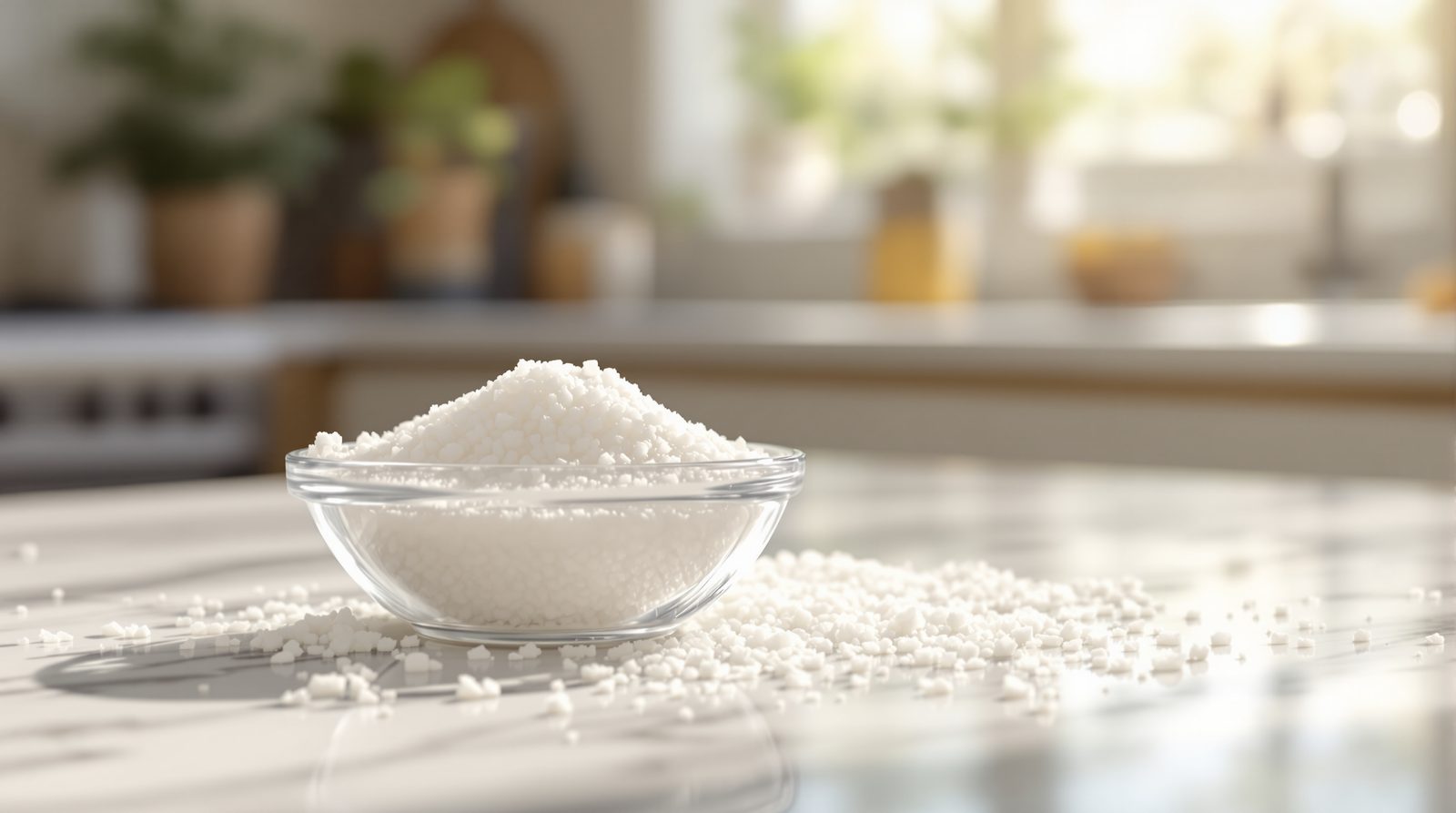
Most salt contains microplastics. A 2018 study in Environmental Science & Technology tested 39 salt brands from 21 countries and found plastic particles in all but three, and a widely cited review put it at more than 90% of the salt sampled worldwide. Sea salt is the most contaminated because it is evaporated straight from increasingly plastic-polluted seawater; mined rock salt and lake salt test positive too, but usually lower. The important caveat: the studies measured how much plastic is present, not any effect on health, and salt is a small source next to your drinking water and food. So it's a reason to choose salt more carefully — not to panic.
Salt feels like it should be exempt. It's one of the oldest, simplest things in the kitchen — a mineral, scooped from the sea or dug from a mine, with nothing added. That “natural sea salt is the purest” feeling is itself one of the most common microplastics myths, and that's exactly why the research is jarring: when scientists started running table and sea salt under a microscope, they kept finding the same thing floating in it that they find in the ocean, in tap water, and in our own blood — tiny fragments of plastic. The same surprise has since turned up in other things nobody suspects, from honey to milk to the sugar in your bowl and the beer in your glass — in fact, one 2023 study tested table salt and sugar side by side and found microplastics in every sample of both, and the landmark 2018 study that put plastic in salt on the map tested beer and tap water in the very same paper. And because sea salt is simply evaporated seawater, it shares its plastic problem with the animals that live in that water: see our guide to microplastics in seafood.
Over the last decade, teams in South Korea, China, Spain, the United States, and elsewhere have tested salt from around the globe, and the results line up. This guide walks through exactly what they found, which salts are worst and which are cleaner, whether the amount is worth worrying about (the honest answer is calmer than the headlines), and where the microplastics you swallow really come from — so you can spend your effort where it actually counts.
The bottom line up front: salt is a real but small source of the microplastics you ingest. Choose lower-contamination salt where it's easy, then aim your effort at the big controllable sources — see our ranking of which foods have the most microplastics, why tap and bottled water are top sources, and the room-by-room kitchen plastic detox guide.
Does salt have microplastics?
For most salt, the honest answer is yes. The landmark study came in 2018, when researchers in South Korea analyzed 39 salt brands sourced from 21 countries across six continents and published the results in Environmental Science & Technology. They found microplastics in all but three of the brands. A broadly cited summary of the global research put the figure at more than 90% of salt brands sampled worldwide containing plastic particles — a number echoed by separate studies of salt from China, Europe, and the Americas.
It makes uncomfortable sense once you think about where salt comes from. Sea salt is simply seawater with the water removed, so whatever plastic is floating in that ocean gets left behind and concentrated in the crystals. And our oceans are saturated with it: an estimated millions of tons of plastic enter the sea every year, breaking down into the same microscopic fragments that turn up in bottled water and seafood. Salt is, in effect, a snapshot of how polluted its source water was.
Which salt has the most microplastics?
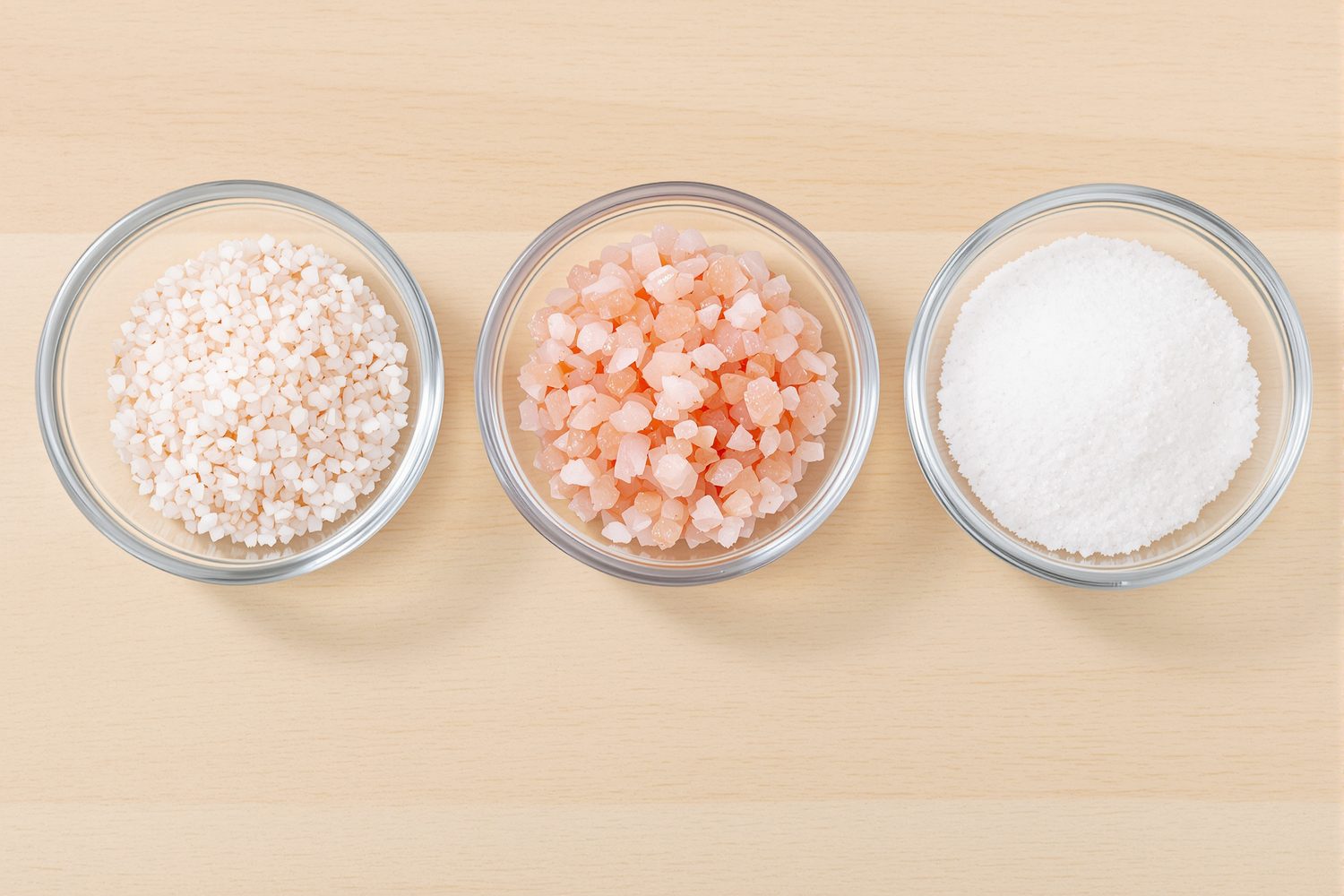
Not all salt is equally contaminated, and the difference comes down to the source. Sea salt was consistently the worst in the global studies, because it is evaporated directly from today's plastic-polluted oceans. Rock salt — including the mined Himalayan pink salt that's become fashionable — comes from ancient underground deposits that were sealed off long before the plastic era, so it generally tests lower. Lake salt lands in between, depending on the lake.
The 2018 study put rough numbers on it: sea salts ran from essentially zero up to about 1,674 particles per kilogram (with a single Asian sea-salt outlier measured far higher), rock salt from 0 to about 148 per kilogram, and lake salt from about 28 to 462 per kilogram. Crucially, no salt tested completely clean, and results swung brand to brand even within a category — so type is a useful guide, not a guarantee. The table below sorts out how the main kinds compare.
| Salt Type | How It's Made | Microplastic Load |
|---|---|---|
| Sea salt | Evaporated from ocean water | Highest — concentrates ocean plastic |
| Table salt (refined) | Usually mined rock salt, refined + anti-caked | Lower, but more processed with additives |
| Rock / Himalayan pink salt | Mined from ancient underground deposits | Among the lowest in testing |
| Lake salt | Evaporated from inland salt lakes | Variable — depends on the lake |
| Fleur de sel / hand-harvested | Skimmed from coastal evaporation ponds | Sea-derived, so similar to sea salt |
How much microplastic do you actually eat from salt?
Less than the scary headlines imply, once you do the arithmetic. The particle-per-kilogram counts sound enormous, but people eat only a small amount of salt — health authorities suggest keeping it under about 5 grams a day, and the actual average is a few grams. Working from the 2018 data, the researchers estimated a typical adult ingests on the order of a couple of thousand microplastic particles per year from salt, with heavy sea-salt users somewhat higher.
To put that in context, other estimates suggest people swallow tens of thousands of microplastic particles a year from all sources combined, with drinking water and airborne dust among the biggest contributors. So salt is a real, measurable source — but a modest slice of the total, and one where the plastic is baked into the crystals rather than added by handling. That shapes the sensible response: you can't rinse it out, so the leverage is in what salt you buy and how you store it.
"Salt is an honest mirror of its source water. The plastic in a bag of sea salt didn't come from a factory — it came from the ocean we've been filling with it."
Can you remove microplastics from salt?
Not in any practical way at home. This is the frustrating part: water can be run through a certified filter, but once plastic fragments are embedded in salt crystals, there's no kitchen method that cleans them out. Dissolving and re-filtering salt is impractical and would strip the trace minerals people often buy sea salt for in the first place.
So the realistic levers are all upstream of your saltshaker. Favor lower-contamination types like mined rock or Himalayan salt over sea salt when it's easy. Buy salt packaged in glass, cardboard, or paper rather than plastic pouches, since plastic packaging is itself a documented source of particle contamination in food packaging — the same salt is what carries plastic into canned food, too. Decant it into a glass or ceramic cellar at home. None of this makes salt perfect — but it trims the avoidable part without pretending you can undo the rest.
Are the microplastics in salt dangerous?
Here's where honesty matters. The counts are real and reproducible, but these studies were designed to measure how much plastic is present in salt — not to test what those particles do once they're inside a person. On the specific question of harm, the salt research simply doesn't have an answer, and no one should read a health verdict into it that the data can't support.
What we do know is broader: microplastics are now being detected throughout the human body — in blood, organs, and even the brain — and researchers are still working out what, if anything, that means. Against that backdrop, salt is a small and largely unavoidable source. The reasonable stance is neither panic nor dismissal: you don't have to prove the particles are harmful to decide that trimming the avoidable exposure is worth doing, or that the bigger sources deserve more of your attention.
Don't throw out your saltshaker. Salt is a minor exposure next to the water you drink and the food you store and heat in plastic all day. The useful move is to choose lower-contamination salt where it's easy and store it in glass — then spend your real effort on the big sources you can control. That's the whole logic behind our kitchen plastic detox guide.
How do you reduce the microplastics you actually swallow?
Put salt in perspective and the priorities get obvious. The two biggest controllable sources of the microplastics in your diet aren't salt at all — they're your drinking water and the plastic your food is stored and heated in. Fix those and you remove far more plastic than you ever could by agonizing over which salt to buy. And before you tackle the kitchen, consider the bathroom: a 2025 peer-reviewed study (Ecotoxicology and Environmental Safety, Wang et al.) measured conventional nylon toothbrush bristles releasing roughly 2.33 million microplastic particles per person per year during normal twice-daily brushing — tens of times more than any dietary salt intake. Switching to a microplastic free toothbrush with plant-based bristles is a one-time change that removes the single largest measured daily oral source. A comparable bathroom-then-kitchen fix on the tea shelf: swap any nylon-mesh or heat-sealed pyramid bag for one of the safest tea bags, since a single plastic mesh bag can release more microplastic in one cup than a year of salted meals.
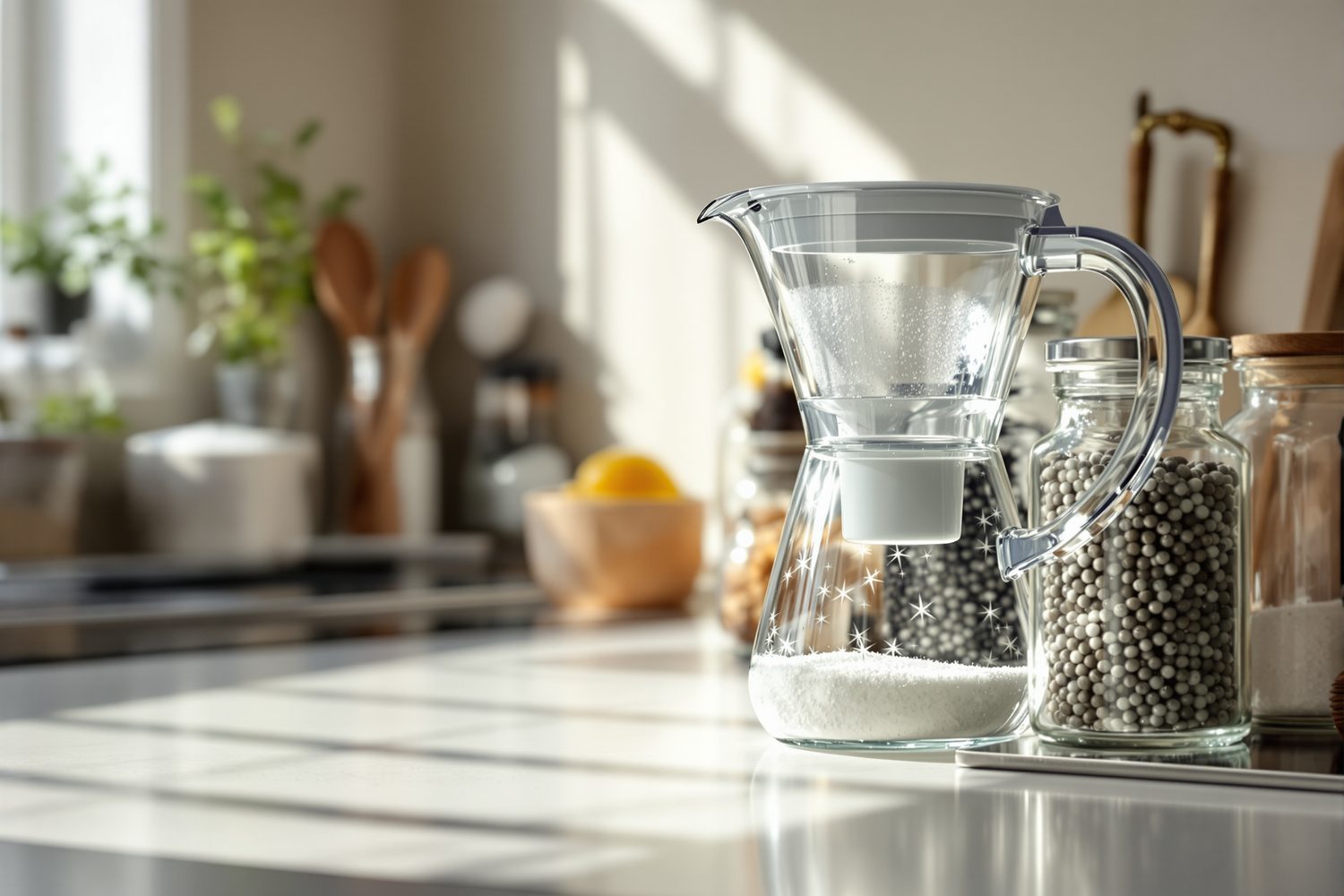
Start with water, because it's the highest-volume thing you put in your body — and unlike salt, it's the one source you genuinely can filter. A pitcher that carries a specific microplastics claim — certified under NSF/ANSI 401, or a rated membrane pore size — cuts particle counts dramatically; see our full guide to the best water filter pitchers for microplastics and the broader water filter roundup. If you want the most complete removal — the closest thing to purified salt-free water — a countertop water distiller boils and re-condenses water, leaving particles and dissolved solids behind. Then get food off plastic: store leftovers, prepped ingredients, and yes, your salt, in glass or platinum silicone instead of plastic tubs and bags, and never microwave food in plastic. The picks below are the simplest, longest-lasting ways to do both.
Fix the sources that actually matter
Salt is a rounding error next to your water and food storage. Start where the volume is: filter your tap water, and move food out of plastic.
The swaps that cut the most plastic you swallow
There's no such thing as "microplastic-free salt" you can buy off the shelf, and you can't filter salt the way you filter water. So instead of padding this out with products that don't exist, here are the real, currently-sold tools that remove far more plastic from your diet than salt ever adds — certified water filters and glass or platinum-silicone food storage (a glass cellar is also the tidiest place to keep your salt). Prices and availability change, so check current listings.
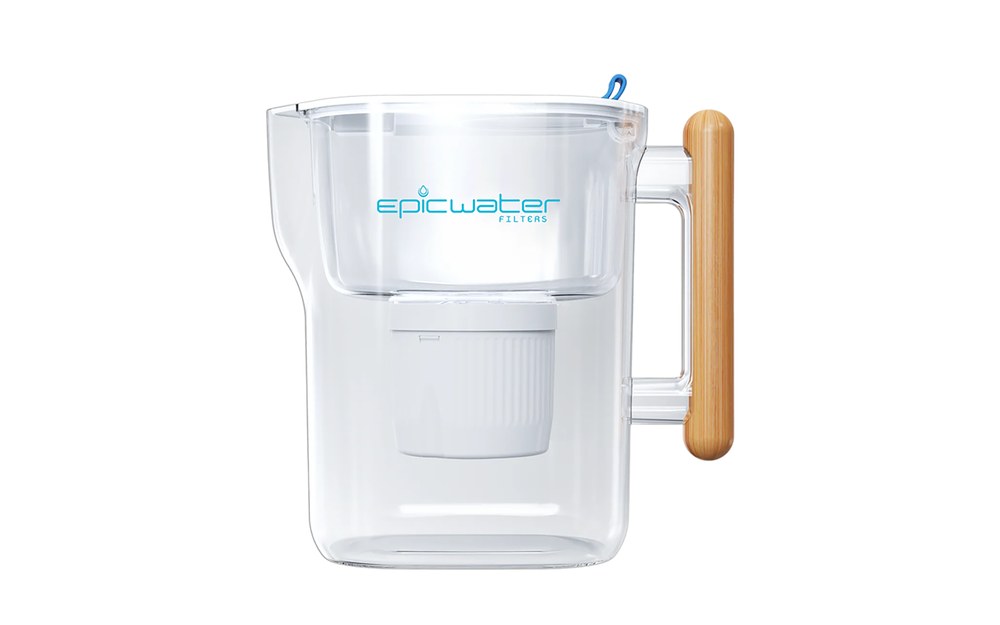
1. Epic Pure Water Filter Pitcher — Best Overall for Microplastics
 Best Overall
Reviewers point to published independent lab data and a filter rated around 150 gallons, far longer than a Brita, as the reasons they trust it, and several describe the slow, deliberate drip as reassuring rather than annoying. The honest downsides: owners report the filtration is genuinely slow and not the pick if you want a glass of water in a hurry, and third-party complaints mention cracked plastic, flip-top lids that stick, and water that spills or leaks from the lid when you pour a full pitcher.
The clearest evidence on this list: Epic posts its independent lab results publicly, so you can see the 99.9% microplastic-removal data instead of trusting a slogan on the box.
Why it's safe: The hollow fiber membrane physically blocks microplastic particles down to ~1 micron, while the carbon stage handles chlorine, lead, and PFAS — all in a BPA-free Tritan body.
Check Today’s Price on Amazon →Amazon prices change daily — tap to see today's price and any active discount.
- Free delivery & returns for Prime members
- Sold & shipped by Amazon
- Thousands of verified reviews
Because tap water is the single highest-volume thing most people put in their bodies, filtering it removes more microplastics than any other single swap. The Epic Pure is the clearest choice: its dual-stage design uses a hollow fiber membrane as the primary microplastic barrier, and Epic publishes the independent lab results to back the 99.9% removal claim — transparency most competitors don't match.
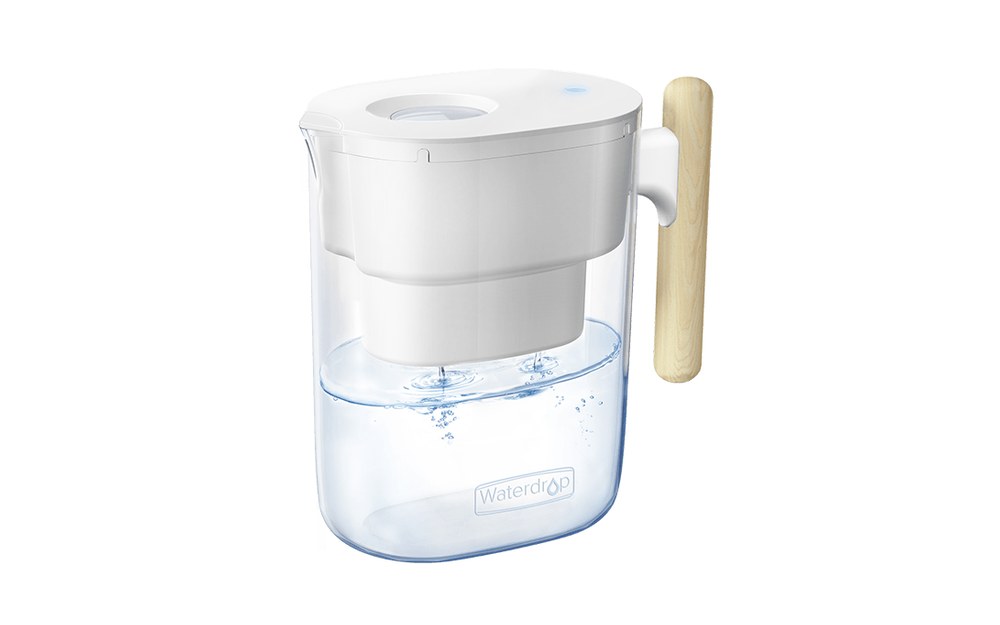
2. Waterdrop Chubby 10-Cup Pitcher — Best Filter Life
 Best Filter Life
Owners like the look and the long 200-gallon filter life, and roughly 80 percent of reviews land positive, with the common praise being clean-tasting water at a low cost per gallon. The honest gripes: several owners warn the handle can feel loose or strain under a full pitcher, so they lift with two hands; some report the pour spills if you tip too fast; and the change-filter indicator light draws complaints for not lighting or not staying lit.
A membrane blocks particles by pore size rather than by claim list, and its 200-gallon filter runs about 4 to 5 months — the lowest ongoing cost on the list.
Why it's safe: A hollow fiber membrane is a physical barrier to particles, while the carbon composite handles chlorine, heavy metals, and PFAS — all in a BPA/BPS-free body.
Check Today’s Price on Amazon →Amazon prices change daily — tap to see today's price and any active discount.
- Free delivery & returns for Prime members
- Sold & shipped by Amazon
- Thousands of verified reviews
If you want a membrane rather than a claim list, the Waterdrop Chubby has it — a hollow fiber pore size, on Waterdrop’s own published lab data — plus the longest filter life on the market at 200 gallons (about 4–5 months for most households). The "filter while you pour" design works just like a familiar counter pitcher, but with a membrane that's actually tested for microplastics.
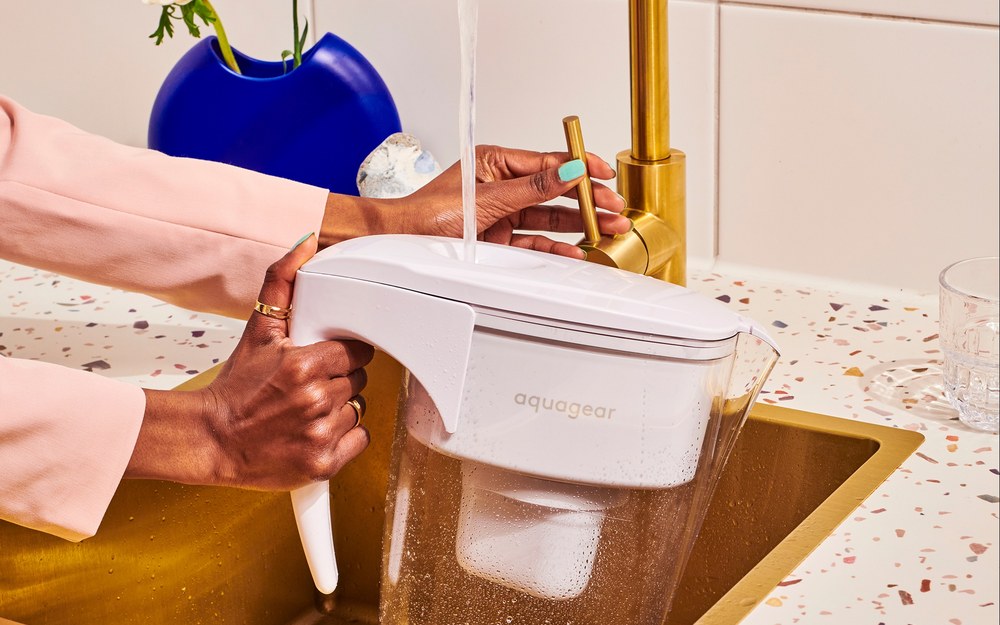
3. Aquagear Water Filter Pitcher — Best Filter Life
 Best Filter Life
Owners choose it for broad contaminant removal and clean taste, and some lab testing found it did not clog. The honest downsides: the most repeated complaint is slow filtration, described by one reviewer as a mixed bag between people waiting minutes and people waiting hours, and it can worsen as the filter ages; and the design draws gripes, with the pour-spout cover popping out and spraying water and a lid that fits poorly and can pop off mid-pour.
Change the filter half as often as most pitchers — 150 gallons per cartridge means fewer replacements, lower annual cost, and less to remember.
Why it's safe: A 5-stage filter with a sub-micron membrane stage captures microplastics, lead, fluoride, and chlorine, in a BPA-free body with USA-made filter media.
Check Today’s Price on Amazon →Amazon prices change daily — tap to see today's price and any active discount.
- Free delivery & returns for Prime members
- Sold & shipped by Amazon
- Thousands of verified reviews
The Aquagear costs more upfront but its 150-gallon filter life means lower annual replacement costs than most competitors, and the pitcher body is guaranteed for life. It uses a 5-stage filter with a sub-micron membrane stage that targets microplastics, heavy metals, and fluoride — a good fit for families who don't want to track filter changes constantly.
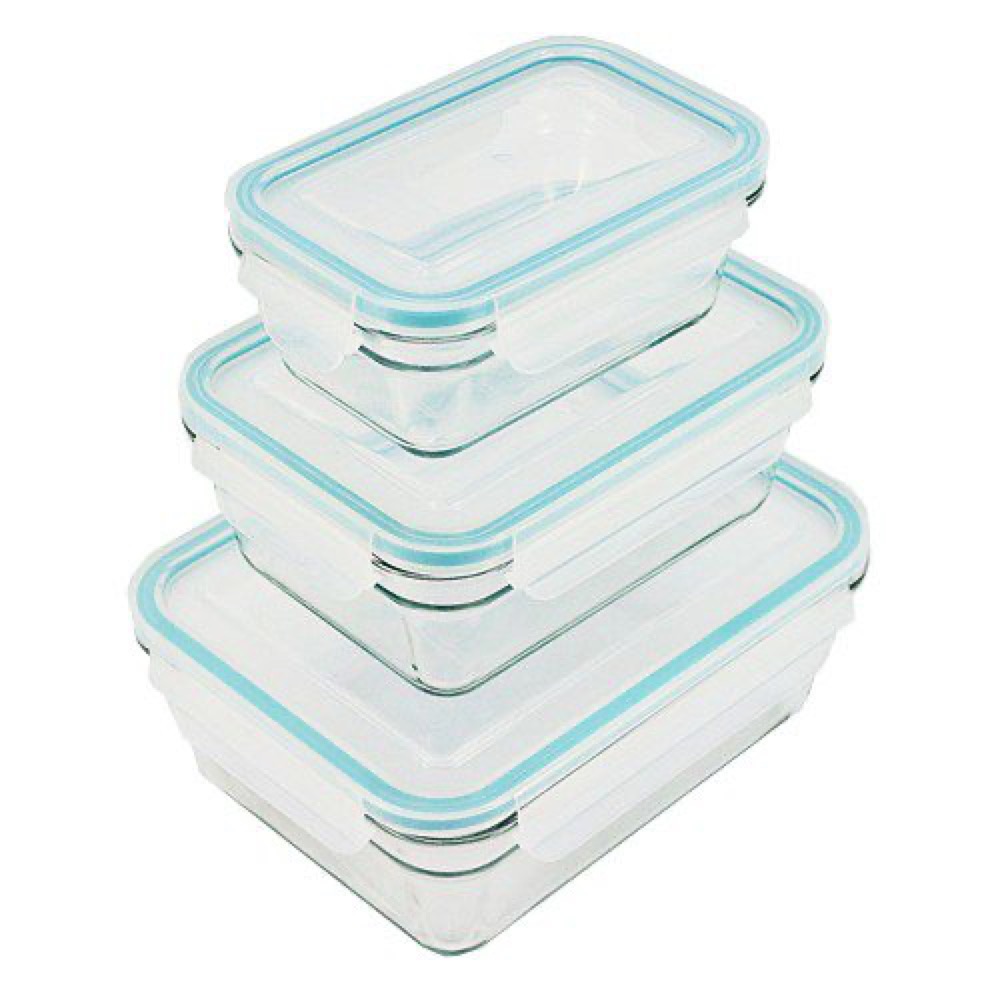
4. Glasslock Oven Safe Container Set (3-Pack) — Best Glass Storage
 Best Glass Storage
Longtime owners like that the glass bodies are oven-, microwave-, and freezer-safe and that the snap-lock lids seal tight. The honest downsides run through the lids, not the glass: reviewers report cracked lids, snapped locking tabs, and mold building up in the rubber gaskets if they are not dried well. Some buyers also received sets with a locking piece missing, and several flag slow, hard-to-reach customer service when they needed a replacement part.
Three stackable glass containers in one box — enough to store a week of leftovers and prepped ingredients without a single plastic tub.
Why it's safe: Your food sits on inert tempered glass, not plastic — so warm, acidic, watery foods can’t leach or pick up shed particles. The BPA-free lids seal with a food-grade silicone gasket that only touches the rim.
Check Today's Price on Amazon →Amazon prices change daily — tap to see today's price and any active discount.
- Free delivery & returns for Prime members
- Sold & shipped by Amazon
- Thousands of verified reviews
At roughly ten dollars per container, it's the cheapest way to retire your plastic food tubs in one purchase. The snap-lock lids keep leftovers fresh, and the glass goes fridge-to-oven with the lids off — so the food you reheat isn't sitting against warm plastic, one of the conditions that drives the most particle migration.
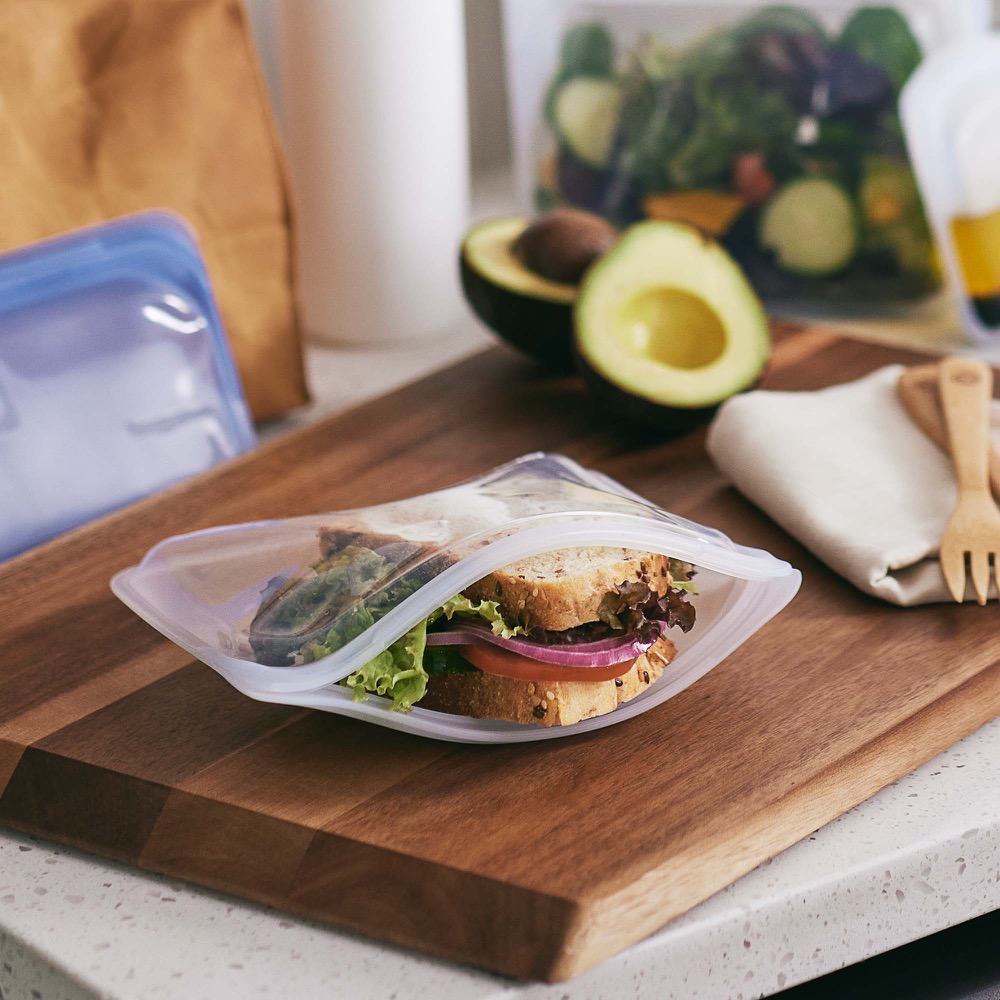
5. Stasher Reusable Silicone Bag Starter Kit — Best for Freezing & Bags
 Best Reusable Bag
For freezing, marinating, or anything you'd reach for a plastic bag, Stasher's platinum-cured silicone is the upgrade — sturdier than any disposable bag and free of the chemicals that migrate from plastic. The patented Pinch-Loc seal is genuinely airtight and leakproof, so it holds liquids without freezer drips.
It's freezer safe to -70°F and goes straight to the microwave or a 425°F oven. The starter kit covers the everyday sizes — sandwich, snack, and stand-up half-gallon — so you can retire a whole box of single-use bags in one purchase.
Owners like that the platinum silicone bags go from freezer to microwave and replace throwaway plastic for years. The honest gripes: smell and stain retention come up often, with reviewers noting garlic and strong odors linger even after washing, and one finding the bag did not fully contain cooking smells in a sous-vide bath; the pinch-lock seal can be fiddly to open and close; and the seams are slow to dry, which can invite mildew if you do not air them out.
Freeze soups, sauces, and leftovers in airtight silicone instead of leak-prone plastic — then thaw and reheat in the same bag, no transfer needed.
Why it's safe: Platinum-cured silicone — the highest-purity, chemically inert grade — with no plastic, PVC, BPA, lead, latex, phthalates, or PFAS.
Check Today's Price on Amazon →Amazon prices change daily — tap to see today's price and any active discount.
- Free delivery & returns for Prime members
- Sold & shipped by Amazon
- Tens of thousands of verified reviews
Plastic sandwich and freezer bags are the storage most people hold onto longest, and they're the messiest to thaw and reheat. A multi-size silicone kit replaces the whole box at once and skips the transfer-to-a-dish step entirely. For the full lineup, see our guide to the best silicone food storage bags.
6. Zip Top Silicone Containers (Dish Set) — Best Self-Standing Set
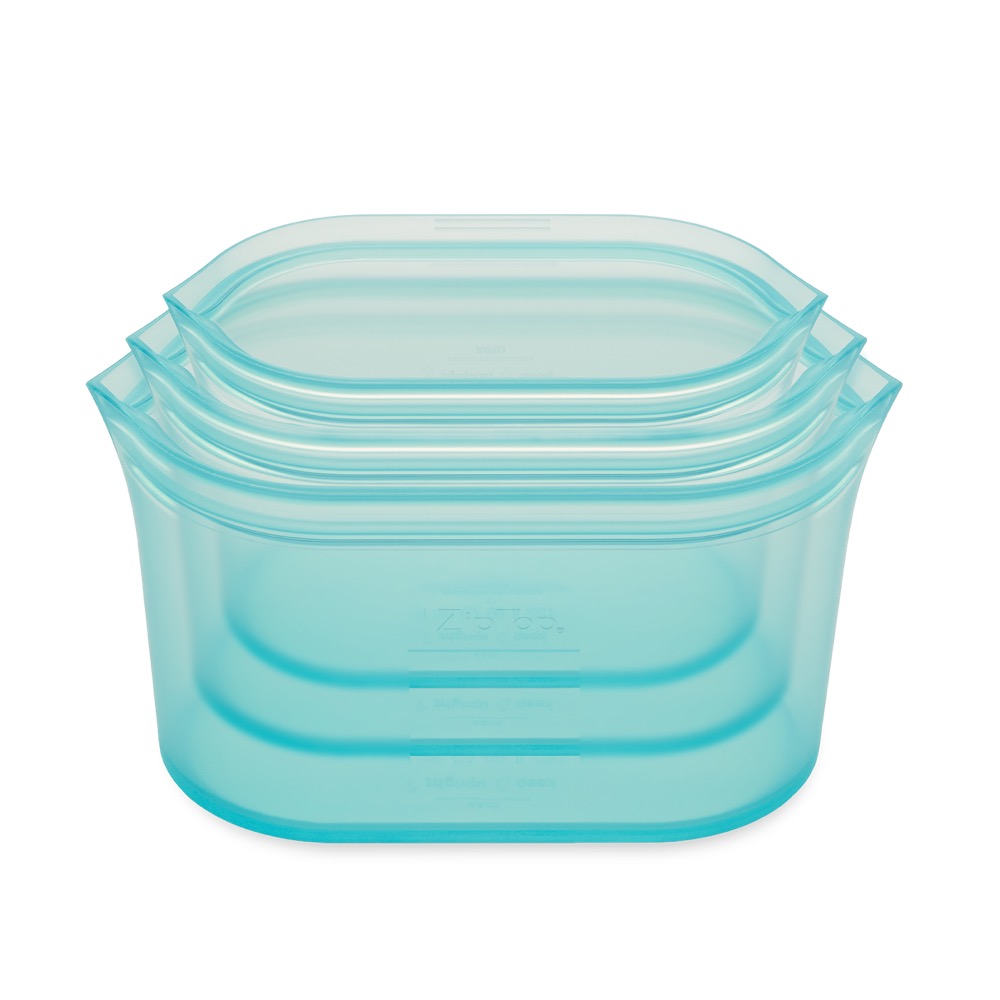 Best Self-Standing Set
Zip Top's design is its own category: 100% platinum-silicone containers that stand upright, stay open while you fill them, then zip shut along the top. There's no plastic frame or zipper insert — it's a single piece of silicone, so there's nothing to harbor chemicals or break down.
The dish set includes small, medium, and large (16, 24, and 32 oz) and goes in the dishwasher, microwave, and freezer. It's the tidiest swap for portioned leftovers and meal-prep.
Owners like that the stand-up silicone dishes open with a light pinch and go from freezer to microwave to dishwasher. The honest downsides: the seal is not airtight, so reviewers warn that if a container tips over the liquids will leak out and the dishes must stay upright in the fridge; pigmented foods like tomato or beets stain the silicone and the marks persist after washing; and strong-smelling foods can leave odors the material holds onto.
Meal-prep without a stack of plastic tubs. One-piece silicone dishes stand up, zip shut, and rinse clean — nothing leaching into tomorrow's lunch.
Why it's safe: A single piece of 100% platinum-cured silicone, made in the USA — no plastic, PVC, BPA, or PFAS, and no separate lid to off-gas.
Check Today's Price on Amazon →Amazon prices change daily — tap to see today's price and any active discount.
- Free delivery & returns for Prime members
- Sold & shipped by Amazon
Want the Full Home Protection Guide?
A shaker of salt is one plastic touchpoint among dozens in a typical day. The Complete Plasticproof Guide covers every room — kitchen, nursery, bathroom, bedroom — with 80+ product recommendations backed by 47+ studies.
The honest verdict
Does salt have microplastics? For most salt, yes — the 2018 global study found plastic particles in all but three of 39 brands from 21 countries, later research put it above 90% of salt sampled worldwide, and sea salt is consistently the most contaminated because it's evaporated straight from plastic-polluted oceans. That part is settled. But those studies measured how much plastic is present, not what it does to the body, and salt is a small, largely unavoidable source next to the water and food you consume all day. So the accurate takeaway is proportion, not alarm.
The practical response is easy. Where it's convenient, lean toward mined rock or Himalayan salt over sea salt, buy it in glass or paper instead of plastic, and keep it in a glass cellar. Then put your real effort where the volume is: filter your drinking water — the one big source you genuinely can clean up — and get your food out of plastic tubs and bags. You don't have to prove the particles are harmful to decide that trimming the avoidable plastic is worth doing, or that the bigger sources deserve more of your attention than a saltshaker.
Cut the plastic that actually adds up
Salt is a rounding error next to your water and food storage. A certified filter and a few glass or silicone containers remove far more plastic from your diet.
Frequently Asked Questions
Most does. A 2018 study in Environmental Science & Technology tested 39 salt brands from 21 countries and found microplastics in all but three, and a widely cited review concluded that over 90% of the salt brands sampled worldwide contain plastic particles. Sea salt carries the most because it's evaporated directly from increasingly plastic-polluted seawater, but rock salt and lake salt also test positive at lower levels.
It varies widely by type and origin. In the 2018 global study, sea salts ranged from roughly 0 to about 1,674 particles per kilogram (with one Asian outlier far higher), rock salt from 0 to about 148 per kilogram, and lake salt from about 28 to 462 per kilogram. Because most people eat only a few grams of salt a day, the researchers estimated an adult ingests on the order of a couple of thousand microplastic particles a year from salt alone.
In the global studies, rock salt (including mined Himalayan pink salt) and some lake salts carried lower microplastic loads than sea salt, because they're mined from ancient underground deposits rather than evaporated from today's polluted oceans. No salt tested completely clean, and results varied brand to brand, so type is a rough guide, not a guarantee. Sea salt was consistently the most contaminated overall.
Generally yes. Sea salt is made by evaporating seawater, so it concentrates whatever plastic is floating in that water, which is why studies find it the most contaminated category. Much refined table salt is actually mined rock salt, which tends to test lower. The tradeoff is that heavily refined table salt is more processed and often anti-caked with additives, so lower microplastics doesn't automatically make it the healthier choice.
Not practically at home. Unlike water, salt can't be filtered once the plastic is embedded in the crystals, so you can't clean a contaminated batch. The realistic levers are choosing lower-contamination types like rock salt, buying salt packaged in glass or paper rather than plastic, storing it in a glass cellar, and above all cutting the far larger microplastic sources you can control, starting with filtering your drinking water.
The health risk isn't established. The studies measured how much plastic is present, not any effect on the body, and salt is a small contributor next to drinking water, seafood, and food stored or heated in plastic. Still, microplastics are increasingly detected in human blood, organs, and tissue, so trimming avoidable exposure is sensible. The reasonable stance is proportion, not panic: pick better salt where it's easy, and put real effort into the bigger sources like your water.
Sources
- Kim JS, Lee HJ, Kim SK, Kim HJ. "Global Pattern of Microplastics (MPs) in Commercial Food-Grade Salts: Sea Salt as an Indicator of Seawater MP Pollution." Environmental Science & Technology, 2018;52(21):12819–12828. (39 brands, 21 countries; MPs in all but three; sea salt highest.)
- Yang D, Shi H, Li L, Li J, Jabeen K, Kolandhasamy P. "Microplastic Pollution in Table Salts from China." Environmental Science & Technology, 2015;49(22):13622–13627.
- Kosuth M, Mason SA, Wattenberg EV. "Anthropogenic contamination of tap water, beer, and sea salt." PLOS ONE, 2018;13(4):e0194970.
- Peixoto D, Pinheiro C, Amorim J, et al. "Microplastic pollution in commercial salt for human consumption: A review." Estuarine, Coastal and Shelf Science, 2019.
- World Health Organization. "Microplastics in drinking-water." WHO, 2019.
- Leslie HA, van Velzen MJM, Brandsma SH, et al. "Discovery and quantification of plastic particle pollution in human blood." Environment International, 2022.