
Seafood does contain microplastics. A 2015 study in Scientific Reports found anthropogenic debris in roughly a quarter of individual fish and a third of the shellfish pulled from markets in California and Indonesia. A 2014 Environmental Pollution study of cultured mussels and oysters estimated top European shellfish eaters may take in around 11,000 microplastic particles a year from bivalves alone. What makes seafood different from most foods is the pathway: the plastic isn't added at a plant — the animals eat it out of the polluted water they live in, so it collects in the gut. That's why the part you eat matters: a whole mussel carries more than a cleaned fish fillet. The honest caveat: these studies measured presence, not proven human harm, and shellfish are one source among many next to drinking water and household dust.
Most "microplastics in your food" stories are really about packaging — plastic that shed into a product during processing or storage. Seafood is the exception that makes the whole topic click. Here the contamination happens in the wild: a mussel filters dozens of liters of seawater a day, a fish swallows plastic fragments floating in the water column, and the particles that don't pass straight through end up lodged in the gut. When scientists run market fish and shellfish under a microscope and FTIR spectroscopy, they keep finding the same plastic fragments and synthetic fibers that turn up in tap water, in sea salt, and in our own blood. The same animal-to-food pathway plays out on land, too: a hen takes in plastic from her feed and water and passes it into the yolk, which is why researchers now report microplastics in eggs as well.
But "seafood has plastic" is too blunt to be useful. The single most important finding across this literature is that which seafood, and which part of it, you eat changes the number dramatically — and that is a lever you actually control at the fish counter. This guide walks through what the studies found, why filter-feeding shellfish carry more than a fish fillet, whether the amounts are worth worrying about (the honest answer is calmer than the headlines), and the handful of changes that cut what you eat with dinner.
The bottom line up front: the plastic in seafood comes from the ocean the animal lived in, and it concentrates in the gut — so bivalves and small whole fish eaten complete carry the most, while a gutted fillet carries far less. Favor fillets over whole small fish and shellfish when you're concerned, purge clams and mussels in clean water, diversify your protein, and above all filter the water you drink and cook with. For the bigger picture, see our ranking of which foods have the most microplastics, the companion piece on microplastics in meat, and why tap water is a top source.
Do studies find microplastics inside seafood?
Yes, and the seafood evidence is some of the oldest and most consistent in the whole microplastics field. The landmark paper is a 2015 study in Scientific Reports by Rochman and colleagues — "Anthropogenic debris in seafood" — which bought fish and shellfish straight from markets in California and in Makassar, Indonesia, and dissolved the tissue to see what was inside. Anthropogenic debris turned up in about a quarter of the individual fish and a third of the shellfish. The revealing detail: in the United States the debris was mostly plastic fibers from textiles, while in Indonesia it was mostly plastic fragments — the contamination fingerprint matched each region's own waste stream.
Shellfish were pinned down even earlier. A 2014 study in Environmental Pollution by Van Cauwenberghe and Janssen examined mussels and oysters cultured for human consumption and found microplastics in both, estimating that top European shellfish consumers could ingest on the order of 11,000 microplastic particles a year from bivalves alone. A 2018 review in Current Environmental Health Reports pulled the field together and drew the distinction that matters most for a shopper: because microplastics collect in the digestive tract, animals eaten whole — mussels, oysters, small fish — deliver more to a person than fish where the gut is removed before eating. Independent teams, different oceans, same conclusion: put market seafood under FTIR and you find plastic.
How do microplastics get into fish and shellfish?
From the water, first and foremost. The world's rivers and oceans carry a staggering load of microplastic — broken-down bottles and bags, tire-wear dust washed off roads, and above all synthetic clothing fibers that shed in the laundry and slip through wastewater plants by the trillion. Anything that lives in that water is exposed to it constantly. Filter-feeding shellfish are the extreme case: a single mussel pumps many liters of seawater across its gills every day to feed, and the plastic particles it can't digest stay behind in its tissues. Fish take it in two ways — swallowing fragments that look like food, and eating smaller prey that already did, so the plastic works its way up the food chain.
A smaller, second dose is added after the catch, and this part looks like the plastic in every other food: plastic totes and conveyor belts at the processing plant, plastic ice and packaging, and synthetic gloves and gear — the packaging dose that dominates canned fish and other canned foods. But the defining feature of seafood is that most of its plastic is picked up in the wild, before anyone touches it — which is exactly why you can't "buy the clean brand" your way out of it. What you can change is which animal, and which part of it, ends up on your plate. The ranking below is the practical heart of this whole guide.
| Seafood type | Why | Relative microplastic exposure |
|---|---|---|
| Mussels, oysters, clams (bivalves) | Filter feeders eaten whole — digestive tract included — so the gut, where plastic collects, goes on your plate | Highest |
| Small whole fish (sardines, anchovies, whitebait) | Eaten complete with the gut in place, just like bivalves | High |
| Shrimp & small crustaceans | Often eaten with the digestive tract (the "vein"); peeling and deveining removes much of it | Moderate |
| Whole fish you gut yourself | Plastic concentrates in gut, gills, and liver — all removed when you clean the fish | Lower (after cleaning) |
| Fish fillets (cod, salmon, tuna steak) | The muscle you eat carries far fewer particles than the organs, which are already removed | Lowest |
Which seafood has the most microplastics?
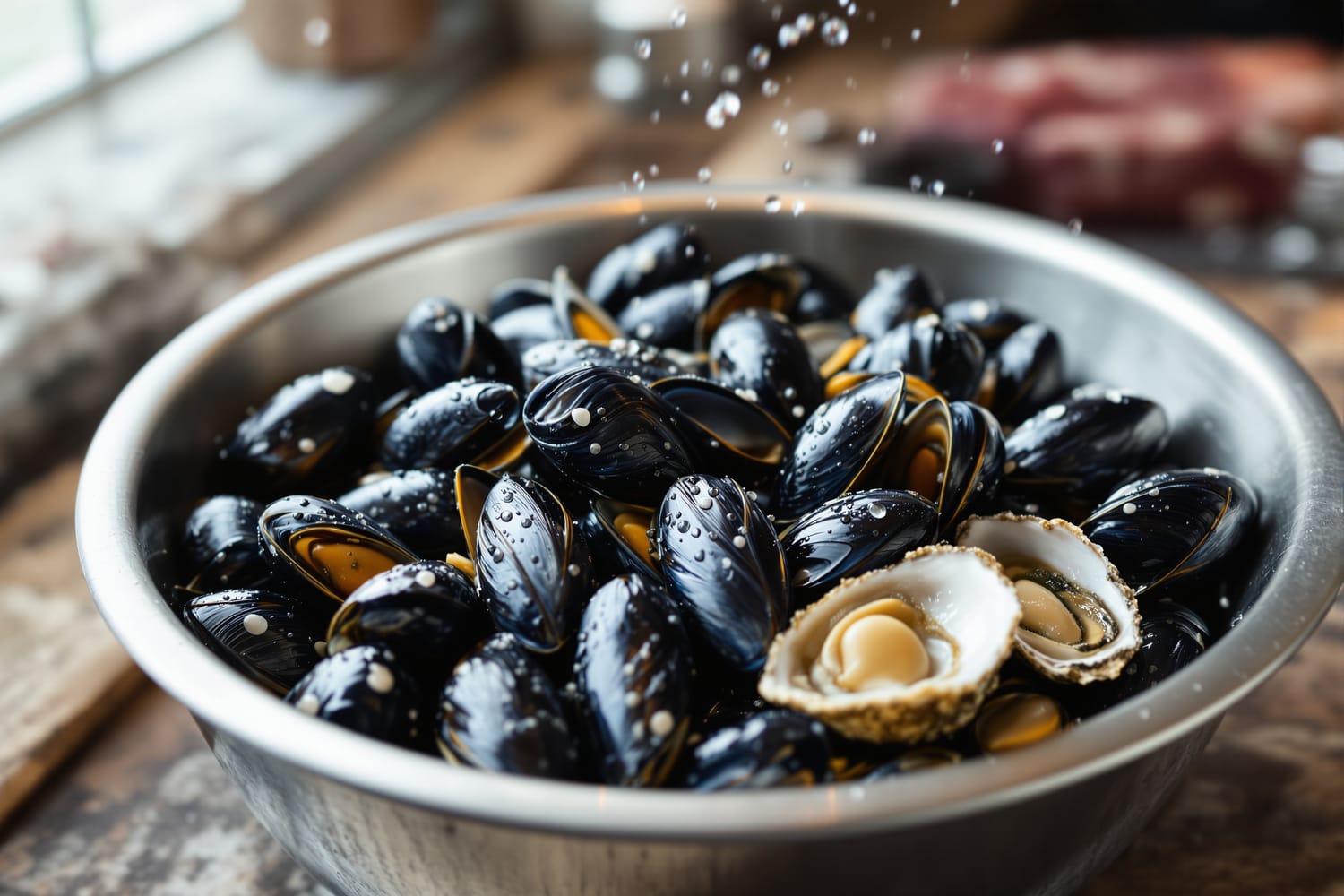
Bivalves, and it isn't close — because of how you eat them. Mussels, oysters, and clams are filter feeders that spend their lives straining particles out of seawater, and you eat the entire animal, gut and all. Whatever plastic is sitting in that gut at harvest goes directly onto your plate. Small fish eaten whole, like sardines, anchovies, and whitebait, are in the same category for the same reason. This is why the 2018 review flagged bivalves specifically: it isn't that a mussel is dirtier than a salmon in the water, it's that you eat the part of the mussel where the plastic lives.
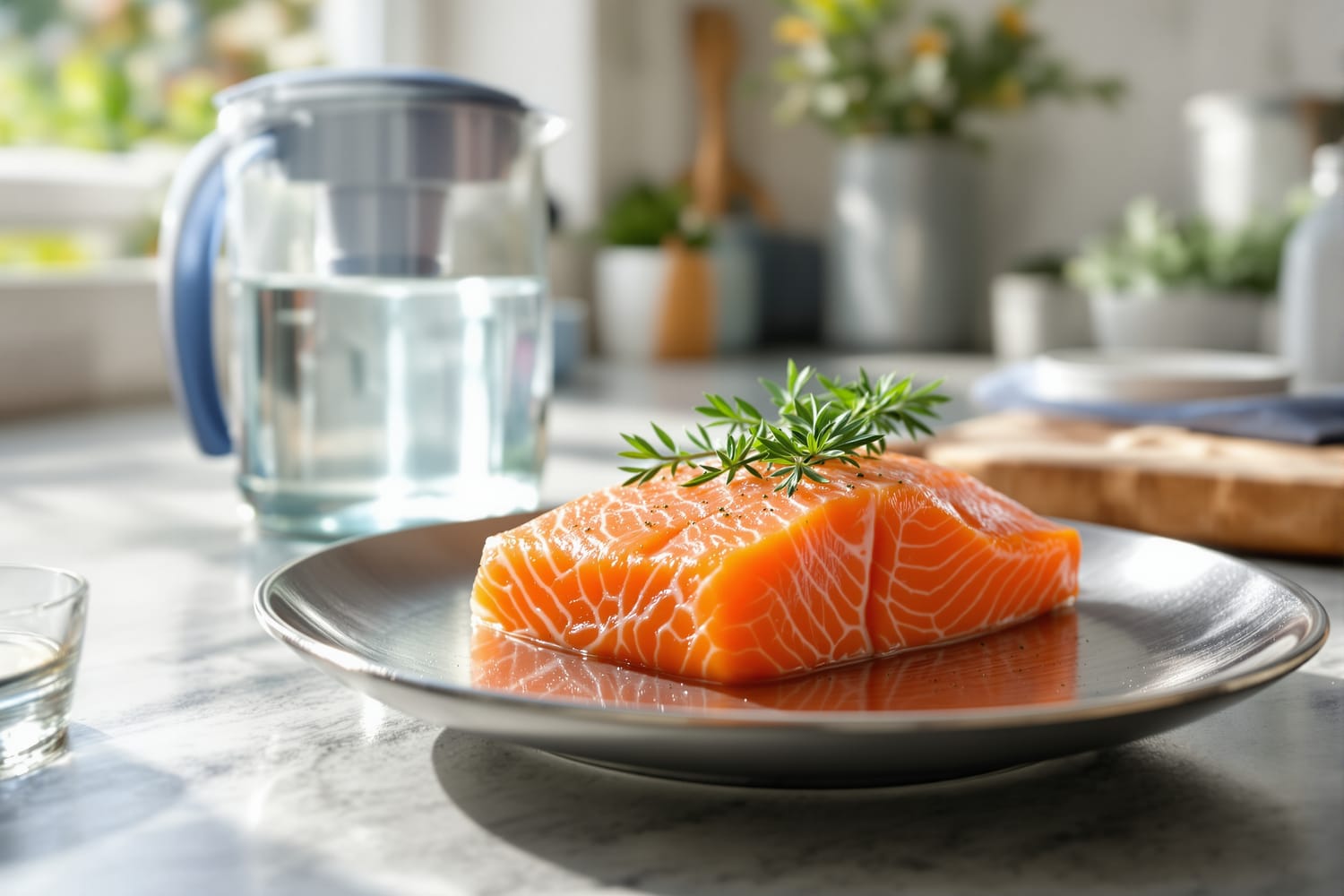
A fish fillet is the other end of the scale. Microplastics concentrate in the digestive tract, gills, and liver — the organs that are removed during gutting and filleting — so studies consistently find fewer particles in the muscle tissue people actually eat than in the whole fish. That doesn't make fillets plastic-free (particles do turn up in muscle too, especially as fibers), but it does mean the ranking above is a real, usable lever. If microplastics are your concern, the meaningful choice isn't wild-versus-farmed or one brand over another — it's a gutted fillet over a whole filter feeder.
"A mussel isn't more contaminated than a fish because it lives a dirtier life — it's because you eat the one part, the gut, where the plastic ends up. Change the part, and you change the dose."
Is farmed or wild seafood cleaner?
Neither is automatically cleaner, because both are downstream of the same problem: the water. Wild fish and shellfish live in open water carrying whatever plastic has washed into it. Farmed fish and shellfish sit in netted pens or beds fed by that same coastal water, and can pick up additional plastic from formulated feed and the plastic infrastructure of the farm. Researchers have found microplastics in both wild and farmed samples, and no clean, settled head-to-head crowns one the safe choice — so it would be dishonest to tell you "just buy farmed" or "just buy wild" fixes this.
What actually moves the number is the part-you-eat lever from the section above, plus how contaminated the source water is — and the second one is something no label on a package can tell a shopper. So spend your attention where it pays off: favor fillets over whole small fish and bivalves when you're concerned, purge live clams and mussels in clean water before cooking to clear some gut content, and diversify your protein so no single source dominates your intake. For the wider view of how seafood ranks against other foods, see our guide to which foods have the most microplastics and the companion piece on microplastics in meat.
Is the microplastic in seafood dangerous?
Here's where honesty matters. The seafood studies were designed to detect and identify particles — how many, what polymer, what shape — not to prove that eating a normal portion causes a specific harm in people. There is real laboratory concern about what microplastics and the chemicals riding on them might do, and there is active research on inflammation and on particles crossing into tissue, but a market-fish survey does not settle a human dose-response, and no one should read one into it that the data can't support.
It also helps to keep the scale straight. A 2019 analysis in Environmental Science & Technology estimated that the average person already swallows tens of thousands of microplastic particles a year across all of food and drink, with shellfish one contributor among many and drinking water and airborne dust looming large. Against that backdrop, seafood is a meaningful but not dominant slice for most people — and the omega-3 fats, lean protein, and micronutrients in fish are some of the best-documented benefits in nutrition. What we do know more broadly is that microplastics are increasingly detected throughout the human body — in blood, organs, and even the brain — so trimming avoidable exposure is sensible even while the harm question stays open.
Do not stop eating seafood over microplastics. For most people the heart and brain benefits of fish outweigh this exposure, and the processed, plastic-packaged alternatives are usually worse on plastic and worse on nutrition. The smart moves are cheap and specific: lean toward fillets, purge your shellfish, vary your protein — and, because the water you cook and drink with all day dwarfs any single food, fix that first. Then work the bigger sources in our kitchen plastic detox guide.
How do you reduce the microplastics in your seafood?
You can't filter a mussel the way you filter tap water, so the leverage is in what you choose and how you prep it — and, as always, in the water that dwarfs any single food. Four moves do most of the work. First, lean toward gutted fish fillets over whole small fish and filter-feeding bivalves when microplastics are your concern — that's the biggest seafood-specific lever, because it skips the gut where plastic collects. Second, purge live clams and mussels in a bowl of clean, salted water for an hour or more (or overnight for clams) so they expel some of their gut content before you cook them. Third, devein shrimp, which removes the digestive tract. Fourth — and this is the one that outweighs everything on the plate — filter the tap water you drink and cook with, since water is a far larger share of what you swallow than any food.
Start with water, because it's the highest-volume thing you put in your body and a top microplastic source in its own right. A pitcher that carries a specific microplastics claim — certified under NSF/ANSI 401, or a rated membrane pore size — cuts particle counts sharply; see our full guide to the best water filter pitchers for microplastics and the broader water filter roundup. Then get the rest of your food off plastic: thaw, marinate, store, and reheat seafood in glass rather than the plastic tray it came in, and never microwave fish in a plastic container. The picks below are the simplest, longest-lasting ways to do all of that.
Fix the sources that actually matter
The plastic in a fillet is small next to the water you cook and drink with all day. Start where it counts: filter your tap water, and get your food off plastic.
The swaps that cut the most plastic around your kitchen
You can't buy "microplastic-free seafood," and you can't filter a fish. So instead of padding this out with products that don't exist, here are the real, currently-sold tools that cut the plastic around your food — certified water filters for the water you actually can clean, plus glass and platinum-silicone vessels to thaw, marinate, and store seafood off plastic. Prices and availability change, so check current listings.
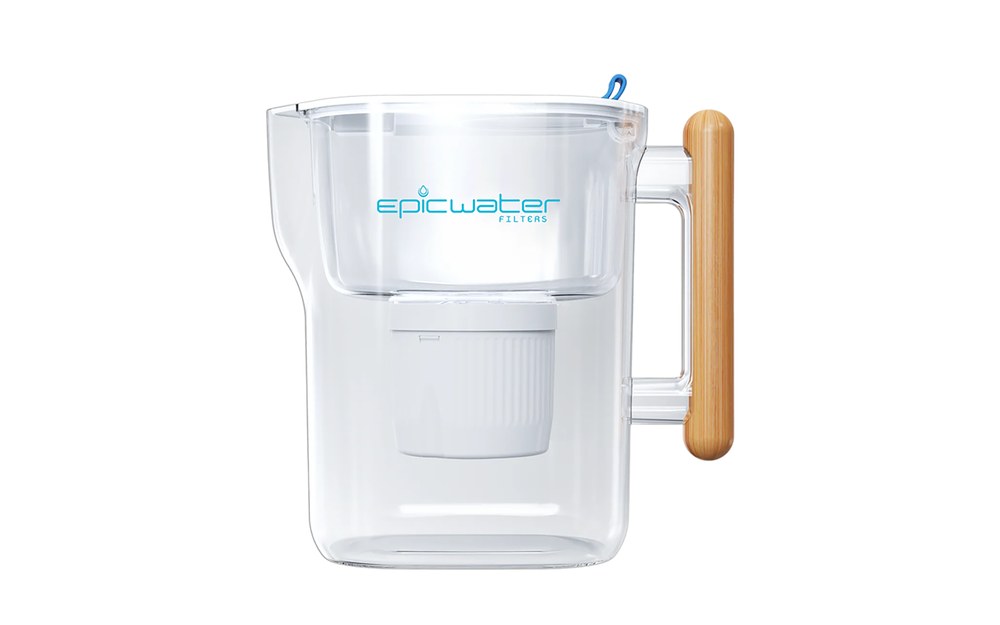
1. Epic Pure Water Filter Pitcher — Best Overall for Microplastics
 Best Overall
Reviewers point to published independent lab data and a filter rated around 150 gallons, far longer than a Brita, as the reasons they trust it, and several describe the slow, deliberate drip as reassuring rather than annoying. The honest downsides: owners report the filtration is genuinely slow and not the pick if you want a glass of water in a hurry, and third-party complaints mention cracked plastic, flip-top lids that stick, and water that spills or leaks from the lid when you pour a full pitcher.
The clearest evidence on this list: Epic posts its independent lab results publicly, so you can see the 99.9% microplastic-removal data instead of trusting a slogan on the box.
Why it's safe: The hollow fiber membrane physically blocks microplastic particles down to ~1 micron, while the carbon stage handles chlorine, lead, and PFAS — all in a BPA-free Tritan body.
Check Today’s Price on Amazon →Amazon prices change daily — tap to see today's price and any active discount.
- Free delivery & returns for Prime members
- Sold & shipped by Amazon
- Thousands of verified reviews
Water is the input you control most tightly and the one that dwarfs any single food in sheer volume — and the same water goes into every pot you poach, steam, or boil seafood in — which makes filtering it the highest-leverage swap on this list. The Epic Pure is the clearest choice: its dual-stage design uses a hollow fiber membrane as the primary microplastic barrier, and Epic publishes the independent lab results to back the 99.9% removal claim — transparency most competitors don't match.
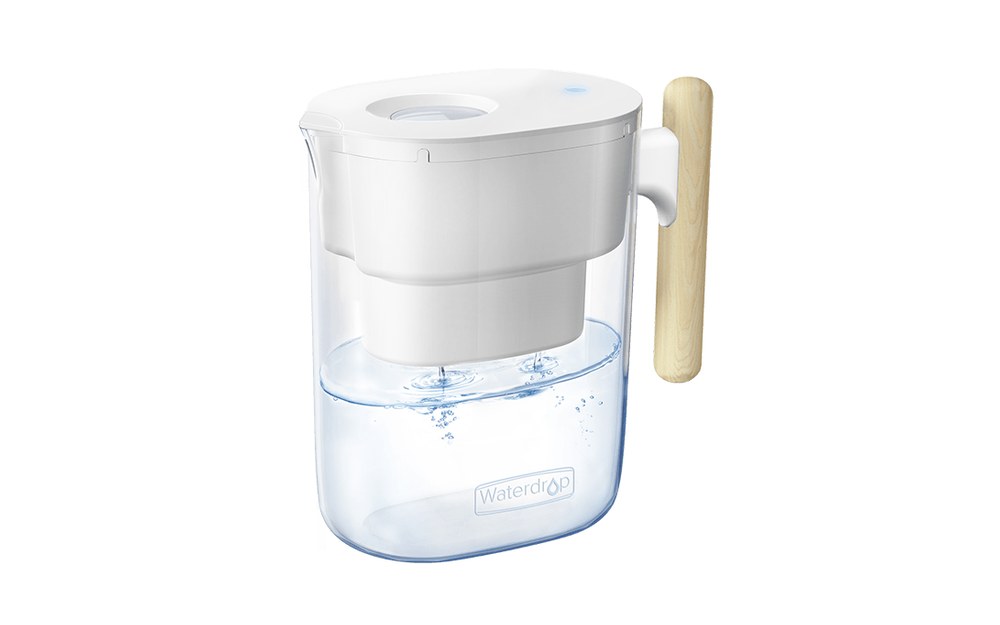
2. Waterdrop Chubby 10-Cup Pitcher — Best Filter Life
 Best Filter Life
Owners like the look and the long 200-gallon filter life, and roughly 80 percent of reviews land positive, with the common praise being clean-tasting water at a low cost per gallon. The honest gripes: several owners warn the handle can feel loose or strain under a full pitcher, so they lift with two hands; some report the pour spills if you tip too fast; and the change-filter indicator light draws complaints for not lighting or not staying lit.
A membrane blocks particles by pore size rather than by claim list, and its 200-gallon filter runs about 4 to 5 months — the lowest ongoing cost on the list.
Why it's safe: A hollow fiber membrane is a physical barrier to particles, while the carbon composite handles chlorine, heavy metals, and PFAS — all in a BPA/BPS-free body.
Check Today’s Price on Amazon →Amazon prices change daily — tap to see today's price and any active discount.
- Free delivery & returns for Prime members
- Sold & shipped by Amazon
- Thousands of verified reviews
If your household steams shellfish, poaches fish, and cooks with tap water every day, filter life matters, and the Waterdrop Chubby leads on it: a hollow fiber membrane on Waterdrop's own published lab data, plus 200 gallons per filter (about 4–5 months for most households). The "filter while you pour" design works just like a familiar counter pitcher, but with a membrane that's actually tested for microplastics.
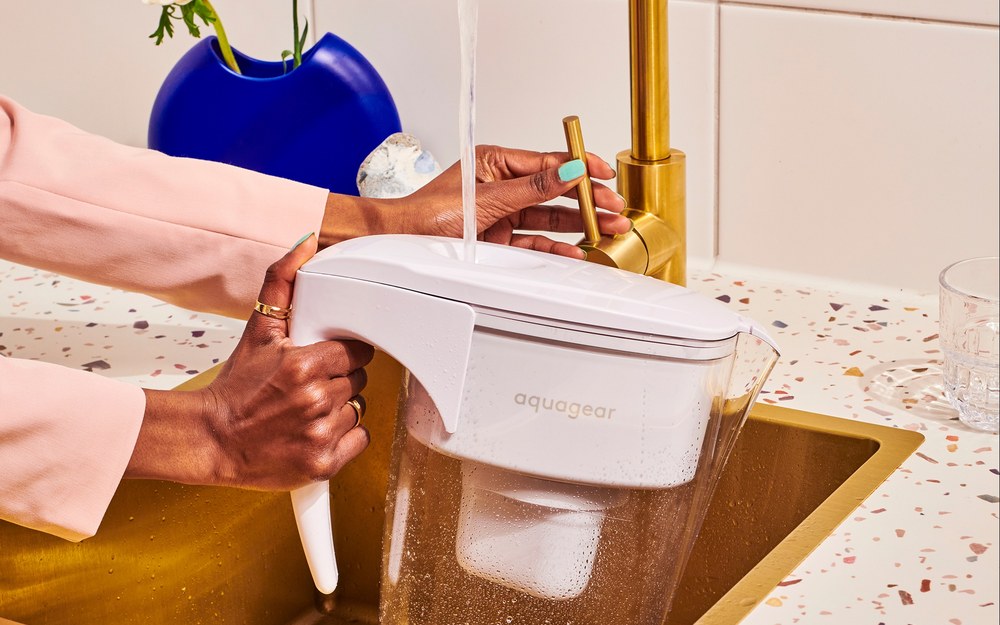
3. Aquagear Water Filter Pitcher — Best Value
 Best Value
Owners choose it for broad contaminant removal and clean taste, and some lab testing found it did not clog. The honest downsides: the most repeated complaint is slow filtration, described by one reviewer as a mixed bag between people waiting minutes and people waiting hours, and it can worsen as the filter ages; and the design draws gripes, with the pour-spout cover popping out and spraying water and a lid that fits poorly and can pop off mid-pour.
Change the filter half as often as most pitchers — 150 gallons per cartridge means fewer replacements, lower annual cost, and less to remember.
Why it's safe: A 5-stage filter with a sub-micron membrane stage captures microplastics, lead, fluoride, and chlorine, in a BPA-free body with USA-made filter media.
Check Today’s Price on Amazon →Amazon prices change daily — tap to see today's price and any active discount.
- Free delivery & returns for Prime members
- Sold & shipped by Amazon
- Thousands of verified reviews
The Aquagear costs more upfront but its 150-gallon filter life means lower annual replacement costs than most competitors, and the pitcher body is guaranteed for life. It uses a 5-stage filter with a sub-micron membrane stage that targets microplastics, heavy metals, and fluoride — a good fit for households that don't want to track filter changes constantly.
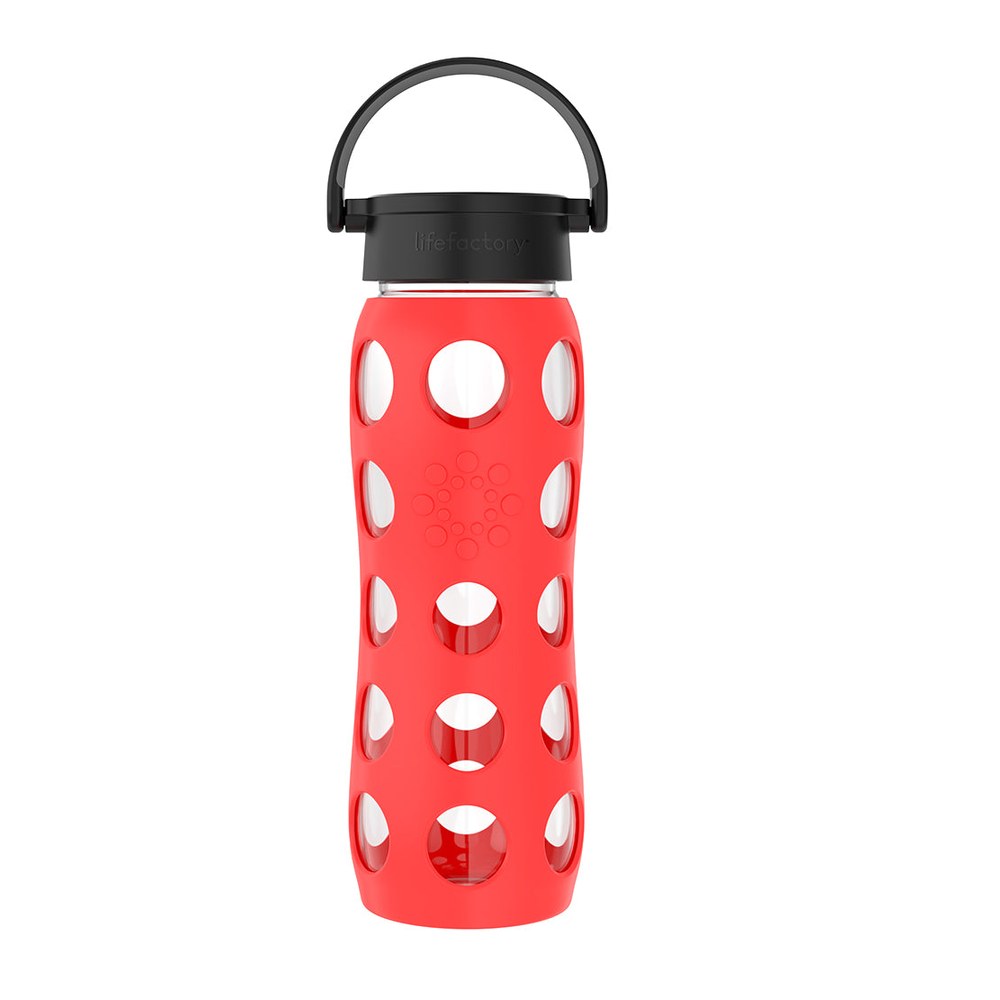
4. Lifefactory Glass Bottle 22oz — Best Glass Bottle
 Best Glass Bottle
The simplest way to keep filtered water with you all day, so the plastic-free water you made at home doesn't get replaced by a plastic bottle the moment you leave. It’s made from borosilicate glass — the same material used in laboratory glassware — which is thermally stable, chemically inert, and completely free of BPA, BPS, and any polymer contact with your drink. It imparts no taste, so water tastes like water, not plastic. The protective silicone sleeve adds grip and guards against shattering. The cap contains a small polypropylene component — the only plastic in the system, at the exterior closure rather than the drink surface. Dishwasher-safe.
Carry the filtered water you made at home instead of buying a plastic bottle out — no plastic contact, no shedding, and it cleans up in the dishwasher.
Why it's safe: Borosilicate glass is completely inert — it never leaches, never sheds microplastics, and imparts no taste. The only plastic is a small cap component at the exterior closure, not the drink surface.
Check Today’s Price on Amazon →Amazon prices change daily — tap to see today's price and any active discount.
- Free delivery & returns for Prime members
- Sold & shipped by Amazon
- Thousands of verified reviews
Seafood is a small share of what you eat; water is most of what you drink. Carrying filtered water in a borosilicate glass bottle keeps that larger share off plastic entirely — no leaching, no shed fibers, no plastic aftertaste — and it’s sturdy enough for daily desk-and-bag use.
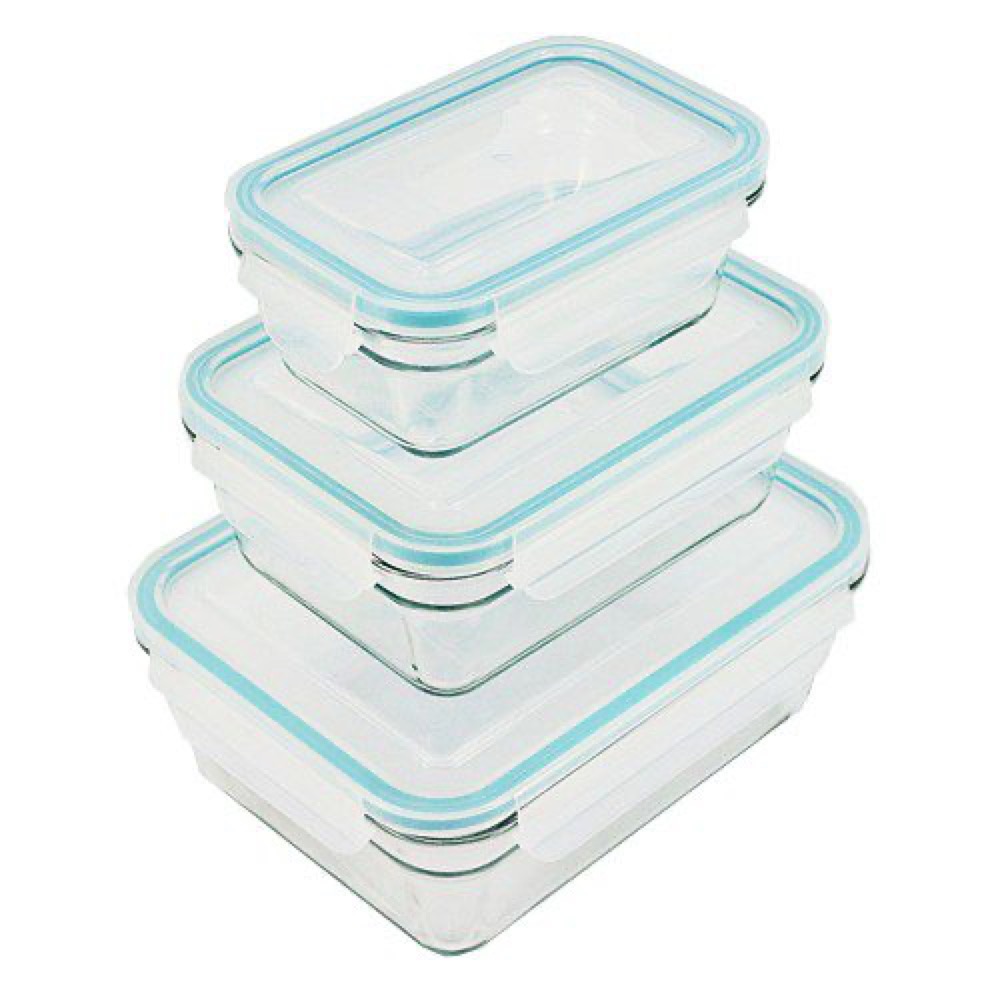
5. Glasslock Oven Safe Container Set (3-Pack) — Best Glass Storage
 Best Glass Storage
Longtime owners like that the glass bodies are oven-, microwave-, and freezer-safe and that the snap-lock lids seal tight. The honest downsides run through the lids, not the glass: reviewers report cracked lids, snapped locking tabs, and mold building up in the rubber gaskets if they are not dried well. Some buyers also received sets with a locking piece missing, and several flag slow, hard-to-reach customer service when they needed a replacement part.
Three stackable glass containers in one box — enough to store a week of leftovers and prepped ingredients without a single plastic tub.
Why it's safe: Your food sits on inert tempered glass, not plastic — so warm, acidic, watery foods can’t leach or pick up shed particles. The BPA-free lids seal with a food-grade silicone gasket that only touches the rim.
Check Today's Price on Amazon →Amazon prices change daily — tap to see today's price and any active discount.
- Free delivery & returns for Prime members
- Sold & shipped by Amazon
- Thousands of verified reviews
Seafood aside, most kitchens leak plastic into food through storage tubs. Thaw fish in glass, marinate in glass, and pour leftovers and prepped ingredients into glass instead of plastic, then reheat with the lids off so warm food never sits against plastic — the exact condition that drives the most particle migration. At roughly ten dollars per container, it's also the cheapest way to retire your plastic food tubs in one purchase.
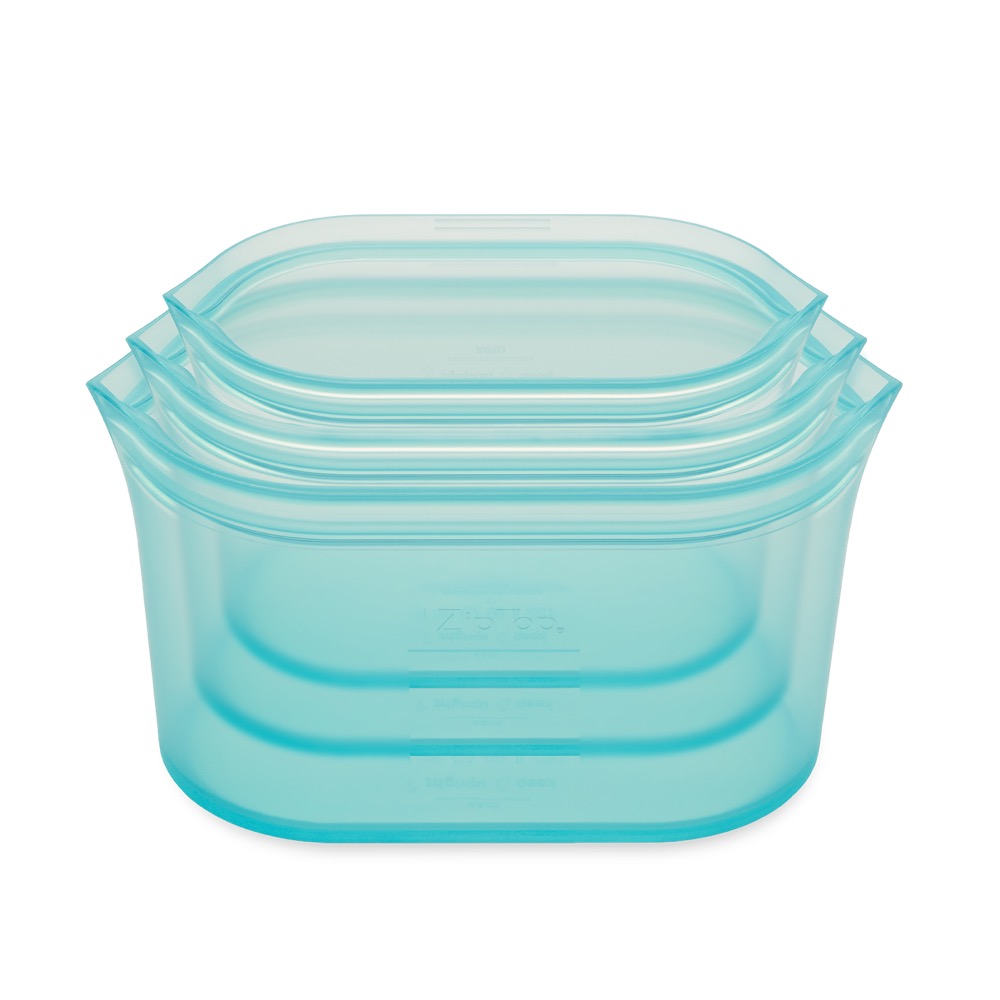
6. Zip Top Silicone Containers (Dish Set) — Best Silicone Set
 Best Silicone Set
Zip Top's design is its own category: 100% platinum-silicone containers that stand upright, stay open while you fill them, then zip shut along the top. There's no plastic frame or zipper insert — it's a single piece of silicone, so there's nothing to harbor chemicals or break down.
The dish set includes small, medium, and large (16, 24, and 32 oz) and goes in the dishwasher, microwave, and freezer. It's the tidiest swap for portioned leftovers and snacks to go with the game.
Owners like that the stand-up silicone dishes open with a light pinch and go from freezer to microwave to dishwasher. The honest downsides: the seal is not airtight, so reviewers warn that if a container tips over the liquids will leak out and the dishes must stay upright in the fridge; pigmented foods like tomato or beets stain the silicone and the marks persist after washing; and strong-smelling foods can leave odors the material holds onto.
Meal-prep and snack storage without a stack of plastic tubs. One-piece silicone dishes stand up, zip shut, and rinse clean — nothing leaching into tomorrow's lunch.
Why it's safe: A single piece of 100% platinum-cured silicone, made in the USA — no plastic, PVC, BPA, or PFAS, and no separate lid to off-gas.
Check Today's Price on Amazon →Amazon prices change daily — tap to see today's price and any active discount.
- Free delivery & returns for Prime members
- Sold & shipped by Amazon
For snacks, leftovers, and anything you'd reach for a plastic tub or bag to hold, platinum-cured silicone is the upgrade — free of the chemicals that migrate from plastic, and durable enough to last for years. For the full lineup, see our guide to the best silicone food storage bags.
Want the Full Home Protection Guide?
A seafood dinner is one plastic touchpoint among dozens in a typical day. The Complete Plasticproof Guide covers every room — kitchen, nursery, bathroom, bedroom — with 80+ product recommendations backed by 47+ studies.
The honest verdict
Does seafood have microplastics? Yes — the 2015 Scientific Reports market survey found debris in about a quarter of fish and a third of shellfish, and the 2014 Environmental Pollution study put top shellfish eaters near 11,000 particles a year from bivalves alone. But the detail that makes it usable is where the plastic sits: in the gut, taken up from the polluted water the animal lived in — so a whole mussel delivers far more than a gutted fillet, and the ranking is a lever, not a curse. Those studies measured presence, not proven human harm, and shellfish are one source among many. So the accurate takeaway is proportion, not alarm.
The practical response is easy, because the biggest driver is a choice you make at the counter. Lean toward gutted fish fillets over whole small fish and filter-feeding bivalves when microplastics are your concern. Purge live clams and mussels in clean water, and devein shrimp. Thaw, marinate, and store seafood in glass rather than the plastic tray it came in. And above all, filter the tap water you cook and drink with, since that's a far larger share of what you take in than any single food, and it's the one input in the whole picture you genuinely can clean. Do not stop eating seafood — the omega-3s and protein matter, and for most people the benefits of fish outweigh this exposure.
Cut the plastic that actually adds up
A seafood dinner is a small source next to the water you cook and drink with every day. A certified filter and a few glass vessels remove far more plastic from your food and your diet.
Frequently Asked Questions
Seafood does contain microplastics. A 2015 study in Scientific Reports found anthropogenic debris in about a quarter of individual fish and a third of the shellfish sampled from markets in California and Indonesia. A 2014 Environmental Pollution study of cultured mussels and oysters estimated that top European shellfish consumers may ingest up to roughly 11,000 microplastic particles a year from bivalves alone. Unlike most foods, the plastic here mostly comes from the ocean itself — the animals eat plastic suspended in polluted seawater — so it is concentrated in the gut.
Bivalves and small whole fish carry the most, because you eat them whole. Mussels, oysters, and clams are filter feeders eaten complete — digestive tract and all — so whatever plastic is in the gut goes onto your plate. Small fish eaten whole, like sardines, anchovies, and whitebait, are similar. A cleaned fish fillet is different: microplastics concentrate in the gut, gills, and liver, which are removed during filleting, so the muscle you actually eat generally carries far fewer particles than the whole animal.
From the water they live in. Rivers and the ocean carry an enormous load of microplastic — broken-down bottles and bags, synthetic clothing fibers from laundry, tire dust, and fishing gear. Filter-feeding shellfish pull that water across their gills all day and retain the particles; fish swallow plastic directly or eat smaller animals that already did. A small amount is also added after the catch, from plastic processing equipment, packaging, and ice, but the ocean is the primary source — which is what makes seafood different from a food contaminated only during processing.
Neither is automatically clean, because both share the same water problem. Wild fish live in open water with whatever plastic is there; farmed fish and shellfish sit in netted pens or beds fed by the same coastal water and, in some operations, formulated feed and plastic infrastructure. Studies have found microplastics in both wild and farmed samples. The bigger variable is not the label but the part you eat — a gutted fillet versus a whole filter-feeding bivalve — and how contaminated the source water is, which no shopper can read off a package.
You can lower it, not eliminate it. Choosing fish fillets over whole small fish and bivalves avoids the gut, where most particles sit. Purging or de-gritting clams and mussels in clean water for a day clears some gut content. Gutting and cleaning a whole fish yourself removes the organs that concentrate plastic. What you cannot do is filter a mussel the way you filter tap water — so the highest-leverage move is unrelated to seafood: filter the water you drink and cook with all day, since it is a far larger share of daily intake than any single food.
The human health risk isn't established. The seafood studies measured presence and characterized polymer type and size; they did not prove a specific harm from eating a normal portion, and a 2019 Environmental Science & Technology analysis put shellfish among many everyday sources next to drinking water and airborne dust. Do not stop eating seafood — the omega-3 fats, protein, and micronutrients are well documented, and for most people the benefits of fish outweigh this exposure. Reduce it sensibly by favoring fillets, diversifying your protein, and — above all — filtering your water.
Sources
- Rochman CM, Tahir A, Williams SL, et al. "Anthropogenic debris in seafood: Plastic debris and fibers from textiles in fish and bivalves sold for human consumption." Scientific Reports, 2015;5:14340. (Anthropogenic debris found in roughly a quarter of individual fish and a third of shellfish from markets in California and Indonesia; plastic fragments dominant in Indonesia, textile fibers in the US.)
- Van Cauwenberghe L, Janssen CR. "Microplastics in bivalves cultured for human consumption." Environmental Pollution, 2014;193:65–70. (Microplastics detected in cultured mussels and oysters; estimated top European shellfish consumers ingest on the order of 11,000 particles per year from bivalves.)
- Smith M, Love DC, Rochman CM, Neff RA. "Microplastics in Seafood and the Implications for Human Health." Current Environmental Health Reports, 2018;5(3):375–386. (Review; microplastics concentrate in the digestive tract, so animals eaten whole — bivalves, small fish — deliver more to consumers than fish with the gut removed.)
- Cox KD, Covernton GA, Davies HL, et al. "Human Consumption of Microplastics." Environmental Science & Technology, 2019;53(12):7068–7074. (Estimated tens of thousands of microplastic particles consumed per person per year across food and drink; shellfish one contributor among many.)