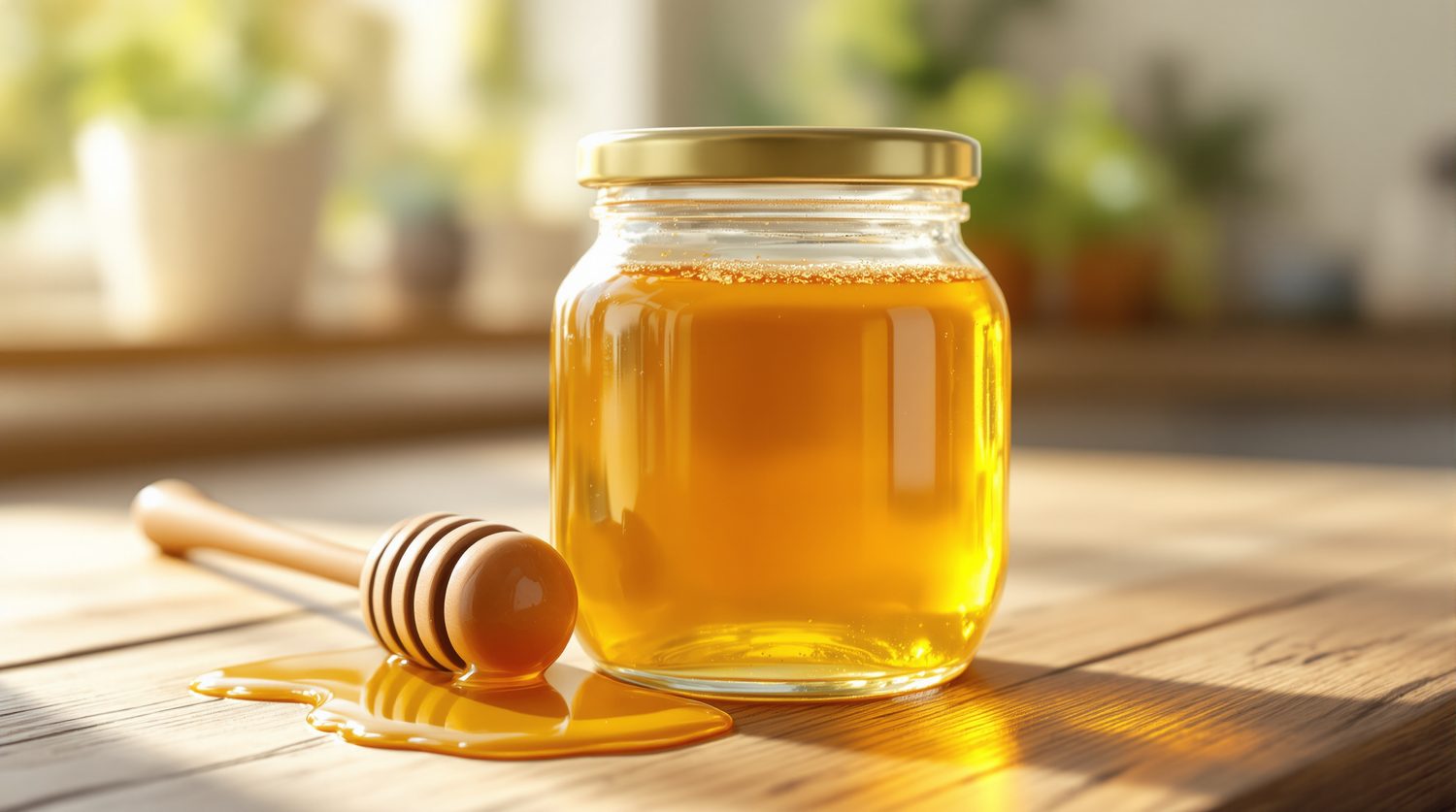
Most honey that has been tested contains microplastics — but the amounts are small and the measurement is genuinely contested. Studies from Germany (2013), Ecuador (2020) and Turkey (2026) found plastic fibers and fragments in the large majority of honey samples, with the most recent detecting them in 93% of the honeys tested. The counts are low, though — on the order of tens to a few hundred particles per kilogram — and one influential 2017 paper argued some early numbers were inflated by stray fibers landing in the lab. The important caveat is the same as always: the studies measured how much plastic is present, not any effect on health, and honey is a tiny source next to your drinking water and food. It’s a reason to choose and store honey a little more carefully, not to panic.
Honey feels like it should be immune. It’s one of the few foods humans still get essentially the way we did 5,000 years ago — a bee visits a flower, and the result ends up in a jar. There’s no factory step you can obviously blame. That’s exactly why the research unsettles people: when scientists started examining commercial honey closely, they found the same microscopic plastic fibers that turn up in tap water, in bottled water, and in our own blood.
But honey is also a case where it pays to read past the scary number. The counts are low, the early measurements sparked a real scientific argument about lab contamination, and the most interesting recent finding — that artisanal “special” honey can carry more plastic than mass-market honey — flips the usual assumptions. This guide walks through what the studies actually found, how plastic gets into honey in the first place (the answer says a lot about the world the bees live in), whether the amount is worth worrying about, and where the microplastics you swallow really come from — so you can spend your effort where it counts.
The bottom line up front: honey is a real but very small source of the microplastics you ingest. Buy it in glass, store it in glass, and don’t heat it in plastic — then aim your real effort at the big controllable sources. See our ranking of which foods have the most microplastics, why tap and bottled water top the list, and the room-by-room kitchen plastic detox guide.
Does honey have microplastics?
For most commercial honey, the honest answer is yes — but it’s a small and disputed yes, not the shocking one the headlines imply. The first alarm came in 2013, when German researchers Gerd and Elisabeth Liebezeit examined 19 honeys from several countries and reported synthetic fibers and fragments in all of them. Studies since then, in Ecuador and most recently Turkey, have found the same pattern: microplastics in the large majority of honey tested.
What makes honey different from, say, salt is that the science didn’t just march forward — it argued with itself. In 2017 a separate team published a paper pointedly titled “Lack of evidence for microplastic contamination in honey,” showing that when they controlled for airborne fibers drifting into the lab during analysis, most of the “plastic” disappeared. Later work with better contamination controls still finds microplastics in honey, but usually at lower counts than the earliest reports. So the accurate summary is: real, present, low, and measured with more caution than almost any other food.
How does plastic get into honey?
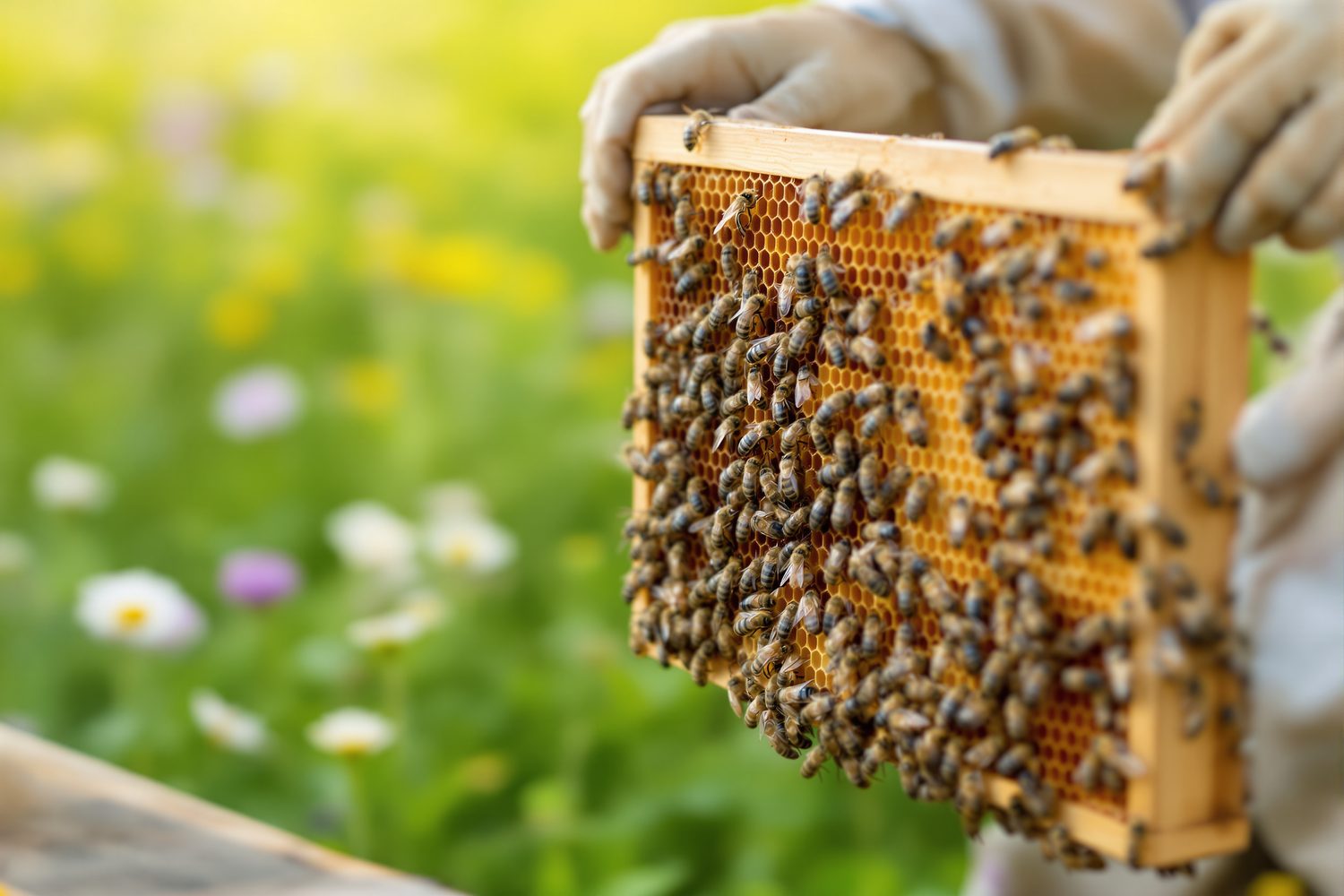
Not from the bees, and not really from the flowers — from the world in between. A foraging honeybee visits thousands of blossoms across a wide radius, and as it flies through air and lands on plants dusted with fallout, it picks up airborne microplastic fibers on its body and carries them back to the hive. Bees are so reliable at this that scientists now use them as living pollution sensors.
That’s the striking part of the honey story: honey is less a food that got contaminated than a record of the plastic already in the environment. Researchers increasingly treat honeybees as bioindicators — if there’s plastic in the air over a landscape, it shows up in the hive. Then more is added downstream: the extraction, straining, and bottling steps introduce particles from equipment and, above all, from plastic packaging. A soft squeeze bottle is itself a documented source of the same kind of particle contamination researchers find in other food packaging.
This is also why you can’t simply buy your way out with a label. Because the fibers ride in on the bees and the air, honey reflects the environment its hive sat in and the way it was handled — not whether the jar says “raw,” “organic,” or “local.” It’s the same lesson as the rest of the microplastics story: the plastic is in the background of modern life, and food is where we notice it.
How much microplastic is in honey?
Less than the particle-per-kilogram counts make it sound, once you account for how little honey people actually eat. The 2013 German study reported roughly 40 to 660 fibers per kilogram of honey (averaging about 166), plus a handful of fragments. The 2020 Ecuadorian study landed lower, around 54 to 67 particles per kilogram. These are modest numbers next to the tens of thousands of particles per liter found in some bottled water.
The 2026 Turkish team did the arithmetic that matters most: they estimated a typical eater takes in only about 0.16 to 0.38 microplastic particles per day from honey. A spoonful of honey in your tea is, on the evidence, one of the smallest plastic exposures in an average diet — a rounding error next to the water you drink all day and the food you store and heat in plastic. That’s the number to keep in mind whenever a viral post makes honey sound like a crisis. Ironically, the tea bag you dropped in that same cup can be a much larger source than the honey ever will be — a nylon or polypropylene mesh bag can release billions of microplastic particles at brewing temperature (Hernandez et al., 2019), which is why choosing one of the safest tea bags matters more than switching honey brands.
“Honey isn’t a contaminated food so much as an honest witness. The plastic in the jar is a readout of the plastic already in the air the bees flew through.”
Does raw or local honey have fewer microplastics?
Not reliably — and one recent study found the reverse of what most people expect. In the 2026 research, small-batch “special” artisanal honeys carried more microplastics than mass-produced industrial ones, likely because industrial processing includes fine filtration while a local jar may be barely strained. And the 2020 study found honey from more densely populated, industrial areas tested higher, pointing back to the environment the bees foraged in.
None of that is a knock on raw or local honey, which has genuine merits — more intact enzymes and pollen, supporting nearby beekeepers, better flavor. It just means “low microplastics” isn’t automatically one of them, because the biggest levers are the surrounding environment and the packaging, not the marketing word on the label. If cutting plastic is your goal, the thing you can actually see and control is the container: a honey sold and stored in glass beats the identical honey in a plastic squeeze bottle.
Can you remove microplastics from honey?
Not in any practical way at home. Honey is the opposite of water here: you can run water through a certified filter, but honey is a dense, viscous liquid you can’t meaningfully strain at the microscopic scale, and heating or diluting it to chase out particles would wreck the thing you bought. Once a fiber is in the jar, it’s in the jar.
So the realistic moves are all upstream of your spoon. Buy honey packaged in glass rather than plastic squeeze bottles, since the packaging is a source you can see. Decant a plastic-bottled honey into a glass jar at home. Never microwave honey in a plastic container to loosen it — warm the jar in hot water instead, because heat plus plastic is what drives the most particle migration. And keep the whole thing in proportion: none of this makes honey perfect, but it trims the avoidable part without pretending you can undo the rest.
Are the microplastics in honey dangerous?
Here’s where honesty matters most. The counts are real, but every one of these studies was built to measure how much plastic is in honey — not what those particles do once they’re inside a person. On the specific question of harm, the honey research simply has no answer, and no one should read a health verdict into data that can’t support one. Add the ongoing debate about lab contamination, and honey is one of the weakest places to hang a health scare.
What we do know is broader: microplastics are now being detected throughout the human body — in blood, organs, and even the brain — and researchers are still working out what, if anything, that means. Against that backdrop, honey is a tiny and largely unavoidable contributor. The reasonable stance is neither panic nor dismissal: you don’t have to prove the particles are harmful to decide that trimming avoidable plastic is worth doing, or that the bigger sources deserve far more of your attention than a jar of honey.
Don’t give up honey. On the best current estimate you get a fraction of a microplastic particle a day from it — nothing next to the water you drink and the food you store and heat in plastic. The useful move is to buy honey in glass and keep it in glass, then spend your real effort on the big sources you can control. That’s the whole logic of our kitchen plastic detox guide.
How do you cut the microplastics you actually swallow?
Put honey in perspective and the priorities get obvious. The two biggest controllable sources of the microplastics in your diet aren’t honey at all — they’re your drinking water and the plastic your food is stored and heated in. Fix those and you remove far more plastic than you ever could by fussing over which honey to buy. And before you tackle the kitchen, consider the bathroom: a 2025 peer-reviewed study (Ecotoxicology and Environmental Safety, Wang et al.) measured conventional nylon toothbrush bristles releasing roughly 2.33 million microplastic particles per person per year — far more than honey, salt, or any dietary source combined. Switching to a microplastic free toothbrush with plant-based bristles removes that source with a one-time purchase.
Start with water, because it’s the highest-volume thing you put in your body — and unlike honey, it’s the one source you genuinely can filter. A pitcher that carries a specific microplastics claim — certified under NSF/ANSI 401, or a rated membrane pore size — cuts particle counts sharply; see our full guide to the best water filter pitchers for microplastics and the broader water filter roundup. Then get food off plastic: store leftovers, prepped ingredients, and yes, your honey, in glass or platinum silicone instead of plastic tubs and squeeze bottles, and never heat food in plastic. And if you take your honey stirred into tea, boil the water in a glass or stainless non-toxic electric kettle rather than a plastic one, which sheds particles into the water as it heats. The picks below are the simplest, longest-lasting ways to do both.
Fix the sources that actually matter
Honey is a rounding error next to your water and food storage. Start where the volume is: filter your tap water, and move food out of plastic.
The swaps that cut the most plastic you swallow
There’s no such thing as “microplastic-free honey” you can buy off the shelf, and you can’t filter honey the way you filter water. So instead of padding this out with products that don’t exist, here are the real, currently-sold tools that remove far more plastic from your diet than honey ever adds — certified water filters and glass or platinum-silicone storage (a glass jar is also the right home for your honey). Prices and availability change, so check current listings.
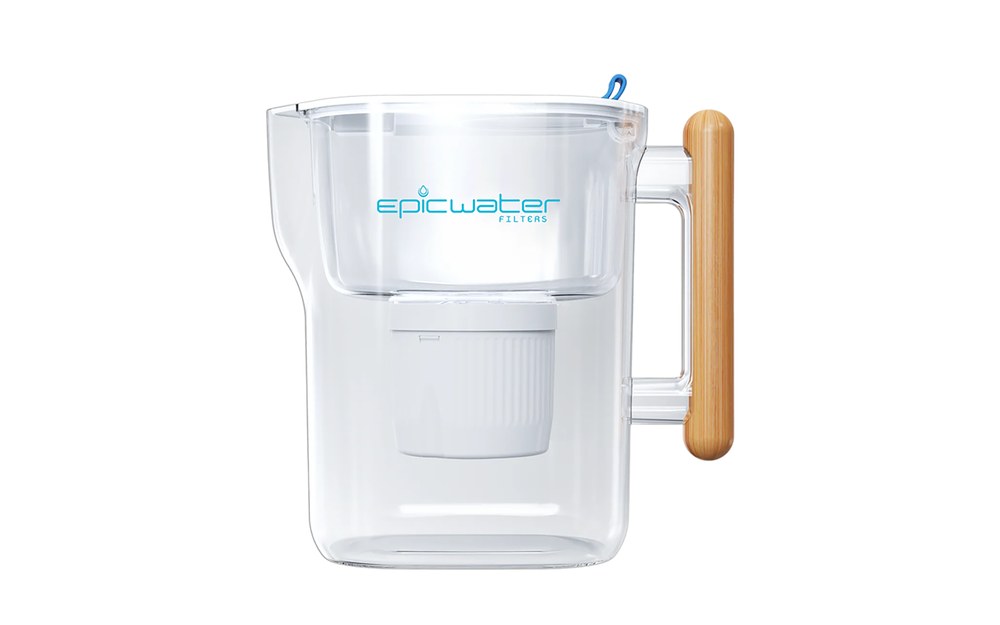
1. Epic Pure Water Filter Pitcher — Best Overall for Microplastics
 Best Overall
Reviewers point to published independent lab data and a long-lasting filter as the reasons they trust it, and several describe the slow, deliberate drip as reassuring rather than annoying. The honest downsides: owners report the filtration is genuinely slow and not the pick if you want a glass of water in a hurry, and some mention flip-top lids that stick or water that spills from the lid when you pour a full pitcher.
The clearest evidence on this list: Epic posts its independent lab results publicly, so you can see the 99.9% microplastic-removal data instead of trusting a slogan on the box.
Why it's safe: The hollow fiber membrane physically blocks microplastic particles down to ~1 micron, while the carbon stage handles chlorine, lead, and PFAS — all in a BPA-free Tritan body.
Check Today’s Price on Amazon →Amazon prices change daily — tap to see today's price and any active discount.
- Free delivery & returns for Prime members
- Sold & shipped by Amazon
- Thousands of verified reviews
Because tap water is the single highest-volume thing most people put in their bodies — and what most of us stir honey into for tea — filtering it removes more microplastics than any other single swap. The Epic Pure is the clearest choice: a hollow fiber membrane as the primary microplastic barrier, with Epic publishing the independent lab results to back the 99.9% removal claim.
2. Waterdrop Chubby 10-Cup Pitcher — Best Filter Life
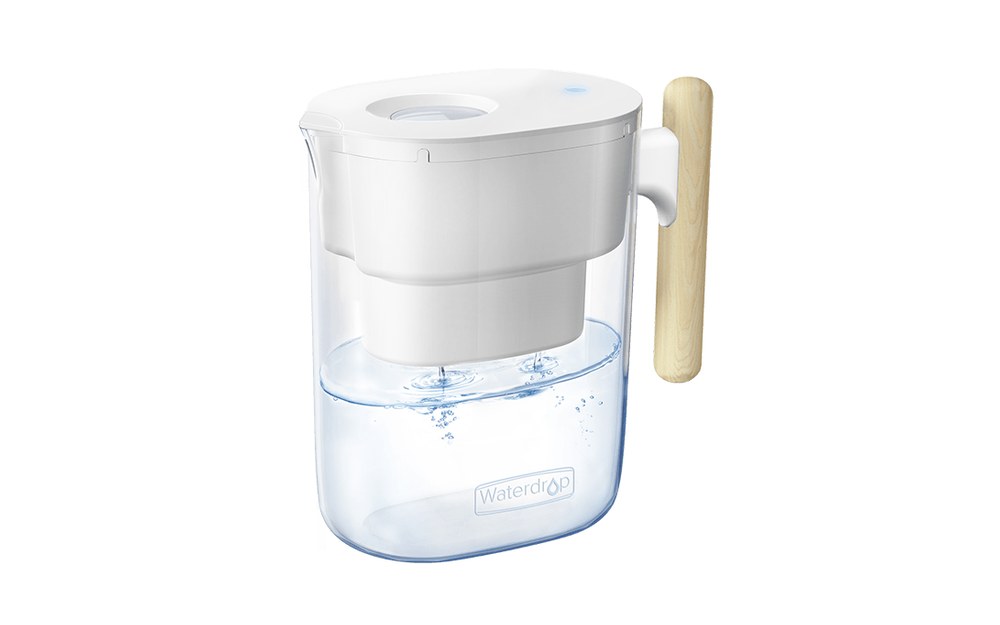 Best Filter Life
Owners like the look and the long 200-gallon filter life, and roughly 80 percent of reviews land positive, with the common praise being clean-tasting water at a low cost per gallon. The honest gripes: several owners warn the handle can feel loose under a full pitcher, so they lift with two hands; some report the pour spills if you tip too fast; and the change-filter indicator light draws complaints for not lighting reliably.
A membrane blocks particles by pore size rather than by claim list, and its 200-gallon filter runs about 4 to 5 months — the lowest ongoing cost on the list.
Why it's safe: A hollow fiber membrane is a physical barrier to particles, while the carbon composite handles chlorine, heavy metals, and PFAS — all in a BPA/BPS-free body.
Check Today’s Price on Amazon →Amazon prices change daily — tap to see today's price and any active discount.
- Free delivery & returns for Prime members
- Sold & shipped by Amazon
- Thousands of verified reviews
If you want a membrane rather than a claim list, the Waterdrop Chubby has it — a hollow fiber pore size, on Waterdrop’s own published lab data — plus the longest filter life in the class at 200 gallons. The “filter while you pour” design works just like a familiar counter pitcher, but with a membrane that’s actually tested for microplastics.
3. ZeroWater 10-Cup Pitcher with TDS Meter — Best for a Clean Base
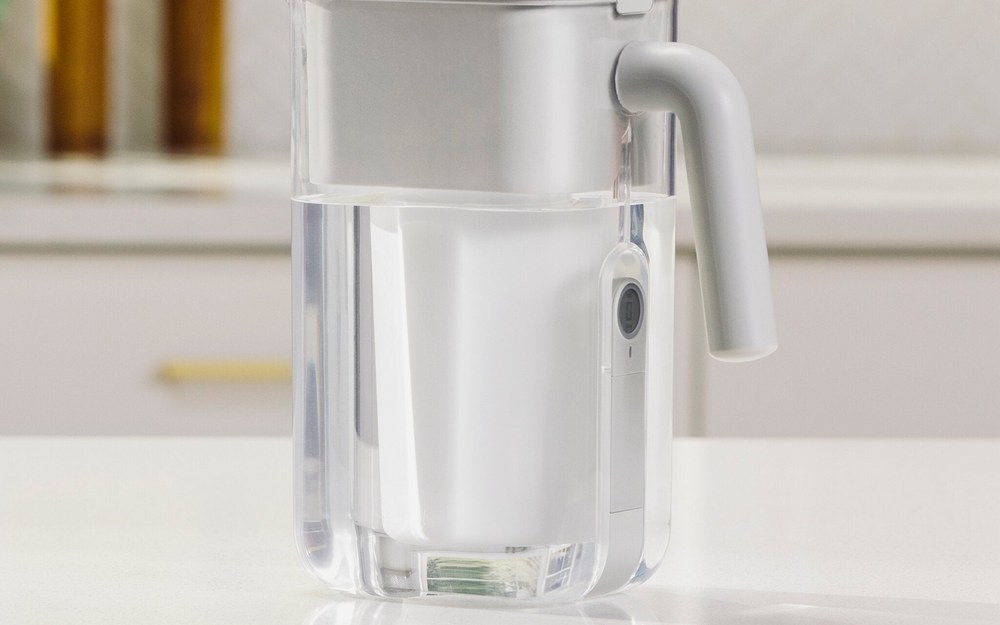 Best for a Clean Base
ZeroWater’s 5-stage cartridge finishes with an ion-exchange resin that pulls dissolved solids out of the water, reaching a 0 ppm TDS reading no ordinary carbon pitcher can match — the cleanest possible base for anything you sweeten with honey. The included meter is genuinely useful: it shows exactly when the resin is spent, because ion-exchange capacity runs out rather than gradually fading.
That’s also the catch, and we won’t hide it: capacity is short. In hard or high-TDS water a filter can be spent in 25–40 gallons, and the honest fix is to replace on the meter reading, not a calendar. Stripping everything can leave the water tasting flat. But as the cheapest no-install way to get water to a true zero, with a meter proving it, ZeroWater earns its spot.
The signature draw is the included meter reading 000, and owners write “We love it” about getting the dissolved-solids count to zero. But stripping minerals has a cost: the water can taste “flat” and slightly acidic, and the filter life is short at roughly 25 to 40 gallons, so a family swaps filters every one to three weeks. Some also report the lid falls off when pouring, with filter cost the number-one long-term complaint.
The cheapest no-install way to pull dissolved solids to zero — a 5-stage ion-exchange pitcher with a TDS meter that proves when the filter is spent.
Why it's safe: The 5-stage cartridge combines carbon and ion-exchange resin in a BPA-free body, taking the water you brew and mix down to a 0 ppm reading — just replace it on the meter, not the calendar.
Check Today’s Price on Amazon →Amazon prices change daily — tap to see today's price and any active discount.
- Free delivery & returns for Prime members
- Sold & shipped by Amazon
- Thousands of verified reviews
Because honey almost always ends up dissolved in something — tea, hot lemon water, a marinade — the water you mix it into matters more than the jar. ZeroWater’s ion-exchange stage takes that water to a measured zero, so the honey is the only thing you’re adding. Just watch the meter, because the trade for that purity is a shorter filter life.
4. Glasslock Oven Safe Container Set (3-Pack) — Best Glass Storage
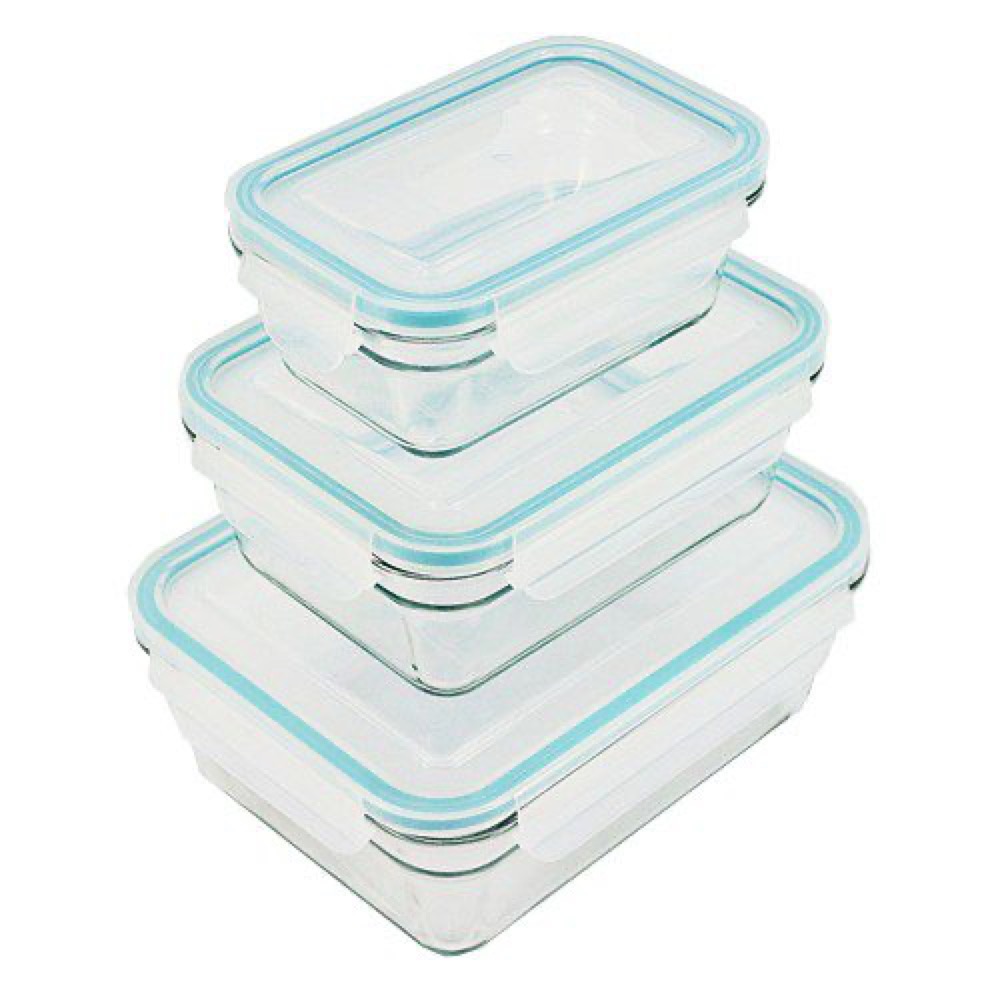 Best Glass Storage
Longtime owners like that the glass bodies are oven-, microwave-, and freezer-safe and that the snap-lock lids seal tight. The honest downsides run through the lids, not the glass: reviewers report cracked lids, snapped locking tabs, and mold building up in the rubber gaskets if they are not dried well. Some buyers also received sets with a locking piece missing.
Three stackable glass containers in one box — enough to store a week of leftovers and prepped ingredients without a single plastic tub.
Why it's safe: Your food sits on inert tempered glass, not plastic — so warm, acidic, watery foods can’t leach or pick up shed particles. The BPA-free lids seal with a food-grade silicone gasket that only touches the rim.
Check Today's Price on Amazon →Amazon prices change daily — tap to see today's price and any active discount.
- Free delivery & returns for Prime members
- Sold & shipped by Amazon
- Thousands of verified reviews
At roughly ten dollars per container, it’s the cheapest way to retire your plastic food tubs in one purchase — and a wide-mouth glass container is also a tidy home for a honey you’ve decanted out of a squeeze bottle. The glass goes fridge-to-oven with the lids off, so the food you reheat isn’t sitting against warm plastic, one of the conditions that drives the most particle migration.
5. Lifefactory Glass Bottle 22oz — Best for Tea & Honey Drinks
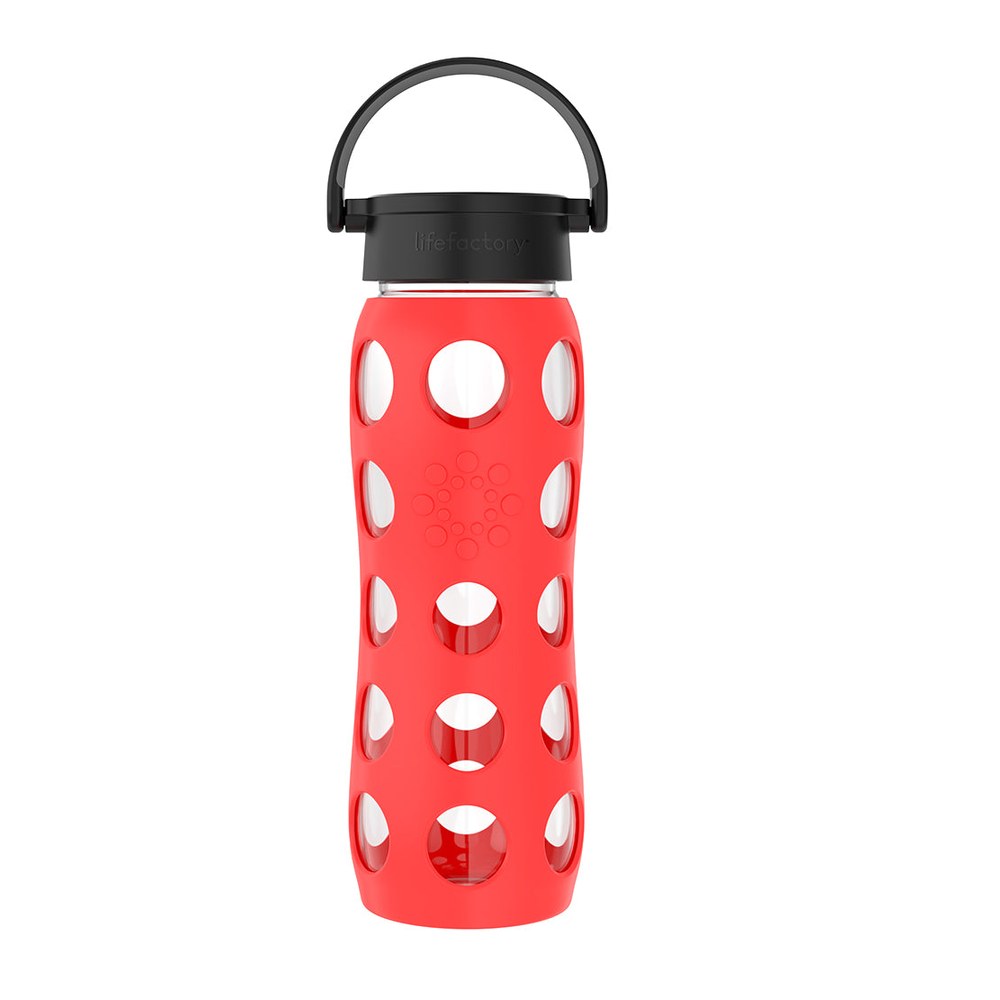 Best for Tea & Honey Drinks
The best glass option for honey drinks you carry around. It’s made from borosilicate glass — the same material used in laboratory glassware — which is thermally stable, chemically inert, and completely free of BPA, BPS, and any polymer contact with your drink. It imparts no taste, so a spoon of honey in warm water tastes like honey and water, not plastic. The protective silicone sleeve adds grip and guards against shattering. The cap contains a small polypropylene component — the only plastic in the system, at the exterior closure rather than the drink surface. Dishwasher-safe.
Mix honey into water or tea and carry it in glass instead of a plastic bottle — no plastic taste, no shedding, and it cleans up in the dishwasher.
Why it's safe: Borosilicate glass is completely inert — it never leaches, never sheds microplastics, and imparts no taste. The only plastic is a small cap component at the exterior closure, not the drink surface.
Check Today’s Price on Amazon →Amazon prices change daily — tap to see today's price and any active discount.
- Free delivery & returns for Prime members
- Sold & shipped by Amazon
- Thousands of verified reviews
Since honey is almost always eaten dissolved in a drink, the vessel you drink it from is part of the equation. A borosilicate glass bottle keeps honey-lemon water or cold-brew iced tea off plastic entirely — no leaching, no shed fibers, no plastic aftertaste — and it’s sturdy enough for daily desk-and-bag use.
6. Stasher Reusable Silicone Bag Starter Kit — Best Reusable Bag
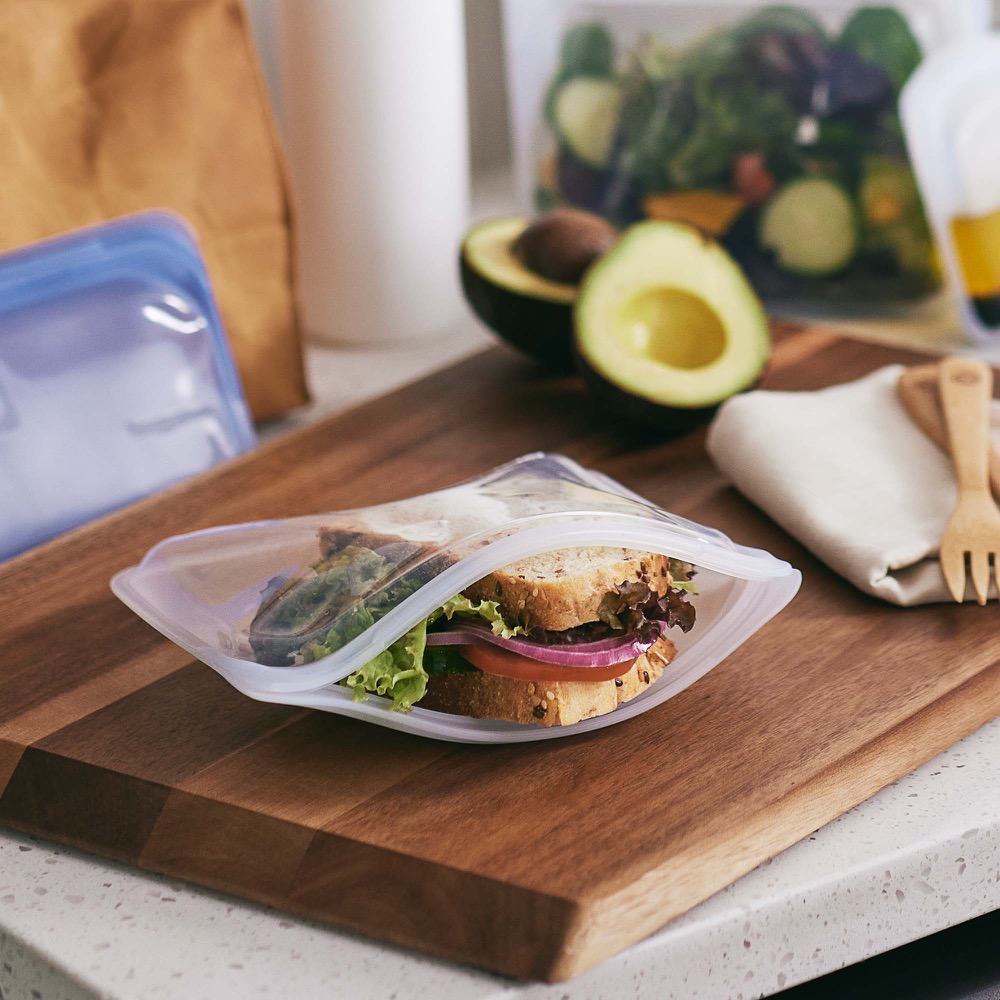 Best Reusable Bag
For freezing, marinating, or anything you’d reach for a plastic bag — including a honey-based marinade — Stasher’s platinum-cured silicone is the upgrade: sturdier than any disposable bag and free of the chemicals that migrate from plastic. The patented Pinch-Loc seal is genuinely airtight and leakproof, so it holds liquids without drips.
It’s freezer safe to -70°F and goes straight to the microwave or a 425°F oven. The starter kit covers the everyday sizes — sandwich, snack, and stand-up half-gallon — so you can retire a whole box of single-use bags in one purchase.
Owners like that the platinum silicone bags go from freezer to microwave and replace throwaway plastic for years. The honest gripes: smell and stain retention come up often, with reviewers noting garlic and strong odors linger even after washing; the pinch-lock seal can be fiddly to open and close; and the seams are slow to dry, which can invite mildew if you do not air them out.
Freeze soups, sauces, and marinades in airtight silicone instead of leak-prone plastic — then thaw and reheat in the same bag, no transfer needed.
Why it's safe: Platinum-cured silicone — the highest-purity, chemically inert grade — with no plastic, PVC, BPA, lead, latex, phthalates, or PFAS.
Check Today's Price on Amazon →Amazon prices change daily — tap to see today's price and any active discount.
- Free delivery & returns for Prime members
- Sold & shipped by Amazon
- Tens of thousands of verified reviews
Plastic sandwich and freezer bags are the storage most people hold onto longest, and they’re the messiest to thaw and reheat. A multi-size silicone kit replaces the whole box at once and skips the transfer-to-a-dish step. For the full lineup, see our guide to the best silicone food storage bags.
Want the Full Home Protection Guide?
A jar of honey is one plastic touchpoint among dozens in a typical day. The Complete Plasticproof Guide covers every room — kitchen, nursery, bathroom, bedroom — with 80+ product recommendations backed by 47+ studies.
The honest verdict
Does honey have microplastics? For most tested honey, yes — German, Ecuadorian and Turkish studies have found plastic fibers and fragments in the large majority of samples, with the 2026 study detecting them in 93%. But those studies measured how much plastic is present, not what it does to the body; the counts are low; a 2017 paper showed how easily lab air can inflate the numbers; and on the best current estimate honey contributes a fraction of a microplastic particle to your day. So the accurate takeaway is proportion, not alarm.
The practical response is easy. Buy honey in glass rather than a plastic squeeze bottle, decant it into a glass jar if it came in plastic, and don’t microwave it in plastic to loosen it. Then put your real effort where the volume is: filter your drinking water — the one big source you genuinely can clean up — and get your food out of plastic tubs and bags. You don’t have to prove the particles are harmful to decide that trimming the avoidable plastic is worth doing, or that a jar of honey deserves less of your worry than the water you drink all day.
Cut the plastic that actually adds up
Honey is a rounding error next to your water and food storage. A certified filter and a few glass or silicone containers remove far more plastic from your diet.
Frequently Asked Questions
Most tested honey does. Studies from Germany (2013), Ecuador (2020) and Turkey (2026) found microplastic fibers and fragments in the large majority of samples, and the 2026 study detected them in 93% of the honeys it analyzed. The counts are low compared with water or salt, and one influential 2017 paper argued that some early results were inflated by airborne fibers landing in the lab — so honey is a real but small and genuinely debated source.
Not from the bees making it, but from the world the bees fly through. Foraging honeybees pick up airborne microplastic fibers from the landscape, which is why researchers now use them as living bioindicators of plastic pollution. More plastic is added downstream during extraction, filtering and bottling — especially from plastic packaging like squeeze bottles. So honey is essentially a snapshot of how polluted its environment and supply chain were.
Low, and estimates vary by study. The 2013 German study reported roughly 40 to 660 fibers per kilogram (averaging about 166) plus a few fragments. A 2020 Ecuadorian study found about 54 to 67 particles per kilogram. A 2026 Turkish study estimated an eater takes in only about 0.16 to 0.38 microplastic particles a day from honey — far less than from drinking water or seafood.
Not necessarily, and one recent study found the opposite. In the 2026 research, artisanal special honeys carried more microplastics than mass-produced industrial ones, and a 2020 study found honey from more densely populated areas tested higher. Raw and local honey has real merits, but low microplastics isn’t guaranteed to be one of them, because the biggest driver is the environment the bees forage in and how the honey is packaged — not whether it’s labeled raw.
Not practically at home. You can’t filter honey the way you filter water, and heating or straining it to chase out particles would ruin it. The realistic levers are upstream: choose honey sold in glass rather than plastic squeeze bottles, decant it into a glass jar, never warm it in plastic, and put your real effort into the far larger microplastic sources you can actually control, starting with filtering your drinking water.
The health risk isn’t established. These studies measured how much plastic is present, not what it does inside the body, and honey is a very small source next to drinking water, seafood, and food stored or heated in plastic. Microplastics are increasingly detected in human blood and organs, so trimming avoidable exposure is sensible — but the reasonable stance with honey is proportion, not panic.
Sources
- Liebezeit G, Liebezeit E. “Non-pollen particulates in honey and sugar.” Food Additives & Contaminants: Part A, 2013;30(12):2136–2140. (19 honeys; synthetic fibers ~40–660/kg, mean ~166/kg, plus fragments.)
- Bilecen K, Altunışık A. “Honey as a bioindicator of microplastic pollution: insights from industrial and special honey types.” npj Science of Food, 2026;10:70. (15 Turkish honeys; MPs in 93%; special honey higher than industrial; est. 0.16–0.38 MPs/day.)
- Diaz-Basantes MF, Conesa JA, Fullana A. “Microplastics in Honey, Beer, Milk and Refreshments in Ecuador as Emerging Contaminants.” Sustainability, 2020;12(14):5514. (~54–67 MP/kg in honey; denser-population areas higher.)
- Mühlschlegel P, Hauk A, Walter U, Sieber R. “Lack of evidence for microplastic contamination in honey.” Food Additives & Contaminants: Part A, 2017;34(11):1982–1989. (Argued early counts were inflated by airborne lab contamination.)
- Shavali Gilani P, et al. “Assessing the inconsistency of microplastic measurements in foods and beverages.” Comprehensive Reviews in Food Science and Food Safety, 2024. (On how varied and hard-to-compare food MP measurements are.)
- Honeybees as bioindicators of plastic pollution. “Honeybees as active bioindicators of plastic pollution.” Science of the Total Environment, 2025.