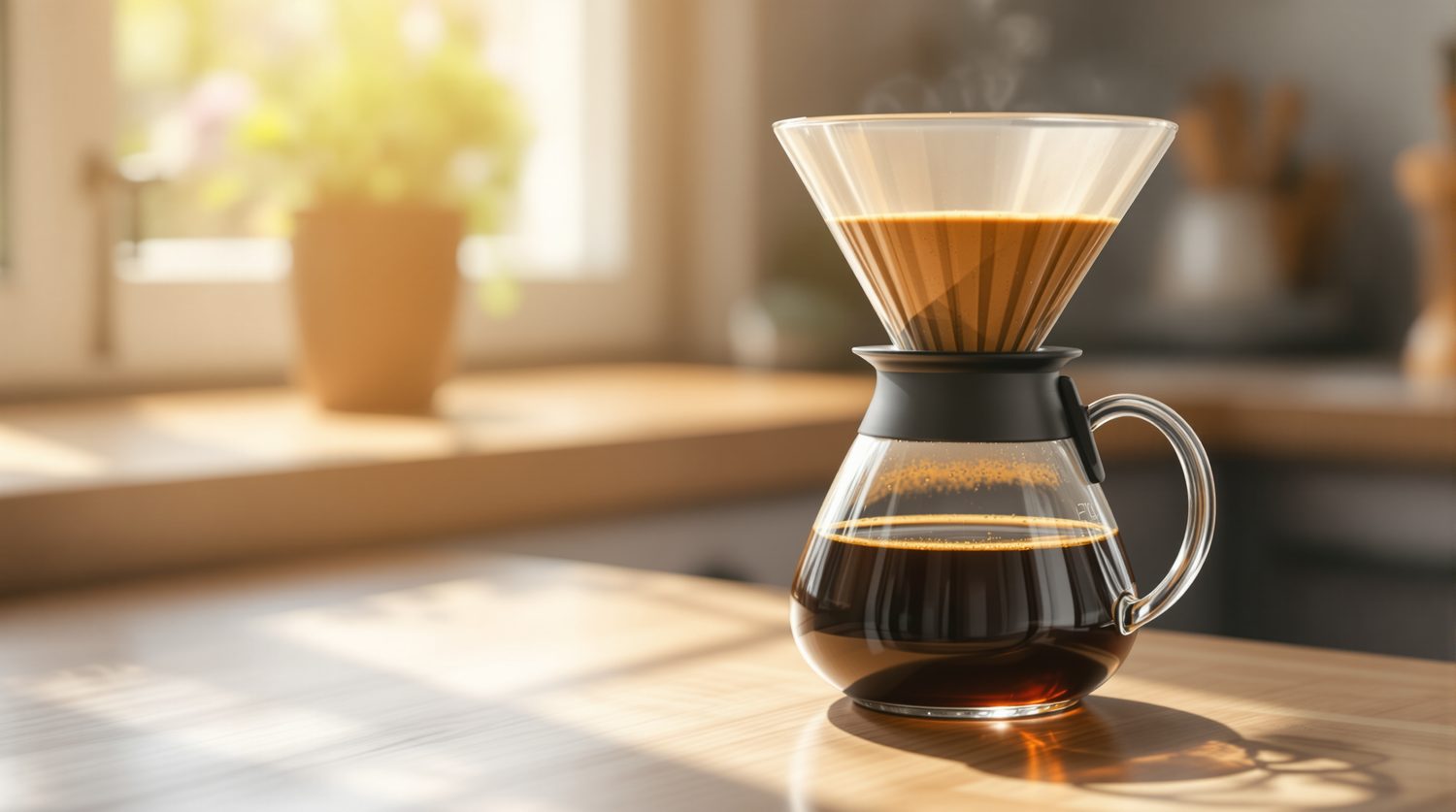
Coffee can contain microplastics — but not from the bean. A 2023 study in Food Chemistry detected microplastic particles in coffee brewed through paper drip bags with heat-sealed plastic edges, and separate research shows plastic-lined paper cups and plastic single-serve pods shed particles into hot liquid. And because brewed coffee is roughly 98% water, whatever microplastic is in your tap water rides straight through into the cup. The honest caveat: these studies measured how much plastic is present, not what it does to health, and coffee is one source among many. It's a reason to filter your brew water and brew in glass or steel — not to give up your morning cup.
Coffee feels like it should be exempt. It's beans and water, brewed the same basic way for centuries. That's exactly why the research is jarring: when scientists run coffee — or the cup it comes in — under a microscope, they keep finding the same tiny fragments that turn up in tap water and in our own blood. The same surprise has shown up across the food supply, from the foods with the most microplastics to hot brews like tea and drinks nobody suspects — even soda.
The key to understanding coffee is that the plastic almost never comes from the coffee itself. It comes from the water the coffee is made of and from the plastic that hot water touches on its way to your mouth — the pod, the cup lining, the drip bag, the machine. This guide walks through exactly what the studies found, how the plastic gets in, how much is actually there (the honest answer is calmer than the headlines), and the handful of changes that cut what you drink.
The bottom line up front: the plastic in coffee comes from the brewing water, the brew format, and the cup — not the beans — so the fixes are things you control. Filter your brewing water, brew with a glass or steel plastic-free coffee maker instead of pods or drip bags, skip the plastic-lined paper cup, and store beans in glass. For the bigger picture, see our ranking of which foods have the most microplastics, why tap water is a top source, and the room-by-room kitchen plastic detox guide.
Do studies find microplastics in coffee?
Yes — but the research points squarely at the brewing method and the cup, not the coffee. In 2023, a study published in Food Chemistry examined single-serving paper drip bags — the fold-over pour-over sachets with heat-sealed plastic edges that hang on the rim of a mug — and detected microplastic particles released into the brewed coffee. The mechanism was heat: near-boiling water sitting against the plastic seal drives particles loose, the same temperature-plus-plastic dynamic documented across food-contact plastics.
Two related lines of research fill in the rest. A widely cited 2021 study from IIT Kharagpur found that a single disposable paper cup releases roughly 25,000 micron-sized plastic particles into 100 ml of hot liquid within 15 minutes, as the thin polyethylene lining degrades. And a landmark 2019 study in Environmental Science & Technology showed that steeping a single plastic mesh bag at brewing temperature released about 11.6 billion microplastic and 3.1 billion nanoplastic particles into the cup — the same nylon-and-plastic mesh used in some coffee bags and pods. Run coffee through plastic at brewing heat, in other words, and you get plastic in the coffee.
Where do the microplastics in coffee come from?
From the water and the format, almost never the beans. Brewed coffee is roughly 98% water, so whatever microplastic is present in your tap water tends to ride straight through into the cup — which is why filtering the water is the single highest-leverage move. Layered on top of that is every plastic surface the hot water touches on the way to you: the pod it's forced through, the lining of a paper cup, the seal on a drip bag, and the plastic components inside many drip machines.
Heat is the common thread. Coffee is brewed at around 90–96°C, and particle release from plastic climbs steeply as water approaches boiling — the same effect measured in plastic electric kettles. The beans, the grounds, and the roast contribute essentially nothing; there's no biological pathway for the plastic to come from the coffee plant. The table below sorts out where the plastic in a typical cup actually originates.
| Source | What Happens | Contribution |
|---|---|---|
| Brewing / source water | Coffee is ~98% water; particles in the water carry straight through | Major — the biggest lever |
| Plastic pods & drip bags | Hot water forced through plastic pods or heat-sealed drip bags sheds particles | Major — heat-driven |
| Paper cup lining | The polyethylene lining degrades in hot coffee, releasing thousands of particles | Major for to-go drinkers |
| Plastic-bodied machines | Water passes over plastic reservoirs and parts at near-boiling temperatures | Minor to moderate |
| The beans, grounds & roast | No biological pathway shown; the plastic isn't from the coffee itself | Negligible |
How much microplastic is in a cup of coffee?
There's no single number, because the amount is set by how you brew, not by the coffee. A plastic-lined paper cup can shed around 25,000 particles into one hot drink; a plastic mesh brewing bag has been measured releasing billions of micro- and nanoparticles at brewing temperature; a drip bag with plastic seals adds particles from its seam. At the other end, a pour-over or French press that uses a glass carafe and a metal or cloth filter keeps the hot water away from plastic almost entirely, and releases far less.
The honest headline is that the format swings the count by orders of magnitude, while the coffee barely matters. That's actually good news: it means the amount of plastic in your coffee is something you decide, not something baked into the drink. Swap the plastic contact points for glass and steel and you remove most of the exposure the studies found — without changing a thing about the coffee you love.
"Coffee doesn't get its plastic from the bean — it gets it from the water it's brewed with and the plastic that water touches on the way to your cup. Both of those are things you can change."
Do plastic coffee pods and paper cups release microplastics?
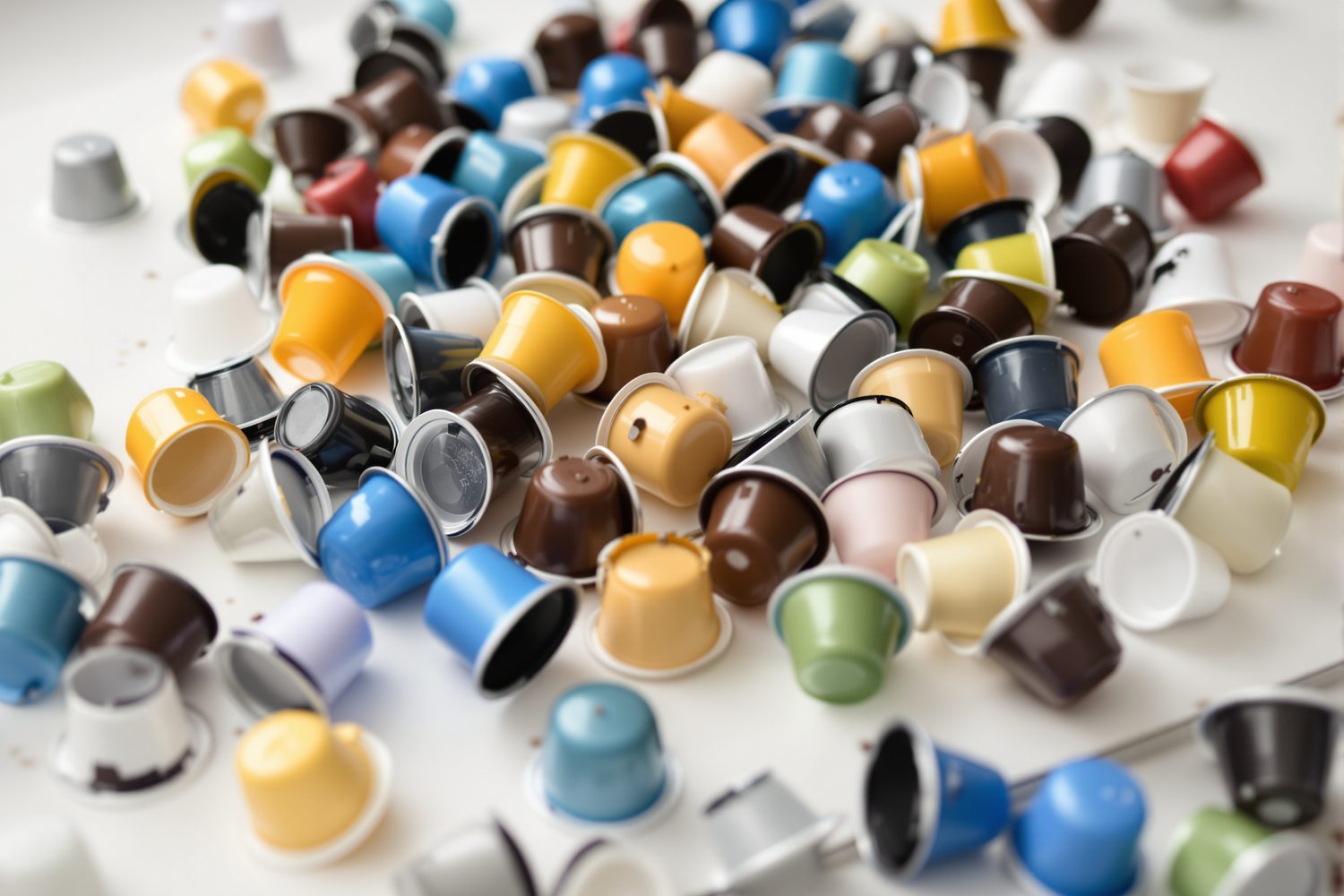
Yes, and they're the two biggest offenders for most people, because both put near-boiling water in direct, prolonged contact with plastic. A single-serve pod is pierced and flushed with hot water under pressure, so particles come off the pod itself; a paper cup isn't really paper on the inside — it's lined with a thin plastic film that degrades in hot coffee. Both are single-use, so the exposure repeats every cup.
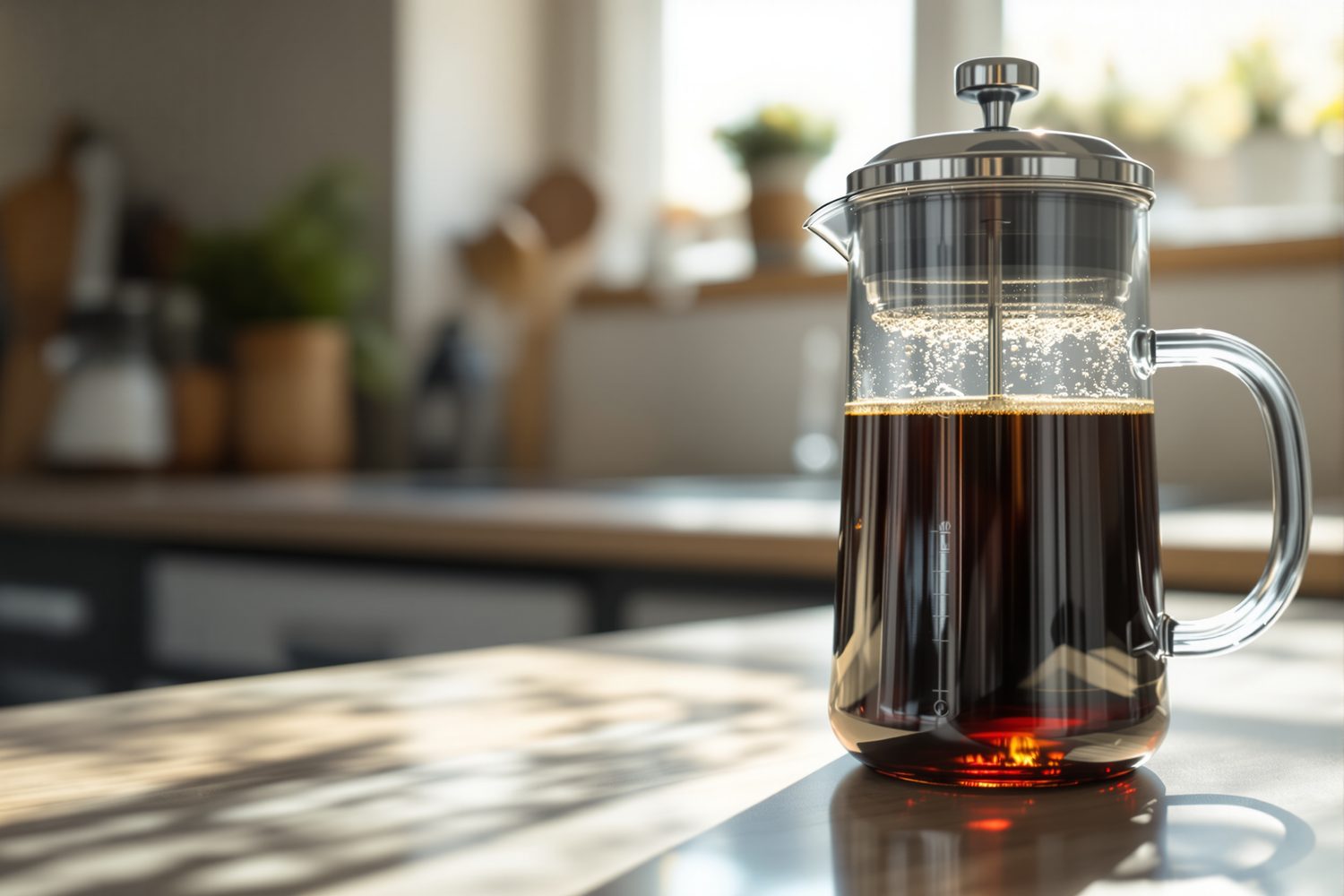
The fix is the same in both cases: take the plastic out of the hot zone. A glass or stainless pour-over dripper, a French press with a glass carafe, or a stovetop moka pot brews the same coffee without forcing hot water through plastic — see our guide to the best plastic-free coffee makers for specific formats. For to-go coffee, a reusable glass or steel travel mug removes the paper cup from the equation entirely — the same logic that makes a glass or stainless steel water bottle the safest way to carry cold drinks. If you boil water for pour-over, note that boiling doesn't reliably remove microplastics from the water itself — filtering does.
Are the microplastics in coffee dangerous?
Here's where honesty matters. The particle counts are real and reproducible, but these studies were designed to measure how much plastic is present — not to test what those particles do once they're inside a person. On the specific question of harm from the microplastics in coffee, the research simply doesn't have an answer yet, and no one should read a health verdict into it that the data can't support.
It's also worth keeping the scale straight. A 2019 analysis in Environmental Science & Technology estimated that the average person already swallows tens of thousands of microplastic particles a year from food and drink combined. Coffee is one contributor within that total, and for most people the plain water they drink all day is a bigger share. What we do know more broadly is that microplastics are increasingly detected throughout the human body — in blood, organs, and even the brain — so trimming avoidable exposure is sensible even while the harm question stays open.
You don't need to give up coffee over microplastics. The particles come from the pod, the cup, and the water — all of which you can swap — not from the drink itself. Fix the format and filter your water, then spend the rest of your effort on the bigger sources in our kitchen plastic detox guide.
How do you reduce the microplastics in your coffee?
Because the plastic rides in on the water and the format, the fixes are straightforward — and the biggest one isn't about coffee at all. Start with the water: brewed coffee is roughly 98% water, so filtering your tap water removes microplastics from the largest single ingredient in every cup, and cleans up the rest of your day's drinking water too. A pitcher that carries a specific microplastics claim — certified under NSF/ANSI 401, or a rated membrane pore size — cuts particle counts sharply; see our guide to the best water filter pitchers for microplastics and the broader water filter roundup.
Then fix the format. Brew with a glass or stainless pour-over or French press instead of plastic pods, plastic-bodied drip machines, or drip bags with plastic seals. If a pod machine is staying on your counter, a refillable stainless steel pod you fill with your own grounds skips the disposable plastic cup entirely. Carry to-go coffee in a glass or steel mug rather than a plastic-lined paper cup, and store your beans and grounds in airtight glass instead of a plastic tub. The picks below are the simplest, longest-lasting ways to do all of that.
Fix the sources that actually matter
The plastic in coffee is mostly the water it's brewed with and the plastic that water touches. Start where it counts: filter your tap water, and get your brew off plastic.
The swaps that cut the most plastic in your coffee
You can't buy "microplastic-free coffee," and you can't filter a brewed cup after the fact without ruining it. So instead of padding this out with products that don't exist, here are the real, currently-sold tools that cut the plastic around your coffee — certified filters for the water you brew with, plus glass and platinum-silicone vessels to carry your cup and store your beans off plastic. Prices and availability change, so check current listings.
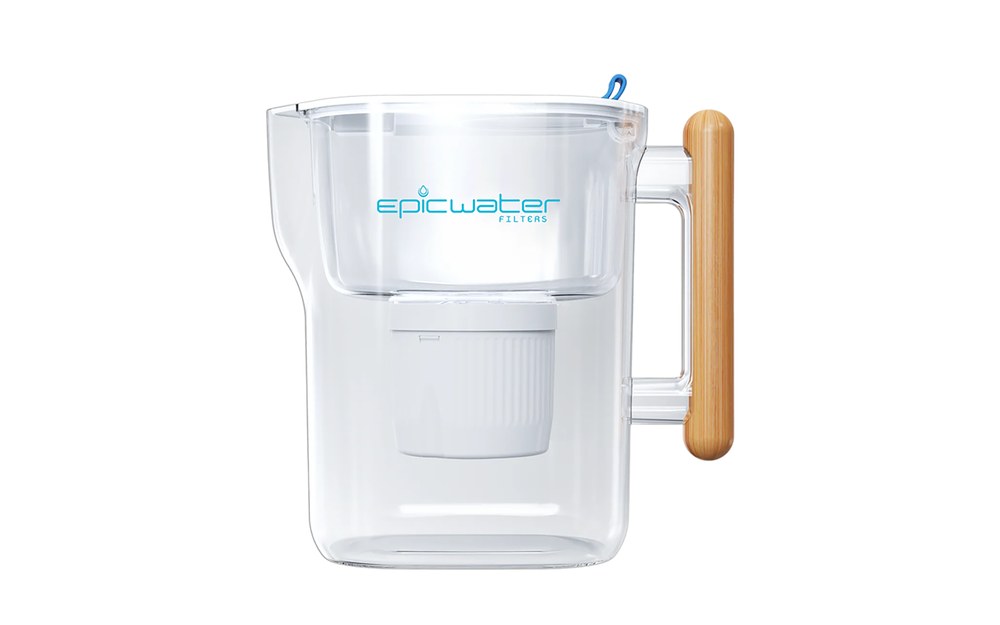
1. Epic Pure Water Filter Pitcher — Best Overall for Brew Water
 Best Overall
Reviewers point to published independent lab data and a filter rated around 150 gallons, far longer than a Brita, as the reasons they trust it, and several describe the slow, deliberate drip as reassuring rather than annoying. The honest downsides: owners report the filtration is genuinely slow and not the pick if you want a glass of water in a hurry, and third-party complaints mention cracked plastic, flip-top lids that stick, and water that spills or leaks from the lid when you pour a full pitcher.
The clearest evidence on this list: Epic posts its independent lab results publicly, so you can see the 99.9% microplastic-removal data instead of trusting a slogan on the box.
Why it's safe: The hollow fiber membrane physically blocks microplastic particles down to ~1 micron, while the carbon stage handles chlorine, lead, and PFAS — all in a BPA-free Tritan body.
Check Today’s Price on Amazon →Amazon prices change daily — tap to see today's price and any active discount.
- Free delivery & returns for Prime members
- Sold & shipped by Amazon
- Thousands of verified reviews
Coffee is roughly 98% water, which makes the water you brew with the highest-leverage swap on this list. The Epic Pure is the clearest choice: its dual-stage design uses a hollow fiber membrane as the primary microplastic barrier, and Epic publishes the independent lab results to back the 99.9% removal claim — transparency most competitors don't match. Fill your kettle or reservoir from it and every cup starts cleaner.
2. Waterdrop Chubby 10-Cup Pitcher — Best Filter Life
Best Overall
Reviewers point to published independent lab data and a filter rated around 150 gallons, far longer than a Brita, as the reasons they trust it, and several describe the slow, deliberate drip as reassuring rather than annoying. The honest downsides: owners report the filtration is genuinely slow and not the pick if you want a glass of water in a hurry, and third-party complaints mention cracked plastic, flip-top lids that stick, and water that spills or leaks from the lid when you pour a full pitcher.
The clearest evidence on this list: Epic posts its independent lab results publicly, so you can see the 99.9% microplastic-removal data instead of trusting a slogan on the box.
Why it's safe: The hollow fiber membrane physically blocks microplastic particles down to ~1 micron, while the carbon stage handles chlorine, lead, and PFAS — all in a BPA-free Tritan body.
Check Today’s Price on Amazon →Amazon prices change daily — tap to see today's price and any active discount.
- Free delivery & returns for Prime members
- Sold & shipped by Amazon
- Thousands of verified reviews
If your household runs on coffee — and drinks plenty of water besides — filter life matters, and the Waterdrop Chubby leads on it: a hollow fiber membrane on Waterdrop's own published lab data, plus 200 gallons per filter (about 4–5 months for most households). The "filter while you pour" design works just like a familiar counter pitcher, but with a membrane that's actually tested for microplastics.
3. Aquagear Water Filter Pitcher — Best Value
Best Overall
Reviewers point to published independent lab data and a filter rated around 150 gallons, far longer than a Brita, as the reasons they trust it, and several describe the slow, deliberate drip as reassuring rather than annoying. The honest downsides: owners report the filtration is genuinely slow and not the pick if you want a glass of water in a hurry, and third-party complaints mention cracked plastic, flip-top lids that stick, and water that spills or leaks from the lid when you pour a full pitcher.
The clearest evidence on this list: Epic posts its independent lab results publicly, so you can see the 99.9% microplastic-removal data instead of trusting a slogan on the box.
Why it's safe: The hollow fiber membrane physically blocks microplastic particles down to ~1 micron, while the carbon stage handles chlorine, lead, and PFAS — all in a BPA-free Tritan body.
Check Today’s Price on Amazon →Amazon prices change daily — tap to see today's price and any active discount.
- Free delivery & returns for Prime members
- Sold & shipped by Amazon
- Thousands of verified reviews
The Aquagear costs more upfront but its 150-gallon filter life means lower annual replacement costs than most competitors, and the pitcher body is guaranteed for life. It uses a 5-stage filter with a sub-micron membrane stage that targets microplastics, heavy metals, and fluoride — a good fit for coffee households that don't want to track filter changes constantly.
4. Lifefactory Glass Bottle 22oz — Best Glass Carry
Best Overall
Reviewers point to published independent lab data and a filter rated around 150 gallons, far longer than a Brita, as the reasons they trust it, and several describe the slow, deliberate drip as reassuring rather than annoying. The honest downsides: owners report the filtration is genuinely slow and not the pick if you want a glass of water in a hurry, and third-party complaints mention cracked plastic, flip-top lids that stick, and water that spills or leaks from the lid when you pour a full pitcher.
The clearest evidence on this list: Epic posts its independent lab results publicly, so you can see the 99.9% microplastic-removal data instead of trusting a slogan on the box.
Why it's safe: The hollow fiber membrane physically blocks microplastic particles down to ~1 micron, while the carbon stage handles chlorine, lead, and PFAS — all in a BPA-free Tritan body.
Check Today’s Price on Amazon →Amazon prices change daily — tap to see today's price and any active discount.
- Free delivery & returns for Prime members
- Sold & shipped by Amazon
- Thousands of verified reviews
To-go coffee is where the paper-cup lining does its damage, twice a day. Carrying your coffee — or the filtered water you brew it with — in a borosilicate glass bottle keeps your drink off plastic entirely: no leaching, no shed fibers, no plastic aftertaste, and it's sturdy enough for daily desk-and-bag use.
5. Glasslock Oven Safe Container Set (3-Pack) — Best Bean Storage
Best Overall
Reviewers point to published independent lab data and a filter rated around 150 gallons, far longer than a Brita, as the reasons they trust it, and several describe the slow, deliberate drip as reassuring rather than annoying. The honest downsides: owners report the filtration is genuinely slow and not the pick if you want a glass of water in a hurry, and third-party complaints mention cracked plastic, flip-top lids that stick, and water that spills or leaks from the lid when you pour a full pitcher.
The clearest evidence on this list: Epic posts its independent lab results publicly, so you can see the 99.9% microplastic-removal data instead of trusting a slogan on the box.
Why it's safe: The hollow fiber membrane physically blocks microplastic particles down to ~1 micron, while the carbon stage handles chlorine, lead, and PFAS — all in a BPA-free Tritan body.
Check Today’s Price on Amazon →Amazon prices change daily — tap to see today's price and any active discount.
- Free delivery & returns for Prime members
- Sold & shipped by Amazon
- Thousands of verified reviews
Beans and grounds sit in the pantry for weeks, and a plastic tub sheds into whatever it holds. Airtight tempered-glass containers keep coffee off plastic between brews — and double as leak-proof storage for cold brew in the fridge. At roughly ten dollars per container, it's also the cheapest way to retire your plastic pantry tubs in one purchase.
6. Zip Top Silicone Containers (Dish Set) — Best Silicone Set
Best Overall
Reviewers point to published independent lab data and a filter rated around 150 gallons, far longer than a Brita, as the reasons they trust it, and several describe the slow, deliberate drip as reassuring rather than annoying. The honest downsides: owners report the filtration is genuinely slow and not the pick if you want a glass of water in a hurry, and third-party complaints mention cracked plastic, flip-top lids that stick, and water that spills or leaks from the lid when you pour a full pitcher.
The clearest evidence on this list: Epic posts its independent lab results publicly, so you can see the 99.9% microplastic-removal data instead of trusting a slogan on the box.
Why it's safe: The hollow fiber membrane physically blocks microplastic particles down to ~1 micron, while the carbon stage handles chlorine, lead, and PFAS — all in a BPA-free Tritan body.
Check Today’s Price on Amazon →Amazon prices change daily — tap to see today's price and any active discount.
- Free delivery & returns for Prime members
- Sold & shipped by Amazon
- Thousands of verified reviews
For portioned cold brew, coffee ice cubes, or grab-and-go grounds, platinum-cured silicone is the upgrade — free of the chemicals that migrate from plastic, and durable enough to last for years. For the full lineup, see our guide to the best silicone food storage bags.
Want the Full Home Protection Guide?
A cup of coffee is one plastic touchpoint among dozens in a typical day. The Complete Plasticproof Guide covers every room — kitchen, nursery, bathroom, bedroom — with 80+ product recommendations backed by 47+ studies.
The honest verdict
Does coffee have microplastics? It can — a 2023 Food Chemistry study found particles released into coffee brewed through plastic-sealed drip bags, a 2021 study measured roughly 25,000 particles from a single plastic-lined paper cup, and research on plastic mesh brewing bags recorded billions of particles per cup at brewing heat. But the crucial detail is the source: the plastic comes from the water and the format, not the beans, and the amount swings entirely on how you brew. Those studies measured how much plastic is present, not what it does to the body. So the accurate takeaway is proportion, not alarm.
The practical response is easy, because the plastic in coffee is the plastic you can route around. Filter the water you brew with, since coffee is almost all water and that's the one input you genuinely can clean. Brew with glass or steel instead of pods, drip bags, or a plastic machine. Skip the plastic-lined paper cup by carrying a glass or steel mug. And store your beans in glass. You don't have to prove the particles are harmful to decide those changes are worth making — and none of them mean drinking less coffee.
Cut the plastic that actually adds up
The cup is a small source next to the water you drink every day. A certified filter and a few glass vessels remove far more plastic from your coffee and your diet.
Frequently Asked Questions
Coffee can contain microplastics, but not from the bean. A 2023 study in Food Chemistry detected microplastics in coffee brewed through paper drip bags with heat-sealed plastic edges, and separate research shows plastic-lined paper cups and plastic single-serve pods shed particles into hot liquid. Because brewed coffee is roughly 98% water, microplastics already in your tap water also carry straight through. The studies measured how much plastic is present, not any health effect.
Almost entirely from the water and the way the coffee is made, not the beans. Brewed coffee is about 98% water, so whatever is in the brewing water carries through. On top of that, hot water passing through plastic pods, plastic-lined paper cups, paper drip bags with plastic seals, and plastic-bodied drip machines sheds particles from those surfaces. Heat is the driver: the hotter the water and the longer it touches plastic, the more particles release.
It depends almost entirely on the brewing format, not the coffee. A widely cited 2021 study found a single hot drink in a plastic-lined paper cup can release roughly 25,000 micron-sized particles in 15 minutes, and research on plastic mesh brewing bags recorded billions of micro- and nanoparticles per cup at brewing temperature. A pour-over or French press with a glass or metal filter releases far less. Counts vary so widely that no single number describes every cup.
Yes. Both put near-boiling water in direct contact with plastic. Plastic-lined paper cups shed particles as the polyethylene lining degrades in hot liquid, and single-serve plastic pods are pierced and flushed with hot water under pressure, releasing particles from the pod itself. Research on plastic and nylon mesh brewing bags shows the same heat-driven shedding. Switching to a glass or stainless pour-over or French press, and a reusable glass or steel mug, removes these contact points.
Not from the finished cup — running brewed coffee through a household filter would strip its flavor and oils. The realistic levers come before and around the brew: filter the water first (coffee is mostly water), brew with glass or steel instead of plastic pods and drip bags, and carry your coffee in a glass or steel mug instead of a plastic-lined paper cup. Those steps remove the plastic contact points the studies identified.
The health risk isn't established. These studies measured how much plastic is present, not what it does inside the body, and coffee is a small source next to drinking water and food stored or heated in plastic. Still, microplastics are increasingly detected in human blood, organs, and tissue, so trimming avoidable exposure is sensible. The reasonable stance is proportion, not panic.
Sources
- "Pouring hot water through drip bags releases thousands of microplastics into coffee." Food Chemistry, 2023 (PMID: 36848832). (Microplastics detected in coffee brewed through paper drip bags with heat-sealed plastic edges.)
- Ranjan VP, Joseph A, Goel S. "Microplastics and other harmful substances released from disposable paper cups into hot water." Journal of Hazardous Materials, 2021 (IIT Kharagpur). (~25,000 micron-sized particles into 100 ml of hot liquid in 15 minutes as the polyethylene lining degrades.)
- Hernandez LM, Xu EG, Larsson HCE, et al. "Plastic Teabags Release Billions of Microparticles and Nanoparticles into Tea." Environmental Science & Technology, 2019;53(21):12300–12310. (A single plastic mesh brewing bag released ~11.6 billion microplastic and ~3.1 billion nanoplastic particles at brewing temperature.)
- Kosuth M, Mason SA, Wattenberg EV. "Anthropogenic contamination of tap water, beer, and sea salt." PLOS ONE, 2018;13(4):e0194970. (Microplastics widespread in tap water — the base of every brewed coffee.)
- Cox KD, Covernton GA, Davies HL, et al. "Human Consumption of Microplastics." Environmental Science & Technology, 2019;53(12):7068–7074. (Estimated tens of thousands of microplastic particles consumed per person per year from food and drink.)