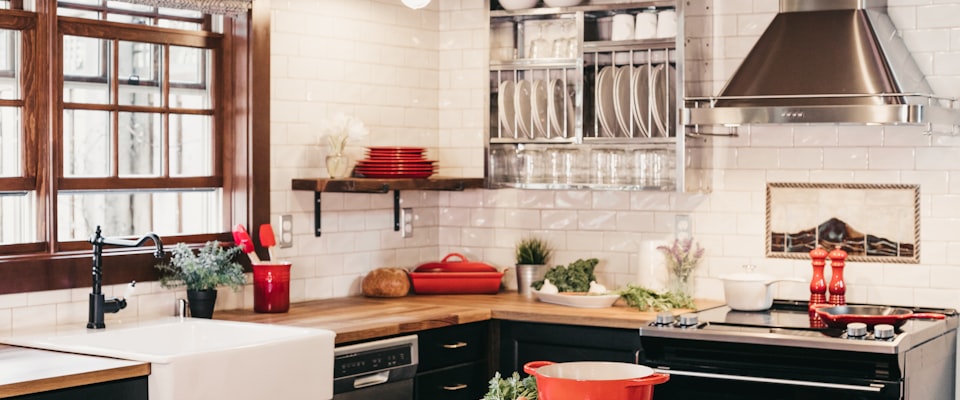
The kitchen is where microplastic exposure is most preventable — and most overlooked. A single plastic cutting board generates up to 71.7 million microplastic particles per year just from normal chopping. A scratched nonstick pan can shed 2.3 million particles in a single cook. And microwaving food in polypropylene containers releases over 4 billion microplastic particles per square centimeter of surface.
The good news is that every one of these exposures is replaceable. Glass, cast iron, wood, stainless steel — the alternatives are not exotic or expensive. Many cost less than what they replace. This guide covers the eight highest-impact swaps in your kitchen, with specific product recommendations, prices, and the research behind each one.
- A single plastic cutting board sheds up to 71.7 million microplastic particles per year directly into food.
- Microwaving in polypropylene containers releases over 4 billion particles per square centimeter of surface.
- Every major plastic kitchen exposure has a drop-in replacement: glass, cast iron, wood, or stainless steel — many cost less than what they replace.
- This guide covers the eight highest-impact kitchen swaps with specific products, prices, and the research behind each.
Why the Kitchen Is the Priority
Microplastics enter your body through three routes: ingestion, inhalation, and skin contact. In the kitchen, ingestion dominates — plastic particles shed directly into food during preparation and storage. Researchers at the University of Newcastle estimate that the average person ingests approximately 5 grams of plastic per week (roughly the weight of a credit card), with food preparation and packaging as the primary sources.
Unlike airborne microplastics — which you also encounter in the bedroom, living room, and outdoors — dietary microplastics from the kitchen are highly controllable. You cook in your kitchen. You own those cutting boards, that cookware, those storage containers. Every swap you make stays swapped, protecting your family permanently rather than requiring constant vigilance.
Every swap you make in the kitchen protects your family permanently. You don't have to keep thinking about it.
The 8 Kitchen Swaps, in Priority Order
The priority order is based on particle volume: how many microplastics each source contributes to your food annually. Start at the top and work down.
Swap 1: Plastic Cutting Boards
Impact: Very High. Research published in Environmental Science & Technology (Luo et al., 2023) tested polyethylene (white, flexible) and polypropylene (hard, colored) cutting boards under normal chopping conditions. Results: 14.5 to 71.7 million microplastic particles per year, depending on use frequency and blade pressure. Every particle went directly into the food being cut. For the full ranked lineup of wood, bamboo, and composite boards — with photos, sizes, and prices — see our guide to the best non-toxic cutting boards, or read the deep dive on exactly how many microplastics a plastic cutting board sheds.
Polyethylene (white/colored flexible boards), polypropylene (hard plastic boards), any board showing knife grooves or discoloration
Solid hardwood (maple, walnut, teak) or bamboo cutting boards — naturally antimicrobial, zero microplastic shedding
Commercial-grade American maple. Extremely dense grain — resists knife marks better than most boards. Easy to maintain with food-safe mineral oil (sold separately, $5). Lasts decades.
Owners keep these boards for a long time -- one reviewer reported 18 years of near-daily use with only light knife marks and no cracking or warping. The dense northern maple resists knife grooves better than most wood boards, and a monthly rub of food-safe mineral oil keeps the surface sealed. The honest downsides: it is heavy, and it is unforgiving of water. Several buyers who let it soak, ran it hot, or put it near a dishwasher reported warping within days -- one said theirs would not sit flat after four days -- and an owner of a thick Boos block described gaps opening where the wood swelled and shrank, plus unhelpful customer service when they asked for help.
Teak's natural oils make it naturally water-resistant without heavy conditioning. The smaller size is convenient for everyday use. FSC-certified teak.
Teakhaus earned America's Test Kitchen's top wood-board pick, and owners back it up -- one reported 12 years of heavy use with the surface still smooth, and testers rated it among the gentlest on knife edges. The teak's natural oils shrug off water better than most woods. The honest downsides: it still needs mineral oil and beeswax roughly monthly or it turns gray and dry, it is heavy enough to be cumbersome to wash in a standard sink, and a few owners reported a yellow color bleeding from the wood after about a year, plus notes that teak can dull a knife edge quicker than softer woods.
The most affordable entry point. Bamboo is technically a grass — grows fast, very hard surface, naturally antimicrobial. Non-slip feet included. Available at most grocery stores.
The most affordable board here, and owners like the juice groove that catches liquid and the grippy ends that keep it from sliding. Reviewers who conditioned it with a few coats of oil before first use and re-oiled monthly said it still looked new after a year of daily chopping. The honest downsides: bamboo warps over time if it gets wet and dries unevenly, it cannot go in the dishwasher or microwave without damage, and it needs that regular oiling -- neglect it and the surface dries out and roughens.
Swap 2: Nonstick (Teflon) Cookware
Impact: Very High. Nonstick coatings are made from PTFE (polytetrafluoroethylene), a member of the PFAS family of "forever chemicals." A 2022 study by Flinders University and the University of Newcastle, published in Science of The Total Environment, found that a single crack in a PTFE coating can release approximately 9,100 microplastic particles — and a damaged coating can shed up to 2.3 million particles in a single cooking session. PTFE does not biodegrade.
Any pan with Teflon or "nonstick" coating — especially if scratched, chipped, or showing worn patches. Replace immediately. The same coating lines most air fryer baskets, so it is worth checking whether air fryers are toxic before your next one.
Cast iron, enameled cast iron, stainless steel, or ceramic-coated pans. All are chemically inert and release zero microplastics — see how the three stack up on safety, durability, and everyday cooking in our cast iron vs stainless steel vs ceramic comparison.
The most cost-effective swap on this list. Pre-seasoned, virtually indestructible, works on all heat sources including induction. The seasoning layer actually gets better with use. Handles high heat better than any nonstick.
Reviewers call it the best value in cast iron -- pre-seasoned, near-indestructible, and better with age as the seasoning builds. It handles high heat and works on any stovetop including induction. The honest downsides: the interior is left rough and pebbly from Lodge's sand-casting process, which means more friction for eggs unless you use enough fat (it smooths out after a couple of extra seasoning rounds), some buyers received pans with a jagged, near-sharp rim or handle edge that was not finished, and the pan is heavy to lift and store.
Tri-ply stainless with aluminum core for even heat distribution. Ideal for searing, sauteing, and pan sauces. Dishwasher safe, oven safe to 600°F. The serious cook's daily driver.
Owners describe it as heirloom-grade, non-toxic stainless that outlasts any nonstick, and many say once they dialed in the heat, even eggs slide around the pan. Proper preheat, then oil, then food is the routine reviewers repeat. The honest downsides: there is a real learning curve -- food sticks if the pan is not preheated and oiled right, stuck-on bits sometimes need a 10-to-15-minute soak to lift, and at around $130 it costs far more than the cast iron or ceramic options here.
If you need a nonstick-style surface for eggs or delicate fish, ceramic coatings are the safer option. GreenPan's Thermolon ceramic is PFAS-free and PFOA-free. Note: ceramic coatings do wear over time (3-5 years); cast iron and stainless do not.
Owners praise how food slides off when the pan is new, and value that the ceramic coating carries no PFAS forever chemicals. The diamond-reinforced surface holds up better than plain ceramic. The honest downsides come up repeatedly: the nonstick fades after a year or two of regular use even with careful handling, becoming less slick over time, and metal utensils speed that wear -- owners who want it to last stick to wood or silicone tools and skip high heat and the dishwasher.
Deep dive: nonstick cookware and microplastics
The full research on PTFE, PFAS, and the safest cookware alternatives.
Swap 3: Microwaving Food in Plastic Containers
Impact: Very High. This is the highest-risk single act in most family kitchens. A 2023 study in Environmental Science & Technology found that microwaving polypropylene containers released over 4 billion microplastic particles and 2 trillion nanoplastic particles per square centimeter of container surface. Heat dramatically accelerates degradation — and nanoplastics are particularly concerning because they are small enough to cross cell membranes.
Polypropylene containers (#5 plastic), takeout containers, plastic wrap on bowls in the microwave, styrofoam — all in the microwave.
Glass containers (Pyrex, Anchor Hocking), ceramic bowls, or plates. Cover with a damp paper towel or microwave-safe ceramic plate instead of plastic wrap.
Swap 4: Plastic Food Storage Containers and Bags
Impact: High. Plastic food storage containers degrade with every dishwasher cycle, every acidic food stored, and every scratch. Cloudy, stained, or warped containers have already begun releasing particles at an accelerated rate. Ziploc-style bags are single-use by design — they shed particles with every use and go to landfill. Dry pantry staples are affected too — rice picks up microplastics from processing and its plastic packaging — so decant grains and flour into glass at home rather than leaving them in the bag. The same goes for a sticky pantry staple people never think about — honey picks up plastic from the bees' environment and its packaging, so buy it in glass rather than a squeeze bottle. Even the humble egg is a case of upstream plastic reaching the food — particles from the hen's feed, waterers, and shed-air fibers end up inside the yolk, so buy eggs in cardboard cartons and decant them into a glass or ceramic bowl at home. If you pack school lunches, a scratched plastic bento is the same problem in miniature — our best plastic-free lunch box for kids covers the stainless and glass boxes that survive a backpack without shedding.
Tupperware, Rubbermaid, Ziploc bags, any plastic container that's cloudy, stained, or scratched, plastic wrap on bowls.
Glass containers with lids (Pyrex, Anchor Hocking, IKEA 365+), silicone bags (Stasher), beeswax wraps for covering bowls and wrapping cheese.
The most cost-effective full-kitchen glass storage solution. BPA-free plastic lids (food contacts glass only), dishwasher and microwave safe, oven safe without lids. Widely available at Target and Amazon.
The glass itself wins owners over -- tempered, stain- and odor-resistant, and many report the lids fit tight with no leaks. It is a common first swap out of plastic storage. The honest downsides all concern the plastic lids, not the glass: some warped after microwave use until they no longer fit, others cracked or split within a couple of months, and several owners said the lids soften and lose their tight seal after repeated dishwasher or hand washing.
Borosilicate glass with stainless steel lids — the only option where food never contacts plastic at all. Great for anyone who wants to fully eliminate plastic from the storage chain.
Food-grade platinum silicone, dishwasher safe, freezer safe. Direct replacement for Ziploc bags for sandwiches, snacks, marinating, and sous vide. Lasts years vs. single use. The snack size ($10) is the most-used starting size.
Owners keep coming back to durability and leak resistance -- the food-grade silicone survives the dishwasher, freezer, and years of reuse in place of throwaway bags. The honest downsides show up often: the pinch closure is fiddly and tricky to open, the bags absorb food odors and hold onto them (one tester could not clear the smell even after washing and long airing), they are slow to dry fully so seams can trap moisture and mildew, and they cost far more upfront than a box of zip bags.
Direct replacement for plastic wrap on bowls, cut produce, and bread. Organic cotton infused with beeswax, jojoba oil, and tree resin. Body warmth makes them pliable. Washable and reusable for approximately one year.
Owners like it as a reusable stand-in for cling film -- warmth from your hands molds it over a bowl or half-lemon, and a wrap lasts up to a year before it thins out. The honest downsides come up in most reviews: the beeswax-and-resin scent is strong out of the box and a few buyers could not get past it, the wax loses its tack over months (you can revive it with low oven heat or a hairdryer), and it does not seal airtight -- hot water, soap, or heat strips the wax, so it is hand-wash-cool only.
Best glass food storage containers — full guide
Pyrex vs. Anchor Hocking vs. IKEA 365+ — complete comparison with prices.
Swap 5: Plastic Cooking Utensils
Impact: Moderate. Nylon spatulas, plastic spoons, and melamine serving tools shed microplastics when they contact hot food or hot cookware surfaces. The effect is amplified if you're using plastic utensils in a nonstick pan — you're introducing particles from two directions at once. Wooden and stainless steel utensils are direct, permanent replacements — our guide to the best plastic-free reusable utensils ranks stainless steel and bamboo sets for both the kitchen drawer and packing lunch.
Nylon spatulas, plastic spoons and ladles, melamine bowls and plates used for hot food, plastic colanders.
Bamboo or hardwood spoons, stainless steel spatulas and ladles, stainless steel colanders, silicone spatulas (if flexible tool is needed).
Black plastic kitchen tools have drawn particular scrutiny — see whether black plastic utensils are safe for what recent testing found.
Slotted spoon, solid spoon, slotted spatula, solid spatula, ladle. All stainless with comfortable non-slip handles. Dishwasher safe. Replaces the most-used plastic utensils in one set.
Owners describe OXO's stainless tools as sturdy, with comfortable non-slip handles, dishwasher safe, and good value. Reviews for this exact set are lighter than for the boards and pans above, so the picture is thinner. The honest downsides raised across OXO's stainless line: some pieces showed water spotting or small oxidation spots over time, acidic foods like tomato sauce can stain a tool if it is not rinsed soon after, and a few owners found the matching holder a tight squeeze to fit every piece.
A 6-piece set of dark bamboo wooden cooking utensils — spoons and a spatula. Bamboo utensils are gentle on cookware surfaces (important for cast iron seasoning), heat-resistant, and never shed microplastics. Hand wash recommended to extend life.
Reviewers like that the bamboo is light in the hand, will not scratch pans, and shrugged off staining in a red-sauce test. Each piece has a hole for hanging, and food debris rubs off without much effort. The honest downsides: the set is not dishwasher safe and must be hand washed and dried to keep from cracking, bamboo utensils dry out and can roughen or splinter over time without an occasional food-safe oil rub, and the light weight that some like can feel flimsy to others. Detailed long-term complaints are sparse for this set.
Swap 6: Synthetic Dish Sponges
Impact: Moderate. Standard dish sponges are made from polyurethane foam (a plastic) and often wrapped in nylon or polyester mesh. Every scrub releases synthetic fibers that rinse down the drain and into waterways. Some of the water used to rinse dishes — and the food on them — contacts these sponge fibers directly. The fix costs less than $5.
Standard Scotch-Brite sponges, nylon dish scrubbers, polyester dish cloths, and plastic-mesh produce bags used as scrubbers.
Natural loofah sponges, sisal or jute scrub brushes, organic cotton dish cloths, or wood-handled dish brushes with natural bristles.
A 6-pack of dish scrubber sponges made from the loofah plant (a gourd, not a sea animal). Plant-based, non-scratch, and compostable at end of life, with zero synthetic fibers. Works for everyday dishwashing plus sinks, grout, and tile.
Owners choose loofah as a plant-based, compostable stand-in for plastic sponges -- it softens once wet and scrubs dishes without scratching. The honest downsides are the ones that apply to any natural loofah: it has to dry out fully between uses or it can harbor bacteria and mold, it wears down and needs replacing every four to six weeks with heavy use, and it starts stiff until soaked. Product-specific long-term reviews for this multipack are limited, so judge it as a category more than a standout brand.
FSC-certified wood handle, plant-based sisal bristles. The replaceable head reduces waste further. Better for glasses and bottles than a flat sponge. Keeps hands out of food residue.
Owners like that it cleans without scratching and that swapping the worn head lets the bamboo handle keep going, which cuts waste. The bristles dry between uses, which reviewers note helps limit bacteria. The honest downsides are minor and about design: water can splash off the hollowed plastic head area back onto your hand or shirt, and buyers with smaller hands found the handle a touch wide to grip. Complaint volume is low overall for this brush.
Swap 7: Plastic Wrap (Saran Wrap / Cling Film)
Impact: Moderate. Plastic wrap is typically made from polyethylene or PVC (polyvinyl chloride). PVC wraps contain plasticizers — chemical additives that make the plastic pliable — including DEHA (di(2-ethylhexyl) adipate), which has been shown to migrate into fatty foods. Even polyethylene wraps in contact with warm food can shed particles. The alternatives are inexpensive and reusable.
Saran Wrap, Glad ClingWrap, any generic cling film — especially on warm food or in the microwave.
Beeswax wraps (Bee's Wrap) for irregular shapes and covering bowls; silicone stretch lids for containers and bowls with standard openings.
One large sheet covers most bowls and salad plates. Presses on like plastic wrap using body heat. Rinse with cool water (warm water melts the wax) and air dry. Reusable for approximately one year.
The large single sheet covers a big bowl or wraps a loaf or half-melon, and owners reach for it as a washable substitute for plastic wrap that lasts up to a year. The honest downsides match the smaller Bee's Wrap sets: the beeswax scent is strong when new and off-putting to some, the wax loses its cling over months and needs reviving with gentle heat, and it will not hold an airtight seal -- keep it away from hot water, soap, and heat or the coating comes off.
Reusable food-grade silicone lids that stretch to fit different bowl and container sizes. The most convenient plastic wrap alternative for bowl-shaped containers. Dishwasher safe, freezer safe.
Owners use these as a washable substitute for plastic wrap and foil, stretching one lid over bowls, cans, cups, and jars of different sizes. The honest downsides are consistent across reviews: the lids slip off cold glass once condensation forms, so containers need to be dry and near room temperature to hold, some are a struggle to stretch on and want two dry hands, the thinner ones can tear, and the seal is not reliably airtight. Used on dry, room-temperature dishes they hold well.
A related baking concern: parchment paper. Most modern parchment paper is silicone-coated and perfectly safe, but some budget brands still use Quilon — a chromium-based coating with PFAS-like chemistry. For anything you bake, it is worth checking that your parchment is explicitly labeled silicone-coated. See our full breakdown: Does Parchment Paper Have PFAS? Quilon-Free Brands Ranked (2026).
Swap 8: Plastic Water Bottles and Drinking Vessels
Impact: Moderate-High for daily use. A 2024 study in PNAS found that commercially bottled water contains an average of 240,000 nanoplastic particles per liter — far more than previously measured. Reusable plastic water bottles and drinking from plastic cups also contribute. The fix is a stainless steel or glass vessel for daily use — here's how the safest water bottle brands compare — and a water-filter pitcher or reverse osmosis system for tap water — or a home water distiller if you want every particle left behind regardless of size. If you drink through a straw, skip the disposable paper ones too — they frequently carry PFAS — and keep a set of reusable stainless steel or glass straws instead.
18/8 stainless steel, no plastic contact with liquid. Double-wall vacuum insulation keeps water cold for 24 hours. The cap has a food-grade silicone seal — the only plastic component, which never contacts the water itself.
Owners keep them for years and praise how long the double wall holds ice -- durability testing left only small dents after repeated drops over months. The wide mouth takes ice cubes and cleans out well. The honest downsides come up a lot: the bottle dents if you drop it on a hard surface, the powder-coat paint scratches and chips with use, and those dents, scratches, and chips are not covered by the lifetime warranty, which frustrates buyers who expected more.
The "uncoated interior" specification matters — some bottles have epoxy or paint coatings inside. Klean Kanteen's uncoated version is bare stainless steel with no interior treatment. Certified #1 BPA-free.
Long-term owners are loyal -- some report six-plus years of daily use with the original loop cap and no leaks, and the uncoated single-wall stainless keeps plastic off the water. Testing showed it shrugged off hard use. The honest downsides center on the caps: several buyers said the sport and straw caps leak and need replacing often enough that a few switched brands, the straw stops about an inch short of the bottom so you unscrew the cap to finish the water, and the single wall dents if dropped on a hard floor.
Microplastics in water bottles — the full research
240,000 particles per liter. What the science says and the safest alternatives.
Don’t forget the coffee maker. Single-serve coffee pods (K-cups) force near-boiling water through a polypropylene plastic pod at pressure — one of the highest-microplastic-exposure brewing methods in common use. A $16 reusable stainless mesh pod eliminates the problem while you keep your machine. For the full evidence and safer alternatives, see Are K-Cups Safe? Microplastics, Chemicals & Safer Brewing Alternatives (2026).
And your electric kettle. A 2025 study found that a plastic (polypropylene) kettle can shed billions of nano- and microplastic particles into a single cup on its first boil, because near-boiling water works fragments loose from the plastic surface — the same heat-plus-plastic problem, applied daily. Switching to a glass or all-stainless kettle removes it entirely; see do electric kettles have microplastics and our picks for the best non-toxic electric kettles.
Take the coffee out the door in glass or steel too. A takeaway paper cup is really paper laminated with a thin plastic (LDPE) film, and researchers at IIT Kharagpur measured roughly 25,000 particles released into 100 ml of hot liquid in 15 minutes as that lining broke down. The fix is the same shape as the fixes above — move the drink-contact surface off polymer and onto glass or 18/8 (304) stainless steel. Our ranked best non-toxic travel mug guide covers the six glass and steel picks (and the lid detail that most guides miss).
And the tea bag itself. If tea is the daily drink, the bag is the exposure. A 2024 Universitat Autònoma de Barcelona study (Banaei et al., Chemosphere 368: 143736) measured roughly 1.2 billion polypropylene particles per millilitre of infusion from a heat-sealed paper bag, and a September 2025 EFSA review put a plastic bag’s per-serving release at 5,800–20,400 identified microplastic particles — then confirmed that unbleached-paper bags with no polypropylene heat-seal release none of it. Only four US brands currently pass that test; the safest tea bags of 2026 guide has the four passes, the five failures, and the exact material to look for on the box.
Where to Start: Priority Order by Impact
If you can only make a few changes, start here. The first three cost under $75 combined and eliminate the largest dietary microplastic exposures in the kitchen.
-
1Replace plastic cutting boards with a wood board Highest particle volume per year. A John Boos maple board or Teakhaus teak board costs $30-75 and lasts decades.
-
2Stop microwaving food in plastic — use glass or ceramic Trillions of nanoplastic particles per use. Glass containers cost $35 for a full set. This change takes zero dollars if you already own glass bowls.
-
3Replace scratched or worn nonstick pans with cast iron or stainless Lodge 10.25" cast iron skillet is $25. A scratched Teflon pan can release millions of particles. The economics are clear.
-
4Replace plastic water bottles with stainless steel A plastic-free water bottle like the Klean Kanteen at $35 eliminates a daily high-volume exposure completely.
-
5Replace plastic food storage as containers wear out Pyrex glass set (~$35) replaces Tupperware. Replace on natural attrition rather than all at once.
-
6Switch plastic utensils to wood or stainless OXO stainless 5-piece set is $40. Especially important if you cook over high heat daily.
-
7Replace plastic wrap and bags with beeswax wraps and Stasher bags Bee's Wrap 3-pack is $18. Stasher sandwich bag is $15. Both last years.
-
8Replace synthetic dish sponges with natural loofah or sisal brush A pack of natural loofah dish sponges is the cheapest swap here — lowest-priority, but easy on the wallet.
One caveat worth naming while the kitchen swaps are top of mind: on measured particle count, the single largest daily-life microplastic source most adults have is not in the kitchen at all — it's the bathroom sink. A 2025 Ecotoxicology and Environmental Safety study (Wang et al., DOI 10.1016/j.ecoenv.2025.118694) measured a standard nylon-bristle toothbrush shedding roughly 2.33 million microplastic particles per person, per year directly against the highly-permeable oral mucosa, with 63% of particles smaller than 100 micrometres. That is 19–30× the entire measured food-plus-inhaled baseline for an average adult (Cox et al., Environmental Science & Technology, 2019). A plant-bristle microplastic free toothbrush is a $5–$10 swap that removes that release point at the source; it is worth putting on the list next to the wooden cutting board.
The Complete Plasticproof Guide
Every room in your home. Kitchen, nursery, bathroom, bedroom — specific products, prices, and the research behind every recommendation. 47+ peer-reviewed studies synthesized into a single reference guide.
Get the Complete Guide — $19If you want to start with the free version — the six highest-priority swaps across all rooms — that's available without purchase.
Frequently Asked Questions
Research Sources
- Luo et al., "Microplastic generation from cutting boards during food preparation," Environmental Science & Technology, 2023.
- Luo et al., "Microplastic release from nonstick cookware surface damage," Science of The Total Environment, 2022. (Flinders University / University of Newcastle)
- Hussain et al., "Microplastic release from polypropylene food containers under microwave heating conditions," Environmental Science & Technology, 2023.
- Qian et al., "Rapid single-particle chemical imaging of nanoplastics by stimulated Raman scattering microscopy," PNAS, 2024. (240,000 nanoplastics/L in bottled water)
- Senathirajah et al., "Estimation of the mass of microplastics ingested — a pivotal first step towards human health risk assessment," Journal of Hazardous Materials, 2021. (5g/week estimate)
- Schwabl et al., "Detection of Various Microplastics in Human Stool," Annals of Internal Medicine, 2019.
- Stapleton et al., "DEHA migration from PVC cling film to food," Food Additives & Contaminants, 2020.
- Marques et al., "Organic and conventional produce: microplastic contamination comparison," Environmental Research, 2022.
- Munoz et al., "Microplastics in food and beverages: an updated review," Food Chemistry, 2021.
- Vethaak & Legler, "Microplastics and human health," Science, 2021.
- Ragusa et al., "Plasticenta: First evidence of microplastics in human placenta," Environment International, 2021.
- Leslie et al., "Discovery and quantification of plastic particle pollution in human blood," Environment International, 2022.