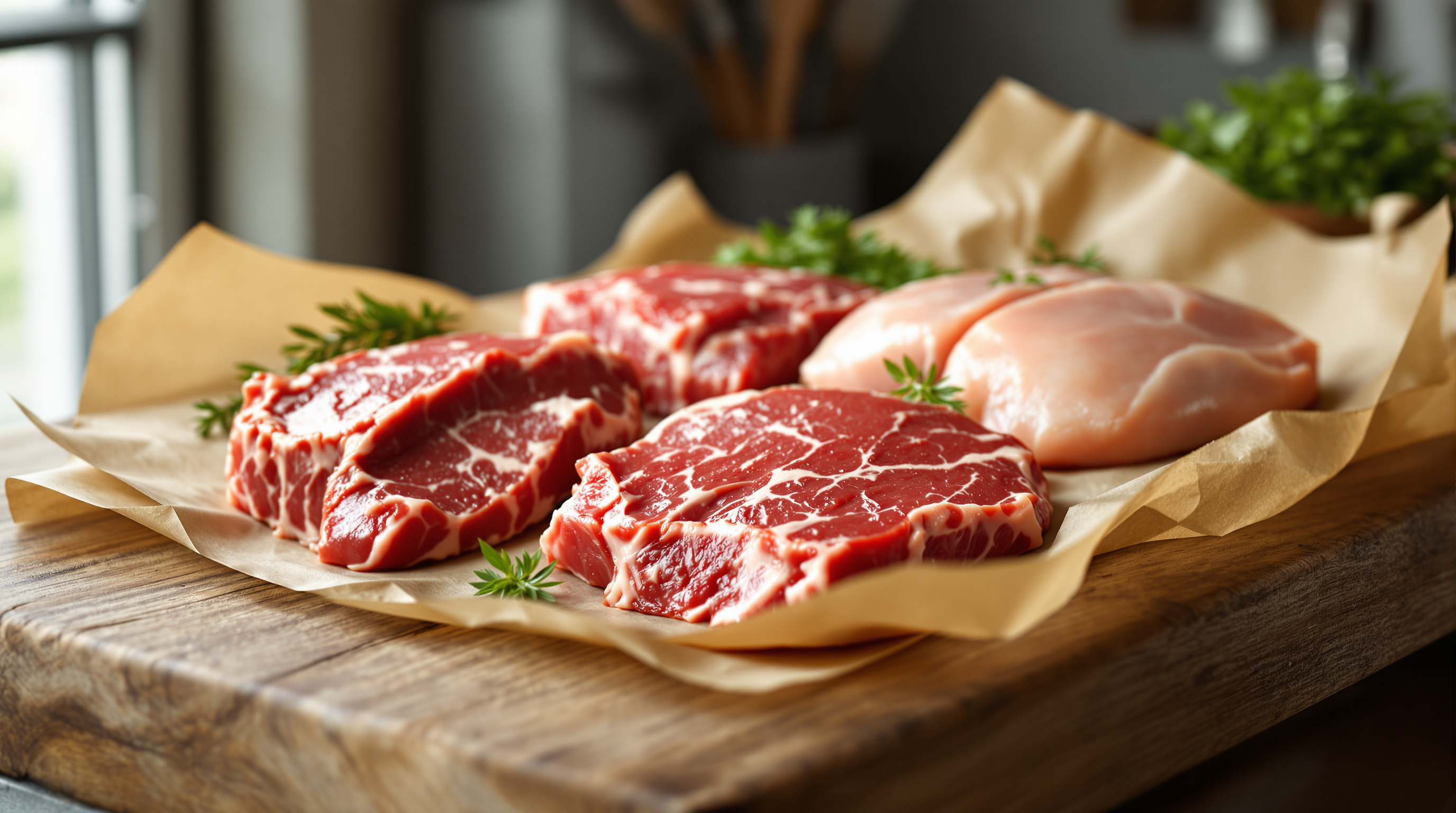
Most meat contains microplastics. A 2024 study led by Ocean Conservancy and the University of Toronto tested 16 commonly consumed proteins and found microplastics in 88% of the samples — beef, chicken, pork, seafood, and plant-based alternatives alike. Highly processed and breaded products (think nuggets and fish sticks) carried the most; whole, minimally processed cuts carried the least. You can’t rinse the particles out, but you can cut the plastic you add during shopping, storage, and cooking. See where protein ranks in our which foods have the most microplastics guide.
We’ve gotten used to hearing that microplastics turn up in bottled water, seafood, and even fruits and vegetables. Meat felt like it might be the exception — a whole cut of beef or a chicken breast doesn’t seem like something plastic could get into. Then a team of researchers bought 16 different proteins off American store shelves, analyzed them, and found microplastics in nearly all of them.
The reassuring part first: nobody is telling you to stop eating protein, and going vegetarian won’t solve it (the plant-based options tested positive too). What the research does show is that plastic has quietly become a background contaminant in the protein aisle — and that most of it gets added by processing and packaging, not by the animal. That’s good news, because processing and packaging are exactly the parts you can shop around. Here’s the honest picture.
Does meat really contain microplastics?
Yes. When researchers analyzed 16 store-bought proteins in 2024, 88% contained microplastics — and the contamination wasn’t limited to seafood. Beef, chicken, and pork samples carried particles too, as did plant-based nuggets and tofu. Microplastics have become a background contaminant across the entire protein aisle, animal and vegetarian alike.
That surprises people, because we picture a steak or a chicken breast as a single, solid piece of tissue — nothing like a bottle of water with plastic floating in it. But microplastics are small enough to travel through the food and water an animal consumes, through the air of a processing plant, and out of every plastic surface the meat touches after slaughter. By the time a protein reaches your plate, it has passed through a supply chain soaked in plastic — so it is worth making the plate itself inert, choosing non-toxic dinnerware over plastic at the table.
“The plastic in your chicken mostly isn’t coming from the chicken — it’s coming from how the chicken was processed, handled, and wrapped. That’s the part you can shop around.”
None of this means meat is dangerous to eat — it means protein is one more everyday source of the particles now showing up in human blood, lungs, and placenta. The goal isn’t to fear your food; it’s to understand where the plastic enters and trim it where trimming is easy.
How do microplastics get into meat?
Through several routes at once. Farm animals ingest and inhale microplastics from contaminated feed, water, and air, and some particles lodge in their tissue. But most of the plastic in supermarket meat is added later — during industrial processing, and from the plastic trays, films, and wrapping the meat contacts on its way from slaughterhouse to store shelf.
The study’s own data pointed to that second pathway: the more a protein was processed, the more particles it tended to carry. Here are the main ways plastic gets in, most of them invisible to a shopper:
- The animal’s own exposure. Livestock eat feed and drink water that already contain microplastics, and inhale plastic dust in barns — the same way particles reach humans. Some of that ends up in muscle and organ tissue.
- Industrial processing. Grinding, forming, and breading run meat through plastic tubing, conveyor belts, and machinery that shed fragments into the product — which is why nuggets and sausages test higher than whole cuts.
- Plastic packaging. Most fresh meat sits in a plastic foam or PET tray under cling film for days. Contact with soft, fatty, moist food is exactly the condition under which plastic sheds particles.
- Airborne fallout & handling. Microplastics settle out of the air onto exposed food, and every plastic glove, cutting surface, and utensil in the chain adds a little more.
- Contaminated water. Water used to rinse, chill, and cook meat carries the same particles found in tap water — the one source you control at home. A certified filter (see the six water filters that actually remove microplastics) cuts the load at the point of use.
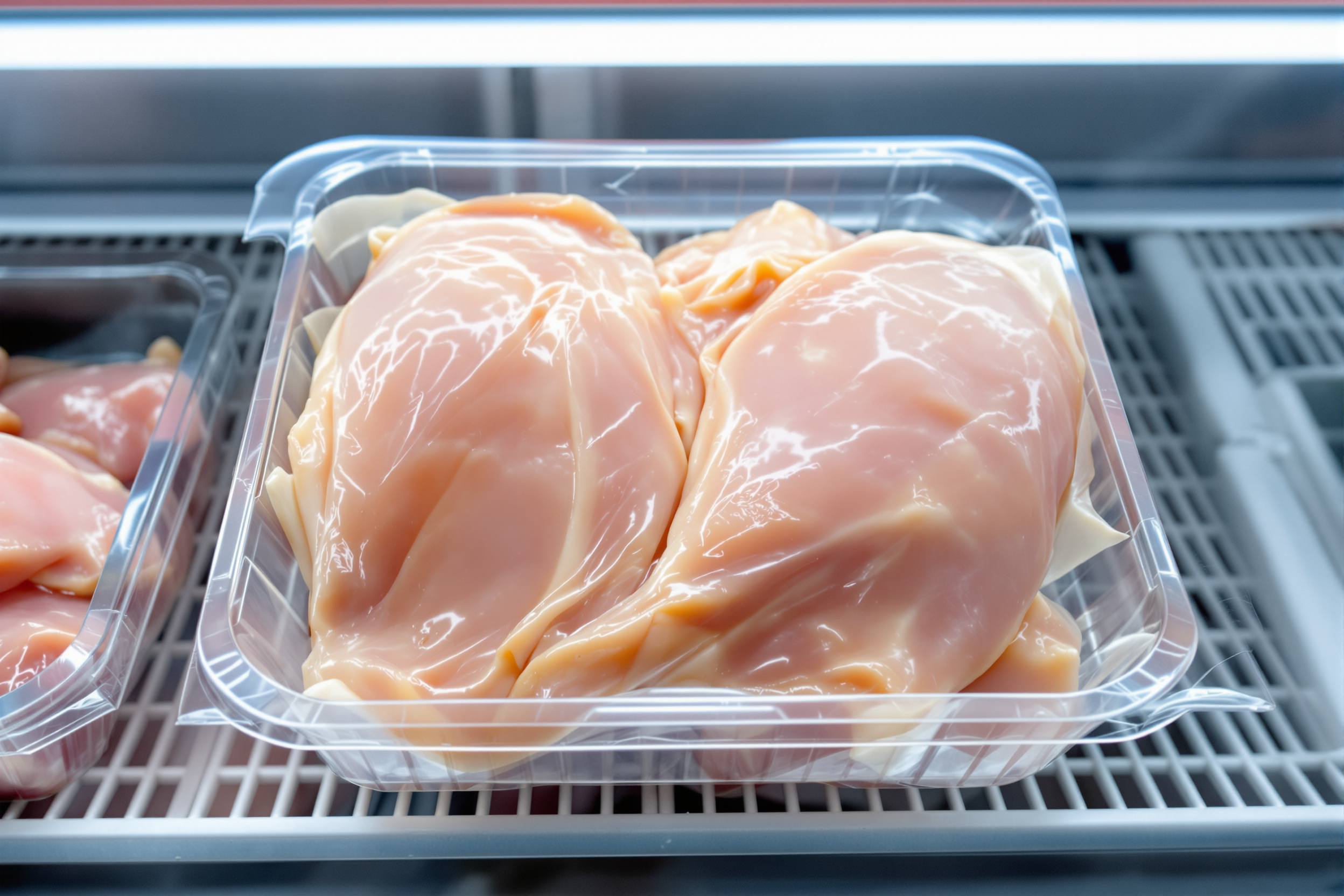
Which proteins have the most microplastics?
In the 2024 data, the most heavily processed products topped the list — breaded shrimp, chicken nuggets, fish sticks, and plant-based nuggets all carried high particle counts. Minimally processed whole cuts like fresh chicken breast and pork loin carried the fewest. Processing steps and plastic packaging, not the animal itself, drove most of the difference.
| Protein | Type | Relative Microplastic Load | Why |
|---|---|---|---|
| Breaded shrimp | Processed seafood | Highest | Heavy processing plus a breaded coating and plastic packaging |
| Chicken nuggets | Processed meat | Very high | Ground, formed, and breaded through plastic machinery |
| Fish sticks | Processed seafood | Very high | Same processing and coating steps as nuggets |
| Plant-based nuggets | Processed plant | High | Going meatless offers no protection — heavy processing still adds particles |
| Fresh chicken breast | Whole cut | Lower | Minimal processing; plastic mostly from the tray |
| Pork loin / steak | Whole cut | Lowest tested | Least handling and least processing of all |
Two caveats keep this honest. First, this was a single study of 16 products bought in one country, so treat it as a ranking of relative tendency, not a precise scorecard for your grocery store. Second — and this is the headline — the pattern lines up with processing, not with “meat vs. plants.” A breaded plant-based nugget can carry more plastic than a plain chicken breast. The lever isn’t giving up meat; it’s choosing less-processed protein and getting it out of plastic.
Are the microplastics in meat dangerous to eat?
Honestly, we don’t fully know yet. Microplastics have been found in human blood, lungs, and placenta, and laboratory studies link them to inflammation and oxidative stress. But the long-term health effect of dietary microplastics in people hasn’t been quantified. The sensible response is to lower exposure where it’s easy, not to panic.
What we can say is that protein isn’t a uniquely dangerous source — it’s one contributor alongside water, packaged food, and household dust. The particles you swallow with a chicken nugget join the ones you get from rice, canned food, the salt you season with, the yolks of supermarket eggs, and bottled drinks. That’s why the smart strategy is to reduce your total plastic load across the kitchen rather than obsess over any single food.
One daily-life source dwarfs everything on that list, and it isn’t food. Wang et al., Ecotoxicology and Environmental Safety (2025) measured a standard nylon-bristle toothbrush releasing roughly 2.33 million microplastic particles per person, per year straight against the oral mucosa — 19–30 times the entire dietary-plus-inhaled baseline for an average adult (Cox et al., 2019). Swapping to a microplastic-free toothbrush with plant-based bristles is the single-largest lever anyone worried about food-borne microplastics has, and it’s a one-time change that keeps paying every brushing session for the life of the habit.
The worst response to this research would be cutting protein or swapping every meal to ultra-processed “plastic-free” marketing claims. Protein is essential, and the plant-based processed options tested just as high. Keep eating enough protein — simply favor whole cuts over breaded, formed, and pre-marinated products, and get your food out of plastic packaging and into glass storage at home. And if you sear those cuts in a scratched nonstick pan, that adds particles too — our best non-toxic cookware guide ranks the cast-iron and stainless swaps, and our cast iron vs stainless steel vs ceramic cookware comparison walks through which pan actually wins for meat.
Should you stop eating meat because of microplastics?
No — and this is the most important line in the article. Switching to plant-based protein won’t spare you: the same study found microplastics in tofu and plant-based nuggets too, sometimes at higher levels than whole meat. The problem isn’t the animal; it’s processing and plastic packaging. Choose less-processed protein and store it in glass or stainless steel, whatever protein you eat.
So the strategy is a shift, not a subtraction. Eat your protein — then lower the plastic around it: buy whole cuts instead of breaded or pre-formed products, choose butcher-paper or your own container over shrink-wrapped trays where you can, and store cooked leftovers in glass or stainless rather than plastic tubs that shed into warm, fatty food. Those swaps are cheap, permanent, and they cut microplastic exposure across your whole kitchen. Our kitchen plastic detox guide walks through the full room.
The best swaps to cut the plastic around your protein
You can’t un-eat the microplastics already inside a cut of meat, but you can stop adding to the pile every time you shop, store, and reheat it. Two moves do most of the work: get your protein out of plastic packaging and into glass or stainless steel — especially cooked leftovers, which sit warm and fatty against whatever they touch — and filter the water you rinse and cook with. Below are six products that already have real photos and independent-review track records in our library: five plastic-free storage options built around meat and meal prep, plus one water filter for the kitchen. For the full lineup, see our best non-toxic lunch containers guide.
1. Glasslock Oven Safe Container Set (3-Pack) — Best for Leftovers
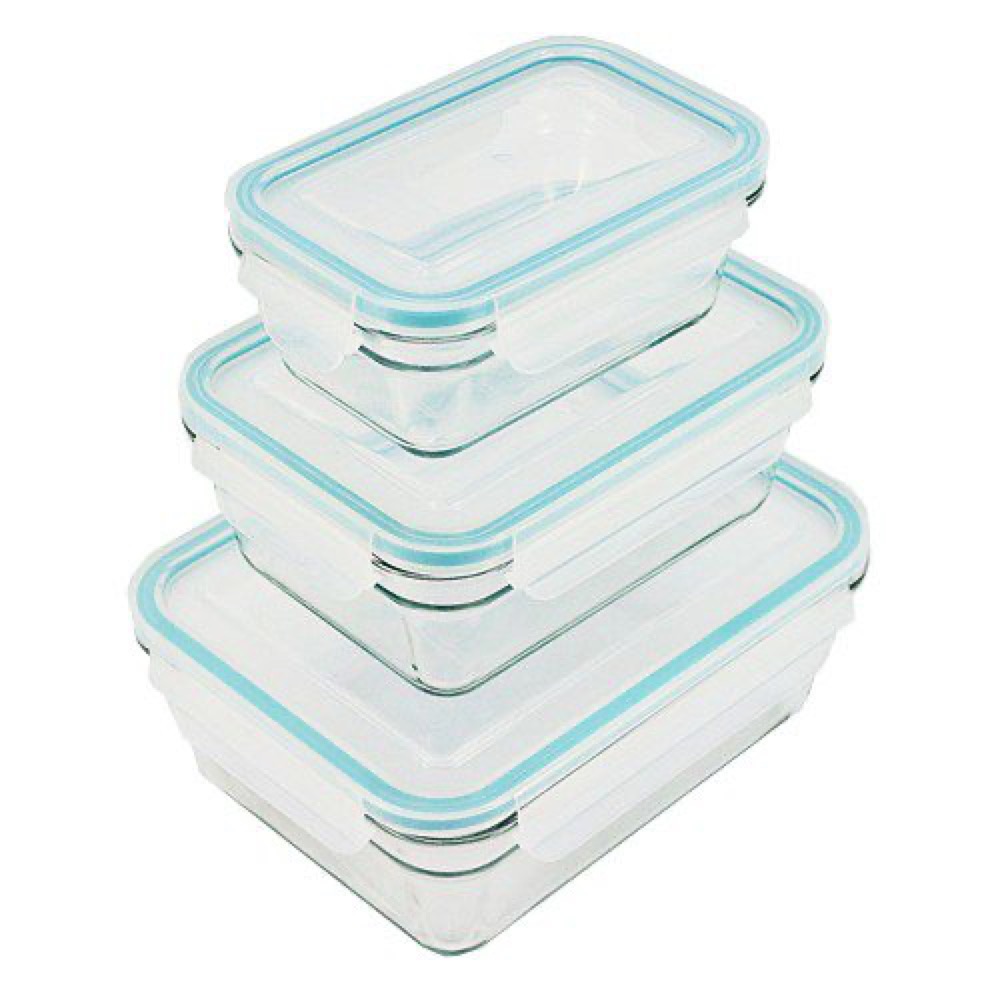 Best for Leftovers
Longtime owners like that the tempered-glass bodies feel sturdy and look good stacked in the fridge, and several say they have used the same set for years. The honest downsides: the snap-lock lids and their locking tabs are the weak point — reviewers report tabs cracking and lids splitting over time, gaskets can trap water and grow mold if you do not dry them, and buyers who needed replacement lids describe slow, costly customer service. Keep them off hard floors, since a dropped container will shatter.
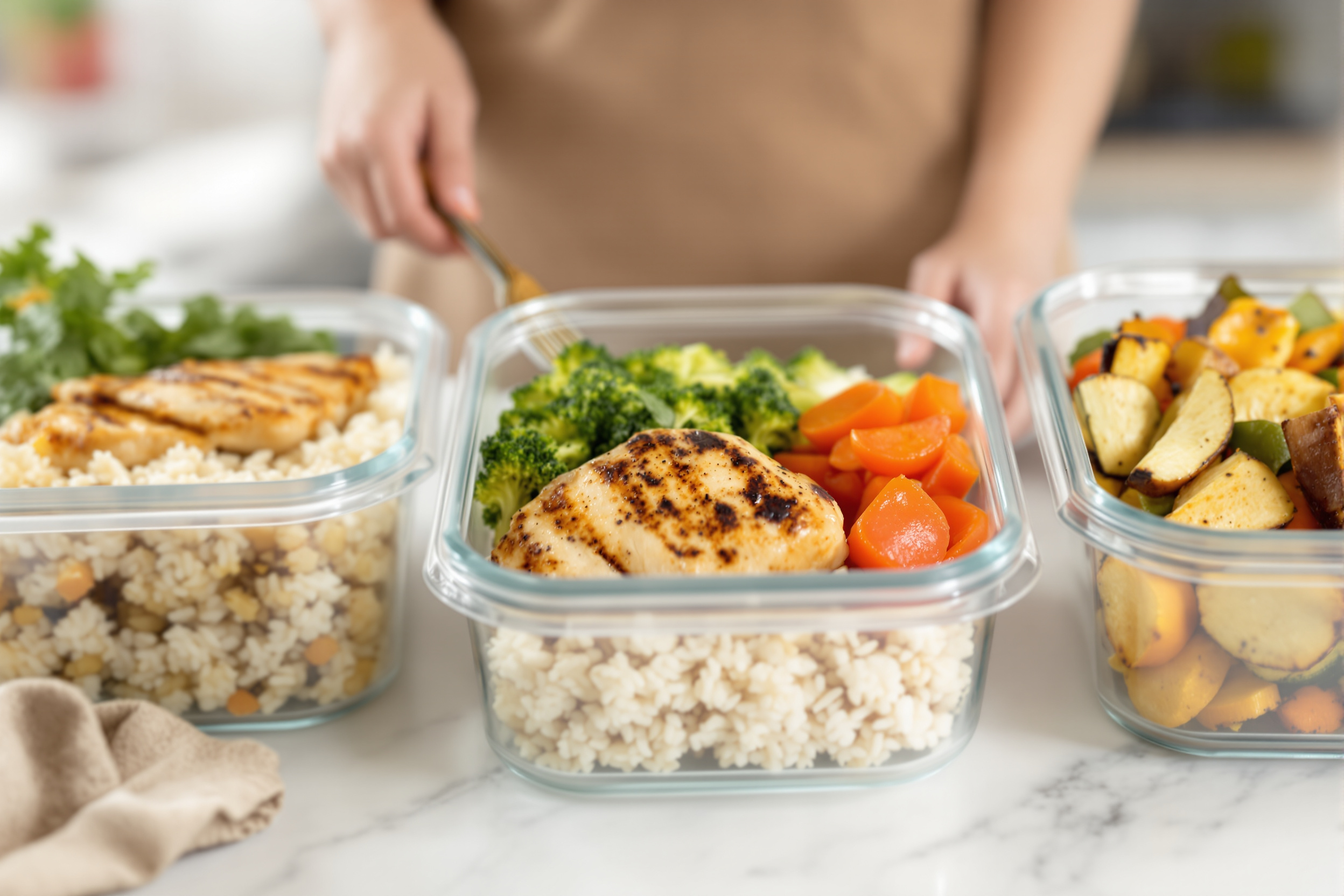
Three stackable glass containers in one box — enough to store and reheat a week of cooked chicken, ground beef, and meal-prep bowls without a single plastic tub.
Why it's safe: Your protein sits on inert tempered glass, not plastic — so warm, fatty, acidic food can’t leach or pick up shed particles, even when you microwave it. The BPA-free lids seal with a food-grade silicone gasket that only touches the rim.
Check Today's Price on Amazon →Amazon prices change daily — tap to see today's price and any active discount.
- Free delivery & returns for Prime members
- Sold & shipped by Amazon
- Thousands of verified reviews
Why it made the list: At roughly ten dollars per container, it’s the cheapest way to retire your plastic leftover tubs in one purchase. The snap-lock lids keep cooked meat fresh, and the glass goes fridge-to-oven so you can reheat protein with no plastic in the loop. Ideal for anyone who meal-preps a week of protein on Sunday.
2. Klean Kanteen Meal Box 34oz — Best for a Full Meal
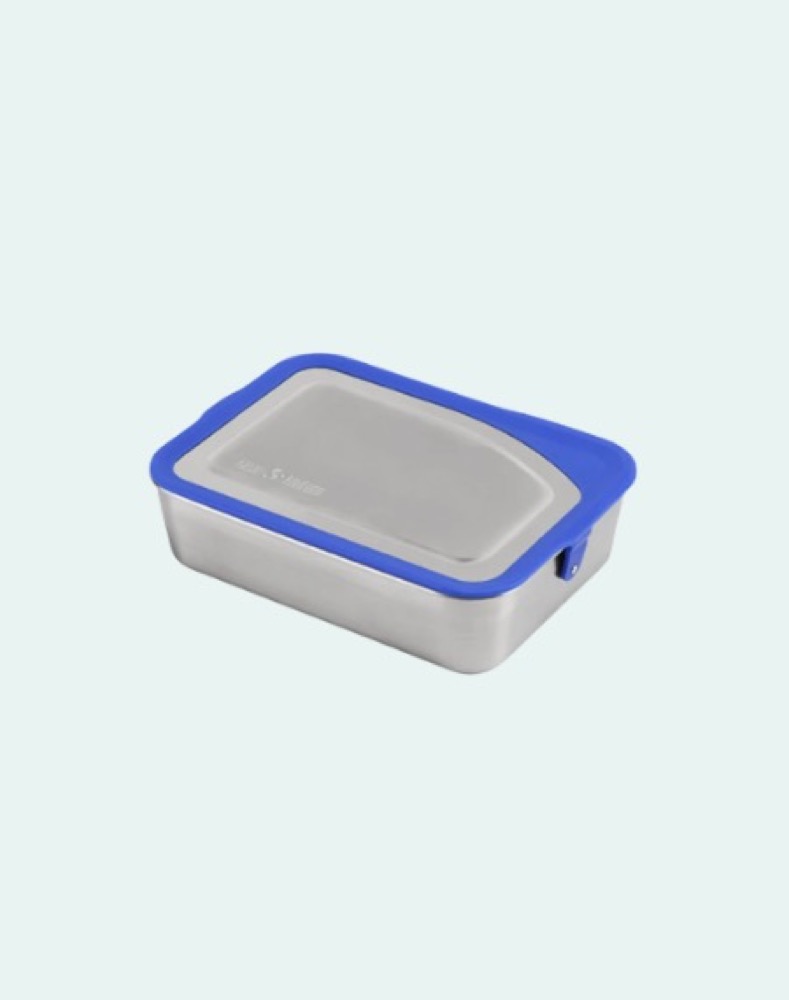 Best Capacity
Buyers call it a meal-prep favorite — the airtight seal with backup snap-and-lock tabs holds a full lunch without leaking, and the recycled stainless steel wipes clean and goes in the oven or microwave. Owners note it fits a real adult-sized portion where smaller steel boxes fall short. The honest gripes: it costs more than most containers, the lid can take a firm push to seat fully, and a few find it heavy and bulky in a bag. Review volume on this exact size is thin, so treat those notes as early signals.
Fits a full-size protein bowl without bulk — the 34oz box solves the “stainless containers run small” problem most adults hit when packing a real meal.
Why it's safe: The body is inert 18/8 stainless steel with no plastic touching food. The leakproof seal comes from a food-grade silicone rim, not a plastic liner that could leach into warm meat.
Check Today's Price on Amazon →Amazon prices change daily — tap to see today's price and any active discount.
- Free delivery & returns for Prime members
- Sold & shipped by Amazon
- Thousands of verified reviews
Why it made the list: Many stainless lunch containers skew small, leaving adults with an inadequate protein portion. The Klean Kanteen Meal Box solves that without being bulky, and the silicone-rimmed lid handles dressings and moist food — a practical upgrade over bare metal that never puts plastic against your meat.
3. LunchBots Large Trio Stainless Steel — Best for Separated Meals
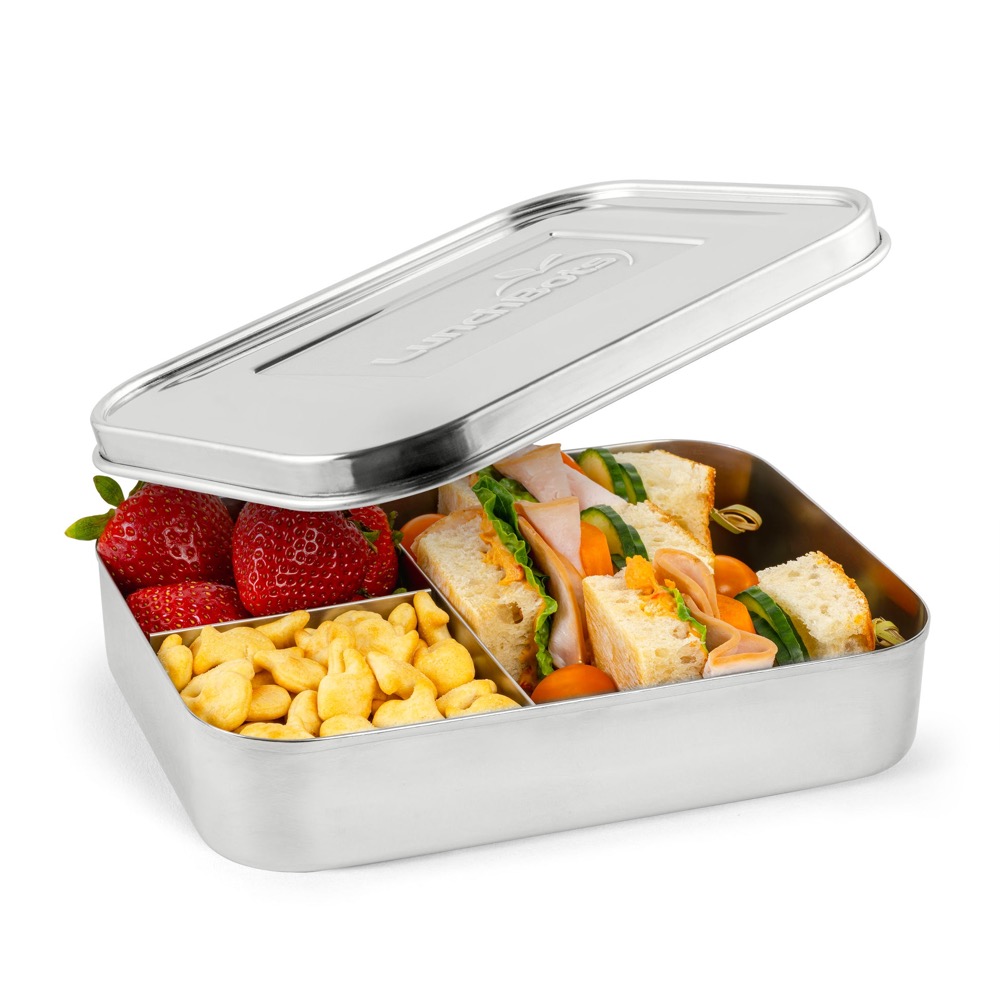 Best Compartments
The praise owners repeat is that it is genuinely plastic- and silicone-free stainless steel, and many report using theirs five days a week for years in perfect condition. The honest warning, which the maker itself confirms: it is not leakproof — there is a small gap where the dividers meet the base, so any liquid migrates between compartments, and the lid has a bit of wiggle room. Pack dry foods, not soup or saucy dishes, and know that some buyers feel the price is high for what it is.
Keep grilled chicken and two sides from touching all day — the dividers are part of the steel body, so nothing slides loose in your bag.
Why it's safe: Built entirely from food-grade 18/8 stainless steel with no plastic in the food path — BPA-free and phthalate-free by design, with nothing to leach into fatty or acidic protein.
Check Today's Price on Amazon →Amazon prices change daily — tap to see today's price and any active discount.
- Free delivery & returns for Prime members
- Sold & shipped by Amazon
- Thousands of verified reviews
Why it made the list: The welded compartments keep foods separated without flimsy removable dividers — ideal for adults who pack a protein plus grain plus vegetables and want everything in one all-metal box. Not fully leak-proof for soupy foods, but excellent for everyday packed protein meals.
4. Stasher Reusable Silicone Bag Starter Kit — Best for Marinating & Freezing
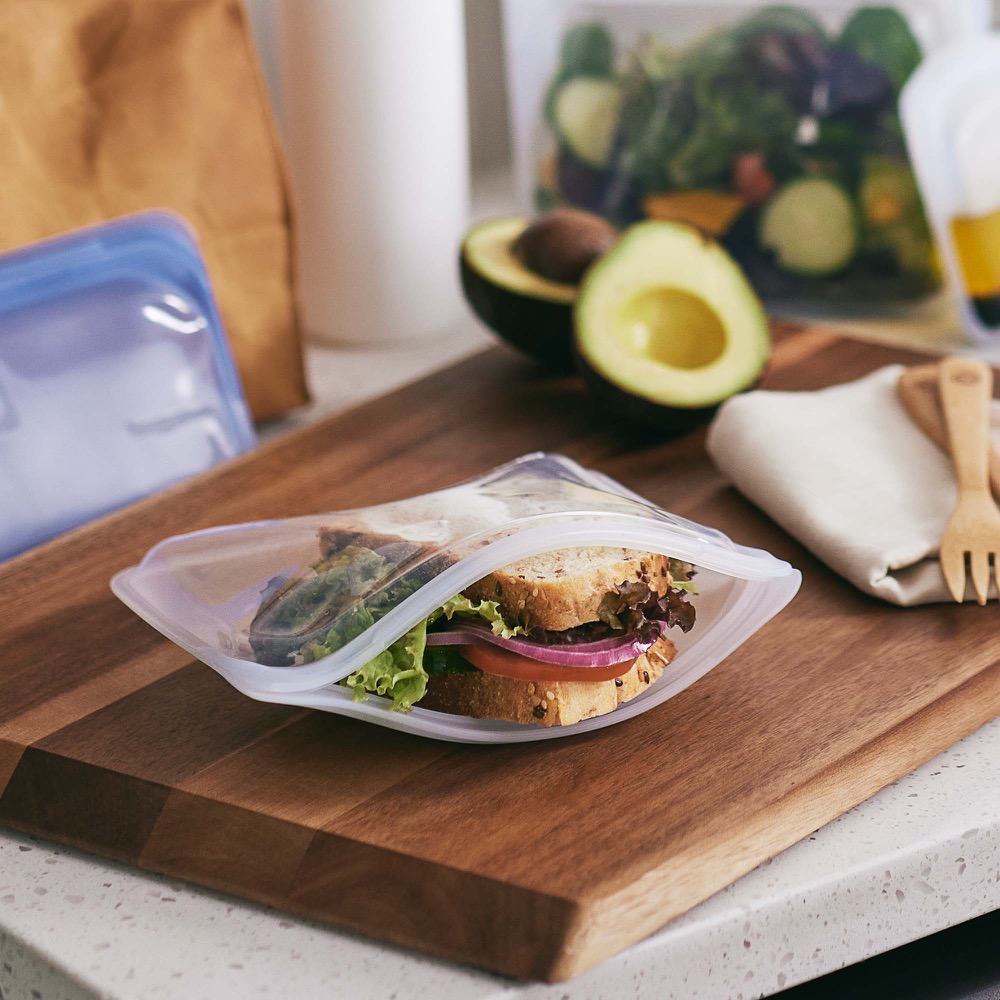 Best for Freezing
For marinating chicken, freezing a bulk batch of ground beef, or anything you’d otherwise drop in a plastic zip-lock freezer bag, Stasher’s platinum-cured silicone is the upgrade — sturdier than any disposable bag and free of the chemicals that migrate from plastic into fatty, acidic food. The patented Pinch-Loc seal is genuinely airtight and leakproof, so marinades don’t escape.
It goes from freezer to fridge to a 425°F oven, so you can freeze portioned raw meat and even cook sous-vide-style with no plastic in the loop. The starter kit covers the everyday sizes — snack, sandwich, and stand-up — so you can retire single-use freezer bags in one swap.
Owners like the heavy, nonporous platinum silicone — it goes from freezer to microwave to dishwasher and even sous vide, and it replaces a drawer of disposable bags. The honest downsides reviewers raise: the seal can be tricky to open and close, the bags hold onto smells and stains from strong foods, and they dry slowly, so trapped moisture can turn to mildew if you seal them damp. A few report an imperfect seal with liquids, so do not fully trust them upside down.
Stop marinating and freezing raw meat in disposable plastic bags. Platinum silicone seals just as tight, survives the freezer and dishwasher, and lasts for years instead of one use.
Why it's safe: Platinum-cured silicone — the highest-purity, chemically inert grade — with no plastic, PVC, BPA, lead, latex, phthalates, or PFAS to migrate into fatty protein.
Check Today's Price on Amazon →Amazon prices change daily — tap to see today's price and any active discount.
- Free delivery & returns for Prime members
- Sold & shipped by Amazon
Why it made the list: If you marinate chicken or freeze meat in disposable baggies, this is the one-for-one swap. Stasher’s platinum silicone seals airtight, freezes and reheats safely, and replaces hundreds of throwaway bags over its life. See the full lineup in our best silicone food storage bags guide.
5. ecozoi Stainless Steel Bento Box (3-Tier) — Best Fully Plastic-Free
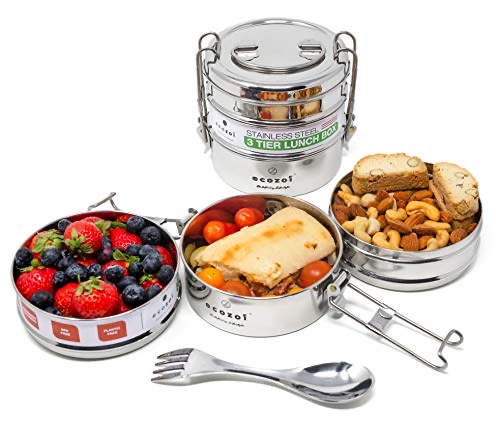 Best Plastic-Free
Review data on this exact 3-tier model is limited, so here is the honest picture from what buyers and testers report. The draw is a fully plastic-free stainless build with a silicone-sealed, latching top tier that holds semi-liquid food better than most steel boxes. The cautions: the leak resistance is strongest on that sealed top tier — lower tiers separate food but are not fully liquid-tight — and the latches can feel stiff until broken in. Treat the seal claims tier by tier, not for the whole stack.
Pack three courses that never touch — each tier is its own stainless compartment, and a spork, spoon, and fork come in the box.
Why it's safe: The food-contact tiers are stainless steel and the box is plastic-free and BPA-free — no plastic surface to leach or shed into meat, curry, or acidic sauces.
Check Today's Price on Amazon →Amazon prices change daily — tap to see today's price and any active discount.
- Free delivery & returns for Prime members
- Sold & shipped by Amazon
- Thousands of verified reviews
Why it made the list: The stacked-tier design is ideal for anyone who eats multi-component meals. Three separate stainless compartments keep a protein, a grain, and a side apart without cross-contamination, and the stainless food-contact surfaces mean no plastic touching your food. The included spork, spoon, and fork make it a self-contained lunch kit for work or travel.
6. Epic Pure Water Filter Pitcher — Best for Cooking Water
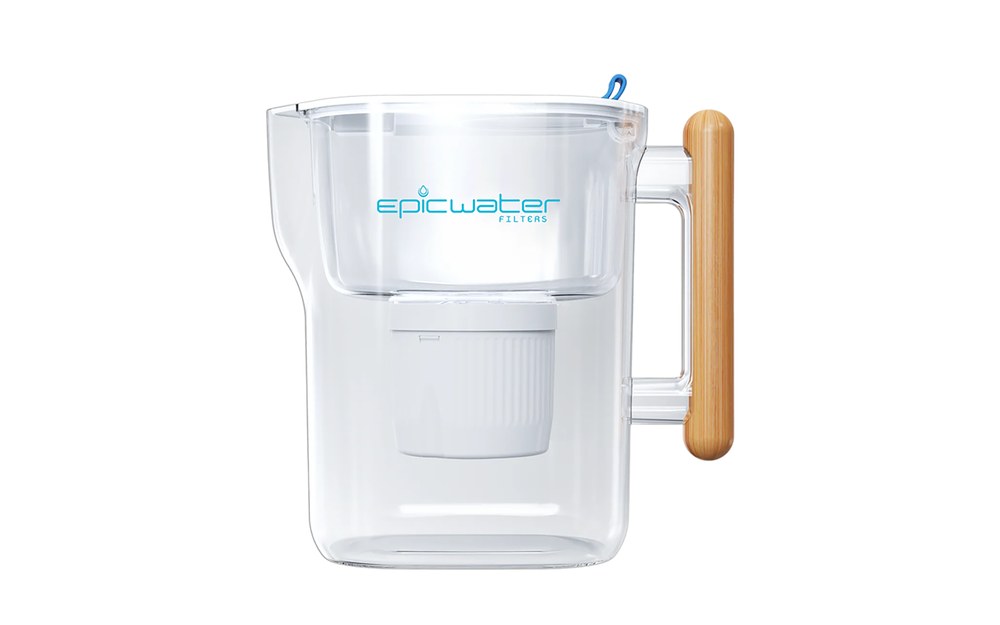 Best for Kitchen Water
Owners trust it because the filtration is thorough and the water tastes crisp — many say the slow drip is the point, a sign the dense media is doing its job. The honest trade-offs come up often: that same filter is slow, so it is a poor pick when you need water in a hurry, and the pitcher is awkward to refill and pour when full. Some buyers report cracked plastic or a lid flap that pops off, and a few had a filter stop flowing early. Soak a new filter first to cut the initial slow spell.
The water you rinse and boil meat in carries the same particles found in every tap sample. This pitcher removes 99.9% of them — with public lab data to prove it, not a slogan.
Why it's safe: The hollow fiber membrane physically blocks microplastic particles down to ~1 micron, while the carbon stage handles chlorine, lead, and PFAS — all in a BPA-free Tritan body.
Check Today's Price on Amazon →Amazon prices change daily — tap to see today's price and any active discount.
- Free delivery & returns for Prime members
- Sold & shipped by Amazon
- Thousands of verified reviews
Why it made the list: Rinsing, brining, and boiling protein in unfiltered tap water reintroduces the exact particles you’re trying to avoid. The Epic Pure’s hollow fiber membrane is the best-documented pitcher for the job, and Epic publishes its IAPMO lab results — a transparency most competitors don’t match. See the full ranking in our best water filter pitchers for microplastics guide.
Want the whole-kitchen version of this?
Protein is one exposure source. The Complete Plasticproof Guide covers every microplastic source in your home — kitchen, nursery, bathroom, bedroom — with 80+ product recommendations backed by 47+ studies.
The bottom line: eat the protein, cut the plastic
Meat does contain microplastics — picked up from the animal’s own exposure, added during processing, and shed by the plastic trays and film it’s wrapped in. The most processed products carry the most, and going plant-based doesn’t fix it because processed meat alternatives test just as high. But the conclusion is emphatically not to eat less protein. The answer is to choose it and store it more carefully.
If you do three things, you’ll cut most of the exposure you actually control:
- Favor whole, minimally processed cuts. A plain chicken breast or steak carries far less plastic than nuggets, fish sticks, or pre-formed patties — animal or plant-based.
- Get protein out of plastic packaging. Buy from the butcher counter in paper or your own container when you can, and store cooked leftovers in glass or stainless (Glasslock, Klean Kanteen, LunchBots, Onyx) instead of plastic tubs that shed into warm, fatty food. Cut raw meat on a wood or bamboo board too — a 2023 study found plastic boards shed microplastics into food as you chop, so it’s worth switching to one of the best non-toxic cutting boards.
- Filter the water you cook with. A hollow fiber pitcher (Epic Pure) removes the microplastics in tap water so you’re not rinsing or boiling protein in them.
None of it requires eating differently — just handling your protein a little smarter. For the bigger picture on which foods carry the most plastic, see which foods have the most microplastics, and for the room-by-room plan, our kitchen plastic detox guide.
Frequently Asked Questions
Yes. A 2024 study led by Ocean Conservancy and the University of Toronto tested 16 commonly consumed proteins and found microplastics in 88% of the samples. Beef, chicken, pork, and seafood all contained particles, as did plant-based alternatives like tofu and meatless nuggets. Microplastics are now a background contaminant across the entire protein aisle.
Through several routes. Farm animals ingest and inhale microplastics from contaminated feed, water, and air, and some particles lodge in their tissue. But most of the plastic in supermarket meat is added later, during industrial processing and from the plastic trays, films, and wrapping the meat contacts on its way from slaughterhouse to store shelf.
In the 2024 study, the most heavily processed products carried the most particles: breaded shrimp, chicken nuggets, fish sticks, and plant-based nuggets all ranked high. Minimally processed whole cuts such as fresh chicken breast and pork loin carried the fewest. Processing steps and plastic packaging, not the animal itself, drove most of the difference.
The long-term health effect of dietary microplastics in humans has not been fully quantified. Microplastics have been detected in human blood, lungs, and placenta, and laboratory studies link them to inflammation and oxidative stress. The sensible response is to lower your exposure where it is cheap and easy, not to stop eating protein.
No. Switching to plant-based protein will not spare you, because the same study found microplastics in tofu and plant-based nuggets too, sometimes at higher levels than whole meat. The problem is processing and plastic packaging, not the animal. Choose less-processed protein and store it in glass or stainless steel whatever protein you eat.
Buy whole, minimally processed cuts instead of breaded or pre-formed products, choose butcher-paper or your own container over plastic-wrapped trays where you can, store leftovers in glass or stainless steel rather than plastic tubs, and filter the water you cook with. These swaps cut the plastic you add during shopping, storage, and cooking.
Sources
- Milne MH, De Frond H, Rochman CM, Mallos NJ, Leonard GH, Baechler BR. “Exposure of U.S. adults to microplastics from commonly-consumed proteins.” Environmental Pollution, 2024;343:123233. (Ocean Conservancy & University of Toronto; 88% of 16 proteins contained microplastics.)
- Cox KD, Covernton GA, Davies HL, et al. “Human Consumption of Microplastics.” Environmental Science & Technology, 2019;53(12):7068–7074.
- Kosuth M, Mason SA, Wattenberg EV. “Anthropogenic contamination of tap water, beer, and sea salt.” PLOS ONE, 2018.
- Leslie HA, et al. “Discovery and quantification of plastic particle pollution in human blood.” Environment International, 2022.
- Ragusa A, et al. “Plasticenta: First evidence of microplastics in human placenta.” Environment International, 2021.