
Sugar does contain microplastics. A 2013 study in Food Additives & Contaminants detected plastic fibers and fragments in every refined and raw sugar sample it examined, and a 2024 study in Process Safety and Environmental Protection found microplastics across 19 sugar products — averaging roughly 2,910 particles per 100 grams, with white refined sugar carrying the most. The revealing part is the source: the 2024 team traced the fragments to abrasion off processing machinery, silos, and pipelines — not the sugarcane or beet. The important caveat: these studies measured presence, not human harm, and for sugar the far larger, better-documented health problem is the sugar itself.
Sugar seems like the last place to look for plastic. It's a single pure crystal — no packaging on the inside, nothing you'd think a microscope would flag. That's exactly why the research is unsettling: when scientists ran refined and raw sugar under a microscope, they kept finding the same tiny plastic fibers and fragments that turn up in tap water and in our own blood. And the surprise isn't unique to sugar — the same thing has shown up across pantry staples nobody suspects, from salt to honey to rice.
The core finding across the food-microplastics literature is that plastic gets into dry staples through the machinery that processes them and the material that packages them — and sugar, which is milled, dried, conveyed, and bagged through a long industrial chain, is no exception. This guide walks through exactly what the studies found, how the plastic gets in (the answer isn't the cane or beet), whether the amounts are worth worrying about (the honest answer is calmer than the headlines — and points at the sugar itself first), and the handful of changes that actually cut what you swallow.
The bottom line up front: the plastic in sugar comes from the machinery, silos, and pipelines it's processed through and the plastic it's bagged in — not the cane or beet, and, oddly, more-refined white sugar tends to carry more than raw. You can't filter dry sugar, so the fixes are about the packaging and what you dissolve it into: buy sugar in paper or cardboard, decant it into glass, and above all filter the water you mix it into. For the bigger picture, see our ranking of which foods have the most microplastics and the room-by-room kitchen plastic detox guide.
Do studies find microplastics in sugar?
Yes — and the evidence goes back more than a decade. A 2013 study in Food Additives & Contaminants: Part A, one of the first to look at sweeteners, examined commercial sugars and detected plastic fibers and fragments in every sample, on the order of a couple hundred fibers per kilogram in refined sugar and noticeably more in raw cane sugar. The particles were the same fibers and fragments that come off textiles, machinery, and packaging — nothing native to a sugar crystal.
The most detailed look is recent. A 2024 study in Process Safety and Environmental Protection analyzed 19 sugar products — white, brown, and molasses — and found microplastics in them all, averaging about 2,910 particles per 100 grams. Fragments dominated, and the researchers traced them to abrasion off processing machinery and the internal surfaces of silos, conveyors, and pipelines. Their standout finding: white refined sugar carried the highest counts, most likely because the extra refining means more contact with equipment. Independent teams, a decade apart, land in the same place: put sugar under the microscope and plastic turns up.
Where do the microplastics in sugar come from?
From the processing chain and the packaging, almost never the plant. Sugar starts as cane or beet, but between the field and your bag it is crushed, boiled, spun, dried, conveyed, stored in silos, and poured into bags — a long run of contact with plastic and metal equipment. The 2024 beet-sugar study pinned the dominant fragment particles to exactly that: abrasion off machinery and the inner walls of silos, conveyors, and pipelines. Earlier work also found synthetic fibers, the kind that drift out of the air and settle onto anything exposed in a facility.
The mechanism is mechanical wear, not heat. Every time sugar is scraped, augered, or blasted through a pipe, hard crystals grind against plastic-lined and plastic-jointed equipment and take tiny flecks with them — which is why the more-refined, more-handled white sugar came out worst, not best. The cane or beet, the sweetness, and the crystal itself contribute essentially nothing in the way of plastic; there's no pathway for it to come from the crop. The table below sorts out where the plastic in a typical bag of sugar actually originates.
| Source | What Happens | Contribution |
|---|---|---|
| Processing machinery & pipelines | Hard sugar crystals abrade plastic-lined and plastic-jointed equipment as they're crushed, augered, and pumped through the mill | Major — the dominant fragment source |
| Silos & conveyors | Sugar scours the inner surfaces of storage silos and conveyor belts during handling, shedding fragments into the product | Major — abrasion-driven |
| Plastic bags & packaging | Sugar sits against and rubs its plastic bag; refined white sugar is handled and packaged more, and tested worst | Moderate to major |
| Airborne fibers in the facility | Synthetic fibers drift out of the air and settle onto sugar exposed during processing and bagging | Moderate — the older, fiber-based finding |
| The cane, beet & the crystal itself | No pathway shown; the plastic isn't from the crop or the sweetness | Negligible |

How much microplastic is in sugar?
Enough to detect consistently, not enough to build a diet-wide fear around. The 2024 Process Safety and Environmental Protection study measured about 2,910 microplastic particles per 100 grams of sugar on average, with fragments the dominant shape and polymer fingerprints matching polyethylene, polypropylene, PET, and polystyrene — the plastics of processing equipment and packaging. It also estimated a daily intake on the order of 857 particles per adult from sugar in that population. The 2013 study reported lower counts — a couple hundred fibers per kilogram in refined sugar, and more in raw cane — a reminder that the numbers depend heavily on method and sugar type.
The honest headline is that the counts bounce around a lot. They vary by whether the sugar is white, brown, raw, or molasses, by brand and processing, by whether it's bagged in plastic or paper, and by what each lab filtered out as background contamination. What doesn't vary is the direction: across independent teams a decade apart, the answer to "is there plastic in here" kept coming back the same. That consistency is the point — not any single particle count.
"Sugar doesn't get its plastic from the cane or the beet — it gets it from the machinery, silos, and pipelines it's ground through and the bag it's stored in. That's why the whiter and more-refined sugar, handled the most, tested the worst."
Does raw or organic sugar have fewer microplastics than white sugar?
Not reliably — and the newest study found the reverse. Because the plastic comes from industrial handling rather than the crop, the label on the bag (raw, brown, organic, cane) tells you little about how much plastic is inside. The 2024 beet-sugar research reported that white refined sugar carried the highest counts, most likely because each extra refining and handling step means more contact with plastic-jointed machinery. That flips the usual instinct that "less processed" means cleaner.
The older 2013 work did find raw cane sugar higher in fibers than refined — a different method and a different fiber-versus-fragment story — so no sugar type gets a clean bill of health. The reliable levers aren't the color of the sugar; they're the packaging you buy it in, the jar you decant it into, and above all the water you dissolve it into. We take the same glass-first line across the site, from food storage to salt.
Are the microplastics in sugar dangerous?
Here's where honesty matters. The sugar studies were designed to measure how much plastic is present and what polymers it is — not to test what those particles do once they're inside a person. On the specific question of harm from the microplastics in sugar, the research simply doesn't have an answer yet, and no one should read a health verdict into it that the data can't support.
It's also worth naming the bigger issue in the same breath. For sugar, the far better-documented health problem isn't the plastic — it's the sugar itself, which is tied to weight gain, dental decay, and metabolic disease in a way microplastics simply are not, yet. A 2019 analysis in Environmental Science & Technology estimated the average person already swallows tens of thousands of microplastic particles a year from food and drink combined, with water a large driver; sugar is a small contributor within that total. What we do know more broadly is that microplastics are increasingly detected throughout the human body — in blood, organs, and even the brain — so trimming avoidable exposure is sensible even while the harm question stays open.
You don't need a microplastics scare to have a good reason to cut back on sugar — the sugar already is one. The trace plastic in a spoonful is tiny next to the water you cook and drink with all day. Fix the big source first — filter your water — then spend the rest of your effort on the bigger plastic sources in our kitchen plastic detox guide.
How do you reduce the microplastics in your sugar?
You can't filter dry sugar — there's no way to strain plastic out of a crystal at home — so the leverage is the packaging, the storage, and, above all, what you dissolve it into. Three moves do most of the work: buy sugar in paper or cardboard rather than a plastic bag when you have the choice; decant it into a glass jar at home so it stops sitting against and rubbing plastic; and remember that sugar is almost never eaten dry — it goes into coffee, tea, baking, and drinks that are mostly water, so filtering that water is the single change that cleans up the biggest ingredient around your sugar.
That's why the highest-leverage swap on this list is a good water filter. A pitcher that carries a specific microplastics claim — certified under NSF/ANSI 401, or a rated membrane pore size — cuts particle counts sharply; see our full guide to the best water filter pitchers for microplastics and the broader water filter roundup. Store your sugar and dry goods in glass instead of plastic, and you've routed around both the bag and the water. The picks below are the simplest, longest-lasting ways to do all of that.

Fix the sources that actually matter
The trace plastic in sugar is tiny next to the water you cook and drink with all day — and the sugar itself is the bigger health story. Start where it counts: filter your tap water and store your dry goods in glass.
The swaps that cut the most plastic around your sugar
You can't buy "microplastic-free sugar," and you can't filter a crystal after the fact. So instead of padding this out with products that don't exist, here are the real, currently-sold tools that cut the plastic around what you eat — certified water filters for the water your sugar ends up dissolved in, plus glass and platinum-silicone vessels to keep your sugar and the rest of your dry goods off plastic. Prices and availability change, so check current listings.
1. Epic Pure Water Filter Pitcher — Best Overall for Microplastics
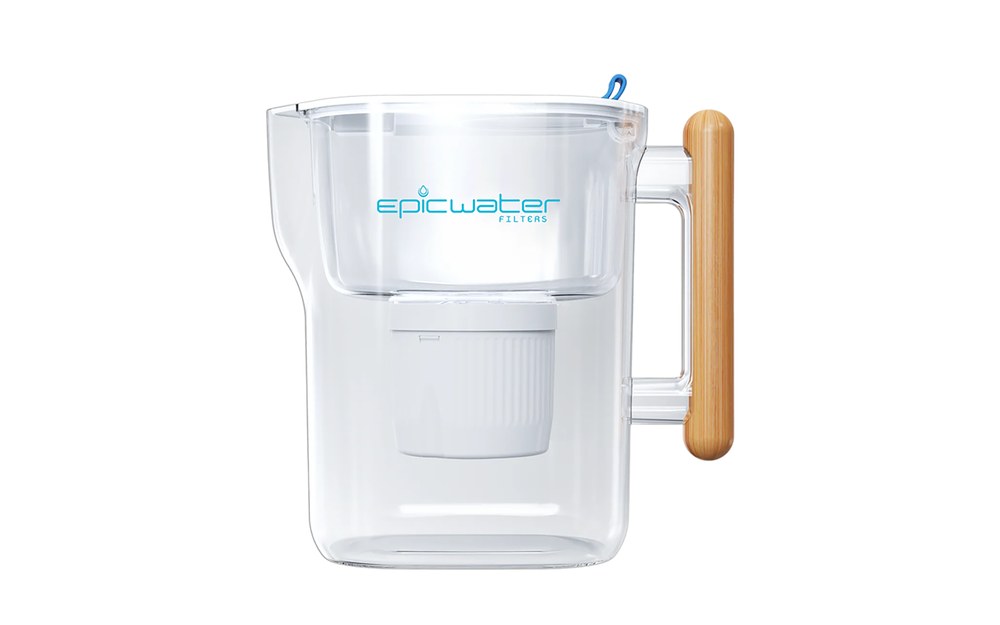 Best Overall
Reviewers point to published independent lab data and a filter rated around 150 gallons, far longer than a Brita, as the reasons they trust it, and several describe the slow, deliberate drip as reassuring rather than annoying. The honest downsides: owners report the filtration is genuinely slow and not the pick if you want a glass of water in a hurry, and third-party complaints mention cracked plastic, flip-top lids that stick, and water that spills or leaks from the lid when you pour a full pitcher.
The clearest evidence on this list: Epic posts its independent lab results publicly, so you can see the 99.9% microplastic-removal data instead of trusting a slogan on the box.
Why it's safe: The hollow fiber membrane physically blocks microplastic particles down to ~1 micron, while the carbon stage handles chlorine, lead, and PFAS — all in a BPA-free Tritan body.
Check Today’s Price on Amazon →Amazon prices change daily — tap to see today's price and any active discount.
- Free delivery & returns for Prime members
- Sold & shipped by Amazon
- Thousands of verified reviews
Sugar is almost always eaten dissolved in water — coffee, tea, baking, drinks — so filtering that water is the highest-leverage swap on this list. The Epic Pure is the clearest choice: its dual-stage design uses a hollow fiber membrane as the primary microplastic barrier, and Epic publishes the independent lab results to back the 99.9% removal claim — transparency most competitors don't match. Make it the water your kitchen runs on and you clean up the biggest ingredient around your sugar.
2. Waterdrop Chubby 10-Cup Pitcher — Best Filter Life
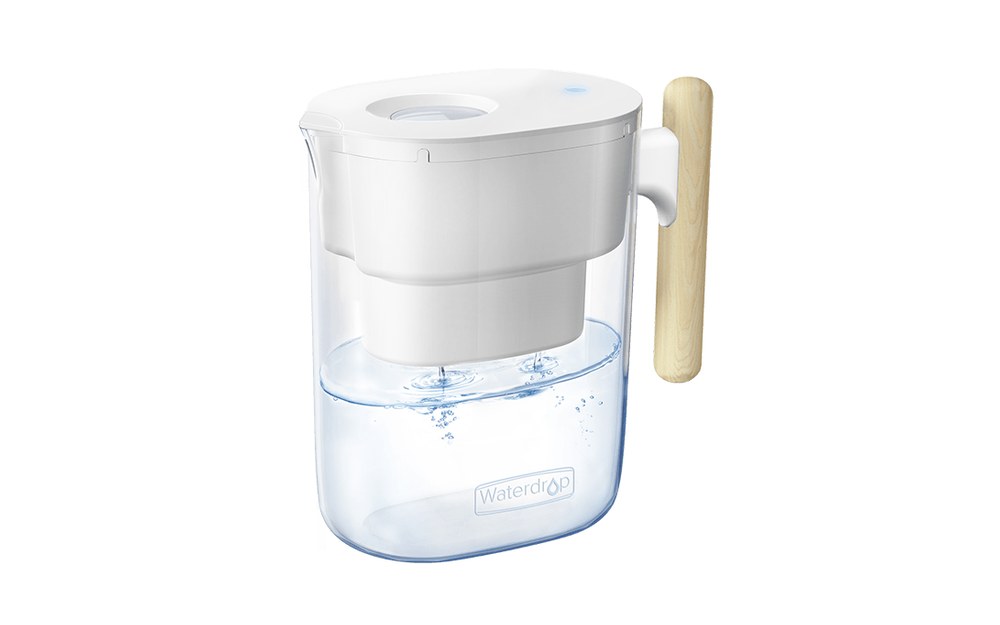 Best Filter Life
Owners like the look and the long 200-gallon filter life, and roughly 80 percent of reviews land positive, with the common praise being clean-tasting water at a low cost per gallon. The honest gripes: several owners warn the handle can feel loose or strain under a full pitcher, so they lift with two hands; some report the pour spills if you tip too fast; and the change-filter indicator light draws complaints for not lighting or not staying lit.
A membrane blocks particles by pore size rather than by claim list, and its 200-gallon filter runs about 4 to 5 months — the lowest ongoing cost on the list.
Why it's safe: A hollow fiber membrane is a physical barrier to particles, while the carbon composite handles chlorine, heavy metals, and PFAS — all in a BPA/BPS-free body.
Check Today’s Price on Amazon →Amazon prices change daily — tap to see today's price and any active discount.
- Free delivery & returns for Prime members
- Sold & shipped by Amazon
- Thousands of verified reviews
If a household bakes and brews a lot, filter life matters — you'll be refilling it constantly for every pot of coffee and batch of dough — and the Waterdrop Chubby leads on it: a hollow fiber membrane on Waterdrop's own published lab data, plus 200 gallons per filter (about 4–5 months for most households). The "filter while you pour" design works just like a familiar counter pitcher, but with a membrane that's actually tested for microplastics.
3. Aquagear Water Filter Pitcher — Best Value
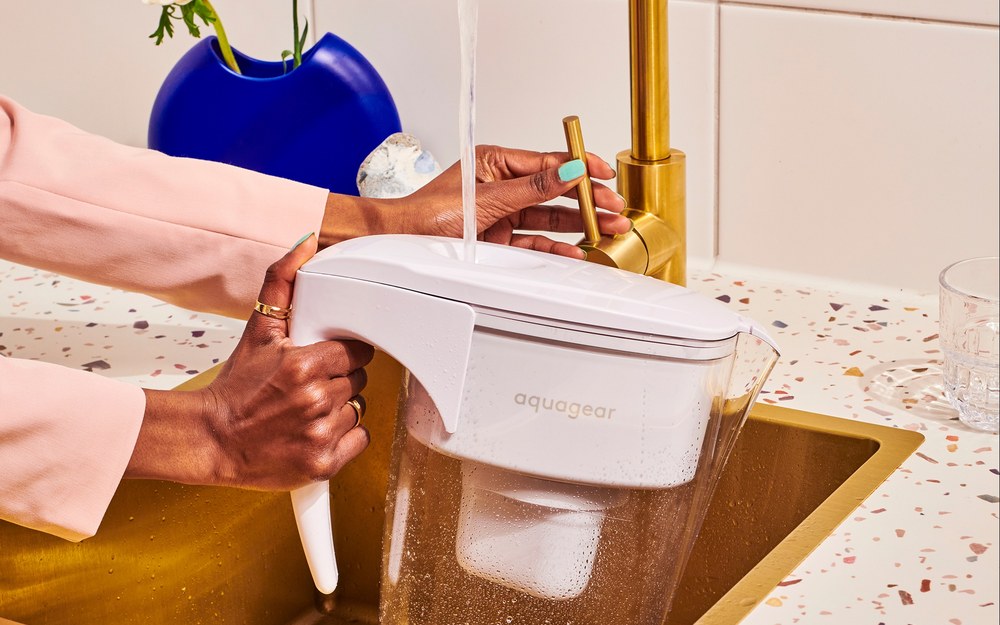 Best Value
Owners choose it for broad contaminant removal and clean taste, and some lab testing found it did not clog. The honest downsides: the most repeated complaint is slow filtration, described by one reviewer as a mixed bag between people waiting minutes and people waiting hours, and it can worsen as the filter ages; and the design draws gripes, with the pour-spout cover popping out and spraying water and a lid that fits poorly and can pop off mid-pour.
Change the filter half as often as most pitchers — 150 gallons per cartridge means fewer replacements, lower annual cost, and less to remember.
Why it's safe: A 5-stage filter with a sub-micron membrane stage captures microplastics, lead, fluoride, and chlorine, in a BPA-free body with USA-made filter media.
Check Today’s Price on Amazon →Amazon prices change daily — tap to see today's price and any active discount.
- Free delivery & returns for Prime members
- Sold & shipped by Amazon
- Thousands of verified reviews
The Aquagear costs more upfront but its 150-gallon filter life means lower annual replacement costs than most competitors, and the pitcher body is guaranteed for life. It uses a 5-stage filter with a sub-micron membrane stage that targets microplastics, heavy metals, and fluoride — a good fit for households that don't want to track filter changes constantly.
4. Lifefactory Glass Bottle 22oz — Best Glass Bottle
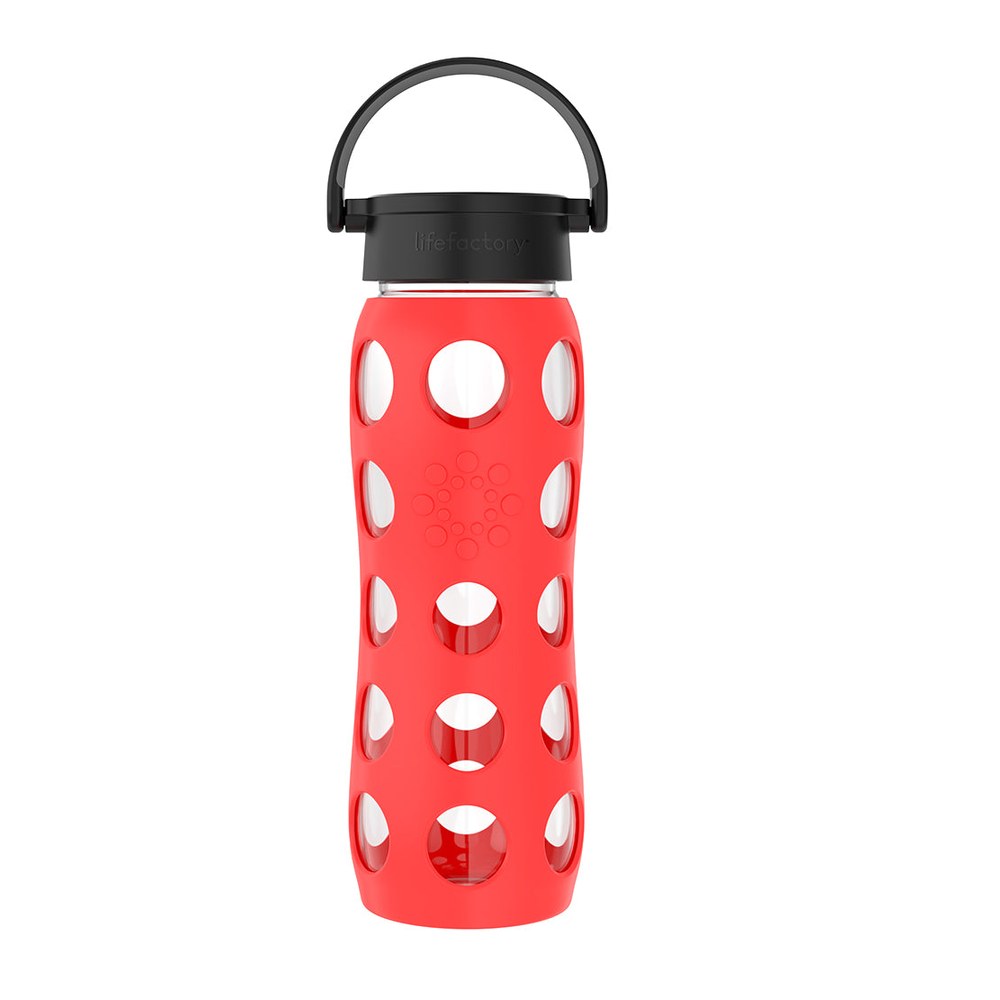 Best Glass Bottle
The simplest way to keep filtered water with you all day, so the plastic-free water you made at home doesn't get replaced by a plastic bottle the moment you leave. It’s made from borosilicate glass — the same material used in laboratory glassware — which is thermally stable, chemically inert, and completely free of BPA, BPS, and any polymer contact with your drink. It imparts no taste, so water tastes like water, not plastic. The protective silicone sleeve adds grip and guards against shattering. The cap contains a small polypropylene component — the only plastic in the system, at the exterior closure rather than the drink surface. Dishwasher-safe.
Carry the filtered water you made at home instead of buying a plastic bottle out — no plastic contact, no shedding, and it cleans up in the dishwasher.
Why it's safe: Borosilicate glass is completely inert — it never leaches, never sheds microplastics, and imparts no taste. The only plastic is a small cap component at the exterior closure, not the drink surface.
Check Today’s Price on Amazon →Amazon prices change daily — tap to see today's price and any active discount.
- Free delivery & returns for Prime members
- Sold & shipped by Amazon
- Thousands of verified reviews
Once your water is filtered, keep it off plastic on the way to the glass. A borosilicate glass bottle carries filtered water — and any sweetened tea, lemonade, or coffee you make with it — without the PET: no leaching, no shed fibers, no plastic aftertaste, and it’s sturdy enough for daily desk-and-bag use.
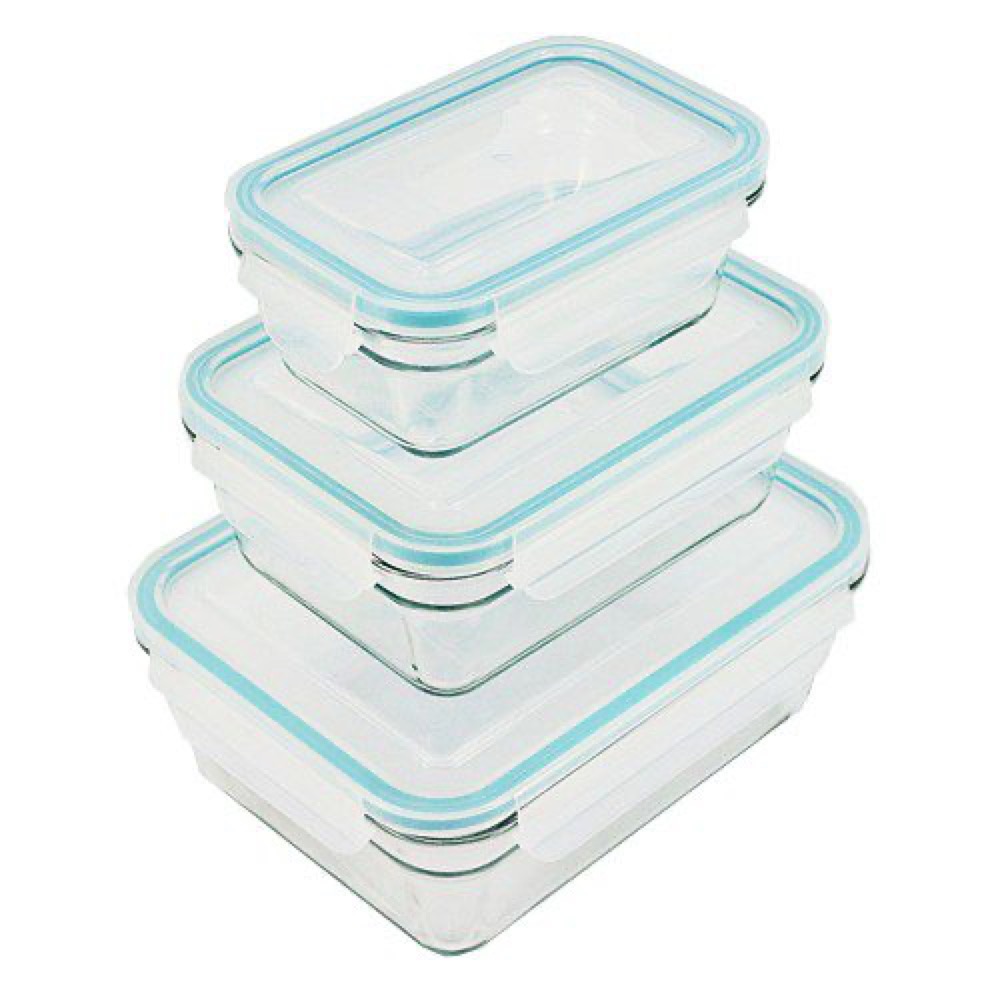
5. Glasslock Oven Safe Container Set (3-Pack) — Best Glass Storage
 Best Glass Storage
Longtime owners like that the glass bodies are oven-, microwave-, and freezer-safe and that the snap-lock lids seal tight. The honest downsides run through the lids, not the glass: reviewers report cracked lids, snapped locking tabs, and mold building up in the rubber gaskets if they are not dried well. Some buyers also received sets with a locking piece missing, and several flag slow, hard-to-reach customer service when they needed a replacement part.
Three stackable glass containers in one box — enough to store a week of leftovers and prepped ingredients without a single plastic tub.
Why it's safe: Your food sits on inert tempered glass, not plastic — so warm, acidic, watery foods can’t leach or pick up shed particles. The BPA-free lids seal with a food-grade silicone gasket that only touches the rim.
Check Today's Price on Amazon →Amazon prices change daily — tap to see today's price and any active discount.
- Free delivery & returns for Prime members
- Sold & shipped by Amazon
- Thousands of verified reviews
This is the container that fixes the storage half of the sugar problem. Decant sugar, flour, and other dry goods out of their plastic bags into glass, and they stop sitting against and rubbing the plastic that sheds fragments into them. The same jars take leftovers off plastic too — reheat with the lids off so warm food never sits against plastic, the condition that drives the most particle migration. At roughly ten dollars per container, it's also the cheapest way to retire your plastic tubs in one purchase.
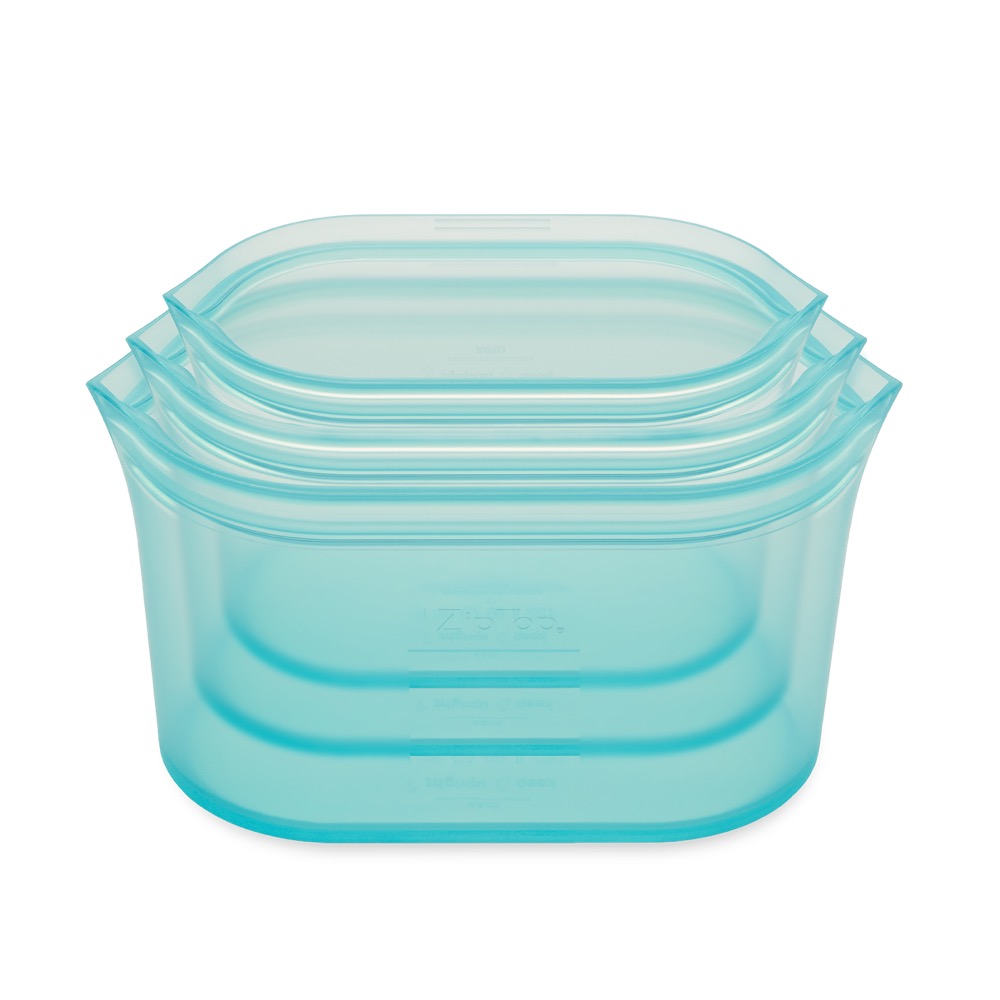
6. Zip Top Silicone Containers (Dish Set) — Best Silicone Set
 Best Silicone Set
Zip Top's design is its own category: 100% platinum-silicone containers that stand upright, stay open while you fill them, then zip shut along the top. There's no plastic frame or zipper insert — it's a single piece of silicone, so there's nothing to harbor chemicals or break down.
The dish set includes small, medium, and large (16, 24, and 32 oz) and goes in the dishwasher, microwave, and freezer. It's the tidiest swap for portioned leftovers and snacks to go with the game.
Owners like that the stand-up silicone dishes open with a light pinch and go from freezer to microwave to dishwasher. The honest downsides: the seal is not airtight, so reviewers warn that if a container tips over the liquids will leak out and the dishes must stay upright in the fridge; pigmented foods like tomato or beets stain the silicone and the marks persist after washing; and strong-smelling foods can leave odors the material holds onto.
Meal-prep and snack storage without a stack of plastic tubs. One-piece silicone dishes stand up, zip shut, and rinse clean — nothing leaching into tomorrow's lunch.
Why it's safe: A single piece of 100% platinum-cured silicone, made in the USA — no plastic, PVC, BPA, or PFAS, and no separate lid to off-gas.
Check Today's Price on Amazon →Amazon prices change daily — tap to see today's price and any active discount.
- Free delivery & returns for Prime members
- Sold & shipped by Amazon
For snacks, leftovers, and anything you'd reach for a plastic tub or bag to hold, platinum-cured silicone is the upgrade — free of the chemicals that migrate from plastic, and durable enough to last for years. For the full lineup, see our guide to the best silicone food storage bags.
Want the Full Home Protection Guide?
The sugar in your pantry is one plastic touchpoint among dozens in a typical day. The Complete Plasticproof Guide covers every room — kitchen, nursery, bathroom, bedroom — with 80+ product recommendations backed by 47+ studies.
The honest verdict
Does sugar have microplastics? Yes — a 2013 study in Food Additives & Contaminants found plastic fibers and fragments in every refined and raw sugar it examined, and a 2024 study in Process Safety and Environmental Protection measured microplastics across 19 sugar products at about 2,910 particles per 100 grams, with white refined sugar the worst. But the crucial detail is the source: the plastic matches the processing machinery, silos, pipelines, and packaging the sugar travels through, not the cane or beet, and counts vary widely by sugar type and brand. Those studies measured presence, not human harm. So the accurate takeaway is proportion, not alarm — and for sugar, the sugar itself is the health story the evidence is far more certain about.
The practical response is easy, because the plastic in sugar is mostly the plastic you can route around. You can't filter a crystal, so buy sugar packaged in paper over plastic, decant it into a glass jar at home, and — the biggest move — filter the water you dissolve it into, since sugar is nearly always eaten in coffee, tea, baking, and drinks that are mostly water. Filtered tap water is the one ingredient around your sugar you can genuinely make cleaner. You don't need a plastic scare to justify eating less sugar, either — your teeth and waistline already make that case.
Cut the plastic that actually adds up
The plastic in a spoonful of sugar is small next to the water you cook and drink with all day. A certified filter and a couple of glass jars make filtered water and plastic-free storage the easy default.
Frequently Asked Questions
Sugar does contain microplastics. A 2013 study in Food Additives & Contaminants detected plastic fibers and fragments in every refined and raw sugar sample it examined, and a 2024 study in Process Safety and Environmental Protection found microplastics across 19 sugar products, averaging about 2,910 particles per 100 grams, with white refined sugar carrying the most. The plastic does not come from the sugarcane or beet — it comes from the machinery, silos and pipelines the sugar is processed through and the packaging it is stored in.
From industrial processing and packaging, not the plant. The 2024 beet-sugar study found fragments were the dominant shape and traced them to abrasion off processing machinery and the internal surfaces of silos, conveyors and pipelines — mechanical wear during refining rather than airborne pollution. Earlier work also found synthetic fibers, the kind that settle out of the air in any facility. White refined sugar tends to carry more than raw sugar because it is handled and processed more, and plastic bags add a further source during storage.
There is no single number. A 2024 study measured an average of about 2,910 microplastic particles per 100 grams across 19 sugar products and estimated roughly 857 particles of daily intake per adult in that population. A 2013 study reported lower counts — on the order of a couple hundred fibers per kilogram in refined sugar and higher in raw cane sugar. Counts vary widely by sugar type, brand, processing and packaging, but the direction is consistent: put sugar under a microscope and plastic turns up.
Not reliably — and the most recent study found the opposite. The 2024 beet-sugar research reported that white refined sugar carried the highest particle counts, likely because extra refining means more contact with processing machinery. Because the main source is industrial handling and packaging rather than the crop, choosing raw, brown or organic sugar does not guarantee less plastic. The bigger lever is the packaging you buy it in and how you store it, not the color of the sugar.
No — you cannot strain plastic out of dry sugar at home. The leverage is upstream and around it: buy sugar packaged in paper or cardboard rather than plastic, decant it into a glass jar so it stops sitting against and picking up plastic, and — the biggest move — filter the water you dissolve sugar into, since sugar is almost always eaten in coffee, tea, baking and drinks that are mostly water. Cutting how much sugar you eat helps your health far more than the trace plastic does.
The health risk from the microplastics specifically is not established; these studies measured how much plastic is present, not what it does inside a person. For sugar, the far better-documented health issue is the sugar itself, so cutting back helps on both fronts at once. Microplastics are increasingly detected throughout the human body, so trimming avoidable exposure is sensible — but sugar is one small source among many, and the water you cook and drink with is a much larger one you can actually clean up.
Sources
- Yurtsever M, Cüvelek MA. "Abundance of microplastics in the agro-industrial product beet sugar; food or plastifood." Process Safety and Environmental Protection, 2024. (Microplastics found across 19 sugar products, averaging ~2,910 particles per 100 g; fragments dominant and traced to abrasion off processing machinery, silos and pipelines; white refined sugar carried the highest counts.)
- Liebezeit G, Liebezeit E. "Non-pollen particulates in honey and sugar." Food Additives & Contaminants: Part A, 2013;30(12):2136–2140. (Plastic fibers and fragments detected in every refined and raw sugar sample; on the order of a couple hundred fibers per kilogram in refined sugar, higher in raw cane sugar.)
- Cox KD, Covernton GA, Davies HL, et al. "Human Consumption of Microplastics." Environmental Science & Technology, 2019;53(12):7068–7074. (Estimated tens of thousands of microplastic particles consumed per person per year from food and drink combined, sugars among the food categories assessed.)
- Kosuth M, Mason SA, Wattenberg EV. "Anthropogenic contamination of tap water, beer, and sea salt." PLOS ONE, 2018;13(4):e0194970. (Widespread anthropogenic microplastic contamination across everyday foods and tap water; fibers the dominant particle type.)