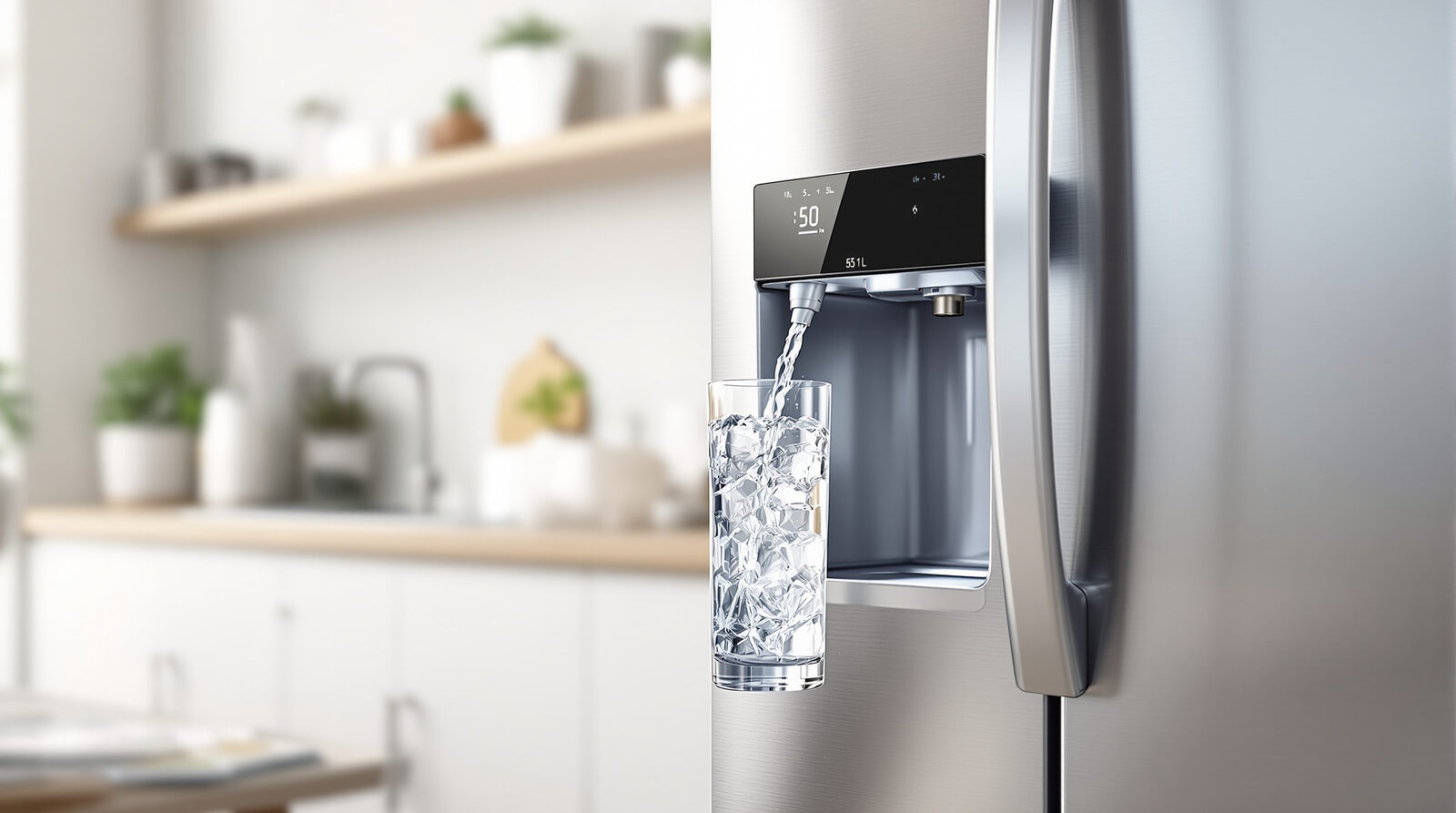
Mostly no. A standard refrigerator water filter is an activated-carbon block built to reduce chlorine, taste and odor — and, on better models, some lead. Its finest versions strain down to about 0.5 micron; basic ones are coarser. That can catch some of the larger microplastics incidentally, but it is not designed or tested to, and it does nothing for nanoplastics (below 1 micron), which are the particles most able to cross into tissue. Crucially, no mainstream fridge filter is certified to a microplastics standard — the usual NSF/ANSI 42, 53 and 401 certifications cover chlorine, lead and a short list of emerging contaminants, and microplastics are on none of them. To actually remove microplastics you need reverse osmosis (~0.0001 micron), distillation, 0.01-micron ultrafiltration, or a tested hollow-fiber cartridge. A fridge filter is still far better than bottled water, which a 2024 study found holds roughly 240,000 plastic particles per liter.
Microplastics — plastic fragments smaller than 5 millimeters, down to nanoplastics you can’t see — have been measured in tap water, bottled water and treated municipal supplies worldwide. They shed from degrading plastic waste, from the pipes and fittings the water travels through, and from the plastic components inside appliances and dispensers. The World Health Organization’s 2019 review concluded the health risks aren’t fully understood yet, while flagging how little we know about the smallest particles — exactly the ones a carbon fridge filter is least able to catch. Until the science settles, the sensible move is to cut an uncertain exposure where you cheaply can.
The reason a fridge filter falls short is simple, and it has nothing to do with the brand: removing a plastic particle is a matter of pore size, not marketing. A cartridge that works mainly by activated carbon is built to adsorb dissolved chemistry — chlorine, odor, some metals — and to strain out sediment, not to sieve out particles down to the sub-micron range. So the question isn’t whether your refrigerator filter is a good filter; many are. It’s whether a taste-and-chlorine filter is the right tool for plastic particles. It isn’t — and below, we show exactly what it does catch, what the numbers on the box mean, and the six filters that genuinely remove microplastics.
Filters that actually remove microplastics — compare all 6
What to use instead of (or after) your fridge filter, ranked by how thoroughly it removes microplastics — tap a name to jump to the full review, or check today's price.
| Pick | Rating | How it removes plastic | |
|---|---|---|---|
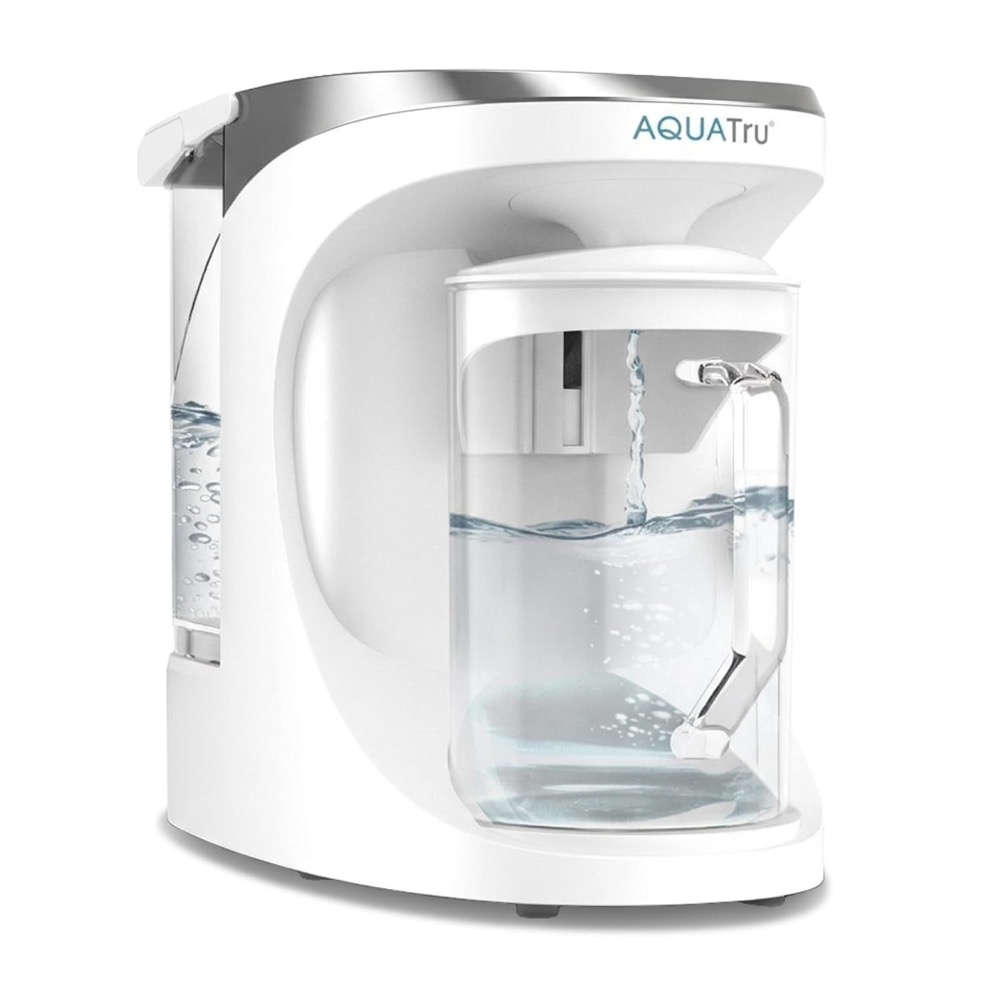 Removes the MostAquaTru Carafe RO |
4.9out of 5 | RO 0.0001µmRemoves Nanoplastics |
Check price → |
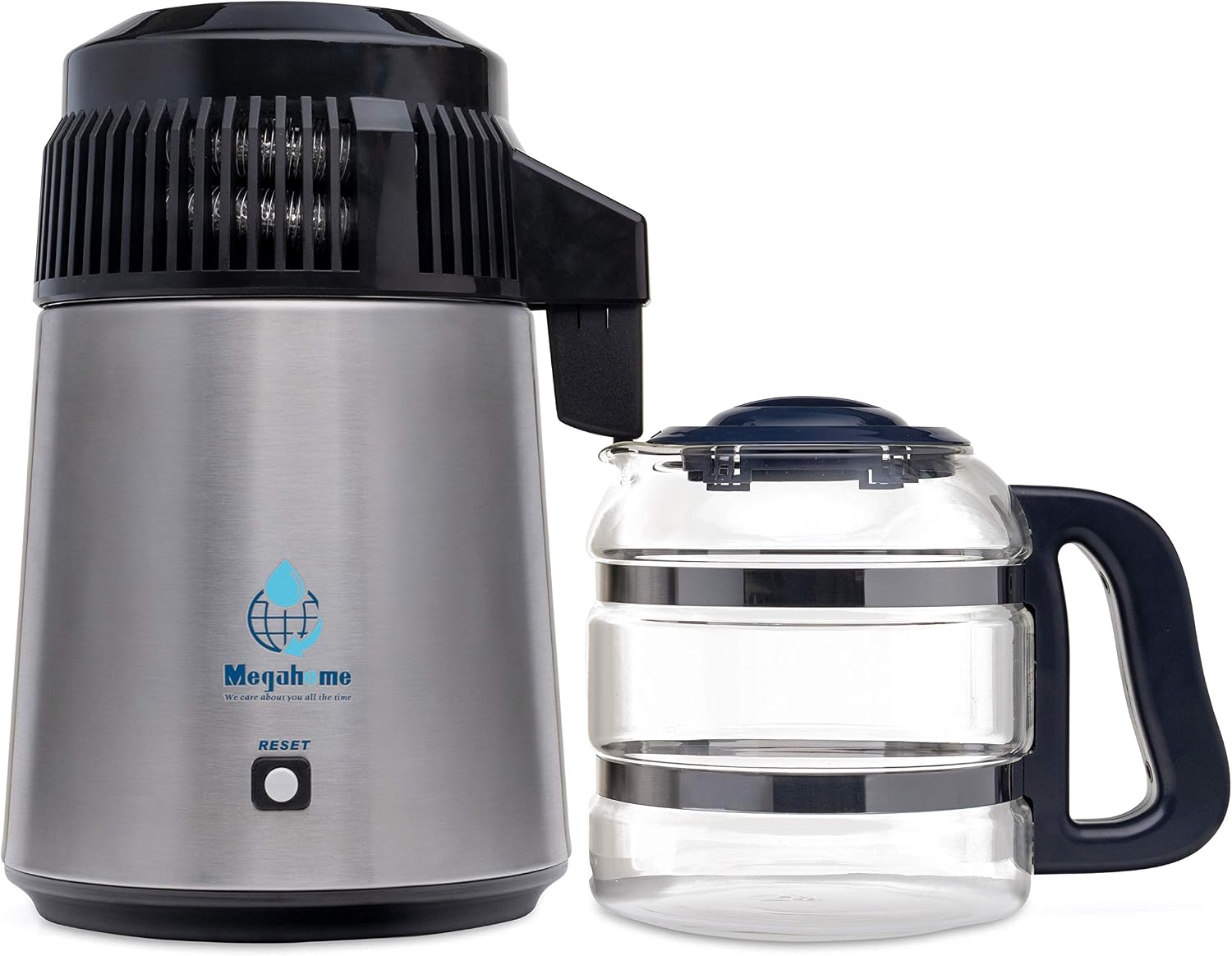 Distills EverythingMegahome Distiller |
4.6out of 5 | Steam DistillationGlass Carafe |
Check price → |
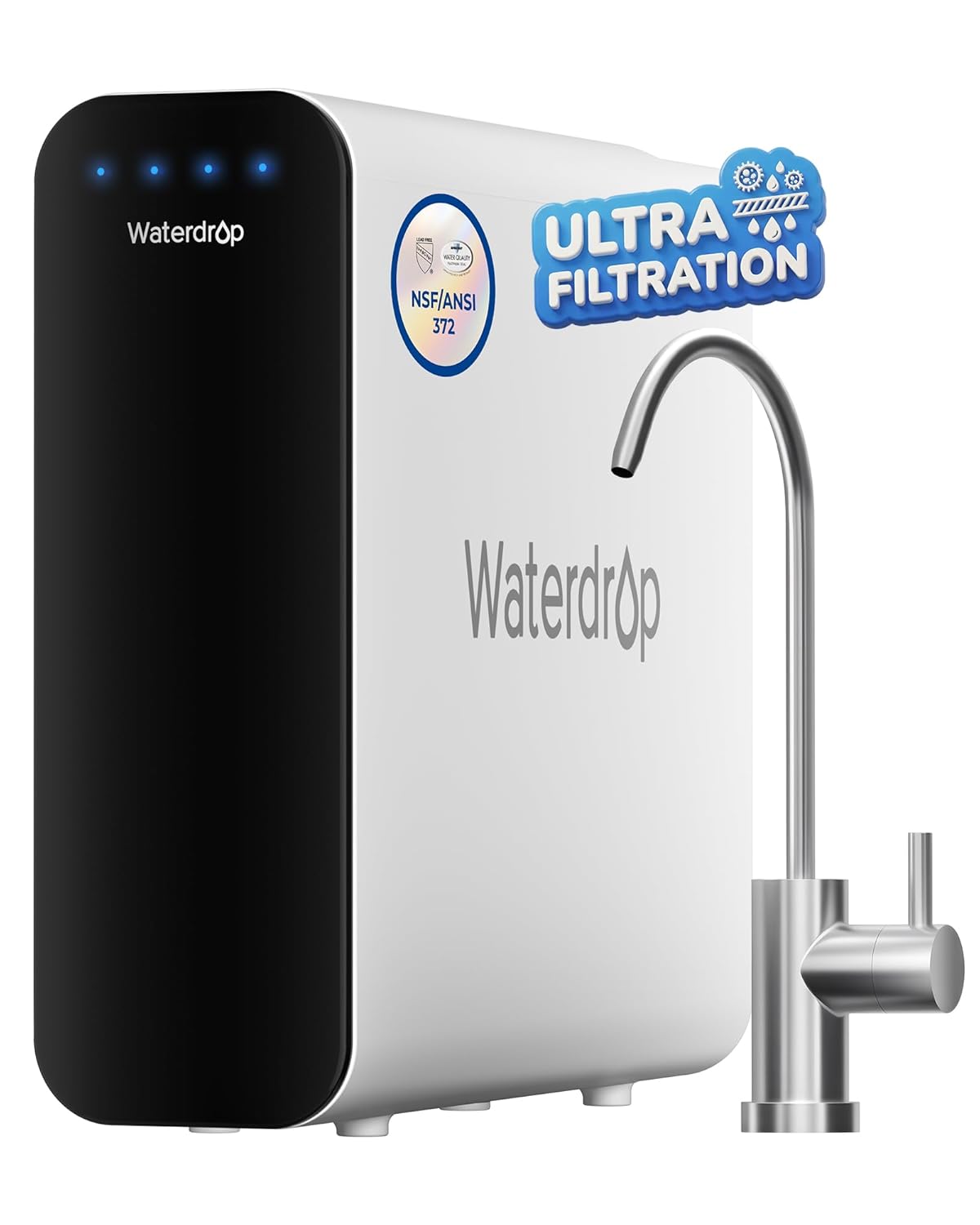 Best Under-SinkWaterdrop TSU Ultrafiltration |
4.5out of 5 | 0.01µm UltrafiltrationKeeps Minerals, No Waste |
Check price → |
 Easiest / Best PitcherEpic Pure Pitcher |
4.9out of 5 | Hollow-Fiber + Carbon99.9% Microplastics |
Check price → |
 Cheapest at the TapWaterdrop WD-FC-06 Faucet |
4.5out of 5 | Multi-Stage Faucet MountStainless Body |
Check price → |
 Best On the GoClearly Filtered Bottle |
4.6out of 5 | Portable Multi-MediaStainless, No Plastic |
Check price → |
What a Refrigerator Water Filter Actually Does
A refrigerator water filter is a replaceable cartridge your fridge pushes water through on the way to the dispenser and ice maker. Its real job is to make water taste and smell better by adsorbing chlorine and organic compounds, to strain out sediment, and — on better models — to reduce lead. That is genuine, worthwhile work. (If lead is your main reason for filtering, a dedicated unit does it far more reliably — see our best water filters for lead.)
Inside the housing is an activated-carbon core (a solid block on quality units, loose granules on cheap ones) wrapped in a sediment layer. As water flows past, dissolved chlorine and odor molecules cling to the carbon’s enormous surface area, and particles larger than the block’s pores get strained out. That is why dispenser water tastes cleaner almost immediately — the chlorine is gone — and why the cartridge has a service life: once the carbon saturates, performance falls off, which is the reason the manufacturer tells you to swap it about every six months.
What the cartridge is certified to do is printed on the performance data sheet in the box, keyed to NSF/ANSI standards: 42 for chlorine, taste and odor; 53 for health contaminants like lead, mercury and cysts; and 401 for a defined list of “emerging” compounds such as certain pharmaceuticals and pesticides. Every one of those is a real test with a pass threshold. Microplastics are not on any of them — which is the whole reason this question needs a straight answer.
Do Fridge Filters Remove Microplastics? Here’s the Honest Answer
The honest answer: a little, mostly by accident, and never in a way you can count on. The finest refrigerator cartridges carry a nominal rating near 0.5 micron, fine enough to strain out some of the larger microplastic fragments. But most are coarser than that, none is tested against a microplastics protocol, and every carbon fridge filter lets nanoplastics straight through.
Microplastics span a wide size range — from just under 5 millimeters down to about a single micron — and nanoplastics are smaller still, below one micron, measured in billionths of a meter. A 0.5-micron carbon block physically blocks many particles bigger than that, so a quality fridge filter does cut some microplastic load. The catch is threefold: the removal is incidental rather than verified, a coarser basic cartridge (1–5 micron or higher) catches far less, and nothing in a carbon fridge filter stops the nanoplastics that 2024 imaging work found make up the overwhelming majority of particles by count. You can’t put a number on what your fridge filter removes, because nobody measured it against plastic.
So treat the fridge filter as what it is: a taste-and-chlorine upgrade that beats unfiltered tap and dramatically beats bottled water on both plastic and cost — but not a microplastics filter. If cutting microplastics is the goal, pair it with one of the dedicated filters below, or run your drinking water through one of them instead. For the wider picture of what’s in your tap, see is tap water safe to drink.
Why Pore Size Decides Whether Microplastics Get Through
Filtering a dissolved chemical and straining out a solid particle are two different jobs. Carbon removes chlorine by adsorption — molecules clinging to its surface. Removing a plastic particle is pure mechanics: the barrier’s holes have to be smaller than the particle, or it slips past. Pore size, not the presence of carbon, is what decides whether microplastics get through.
That one fact sorts every “water filter” into the ones that remove plastic and the ones that don’t. Reverse-osmosis membranes sit around 0.0001 micron, so essentially nothing plastic passes; hollow-fiber and tight ultrafiltration cartridges run 0.01–0.1 micron, fine enough for microplastics and most nanoplastics; distillation skips pore size entirely by boiling water to steam and leaving the plastic behind in the chamber. A refrigerator carbon block at roughly 0.5 micron (at its best) sits well above all of them. When you shop, look for a stated micron rating or a published microplastics test — not the word “filter,” which a fridge cartridge earns honestly while doing a different job.
The six filters below are the ones that genuinely clear that bar, ranked by how thoroughly they remove microplastics — from reverse osmosis and distillation (which remove the most) down to a filtered bottle for travel. For deeper roundups by format, see our guides to the best water filters for microplastics, the best reverse-osmosis systems, and the best under-sink water filters.
6 Filters That Actually Remove Microplastics (Use Instead of Your Fridge Filter)
#1 — AquaTru Carafe Countertop RO — Removes the Most (Reverse Osmosis)
Removes the Most
A real RO system that sits on the counter and plugs in — no under-sink plumbing. The 0.0001-micron membrane removes microplastics and nanoplastics (the particles most likely to reach the bloodstream), plus PFAS, arsenic, nitrates, chlorine, fluoride, and heavy metals — 82+ contaminants in total, certified to NSF/ANSI 58. Filtered water collects in a glass carafe, so the water never touches plastic after it leaves the filter.
The trade-offs are honest: it costs $300+ upfront, the RO process wastes some water, and the carafe refills in about 15 minutes rather than instantly. Filter replacements run roughly $70/year. For most households that want the deepest filtration without a contractor, it is the easiest path to genuinely clean water.
"I am now a complete water snob. All water is inferior and it's not even close." AquaTru owners talk like converts, and the buying pattern backs it up — people get one, then buy more for parents and grown kids. Owners who test with home water-purity meters report readings dropping to single digits, and a common move is buying a second glass carafe so one is always cold in the fridge. The fair warnings from reviews: hard water is its enemy (descale on schedule — damage from skipping it isn't covered), the glass carafe is on the thin side, and a thirsty household will refill the tap-water tank daily.
Reverse-osmosis purity you can set on the counter today — then store the result in glass, never plastic.
Why it's safe: The 4-stage RO membrane is NSF/ANSI 58 certified to remove microplastics, nanoplastics, PFAS, lead, arsenic, and chlorine — and the glass carafe means zero plastic contact at the point of use.
Check Today’s Price on Amazon →Amazon prices change daily — tap to see today's price and any active discount.
- Free delivery & returns for Prime members
- Sold & shipped by Amazon
- Thousands of verified reviews
#2 — Megahome Countertop Water Distiller — Distillation Leaves the Plastic Behind
Distills Everything
Megahome has been making this exact machine, unchanged in its essentials, since the early 2000s. The 316L stainless-steel boiling chamber is the medical-grade alloy used in surgical instruments — it resists pitting from long-term boiling far better than the 304 stainless in cheaper units. The porcelain nozzle liner at the top of the boiler is the detail that separates Megahome from most competitors: it stops the vapor from ever touching the exterior painted or plastic coating on the boiler cap, so no coating chemistry ever hitches a ride into the finished water. The real glass collection carafe means the final distilled water — which is chemically aggressive because it has no dissolved minerals — never contacts a polymer.
The math: at 580 watts, one full 4-liter cycle takes about 5.5 hours and produces about 1 gallon of distilled water. Amazon lists the wattage as "580W distilling" (versus 750W in nominal power draw), which is why cycle time is a touch longer than the CO-Z or VEVOR at the same tank size. That trade of speed for gentleness of boil is intentional: a slower, cooler boil produces less steam carryover of volatile organics, which is why the same detail also shows up in H2oLabs's premium distiller.
The honest trade-offs: the Megahome ships with an included activated-carbon post filter that captures VOCs but adds a $12/year consumable to the operating cost. The glass carafe is fragile — dropping it means a full replacement (about $35 from Megahome). And the total wattage over a full year of daily distilling adds ~$150 to your electric bill at U.S. average rates. If those trade-offs are unacceptable, the H2oLabs 300SS is the "no compromises" upgrade; if the glass carafe is the deal-breaker, the CO-Z 4L or VEVOR 4L glass-jug variant is a cheaper path to the same benefit.
Long-time owners consistently praise the Megahome's simplicity — "no electronics to break." Owners with hard water report the boiler pot showing chalky mineral deposits after every cycle (that's the point, it's the contaminants you would have drunk) and appreciate that a monthly citric-acid rinse restores it to like-new. The honest gripes that repeat: the fan is audibly noisier than the H2oLabs, the plastic top-cap latch feels less premium than the price, and the porcelain nozzle liner can chip if the boiler pot is dropped during cleaning. Replacement glass carafes are readily available.
The only sub-$275 countertop distiller with a 316L medical-grade stainless boiler AND a real glass collection carafe — no plastic touches your finished distilled water.
Why it's safe: 316L stainless steel is the alloy used in medical implants, and the porcelain-lined nozzle isolates the vapor from any external coating chemistry — a Megahome is the same appliance sold in dental and pharmaceutical labs.
Check Today’s Price on Amazon →Amazon prices change daily — tap to see today's price and any active discount.
- Free delivery & returns for Prime members
- Sold & shipped by Amazon
- Thousands of verified reviews
#3 — Waterdrop TSU Ultrafiltration — Best Permanent Under-Sink Filter
Best Under-Sink
The Waterdrop TSU pairs a 5-micron sediment/carbon pre-filter with a proprietary 0.01-micron ultrafiltration (UF) hollow-fiber membrane and a post-carbon polishing stage. That 0.01-micron rating is 50× tighter than a typical 0.5-micron carbon block — small enough to physically block bacteria (E. coli, cryptosporidium cysts) and every microplastic ever measured in drinking-water studies, which bottom out around 1 micron. Unlike RO, the UF membrane does not strip dissolved minerals, so calcium, magnesium, and fluoride pass through and the water still tastes like water — so if removing fluoride is your specific goal, a UF filter is the wrong tool, and our guide to water filters that actually remove fluoride covers the methods that do.
The membrane is rated for up to 16,000 gallons — roughly 3 years for a typical family — which makes long-term cost per gallon far lower than the Aquasana. Twist-and-lock cartridge changes take under 30 seconds and no tools. Installation is standard under-sink with a dedicated faucet included.
The honest trade-offs: Waterdrop's certifications are at the component level (NSF 42-tested materials) rather than a full system-level NSF/ANSI 401 seal like the Aquasana, so if certification-on-paper matters most to you, the Aquasana still wins. Also, UF alone does not reduce lead as thoroughly as a lead-certified carbon block — if your home is on a lead service line, the Aquasana or Frizzlife MK99 (both lead-certified) is the safer buy.
Owners rave about how quickly they can swap cartridges — most describe it as one twist, no tools, no water shutoff needed thanks to the built-in shutoff valves. Well-water and older-plumbing users say the difference in taste and clarity is dramatic. The honest gripes: the plastic cartridge housing can develop a hairline seep at the top O-ring after a couple of years if you overtighten during installation, and Waterdrop's marketing headline of "1,000+ contaminants removed" is broader than the third-party certifications actually cover — the real proof point is the UF membrane's particle size, not the marketing.
A 0.01-micron UF membrane physically blocks microplastics and bacteria — 50× tighter than a standard carbon block, with 3-year cartridge life and no waste water.
Why it's safe: The ultrafiltration membrane's pore size is smaller than any microplastic ever measured in a drinking-water study — so particles are physically excluded, not just adsorbed onto carbon.
Check Today’s Price on Amazon →Amazon prices change daily — tap to see today's price and any active discount.
- Free delivery & returns for Prime members
- Sold & shipped by Amazon
- Thousands of verified reviews
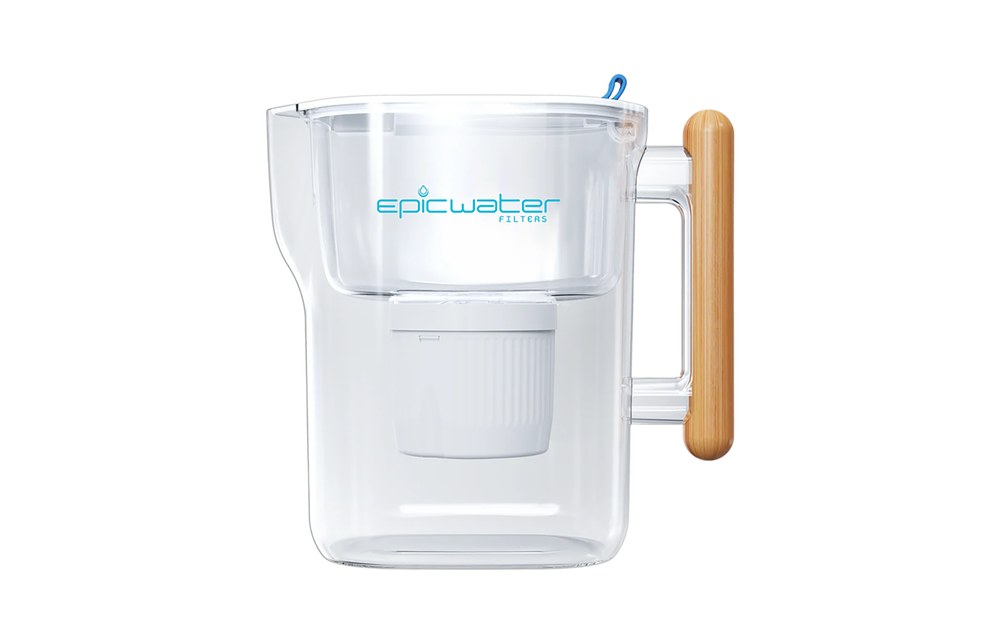
#4 — Epic Pure Pitcher — Easiest, No Installation Needed
Easiest / Best Pitcher
Owners credit it for genuine protection, repeatedly citing removal of "99.999% of over 200 tap water contaminants" including fluoride, PFAS, and microplastics — the recurring theme is real filtration versus big-box brands, and one owner summed the taste up as "It tastes sooo good." In timed tests it filters a full 10-cup pitcher in about 11 minutes. The honest downsides: slow flow is the most common gripe and it worsens as the cartridge saturates, untreated water in the top reservoir can spill into the lower chamber if you lift the pitcher while completely full, and buyers report cracked plastic and lid problems at a price above mainstream brands.
The clearest evidence on this list: Epic posts its independent lab results publicly, so you can see the 99.9% microplastic-removal data instead of trusting a slogan on the box.
Why it's safe: The hollow fiber membrane physically blocks microplastic particles down to ~1 micron, while the carbon stage handles chlorine, lead, and PFAS — all in a BPA-free Tritan body.
Check Today’s Price on Amazon →Amazon prices change daily — tap to see today's price and any active discount.
- Free delivery & returns for Prime members
- Sold & shipped by Amazon
- Thousands of verified reviews
#5 — Waterdrop WD-FC-06 Faucet Filter — Cheapest Way to Filter at the Tap
Cheapest at the Tap
Waterdrop's WD-FC-06 competes with the PUR Plus on a different axis: durability. The full body is 304 food-grade stainless steel, so it will not yellow, crack, or degrade like a plastic housing after a couple of years in a hot sunny kitchen. Independent testing puts it at the top of the faucet-filter category for chlorine reduction and clocks its flow rate at 1.3 gallons per minute — slightly faster than every plastic-housing filter. The included cartridge is rated for up to 12 months at typical usage, which is a big deal for reducing annual maintenance cost.
Two honest trade-offs. First, the WD-FC-06 has NSF-certified components but is not system-certified to NSF/ANSI 42/53/401 the way the PUR Plus is — so the specific "99% lead" and "certified microplastic" claims do not apply. It is a general chlorine, sediment, and heavy-metal filter, not a specifically-lead or specifically-microplastic tool. Second, replacement cartridges are noticeably more expensive than Brita or Culligan cartridges, so the "cheap per gallon" advantage narrows over multiple years.
Buyers repeatedly single out the build quality: it feels like a real fixture instead of a temporary attachment. The 360-degree swivel is called out as an underrated feature — you can direct the filtered stream at the sink or a pot without unscrewing anything. The honest downsides: replacement filters are called "ridiculously expensive" by more than one reviewer relative to Brita cartridges; the diverter tab is small and requires a firm push; and some faucets with unusual thread pitches need an add-on adapter that Waterdrop should include but does not.
A full stainless-steel faucet filter that will still look and work in five years, with 12-month cartridges and 360-degree rotation.
Why it's safe: A 304 food-grade stainless-steel housing (no plasticizer leaching) plus NSF-certified carbon-block cartridge that reduces chlorine, heavy metals, and taste/odor at 1.3 GPM.
Check Today’s Price on Amazon →Amazon prices change daily — tap to see today's price and any active discount.
- Free delivery & returns for Prime members
- Sold & shipped by Amazon
- 304 stainless-steel construction
#6 — Clearly Filtered Insulated Bottle — Remove Microplastics on the Go
Best On the Go
Clearly Filtered is a US brand whose stationary pitcher is one of the most independently-tested consumer filters on the market. The insulated stainless bottle brings the same six-media Affinity Filtration block into a 20 oz double-wall vacuum-insulated body. Clearly Filtered publishes lab test data showing the bottle cartridge reduces lead by more than 99.34% (at pH 6.5) and fluoride by 99.52%, and states that its filter media line (bottle, pitcher, under-sink) reduces microplastics by more than 99.9%, PFOA by more than 99.0%, PFOS by more than 99.5%, and GenX by more than 99.4%. The company describes its bottle as "independently tested to comply with NSF/ANSI Standards 42, 53, 401, and 473."
Cartridge life is short — about 25 gallons or 160 fills (roughly 4 months of daily use), and replacement cartridges are around $30 each, which puts long-term cost per gallon at roughly $1.20 — the highest in this roundup. The body is 18/8 stainless steel, BPA/BPS/phthalate-free, with a silicone straw, and everything is built in the USA. Clearly Filtered publishes a lifetime warranty on the bottle body.
The honest trade-offs: tested to comply with is not the same as NSF-certified by, and the specific bottle SKU's microplastic and PFAS percentages come from the company-wide filter-media test line rather than the bottle QFT report specifically — if you want a fully third-party NSF-certified filter, the Aquasana AQ-5300+ under-sink in our under-sink guide is a better fit. Flow through the straw is slow; the premium price is real; and it is a filter, not a purifier, so no viruses.
Owners with hard water or high-fluoride wells consistently describe an immediate taste change — "no more chalky aftertaste" — and the double-wall insulation keeping ice water cold for 24 hours. Long-term owners praise the lifetime warranty and USA build quality. Recurring gripes: the $30-per-cartridge replacement cost adds up, the 25-gallon life is short, the flow slows noticeably in the last few weeks of a cartridge's life, and the lid design has been redesigned once due to earlier leak complaints (older reviews reflect the older lid).
The widest published contaminant-removal list of any filter bottle — lead, fluoride, PFAS, microplastics — in an insulated stainless body built in the USA.
Why it's safe: Clearly Filtered publishes company-wide test-to-standard data across NSF/ANSI 42, 53, 401 and 473 protocols; bottle-specific test data is published for lead and fluoride reduction.
Check Today’s Price on Amazon →Amazon prices change daily — tap to see today's price and any active discount.
- Free delivery & returns for Prime members
- Lifetime warranty on the bottle body
- Made in USA
What Won’t Reliably Remove Microplastics — Starting With Your Fridge Filter
Knowing what to skip saves money and spares you a false sense of security. These common moves do little or nothing for microplastics on their own:
- A standard refrigerator or fridge-door filter: a carbon cartridge tuned for chlorine, taste and — at best — lead. It may catch some larger particles, but it’s uncertified for microplastics and useless against nanoplastics. Keep using it for taste; don’t count on it for plastic.
- Buying bottled water: the most expensive miss of all. Imaging studies keep finding more plastic in bottled water than in tap — the 2024 PNAS work counted roughly 240,000 particles per liter, mostly shed from the bottle and cap. You’re paying a premium to drink the packaging.
- A plain carbon pitcher: the everyday taste-and-chlorine pitcher isn’t built to strain particles and carries no microplastics rating. No stated micron size or independent test means no reason to assume it removes plastic.
- Boiling by itself: boiling kills microbes but leaves the plastic in the water. In hard water, boiling then letting it settle can trap some particles in the scale — a free partial step, not a filter.
- “Alkaline,” “ionizer” and “structured-water” gadgets: these change pH or the marketing copy, not the particle count. None is designed to physically remove microplastics.
- Filtering, then storing in plastic: pour clean water into a plastic jug or carry it in a plastic bottle and you reintroduce shedding particles. Collect and keep it in glass or stainless steel.
The bottom line: to actually remove microplastics you need pore size (reverse osmosis, ultrafiltration, or a hollow-fiber/tested multi-stage cartridge) or a phase change (distillation) — then keep the clean water out of plastic. A fridge filter is a fine first line for taste; it is not the tool for the job here.
Comparison Table: At a Glance
| Method | How It Removes Plastic | Install / Effort | Keeps Minerals? | Price |
|---|---|---|---|---|
| AquaTru Carafe RO | RO membrane ~0.0001µm | Countertop, plug-in | No (remineralize) | $$$ |
| Megahome Distiller | Steam distillation | Countertop, batch | No (remineralize) | $$ |
| Waterdrop TSU | 0.01µm ultrafiltration | Under-sink, plumbed | Yes | $$ |
| Epic Pure Pitcher | Hollow-fiber + carbon | Pour, no install | Yes | $ |
| Waterdrop WD-FC-06 | Multi-stage faucet mount | Screws onto faucet | Yes | $ |
| Clearly Filtered Bottle | Portable multi-media | Fill and sip | Yes | $$ |
Price tiers: $ = budget · $$ = mid-range · $$$ = premium. Tap any “Check Today’s Price” button for the live Amazon price.
Which Filter Is Right for You?
- You want the deepest reduction and have counter space: AquaTru Carafe RO — reverse osmosis strips essentially all microplastics plus PFAS, lead and more into a glass carafe. Remineralize or just eat a normal diet for the minerals it removes.
- You want “take out everything” without plumbing or waste water: Megahome Countertop Distiller — distillation leaves plastic and nearly every contaminant behind in the boiler, and the glass carafe keeps the result plastic-free.
- You want a permanent, high-flow tap filter that keeps minerals: Waterdrop TSU Ultrafiltration — a 0.01-micron membrane catches microplastics at full flow with no drain water, from its own dedicated faucet.
- You want the easiest, lowest-commitment start: Epic Pure Pitcher — a hollow-fiber pitcher independently tested to remove 99.9% of microplastics, with zero installation.
- You rent, or want the cheapest tap upgrade: Waterdrop WD-FC-06 Faucet Filter — screws onto most faucets in minutes and unscrews when you move.
- You want clean water away from the kitchen: Clearly Filtered Insulated Bottle — a stainless bottle whose multi-media cartridge removes microplastics on the go, so you skip bottled water entirely.
“Your fridge filter isn’t broken — it’s just the wrong tool for plastic. Removing a particle is mechanics: if the pores are smaller than the particle, it’s gone. A carbon block tuned for chlorine was never rated to do that, so for microplastics you step up to reverse osmosis, distillation or a tested sub-micron cartridge.”
How We Chose These Filters
We ranked by how thoroughly each one removes plastic particles first, then by cost and day-to-day effort:
- Pore size and mechanism: the smaller the effective pore — or the cleaner the phase change — the more completely microplastics and nanoplastics come out. Reverse osmosis (~0.0001µm) and distillation lead; 0.01-micron ultrafiltration and hollow-fiber cartridges follow.
- Proof it works: we favored a stated micron rating, an NSF listing, or published independent microplastics testing over a vague “removes contaminants” claim — the same evidence a fridge filter can’t show for microplastics.
- No re-contamination: units that collect into glass or stainless, rather than handing the clean water back to plastic, ranked higher.
- Cost, effort and flow: upfront price, cartridge replacement cost, installation, counter space, waste water and how fast you get a glass — because the best filter is the one you’ll actually run every day.
- Keeps minerals where it matters: ultrafiltration, hollow-fiber and faucet filters leave the healthy minerals in; RO and distillation strip them, so we flagged when remineralizing makes sense.
We left out alkaline and ionizer gadgets, structured-water devices, and plain taste-only carbon units — fridge filters included — none of which is designed to strain out particles. And we counted bottled water as a source of microplastics, not a fix.
Want the Full Home Protection Guide?
Clean water is one piece of the puzzle. The Complete Plasticproof Guide covers every room — kitchen, nursery, bathroom, bedroom — with 47+ peer-reviewed studies and 80+ product recommendations.
Frequently Asked Questions
Not reliably. A standard refrigerator water filter is an activated-carbon block designed to reduce chlorine, taste and odor, and its typical pore size (roughly 0.5 micron on the finest ones, up to several microns on basic ones) is far coarser than what it takes to catch the smallest plastic particles. A good fridge filter may trap some of the larger microplastics incidentally, but no mainstream refrigerator filter is certified to a microplastics standard, and none removes nanoplastics. For a real reduction you need reverse osmosis, distillation, ultrafiltration or a hollow-fiber cartridge.
Most refrigerator filters are certified under NSF/ANSI 42 (chlorine, taste and odor) and many add NSF/ANSI 53 (lead, mercury, some cysts) and 401 (emerging contaminants like certain pharmaceuticals and pesticides). Those are real, useful reductions. But microplastics are not on any of those certification lists, so a fridge filter's job description simply does not include them. Read the performance data sheet that comes with your model — it lists exactly what the cartridge is tested to reduce, and microplastics will not be on it.
Yes, and it is far cheaper. Bottled water is one of the worst sources: a 2024 study using advanced imaging found roughly 240,000 plastic particles per liter in popular bottled waters, about 90% of them nanoplastics shed from the plastic bottle and cap. Even a basic fridge filter that only improves taste puts you ahead of buying bottled water. To actually strip microplastics out, though, use a dedicated microplastics filter and store the water in glass or stainless steel.
A filter that strains by pore size or changes phase. Reverse osmosis (membrane pores around 0.0001 micron) and distillation remove the most — well over 99% of plastic particles plus nanoplastics. Below those, a 0.01-micron ultrafiltration membrane, a hollow-fiber pitcher like the Epic Pure (independently tested to 99.9% of microplastics 1 micron and up), a tight multi-stage faucet filter and a filtered bottle each remove microplastics at different budgets. Look for a stated micron rating or a published microplastics test, not just the word filter.
Sources
- World Health Organization. "Microplastics in Drinking-water" (2019). (Microplastics are present in drinking water; treatment that removes particles also removes microplastics; research gaps on the smallest particles.)
- Qian N, et al. "Rapid single-particle chemical imaging of nanoplastics by SRS microscopy," PNAS (2024). (~240,000 plastic particles per liter in bottled water, ~90% nanoplastics.)
- Yu Z, et al. "Drinking Boiled Tap Water Reduces Human Intake of Nanoplastics and Microplastics," Environmental Science & Technology Letters (2024). (Boiling hard water and settling traps plastic particles in the scale; effect is limited in soft water.)
- US EPA. "Drinking Water Regulations and Contaminants." (How US drinking-water contaminants are regulated and treated; context for point-of-use filtration.)
Protect Every Room in Your Home
From the kitchen to the nursery to the bedroom — the Complete Plasticproof Guide covers every swap that matters, backed by 47+ studies.