The short answer
For most people, the LifeStraw Go Series 2.0 stainless steel is the best filtered water bottle in 2026 — a 0.2-micron hollow-fiber membrane plus activated carbon that removes 99.999% of bacteria, parasites and microplastics, meets NSF/ANSI 42 and P231, and skips the Tritan plastic. For international travel or wild surface water, the Grayl UltraPress purifier (catches viruses too). For the most contaminants removed from tap water — PFAS, lead, chromium-6 — the Epic Nalgene OG or the Clearly Filtered stainless bottle. For the lightest hiking option, the Katadyn BeFree AC. For the cheapest chlorine-taste fix at the office, the Philips GoZero. The Brita Premium is the least demanding pick and, honestly, the one to skip if microplastics or lead are why you're shopping.
Quick Navigation
- What is the best filtered water bottle?
- Filter vs. purifier: the difference that decides your bottle
- Do filtered water bottles actually remove microplastics?
- Quick comparison: all 7 filtered water bottles
- Best overall: LifeStraw Go Series 2.0 Stainless
- Best for travel: Grayl UltraPress Purifier
- Best for tap contaminants: Epic Nalgene OG
- Best premium: Clearly Filtered Insulated Stainless
- Best for hiking: Katadyn BeFree AC 1.0L
- Best budget: Philips GoZero Everyday
- The one to skip for microplastics: Brita Premium 26oz
- Buyer's guide: matching the bottle to your water
- FAQ
Compare all 7 picks
Every pick side by side — tap a name to jump to the full review, or check today's price.
| Pick | Rating | Why it wins | |
|---|---|---|---|
| 4.7out of 5 | NSF/ANSI 42, P2310.2 micron hollow-fiber |
Check price → | |
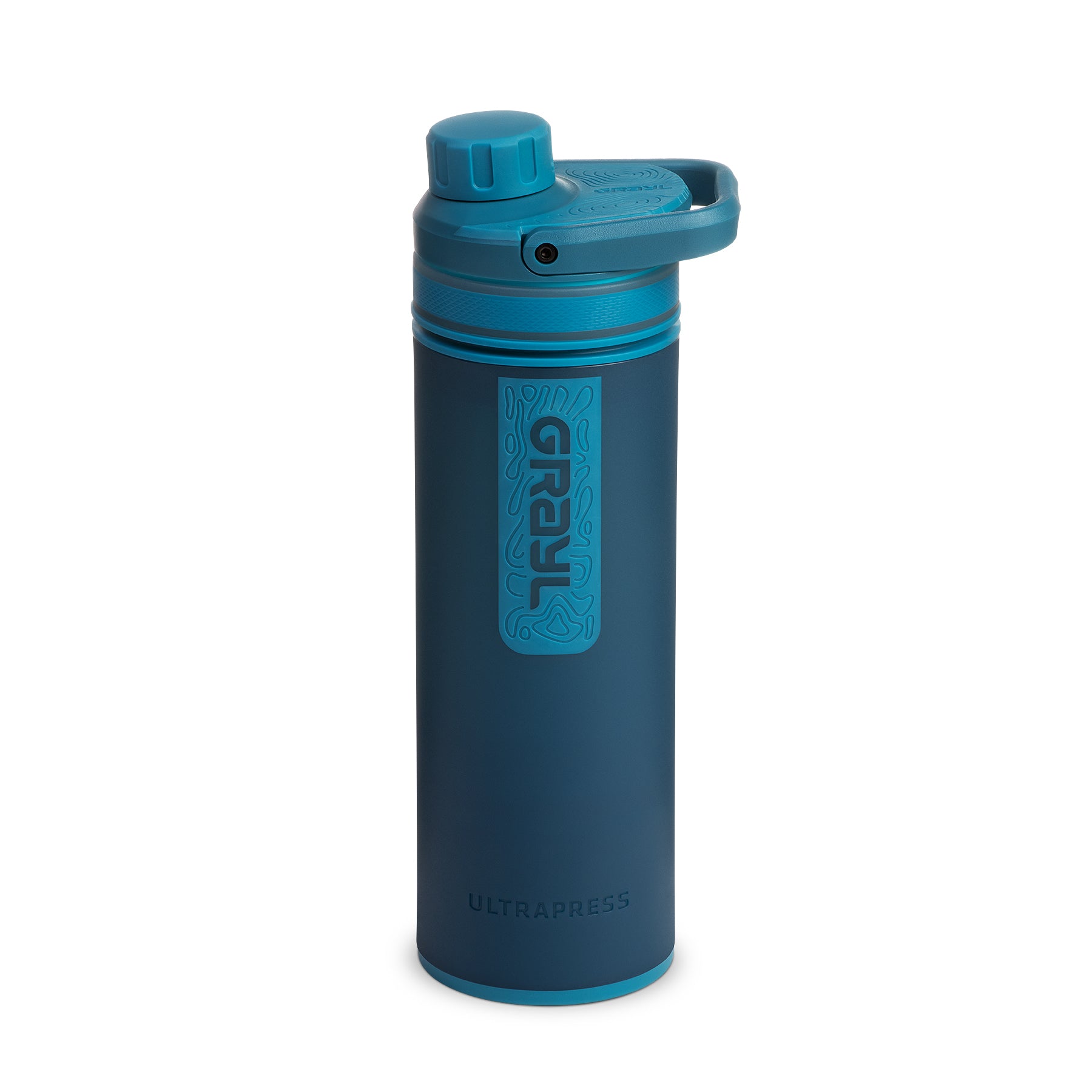 Best for TravelGrayl UltraPress Purifier Water Bottle |
4.7out of 5 | Tested to NSF/ANSI 42, 53Electroadsorptive + carbon |
Check price → |
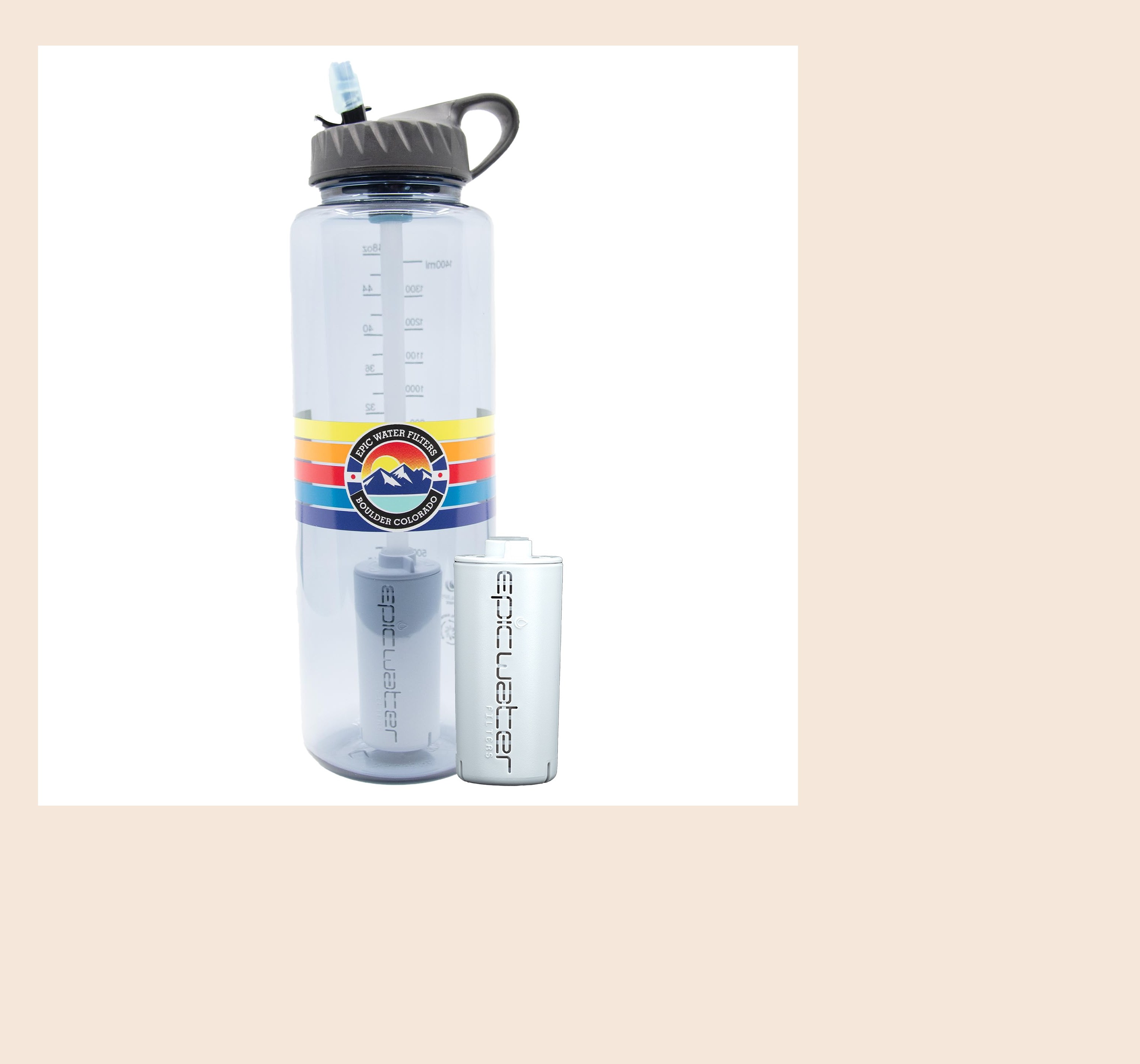 Most Tap ContaminantsEpic Nalgene OG Water Filtration System — 32 oz |
4.5out of 5 | Tested to NSF/ANSI 42, 53, 401, P473Carbon block + proprietary media |
Check price → |
| 4.6out of 5 | Tested to NSF/ANSI 42, 53, 401, 473Affinity 6-media filter |
Check price → | |
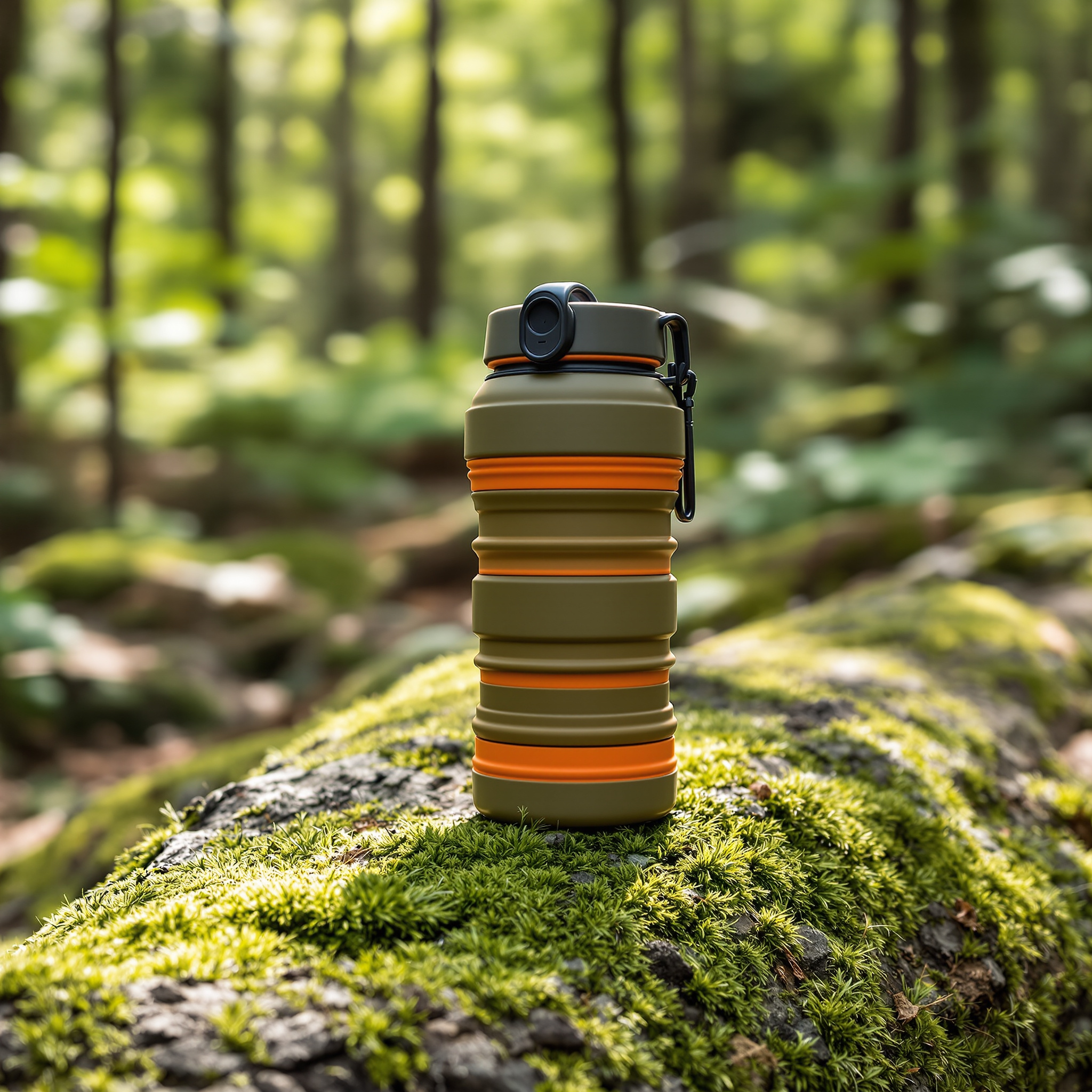 Best for HikingKatadyn BeFree AC 1.0L Water Filter Bottle |
4.7out of 5 | Meets EPA microbiological purifier standard for bacteria/protozoa0.1 micron hollow-fiber |
Check price → |
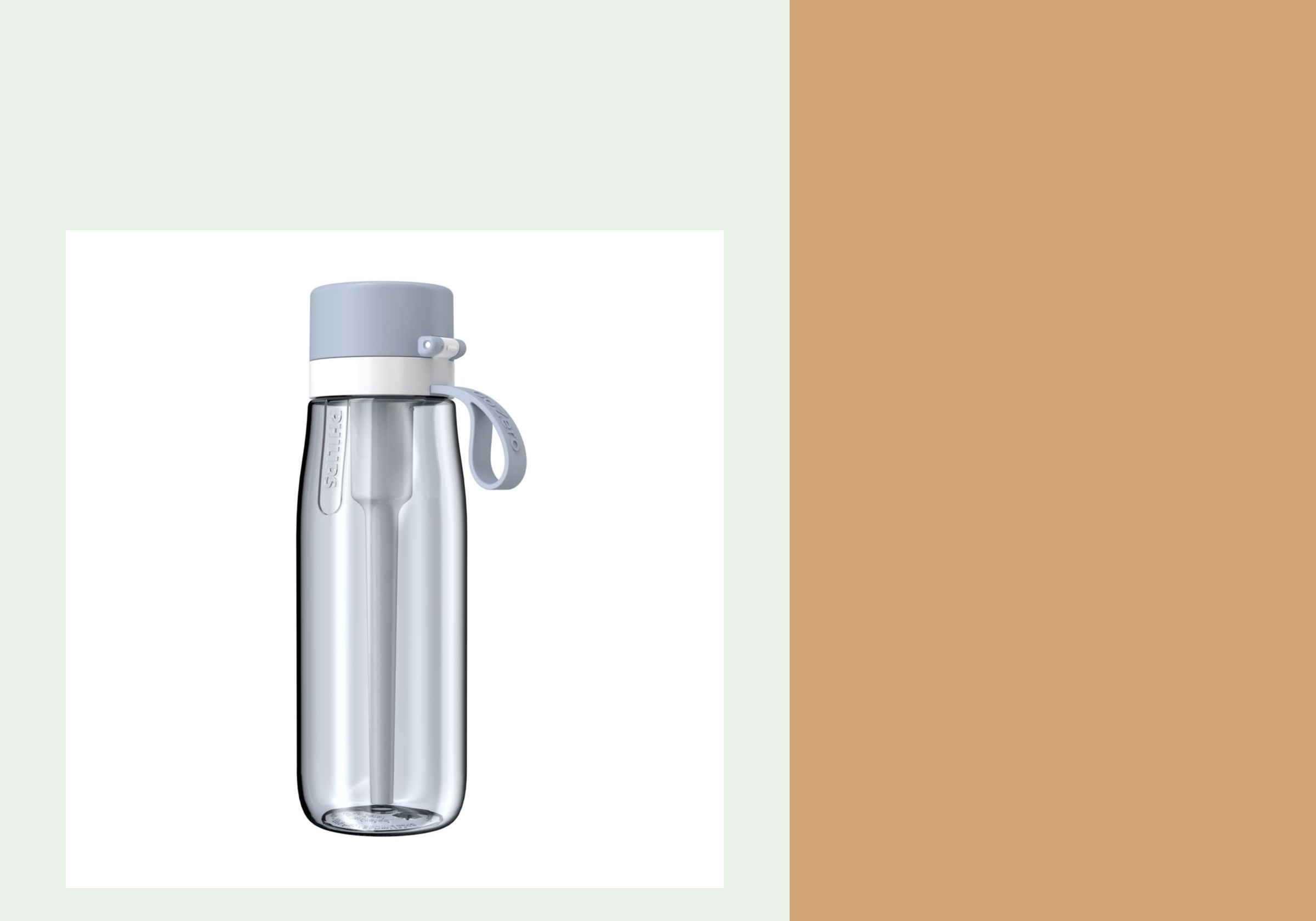 Best BudgetPhilips GoZero Everyday Water Filter Bottle |
4.4out of 5 | Activated carbon fibreNo microplastic claim |
Check price → |
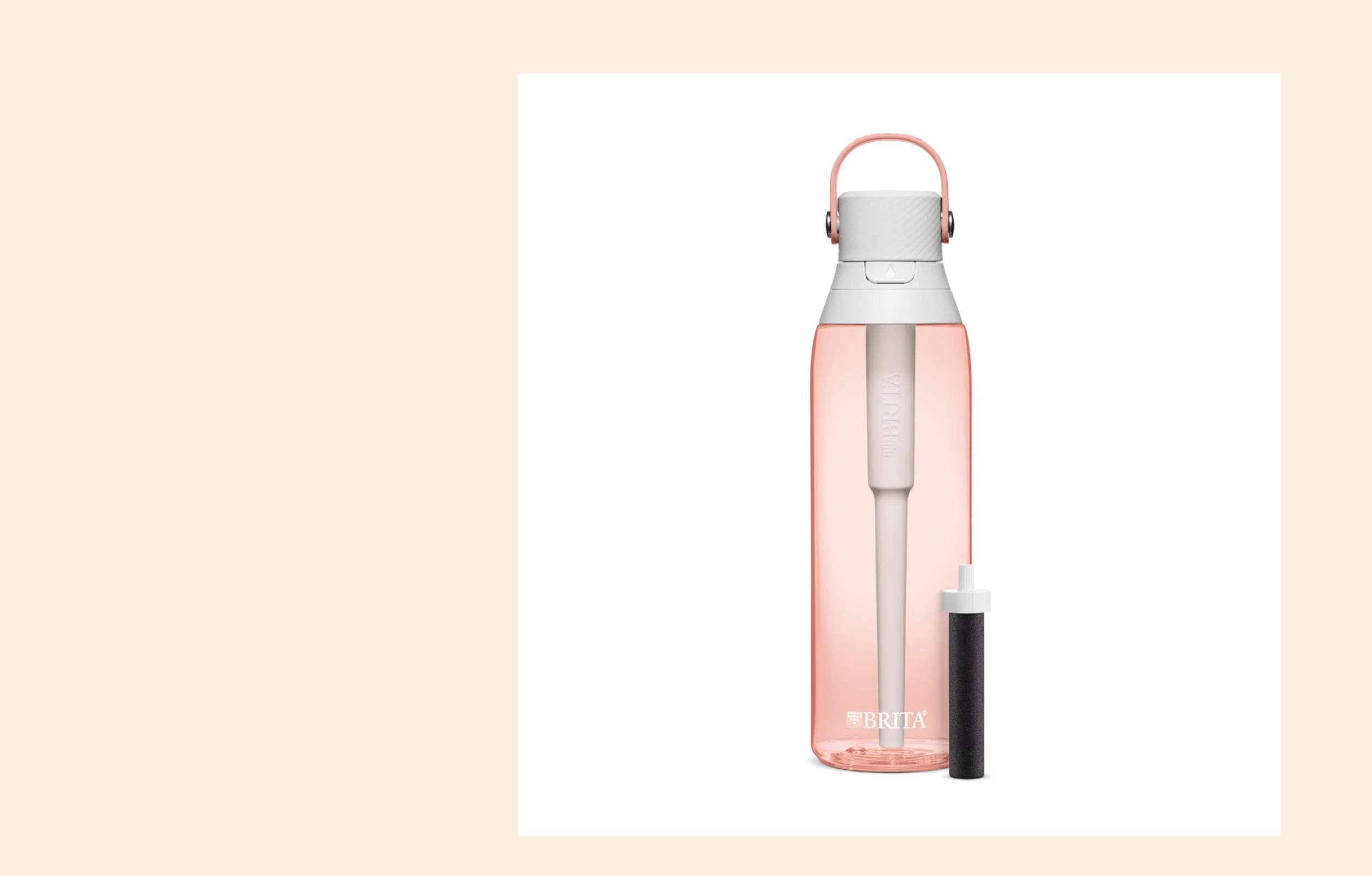 Chlorine OnlyBrita Premium Filtering Water Bottle — 26 oz |
4.6out of 5 | Granular activated carbonWQA-certified for chlorine taste & odor |
Check price → |
What Is the Best Filtered Water Bottle?
The best filtered water bottle for most people is the LifeStraw Go Series 2.0 in stainless steel. Its two-stage filter combines a 0.2-micron hollow-fiber membrane with an activated-carbon capsule, and LifeStraw's published lab data shows it removes 99.999999% of bacteria, 99.999% of parasites, and 99.999% of microplastics, plus chlorine and organic chemicals through the carbon stage. It meets NSF/ANSI Standards 42 (chlorine, taste, odor) and P231 (bacteria, viruses, protozoa protocol for microbiological purifiers). The membrane lasts about 1,000 gallons (roughly 5 years), the carbon capsule about 26 gallons (two months), and the stainless body removes the "am I drinking from Tritan" worry that comes with the plastic version.
Where it stops being the right pick: on international travel where viruses (hepatitis A, norovirus, rotavirus) are a real risk, a 0.2-micron filter is too coarse — you want a purifier like the Grayl UltraPress, which uses electroadsorptive media plus carbon to catch viruses too. For city tap where you also want lead, PFAS and chromium-6 removed, a bottle-format carbon block like the Epic Nalgene OG or the Clearly Filtered stainless does more than a hollow-fiber straw — though for the most complete forever-chemical removal, a stationary system from our best PFAS water filters guide still outperforms any bottle. And for ultralight hiking, the collapsible Katadyn BeFree weighs about 2.3 ounces and flows at up to 2 L per minute — roughly four times faster than sucking through a straw filter.
Filter vs. Purifier: The Difference That Decides Your Bottle
This is the single most important thing to understand before you buy, and it's the reason a "filter" and a "purifier" that look identical on the shelf can cost you an intestinal infection or a wasted $90. A filter physically strains water through a membrane rated at 0.1 or 0.2 microns, which is small enough to catch bacteria (like E. coli), protozoa (Giardia, Cryptosporidium) and larger sediment. That covers essentially every waterborne threat in the U.S. backcountry and in almost any developed-world tap. It does not catch viruses, which measure around 0.02 microns — five to ten times smaller than the filter's pore size.
A purifier catches viruses too, either with a much finer membrane, chemical treatment, or an electroadsorptive medium that pulls charged virus particles out of the water regardless of size. It's what you actually need in international travel where hepatitis A, norovirus and rotavirus circulate in the water supply, or on surface water sources near dense wildlife or human activity. In this roundup, only the Grayl UltraPress is a true purifier — every other pick is a filter. If you're only ever drinking city tap or filling from a treated municipal source, a filter is enough and the extra $30 for a purifier is wasted. If you're flying to Guatemala or drinking from a river below a cattle pasture, spend the $90.
The rule that matters: filter for U.S. tap and U.S. backcountry, purifier for international travel or unknown surface water. Getting this wrong — taking a $30 LifeStraw to a country where the tap has hepatitis A — is a real intestinal risk, not a theoretical one.
Do Filtered Water Bottles Actually Remove Microplastics?
Some do and some do not, and the difference is entirely about the filter media inside. A hollow-fiber membrane rated at 0.1 or 0.2 microns physically excludes almost all microplastic particles in tap or surface water — the smallest microplastic fragments researchers routinely find in drinking water are around 1 micron, so a 0.2-micron mesh is at least five times finer than what it needs to catch. That's why the LifeStraw Go (99.999% microplastic removal, per LifeStraw's lab data), the Grayl UltraPress, the Katadyn BeFree, the Epic Nalgene OG, and the Clearly Filtered stainless all reduce microplastics.
A pure activated-carbon filter is different. Carbon works by adsorbing dissolved chemistry — chlorine, VOCs, some pesticides — against its enormous surface area. It's very good at that, and it improves taste immediately. What it is not good at is physically straining out a 5-micron plastic fragment, because the carbon granules leave gaps larger than the particle. That is why the Brita Premium Filtering Bottle is explicit on its own product page that it "is not a water purifier bottle" and only claims chlorine and particulate reduction, and why the Philips GoZero Everyday bottle only advertises chlorine and particulate removal. For a deeper look at what different water filters actually catch in the particle range, see our best water filter for microplastics 2026 guide and our does Brita remove microplastics? deep-dive.
Quick Comparison: All 7 Filtered Water Bottles
| Bottle | Filter type | Removes microplastics | Removes viruses | Best for | Rating |
|---|---|---|---|---|---|
| LifeStraw Go Series 2.0 | 0.2μm hollow-fiber + carbon | Yes (99.999%) | No | Best overall / daily driver | 4.7 |
| Grayl UltraPress | Electroadsorptive + carbon | Yes | Yes (99.99%) | International travel / surface water | 4.7 |
| Epic Nalgene OG | Carbon block (70+ contaminants) | Yes | No (EveryTap) / Yes (Everywhere) | Tap water contaminant removal | 4.5 |
| Clearly Filtered SS | 6-media Affinity block | Yes | No | Premium tap water (lead, PFAS) | 4.6 |
| Katadyn BeFree AC 1.0L | 0.1μm hollow-fiber + carbon | Yes | No | Ultralight hiking (2.3 oz) | 4.7 |
| Philips GoZero Everyday | Activated carbon fibre | No claim | No | Budget office/gym | 4.4 |
| Brita Premium 26oz | Granular activated carbon | No | No | Chlorine taste only | 4.6 |
When you buy through links on this page we may earn an Amazon commission at no extra cost to you. It never changes our rankings — every pick here is chosen on filter media, real removal claims, and independent certifications, not commission.
1. LifeStraw Go Series 2.0 Stainless — Best Overall
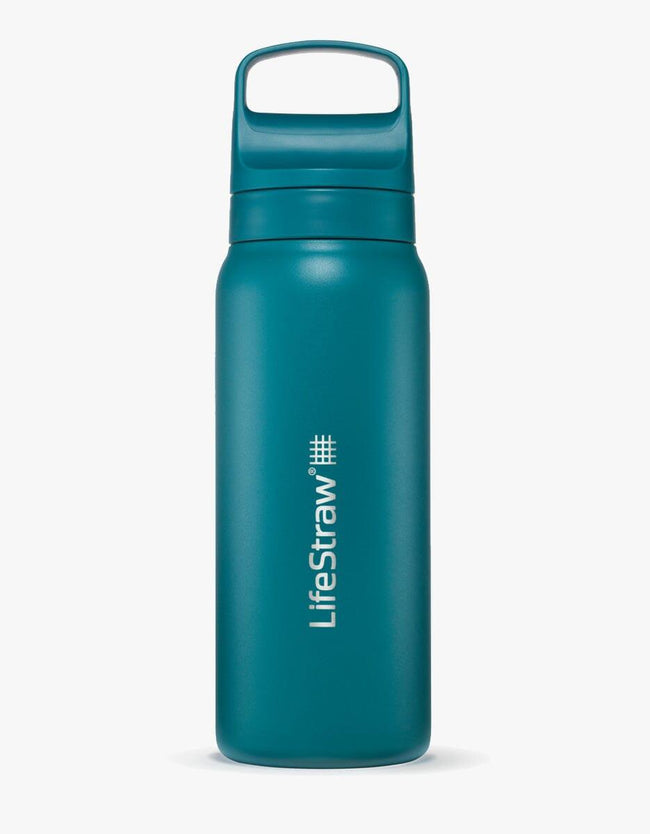 Best Overall
The Go Series 2.0 is LifeStraw's flagship consumer bottle and the most-reviewed filter bottle on Amazon. The filter cap holds two stages: a hollow-fiber membrane microfilter rated at 0.2 microns, which physically excludes bacteria, protozoa and particulates including microplastics, and a replaceable activated-carbon capsule that adsorbs chlorine, VOCs, and off-flavors. LifeStraw publishes lab data showing the combo removes 99.999999% of bacteria (including E. coli, Salmonella), 99.999% of parasites (Giardia, Cryptosporidium) and 99.999% of microplastics down to 1 micron, and meets US EPA drinking water standards for microbiological purifiers along with NSF/ANSI 42 (aesthetic) and NSF P231 (the bacteria/protozoa protocol for microbiological purifiers).
The 700 mL (24 oz) stainless version is what we recommend over the 22 oz Tritan version for two reasons: no plastic in contact with your water, and the double-wall vacuum insulation keeps cold water cold for hours. Membrane life is 1,000 gallons (about 5 years for one person); the carbon capsule needs replacement every 26 gallons (roughly 2 months). LifeStraw runs a 1-for-1 program that funds a year of safe water for a child with every purchase, and offers a 2-year warranty.
The honest trade-offs: like every straw-based filter, flow is slow — reviewers consistently describe drinking as "sucking through a milkshake straw," at roughly 0.5 L per minute. It does not remove lead, arsenic or PFAS — the membrane is too coarse and the carbon capsule is small. And the stainless body is heavier than the Tritan version (roughly 12 oz empty vs 5.5 oz), which matters if you're carrying it on a long hike.
Long-term owners repeatedly say the chlorine taste is gone from the first sip and that they've stopped buying bottled water entirely for gym, office, and car use. Hikers describe using one bottle from tap-filling at home to filling from lakes on trail with no cross-contamination concerns. Recurring gripes: the initial suction effort is real (some describe it as "a workout for your face"); the carbon capsule needs monthly replacement to keep chlorine taste at bay and Amazon carts occasionally send the wrong replacement generation; and the mouthpiece cover can pop open in a backpack if not fully seated.
A daily driver that removes microplastics, bacteria, chlorine and parasites from tap or trail — in a plastic-free stainless body backed by NSF/ANSI certification.
Why it's safe: Meets NSF/ANSI 42 for aesthetic effects and NSF P231 for bacteria/protozoa; LifeStraw publishes third-party lab data supporting 99.999% microplastic removal at 0.2 microns.
Check Today’s Price on Amazon →Amazon prices change daily — tap to see today's price and any active discount.
- Free delivery & returns for Prime members
- Sold & shipped by Amazon
- Thousands of verified reviews
2. Grayl UltraPress Purifier — Best for Travel
Best for Travel
The Grayl UltraPress is a purifier, not a filter, and it works differently from everything else in this roundup. The bottle is a two-piece press system: fill the outer cup with dirty or suspect water, insert the inner shell with its purifier cartridge, and press down like a French press. In about 10 seconds you have 16.9 oz of purified water. The cartridge uses electroadsorption — positively charged media that grabs virus particles too small for mechanical filters to catch — plus activated carbon for taste, chemistry and microplastics.
Grayl states the cartridge removes 99.99% of viruses (Rotavirus, Hepatitis A, Norovirus), 99.9999% of bacteria (E. coli, Cholera, Salmonella), 99.9% of protozoan cysts (Giardia, Cryptosporidium), and reduces microplastics, PFAS, heavy metals, VOCs, pesticides and chlorine. Cartridge life is 300 presses (about 150 L / 40 gallons), and the unused shelf life is 10 years, which makes it a legitimate emergency-prep item as well as a travel bottle. Materials are BPA-free polypropylene #5, food-grade silicone, TPE and ABS.
The honest trade-offs: it's only 16.9 oz per press, so on a hot day you'll press often. Reviewers consistently note that the press requires real, even downward pressure ("firm and steady, not a shove") and that cold water slows the flow significantly. Cartridges are $30 and last about 40 gallons, so cost per gallon is roughly $0.75 — the highest in this list. And it is a purifier for microbiological threats; if your tap has heavy lead, a stationary under-sink lead filter will still outperform it for that specific job.
International travelers describe it as the item they no longer travel without — Central America, Southeast Asia and East Africa show up repeatedly, along with "avoided the traveler's illness my group all got." Search-and-rescue and preparedness reviewers praise the 10-year shelf life on unused cartridges. Recurring gripes: the press really is hard on cold water and in a moving vehicle; a few owners have cracked the outer shell from an over-aggressive push; and the small 16.9 oz capacity is not enough for a long day without refills.
Ten seconds to virus-free water anywhere in the world — the only bottle in this list that meets the standard for international-travel purification.
Why it's safe: Grayl states the cartridge is tested to NSF/ANSI 42 and 53 protocols; electroadsorptive purification is the same technology used in emergency-response water systems.
Check Today’s Price on Amazon →Amazon prices change daily — tap to see today's price and any active discount.
- Free delivery & returns for Prime members
- Sold & shipped by Amazon
- Thousands of verified reviews
3. Epic Nalgene OG — Best for Tap Contaminants
Most Tap Contaminants
Epic Water Filters is a US brand that made its name on stationary pitchers, and the Nalgene OG bottle is the portable version of the same carbon-block technology. Fill the wide-mouth 32 oz Nalgene body, drink through the straw, and the water passes through a multi-media block of activated coconut carbon and Epic's proprietary media on the way up. Epic publishes third-party test data showing up to 99.99% reduction of a 70+ contaminant list including PFOA/PFOS/GenX, lead, chromium-6, mercury, fluoride, chlorine, pharmaceutical residues, and microplastics — tested to NSF/ANSI Standards 42 (aesthetic), 53 (health), 401 (emerging contaminants), and P473 (PFAS). For a home setup built specifically around fluoride removal, a dedicated filter outperforms any pour-through bottle.
The bottle takes two interchangeable cartridges. EveryTap is the tap-water cartridge, rated for about 75 gallons or 3-4 months and priced at roughly $20. Everywhere is the outdoor cartridge (adds bacteria, virus and cyst reduction for streams and lakes), rated for about 100 gallons at roughly $30. Both cartridges are manufactured in the US.
The honest trade-offs: like the LifeStraw, drinking through the straw is work — reviewers repeatedly note that "slow gulps mid-workout" is the reality, not fast swigs. The Nalgene body is Tritan plastic (BPA-free, but still plastic against your water, so if that's your reason for a filtered bottle the LifeStraw stainless is a better fit). It is not insulated, so ice water won't stay ice water. And the EveryTap cartridge is not certified for viruses — you must swap in the Everywhere cartridge before using it on wild water.
Owners in cities with published PFAS or lead concerns (Michigan, North Carolina, parts of California) repeatedly buy this specifically for the PFAS claim. Many describe pairing it with an at-home Epic pitcher for consistency and appreciate that both cartridges are made in the USA. Recurring gripes: the straw is a real workout, especially as the cartridge loads up in the last month of its life; the Tritan body dents if dropped on concrete; and Epic's cartridge subscription is easy to forget to cancel.
A 32 oz portable filter that removes the tap-water contaminants a pathogen-only filter can't touch — PFAS, lead, chromium-6 — without a plumbing install.
Why it's safe: Epic publishes third-party lab data tested to NSF/ANSI 42, 53, 401 and P473 protocols; the carbon-block media is manufactured in the USA and each cartridge is sold with its published contaminant reduction list.
Check Today’s Price on Amazon →Amazon prices change daily — tap to see today's price and any active discount.
- Free delivery & returns for Prime members
- Sold & shipped by Amazon
- Verified reviews from PFAS-affected US regions
4. Clearly Filtered Insulated Stainless — Best Premium
 Best Premium
Clearly Filtered is a US brand whose stationary pitcher is one of the most independently-tested consumer filters on the market. The insulated stainless bottle brings the same six-media Affinity Filtration block into a 20 oz double-wall vacuum-insulated body. Clearly Filtered publishes lab test data showing the bottle cartridge reduces lead by more than 99.34% (at pH 6.5) and fluoride by 99.52%, and states that its filter media line (bottle, pitcher, under-sink) reduces microplastics by more than 99.9%, PFOA by more than 99.0%, PFOS by more than 99.5%, and GenX by more than 99.4%. The company describes its bottle as "independently tested to comply with NSF/ANSI Standards 42, 53, 401, and 473."
Cartridge life is short — about 25 gallons or 160 fills (roughly 4 months of daily use), and replacement cartridges are around $30 each, which puts long-term cost per gallon at roughly $1.20 — the highest in this roundup. The body is 18/8 stainless steel, BPA/BPS/phthalate-free, with a silicone straw, and everything is built in the USA. Clearly Filtered publishes a lifetime warranty on the bottle body.
The honest trade-offs: tested to comply with is not the same as NSF-certified by, and the specific bottle SKU's microplastic and PFAS percentages come from the company-wide filter-media test line rather than the bottle QFT report specifically — if you want a fully third-party NSF-certified filter, the Aquasana AQ-5300+ under-sink in our under-sink guide is a better fit. Flow through the straw is slow; the premium price is real; and it is a filter, not a purifier, so no viruses.
Owners with hard water or high-fluoride wells consistently describe an immediate taste change — "no more chalky aftertaste" — and the double-wall insulation keeping ice water cold for 24 hours. Long-term owners praise the lifetime warranty and USA build quality. Recurring gripes: the $30-per-cartridge replacement cost adds up, the 25-gallon life is short, the flow slows noticeably in the last few weeks of a cartridge's life, and the lid design has been redesigned once due to earlier leak complaints (older reviews reflect the older lid).
The widest published contaminant-removal list of any filter bottle — lead, fluoride, PFAS, microplastics — in an insulated stainless body built in the USA.
Why it's safe: Clearly Filtered publishes company-wide test-to-standard data across NSF/ANSI 42, 53, 401 and 473 protocols; bottle-specific test data is published for lead and fluoride reduction.
Check Today’s Price on Amazon →Amazon prices change daily — tap to see today's price and any active discount.
- Free delivery & returns for Prime members
- Lifetime warranty on the bottle body
- Made in USA
5. Katadyn BeFree AC 1.0L — Best for Hiking
Best for Hiking
The BeFree started life as a hollow-fiber filter for the ultralight backpacking crowd and has become the default filter for through-hikers and fastpackers. Katadyn's EZ-Clean membrane is rated at 0.1 microns — twice as fine as the LifeStraw — and physically excludes bacteria (99.9999% E. coli, Salmonella), protozoa (Giardia, Cryptosporidium), and sediment. The AC (activated-carbon) version, our specific recommendation here, adds a carbon module that reduces microplastics, chlorine, taste and odor. Katadyn quotes flow at up to 2 L per minute, which is roughly 4x faster than a LifeStraw straw filter, and filter life at 1,000 L (about 260 gallons).
The bottle is a soft, food-grade TPU flask that collapses flat when empty, weighs 2.3 oz for the filter itself and about 73 g full — the lightest option in this list by a wide margin. The 43 mm wide-mouth opening fits pumps, gravity kits and most trail water sources without an adapter. There is no backwashing hardware: cleaning is a "swish" in clean water.
The honest trade-offs: the 0.1-micron filter can freeze in cold temperatures, and a frozen filter is essentially broken (the ice ruptures the fibers) — Katadyn is explicit that it must not be left out overnight in freezing conditions. It is not a purifier; do not use it on water where hepatitis A, rotavirus or norovirus are risks. And the soft flask is less durable for everyday office use than a hard-shell bottle — it's a purpose-built trail tool.
Long-distance hikers describe it as the fastest, lightest bottle filter they've used — PCT, AT and CDT reviews all mention it by name. Owners praise the wide mouth for filling from shallow creeks and the way it packs flat in a hip pocket. Recurring gripes: the filter is fragile in freezing weather (multiple owners have replaced one that froze in a car overnight); the flask itself is not durable enough to sit on hard ground for weeks; and the AC carbon module has a shorter useful life than the base membrane, so plan to replace it more often than the flask.
The lightest, fastest-flowing filter bottle in this list — a 2.3-oz collapsible 1-liter flask that fits any trail source through a 0.1-micron membrane.
Why it's safe: Meets EPA microbiological purifier standard for bacteria and protozoa; 0.1-micron pore size physically excludes microplastics down to sub-micron sizes; independently lab-tested by Katadyn.
Check Today’s Price on Amazon →Amazon prices change daily — tap to see today's price and any active discount.
- Free delivery & returns for Prime members
- The default filter of long-distance hikers
- 1,000 L filter life
6. Philips GoZero Everyday — Best Budget
Best Budget
The Philips GoZero Everyday sits at the bottom end of the "actually a name brand" filter-bottle market. Its cartridge is Philips' activated-carbon fibre — a carbon medium designed for taste and chlorine reduction, tested by SGS labs (not NSF), with a rated life of 40 gallons or about 2 months. The Everyday product page lists only two claims: "reduces chlorine and particulates" and improves taste. Philips' broader GoZero product line mentions lead and pesticide reduction on other cartridges, but those claims are not repeated on the Everyday's product page.
Body options include Tritan plastic (~$25) and 18/8 stainless steel (~$35-40). The straw-style drink mechanism uses a silicone bite valve. At the plastic-body price point, this is essentially a Brita competitor; at the stainless price point it starts overlapping the LifeStraw Go, which is better-certified for pathogens and microplastics.
The honest trade-offs: this bottle does not claim to remove microplastics. If you're reading this article because of the microplastics angle, this pick is not for you — buy the LifeStraw Go stainless instead. Reviews also mention silicone bite-valve leaks and small filter capacity, and part of the Philips GoZero line has been quietly discontinued at some retailers, so check current availability before you order.
Owners buying it purely to make office and gym tap water taste better describe it as an obvious upgrade — the chlorine taste is gone from the first fill. Recurring gripes: the silicone bite valve is finicky and can leak if not fully seated; the 40-gallon cartridge life is short compared to LifeStraw's 1,000-gallon membrane; and multiple owners have noticed the cartridge itself is smaller than the marketing suggests, so the actual month-two performance drop is real.
A cheap, honest carbon-only filter bottle for the person whose water is fine except for the chlorine taste.
Why it's safe: BPA-free Tritan or 18/8 stainless steel body; SGS-tested activated carbon fibre cartridge; Philips is transparent about the (limited) claims it makes for this cartridge.
Check Today’s Price on Amazon →Amazon prices change daily — tap to see today's price and any active discount.
- Free delivery & returns for Prime members
- Sold & shipped by Amazon
- Honest scope: chlorine + particulates only
7. Brita Premium Filtering Water Bottle 26 oz — What to Skip if You Want Microplastic Removal
Chlorine Only
The Brita Premium Filtering Water Bottle uses granular activated carbon, WQA-certified to reduce chlorine (taste and odor) and particulates. That is the entire claim Brita makes for it. Cartridge life is 40 gallons, or roughly 2 months of daily use; replacement filters run about $6-7 each. The 26 oz body is BPA-free hard-sided Tritan plastic (which is where the pro-microplastics argument for the LifeStraw stainless becomes real again) with an included carry loop, and it's top-rack dishwasher safe.
The reason we've kept it in the list at position 7 rather than dropping it: Brita's own product page explicitly says "this is not a water purifier bottle," and Brita's own pitcher-filter FAQ confirms that Brita carbon filters "are not specifically designed to remove microplastics or ... lead." So if a friend or a search result told you to buy a Brita bottle for the microplastics problem, this section is here to tell you honestly that the brand itself does not make that claim. For a real microplastic-focused filter bottle, go back to the LifeStraw Go at position 1; for a stationary microplastic filter, see our best water filter pitcher for microplastics.
Owners buying it for its actual scope — making tap water taste better for gym, office and school — love it and repurchase. Common complaints line up with the scope mismatch: buyers who thought they were also getting lead or microplastic filtration, and then read the fine print, feel misled — the fault is with the retailer marketing, not Brita's own honest claims. Practical gripes: the cartridge really is short-lived (30 days is more realistic than 60 for heavy users), and the mouthpiece has been redesigned to fix earlier leaks.
The cheapest, most popular way to make chlorinated municipal tap water taste better — nothing more, nothing less.
Why it's safe: BPA-free Tritan body; WQA-certified for the specific, narrow claims Brita actually makes (chlorine taste/odor and particulate reduction); the brand is honest that it is not a purifier.
Check Today’s Price on Amazon →Amazon prices change daily — tap to see today's price and any active discount.
- Free delivery & returns for Prime members
- Sold & shipped by Amazon
- Honest scope: taste and odor only
Buyer's Guide: Matching the Bottle to Your Water
Every bottle in this list is well-made. The reason we can't pick a single winner for everyone is that "filtered water bottle" is not one product — it's four different products (pathogen filter, purifier, chemistry filter, taste filter) in the same shape. If your tap is already clean and you simply want the least plastic touching your water, you may not need a filter at all — a plain stainless bottle does that job, and the safety question then moves to the lid, which is what our guide to the safest water bottle brands breaks down. Use this quick decision tree to pick your pick:
- You drink tap and want microplastics + chlorine taste gone: LifeStraw Go Series 2.0 Stainless. Best value, best certifications, plastic-free body.
- You're going to Mexico, India, Peru, or anywhere with virus-risk water: Grayl UltraPress. It's the only true purifier in this list; a $30 straw filter is not enough for that job.
- Your city has published PFAS or lead concerns: Epic Nalgene OG or Clearly Filtered Insulated Stainless. Both remove chemistry a hollow-fiber straw doesn't touch. Clearly Filtered gets you insulated stainless; Epic gets you a lower per-gallon cost.
- You're through-hiking: Katadyn BeFree AC 1.0L. Lightest, fastest, finest membrane; do not leave it in a freezing car.
- You just want office tap to taste better for the least money: Philips GoZero Everyday or the Brita Premium. Honest about their scope, cheap to run.
- You want the most contaminants removed, period: The winner is a stationary filter, not a bottle — see the best reverse osmosis system or the best under-sink filter guides. A filtered bottle is a portable complement to those, not a replacement.
Two hidden costs to weigh before you buy: cartridge replacement cadence (a $25 bottle with a $10 cartridge every 2 months is not cheap) and flow rate (a bottle you have to fight to drink from is a bottle that sits on your desk). Straw-based filters (LifeStraw, Epic, Philips, Brita) all require real effort; press bottles (Grayl) require a firm push; soft flasks (Katadyn) flow the fastest but can freeze; and insulated stainless (Clearly Filtered, LifeStraw stainless) weigh the most empty.
One rule that applies to all seven: the filter cartridge is what does the work, not the bottle body. Miss a cartridge change on a carbon filter and you're just drinking through a slightly-obstructed straw — the water isn't dangerous, it's just not filtered anymore. Miss one on a hollow-fiber filter used on wild water and the risk is real. Set a phone reminder for cartridge changes; that's the single most impactful thing you can do to make a filtered bottle actually work.
FAQ
What is the best filtered water bottle?
For most people, the LifeStraw Go Series 2.0 in stainless steel. Its 0.2-micron hollow-fiber membrane plus activated-carbon capsule removes 99.999% of bacteria, 99.999% of parasites, and 99.999% of microplastics, meets NSF/ANSI 42 and P231, and comes in a plastic-free stainless body. For international travel, pick the Grayl UltraPress (it also removes viruses). For tap contaminants like PFAS and lead, pick the Epic Nalgene OG or Clearly Filtered.
Do filtered water bottles actually remove microplastics?
Yes, but only if the filter has a sub-0.2-micron physical barrier or an equivalent electroadsorptive medium. The LifeStraw Go, Grayl UltraPress, Katadyn BeFree, Epic Nalgene OG, and Clearly Filtered stainless all reduce microplastics. Carbon-only bottles (Brita Premium, Philips GoZero Everyday) do not claim microplastic removal.
What's the difference between a filter and a purifier bottle?
A filter physically strains water through a 0.1- to 0.2-micron membrane — enough for bacteria and protozoa, not for viruses. A purifier goes further and removes viruses too. In this roundup, only the Grayl UltraPress is a true purifier. Take a filter for U.S. tap or backcountry; take a purifier for international travel or unknown surface water.
How long do filtered water bottle filters last?
Hollow-fiber membranes last a long time (1,000 gallons on LifeStraw, 1,000 L on Katadyn). Carbon capsules and blocks are shorter-lived (25-75 gallons, or 2-4 months of daily use). The Grayl UltraPress cartridge lasts about 300 presses or 40 gallons. Missing a carbon change means water tastes like tap again; missing a hollow-fiber change on wild water is the actually-risky one.
Are filtered water bottles worth it?
Yes, if you match the bottle to your water. On city tap, a $50 LifeStraw Go removes chlorine, microplastics and pathogens for about 5 cents per gallon over the membrane's 5-year life — cheaper than bottled water within a few weeks. For backcountry, a Katadyn or Grayl is a fraction of a pump's weight. For serious contaminant reduction (lead, PFAS, chromium-6), a stationary under-sink filter or RO system still outperforms any bottle.
Does the Brita filter bottle remove lead or microplastics?
No. Brita is explicit on its own product page that the Premium Filtering Bottle is "not a water purifier bottle" and its carbon filter is certified only for chlorine taste and odor and particulate reduction — not lead, not microplastics, not PFAS. If those are why you want a filtered bottle, pick the LifeStraw Go or the Epic Nalgene OG instead.
Can I put a filtered water bottle in the dishwasher?
The bottle body, usually yes (Brita and Philips are top-rack dishwasher safe). The filter cartridge, never — heat and detergent damage the media and can create dishwasher-driven bacterial contamination in the filter matrix. Rinse the cartridge in cool clean water only, and follow the manufacturer's specific cleaning instructions.