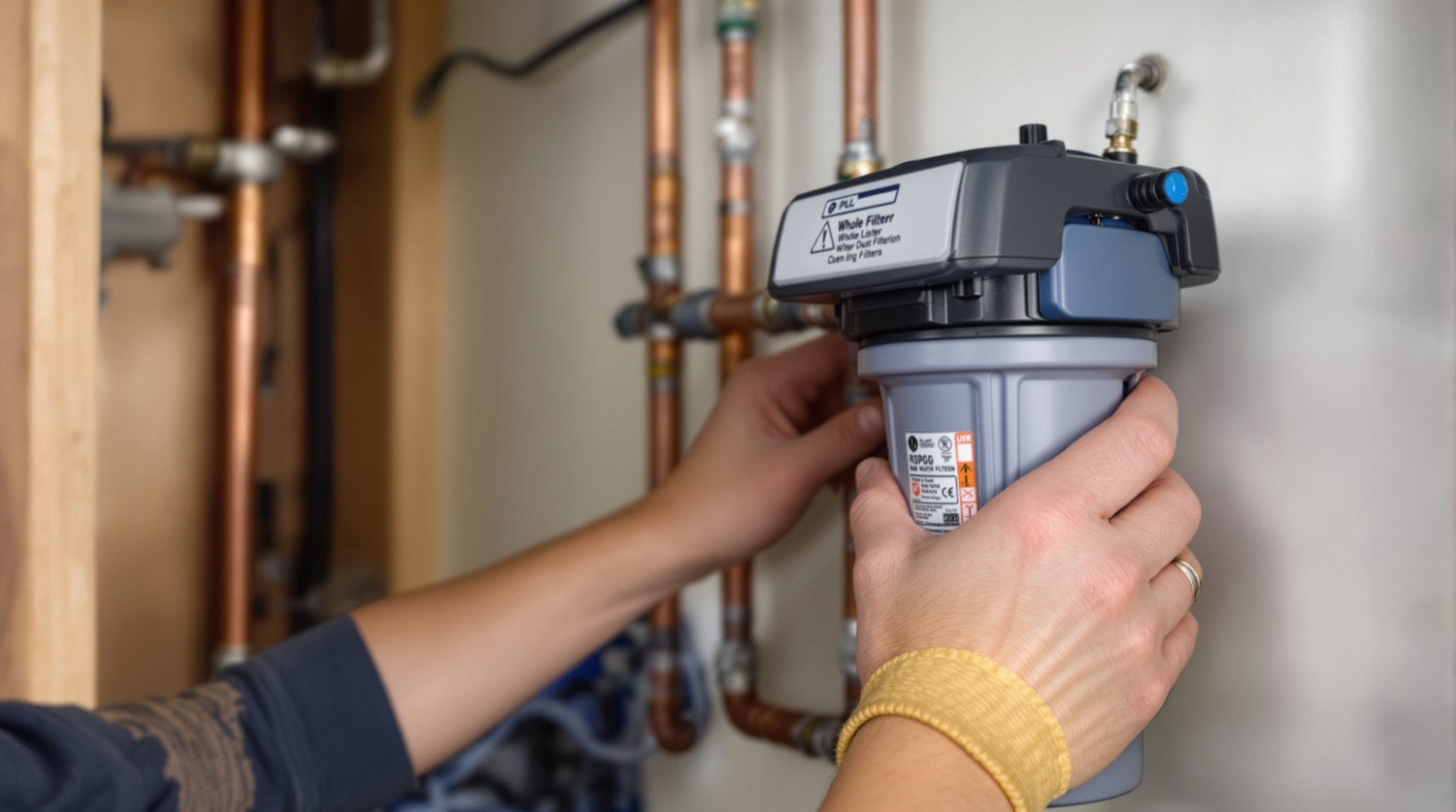
Once people start thinking seriously about water quality, the same question comes up: do I put a filter on the shower, or do I filter the whole house? Both approaches exist for real reasons. But they protect you in different ways, at very different costs, and neither one does everything.
A shower filter is cheap, installs in five minutes, and immediately addresses chlorine exposure through your skin and lungs during the minutes you spend in hot water each day. A whole-house filter protects every tap — drinking water, bath water, the kitchen sink, even laundry — and with the right stages it removes far more contaminants per liter, including microplastics at sub-micron sizes.
The choice depends on what you are most concerned about and what your budget allows. This guide breaks it down without the marketing language.
Bottom line: If your main concern is skin dryness, hair damage, or chlorine inhalation in the shower — get a shower filter. It is the cheapest direct fix for that specific problem. If you want to reduce microplastic exposure across all water uses, including drinking and cooking, a whole-house system with a sub-micron stage is the more complete answer.
What Each Type Actually Removes — and What It Misses
The most important thing to understand about both filter types is that their filtration quality varies enormously based on the specific technology inside. “Shower filter” and “whole-house filter” are product categories, not specs. A high-end whole-house system with a 0.5-micron sub-micron stage removes dramatically more than a basic sediment-plus-carbon unit — and the same is true for shower filters, where a KDF-55 plus calcium sulfite combination outperforms a simple carbon-only design.
Here is what the best version of each type can and cannot do:
Head-to-Head: Shower Filter vs. Whole-House Filter
What each filter type removes, covers, and costs — at a glance.
| Feature | Shower Filter | Whole-House Filter |
|---|---|---|
| Chlorine removal | 90–95% (KDF-55 + calcium sulfite) | 85–97% (carbon block stage) |
| Chloramine removal | Good (KDF-55 + carbon combo) | Excellent (catalytic carbon) |
| Microplastics (>50 µm) | Partial (catches larger particles) | High (with sediment pre-filter) |
| Microplastics (<5 µm) | Not removed | Yes, with sub-micron 1-micron stage |
| Heavy metals (lead, copper) | ~ Some (KDF-55 captures some) | Yes (with KDF or catalytic carbon) |
| VOCs & DBPs | ~ Partial (carbon stage) | Excellent (high-capacity carbon) |
| Coverage | Shower only | Every faucet, shower, bath, laundry |
| Upfront cost | $30–$165 | $400–$1,500+ |
| Annual filter cost | $40–$100 | $80–$250 |
| DIY install | Yes — 5 minutes, no tools | Plumber recommended |
| Third-party certification | Rare | Common (NSF/ANSI 42, 53, 401) |
How Each Filter Type Works
Understanding the actual filtration mechanics helps explain why the removal numbers differ — and why some cheap systems dramatically underperform their marketing claims.
Shower Filters: Three Media Types
The best inline shower filters use a combination of three media, each targeting a different class of contaminant:
- KDF-55 (copper-zinc alloy): Works via an electrochemical redox reaction that converts free chlorine into non-reactive chloride. Effective at shower temperatures — unlike activated carbon, which loses efficiency above 75°F. Also captures some heavy metals. KDF media does not support bacterial growth, which matters in a warm, wet environment.
- Calcium sulfite: A highly effective dechlorinator in hot water. Some independent testing found calcium sulfite outperforms KDF-55 at typical shower temperatures (104–108°F). Most premium shower filters combine both for redundancy.
- Activated carbon block: Adsorbs VOCs and disinfection byproducts (trihalomethanes, haloacetic acids), and provides sediment filtration for particles above roughly 20–50 micrometers. Less effective at high temperatures than at room temperature.
What shower filters do not have is a fine sub-micron stage. Even the best shower filter cartridge is not designed to remove nanoplastics or microplastics in the 1–5 micrometer range. The hot-water environment and the need to maintain full water pressure also make fine filtration impractical at the shower head.
Whole-House Filters: Four Common Configurations
A multi-stage whole-house system installed on the main water line typically includes some combination of these stages:
- Sediment pre-filter (20–50 micron): The first stage — removes dirt, sand, rust, and large particles. Protects downstream media from clogging and extends the life of the carbon stages. Replace every 3–6 months.
- Carbon block stage (10–20 micron): High-capacity activated carbon removes chlorine, chloramine, VOCs, herbicides, pesticides, and disinfection byproducts. NSF/ANSI 42 and 53 certified systems are independently verified for these claims.
- Sub-micron stage (0.5–5 micron): The key differentiator for microplastic removal. A 1-micron filter catches microplastic particles down to that size. Since most microplastic particles in US tap water range from 5–1,000 micrometers, a quality 1-micron stage removes the large majority.
- Optional KDF or UV stage: Some systems add a KDF stage for heavy metals, or UV purification that deactivates bacteria and viruses — important for well water or any source with biological contamination risk.
The critical caveat: many budget whole-house systems sold for $150–$250 include only a sediment pre-filter and a basic carbon block, with no sub-micron stage. Those systems will not meaningfully remove microplastics. The systems that do — Aquasana Rhino, quality iSpring three-stage units — cost more and are worth it if whole-home microplastic reduction is the goal.
Which Setup Is Right for You?
Your budget and your primary concern determine the right answer. Here is a practical decision framework.
Choose a shower filter if:
- Budget is under $200
- You rent and cannot make plumbing changes
- Main concern is skin dryness or hair damage from chlorine
- You want DIY install in under 5 minutes
- You already filter drinking water separately
Choose a whole-house filter if:
- Budget allows $500+
- You own your home
- You want microplastic reduction in drinking and cooking water
- You have young children who bathe
- You have concerns about well water or aging pipes
One more option worth knowing: the two systems are not mutually exclusive. If you already have a whole-house filter but notice lingering chlorine odor in hot showers, adding a shower filter specifically handles residual chlorine at elevated temperatures — where the KDF-55 stage excels — at a cost of under $50.
The Filters Worth Buying
These are the specific products worth buying in each category, based on real filtration specs, verified buyer reviews, and honest trade-off assessment.
 Best Shower Pick
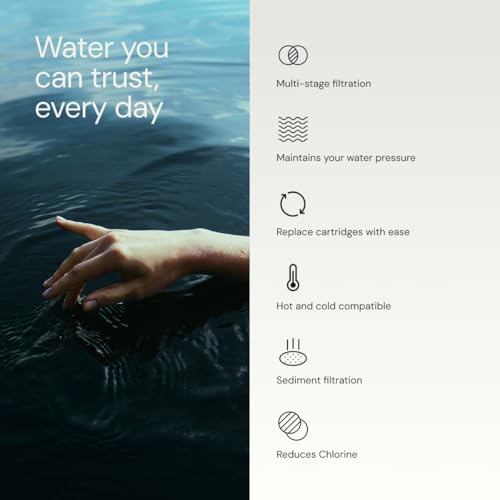
The AquaBliss SF100 runs shower water through three stages in sequence. The KDF-55 copper-zinc alloy handles chlorine via redox reaction in hot water. The calcium sulfite stage provides additional dechlorination specifically effective at shower temperatures. The activated carbon final stage adsorbs VOCs and disinfection byproducts, and captures larger sediment particles including microplastic fragments above about 20–30 micrometers.
What it does not remove: nanoplastics, dissolved heavy metals at trace concentrations, and the smallest microplastic particles. If you need protection at those sizes across your entire water supply, a whole-house system is the right tool. But for chlorine-driven skin and hair problems — the most common reason people notice a difference after installing a shower filter — this is the most cost-effective fix available.
Pros
- Best price-to-performance ratio
- Tool-free install in under 5 minutes
- Replacement cartridges are inexpensive
- Tens of thousands of verified reviews
Cons
- Plastic housing (not all-metal)
- No third-party certification
- Does not remove nanoplastics or fine microplastics
Remove 90%+ of chlorine from your shower in under 5 minutes — one of the highest-ROI home health changes you can make for skin and hair.
Why it works: A KDF-55 + calcium sulfite + carbon stack removes chlorine, chloramine, and some heavy metals before the water touches skin. Captures microplastic particles above approximately 20 micrometers.
Check Today's Price on Amazon →Amazon prices change daily — tap to see today's price and any current discount.
- Free delivery for Prime members
- Sold & shipped by Amazon
- Tens of thousands of verified reviews
 Best Whole-House Pick
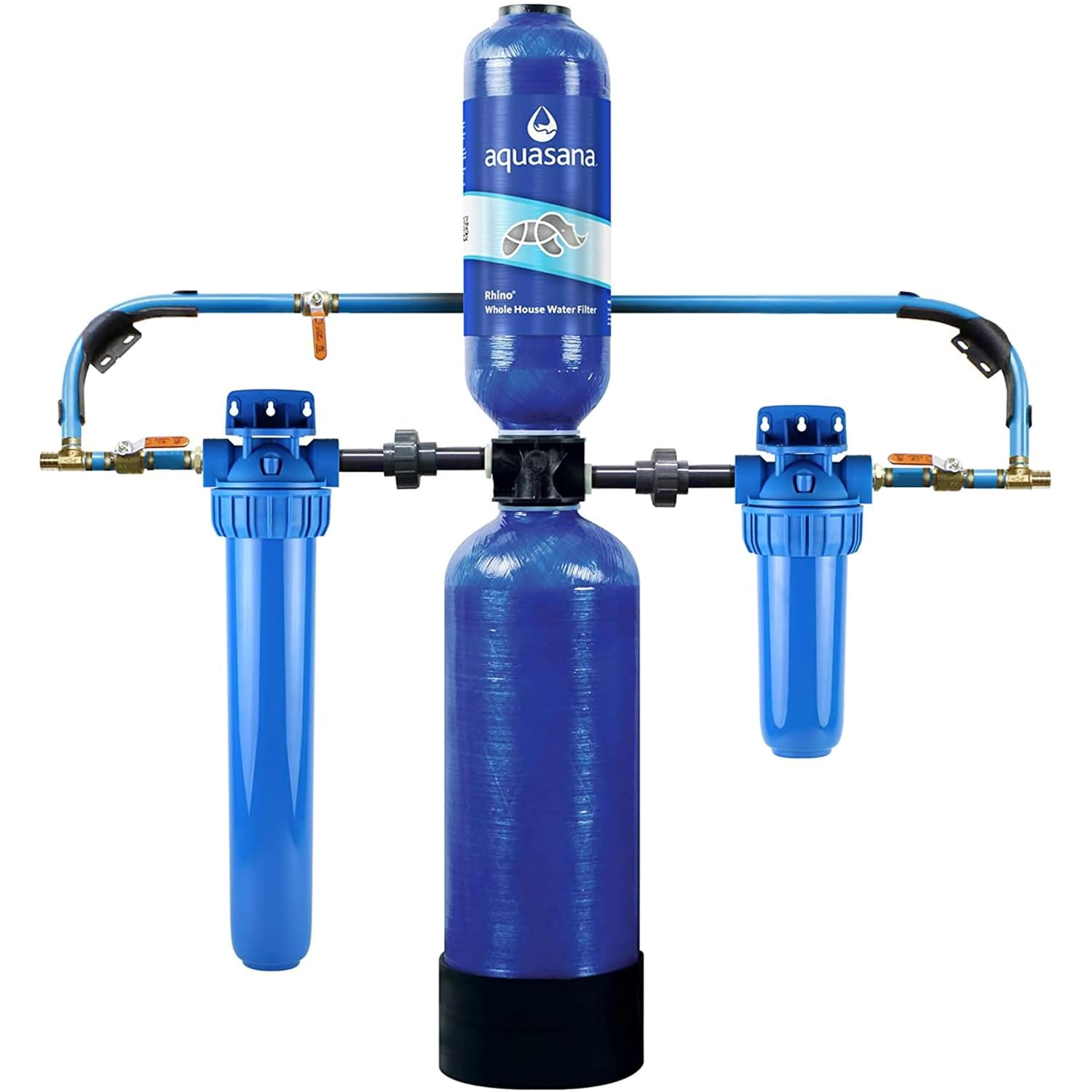
The Aquasana Rhino EQ-1000 installs on the main water line and treats every drop of water in the house. The dual-tank design runs water through a copper-zinc and mineral stone pre-filter (addressing chlorine, chloramine, and heavy metals) followed by an activated carbon block that achieves 97% chlorine reduction across the full household flow rate of up to 7 gallons per minute.
For microplastics specifically, the pre-filter stage removes particles above roughly 5 micrometers, which includes the majority of microplastics detected in US municipal tap water (mean sizes in published studies typically fall in the 5–50 micrometer range). It is independently tested and certified by NSF International to NSF/ANSI 42 and by the Water Quality Association to NSF/ANSI 61 (material safety), making it the most credibly verified system in this category.
The honest trade-offs: it requires professional installation on the main water line (a plumber typically charges $150–$300), and the upfront cost is significantly higher than any shower filter. Annual filter replacement runs $100–$200. But it is the system with actual third-party verification behind its removal claims.
Pros
- NSF/ANSI 42 and WQA certified — verified claims
- 97% chlorine reduction across the whole house
- 1,000,000-gallon / 10-year service life
- Protects drinking water, bath water, kitchen sink
Cons
- Requires professional installation
- Significant upfront cost
- Not appropriate for renters
- Annual filter replacement required
NSF/ANSI and WQA certification behind its claims — the verified whole-house option that covers every tap in the home.
Why it's certified: NSF/ANSI 42 certifies aesthetic contaminant reduction. WQA NSF/ANSI 61 certifies that the system itself does not add contaminants. Third-party verified, not self-certified.
Check Today's Price on Amazon →Amazon prices change daily — tap to see today's price and any current discount.
- Free delivery for Prime members
- Sold & shipped by Amazon
- NSF certified and WQA Gold Seal
Frequently Asked Questions
What does a shower filter actually remove from water?
Most quality shower filters remove 90–95% of chlorine and chloramine using KDF-55 and calcium sulfite media. They also capture larger sediment particles above roughly 20–50 micrometers, which includes some microplastic fragments. They do not remove dissolved heavy metals at low concentrations, nanoplastics, or microplastics below about 20 micrometers. No shower filter currently on the market carries NSF certification for microplastic removal claims.
Does a whole-house filter remove microplastics?
Yes, if the system includes a sub-micron filtration stage (0.5–5 micron). Most microplastic particles detected in US tap water fall in the 5–1,000 micrometer range, so a quality whole-house system with a 1-micron or finer final stage removes the large majority. A basic sediment-plus-carbon system with only a 20-micron pre-filter will not. Always verify the exact micron rating of the final filtration stage before purchasing. If it is only the water you drink and cook with that you want microplastics out of — not every tap in the house — a countertop water filter for the water you actually drink puts a certified sub-micron or reverse-osmosis stage at the kitchen tap for a fraction of a whole-house install.
Can I use a shower filter alongside a whole-house filter?
Yes — and for some households it is genuinely worthwhile even when you already have a whole-house system. Whole-house carbon filters reduce chlorine significantly but not always to zero. A shower filter’s KDF-55 stage handles residual chlorine efficiently at hot-water temperatures, where carbon block alone is less effective. The combination is common in households with people who have eczema or sensitive skin.
How often do I need to replace filter cartridges?
Shower filters: most models every 6–8 months; the Jolie every 3 months. Whole-house filters: sediment pre-filter every 3–6 months, carbon and sub-micron stages every 6–12 months. Replace sooner if you notice reduced water pressure — that signals a loaded cartridge — or if chlorine smell returns in shower water.
Which is better for skin and hair?
A shower filter addresses the most direct chlorine exposure route for skin and hair, and costs a fraction of a whole-house system. If skin dryness or hair damage from chlorinated shower water is the specific problem you are trying to solve, a shower filter is the most targeted and affordable fix. A whole-house filter extends protection to bathtub water as well, which matters if you have children who bathe.
Sources
- US EPA. National Primary Drinking Water Regulations. Maximum residual disinfectant level for chlorine: 4.0 mg/L. epa.gov
- Weisel CP, Jo W-K. Ingestion, inhalation, and dermal exposures to chloroform and trichloroethene from tap water. Environmental Health Perspectives. 1996;104(1):48–51. PubMed PMID 8575242.
- Pivokonský M, et al. Occurrence of microplastics in raw and treated drinking water. Science of the Total Environment. 2018;643:1644–1651. doi:10.1016/j.scitotenv.2018.08.102
- Kosuth M, et al. Anthropogenic contamination of tap water, beer, and sea salt. PLOS ONE. 2018;13(4):e0194970. doi:10.1371/journal.pone.0194970
- NSF International. NSF/ANSI 42: Drinking Water Treatment Units — Aesthetic Effects. NSF.org. 2024.