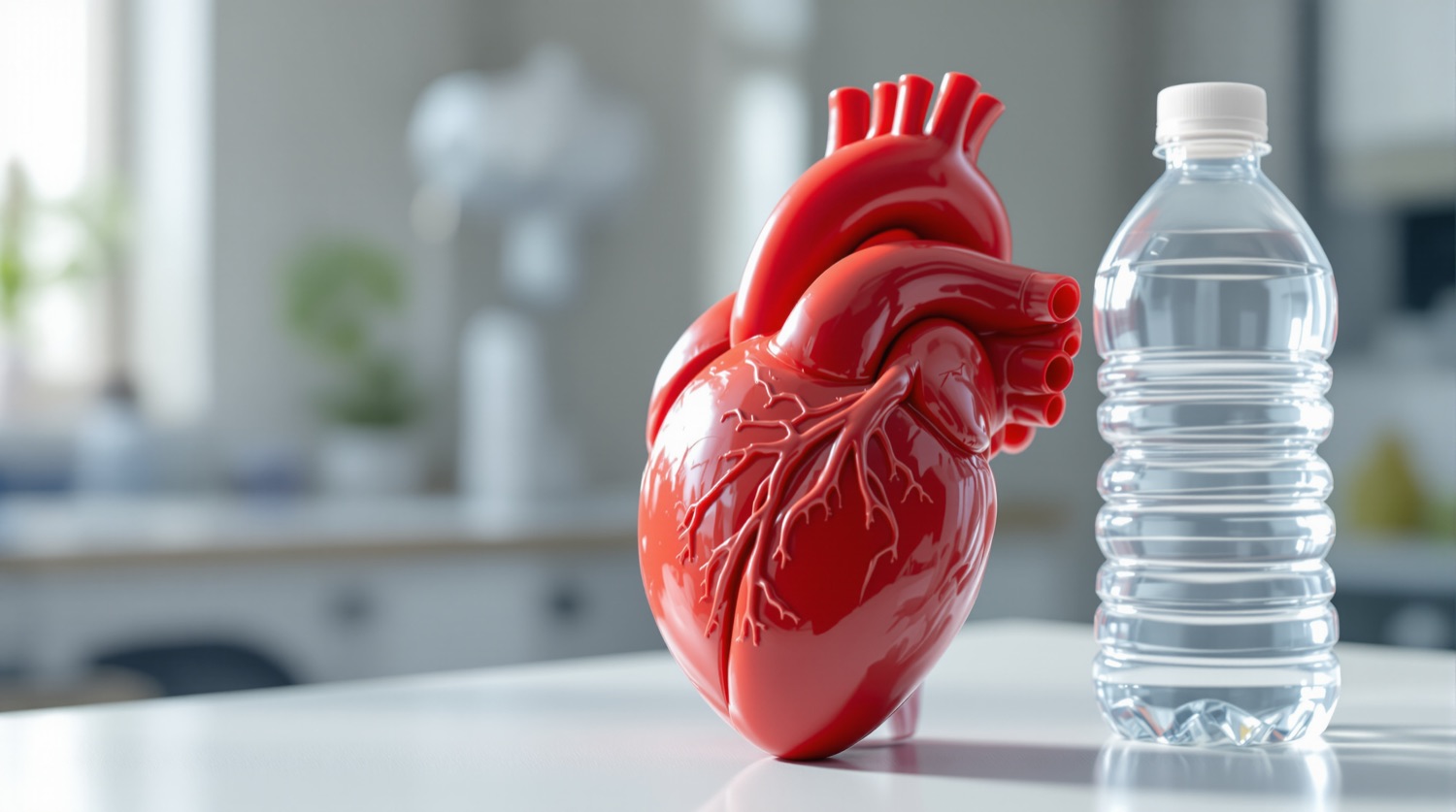
The strongest human evidence is a March 2024 study in the New England Journal of Medicine, which found polyethylene in the carotid artery plaque of 150 of 257 patients (58.4%) — and over a mean 33.7 months of follow-up, those patients had a 4.53 times higher risk of heart attack, stroke or death from any cause (95% confidence interval 2.00 to 10.27). Three further human studies have since found nine plastic types inside heart tissue, far higher plastic levels in the plaque of stroke patients, and higher coronary artery disease prevalence in the US coastal counties facing the most polluted ocean water. None of it proves plastic causes heart disease — every one of these is an observational finding. What it does mean is that the particles reach the arterial wall, sit among the immune cells that drive plaque, and track with worse outcomes. The largest exposure you control is your drinking water: see our guide to the best water filters for microplastics.
For years the honest summary of microplastics and health was “we keep finding them in people, and we do not yet know what they do.” Particles had turned up in human blood, in lung tissue, in placentas and in stool. Presence is not harm, and saying otherwise was never justified.
The 2024 carotid study changed the shape of that sentence. For the first time, researchers measured plastic inside a diseased human artery and then watched what happened to those patients. The finding is not proof of cause, and the authors say so plainly. But it moved the question from “are the particles in us?” to “do the people who have more of them do worse?” — and the first answer that came back was yes.
The bottom line up front: four human studies now point the same direction, and all four are associations rather than proof. The practical response is not alarm, it is the same short list of exposure changes that were already worth making — filter your drinking water, stop reheating food in plastic, and cut the plastic that touches what you eat. Start with bottled water versus tap water and how to reduce microplastics in your body.
What the four human studies measured
Here is every human study linking plastic particles to cardiovascular outcomes, with what each one actually counted. Read the right-hand column before the headline — the difference between a 257-patient prospective study and a preliminary conference abstract matters.
| Study | What it examined | What it measured | Strength |
|---|---|---|---|
| Marfella et al., 2024 New England Journal of Medicine |
Carotid plaque surgically removed from 257 patients, followed 33.7 months | Polyethylene in 58.4% (mean 21.7 µg/mg of plaque); PVC in 12.1% (5.2 µg/mg). Hazard ratio 4.53 for heart attack, stroke or death | Peer-reviewed, prospective, multicenter |
| Yang et al., 2023 Environmental Science & Technology |
Heart tissue and blood from 15 cardiac surgery patients | Nine plastic types across five tissue types, including myocardium and left atrial appendage; largest particle 469 µm | Peer-reviewed, very small sample, presence only |
| Clark et al., 2026 American Heart Association conference abstract |
48 carotid artery samples, with and without plaque | About 51x more micro-nanoplastic in plaque from stroke or mini-stroke patients than in plaque-free artery wall; about 16x more in symptom-free plaque | Preliminary — not yet peer-reviewed |
| Makwana et al., 2026 Journal of the American Heart Association |
US coastline counties ranked by marine microplastic levels within 200 nautical miles | Counties with very high levels had 7% higher coronary artery disease, 9% higher stroke and 18% higher type 2 diabetes prevalence after adjustment | Peer-reviewed, population level, cannot show individual exposure |
Do microplastics cause heart disease?
No one has shown that they do. Every study above is observational: it compares people who happen to have more plastic in them with people who have less, and no trial has ever assigned a person to a high-plastic or low-plastic life. Differences in diet, occupation, air pollution, smoking history or income can trail along with plastic exposure and produce part of the same pattern. A 2026 review in Nature Reviews Cardiology put it precisely: the biological pathways are plausible and the human findings are real, but “causal associations remain unproven in humans,” and detection methods still vary between labs.
What has changed is the weight of the signal. Four independent groups, using four different methods — mass spectrometry on surgical tissue, infrared imaging of heart muscle, particle counting in artery walls, and county-level epidemiology — all found the same direction of effect. That is the point at which a cautious reader stops dismissing it and starts lowering the exposure that is cheap to lower.
What did the NEJM artery study actually measure?
It measured plastic by weight inside plaque that had just been cut out of a living person. Raffaele Marfella and colleagues at the University of Campania Luigi Vanvitelli enrolled 304 patients undergoing carotid endarterectomy — surgery to clear a narrowed neck artery — for asymptomatic carotid artery disease, and 257 completed follow-up. The removed plaque was analyzed by pyrolysis gas chromatography-mass spectrometry, stable isotope analysis and electron microscopy.
Polyethylene was detected in 150 patients (58.4%), at a mean of 21.7 micrograms per milligram of plaque. Polyvinyl chloride turned up in 31 patients (12.1%), at 5.2 micrograms per milligram. Electron microscopy showed visible, jagged-edged foreign particles among the plaque's macrophages — the immune cells whose job is to engulf debris inside an artery wall, and whose activation is the engine of atherosclerosis. Patients with plastic in their plaque also had higher inflammatory biomarkers.
Have microplastics been found in the heart itself?
They have. In 2023, Yang and colleagues at Capital Medical University in Beijing reported in Environmental Science & Technology that they had examined tissue collected during cardiac surgery from 15 patients — pericardium, epicardial and pericardial fat, myocardium and left atrial appendage — using laser direct infrared imaging and scanning electron microscopy. They found nine types of microplastic across five tissue types, the largest particle measuring 469 micrometers, roughly half a millimeter. Nine types also appeared in blood drawn before and after surgery, and the size distribution in blood shifted after the operation.
The researchers were careful about the obvious objection: surgery itself introduces plastic, through tubing, bypass circuits and packaging. Their answer was that poly(methyl methacrylate) found in the left atrial appendage and in fat around the heart could not be explained by accidental exposure during the procedure. The sample is tiny and the study shows presence, not harm — but it establishes that these particles reach a completely enclosed organ. For the wider picture, see microplastics in the human body.
How much plastic is in the arteries of stroke patients?
Far more than in a healthy artery, according to a preliminary analysis presented in April 2026 at the American Heart Association's Vascular Discovery sessions. Ross Clark, a vascular surgeon at the University of New Mexico, and colleagues examined 48 carotid artery samples. Plaque taken from people who had suffered a stroke, a mini-stroke or temporary vision loss contained roughly 51 times more micro-nanoplastic than the wall of a plaque-free carotid artery. Plaque from people with no symptoms still contained about 16 times more.
Those two numbers come from a conference abstract, not a peer-reviewed paper. Conference findings routinely change before publication, and a 48-sample analysis cannot separate cause from consequence — damaged, inflamed plaque may simply trap and hold more particles. We quote it because it is real and relevant, and we label it preliminary because it is.
Is there population-level evidence?
There is one study, and it works at the level of counties rather than people. In 2026, Makwana and colleagues published an analysis in the Journal of the American Heart Association that mapped mean microplastic concentration in ocean water within 200 nautical miles of the US coastline, sorted coastal counties into four bands, and compared disease prevalence from the CDC's Behavioral Risk Factor Surveillance System survey. After adjusting for age, sex, access to physicians and socio-environmental vulnerability, counties in the highest band had 7% higher coronary artery disease prevalence, 9% higher stroke prevalence and 18% higher type 2 diabetes prevalence than counties in the lowest.
This is ecological evidence, the weakest tier in the hierarchy: it shows that places with more marine plastic have more cardiometabolic disease, not that any individual's exposure caused their illness. Coastal counties differ in dozens of ways. The authors say directly that individual-level studies are needed. It belongs on the list as corroboration, not as a headline.
How could a plastic particle damage an artery?
Through the same mechanism that drives ordinary heart disease: inflammation. Atherosclerosis is not simply fat sticking to a pipe. It is an immune process, in which macrophages take up material inside the artery wall, become inflamed, and build the unstable plaque that eventually ruptures and causes a heart attack or a stroke, as the National Heart, Lung, and Blood Institute describes it. A durable foreign particle that cannot be broken down is exactly the kind of thing that keeps macrophages activated.
The laboratory evidence lines up with that story. The 2026 Nature Reviews Cardiology review catalogs the mechanisms reported so far: oxidative stress, mitochondrial dysfunction, inflammation and fibrotic remodeling, plus endothelial dysfunction, plaque progression and arrhythmia in experimental models. The honest caveat is that cell and animal work routinely uses particle doses far above anything measured in a human, so plausibility is not proof. Smaller particles matter most here, because size governs what can cross into tissue at all — see nanoplastics versus microplastics.
Where are the polyethylene and PVC coming from?
The two polymers the NEJM team found are the two that dominate ordinary life. Polyethylene is grocery bags, bread bags, squeeze bottles, food film, milk jugs and the caps and liners on drink containers. PVC is pipework, flooring, shower curtains, cling films and some packaging. These are not exotic industrial compounds; they are the plastics that touch food and water in an average American kitchen.
By measured particle count, drinking water is the most concentrated routine source anyone has quantified. A 2024 study in PNAS by Naixin Qian and colleagues at Columbia University used stimulated Raman scattering microscopy to count particles in bottled water one at a time, and estimated about 240,000 micro- and nanoplastic particles per liter, roughly 90% of them nanoplastics — orders of magnitude more than earlier microplastic-only counts had reported. Food packaging, heated plastic containers and household dust fill in most of the rest.

What actually lowers your exposure?
Ranked by how much measured exposure each one removes, not by how virtuous it feels:
- Stop drinking bottled water, and filter your tap water. This is the single biggest number on the list — roughly 240,000 particles per liter avoided, per the PNAS count. A pitcher certified to NSF/ANSI 244 is independently tested for 99.999% microplastic reduction; reverse osmosis pushes filtration down into the nanoplastic range. Start with the best water filters for microplastics or compare systems in reverse osmosis systems.
- Never heat food in plastic. Heat accelerates shedding from containers and films. Glass or stainless steel for reheating, always — see whether it is safe to microwave Tupperware.
- Get plastic off the food-contact surfaces you use daily. Cutting boards, utensils, storage containers and kettles all abrade into what you eat and drink. Our kitchen plastic detox guide ranks the swaps by impact.
- If you have hard water, boiling helps. A 2024 study in Environmental Science & Technology Letters found that boiling hard water (above 120 mg/L of calcium carbonate) and then filtering out the limescale removed up to about 90% of nano- and microplastics, because the particles get trapped in the scale as it precipitates. In soft water the effect was far smaller, and the paper drew a published critique in the same journal — useful, not a substitute for a filter. See does boiling water remove microplastics.
- Cut the synthetic dust. Carpet, upholstery and polyester clothing shed fibers you then breathe. A HEPA purifier and damp cleaning handle most of it — see microplastics in indoor air.
The one change with a real number behind it
Bottled water measured about 240,000 plastic particles per liter in the 2024 PNAS count. A certified filter is the fastest way to take that off your daily intake — and it is the step every cardiologist writing about this has pointed to as the one people can actually control.
The two filters we recommend for this
Both are real, currently sold units we have already reviewed in depth, chosen here for one reason: independent certification that names microplastics, and no plastic holding the water after it has been filtered. Prices and availability change, so check the current listing.
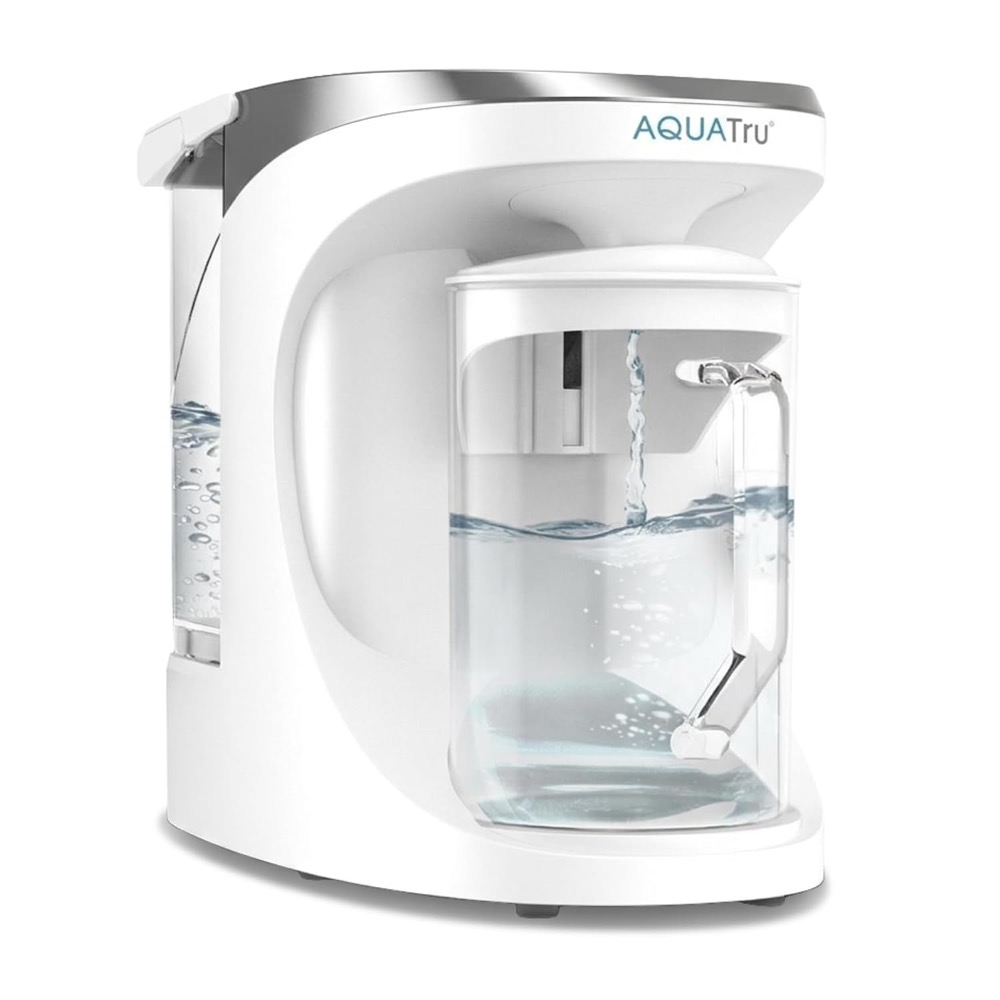 Best Overall
Reverse-osmosis filtration you can set up today, with the filtered water held in glass rather than plastic.
Why it's safe: The four-stage RO membrane is certified to NSF/ANSI 58 and removes microplastics, nanoplastics, PFAS, lead, arsenic and chlorine.
Check Today’s Price on Amazon →Amazon prices change daily — tap to see today's price and any active discount.
- Free delivery & returns for Prime members
- Sold & shipped by Amazon
- Thousands of verified reviews
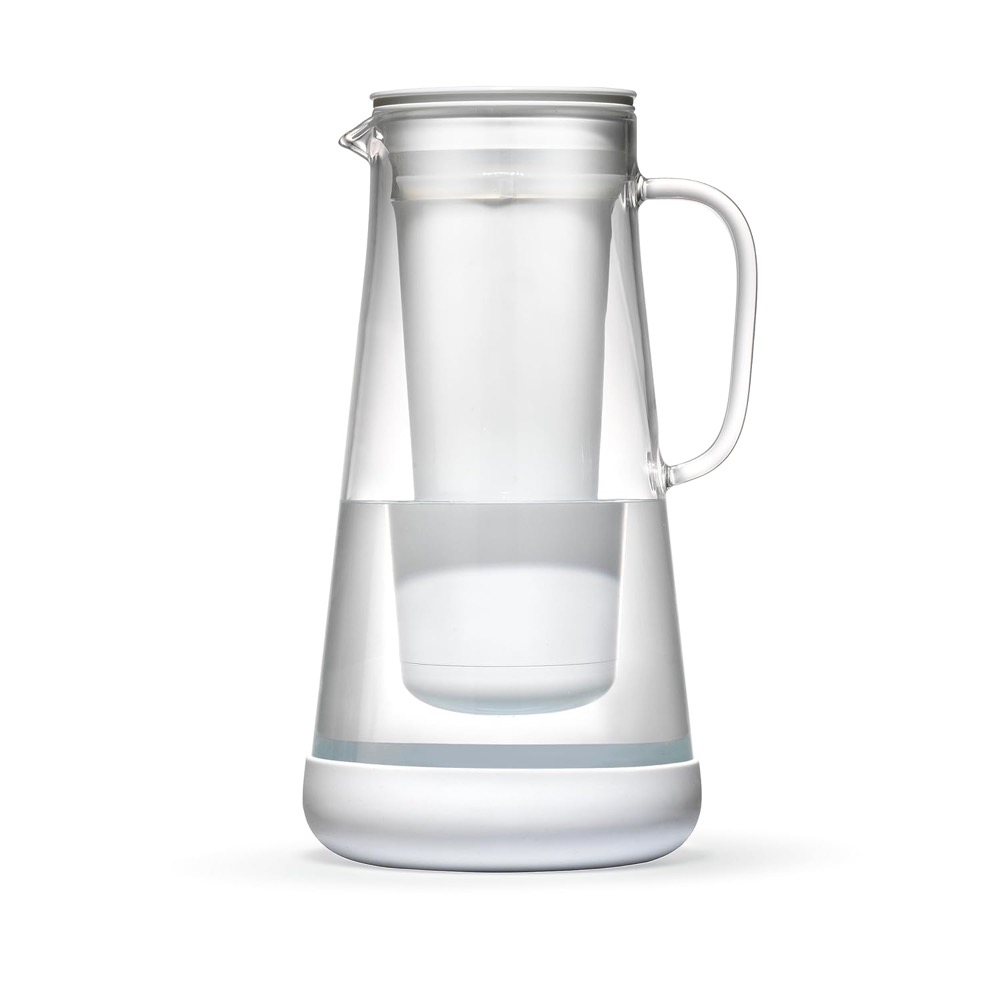 Best Pitcher
Certified microplastic reduction with no plumbing, no power and no plastic holding the filtered water.
Why it's safe: NSF/ANSI 244 certification is tested specifically for microplastic reduction — 99.999% — and the borosilicate glass body keeps the result off plastic.
Check Today’s Price on Amazon →Amazon prices change daily — tap to see today's price and any active discount.
- Free delivery & returns for Prime members
- Sold & shipped by Amazon
- Thousands of verified reviews
The honest verdict
Do microplastics cause heart disease? Nobody knows yet, and anyone who tells you otherwise is ahead of the evidence in either direction. What four human studies have established is narrower and still serious: the particles reach the arterial wall and the heart muscle, they sit among the immune cells that build plaque, and the patients who have them in their plaque had markedly worse cardiovascular outcomes over three years of follow-up. The strongest of those studies is observational, its confidence interval is wide, and its authors name the confounding they could not remove.
That is enough to act on without panicking, because the actions are ones you would want anyway. Filtering your water, keeping heat away from plastic and getting plastic off the surfaces that touch your food cost little, carry no downside, and address the largest measured sources. Cardiovascular risk still runs mostly through blood pressure, lipids, smoking, blood sugar and exercise — none of which this research displaces. Treat microplastics as one more input you can quietly reduce while the science works out how much it matters. For the rest of the body, see microplastics and cancer and microplastics in blood.
Start with the water you drink every day
It is the largest measured source and the easiest one to remove. One certified filter handles it, and it is the same step every review of this research lands on.
Frequently Asked Questions
No study has proven cause. What human research has shown is a strong and repeated association. In a March 2024 study in the New England Journal of Medicine, Marfella and colleagues analyzed carotid plaque surgically removed from 257 patients and detected polyethylene in 150 of them (58.4%); over a mean 33.7 months of follow-up, patients with plastic in their plaque had a 4.53 times higher risk of heart attack, stroke or death from any cause (95% confidence interval 2.00 to 10.27). That is an observational finding, so other differences between the two groups could explain part of it. A 2026 review in Nature Reviews Cardiology reached the same conclusion: the mechanisms are plausible and the human signal is real, but causation in people remains unproven.
It measured plastic inside surgically removed artery plaque. A total of 304 patients having carotid endarterectomy for asymptomatic carotid artery disease were enrolled and 257 completed follow-up. The excised plaque was analyzed by pyrolysis gas chromatography-mass spectrometry, stable isotope analysis and electron microscopy. Polyethylene was found in 150 patients (58.4%) at a mean of 21.7 micrograms per milligram of plaque, and polyvinyl chloride in 31 patients (12.1%) at 5.2 micrograms per milligram. Electron microscopy showed jagged foreign particles among the plaque's macrophages, the immune cells that drive inflammation inside an artery wall.
Yes. A 2023 study in Environmental Science & Technology by Yang and colleagues at Capital Medical University in Beijing examined tissue collected during cardiac surgery from 15 patients. Using laser direct infrared imaging and scanning electron microscopy, the team found nine types of microplastic across five tissue types, including the myocardium, the left atrial appendage and the pericardium, with the largest particle measuring 469 micrometers. Nine plastic types were also present in blood drawn before and after surgery. Poly(methyl methacrylate) in enclosed tissue could not be explained by accidental contamination during the operation.
A preliminary analysis presented at the American Heart Association's Vascular Discovery sessions in April 2026 by Ross Clark at the University of New Mexico examined 48 carotid artery samples. Plaque from people who had had a stroke, mini-stroke or temporary blindness carried roughly 51 times more micro-nanoplastic than the wall of a plaque-free carotid artery; plaque from people with no symptoms carried about 16 times more. These numbers come from a conference abstract and have not yet been published in a peer-reviewed journal, so treat them as an early signal rather than a settled result.
The proposed route is inflammation. Electron microscopy in the 2024 NEJM study found the particles sitting among plaque macrophages, the immune cells that take up debris inside an artery wall, and patients with plastic in their plaque also had higher inflammatory biomarkers. A 2026 review in Nature Reviews Cardiology summarizes the laboratory evidence for the mechanisms: oxidative stress, mitochondrial dysfunction, inflammation and fibrotic remodeling, which are the same processes that drive atherosclerosis. Those pathways are demonstrated in cells and animals, not proven to operate at real-world human exposure levels.
Drinking water is the single biggest controllable source by measured particle count. A 2024 study in PNAS using stimulated Raman scattering microscopy estimated about 240,000 micro- and nanoplastic particles per liter of bottled water, roughly 90% of them nanoplastics. Switching to filtered tap water removes most of that: a pitcher certified to NSF/ANSI 244 is tested for 99.999% microplastic reduction, and reverse osmosis goes down to the nanoplastic range. After water, the next largest levers are not heating food in plastic, storing food in glass or stainless steel, and reducing synthetic textiles and the household dust they shed.
Sources
- Marfella R, Prattichizzo F, Sardu C, et al. "Microplastics and Nanoplastics in Atheromas and Cardiovascular Events." New England Journal of Medicine, 2024;390(10):900–910. (Polyethylene in the carotid plaque of 150 of 257 patients (58.4%), PVC in 31 (12.1%); hazard ratio 4.53 for heart attack, stroke or death over a mean 33.7 months. Free full text.)
- Yang Y, Xie E, Du Z, et al. "Detection of Various Microplastics in Patients Undergoing Cardiac Surgery." Environmental Science & Technology, 2023;57(30):10911–10918. (Nine microplastic types across five heart-associated tissue types in 15 cardiac surgery patients; largest particle 469 µm.)
- Clark R, et al. "Micronanoplastics found in artery-clogging plaque in the neck." American Heart Association Vascular Discovery Scientific Sessions, April 2026 — preliminary conference abstract, not peer-reviewed. (About 51x more micro-nanoplastic in plaque from symptomatic patients, 16x in asymptomatic plaque, versus plaque-free artery wall; 48 samples.)
- Makwana B, Khadke S, Kumar A, et al. "Marine Microplastic Levels and the Prevalence of Cardiometabolic Diseases in US Coastline Counties." Journal of the American Heart Association, 2026;14(13):e039891. (Counties with very high marine microplastic levels showed 7% higher coronary artery disease, 9% higher stroke and 18% higher type 2 diabetes prevalence after adjustment. Free full text.)
- "The effects of microplastics and nanoplastics on cardiovascular disease: mechanisms and perspectives." Nature Reviews Cardiology, 2026. (Review of exposure routes, tissue distribution and mechanisms — oxidative stress, mitochondrial dysfunction, inflammation, fibrotic remodeling — concluding that causal associations remain unproven in humans.)
- Qian N, Gao X, Lang X, et al. "Rapid single-particle chemical imaging of nanoplastics by SRS microscopy." PNAS, 2024;121(3):e2300582121. (Estimated about 2.4 × 10⁵ micro- and nanoplastic particles per liter of bottled water, roughly 90% nanoplastics. Free full text.)
- Yu Z, Wang J-J, Liu L-Y, Li Z, Zeng EY. "Drinking Boiled Tap Water Reduces Human Intake of Nanoplastics and Microplastics." Environmental Science & Technology Letters, 2024;11:273–279. (Boiling hard water and filtering out the limescale removed up to about 90% of nano- and microplastics; the effect was much smaller in soft water, and the paper drew a published comment in the same journal.)
- National Heart, Lung, and Blood Institute. "Atherosclerosis." US National Institutes of Health. (Background on how plaque forms in an artery wall and why inflammation drives it.)