
Microplastics have been found lodged deep inside human lungs. In a 2022 study, plastic particles turned up in the lung tissue of 11 of 13 living surgical patients; a separate autopsy study found them in 13 of 20 people. You take them in mainly by breathing ordinary indoor air — synthetic clothing, carpets, upholstery and household dust — and the smallest particles travel to the deepest airways. You can't pull out what's already there, but running a True HEPA air purifier, ventilating well and owning fewer synthetic fabrics sharply cuts how many you breathe in from here on.
Most of the microplastics conversation is about what you eat and drink. But your lungs may be the organ with the steadiest plastic exposure of all, because you breathe about 20,000 times a day — and the air indoors, where most people spend roughly 90% of their lives, is thick with plastic fibres shed from clothing, bedding, carpet and furniture.
For years this was a suspicion. Now it is documented. In 2022, researchers at the University of Hull reported the first detection of microplastics in the lung tissue of living people, and a 2021 Brazilian autopsy study had already found them in lung samples taken after death. The particles are real, they are inside us, and the question has shifted from whether we breathe plastic to how much — and what to do about it.
Are There Really Microplastics in Human Lungs?
Yes, and the evidence comes from human tissue, not models. The 2022 Hull study found microplastics in 11 of 13 living patients and identified 12 different plastic types, with polypropylene and PET (the plastics in packaging and polyester clothing) the most common. The earlier autopsy work found particles in 13 of 20 lungs.
What surprised researchers was the location. Particles turned up not just in the upper airways but in the lower lobes, deep in the lung, where the tissue is delicate and clearance is slow. That matters because it suggests some inhaled plastic doesn't get coughed back up or cleared quickly — it settles and stays. These findings sit alongside detections of microplastics elsewhere in the body: our guide to microplastics in the human body and the research on microplastics in blood trace how particles small enough to reach the deep lung can also cross into the bloodstream.
How Do Microplastics Get Into Your Lungs?
Almost entirely by breathing indoor air. Every synthetic textile in your home — polyester and nylon clothing, fleece blankets, wall-to-wall carpet, upholstered furniture — sheds microscopic fibres as it is worn, washed and walked on. Those fibres become airborne, mix with household dust, and are drawn into your airways with each breath.
Particle size decides how far they travel. The US Environmental Protection Agency notes that particles smaller than 10 microns can get deep into the lungs, and some can even pass into the bloodstream. Most airborne microplastic fibres are larger and lodge in the upper airways, but a meaningful fraction is small enough to reach the deepest tissue — which is exactly where the 2022 study found them. Laundry is one of the biggest indoor sources; our guide to reducing microplastics from laundry covers how to cut the fibres a single wash releases, and microplastics in indoor air maps every household source.
How Many Microplastics Do You Breathe in a Day?
More than most people expect, and the estimates keep climbing as measurement improves. A 2025 study of indoor air published in PLOS ONE concluded that adults may inhale on the order of 68,000 microplastic particles a day from indoor environments — the vast majority under 10 microns, the size that penetrates deepest.
That study measured a median of 528 particles per cubic metre of apartment air and found 94% of them were smaller than 10 microns — concentrations roughly 100 times higher than earlier extrapolated estimates. Indoor air is consistently dirtier than outdoor air for this pollutant, because homes trap shed fibres and recirculate them. The single highest-exposure place is often the bedroom, where you breathe deeply for hours surrounded by synthetic bedding.
Are Microplastics in the Lungs Dangerous?
Honestly, we don't yet know the long-term health effect, and any source claiming certainty is overstating the science. There is no study showing that today's household levels of inhaled microplastics cause a specific disease. What researchers can say is more cautious and more useful than a scare.
We already know a great deal about inhaled fine particles in general. The EPA links fine particulate matter to airway irritation, coughing and worsened heart and lung disease, and lab studies show microplastic particles can trigger inflammation and oxidative stress in lung cells. Occupational medicine offers a sobering precedent: textile and flock workers exposed to very high concentrations of synthetic fibres have developed lung inflammation and scarring. Everyday home exposure is far lower than a factory floor, so the honest position is plausible concern, not proven harm — which is a good reason to reduce a needless exposure you can actually control, not a reason to panic. The same particles are being studied for effects further afield, from the brain to the bloodstream.
Myths About Microplastics in Your Lungs
Because the topic is new and alarming, it attracts confident claims in both directions. Three come up constantly, and all three are wrong.
Myth 1: "HEPA filters can't catch particles that small." This gets the physics backwards. A True HEPA (H13) filter captures 99.97% of particles at 0.3 microns — and, counter-intuitively, it captures particles both larger and smaller than 0.3 microns even more efficiently, because the tiniest particles move erratically and get trapped by diffusion. Airborne microplastic fibres are comfortably within range.
Myth 2: "A face mask solves it." A mask helps while you wear it, but you can't sleep, cook and live in one, and most of your inhaled fibres come during ordinary hours at home. Cleaning the air of the room does the work continuously, without anything on your face.
Myth 3: "It's only an outdoor or industrial problem." The opposite is true for most people. Indoor air carries markedly higher microplastic concentrations than outdoor air, because homes are full of synthetic textiles and trap the fibres they shed. Where you sleep, not the street outside, is usually the bigger exposure.
How to Reduce the Microplastics You Breathe
You can't filter your own lungs, but you can dramatically lower the dose going in. The highest-leverage moves, in order: run a True HEPA air purifier in the rooms where you spend the most time (start with the bedroom), ventilate — open windows and use exhaust fans to flush shed fibres out, vacuum with a sealed HEPA vacuum rather than stirring dust into the air, and slowly swap the biggest synthetic surfaces (bedding, then rugs and upholstery) for natural fibres like cotton, wool and linen.
Filtration is the fastest of these to act on, because it works on the air you're already breathing tonight. The five purifiers below all use genuine mechanical HEPA (or better) — not ionizers, UV lamps or ozone, none of which remove particles — and are the same units we rank in our full best air purifier for microplastics guide. Each is a real product with a real buyer rating; prices on Amazon change daily, so tap through for today's.
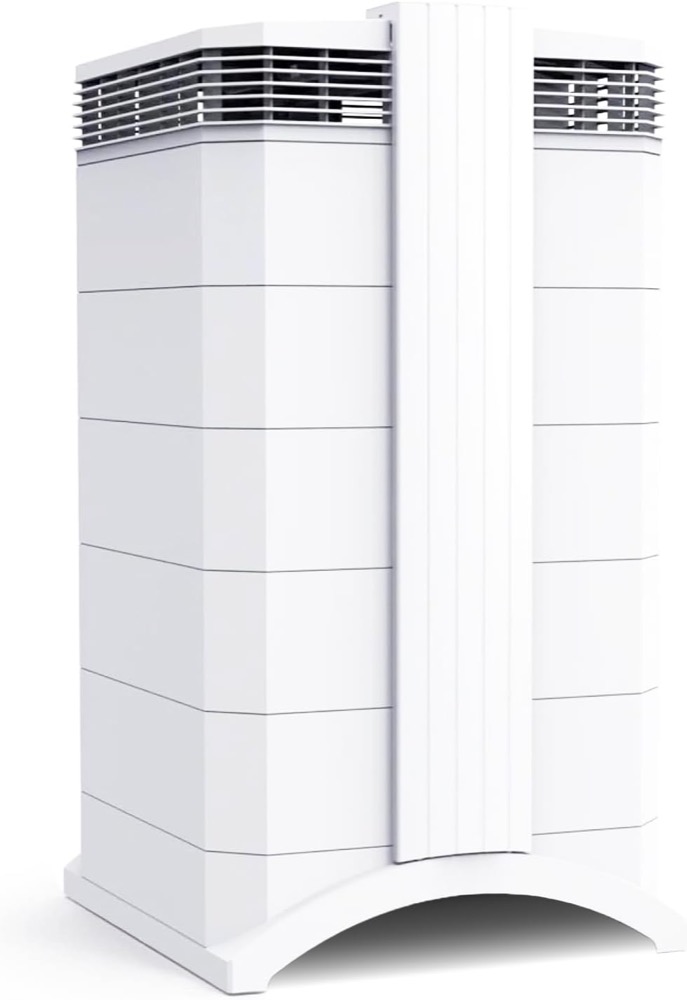
1. IQAir HealthPro Plus — Best Overall
 Best Overall
"Worth every penny" is the phrase that keeps appearing in owner threads — usually from people who have run the same unit continuously for 6, 10, even 15 years and call it the only true buy-it-for-life option in the category. The most common real-world report is relief you can feel: allergy symptoms fading within days, one owner going "from a sore throat to clear breathing in 1 day" during wildfire smoke. The consistent gripes match the ones we flagged — the upfront and filter costs sting, it needs the louder mid-to-high speeds to do its best work, and nobody calls it pretty. Owners buy it anyway, and then often buy a second.
The only consumer purifier that captures particles down to 0.003 microns — so the ultrafine plastics and nanoplastics that slip through ordinary HEPA get trapped here.
Why it's safe: True mechanical HyperHEPA plus an activated-carbon stage physically traps fine and ultrafine particles and microplastics — with no ozone-generating ionizer that would just move particles around the room.
Check Today’s Price on Amazon →Amazon prices change daily — tap to see today's price and any active discount.
- Free delivery & returns for Prime members
- Sold & shipped by Amazon
- Thousands of verified reviews
The IQAir HealthPro Plus is the most thorough capture you can buy for a home. Its HyperHEPA media traps particles down to 0.003 microns — roughly 100 times smaller than standard HEPA — so the ultrafine plastics and nanoplastics that ordinary filters miss get held here. It is the pick for a nursery or a bedroom where developing or sensitive lungs breathe eight hours a night.
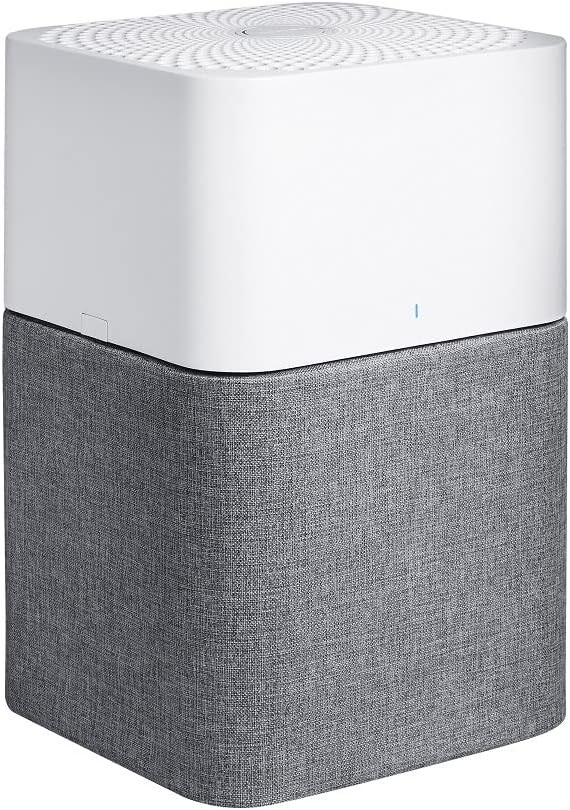
2. Blueair Blue Pure 211+ Auto — Best for Large Rooms
 Best Large Room
In long-term reviews the 211+ reads like the appliance you forget is there: one button, quiet on the lower speeds, and still running after seven years in some households. What owners mention most is smell — cooking and pet odors clearing within the hour, and the tell-tale sign it's working: "If I do not have mine on, I can smell my dogs and everything feels dirty." Pet owners treat the washable fabric pre-filter as the star feature, vacuuming a coat of dog hair off it weekly while the main filter stays clean. The fair warnings from reviews: the top speed is genuinely loud (most people live on low or medium), and replacement filters are not cheap.
It senses particle spikes — cooking, vacuuming, folding laundry — and ramps up on its own, then quiets down once the air is clean again.
Why it's safe: HEPASilent mechanical filtration plus an activated-carbon layer captures fine particles and microplastic fibers down to 0.1 microns, with no ozone-producing ionizer.
Check Today’s Price on Amazon →Amazon prices change daily — tap to see today's price and any active discount.
- Free delivery & returns for Prime members
- Sold & shipped by Amazon
- Thousands of verified reviews
Blueair's HEPASilent design pairs a mechanical filter with an electrostatic charge, hitting 99.97% capture at 0.1 microns while staying quiet and low-energy. Its auto sensor ramps up exactly when a room's particle count spikes — folding laundry, vacuuming, making the bed — the everyday moments when synthetic fibres fill the air you're about to breathe.
3. Coway Airmega 400 — Best for Open Floor Plans
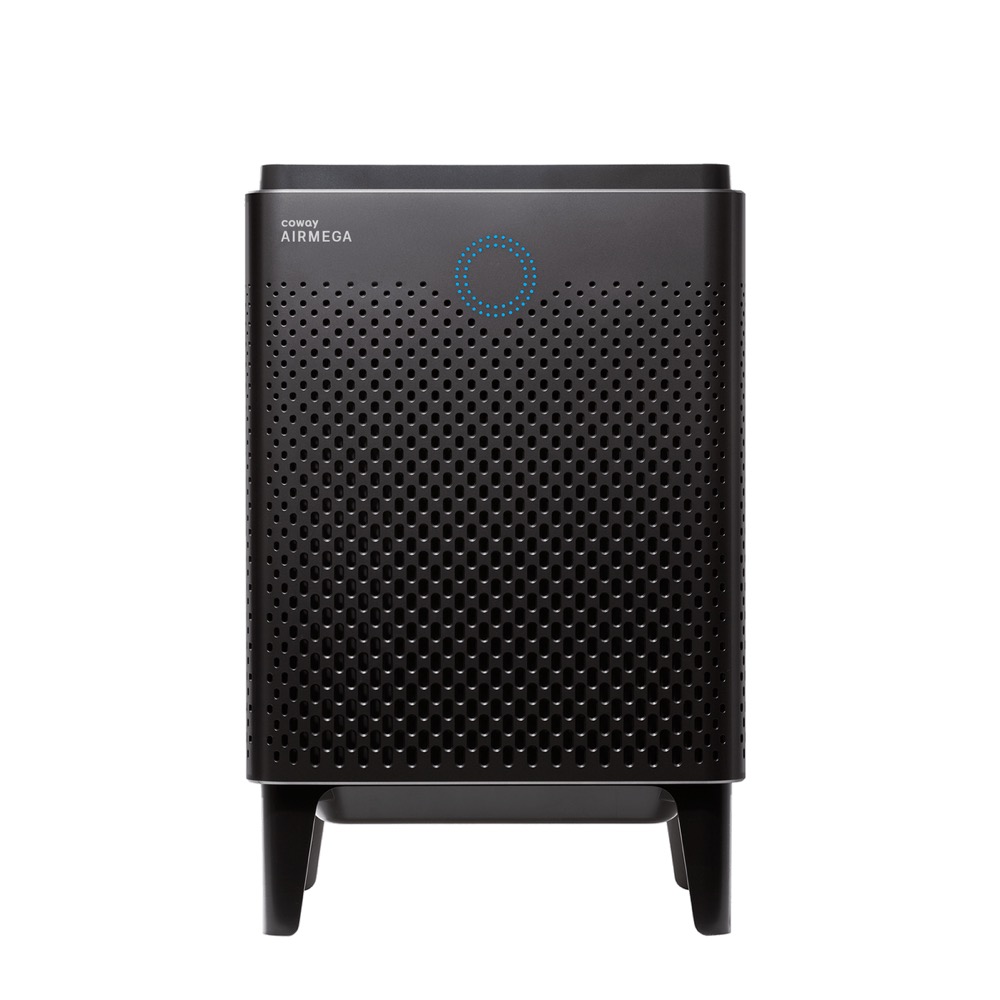 Best Whole Home
"Built like a tank" is the phrase owners reach for. The pattern in long-term threads: people run it 24 hours a day for five-plus years — many since the 2019 wildfire seasons — and report it has held up without complaint. Day to day, the auto sensor is what they actually talk about: it kicks itself into high gear the moment cooking or vacuuming spikes the particle count, then settles back down on its own. Two honest notes that recur in reviews: official replacement filters aren't cheap (many owners use compatible third-party filters for far less), and almost everyone advises buying the unit on sale rather than at full retail.
One unit covers an open floor plan — and the color-coded LED ring shows you exactly when particle levels spike from vacuuming or laundry.
Why it's safe: Dual True HEPA layers physically capture fine particles and microplastics down to 0.3 microns, each paired with activated carbon — pure mechanical filtration, no ozone.
Check Today’s Price on Amazon →Amazon prices change daily — tap to see today's price and any active discount.
- Free delivery & returns for Prime members
- Sold & shipped by Amazon
- Thousands of verified reviews
For an open floor plan, the Coway Airmega 400 covers the most ground on this list at 1,560 square feet using dual True HEPA filters. Its colour-coded air-quality ring is genuinely useful for lung protection: you can watch the light turn red the moment an activity throws fibres into the air, then settle back to blue once the filter clears them.
4. Levoit Core 400S — Best for the Bedroom
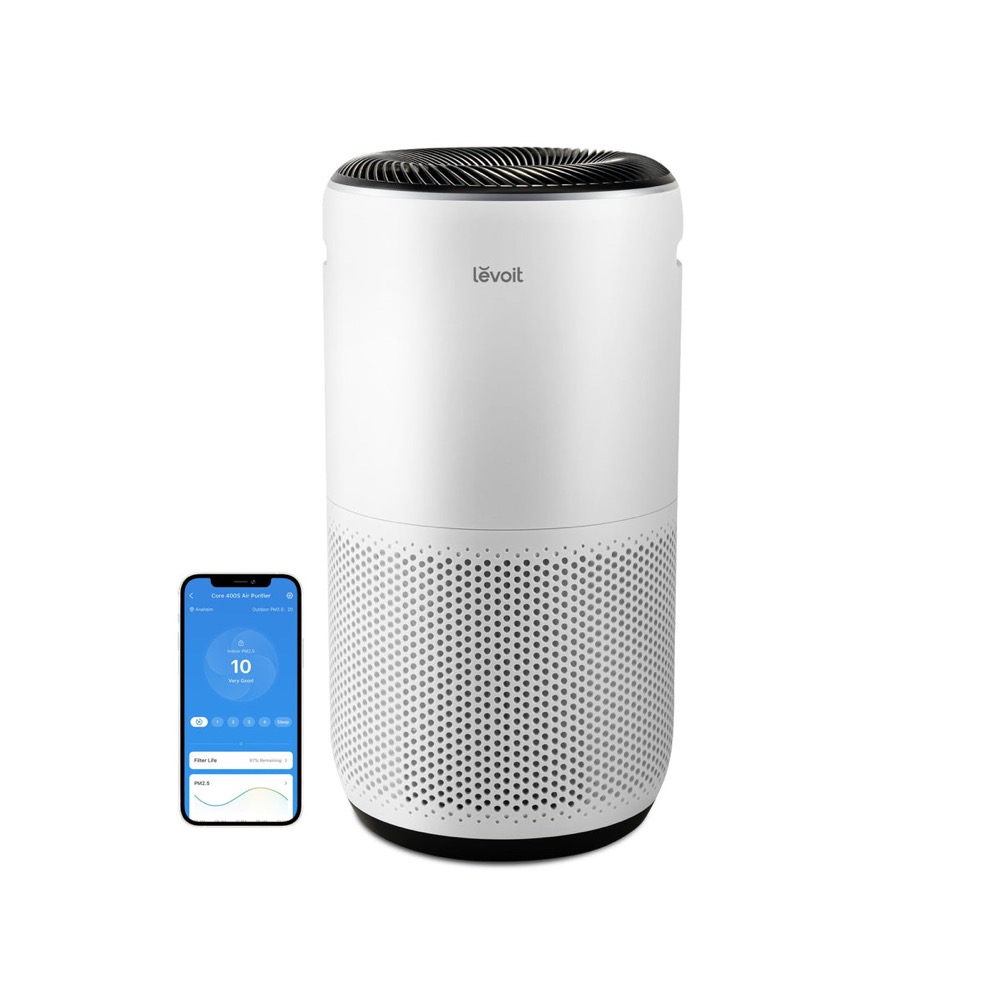 Best Smart Purifier
Levoit owners talk about sleep more than specs. The near-silent sleep mode is why this unit ends up in bedrooms — and why people who start with one often add another for each bedroom. The most repeated reports: noticeably less dust and cooking odor, and allergy sufferers waking up clearer. The honest downsides from reviews: a minority of owners notice a faint high-pitched whine on the lowest speeds, the WiFi app can be flaky about staying connected, and fresh replacement filters can smell plasticky for a day or two until they air out.
At 24dB on its lowest setting it's quieter than a whisper — ideal for the bedroom, where synthetic bedding sheds the most microplastic fiber overnight.
Why it's safe: A True HEPA H13 filter plus activated carbon mechanically captures fine particles and microplastics down to 0.3 microns — no ozone, just real filtration you can watch drop on the app.
Check Today’s Price on Amazon →Amazon prices change daily — tap to see today's price and any active discount.
- Free delivery & returns for Prime members
- Sold & shipped by Amazon
- Thousands of verified reviews
The Levoit Core 400S delivers genuine hospital-grade H13 HEPA at the lowest price here, with a laser particle sensor and a 24-decibel sleep mode quieter than a whisper. That makes it the natural bedroom pick — the room where synthetic bedding sheds the most fibre overnight. Switching to breathable organic cotton sheets cuts that shedding at the source.
5. Austin Air HealthMate Plus — Best Low-Maintenance Pick
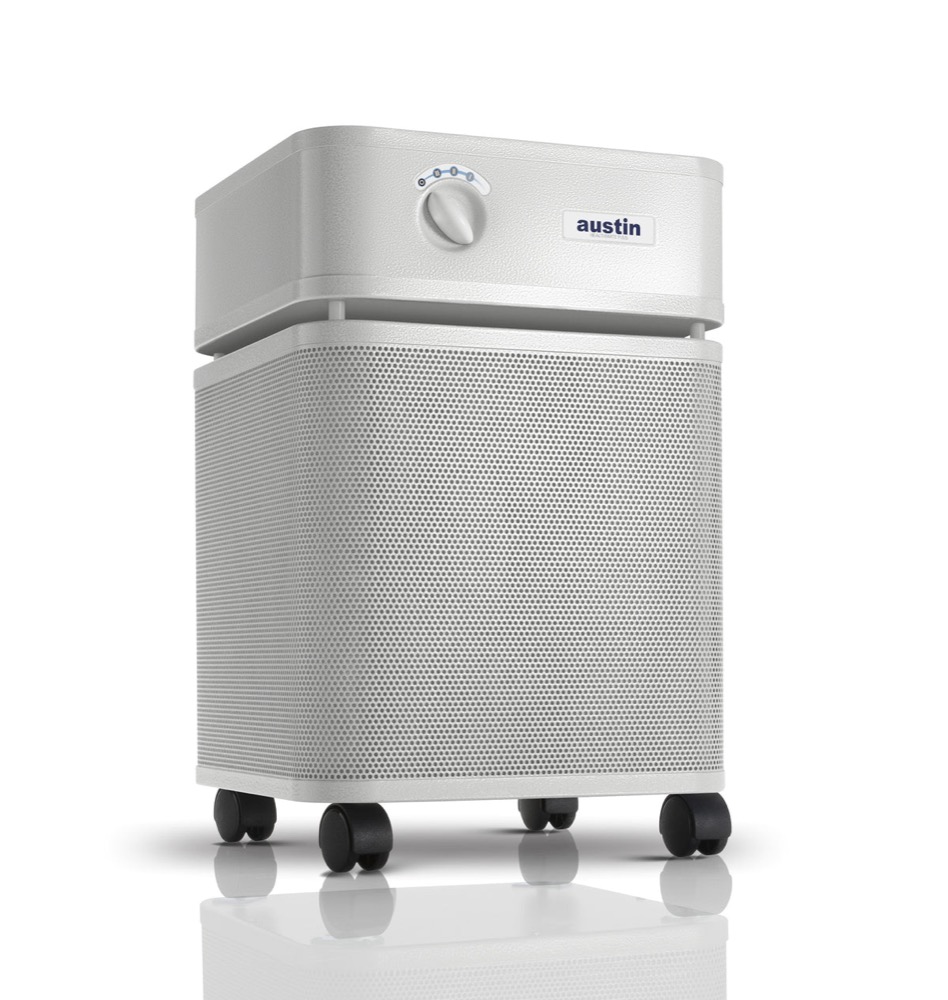 Best Medical-Grade Budget
Austin owners talk in decades — "ran like a champ for six years non stop," "still working after 19 years." What they say it does that others can't: actually remove smoke and chemical smells. Apartment dwellers with smoking neighbors credit the 15 pounds of activated carbon with making home bearable again, and the 5-year filter is how nearly every owner justifies the upfront price. The fair warnings: it is loud on high (think box fan), and it is a heavy steel drum on casters with zero smart features — though long-term owners tend to count the no-electronics simplicity as exactly why it refuses to die.
One filter lasts five years instead of being replaced every 6–12 months — the lowest total cost of ownership of any unit here, with no plastic in the air path.
Why it's safe: A massive True HEPA bed plus 15 lb of activated carbon mechanically captures fine particles and microplastics — a steel-housed, no-ozone design with no plastic touching the airstream.
Check Today’s Price on Amazon →Amazon prices change daily — tap to see today's price and any active discount.
- Free delivery & returns for Prime members
- Sold & shipped by Amazon
- Thousands of verified reviews
Austin Air takes the opposite approach to gadgetry: a steel-housed drum with 60 square feet of True HEPA media, 15 pounds of activated carbon and a five-year filter. There is no plastic in the air path and almost nothing to maintain — the lowest-fuss medical-grade option for a large or chemically sensitive home.
Beyond filtration, the cheapest fixes are behavioural: air out the bedroom each morning, wash synthetic clothes less often and on cooler, shorter cycles, take shoes off at the door to keep outdoor grit from grinding carpet fibres into dust, and choose natural materials the next time you replace a rug, a sofa or a set of sheets. None of it is urgent, and all of it compounds.
Want the Full Home Protection Guide?
Air filtration is one piece of the puzzle. The Complete Plasticproof Guide covers every room — kitchen, nursery, bathroom, bedroom — with peer-reviewed studies and 80+ product recommendations.
Frequently Asked Questions
Yes. A 2022 study detected microplastics in the lung tissue of 11 of 13 living surgical patients, and a 2021 autopsy study found them in 13 of 20 people. Polypropylene and PET — the plastics in packaging and polyester clothing — were the most common types, and some particles were found deep in the lower lung.
By breathing indoor air. Synthetic clothing, bedding, carpet and upholstery constantly shed microscopic fibres that become airborne and mix with household dust. Particles smaller than 10 microns can travel deep into the lungs, and a fraction reaches the deepest tissue where clearance is slow.
A 2025 indoor-air study estimated adults may inhale on the order of 68,000 microplastic particles a day, most of them under 10 microns. Indoor concentrations run far higher than outdoor levels because homes trap and recirculate the fibres shed by synthetic materials.
Yes — a True HEPA (H13) purifier captures 99.97% of particles at 0.3 microns, which includes airborne microplastic fibres, and it captures even smaller particles efficiently by diffusion. Ionizers, UV-only and ozone devices do not remove particles. Run a HEPA unit continuously in the rooms where you spend the most time, starting with the bedroom.
Sources
- Jenner LC, Rotchell JM, Bennett RT, et al. “Detection of microplastics in human lung tissue using μFTIR spectroscopy.” Science of the Total Environment, 2022. doi.org/10.1016/j.scitotenv.2022.154907
- Amato-Lourenço LF, Carvalho-Oliveira R, Ribeiro Júnior G, et al. “Presence of airborne microplastics in human lung tissue.” Journal of Hazardous Materials, 2021. PubMed 34492918
- “Human exposure to PM10 microplastics in indoor air.” PLOS ONE, 2025. journals.plos.org
- US EPA. “Health and Environmental Effects of Particulate Matter (PM).” epa.gov
Protect Every Room in Your Home
From the kitchen to the nursery to the bedroom — the Complete Plasticproof Guide covers every swap that matters, backed by peer-reviewed studies.