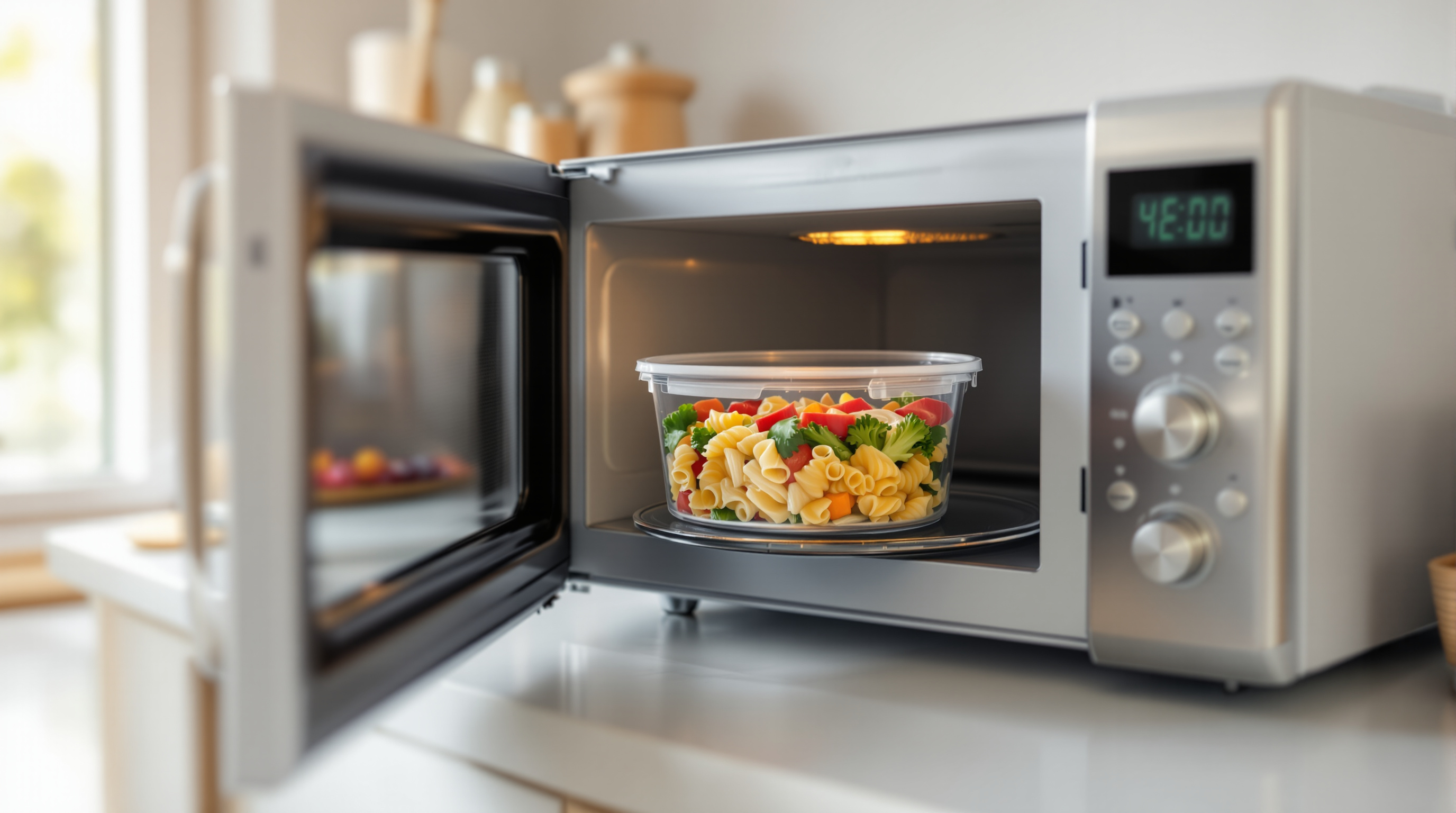
Quick Answer
No — it is not safe to microwave most Tupperware or plastic containers, even ones labeled "microwave-safe." Heat is the single biggest trigger for plastic to shed particles into food. A 2023 study in Environmental Science & Technology found that microwaving plastic containers released up to 4.22 million microplastic and 2.11 billion nanoplastic particles per square centimeter in just three minutes — thousands of times more than cold storage.
"Microwave-safe" only means the container will not visibly warp or melt. It is not a guarantee that no chemicals or plastic particles migrate into your food. The reliable fix is to reheat in an inert material instead — glass, silicone, or ceramic — and keep plastic out of the microwave entirely.
If you have ever reheated last night's pasta in the same plastic container you stored it in, you are not alone — it is one of the most common habits in any kitchen. The container says "microwave-safe," the food gets hot, nothing melts, so it feels fine. The problem is that the label is measuring the wrong thing.
"Microwave-safe" is a structural claim, not a chemical-safety claim. It tells you the plastic will hold its shape at microwave temperatures. It says nothing about whether the plastic releases microplastics, nanoplastics, or hormone-disrupting chemicals like BPA and phthalates into the food while it heats. And the research on that question has gotten much clearer — and much less reassuring — in the last few years.
So, can you microwave Tupperware safely?
The honest answer is no — not in a way that protects your food. Even containers stamped "microwave-safe" leach measurably more particles when heated, and heat is the strongest single driver of that release. The safest move is to never microwave plastic and reheat in glass or ceramic instead.
It is worth being precise about what "Tupperware" means here. Tupperware is a brand, but most people use the word for any plastic food container. The Tupperware brand has moved much of its modern lineup to polypropylene (recycling code 5) and markets specific lines as microwave-reheat safe. Generic dollar-store tubs, takeout containers, and old hand-me-down sets are a different story — they may be made from less stable plastics, and older pieces can predate the phase-out of BPA entirely. If you are deciding what to store food in instead, our comparison of silicone vs. plastic food containers lays out which material actually leaches less.
But even with the best modern polypropylene, microwaving introduces three things at once: high heat, often acidic or fatty food, and time. That combination is exactly what accelerates the migration of plastic particles and additives into what you eat. The container does not have to look damaged for this to happen.
What actually happens when you microwave plastic?
Microwaves heat the food, and the hot food heats the container from the inside. As the plastic warms, its surface softens at a microscopic level and sheds particles directly into the food touching it. Heat also speeds up the leaching of chemical additives like plasticizers. The hotter and longer the cycle, the more is released.
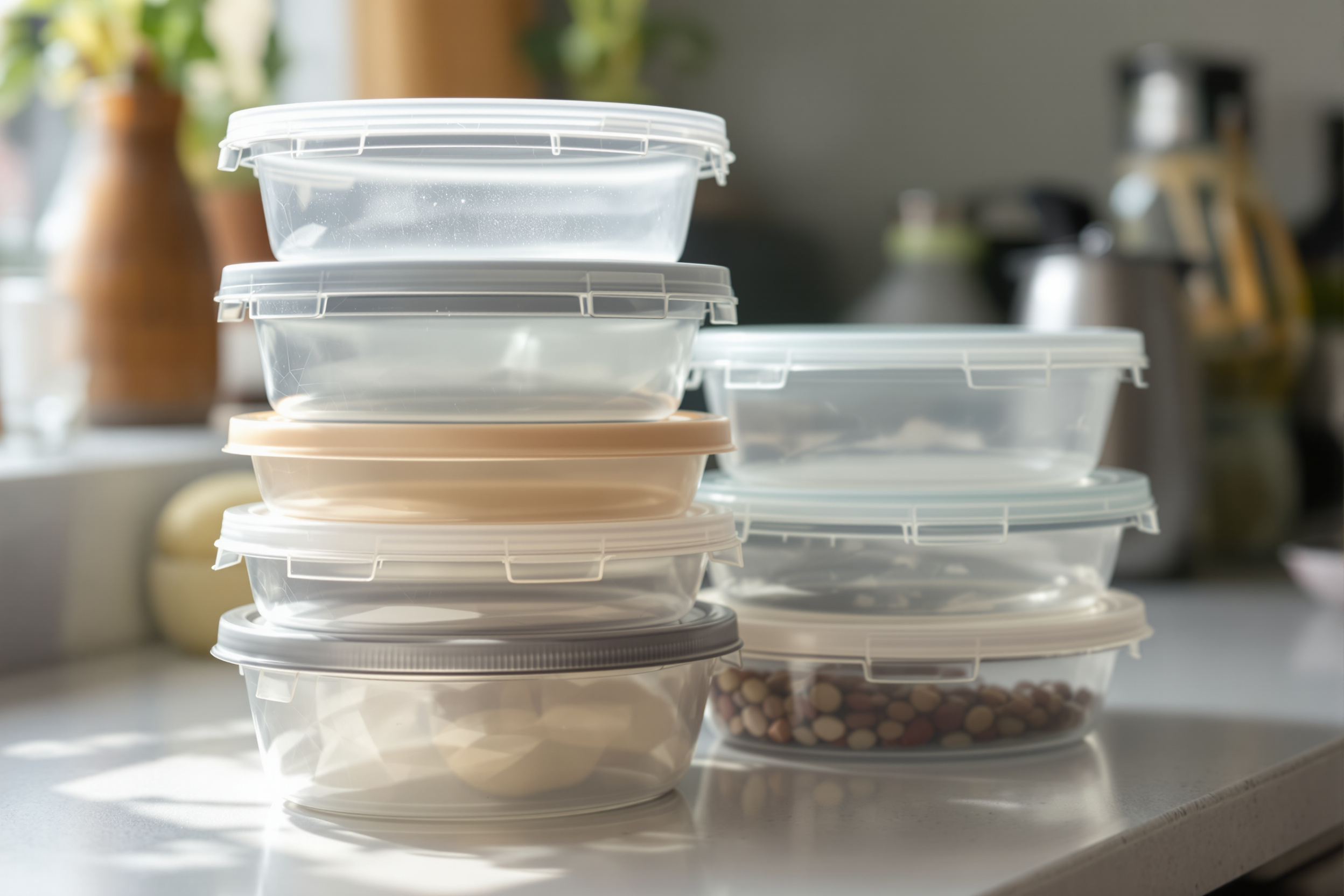
The 2023 paper in Environmental Science & Technology is the clearest data point we have. Researchers filled common plastic food containers and reusable pouches with water or acetic acid (a stand-in for acidic foods) and ran them through normal microwave cycles. Microwaving released the most particles of any condition they tested — up to 4.22 million microplastics and 2.11 billion nanoplastics per square centimeter of surface area. Refrigeration and room-temperature storage still released particles, but far fewer.
Nanoplastics matter more than their size suggests. They are small enough to cross biological barriers that larger microplastics cannot, and microplastics have now been detected in human blood, lung tissue, the placenta, and breast milk. For the bigger picture on where these particles show up in the diet, see our pillar guide on which foods have the most microplastics, and our overview of microplastics and hormone disruption.
A "BPA-free" label does not mean chemical-free. Most BPA-free plastics use replacement bisphenols — BPS, BPF, BPAF — and peer-reviewed research has found these substitutes show estrogenic, endocrine-disrupting activity comparable to BPA itself. Swapping one plastic for another plastic is not a solution. Swapping to a fundamentally different, inert material is.
Is "microwave-safe" Tupperware actually safe?
No. The "microwave-safe" symbol (a box with wavy lines) is a durability rating set by the manufacturer, not a health certification from the FDA or any independent body. It confirms the container will not warp, melt, or crack at microwave temperatures — nothing about particle or chemical migration into food.
That gap is the whole problem. A container can pass its own "microwave-safe" test perfectly while still shedding millions of particles into your lunch. The two questions — "will it survive the microwave?" and "will it contaminate my food?" — have completely different answers, and only the first one is on the label.
"Microwave-safe means the container survives the microwave. It says nothing about whether your food does."
Which plastics are the worst to microwave?
Some plastics are clearly riskier than others, and the recycling number stamped on the bottom is a useful guide. As a rule, never microwave anything made of polycarbonate, PVC, or polystyrene, and treat any scratched or cloudy container as unsafe regardless of its number.
- #3 PVC and #6 polystyrene (including foam takeout): Avoid heating entirely. These are the most prone to leaching and were never designed for repeated reheating.
- #7 "other" / polycarbonate: Older #7 containers can contain BPA. Keep them out of the microwave.
- #1 PET: Single-use water and soda bottles, deli tubs, and many takeout containers. Designed for one cold use, not reheating.
- #5 polypropylene: The most heat-stable common plastic and what most "microwave-safe" tubs are made of. More stable — but still sheds more particles when heated than glass or ceramic. Best reserved for cold storage.
- Any scratched, stained, warped, or cloudy container: Surface damage and discoloration mean the plastic is already degrading and shedding faster. Retire these from food use.
For a deeper look at the plastics hiding elsewhere in your kitchen, the complete kitchen plastic detox guide walks through every common source room by room.
What should you microwave food in instead?
The fix is simple and cheap: reheat in an inert material that does not react with heat or food. Glass, food-grade silicone, and ceramic all qualify. Below are the specific containers we recommend — each one you can heat (or, for the stainless pick, store in and transfer from) without putting plastic against hot food.
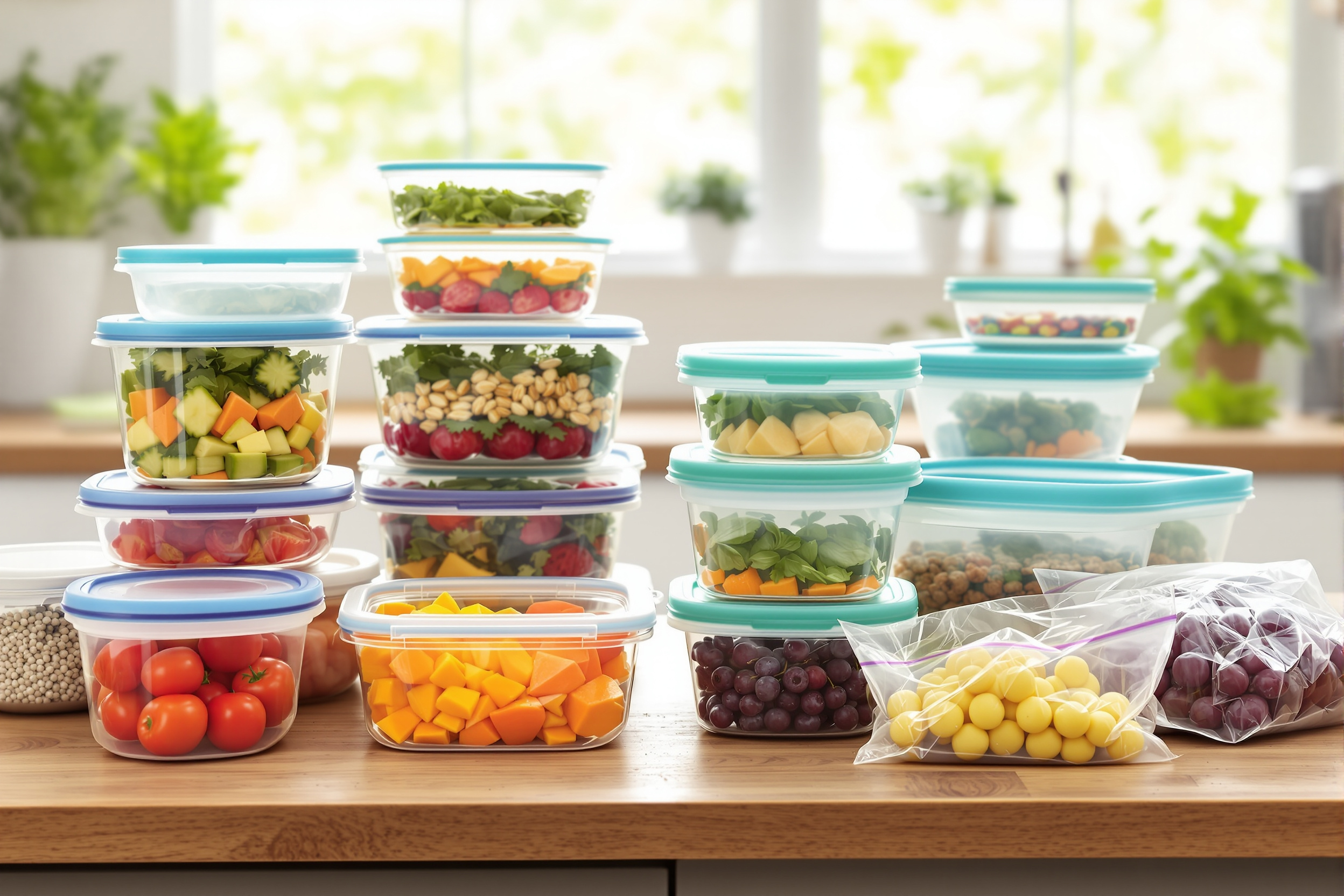
Quick Picks
| Pick | Product | Material | Best For |
|---|---|---|---|
| Best overall | Glasslock Oven Safe Set (3-pack) | Tempered glass | Replacing a whole cupboard of plastic at once |
| Best for work lunches | Bentgo Glass Lunch Container | Borosilicate glass | Reheating lunch at the office, lid off |
| Best reusable bag | Stasher Silicone Bag | Platinum silicone | Replacing zip-lock bags, freezer to microwave |
| Best for desk snacks | W&P Porter Silicone Bag | LFGB silicone | Good-looking everyday snack & fruit storage |
| Best for kids | Zip Top Reusable Silicone Bags | Platinum silicone | Easy zipper kids can open themselves |
| Best plastic-free storage | ECOlunchbox Three-in-One | Stainless steel | Cold storage and transport (transfer to reheat) |
Tap any pick below for today's exact Amazon price. Stainless steel cannot be microwaved — use the ECOlunchbox for storage and transfer food to a plate or glass dish to reheat.
Our Top Picks
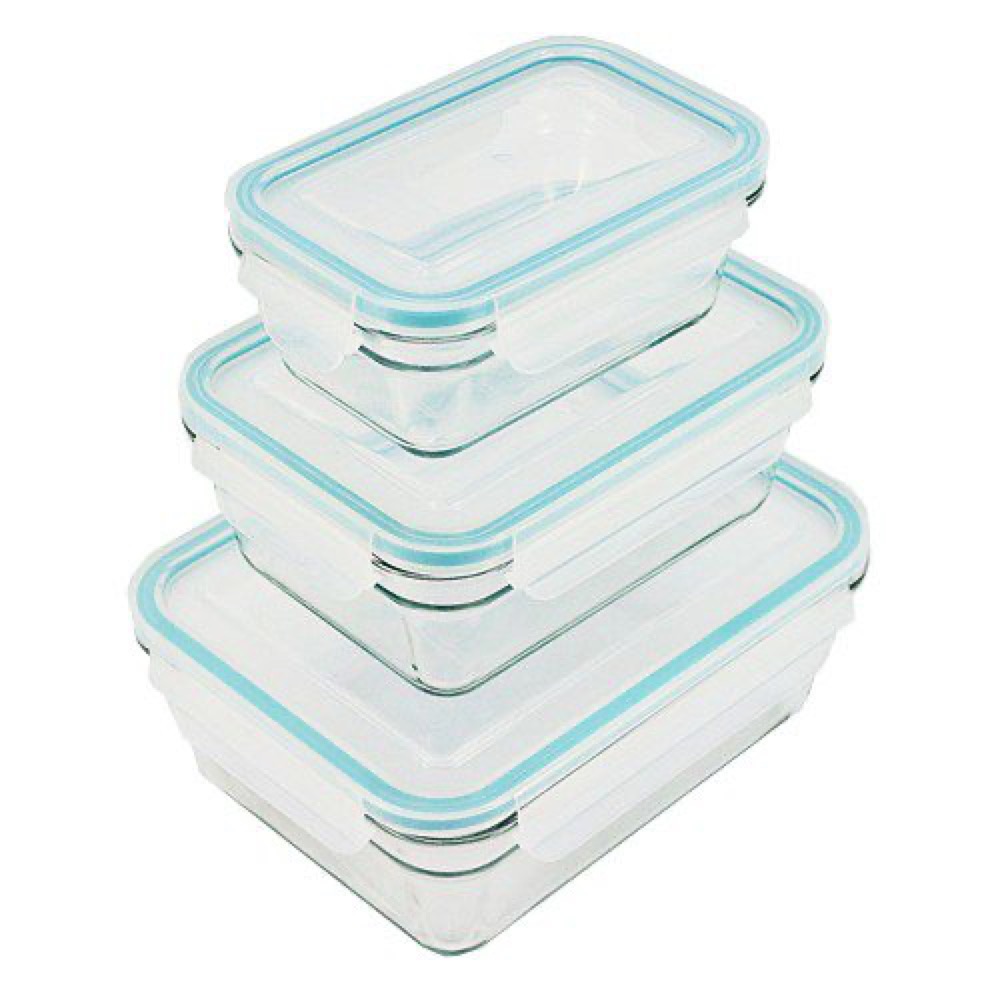
Best Overall: Glasslock Oven Safe Container Set (3-Pack)
 Best Overall
Owners say the lids snap on securely, the glass is high quality, and many sets are still going strong after three years. Reviewers use them oven-to-fridge and like how neatly they stack. The honest downsides: the plastic lids are the weak point, with cracked lids, broken locking tabs, and mold in the gasket grooves coming up repeatedly, and replacement lids are hard to source with steep shipping. Note the lids are polypropylene and are not oven-safe (glass only), and a few buyers received sets missing lock pieces.
Three stackable glass containers in one box — enough to swap out a week's worth of plastic, with snap-lock lids that actually seal soups and sauces.
Why it's safe: Food sits on inert tempered glass, not plastic — so reheating releases nothing. The BPA-free lids seal with a food-grade silicone gasket that only touches the rim.
Check Today's Price on Amazon →Amazon prices change daily — tap to see today's price and any active discount.
- Free delivery & returns for Prime members
- Sold & shipped by Amazon
- Thousands of verified reviews
Why it made the list: At roughly ten dollars per container, this is the most cost-effective way to replace an entire set of plastic at once. The snap-lock lids with silicone gaskets provide genuine leak resistance — something most stainless options cannot match — and the glass bodies go straight from fridge to microwave with the lids removed. Ideal for meal preppers who batch a week of lunches on Sunday.
For a full comparison of glass options, see our guide to the best glass food storage containers.
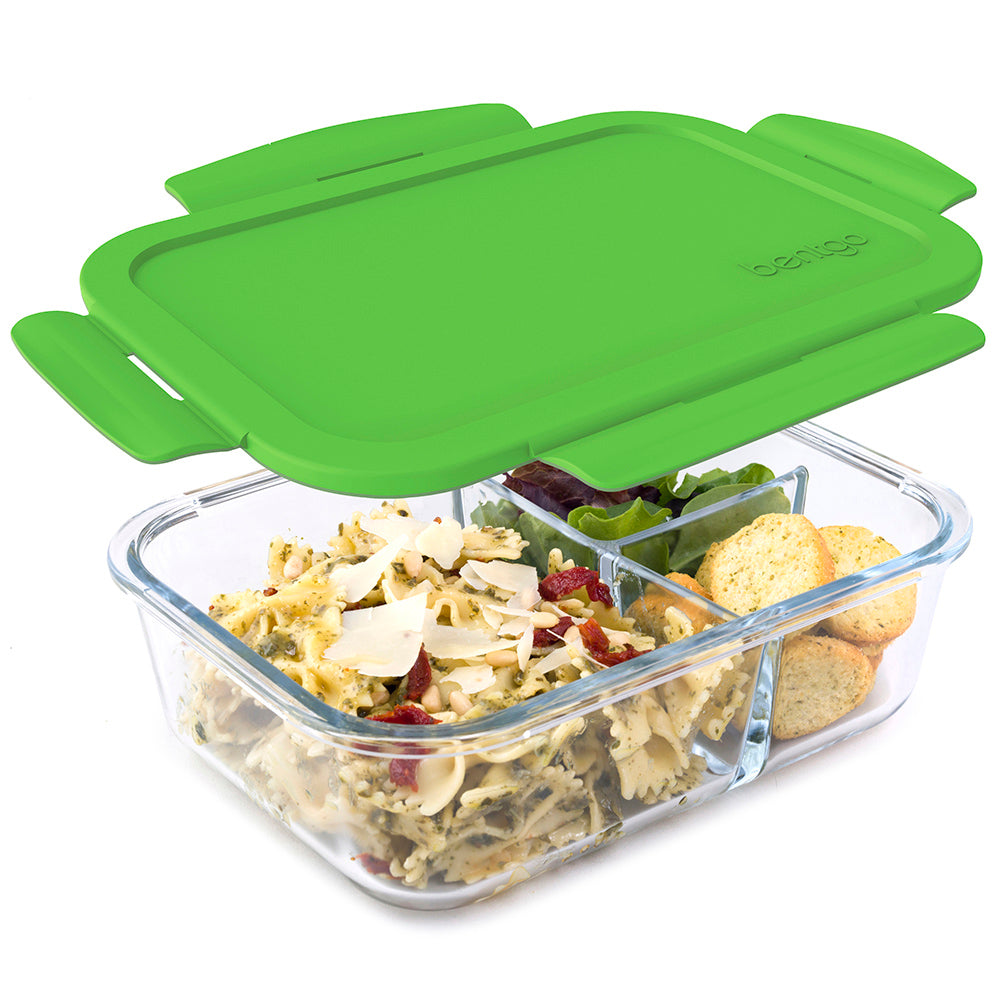
Best for Work Lunches: Bentgo Glass Lunch Container
 Best for Work Lunches
Owners praise the excellent seal and thick, sturdy glass, and say food does not seep between compartments even when the box is tipped upside down. Reviewers meal-prep in them and run them through oven, microwave, and dishwasher. The honest gripes: the glass is heavy and bulky to carry, the vacuum lid can be hard to close (some describe needing real force) and can seal shut after heating, and a few owners report the glass chipping more readily than expected. Watery foods can also cross between the two inner compartments even though the outer lid holds.
Take the lid off and microwave straight from the fridge — your reheated lunch sits on inert glass, not the plastic that sheds billions of nanoplastics when heated.
Why it's safe: The food-contact body is borosilicate glass — chemically inert and thermal-shock resistant, so reheating releases nothing into your food. The silicone gasket only seals the rim.
Check Today's Price on Amazon →Amazon prices change daily — tap to see today's price and any active discount.
- Free delivery & returns for Prime members
- Sold & shipped by Amazon
- Thousands of verified reviews
Why it made the list: This is the pick for anyone who reheats lunch at the office. Remove the lid, microwave the glass body, and there is zero plastic contact with hot food. The borosilicate glass will not shatter from temperature changes. The only real trade-off is weight — glass is heavier than plastic or steel — so plan accordingly if you commute by bike. For more reheat-friendly options, see our roundup of the best non-toxic lunch containers for adults.
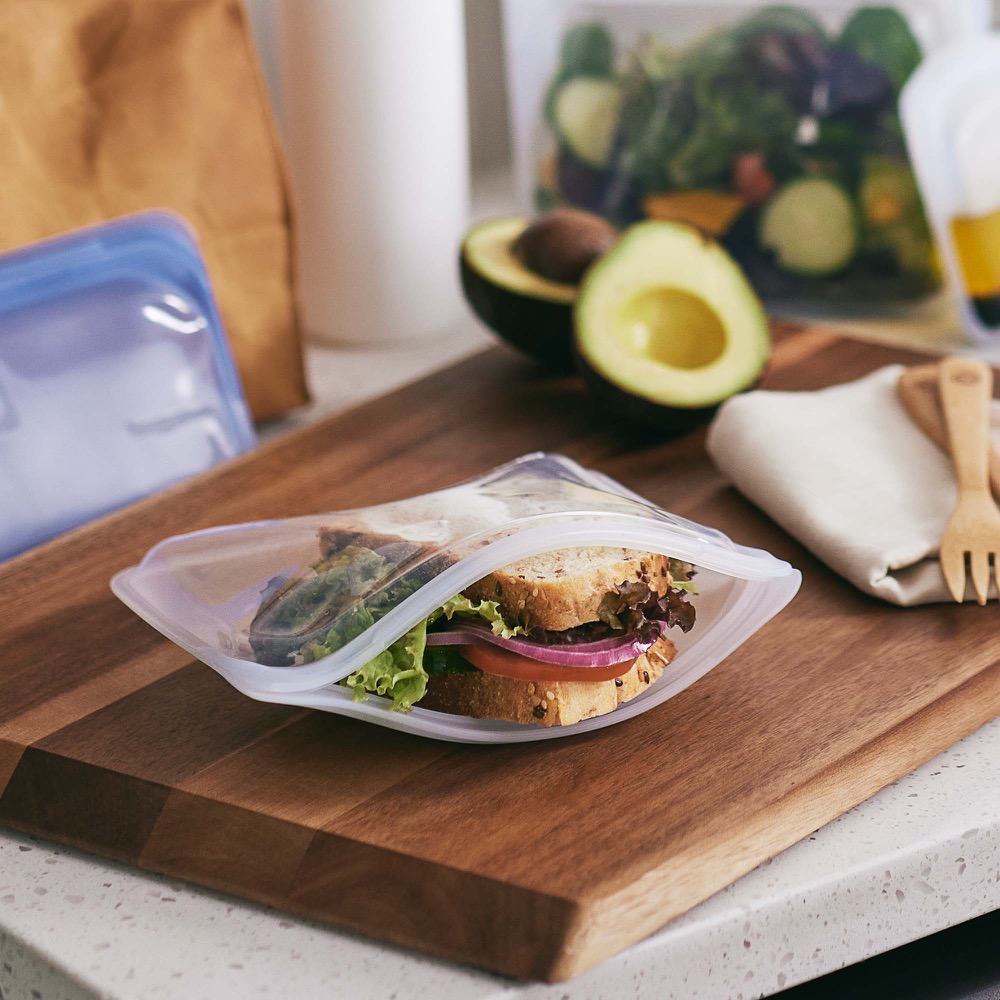
Best Reusable Bag: Stasher Reusable Silicone Bag Starter Kit
 Best Reusable Bag
For storing leftovers, marinating, freezing, or anything you would reach for a plastic zip-lock bag, Stasher's platinum-cured silicone is the upgrade — sturdier than any disposable bag and free of the chemicals that migrate from plastic. The patented Pinch-Loc seal is genuinely airtight and leakproof.
It goes from freezer to microwave to a 425°F oven, and it even handles sous vide. The starter kit covers the everyday sizes — sandwich, snack, and stand-up — so you can retire single-use bags in one swap. For covering bowls and half-used produce without plastic, a set of reusable non-toxic food wraps replaces cling film the same way.
Owners keep Stasher bags for years and like that a single bag goes from freezer to microwave to dishwasher. Reviewers use them for marinades, snacks, sous vide, and leftovers and say food stays fresh. The honest gripes: the pinch-lock seal can be tricky to open and does not always stay watertight with liquids, the inside dries slowly and can hold odors or mildew if you seal it damp, and the silicone attracts dust and pet hair on the shelf. Some owners report tears after heavy sous vide use, and the price is the most common knock.
Stop storing and reheating food in disposable plastic bags. Platinum silicone seals just as tight, survives the dishwasher and the microwave, and lasts for years instead of one lunch.
Why it's safe: Platinum-cured silicone — the highest-purity, chemically inert grade — with no plastic, PVC, BPA, lead, latex, phthalates, or PFAS.
Check Today's Price on Amazon →Amazon prices change daily — tap to see today's price and any active discount.
- Free delivery & returns for Prime members
- Sold & shipped by Amazon
Why it made the list: If your "Tupperware" is really a drawer full of zip-lock bags, this is the one-for-one swap. Stasher's platinum silicone reheats safely, seals airtight, and replaces hundreds of disposable bags over its life. For the full lineup, see our guide to the best silicone food storage bags.
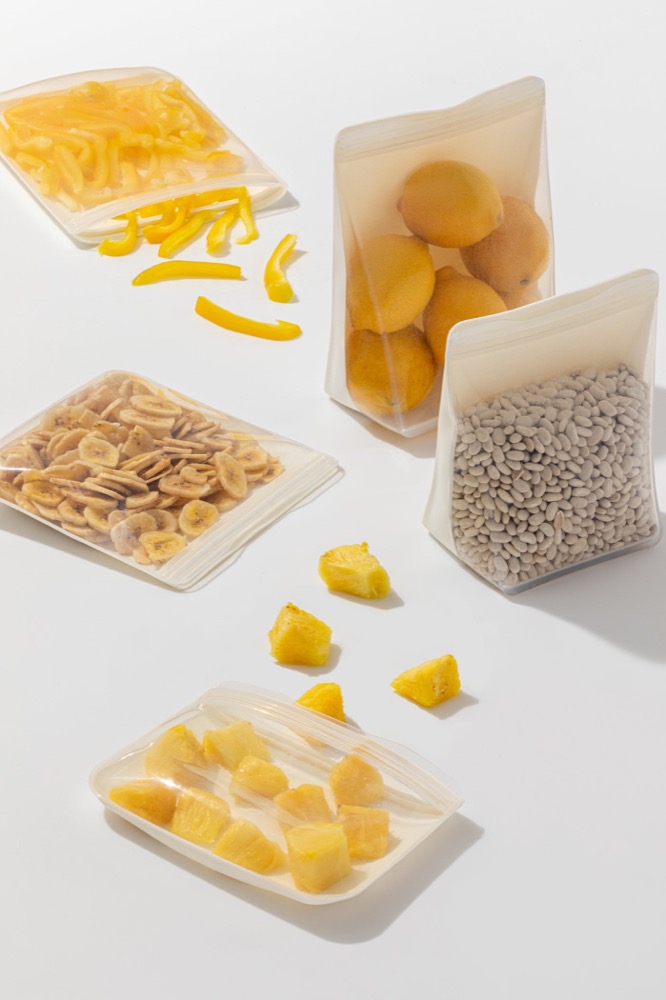
Best for Desk Snacks: W&P Porter Silicone Bag
 Best for Desk Snacks
W&P's Porter bag is the most premium-looking silicone bag available. It is matte, minimal, and available in sophisticated colorways (cream, slate, blush, mint) that do not look out of place at a work desk. Each bag is molded from one piece of LFGB-certified silicone — no chemicals, glues, or adhesives — with rounded corners so there is nowhere for buildup to hide.
It comes in both layflat and stand-up designs across five sizes. It is excellent for dry snacks, fruit, sandwiches, and freezer storage, and it is microwave and dishwasher safe.
Testers say these come closest to looking and feeling like a disposable zip-top bag, with thin, clear, pliable LFGB-certified silicone and a seal reviewers call leak-proof. Owners like that they wash up without the lingering odor other silicone bags hold. The honest downsides: like every silicone bag they are slow to dry after washing, the stand-up bag is pricey next to a box of disposables, and detailed long-term complaints are sparse, so buy for the feel and seal rather than a bargain.
A reusable bag you will not want to hide in a drawer — clean lines, muted colors, and curved corners that actually wipe clean after greasy snacks.
Why it's safe: Made from a single piece of LFGB-certified food-grade silicone — completely free of PEVA, BPA, PVC, and phthalates, with no glue or adhesive and nothing to leach into food.
Check Today's Price on Amazon →Amazon prices change daily — tap to see today's price and any active discount.
- Free delivery & returns for Prime members
- Sold & shipped by Amazon
- LFGB-certified silicone
Why it made the list: It proves a plastic-free swap does not have to look utilitarian. The Porter bag is microwave-safe, wipes clean, and is handsome enough to leave on your desk — a low-friction way to drop disposable snack bags for good.
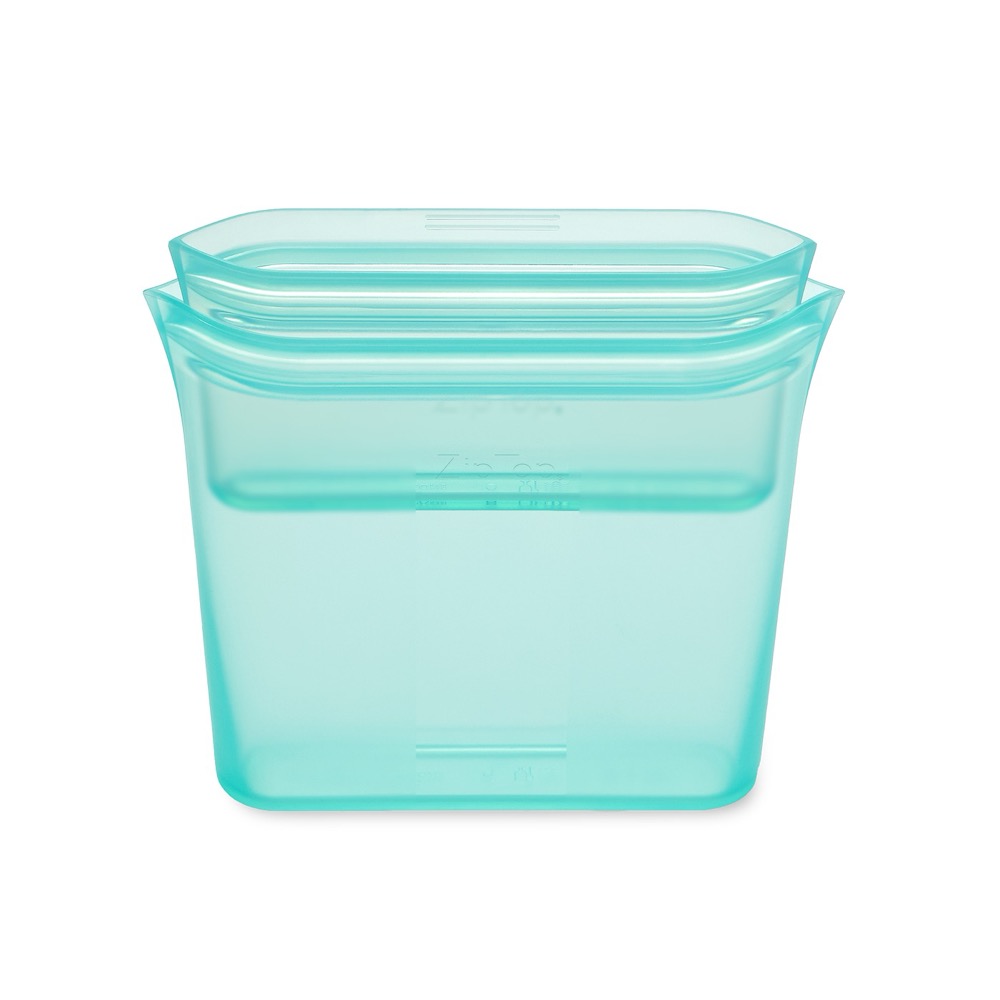
Best for Kids: Zip Top Reusable Silicone Bags
 Best for Kids
Zip Top uses a true silicone zipper — a slide-and-lock mechanism made entirely of food-grade silicone. For anyone who finds Stasher's pinch-seal fiddly (especially kids), Zip Top is immediately intuitive. You zip it shut exactly like a plastic bag, except there is no plastic anywhere.
It also stands upright without assistance, making it practical for storing yogurt, cut fruit, or liquid-heavy foods in the fridge. The snack size is ideal for the kids' lunchbox; the medium replaces the standard sandwich bag.
The stand-up design is the most-praised feature: owners call them ridiculously sturdy and like that they stay open on their own for filling and cleaning. Reviewers use them for snacks, produce, and leftovers and say the wide base makes them less messy to load than flat bags. The honest downsides: the most common complaint is that the seal is not airtight, and some owners say the zip top comes apart when the bag is packed full. The silicone also has a tacky feel that picks up dust, hair, and crumbs, so many people give them a quick rinse before filling.
Kids can open and close it themselves, and it stands open on the counter while you fill it — the closest thing to a plastic zip-lock that contains zero plastic.
Why it's safe: Built from a single piece of 100% platinum food-grade silicone with no plastic slider, BPA, BPS, or phthalates — nothing to leach or shed into food, reusable for years.
Check Today's Price on Amazon →Amazon prices change daily — tap to see today's price and any active discount.
- Free delivery & returns for Prime members
- Made in the USA
- Thousands of verified reviews
Why it made the list: The intuitive zipper makes this the easiest plastic-free bag to hand to a child, and it stands upright so it doubles as a mini container. A practical entry point for families replacing single-use baggies.
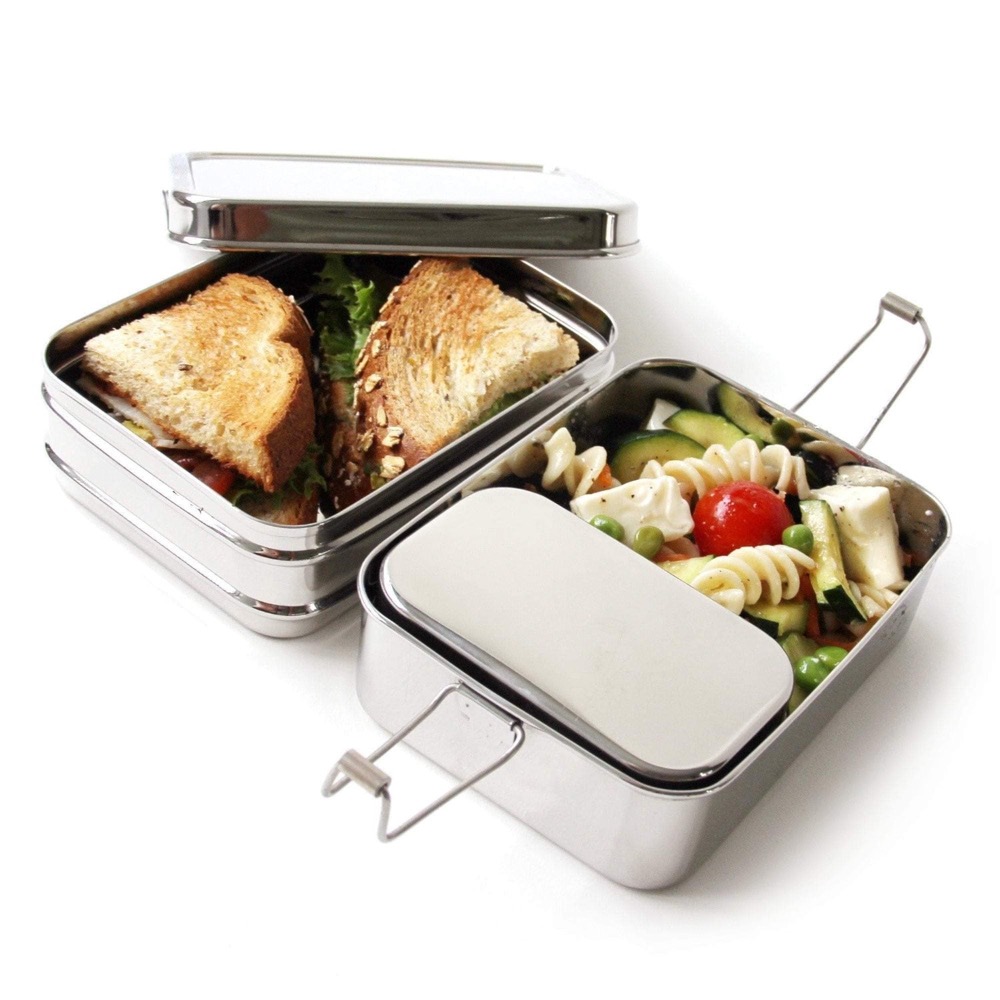
Best Plastic-Free Storage: ECOlunchbox Three-in-One Stainless Bento
 Best Plastic-Free Storage
Buyers like the great quality all-steel build and that it is genuinely plastic-free, and kids carry them daily. Reviewers appreciate the nesting design and the honest plastic-free intent. The honest warning, which the brand states plainly: it is NOT leak-proof, because there are no gaskets, so sauces and liquids will seep, pack dry foods. One owner said that after about a year the top clasps loosened and it leaks any amount of liquid in a backpack. Buy it for dry lunches, not soups.
One oval body holds three nesting tins — pack a sandwich, a side, and a snack with nothing but bare stainless steel between you and your food.
Why it's safe: Every food-contact surface is inert 18/8-style stainless steel — no plastic to leach microplastics, BPA, or phthalates, and no silicone gasket touching the food at all.
Check Today's Price on Amazon →Amazon prices change daily — tap to see today's price and any active discount.
- Free delivery & returns for Prime members
- Sold & shipped by Amazon
- Thousands of verified reviews
Why it made the list: Stainless steel cannot be microwaved, but it is the most durable, fully plastic-free way to store and carry food. Pair it with a plate or glass dish for reheating and you have a complete plastic-free workflow — cold storage in steel, reheating in glass.
How to reheat leftovers without plastic (step by step)
You do not need to buy anything to stop the highest-exposure habit today. The single most important change is to never reheat food while it is touching plastic. Here is the simple routine:
- Never microwave food in a plastic container — even a "microwave-safe" one. This is the highest-exposure step, and stopping it costs nothing.
- Transfer leftovers onto a ceramic plate or into a glass bowl before heating. Cover with a paper towel or an upturned plate, not plastic wrap, to avoid spatter.
- Store cold in whatever you like, but reheat only in glass, ceramic, or silicone. The leaching risk is overwhelmingly driven by heat.
- Replace your hot-food containers first. Swap the tubs that go in the microwave or hold freshly cooked food before worrying about cold-storage pieces.
- Retire any scratched, cloudy, or warped plastic from food use. Repurpose it for craft supplies or hardware instead of throwing it out.
- Tackle your tap water too. Filtering drinking water removes another major microplastic source — see our guide to the best water filters for microplastics.
- Cook in inert materials, not just reheat in them. A worn nonstick pan sheds PTFE particles into food while you cook — see our guide to the best non-toxic cookware for PFAS-free cast-iron, ceramic, and stainless picks.
Want the Full Kitchen Swap Checklist?
The Complete Plasticproof Guide covers every kitchen swap — containers, cookware, cutting boards, wraps, and more — with the full research and 80+ product recommendations backed by 47+ peer-reviewed studies.
Frequently Asked Questions
No, not in a way that protects your food. The "microwave-safe" label only certifies that the container will not warp or melt at microwave temperatures — it is a durability rating, not a health certification. It says nothing about chemical or particle migration. A 2023 study in Environmental Science & Technology found microwaving plastic containers released up to 4.22 million microplastic and 2.11 billion nanoplastic particles per square centimeter. The reliable fix is to reheat in glass, ceramic, or silicone instead — the same inert materials that make the safest cookware for cooking and baking.
Somewhat. Most modern Tupperware-brand pieces are polypropylene (#5), the most heat-stable common plastic, and current lines are marketed as BPA-free. That makes them more stable than older polycarbonate (#7) sets, which could contain BPA. But "more stable" is not the same as "inert" — polypropylene still sheds more particles when microwaved than glass or ceramic. Use modern plastic for cold storage, and reheat in glass.
Yes, dramatically. In the 2023 Environmental Science & Technology study, microwaving released far more microplastics and nanoplastics than either refrigeration or room-temperature storage of the same containers. Heat is the strongest single driver of plastic particle release. Acidic and fatty foods accelerate it further, and longer heating cycles release more. Removing heat from the equation — by reheating in an inert material — is the most effective single change you can make.
Yes. Borosilicate and tempered glass (like Bentgo Glass and Glasslock) are microwave-safe with the lid removed and do not leach into food. Food-grade and platinum-cured silicone (like Stasher and W&P Porter) is also microwave-safe and chemically inert. The only caution: remove any snap-on plastic lid before microwaving glass, and never microwave metal — stainless steel will arc and damage the microwave.
No. Metal cannot go in the microwave — it causes arcing (sparking) and can damage the appliance. Stainless steel containers like the ECOlunchbox are excellent for cold storage and transport because they are fully plastic-free, but to reheat you must transfer the food to a microwave-safe glass or ceramic dish first. If you reheat at work daily, a glass container is the more convenient choice.
Sources
- Hussain KA, Romanova S, Okur I, et al. "Assessing the Release of Microplastics and Nanoplastics from Plastic Containers and Reusable Food Pouches: Implications for Human Health." Environmental Science & Technology, 2023.
- Pelch KE, et al. "Endocrine-disrupting chemicals (EDCs) and their effects." Current Opinion in Endocrine and Metabolic Research, 2020.
- Rochester JR, Bolden AL. "Bisphenol S and F: A systematic review and comparison of the hormonal activity of bisphenol A substitutes." Environmental Health Perspectives, 2015.
- Leslie HA, et al. "Discovery and quantification of plastic particle pollution in human blood." Environment International, 2022.
- Jenner LC, et al. "Detection of microplastics in human lung tissue using μFTIR spectroscopy." Environment International, 2022.
- Ragusa A, et al. "Plasticenta: First evidence of microplastics in human placenta." Environment International, 2021.
- U.S. Food & Drug Administration. "Microwave Oven Radiation — Safe Use Guidance." FDA Consumer Guidance.
Protect Every Meal — Not Just Leftovers
From the kitchen to the office to the nursery — the Complete Plasticproof Guide covers every swap that matters, backed by 47+ studies and 80+ product recommendations.