Household dust is one of the largest and most overlooked ways microplastics get into your body. A 2020 study in Environment International found microplastics in house dust from all 12 countries it sampled, with PET — the plastic of polyester fabric — the most common polymer, and estimated young children are the most exposed through dust ingestion. A 2019 study using a breathing thermal manikin put daily inhalation of indoor airborne microplastics on the order of a couple hundred particles, and separate work found that adding inhalation to what we eat and drink roughly doubles total intake. The plastic comes mainly from synthetic carpet, clothing and furniture shedding fibers that settle everywhere. You can meaningfully lower it: run a true-HEPA air purifier, vacuum and damp-dust regularly, and cut synthetic-fiber shedding at the source. For the airborne side of this, see our guide to microplastics in indoor air.
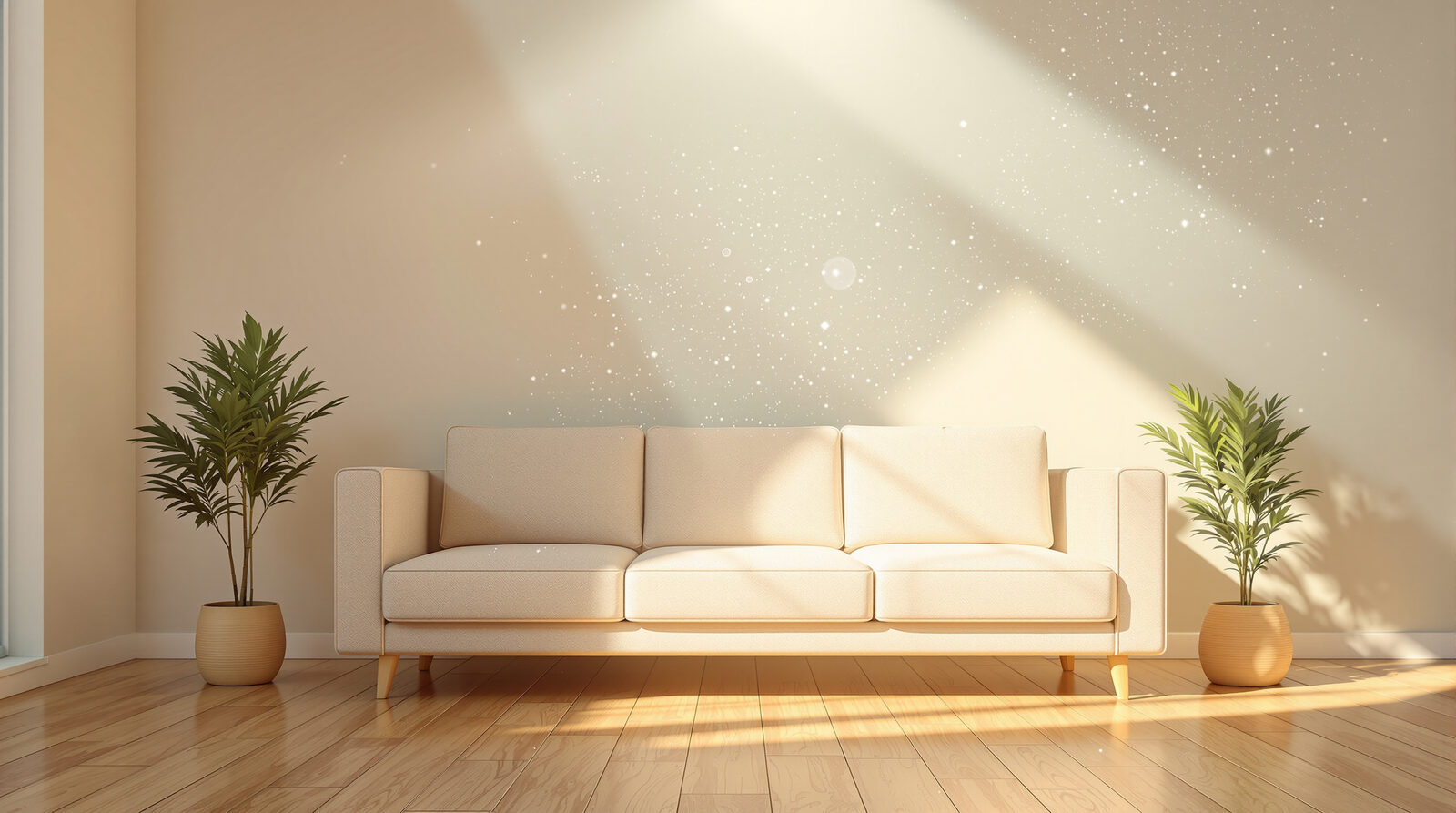
When a shaft of sunlight crosses a room and lights up a galaxy of floating specks, you are looking at household dust — and a meaningful fraction of those specks are plastic. For decades dust was treated as a cosmetic nuisance. Then researchers started running it through spectroscopy, and found the same polymers again and again: polyester, nylon, acrylic, polyethylene. The dust in an ordinary home is part plastic, and because we spend roughly 90% of our lives indoors, it is a route of exposure that rivals food and water.
This guide walks through what the research shows — the airborne fibers measured indoors, the breathing-manikin estimate of how much you inhale, and the 12-country house-dust study — then where the plastic comes from, why children are hit hardest, what it may mean for your health, and the handful of changes that actually lower it. For the bigger picture of how these particles move through you, see our overview of microplastics in the human body.
The bottom line up front: indoor dust is a plastic-laden mix you breathe and touch all day, and it is one of the few major exposure routes you fully control inside your own four walls. The biggest levers are a HEPA air purifier to pull fibers out of the air, HEPA vacuuming and damp cleaning to capture what settles, and choosing natural fibers over synthetics for the carpet, bedding and clothing that shed into dust. For the clothing angle specifically, see microplastics in clothing and how to reduce microplastics from laundry.
Are there really microplastics in household dust?
There are, and it is one of the most consistent findings in the field. When Jun Zhang, Lei Wang and Kurunthachalam Kannan analyzed indoor dust from twelve different countries in a 2020 study in Environment International, they found microplastics in every single country, with polyethylene terephthalate — PET, the plastic of polyester clothing and drink bottles — the dominant polymer. Dust is not occasionally contaminated; it is reliably part plastic, more or less wherever people live.
The airborne half of the story is just as clear. In a 2017 study in Environmental Pollution, Rachid Dris and colleagues compared indoor and outdoor air and found that fiber levels indoors ran far higher than outdoors, with roughly a third of the indoor fibers made of petrochemical plastic and the rest natural materials like cotton and wool. Those airborne fibers do not stay airborne forever — they settle, and become the dust on your floor. Indoor air and indoor dust are two phases of the same problem.
Where do the microplastics in household dust come from?
Overwhelmingly, from the soft synthetic stuff inside your home. Polyester, nylon and acrylic are plastic, and the clothing, carpet, rugs, upholstery, curtains and blankets made from them shed microscopic fibers every time they are worn, walked on, sat on or laundered. Add fragments abraded from hard plastic objects and particles tracked in on shoes, and you have the recipe for the dust under your couch. The home is not just collecting outdoor pollution — it is manufacturing its own.
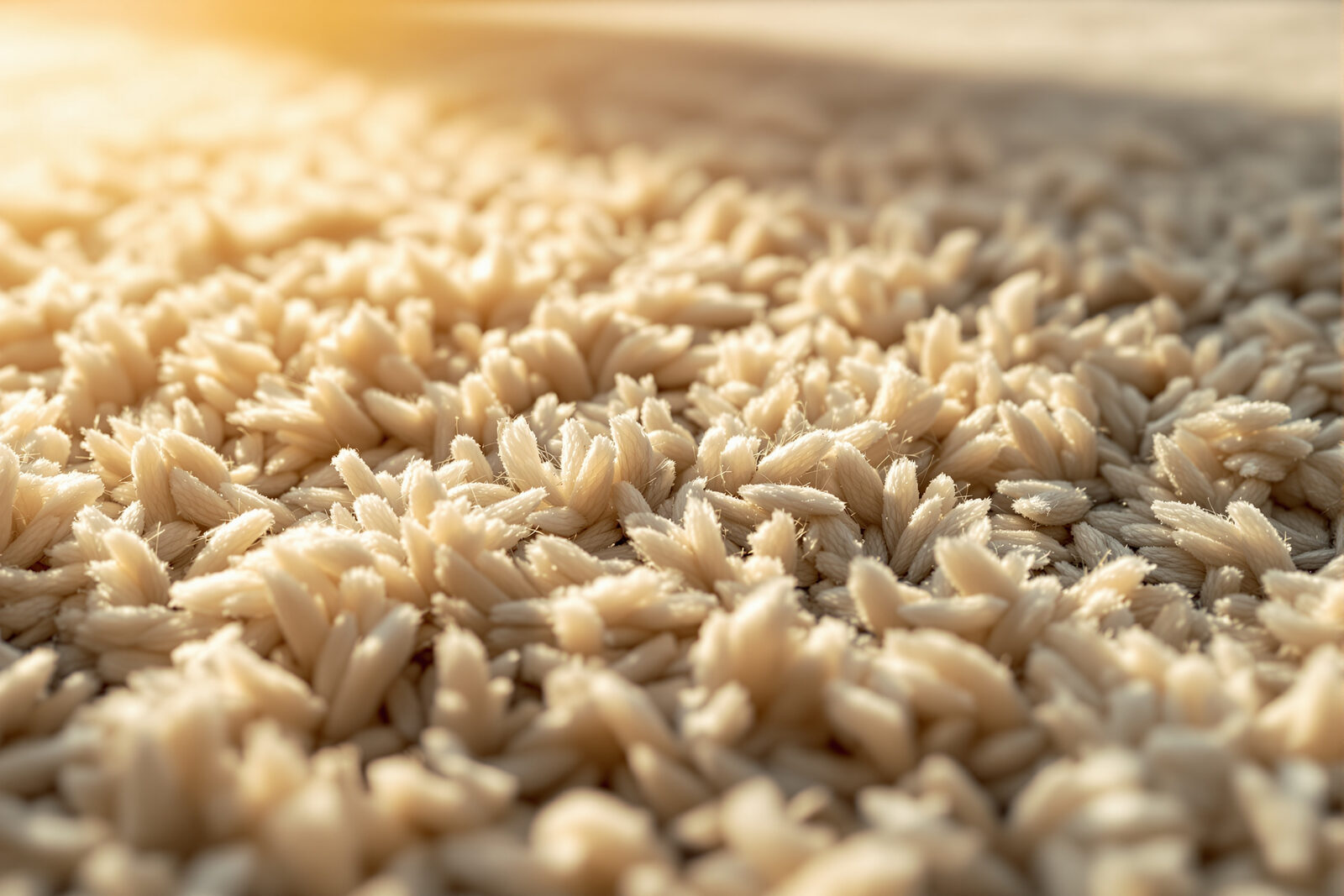
Carpet is the heaviest contributor in most homes, because it is often pure synthetic, covers a huge surface area and gets abraded underfoot every day. Soft furnishings and synthetic clothing come next — which is why a bedroom full of polyester bedding and a closet of synthetic fast fashion can be a bigger dust source than it looks. Dris and colleagues (2017) found indoor fiber deposition was substantial, settling onto surfaces day after day. The practical upshot: the materials you choose for the big soft surfaces in a room largely set how much plastic ends up in its dust. For the bedroom, see our guides to the best organic cotton sheets and a non-toxic mattress.
How much microplastic are you breathing in from household dust?
Enough that scientists count it alongside what you eat and drink. In a 2019 study in Scientific Reports, Alvise Vianello and colleagues placed a breathing thermal manikin — a mannequin that inhales like a person — in a real apartment and estimated it took in on the order of a couple hundred airborne microplastic particles a day, dominated by polyester and polyamide fibers. That is the breathing zone of an actual room, not a worst-case lab.
Put that next to intake from food and water and the scale becomes clear. A widely cited 2019 analysis in Environmental Science & Technology by Kieran Cox and colleagues estimated annual human microplastic consumption and concluded that adding inhalation to food and drink roughly doubles the total. In other words, the air in your home — and the dust feeding it — is not a rounding error on top of bottled water and seafood. It is a comparable source, and unlike the ocean, it is inside a space you control. For the drinking-water side of the ledger, see whether tap water is safe to drink.
Are children more exposed to microplastics in dust?
Yes — young children are the single most exposed group, and it is not close. They spend far more time on and near the floor where dust settles, they put hands, toys and other objects in their mouths, and they breathe more air relative to their body weight than adults do. Every one of those habits points exposure straight at the dust layer. The 2020 house-dust study estimated that infants and toddlers have the highest intake of PET microplastics from dust ingestion of any age group.
That is why the room that most rewards attention is the nursery or playroom. A hard floor you can damp-mop instead of wall-to-wall synthetic carpet, natural-fiber rugs and bedding, a HEPA air purifier running on low near the play area, and a no-shoes rule do more for a crawling baby than almost anything else on this list. None of it requires panic — small, durable changes to the surfaces a child lives closest to are the whole game. For related nursery choices, see our guide to a non-toxic mattress.
Is breathing microplastic dust actually harmful?
The honest answer is that it is a signal worth respecting, not a proven cause of disease at ordinary household levels. We know inhaled particles reach deep into the body: a 2022 study in Science of the Total Environment detected microplastics in 11 of 13 human lung tissue samples, with polypropylene and PET the most common polymers — evidence that what floats in indoor air ends up in lung tissue, not just the nose and throat. Laboratory studies link plastic fibers and particles to airway irritation and inflammation.
What the science has not shown is that typical home-dust exposure causes illness in people. Researchers have demonstrated presence and plausible biological mechanisms; they have not demonstrated that the amounts in an ordinary home make anyone sick. So the accurate framing is neither “harmless” nor “toxic” — it is that inhaled microplastics are real, they reach places that matter, the early signals deserve respect, and the exposure is unusually easy to lower. That combination is exactly the case for acting without alarm. For more on where these particles end up, see microplastics in lungs.
How do you reduce the microplastics in your household dust?
Attack it from both ends — pull fibers out of the air, and stop making so many of them. On the air side, a true-HEPA air purifier sized for the room captures the fine fibers and fragments while they are still airborne, and HEPA vacuuming plus regular damp-dusting and damp-mopping trap settled dust instead of kicking it back up (a dry feather duster mostly relaunches it). On the source side, choosing natural fibers over synthetics for the big soft surfaces, washing synthetics less often and in a fiber-catching bag, taking shoes off at the door, and ventilating all cut how much plastic enters the dust in the first place.
Start where the exposure actually is
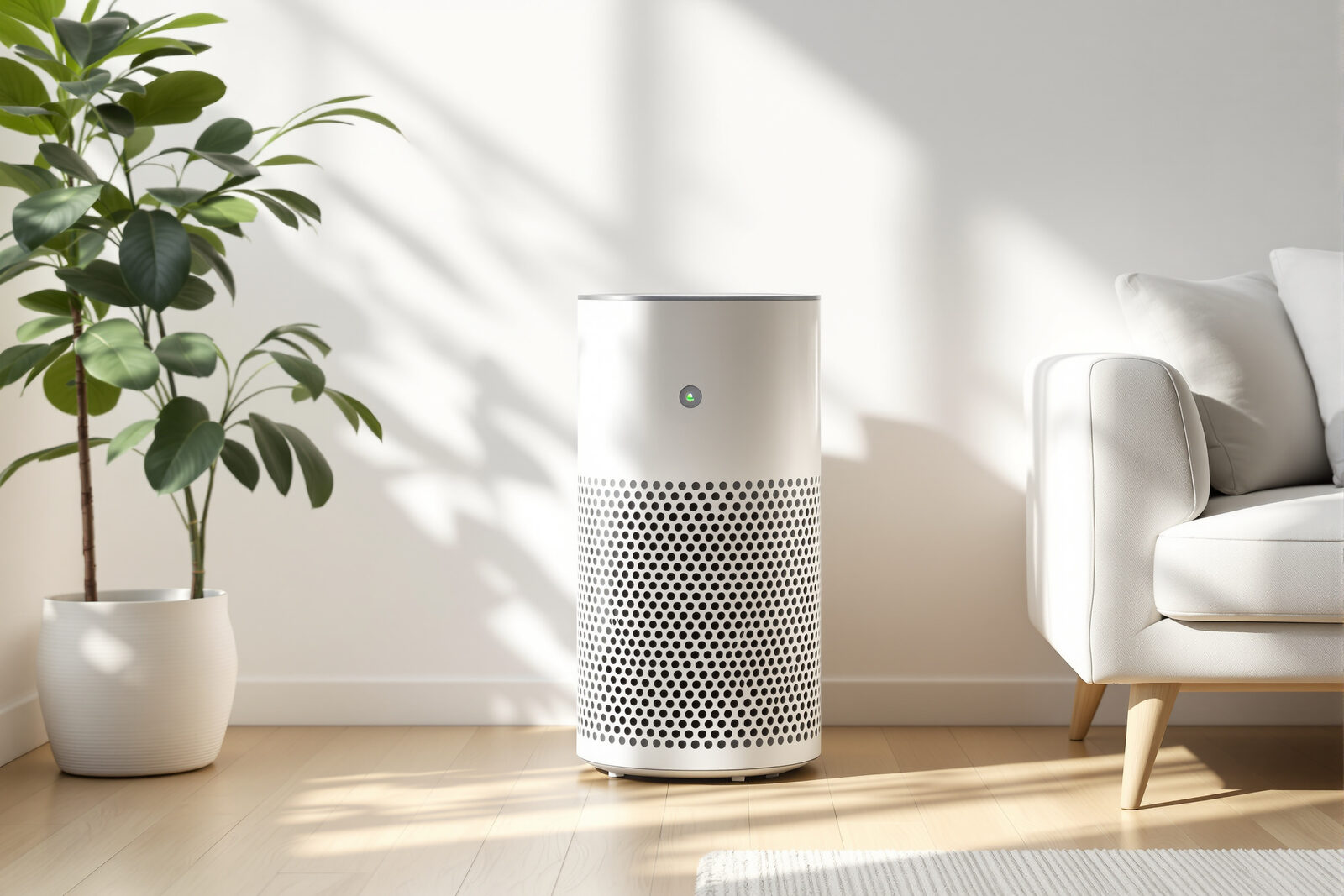
A true-HEPA air purifier is the single highest-leverage buy for indoor microplastics — it pulls the fibers out of the air before they settle into the dust you breathe. Everything else builds on that first step.
The HEPA air purifiers that pull microplastic fibers out of your air
You cannot vacuum airborne fibers, and you cannot choose your way out of every synthetic surface overnight — so the fastest win is capturing the particles while they are still in the air. That means real mechanical HEPA filtration (which physically traps fibers), sized for the room, with no ozone-generating ionizer. Below are real, currently-sold units that do it, from a buy-it-for-life medical-grade tower to a quiet budget pick, plus one upstream tool that stops synthetic laundry from shedding fibers into your home in the first place. Prices and availability change, so check current listings.
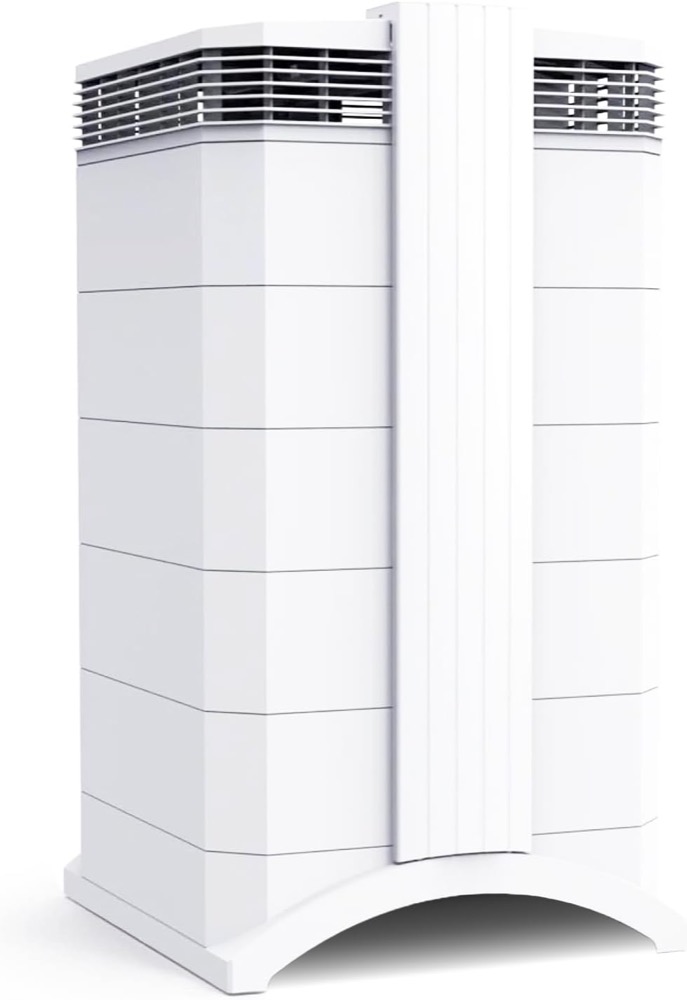
1. IQAir HealthPro Plus — Best Overall
 Best Overall
"Worth every penny" is the phrase that keeps appearing in owner threads — usually from people who have run the same unit continuously for 6, 10, even 15 years and call it the only true buy-it-for-life option in the category. The most common real-world report is relief you can feel: allergy symptoms fading within days, one owner going "from a sore throat to clear breathing in 1 day" during wildfire smoke. The consistent gripes match the ones we flagged — the upfront and filter costs sting, it needs the louder mid-to-high speeds to do its best work, and nobody calls it pretty. Owners buy it anyway, and then often buy a second.
The only consumer purifier that captures particles down to 0.003 microns — so the ultrafine plastics and nanoplastics that slip through ordinary HEPA get trapped here.
Why it's safe: True mechanical HyperHEPA plus an activated-carbon stage physically traps fine and ultrafine particles and microplastics — with no ozone-generating ionizer that would just move particles around the room.
Check Today’s Price on Amazon →Amazon prices change daily — tap to see today's price and any active discount.
- Free delivery & returns for Prime members
- Sold & shipped by Amazon
- Thousands of verified reviews
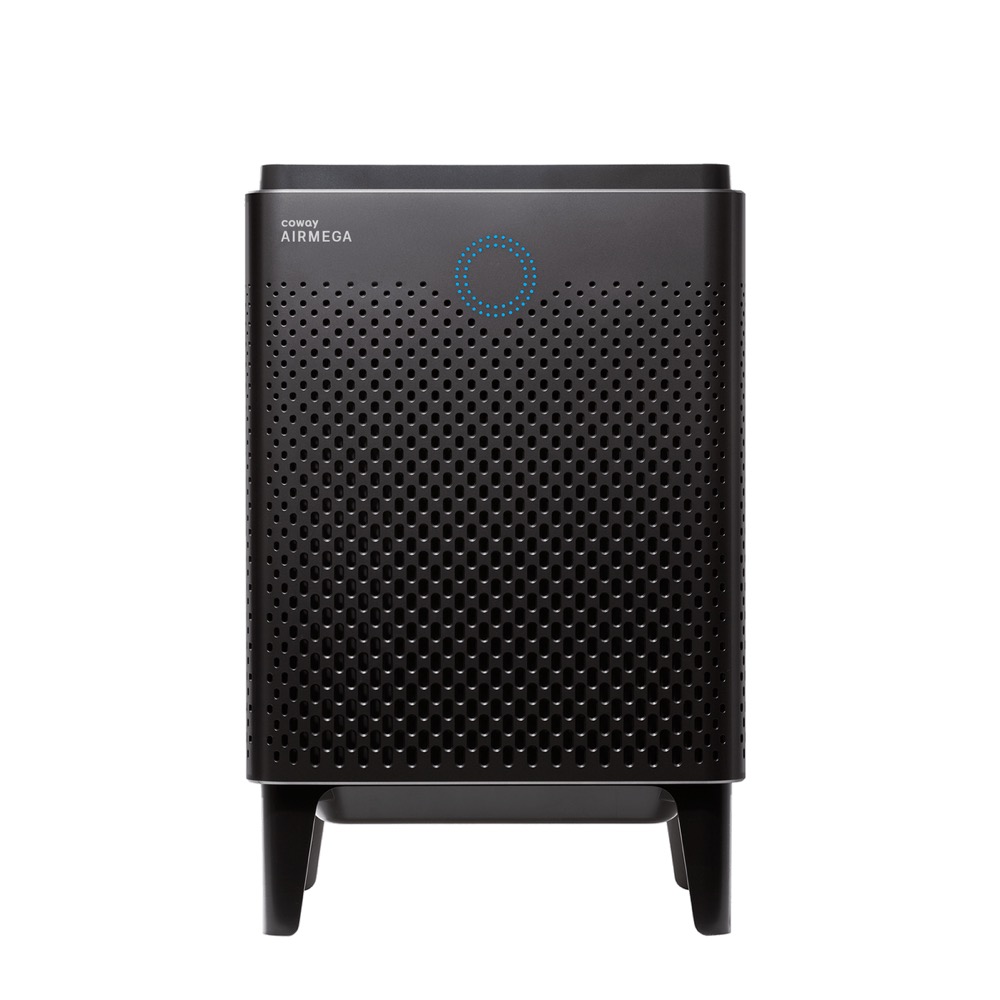
2. Coway Airmega 400 — Best Large Room
 Best Large Room
"Built like a tank" is the phrase owners reach for. The pattern in long-term threads: people run it 24 hours a day for five-plus years — many since the 2019 wildfire seasons — and report it has held up without complaint. Day to day, the auto sensor is what they actually talk about: it kicks itself into high gear the moment cooking or vacuuming spikes the particle count, then settles back down on its own. Two honest notes that recur in reviews: official replacement filters aren't cheap (many owners use compatible third-party filters for far less), and almost everyone advises buying the unit on sale rather than at full retail.
One unit covers an open floor plan — and the color-coded LED ring shows you exactly when particle levels spike from vacuuming or laundry.
Why it's safe: Dual True HEPA layers physically capture fine particles and microplastics down to 0.3 microns, each paired with activated carbon — pure mechanical filtration, no ozone.
Check Today’s Price on Amazon →Amazon prices change daily — tap to see today's price and any active discount.
- Free delivery & returns for Prime members
- Sold & shipped by Amazon
- Thousands of verified reviews
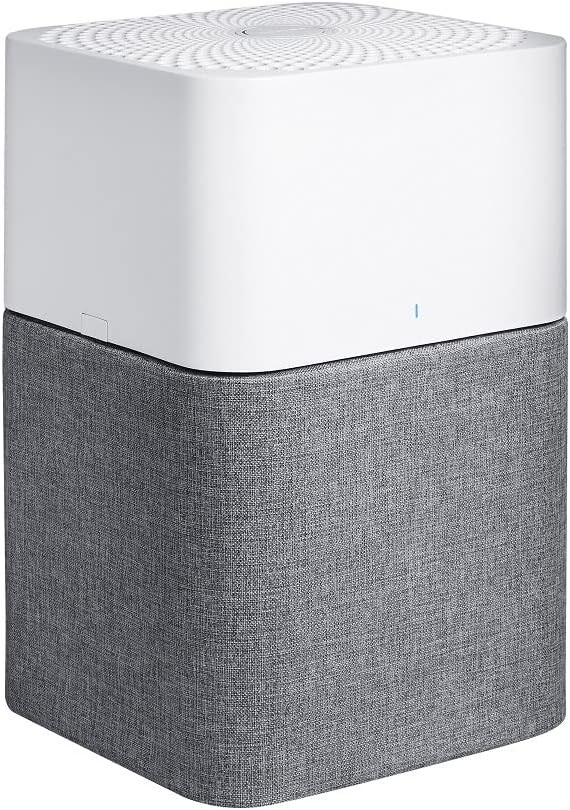
3. Blueair Blue Pure 211+ Auto — Best Value for Big Spaces
 Best Value for Big Spaces
In long-term reviews the 211+ reads like the appliance you forget is there: one button, quiet on the lower speeds, and still running after seven years in some households. What owners mention most is smell — cooking and pet odors clearing within the hour, and the tell-tale sign it's working: "If I do not have mine on, I can smell my dogs and everything feels dirty." Pet owners treat the washable fabric pre-filter as the star feature, vacuuming a coat of dog hair off it weekly while the main filter stays clean. The fair warnings from reviews: the top speed is genuinely loud (most people live on low or medium), and replacement filters are not cheap.
It senses particle spikes — cooking, vacuuming, folding laundry — and ramps up on its own, then quiets down once the air is clean again.
Why it's safe: HEPASilent mechanical filtration plus an activated-carbon layer captures fine particles and microplastic fibers down to 0.1 microns, with no ozone-producing ionizer.
Check Today’s Price on Amazon →Amazon prices change daily — tap to see today's price and any active discount.
- Free delivery & returns for Prime members
- Sold & shipped by Amazon
- Thousands of verified reviews
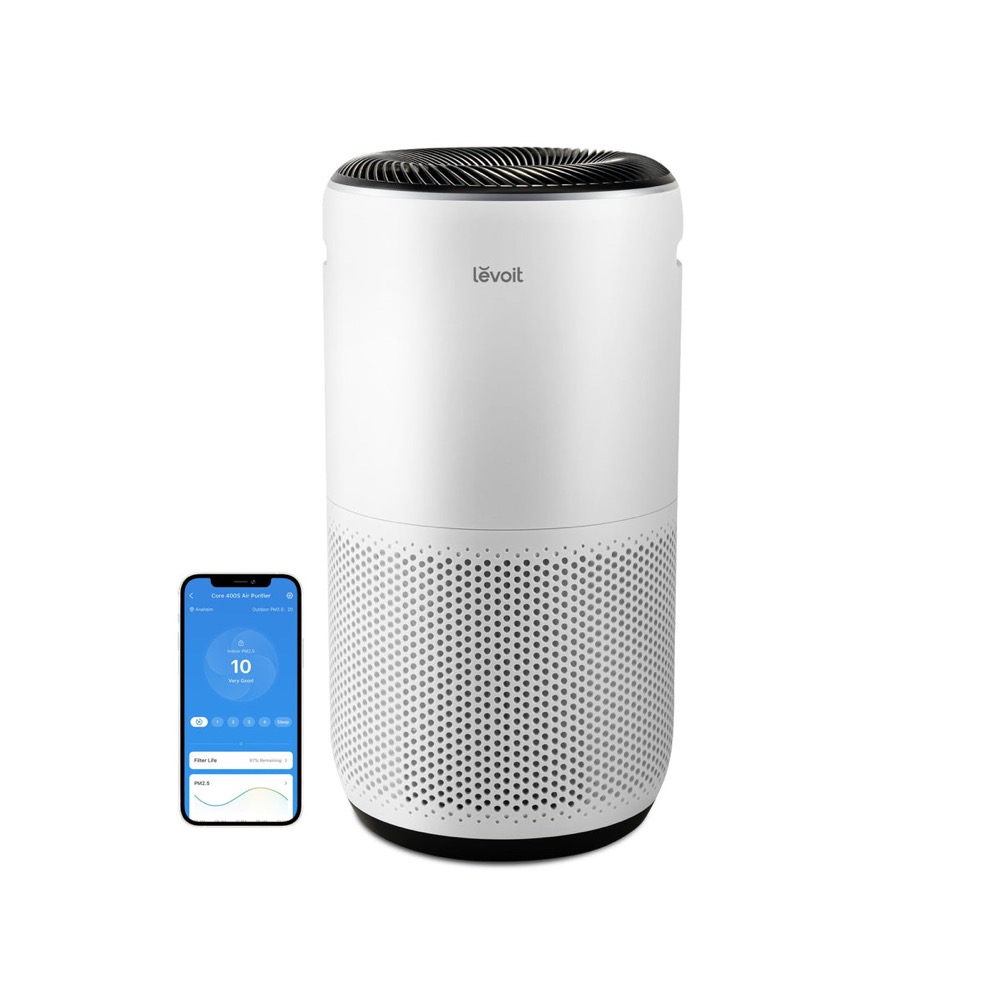
4. Levoit Core 400S — Best Smart Pick
 Best Smart Pick
Levoit owners talk about sleep more than specs. The near-silent sleep mode is why this unit ends up in bedrooms — and why people who start with one often add another for each bedroom. The most repeated reports: noticeably less dust and cooking odor, and allergy sufferers waking up clearer. The honest downsides from reviews: a minority of owners notice a faint high-pitched whine on the lowest speeds, the WiFi app can be flaky about staying connected, and fresh replacement filters can smell plasticky for a day or two until they air out.
At 24dB on its lowest setting it's quieter than a whisper — ideal for the bedroom, where synthetic bedding sheds the most microplastic fiber overnight.
Why it's safe: A True HEPA H13 filter plus activated carbon mechanically captures fine particles and microplastics down to 0.3 microns — no ozone, just real filtration you can watch drop on the app.
Check Today’s Price on Amazon →Amazon prices change daily — tap to see today's price and any active discount.
- Free delivery & returns for Prime members
- Sold & shipped by Amazon
- Thousands of verified reviews
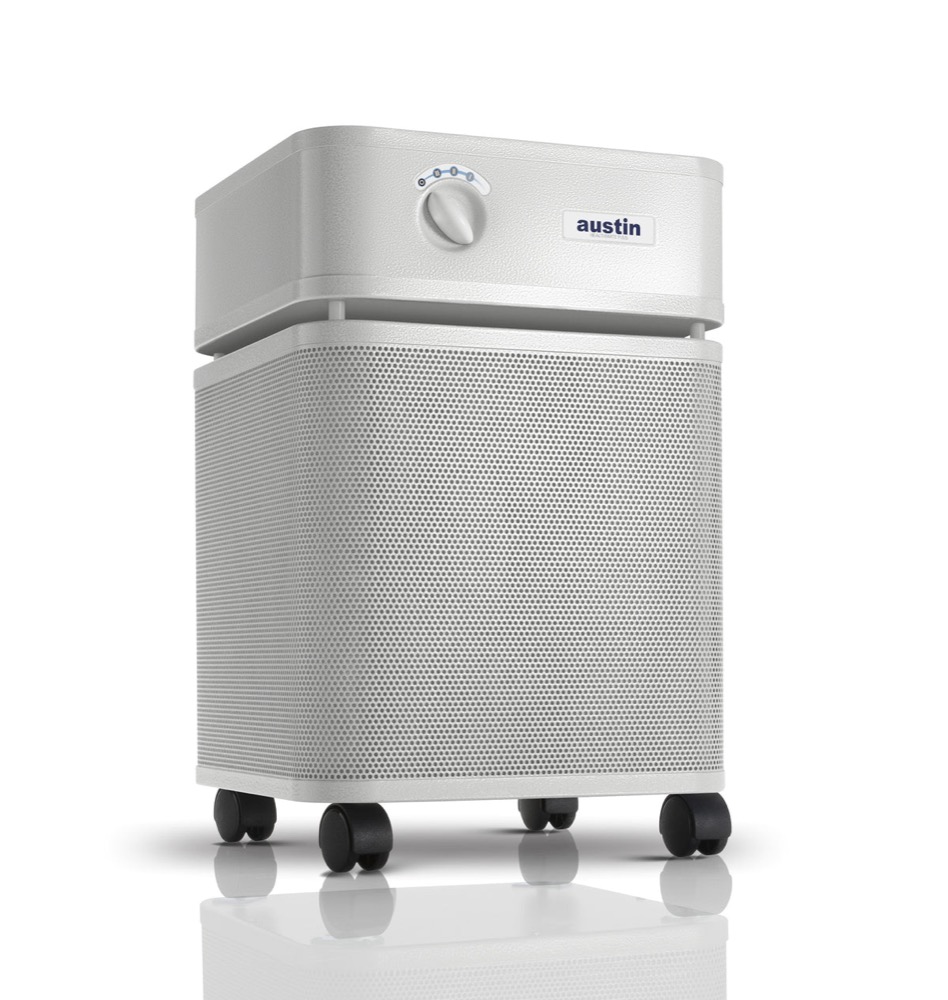
5. Austin Air HealthMate Plus — Best Medical-Grade Budget
 Best Medical-Grade Budget
Austin owners talk in decades — "ran like a champ for six years non stop," "still working after 19 years." What they say it does that others can't: actually remove smoke and chemical smells. Apartment dwellers with smoking neighbors credit the 15 pounds of activated carbon with making home bearable again, and the 5-year filter is how nearly every owner justifies the upfront price. The fair warnings: it is loud on high (think box fan), and it is a heavy steel drum on casters with zero smart features — though long-term owners tend to count the no-electronics simplicity as exactly why it refuses to die.
One filter lasts five years instead of being replaced every 6–12 months — the lowest total cost of ownership of any unit here, with no plastic in the air path.
Why it's safe: A massive True HEPA bed plus 15 lb of activated carbon mechanically captures fine particles and microplastics — a steel-housed, no-ozone design with no plastic touching the airstream.
Check Today’s Price on Amazon →Amazon prices change daily — tap to see today's price and any active discount.
- Free delivery & returns for Prime members
- Sold & shipped by Amazon
- Thousands of verified reviews
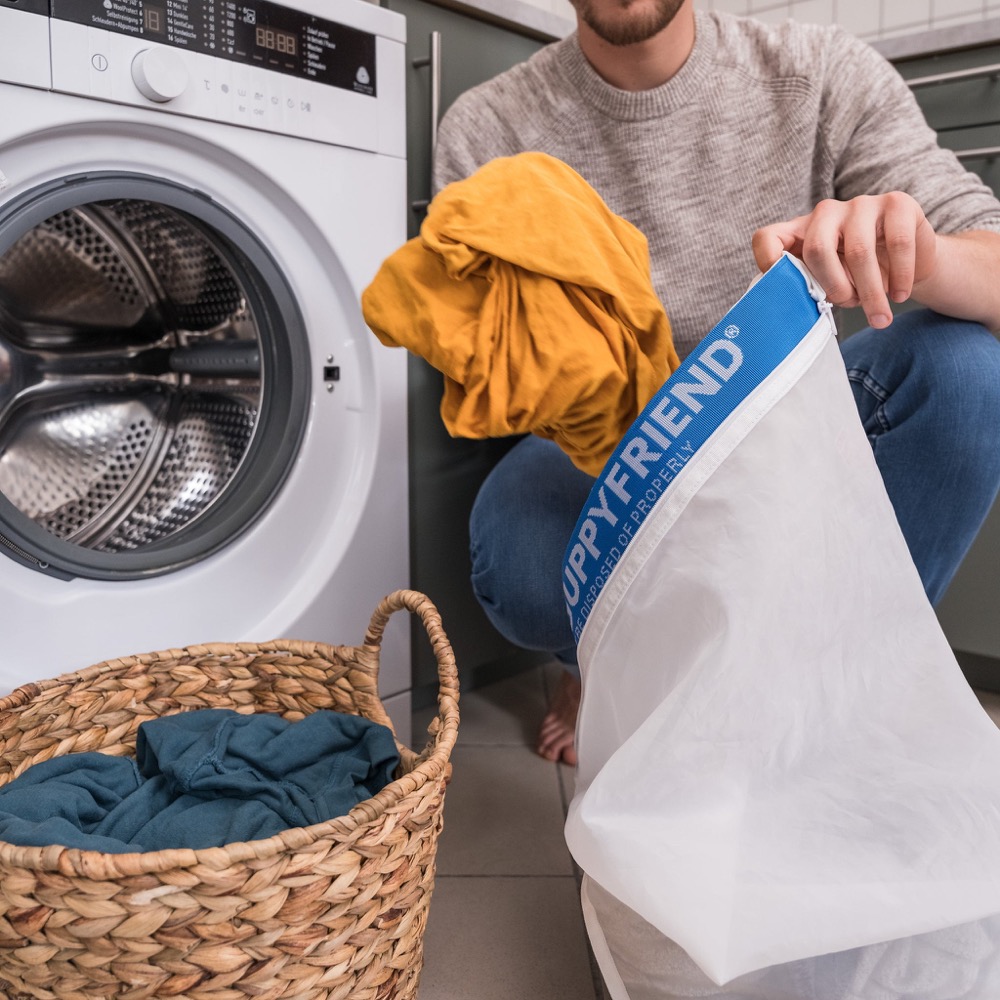
6. Guppyfriend Washing Bag — Best Upstream Fix
Air purifiers catch fibers after they are airborne; this one stops many of them from ever shedding into your home. Synthetic clothing is a leading source of the microfibers that become household dust, and a fiber-catching wash bag cuts both the shedding and the lint that would otherwise end up on your floors and in your lungs.
 Best Upstream Fix
No plumbing, no landlord conversation, and it protects the garments most responsible for the problem rather than the whole load.
Why it helps: A 50-micron mesh sits well inside the pore size that produced significant microfiber reductions in the published trials, and it cuts the mechanical abrasion that generates the fibers in the first place.
Check Today’s Price on Amazon →Amazon prices change daily — tap to see today's price and any active discount.
- Free delivery & returns for Prime members
- Thousands of verified reviews
- Reusable for years
Want the Full Home Protection Guide?
Your air and dust are one of dozens of daily plastic touchpoints that add up. The Complete Plasticproof Guide covers every room — kitchen, bathroom, bedroom, living room — with 80+ product recommendations backed by 47+ studies.
The honest verdict
Is your household dust full of microplastics? Yes — study after study finds them in indoor dust and air, PET and other synthetic-fiber plastics dominate, and the particles reach as deep as human lung tissue. The crucial detail is proportion. Indoor dust is a genuinely major exposure route, comparable to food and water rather than a footnote, and it is the one that plays out entirely inside a space you control. At the same time, no study has shown that ordinary home-dust exposure causes disease, so this is a reason to act calmly, not to panic.
The practical response is unusually satisfying because the inputs are all around you. Run a HEPA air purifier where you spend the most time, vacuum with a HEPA machine and damp-clean instead of dry-dusting, and — over time, as things wear out — replace the biggest synthetic soft surfaces with natural fibers and wash synthetics in a fiber-catching bag. You do not need to gut your house. A purifier, a cleaning habit, and a few better material choices quietly do most of the work, and they pay off every day you breathe at home. For the room-by-room version, see how to reduce microplastics in your body.
Cut the exposure that actually adds up
The biggest home wins are a HEPA air purifier, HEPA vacuuming and damp cleaning, and fewer synthetic soft surfaces. Start with the air and the floor — that is where the dust you breathe is made.
Frequently Asked Questions
Yes. Microplastics are a routine component of indoor dust. A 2020 study in Environment International by Zhang, Wang and Kannan found microplastics in house dust samples from all 12 countries it tested, with polyethylene terephthalate (PET, the plastic of polyester fabric and bottles) the most common polymer. Earlier work by Dris and colleagues (2017) measured far higher airborne-fiber levels indoors than outdoors, with roughly a third of indoor fibers made of plastic. The particles come mainly from synthetic textiles, carpet and upholstery shedding fibers that settle onto every surface.
A 2019 study in Scientific Reports used a breathing thermal manikin to estimate that a person indoors inhales on the order of a couple hundred airborne microplastic particles per day, dominated by polyester and polyamide fibers. A 2019 analysis in Environmental Science & Technology concluded that adding inhalation to the microplastics we eat and drink roughly doubles total intake. Exact numbers vary with activity, ventilation and how many synthetic furnishings a home contains, but inhaled and ingested dust is a major exposure route — not a minor one.
Mostly from synthetic materials inside your home. Polyester, nylon and acrylic clothing, carpet, rugs, upholstery, curtains and soft furnishings constantly shed tiny plastic fibers as they are worn, walked on and laundered. Those fibers, plus fragments abraded from plastic objects and particles tracked in from outside on shoes, settle into dust. Dris and colleagues (2017) found indoor fiber deposition was substantial and that about a third of indoor fibers were petrochemical plastic, with the rest natural fibers like cotton and wool.
Yes — young children are the most exposed group. They spend more time on or near the floor where dust settles, put hands and objects in their mouths, and breathe faster relative to their body size. The 2020 house-dust study by Zhang, Wang and Kannan estimated that infants and toddlers have the highest intake of PET microplastics from dust ingestion of any age group. That is why cleaning routines and reducing synthetic soft furnishings matter most in nurseries and play areas.
The honest answer is that it is a signal worth respecting, not a proven cause of disease at ordinary home levels. Microplastics have been found in human lung tissue — a 2022 study detected them in 11 of 13 lung samples, polypropylene and PET most common — which shows inhaled particles reach deep into the lungs. Laboratory studies link plastic particles and fibers to airway inflammation. But researchers have demonstrated presence and plausible mechanisms, not that typical household dust exposure causes illness, so the reasonable move is to lower exposure where it is easy.
Attack it from both ends. Pull fibers out of the air with a true-HEPA air purifier sized for the room, and capture settled dust with a vacuum that has a HEPA filter plus regular damp-dusting and damp-mopping, which trap particles instead of relaunching them. Then cut the source: choose natural fibers (cotton, wool, linen) over synthetics for clothing, bedding and rugs where you can, wash synthetics less often and in a fiber-catching bag, take shoes off at the door, and ventilate. No single step is a cure, but together they measurably lower the plastic in your dust.
Sources
- Zhang J, Wang L, Kannan K. "Microplastics in house dust from 12 countries and associated human exposure." Environment International, 2020;134:105314. (Found microplastics in indoor dust across 12 countries, with PET the most common polymer, and estimated young children are most exposed through dust ingestion.)
- Dris R, Gasperi J, Mirande C, et al. "A first overview of textile fibers, including microplastics, in indoor and outdoor environments." Environmental Pollution, 2017;221:453–458. (Measured far higher airborne fiber levels indoors than outdoors, with about a third petrochemical/plastic and the rest natural fibers; indoor deposition into dust was substantial.)
- Vianello A, Jensen RL, Liu L, Vollertsen J. "Simulating human exposure to indoor airborne microplastics using a Breathing Thermal Manikin." Scientific Reports, 2019;9:8670. (Used a breathing thermal manikin to estimate inhalation of indoor airborne microplastics on the order of a couple hundred particles per day; polyester and polyamide dominated.)
- Cox KD, Covernton GA, Davies HL, et al. "Human Consumption of Microplastics." Environmental Science & Technology, 2019;53(12):7068–7074. (Estimated annual human microplastic intake and found that adding inhalation to food and drink roughly doubles the total.)
- Jenner LC, Rotchell JM, Bennett RT, et al. "Detection of microplastics in human lung tissue using µFTIR spectroscopy." Science of the Total Environment, 2022;831:154907. (Detected microplastics in 11 of 13 human lung tissue samples, with polypropylene and PET the most common polymers — evidence inhaled particles reach deep lung tissue.)