PFAS turn up in a large share of makeup — and rarely on the label. A 2021 study in Environmental Science & Technology Letters tested 231 cosmetics sold in the US and Canada and found high fluorine, a marker for PFAS, in 52% of them — including 82% of waterproof mascaras, 63% of foundations and 62% of liquid lipsticks. When a subset was analyzed in detail, the products contained multiple specific PFAS, yet almost none listed a PFAS ingredient. PFAS are added to help makeup spread, resist water and wear all day, which is why they cluster in “waterproof” and “long-wear” formulas. The testing measured what is in the products, not proven harm to wearers — but PFAS persist in the body and environment, so avoiding the long-wear formulas and choosing verified clean products is a sensible, low-cost precaution.
Makeup feels like it ought to be the one category where the label tells you what you are putting on your skin. So the unsettling part of the research isn't just that PFAS are in cosmetics — it's that they are frequently there without appearing on the ingredient list at all. The chemicals that make a nonstick pan slick and a rain jacket bead water are the same family used to make foundation glide, mascara resist a tearful movie, and lipstick survive a coffee. And because they work so well at exactly the thing beauty marketing promises — “transfer-proof,” “24-hour,” “waterproof” — they concentrate in the products people reach for most.
This guide walks through what the landmark 2021 testing found, which product categories carry the most PFAS, whether the amounts are worth worrying about (the honest answer is more measured than the headlines), and — the practical part — how to read a label and pick products that skip the fluorinated chemistry without giving up makeup you like.
The bottom line up front: PFAS are common in makeup, worst in the “waterproof” and “long-wear” formulas, and often unlabeled — so the reliable move is to avoid those claims and choose products that are third-party verified or explicitly fluorine-free. If you want to go deeper, see our roundup of PFAS-free clean beauty picks, why PFAS hide in everyday products like parchment paper, and how plastic-era chemicals interact with hormones.
What are PFAS, and why are they in makeup?
PFAS — per- and polyfluoroalkyl substances — are a family of thousands of synthetic chemicals built around extremely strong carbon-fluorine bonds. That bond is what makes them repel both water and oil, and what makes them almost impossible to break down, which is why the US Environmental Protection Agency describes them as “forever chemicals” that persist in the environment and the human body. In cosmetics, that same water- and oil-repelling chemistry is a feature: it makes a formula spread evenly, feel silky, resist sweat and tears, and stay put.
So PFAS end up in makeup for the same reason they end up on a frying pan — performance. A waterproof mascara that survives a workout, a foundation that photographs flawlessly at hour twelve, a “transfer-proof” lipstick that doesn't print on a cup: those claims are exactly the jobs PFAS are good at. The trade-off is that a chemical designed never to break down does not stop being persistent once it is in an eyeliner. It is the same “the convenience is the problem” pattern we see across the plastic-era home, from nonstick cookware to grease-resistant paper.
How much PFAS is actually in makeup? What the testing found
The clearest picture comes from a 2021 study led by researchers at the University of Notre Dame, published in Environmental Science & Technology Letters. The team screened 231 makeup products from the US and Canada for total fluorine, a fast marker for the presence of PFAS. High fluorine turned up in 56% of foundations and eye products, 48% of lip products, and 47% of mascaras across the full set — and when the results were broken out by the products most likely to make lasting claims, the rates were higher still.
The standout numbers came from the long-wear categories: high fluorine in 82% of waterproof mascaras, 63% of foundations and 62% of long-wear lipsticks. Then the researchers took 29 of the high-fluorine products and analyzed them in detail. Those products contained multiple specific PFAS — and here is the finding that matters most for a shopper: most of the tested items did not list those PFAS on the label. Fluorine was present far more often than any fluorinated ingredient was disclosed, so an ingredient list alone could not have warned you.
Which makeup products are most likely to contain PFAS?
It tracks the marketing almost perfectly: the more a product promises to last, resist water, or stay put, the more likely it is to contain PFAS. Waterproof mascara sits at the top because “waterproof” is the single claim PFAS deliver best. Long-wear and “transfer-proof” foundations, liquid and long-wear lipsticks, and creamy concealers follow, because a film that resists rubbing off is exactly what fluorinated ingredients build. The table below sorts the categories by how often the testing found them affected, and why.
| Product | Why PFAS shows up | Likelihood |
|---|---|---|
| Waterproof mascara | “Waterproof” is the claim PFAS deliver best — a film that resists tears and sweat around the eye | Highest (82% high-fluorine) |
| Foundation / long-wear base | Fluorinated ingredients give the smooth spread and all-day, transfer-resistant finish these formulas sell on | High (63%) |
| Liquid & long-wear lipstick | “Transfer-proof” wear on the lips — the product you are most likely to ingest over a day | High (62%) |
| Concealer & eye products | Long-wear, crease-resistant claims around the eye and under-eye area rely on the same film chemistry | Moderate to high |
| Plain / mineral & verified-clean makeup | No long-wear or waterproof claim, and third-party programs screen out fluorinated ingredients | Low |
Are the PFAS in makeup actually a health concern?
Here honesty matters. The testing measured how much PFAS is present in the products, not how much crosses into your body from wearing them, so the risk from any single mascara is not something the studies established. PFAS are absorbed through intact skin only slowly — but makeup is a special case, because it is worn for hours on the lips, which are routinely licked and swallowed, and around the eyes, where the skin is thin and the tear film offers a direct route. Powder products can also be inhaled. None of that proves harm; it explains why cosmetics get singled out from the broader PFAS picture.
What is better established is the class-level concern. The broader body of PFAS research, summarized by agencies including the EPA, links exposure to effects on cholesterol, the immune response, the thyroid and development — and PFAS accumulate rather than clear, so exposures add up over a lifetime. That is the logic behind treating makeup as one avoidable source among many, the same way we treat the microplastics now found throughout the human body: no single exposure is the story, but the total load is worth trimming where it is cheap to do so.
The most important takeaway from the 2021 testing is that PFAS were present far more often than they were disclosed. A clean-looking ingredient list does not mean a product is PFAS-free — which is why the practical defenses are structural: avoid “waterproof” and “long-wear” claims, and lean on third-party verification (like EWG Verified) rather than the brand's own front-of-pack wording.
How do you avoid PFAS in makeup?
Because PFAS often go unlisted, the most reliable strategy isn't hunting the ingredient panel for a single villain — it's avoiding the products that carry PFAS most often and trusting outside verification over marketing. Skip the “waterproof,” “long-wear,” “transfer-proof” and “24-hour” claims where you can; those are the formulas the testing flagged again and again. Do still scan the ingredient list for names with “fluoro” or “perfluoro” in them — PTFE (polytetrafluoroethylene), perfluorodecalin, C9-15 fluoroalcohol phosphate, perfluorononyl, and polyperfluoromethylisopropyl ether are common ones — and treat any of them as a hard no. Favor third-party verified products (EWG Verified is the most useful signal) or ones that state “fluorine-free.”
Lean toward plain and mineral formulas, which rarely need fluorinated ingredients, and remember that state law is starting to help: California's AB-2771 bans intentionally added PFAS in cosmetics sold there from 2025, and several other states have followed, so the market is already shifting. The picks below are real, currently-sold products chosen for clean, verified formulas — the easiest way to swap the highest-risk items in your bag without a spreadsheet. Prices and availability change, so check current listings.
"The label won't always warn you, so don't rely on it to. Avoid the ‘waterproof’ and ‘long-wear’ claims, trust third-party verification over marketing, and the highest-PFAS products leave your bag on their own."
Build a lower-PFAS routine, one swap at a time
You don't have to replace everything at once. Start with the highest-PFAS categories — waterproof mascara and long-wear lip and face — and see the full verified lineup in our dedicated guide.
PFAS-free makeup and clean beauty picks
These are the swaps that retire the highest-PFAS items first — mascara and long-wear lip and face — and they are chosen the way the testing tells you to choose: verified clean formulas rather than front-of-pack promises. Every product below is a real, currently-sold item with third-party clean credentials (most are EWG Verified or score a low EWG hazard rating) and no fluorinated ingredients. Lead with the mascara, since that is the category the study found most affected.
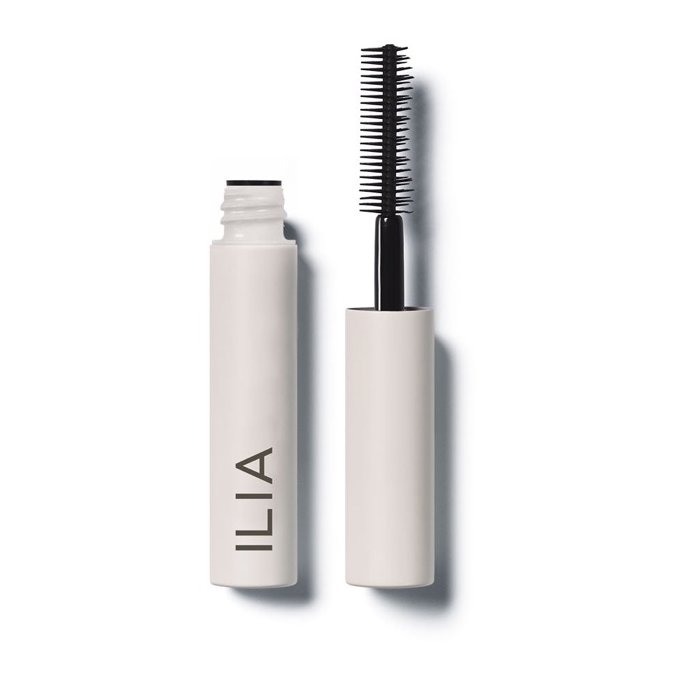
1. ILIA Limitless Lash Mascara — Best Clean Mascara
 Best Clean Mascara
This is the pick if you want one clean mascara that behaves like a normal one. It lengthens and separates rather than clumps, conditions lashes with arginine, biotin, and shea while you wear it, and holds up through a long day without the waterproof formulas that are most likely to carry PFAS.
It is not a heavy-volume, false-lash look, and because it uses beeswax it is not vegan. For most people who simply want a daily mascara without the fluorinated chemistry, it is the easiest clean swap to live with.
Want the full ranked list with vegan and high-volume alternatives? See our dedicated best non-toxic mascara guide.
Longtime wearers keep coming back to how it lifts and separates without clumping, with one reviewer writing that after a full day she still had "hour 1 lashes by hour 8" and praising how it "rarely clumps" while giving "that little flip at the end that can't be beat," reading as a lengthening, natural-definition mascara that conditions lashes and holds a curl. The honest downside: it is built for soft definition, so as that reviewer put it, "if you're looking for the messier, high-glam volume this won't give you that," some people get smudging along the lower lash line by late afternoon, and a few found their eyes "pretty irritated by the end of the day.
A clean daily mascara that lengthens and conditions — without the PFAS found in most waterproof formulas.
Why it's clean: Scores 1 (lowest hazard) on EWG’s Skin Deep, with no PFAS or fluorinated ingredients, no parabens, and no coal-tar dyes.
Check Today’s Price on Amazon →Amazon prices change daily — tap to see today's price and any active discount.
- Free delivery & returns for Prime members
- Sold & shipped by Amazon
- Independently rated by verified buyers
Waterproof mascara was the single most PFAS-heavy category in the testing, so it is the highest-leverage swap in your whole bag. ILIA Limitless Lash gives you the daily-mascara experience — length, separation, all-day wear — from a formula that scores the lowest possible hazard rating on EWG's Skin Deep and skips fluorinated ingredients entirely. If you own one “waterproof” product, this is the one worth replacing first.
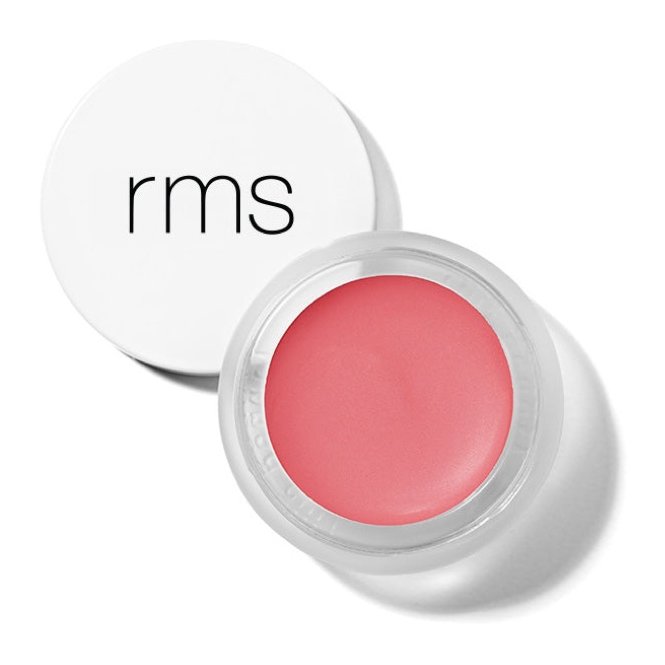
2. RMS Beauty Lip2Cheek — Best Multi-Use Color
 Best Multi-Use Color
If you want color that earns its place, this is the multitasker: a dab works as blush and as a lip tint, so one glass pot replaces two plastic compacts. The formula is naturally derived — coconut oil, castor seed oil, beeswax, shea — and 91% free of the most common allergens, with a cult following (thousands of reviews at a 4.7 average).
It is a cream pot, so it is a little less travel-friendly than a stick and you apply with a fingertip. Seal the lid and it lasts; leave it open and the natural formula can dry out faster than a synthetic one. For the clean ingredient list and the glass-and-aluminum packaging, it is an easy recommend.
It comes in a range of shades, each in the same glass jar — pick a deeper tone for more lip payoff or a sheer one for a natural flush.
The love for Lip2Cheek centers on a natural, dewy flush and its double duty on lips and cheeks, with buyers saying "Little goes a long way," that it "goes on perfectly with a big brush," and that it gives a natural apple-cheek color, sheering down with fingertips into a soft glow that most people wear on both cheeks and lips. The honest downside: staying power is the common gripe, with reviewers noting it "doesn't seem to last as long as some of the other blushes" and that it "needs reapplication," and one buyer found the pot "dried up in a matter of weeks.
One glass pot of clean cream color that does both lips and cheeks — replacing two plastic compacts.
Why it's clean: Naturally derived ingredients with no talc, parabens, or synthetic preservatives, in a recyclable frosted-glass jar and aluminum lid instead of a plastic compact.
Check Today’s Price on Amazon →Amazon prices change daily — tap to see today's price and any active discount.
- Free delivery & returns for Prime members
- Sold & shipped by Amazon
- Independently rated by verified buyers
Lip products matter twice over: the 2021 testing found high fluorine in a large share of them, and lipstick is the product you are most likely to ingest across a day of eating and drinking. A clean multitasker like Lip2Cheek covers lip and cheek color from one naturally derived formula, so you retire a long-wear lipstick and a powder blush in a single, glass-packaged swap.
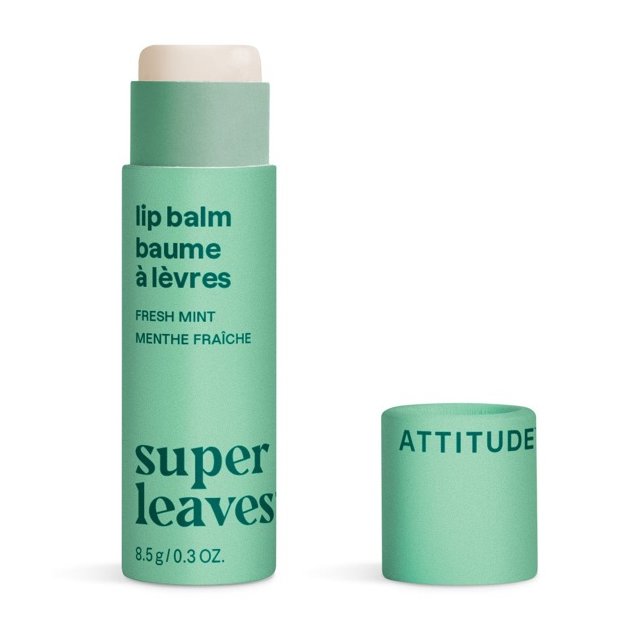
3. ATTITUDE Plastic-Free Lip Balm — Best Everyday Lip Care
 Best Plastic-Free Lip Balm
This is the small, easy win: an everyday lip balm that is EWG Verified, vegan, and plant- and mineral-based, in a fully plastic-free cardboard tube you push up like an old-school glue stick. At well under $10 it is the lowest-risk way to try plastic-free beauty.
The cardboard tube can soften if it gets wet or very warm, so it is happier in a bag than a gym pocket. Otherwise it does exactly what a good balm should — nourishing shea, coconut, and castor oils — with none of the plastic.
Stock a couple: at this price it is the swap to leave in every bag and drawer so you are never reaching for a plastic tube.
Fans of this cardboard-tube balm like the feel first, saying "The texture is perfect" and that "it glides on smoothly and doesn't leave your lips sticky or greasy," with several calling it "good for sensitive, cracked lips" and the unscented version having "no flavor to it." The honest downside: it is a light balm, not an intensive treatment, so a few reviewers say "it doesn't moisturize enough" and that on badly chapped lips it "ends up drying my lips out even more," and the plain fragrance-free formula will not suit anyone wanting a flavored or glossier balm.
A clean, nourishing everyday balm that finally ditches the plastic tube — and costs under $10.
Why it's clean: EWG Verified and free of EWG-restricted substances, in a plastic-free, biodegradable FSC-certified cardboard push-up tube.
Check Today’s Price on Amazon →Amazon prices change daily — tap to see today's price and any active discount.
- Free delivery & returns for Prime members
- Sold & shipped by Amazon
- Independently rated by verified buyers
Lip balm is the product most people reapply the most and think about the least, which makes an EWG Verified, plastic-free option the easiest low-risk swap on the list. ATTITUDE's cardboard push-up tube is verified against restricted substances and costs under $10, so it is the natural companion to the Lip2Cheek pot for keeping the surface you ingest most off both PFAS and plastic.
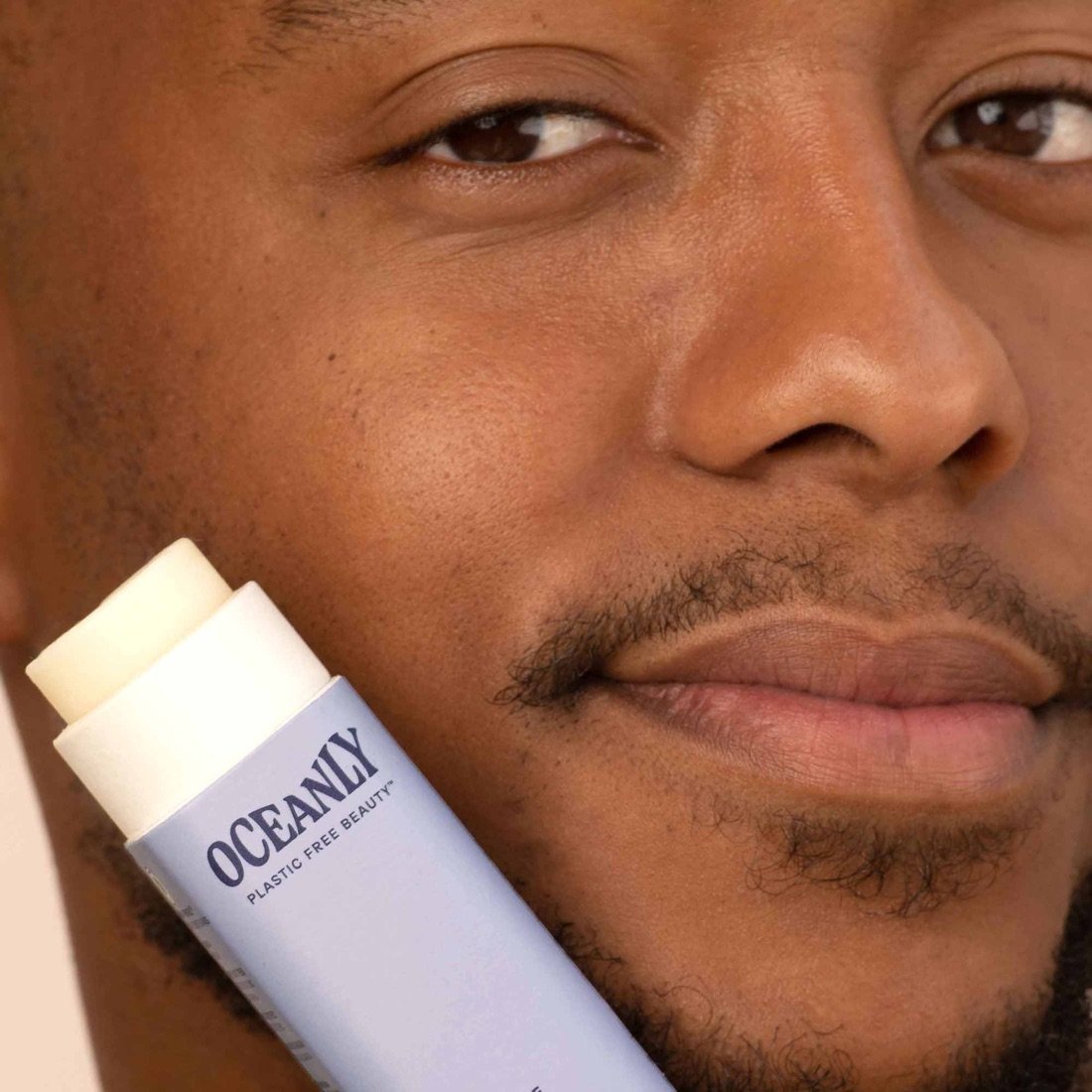
4. ATTITUDE Oceanly PHYTO-AGE — Best Plastic-Free Skincare
 Best Plastic-Free Skincare
This is what plastic-free skincare actually looks like: a waterless, solid face cream you swipe on and warm into skin, housed in a biodegradable cardboard tube with no plastic cap, jar, or pump. It is EWG Verified, vegan, and built around phytoglycogen, peptides, and watercress extract to support the skin barrier.
The solid-stick format takes a few uses to get used to, and the coverage is ‘enough’ rather than rich-cream luxurious — but the waterless format travels beautifully and will not leak in a bag. The brand also makes other Oceanly variants (glow, serum) in the same plastic-free tube if you want to build a routine.
Pairing clean skincare with the rest of a low-plastic home? Start with our guide to PFAS-free clean beauty to spot the synthetic ingredients worth avoiding.
Verified buyer reviews for this solid, plastic-free stick are still thin, so read the feedback as early impressions rather than a settled verdict. The positive note praises the feel: one buyer said it "feels so smooth" and left "my skin felt nourished all day long" layered over a serum. The honest downside comes from a dry-skin user who found the opposite, that "it's greasy and doesn't absorb," that she could "feel it sitting on my skin hours later," and that she had "breakouts for the first time in months" after starting it, so with so few reviews the results look mixed and skin-type dependent.
A genuinely plastic-free face cream — clean, EWG Verified formula in a compostable paper tube instead of a plastic jar.
Why it's clean: EWG Verified with no ingredients of concern, and the waterless solid stick comes in an FSC-certified, plastic-free paper tube — no plastic jar, cap, or pump.
Check Today’s Price on Amazon →Amazon prices change daily — tap to see today's price and any active discount.
- Free delivery & returns for Prime members
- Sold & shipped by Amazon
- Independently rated by verified buyers
Foundation and long-wear base were the second most-affected category, so the layer you put under makeup is worth cleaning up alongside it. An EWG Verified moisturizer like Oceanly gives you a screened-clean base without a plastic jar — a small routine change that pairs naturally with switching a long-wear foundation for a plainer one.
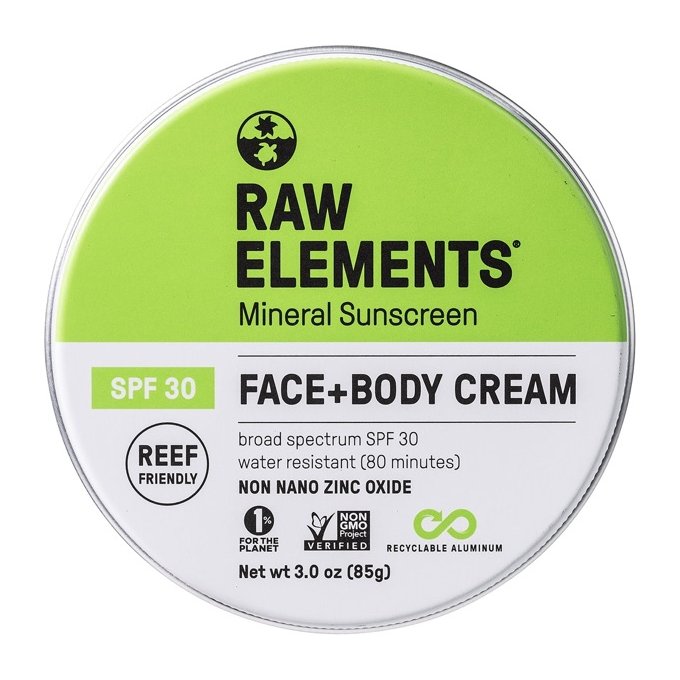
5. Raw Elements SPF 30 Tin — Best Mineral Sunscreen
 Best Mineral Sunscreen
This is the most on-brand sunscreen we could find: a genuine mineral SPF that comes in a tin you can recycle endlessly instead of a plastic tube that becomes landfill. The zinc-oxide filter sits on top of skin rather than absorbing in, and the balm is rich enough to double as a moisturizing face-and-body sunscreen.
The trade-off is the texture: a thick balm you warm between your fingers before spreading, and the untinted version can leave a brief white cast on deeper skin tones. If you want lightweight, tinted, daily-wear options, our face-specific guide ranks those.
For lighter daily formulas and tinted picks, see the broader non-toxic sunscreen roundup. If you mainly need coverage for arms, legs, and back, our best non-toxic body sunscreen guide ranks reef-safe mineral picks sized for larger areas.
The praise in every hands-on test is staying power: testers report that "Water was still beading up after over 90 minutes in the sun and lake," dry-skin users call it deeply moisturizing, and people note it "stayed in place" through swimming without stinging the eyes, with a sturdy reusable tin that travels well. The honest warning: reviewers repeatedly call it "the thickest sunscreen I've tried," say it "took a while to spread out with my fingers," and note the non-tinted version can "come out looking like a ghost" until worked all the way in, and a couple saw a layer of oil separate in the tin.
Reef-safe mineral SPF in a tin you can actually recycle — the rare sunscreen whose packaging is as clean as the formula.
Why it's clean: Non-nano zinc oxide is the only active — no oxybenzone or chemical UV filters, no PFAS — and the recyclable metal tin removes the plastic tube entirely.
Check Today’s Price on Amazon →Amazon prices change daily — tap to see today's price and any active discount.
- Free delivery & returns for Prime members
- Sold & shipped by Amazon
- Independently rated by verified buyers
Sunscreen sits under makeup all day on the same skin, so it belongs in a clean-face routine. A non-nano mineral SPF like Raw Elements skips chemical UV filters and PFAS and comes in a plastic-free tin — a simple way to make sure the layer beneath your makeup meets the same standard you are applying to the makeup itself.
6. Henry Rose Torn — Best Clean Fragrance
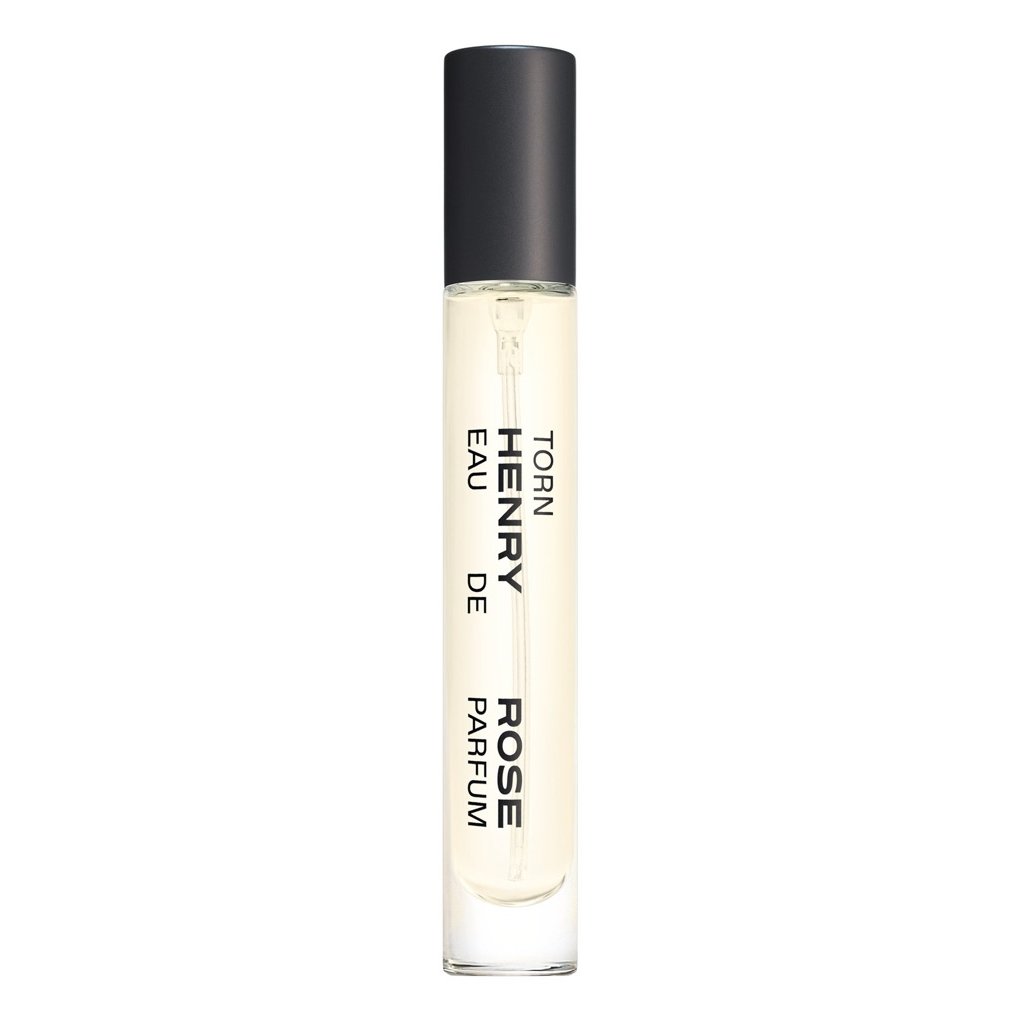 Best Clean Fragrance
If you love perfume but not the undisclosed ‘parfum’ loophole, this is the one. Founded by Michelle Pfeiffer, Henry Rose was built around full ingredient transparency: it is EWG Verified, Cradle to Cradle Certified Gold, and explicitly phthalate-, paraben-, and sulfate-free. Torn is a warm, woody-musk scent that wears close to the skin.
Two honest caveats: it is a premium price for a clean fragrance, and because it skips phthalate fixatives, the scent is more intimate and may not project as long as a conventional perfume engineered to last all day. To us, full disclosure is worth the trade.
Prefer to dip a toe in first? The brand also sells a travel size, which is the cheapest way to test the scent before committing to the full bottle.
The most-repeated praise is that Torn is a grown-up "earthy vanilla that isn't sweet at all," with reviewers describing "a cool clean vanilla scent" that smells "expensive and like cashmere," more than one calling it their signature and a compliment-getter, and a recurring comparison to a softer, "much more toned down" take on Tom Ford Black Orchid. Because it skips synthetic fixatives, wear time is the sticking point. The honest downside: longevity is polarizing, with several buyers reporting it "fully gone in 2 hours" or "4 hours tops," the opening patchouli and vetiver "hits HARD" for some noses, and a few decided it was "not worth it" at the price.
Real perfume with nothing hidden — every ingredient disclosed, EWG Verified, and free of the phthalates that lurk under ‘fragrance.’
Why it's clean: EWG Verified and Cradle to Cradle Gold, with a 100% published ingredient list and no phthalates, parabens, or sulfates — bottled in roughly 90% recycled glass.
Check Today’s Price on Amazon →Amazon prices change daily — tap to see today's price and any active discount.
- Free delivery & returns for Prime members
- Sold & shipped by Amazon
- Independently rated by verified buyers
PFAS in makeup and phthalates in “fragrance” are the same story: chemistry the label is allowed to leave unnamed. A fully transparent, EWG Verified perfume like Henry Rose closes that loophole for the scent layer — the finishing swap for a routine you want to be able to actually read. For the complete ranked lineup across mascara, foundation, lip and more, see our PFAS-free clean beauty guide.
Want the Full Home Protection Guide?
PFAS in makeup is one exposure among dozens in a typical home. The Complete Plasticproof Guide covers every room — bathroom, kitchen, nursery, bedroom — with 80+ product recommendations backed by 47+ studies.
The honest verdict
Is there PFAS in makeup? Frequently, yes — the 2021 Notre Dame testing found a marker for it in more than half of 231 products, and worst of all in the waterproof and long-wear formulas people rely on. The detail that makes it hard to shop around is that the chemicals were usually not on the label. But the research measured what is in the products, not proven harm to the people wearing them, and PFAS cross intact skin only slowly. So the accurate takeaway is neither “makeup is dangerous” nor “ignore it” — it is that a persistent, unlabeled chemical is common in a specific, predictable set of products, and those are the ones worth trading out.
The practical response is refreshingly simple, because the pattern is so clear. Avoid “waterproof” and “long-wear” claims, scan for “fluoro” ingredients but don't rely on the label alone, and lean on third-party verification to do the vetting for you. Start with the highest-PFAS category — waterproof mascara — then the lip and face products you wear longest, and you have handled most of the exposure for the cost of a few swaps. It's the same low-drama approach we take to the rest of the plastic-era home: fewer “forever” chemicals, chosen where the fix is easy and the trade-off is small.
Swap the highest-PFAS products first
Waterproof mascara and long-wear lip and face products carry the most PFAS — and they are the easiest to replace with verified clean options. See the full lineup and keep building a routine you can read.
Frequently Asked Questions
Often, yes. A 2021 study in Environmental Science & Technology Letters tested 231 makeup products sold in the US and Canada and found high fluorine — a marker for PFAS "forever chemicals" — in 52% of them. The rates were highest in the products designed to last: 82% of waterproof mascaras, 63% of foundations and 62% of liquid lipsticks. In targeted chemical analysis, the products were found to contain multiple specific PFAS, yet almost none listed a PFAS ingredient on the label.
PFAS are used in cosmetics to make products spread smoothly, feel silky, resist water and sweat, and stay put all day. That is why they concentrate in "waterproof," "long-wear," "transfer-proof" and "24-hour" formulas — mascara, foundation, liquid lipstick and concealer. The same water- and oil-repelling chemistry that keeps a nonstick pan slick is what keeps waterproof mascara from running.
The long-wearing, water-resistant categories. In the 2021 testing, high-fluorine rates were highest for waterproof mascara (82%), foundation (63%) and liquid or long-wear lipstick (62%), with eye and lip products, concealers and "long-lasting" foundations also frequently affected. Plain mineral makeup and products labeled fluorine-free or third-party verified were far less likely to test positive.
The studies measured how much PFAS is in makeup, not how much ends up in your body from wearing it, so the individual risk from a single product is not established. But PFAS are a class of persistent "forever chemicals" linked in the broader research to effects on the immune system, cholesterol, thyroid and development, and makeup worn on the lips and eyes offers routes for ingestion and absorption. Because PFAS build up in the body and the environment, reducing avoidable sources is a sensible precaution.
Read the ingredient list for names containing "fluoro" or "perfluoro" — common ones include PTFE (polytetrafluoroethylene), perfluorodecalin, C9-15 fluoroalcohol phosphate, perfluorononyl and polyperfluoromethylisopropyl ether. The catch is that the 2021 study found PFAS present even in products that did not list them, so labels are not a complete safeguard. The more reliable shortcut is to avoid "waterproof" and "long-wear" claims and choose products that are third-party verified (for example EWG Verified) or explicitly fluorine-free.
It is being phased out in some places but is not federally banned in the US. California's AB-2771 prohibits the manufacture and sale of cosmetics with intentionally added PFAS starting in 2025, and several other states have passed similar laws. The US FDA has acknowledged PFAS use in cosmetics but does not require pre-market safety testing of most cosmetic ingredients. Until bans are universal, reading labels and avoiding long-wear formulas remain the practical defenses.
Sources
- Whitehead HD, Venier M, Wu Y, et al. "Fluorinated Compounds in North American Cosmetics." Environmental Science & Technology Letters, 2021;8(7):538–544. (University of Notre Dame; high fluorine, a marker for PFAS, in 52% of 231 tested products — including 82% of waterproof mascaras, 63% of foundations and 62% of long-wear lipsticks — and specific PFAS were found in products that did not disclose them.)
- US Environmental Protection Agency. "PFAS Explained." (Background on per- and polyfluoroalkyl substances as persistent "forever chemicals" that build up in the environment and the human body, and the health effects associated with exposure.)
- US Food & Drug Administration. "PFAS in Cosmetics." (The FDA acknowledges PFAS are used in some cosmetics but does not require pre-market safety review of most cosmetic ingredients under current law.)
- California Legislature. "AB-2771 Cosmetic products: intentionally added perfluoroalkyl and polyfluoroalkyl substances (PFAS)." (Prohibits the manufacture, sale and distribution of cosmetics containing intentionally added PFAS in California beginning January 1, 2025.)