
Millions of households switched from single-use plastic straws after the 2018 viral videos of sea turtles, but the replacement landscape quickly splintered: silicone straws, stainless steel straws, glass straws, bamboo straws, paper straws. Each material comes with its own marketing claims and its own chemistry — and the safest choice depends on how you actually use the straw, not on which one looked most photogenic in an influencer’s photo.
This guide compares the two most popular reusable materials — food-grade silicone and 18/8 stainless steel — on the questions that actually matter for your health: do they shed microplastics, do they leach chemicals, what do the studies say about each, and which one should be your daily driver? For the food-storage version of the same question, see our breakdown of silicone vs. plastic food containers.
Bottom line: For cold water and everyday drinks, stainless steel is the clear winner — inert, certified, dishwasher-proof, indefinitely durable. Silicone is a reasonable choice for young children (flexibility is safer for small mouths) or for people who cannot tolerate the slight metallic taste some notice with steel and cold beverages. Both are genuinely far better than single-use plastic.
What Is Each Straw Actually Made Of?
Food-Grade Silicone: A Synthetic Polymer on a Silica Backbone
The “food-grade” silicone used in most reusable straws is polydimethylsiloxane (PDMS) — a synthetic polymer in which chains of silicon and oxygen atoms form the backbone, with methyl groups attached. Unlike conventional plastics such as polypropylene or polystyrene, PDMS does not contain the phthalate plasticizers associated with endocrine disruption, and it does not shed microplastic fragments in the way that traditional plastic items do. This makes it a genuine improvement over single-use plastic straws.
However, food-grade silicone is not chemically inert. The European Food Safety Authority (EFSA) evaluated polydimethylsiloxane as a food-contact material in 2005 and concluded that migration of the polymer itself was not a concern at the molecular weights used in food-contact products. The concern is lower-molecular-weight siloxanes — cyclic compounds such as D4, D5, and D6 — that exist as residuals in silicone products and can migrate into food or liquid, particularly at elevated temperatures or with fatty, alcoholic, or highly acidic substances. EFSA’s evaluation placed specific migration limits on D4 and D5 in food-contact materials precisely because of this risk.
In practical terms: a silicone straw used for cold water presents minimal migration risk. The same straw used daily for hot coffee, acidic orange juice, or kombucha sits in a different risk category — one where stainless steel is the cleaner option. That same temperature-and-fat threshold decides whether silicone is safe for food everywhere else in the kitchen, from bakeware to storage bags.
18/8 Stainless Steel: Food-Service Grade Metal with a Half-Century Track Record
18/8 stainless steel — also written as 304-grade — gets its name from its composition: approximately 18% chromium and 8% nickel, the combination that makes the alloy highly resistant to corrosion and virtually inert in food contact. It is the same material used in commercial restaurant cookware, mixing bowls, surgical instruments, and water treatment equipment. NSF/ANSI Standard 51 (Food Equipment Materials) certifies 304-grade stainless steel as safe for direct food contact, and the FDA recognizes it as appropriate for food-contact applications. It is the same 18/8 alloy in the reusable bottles we compare in our safest water bottle brands guide, where the health question shifts from the steel body to the plastic in the lid.
At the temperatures and contact durations involved in drinking, there is no documented leaching of chromium, nickel, or other metals from intact 18/8 stainless steel into beverages. A small number of individuals sensitive to nickel may notice trace-level exposure, but this is not a documented risk in peer-reviewed food-safety literature under normal drinking conditions.
Head-to-Head: Silicone vs Stainless Steel Straws
Judged on safety chemistry, durability, and practical use.
| Feature | Food-Grade Silicone | 18/8 Stainless Steel |
|---|---|---|
| Material | Polydimethylsiloxane (PDMS) — a silica-backbone polymer | 18% chromium, 8% nickel steel alloy — the same grade used in commercial food service |
| Sheds microplastics? | No plastic fragments | No plastic fragments |
| Chemical migration risk | Low for cold beverages; elevated with heat, acid, or fat | None documented under normal use |
| Regulatory status | FDA-permitted food contact material; EFSA sets specific migration limits on residual siloxanes | NSF/ANSI 51 certified; FDA-recognized for food contact |
| Hot beverages safe? | Not recommended — migration increases with heat | Fully safe; handles boiling water |
| Acidic drinks (juice, kombucha)? | Increased migration risk with acidity | No increased risk; steel is acid-stable |
| Safe for young children? | Best for toddlers — soft, flexible, won’t chip a tooth | Fine for older kids; too rigid for toddlers who bite |
| Dishwasher-safe? | Yes, though high heat may accelerate wear over time | Yes — use a straw brush for the interior |
| Lifespan | 2–5 years with regular cleaning before surface integrity declines | 10+ years; indefinite with basic care |
| Taste? | Neutral with most drinks | Neutral once broken in; very faint metallic note at first use for some people |
| Price | $ (sets of 4–6 for $8–$14) | $ (sets of 4–8 for $10–$20) |
| Our verdict | Good for toddlers and cold drinks; not the best choice for hot or acidic beverages | Recommended for daily use — adults and older children |
Do Silicone Straws Leach Chemicals into Your Drink?
The short, honest answer is: under some conditions, yes — at levels that regulators have assessed as low risk for most adults, but not at levels of zero. The relevant evidence follows.
EFSA’s 2005 Scientific Opinion on polydimethylsiloxane as a food-contact material (EFSA Journal 2005, 3(11):244) confirmed that the PDMS polymer itself does not migrate at meaningful levels. The concern EFSA documented is the lower-molecular-weight cyclic siloxanes D4 (octamethylcyclotetrasiloxane) and D5 (decamethylcyclopentasiloxane) that remain as processing residuals in silicone products. EFSA set a specific migration limit of 0.6 mg/kg food for D4 and noted that D5 requires further evaluation. Migration of these compounds increases substantially with temperature and with fat- or alcohol-containing substances — EFSA’s own evaluation noted that cold aqueous contact produces migration well below the limit, while hot fatty simulants can approach it.
What this means for a straw: cold water every day, silicone is a low-concern choice. Hot coffee, hot tea, acidic kombucha or orange juice: the stainless steel straw is the more protective option, and there is no good reason to introduce even low-level siloxane migration when a zero-migration alternative is available at the same price.
What About Microplastics from Plastic Straws?
The comparison gets starker when you factor in what people are replacing. Conventional plastic straws are made from polypropylene — a thermoplastic that sheds microplastic particles during normal use. Polypropylene and similar thermoplastics are well-documented sources of microplastic particles when in contact with liquids, particularly at elevated temperatures and with acidic beverages. Straws introduce a similar surface-to-liquid contact area in warm and acidic environments.
Paper straws, often suggested as the planet-friendly alternative, turned out to have their own problem. A 2023 study by Schymanski and colleagues at the University of Antwerp, published in Food Additives and Contaminants: Part A, tested 39 brands of paper straws from Belgian retailers and found PFAS — the same family of persistent chemicals used to make paper water-resistant — in 90% of brands tested. The highest PFAS concentrations were found in paper straws marketed as “eco-friendly.” Both silicone and stainless steel are substantially cleaner than either alternative.
Which Should You Buy?
Match the straw to the drinker and the drink.
Choose stainless steel if:
- You drink hot coffee, hot tea, or any warm beverage
- You drink high-acid liquids daily (OJ, kombucha, lemonade)
- You want a straw that genuinely lasts decades
- You are buying for adults or school-age children
- You want zero chemical migration risk
Choose food-grade silicone if:
- You are buying for toddlers or young children who bite straws
- You mostly drink cold water and mild beverages
- Dental sensitivity makes a metal straw uncomfortable
- You need flexibility for cups with angles or unusual lids
For the full ranked lineup across all straw materials — glass, bamboo, and more — see our best plastic-free straws guide. If the bigger question is reducing microplastic exposure across the whole kitchen, our kitchen mistakes that put microplastics in your food guide ranks the highest-impact swaps.
The Three Straws Worth Buying
Two stainless steel picks for everyday use, and the silicone option for households with young children.
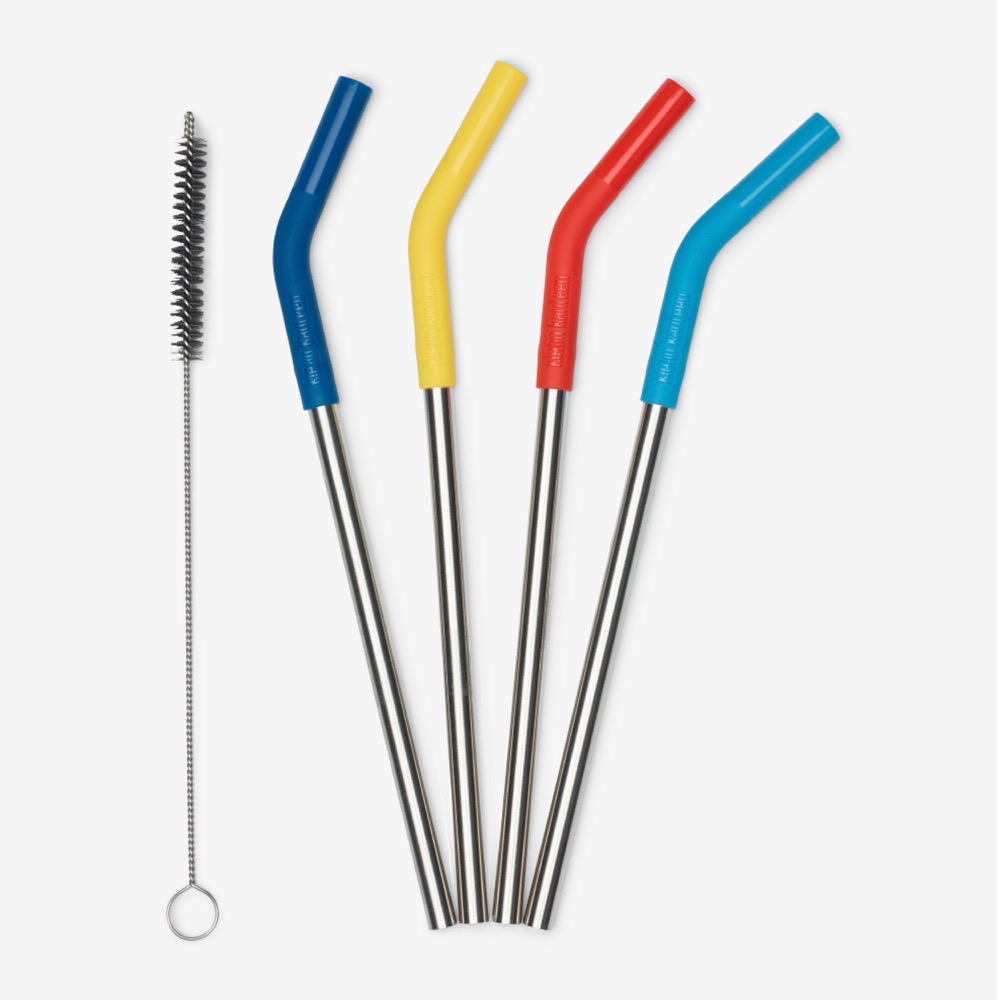 Best Overall
The silicone tip on a Klean Kanteen straw is relevant here: the tip does not contact the liquid — it sits outside the glass rim. The straw interior, which the drink flows through, is bare stainless steel throughout. If you prefer no silicone at all, the straight version ships without tips. Comes with a cleaning brush and stores easily in a travel pouch with most of their bottles.
Pros
- 18/8 stainless interior — no migration into the drink
- Reputable brand with a decade of food-grade manufacturing
- Straight and bent in one set; cleaning brush included
- Works for hot or cold beverages
Cons
- Silicone tip (exterior only) is not to everyone’s taste aesthetically
- Higher price per straw than no-name sets
- Not suitable for toddlers who bite
Stainless steel interior means zero migration, regardless of what’s in the glass.
Why it matters: 18/8 stainless steel is NSF/ANSI 51 certified for food contact and used throughout commercial food service. It does not release detectable compounds into beverages under normal use.
Check Today’s Price on Amazon →Amazon prices change daily — tap to see today’s price and any current discount.
- Free delivery for Prime members
- Thousands of verified reviews
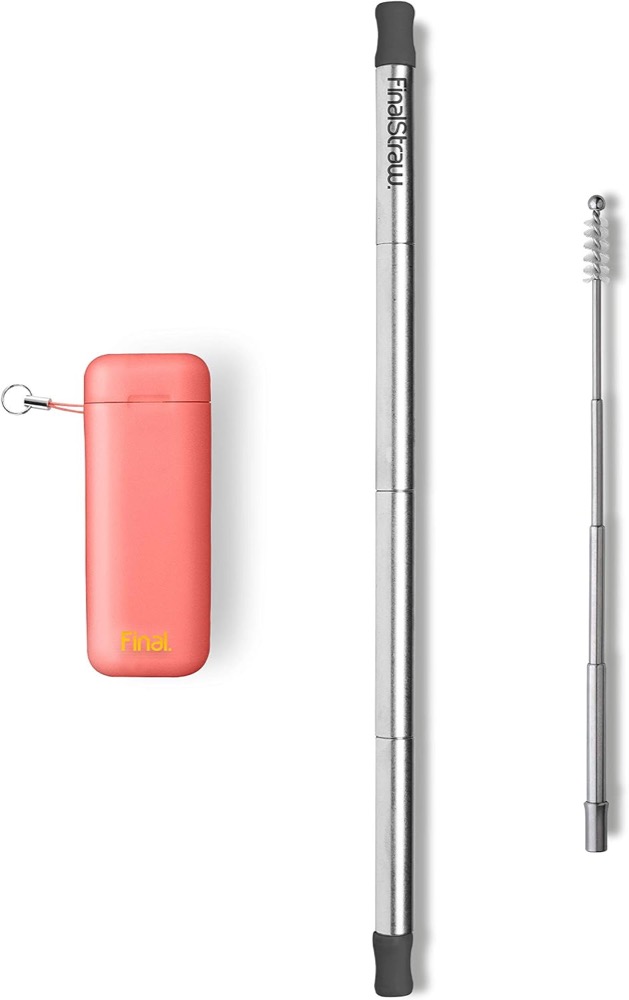 Best for Travel
FinalStraw launched as a crowdfunding campaign in 2018, sold over a million units, and has remained the defining entry in the collapsible straw category. The straw interior is the same food-grade stainless as a fixed straw — collapsibility does not compromise the material. A food-grade silicone gasket seals each joint; that gasket is exterior to the flow path and does not contact the liquid.
Pros
- Always-with-you solution for avoiding plastic straws at restaurants
- Stainless steel interior — same zero-migration profile as a fixed straw
- Built-in cleaning brush removes the need to carry a separate brush
Cons
- Higher price than a fixed-straw set
- Collapsing joints require thorough drying to prevent moisture buildup
- Not dishwasher-safe
The straw that ensures you never reach for a single-use plastic one when you’re away from home.
Check Today’s Price on Amazon →Amazon prices change daily — tap to see today’s price and any current discount.
- Free delivery for Prime members
- Ships from verified Amazon seller
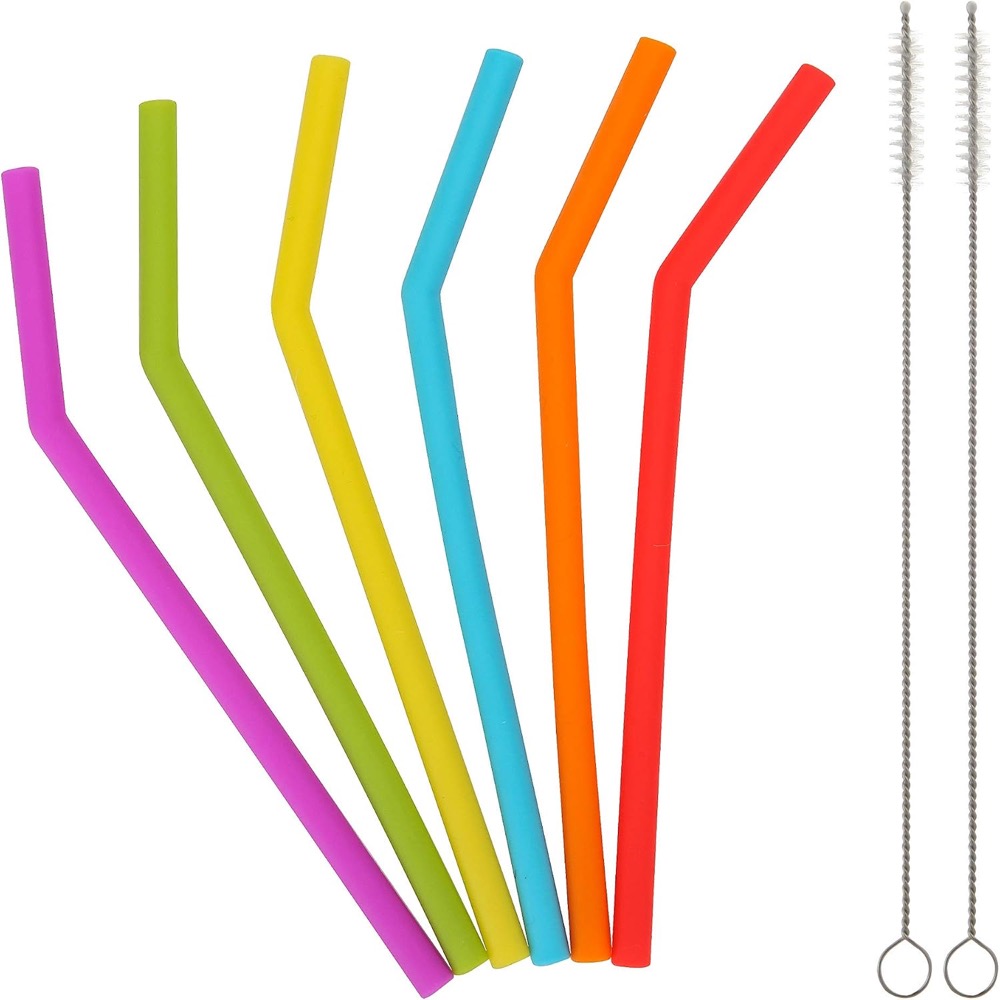 Best for Kids
Food-grade silicone (PDMS) used for cold water and milk with toddlers presents minimal migration risk per EFSA’s evaluation. The flexible bent design fits standard sippy lids and children’s tumblers. Clean thoroughly after each use — the interior diameter of silicone straws traps residue more readily than steel — and replace if you notice surface cracking or discoloration.
Pros
- Safe flexibility for toddlers who bite — no chipped teeth risk
- Food-grade silicone with no plastic additives like phthalates
- Bent shape fits most children’s cups and lids
- Set of 6 accommodates multiple children
Cons
- Not recommended for hot drinks or high-acid beverages
- Interior traps odors and residue more than steel over time
- Surface may degrade with 3+ years of high-heat dishwasher cycles
The safer silicone choice for young children — when flexibility matters more than the chemistry edge stainless steel carries.
Check Today’s Price on Amazon →Amazon prices change daily — tap to see today’s price and any current discount.
- Free delivery for Prime members
- Thousands of verified reviews
Frequently Asked Questions
Are silicone straws safer than plastic straws?
Yes, substantially. Standard plastic straws are made from polypropylene or polystyrene, which shed microplastic particles during normal use and may contain plasticizers such as phthalates. Food-grade silicone (PDMS) does not contain those additives and does not shed microplastic fragments. The concern with silicone is different: low-molecular-weight siloxanes can migrate from PDMS into liquids, particularly hot or acidic ones. For cold water, food-grade silicone is a reasonable choice. For hot drinks or daily acidic beverages, stainless steel is cleaner.
Do stainless steel straws leach anything into drinks?
Not at meaningful levels under normal use conditions. Food-grade 18/8 stainless steel is NSF/ANSI 51 certified for direct food contact and is the same material used throughout the food-service industry. At the temperatures and contact times involved in drinking, there is no documented leaching of metals or other compounds into beverages from intact 18/8 steel.
Which is better for kids — silicone or stainless steel straws?
Silicone is the standard recommendation for young children because it is flexible and soft — a child who bites down or falls while drinking will not chip a tooth or cut a lip. Food-grade silicone used with cold beverages presents minimal chemical-migration risk. Once children are old enough to drink without biting the straw (typically around age five or six), stainless steel is the safer long-term chemistry choice.
Can you put silicone or stainless steel straws in the dishwasher?
Both are dishwasher-safe, but stainless steel handles high-temperature dishwasher cycles better over the long term. For stainless steel, run a straw-cleaning brush through the interior after washing to ensure thorough cleaning. For silicone, hand-washing is the more conservative choice if you want to maximize the product’s lifespan.
What about paper straws versus silicone or stainless steel?
Paper straws are generally a poor trade-off. A 2023 study by Schymanski et al. at the University of Antwerp (Food Additives and Contaminants: Part A) found PFAS — the persistent chemicals used to make paper water-resistant — in 90% of the paper straw brands tested. For a single-use situation an uncoated paper straw is probably fine; for a daily-use straw, both silicone and stainless steel are clearly better.
Sources
- European Food Safety Authority (EFSA). Scientific Opinion on the safety assessment of the substance, polydimethylsiloxane (PDMS), for use in food contact materials. EFSA Journal 2005; 3(11):244. https://efsa.onlinelibrary.wiley.com/doi/abs/10.2903/j.efsa.2005.244
- Schymanski D, et al. “PFAS in drinking straws: analysis and human exposure estimates.” Food Additives and Contaminants: Part A 2023; 40(9):1049–1060. https://doi.org/10.1080/19440049.2023.2240908
- NSF International. NSF/ANSI Standard 51: Food Equipment Materials. https://www.nsf.org