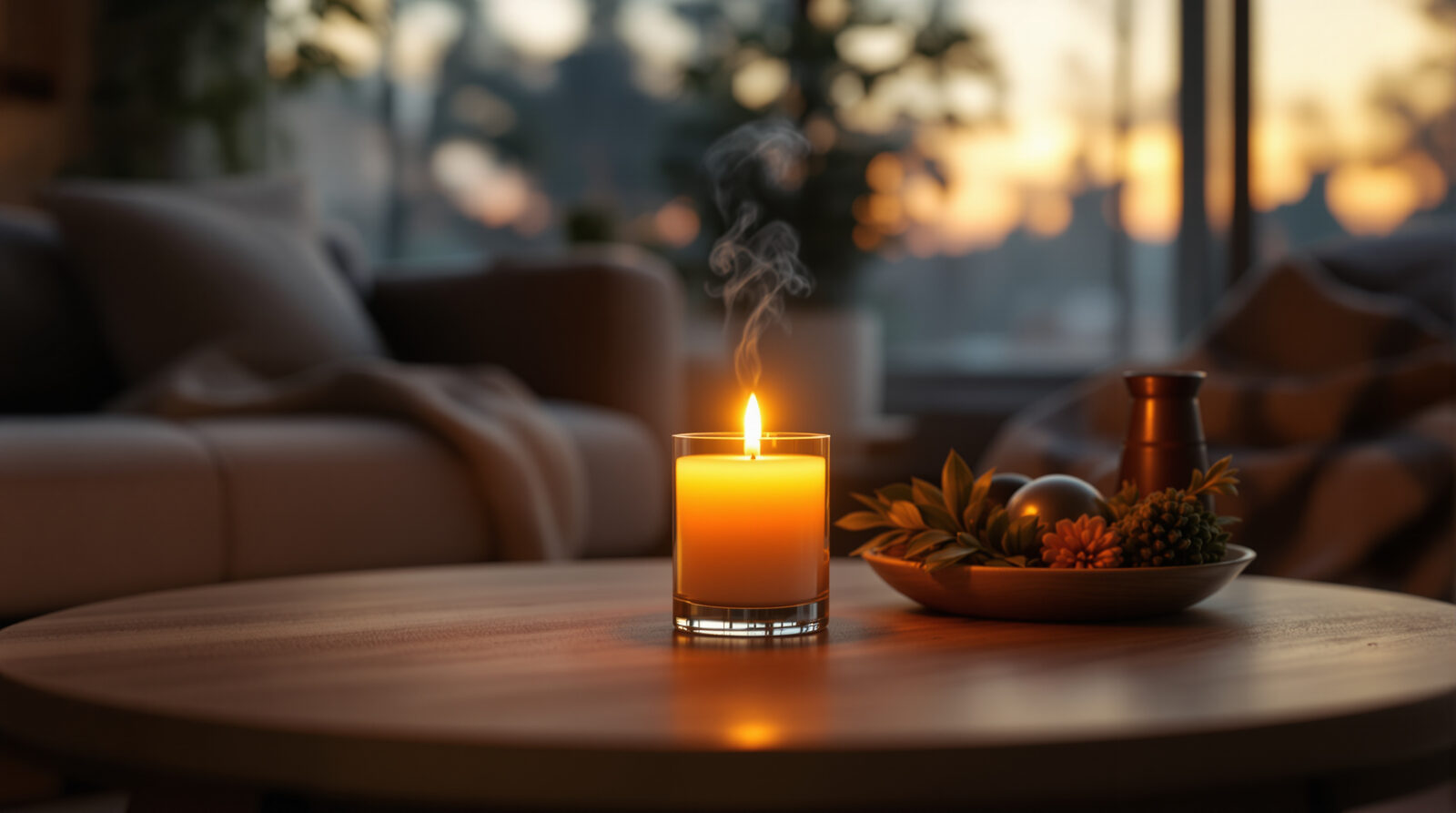
Scented candles are not “toxic” in the sense of poisoning you at normal use, but burning one is a small indoor combustion source. A lit candle releases fine particulate matter (PM2.5), ultrafine particles and trace gases such as formaldehyde and benzene, and a scented candle emits more volatile organic compounds than an unscented one. The reassuring part: controlled chamber studies — including a 2021 Environment International study — found that under typical household use most of these pollutants stay well below health-guidance values, with a few exceptions the authors flag. The real risks concentrate in heavy daily burning in small, unventilated rooms, in soot from untrimmed wicks, and in fragrance chemistry — and they land hardest on people with asthma, infants, and pet birds. Trim the wick, ventilate the room, and burn sparingly, and candles are a minor contributor to your indoor air.
“Are scented candles toxic?” is one of those questions where the honest answer sits between two loud camps. One side insists a vanilla candle is filling your lungs with benzene and will give you cancer; the other waves it all away as wellness-world paranoia. Neither is quite right. A candle is literally a controlled fire on your coffee table, so of course it puts something into the air — the real question is how much, of what, and whether it matters at the doses you actually breathe.
This guide separates the myths from the measurable risks. We will look at what is really in candle smoke, whether paraffin deserves its bad reputation next to soy and beeswax, whether candles can hurt your lungs, where fragrance and phthalates fit in, the truth about lead wicks and soot, who should be most careful, and the handful of habits that cut the exposure to almost nothing. It is the same evidence-first approach we take with are air fryers toxic and how dangerous are microplastics: a real source, honestly bounded by what the data can support.
The short version: candles emit fine particles and VOCs, and scented candles emit more of them, but chamber measurements put normal-use levels below health thresholds. Burn them sparingly, trimmed, and in a ventilated room — and give the fragrance a second thought if anyone in the house has asthma, is pregnant, is a baby, or has feathers.
What is actually in the smoke from a scented candle?
A candle flame is incomplete combustion, so it does not just make light and heat — it makes byproducts. When researchers burn candles in a sealed chamber and sample the air, they consistently find three things: fine and ultrafine particulate matter, a handful of combustion gases, and, for scented candles, evaporated and partly burned fragrance compounds. The headline-grabbing names are real: carbon monoxide, nitrogen oxides, formaldehyde, benzene, and polycyclic aromatic hydrocarbons (PAHs) all show up at trace levels.
In a 2021 study in Environment International, researchers burned four wax types and five fragrances in an 8-cubic-meter stainless-steel chamber and tracked exactly these pollutants. Their core finding is the one that rarely makes the headlines: in most scenarios, the calculated indoor concentrations were significantly below the established guidance and reference values. They also confirmed the intuitive part — scented candles generate more VOCs than unscented ones, because the fragrance itself evaporates and combusts — and they flagged a few exceptions, such as nitrogen dioxide and acrolein, as worth watching in a worst-case, poorly ventilated room.
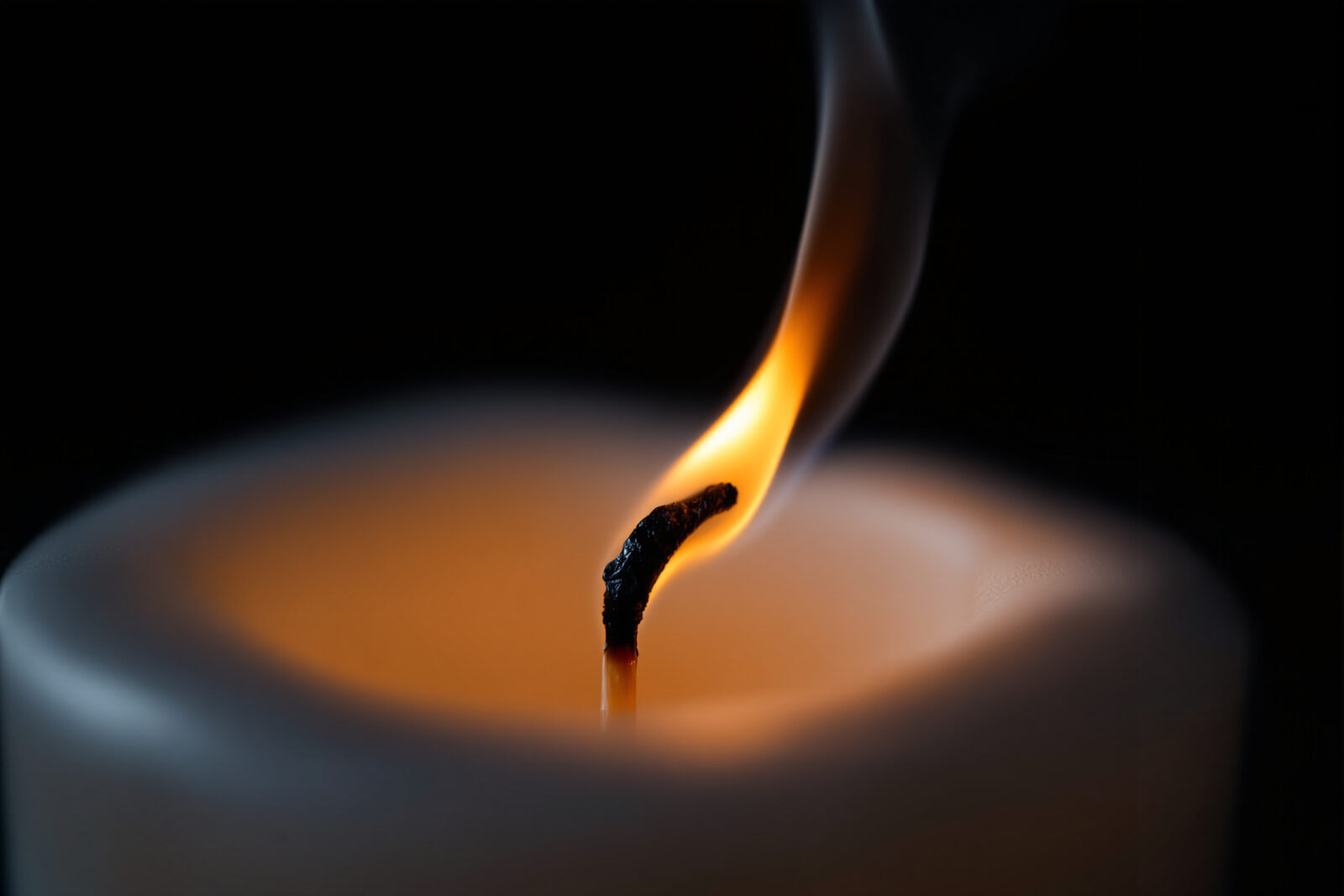
So the smoke is not harmless, but it is not the toxic cloud some descriptions imply either. The particles are the part worth paying attention to, because fine particulate matter is the pollutant with the clearest links to health at high, sustained doses — the same reason we care about what settles in household dust and about microplastics in indoor air. The gases are present, but at levels a chamber study struggles to push past safety thresholds under realistic use.
Is paraffin wax more toxic than soy or beeswax?
This is where the biggest myth lives. The popular story is that paraffin — a petroleum byproduct — is the villain and that soy or beeswax candles burn “clean.” The chemistry is more boring than that. Paraffin is refined far beyond crude oil, and controlled emissions comparisons have repeatedly found that how you burn a candle matters more than what it is made of. Wick length, fragrance load, and drafts drive soot and particle output more than the choice between paraffin, soy, and beeswax.
That does not make wax type meaningless. Soy and beeswax burn cooler and can produce less visible soot, and beeswax is the least processed option, which is a fair reason to prefer them. A much-repeated 2009 claim that paraffin candles release dangerous benzene and toluene while soy candles do not came from a single unpublished student project and has never been replicated at that magnitude — the National Candle Association disputes it, and later peer-reviewed chamber work did not reproduce a dramatic paraffin-versus-soy gulf.
No agency certifies a candle as “non-toxic” or “clean-burning,” so those words on a jar mean whatever the brand wants. A soy candle loaded with synthetic fragrance and burned with a long, curling wick can out-soot a plain paraffin one. If you want a genuinely lower-emission candle, judge it by the wax and by how you burn it — not by a “clean” label on the jar.
The practical takeaway: choosing soy or beeswax is a reasonable, low-stakes preference, not a rescue from a poison. If you love a paraffin candle, trimming the wick and ventilating the room does more for your air than switching wax ever will.
Can scented candles hurt your lungs or cause cancer?
For most people, burning candles occasionally in a ventilated room, the honest answer is that the exposure is low and far below the occupational limits set for the pollutants involved. The part worth taking seriously is particulate matter. The fine and ultrafine particles a candle emits are the same category of pollutant that air-quality science links to airway irritation and, at high chronic doses, to heart and lung disease — which is why people who already have sensitive lungs feel candles first.
But dose is everything. A single candle on a dinner table in an open-plan room is a world away from a dozen candles burning for hours every evening in a small, sealed bedroom. There is no good evidence that normal household candle use causes cancer; the trace benzene and formaldehyde are real but are present at levels a chamber study cannot push into the danger zone under realistic conditions. The people who should pay attention are those with asthma or COPD, for whom even modest particle spikes can trigger symptoms, and anyone burning many candles daily in a closed space.
The pollutant that matters most from a candle is the invisible fine particle, not the scary-sounding gas — and the dial that controls it is ventilation, not wax.
Are the synthetic fragrances and phthalates the real problem?
This is the most legitimate reason to look twice at a scented candle specifically. The fragrance is the part that makes a scented candle emit more VOCs than an unscented one, and fragrance chemistry is lightly regulated: the single word “fragrance” on a label can legally stand in for dozens of undisclosed ingredients. Historically, some of those included phthalates — used as fixatives to make a scent linger — and certain phthalates are endocrine disruptors, the same class of concern that runs through fragrance in personal care.
A review in the journal Environmental Science & Technology, pointedly titled “Beyond Aromatherapy,” argued that the risks of scented products are underappreciated — not only because of what the candle emits directly, but because fragrance compounds can react with ozone and other chemistry already in your indoor air to form secondary pollutants, including additional formaldehyde and ultrafine particles, after the scent has left the jar. That secondary chemistry is the genuinely under-discussed part of the scented-candle story.
The reassuring news is that many candle makers have removed phthalates and now say so on the label. If you want to sidestep the whole question, choose candles explicitly labeled phthalate-free or scented only with essential oils, go unscented, or lean on scent sources you control — the same logic you would apply to any heavily perfumed household product.
What about lead wicks and candle soot?
Lead wicks are the one candle fear that was once fully justified — and is now largely history, at least in the United States. A metal-cored wick keeps itself upright in soft wax, and for decades some of those cores were lead. Burning them released lead into the air of the room.
The Consumer Product Safety Commission banned candles with lead-cored wicks in 2003, after finding that they could emit lead at levels high enough to raise a child’s blood-lead level; some tested candles emitted well over the agency’s threshold of 430 micrograms per hour, a few exceeding 3,000. Candles sold in the U.S. today use cotton or paper-cored wicks instead. The lead-wick risk is real history, not a current everyday hazard — though a very old candle from the back of a cupboard, or an imported novelty candle, is still worth a second look.
Soot is the risk that outlasted lead. A long or mushrooming wick burns inefficiently and throws black carbon particles into the air and onto your walls — the gray film that creeps up above a candle you burn often. It is both an air-quality issue and the reason your ceiling discolors. The fix is almost comically simple and comes up again below: keep the wick short.
Who should be most careful with scented candles?
Risk from candles is not evenly shared. For a healthy adult in a normal room it is minor; for a few groups it is worth real caution, because the same particle spike that one person never notices can genuinely affect another.
- People with asthma, COPD or allergies. Fine particles and strong fragrance can both trigger airway symptoms. If a candle makes someone cough or feel tight-chested, that is a signal, not imagination.
- Infants and pregnant people. Developing lungs and the extra caution warranted during pregnancy both argue for ventilation and for going easy on heavy synthetic fragrance, consistent with how we treat other avoidable hormone-active exposures.
- Pet birds — a special case. Birds have extraordinarily sensitive respiratory systems and can be harmed by airborne particles and fumes that people tolerate easily. Scented candles, like nonstick-pan fumes, are a known hazard for them.
- Anyone in a small, unventilated space. The same candle is a different exposure in an open-plan living room versus a closed bathroom or bedroom. Volume and airflow do most of the work.
If none of these describe your household, an evening candle is a minor footnote next to larger indoor sources like cooking, dust, and the off-gassing from furniture and mattresses.
How do you burn candles more safely?
Here is the good news that the panic headlines skip: nearly all of a candle’s avoidable emissions come down to a few habits, and every one of them is free. You do not have to give up candles — you just have to burn them well.
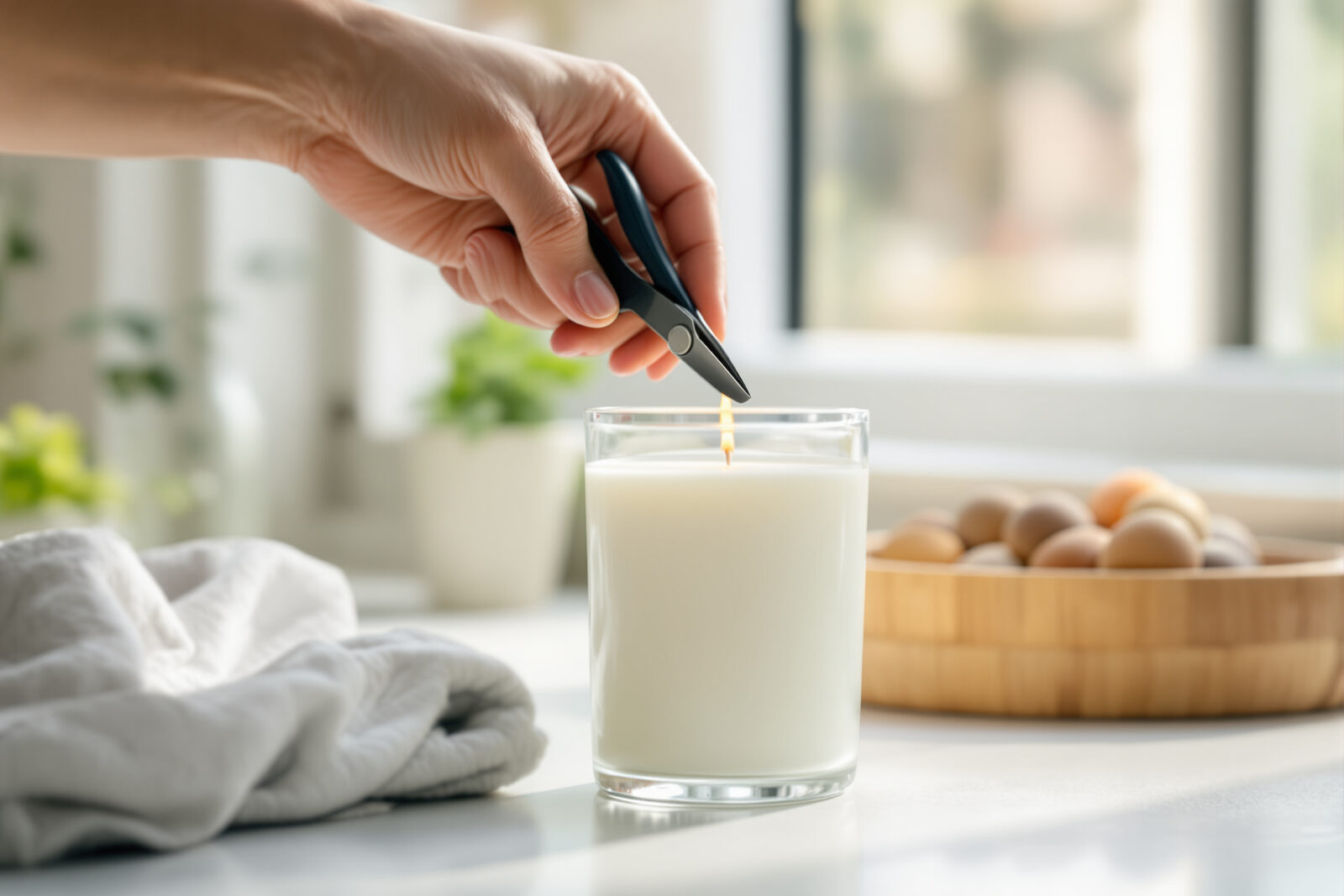
- Trim the wick to about ¼ inch before every burn. This is the highest-impact step. A short wick burns cleanly; a long or curled one mushrooms, smokes, and throws soot. Snip it when the candle is cool.
- Keep candles out of drafts. A flickering, dancing flame is burning unevenly and sooting more. Place candles away from vents, fans, and open windows so the flame stays tall and steady.
- Ventilate the room. Crack a window or run an exhaust fan, especially in a small space. Airflow is the single biggest lever on your actual exposure — far more than wax type.
- Burn fewer, for less time. One candle for an evening is very different from several for hours daily in a closed room. Moderation does most of the work.
- Choose unscented or lightly scented if you are sensitive. Less fragrance means fewer VOCs and less secondary chemistry. Look for candles explicitly labeled phthalate-free or scented only with essential oils.
- Protect the vulnerable. Keep candles away from pet birds entirely, and go easy on heavy fragrance around infants, during pregnancy, or anyone with asthma.
- Consider flameless alternatives. LED candles give the glow with zero emissions, and a HEPA air purifier clears particles from cooking, dust, and candles alike.
The bottom line on scented candles and toxicity
Are scented candles toxic? Not in the alarming sense the word implies. Burning one is a small indoor combustion source that releases fine particles, trace gases, and — for scented candles — extra fragrance VOCs, but controlled chamber studies put normal-use levels below health-guidance thresholds. Paraffin is not the poison it is made out to be, lead wicks have been banned in the U.S. since 2003, and the biggest real variable is not the wax but how and where you burn the candle.
The reasonable stance is the one Plasticproof takes across the site: do not treat a candle as a medical emergency, but do not pretend a daily lungful of fragrance and fine particles in a closed room is nothing either. Trim the wick, ventilate, burn sparingly, give heavy synthetic fragrance a second thought, and protect anyone with asthma, a baby, or a bird. For the bigger picture on the air you breathe at home, start with microplastics in indoor air and how dangerous are microplastics.
Clean up the air in the room you relax in most
Candles are one small, controllable source — cooking, dust, and furniture off-gassing add more. The same few habits lower the particle load across your whole home, not just the coffee table.
Frequently Asked Questions
Not in the sense of poisoning you under normal use. Burning any candle is a small indoor combustion source that releases fine particles (PM2.5) and trace gases such as formaldehyde and benzene, and scented candles add fragrance compounds on top. Controlled chamber studies, including a 2021 Environment International study, found that under typical use these pollutants mostly stay below health guidance values. The concern is heavy daily burning in small, unventilated rooms, soot from untrimmed wicks, and sensitive groups.
The difference is smaller than marketing suggests. Paraffin is petroleum-derived and soy and beeswax are renewable, but controlled emissions studies have found that how a candle is burned — especially wick length, fragrance load and drafts — drives soot and particle output more than the wax type alone. Soy and beeswax can soot less, but no mainstream wax has been shown to be dangerously toxic in a well-trimmed, ventilated setting.
For most people burning candles occasionally in a ventilated room, the measured exposure is low and far below occupational limits for the pollutants involved. The fine particles candles emit are the same category of pollutant linked to respiratory irritation at high, sustained levels, so people with asthma or COPD, and anyone burning many candles daily in a closed room, have the most reason to be cautious. There is no good evidence that normal household candle use causes cancer.
Some synthetic fragrances have historically used phthalates as fixatives to make a scent last longer, and the generic word “fragrance” on a label can legally hide them. Many candle makers have since removed phthalates and say so, but a label that only says “fragrance” does not tell you either way. If you want to avoid them, choose candles explicitly labeled phthalate-free or scented only with essential oils.
Not in the United States. The Consumer Product Safety Commission banned candles with lead-cored wicks in 2003 after finding they could release hazardous amounts of lead into indoor air, with some candles emitting well over the agency’s safety threshold. Candles sold in the U.S. now use cotton or paper-cored wicks. The lead-wick risk is largely historical, though very old or imported novelty candles are worth checking.
Trim the wick to about a quarter inch before each burn to cut soot, keep candles away from drafts, and burn them in a ventilated room rather than a small closed space. Limit how long and how many you burn at once, choose unscented or lightly scented options if you are sensitive, and keep candles away from pet birds, which are extremely sensitive to airborne particles. Flameless LED candles and a well-ventilated room remove the exposure entirely.
Sources
- Salthammer T, Gu J, Wientzek S, Harrington R, Thomann S. “Measurement and evaluation of gaseous and particulate emissions from burning scented and unscented candles.” Environment International, 2021;155:106590, doi.org/10.1016/j.envint.2021.106590. Burned four wax types and five fragrances in an 8 m³ chamber, measuring CO, NOx, formaldehyde, benzene, PAHs, PM2.5 and ultrafine particles; found most modeled indoor concentrations significantly below guidance values, with scented candles emitting more VOCs than unscented ones.
- “Beyond Aromatherapy: Illuminating the Underappreciated Risks Associated with Scented Candle Exposure.” Environmental Science & Technology, American Chemical Society, doi.org/10.1021/acs.est.3c07574. A review arguing that scented-product risks are underappreciated, including secondary pollutants formed when fragrance compounds react with indoor ozone.
- U.S. Consumer Product Safety Commission. “CPSC Bans Candles With Lead-Cored Wicks,” 2003, cpsc.gov. Prohibited lead-cored candle wicks after finding some could emit lead into indoor air far above the agency’s 430 micrograms-per-hour threshold, with a few exceeding 3,000.
- Danish Environmental Protection Agency (Miljøstyrelsen). “Survey and Risk Assessment of Particle and Heavy Metal Emissions from Candles,” 2017, mst.dk (PDF). Characterized ultrafine-particle and heavy-metal emissions across candle types and found particle output depends heavily on wax and burn conditions.
- CNN Health. “Are scented candles bad for you? What the science says,” 2024, cnn.com. Summarizes the current research consensus that candle emissions are measurable but mostly below guidance under normal, ventilated use, with ventilation the key variable.