The best HEPA vacuum for microplastics in 2026 is the Miele Complete C3 Calima (about $984 at the time of writing): its AirClean Sealed System forces every bit of air out through a genuine HEPA AirClean AH-50 filter, and the dust leaves the house inside a self-sealing bag rather than a bin you tip out indoors. The spec that actually decides the outcome is not the filter, it is the seal — the EPA’s own legal definition of a HEPA vacuum at 40 CFR 745.83 requires that all the air drawn into the machine is expelled through the HEPA filter “with none of the air leaking past it.” For a cordless machine the Dyson Gen5detect is the only pick here with whole-machine HEPA rated to 0.1 microns; under $200, the Shark Navigator Lift-Away Professional NV356E is the cheapest genuinely sealed option. Below, all five ranked on filter grade, sealed airflow and dust containment.
Microplastics get discussed as a water-and-food story, which is how a much bigger exposure route gets overlooked. Indoors, the dominant source is textile: carpet, rugs, upholstery, curtains, mattresses and the clothes you are wearing all abrade constantly, releasing synthetic fibers that drift, settle, get walked on, and become part of the gray layer under the sofa. That layer is not inert. Every footstep lifts part of it back into the air, and the smallest fraction stays suspended long enough to breathe.
Vacuuming is therefore the only intervention that removes indoor microplastics rather than diluting or filtering them. An air purifier captures what is already airborne; a vacuum takes the reservoir out of the house. But that only holds if the machine keeps what it picks up — and a great many vacuums sold as “HEPA” do not.
How much plastic is actually in house dust?
Enough that it is measured in percent of total dust mass, not trace amounts. Two studies set the scale.
In Environment International (volume 134, 2020), Zhang and colleagues analyzed 286 indoor dust samples collected from 12 countries — China, Colombia, Greece, India, Japan, Kuwait, Pakistan, Romania, Saudi Arabia, South Korea, the United States and Vietnam. They found PET-based microplastics in indoor dust at concentrations ranging from 38 to 120,000 micrograms per gram. In the single worst sample, from China, PET alone accounted for 12 percent of the entire mass of the dust. You can read the paper at doi.org/10.1016/j.envint.2019.105314.
A more recent study in Emerging Contaminants (2025) sampled settled dust from homes and workplaces around Birmingham in the UK and counted particles rather than weighing polymer. It reported an average of 155 microplastics per milligram of dust in homes (plus or minus 222, which tells you how much one house differs from the next) and 125 per milligram in workplaces. Fibers and fragments made up roughly 90 percent of everything identified, polypropylene and PET were the most common polymers, and the authors estimated typical daily intake from accidentally swallowing indoor dust at 56 microplastics a day for adults and 103 a day for toddlers — the gap being what you would expect from a small person who spends their day on the floor. The paper is published here.
| Finding | Measured value | Source |
|---|---|---|
| PET microplastics in indoor dust, 12 countries | 38–120,000 µg per gram of dust | Zhang et al., Environment International 134 (2020) |
| Worst single sample (China) | PET = 12% of total dust mass | Zhang et al., 2020 |
| Microplastic count, UK homes | 155 ± 222 particles per mg of dust | Emerging Contaminants (2025) |
| Share that are fibers or fragments | About 90% | Emerging Contaminants (2025) |
| Estimated daily intake from dust | 56/day adults, 103/day toddlers | Emerging Contaminants (2025) |
| Ultrafine particle emissions, 21 vacuums | 4.0 × 10⁶ to 1.1 × 10¹¹ particles/min | Knibbs et al., Environ. Sci. Technol. 46(1), 2012 |
| PM2.5 emissions, same 21 vacuums | 0.24 to 5,400 µg/min | Knibbs et al., 2012 |
Two useful things fall out of those numbers. First, the fibers are big. At the sizes these studies report, indoor microplastic is not a nanoparticle problem that slips through everything — it is lint, and a vacuum can lift it. Second, the variation between homes is enormous, which means the amount of synthetic textile in your particular house matters more than any national average. If you want the longer version of that story, we cover it in microplastics in household dust and microplastics in indoor air.
Compare all 5 picks
Every pick side by side — tap a name to jump to the full review, or check today's price.
| Pick | Rating | Why it wins | |
|---|---|---|---|
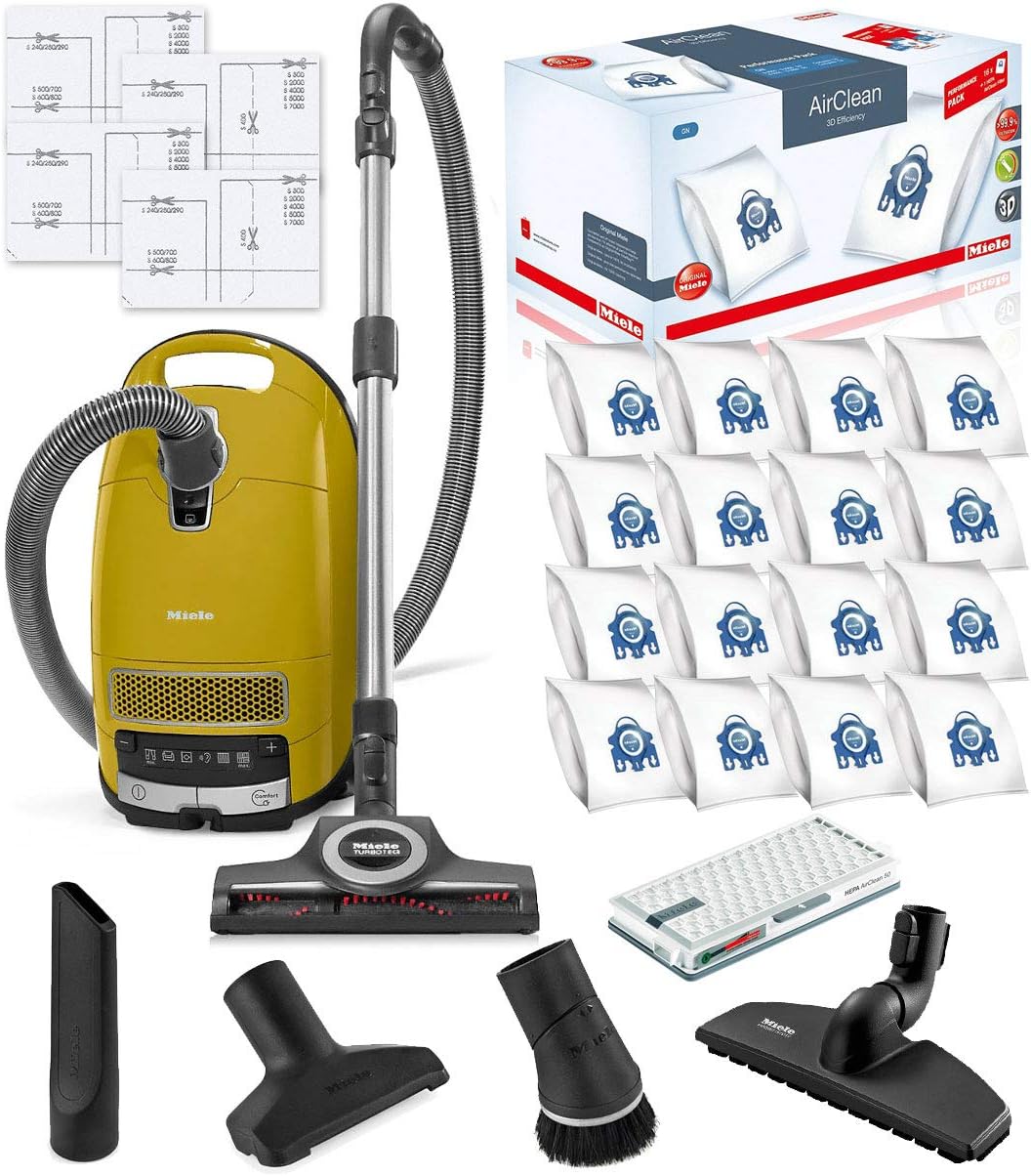 Best OverallMiele Complete C3 Calima |
4.4out of 5 | AirClean Sealed SystemHEPA AH-50 + bagged |
Check price → |
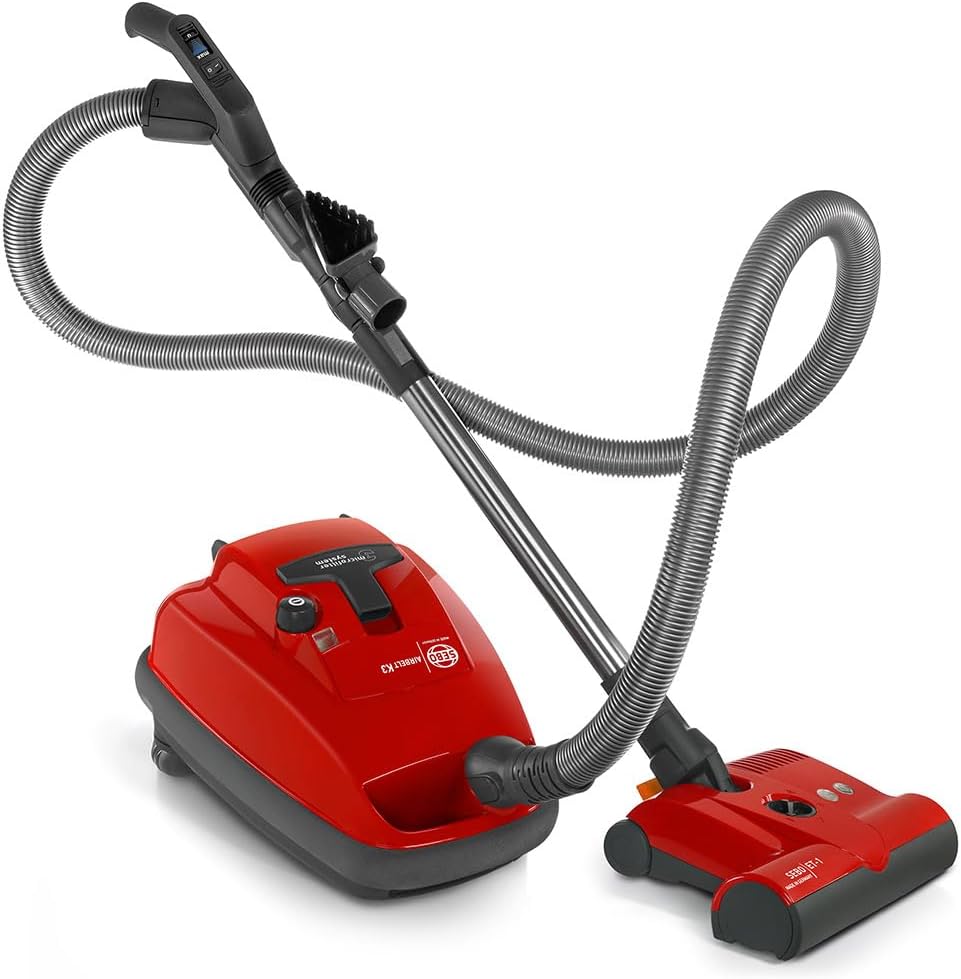 Best Bagged Runner-UpSEBO Airbelt K3 Premium |
4.5out of 5 | S-Class >99.97% at 0.3µm7-year motor warranty |
Check price → |
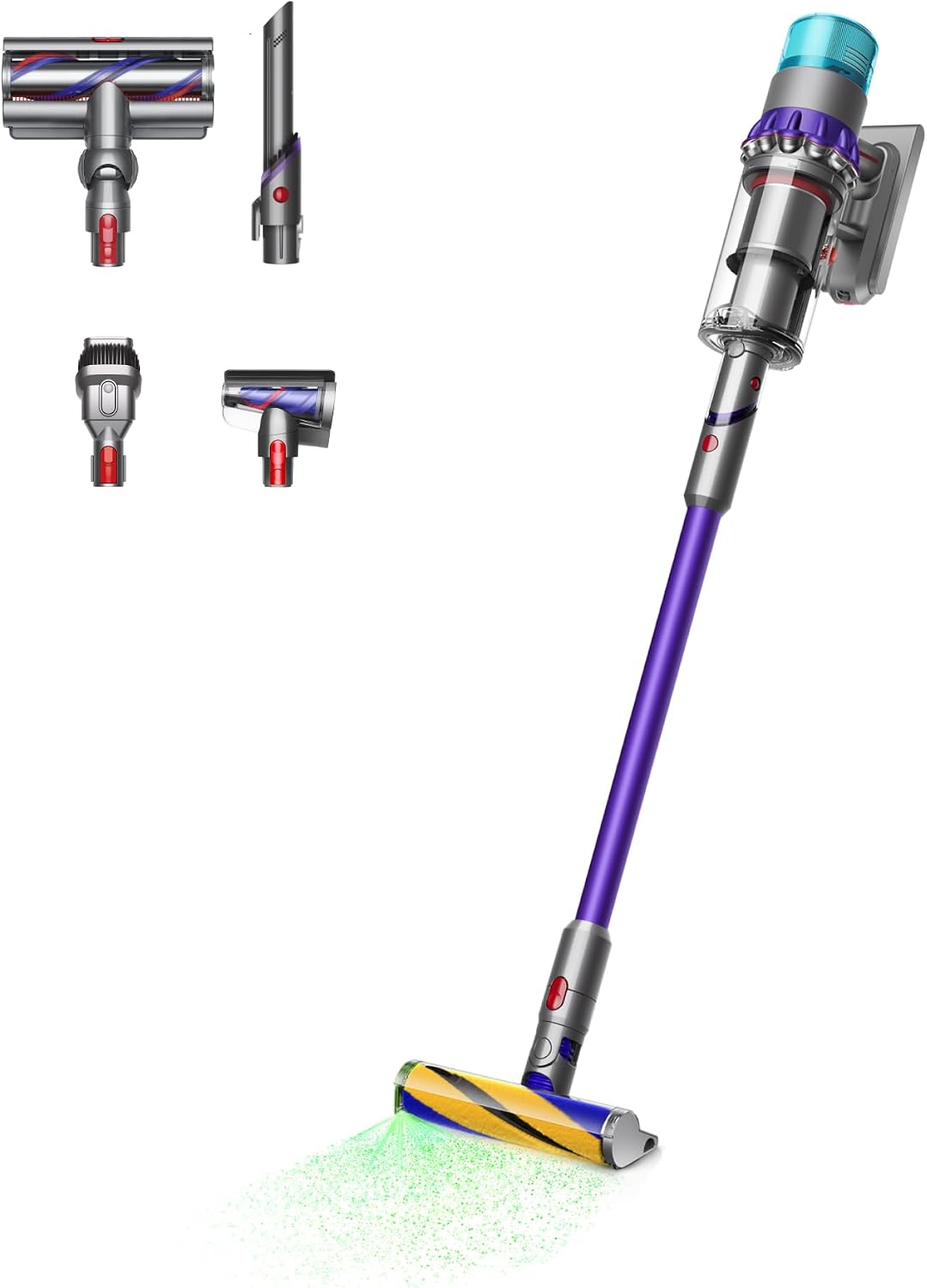 Best CordlessDyson Gen5detect |
4.6out of 5 | Whole-machine HEPA 0.1µm280AW, 70 min |
Check price → |
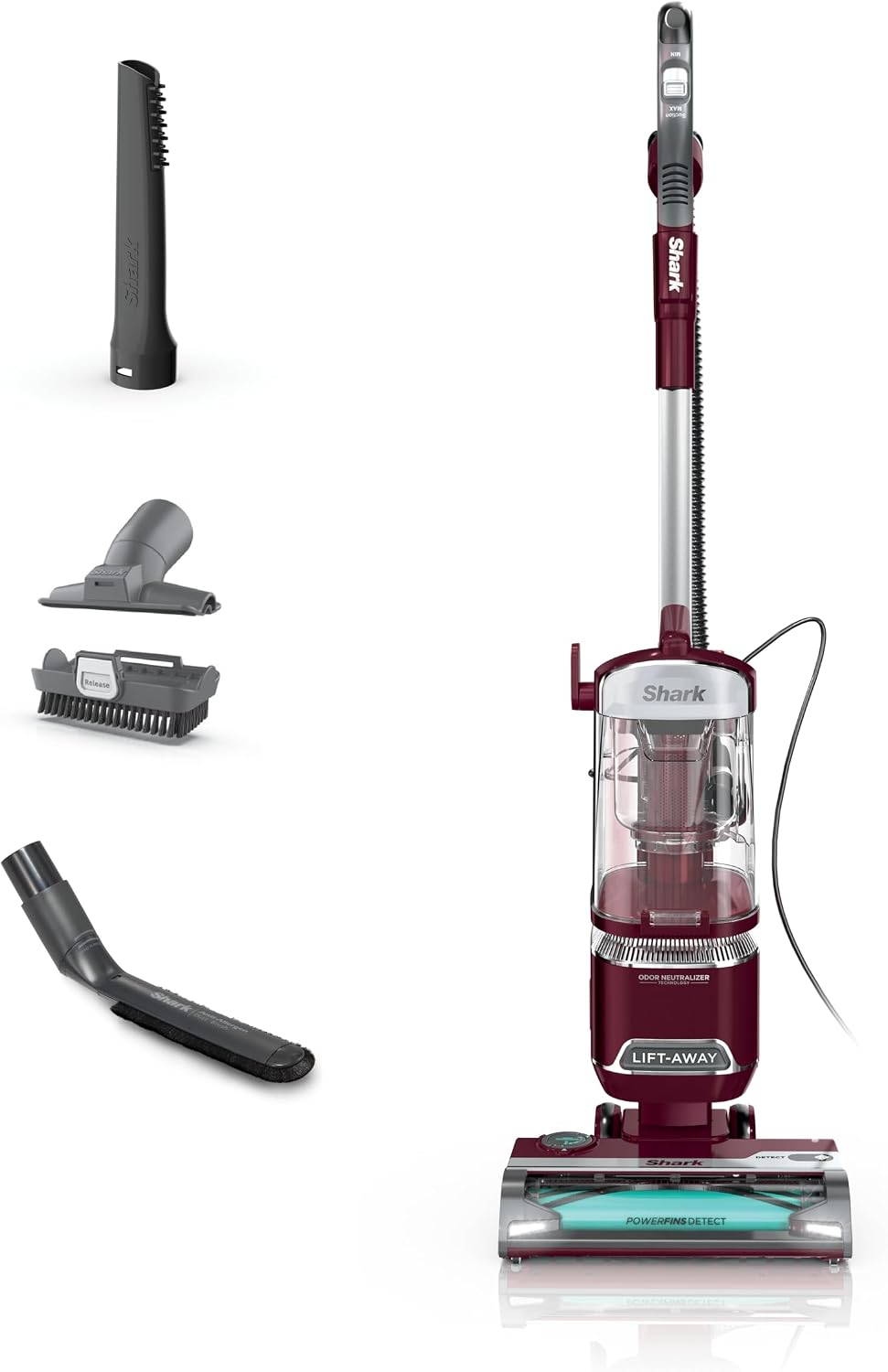 Best Mid-Price UprightShark Detect Lift-Away LA492 |
4.1out of 5 | Complete Seal + HEPA 99.99%Floor-type detection |
Check price → |
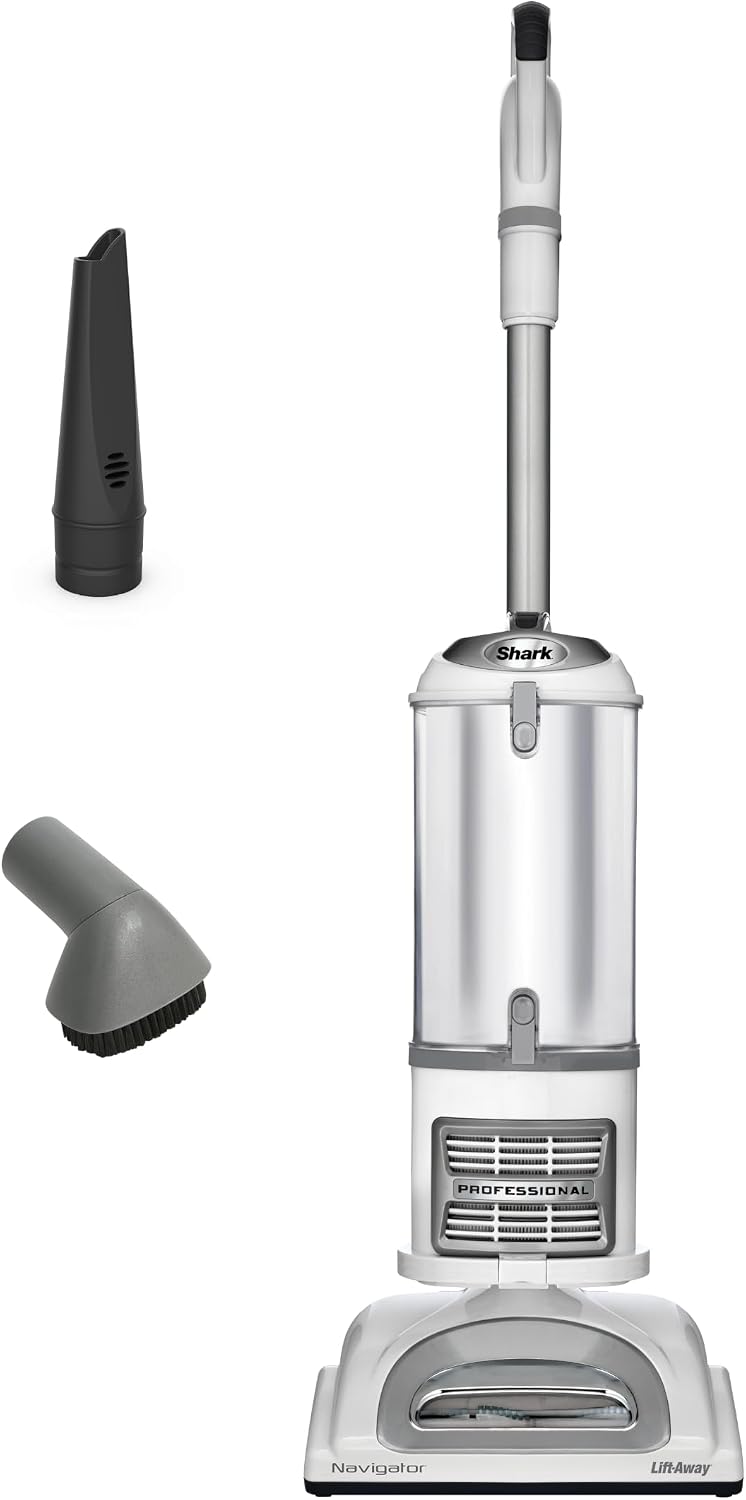 Best Under $200Shark Navigator Lift-Away Pro NV356E |
4.5out of 5 | Complete Seal + washable HEPAASTM F1977-22 tested |
Check price → |
What actually makes a vacuum a HEPA vacuum?
Two conditions, and almost every shopper checks only the first. The EPA had to write the definition down because its lead renovation rule requires contractors to use real HEPA vacuums on lead dust, and the agency states it plainly: a HEPA filter is one “capable of capturing particulates of 0.3 microns with 99.97% efficiency,” and the vacuum must be designed so that “all the air drawn into the machine is expelled through the HEPA filter with none of the air leaking past it.” That is the second condition, and it is the one that fails.
Air behaves like water: it takes the path of least resistance. A HEPA filter is deliberately dense, so if there is any gap at a seam, a hose cuff, a bin lid or a motor housing, a meaningful share of the airflow will go around the filter instead of through it. A conventional vacuum with a HEPA cartridge dropped into the exhaust slot is therefore not a HEPA vacuum under the EPA’s definition, no matter what the box says. What you are looking for on a spec sheet is the manufacturer naming the seal, not just the filter: Miele’s AirClean Sealed System, Shark’s Anti-Allergen Complete Seal, Dyson’s whole-machine filtration, SEBO’s S-Class.
Can vacuuming make the problem worse?
It can, and the honest answer is more uncomfortable than the marketing. Knibbs and colleagues measured particle and bacterial emissions from 21 different vacuum cleaners for a 2012 paper in Environmental Science & Technology (volume 46, issue 1, pages 534–542). Ultrafine particle emission rates ranged from 4.0 million to 110 billion particles per minute — a spread of roughly four orders of magnitude between the cleanest and dirtiest machine. Fine-particle emissions ran from 0.24 to 5,400 micrograms per minute. The abstract is on PubMed.
Here is the line no vacuum brand quotes: that enormous variability was, in the authors’ words, “largely not attributable to the range of determinant factors we assessed” — and the factors they assessed included exhaust filters, price and age. In other words, across a real sample of machines, having a filter fitted did not reliably predict running clean. That is not an argument against HEPA; it is an argument that the filter label alone proves nothing, and that build quality, sealing and how you handle the dust are doing most of the work. It is also why every pick below is one where the manufacturer commits in writing to a sealed airflow path, and why bagged machines rank at the top.
The 5 Best HEPA Vacuums for Microplastics in 2026
#1 — Miele Complete C3 Calima — Best Overall
Best Overall
The bag is the point. You lift it out already closed, walk it to the trash, and none of the fine fiber dust you just spent twenty minutes collecting gets a second chance to go airborne in your kitchen.
Why it’s best for microplastics: Sealed airflow satisfies the EPA’s “none of the air leaking past it” requirement, a genuine HEPA AH-50 handles the 0.3-micron fraction, and a self-sealing bag closes the one gap every bagless machine leaves open.
Check Today’s Price on Amazon →Amazon prices change daily — tap to see today's price and any active discount.
- Free delivery & returns for Prime members
- Genuine Miele HEPA filter included
- 20-year average service life, per Miele
The honest trade-offs are real and worth stating. This is the most expensive pick here — around $984 for the bundle when we checked — and it is a canister, which means dragging a body behind you and swapping tools rather than grabbing one machine off a wall hook. Bags are a running cost that bagless owners do not have, though a pack of 16 lasts most households well over a year. And a canister is a poor fit for a home that is mostly stairs.
Best for: Homes with a mix of hard floors and rugs, anyone with asthma or allergies, and households willing to buy bags in exchange for never tipping a dust bin out indoors again.
#2 — SEBO Airbelt K3 Premium — Best Bagged Runner-Up
Best Bagged Runner-Up
A 37-foot working radius means most homes get cleaned from two or three outlets, so you spend the session vacuuming rather than hunting for sockets and re-plugging mid-room.
Why it’s good for microplastics: Bagged containment plus the highest published particle-removal figure here, in a machine whose seven-year motor warranty implies the seals are built to hold their rating well past the first year.
Check Today’s Price on Amazon →Amazon prices change daily — tap to see today's price and any active discount.
- 7-year warranty on both motors
- All filters and bag pre-installed
- Made in Germany
It lands at number two rather than number one on practicality, not filtration. At roughly $949 it costs nearly as much as the Miele, SEBO bags and filters are harder to find on a supermarket shelf than Miele’s, and the brand has less of a repair network in the United States. If you can source the consumables easily, there is a fair argument it belongs first.
Best for: Hard floors and low-pile rugs, large single-level homes, and buyers who weight warranty length heavily.
#3 — Dyson Gen5detect — Best Cordless
Best Cordless
The live particle count turns an abstract worry into something you can act on: you can see the bars spike over the rug and the sofa skirt, and keep going until they stop.
Why it’s good for microplastics: The tightest published filtration figure here — 0.1 microns at 99.99 percent in a sealed whole-machine path — and an illuminated head that genuinely finds the fine fiber dust on hard floors that other machines leave behind.
Check Today’s Price on Amazon →Amazon prices change daily — tap to see today's price and any active discount.
- Free delivery & returns for Prime members
- Converts to a handheld
- Real-time particle count on screen
The caveats are the usual cordless ones plus one that matters here. It is bagless: the bin ejects straight down, which is tidier than most, but you are still releasing collected fiber dust into a trash can — do it outside. Run time collapses on the highest power setting, and at around $855.99 it is premium-priced for a machine whose battery is a consumable. Buy it for reach and convenience; if containment is your only criterion, buy a bagged machine.
Best for: Hard floors, stairs, apartments, car interiors, and anyone who will vacuum more often if the machine is easy to grab.
#4 — Shark Detect Lift-Away LA492 — Best Mid-Price Upright
Best Mid-Price Upright
Press one pedal and the sealed filtration lifts off the floor head, so stair treads, sofa seams and mattress edges get the same filtration as your living-room rug instead of a weaker handheld.
Why it’s good for microplastics: A genuinely sealed path plus HEPA at a mid-range price, with the ASTM F1977 test named rather than a vague marketing percentage, and enough brushroll agitation to pull embedded fibers out of carpet pile.
Check Today’s Price on Amazon →Amazon prices change daily — tap to see today's price and any active discount.
- Free delivery & returns for Prime members
- Sealed filtration works on stairs too
- Self-cleaning brushroll
Two honest marks against it. It is bagless, so the emptying caveat applies again. And at 4.1 out of 5 it carries the lowest buyer rating in this guide — a newer model with fewer reviews behind it, and the usual complaints about plastic parts on a mid-priced upright. Around $269.99 when we checked.
Best for: Carpeted homes, stairs, pet households, and anyone who wants sealed HEPA without a four-figure outlay.
#5 — Shark Navigator Lift-Away Professional NV356E — Best Under $200
Best Under $200
A washable HEPA filter means the running cost is a rinse and a day of drying, not a replacement cartridge every few months, which is how a budget vacuum stays cheap for its whole life.
Why it’s good for microplastics: It is the lowest price at which you still get a genuinely sealed path rather than a filter in a leaky housing, and the capture claim is tied to a published ASTM standard and a named test laboratory.
Check Today’s Price on Amazon →Amazon prices change daily — tap to see today's price and any active discount.
- Free delivery & returns for Prime members
- Washable HEPA filter — no cartridge to rebuy
- Thousands of verified reviews
What you give up at $199.99: it is bagless, it is noisier and more plastic-bodied than the canisters above, and the 99.9 percent figure is a step below the 99.97 percent HEPA threshold the EPA names. That is a real difference, not a rounding error — but it is measured against a published standard by a named laboratory, which is more than most of this price bracket offers.
Best for: First vacuum, rentals, smaller homes, and anyone who wants the sealed-system benefit without spending four figures.
What we left out, and why
A few machines that come up constantly in this category did not make the list, and the reasons are more useful than the picks themselves.
Kenmore Elite 81714 Pet Friendly. A capable bagged canister at around $400, and it is sold as a HEPA vacuum — but its own product listing states the filter system “traps 99.7% of debris.” That is not 99.97 percent. The difference between those two numbers is a tenfold difference in what gets through, and the lower figure sits below the threshold the EPA uses to define HEPA at all. It may well be a typo in the copy; we are not willing to recommend it against a published number the brand itself prints.
Dyson Ball Animal 3. A strong corded upright for pet hair at around $389, and Dyson describes it as having “whole-machine filtration” that keeps particles inside the machine. What Dyson does not publish for it, as the company does for the Gen5detect, is a HEPA grade or a micron figure. In a guide whose entire premise is that the specific claim matters, a model with no published particle figure cannot be ranked against models that have one.
Robot vacuums. Useful for keeping settled dust down between real cleans, and the frequency is genuinely worth something. But bins are tiny, most brands do not publish a sealed-system filtration figure, and no robot agitates carpet pile hard enough to pull embedded fibers out of it. Treat one as maintenance, not as the machine doing the work.
Central vacuums. Mechanically the best answer on this page, because the motor and exhaust sit in the garage and the dust never re-enters living space at all. They are out of scope here only because installation puts them in a different budget and decision entirely.
How to vacuum so the fibers actually leave
The machine is half the job. The handling is the other half, and it is free.
- Empty a bagless bin outdoors. This is the single highest-value habit on the list. Tipping fine fiber dust into an indoor trash can undoes a share of the work you just did.
- Vacuum slowly, and go twice over carpet. Embedded fibers need brushroll contact time. A fast single pass lifts surface debris and leaves the reservoir in the pile.
- Do the edges and under furniture. Settled dust concentrates against baseboards and in the still air under sofas and beds, which is exactly where a floor head never goes.
- Include soft furnishings. Upholstery, mattresses, curtains and rugs are the sources, not just the collectors. A lift-away pod or a canister hose is what makes this practical.
- Keep filters on schedule. A clogged filter raises the pressure differential across every seam in the machine, which is precisely the condition under which air starts finding its way around the filter instead of through it.
- Let the air settle, or run a purifier. Vacuuming stirs up what it does not capture. If someone in the house has asthma, give the room twenty minutes afterward, or run an air purifier alongside.
Cutting the source matters as much as removing the dust. Natural-fiber rugs, bedding and clothing shed cellulose instead of plastic — the same logic behind our guides to microplastics in clothing and the plastic-free laundry routine, since the washing machine is the other major release point for synthetic textile fibers.
Comparison Table: At a Glance
| Model | Type | Filtration claim | Dust containment | Price when checked |
|---|---|---|---|---|
| Miele Complete C3 Calima | Bagged canister | HEPA AirClean AH-50, AirClean Sealed System | Self-sealing bag | $984 |
| SEBO Airbelt K3 Premium | Bagged canister | S-Class, >99.97% at 0.3µm | Bag | $949 |
| Dyson Gen5detect | Cordless stick | Whole-machine HEPA, 99.99% at 0.1µm | Bagless bin | $855.99 |
| Shark Detect Lift-Away LA492 | Corded upright | Complete Seal + HEPA, 99.99% at 0.3µm+ (ASTM F1977) | Bagless bin | $269.99 |
| Shark Navigator Lift-Away Pro NV356E | Corded upright | Complete Seal + washable HEPA, 99.9% at 0.3µm+ (ASTM F1977-22, IBR Labs) | Bagless bin | $199.99 |
Prices are what each listing showed on October 10, 2026 and will move; the filtration claims are each manufacturer’s own published wording, quoted rather than paraphrased, because the exact number and the exact particle size are the whole argument.
Our Pick by Situation
- You want the best containment, full stop: Miele Complete C3 Calima.
- Mostly hard floors, big single-level home: SEBO Airbelt K3 Premium.
- Apartment, stairs, or you only vacuum if it is easy: Dyson Gen5detect.
- Carpet and pets on a normal budget: Shark Detect Lift-Away LA492.
- Under $200, first real vacuum: Shark Navigator Lift-Away Professional NV356E.
- Someone in the house has asthma: a bagged machine, every time, and empty nothing indoors.
How We Evaluated These Vacuums
We did not run a laboratory test, and we are not going to imply we did. What we did was narrower and checkable: for every candidate we read the manufacturer’s own published filtration wording and required it to name both a capture percentage and a particle size, we required the brand to commit in writing to a sealed airflow path rather than just a filter, and we weighted how the collected dust leaves the machine — bagged over bagless — because that is the step the filtration rating says nothing about. Prices and buyer ratings were read off each product’s live listing on October 10, 2026. Anything whose published claim was vague, absent, or below the EPA’s 99.97 percent HEPA threshold was moved to the section above explaining why it was left out rather than quietly dropped.
Frequently Asked Questions
A sealed HEPA vacuum removes the fraction that has settled into carpet, rugs and floors, which is where most indoor microplastic ends up. The 2025 Emerging Contaminants study of homes around Birmingham, UK measured an average of 155 microplastics per milligram of settled house dust, about 90 percent of it fibers and fragments — sizes a vacuum can physically lift. What a vacuum cannot do is catch particles still floating in the air, which is an air-purifier job, and it cannot stop your textiles shedding more the moment you finish.
Two conditions. Under the EPA’s renovation rule at 40 CFR 745.83, a HEPA filter captures particles of 0.3 microns at 99.97 percent efficiency, and the machine must be built so all the air drawn in is expelled through that filter with none leaking past it. A conventional vacuum with a HEPA cartridge pushed into the exhaust slot fails the second test, because air escapes through seams and gaskets instead. Look for the brand naming the seal: AirClean Sealed System, Anti-Allergen Complete Seal, whole-machine filtration, S-Class.
Bagged. The weak point of a bagless machine is not its filter, it is the moment you empty it: you tip a loose cup of fine fiber dust into a trash can, usually indoors, and some of it goes straight back into the air. A self-sealing bag is closed before it leaves the machine. If you already own a bagless vacuum, empty the bin outside and rinse washable filters rather than knocking them out over a bin.
It can, depending enormously on the machine. Knibbs and colleagues measured 21 vacuums for a 2012 paper in Environmental Science & Technology and found ultrafine emission rates from 4.0 million to 110 billion particles per minute, and fine-particle emissions from 0.24 to 5,400 micrograms per minute. The uncomfortable part is that this spread was largely not explained by the factors they tested — including exhaust filters, price and age. A HEPA label alone is not proof of a clean-running machine, which is why sealing and dust containment matter at least as much.
They do different jobs and overlap less than people assume. A vacuum removes the settled reservoir; a purifier captures what is suspended, including the fibers your clothes and furnishings release between cleans and the dust that vacuuming itself stirs up. If you only buy one, buy the vacuum — it takes the material out of the house rather than relocating it into a filter. If asthma or allergies are in play, run both, and run the purifier during and after vacuuming. Our picks are in the best air purifier for microplastics guide.
Protect Every Room in Your Home
From the kitchen to the nursery to the bedroom — the Complete Plasticproof Guide covers every swap that matters, backed by 47+ studies.