
Compare all 5 picks
Every pick side by side — tap a name to jump to the full review, or check today's price.
| Pick | Why it wins | |
|---|---|---|
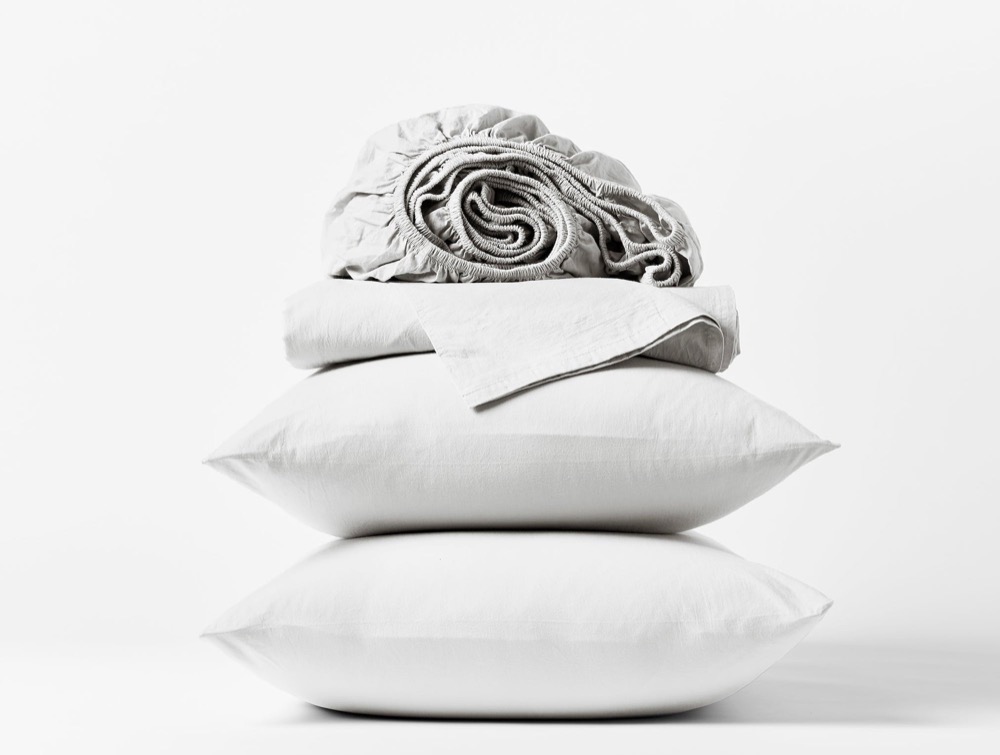 Best OverallCoyuchi Organic Percale Sheet Set |
GOTS CertifiedFair Trade |
Check price → |
GOTS CertifiedOEKO-TEX 100 |
Check price → | |
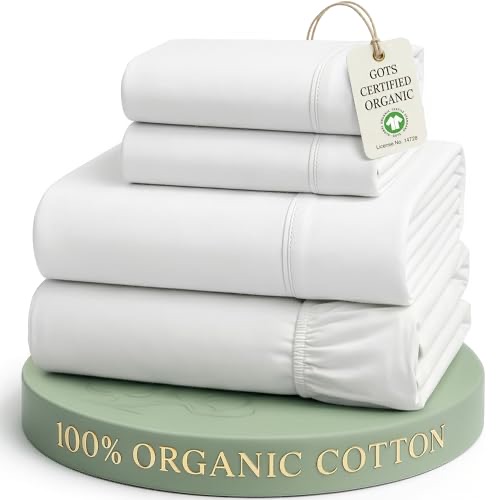 Best for Hot SleepersLANE LINEN 100% Organic Cotton Percale Sheet Set |
100% Organic CottonPercale |
Check price → |
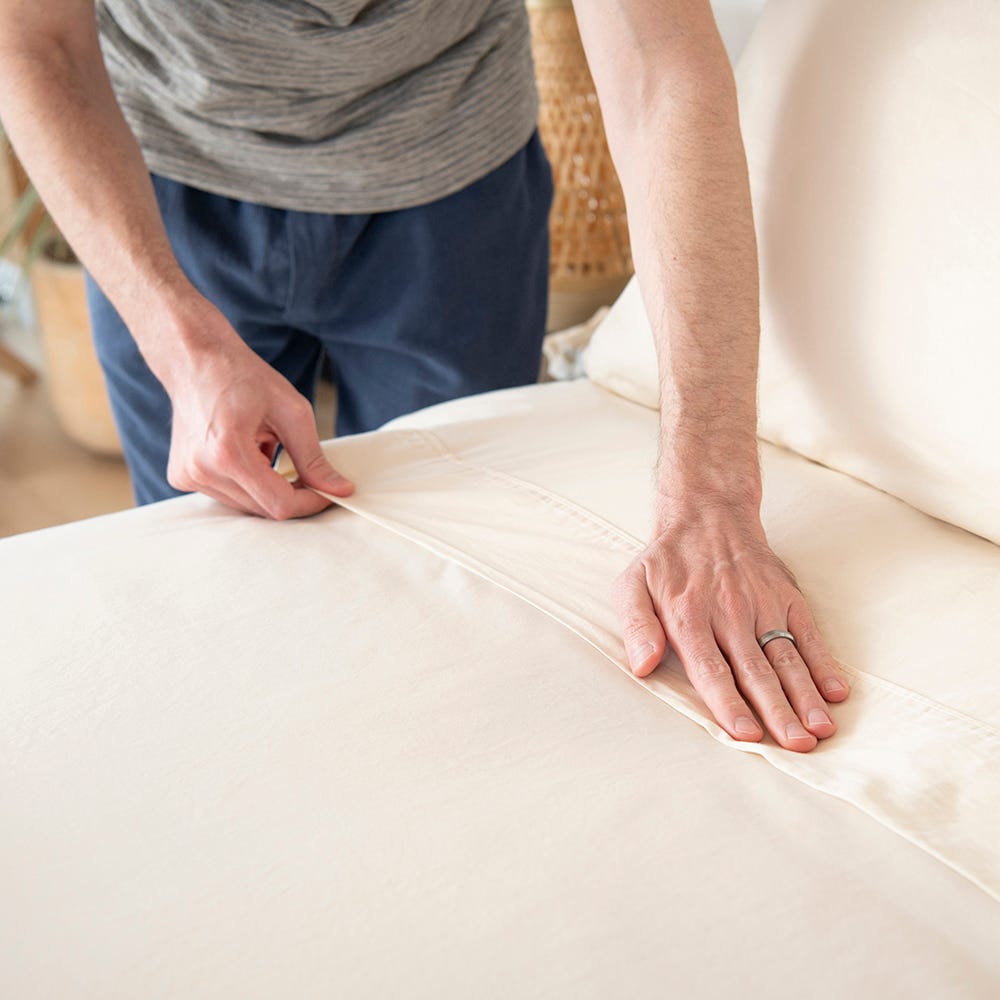 Best for Sensitive SkinNaturepedic Organic Cotton Sheet Set |
GOTS CertifiedOEKO-TEX 100 |
Check price → |
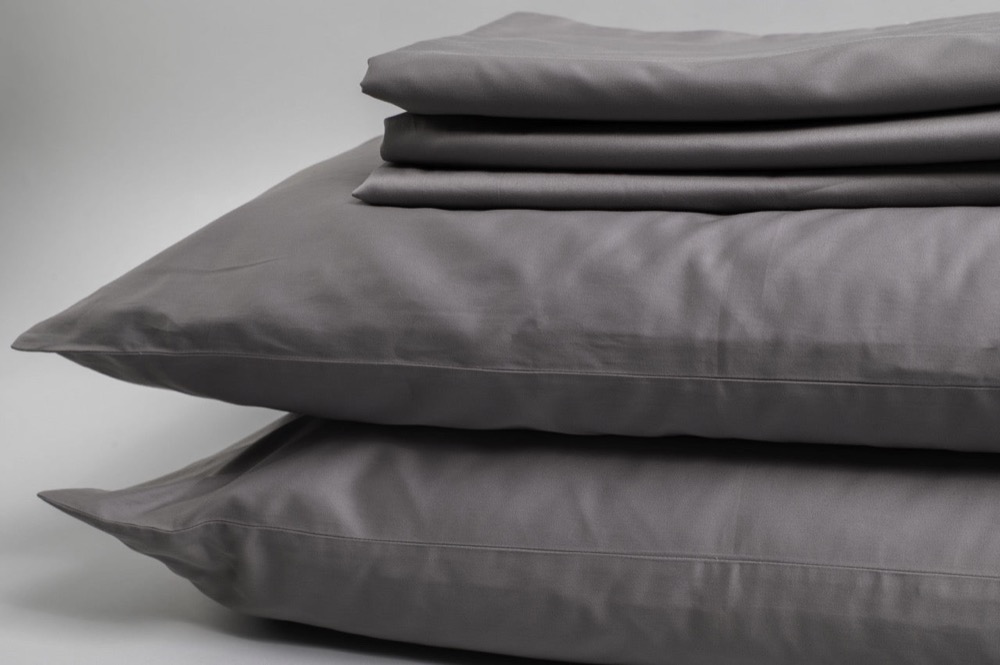 Best Mid-Range SateenPure Organic Cotton Sateen Sheet Set |
GOTS CertifiedSateen |
Check price → |
Quick Picks
| Pick | Brand | Price | Certifications | Weave |
|---|---|---|---|---|
| Best Overall | Coyuchi Percale | $$ | GOTS + Fair Trade | Percale |
| Best Budget | Whisper Organics | $ | GOTS | Percale |
| Hot Sleepers | LANE LINEN Organic Cotton | $$ | 100% Organic Cotton | Percale |
| Sensitive Skin | Naturepedic | $$$ | GOTS + MADE SAFE | Sateen |
| Silky Feel | Pure Organic Sateen | $$ | GOTS | Sateen |
Price guide: $ budget · $$ mid-range · $$$ premium. Tap any pick below for today's exact Amazon price.
Why Organic Cotton Sheets Matter
Conventional cotton uses about 10% of all agricultural pesticides globally despite covering only 2.5% of farmland. Those pesticide residues persist through processing — and most sheets are treated with additional finishes: formaldehyde-based wrinkle-resist coatings, optical brighteners (fluorescent whitening agents), and synthetic dyes with heavy metal mordants.
None of this is disclosed on the label. You're sleeping in direct skin contact with these chemicals for 8 hours per night, 2,920 hours per year.
Organic cotton eliminates the pesticide burden. GOTS certification goes further — it also prohibits formaldehyde finishes, azo dyes, heavy metals, and bleach throughout the entire supply chain. The result is fabric that's genuinely clean, not just marketed as "natural."
The Only Certifications That Matter
GOTS — Global Organic Textile Standard
Gold StandardCovers the entire supply chain: certified organic fiber, no toxic dyes or finishes, fair labor practices, and environmental standards for wastewater. Third-party audited annually. This is the only certification that verifies both the fiber AND the processing. If your sheets claim to be organic without GOTS or OCS certification, there's no way to verify it.
OEKO-TEX Standard 100
Strong SecondaryTests the finished product for 100+ harmful substances. Does NOT audit the growing process — conventional pesticide use doesn't disqualify a product. Valuable confirmation that the finished sheet is safe, but doesn't prove the cotton itself was grown organically.
OCS — Organic Content Standard
Good for FiberVerifies that a product contains the stated amount of organically grown material. More limited than GOTS — it tracks organic fiber content but doesn't audit processing chemicals or labor. Better than nothing; not as comprehensive as GOTS.
"Made with Organic Cotton" (no certification)
Unverifiable MarketingWithout a third-party certification, "organic cotton" claims are unverifiable. Some brands use a small percentage of organic cotton (as low as 5%) to justify the label. Avoid purchasing based on uncertified organic claims.
The Best Organic Sheets, Reviewed
Best Overall
Coyuchi has been one of the most trusted names in organic textiles since 1991 — long before organic bedding became a marketing trend. Their percale sheets use long-staple GOTS-certified cotton that gets noticeably softer with every wash, unlike synthetic-finish sheets that feel progressively worse as coatings break down.
The percale weave is crisp and cool — ideal for warm sleepers, warm climates, or anyone who runs hot. Thread count is 300, but it's long-staple fiber, so it outperforms cheap 600-count sheets in both softness and durability. Available in 15+ colorways, all dyed with low-impact GOTS-compliant dyes. The trade-off: percale wrinkles easily, and it can feel slightly stiff before the first few washes.
Owners describe Coyuchi's percale as cool, crisp and "just the right softness without being too soft," and value that the brand skips formaldehyde-based wrinkle-resist finishes on purpose. The honest downsides: because there is no anti-wrinkle treatment, the sheets crease and wear a naturally rumpled look straight from the dryer; and durability is the recurring worry, with a low durability score in one test and a buyer reporting the main sheet split down the middle after about a year and a half. At this price, that longevity concern is the thing to weigh.
Long-staple cotton that gets softer for years instead of pilling — the closest thing to a buy-it-for-life sheet set in this roundup.
Why it's safe: Full GOTS certification means the entire supply chain is verified organic — no pesticide residues, no formaldehyde wrinkle-resist finishes, no azo dyes — and 100% cotton means no polyester to shed microplastics overnight.
Check Today’s Price on Amazon →Amazon prices change daily — tap to see today's price and any active discount.
- Free delivery & returns for Prime members
- Sold & shipped by Amazon
- Thousands of verified reviews
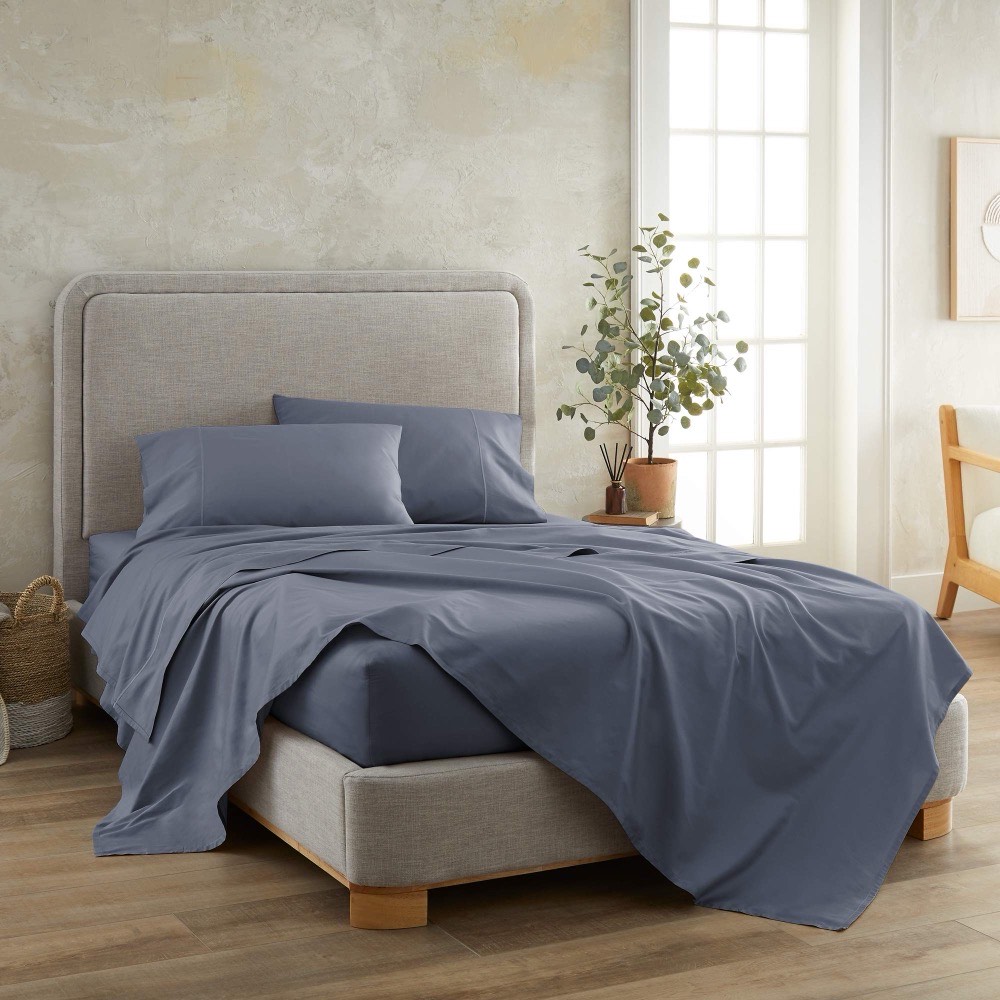 Best Budget
Whisper Organics punches well above its price point. The sheets are GOTS-certified — the same standard as brands charging twice as much — with a 300 thread count weave that starts soft and continues improving. For anyone new to organic bedding or buying for a guest room, this is the obvious starting point.
The fitted sheet has deep 16-inch pockets, accommodating thick mattresses and toppers. Available in a solid range of clean neutrals — no novelty prints. Machine wash cold, tumble dry low, and you'll get 3-4+ years of reliable use. It isn't Fair Trade certified and the color range is smaller than premium brands, but for the price the value is hard to beat.
Buyers call these soft and well made, say they soften further with each wash, and a few who react to conventional cotton note they stopped getting hives after switching. When orders went wrong, several said customer service turned it around. The honest downsides: they come out of the dryer a wrinkled mess even with dryer balls, the 200-thread-count percale can feel a little rough to some, and there are scattered reports of colors not matching the listing and the occasional wrong-size shipment or slow first reply from support.
The cheapest way to get genuine GOTS certification — verified-organic cotton at a price where most rivals only offer unverifiable "made with organic cotton" claims.
Why it's safe: GOTS + OEKO-TEX certification confirms the finished sheet is free of formaldehyde finishes, optical brighteners, and harmful dyes — and 100% organic cotton means no pesticide residues and no microplastic-shedding polyester.
Check Today’s Price on Amazon →Amazon prices change daily — tap to see today's price and any active discount.
- Free delivery & returns for Prime members
- Sold & shipped by Amazon
- Thousands of verified reviews
Best for Hot Sleepers
LANE LINEN's percale set is made from 100% organic cotton in a crisp, tightly woven percale — the weave prized for breathability. It's a straightforward, no-frills organic-cotton option that skips the price premium of retail-distributed brands like Coyuchi.
The percale weave is tightly woven, breathable, and designed to sleep cool — a good match if high-quality sheets still leave you overheating. This set is King size and comes as a 4-piece set (a flat sheet, fitted sheet, and two pillowcases) in white. The crisp, lightweight percale feel won't suit anyone who prefers heavier, silkier sateen sheets.
Owners are surprised by the value: the percale feels crisp and breathable, buyers report it gets noticeably softer after ten or more washes and still shows "zero pilling" after fifty, and hot sleepers say it keeps them cool and dry. The honest downsides are modest for the price: like most untreated natural cotton the sheets wrinkle and can feel slightly stiff on day one, so most owners recommend a wash before first use and pulling them from the dryer promptly to cut the creasing.
A tightly woven percale that actually sleeps cool — the pick for anyone who wakes up overheated in ordinary "premium" sheets.
Why it's safe: It's 100% organic cotton — no polyester to shed microplastic fibers while you sleep, and none of the synthetic-blend content that ordinary sheets rely on.
Check Today’s Price on Amazon →Amazon prices change daily — tap to see today's price and any active discount.
- Free delivery & returns for Prime members
- Sold & shipped by Amazon
- Thousands of verified reviews
Best for Sensitive Skin
Naturepedic is best known for their GOTS-certified organic mattresses, but their bedding line sets the same standard for purity. Their sheets carry GOTS, OEKO-TEX Standard 100, and MADE SAFE certifications — the most comprehensive testing stack of any brand in this roundup. Every dye lot is independently tested for 100+ harmful substances before production.
The sateen weave produces a silky, smooth feel that's particularly suited to people with eczema, psoriasis, or chemical sensitivities — and parents who want the purest possible sleep environment for children. It's the premium choice for anyone who reacts to textiles. Expect the highest price in this roundup, a mostly white/ivory palette, and slightly more warmth than percale.
Owners praise the Naturepedic set for temperature regulation and a premium 400-thread-count sateen feel that softens after a couple of washes. The honest downsides are few but consistent: the price is high and reviewers say it is not the pick for anyone shopping economically; a small number raise long-term durability questions given the cost; and the sateen arrives wrinkly, though owners say it relaxes after a night or two of use.
The pick for reactive skin and nurseries — every dye lot is independently screened for 100+ harmful substances before it ships.
Why it's safe: A triple certification stack (GOTS + OEKO-TEX 100 + MADE SAFE) verifies there are no formaldehyde finishes, heavy-metal dyes, or other harmful residues — and pure organic cotton means nothing synthetic to shed against your skin.
Check Today’s Price on Amazon →Amazon prices change daily — tap to see today's price and any active discount.
- Free delivery & returns for Prime members
- Sold & shipped by Amazon
- Thousands of verified reviews
Best Mid-Range Sateen
For those who prefer a silky sateen weave but can't stretch to Naturepedic pricing, Pure's GOTS-certified sateen sheets offer a credible middle ground. The 300-thread-count sateen has a noticeably smooth feel, a wider color selection than the more minimalist brands above, and consistent GOTS certification.
These are a strong choice for guest rooms, kids' rooms, or anyone who wants the organic certification without committing to a premium. Durability is solid; expect 2-4 years of regular use before any pilling develops at high-wear spots. It carries a single certification rather than a multi-cert stack, and sateen retains more heat — so it's not the pick for hot sleepers.
Reviews for this GOTS-certified sateen set skew about 90 percent positive, and buyers who switched from pricier names like Boll & Branch say it feels comparable in softness and weight for much less. Owners note it thickens rather than thins after repeated washing and includes a deep 17-inch pocket that fits tall mattresses. The honest downsides: it feels a bit rough out of the package and needs two to three wash cycles to soften, and because it carries no anti-wrinkle treatment the sateen creases if you leave it in the dryer too long.
A silky-smooth sateen feel with real GOTS certification — the affordable way to get the look and drape of luxury sheets without the synthetic finishes.
Why it's safe: GOTS certification verifies organic cotton and clean processing — no formaldehyde wrinkle-resist resins, no optical brighteners, and no polyester blend to shed microplastics into your bed.
Check Today’s Price on Amazon →Amazon prices change daily — tap to see today's price and any active discount.
- Free delivery & returns for Prime members
- Sold & shipped by Amazon
- Thousands of verified reviews
What to Avoid (And Why)
Wrinkle-Resistant or "Easy Care" Sheets
The wrinkle resistance in most conventional sheets comes from formaldehyde-based resins (DMDHEU) bonded to the fibers. These coatings off-gas formaldehyde — a known carcinogen — throughout their lifespan, particularly when warm (i.e., when you're sleeping in them). GOTS certification prohibits these finishes entirely.
Polyester-Cotton Blends
Even "60% cotton, 40% polyester" sheets shed microplastic fibers from the polyester component throughout the night. The polyester content is also what makes these sheets pill and degrade faster. The "breathability" benefit of the cotton is undercut by the plastic content.
Bamboo Viscose / Rayon Sheets
Bamboo is often marketed as eco-friendly, but viscose and rayon processing involves harsh solvents (carbon disulfide) that produce toxic wastewater. The finished fabric bears little resemblance to the raw bamboo plant. True mechanically processed bamboo linen exists, but most "bamboo sheets" on the market are viscose. If you want bamboo, look specifically for bamboo linen (mechanically processed) with OEKO-TEX certification.
"Organic Cotton" Without Certification
Without GOTS or OCS certification, there's no way to verify organic claims. Some brands mix 5-10% organic cotton into conventional cotton and call the whole product "made with organic cotton." The only protection is third-party certification — look for the GOTS or OCS logo and verify it on the certifying organization's database.
How to Care for Organic Cotton Sheets
Proper care extends the life of organic sheets significantly — and matters for the certification integrity too. Washing natural fibers the right way also keeps them from shedding the way synthetics do in the machine; our plastic-free laundry guide covers the full wash routine.
- Wash cold (60°F/15°C or below) — hot water degrades fibers faster and sets stains
- Use a fragrance-free, dye-free detergent — Seventh Generation Free & Clear or Branch Basics; avoid fabric softeners (they coat fibers, reducing breathability), and note that laundry pods are wrapped in a dissolvable PVA plastic film
- Tumble dry low or line dry — high heat shrinks cotton and breaks down fibers faster
- No dryer sheets — they leave a synthetic coating that reduces moisture-wicking over time
- Wash before first use — removes any remaining processing residues and pre-shrinks the sheets
- Rotate two sets — alternating between two sets extends each set's lifespan by 50%
Frequently Asked Questions
Build a plastic-free bedroom — get the full checklist.
Free 12-point bedroom audit: sheets, mattress, pillows, air quality, cleaning products — everything ranked by exposure impact.
No spam. Unsubscribe anytime.
Complete Your Plastic-Free Bedroom
Sheets are the highest surface-area exposure in your bedroom — but they're one part of a broader sleep environment. Read our related guides: