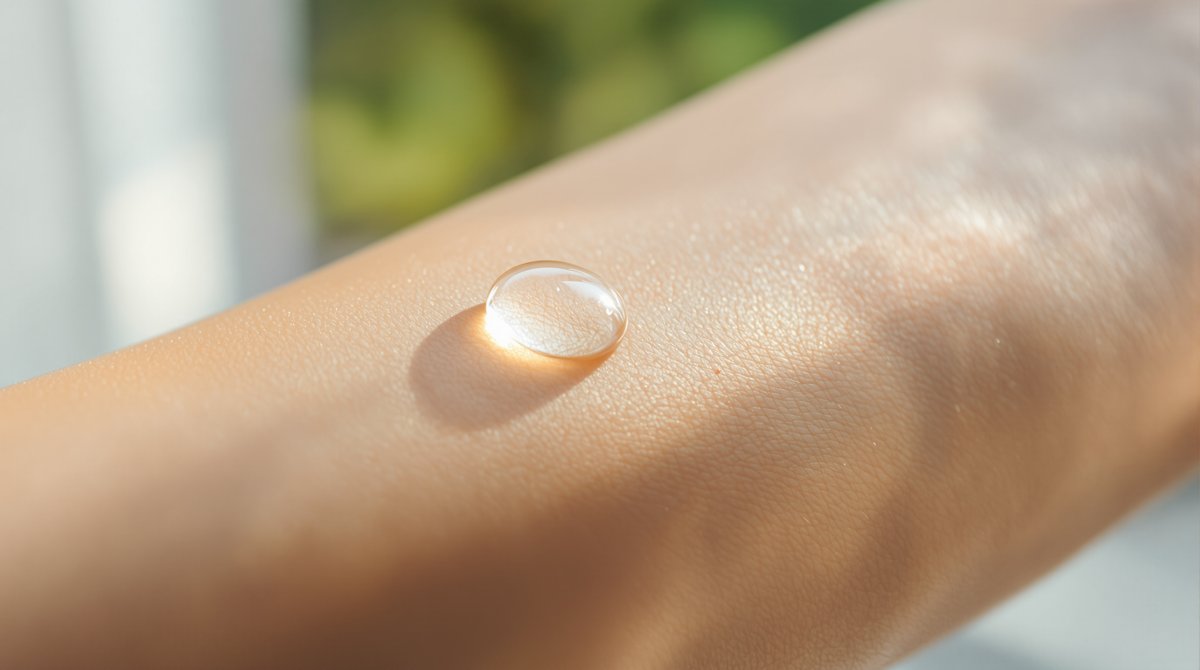
Intact skin blocks the particles themselves, but not the chemicals they carry. In controlled lab studies, plastic micro- and nanoparticles stayed in the stratum corneum — the skin's dead outer layer — and did not reach living tissue through a healthy, undamaged barrier. The real dermal risk is different: the additives microplastics contain, such as flame retardants and PFAS, can cross skin. A 2024 study on 3D human-skin models measured up to about 8% of flame-retardant chemical in microplastics being taken up by the skin, and more hydrated or sweaty skin absorbed more. So the particle mostly stays on the surface; its chemical hitchhikers are the part that gets in — and ingestion and inhalation, not skin, remain the main routes plastic enters the body.
"Can microplastics be absorbed through your skin?" is a reasonable worry: skin is the body's largest organ, and it is in constant contact with synthetic fabrics, cosmetics, household dust and tap water that all carry plastic particles. The answer is genuinely two-sided, and lumping the two halves together is where most headlines go wrong. The particles and the chemicals they carry behave very differently at the skin barrier.
This guide separates those two questions — can the plastic particle itself penetrate skin, and can the chemicals it carries — and holds each against what peer-reviewed dermal-absorption research actually measured. It is the same evidence-first approach we bring to microplastics in the human body and how microplastics end up in human blood.
The bottom line up front: healthy skin is a good barrier to the particles, so you do not need to panic about touching plastic. Spend your effort where absorption is real — the chemical additives. Favor PFAS-free, microbead-free personal care, choose natural-fiber clothing next to the skin, rinse off after sweating, and remember that diet and air drive far more of your total exposure than skin ever will.
Can microplastics pass through intact skin?
Through healthy, undamaged skin, the plastic particles themselves barely get in. The outermost layer — the stratum corneum, a dense sheet of flattened dead cells and lipids — is an efficient physical barrier, and controlled studies have repeatedly found that applied plastic particles stay in that top layer rather than crossing into living tissue.
The clearest test used fluorescent polystyrene nanoparticles on human skin and tracked where they went with confocal microscopy. The particles stayed in the stratum corneum and in hair-follicle openings and did not reach the viable epidermis or dermis — and that held even when the barrier was deliberately weakened by tape-stripping or the skin was warmed. Penetration increased only when the particles were carried in a harsh solvent, DMSO, which is not a condition your skin meets in daily life (Zou et al., International Journal of Nanomedicine, 2017). Reviews of the small body of work on nanoplastic skin penetration reach the same cautious conclusion: an intact barrier largely keeps particles out, while a compromised barrier — cuts, cracks, eczema, severe dryness — is the realistic exception. So "does skin absorb microplastics" is really two questions, and for the particle itself the honest answer is: very little, as long as the skin is healthy.
What about the chemicals microplastics carry?
This is where the real absorption happens, and where reassurance about the particles can mislead. Microplastics are not inert plastic alone — they carry additives such as plasticizers, flame retardants and processing chemicals, and they also soak up pollutants from their surroundings. Those small molecules behave nothing like a solid particle at the skin barrier: many of them can cross it.
A 2024 study put this to the test with 3D human-skin-equivalent models, exposing them to microplastics loaded with brominated flame retardants (PBDEs). As much as about 8% of the chemical dose was taken up into the skin, and more hydrated skin took up more; a small fraction moved all the way through toward the bloodstream side of the model (Abafe et al., Environment International, 2024). That followed the same group's 2023 finding that synthetic sweat actively leaches those flame retardants out of microplastics in the first place, making them available to the skin — polyethylene particles were the worst offenders, and some cosmetics increased how much chemical became available (Abafe et al., Environmental Science & Technology, 2023). The same researchers have also shown that many PFAS "forever chemicals" are absorbed through human skin. The through-line is simple: the particle tends to stay on the surface, but it can hand off its chemical cargo, and that cargo is what gets absorbed. It is the same reason we warn that "BPA-free" is not the same as chemical-free.
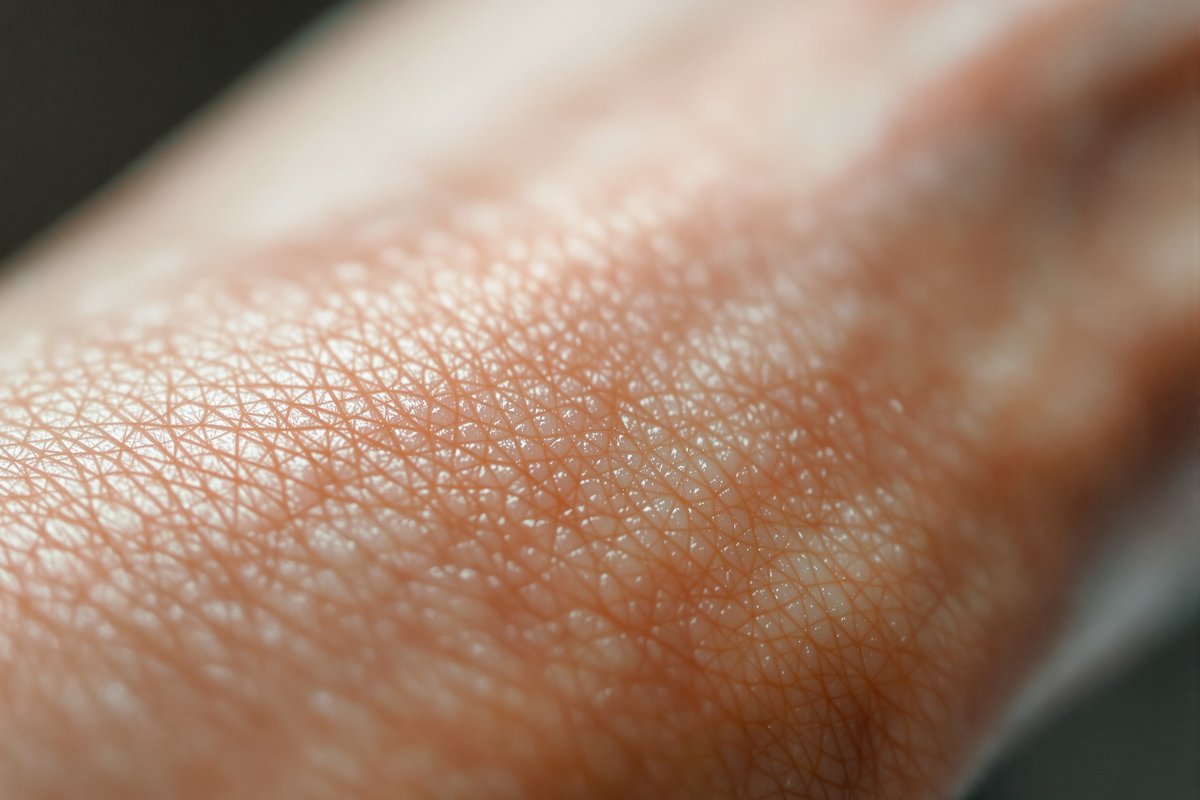
Does sweat make your skin absorb more?
Yes — moisture is one of the biggest variables. Hydrated, sweaty skin absorbed noticeably more flame-retardant chemical than dry skin in the 2024 3D-skin-model work, because water swells the stratum corneum and loosens its tight barrier. Sweat does double duty here: it not only opens the skin a little, it also pulls additives out of the plastic that touches it.
That is why the conditions that matter most are heat, exercise and occlusion. A sweaty gym session in synthetic activewear, a plastic watch strap worn all day, or an occlusive cosmetic layered over skin all extend contact time on warm, damp skin — the exact combination that raised uptake in the lab. The 2023 bioaccessibility study even found that products such as antiperspirants and foundations could increase how much chemical became available from microplastics. None of this is cause for alarm about a single touch; it is a map of where the dial actually turns.
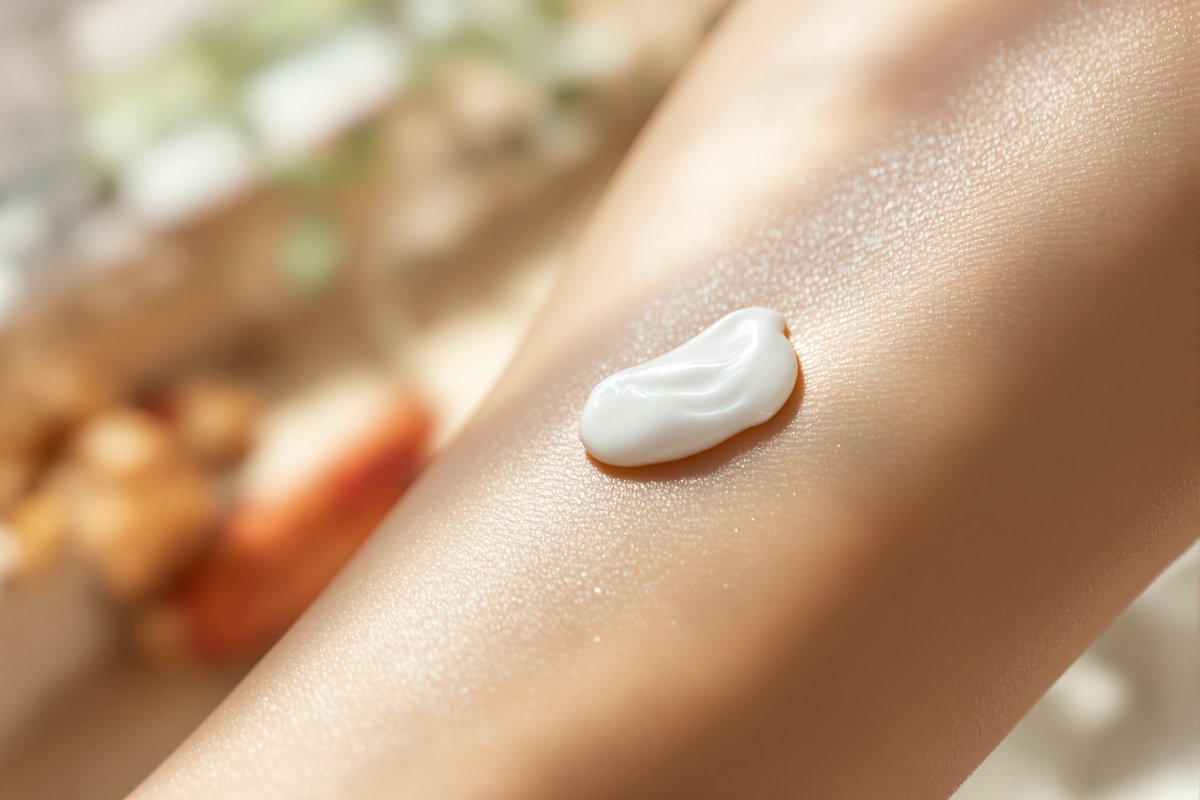
Can microplastics get in through cosmetics, clothing, or broken skin?
These are the everyday contact points worth knowing about. Some personal-care products still contain plastic microbeads or liquid polymers, and others are made with PFAS; because these are applied directly and left on, they are a more direct chemical route than incidental contact. We dig into this in PFAS in makeup and round up cleaner options in our PFAS-free clean beauty guide.
Clothing is the other constant. Synthetic fabrics such as polyester, nylon and acrylic shed microfibers against the skin and into the air and wash water, which is one reason we favor natural-fiber alternatives and cover cutting microfibers from laundry. And the single clearest exception to "skin is a good barrier" is a broken barrier: cuts, cracked skin, eczema and other damage remove the stratum corneum's protection locally and can let more of both particles and chemicals through. Healthy, intact, well-moisturized skin is doing real protective work — which is itself a reason to keep it that way.
If skin barely absorbs microplastics, why are they found in blood and organs?
Because skin is not the main way plastic gets into the body — swallowing and breathing are. Microplastics have been detected in human blood, stool, lungs, the placenta and other tissues, and the leading explanation is ingestion from food and water plus inhalation of airborne particles and household dust, both of which bypass the skin barrier entirely. A landmark 2022 study found microplastics in the blood of 17 of 22 healthy adults, the first direct evidence that particles reach the bloodstream (Leslie et al., Environment International, 2022).
So the picture is consistent, not contradictory: particles show up inside the body mostly because we eat and breathe them, while skin contributes little in the way of whole particles and a modest amount of their absorbed chemicals. If your goal is to lower your total body burden, the leverage is overwhelmingly in diet, drinking water and indoor air — the routes covered across our work on microplastics in the human body — not in avoiding every brush with plastic.
How can you reduce microplastic exposure through your skin?
Aim at the chemicals and the contact time, since the particles themselves rarely cross healthy skin. Choose cosmetics and personal-care products that are free of added plastic microbeads and PFAS, and prefer leave-on products with short, recognizable ingredient lists. Rinse off after sweating or a workout instead of letting residues sit on warm, damp skin, and go easy on heavily occlusive layers worn for hours.
For clothing, favor cotton, wool, linen and other natural fibers next to the skin, and wash synthetics less aggressively to shed fewer fibers. Keep your skin barrier healthy — moisturized and unbroken — because damaged skin is the real weak point. Filtering the water your skin bathes in helps at the margins too; a shower filter reduces particles and contaminants in shower water. And keep perspective: these are sensible, low-effort habits, but what you eat, drink and breathe drives far more of your exposure than anything that happens at the skin.
The honest verdict
Does skin absorb microplastics? The particle itself, through healthy skin, almost none — lab studies consistently find plastic micro- and nanoparticles stuck in the dead outer layer, not crossing into living tissue unless the barrier is broken or a harsh solvent is involved. That is the reassuring half, and it is well supported.
The other half is real and more useful to act on: the chemicals microplastics carry — flame retardants, PFAS, plasticizers — can be absorbed, and sweaty, hydrated skin and occlusive products absorb more. But even that is a minor contributor next to eating and breathing plastic, which is how particles actually reach your blood and organs. The practical takeaway is calm and specific: don't fear touching plastic, do choose cleaner personal care and natural fibers, keep your skin barrier intact, and put most of your effort into your food, water and air.
Cut the exposure that actually adds up
Skin is a minor route — your diet, water and air are the big levers. These guides show where the real reductions are.
Frequently Asked Questions
Through intact, undamaged skin, very little. In controlled lab studies, plastic micro- and nanoparticles stayed in the stratum corneum — the skin's dead outer layer — and hair follicles, and did not reach the living epidermis or dermis. The more important finding is that the chemicals microplastics carry, such as flame retardants and plasticizers, can cross skin: a 2024 3D-human-skin study measured up to about 8% of flame-retardant additives in microplastics being taken up by the skin, with more absorption in hydrated or sweaty skin. So the particles themselves barely penetrate healthy skin, but their chemical hitchhikers can.
The evidence is limited, and what exists suggests healthy skin blocks them. A 2017 study applied fluorescent polystyrene nanoparticles to human skin and found they stayed in the stratum corneum and hair follicles without reaching deeper layers, even after the barrier was disrupted by tape-stripping or warmed. Penetration increased only when a strong solvent (DMSO) was used. Researchers note that a compromised or broken skin barrier could make penetration easier, so damaged skin is the realistic exception rather than the rule.
Yes — this is the better-documented route. A 2023 study showed that synthetic sweat leaches brominated flame retardants out of microplastics, and a 2024 study using 3D human skin models found the skin took up as much as 8% of the exposure dose, with more hydrated skin absorbing more. The same research group separately found that many PFAS "forever chemicals" are absorbed through skin. Microplastics act as carriers: the particle may stay on the surface while the additives it contains move into and sometimes through the skin.
Yes. Hydrated, sweaty skin absorbed more flame-retardant chemical from microplastics than dry skin in the 2024 3D-skin-model study. Sweat also actively pulls additives out of the plastic in the first place — the 2023 bioaccessibility study used a synthetic sweat-and-sebum mixture and found cosmetics such as antiperspirants and foundations could raise how much of the chemical became available. So heat, exercise, and occlusive products are the conditions that increase dermal uptake the most.
Because the main routes into the body are swallowing and breathing, not skin. Microplastics have been found in human blood — a 2022 study detected them in 17 of 22 adults — along with the lungs, placenta, and other tissues, and the leading explanation is ingestion from food and water plus inhalation of airborne particles, which bypass the skin barrier entirely. Skin is a minor route for the particles themselves, but a real route for the chemicals they carry.
Focus on the chemicals and the contact time, since the particles themselves barely cross healthy skin. Choose cosmetics and personal-care products free of added plastic microbeads and PFAS, rinse off after sweating or working out rather than letting residues sit, and favor natural-fiber clothing over synthetics worn next to the skin. Keeping the skin barrier healthy (moisturized, not broken or irritated) matters too, and filtering shower water reduces particles in the water your skin contacts. Diet and air quality matter far more for total body exposure than skin does.
Sources
- Abafe OA, Harrad S, Abdallah MA-E. "Assessment of Human Dermal Absorption of Flame Retardant Additives in Polyethylene and Polypropylene Microplastics Using 3D Human Skin Equivalent Models." Environment International, 2024;186:108635, doi.org/10.1016/j.envint.2024.108635. Up to ~8% of PBDE flame retardant in microplastics was taken up by 3D human skin; more hydrated skin absorbed more.
- Abafe OA, Harrad S, Abdallah MA-E. "Novel Insights into the Dermal Bioaccessibility and Human Exposure to Brominated Flame Retardant Additives in Microplastics." Environmental Science & Technology, 2023;57(29):10554–10562, full text at PMC10373483. Synthetic sweat leaches flame retardants from microplastics; polyethylene released the most; some cosmetics raised bioaccessibility.
- Zou Y, Celli A, Zhu H, Elmahdy A, Cao Y, Hui X, Maibach H. "Confocal Laser Scanning Microscopy to Estimate Nanoparticles' Human Skin Penetration In Vitro." International Journal of Nanomedicine, 2017;12:8035–8041, doi.org/10.2147/IJN.S139139. Polystyrene nanoparticles stayed in the stratum corneum and hair follicles; tape-stripping and warming did not drive deeper penetration.
- Leslie HA, van Velzen MJM, Brandsma SH, Vethaak AD, Garcia-Vallejo JJ, Lamoree MH. "Discovery and Quantification of Plastic Particle Pollution in Human Blood." Environment International, 2022;163:107199, doi.org/10.1016/j.envint.2022.107199. Microplastics detected in the blood of 17 of 22 healthy adults.