Most people think of microplastics as something that happens to the ocean — a problem for sea turtles, not for them. But the clothes hanging in your closet right now are one of the largest single sources of microplastic pollution on the planet, and the exposure pathway runs directly through your laundry room, your indoor air, and your skin.
The International Union for Conservation of Nature estimated that synthetic textiles account for approximately 35% of all primary microplastics found in the ocean — making your wardrobe a bigger contributor than tire wear, city dust, or industrial pellets. And that estimate doesn't include the fibers that stay in indoor air, settle on household surfaces, or penetrate skin during wear.
This guide covers what the research actually shows about clothing microplastics, which fabrics are the worst offenders, which natural alternatives genuinely don't shed plastic, and the five best organic clothing brands for making the switch.
- A single polyester fleece jacket releases up to 700,000 microfibers per wash — particles that enter waterways and eventually food chains.
- Polyester, nylon, acrylic, and spandex are all petroleum-based plastics — "synthetic" on a clothing label means "plastic."
- Organic cotton, GOTS-certified wool, linen, and hemp are the primary plastic-free fiber alternatives, now available from dozens of brands at competitive prices.
- Start with the items closest to skin (underwear, base layers, bedding) for the highest exposure-reduction impact.
Section 1: How Synthetic Clothing Sheds Microplastics
Polyester, Nylon, Acrylic, Spandex — These Are Plastic Fibers
Synthetic fabrics are not derived from plants or animals. They are manufactured from petroleum-based polymers — the same class of materials as plastic water bottles and packaging. Polyester is essentially spun PET plastic. Nylon is polyamide plastic. Acrylic is polyacrylonitrile plastic. Spandex (elastane) is polyurethane plastic. When any of these fabrics physically degrade — through friction, agitation, heat, or UV exposure — they shed microfibers: tiny plastic fragments typically less than 5mm in length, and often far smaller.
This matters because, unlike natural fibers, synthetic microfibers do not biodegrade in meaningful timeframes. Polyester can persist in the environment for hundreds of years. The fibers that leave your washing machine today will still exist — somewhere in an ecosystem, a water supply, or an organism — decades from now.
Washing Is the Biggest Shedding Event
Laundry is where the most dramatic release occurs. The mechanical agitation of a wash cycle, combined with hot water and detergent, causes synthetic fabrics to shed fibers at a high rate. Research has found:
- A single synthetic garment sheds an estimated 1,900 fibers per wash on average, with fleece jackets shedding dramatically more — up to 700,000 fibers per wash in some studies
- Older, more worn garments shed significantly more fibers than new ones, as the fabric structure has already degraded
- Higher water temperatures accelerate fiber release — cold water washes produce meaningfully fewer microfibers
- Powder detergents act as an abrasive agent against fabric fibers, increasing shedding compared to liquid detergents
- Longer, more vigorous wash cycles shed more than short, gentle cycles
Conventional wastewater treatment plants capture a portion of microfibers — estimates range from 70% to 99% depending on the facility and technology — but even a 99% capture rate still allows millions of fibers to pass through per wash cycle given the enormous volumes of laundry processed. The captured fibers end up in sewage sludge, which is frequently applied to agricultural land as fertilizer, re-entering the soil and water cycle from there.
Wear Friction Also Releases Particles Into the Air
Laundering is not the only release event. Simply wearing synthetic clothing causes continuous low-level shedding through friction — fibers released into the immediate air environment with every movement. Studies measuring indoor air quality have found that homes where synthetic textiles predominate (polyester upholstery, synthetic carpet, synthetic clothing) show measurably higher concentrations of airborne microplastics — and of the household dust those fibers settle into — than homes furnished primarily with natural materials. The largest synthetic-textile surface most people are in contact with is the one they sleep on all night, which is why pairing organic bedding with a non-toxic mattress made from natural latex, wool and organic cotton is one of the highest-impact bedroom swaps.
You breathe those fibers. They deposit in lung tissue. Microplastic particles have been detected in human lung samples taken during surgery, with higher concentrations in the lower lung lobes — consistent with inhalation as the exposure route. See our guide to airborne microplastics for a deeper look at the inhalation pathway.
Skin Absorption: The Underappreciated Pathway
Skin is not an impermeable barrier, particularly for very small particles. Research has identified that nanoplastics — particles below 1 micrometer — can penetrate intact skin, with enhanced penetration through hair follicles. This pathway is of particular concern for infants, whose skin is thinner, more permeable, and covers proportionally more body surface area relative to body weight. Synthetic onesies, pajamas, and bodysuits worn directly against infant skin represent a continuous low-level exposure that has received insufficient regulatory attention. The same permeability is why what you apply to that skin matters too: choosing a non-toxic mineral sunscreen keeps the chemical UV filters in conventional formulas off skin that absorbs readily.
Section 2: The Worst Offenders — Fabrics to Replace First
Not all synthetic fabrics shed equally. Some are dramatically worse than others, and understanding the hierarchy helps you prioritize which items to replace first when building a more natural wardrobe.
Acrylic fleece and loose-knit acrylic sweaters are the worst offenders, releasing the most fibers per wash. Polyester fleece is close behind. Any garment worn directly against skin — underwear, base layers, pajamas — compounds exposure through the skin absorption pathway regardless of fabric type.
Avoid Acrylic
Acrylic fabric — commonly found in sweaters, cardigans, blankets, and yarn — is the highest-shedding synthetic textile studied. A 2016 Plymouth University study found that acrylic sheds roughly five times more fibers per wash than polyester-cotton blends. Acrylic fibers are also shorter and lighter than polyester fibers, making them easier to inhale and more likely to remain suspended in air and water.
Avoid Polyester Fleece
Fleece jackets and fleece-lined garments are beloved for warmth but represent some of the highest per-garment shedding loads measured in research. The loose, brushed structure of fleece creates enormous surface area from which fibers can detach. A single fleece wash can release more fibers than dozens of washes of a tightly woven natural-fiber garment.
Avoid Polyester-Cotton and Polyester Blends
Many "soft" and "comfortable" garments marketed as everyday basics are polyester-cotton blends — typically 50/50 or 60/40. The polyester fraction sheds plastic microfibers even when a large portion of the fabric is cotton. For garments worn against the body (t-shirts, underwear, pajamas), the plastic fraction matters. A garment labeled "50% cotton, 50% polyester" is still 50% plastic.
Avoid Spandex/Elastane Blends
Activewear and athleisure garments almost universally contain spandex (also sold as Lycra or elastane) for stretch and recovery. Spandex is polyurethane plastic. High-stretch activewear is worn close against the body during high-exertion activities — meaning both direct skin contact and sweat-mediated absorption, alongside the fiber release that occurs during subsequent washing.
Section 3: What Materials Are Actually Safe
Natural fibers — grown from plants or animals — do not shed plastic when they wear. When natural textiles shed fibers, those fibers are organic materials that biodegrade in the environment. The key is to choose garments that are 100% natural fiber, with no synthetic blend whatsoever.
"A garment labeled '95% cotton, 5% spandex' is still a source of plastic microfiber pollution. 100% means 100%."
Choose 100% Organic Cotton (GOTS Certified)
Organic cotton is the gold standard for everyday clothing. It grows without synthetic pesticides, is soft against skin, durable, washable, and completely plastic-free. The Global Organic Textile Standard (GOTS) is the most rigorous certification available — it covers not just how the cotton is grown (no synthetic pesticides or GMOs) but the entire supply chain through dyeing, processing, and manufacturing. Look for the GOTS logo on the label. OEKO-TEX Standard 100 is a complementary certification that independently tests finished fabrics for harmful chemical residues.
Choose Linen (GOTS or OEKO-TEX Certified)
Linen is made from flax — one of the most durable and low-impact natural fibers available. It becomes softer with washing, not weaker, and has excellent moisture-wicking and temperature-regulating properties. Linen is naturally plastic-free and often grown with minimal pesticide input. It is an excellent choice for warm-weather clothing, bed linens, and lightweight layers.
Choose Wool (GOTS or RWS Certified)
Wool is a protein fiber — a natural polymer, not a plastic polymer — that biodegrades in soil within months to years. It is naturally flame-resistant, moisture-wicking, and temperature-regulating. For ethical sourcing, look for GOTS-certified wool or Responsible Wool Standard (RWS) certification, which covers animal welfare alongside fiber quality. Merino wool is particularly useful for next-to-skin layers because its fine fibers resist itching.
Choose Lyocell / TENCEL (From Certified Sources)
Lyocell — marketed under the brand name TENCEL — is made from wood pulp (usually eucalyptus or beech) using a closed-loop manufacturing process that recycles 99% of the solvent used. It is biodegradable, plastic-free, and notably soft. It is not technically "natural" in the same way as cotton or linen (it undergoes chemical processing) but produces no plastic microfibers. Look for OEKO-TEX or FSC-certified lyocell. Standard viscose/rayon uses a more chemically intensive process and is less preferable than TENCEL.
Choose Bamboo Lyocell (Not Bamboo Viscose)
True bamboo lyocell — not standard bamboo viscose — is processed using the same closed-loop TENCEL method and is genuinely plastic-free and biodegradable. Bamboo as a raw material grows rapidly with minimal water and pesticide input. Check labels carefully: "bamboo viscose" or "bamboo rayon" is processed using harsh chemicals and is less preferable than "bamboo lyocell" or "bamboo TENCEL."
Section 4: Best Organic Clothing Brands 2026
These brands offer GOTS-certified or verified natural-fiber clothing at a range of price points. All of the options below have been selected based on certification rigor, fabric transparency, and consumer accessibility.
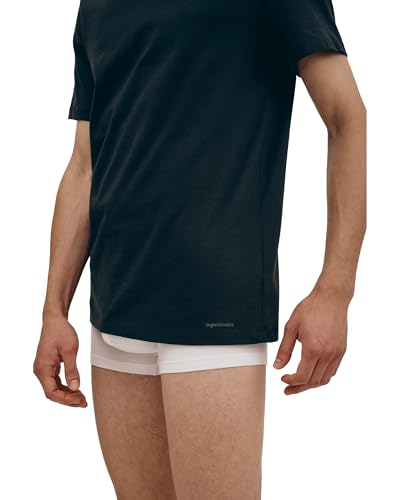 Organic Cotton 3-Pack
Buyers call the fabric soft and comfortable and appreciate the pure organic cotton with no synthetic blend. The honest gripes owners repeat: sizing runs small and the chart confuses people, with some saying even a size L fits closer to XS and the shoulders staying tight even after sizing up; a few report the cotton shrinking in the wash despite skipping the dryer; and necklines can lose shape or the fabric thin after a year of regular wear. Several also feel the price is steep for what you get.
A 3-pack of everyday basics — the more wears you get out of each, the fewer total garments (and fewer total microfibers) you cycle through.
Why it's safe: 100% organic cotton with no polyester, nylon, or spandex blended in — so there's no plastic fiber to break off and shed into your wash water or your home's air.
Check Today’s Price on Amazon →Amazon prices change daily — tap to see today's price and any active discount.
- Free delivery & returns for Prime members
- 100% organic cotton
- 3-pack of crewneck tees
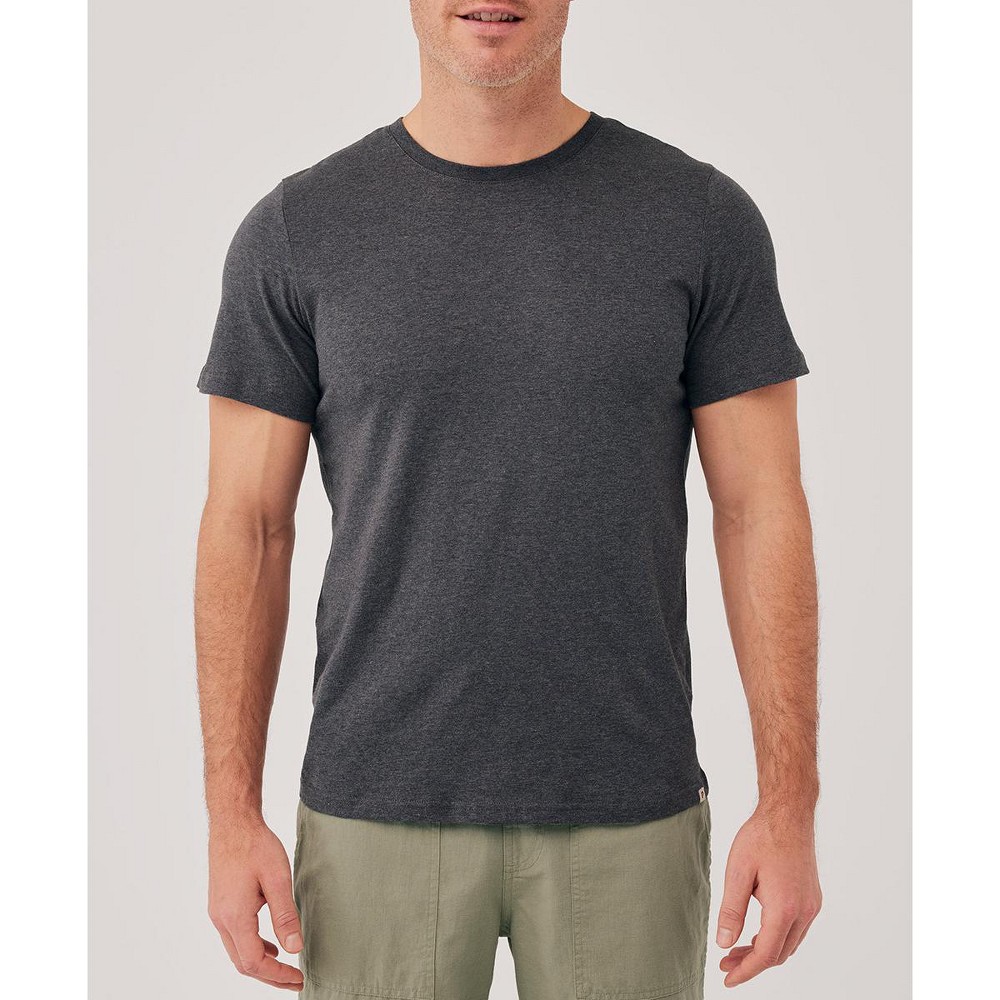 Best Value
Long-time buyers like the breathable GOTS-certified organic cotton and say some pieces have lasted years with no pilling or holes. The honest downsides come up often: sizing is inconsistent and not always true to the chart, some garments feel thin or scratchy, and a number of owners report holes, snags or stains showing up sooner than expected. Pact pre-washes to limit shrinkage but still estimates up to 5 percent in hot water or the dryer, so wash cool and line-dry.
Replace the synthetic underwear, undershirts and pajamas you wear the most hours per day — the highest-contact swap for the lowest cost.
Why it's safe: Pact's core basics are 100% organic cotton (no polyester or elastane in the tees and undershirts), so they shed only biodegradable cotton lint — never plastic microfibers.
Check Today’s Price on Amazon →Amazon prices change daily — tap to see today's price and any active discount.
- Free delivery & returns for Prime members
- GOTS + OEKO-TEX certified
- Thousands of verified reviews
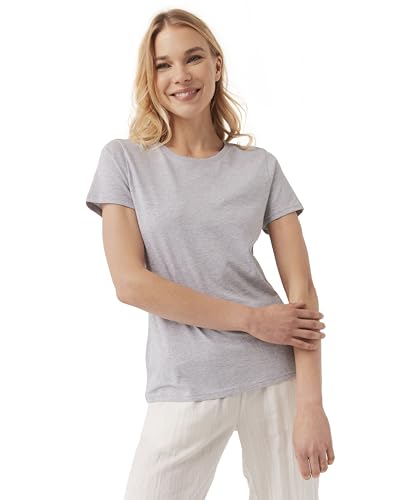 Women's 5-Pack
Owners describe the Softspun cotton as soft and breathable, and it carries a 4.4-star verified buyer rating. The honest gripes mirror the wider Pact line: fit runs inconsistent, with shoppers calling it too big in some spots and too small in others; the lighter-weight fabric can feel thin and wears out faster than heavier tees; and a few report shrinkage or loss of shape unless you wash cold and skip the dryer.
Five everyday tees in one buy — the cheapest way to swap out the synthetic t-shirts in steady rotation.
Why it's safe: Made from organic cotton rather than polyester or acrylic, so they biodegrade instead of releasing plastic microfibers when laundered.
Check Today’s Price on Amazon →Amazon prices change daily — tap to see today's price and any active discount.
- Free delivery & returns for Prime members
- Organic cotton, no synthetics
- 5-pack of women's crew tees
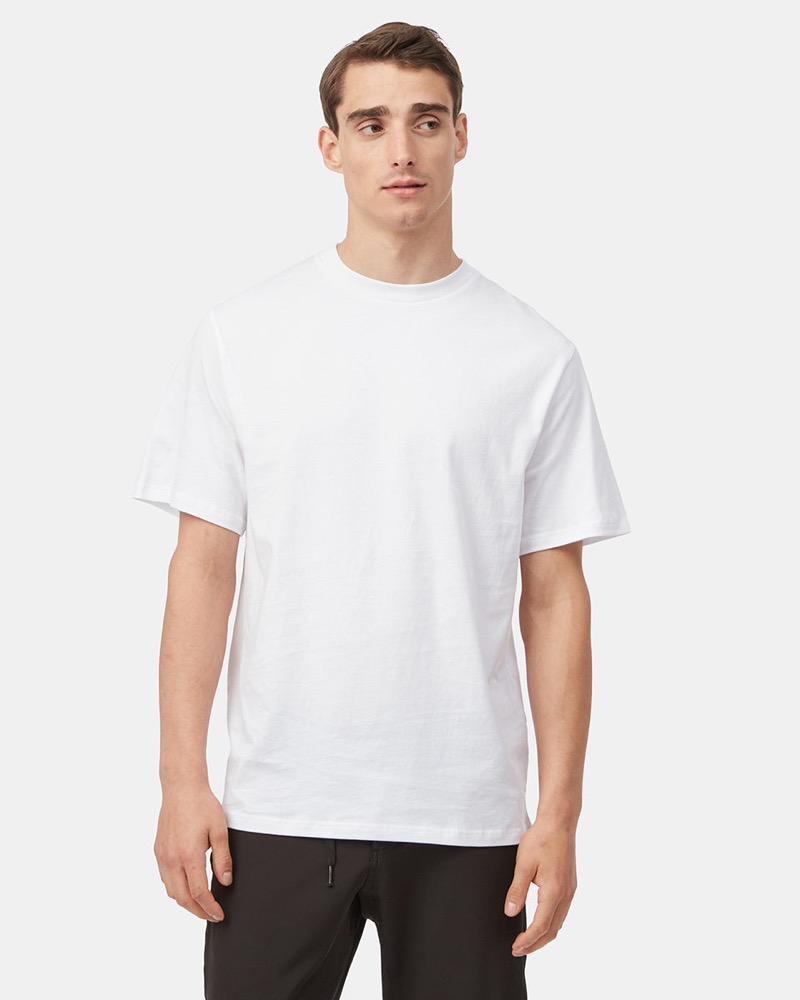 Best Fleece Swap
Buyers call Tentree tees soft, lightweight and comfortable, and many like the tree-planting mission behind the brand. Durability reviews lean positive, though the honest gripes are worth knowing: some find the ribbed styles scratchier than a standard tee, sizing runs off for a number of buyers, and international orders have been hit with unexpected customs and duty fees plus the odd partial shipment. Customer service gets praise for sorting problems out.
Trade your polyester fleece — which can shed up to 700,000 microfibers in a single wash — for an organic cotton hoodie that keeps you just as warm.
Why it's safe: Made from 100% organic cotton instead of polyester fleece, the highest-shedding fabric class, so warm layers no longer mean releasing plastic into your wash and air.
Check Today’s Price on Amazon →Amazon prices change daily — tap to see today's price and any active discount.
- Free delivery & returns for Prime members
- GOTS certified & Climate Neutral
- Ten trees planted per item
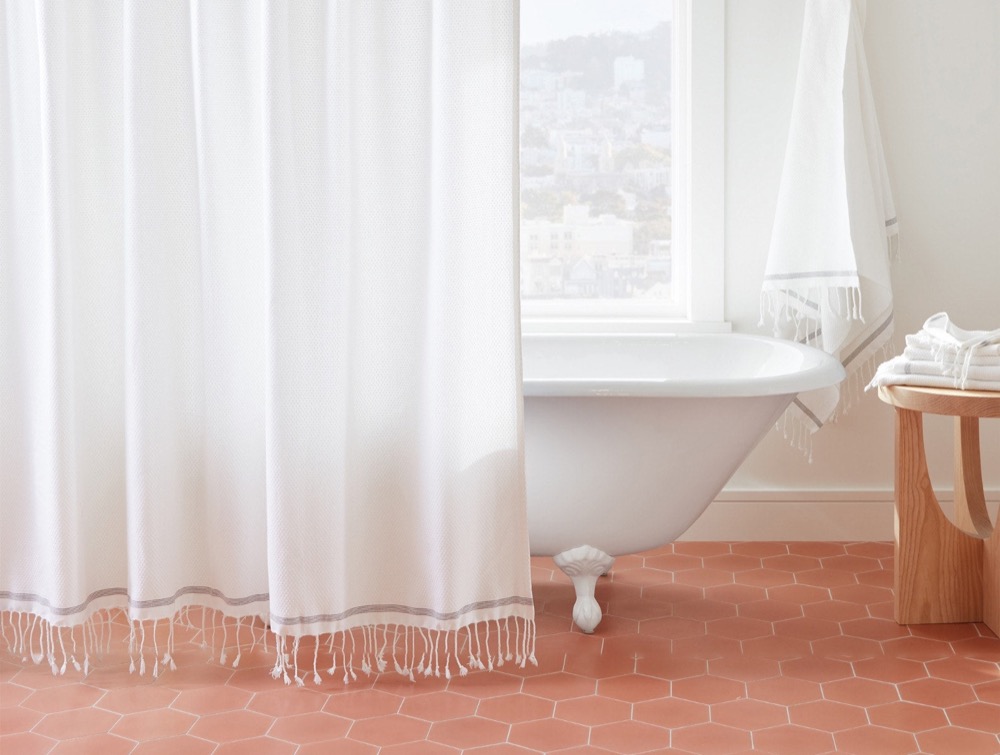 Best for Sleepwear
Owners consistently praise Coyuchi's organic cotton for a softness that improves with washing, backed by GOTS and Fair Trade certification. The honest catch is price: buyers call it luxury-level and steep. Reviews also split on texture and durability, some say pieces stay soft and hold up wash after wash, while others found the cotton itchy and papery out of the package and stiff even after washing, and a few noticed pilling or fit changes over time. Organic cotton also wrinkles, so expect to steam or iron.
Upgrade the robe and lounge set you wear for hours at home — long skin-contact time is exactly where you want certified natural fiber, not synthetic.
Why it's safe: 100% organic cotton certified end-to-end by GOTS, with no polyester or spandex blended in — so even your longest-worn garments shed nothing but biodegradable cotton.
Check Today’s Price on Amazon →Amazon prices change daily — tap to see today's price and any active discount.
- Free delivery & returns for Prime members
- GOTS certified end-to-end
- Take-back & recommerce program
Want the full microplastics reduction guide?
Our complete guide covers clothing, bedding, water, cookware, and air quality — prioritized by impact, with brand recommendations at every price point.
Section 5: Washing Tips to Reduce Microfiber Shedding
You likely own synthetic garments right now, and replacing a wardrobe overnight is not realistic. These measures significantly reduce microfiber shedding from synthetic clothes you currently own — buying time while you transition toward natural fiber alternatives. The same natural-fiber principle extends beyond the wardrobe to the gear around it: a plastic-free laundry basket in cotton, bamboo, or seagrass is a durable swap for the brittle plastic hamper you carry those clothes in.
Use a Guppyfriend Washing Bag
The Guppyfriend bag is a filter bag made from a specially woven microfilter fabric. You place your synthetic garments inside the bag before putting them in the washing machine. The bag captures loose microfibers before they reach the drain water. It does not capture every fiber — but independent testing shows it significantly reduces the number of fibers that enter wastewater. The Guppyfriend also reduces mechanical abrasion on garments, which slows overall fabric degradation and fiber release over the garment's lifetime.
Independent testing at the Fraunhofer Institute found the bag captures roughly 79 to 99 percent of synthetic fibers, and long-term users say it visibly collects lint in the corners while also cutting wear on their clothes. The honest gripes center on the zipper: several owners report the metal zipper pull snapping off after a few months, and a few found a small hole forming in the zipper corner after around 20 washes. It also holds only two or three garments per load and can throw a top-loader off balance when full. Durability reports are mixed, with plenty saying theirs held up fine for years.
Use a Cora Ball
The Cora Ball is a coral-shaped laundry ball you toss loose into the drum with your wash. As the machine agitates, fibers stick to the ball's flexible stalks and accumulate into a visible fuzz ball over multiple washes that you can then dispose of in the trash (rather than the water supply). The Cora Ball and Guppyfriend use different capture mechanisms and are complementary — some households use both.
Shop Cora Ball on AmazonAdditional Washing Tips
- Wash cold. Cold water reduces both fiber shedding and garment degradation compared to warm or hot cycles. Most detergents are effective in cold water. Cold washing is also the single easiest, zero-cost change you can make immediately.
- Use shorter wash cycles. Less agitation time means fewer fibers released. A quick wash or delicate cycle reduces microfiber output compared to a full standard cycle. For lightly worn garments, a shorter cycle cleans equally well.
- Choose liquid detergent over powder. Powder detergent particles act as an abrasive against fabric fibers during the wash cycle, physically abrading the fabric surface and increasing shedding. Liquid detergents dissolve completely and do not have this abrasive effect.
- Wash less frequently. The most effective way to reduce total fiber release is simply to wash synthetic garments less often. Spot clean when possible, air out garments between wears, and reserve full machine washes for genuinely soiled items.
- Fill the machine. A fuller machine drum means less mechanical agitation per garment — garments tumble against each other rather than against hard drum surfaces. Avoid washing single synthetic items in large amounts of water.
For a broader look at how microplastics enter indoor air from textiles, including bedding and upholstery, see our guide to microplastics in indoor air and the companion article on microplastics in bedding.
Section 6: Priority Action Table
Use this table to prioritize where to start. Items higher on the list deliver more exposure reduction per dollar and effort invested.
| Action | Difficulty | Microplastic Impact | Cost |
|---|---|---|---|
| Replace synthetic underwear and sleepwear with 100% organic cotton | Easy | High — direct skin contact, longest wear time | $ |
| Add Guppyfriend bag or Cora Ball to laundry | Easy | High — catches fibers before they reach wastewater | $ |
| Switch to cold water washes for synthetic garments | Easy | Medium — reduces shedding per wash by meaningful amount | Free |
| Replace acrylic sweaters and fleece with wool or organic cotton equivalents | Medium | Very High — acrylic and fleece are highest shedding fabrics | $$ |
| Switch from powder to liquid detergent | Easy | Low–Medium — reduces abrasion-related shedding | Negligible |
| Replace synthetic activewear with natural fiber alternatives where possible | Medium | High — activewear worn against skin during sweat and movement | $$ |
| Use an air purifier with HEPA filter in rooms with synthetic textiles | Easy | Medium — reduces airborne fiber inhalation | $$$ |
Cost key: Free = no cost · $ = budget (under ~$40) · $$ = mid-range (~$40–100) · $$$ = higher ($100+). Exact prices change often — tap any product above to see today's price on Amazon.
For air quality improvements, see our guide to the best air purifiers for microplastics.
Frequently Asked Questions
Yes — synthetic fabrics made from polyester, nylon, acrylic, and spandex are plastic fibers. Every time these garments are washed or worn, they shed tiny fragments called microfibers. A single polyester fleece jacket can release up to 700,000 microfibers per wash cycle, according to research from the University of California Santa Barbara. These particles flow through wastewater treatment systems — most pass right through — and enter rivers, lakes, and oceans. Studies also show that wearing synthetic clothes releases fibers into the air, and that indoor air in homes with predominantly synthetic textiles measures significantly higher microplastic concentrations.
A 2017 International Union for Conservation of Nature (IUCN) report estimated that synthetic textiles account for approximately 35% of the microplastics found in the ocean. This makes clothing one of the single largest sources of ocean microplastic pollution, ahead of vehicle tire wear and city dust. The fibers are too small to be fully captured by conventional wastewater treatment plants, meaning most of what gets shed during laundering eventually makes it into waterways.
Yes — 100% organic cotton, linen, wool, and other natural fibers do not shed plastic microfibers because they are not made from plastic. When natural fibers break down, they shed organic particles that biodegrade in the environment rather than accumulating. The key is to choose garments that are 100% natural fiber — even a 5–10% spandex or polyester blend will shed plastic microfibers. GOTS (Global Organic Textile Standard) certification is the most rigorous third-party standard for organic cotton clothing, verifying the entire supply chain from field to finished garment.
Yes, several practical measures significantly reduce microfiber release during washing. The Guppyfriend washing bag is a filter bag you place synthetic garments inside before adding them to the machine — it catches loose fibers before they reach the wastewater drain. A Cora Ball placed loose in the drum achieves similar results through a different mechanism. Beyond these tools: wash in cold water (heat degrades fibers faster), use shorter wash cycles, choose liquid detergent over powder (powder acts as an abrasive and increases shedding), and wash on gentler cycles. Replacing synthetic garments over time with natural fiber alternatives is the permanent solution.
Sources
- Browne MA, et al. "Accumulation of Microplastic on Shorelines Worldwide: Sources and Sinks." Environmental Science & Technology, 2011.
- Napper IE, Thompson RC. "Release of Synthetic Microplastic Fibres from Domestic Washing Machines: Effects of Fabric Type and Washing Conditions." Marine Pollution Bulletin, 2016.
- IUCN. "Primary Microplastics in the Oceans: A Global Evaluation of Sources." International Union for Conservation of Nature, 2017.
- De Falco F, et al. "The contribution of washing processes of synthetic clothes to microplastic pollution." Scientific Reports, 2019.
- Henry B, et al. "Microfibres from apparel and home textiles: Prospects for including microplastics in environmental sustainability assessment." Science of The Total Environment, 2019.
- Dris R, et al. "Synthetic fibers in atmospheric fallout: A source neglected in microplastic pollution assessments." Science of The Total Environment, 2016.
- Prata JC, et al. "Environmental Exposure to Microplastics: An Overview on Possible Human Health Effects." Science of The Total Environment, 2020.
- GOTS. Global Organic Textile Standard, Version 7.0. Global Standard GmbH, 2023.