
You spend a third of your life on your mattress. If it contains polyurethane foam, that means 8 hours a night inhaling off-gassed toluene, benzene, and formaldehyde — particularly in the first weeks after purchase, when running a bedroom HEPA air purifier helps clear what off-gasses into the air you breathe. If it contains a fiberglass fire barrier, one accidental unzipping contaminates your home with nearly unremovable glass particles.
This guide covers the mattresses that avoid all of that. We've verified certifications, contacted manufacturers about fire barrier materials, and cross-referenced third-party lab testing where available. No affiliate bias — if a mattress doesn't meet the standard, it doesn't make the list.
Compare all 5 picks
Every pick side by side — tap a name to jump to the full review, or check today's price.
| Pick | Rating | Why it wins | |
|---|---|---|---|
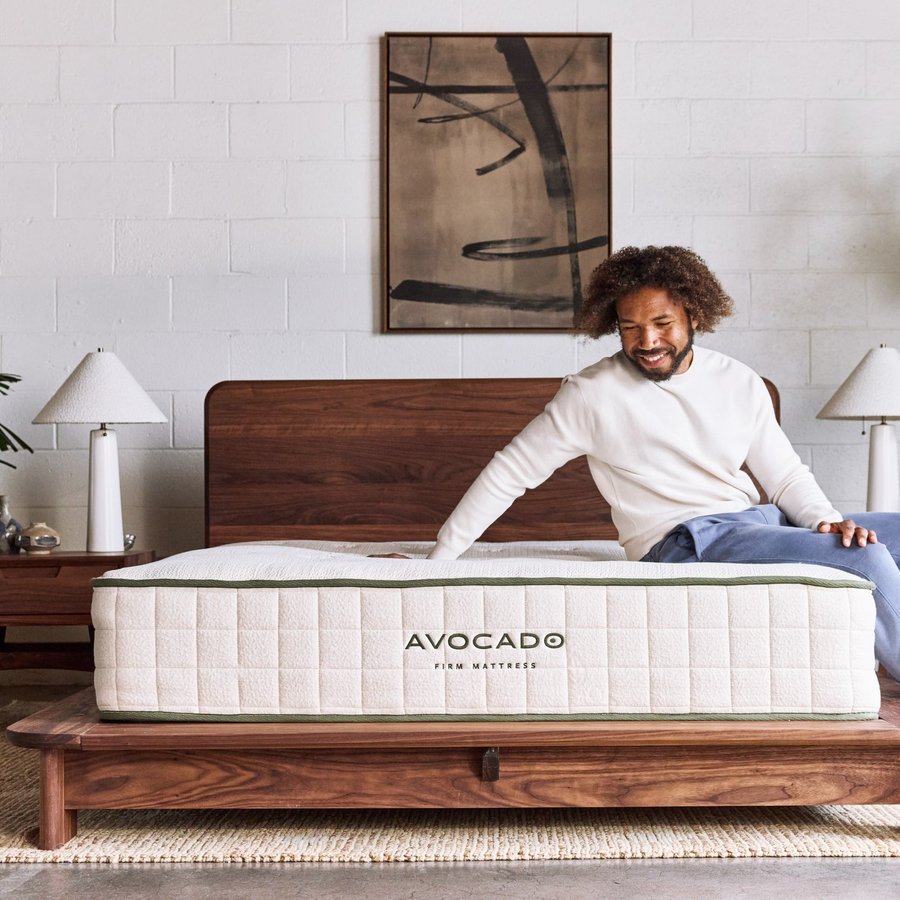 Best OverallAvocado Green Mattress |
4.6out of 5 | GOLS CertifiedGOTS Certified |
Check price → |
| — | Certified Organic LatexNew Zealand Wool |
Check price → | |
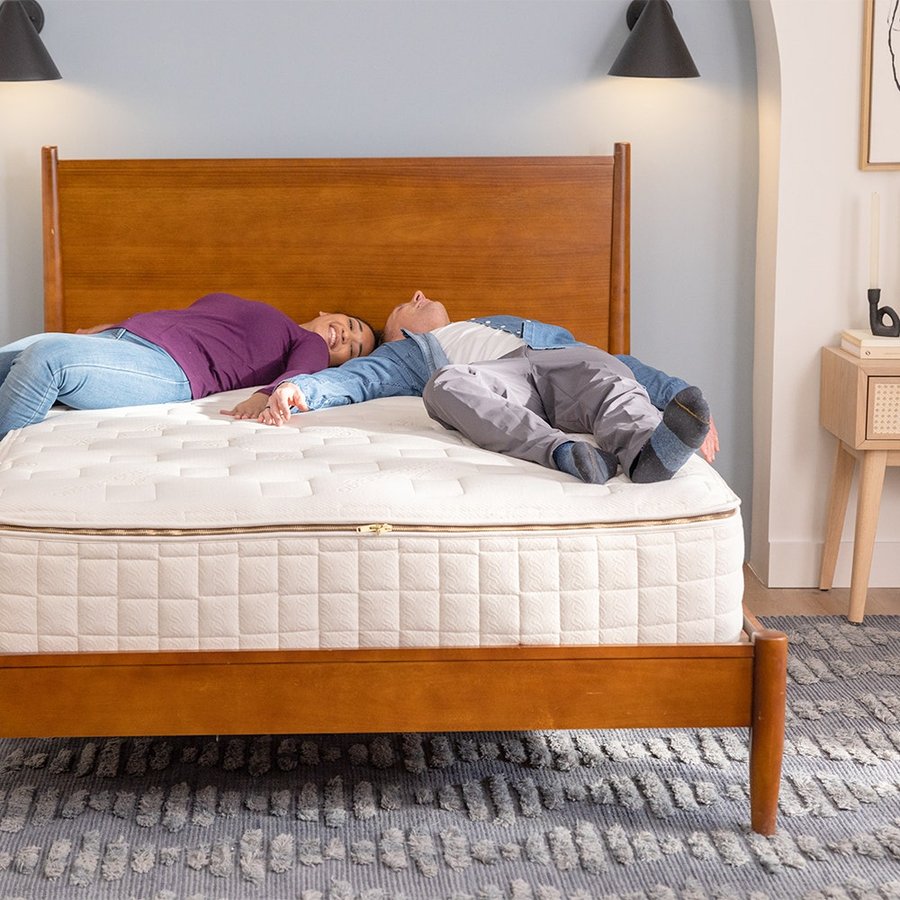 Premium PickNaturepedic EOS Classic |
4.8out of 5 | GOTS CertifiedGREENGUARD Gold |
Check price → |
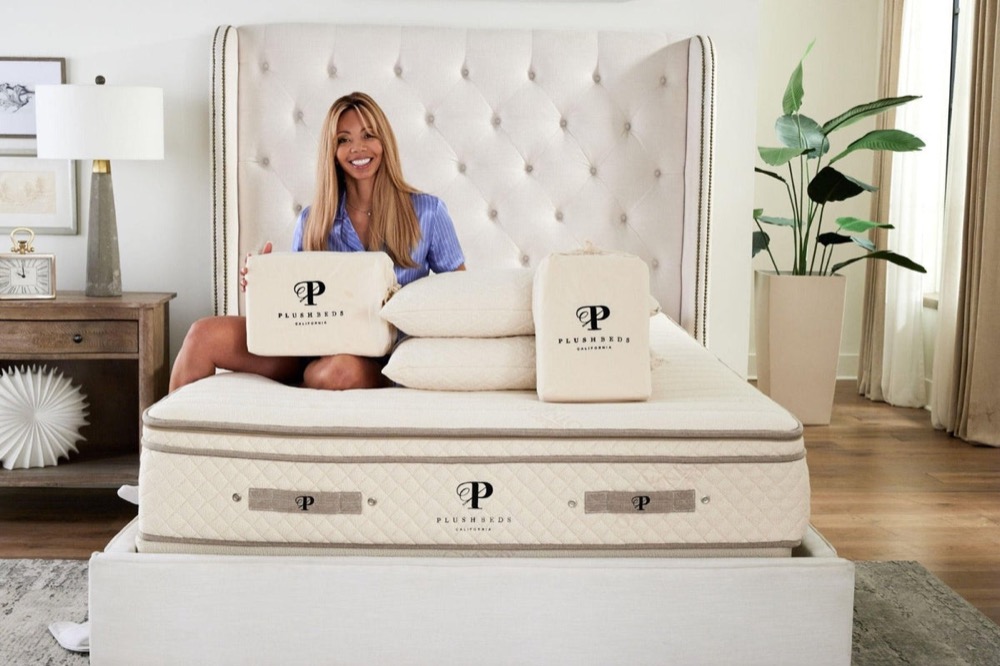 Best Latex-OnlyPlushBeds Botanical Bliss |
4.9out of 5 | GOLS CertifiedGOTS Certified |
Check price → |
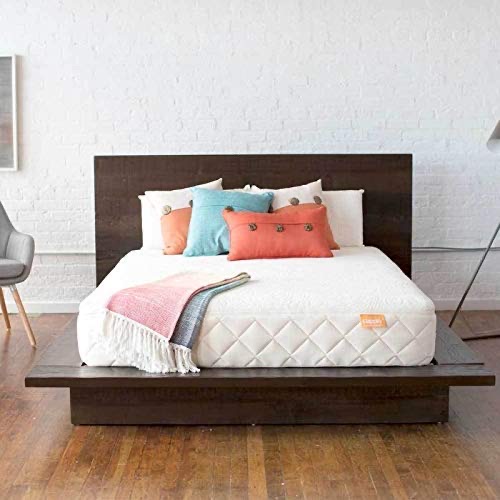 Budget Non-ToxicHappsy Organic Hybrid Mattress |
— | Certified OrganicNatural Latex + Coils |
Check price → |
Quick Picks by Budget
| Budget | Our Pick | Material | Price tier |
|---|---|---|---|
| Best Overall | Avocado Green Mattress | Natural latex + organic wool/cotton | $$ |
| Best Value | Awara Premier Luxury Hybrid Mattress | Organic latex + coils + NZ wool | $ |
| Premium | Naturepedic EOS Classic | Organic cotton + coils | $$$ |
| Latex Only | PlushBeds Botanical Bliss | 100% natural Dunlop latex | $$$ |
| Budget Non-Toxic | Happsy Organic Hybrid Mattress | Natural latex over pocketed coils, organic cotton & wool | $$ |
Price tier (Queen): $ most affordable in this list · $$ mid · $$$ premium. Tap any pick below for today's exact Amazon price.
What the certifications mean (in plain English)
- GOLS (Global Organic Latex Standard)
- Proves the latex (the rubber foam) is genuinely organic — tapped from certified-organic rubber tree farms and processed without harsh chemicals — rather than synthetic, petroleum-based foam.
- GOTS (Global Organic Textile Standard)
- Proves the cotton and wool are genuinely organic — grown without synthetic pesticides and processed without harsh chemicals — verified all the way from farm to finished product.
- GREENGUARD Gold
- An independent lab tests the mattress and confirms it releases very low levels of chemical fumes (VOCs) into the air — strict enough that products meeting it are allowed in schools and daycares.
- MADE SAFE
- A screening program that checks every material against a list of 6,500+ chemicals known to be harmful, and only certifies products that contain none of them.
- CertiPUR-US
- A foam-specific check confirming the polyurethane foam contains no fiberglass, no heavy metals, no formaldehyde, and only low VOC emissions. It's a meaningful baseline for foam, but less rigorous than the organic GOLS/GOTS standards.
- UL ECOLOGO
- A multi-attribute environmental certification (run by safety-science company UL) confirming the product meets strict standards for low chemical emissions and reduced environmental impact across its life cycle.
- OEKO-TEX Standard 100
- Tests the finished product for hundreds of known harmful substances — like residual pesticides, heavy metals, and formaldehyde — and certifies it only if none exceed safe limits.
The 5 Best Non-Toxic Mattresses
Best Overall
The Avocado Green is the gold standard for non-toxic mattresses. It uses GOLS-certified Dunlop latex sourced from organic rubber tree farms in India, with GOTS-certified organic wool and cotton. The fire barrier is 100% organic wool — naturally flame resistant without any chemical treatment.
The feel is medium-firm (6–7/10), which suits back and stomach sleepers best. Side sleepers wanting more cushion can add the optional organic pillow top. The mattress is made in Hoboken, New Jersey from fully traceable materials — you can verify the latex farm on Avocado's website.
GREENGUARD Gold certification means it meets California's strict indoor air quality standards. MADE SAFE certification screens for over 6,500 known toxic chemicals. The Avocado clears every certification bar in the category.
Owners consistently praise the Avocado for its certified organic latex and wool build and the reassurance of a genuinely low-chemical bed, and it carries a 4.6-out-of-5 average across more than 18,000 reviews on Avocado's own site. Long-term sleepers report it holds up for years and sleeps cool. The honest downside: it runs firm. Side sleepers and anyone under about 130 pounds are the most likely to find it too hard, with one describing it as "like camping on concrete," and a few report hip pain until they added the pillow-top. It is also heavy and awkward to move, which is why it ships with handles.
You spend a third of your life on this surface — this is the swap that takes petroleum foam, VOC off-gassing, and fiberglass out of the air you breathe for eight hours a night.
Why it's safe: The most-certified mattress in the category — GOLS organic latex, GOTS organic wool & cotton, GREENGUARD Gold (verified low emissions), and MADE SAFE (screened against 6,500+ harmful chemicals), with a natural wool fire barrier and no fiberglass.
Check Today's Price on Amazon →Amazon prices change daily — tap to see today's price and any active discount.
- Free delivery & returns for Prime members
- Sold & shipped by Amazon
- Thousands of verified reviews
 Best Value
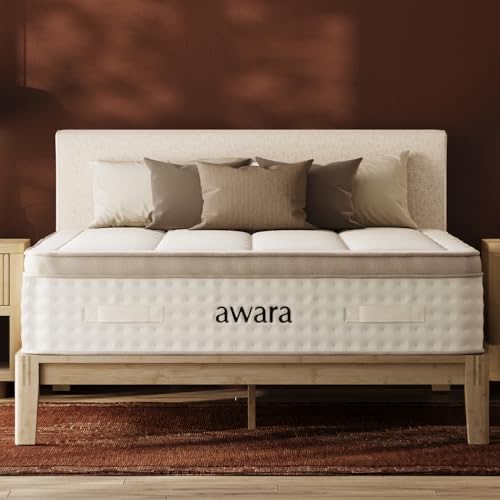
The Awara Premier is a 12-inch hybrid built on certified organic natural latex over individually pocketed coils, cushioned with sustainable New Zealand wool. It's fiberglass-free, so there's no risk of loose glass fibers escaping the cover.
The construction pairs a natural latex comfort layer with a supportive pocketed-coil base — a hybrid feel that combines the bounce and pressure relief of latex with the support and airflow of coils. The natural latex and wool give it a responsive, breathable surface without any petroleum foam.
Awara backs the mattress with a 365-night home trial, so there's a full year to decide whether the hybrid latex feel works for you.
Buyers like that the Awara Premier delivers a natural latex-and-coil hybrid at a lower price than most organic beds, with reviewers noting deep bounce and no "stuck" feeling, along with better cooling than memory foam. The 365-night home trial with free return shipping comes up often as a reason people felt safe buying online. The honest catch: firmness is polarizing. Some owners find it too soft over time, while lighter-weight sleepers say it feels too firm for them, so your body weight largely decides whether the feel lands right.
A fiberglass-free hybrid built on certified organic natural latex — the bounce and pressure relief of latex with the support of coils, backed by a full-year trial.
Why it's safe: Built on certified organic natural latex with sustainable New Zealand wool, and explicitly fiberglass-free — no loose glass fibers and no petroleum foam core.
Check Today's Price on Amazon →Amazon prices change daily — tap to see today's price and any active discount.
- Free delivery & returns for Prime members
- Sold & shipped by Amazon
- Thousands of verified reviews
Premium Pick
Naturepedic's EOS (Encased Organic Support) system uses organic cotton batting over pocketed coils — no latex, no foam, no off-gassing of any kind. The fire barrier is non-woven organic cotton treated with food-grade silica. Each component is individually certified.
The EOS is also configurable: you select the firmness of the top and base layers separately. This makes it ideal for couples with different preferences — each side can be set independently. It's the only non-toxic mattress with this level of customization.
The price premium reflects the certification overhead and domestic manufacturing. Naturepedic is a Certified B Corporation and publishes full supply chain documentation. For families with infants or anyone with chemical sensitivities, it's the safest available option.
The standout in owner reviews is customization: the EOS Classic lets you swap firmness layers and even set a different feel on each side of a queen or larger, and buyers who "finally nailed their perfect sleep setup" rave about it, while hot sleepers cheer the breathable layers. Naturepedic's responsive service and exchange policy also earn frequent praise. The honest downsides: several owners describe the edges as "frumpy" with weak support, a few report occasional quality hiccups like sagging coils or uneven latex, and at roughly $4,799 for a queen the price stings for anyone who hits those snags.
If you have chemical sensitivities or a latex allergy, this is the surface with nothing to react to — no latex, no foam, no off-gassing — just organic cotton over coils.
Why it's safe: The deepest certification stack here — GOTS organic cotton, GREENGUARD Gold, MADE SAFE (6,500+ chemicals screened), and UL ECOLOGO — with a food-grade silica fire barrier and no fiberglass.
Check Today's Price on Amazon →Amazon prices change daily — tap to see today's price and any active discount.
- Free delivery & returns for Prime members
- Sold & shipped by Amazon
- Thousands of verified reviews
Best Latex-Only
The Botanical Bliss uses 3–4 inches of GOLS-certified Dunlop latex in a zippable, accessible design. You can rearrange the layers to adjust firmness without buying a new mattress — a significant long-term value advantage. The organic wool and cotton cover is GOTS certified, fire barrier is wool.
Motion isolation on latex is excellent — superior to innerspring options. The Botanical Bliss is particularly popular with chronic pain sufferers who need precise firmness adjustment over time as their needs change.
Reviews skew strongly positive, with owners highlighting standout motion isolation for couples and consistent cooling from the perforated Dunlop latex. Many say it is durable and worth the organic materials. The honest gripes: it arrives firmer than most people expect and rearranging the swappable layers to soften it takes effort; a mild botanical-latex smell on unboxing surprises buyers expecting none, though it fades; and the bed is heavy and slow to arrive since it is made to order. A few also flag slow refund timing if you decide to return it.
Chronic pain or a partner who tosses and turns? Rearrange the latex layers to dial in exactly the firmness you need — without buying a new mattress — on a chemical-free surface.
Why it's safe: 100% GOLS-certified natural Dunlop latex with a GOTS organic wool & cotton cover and a wool fire barrier — no synthetic latex, no off-gassing foam, no fiberglass.
Check Today's Price on Amazon →Amazon prices change daily — tap to see today's price and any active discount.
- Free delivery & returns for Prime members
- Sold & shipped by Amazon
- Thousands of verified reviews
Budget Non-Toxic
Happsy is the value pick on this list — a certified-organic hybrid that pairs natural latex with individually pocketed coils, wrapped in organic cotton and organic wool. Everything that touches you is certified organic, and there's no polyurethane foam and no fiberglass in the build.
The wool acts as a natural fire barrier, so there's no chemical flame retardant and no fiberglass layer — a common hidden material in cheaper mattresses. The feel is medium-firm, a middle-of-the-road support level that suits most sleepers.
It's typically priced below the premium organic mattresses higher on this list, which makes it the most affordable way onto a fully certified-organic sleep surface rather than a pad over an existing bed.
Owners repeatedly mention how genuinely odor-free it is, with one writing they were "so happy to have found a new bed that is comfortable and COMPLETELY fume free," and many like that adding Happsy's latex topper softens a bed that starts fairly firm. The honest downsides: edge support is poor for a hybrid, so you lose usable surface near the sides; heavier sleepers (roughly 250 pounds and up) may not get enough support; and side sleepers often find it too firm unless they add the topper.
The most affordable way onto a fully certified-organic mattress — natural latex over pocketed coils with organic cotton and wool.
Why it's safe: Certified-organic materials throughout — natural latex, organic cotton, and organic wool — with no polyurethane foam, no chemical flame retardants, and no fiberglass.
Check Today's Price on Amazon →Amazon prices change daily — tap to see today's price and any active discount.
- Free delivery & returns for Prime members
- Sold & shipped by Amazon
- Thousands of verified reviews
What Makes a Mattress Toxic (And What to Avoid)
1. Fiberglass Fire Barriers
Most mattresses are required to pass federal flammability standards (16 CFR 1633). The cheapest way to meet this standard: wrap the inner foam core in a fiberglass sock. When the outer cover is removed — or when the mattress wears thin — glass particles escape into the room.
Non-toxic alternatives use wool as the fire barrier — naturally resistant to flame without any chemical treatment, and safe to handle.
2. Polyurethane Foam Off-Gassing
Polyurethane foam — the core of most memory foam, hybrid, and budget mattresses — is made from petroleum. Fresh foam emits VOCs including toluene, benzene, ethylbenzene, and formaldehyde. A 2019 study in Environmental Science & Technology found measurable VOC emissions from foam mattresses for up to two years after purchase, not just the initial break-in period.
Natural latex (from rubber tree sap) has no meaningful VOC off-gassing and is a renewable material. Organic cotton and wool comfort layers also produce no chemical emissions.
3. Chemical Flame Retardants
Polybrominated diphenyl ethers (PBDEs), antimony trioxide, and boric acid are common mattress flame retardants that accumulate in household dust and human tissue. PBDEs have been linked to thyroid disruption, developmental neurotoxicity, and reproductive effects. Many are now banned in California, but alternative chemicals have largely replaced them with similar concerns.
Mattresses using wool fire barriers don't need chemical retardants — wool is naturally self-extinguishing at temperatures below which cotton and synthetic fabrics ignite.
How to Check Your Current Mattress
- Find the law tag: Look for the white or yellow tag sewn to the side or bottom of your mattress — legally required to remain attached.
- Look for these words: "glass fiber," "fiberglass," "glass wool," "silica fiber," "mineral fiber"
- Check the brand online: Search "[brand] fiberglass" — most problematic brands have extensive documented cases.
- If fiberglass is present: Do not unzip or wash the cover. Use a zippered mattress encasement over the top to seal particles in.
Accessories That Complete a Non-Toxic Sleep Environment
A non-toxic mattress does most of the work, but these accessories close the remaining gaps:
- Organic mattress protector: Protects your mattress and adds a certifiable barrier. Naturepedic Organic Waterproof Mattress Pad → check price on Amazon
- Natural latex pillow: Replaces polyester fiberfill or memory foam pillows. Avocado Natural Latex Pillow → check price on Amazon
- GOTS-certified sheets: Eliminates conventional cotton's pesticide residues and synthetic dye exposure. See our full organic cotton sheets guide.
- HEPA air purifier: Captures any residual particles and reduces bedroom VOC levels. Coway Airmega 400 → check price on Amazon
Certifications Ranked by Rigor
| Certification | What It Verifies | Rigor |
|---|---|---|
| GOLS | Organic latex content and farm practices | ★★★★★ |
| GOTS | Organic textile content, full supply chain | ★★★★★ |
| GREENGUARD Gold | Low chemical emissions, CA school standards | ★★★★☆ |
| MADE SAFE | Screened against 6,500+ toxic chemicals | ★★★★☆ |
| CertiPUR-US | No fiberglass, no heavy metals, limited VOCs | ★★★☆☆ |
| OEKO-TEX 100 | No harmful substances in finished product | ★★★☆☆ |
| "Eco-friendly" (no cert) | Marketing claim — no independent verification | ★☆☆☆☆ |
Frequently Asked Questions
What makes a mattress non-toxic?
A truly non-toxic mattress avoids four key hazards: fiberglass fire barriers, polyurethane foam off-gassing, chemical flame retardants (PBDEs, antimony, boric acid), and synthetic latex. Look for GOLS-certified natural latex, GOTS-certified organic cotton or wool, and wool fire barriers. No single certification guarantees all of this — you need GOLS + GOTS + GREENGUARD Gold at minimum.
Does my mattress contain fiberglass?
Check the law tag sewn to your mattress for the words "glass fiber," "fiberglass," "glass wool," or "silica." Brands most commonly using fiberglass: Zinus, Nectar, Linenspa, Lucid, Sweetnight. If present, never remove or wash the outer cover — this releases glass particles that contaminate the entire room and are virtually impossible to fully remove.
What is the healthiest type of mattress?
GOLS-certified natural latex is the healthiest mattress core material — derived from rubber tree sap, no petroleum, no VOCs, naturally antimicrobial, and durable for 20+ years. Pair it with GOTS-certified organic wool and cotton layers and a wool fire barrier for maximum chemical safety.
How long does mattress off-gassing last?
Polyurethane foam off-gasses most heavily in the first 3–5 days. Levels typically drop below detectable thresholds within 2–4 weeks, though a 2019 study found measurable emissions for up to 2 years. Ventilate the bedroom for 48–72 hours before sleeping on a new foam mattress. Natural latex and organic cotton/wool mattresses have no meaningful off-gassing.
Is natural latex safe for people with latex allergies?
Most people with latex sensitivities tolerate natural latex mattresses — latex proteins are largely washed out in processing and encased in cotton and wool covers. Those with severe Type I (contact-triggered) latex allergies should consult an allergist before purchasing. The Naturepedic EOS — no latex, organic cotton and coils — is the safest alternative for confirmed latex allergies.
What certifications should I look for?
The most rigorous certification stack: GOLS (organic latex) + GOTS (organic textiles) + GREENGUARD Gold (low emissions). Brands with all three: Avocado, Naturepedic, PlushBeds Botanical Bliss. CertiPUR-US is a meaningful baseline for foam mattresses (confirms no fiberglass, no heavy metals, limited VOCs) but falls short of GOLS/GOTS rigor. "Natural," "eco-friendly," or "organic" without third-party certification means nothing.