To microwave food without microplastics, heat it in glass or ceramic, cover it with a plate or a silicone lid instead of plastic wrap, and never heat food in takeout tubs, deli containers or plastic baby bottles. The reason is measured, not theoretical: a 2023 University of Nebraska–Lincoln study in Environmental Science & Technology found microwaving was the worst way to use a plastic food container, with some polypropylene containers releasing up to 4.22 million microplastics and 2.11 billion nanoplastics per square centimeter in 3 minutes. The single highest-impact swap is the container itself; it costs one glass storage set.
Most of the plastic that ends up in your food doesn't come from one dramatic source. It comes from small, repeated moments when hot food sits against plastic, and the microwave produces more of those moments than any other appliance in the kitchen. Leftovers reheated in the tub they were stored in, a bowl of soup under plastic wrap, a takeout container that goes straight from the bag to the turntable: each one is a few minutes of heat on a polymer surface.
This guide ranks seven changes by how much they cut that contact, using the published studies that actually measured heated plastic. It is deliberately practical: you don't need to throw out every plastic container you own, and most of these swaps cost nothing. You just need to move the hot part of the job off plastic.
The bottom line up front: the container you heat in matters most, the cover second, and everything else is a habit. If you only change one thing, transfer food into a glass or ceramic dish before it goes in the microwave. For the specific products people ask about, see is it safe to microwave Tupperware and are Ziploc bags microwave safe.
Does microwaving plastic really release microplastics?
Yes, and microwaving produced the most of any everyday use tested. In the University of Nebraska–Lincoln study led by Kazi Albab Hussain (Environmental Science & Technology, 2023; PubMed 37343248), researchers filled polypropylene baby-food containers and a polyethylene food pouch with water and with 3% acetic acid, the standard lab stand-in for acidic food. They compared microwaving with refrigeration and room-temperature storage.
Microwave heating caused the highest release of every scenario. Some containers shed as many as 4.22 million microplastic particles and 2.11 billion nanoplastic particles from a single square centimeter of plastic in 3 minutes of heating. Long storage counted too: six months in the fridge or on the counter also released millions to billions of particles. Heat just compresses that into minutes.
The heat effect shows up in other labs as well. Trinity College Dublin's study of polypropylene baby bottles (Li et al., Nature Food, 2020) measured up to 16.2 million particles per liter during normal formula preparation. According to the Trinity team's own summary, release climbed from about 600,000 particles per liter with 25°C water to as much as 55 million per liter at 95°C. At the National Institute of Standards and Technology, chemist Christopher Zangmeister's group found that hot water released more than a trillion nanoparticles per liter from polyethylene-lined hot-drink cups and food-grade nylon bags (Environmental Science & Technology, 2022), and that the count depended on the starting water temperature.
What the heat studies measured
| Study | What was heated | What it measured |
|---|---|---|
| Hussain et al., University of Nebraska–Lincoln, Environ. Sci. Technol. 2023 | Polypropylene baby-food containers, microwaved 3 minutes | Up to 4.22 million microplastics and 2.11 billion nanoplastics per cm²; microwaving released the most of all scenarios |
| Li et al., Trinity College Dublin, Nature Food 2020 | Polypropylene baby bottles during formula preparation | Up to 16.2 million particles per liter; about 0.6 million at 25°C rising to 55 million at 95°C |
| Zangmeister et al., NIST, Environ. Sci. Technol. 2022 | Polyethylene-lined hot-drink cups and food-grade nylon bags in hot water | More than 1 trillion nanoparticles per liter, mostly 30–80 nm; nylon released about 7 times more than the cups |
| U.S. FDA consumer guidance | Plastic containers in a microwave | "Some plastic containers should not be used in a microwave oven because they can be melted by the heat of the food inside" |
What does "microwave safe" actually mean?
It means the container is meant to hold up in the microwave. It does not mean the container sheds no particles. The U.S. Food and Drug Administration's microwave oven guidance notes that containers "can become hot from the heat of the food cooking inside" and that some plastics "can be melted by the heat of the food inside." The polypropylene baby-food containers in the Nebraska study were ordinary commercial food containers, and microwaving them still released millions of particles per square centimeter.
So treat the label as a minimum: it tells you the tub won't warp or melt. It tells you nothing about microplastics, because particle release is not what that label tests. That gap is why the swaps below focus on taking plastic out of the heat entirely rather than hunting for a "better" plastic.
How do you microwave food without microplastics? 7 swaps ranked by impact
Ranked by how directly each one removes hot food from plastic, from the change that matters most to the habits that round it out.
| Rank | Swap | Why it ranks here | Cost |
|---|---|---|---|
| 1 | Heat in glass or ceramic, never the plastic tub | Removes the exact scenario the 2023 study found worst | One glass set |
| 2 | Cover with a plate or silicone lid, not plastic wrap | Hot steam and splatter no longer condense on thin film above the food | Free (a plate) or a lid set |
| 3 | Move takeout and deli food to a dish first | Takeout tubs and foam aren't built for reheating | Free |
| 4 | Never microwave formula, breast milk or baby food in plastic | Babies drink the most per kilogram of body weight; Trinity's team advises avoiding microwaves | Free to low |
| 5 | Take extra care with fatty, sugary and acidic food | Fat and sugar heat fastest; acid was the harsher simulant in testing | Free |
| 6 | Heat water and drinks in a ceramic mug | Hot liquid in lined cups released trillions of nanoparticles per liter | Free |
| 7 | Retire scratched, cloudy or warped containers | Worn plastic has more broken surface to shed from | Free |
1. Reheat in glass or ceramic, not the container you stored it in
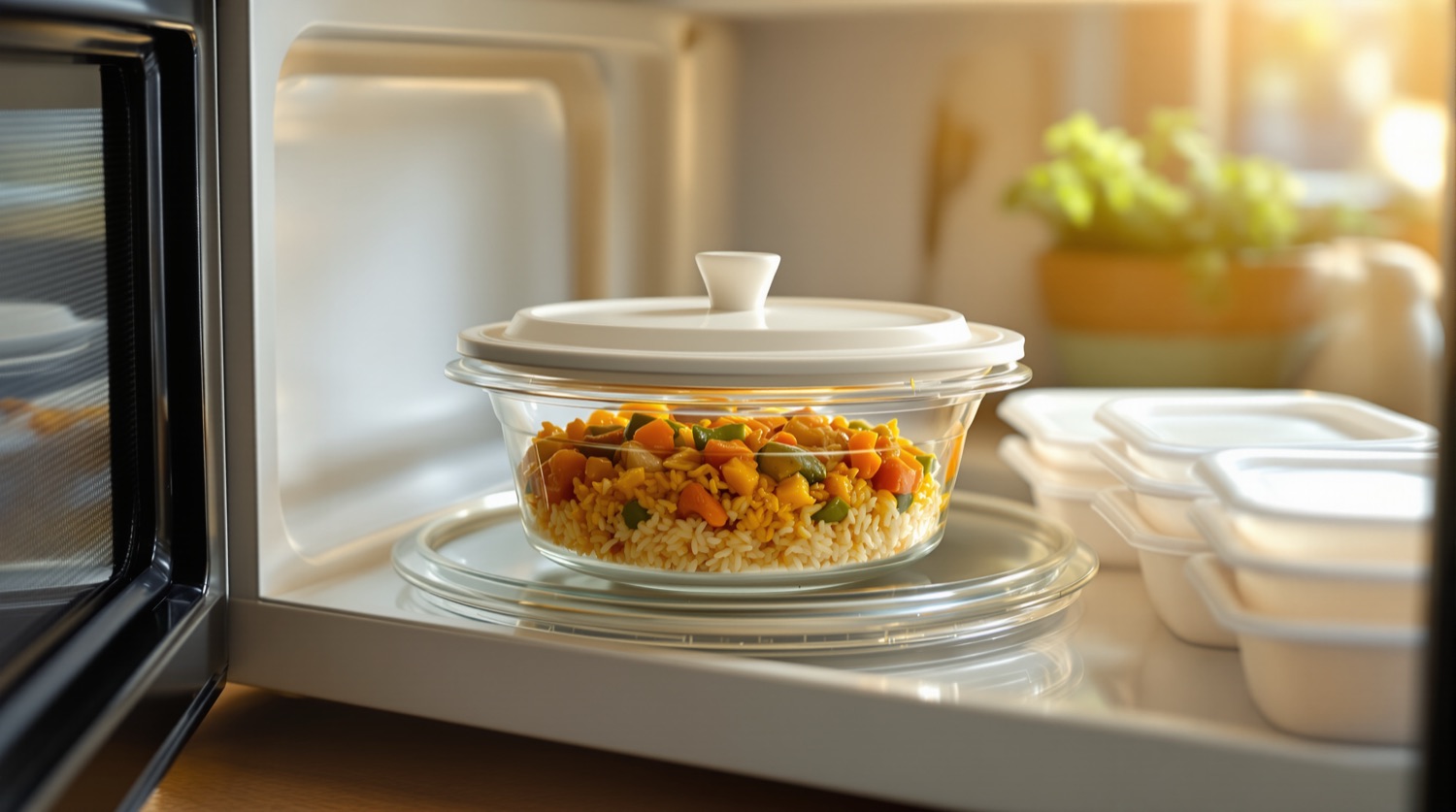
This is the biggest single change because it removes the exact scenario the Nebraska team found worst: plastic plus microwave heat. Store leftovers in glass from the start, or keep plastic for cold storage only and spoon the food into a glass or ceramic dish before heating. Plain ceramic plates and bowls work too, as long as they have no metallic trim.
2. Cover with a plate or a silicone lid, never plastic wrap
Covering food keeps it moist and stops splatter, but the cover should not be plastic film. When wrap sits over a steaming bowl, hot condensation collects on the film and drips back into the food. An upturned plate does the same job for free. For a sealing cover, a food-grade silicone stretch lid is the better tool. Our full answer on the wrap itself is in is plastic wrap safe.
3. Transfer takeout and deli food before it goes in
Takeout containers are designed to carry food home, not to be reheated over and over. Black plastic clamshells, foam boxes and thin deli tubs all get moved to a plate before heating. It takes 15 seconds and removes the plastic with the least information about how it behaves in a microwave. See microplastics in takeout food and are Styrofoam containers safe for the specifics.
4. Never microwave baby food, formula or breast milk in plastic
The baby-bottle data is the strongest heat signal in the research, and infants take in the most relative to their body weight. Trinity College Dublin's published guidance after its study is direct: "Do not reheat prepared formula in plastic containers and avoid microwave ovens." Warm bottles in a bowl of warm water instead, and prepare formula in a glass or stainless jug. The step-by-step routine is in how to prepare baby formula without microplastics, and the bottle choice in glass vs plastic baby bottles.
5. Take extra care with fatty, sugary and acidic foods
Fat and sugar reach much higher temperatures in a microwave than water does, which is why plastic makers warn about them specifically. The Nebraska study also tested 3% acetic acid alongside water because acidic foods like tomato sauce are tougher on plastic. If you still use some plastic for reheating, chili, curry, pasta sauce and anything greasy are the first dishes to move to glass.
6. Heat water and drinks in a ceramic mug
The NIST work is a reminder that hot liquid alone is enough. Polyethylene-lined cups released more than a trillion nanoparticles per liter of hot water. Heat water for tea, oatmeal or instant noodles in a ceramic mug or glass measuring cup, never in a disposable cup or a plastic pitcher. For the kettle side of the same question, see do electric kettles have microplastics.
7. Retire scratched, cloudy or warped plastic
Containers that have gone cloudy, scratched or bent out of shape have been worn down by heat, dishwashers and utensils. That broken surface is where particles come from. If a tub has reached that point, keep it out of the microwave, and ideally out of the kitchen, rather than using it as a reheating dish.
"You don't have to throw out every plastic container. Just never let one be the thing that gets hot."
Is it safe to microwave food in plastic once in a while?
Nobody has shown that one reheated container causes harm, and the health effects of eating microplastics in people are still being studied. In the Nebraska study, extracted particles killed about 77% of human embryonic kidney cells in a lab dish at a very high dose of 1,000 micrograms per milliliter after 48 to 72 hours. That shows the particles can be toxic to cells. It does not show what an everyday dose does to a person.
What the research does show is that heat is the biggest lever you control, and the fix costs little. That is reason enough to make glass the default for reheating rather than to worry over a single lunch. For a wider look at where exposure comes from, see how to reduce microplastics in your body.
Is silicone safe to put in the microwave?
Food-grade silicone tolerates far more heat than polyethylene or polypropylene, so a silicone lid or bag is a reasonable step up from plastic wrap or a zipper bag. It is not the same as glass, though. Silicone is a different polymer, and it has not been studied for particle release as thoroughly as plastic has. Use silicone for covering and storage, and let glass or ceramic hold the food while it heats. More detail is in is silicone safe for food.
Take the hot plastic out of reheating
A glass set for leftovers and a cover that isn't plastic wrap handle almost every time food meets heat in your kitchen.
The tools for microwaving without plastic
These are real, currently sold products for swaps 1 and 2, the two that matter most. Prices change, so check the current listing. One honest caveat applies to nearly every glass container: the lid is plastic. Use it for the fridge, and take it off before heating.
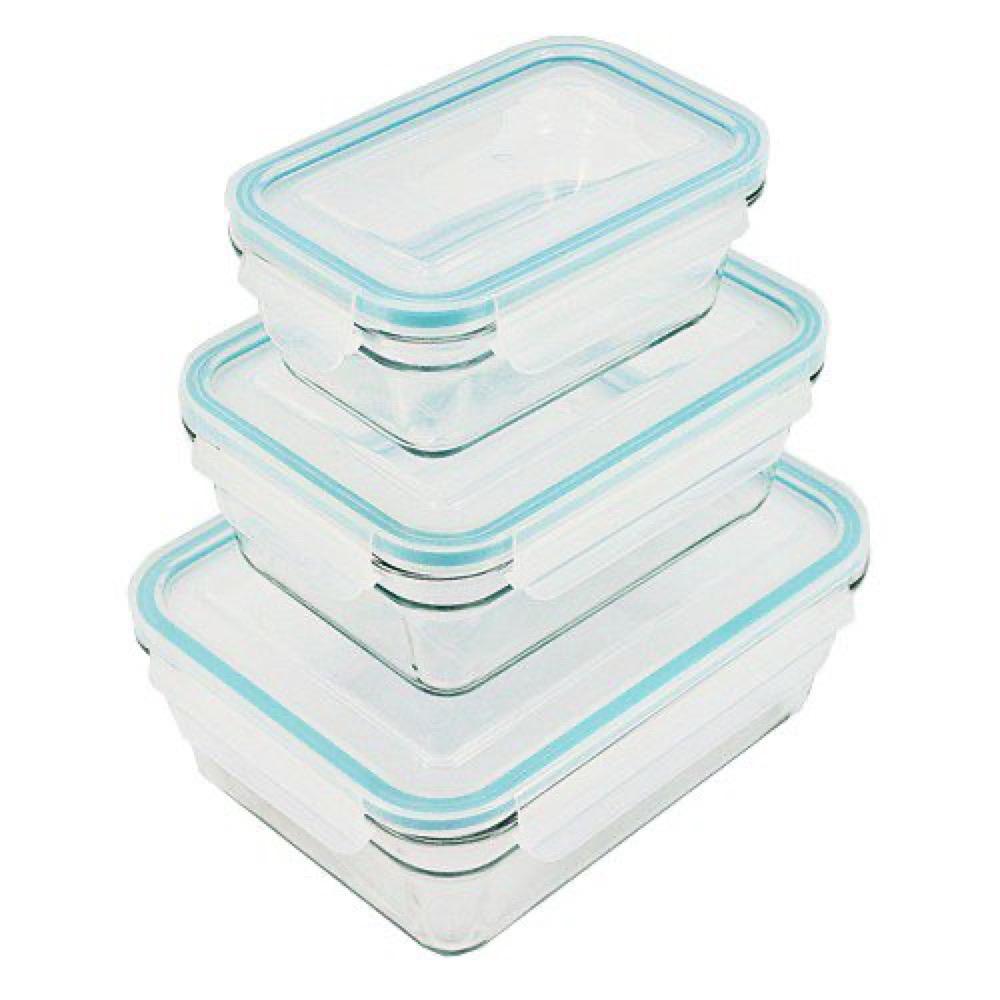
1. Glasslock Oven Safe Container Set (3-Pack) — Best for Store-and-Reheat
 Best Store-and-Reheat
Store and reheat in the same dish: no transfer, no plastic tub, no wrap.
Why it's safe: Hot food sits on tempered glass, which doesn't soften or shed at microwave temperatures.
Check Today's Price on Amazon →Amazon prices change daily — tap to see today's price and any active discount.
- Free delivery & returns for Prime members
- Sold & shipped by Amazon
2. Pyrex Simply Store — Best Budget Glass
 Best Budget Glass
Simply Store bowls nest, go into the microwave without the lid, and single replacements are easy to find. Treat the plastic lid as a cold-storage cover only, and put a plate on top when you heat.
A full set of reheat-ready glass in one box.
Why it's safe: With the lid off, there's no polymer between your food and the heat.
Check Today's Price on Amazon →Amazon prices change daily — tap to see today's price and any active discount.
- Free delivery & returns for Prime members
- Sold & shipped by Amazon
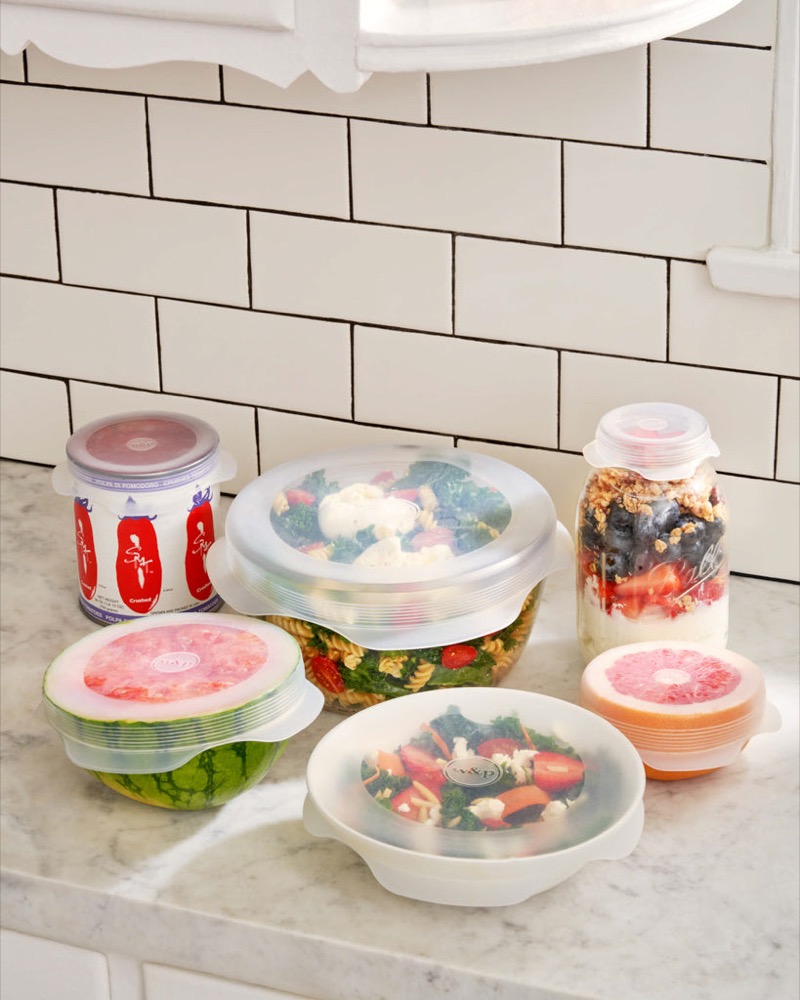
3. W&P Silicone Stretch Lids (6-Pack) — Best Plastic-Wrap Replacement
 Best Cover
Covers every bowl and dish you already own, so plastic wrap can leave the drawer.
Why it's better: Food-grade silicone tolerates microwave heat that softens thin polyethylene film.
Check Today's Price on Amazon →Amazon prices change daily — tap to see today's price and any active discount.
- Free delivery & returns for Prime members
- Sold & shipped by Amazon
Want the Full Home Protection Guide?
The microwave is one plastic touchpoint among dozens in a typical kitchen. The Complete Plasticproof Guide covers every room, with 80+ product recommendations backed by 47+ studies.
The honest verdict
Microwaving is the moment plastic food containers shed the most, according to the most direct study on the question: up to 4.22 million microplastics and 2.11 billion nanoplastics per square centimeter in 3 minutes from polypropylene baby-food containers. Baby-bottle and hot-cup studies from Trinity College Dublin and NIST point the same way: the hotter the plastic, the more it releases. What science hasn't settled is how much harm those particles do in a person.
You don't need that answer to act, because the fix costs almost nothing. Heat in glass or ceramic, cover with a plate, move takeout to a dish, and keep baby feeds out of plastic and out of the microwave. Those four habits remove nearly every time hot food touches plastic in a microwave. For the rest of the kitchen, the 7 kitchen mistakes that put microplastics in your food covers the next habits worth breaking.
Frequently Asked Questions
Heat food in glass or ceramic instead of plastic, cover it with a plate or a silicone lid instead of plastic wrap, move takeout and deli food onto a dish before heating, and never microwave formula, breast milk or baby food in plastic. A 2023 University of Nebraska-Lincoln study in Environmental Science & Technology found microwaving released the most particles of any way plastic containers were used.
Yes. In the 2023 University of Nebraska-Lincoln study, some polypropylene containers released up to 4.22 million microplastics and 2.11 billion nanoplastics per square centimeter of plastic in 3 minutes of microwave heating, more than refrigeration or room-temperature storage.
No. A microwave-safe label means the container is intended to hold up to microwave heat without melting or warping. It is not a test for particle release, and the polypropylene containers that released millions of particles in the 2023 study were ordinary food containers.
It is better not to. Hot steam condenses on the film and drips back into the food. An upturned plate or a food-grade silicone lid keeps food moist and stops splatter without putting thin plastic over steaming food.
Trinity College Dublin's team, which measured up to 16.2 million particles per liter from polypropylene baby bottles in Nature Food in 2020, advises against it: do not reheat prepared formula in plastic containers and avoid microwave ovens. Warm bottles in a bowl of warm water instead.
The glass itself contains no plastic, so it cannot shed microplastics. The catch is the lid: most glass storage containers have plastic lids, so take the lid off before heating and cover the dish with a plate or silicone lid instead.
Sources
- Hussain KA, Romanova S, Okur I, Zhang D, Kuebler J, Huang X, Wang B, Fernandez-Ballester L, Lu Y, Schubert M, Li Y. "Assessing the Release of Microplastics and Nanoplastics from Plastic Containers and Reusable Food Pouches: Implications for Human Health." Environmental Science & Technology, 2023;57(26):9782–9792. PubMed 37343248. (University of Nebraska–Lincoln; microwave heating caused the highest release; up to 4.22 million microplastics and 2.11 billion nanoplastics per cm² in 3 minutes; cell-viability test at 1,000 µg/mL.)
- Li D, Shi Y, Yang L, Xiao L, Kehoe DK, Gun'ko YK, Boland JJ, Wang JJ. "Microplastic release from the degradation of polypropylene feeding bottles during infant formula preparation." Nature Food, 2020;1(11):746–754. (Trinity College Dublin; up to 16,200,000 particles per liter; sterilization and high-temperature water significantly increase release.)
- Trinity College Dublin. "High levels of microplastics released from infant feeding bottles during formula prep." (About 600,000 particles per liter at 25°C and up to 55 million at 95°C; "Do not reheat prepared formula in plastic containers and avoid microwave ovens.")
- Zangmeister CD, Radney JG, Benkstein KD, Kalanyan B. "Common Single-Use Consumer Plastic Products Release Trillions of Sub-100 nm Nanoparticles per Liter into Water during Normal Use." Environmental Science & Technology, 2022;56(9):5448–5455. (NIST; more than 1012 particles per liter; mean diameters 30–80 nm; nylon released about 7 times more than cups.)
- U.S. Food and Drug Administration. "Microwave Ovens." (Containers "can become hot from the heat of the food cooking inside"; some plastic containers "can be melted by the heat of the food inside.")