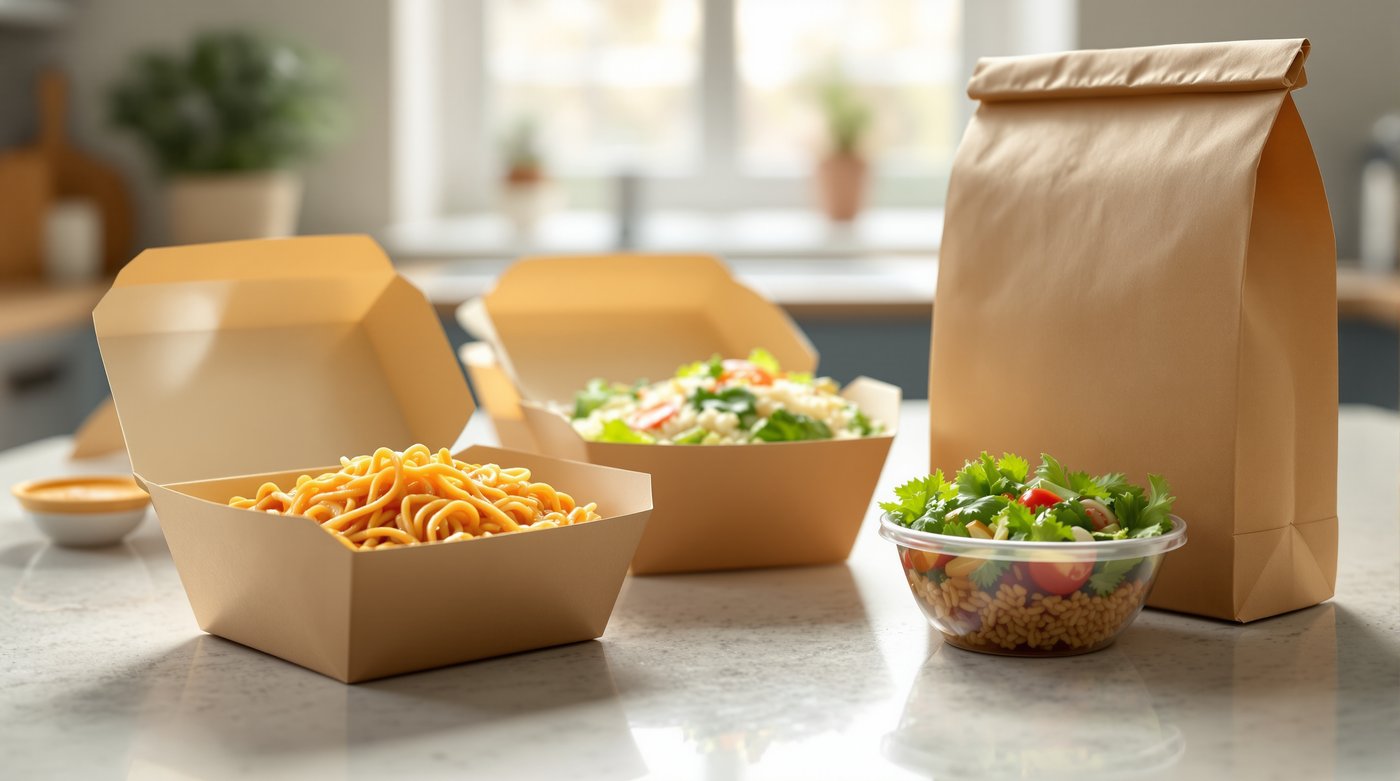
Every takeout container researchers have tested shed microplastics into the food. A 2020 study in the Journal of Hazardous Materials found microplastics in 100% of take-out containers sampled across five cities, and estimated that people who order delivery four to seven times a week ingest roughly 12 to 203 plastic particles from the containers alone. Heat makes it worse: lab work shows microwaving a plastic container can release millions of microplastic and billions of nanoplastic particles from a single square centimeter of its surface. The fix is cheap and immediate — move hot or greasy takeout into glass or stainless steel before you eat, and never microwave the container it came in.
Takeout and delivery are now a weekly habit for most households, and almost all of it arrives in plastic: clear PET clamshells, black polypropylene trays, polystyrene foam boxes, plastic-lined paper cups and bowls, and a plastic bag over the top. That packaging sits against hot, oily, acidic food — the exact conditions under which plastic sheds the most — often for the whole ride home.
So "does takeout food have microplastics?" has a clear, research-backed answer, and a more useful follow-up: how much, from which containers, and what actually reduces it. This guide walks through what the studies measured, where the particles come from, why reheating is the worst step, and the handful of swaps that cut the exposure without giving up the convenience.
The bottom line up front: the single highest-value habit is to transfer hot or greasy takeout out of its plastic container into glass or stainless steel before eating, and never reheat food in the container it came in. For the wider kitchen, see our kitchen plastic detox guide and the roundup of the best non-toxic lunch containers.
Does takeout food have microplastics?
Yes. When researchers tested take-out containers collected from five cities, they found microplastics in every single one, at 3 to 29 particles per container, across the polypropylene, polystyrene, and PET packaging that nearly all takeout uses (Du et al., 2020, Journal of Hazardous Materials). Contamination was universal; the only question was how much.
The counts were highest in polystyrene containers with rough inner surfaces, which flake more readily, and the authors traced the particles to the container surface itself and to airborne fallout settling on the food. From those numbers they estimated that someone ordering take-out four to seven times a week would ingest roughly 12 to 203 microplastic particles a week from the packaging alone — before accounting for what the food itself already carries. For how different foods compare, see our roundup of which foods have the most microplastics.
Where do the microplastics in takeout come from?
They come from the container, not the kitchen. A takeout meal spends its whole life in contact with plastic: packed hot, sealed, bagged, driven across town, and often reheated. Every one of those steps — friction, heat, grease, and acid — coaxes particles off the plastic surface and into the food. A separate study that examined consumer plastic food containers and disposable cups confirmed that these everyday items release microplastics into whatever they hold (Fadare et al., 2020, Chemosphere).
Three features of takeout make it especially prone to shedding. First, heat: hot food softens the plastic surface and speeds particle release. Second, fat and oil: greasy dishes act as a solvent that lifts particles and additives off the container far more effectively than water. Third, time and motion: unlike a plate at home, a delivery order rubs against its lid and walls for the length of the trip. This is the same mechanism behind microplastics in food packaging generally — takeout just concentrates every risk factor into one meal.
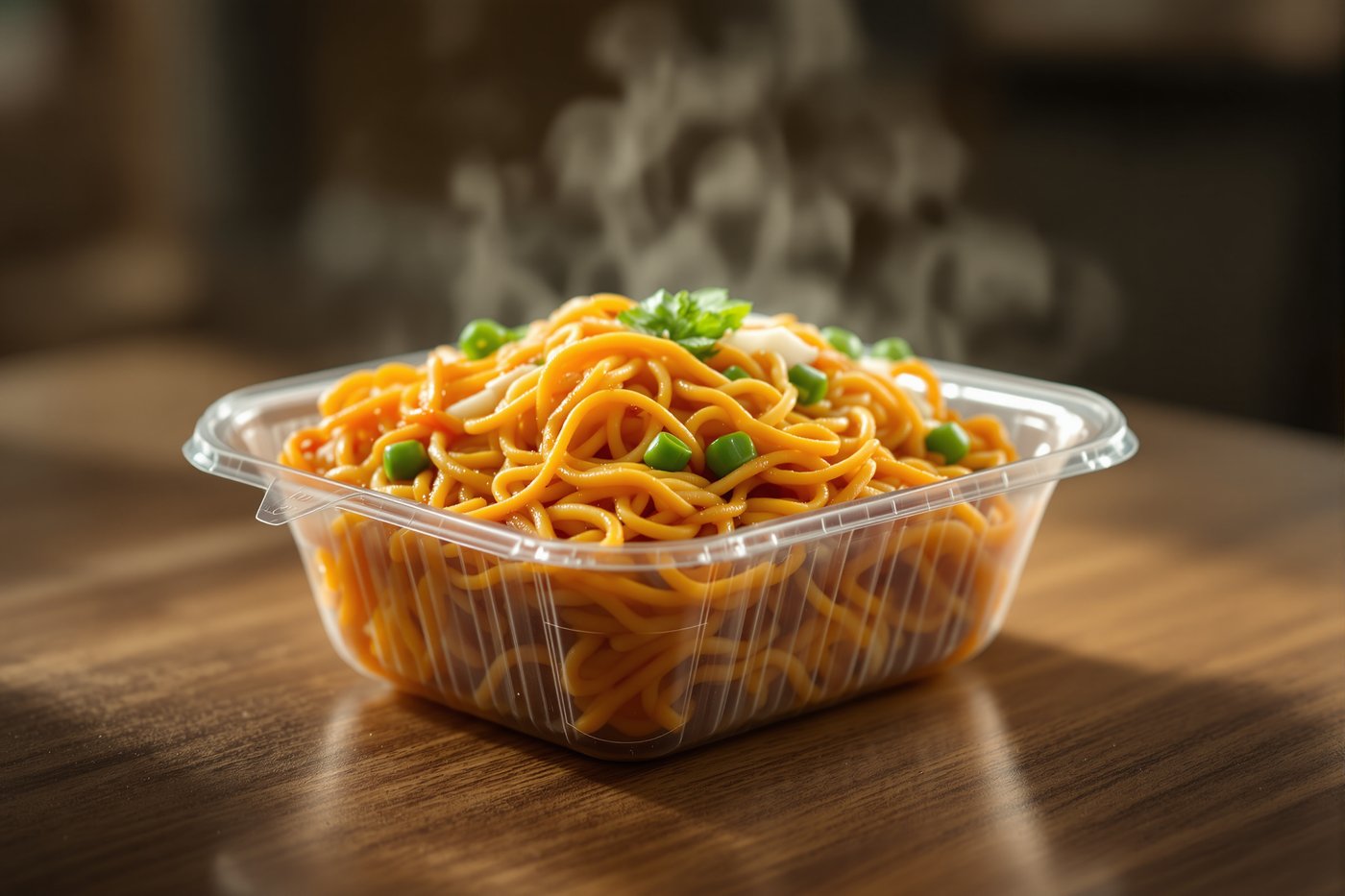
Does heating or microwaving takeout make it worse?
Yes — by a wide margin, and this is the step you most control. A 2023 study heated plastic food containers in a microwave and estimated that a single square centimeter of container could release millions of microplastic particles and billions of nanoplastic particles into the food in just a few minutes (Hussain et al., 2023, Environmental Science & Technology). Nothing else in the takeout chain comes close to those numbers.
That matters because reheating leftovers in the container they arrived in is one of the most common kitchen habits there is. The plastic clamshell goes straight into the microwave the next day, and the brief convenience delivers the single largest dose of the whole process. The same applies to very hot soup, pho, or curry poured into a plastic bowl or a plastic-lined cup at the restaurant — the heat does the work whether or not a microwave is involved. For the full rundown on heated plastic, see is it safe to microwave Tupperware.
If you remember one thing from this page, make it this: tip the food onto a ceramic plate or into a glass dish before reheating. A "microwave-safe" label means the container will not warp or melt — it does not mean it releases no particles. Heating plastic is the step that turns a handful of particles into millions, so removing that one habit removes most of the avoidable exposure for free.
Which takeout containers are the worst?
Not all takeout packaging is equal. In rough order from worst to least bad:
- Expanded polystyrene foam ("styrofoam") clamshells. The softest and most crumbly, foam sheds particles into hot and greasy food readily and is the hardest to recycle. If a restaurant gives you a choice, decline it — see are styrofoam containers safe for the detail.
- Black plastic trays. Often molded from mixed recycled plastics and paired with hot entrees; the dark pigment also complicates recycling.
- Plastic-lined paper cups and bowls. They look like paper but carry a thin plastic (usually polyethylene) film that releases microplastics into hot liquid — the same effect measured in paper coffee cups.
- Clear PET clamshells and polypropylene trays. The most common and the least bad of the group, but still not inert — they shed, especially when microwaved or filled with hot food.
The practical takeaway is that the material matters less than the moment: any of these is relatively low-shedding when it holds cold or room-temperature food briefly, and all of them are high-shedding when they hold hot, oily food or go in the microwave.
How much plastic are you actually eating?
Takeout is one input into a much larger total. A widely cited analysis estimated that the average American eats and drinks roughly 39,000 to 52,000 microplastic particles a year from food and beverages, rising to 74,000 to 121,000 once inhaled particles are included (Cox et al., 2019, Environmental Science & Technology). A separate review put the mass in more tangible terms, estimating people could ingest up to about 5 grams of plastic a week — roughly the weight of a credit card — though that figure is debated (Senathirajah et al., 2021, Journal of Hazardous Materials).
Against that backdrop, the few hundred particles a week attributed to takeout containers are real but not the whole story. The useful way to read these numbers is as leverage: you cannot easily filter the plastic out of food you did not cook, but you can stop adding to it with heated plastic, and you can cut a far larger share of your total by filtering your drinking water. Particles swallowed this way are among the main routes by which microplastics end up in the human body.
Is the plastic in takeout food dangerous?
Here the evidence is genuinely unsettled, and it is worth being honest about. We know exposure is real: microplastics have been measured in takeout, in dozens of common foods, and in human blood, lungs, placenta, and stool. Lab studies show the smallest nanoplastics can be taken up by cells, and the microwave study above reported high cell mortality at the highest doses it tested. What is not established is the dose-response in actual humans — which exposures cause which effects, and at what levels.
So the reasonable stance is neither panic nor dismissal. Exposure is measurable and rising; harm is plausible but unproven. When a reduction is cheap, effortless, and has no downside — like not eating hot food out of heated plastic — it is worth doing. When it would cost real money or convenience for a speculative benefit, it can wait for better evidence. That is the same proportionate framing we apply across the kitchen plastic detox guide.
How to reduce microplastics from takeout food
None of this requires giving up takeout. A few habits remove most of the avoidable exposure:
- Transfer it out of the plastic. As soon as the food arrives, move it onto a plate or into a glass or stainless container — especially anything hot or oily.
- Never microwave the original container. Reheat on ceramic or in glass. This single change removes the biggest dose.
- Let very hot food cool a few minutes before transferring, so it is not scalding the plastic on the way out.
- Decline foam when a restaurant offers a choice, and skip the plastic-lined cup for hot drinks.
- Bring your own container for leftovers when you dine out — a glass or steel box in your bag means restaurant leftovers never touch foam.
- Filter your drinking water, which cuts a far larger slice of your total intake than any single food swap.
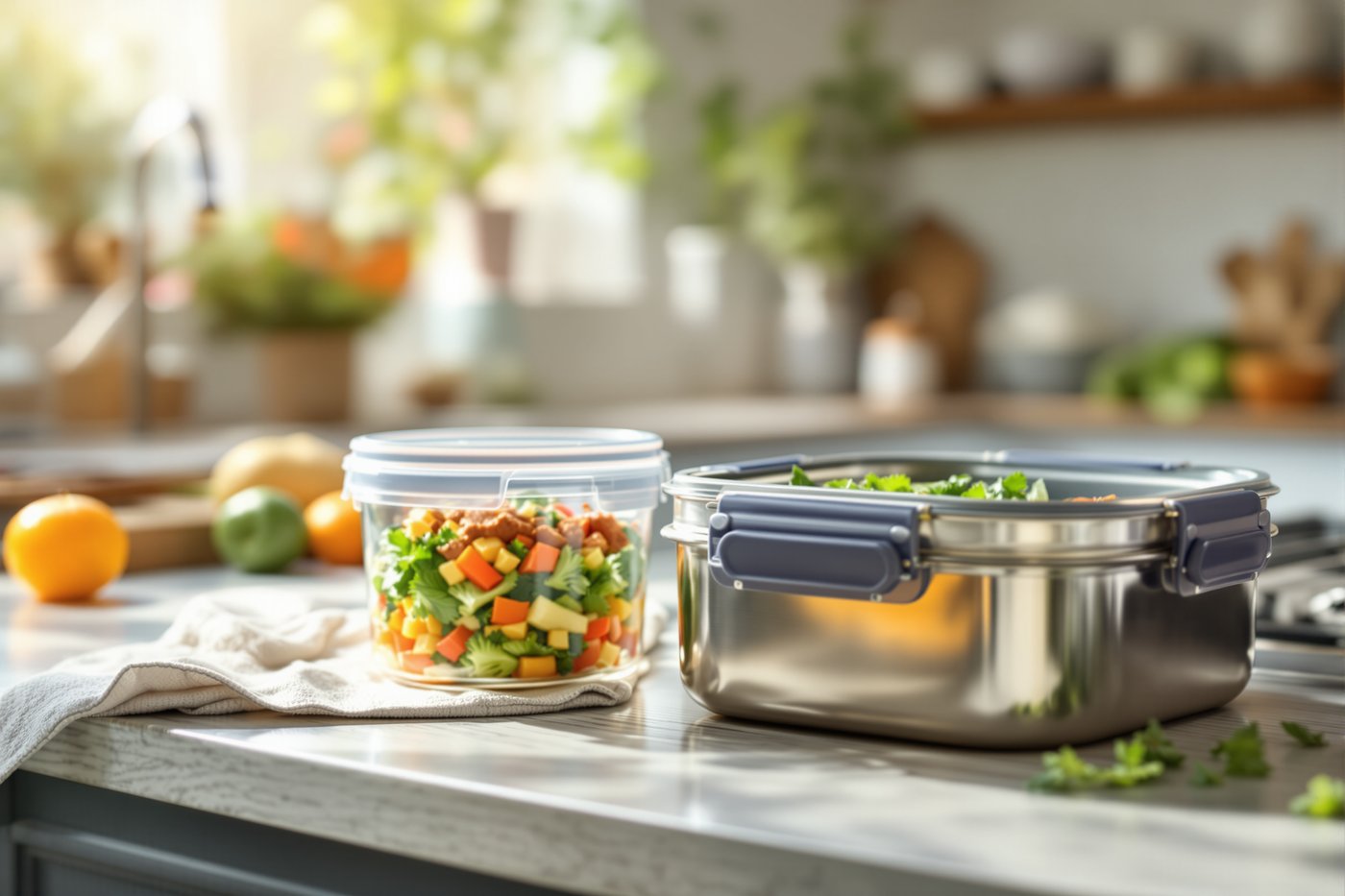
The best reusable containers to cut takeout plastic
The goal is simple: something inert to move hot or greasy takeout into, and something to carry your own container for leftovers. These are picks we recommend elsewhere on the site, chosen here for exactly that job — all glass or stainless steel, with no plastic touching hot food. Prices and availability change, so tap through for the current listing. For more options see our guides to glass food storage containers and silicone storage bags.
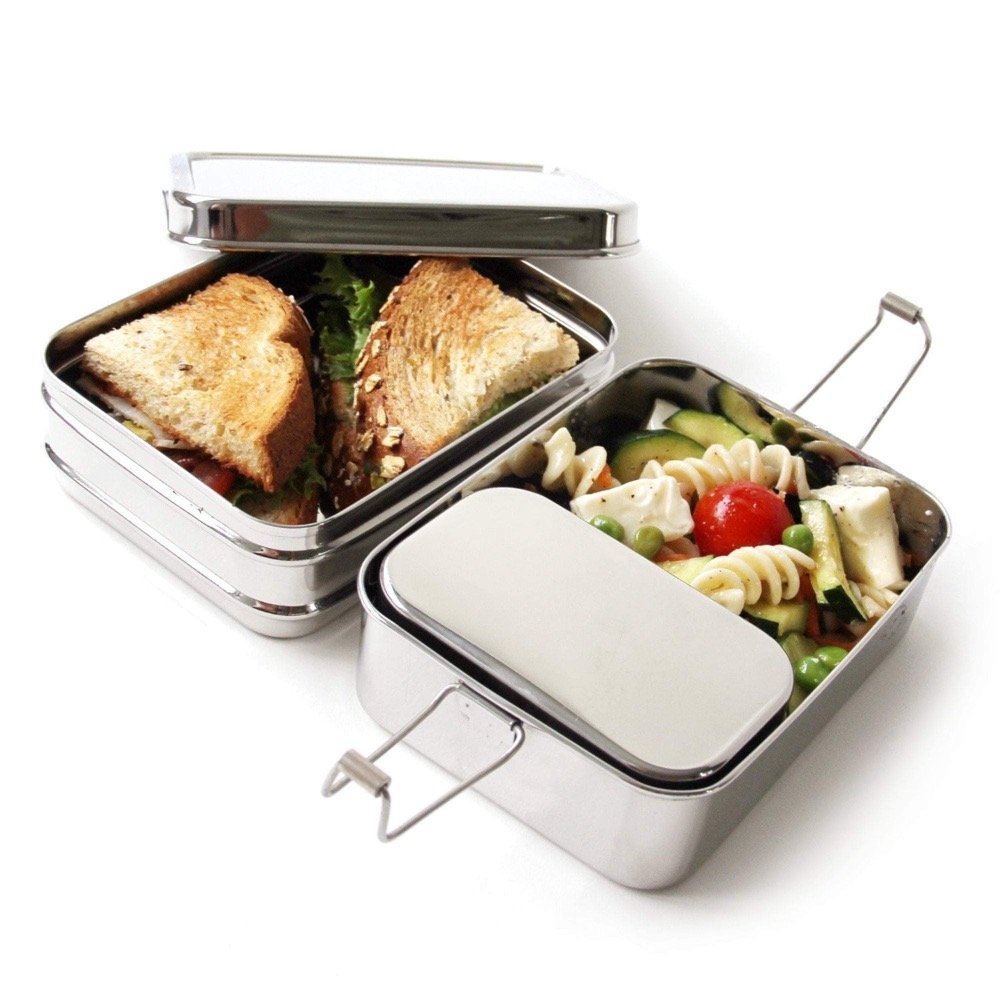 Best Overall
Owners like that this one is genuinely plastic-free — no gaskets, no synthetic liner — and that the three pieces nest together, wipe clean, and go in the dishwasher. It suits dry and damp foods like cut fruit, hummus and thick sauces. The honest downside is the one ECOlunchbox states plainly on the box: it is "not leak-proof." Because there are no silicone or plastic gaskets, one buyer said it "leaks any amount of liquid" into a backpack, and another returned the set after learning it would not seal, so pack it with dry foods only or expect spills.
A nesting steel set to tip a takeout plate into the moment it lands — nothing but bare stainless between you and the food.
Why it's safe: Every food-contact surface is inert 18/8-style stainless steel — no plastic to leach microplastics, BPA, or phthalates, and no silicone gasket touching the food at all.
Check Today’s Price on Amazon →✓ Ships free with Prime · Free returns · Amazon A-to-z purchase guarantee (on eligible items)
- Free delivery & returns for Prime members
- Sold & shipped by Amazon
- Thousands of verified reviews
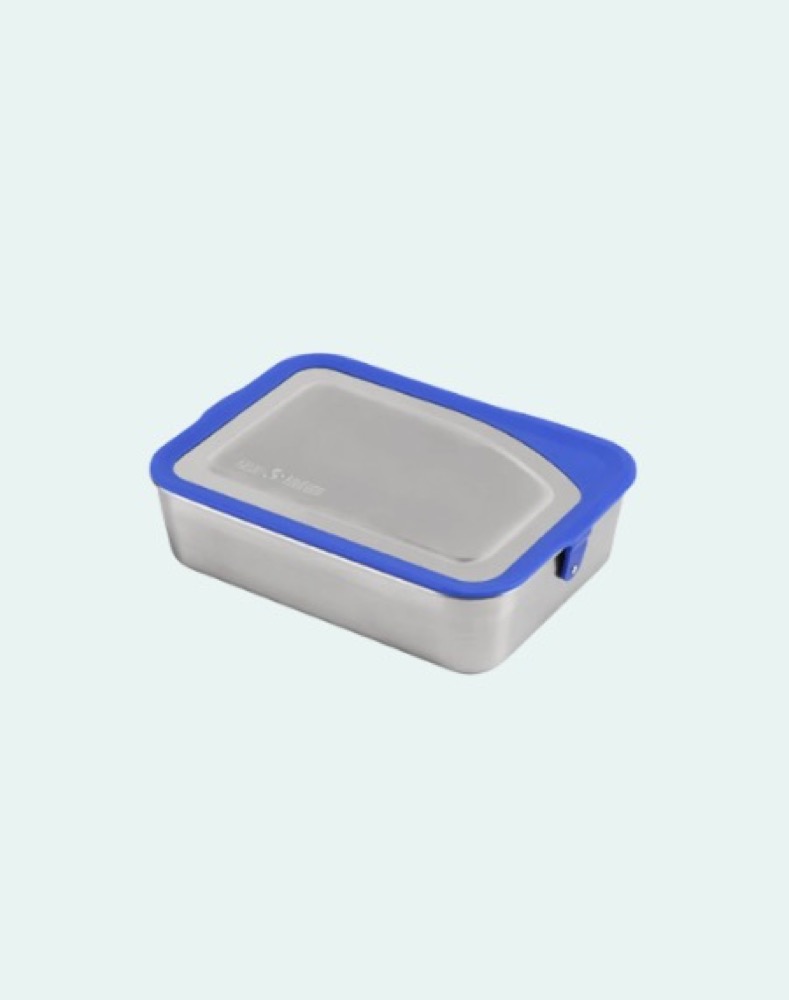 Best for Big Portions
Owners rate the Klean Kanteen food box as "truly leak proof when the lid is fastened" — the silicone lid plus snap-and-lock tabs hold a strong seal, and the whole box is plastic-free. It is built to protect a full meal on the go. The honest downsides: the stainless build makes it heavy, which is the complaint reviewers raise most; it costs more than most steel boxes; and the seal only works if you follow the routine — "burp" the flexible lid corner while pressing down and engage both snap tabs — so a quick, careless close can still let liquid escape.
Fits a full-size take-out entree without bulk — the 34oz box solves the "stainless containers run small" problem most adults hit.
Why it's safe: The body is inert 18/8 stainless steel with no plastic touching food. The lid's leakproof seal comes from a food-grade silicone rim, not a plastic liner that could leach.
Check Today’s Price on Amazon →✓ Ships free with Prime · Free returns · Amazon A-to-z purchase guarantee (on eligible items)
- Free delivery & returns for Prime members
- Sold & shipped by Amazon
- Thousands of verified reviews
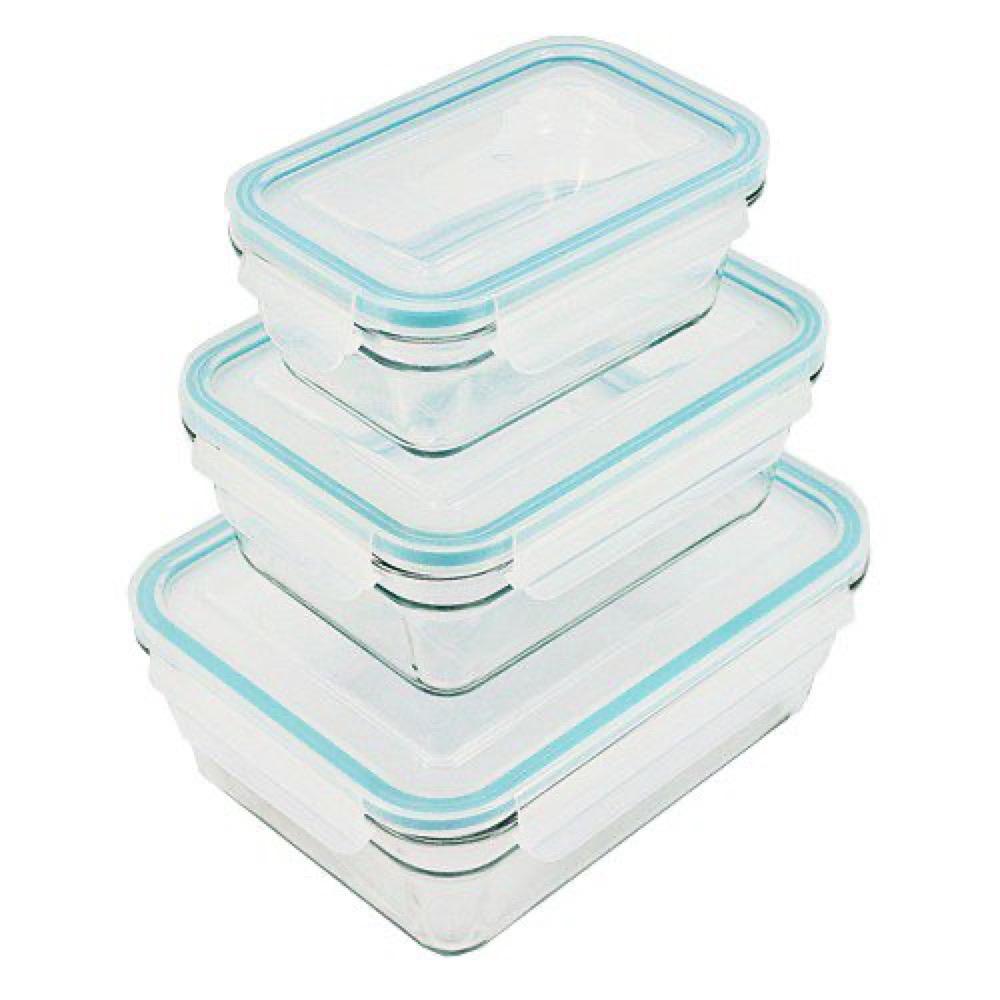 Best Value Set
Glasslock's tempered glass containers earn praise for lids that owners find "more durable and leak-proof" than Pyrex, and the glass is oven-safe. The honest downsides are the lids and long-term wear: buyers report the plastic "side lock-down wings" snapping off and the gasket seals tearing or growing mold in the groove over time; nesting the lids in the dishwasher can chip "short narrow shards" off the underside of the glass rims; and several reviewers found replacement parts hard to get and customer service slow to respond. Hand-dry the gaskets and do not stack the lids while washing.
Three stackable glass containers in one box — enough that there is always one clean when the delivery arrives, with snap-lock lids that actually seal soups and sauces.
Why it's safe: Food sits on inert tempered glass, not plastic — so reheating releases nothing. The BPA-free lids seal with a food-grade silicone gasket that only touches the rim.
Check Today’s Price on Amazon →✓ Ships free with Prime · Free returns · Amazon A-to-z purchase guarantee (on eligible items)
- Free delivery & returns for Prime members
- Sold & shipped by Amazon
- Thousands of verified reviews
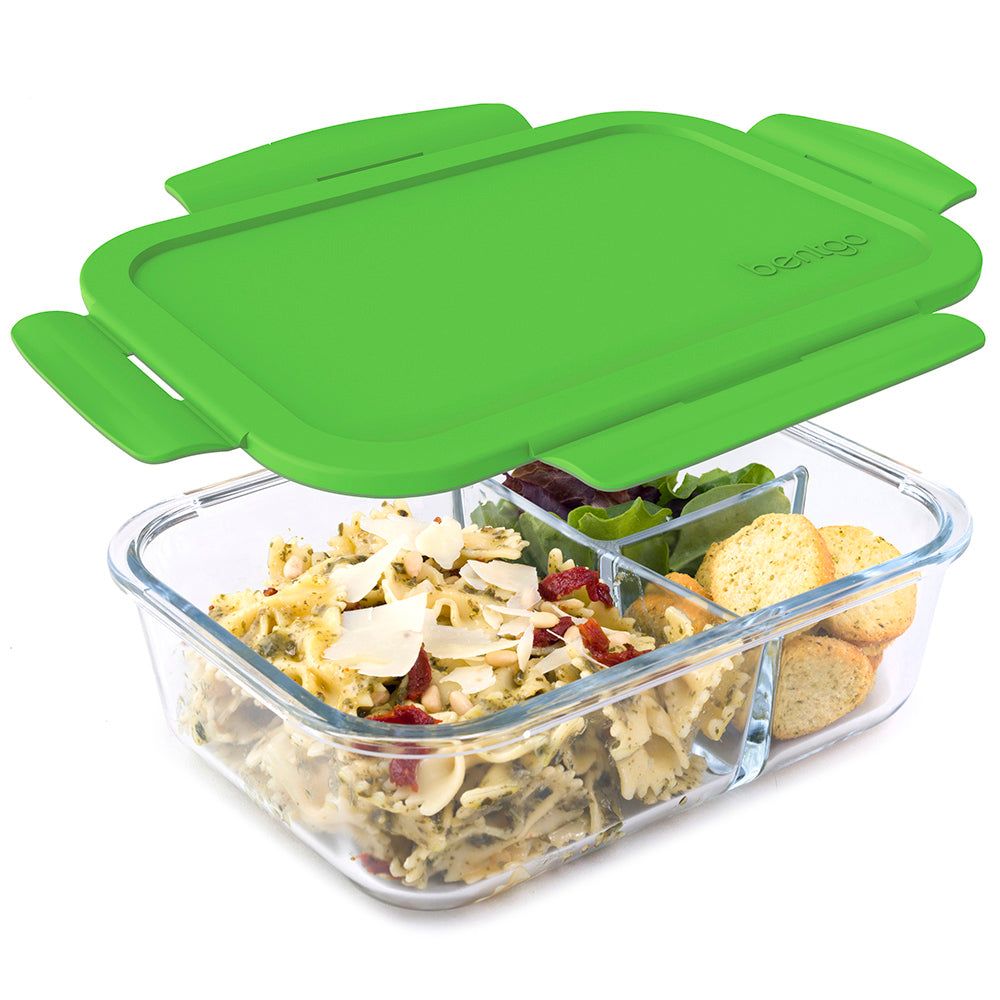 Best for Reheating
Buyers who want a real seal favor the Bentgo Glass — the four-side snap-lock lid is "leak proof" when latched, the compartments are spacious, and the glass base is oven-safe. The honest downsides show up in daily carrying: the thick glass is "heavy and bulky," which several reviewers found awkward to tote alongside a laptop and a drink; the plastic latches are a weak point, with one owner reporting they "broke within a week"; and a few buyers reported the glass itself cracking after a handful of uses, leaving shards in the box. It seals well but demands careful handling.
Decant the delivery, snap the lid, and reheat straight from the fridge the next day — your leftovers sit on inert glass, not the plastic that sheds most when heated.
Why it's safe: The food-contact body is borosilicate glass — chemically inert and thermal-shock resistant, so reheating releases nothing into your food. The silicone gasket only seals the rim, never sitting in the food.
Check Today’s Price on Amazon →✓ Ships free with Prime · Free returns · Amazon A-to-z purchase guarantee (on eligible items)
- Free delivery & returns for Prime members
- Sold & shipped by Amazon
- Thousands of verified reviews
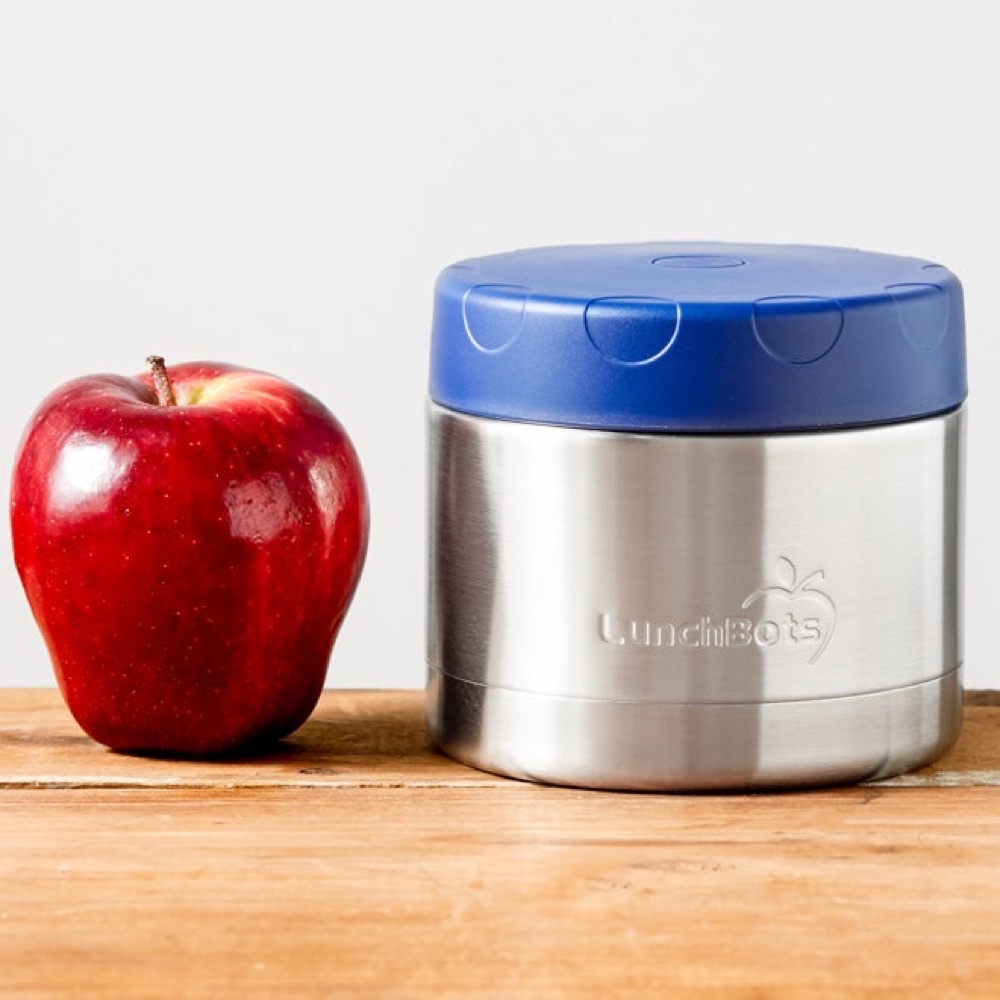 Best for Hot Soup & Pho
Hand it over at a counter that offers to pack your soup, or fill it at home — either way the hot food never meets a plastic or foam wall.
Why it's safe: Both the interior and the lid are stainless steel and silicone, so there is no polystyrene, no polypropylene and no coating between the heat and the food.
Check Today’s Price on Amazon →✓ Ships free with Prime · Free returns · Amazon A-to-z purchase guarantee (on eligible items)
- Free delivery & returns for Prime members
- Sold & shipped by Amazon
- Thousands of verified reviews
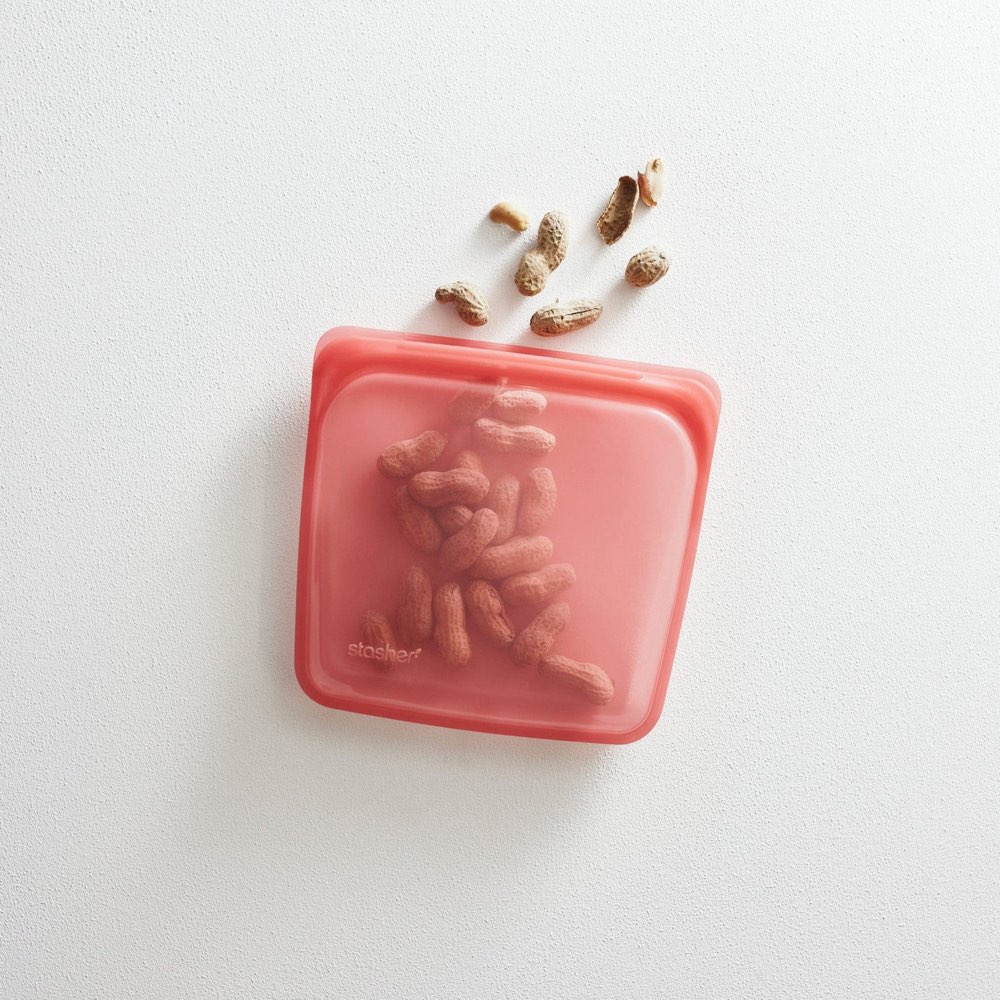 Best for Leftovers
Owners keep coming back to the seal and freezer performance, describing the "thickest silicone and airtight seal" as what makes these best for protecting frozen goods from freezer burn, and they lean on them for lunches and travel because they lie flat, pass airport security, and stay leakproof once the seal is locked, with many saying "I'm never buying a Ziploc bag again." The honest downsides: the press seal has to be pinched shut rather than swiped, so it feels stubborn, reviewers flag that "the inside takes a while to dry" and that "many ridges in the seal that harbor food" make hand-washing a chore, and at about $20 each they sit among the priciest.
A reusable silicone bag that handles leftovers, the freezer, and the sous vide bath — replacing hundreds of disposable plastic bags over its life.
Why it's safe: Made entirely from 100% food-grade platinum silicone with no BPA, BPS, or phthalates — it's chemically inert and sheds no microplastics, even with warm or fatty food.
Check Today’s Price on Amazon →✓ Ships free with Prime · Free returns · Amazon A-to-z purchase guarantee (on eligible items)
- Free delivery & returns for Prime members
- Sold & shipped by Amazon
- Tens of thousands of verified reviews
Frequently asked questions
Yes. A 2020 study found microplastics in 100% of take-out containers it tested, at 3 to 29 particles per container, and estimated that ordering four to seven times a week adds roughly 12 to 203 particles from the packaging alone. The particles come from the container surface, and the shedding rises with heat, grease, and time — all of which takeout maximizes.
Expanded polystyrene foam clamshells are the worst — soft, crumbly, and quick to shed into hot or greasy food. Black plastic trays and plastic-lined paper cups and bowls are next. Clear PET clamshells and polypropylene trays shed the least of the group but still shed, especially when they hold hot food or go in the microwave.
Dramatically. A 2023 study estimated that microwaving could release millions of microplastic and billions of nanoplastic particles from a single square centimeter of plastic container in minutes. Reheating leftovers in the container they came in is the single worst step — move the food onto a plate or into a glass container first.
Transfer hot or greasy takeout out of its plastic container into glass or stainless steel as soon as it arrives, and never microwave the original container. Let very hot food cool a few minutes before transferring, decline foam when offered a choice, and bring your own container for leftovers when you dine out. Filtering your drinking water removes a larger share of your total intake than any single food swap.
Exposure is well established; harm to humans is not yet proven. Microplastics have been measured in takeout, in common foods, and in human tissue, and lab work shows the smallest nanoplastics can enter cells. What the dose causes in real people is still unresolved, so the sensible response is to cut avoidable exposure where it is cheap and easy — like not eating hot food out of heated plastic — rather than to panic.
Sources
- Du F, Cai H, Zhang Q, Chen Q, Shi H. "Microplastics in take-out food containers." Journal of Hazardous Materials, 2020. doi.org/10.1016/j.jhazmat.2020.122969
- Fadare OO, Wan B, Guo LH, Zhao L. "Microplastics from consumer plastic food containers: Are we consuming it?" Chemosphere, 2020. doi.org/10.1016/j.chemosphere.2020.126787
- Hussain KA, et al. "Assessing the Release of Microplastics and Nanoplastics from Plastic Containers and Reusable Food Pouches." Environmental Science & Technology, 2023. pubs.acs.org/doi/10.1021/acs.est.3c01942
- Cox KD, Covernton GA, Davies HL, Dower JF, Juanes F, Dudas SE. "Human Consumption of Microplastics." Environmental Science & Technology, 2019. pubs.acs.org/doi/10.1021/acs.est.9b01517
- Senathirajah K, et al. "Estimation of the mass of microplastics ingested — A pivotal first step towards human health risk assessment." Journal of Hazardous Materials, 2021. doi.org/10.1016/j.jhazmat.2020.124004