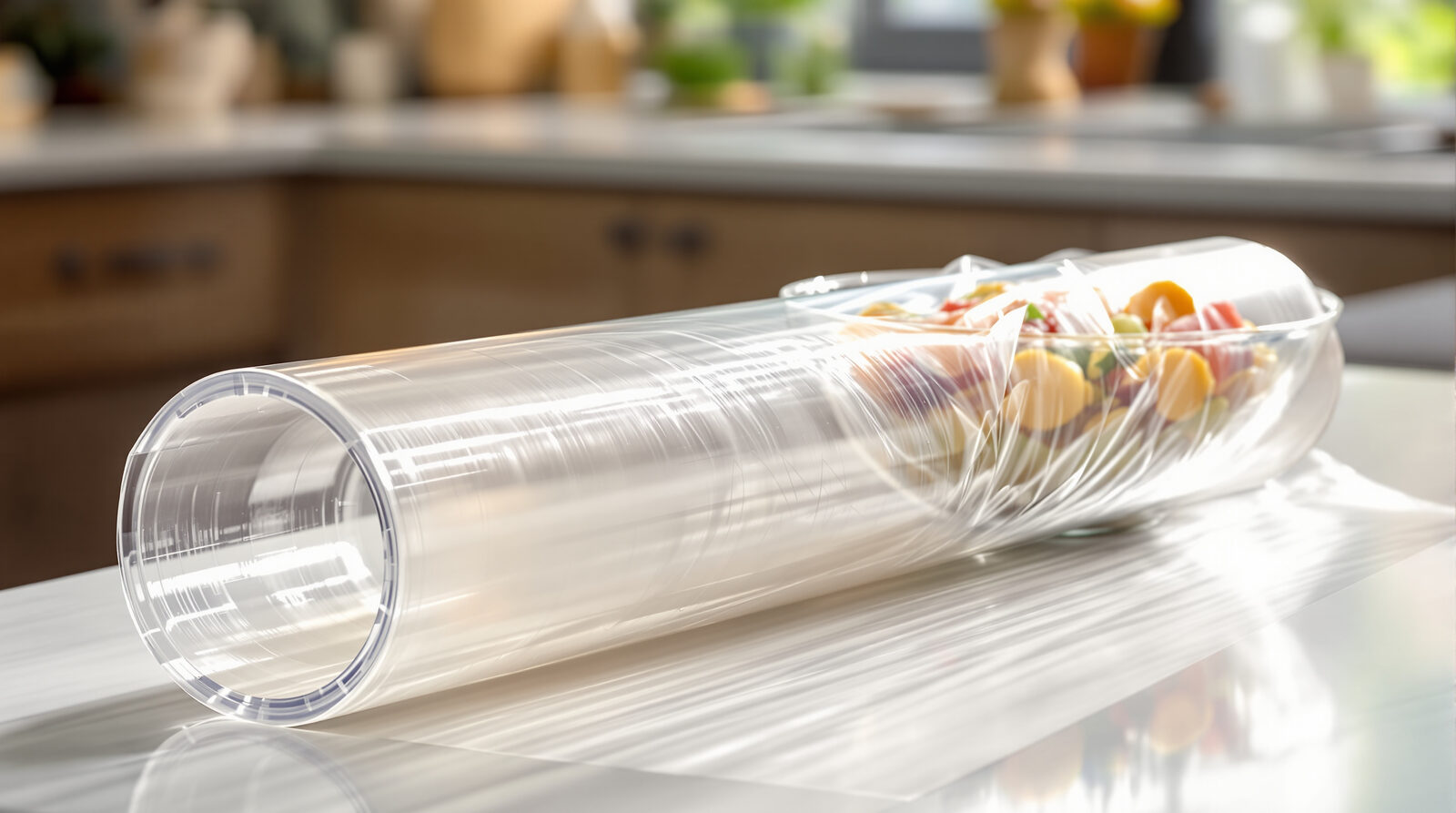
Plastic wrap is reasonably safe for everyday cold use when it is polyethylene, which is what nearly all U.S. household brands now use — polyethylene has no plasticizers to migrate into food. The real concern is PVC (polyvinyl chloride) cling film, still common at deli and meat counters, which is softened with the plasticizer DEHA. DEHA can migrate into fatty foods like cheese and meat, and it moves faster with heat; the EU caps it at 18 mg per kg of food, and enforcement surveys have found fatty-food PVC films over that limit. So the safe rules are simple: use polyethylene wrap over PVC, keep any wrap off hot and oily foods, never let it touch food in the microwave, and lean on glass containers where you can.
“Is plastic wrap safe?” is one of those kitchen questions with an honest answer of “it depends what it is made of.” The clear film on the roll in your drawer and the stretchy cling film a deli uses to wrap a wedge of cheese can look identical and behave completely differently, because they are usually two different plastics with two different safety profiles. Getting the answer right means knowing which one you are using.
This guide walks through what plastic wrap is actually made of, whether chemicals really cross from the film into your food, why microwaving it is the one habit worth dropping, what the science says about microplastics from film, and which wraps and alternatives are the safest choices. It takes the same evidence-first approach as our look at whether Tupperware is safe and how dangerous microplastics really are — a real exposure, honestly bounded by what the data supports.
The short version: polyethylene (LDPE) household wrap is the safer default and fine for covering cold leftovers; PVC cling film can leach the plasticizer DEHA into fatty foods, and heat makes any wrap worse. Keep wrap off hot, oily food, never microwave with it touching the food, and switch to glass, silicone lids or beeswax wraps where it is easy.
What is plastic wrap actually made of?
Almost every safety question about plastic wrap comes down to one fork in the road: is the film polyethylene or PVC? They look the same on the roll, but chemically they are worlds apart, and only one of them carries the additive people actually worry about.
Most plastic wrap sold for home use in the United States today is low-density polyethylene (LDPE). Polyethylene is naturally soft and clingy, so it needs no plasticizer to make it flexible — and no plasticizer means there is essentially nothing loose in the film to migrate into your food. The major household brands quietly made this switch years ago; SC Johnson reformulated Saran Wrap away from chlorine-based PVDC to polyethylene back in 2004, and the big-box store brands are polyethylene too.
The other kind is PVC (polyvinyl chloride) cling film. PVC is rigid on its own, so manufacturers soften it with a liquid plasticizer — usually DEHA (di-2-ethylhexyl adipate). That plasticizer is not chemically bonded to the plastic; it sits between the polymer chains, which is exactly why it can seep out. PVC film clings beautifully and resists oxygen well, so it is still the go-to at supermarket deli counters, meat departments, and in many imported and commercial rolls. If a shop wraps your cheese or steak in stretchy film at the counter, that is very often PVC.
This is the same lesson that runs through the rest of our kitchen coverage, from whether Tupperware is safe to what plastic cutting boards shed: the plastic family and its additives decide the risk, not the shape of the product. Knowing you have polyethylene at home already answers most of the worry.
Does plastic wrap leach chemicals into your food?
From polyethylene wrap, very little. With no plasticizer in the film, LDPE has almost nothing to give up at refrigerator or room temperature, which is why covering a bowl of cold leftovers with household wrap is a low-concern use. From PVC cling film, the answer is different: its plasticizer, DEHA, genuinely can migrate into food — and it does so most readily into fatty foods like cheese, cured meat, and oily leftovers, because DEHA dissolves into fat.
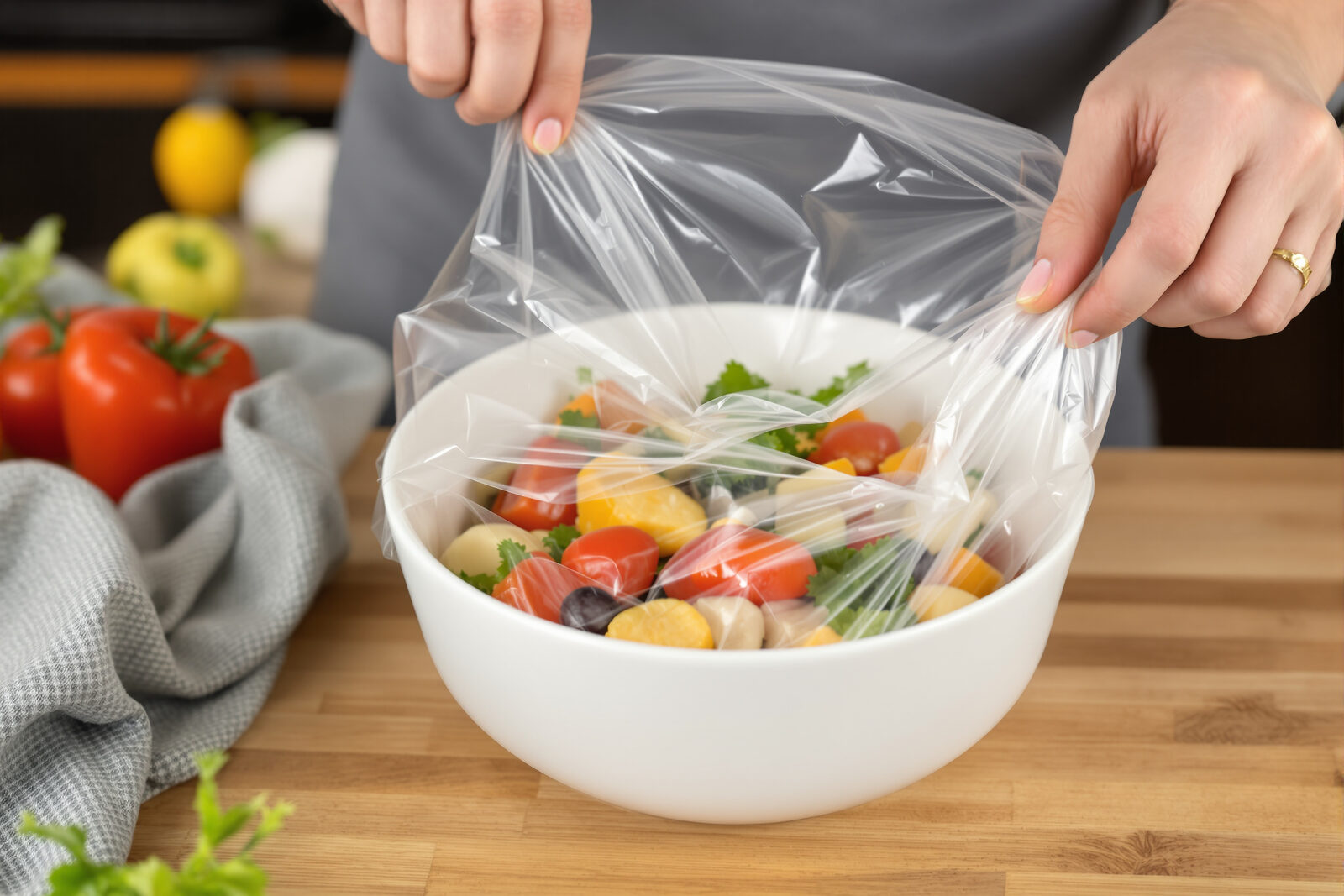
This has been measured for decades. The European Union sets a specific migration limit of 18 mg of DEHA per kilogram of food, derived from the European Scientific Committee for Food’s tolerable daily intake for the chemical. European enforcement surveys repeatedly found cling films that blew past it: in one classic study of PVC films sold for fatty foods, the majority exceeded the acceptable migration level, and a test of “low-migration” film in contact with cheese still measured DEHA climbing to around 150 mg/kg after ten days. The limit exists precisely because, left unchecked, fatty-food contact can push intake toward the safety threshold.
Is DEHA itself dangerous? It is an adipate, not a phthalate, so it is not the same molecule as the notorious plasticizer DEHP — but it is chemically similar, and animal studies have raised questions about it at high doses, which is why regulators bothered to cap it. It belongs to the broad family of plasticizers that overlap with hormone-disrupting chemicals, so the prudent move is simply to keep it out of your food rather than to wait for the science to settle. With polyethylene wrap, there is no DEHA to begin with.
DEHA migration from PVC cling film rises sharply with both fat content and temperature. Wrapping a warm, oily dish in deli-style cling film — or worse, microwaving it — is the single worst-case use. If you are reheating or storing something fatty and hot, reach for a glass container instead of film.
Is it safe to microwave plastic wrap?
This is the one habit worth dropping. Heat accelerates the migration of any additive out of plastic, softens or melts the film, and can press it onto the food — so the microwave turns a low-concern cover into the riskiest way to use wrap. Both the U.S. Food and Drug Administration and the USDA advise that if you microwave with plastic wrap at all, it must be labeled microwave-safe, placed loosely so steam can vent, and kept from touching the food itself.
The better answer is usually to skip the film entirely in the microwave. Cover the bowl with a microwave-safe plate or a vented glass lid, which does the same steam-trapping job without any plastic on the food. It is the same principle that makes glass the default for reheating anything hot or greasy: no additive, no melting, nothing to migrate.
Does plastic wrap leave microplastics in your food?
Plastic films can shed tiny particles, especially when they are stretched, torn, cut on a serrated box edge, or heated. The clearest evidence so far is for rigid plastic containers rather than cling film: a 2023 study in Environmental Science & Technology from the University of Nebraska–Lincoln found that microwaving FDA-approved plastic food containers in a food simulant released staggering numbers of particles — up to about 4.2 million microplastics and 2.1 billion nanoplastics from a single square centimeter of plastic in three minutes.
Direct measurements for cling film specifically are still limited, so it would be dishonest to put a number on it. But the drivers are identical — heat and mechanical stress — so the same caution applies: avoid heating food in contact with film, and do not microwave with it. For the wider picture on how particles get into meals, see microplastics in food packaging and which foods have the most microplastics.
Which plastic wrap is safest — and what should you use instead?
If you are going to keep plastic wrap in the drawer, the single best choice is a polyethylene (LDPE) household roll over PVC cling film — which, for most U.S. shoppers buying a mainstream boxed wrap, is already what you have. Then change how you use it: keep it off hot and fatty foods, never microwave with it touching food, and use it mainly to cover cold, low-fat items for short stretches.
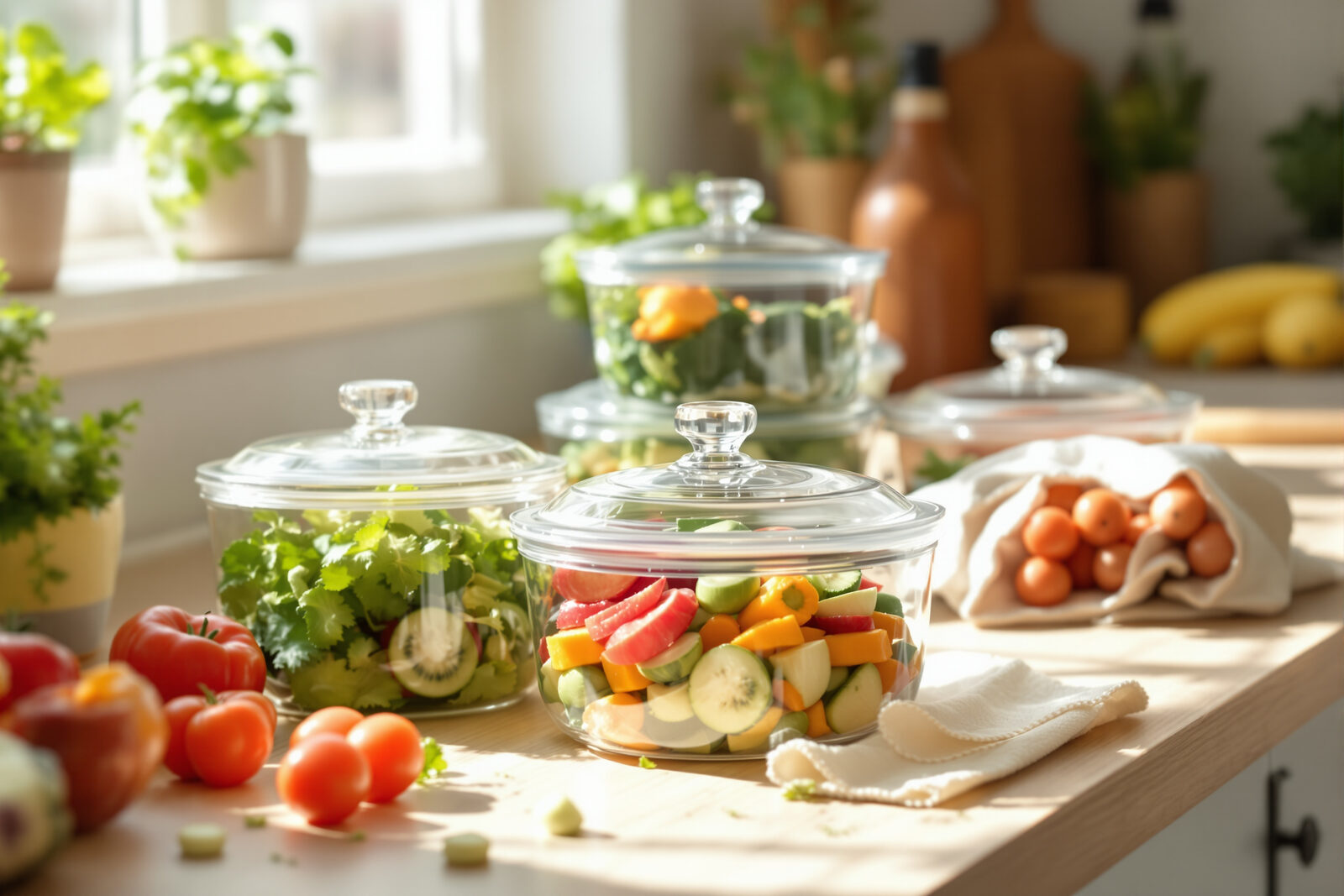
Better still, replace it for the uses that matter most. A few durable swaps cover almost everything film does:
- Glass storage containers with lids. The most reliable swap — airtight, microwave- and freezer-safe, and with nothing to migrate. Use them for leftovers, meal prep, and anything hot or oily. Start with our glass vs. plastic food storage comparison.
- Silicone stretch lids. Reusable, flexible covers that suction over bowls, jars, and cut fruit — the closest everyday replacement for the “cover a bowl” job that cling film does.
- Beeswax or vegan-wax wraps. Cloth wraps that mold around cheese, half a lemon, or a sandwich with the warmth of your hands. Ideal for the deli-counter uses where PVC film was the old default.
- A plate on top of a bowl. Free, instant, and plastic-free — the simplest cover for anything going into the fridge or microwave.
- Choose polyethylene film when you do buy wrap. Check the box: mainstream U.S. household wraps are LDPE. Save any PVC cling film for non-fatty, cold, short-term jobs only — never heat.
None of this requires throwing out your current roll in a panic. It is the same measured approach we take in the kitchen plastic detox guide: swap the items that touch heat and fat first, and let the low-stakes uses phase out on their own.
The bottom line: is plastic wrap safe?
Is plastic wrap safe? For the polyethylene wrap most U.S. kitchens actually have, covering cold leftovers is a low-concern, everyday use — there is no plasticizer in the film to worry about. The real caution is for PVC cling film, the stretchy stuff at deli and meat counters, whose plasticizer DEHA can migrate into fatty foods and migrates faster with heat, which is exactly why the EU caps it at 18 mg/kg and enforcement keeps finding films over the line.
So the rules are refreshingly simple: prefer polyethylene household wrap over PVC cling film, keep any wrap off hot and oily food, never microwave with film touching the food, and lean on glass, silicone lids, and beeswax wraps for the jobs that matter. For the bigger picture on plastic chemicals in the kitchen, read why “BPA-free” doesn’t mean safe and how to reduce microplastics in your body.
Cut the hidden plastic out of your kitchen
Plastic wrap is one of a dozen everyday kitchen habits worth rethinking. The same few swaps — glass over film, no plastic in the microwave — cut your exposure across the whole room.
Frequently Asked Questions
For most everyday use, yes, within limits. Nearly all U.S. household plastic wrap today is low-density polyethylene (LDPE), which contains no plasticizers, so very little migrates into food at room temperature. The bigger concern is PVC cling film, still common at deli and meat counters, which is softened with the plasticizer DEHA that can migrate into fatty foods. Keep any wrap off hot and oily foods, and never let it touch food in the microwave.
There are two main types. Most household rolls sold in the U.S., including the major brands, are low-density polyethylene (LDPE) and use no plasticizers. Commercial and some imported cling films are PVC (polyvinyl chloride), which is rigid on its own and must be softened with a plasticizer, usually DEHA (di-2-ethylhexyl adipate). The plasticizer is what can migrate into food, so the material matters more than the brand name.
From PVC cling film, yes. The plasticizer DEHA is not chemically bound to the plastic, so it can transfer into food, especially fatty foods like cheese and meat, and it moves faster when the film is warm. The European Union sets a specific migration limit of 18 mg DEHA per kg of food, and enforcement surveys have found fatty-food PVC films that exceeded it. LDPE wrap has no plasticizer to migrate, which is why it is the safer default.
Only if the wrap is labeled microwave-safe and it does not touch the food. The FDA and USDA advise placing microwave-safe wrap loosely over a dish so steam can escape and keeping it off the food surface, because heat speeds up chemical migration and the wrap can melt onto hot, fatty food. The safest option is to microwave in a glass or ceramic dish covered with a plate or a vented glass lid instead of plastic wrap.
It can shed small amounts, especially when it is stretched, cut, or heated. Research is clearer for rigid plastic containers: a 2023 study found that microwaving FDA-approved plastic containers released up to billions of nanoplastic and millions of microplastic particles per square centimeter into a food simulant. Direct measurements for cling film specifically are limited, but the same drivers apply, so avoiding heat and direct contact with hot, oily food reduces any shedding.
Glass storage containers with lids are the most reliable swap, followed by silicone stretch lids, beeswax or vegan wax cloth wraps for cheese and produce, and a plate set on top of a bowl. If you do use film, choose a polyethylene (LDPE) household wrap over PVC cling film, keep it off hot and fatty foods, and never microwave with it touching the food.
Sources
- Hussain KA, Romanova S, Okur I, et al. "Assessing the Release of Microplastics and Nanoplastics from Plastic Containers and Reusable Food Pouches: Implications for Human Health." Environmental Science & Technology, 2023;57(26):9782–9792, doi.org/10.1021/acs.est.3c01942. Found microwaving FDA-approved plastic containers released up to about 4.22 million microplastic and 2.11 billion nanoplastic particles per square centimeter in three minutes, and that extracted particles harmed human embryonic kidney cells.
- University of Nebraska–Lincoln. "Nebraska study finds billions of nanoplastics released when microwaving containers," 2023, research.unl.edu. Plain-language summary of the Hussain et al. study, including the microwave, refrigeration and room-temperature storage results.
- Petersen JH, Breindahl T. "PVC cling film in contact with cheese: health aspects related to global migration and specific migration of DEHA." Food Additives & Contaminants, 1995;12(2):245–253, doi.org/10.1080/02652039509374299. Measured DEHA plasticizer migrating from PVC cling film into cheese, with levels that could climb to roughly 150 mg/kg and approach the tolerable intake behind the EU specific migration limit of 18 mg/kg.
- National Center for Health Research. "Dangerous Chemicals and Microplastics In Our Food from Plastic Containers, Wraps, and Packaging," center4research.org. Consumer synthesis of FDA and USDA guidance to keep microwave-safe wrap off food, and of the DEHA-in-PVC and LDPE-reformulation picture.
- U.S. Food & Drug Administration. "Packaging & Food Contact Substances (FCS)," fda.gov. Describes how the FDA reviews and authorizes substances that come into contact with food, including plastic wraps and packaging, before they may be used.