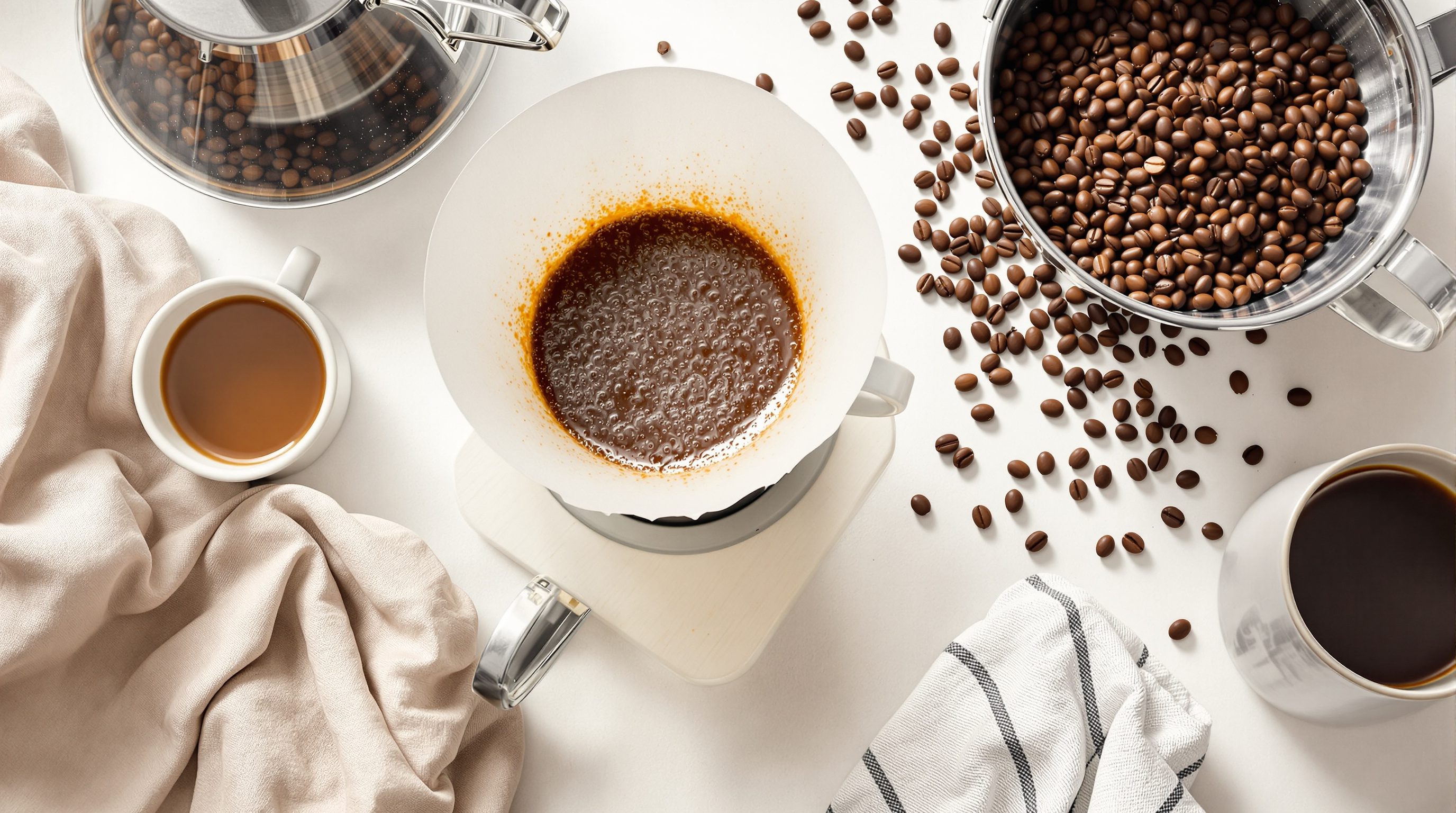
Plastic electric kettles can release billions of nanoplastic particles into boiling water. A University of Queensland study found that boiling water in some plastic kettles released large quantities of nanoplastics — up to roughly 3 billion particles per liter for the worst units. Heat is the multiplier, and even "BPA-free" plastic still sheds particles. The fix is simple: choose an all-glass (borosilicate) kettle or a fully stainless steel kettle with no plastic touching the hot water — no plastic spout, no plastic water-level window, no plastic lid liner.
An electric kettle is one of the most plastic-exposed appliances in the average kitchen, and almost nobody thinks about it. You fill it, you flip the switch, and a few minutes later you pour near-boiling water through whatever the manufacturer used to build the spout and the little water-level window. If those parts are plastic — and on cheap kettles they almost always are — you are running the single hottest water in your kitchen straight across a plastic surface, every single day.
Heat is the worst-case scenario for plastic. It is the condition under which polymers shed the most micro- and nanoplastic particles and release the most chemical additives. So a plastic kettle isn't just "a little plastic" — it's plastic at the exact temperature that maximizes shedding. This guide ranks the kettles that fix that: all-glass and fully-stainless models with a genuinely plastic-free water path.
Compare all 4 picks
Every pick side by side — tap a name to jump to the full review, or check today's price.
| Pick | Rating | Why it wins | |
|---|---|---|---|
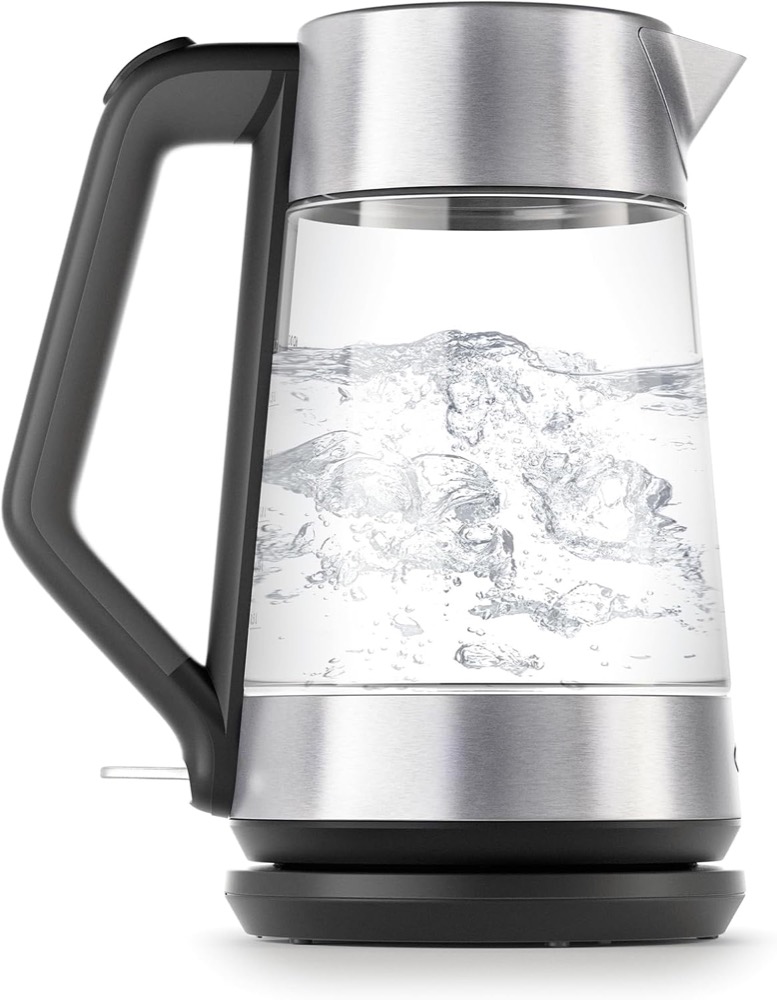 Best OverallOXO Brew Cordless Glass Electric Kettle |
4.3out of 5 | Glass water pathBorosilicate glass body |
Check price → |
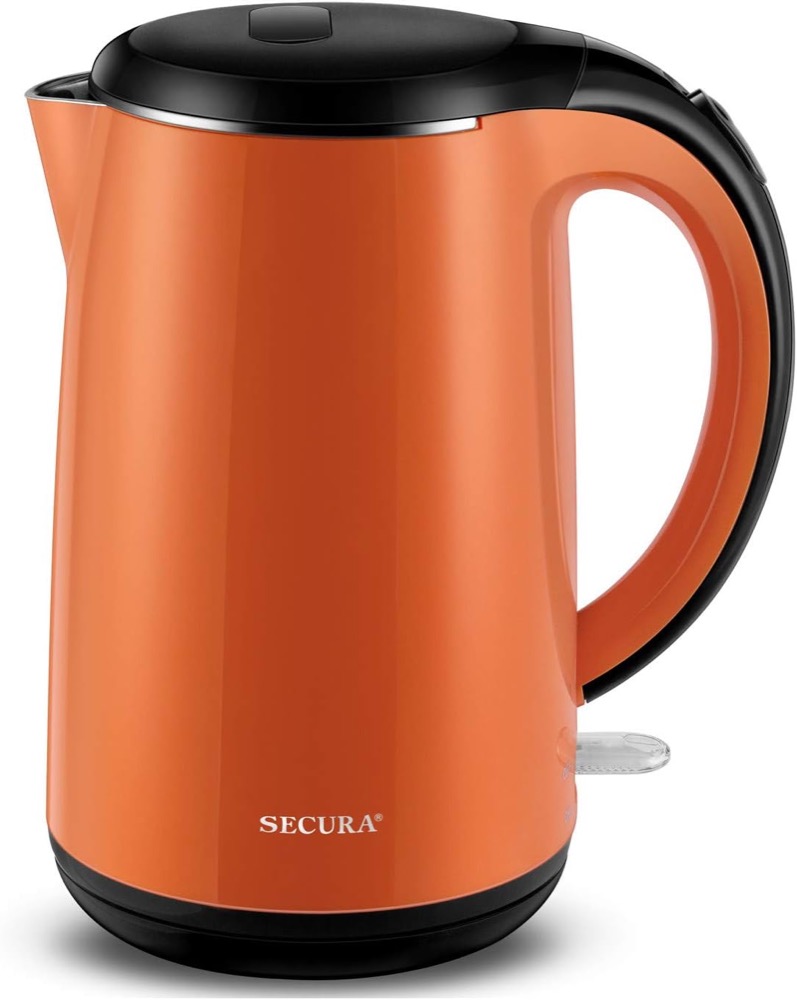 Best for DurabilitySecura Stainless Steel Double-Wall Electric Kettle |
4.4out of 5 | Stainless water path304 / 18-8 interior |
Check price → |
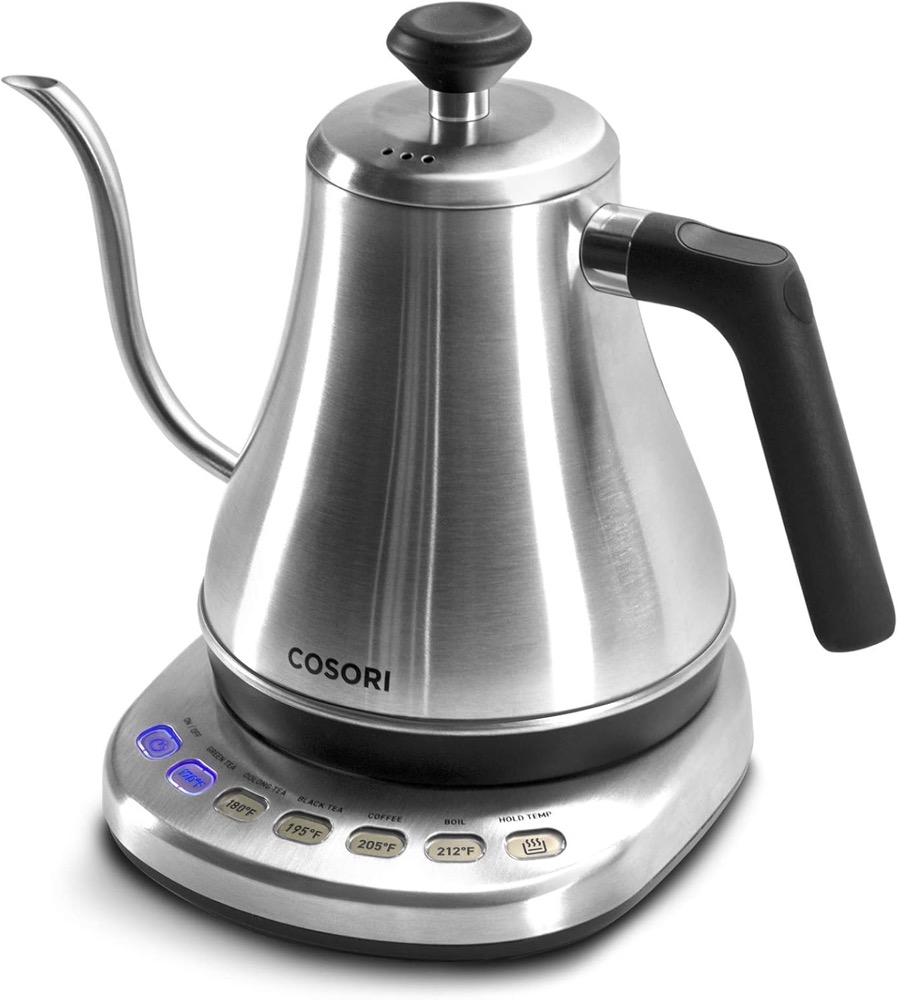 Best for Pour-OverCOSORI Gooseneck Electric Kettle |
4.7out of 5 | Stainless water pathStainless gooseneck spout |
Check price → |
| — | Plastic water pathPlastic spout |
Check price → |
Do plastic kettles cause microplastics?
Yes. When you boil water inside a plastic kettle, the heat drives the plastic to release both microplastics and the much smaller nanoplastics into the water. University of Queensland researchers found some plastic kettles shed nanoplastics in the range of billions of particles per liter. Heat is the multiplier — the hotter the water, the more the plastic releases.
This is the core problem with plastic in any hot-water appliance. At room temperature, a plastic part sheds slowly. At a rolling boil — around 100°C / 212°F — the same plastic releases far more. A kettle is purpose-built to reach exactly that temperature, repeatedly, for years. That makes the kettle one of the highest-leverage swaps in the kitchen: removing plastic from the water path here removes a large, daily, heat-amplified exposure.
And no, "BPA-free" does not solve it. BPA-free tells you about one specific chemical additive (bisphenol A). It tells you nothing about physical particle shedding. A BPA-free plastic kettle still sheds micro- and nanoplastics from its surfaces when it boils water — the particle problem is mechanical and thermal, not just chemical.
Swapping the kettle solves the appliance side; the water side matters too. If your tap water already carries microplastics, the safest kettle in the world can only pour clean water if the water going in is clean. See our best water filters for microplastics (2026) for the six independently-certified filters that remove 99.9% of them, starting under $200.
Even kettles with a stainless steel body often have a plastic water-level window, a plastic spout, or a plastic lid underside — all of which the hot water contacts. A "stainless steel kettle" is only non-toxic if stainless or glass is the only material the boiling water touches. Always check the water path, not just the outside shell.
What to look for in a non-toxic electric kettle
The single rule that matters: nothing plastic should touch the hot water. Everything below is just that rule applied to specific parts.
- Look for An all-glass (borosilicate) interior or a 304 / 18⁄8 stainless steel interior. These are the two inert materials that don't shed plastic or leach BPA at boiling temperatures.
- Look for A stainless or glass spout. The spout is the last thing the water touches on its way into your cup — a plastic spout undoes everything else.
- Look for A stainless or glass lid, or at minimum a lid whose underside (the part facing the steam and water) is stainless, not a plastic liner.
- Avoid A plastic water-level window / sight-gauge set into the water chamber. This is the most common hidden offender — a clear plastic strip sitting in direct contact with the boiling water.
- Avoid A plastic spout, plastic mesh filter, or plastic lid liner. These all sit in the water or steam path.
- Nice to have Variable temperature control (great for green tea and pour-over coffee) and a gooseneck spout for pour-over precision — just confirm the gooseneck itself is stainless.
The best non-toxic electric kettles for 2026
We've ranked these by how completely they remove plastic from the water path, then by everyday usability. Tap any pick to see current pricing, models, and reviews on Amazon.
1. OXO Brew Cordless Glass Electric Kettle — best overall for visibility
Best Overall
A glass-bodied kettle is the most reassuring choice because you can see exactly what touches the water — it's glass. Borosilicate is the same heat-resistant glass used in lab equipment and bakeware, so it handles repeated boiling without thermal stress.
OXO's design closes the gap most budget glass kettles leave open: the lid and spout are brushed stainless steel rather than a plastic rim, so there's no plastic part sitting in the steam or pour path. The cordless base lifts off for easy filling, and the wide opening makes it simple to clean.
Around 84 percent of reviewers rate it favorably, praising the clear measurement markings, the stay-cool handle, and a borosilicate body you can watch heat up. The honest downsides: the glass makes it heavier and more breakable than a steel kettle, the steam-release lid opens slowly when you are in a hurry, the base model has no variable temperature control, and a few found it hard to pour out the last drops.
This is the hottest water in your kitchen, poured every single morning. A glass kettle takes plastic out of that water path entirely — and lets you confirm it at a glance.
Why it's safe: The water touches only borosilicate glass and stainless steel — no plastic interior, no plastic spout, no plastic water-level window. Glass and 304 stainless are both inert at boiling temperatures, so they don't shed micro/nanoplastics or leach BPA.
Check Today's Price on Amazon →Amazon prices change daily — tap to see today's price and any active discount.
- Free delivery & returns for Prime members
- Sold & shipped by Amazon
2. Secura Stainless Steel Double-Wall Electric Kettle — best for durability
Best for Durability
If you don't want any glass to worry about breaking, a fully stainless kettle is the workhorse pick. Food-grade 304 (18⁄8) stainless steel is inert and won't shed plastic or leach BPA at boiling temperatures — the same material used in quality cookware.
Secura's double-wall design adds a second benefit: the outer wall stays cool while the inner stainless wall holds the boiling water, so it's safer around kids and easier to handle. As with any stainless kettle, the rule still applies — confirm the interior and the parts the water touches are steel, which is exactly what this model is built around.
The double-wall build keeps the outside cool to the touch while holding heat well, which owners appreciate. The honest downsides: it runs noisy and there is no chime when it shuts off, so people miss that the water is done; some owners found rust spots on the interior, which Secura addresses by pointing them to Bar Keepers Friend; one reported a high-pitched noise and gray residue in the water; and it is described as poor for the slow, controlled pours a gooseneck handles.
The hottest water in your kitchen never touches plastic here — just inert stainless steel — and the cool-touch outer wall makes it safe to grab even right after a boil.
Why it's safe: The boiling water contacts only 304 (18/8) stainless steel — no plastic interior liner and no plastic sight-gauge in the chamber. Stainless is inert at boiling temperatures, so it sheds no micro/nanoplastics and leaches no BPA.
Check Today's Price on Amazon →Amazon prices change daily — tap to see today's price and any active discount.
- Free delivery & returns for Prime members
- Sold & shipped by Amazon
3. COSORI Gooseneck Electric Kettle — best for pour-over coffee & tea
Best for Pour-Over
For pour-over coffee and precise tea steeping, a gooseneck kettle gives you a controlled, slow stream and variable temperature. The COSORI gooseneck pairs a 100% stainless steel inner lid, body, and spout with five one-touch presets (green tea, oolong, black tea, coffee, boil) plus a hold-temp function.
That stainless gooseneck is the whole point: it's the last surface the water touches before your cup, and here it's steel, not plastic. The preset temperatures also let you hit the lower temps green and white teas need without scalding the leaves.
Pour-over and tea drinkers love the controlled stream and the one-touch temperature presets, and most owners are happy with the stainless build. The honest downsides show up in a minority of units: some report the buttons becoming unresponsive, one owner found water seeping from the base where the gooseneck attaches, and a few noted the kettle staying warm on its own, so they unplug it after each use.
The slow, precise pour you want for coffee runs through a stainless gooseneck — not a plastic spout — so the last thing your water touches before the cup is inert steel.
Why it's safe: The water path is all stainless steel — stainless inner lid, body, and gooseneck spout, with no plastic water-level window. Stainless is inert at boiling temperatures, so it sheds no micro/nanoplastics and leaches no BPA.
Check Today's Price on Amazon →Amazon prices change daily — tap to see today's price and any active discount.
- Free delivery & returns for Prime members
- Sold & shipped by Amazon
What to avoid
The default budget kettle — a plastic body, a plastic interior, a plastic water-level window, and a plastic spout. Boiling water sits against and pours through all of it. This is exactly the design category the University of Queensland research flagged for shedding large numbers of nanoplastics. "BPA-free" labeling does not fix the particle shedding. If you own one, this is a high-value swap.
Not sure which water path is truly plastic-free?
The trick is reading the product photos and specs for the spout, the lid underside, and the water-level window — not just the marketing word "stainless." Compare current glass and fully-stainless models side by side.
Comparison: glass vs. stainless vs. plastic kettles
| Kettle Type | Water-Contact Parts | Plastic in Water Path? | Price |
|---|---|---|---|
| Borosilicate glass kettle | Glass body; verify stainless/glass lid & spout | None (if lid & spout are not plastic) | $$ |
| Fully stainless kettle | 304 stainless interior & spout; no plastic window | None (if no plastic window/spout/liner) | $ |
| Stainless gooseneck kettle | Stainless interior & gooseneck spout | None (if interior & spout are steel) | $$$ |
| Plastic-interior kettle | Plastic interior, plastic window, plastic spout | Yes — throughout | $ |
Price guide: $ budget · $$ mid-range · $$$ premium. Tap any pick above for today's exact Amazon price.
The takeaway: glass and fully-stainless kettles cost a little more, but they remove plastic from the hottest water in your kitchen. The single most important check for any kettle — glass or stainless — is the same: make sure the spout, the lid underside, and the water-level window are not plastic.
"A kettle is the one appliance built to reach the exact temperature where plastic sheds the most. That makes the water path the only spec that really matters."
Are glass or stainless kettles better?
Both are far safer than plastic; the right pick depends on your priorities. A borosilicate glass kettle lets you see the water and has glass against the liquid — reassuring and easy to keep clean. A fully stainless kettle is tougher and won't break. Either works, as long as the lid, spout, and water window aren't plastic.
What's the safest electric kettle?
The safest electric kettle has zero plastic in contact with hot water: an all-glass borosilicate kettle with a stainless or glass lid and spout, or a fully stainless kettle with a stainless interior and spout and no plastic sight-gauge. Avoid any plastic water-level window, plastic spout, or plastic lid liner — even on a "BPA-free" model.
Is a stainless steel kettle safe?
Yes — food-grade 304 (18⁄8) stainless steel is inert and doesn't shed microplastics or leach BPA at boiling temperatures, which is why it's the standard for quality cookware. The only caveat is that many stainless kettles still include plastic parts, so choose a model where stainless or glass is the only thing the hot water touches.
Want the Full Home Protection Guide?
Your kettle is one of dozens of daily plastic touchpoints. The Complete Plasticproof Guide covers every room — kitchen, nursery, bathroom, bedroom — with 80+ product recommendations backed by 47+ studies.
The honest verdict
If you boil water in a plastic kettle every morning, you're running the hottest water in your kitchen across plastic at exactly the temperature that makes plastic shed the most. The University of Queensland research put real numbers on it — up to billions of nanoplastics per liter in the worst units — and "BPA-free" does nothing to change the particle shedding.
The fix is genuinely simple and not expensive. Pick a borosilicate glass kettle if you want to see the water, or a fully stainless steel kettle if you want something unbreakable, or a stainless gooseneck if you're a coffee or tea person who wants temperature control. Whichever you choose, run the same check: stainless or glass spout, stainless or glass lid underside, and no plastic water-level window. Get those three right and you've removed one of the most heat-amplified plastic exposures in your home.
Plastic-free, all the way to the cup
Your kettle pours into your coffee maker, your tea, and your mug. Make sure the rest of the chain is plastic-free too — including the bag itself, since most paper tea bags hide a polypropylene heat-seal seam, and the cup, since a disposable paper cup is plastic-lined and sheds microplastics into hot drinks — carry your coffee in a non-toxic travel mug instead. See our picks for unbleached, non-heat-sealed tea bag brands.
Frequently Asked Questions
Yes. Boiling water inside a plastic kettle drives the plastic to shed micro- and nanoplastic particles. A University of Queensland study found some plastic kettles released nanoplastics in the range of billions of particles per liter. Heat is the multiplier — the hotter the water, the more the plastic releases. BPA-free labeling does not stop this.
Both are far safer than plastic. A borosilicate glass kettle lets you see the water and has glass touching the liquid; a fully stainless kettle is tougher and won't break. Either is a good choice — just confirm the lid, spout, and water-level window are stainless or glass, not plastic.
The safest kettle has zero plastic touching the hot water: an all-glass borosilicate kettle with a stainless or glass lid and spout, or a fully stainless kettle with a stainless interior and spout and no plastic sight-gauge. Avoid any plastic spout, plastic water window, or plastic lid liner, even on BPA-free models.
Yes. Food-grade 304 (18/8) stainless steel is inert and doesn't shed microplastics or leach BPA at boiling temperatures, which is why it's the standard for quality cookware. The caveat: many stainless kettles still have plastic parts, so choose one where stainless or glass is the only thing the hot water touches.
Yes. A plastic water-level window sits in direct contact with the boiling water, so it sheds plastic regardless of how much of the rest of the kettle is steel. A genuinely non-toxic stainless kettle has either no sight-gauge or a stainless/glass one. Check this before you buy — it's the most common hidden plastic part.
Yes. Borosilicate is a heat-resistant glass used in laboratory equipment and bakeware precisely because it withstands rapid temperature changes and repeated heating. Glass is inert, sheds no plastic, and leaches no BPA, making a borosilicate kettle one of the safest options for daily boiling — as long as its lid and spout aren't plastic.
Sources
- University of Queensland (Australian Laboratory for Emerging Contaminants) research on nano- and microplastic release from boiling water in plastic kettles, reported 2023–2024.
- Qian N, et al. "Rapid single-particle chemical imaging of nanoplastics by SRS microscopy." Proceedings of the National Academy of Sciences, 2024.
- Li D, et al. "Microplastic release from the degradation of polypropylene feeding bottles during infant formula preparation." Nature Food, 2020.
- FDA. "Food Contact Substances: Polypropylene and Stainless Steel." Code of Federal Regulations, Title 21.
- WHO. "Microplastics in drinking-water." World Health Organization, 2019.