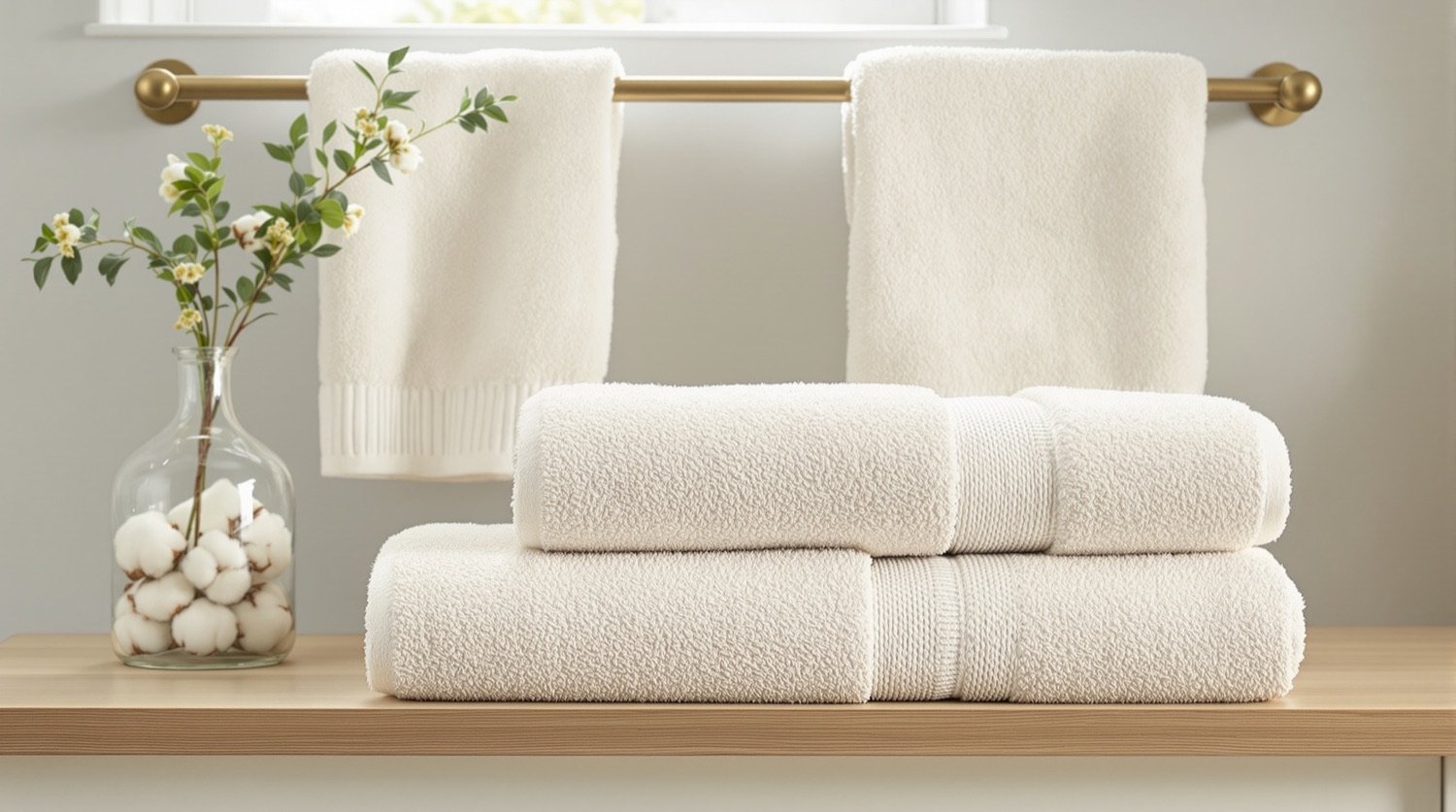
The best non-toxic towels in 2026 are the Delilah Home 100% Organic Turkish Cotton Bath Towels: GOTS-certified organic cotton, a heavy 700 GSM weave, made in Portugal, with no synthetic fiber in the blend. If you want the most buyers behind your pick, the Amazon Basics GOTS Certified Organic Cotton 4-Pack carries 275 ratings averaging 4.4 stars. Skip microfiber entirely: it's polyester and nylon, and it sheds plastic every wash. Full ranked list:
- Delilah Home Organic Turkish Cotton: Best overall. GOTS, 700 GSM, made in Portugal. Details →
- Amazon Basics GOTS Organic 4-Pack: Most reviewed. 700 GSM, 275 ratings. Details →
- Coyuchi Classic Organic Terry: Best undyed. No dye at all, 6-piece set. Details →
- Alusa Home Organic Zero-Twist Set: Most certified. GOTS plus OEKO-TEX Standard 100. Details →
- Go Green Organics Waffle Set: Best quick-dry. Undyed waffle weave, no softeners. Details →
What to replace first: microfiber bath sheets and gym towels, which are 100% synthetic. Then anything sold as a cotton-polyester blend. See what the studies actually found →
Check Today’s Price on Amazon →Full details on all five below: the fiber, the certification each maker names, and the honest catch on every one.
Quick Navigation
- Compare all 5 towels
- What makes a towel non-toxic?
- The study data, in one table
- Best overall: Delilah Home
- Most reviewed: Amazon Basics
- Best undyed: Coyuchi
- Most certified: Alusa Home
- Best quick-dry: Go Green Organics
- What do GOTS and OEKO-TEX actually mean on a towel?
- Doesn't cotton shed fibers too?
- How should you wash organic towels?
- FAQ
Compare all 5 towels
Every pick side by side. Tap a name to jump to the full write-up, or check today's price.
| Pick | Fiber and certification | Amazon rating | |
|---|---|---|---|
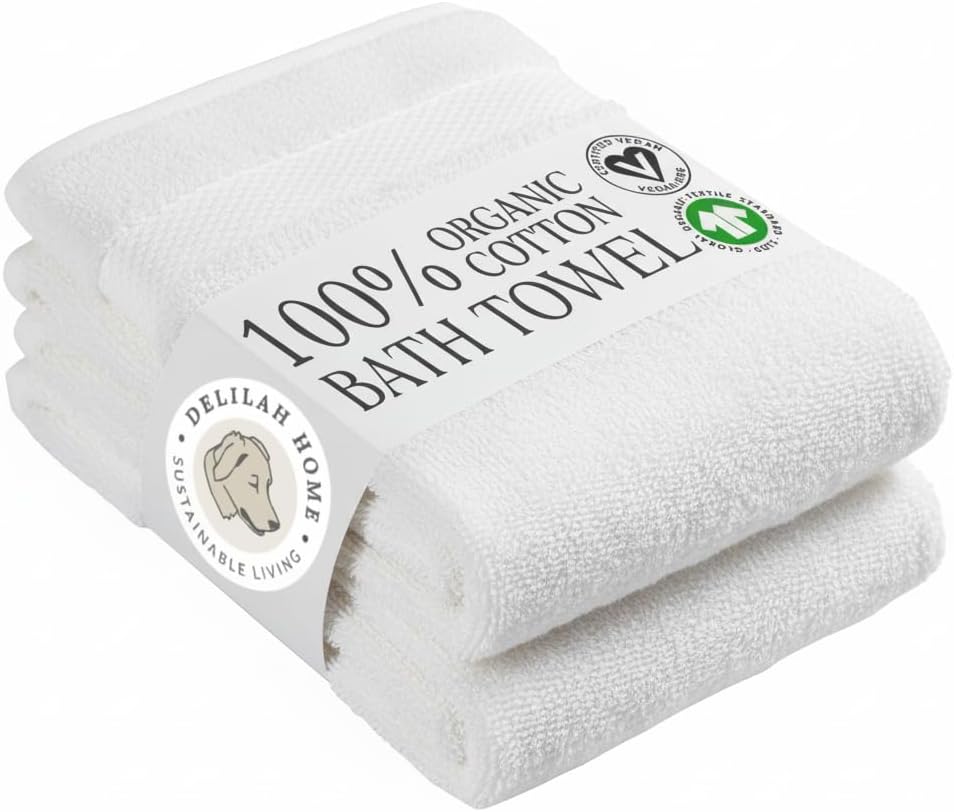 Best OverallDelilah Home |
100% Organic CottonGOTS700 GSM |
4.4 stars (30) | Check price → |
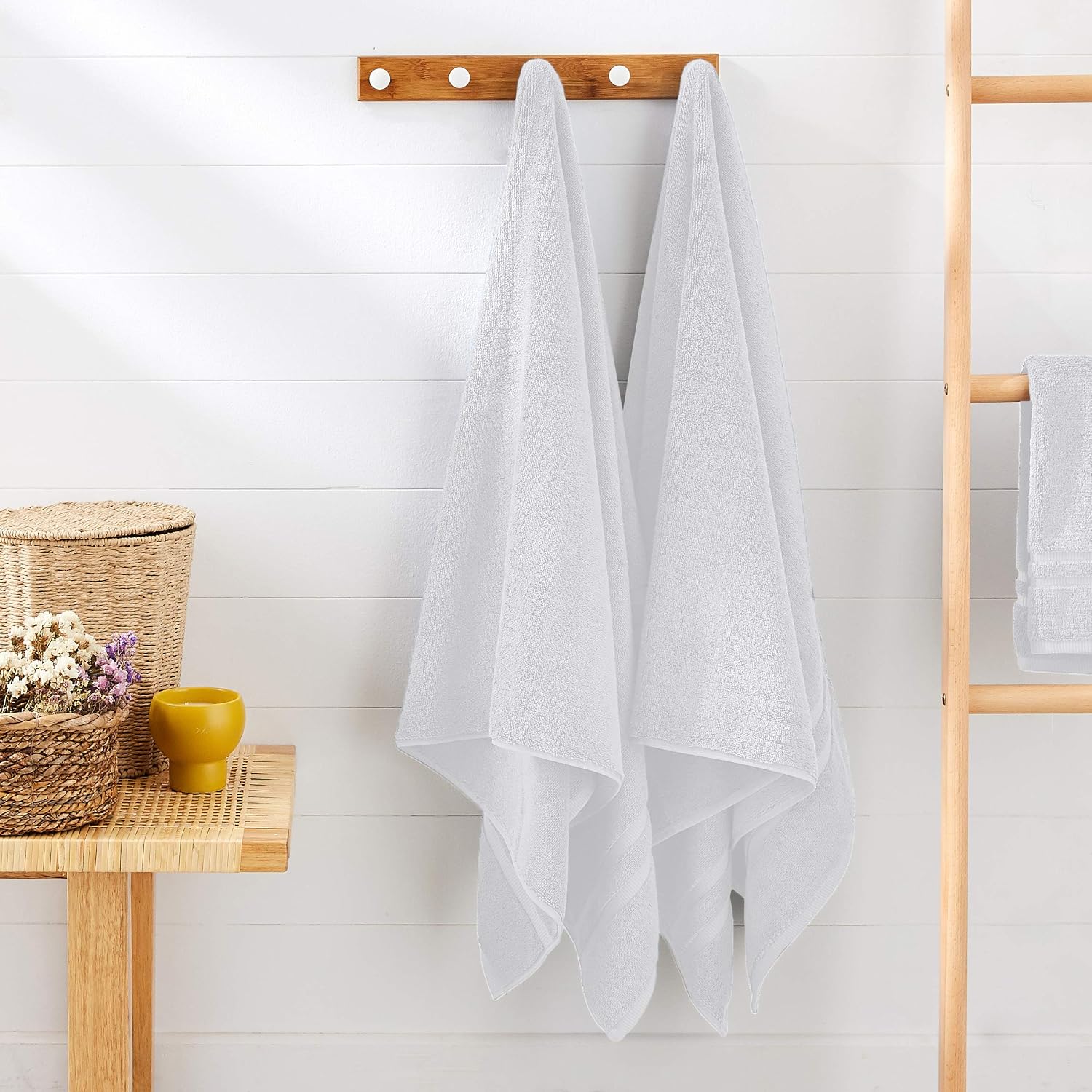 Most ReviewedAmazon Basics 4-Pack |
Organic Cotton PileGOTS700 GSM |
4.4 stars (275) | Check price → |
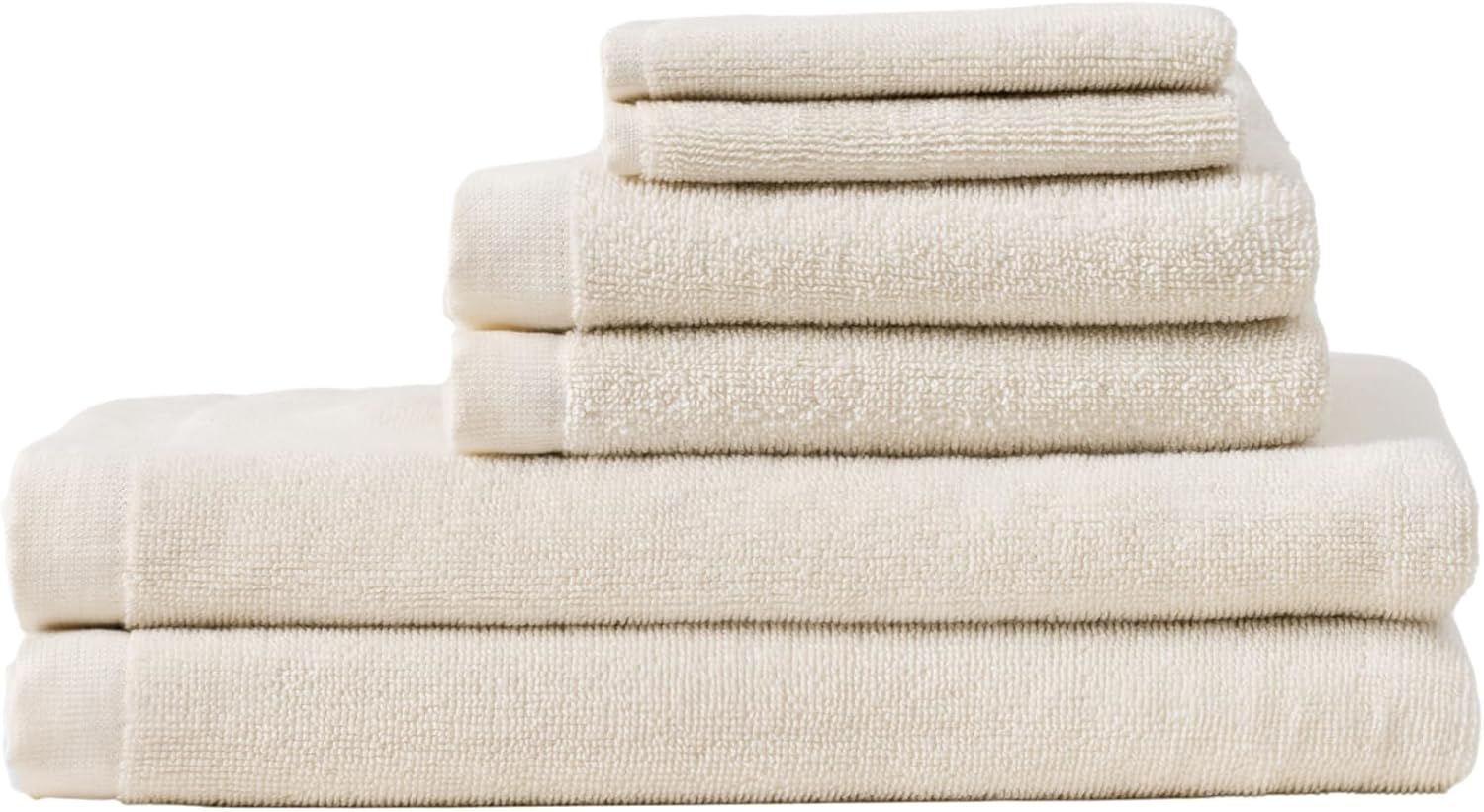 Best UndyedCoyuchi Classic |
100% Organic CottonGOTSUndyed |
4.1 stars (26) | Check price → |
 Most CertifiedAlusa Home Set |
Organic Zero-TwistGOTSOEKO-TEX 100 |
4.2 stars (352) | Check price → |
 Best Quick-DryGo Green Waffle |
100% Organic CottonGOTSNo Softeners |
4.0 stars (10) | Check price → |
Ratings were read from each Amazon listing on November 26, 2026. GSM means grams per square meter, the standard measure of how heavy and plush a towel is. We don't print prices, because an Amazon price goes stale within days. Tap through for today's.
What Makes a Towel Non-Toxic?
Two things: the fiber it's woven from, and the chemistry used to dye and finish it. A towel spends its life wet, against your skin, and in the washing machine. The fiber decides what comes off it in the wash. The finish decides what's on it when it touches you. Here's what the published research actually measured on both.
1. Synthetic towels shed plastic fibers every wash
Microfiber towels are made of very fine polyester and polyamide (nylon) filaments, and many “cotton-rich” towels are blended with polyester. Washing is how those fibers get loose. Imogen Napper and Richard Thompson at Plymouth University laundered polyester, polyester-cotton and acrylic fabrics under different temperatures and detergents and counted what came out in the waste water (Napper & Thompson, Marine Pollution Bulletin, 2016). They estimated over 700,000 fibers could be released from an average 6 kg wash load of acrylic, with fibers averaging 11.9 to 17.7 micrometers wide and 5.0 to 7.8 mm long.
A 2019 study at Italy's National Research Council ran real garments through a household machine and found 124 to 308 mg of microfibers per kg of fabric, which works out to 640,000 to 1,500,000 fibers (De Falco et al., Scientific Reports, 2019). The most common fibers were 360 to 660 micrometers long, small enough, the authors note, to pass through wastewater treatment. Neither study tested towels specifically. But a towel is a high-pile fabric washed weekly or more, so it's exactly the kind of item where fiber type matters.
2. Cotton fibers shed too, but they break down
This is the part most towel guides leave out. A North Carolina State University team, with co-authors from the industry group Cotton Incorporated, compared knitted cotton, rayon and polyester fabrics (Zambrano et al., Marine Pollution Bulletin, 2019). In accelerated lab washing, cotton and other cellulose fabrics actually released more fiber by weight, 0.2 to 4 mg per gram, than polyester at 0.1 to 1 mg per gram. The difference is what happens next: in controlled water tests, cotton and rayon fibers degraded, while polyester fibers are expected to persist for long periods. So a cotton towel isn't fiber-free. What it sheds is plant material that breaks down, not plastic that stays. Keep the cotton-industry co-authorship in mind; the biodegradation finding is consistent with what cellulose is, but it's one lab's result.
3. Finishes are where the chemistry hides
The other half of “non-toxic” is what's applied to the fabric. In 2010 the U.S. Government Accountability Office had 180 textiles, mostly clothing plus 15 bed linens, tested by an accredited lab for formaldehyde (GAO-10-875, “Formaldehyde in Textiles”). Ten items exceeded the strictest industry limit, with levels from 75.4 to 206.1 parts per million, and GAO noted the United States has no legal limit for formaldehyde in clothing. The resins involved are used mainly for wrinkle resistance, and more than half of the items over the limit were labeled with durable-press features. Towels weren't in that sample, and towels aren't usually sold as wrinkle-free. The lesson that carries over is that the U.S. doesn't regulate textile finishes closely, so a third-party certification covering processing chemicals is the only practical way to know what you're getting.
What Did the Studies Actually Measure?
Every number on this page in one place. Each row links to the source.
| Source | What it tested | Key finding |
|---|---|---|
| Napper & Thompson, Mar Pollut Bull 2016 | Fibers released washing polyester, poly-cotton and acrylic fabric | Over 700,000 fibers per 6 kg acrylic load; poly-cotton shed significantly fewer than polyester or acrylic |
| De Falco et al., Sci Rep 2019 | Microfibers released washing real synthetic garments at home scale | 124 to 308 mg per kg of fabric, about 640,000 to 1,500,000 fibers |
| Zambrano et al., Mar Pollut Bull 2019 | Shedding and biodegradation of cotton, rayon and polyester fibers | Cellulose fabrics shed 0.2 to 4 mg/g vs polyester 0.1 to 1 mg/g; cotton and rayon degraded, polyester persisted |
| U.S. GAO, GAO-10-875, 2010 | Formaldehyde in 180 textiles sold in the U.S. | 10 of 180 exceeded 75 ppm, ranging 75.4 to 206.1 ppm; no U.S. legal limit for clothing |
1. Delilah Home 100% Organic Turkish Cotton Bath Towels — Best Overall
Best Overall
Delilah Home's listing describes the towels as “GOTS certified organic Turkish cotton,” made in Portugal from long-staple cotton spun into fine yarns. The weave is a 700 GSM, 2-ply double-loop construction, which is the heavy, hotel-style end of the range. Each towel measures 30 by 54 inches, and the pack holds two. The package band carries the GOTS mark and a certified-vegan mark. It held a 4.4-star average from 30 ratings when we checked on November 26, 2026.
The catches: 30 ratings is a small sample, which is why we'd call this the best-built pick rather than the most proven one. A two-pack of bath towels costs more per towel than the Amazon Basics set below. And a 700 GSM towel is thick, so it takes longer to dry on the rack than a waffle weave, which matters in a humid bathroom. Hang it spread out, not bunched.
A heavy, hotel-weight bath towel with nothing but organic cotton in it.
Why it's safe: 100% GOTS-certified organic cotton with no synthetic blend, so nothing plastic sheds in the wash, and GOTS restricts the dyes and finishing chemicals used.
Check Today’s Price on Amazon →Amazon prices change daily, so tap to see today's price. Sold as a two-pack.
- GOTS certified
- Made in Portugal
- 700 GSM
2. Amazon Basics GOTS Certified Organic Cotton Bath Towel, 4-Pack — Most Reviewed
Most Reviewed
The listing describes “100% organic cotton in pile certified by GOTS” in a thick, 2-ply, 700 GSM weave, with four bath towels of 30 by 54 inches. It also says the towels are made in an OEKO-TEX STeP certified factory, and the care label pictured on the listing reads “100% GOTS Organic Cotton Loops” and “Made in India.” It held a 4.4-star average from 275 ratings on November 26, 2026, nine times the review base of our top pick.
Read the wording carefully, because it's the catch. “Organic cotton in pile” means the loops you dry off with are certified organic; the listing doesn't say the same about the base weave the loops are anchored in. The fabric content is listed simply as 100% cotton, so there's no polyester, but this is a narrower organic claim than Delilah Home's or Coyuchi's. And STeP certifies the factory's environmental and safety practices, not the towel itself. Amazon also warns to keep the towels away from products containing benzoyl peroxide, which bleaches cotton.
Four organic cotton bath towels from a listing hundreds of buyers have already vetted.
Why it's safe: The fabric is 100% cotton, with the pile certified organic under GOTS, so there's no synthetic fiber to shed.
Check Today’s Price on Amazon →Amazon prices change daily, so tap to see today's price. Sold in several colors.
- 275 ratings
- 700 GSM
- Four bath towels
3. Coyuchi Classic Organic Cotton Terry Bath Towels — Best Undyed
Best Undyed
The listing title reads “100% GOTS Certified,” and the color on the listing is “Undyed,” which removes dyes and dye fixatives from the question entirely. The set includes two bath towels, two hand towels and two washcloths. Coyuchi describes the weave as an ultra-soft, lightweight terry and, unusually, its own care instructions tell you to “opt for wool dryer balls instead of fabric softeners” and to avoid bleach. It held a 4.1-star average from 26 ratings on November 26, 2026.
The catches: it's the lowest-rated pick here and has a small review base, and “lightweight” is the honest word. If you love a heavy, plush hotel towel, this will feel thin next to the 700 GSM picks. The cream color is the natural color of the cotton, so it won't stay bright white, and you shouldn't bleach it to try.
A full bathroom set in organic cotton with no dye in it at all.
Why it's safe: 100% GOTS-certified organic cotton, left undyed, so there's no synthetic fiber and no dye chemistry.
Check Today’s Price on Amazon →Amazon prices change daily, so tap to see today's price. We also have a full product page for Coyuchi's bath towels.
- Undyed
- 6 pieces
- Fast-drying terry
4. Alusa Home Organic Zero-Twist Cotton Bath Towel Set — Most Certified
Most Certified
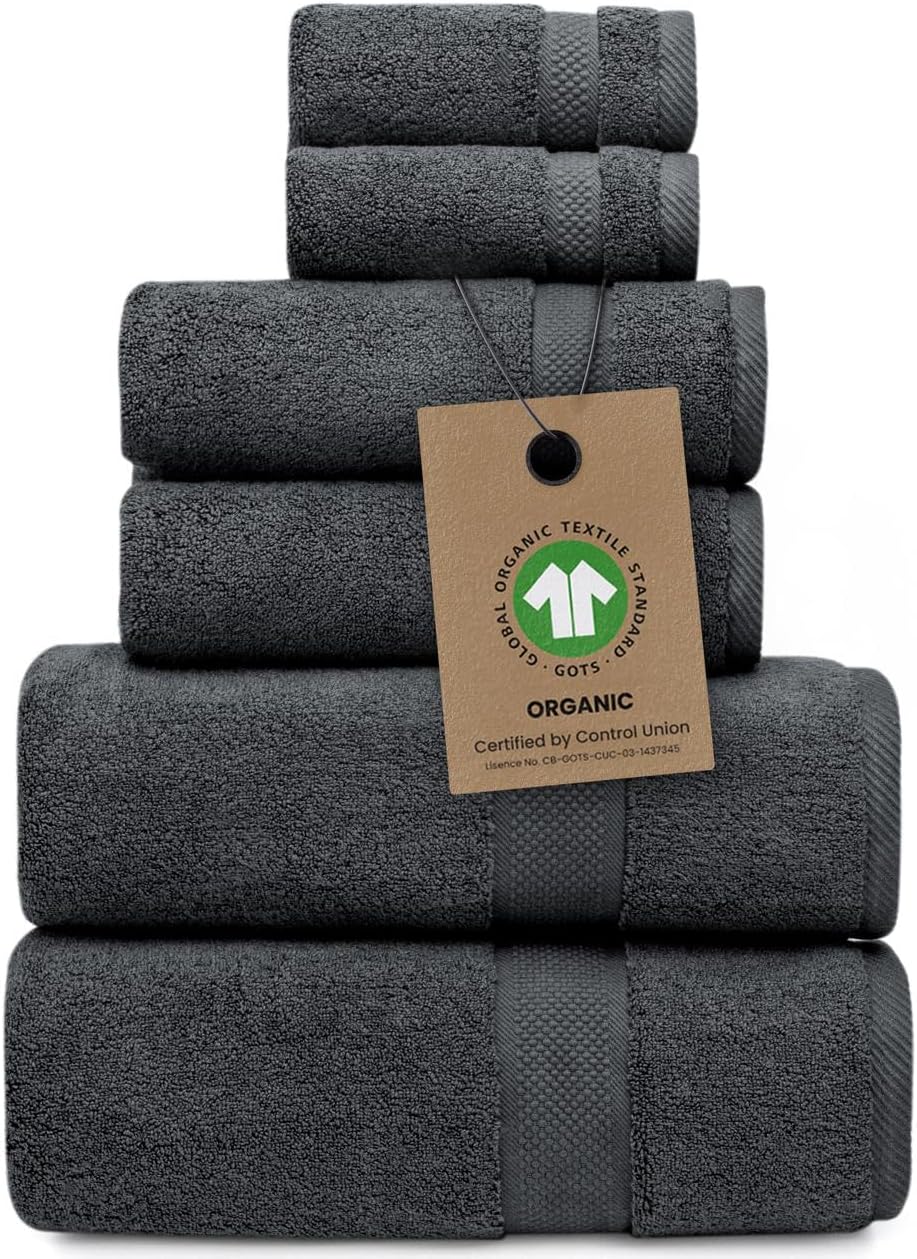
Alusa Home's listing says the towels are “OEKO-TEX STANDARD 100 certified and GOTS certified,” woven from organic zero-twist, long-staple cotton. The product photo shows a hang tag naming the certifier, Control Union, with a license number printed on it, which is the kind of detail you can look up rather than take on trust. The set has two bath towels, two hand towels and two washcloths, each with a hanging loop, and Alusa offers a 120-day guarantee. It held a 4.2-star average from 352 ratings on November 26, 2026.
The catches: zero-twist yarn is softer because the fibers aren't tightly wound, but loosely spun yarn tends to shed more lint in the first several washes. That's cotton lint, not plastic, but expect it. The listing's claim that zero-twist cotton is “up to 2x more absorbent than Egyptian cotton” is the seller's own comparison, and we haven't seen a test behind it. And this is a dyed towel, so OEKO-TEX's harmful-substance testing is doing real work here.
A full, colored towel set that carries both the organic and the tested-for-harmful-substances label.
Why it's safe: Organic cotton under GOTS, and finished towels certified to OEKO-TEX Standard 100, per the listing.
Check Today’s Price on Amazon →Amazon prices change daily, so tap to see today's price. Sold in several colors.
- GOTS and OEKO-TEX 100
- 352 ratings
- 120-day guarantee
5. Go Green Organics Organic Cotton Waffle Bath Towel Set — Best Quick-Dry
Best Quick-Dry
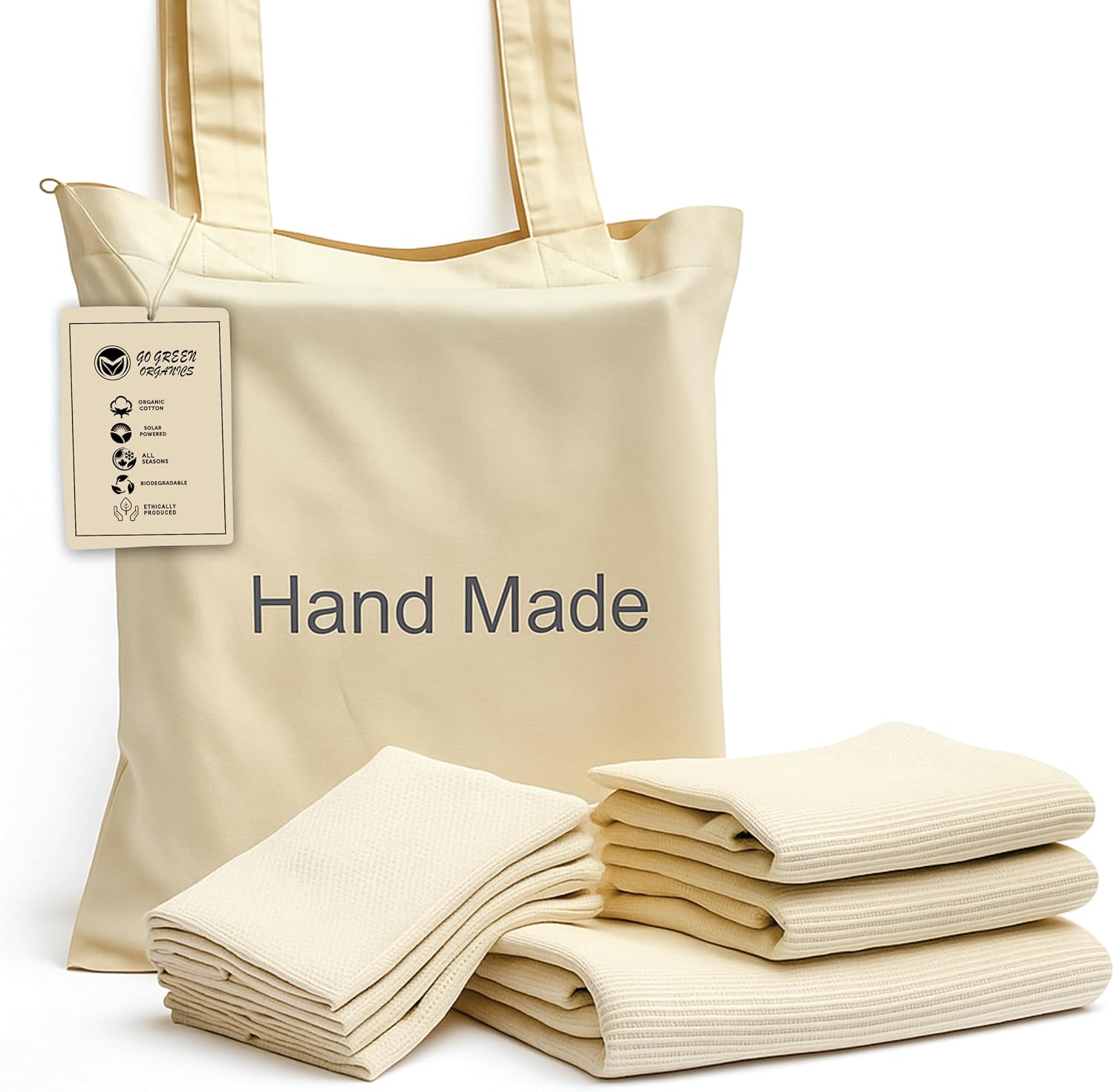
The listing says “Certified GOTS,” “Natural, No Colour, No Softeners” right in the title. The set holds one bath towel (58 by 30.5 inches), two hand towels and four face towels, handmade in India. The waffle weave is the point: it's flat and textured instead of looped, and Go Green says it dries about 45% faster than terry. It held a 4.0-star average from 10 ratings on November 26, 2026.
The catches are significant, and they're why it's fifth. Ten ratings is very thin evidence. The “45% faster” figure is the seller's own and untested by us. There's only one bath towel in a seven-piece set. And a waffle towel feels nothing like plush terry; some people love the exfoliating texture, others find it scratchy. Its real advantage over the others is that a towel which dries fully between uses doesn't go musty, so it needs washing less often.
An undyed, softener-free organic towel set that dries fast in a humid bathroom.
Why it's safe: 100% organic cotton with GOTS certification stated, left undyed and untreated with softeners.
Check Today’s Price on Amazon →Amazon prices change daily, so tap to see today's price.
- Undyed, no softeners
- Waffle weave
- Handmade
What Do GOTS and OEKO-TEX Actually Mean on a Towel?
GOTS covers the fiber and how it's processed; OEKO-TEX Standard 100 tests the finished product for harmful substances. They answer different questions, which is why a towel carrying both is the strongest label you'll find. GOTS, the Global Organic Textile Standard, certifies that the cotton is organic and restricts the dyes and finishing chemicals used along the supply chain. OEKO-TEX describes Standard 100 as a label for textiles that have passed tests for harmful substances, from yarn to finished product.
Two labels look similar and mean less. OEKO-TEX STeP certifies a factory's environmental and safety practices, not the towel on the shelf. And “made with organic cotton” with no certifier named can mean a small share of organic fiber blended with conventional cotton or polyester. Read the fiber content line, then look for a named certifier. A license number, like the one on Alusa Home's tag, is better still.
Doesn't Cotton Shed Fibers Too?
Yes, and by weight it can shed more than polyester. The Zambrano study measured cellulose fabrics releasing 0.2 to 4 mg of fiber per gram in accelerated washing, against 0.1 to 1 mg for polyester. The difference is what those fibers are. Cotton is cellulose, the same material as plant stems, and in that study's water tests the cotton fibers degraded while polyester fibers persisted. Switching to cotton towels doesn't stop shedding. It changes what's shed from plastic to plant fiber.
That's why the swap that matters most is getting microfiber out of the wash, not chasing a towel that sheds nothing. If you keep microfiber cloths for cleaning, wash them in a fiber-catching bag; our Guppyfriend vs Cora Ball comparison covers what those catch, and how to reduce microplastics from laundry ranks the other fixes.
How Should You Wash Organic Towels?
Wash warm rather than hot, skip fabric softener, and dry on low or on a rack. Softener and dryer sheets coat cotton fibers with a water-repelling film, which is the most common reason towels stop absorbing, and conventional dryer sheets are often made on a polyester base. Coyuchi's own care instructions suggest wool dryer balls instead; our dryer sheets vs wool dryer balls guide explains why.
Wash new towels once before use to open the loops and rinse off anything from the weaving. A full load of cotton towels with a plain detergent is the simplest routine there is; if you want a cleaner detergent too, see our non-toxic laundry detergent picks. Towels are one of several bathroom swaps worth making together, and our plastic-free bathroom guide ranks the rest.
Frequently Asked Questions
Related Reading
Sources cited
- Napper, I. E., & Thompson, R. C. (2016). “Release of synthetic microplastic plastic fibres from domestic washing machines: Effects of fabric type and washing conditions.” Marine Pollution Bulletin 112(1–2), 39–45. https://doi.org/10.1016/j.marpolbul.2016.09.025 (PubMed: PMID 27686821)
- De Falco, F., Di Pace, E., Cocca, M., & Avella, M. (2019). “The contribution of washing processes of synthetic clothes to microplastic pollution.” Scientific Reports 9, 6633. https://doi.org/10.1038/s41598-019-43023-x
- Zambrano, M. C., Pawlak, J. J., Daystar, J., Ankeny, M., Cheng, J. J., & Venditti, R. A. (2019). “Microfibers generated from the laundering of cotton, rayon and polyester based fabrics and their aquatic biodegradation.” Marine Pollution Bulletin 142, 394–407. https://doi.org/10.1016/j.marpolbul.2019.02.062 (PubMed: PMID 31232317)
- U.S. Government Accountability Office (2010). “Formaldehyde in Textiles: While Levels in Clothing Generally Appear to Be Low, Allergic Contact Dermatitis Is a Health Issue for Some People.” GAO-10-875. gao.gov/products/gao-10-875
- OEKO-TEX. “OEKO-TEX Standard 100.” oeko-tex.com
- Maker and retailer pages, read November 26, 2026: the Amazon listings linked from each pick above.
Disclosure: Plasticproof earns a commission on qualifying purchases made through the links on this page, at no extra cost to you. Product selection, the materials analysis and every caveat above are our own, and no brand paid for or reviewed this guide. See our affiliate disclosure.