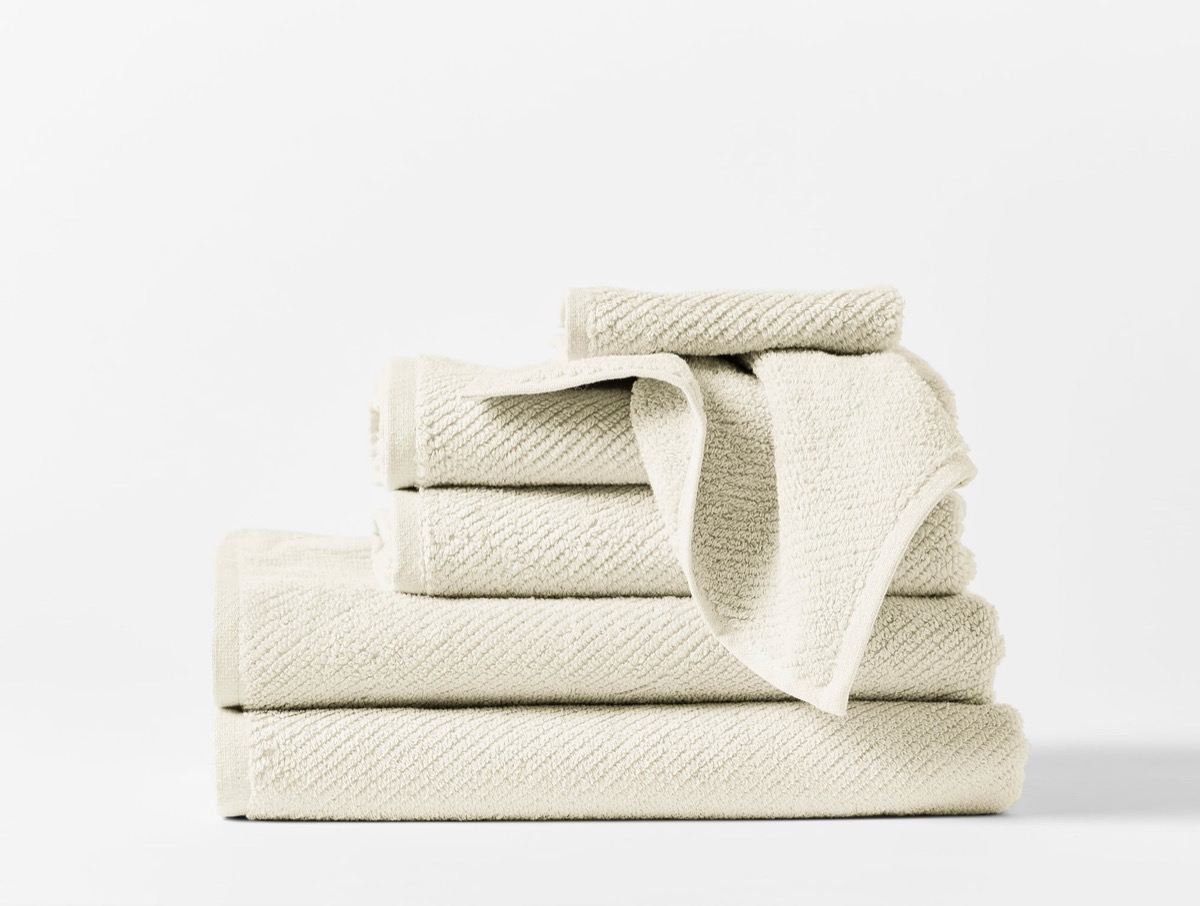
Organic Cotton Bath Towels (Set of 4)
GOTS-certified organic cotton sheds zero microplastic fibers — unlike polyester-blend towels, which release synthetic particles with every use and wash.
As an Amazon Associate I earn from qualifying purchases — at no extra cost to you. We show a "Check price on Amazon" link rather than a number because Amazon prices change often.
Why it's safe for your family
- Made from 100% GOTS-certified organic cotton, meaning the fiber and the processing chain are both certified rather than just the raw cotton.
- Cotton is a natural cellulose fiber, so what comes off the towel in the wash is plant material — not the synthetic microfiber that polyester and microfiber towels shed.
- Coyuchi's organic cotton is grown and woven in the Aegean region of Turkey, a long-staple cotton region, so the towels get softness from fiber length rather than from a synthetic finish.
- GOTS certification restricts the dyes and finishing chemicals that can be used, which rules out the softening and anti-microbial treatments commonly applied to conventional towels.
Is this really plastic-free? Yes — and here's why
A towel sheds fibers every time it is used and washed — that is what lint is. The only question is what those fibers are made of. A polyester or microfiber towel sheds plastic filaments into your drain and your air; a 100% cotton towel sheds cellulose. Here the fiber is entirely cotton, with no synthetic blended in for softness or durability.
What this towel is made of: organic cotton, start to finish. No polyester, no microfiber, no synthetic performance finish.
Quick specs
What to avoid instead
The towels this replaces are polyester blends and microfiber. Microfiber in particular is made of extremely fine polyester and polyamide filaments, and laundering synthetic textiles is one of the best-documented routes by which microplastic fibers reach household wastewater.
How we verify — and what we don't
Straight answer: we're a research team, not a testing lab. Here's exactly what our rating is based on — and what it isn't — so you can weigh it honestly.
What we check
- What the product is made of, from the maker's own specs and product listing.
- Whether any part that touches you or your food uses PTFE, PFAS, plastic, or a coating that can degrade.
- Peer-reviewed research on how that material behaves when heated, scratched, washed, or worn.
- Known failure modes — how the product actually breaks down in a real home.
What we don't do
- We have not chemically tested this specific unit in a lab.
- We don't take payment to rate a product higher — there is no sponsored placement.
- We don't show star ratings or "trusted by thousands" counts we can't stand behind.
Anything that adds a known microplastic, PFAS, or off-gassing source — a non-stick coating, a plastic surface against food or skin, vinyl/PVC — is downgraded or cut. We only list what clears that bar.