Kitchen towels seem harmless. They sit on the counter, dry dishes, wipe up spills. But pick up the towel hanging next to your sink right now and check the label. If it says "microfiber," "polyester," "nylon," or any synthetic blend, that towel is shedding microscopic plastic fibers every single time you use it — onto your countertops, your dishes, your hands, and your food-contact surfaces.
The term "microfiber" has been marketed as a premium cleaning material for years. It sounds technical, high-performance, even eco-friendly. But microfiber is simply a marketing name for ultra-fine polyester and nylon fibers — plastics derived from petroleum. Every time you wipe a counter with a microfiber cloth, you deposit a thin film of synthetic fibers on the surface. Every time you dry a plate, plastic fibers transfer to the dish. And every time you toss that cloth in the washing machine, it releases a massive plume of microplastic fibers into your wastewater.
Even towels marketed as "cotton" are often problematic. Many kitchen towels labeled "cotton blend" contain 20-40% polyester for added durability or quick-drying properties. Unless the label explicitly states 100% cotton, 100% linen, or another natural fiber, there is almost certainly synthetic content present — and that means microplastic shedding.
The good news: genuinely plastic-free kitchen towels exist and perform just as well. Cotton, linen, hemp, and cellulose-based options absorb effectively, hold up to machine washing, and shed zero plastic fibers. Plasticproof screened dozens of options to find six that meet rigorous standards for material purity, durability, and value.
Compare all 6 picks
Every pick side by side — tap a name to jump to the full review, or check today's price.
| Pick | Why it wins | |
|---|---|---|
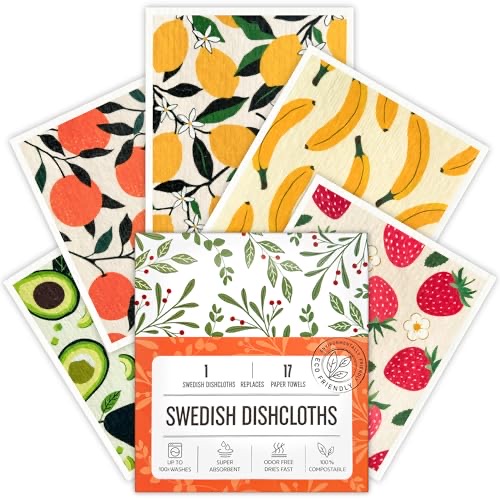 Best ValueAugine Swedish Dishcloths for Kitchen |
BiodegradableSuper Absorbent |
Check price → |
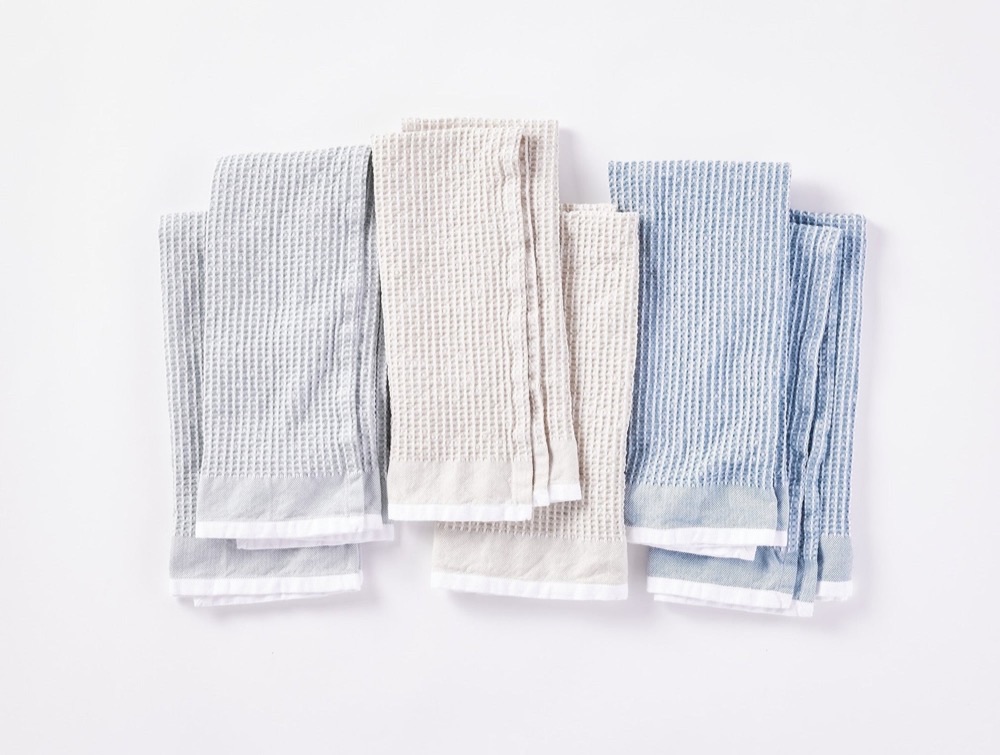 Premium PickCoyuchi Organic Waffle Kitchen Towels |
GOTS CertifiedOrganic Cotton |
Check price → |
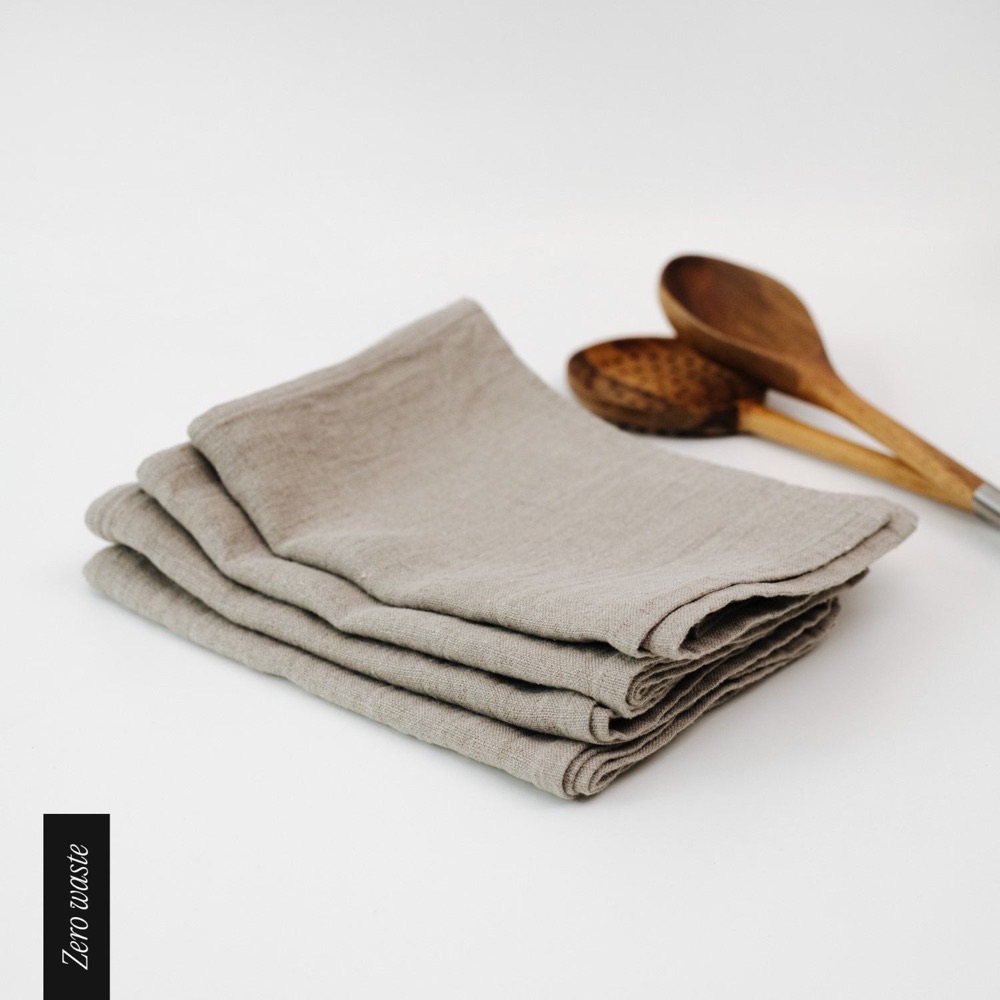 Best LinenLinen Tales Natural Linen Kitchen Towels |
100% LinenOEKO-TEX |
Check price → |
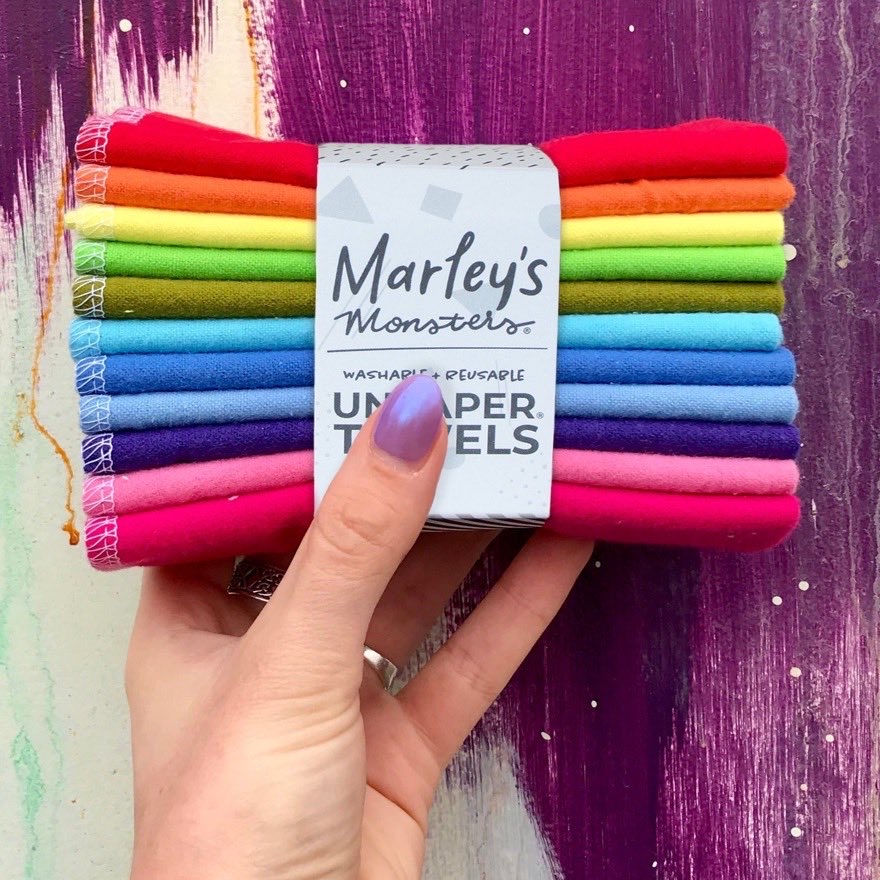 Best Paper Towel SwapMarley's Monsters UNpaper Towels |
Organic CottonMade in USA |
Check price → |
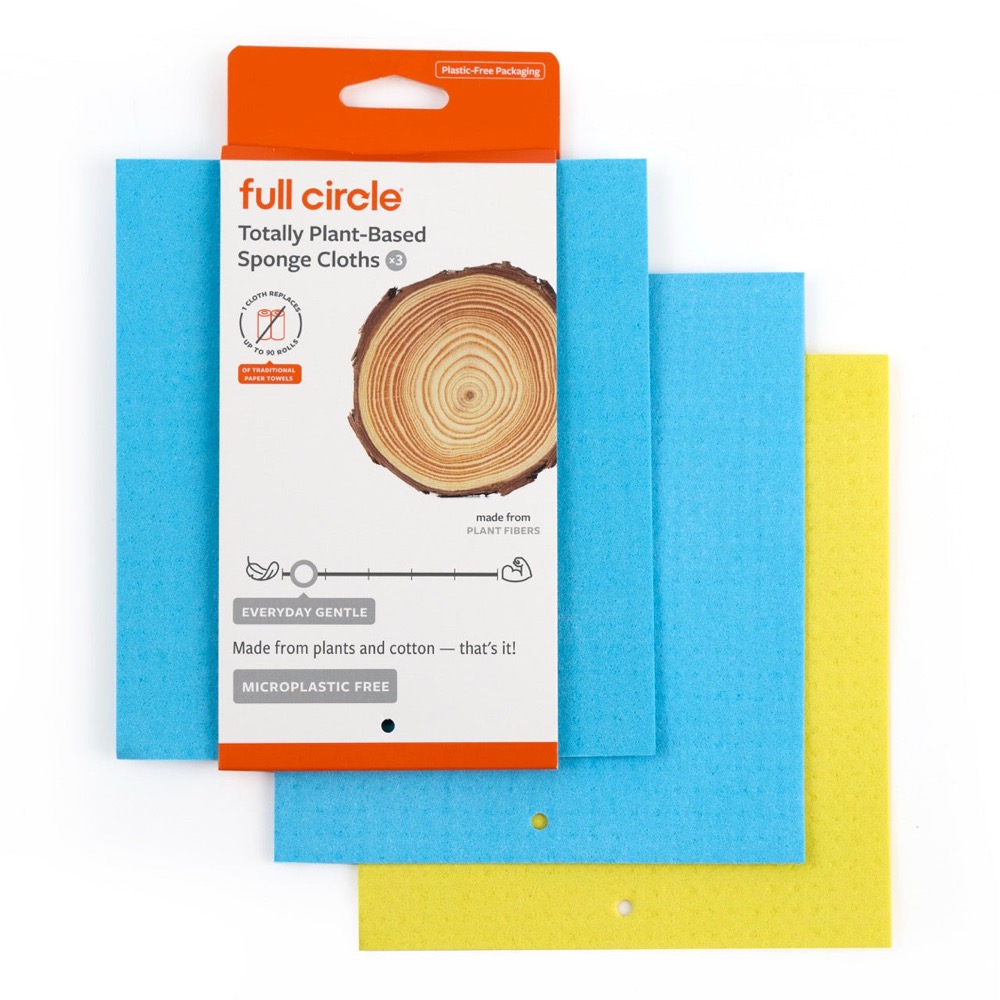 Best BudgetFull Circle Squeeze Cellulose Sponge Cloths |
100% Plant-BasedCompostable |
Check price → |
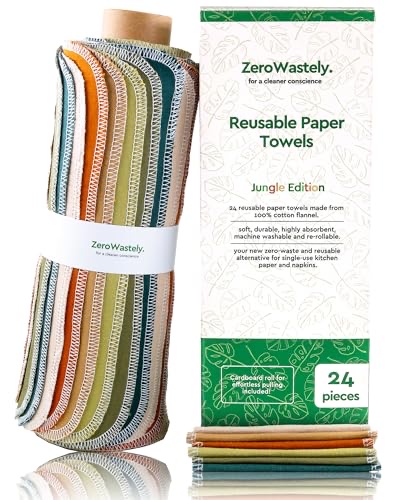 Best Everyday CottonReusable Paper Towels - Value Pack of 24 Paperless |
100% Cotton24-Pack |
Check price → |
The Hidden Problem with Microfiber
Microfiber cleaning cloths have been sold as an eco-friendly alternative to paper towels for years. The pitch is appealing: reusable, highly absorbent, reduces waste. But the environmental framing obscures a fundamental problem — microfiber cloths are made entirely from plastic, and they are one of the most significant sources of microplastic pollution in household wastewater.
A single microfiber cloth is composed of millions of ultra-fine polyester and nylon fibers, each thinner than a human hair. These fibers are designed to be small — that is what makes microfiber effective at trapping dust and moisture. But that same property makes them a microplastic shedding machine. During use, the mechanical action of wiping breaks fibers loose and deposits them on surfaces. During washing, the agitation of the machine pulls fibers free by the hundreds of thousands.
Research from the University of Plymouth found that a single wash load of synthetic textiles can release more than 700,000 microplastic fibers. Microfiber cleaning cloths, with their extremely fine fiber construction, are among the worst offenders. These fibers pass through washing machine lint traps, flow through municipal wastewater treatment facilities, and enter waterways. They have been found in drinking water, sea salt, shellfish, and even in human blood samples. The same fixes that cut fiber release from a load of clothes apply to cloths and towels too — a microfiber-capture bag, cooler and shorter cycles, and a clean lint filter; our plastic-free laundry guide walks through each one.
In the kitchen specifically, the concern is direct. When you wipe a cutting board, a plate, or a countertop with a microfiber cloth, you are transferring plastic fibers to surfaces that contact food. This is not a theoretical risk — it is a mechanical certainty. The fibers are invisible to the naked eye, but they are there.
"Microfiber cloths are marketed as eco-friendly because they're reusable. But 'reusable plastic' is still plastic — and every use sheds synthetic fibers onto the surfaces where you prepare food."
What We Screened For
Plasticproof evaluated kitchen towels across four criteria. Every product recommended in this guide passed all four.
- Fiber composition: 100% natural fiber only — cotton, linen, hemp, or cellulose. No polyester, no nylon, no "microfiber," no synthetic blends of any kind. If the label says "cotton blend" without specifying 100% natural content, it was excluded.
- Certification: Preference given to products with GOTS (Global Organic Textile Standard) or OEKO-TEX Standard 100 certification, which verify the absence of harmful chemicals in the textile supply chain.
- Durability: The towel must hold up to regular machine washing without falling apart. Natural fiber towels that deteriorate after a few washes are not a practical replacement for synthetics.
- Absorbency: The towel must actually work — absorbing liquid effectively for drying dishes, wiping counters, and cleaning up spills. Natural fiber does not mean reduced performance.
What we avoid
- Avoid Polyester, nylon, or any synthetic fiber content
- Avoid "Microfiber" cloths (polyester/nylon by another name)
- Avoid "Cotton blend" towels with undisclosed synthetic percentages
- Avoid Towels treated with antimicrobial chemicals (often contain triclosan or silver nanoparticles)
Our 6 Top Picks for 2026
Quick Picks
- Best overall value: Augine Swedish Dishcloths (5-pack) — biodegradable, super absorbent
- Premium pick: Coyuchi Organic Waffle Kitchen Towels — GOTS certified, waffle weave
- Best linen option: Linen Tales Natural Linen Kitchen Towels — 100% European flax linen
- Best paper towel replacement: Marley's Monsters UNpaper Towels (24-pack) — organic cotton flannel
- Best for wiping surfaces: Full Circle Squeeze Cellulose Sponge Cloths (3-pack) — plant-based, compostable
- Best everyday cotton: Reusable Paperless Paper Towels (24-pack) — 100% cotton, durable
1. Augine Swedish Dishcloths (5-pack)
Best Value
These Swedish dishcloths are biodegradable and washable — reusable in place of paper towels for counters, spills, and everyday kitchen cleanup. They're super absorbent and quick-drying (which helps limit bacterial growth compared to thick cotton towels), and they're dishwasher safe for easy cleaning.
The 5-pack makes this a strong value pick. Works best for wiping counters, cleaning up spills, and general kitchen surfaces — the everyday workhorse that lets you retire both paper towels and synthetic microfiber cloths at once.
Owners buy these cellulose-and-cotton cloths as a paper-towel replacement and give them the praise Swedish-dishcloth fans give the format: strong absorbency that soaks up a spill, wrings out and dries fast, and grabs dry crumbs off a counter, with one cloth standing in for a stack of paper towels. Augine is a newer generic-style Amazon listing with limited independent reviews, so this is a bet on the format more than the brand. The honest caveats, true of all Swedish dishcloths: they dry board-stiff between uses, with owners noting they "get so so stiff after use," and they can pick up a sour smell if left wet in the sink instead of rinsed and hung.
Retire both paper towels and plastic microfiber in one swap — five biodegradable cloths that wipe, scrub, and soak up spills, then break down at end of life.
Why it's safe: These are biodegradable, plant-based cloths — not plastic "microfiber" — so nothing sheds plastic fibers onto your counters, dishes, or into your wash water.
Check Today’s Price on Amazon →Amazon prices change daily — tap to see today's price and any active discount.
- Free delivery & returns for Prime members
- Washable & dishwasher safe
- Biodegradable & reusable
2. Coyuchi Organic Waffle Kitchen Towels
Premium Pick
GOTS certification is the gold standard for textiles — it verifies organic fiber content and clean, ethical manufacturing from farm to finished product. The waffle-weave construction creates more surface area per square inch, so these towels absorb water exceptionally well while drying faster than flat-weave cotton. Generously sized, with no dyes and no chemical treatments.
They get softer with every wash without losing structure, and the quality justifies the price for anyone who wants the highest-grade natural kitchen towel available. Best for drying dishes and hands, where softness and absorbency matter most.
Reviewers reach for the phrase "super absorbent" and praise how chic these organic waffle towels look hanging in a kitchen, with an unusual recurring note that they get more absorbent after washing, one tester finding they soaked up more after the first wash than when new, and the weave softening over a few cycles. The honest downsides: at a premium organic price some buyers expected more heft and call them thinner than a waffle towel should be, comparing them unfavorably to thicker options, and, like most cotton, they do not reach full absorbency until washed a few times.
The towel you reach for to dry dishes and hands — luxuriously soft organic cotton that actually gets better the more you wash it.
Why it's safe: 100% GOTS-certified organic cotton with zero synthetic fibers and no chemical finishes — it can't shed microplastics, and the certification guarantees no harmful chemicals in the supply chain.
Check Today’s Price on Amazon →Amazon prices change daily — tap to see today's price and any active discount.
- Free delivery & returns for Prime members
- Sold & shipped by Amazon
- Thousands of verified reviews
3. Linen Tales Natural Linen Kitchen Towels
Best Linen
Woven from 100% European flax linen — a fiber prized for centuries for its strength and breathability. Linen is naturally antibacterial, lint-free, and more durable than cotton. These towels actually improve with use: the fibers soften with every wash while keeping their strength. Stone-washed for softness and OEKO-TEX Standard 100 certified, verifying no harmful chemicals in the textile.
Quick-drying means less bacterial buildup between uses — and linen leaves no lint or streaks, which makes it excellent for drying glassware. The best option for anyone who values longevity; quality linen towels can last 5-10 years with proper care.
Buyers value these as durable, lint-free 100% linen that hangs well and looks handsome, and note the crisp fabric softens over time into a lived-in feel that dries glassware without leaving lint. The catch that surprises first-time linen buyers is that straight out of the package the towel is not absorbent and pushes water around before it soaks in, which is exactly what one Linen Tales buyer went online asking how to fix. The honest downsides: they arrive stiff and need several hot washes before they absorb properly, and it is a premium price for a single towel.
Dry glassware to a streak-free, lint-free shine — and buy a towel once that genuinely lasts a decade instead of fraying in a year.
Why it's safe: 100% natural flax linen with no synthetic blend — it sheds no plastic fibers, and its fast-drying, naturally antibacterial fibers manage odor without any chemical antimicrobial treatment.
Check Today’s Price on Amazon →Amazon prices change daily — tap to see today's price and any active discount.
- Free delivery & returns for Prime members
- Sold & shipped by Amazon
- Thousands of verified reviews
4. Marley's Monsters UNpaper Towels (24-pack)
Best Paper Towel Swap
Made from 100% organic cotton flannel, cut and sewn in Eugene, Oregon. Designed as a direct replacement for disposable paper towels — the 24-pack rolls onto a holder that fits a standard paper-towel stand. Each cloth is highly absorbent flannel that can be washed and reused hundreds of times. Machine wash warm, tumble dry.
The 24-pack provides enough for several days of kitchen use between laundry loads. Available in unbleached natural or various printed patterns — the most practical option for households transitioning away from disposable paper towels for good.
Owners who have used these cotton-flannel towels for years describe them as soft, praise the bold prints, and like that the sheets cling to a roll without snaps so they pull like a paper-towel roll, with many long-time users reporting sets lasting four to six years of daily use and saying they now buy close to zero paper towels. The honest downsides: they are an investment, with one owner calling them "too expensive for the amount of towels our family was going through," absorbency is only okay when new and improves after several washes, and they shed lint in the dryer and can be slow to dry.
Stop buying paper towels — these roll right onto your existing holder, grab spills just like the real thing, then go in the wash instead of the trash.
Why it's safe: 100% organic cotton flannel with no polyester or microfiber — it won't shed plastic fibers onto food-contact surfaces the way synthetic "reusable" cloths do.
Check Today’s Price on Amazon →Amazon prices change daily — tap to see today's price and any active discount.
- Free delivery & returns for Prime members
- Sold & shipped by Amazon
- Thousands of verified reviews
5. Full Circle Squeeze Cellulose Sponge Cloths (3-pack)
Best Budget
Plant-based cellulose and cotton — similar to a Swedish dishcloth but with a slightly spongier texture that excels at wiping and scrubbing surfaces. Each cloth replaces roughly 15 rolls of paper towels and is fully compostable at end of life. Machine washable and dishwasher safe. Dries stiff (normal for cellulose) and softens the instant it's wet.
Comes in a minimal, plastic-free cardboard package. The most affordable entry point on the list for surface cleaning — an easy, low-commitment way to test natural-fiber cloths in your kitchen.
Owners like these plant-based cloths as a paper-towel replacement that is absorbent, dries fast, and can be sanitized in the dishwasher or microwave, and several appreciate the color-coding so one cloth stays at the sink while another wipes counters, with a set standing in for many rolls of paper towels. The honest downsides that come up in reviews: some cloths arrive with a strong sulfur smell out of the package, a few owners feel they leave the counter damp no matter how hard they wring them, and others report the edges tearing and shedding after several months.
The lowest-risk way to try going plastic-free at the sink — a few dollars for cloths that scrub counters and dishes, then compost when they wear out.
Why it's safe: Made only from plant cellulose and cotton with no synthetic scrub layer — unlike "natural" sponges that bond a nylon scrubber onto a cellulose base, so there's nothing to shed microplastics.
Check Today’s Price on Amazon →Amazon prices change daily — tap to see today's price and any active discount.
- Free delivery & returns for Prime members
- Sold & shipped by Amazon
- Thousands of verified reviews
6. Reusable Paperless Paper Towels (100% Cotton, 24-Pack)
Best Everyday Cotton
Made from 100% cotton — soft, absorbent, and washable for daily kitchen and household cleaning. This value pack includes 24 cloths, so you can keep a stack on hand and reach for a reusable towel instead of a disposable paper one. No coatings, no treatments, no synthetic blends.
This sits in the sweet spot between the ultra-budget cellulose options and the premium organic cotton picks — best for anyone who wants a straightforward, dependable 100% cotton cloth in bulk.
This is a generic, unbranded-style value pack, and the reviews read that way, mixed and inconsistent from one buyer to the next. On the positive side, owners find the 100% cotton towels a workable paper-towel substitute that holds up to weekly washing and drying, and many call it good value for the count. The honest downsides: quality varies, with some buyers calling the towels absorbent while others say they are not absorbent enough, and several report the towels shrink noticeably after washing, so treat the specifics as batch-dependent rather than guaranteed.
A no-fuss daily driver for the kitchen — soft 100% cotton cloths that wipe, dry, and absorb like a towel should, then go straight in the wash.
Why it's safe: 100% cotton with no polyester or microfiber blend — so it won't shed plastic fibers onto dishes or counters.
Check Today’s Price on Amazon →Amazon prices change daily — tap to see today's price and any active discount.
- Free delivery & returns for Prime members
- 100% cotton, 24-pack
- Washable & reusable
Comparison Table
| Product | Material | Certification | Best For | Price |
|---|---|---|---|---|
| Augine Swedish Dishcloths | Cellulose | — | Overall value | $ |
| Coyuchi | Organic cotton | GOTS | Premium quality | $$ |
| Linen Tales | 100% linen | OEKO-TEX | Durability & lint-free | $$ |
| Marley's Monsters | Organic cotton flannel | — | Paper towel replacement | $$$ |
| Full Circle | Cellulose + cotton | — | Wiping surfaces | $ |
| Reusable Paperless Towels | 100% cotton | — | Everyday cotton | $ |
Price guide: $ = under $20 · $$ = $20–30 · $$$ = $30+. Exact prices change frequently on Amazon — tap any "Check Today's Price" button for the current cost.
What to Avoid
The following kitchen towel types and materials should be avoided if reducing microplastic exposure in your kitchen is a priority.
Avoid Microfiber cleaning cloths
Any cloth labeled "microfiber" is made from polyester, nylon, or a blend of both. This includes popular brands marketed as eco-friendly alternatives to paper towels. The reusability is real — the plastic shedding is also real. Every use transfers synthetic fibers to surfaces, and every wash sends hundreds of thousands of plastic fibers into wastewater. There is no such thing as a microfiber cloth that does not shed microplastics.
Avoid "Cotton blend" towels with undisclosed synthetic content
Many kitchen towels labeled "cotton" are actually cotton-polyester blends. If the label does not explicitly state "100% cotton," check the fine print. Blends containing 20-40% polyester are common, even in towels that prominently feature "cotton" in their marketing. These blends shed less than pure microfiber but still release synthetic fibers with every use and wash.
Avoid Antimicrobial-treated towels
Some kitchen towels are treated with antimicrobial chemicals — often triclosan, silver nanoparticles, or other biocides — to prevent odor. These treatments introduce additional chemical exposure to your kitchen surfaces. A natural fiber towel that dries quickly between uses (especially linen or cellulose) manages bacteria naturally without chemical treatments.
Avoid Sponges with synthetic components
Many kitchen sponges marketed as "natural" contain a layer of nylon or polyester scrubbing material bonded to a cellulose base. If the sponge has a rough, scratchy side, that side is almost always plastic. Opt for 100% cellulose sponge cloths or natural fiber brushes instead.
Tips for Getting the Most from Natural Fiber Towels
Natural fiber kitchen towels perform best with a few simple habits:
- Wash before first use. Cotton and linen towels become more absorbent after the first wash. New towels may have residual manufacturing oils that reduce initial absorbency. One wash cycle removes them.
- Skip the fabric softener. Fabric softener coats textile fibers with a waxy layer that reduces absorbency. This is true for all towels, but especially noticeable with natural fibers. Use plain detergent or add a splash of white vinegar to the rinse cycle instead.
- Hang to dry between uses. A towel draped over a hook or bar dries much faster than one crumpled on the counter. Faster drying means less bacterial growth and less odor. Linen and cellulose towels excel here — they air-dry in a fraction of the time cotton takes.
- Rotate your towels. Keep 3-4 kitchen towels in active rotation, swapping in a fresh one daily. This gives each towel time to dry completely and reduces the need for frequent laundering.
- Wash in hot water periodically. A hot-water wash every few cycles keeps natural fiber towels fresh and removes accumulated oils. Regular washes can be warm or cold.
Want the Full Room-by-Room Protection Guide?
The Complete Plasticproof Guide covers every room in your home — kitchen, nursery, bathroom, bedroom — with the full research and complete swap list. 47+ peer-reviewed studies, 80+ product recommendations.
Frequently Asked Questions
Microfiber cloths are made from synthetic materials — typically polyester, nylon, or a blend of both. Every time you use and wash a microfiber cloth, it sheds microscopic plastic fibers. A single microfiber cloth can release up to 1.3 million synthetic fibers per wash cycle. These fibers are too small for most wastewater treatment plants to filter out, so they flow into rivers, lakes, and oceans. In your home, microfiber cloths deposit plastic fibers onto every surface you wipe — including kitchen counters and dishes.
Natural fiber kitchen towels — cotton, linen, and Swedish dishcloths — are machine washable. Wash cotton and linen towels in warm or hot water with a natural detergent. Avoid fabric softener, which coats fibers and reduces absorbency. Linen towels actually get softer and more absorbent with each wash. Swedish dishcloths can go in the top rack of a dishwasher or in the washing machine. For daily maintenance, rinse any kitchen towel thoroughly and hang to dry between uses to prevent bacterial growth.
Swedish dishcloths are thin, flexible cloths made from a blend of cellulose (wood pulp) and cotton — typically 70% cellulose and 30% cotton. They were invented in Sweden in 1949 and have been a kitchen staple in Scandinavia for decades. A single Swedish dishcloth can absorb 15-20 times its weight in liquid and can replace up to 17 rolls of paper towels over its lifetime. They typically last 6-9 months with daily use, and because they are made entirely from plant-based materials, they are fully compostable at end of life.
Both are excellent plastic-free choices, but they have different strengths. Cotton towels are softer, more absorbent immediately out of the package, and widely available at every price point. They are best for drying dishes and hands. Linen towels are more durable, dry faster between uses (reducing bacterial growth), are naturally antibacterial and lint-free, and get softer with every wash. Linen is best for wiping surfaces and drying glassware without streaks. For most kitchens, having a mix of both is ideal.
Yes — if they are made from 100% natural fibers. Cotton, linen, hemp, and cellulose towels are all compostable. Swedish dishcloths (cellulose and cotton) break down in a home compost pile within a few weeks. Cotton and linen towels take longer but will fully decompose. The key requirement is that the towel contains zero synthetic fibers. Any towel with polyester, nylon, or "microfiber" content will not biodegrade and should not be composted — it will simply break into smaller plastic fragments in your compost.
More questions buyers ask
Non Toxic Towels: what should I actually look for?
"Non-toxic" only means something if you can name the material. The Organic Cotton Bath Towels (Set of 4) is made from Organic Cotton, so there is no coating or soft plastic that can break down into your food. Every pick above is chosen the same way.
Sources
- Napper IE, Thompson RC. "Release of synthetic microplastic plastic fibres from domestic washing machines: Effects of fabric type and washing conditions." Marine Pollution Bulletin, 2016.
- De Falco F, et al. "The contribution of washing processes of synthetic clothes to microplastic pollution." Scientific Reports, 2019.
- Browne MA, et al. "Accumulation of Microplastic on Shorelines Worldwide: Sources and Sinks." Environmental Science & Technology, 2011.
- Leslie HA, et al. "Discovery and quantification of plastic particle pollution in human blood." Environment International, 2022.
- Catarino AI, et al. "Low levels of microplastics (MP) in wild mussels indicate that MP ingestion by humans is minimal compared to exposure via household fibres fallout during a meal." Environmental Pollution, 2018.
Protect Every Room in Your Home
From the bedroom to the kitchen to the nursery — the Complete Plasticproof Guide covers every swap that matters, backed by 47+ studies.