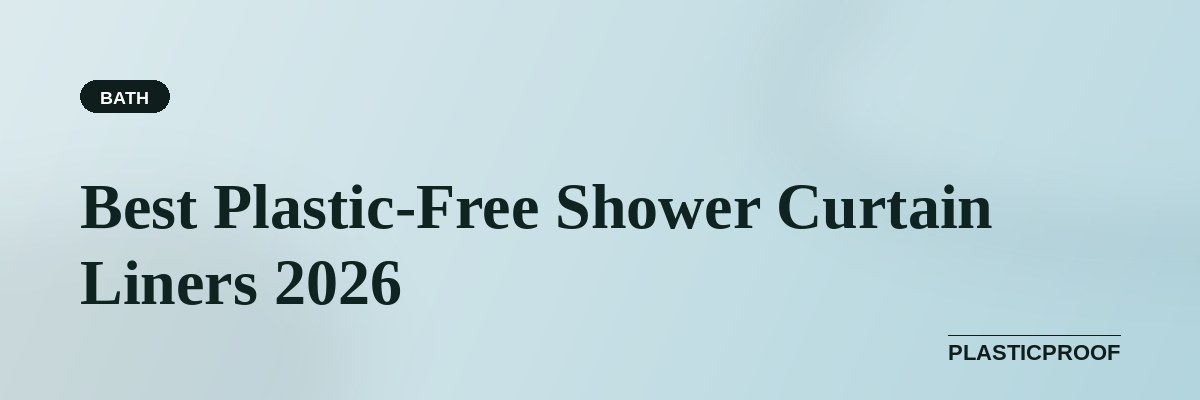
The shower curtain liner is one of the most overlooked sources of chemical exposure in the home. Most conventional liners are made from PVC (polyvinyl chloride) or PEVA (polyethylene vinyl acetate) — both of which off-gas volatile organic compounds directly into the bathroom air. In a hot, steamy, enclosed space with limited ventilation, these chemicals reach concentrations that would be concerning in any room — but the bathroom amplifies the problem.
PVC shower curtain liners release phthalates, dioxins, and vinyl chloride — a known human carcinogen — into indoor air. PEVA, often marketed as the “safe” alternative, still off-gasses formaldehyde, acetaldehyde, and other VOCs, particularly when heated by shower steam. The familiar chemical smell when opening a new shower curtain package is the off-gassing process at its most concentrated.
The good news: natural fiber shower curtain liners made from hemp, organic cotton, and linen eliminate the off-gassing problem entirely — while being machine washable, naturally water-resistant, and often longer-lasting than the plastic liners they replace.
Compare all 6 picks
Every pick side by side — tap a name to jump to the full review, or check today's price.
| Pick | Why it wins | |
|---|---|---|
GOTS Certified100% Organic Cotton |
Check price → | |
Hemp FabricLightweight & Breathable |
Check price → | |
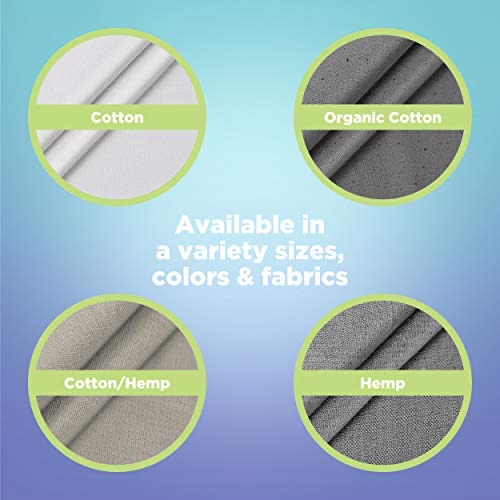 Best Breathable CottonOrganic Cotton Shower Curtain Liner |
100% Organic CottonBreathable |
Check price → |
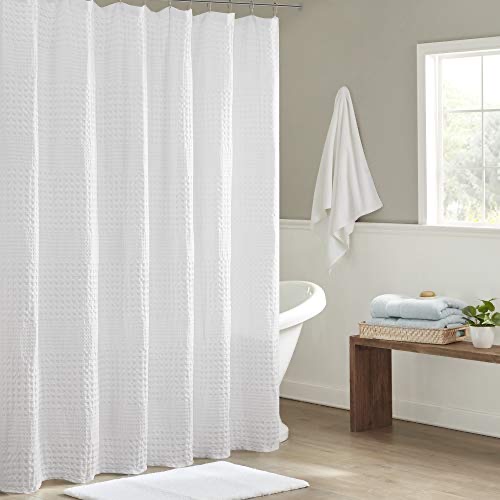 Best Waffle WeaveMadison Park Arlo Cotton Waffle Weave Shower Curtain |
100% CottonWaffle Weave |
Check price → |
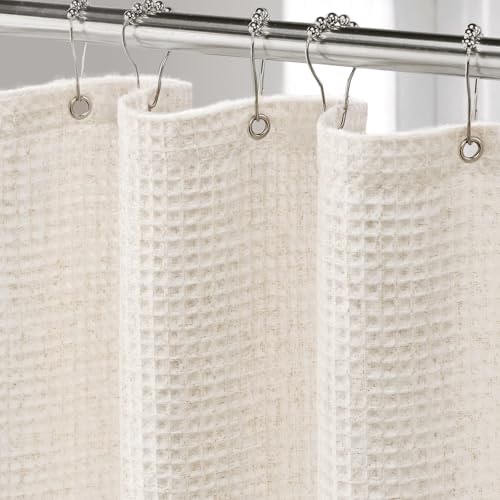 Best Textured WeaveLinen Waffle Weave Shower Curtain (Cream) |
Linen Waffle WeaveCream / Natural |
Check price → |
 Best LinenNaturoom Linen Shower Curtain |
LinenNatural Fabric |
Check price → |
Why Plastic Shower Curtain Liners Are Problematic
The bathroom is a uniquely problematic environment for plastic off-gassing. Hot water creates steam that raises the air temperature and humidity to levels that dramatically accelerate chemical release from PVC and PEVA surfaces. The bathroom is typically the smallest, least ventilated room in the home — meaning those chemicals concentrate rather than dissipate.
PVC (polyvinyl chloride) is the most concerning material. Often called “the poison plastic,” PVC requires plasticizers (phthalates) to make it flexible enough for use as a curtain liner. These phthalates are not chemically bonded to the PVC and migrate out continuously — a process accelerated by heat and moisture. Phthalates are well-documented endocrine disruptors linked to reproductive harm, developmental issues in children, and hormonal imbalances. PVC production and disposal also release dioxins, among the most toxic chemicals known. The shower curtain is not the only warm, flexible PVC surface in a home that behaves this way — a cheap PVC exercise or yoga mat is plasticized with the same phthalates and off-gasses them as your body heat warms it, so switching to a natural-rubber or TPE mat is the identical fix in another room.
PEVA (polyethylene vinyl acetate) was introduced as a “PVC-free” alternative and is widely marketed as safer. While PEVA does avoid chlorine-based compounds, independent testing has found that PEVA liners still release VOCs including formaldehyde and acetaldehyde — both classified as probable carcinogens. The “PVC-free” label creates a false sense of safety.
Many retailers prominently label shower curtain liners as “PVC-free” when they are made from PEVA. While this avoids the worst PVC-specific chemicals, PEVA is still a plastic that off-gasses VOCs in the hot bathroom environment. The only way to fully eliminate shower curtain off-gassing is to switch to a natural fiber liner — hemp, organic cotton, or linen.
Beyond off-gassing, both PVC and PEVA liners are non-biodegradable plastics. They yellow, crack, and grow mildew within months — at which point most households throw them away and buy another one. The average American home replaces a plastic shower curtain liner every 3–6 months, creating a cycle of chemical exposure and landfill waste.
What to Look For in a Plastic-Free Shower Curtain Liner
The best plastic-free shower curtain liners are made from natural fibers that are inherently water-resistant, machine washable, and produce zero off-gassing. The three primary materials to consider:
- Hemp — The strongest natural fiber for wet environments. Hemp is naturally antimicrobial and mildew-resistant, dries faster than cotton, and becomes more water-resistant with use as the fibers swell and tighten. The best option for bathrooms with limited ventilation.
- Organic cotton — Soft, widely available, and affordable. Cotton absorbs water initially but creates an effective splash barrier once the fibers are wet. GOTS-certified organic cotton ensures no synthetic pesticides, toxic dyes, or chemical finishes. Machine washable. Best when paired with good bathroom ventilation.
- Linen (flax) — Naturally water-resistant, antimicrobial, and mildew-resistant. Linen is stronger wet than dry, making it inherently suited to the shower environment. Dries quickly. Gets softer and more beautiful with age. The premium option in terms of aesthetics and drape.
All three materials are machine washable (a major advantage over plastic, which cannot be washed and must be replaced when mildewed), biodegradable at end of life, and produce zero chemical off-gassing. The upfront cost is higher than a throwaway plastic liner, but the lifespan is 1–3 years compared to 3–6 months, making natural fiber liners the better value over time.
Quick Picks: Best Plastic-Free Shower Curtain Liners at a Glance
Our Top Picks for 2026
| Pick | Product | Price | Key Feature |
|---|---|---|---|
| Best Overall | Bean Products Organic Cotton Shower Curtain Liner | $ | Only GOTS-certified liner, best value |
| Best Hemp | Bean Products Hemp Shower Curtain Liner | $$ | Breathable hemp fabric, stall size |
| Best Breathable Cotton | Organic Cotton Shower Curtain Liner | $ | Simple breathable organic cotton |
| Best Waffle Weave | Madison Park Arlo Cotton Waffle Weave Shower Curtain | $$ | 100% cotton waffle, quick-drying |
| Best Textured Weave | Linen Waffle Weave Shower Curtain (Cream) | $ | Cream waffle-weave natural fabric |
| Best Linen | Naturoom Linen Shower Curtain | $$ | Natural linen, softens with use |
Price guide: $ budget · $$ mid-range · $$$ premium. Tap any product for today’s live Amazon price.
The 6 Best Plastic-Free Shower Curtain Liners for 2026
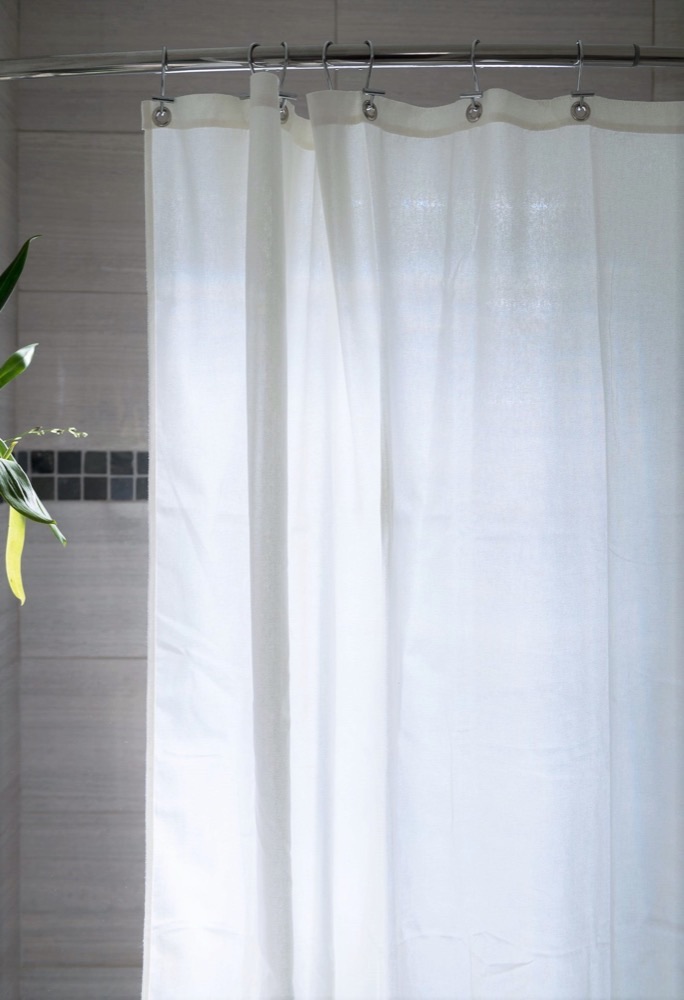
1. Bean Products Organic Cotton Shower Curtain Liner — Best Overall
 Best Overall
Owners of this Chicago-made organic-cotton liner most often praise the material itself, calling it "excellent quality," "heavy cotton," and a "great natural alternative to plastic" with no vinyl smell, and note the cotton breathes and dries faster than a plastic liner because it does not trap moisture against the tub. The honest downsides: independent reviewers note it "isn't as waterproof as they claim," so water can wick through if the fabric sits against a stream, and because cotton stays damp it is "prone to mold, mildew, pink bacterial film" unless you spread it to dry and wash it every few weeks; a few also find it lighter than expected and note it shrinks after the first wash.
The one swap that ends the "new shower curtain smell" for good — no PVC, no PEVA, no VOCs off-gassing into the steam you breathe every morning.
Why it's safe: 100% GOTS-certified organic cotton with no vinyl, no chlorine-based plastic, and no chemical waterproofing finish — so there is nothing to off-gas in a hot, humid bathroom.
Check Today's Price on Amazon →Amazon prices change daily — tap to see today's price and any active discount.
- Free delivery & returns for Prime members
- Amazon A-to-z purchase guarantee
Bean Products earns the top spot for combining the highest level of organic certification with the most accessible price point in the category. GOTS (Global Organic Textile Standard) certification is the gold standard for organic textiles — it verifies that the cotton is organically grown, the manufacturing facility meets environmental and labor standards, and no toxic chemicals are used at any stage of production. No other shower curtain liner on the market currently holds this certification.
It costs more than a throwaway plastic liner but significantly less than the hemp and linen alternatives below. Given that a well-maintained organic cotton liner lasts 1–2 years compared to 3–6 months for plastic, the cost per year is comparable or better. Machine washing every 2–4 weeks with a cup of white vinegar keeps the cotton fresh and prevents mildew. The cotton absorbs initial splash but effectively blocks water once the fibers swell — this is how natural fiber liners are designed to work.
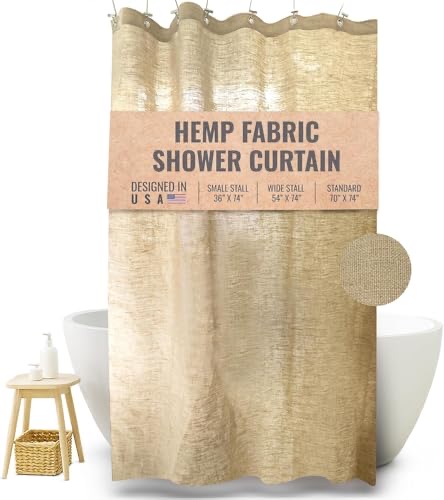
2. Bean Products Hemp Shower Curtain Liner — Best Hemp Option
 Best Hemp
The repeated praise is durability and drying: one owner reported that "after a few months of use, this curtain holds up, dries fast and looks good," and hemp is naturally more mildew-resistant than cotton, so many run it with no plastic liner at all and find wrinkles fall out once it hangs. The honest warnings: it is expensive for a liner (often in the $180 range), so it is a real commitment; at least one buyer found it "shrank quite a bit even though they followed cold water wash instructions" and had to lower the rod; and the mildew resistance is resistance, not immunity, so it still needs airing out and monthly washing.
Hemp holds up well in a steamy bathroom and this liner is fully machine washable — a natural-fabric swap that skips the plastic without the bulk.
Why it's safe: 100% hemp fabric — a natural, breathable, washable liner with no PVC and no PEVA, so there is nothing plastic to off-gas in the steam.
Check Today's Price on Amazon →Amazon prices change daily — tap to see today's price and any active discount.
- Free delivery & returns for Prime members
- Amazon A-to-z purchase guarantee
Hemp is one of the strongest natural fibers for a wet environment, which is what makes this Bean Products hemp liner a good fit for bathrooms that stay humid. Hemp fabric is naturally durable and stands up to repeated washing, and it dries relatively quickly between showers, so it spends less time sitting damp than a heavier cotton curtain.
This is a lightweight, breathable natural fabric in a stall size (36" × 74"), so check your measurements — it is sized for smaller tubs, stall showers, guest baths, and dorms rather than a wide master bath. It is fully machine washable, and because it is plain hemp fabric there is no PVC, no PEVA, and nothing to off-gas. The natural color has an earthy, textured look that works in both modern and rustic bathrooms.
3. Organic Cotton Shower Curtain Liner — Best Breathable Cotton
Best Breathable Cotton
Read this as the organic-cotton-liner category rather than one product, since it covers several near-identical makers. Buyers like that a cotton liner is a natural, plastic-free alternative that carries no chemical odor and, when properly sized, contains spray without a vinyl sheet while letting air move, and the better versions dry without trapping moisture the way plastic does. The honest downsides: none of these natural fabrics is truly water-resistant, so reviewers repeatedly flag mold, mildew, and pink film if the curtain is not aired out and washed every two to four weeks, thinner versions can read as flimsy and let water reach the floor, and shrinkage after the first wash is common, so buyers are told to size up.
A straightforward organic cotton liner — breathable natural fabric that swaps out the plastic without any off-gassing smell.
Why it's safe: 100% organic cotton, a breathable natural fabric with no vinyl, no PEVA, and no chemical waterproofing — nothing to off-gas in a hot, humid bathroom.
Check Today's Price on Amazon →Amazon prices change daily — tap to see today's price and any active discount.
- Free delivery & returns for Prime members
- Amazon A-to-z purchase guarantee
This is a simple organic cotton shower curtain liner — a breathable natural fabric with no brand-name premium attached. Like any natural-fiber liner, it absorbs the initial splash and then blocks water as the cotton fibers swell, which is exactly how fabric liners are designed to work.
Organic cotton means the fabric is soft, breathable, and free of the vinyl and PEVA found in plastic liners, so there is no chemical smell in the steam. Wash it every few weeks (a cup of white vinegar in the load helps keep mildew down) and it will outlast a long series of throwaway plastic liners. If you want a plain, functional organic cotton liner without paying for a designer label, this is a sensible pick.
4. Madison Park Arlo Cotton Waffle Weave Shower Curtain — Best Waffle Weave
Best Waffle Weave
This 100% cotton waffle curtain earns its strongest praise for looking far pricier than it is, with owners saying it "looks expensive" and has a "hotel quality" weight and thick, textured drape that makes the bathroom feel more finished, plus neutral colors and machine washability. The honest downsides: it is a decorative curtain, not a liner, and being cotton it is not waterproof, so reviewers and the maker both say a separate water-repellent liner is recommended or water gets through; it arrives wrinkled and needs steaming; and multiple owners report it stretches with use, one noting a 72-inch curtain reached about 77 inches after six months.
The everyday swap: a quick-drying 100% cotton waffle curtain that looks like a boutique hotel and never fills your bathroom with that chemical plastic smell.
Why it's safe: 100% cotton with no PVC, no PEVA, and no synthetic coatings — the waffle weave is naturally fast-drying, which keeps mildew down without any chemical finish.
Check Today's Price on Amazon →Amazon prices change daily — tap to see today's price and any active discount.
- Free delivery & returns for Prime members
- Amazon A-to-z purchase guarantee
The Madison Park Arlo is the practical middle-ground pick: a 100% cotton curtain in a honeycomb waffle weave. The raised waffle texture creates more surface area, so the curtain is both more absorbent and noticeably faster to dry — which is the single most important property for keeping a natural-fiber curtain mildew-free.
The cotton performs the way every natural-fiber curtain does — it absorbs the initial splash and creates an effective barrier as the fibers swell — but the waffle weave dries faster than a flat cotton sheet, making it more forgiving in bathrooms with average ventilation. The white waffle texture also reads as spa-like and works with nearly any decor, which makes it an easy first switch away from plastic.
5. Linen Waffle Weave Shower Curtain (Cream) — Best Textured Weave
Best Textured Weave
Treat the linen label with some skepticism here, because many cream waffle curtains at this price are cotton or blends styled to look like linen, so confirm the fiber before buying. The common praise is looks and texture: reviewers describe the waffle surface as "clean and modern," thick, and hanging well, with the cream tone reading warm and neutral, and the heavier versions drape without flapping. The honest downsides: these are water-repellent, not waterproof, and sellers themselves say "only a little bit of water will soak through" and recommend pairing with a waterproof liner; wrinkle behavior varies unit to unit; and the repellent finish is a coating that can fade with washing, after which the fabric stays damp and needs airing.
If you'd rather the shower curtain itself be the natural-fabric layer, this cream waffle weave brings texture and body — no plastic liner needed.
Why it's safe: A woven natural-fabric curtain with no vinyl and no PEVA — it replaces the plastic liner instead of hanging in front of one.
Check Today's Price on Amazon →Amazon prices change daily — tap to see today's price and any active discount.
- Free delivery & returns for Prime members
- Amazon A-to-z purchase guarantee
This is the same honest natural-fabric idea as the other cotton picks, but cut for a wider stall shower. It is 100% organic cotton — breathable, washable, and free of the vinyl and PEVA in plastic liners. Measure your opening first: it is sized wider than a standard stall liner, so it is the one to reach for if the usual liners leave gaps.
Like every natural-fiber liner, it absorbs the initial splash and then blocks water as the cotton fibers swell. Wash it every few weeks with a little white vinegar to keep it fresh, and it will outlast a long series of disposable plastic liners. For a wide stall where plastic has been the only thing that seems to fit, this is the plastic-free answer.
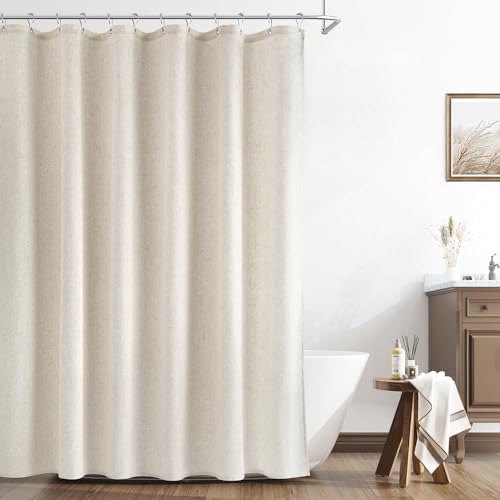
6. Naturoom Linen Shower Curtain — Best Linen
Best Linen
Naturoom's textured cream curtain is reviewed mostly positively, with owners praising weight and coverage: "The fabric has a nice weight and hangs well," and it "has a barrier for the water, preventing it from getting soaked" the way plain fabric would, while the weighted hem keeps it from blowing inward and the grommets are metal rather than flimsy plastic. The honest downsides: even satisfied owners manage moisture actively, noting the curtain is "easy to lift up and hang over the extra rod to prevent mold or mildew," which tells you it holds damp if left bunched; the surface is a water-repellent coating, not a waterproof barrier; and documented negative reviews are thin, so do not assume it replaces a true liner in a poorly ventilated bathroom.
Linen brings a soft, textured, natural look to the bathroom — a fabric curtain that gets better with age and skips the plastic entirely.
Why it's safe: A natural linen fabric with no vinyl, no PEVA, and no synthetic waterproofing — a breathable curtain that replaces the plastic liner.
Check Today's Price on Amazon →Amazon prices change daily — tap to see today's price and any active discount.
- Free delivery & returns for Prime members
- Amazon A-to-z purchase guarantee
Linen brings a different texture to the bathroom — a natural flax fabric that is breathable and softens with every wash. Flax fibers have a natural, waxy water resistance that lets linen work as a shower curtain without any synthetic coating or treatment.
The Naturoom linen curtain is an accessible way into the linen look. It is a plain natural fabric — no vinyl, no PEVA, no chemical waterproofing — and like all linen it gets noticeably softer with each wash while keeping its natural water-shedding quality. If you want the relaxed, textured linen aesthetic without a plastic liner, this is a straightforward pick.
Want the Full Bathroom Detox Guide?
The Complete Plasticproof Guide covers every bathroom product — shower curtains, hand soap, shampoo, toothpaste, and more — with the full research and complete swap list. 47+ peer-reviewed studies, 80+ product recommendations.
Frequently Asked Questions
Yes. PVC (polyvinyl chloride) shower curtain liners release volatile organic compounds (VOCs) including phthalates, dioxins, and vinyl chloride — a known human carcinogen. A 2008 study by the Center for Health, Environment & Justice (CHEJ) found that a single PVC shower curtain released 108 VOCs into indoor air, some of which persisted for over 28 days. The hot, humid bathroom environment accelerates off-gassing. PEVA, often marketed as a safer alternative, still off-gasses chemical compounds including formaldehyde and acetaldehyde, though at lower levels than PVC.
Yes, when used correctly. Natural fiber shower curtain liners made from hemp, organic cotton, or linen are naturally water-resistant — they absorb initial water contact but swell to create a barrier that prevents splash-through. The key is to keep the liner inside the tub during use and allow it to dry fully between showers. Weighted hems help the liner hang properly. Most users find that fabric liners perform comparably to plastic after the first wash, when the fibers tighten. Hemp dries fastest among natural fibers, making it particularly effective as a liner.
Three practices prevent mildew on natural fiber liners: (1) Spread the liner fully across the rod after each shower so air circulates across the entire surface — bunched fabric traps moisture. (2) Use your bathroom exhaust fan during and for 15–20 minutes after showering. (3) Machine wash the liner every 2–4 weeks on a warm cycle with a cup of white vinegar. Hemp and linen are naturally antimicrobial and resist mildew better than cotton. If your bathroom has poor ventilation, hemp is the strongest choice for mildew resistance.
PEVA (polyethylene vinyl acetate) is marketed as a safer plastic alternative to PVC, and it does avoid chlorine-based compounds. However, PEVA liners still off-gas VOCs including formaldehyde and acetaldehyde, particularly when new and when exposed to hot shower steam. PEVA is also non-biodegradable plastic that will persist in landfills. While PEVA is a step up from PVC, natural fiber liners (hemp, organic cotton, linen) eliminate the off-gassing concern entirely and are biodegradable at end of life.
A well-maintained natural fiber shower curtain liner typically lasts 1–3 years, depending on the material and care. Hemp is the most durable natural fiber for wet environments, often lasting 2–3 years with regular washing. Organic cotton liners last 1–2 years on average. Linen falls in between. By comparison, PVC and PEVA liners typically need replacement every 3–6 months due to mildew, discoloration, and cracking — so natural fiber liners often provide better value over time despite a higher upfront cost.
Yes. Many natural fiber shower curtains are designed to serve as both the curtain and the liner — no separate plastic liner needed. Heavier, opaque cotton, hemp, and linen curtains are designed to be used alone. Heavier fabrics like hemp canvas and linen are opaque enough for privacy and heavy enough to hang well without a separate decorative curtain. If using a lighter organic cotton liner, pairing it with an outer decorative curtain is optional for aesthetics but not necessary for water containment.
Sources
- Center for Health, Environment & Justice (CHEJ). "Volatile Vinyl: The New Shower Curtain's Chemical Smell." CHEJ Report, 2008.
- Steinemann A. "Fragranced consumer products and undisclosed ingredients." Environmental Impact Assessment Review, 2009; 29(1):32-38.
- Hodgson AT, et al. "Volatile organic compound concentrations and emission rates in new manufactured and site-built houses." Indoor Air, 2002; 12(4):235-245.
- U.S. Environmental Protection Agency. "Vinyl Chloride." EPA Integrated Risk Information System (IRIS), 2000.
- Heudorf U, Mersch-Sundermann V, Angerer J. "Phthalates: Toxicology and exposure." International Journal of Hygiene and Environmental Health, 2007; 210(5):623-634.
- Maqbool F, et al. "Review of endocrine disorders associated with environmental toxicants and possible involved mechanisms." Life Sciences, 2016; 145:265-273.
- Sathyanarayana S. "Phthalates and children's health." Current Problems in Pediatric and Adolescent Health Care, 2008; 38(2):34-49.
- National Institute of Environmental Health Sciences (NIEHS). "Dioxins." NIEHS Fact Sheet, 2022.
Protect Every Room in Your Home
From the bathroom to the kitchen to the nursery — the Complete Plasticproof Guide covers every swap that matters, backed by 47+ peer-reviewed studies.