The short answer: Polyester is the microplastic problem; cotton is not, even though cotton sheds as much fiber or more by weight. Polyester fibers are plastic and persist; untreated cotton fibers are cellulose and biodegraded by more than 70% in freshwater tests. If you want fewer microplastics in your laundry water and your indoor air, swap the polyester you wash most often for 100% cotton, linen, hemp or wool, starting with our top pick, Pact organic cotton basics.
Most articles on this question say polyester sheds and cotton does not. The research says something more interesting and more useful. Cotton sheds plenty. What matters is what the shed fiber is made of and how long it lasts once it leaves your washing machine. This guide lines up the peer-reviewed studies that measured both fabrics, the studies that tracked where those fibers end up, and what that means for the clothes in your drawer.
Polyester vs Cotton: The Comparison Table
Every figure below comes from a peer-reviewed study linked in the Sources section. Ranges are the ranges the authors reported.
| Measure | Polyester | Cotton | Source |
|---|---|---|---|
| What the fiber is | Plastic (PET, the same polymer as soda bottles) | Cellulose, a plant material | — |
| Fiber shed in laundering | 0.1–1 mg per gram of fabric | 0.2–4 mg per gram (cellulose fabrics) | Zambrano et al., 2019 |
| Biodegradation in lake water / sludge | Did not appreciably degrade | More than 70% | Zambrano et al., 2020 |
| Biodegradation in seawater | Did not appreciably degrade | About 50% | Zambrano et al., 2020 |
| Share of fibers found in ocean surface water | 8.2% (all synthetics combined) | 79.5% (all cellulose fibers combined) | Suaria et al., 2020 |
| Share of global fiber production | About two-thirds (all synthetics) | The remaining third, shared with wool and others | Suaria et al., 2020 |
| Counts as a microplastic? | Yes, every fiber | No, if 100% untreated cotton | — |
Does Polyester Shed More Microplastics Than Cotton?
Polyester sheds all of the microplastics in this comparison, because cotton sheds none. By raw weight, though, cotton sheds as much fiber or more. María Zambrano and colleagues at North Carolina State University ran the same accelerated laundering test on cotton, rayon and polyester fabrics and found cellulose-based fabrics released 0.2–4 mg of microfiber per gram of fabric, against 0.1–1 mg for polyester. Shedding rose with hotter water and with detergent for every fabric.
A Finnish study by Sillanpää and Sainio in Environmental Science and Pollution Research (2017) points the same way at a national scale: it estimated Finnish households release about 411,000 kg of cotton fiber a year in laundry wastewater, against 154,000 kg of polyester. So if your question is "which fabric makes more lint," the honest answer is cotton. If your question is "which fabric puts plastic into the water," it is polyester, every time.
How Many Fibers Does a Load of Polyester Release?
A lot, and the number swings widely with how the fabric is made. The most-quoted figures come from Imogen Napper and Richard Thompson at the University of Plymouth, who washed fabric at 30°C and 40°C and scaled their counts to a typical 6 kg load.
Measured fiber release in published wash tests
| Fabric or garment | Release reported | Study |
|---|---|---|
| Acrylic | ~728,789 fibers per 6 kg load | Napper & Thompson, 2016 |
| 100% polyester | ~496,030 fibers per 6 kg load | Napper & Thompson, 2016 |
| Polyester-cotton blend | ~137,951 fibers per 6 kg load | Napper & Thompson, 2016 |
| 100% polyester t-shirts | ~124–125 mg per kg of fabric | De Falco et al., 2019 |
| Polyester top with cotton/modal back | ~308 mg per kg; about 80% of it cellulose | De Falco et al., 2019 |
| Polyester textiles (range across fabrics) | 210–72,000 fibers per gram per wash | Cai et al., 2020 |
| Polyester garments while worn | Up to 400 fibers per gram in 20 minutes | De Falco et al., 2020 |
Two details in that table matter for anyone shopping. First, Cai and colleagues found that on average 84% of the fibers came from the cut edges of the fabric, not the face of it, which is why tightly finished seams shed less. Second, the De Falco 2019 garment that shed the most was the one with a cotton/modal panel, and about 80% of what came off it was cellulose. Cotton made the number bigger without adding plastic.
Does Cotton Lint Break Down in the Environment?
Yes, and that is the whole difference between the two fabrics. In a follow-up study in Marine Pollution Bulletin (2020), the North Carolina State team measured how much cotton, rayon and polyester yarn was consumed by microbes. Cotton and rayon reached more than 70% biodegradation in activated sludge (the bacteria-rich stage of a wastewater plant) and in lake water, and about 50% in seawater. Polyester "did not appreciably degrade."
Dyes and wrinkle-resistant finishes slow cotton down but do not stop it. A third paper from the same group (2021) found durable-press and water-repellent finishes lowered the rate of breakdown, yet every cotton sample still passed 60% biodegradation within 102 days. A polyester fiber, by contrast, is the same plastic years later. It breaks into smaller pieces; it does not go away. Our explainer on nanoplastics vs microplastics covers what happens as those pieces shrink.
Why Is Most Ocean Lint Cotton if Polyester Is the Problem?
Because there is so much cotton and it has not finished breaking down yet. Giuseppe Suaria and colleagues (Science Advances, 2020) analyzed 916 seawater samples from 617 locations across six ocean basins. Fibers turned up in 99.7% of samples. Of the fibers they identified, 79.5% were cellulose, 12.3% were animal fibers such as wool, and only 8.2% were synthetic, even though synthetics make up about two-thirds of global fiber production.
Read carefully, that result does not clear polyester. It shows cotton lint is everywhere in the short term, and it fits with the biodegradation data: cellulose fibers are being shed in huge volumes and are gradually consumed, while synthetic fibers accumulate. The 2021 Zambrano finding that dyes and finishes slow cotton’s breakdown is also a good reason to prefer undyed or lightly finished cotton where you can.
Do Your Clothes Shed Microplastics When You Wear Them?
Yes, and possibly more than they shed in the wash. Francesca De Falco, working with Richard Thompson at Plymouth (Environmental Science & Technology, 2020), measured polyester garments releasing up to 400 microfibers per gram of fabric into the air during 20 minutes of ordinary movement, against 700–4,000 fibers per gram in a single wash. Scaled up, they estimated one person releases more than 900 million polyester microfibers a year to air by wearing clothes, against almost 300 million by washing them.
This is the part a washing-machine filter cannot touch. Those airborne fibers settle into household dust and the air indoors, where you breathe them. The only fix at the source is wearing less polyester, especially the fleece, activewear and loungewear that sit against your skin for hours.
Are Polyester-Cotton Blends a Good Compromise?
The data does not settle it. Napper and Thompson (2016) found their polyester-cotton blend shed significantly fewer fibers than either polyester or acrylic. De Falco and colleagues (2020) found the opposite with their polyester/cotton garment, which shed the most of the garments tested, both in the wash and in wear. The construction of the specific fabric (yarn twist, weave, how the edges are finished) appears to matter as much as the fiber blend.
What is not in doubt: a 60/40 blend still contains plastic, and every polyester fiber it sheds is a microplastic. Treat blends as a partial step, not a solution.
Which Should You Buy?
Choose 100% cotton (or linen, hemp, wool) for:
- T-shirts, underwear, socks and sleepwear you wash weekly
- Bedding and towels, the heaviest textiles in most homes
- Kids' clothes, which get washed most often
- Anything you wear for hours indoors
Polyester is hard to replace for:
- Technical rain shells and some performance gear
- Swimwear that needs stretch and fast drying
- Items you wash rarely, which shed little over a year
- For these, bag them in the wash and filter the drain
Two free habits cut what your remaining synthetics release. Use a front-loading machine if you have the choice: Hartline and colleagues at UC Santa Barbara (Environmental Science & Technology, 2016) recovered roughly 7 times more microfiber mass from top-loading machines than from front-loaders (our top-load vs front-load comparison covers why). And wash cold, full loads, since shedding rose with water temperature in the Zambrano tests. Our guide to reducing microplastics from laundry lists the rest.
Our Picks: The Swap and the Two Backstops
One cotton basic to replace the polyester you wash most, plus the two capture devices with peer-reviewed results for the synthetics you keep.
 Best Swap
Pros
- Removes the plastic at the source rather than catching it
- Also cuts the fibers you shed into indoor air while wearing
- Organic certification limits pesticide and processing chemicals
Cons
- Cotton sheds more lint by weight than polyester
- Check each item’s label for elastane or polyester
- Dries slower than synthetic activewear
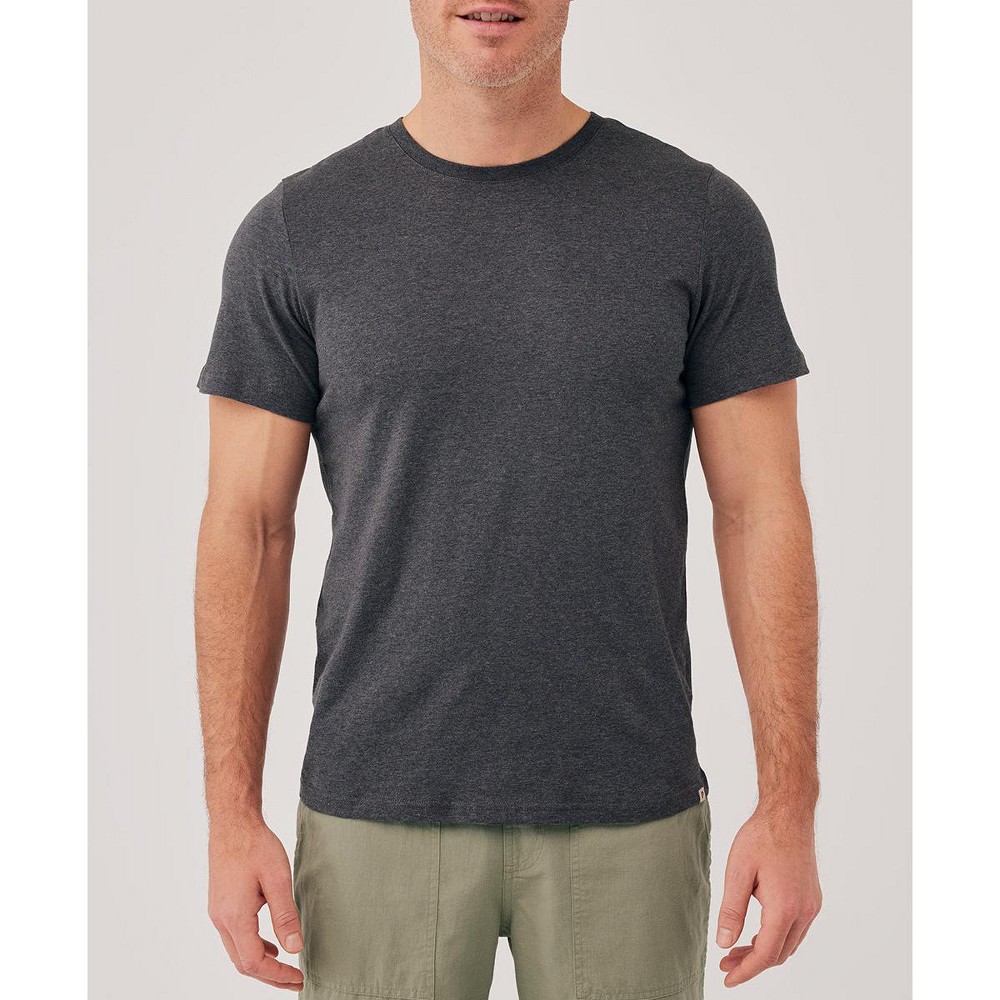
Replace the shirts you wash every week and the plastic never enters the drum.
Check Today’s Price on Amazon →Amazon prices change daily — tap to see today’s price and any current discount.
 Best Backstop
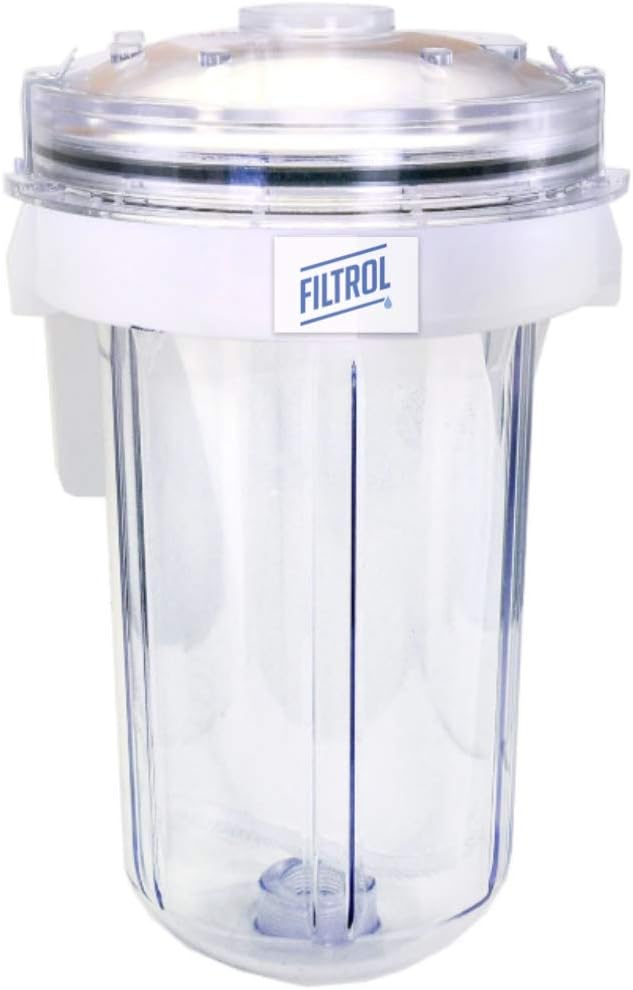
Needs access to the back of the machine; the filter bag must be rinsed regularly.
 Best With No Installation
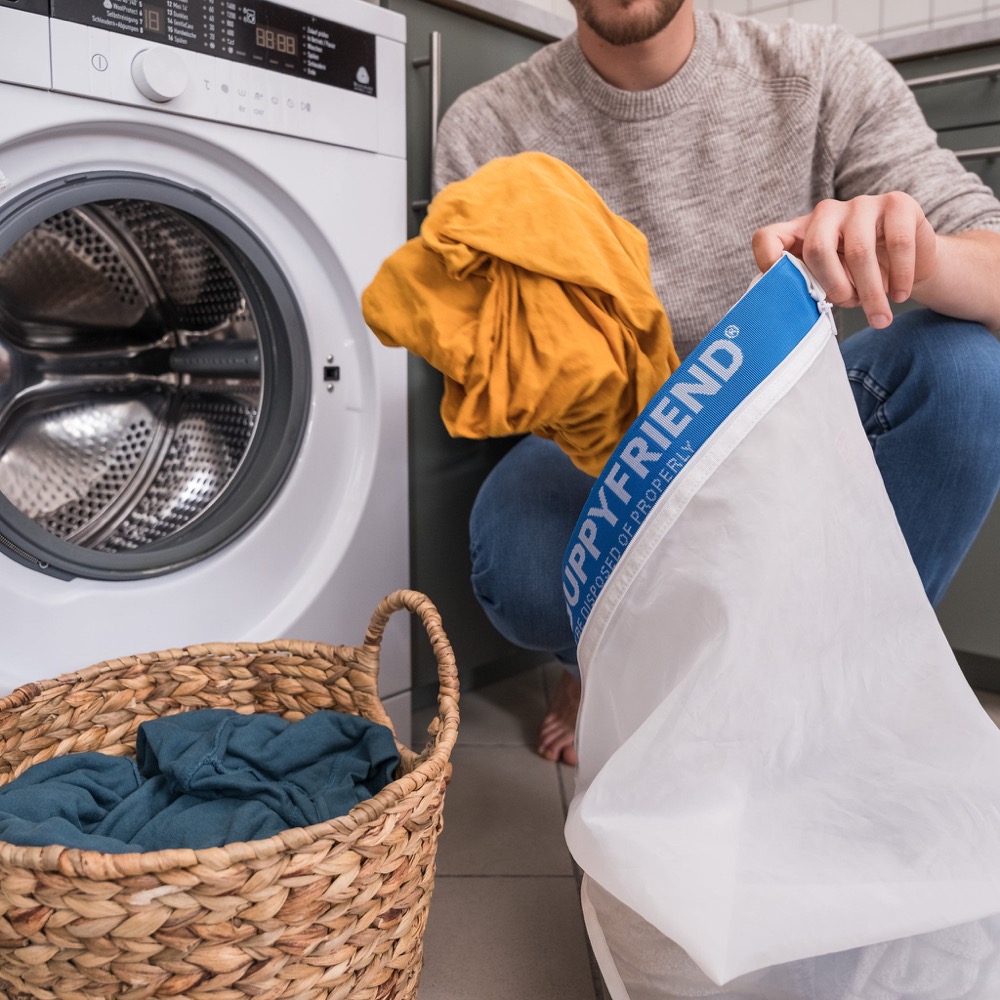
Amazon prices change daily — tap to see today’s price.
What to Replace First
Start with the textiles that are large, washed often, or worn for hours: sheets, towels, everyday tees and sleepwear. Bedding is usually the single biggest block of fabric in a home and the easiest to switch in one purchase; see our best organic cotton sheets and best non-toxic towels guides. For clothing, our 7 clothing swaps ranked by impact and the breakdown of organic alternatives to synthetic clothing cover what to look for on a label. Synthetic jackets deserve attention too: Hartline’s 2016 study recovered up to about 2 g of fiber from a single garment in one wash, and aged garments released more than new ones.
Frequently Asked Questions
Does cotton shed microplastics?
Pure, untreated cotton sheds microfibers, but they are cellulose, not plastic. Cellulose fabrics shed 0.2–4 mg per gram of fabric in the 2019 Zambrano tests, versus 0.1–1 mg for polyester, and cotton yarn later biodegraded by more than 70% in lake water while polyester did not appreciably degrade. A cotton blend with polyester or elastane does shed some plastic.
Does polyester shed more than cotton?
Not by weight. In tests of both fabrics in the same washes, cotton shed as much or more. The difference is persistence: polyester fibers are plastic and do not appreciably degrade, which is why synthetics accumulate even though only 8.2% of fibers in 916 ocean samples were synthetic.
How many microplastic fibers does one load of polyester laundry release?
Napper and Thompson (2016) estimated about 496,030 fibers from a 6 kg polyester load, 728,789 from acrylic and 137,951 from a polyester-cotton blend. Cai and colleagues (2020) measured 210 to 72,000 fibers per gram of polyester per wash depending on the fabric.
Is a polyester-cotton blend better than 100% polyester?
The evidence is split: one Plymouth study found the blend shed least, a later one found a polyester/cotton garment shed most. A blend still contains plastic, so it is a partial step at best.
Do clothes release microplastics when you wear them?
Yes. Polyester garments released up to 400 microfibers per gram into the air in 20 minutes of normal activity (De Falco et al., 2020), and the researchers estimated more than 900 million fibers per person per year to air from wearing, against almost 300 million from washing.
What is the fastest way to cut microplastics from clothing?
Replace the synthetics you wash most with cotton, linen, hemp or wool. For what you keep, use a front-loader (top-loaders released about 7 times the fiber mass in a 2016 study), wash cold and full, and add a drain-hose filter or a Guppyfriend bag.
Sources
- Zambrano MC, Pawlak JJ, Daystar J, Ankeny M, Cheng JJ, Venditti RA. “Microfibers generated from the laundering of cotton, rayon and polyester based fabrics and their aquatic biodegradation.” Marine Pollution Bulletin 2019; 142:394–407. https://doi.org/10.1016/j.marpolbul.2019.02.062
- Zambrano MC et al. Aquatic biodegradation of cotton, rayon and polyester yarns and microfibers. Marine Pollution Bulletin 2020; 151:110826. https://doi.org/10.1016/j.marpolbul.2019.110826
- Zambrano MC et al. Impact of dyes and finishes on the aquatic biodegradability of cotton textile fibers and microfibers. Marine Pollution Bulletin 2021; 165:112030. https://doi.org/10.1016/j.marpolbul.2021.112030
- Suaria G, Achtypi A, Perold V, Lee JR, Pierucci A, Bornman TG, Aliani S, Ryan PG. “Microfibers in oceanic surface waters: A global characterization.” Science Advances 2020; 6(23):eaay8493. https://pmc.ncbi.nlm.nih.gov/articles/PMC7274779/
- Napper IE, Thompson RC. “Release of synthetic microplastic plastic fibres from domestic washing machines: Effects of fabric type and washing conditions.” Marine Pollution Bulletin 2016; 112(1–2):39–45. https://doi.org/10.1016/j.marpolbul.2016.09.025; per-fabric figures as reported by the University of Plymouth.
- De Falco F, Di Pace E, Cocca M, Avella M. “The contribution of washing processes of synthetic clothes to microplastic pollution.” Scientific Reports 2019; 9:6633. https://pmc.ncbi.nlm.nih.gov/articles/PMC6488573/
- De Falco F, Cocca M, Avella M, Thompson RC. “Microfiber Release to Water, Via Laundering, and to Air, via Everyday Use: A Comparison between Polyester Clothing with Differing Textile Parameters.” Environmental Science & Technology 2020; 54(6):3288–3296. https://doi.org/10.1021/acs.est.9b06892; per-person estimates as reported by the University of Plymouth.
- Cai Y et al. Microplastic fiber release from polyester textiles during washing. Environmental Science & Technology 2020; 54:4847. https://doi.org/10.1021/acs.est.9b07395
- Sillanpää M, Sainio P. “Release of polyester and cotton fibers from textiles in machine washings.” Environmental Science and Pollution Research 2017; 24:19313–19321. https://pubmed.ncbi.nlm.nih.gov/28669092/
- Hartline NL, Bruce NJ, Karba SN, Ruff EO, Sonar SU, Holden PA. “Microfiber Masses Recovered from Conventional Machine Washing of New or Aged Garments.” Environmental Science & Technology 2016; 50(21):11532–11538. https://doi.org/10.1021/acs.est.6b03045
- Napper IE, Barrett AC, Thompson RC. “The efficiency of devices intended to reduce microfibre release during clothes washing.” Science of the Total Environment 2020; 738:140412. https://doi.org/10.1016/j.scitotenv.2020.140412
- McIlwraith HK et al. “Capturing microfibers — marketed technologies reduce microfiber emissions from washing machines.” Marine Pollution Bulletin 2019; 139:40–45. https://doi.org/10.1016/j.marpolbul.2018.12.012