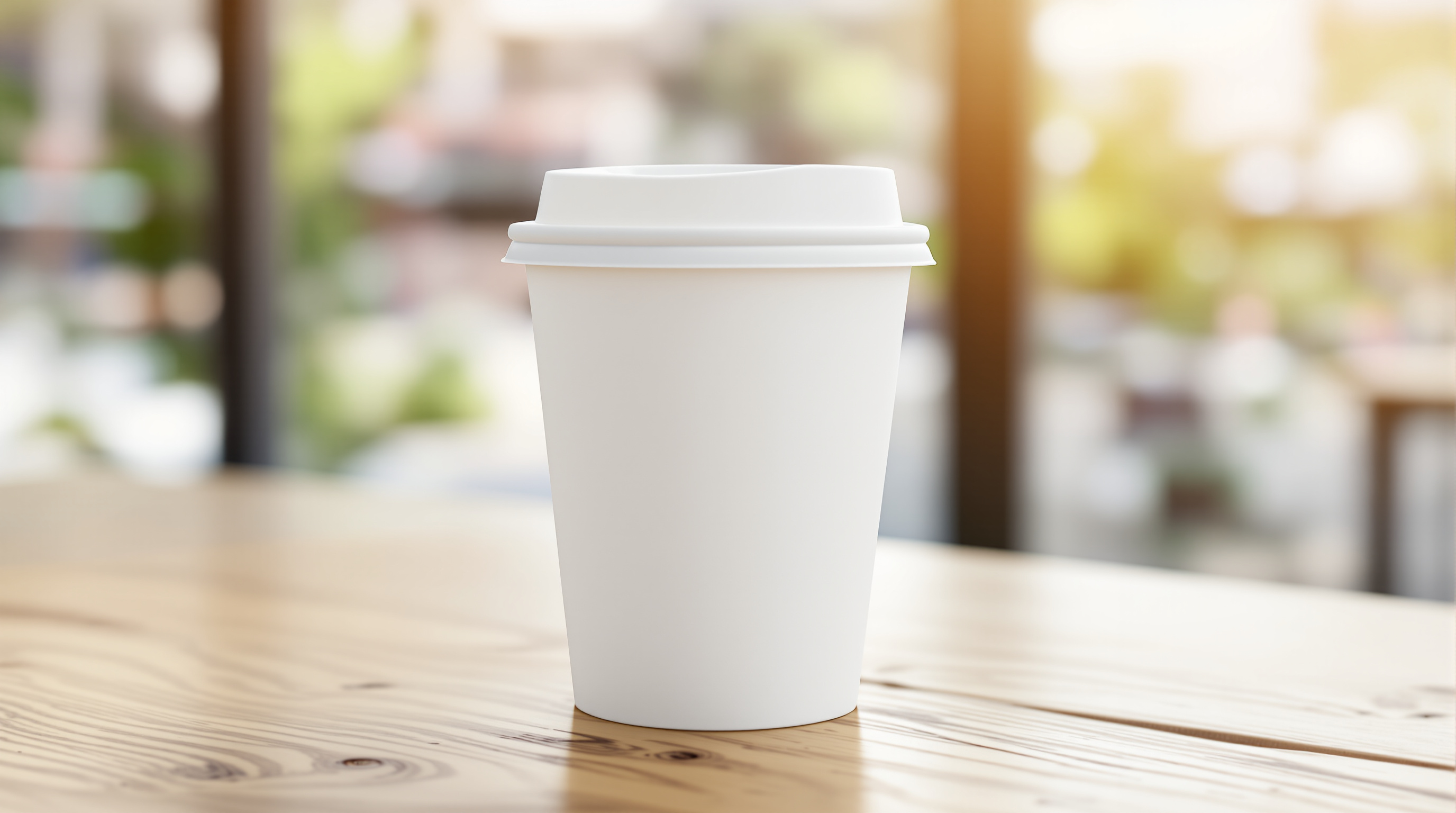
You grab a coffee on the way to work, the cup is labeled "paper," and you assume it's the eco-friendly, plastic-free choice. It usually isn't. Nearly every disposable hot-drink cup is lined on the inside with a thin film of plastic to keep it from leaking — and that plastic is the surface your hot coffee or tea actually touches.
The short version: when you pour a near-boiling drink into a lined paper cup, the heat softens that plastic film and it begins shedding microscopic plastic particles straight into your beverage. A widely cited 2021 study put a number on it — tens of thousands of particles per cup, within minutes. The cup looks like paper, but you're effectively drinking out of plastic.
Quick Answer
Do paper cups have microplastics? Yes. Almost all disposable "paper" cups are lined with a thin polyethylene (plastic) film so they hold liquid. When you add a hot drink, that film degrades and sheds microplastics into it — a 2021 IIT Kharagpur study measured about 25,000 micron-sized plastic particles released in 15 minutes from a single cup of hot liquid, along with trace heavy metals. Heat is the trigger, so hot coffee and tea are the worst case. The reliable fix is to carry a reusable glass or 18/8 stainless steel cup that doesn't shed plastic into your drink.
Why do paper cups contain plastic?
A sheet of plain paper would go soggy and leak within seconds of holding coffee. To stop that, manufacturers laminate the inside of nearly every disposable hot-drink cup with a microscopically thin film of plastic — most commonly low-density polyethylene (LDPE). That film is what makes the cup waterproof, and it's the surface that sits in direct contact with your drink.
So the "paper" cup is really a paper-and-plastic composite. The paper gives it structure; the plastic does the actual liquid-holding. This is also why standard coffee cups are so hard to recycle — most facilities can't separate the bonded plastic lining from the fiber, so the vast majority go to landfill or incineration. The relevant point for your health, though, is simpler: the layer touching your hot coffee or tea is plastic, and heat makes plastic shed. The cup lining is only one of several plastic surfaces a coffee passes through on the way to you — the pod, the drip bag and the machine shed microplastics into coffee too.
Not every coated kitchen paper hides plastic, though. Baking parchment's non-stick layer is silicone, not polyethylene — a different chemistry that doesn't shed these particles. We break down which kitchen papers actually contain plastic in does parchment paper have plastic in it.
How many microplastics does a paper cup release?
The most-cited number comes from a 2021 study by researchers at the Indian Institute of Technology (IIT) Kharagpur, published in the Journal of Hazardous Materials. They filled disposable paper cups with hot liquid at roughly 90°C and let it sit for 15 minutes — about the time it takes to drink a coffee. In that window, the polyethylene lining of a single cup degraded enough to release approximately 25,000 micron-sized plastic particles into 100 ml of liquid.
Scaled up, the researchers estimated that an average person drinking three cups of coffee or tea a day from disposable cups would swallow about 75,000 tiny plastic particles daily from the cups alone. The degraded film also released trace amounts of heavy metals — including palladium, chromium and cadmium — that had been bound up in the plastic. This is consistent with the broader picture in our roundup of which foods and drinks carry the most microplastics: heated, plastic-contact items are repeat offenders.
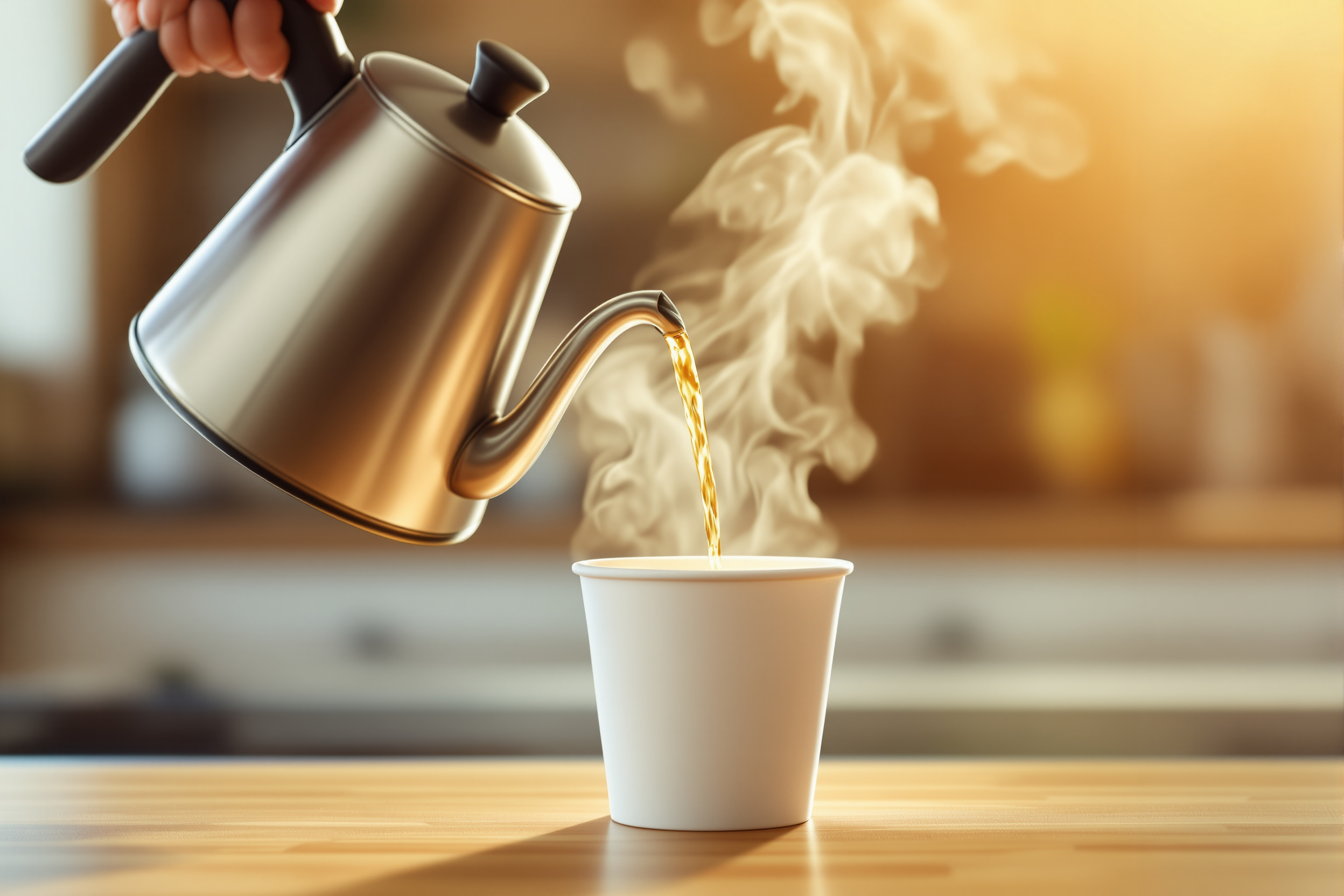
Microplastics this small don't just pass through — they've now been detected in human blood, lung tissue, placenta and breast milk, and researchers are actively studying their links to inflammation and other effects. You can't see, taste, or filter out the particles a paper cup sheds, which is exactly why the practical answer is to avoid the exposure rather than try to manage it.
Does hot coffee or tea make it worse?
Yes — heat is the single biggest factor. The IIT Kharagpur team used near-boiling liquid precisely because that's how these cups are used in the real world, and the lining started breaking down within minutes. The hotter the drink and the longer it sits in the cup, the more the polyethylene film softens and sheds. A lukewarm drink in the same cup would release far less.
This is the same heat-driven mechanism behind plastic leaching everywhere else in the kitchen — it's why we warn against microwaving plastic and why plastic tea bags steeped in boiling water release billions of particles — if you're a tea drinker, switching to plastic-free tea bags removes that same daily hot-plastic exposure. Hot liquid plus plastic is the worst-case combination, and a disposable coffee cup checks both boxes at once.
Do plastic lids and "compostable" PLA cups help?
Not really. The domed sip lid on a to-go coffee is usually polystyrene or polypropylene, and while it touches your lips more than your drink, it adds yet another hot-contact plastic to the mix. Swapping it out doesn't address the lining inside the cup, which is the main source.
"Compostable" cups are a more nuanced trap. Many use a plant-based PLA (polylactic acid) bioplastic lining instead of polyethylene. PLA is still a polymer — it can still shed particles into hot liquid — and it only breaks down in a commercial composting facility, not in your kitchen bin or in landfill. So a compostable cup may ease the environmental guilt slightly, but it is not a reliable way to keep plastic particles out of your drink. The only dependable fix is to stop drinking hot liquid out of any disposable lined cup.
The fix: switch to a reusable cup
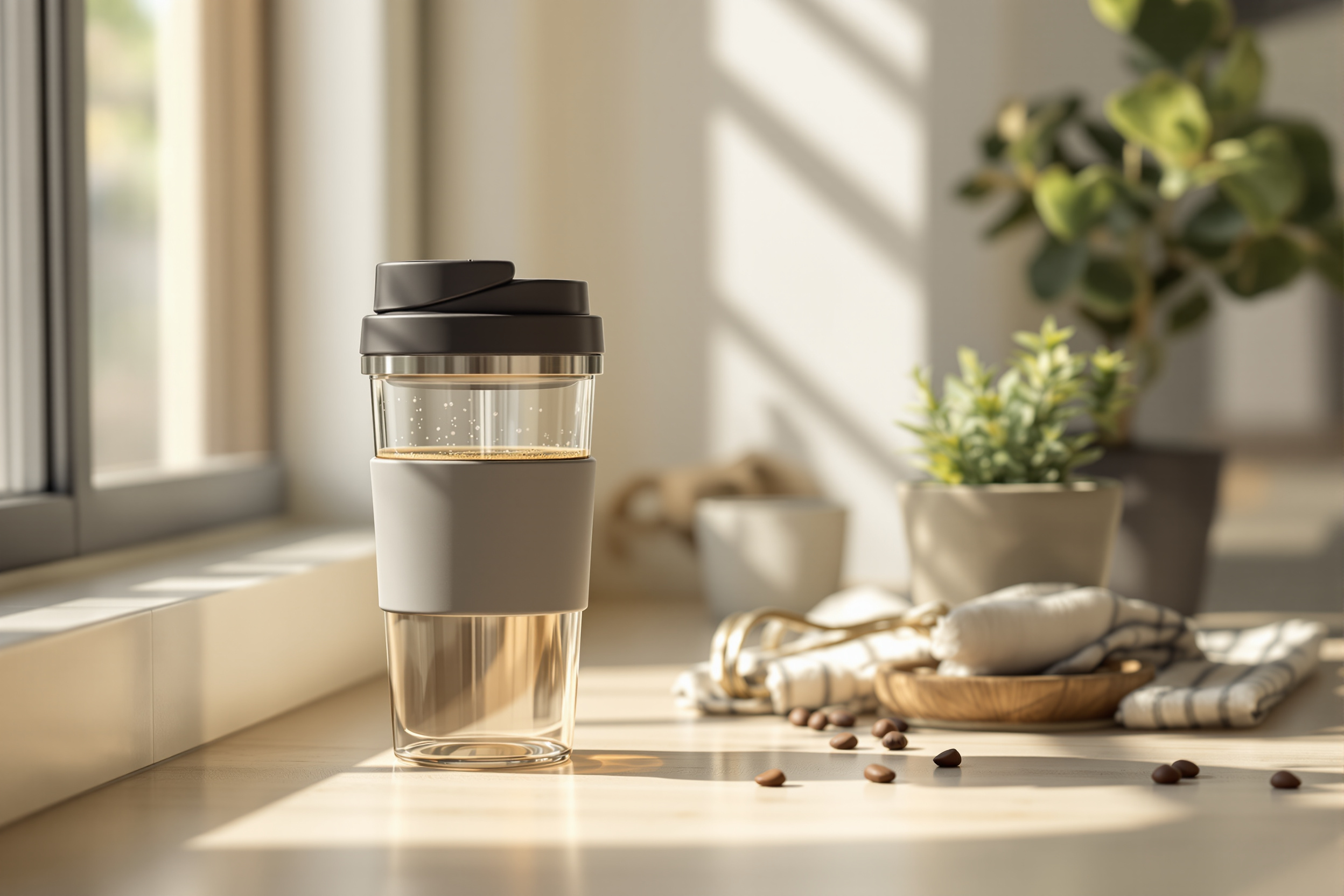
The reliable solution is a reusable cup made of a material that doesn't shed microplastics into hot liquid — borosilicate glass or 18/8 (304) food-grade stainless steel. Both are inert, both handle near-boiling drinks without degrading, and both wash clean for years. Keep one in your bag or car and you can fill up at any café and skip the lined paper cup entirely (many shops even knock a few cents off your order for bringing your own).
These are the cups we recommend. They're drawn from our full plastic-free water bottle guide and stainless steel bottle roundup, and vetted against our safest water bottle brands guide — the insulated picks double as travel mugs that keep coffee hot for hours, and the glass options give you pure, taste-free hot drinks. For the ranked, coffee-first breakdown of these picks, see our guide to the best non-toxic travel mugs and reusable coffee cups. The cold-drink side of the same problem — how many microplastics are in a water bottle — is measured at roughly 240,000 plastic particles per liter of bottled water in the 2024 PNAS study, so swapping the disposable cup and the plastic bottle together closes the two biggest drink-side sources most adults have.
One more oral-cavity source belongs in the same conversation as the paper cup, because the mechanism is the same — plastic wearing against warm, wet mouth tissue — and because it happens twice every day whether or not you buy coffee. A 2025 Ecotoxicology and Environmental Safety study (Wang et al., DOI 10.1016/j.ecoenv.2025.118694) measured a standard nylon-bristle toothbrush shedding roughly 2.33 million microplastic particles per person, per year straight against the oral mucosa — roughly 3,200 per brushing session, on top of any paper-cup exposure. Swapping the coffee cup and the brush together removes the two largest measured direct-to-mouth microplastic sources most adults have; the plant-bristle microplastic free toothbrush picks are the other half of that change.
Quick Picks
- Best reusable coffee cup: JOCO Glass Flask 20oz — borosilicate glass, velvet-grip sleeve
- Best budget all-steel: Klean Kanteen Classic 27oz — bare 18/8 steel, all-steel cap option
- Best for keeping coffee hot: Hydro Flask Standard Mouth 21oz — pro-grade stainless, hot 12hrs
- Best slim commuter: S'well Original 17oz — triple-wall vacuum, keeps hot 18hrs
- Best 100% plastic-free: Pura Sport 22oz Insulated — MADE SAFE certified, medical-grade silicone
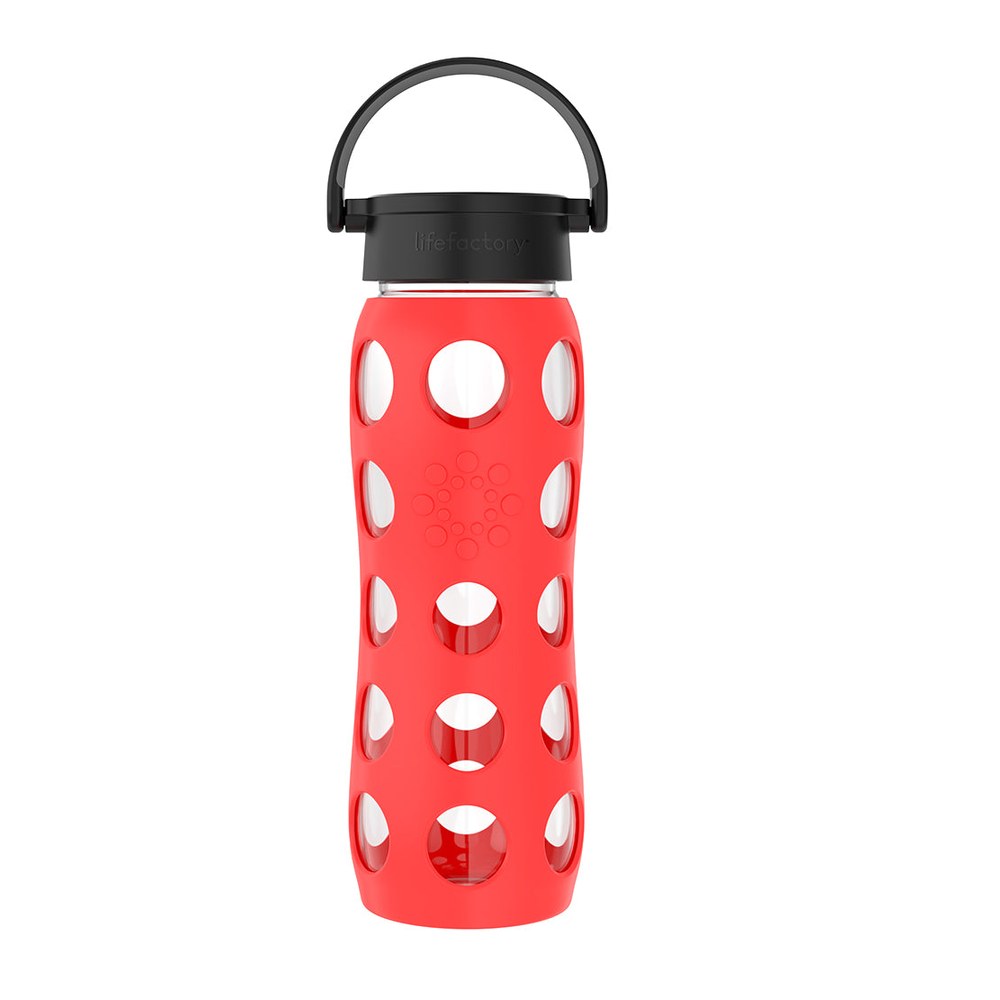
- Best glass for desk & tea: Lifefactory Glass Bottle 22oz — borosilicate glass, silicone sleeve
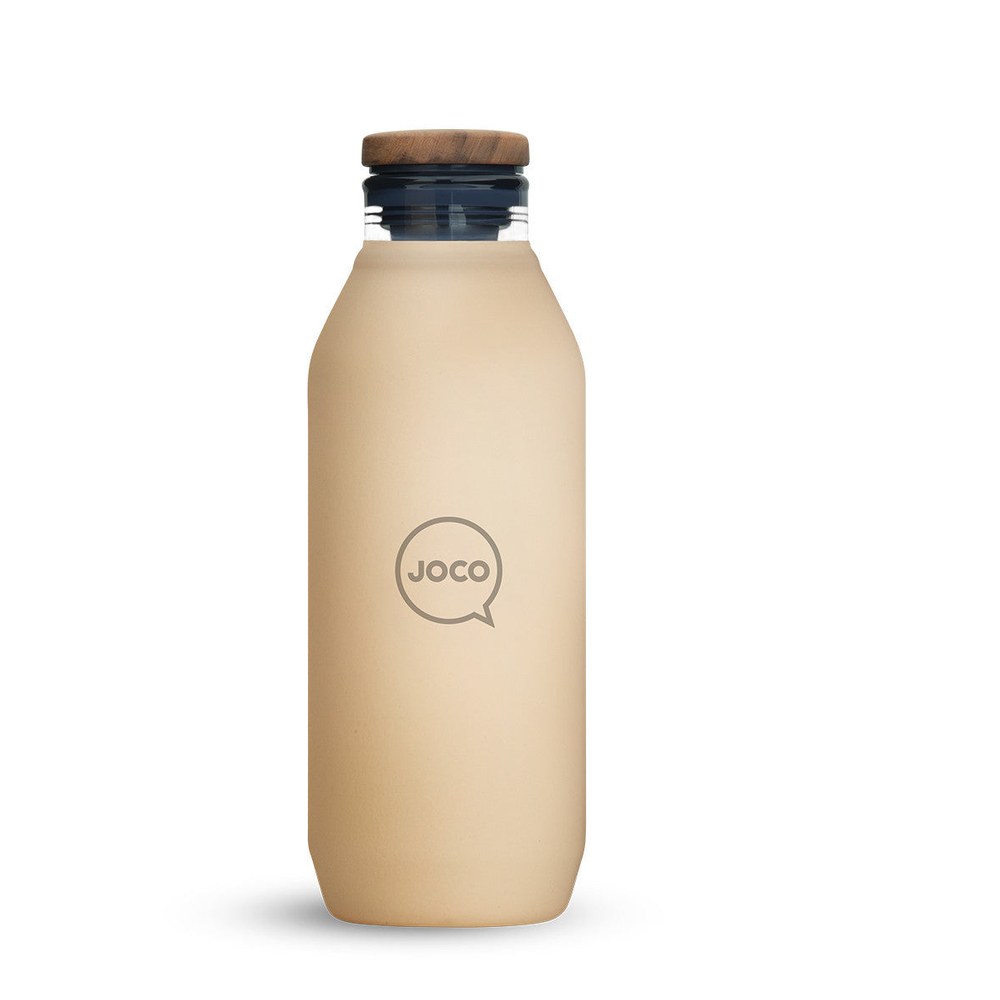
1. JOCO Glass Flask 20oz
 Best Reusable Coffee Cup
The closest thing to a paper coffee cup done right. JOCO's Flask is made from borosilicate glass — the same chemically inert material used in laboratory glassware — so unlike a lined paper cup, nothing plastic ever touches your hot coffee or tea. A removable velvet-touch silicone sleeve provides grip and impact protection, and the natural olive-wood lid seals for transit. The glass imparts no taste, so your drink tastes exactly as the barista made it. At 20oz it covers most café orders, fits under most espresso spouts, and is easy to spot in a bag thanks to JOCO's matte colorways. The single best swap for anyone whose plastic exposure comes from a daily takeaway coffee.
Hand it to the barista instead of taking a lined paper cup — glass-pure coffee, no 25,000-particle problem, and many shops give a small bring-your-own discount.
Why it's safe: Your drink touches only inert borosilicate glass — no polyethylene lining, no leaching, and no microplastic shedding, even with near-boiling coffee.
Check Today’s Price on Amazon →Amazon prices change daily — tap to see today's price and any active discount.
- Free delivery & returns for Prime members
- Sold & shipped by Amazon
- Thousands of verified reviews
2. Klean Kanteen Classic 27oz
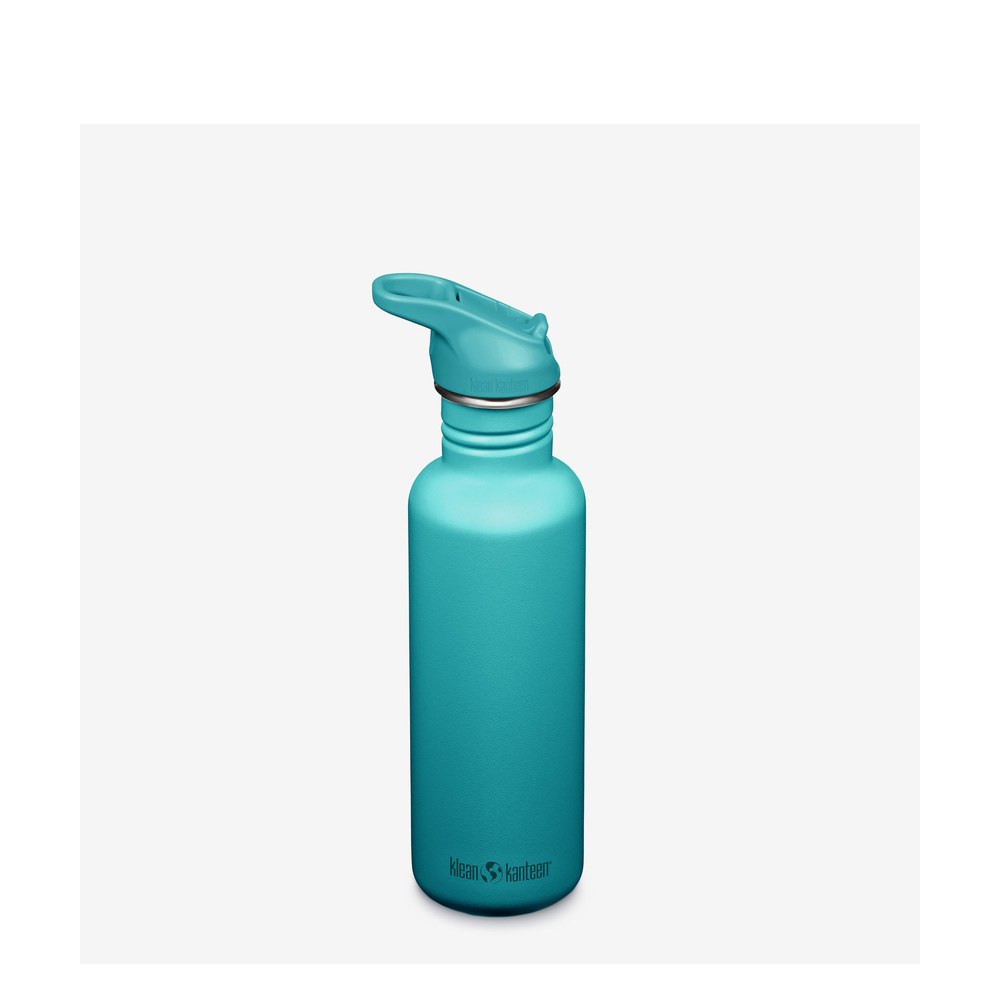 Best Budget All-Steel
The most affordable plastic-free pick. Made from 18/8 food-grade stainless steel with single-wall construction — the interior is nothing but bare metal, with no liner, coating, or plastic contact surface. Pair it with the all-steel Loop Cap and there's no plastic in the drinking path at all; only a small food-grade silicone gasket remains. Because it's single-wall (not insulated), it won't keep coffee piping hot for hours, so it shines for iced coffee, cold brew, and quick errands rather than long commutes. It's the lightest and cheapest option here, and the simplest to trust: there's simply nothing in it that can shed plastic. A great entry swap for anyone replacing disposable cups on a budget.
The lowest-cost way off disposable cups — bare 18/8 steel inside and an all-steel cap option, ideal for iced coffee and cold brew on the go.
Why it's safe: The only thing your drink touches is 18/8 food-grade stainless steel — no polyethylene lining, no coating, and no microplastic shedding, even after years of daily use.
Check Today’s Price on Amazon →Amazon prices change daily — tap to see today's price and any active discount.
- Free delivery & returns for Prime members
- Sold & shipped by Amazon
- Thousands of verified reviews
3. Hydro Flask Standard Mouth 21oz
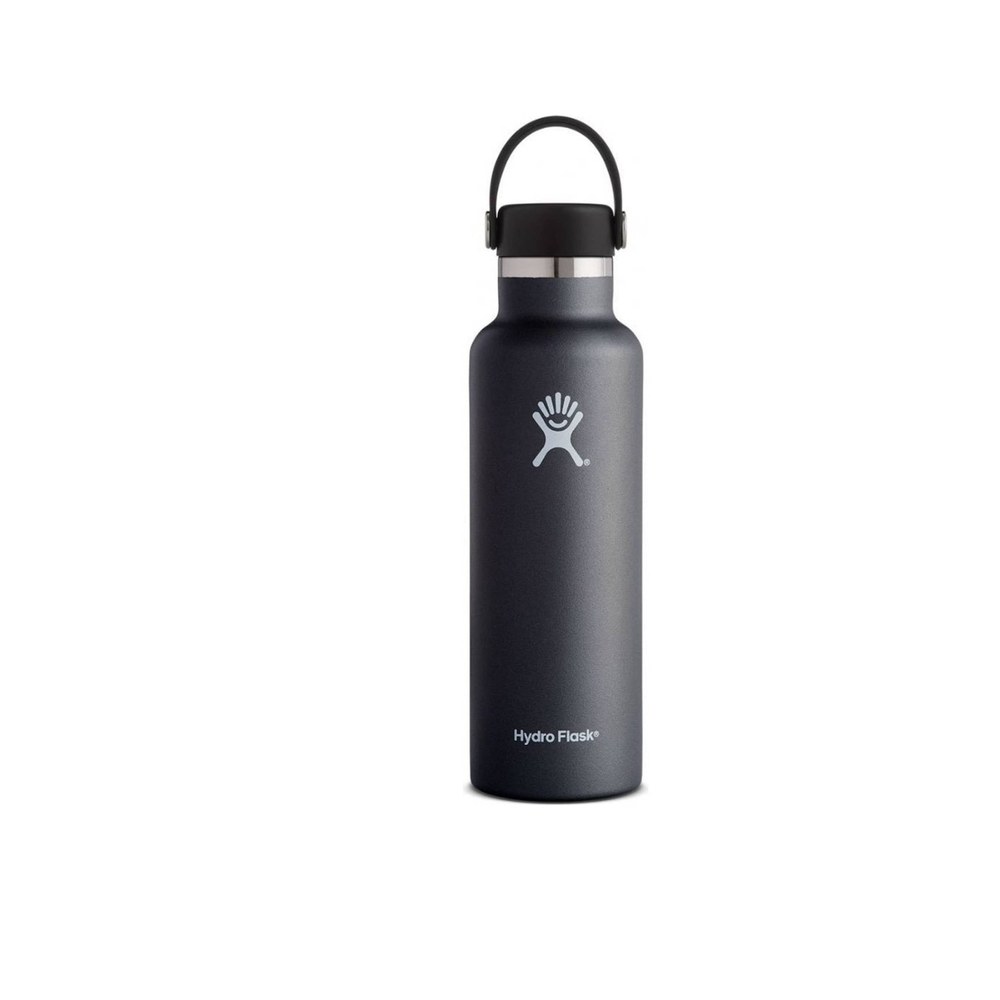 Best for Keeping Coffee Hot
The most durable insulated pick — built to survive years of being tossed in a bag. Hydro Flask uses 18/8 pro-grade stainless steel with a chip-resistant powder-coat exterior that holds up to repeated drops. Double-wall vacuum insulation keeps hot drinks hot for about 12 hours and cold drinks cold for 24 — so a morning coffee is still warm well into the afternoon. There's no interior liner or coating; the only polymer is a small food-grade silicone gasket in the Flex Cap, away from your drink. Replacement lids are easy to find, and it's backed by a lifetime warranty. The standard-mouth 21oz is the natural coffee size. The right choice for anyone who wants an indestructible travel mug that never sheds plastic.
Fill it with coffee at 8am and it's still hot at lunch — pro-grade stainless and a chip-proof coat take years of daily abuse, all under a lifetime warranty.
Why it's safe: The interior is bare 18/8 pro-grade stainless with no liner or coating — nothing to scratch through, leach, or shed into a hot drink.
Check Today’s Price on Amazon →Amazon prices change daily — tap to see today's price and any active discount.
- Free delivery & returns for Prime members
- Sold & shipped by Amazon
- Thousands of verified reviews
4. S'well Original 17oz
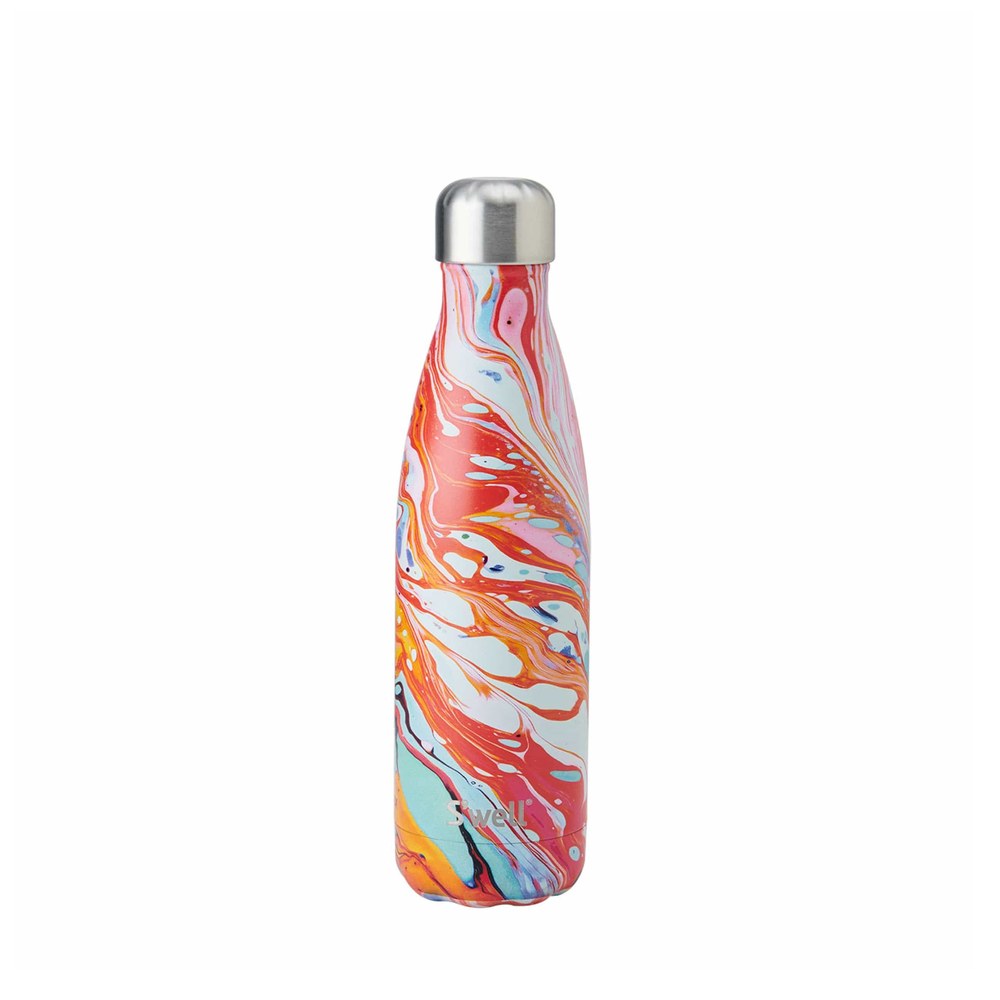 Best Slim Commuter
The most carry-friendly insulated option. S'well's triple-wall vacuum insulation ("Therma-S'well") keeps hot drinks hot for up to 18 hours and cold drinks cold for up to 36 — exceptional thermal performance in a slim profile that fits a bag pocket or cup holder. The interior is 18/8 food-grade stainless steel with no liner or coating, and the exterior wears a non-toxic powder coat. The stainless lid contains a single silicone seal gasket — the only polymer, and nowhere near your drink. The narrower mouth is comfortable to sip from on the go, and the huge range of finishes makes it the most design-led pick here. A great everyday coffee carry for anyone who values a slim, attractive bottle.
Pours hot coffee in at the café and keeps it hot all day in a slim bottle that actually fits your bag and your cup holder.
Why it's safe: The interior is bare 18/8 stainless with no liner or coating, so nothing leaches or sheds — the only polymer is a silicone gasket in the lid, away from your drink.
Check Today’s Price on Amazon →Amazon prices change daily — tap to see today's price and any active discount.
- Free delivery & returns for Prime members
- Sold & shipped by Amazon
- Thousands of verified reviews
5. Pura Sport 22oz Insulated
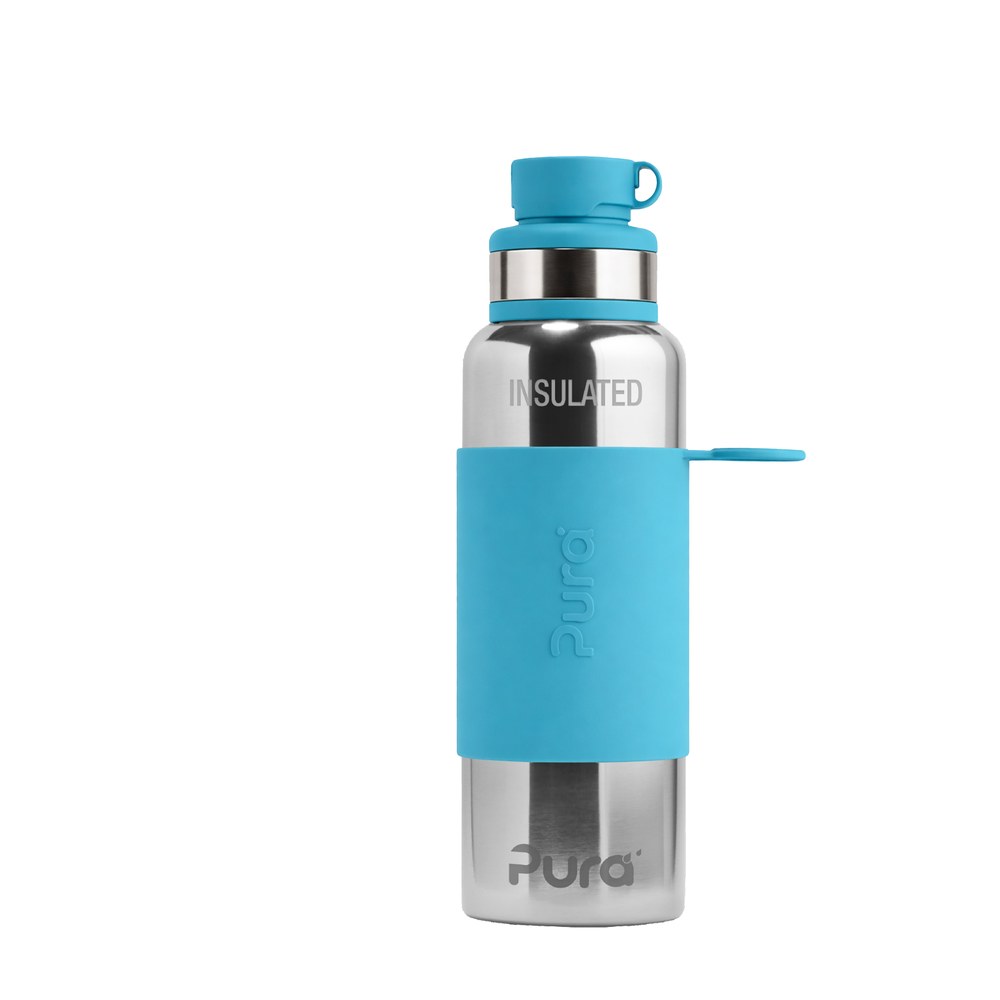 Best 100% Plastic-Free
The most comprehensively plastic-free pick on this list. Pura holds MADE SAFE certification — a rigorous third-party standard that screens for thousands of harmful chemicals. The body is 18/8 food-grade stainless steel, and where other bottles use plastic, Pura uses medical-grade silicone: the cap, sleeve, and sealing components are all silicone. Silicone is inert, doesn't shed microplastic particles, and isn't associated with endocrine disruption at drinking temperatures. Double-wall vacuum insulation keeps drinks hot or cold for hours, and you can swap the sport cap for other interchangeable Pura tops. The best choice for anyone who wants the strictest plastic-free standard available in a daily drink bottle.
The only MADE SAFE–certified pick — even the cap and sleeve are medical-grade silicone, so there's no plastic anywhere on the bottle.
Why it's safe: Your drink touches only 18/8 stainless and inert medical-grade silicone — no plastic, no BPA/BPS, and nothing that sheds microplastic particles into a hot beverage.
Check Today’s Price on Amazon →Amazon prices change daily — tap to see today's price and any active discount.
- Free delivery & returns for Prime members
- Sold & shipped by Amazon
- Thousands of verified reviews
6. Lifefactory Glass Bottle 22oz
 Best Glass for Desk & Tea
The best glass option for home and desk use. Made from borosilicate glass — the same material used in laboratory glassware — which is thermally stable, chemically inert, and completely free of BPA, BPS, and any polymer contact with your drink. It imparts no taste or odor, the gold standard for flavor purity in tea and coffee. The protective silicone sleeve adds grip and guards against shattering from minor drops. The cap contains a small polypropylene component — the only plastic in the system, located at the exterior closure rather than the drink-contact surface. Dishwasher-safe. Not insulated, so it's best for sipping hot tea at a desk rather than long commutes — but unbeatable as a pure, refillable everyday glass.
Brew tea at your desk in glass instead of a lined cup — no plastic taste, no shedding, and it cleans up in the dishwasher.
Why it's safe: Borosilicate glass is completely inert — it never leaches, never sheds microplastics, and imparts no taste. The only plastic is a small cap component at the exterior closure, not the drink surface.
Check Today’s Price on Amazon →Amazon prices change daily — tap to see today's price and any active discount.
- Free delivery & returns for Prime members
- Sold & shipped by Amazon
- Thousands of verified reviews
Comparison Table
| Product | Material | Insulated | Plastic-Free Rating | Price |
|---|---|---|---|---|
| JOCO Glass Flask 20oz | Borosilicate Glass | No | Excellent | $$ |
| Klean Kanteen Classic 27oz | 18/8 Stainless | No (single-wall) | Excellent (steel cap) | $ |
| Hydro Flask Standard 21oz | 18/8 Pro-Grade Stainless | Yes (hot 12 hrs) | Excellent | $$ |
| S'well Original 17oz | 18/8 Stainless | Yes (hot 18 hrs) | Excellent | $$ |
| Pura Sport 22oz | 18/8 Stainless + Silicone | Yes (double-wall) | Best (MADE SAFE) | $$ |
| Lifefactory Glass 22oz | Borosilicate Glass | No | Excellent | $ |
Price guide: $ budget · $$ mid-range · $$$ premium. Tap any pick above for today's exact Amazon price.
What to Avoid When You Switch
If you're trying to cut the plastic in your daily coffee, these "fixes" don't actually solve the problem — they leave a plastic surface in contact with your hot drink.
Avoid Assuming a "paper" cup is plastic-free
The word "paper" on a coffee cup tells you nothing about the lining, which is almost always polyethylene plastic. There's no way to tell from the outside, and you can't peel or rinse the film away. The only reliable signal is the material of the cup you're actually drinking from — and a disposable cup is, functionally, a plastic cup with a paper jacket. Treat every lined takeaway cup as a source of microplastics in hot liquid.
Avoid "Compostable" PLA cups as a microplastics fix
PLA (polylactic acid) bioplastic linings are marketed as the green alternative, but PLA is still a polymer that can shed particles into hot liquid, and it only breaks down in an industrial composting facility — not your kitchen bin or landfill. A compostable cup may reduce environmental waste in the right disposal stream, but it does not reliably keep plastic particles out of your drink. It's an environmental claim, not a health one.
Avoid Reusable cups made of plastic or Tritan
Plenty of "reusable" coffee cups are simply hard plastic or Tritan copolyester. Tritan is marketed as BPA-free and BPS-free, but a 2011 study in Environmental Health Perspectives found many plastics sold as estrogen-activity-free still showed estrogenic activity in cell assays — and regardless of that debate, Tritan is a polymer that can shed nanoplastic particles, especially with hot drinks. Reusing it daily with hot coffee defeats the purpose. Choose glass or 18/8 stainless steel instead.
Avoid Stainless or glass cups with a plastic sip lid you drink through
Some otherwise-good travel mugs pair a stainless or glass body with a plastic sip spout that your hot drink flows through on every sip. That reintroduces a hot-plastic contact point. Look for an all-steel cap, a silicone seal, or a glass/wood lid rather than a polypropylene drink-through spout — the drinking path is what matters most.
Want the Full Room-by-Room Protection Guide?
The Complete Plasticproof Guide covers every room in your home — kitchen, nursery, bathroom, bedroom — with the full research and complete swap list. 47+ peer-reviewed studies, 80+ product recommendations.
Frequently Asked Questions
Yes. Almost every disposable "paper" cup is lined on the inside with a thin film of plastic — usually polyethylene — to make it waterproof. When you fill it with a hot drink, that plastic film softens and sheds microplastic particles directly into your coffee or tea. A 2021 study from IIT Kharagpur found that a single paper cup holding hot liquid releases roughly 25,000 micron-sized plastic particles within just 15 minutes. The cup itself looks like paper, but the surface touching your drink is plastic.
Research from the Indian Institute of Technology Kharagpur (2021) estimated that about 25,000 microscopic plastic particles leach into 100 ml of hot liquid held in a lined paper cup for 15 minutes. The team calculated that someone who drinks three cups of coffee or tea a day from disposable cups could ingest roughly 75,000 plastic particles a day from cups alone. The particles also carried trace heavy metals such as palladium, chromium and cadmium absorbed from the plastic film.
Almost always, yes. Standard hot-drink paper cups have an interior coating of low-density polyethylene (a plastic) that makes the paper liquid-proof and prevents leaks. Some newer cups use a plant-based PLA (polylactic acid) bioplastic lining instead, but PLA is still a polymer that can shed particles, and it only breaks down in industrial composting — not in your home or in landfill. A truly plastic-free disposable cup is rare, which is why a reusable cup is the reliable fix.
Yes. Heat is the main driver. The IIT Kharagpur study filled cups with liquid at about 90°C (near-boiling) and found the polyethylene lining degraded within minutes, releasing tens of thousands of particles. The hotter the drink and the longer it sits, the more the plastic film softens and sheds. This is the same mechanism seen with other plastics — heat dramatically accelerates microplastic and chemical migration — so hot drinks in lined paper cups are a worst-case scenario.
Carry a reusable cup made of borosilicate glass or 18/8 stainless steel — materials that don't shed microplastics and don't leach into hot liquid. A glass coffee cup like the JOCO Flask, or an insulated stainless travel mug like the Hydro Flask or S'well, lets you fill up at any café and skip the lined paper cup entirely. Many coffee shops will even take a few cents off when you bring your own cup.
Sources
- Ranjan VP, Joseph A, Goel S. "Microplastics and other harmful substances released from disposable paper cups into hot water." Journal of Hazardous Materials, 2021 (IIT Kharagpur). — ~25,000 micron-sized particles released into 100 ml of hot liquid in 15 minutes, plus trace heavy metals.
- Indian Institute of Technology Kharagpur, press release on disposable paper-cup microplastics study, 2020.
- Hernandez LM, et al. "Plastic Teabags Release Billions of Microparticles and Nanoparticles into Tea." Environmental Science & Technology, 2019. (Heat-driven particle release from food-contact plastics.)
- Yang CZ, et al. "Most Plastic Products Release Estrogenic Chemicals: A Potential Health Problem That Can Be Solved." Environmental Health Perspectives, 2011. (Includes analysis of Tritan plastic.)
- Vethaak AD, Legler J. "Microplastics and human health." Science, 2021. doi:10.1126/science.abe5041.
- Leslie HA, et al. "Discovery and quantification of plastic particle pollution in human blood." Environment International, 2022.
- Ragusa A, et al. "Plasticenta: First evidence of microplastics in human placenta." Environment International, 2021.
Protect Every Room in Your Home
From the kitchen to the nursery — the Complete Plasticproof Guide covers every swap that matters, backed by 47+ studies and 80+ product recommendations.