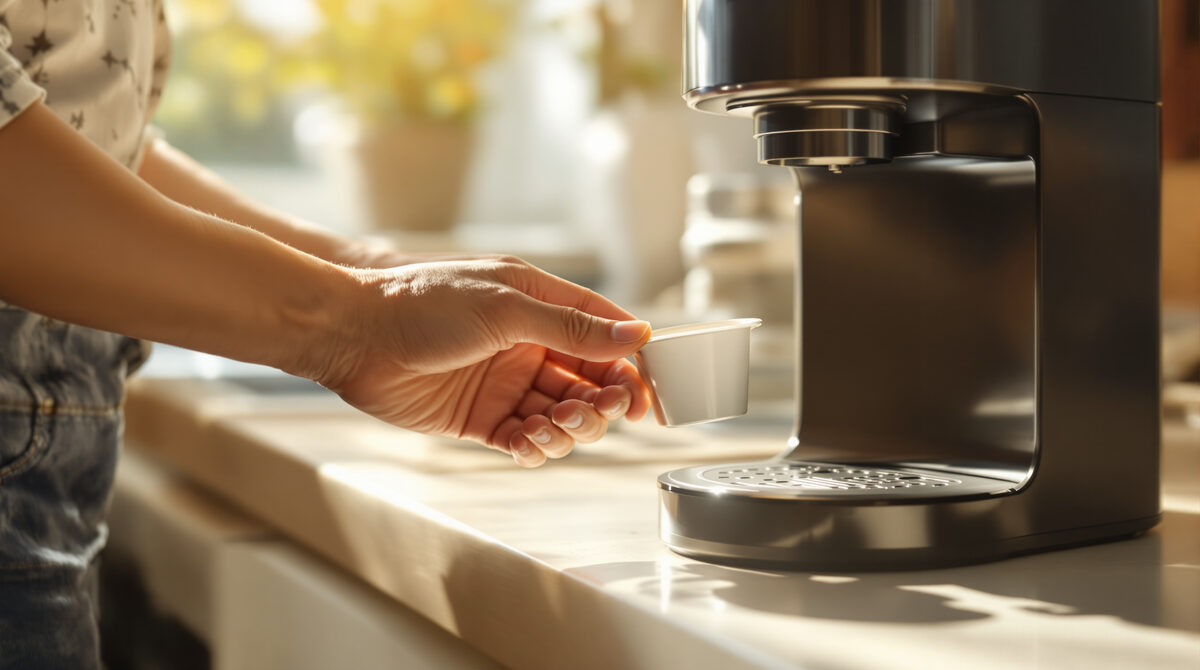
No study has counted the microplastics inside a single brewed K-Cup — but the mechanism and the closest evidence make it very likely they shed some. Most K-Cups are made of #5 polypropylene, and brewing forces hot, pressurized water straight through that plastic. In peer-reviewed tests, single-use polypropylene cups released 126 to 1,420 microplastic particles per liter of hot water, and one plastic tea bag released roughly 11.6 billion microplastic particles at brewing temperature — the same hot-water-through-plastic situation a K-Cup creates. It is not a proven emergency, and today's K-Cups are BPA-free, but the exposure is easy to cut: a reusable stainless pod or a plastic-free brewer removes the single-use plastic from the hottest part of the process entirely.
"Do K-Cups have microplastics?" is one of the most-searched coffee questions, and the answers online swing between two extremes — alarming claims of "trillions of particles" in every cup, and flat reassurances that a BPA-free pod is nothing to worry about. Neither is quite right. The honest picture sits in the middle, and it is more useful than either scare or shrug.
This guide works through the six myths that cloud the question, and holds each one up against what the peer-reviewed evidence actually shows — what K-Cups are made of, whether hot water through a plastic pod really sheds microplastics, what "BPA-free" does and does not mean, and how reusable pods and plastic-free brewers compare. It is the same evidence-first approach we bring to whether coffee itself has microplastics and whether electric kettles shed them.
The bottom line up front: the pod is the part you can control. Running hot, pressurized water through a single-use polypropylene capsule is the one step that is easy to remove — a reusable stainless steel pod or a plastic-free brewer keeps the hottest water off throwaway plastic, and starting with filtered water cuts the microplastics already in your tap.
Myth 1: "K-Cups are aluminum, so there's no plastic to worry about"
Most single-serve pods built for Keurig-style machines are plastic, not metal. A standard K-Cup is a small cup of #5 polypropylene with a thin foil lid and a paper filter inside, and the great majority of store-brand and off-brand pods are plastic as well. The aluminum capsules people picture are Nespresso's Original line — a different system.
This matters because the pod material decides what the water touches. When you brew, the machine punctures the lid and the base and forces hot water straight through the polypropylene cup. That is a very different situation from a metal capsule or a glass carafe: the hot water is in direct, pressurized contact with a thin-walled plastic for the whole extraction. So "it's just foil" is the first myth to clear — for the pods most people use every morning, plastic is exactly what the water runs through.
Myth 2: "K-Cups are BPA-free, so nothing leaches out"
Keurig removed bisphenol A from its pods by the end of 2020, and polypropylene is a food-contact plastic regulators consider safe for its intended use. That is real and worth knowing. But "BPA-free" is a narrow claim about one chemical — it says nothing about whether tiny plastic particles shed from the pod wall when hot water passes through it, and nothing about other additives.
Microplastics are a physical process, not a single banned ingredient: heat, pressure, and contact time abrade plastic surfaces and release particles regardless of whether BPA is present. A pod can be perfectly BPA-free and still shed polypropylene fragments into the cup. Treating "BPA-free" as "nothing comes out" is the same mistake we unpack in why BPA-free plastic isn't automatically safe.
Myth 3: "The water never gets hot enough to shed microplastics"
Brewing water in a pod machine runs around 90°C (about 195°F) and is pushed through the capsule under pressure — well within the range where research shows polypropylene sheds particles. No one has published a particle count for a brewed K-Cup specifically, so the honest answer names that gap, but the closest peer-reviewed evidence points clearly in one direction.
A 2024 study in the journal Foods tested single-use cups and found they released between 126 and 1,420 microplastic particles per liter of hot water, with the highest release coming from polypropylene at 50°C over 20 minutes — and simply rinsing the cups first cut release by 52–65% (Akbulut et al., Foods, 2024; full text at PMC). A separate 2019 study famously found that steeping one plastic tea bag at 95°C released roughly 11.6 billion microplastic and 3.1 billion nanoplastic particles into a single cup (Hernandez et al., Environmental Science & Technology, 2019). A K-Cup is the same scenario — hot water forced through food-grade plastic — so "not hot enough" does not hold up. It is the same heat-plus-plastic logic behind the microplastics electric kettles can shed, and part of the wider plastic load the human body carries.
Myth 4: "A reusable pod is just as plasticky as a K-Cup"
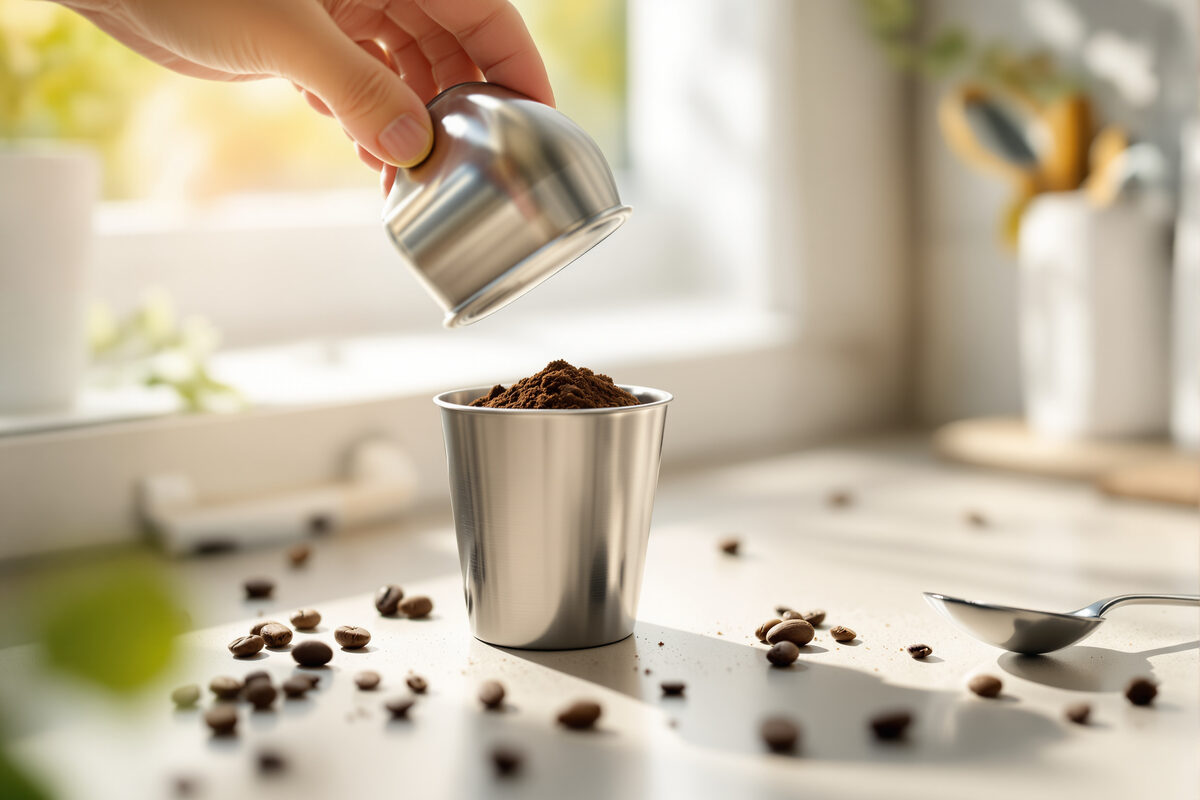
A reusable pod made of stainless steel removes the single-use plastic capsule from the equation entirely. Instead of forcing hot water through a throwaway polypropylene cup, the water meets metal and a fine stainless mesh that you fill with your own ground coffee — the same convenience, without the disposable plastic in the hottest part of the brew.
It is not a perfect fix on its own: a Keurig still has a plastic water reservoir and internal tubing, so a reusable metal pod addresses the capsule, not the whole machine. But the capsule is the part in the most direct, highest-temperature contact with your coffee, and it is the part you throw away ten-plus times a week. Swapping it is the single biggest lever a pod-machine owner has — see our tested picks for the best reusable K-Cup pods.
Myth 5: "Any microplastics come from the coffee, not the pod"
Coffee can carry some microplastics no matter how you brew it — from processing, packaging, and the water you use — so the pod is not the only possible source. But that is a reason to count the pod as an added source, not to wave it away. Hot water forced through a plastic capsule is an extra contact point stacked on top of whatever the coffee and water already contribute.
The machine matters too: the reservoir, tubing, and heating path inside most pod brewers are plastic, which is why starting with clean, filtered water and descaling regularly both help. If you want the fuller picture of the drink itself, we cover it in whether coffee has microplastics, and the single-use cup you pour it into has its own story in whether paper cups shed microplastics. The pod, the machine, the water, and the cup are separate dials — and the pod is the easiest one to turn down.
Myth 6: "There's nothing you can do short of quitting coffee"
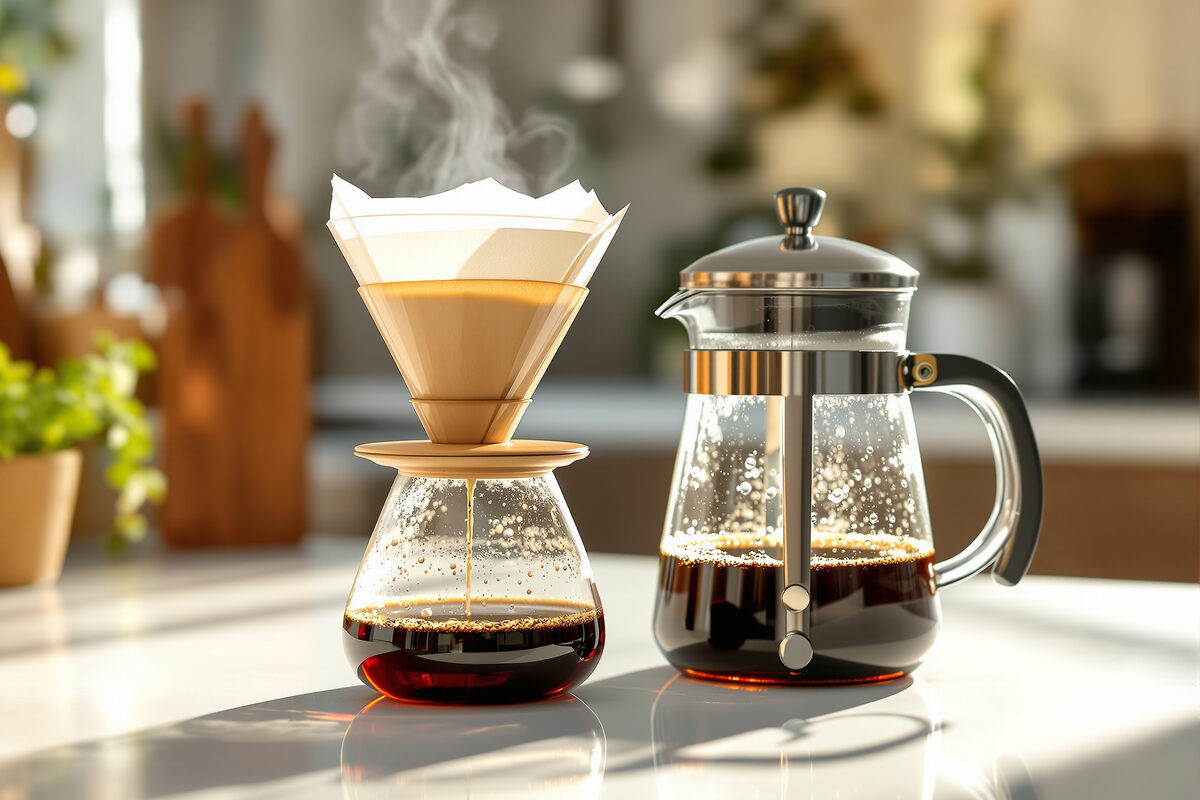
You do not have to give up coffee to cut the plastic out of it — you just move the hot water off single-use plastic. The biggest step is the pod: switch to a reusable stainless capsule, or brew with a plastic-free method such as a glass pour-over cone, a French press, or a stovetop moka pot, where the water never touches a throwaway plastic capsule at all.
A few more habits finish the job. Start with filtered water to remove the microplastics already in your tap before they ever reach the machine; descale your brewer on schedule so its internal parts last and shed less; and store ground coffee in glass rather than a plastic tub. For the machine itself, our guide to the best plastic-free coffee makers walks through glass and stainless brewers that keep plastic out of the hot path entirely.
The honest verdict
Do K-Cups have microplastics? Almost certainly some — most are #5 polypropylene, brewing forces hot, pressurized water through them, and the closest peer-reviewed evidence on polypropylene cups and plastic tea bags shows that exact combination sheds particles. What nobody can honestly give you yet is a particle count for a specific brewed pod, so beware anyone quoting a precise "trillions per cup" figure as if it were measured.
The reassuring half is just as real: today's K-Cups are BPA-free, polypropylene is a regulated food-contact plastic, and this is a long-term-exposure question, not an acute hazard. The practical takeaway is simple and cheap. The pod is the part you control — move the hottest water off single-use plastic with a reusable metal pod or a plastic-free brewer, filter your water, and you have removed the biggest, most avoidable source without giving up your morning cup.
Keep the convenience, lose the single-use plastic
A reusable stainless pod or a glass brewer keeps hot water off throwaway plastic — the picks we tested for what they are made of and how they brew.
Frequently Asked Questions
No study has counted the microplastics in a single brewed K-Cup, so no one can give you an exact number. But most K-Cups are made of #5 polypropylene plastic, and hot pressurized water is forced through them during brewing. Peer-reviewed research shows that same combination sheds plastic: a 2024 study found single-use polypropylene cups released 126 to 1,420 microplastic particles per liter of hot water, and a 2019 study found a single plastic tea bag released roughly 11.6 billion microplastic particles at brewing temperature. It is very likely K-Cups release microplastics too; the only honest gap is a published count specific to the pod.
Polypropylene (#5) is a food-contact plastic that regulators consider safe for its intended use, and Keurig removed BPA from its pods by the end of 2020, so the old BPA fear no longer applies to current K-Cups. The open question is the microplastics and other particles that hot-water contact can release, which no agency has set a limit on. K-Cups are not a proven acute hazard, but if you want to minimize plastic in a drink you have every day, a reusable metal pod or a plastic-free brewer is the more cautious choice.
A reusable pod made of stainless steel removes the single-use polypropylene capsule entirely, so the hot water contacts metal and a fine mesh instead of plastic you throw away after one brew. That eliminates the pod as a plastic source, cuts waste, and usually saves money per cup. It does not change the plastic parts inside the machine itself (the reservoir and tubing), so pairing a reusable metal pod with filtered water is the most complete fix for a Keurig owner who wants to keep the convenience.
No. BPA-free only means that one specific chemical, bisphenol A, is not used. It says nothing about whether the plastic sheds microplastic particles when hot water passes through it, and nothing about other additives or bisphenol substitutes. Keurig's switch to #5 polypropylene genuinely addressed the BPA concern, but "BPA-free" is a narrow claim, not a guarantee that a hot, pressurized brew pulls nothing out of the pod.
There is no head-to-head study, but the mechanism points that way. A K-Cup forces hot, pressurized water directly through a small plastic capsule, maximizing plastic-to-water contact at high temperature, while a glass or metal drip brewer keeps the water off plastic for most of the process. Coffee itself may carry some microplastics regardless of how it is brewed, so the pod and the machine's plastic parts are an added source on top, not the only one.
The biggest single step is to stop running hot water through a single-use plastic pod: switch to a reusable stainless steel pod, or brew with a plastic-free method such as a glass pour-over, a French press, or a stovetop moka pot. Start with filtered water to cut the microplastics already in tap water, descale your machine so the internal plastic parts last, and store ground coffee in glass rather than plastic. None of these require giving up coffee.
Sources
- Akbulut S, Akman PK, Tornuk F, Yetim H. "Microplastic Release from Single-Use Plastic Beverage Cups." Foods, 2024;13(10):1564, mdpi.com (full text at PMC11121293). Single-use cups released 126–1,420 microplastic particles per liter; polypropylene at 50°C released the most; pre-rinsing cut release 52–65%.
- Hernandez LM, Xu EG, Larsson HCE, Tahara R, Maisuria VB, Tufenkji N. "Plastic Teabags Release Billions of Microparticles and Nanoparticles into Tea." Environmental Science & Technology, 2019;53(21):12300–12310, doi.org/10.1021/acs.est.9b02540. One plastic tea bag released ~11.6 billion microplastic and ~3.1 billion nanoplastic particles at 95°C.
- Keurig Dr Pepper: K-Cup pods transitioned to #5 polypropylene and are made without BPA (manufacturer statement; change completed by the end of 2020).