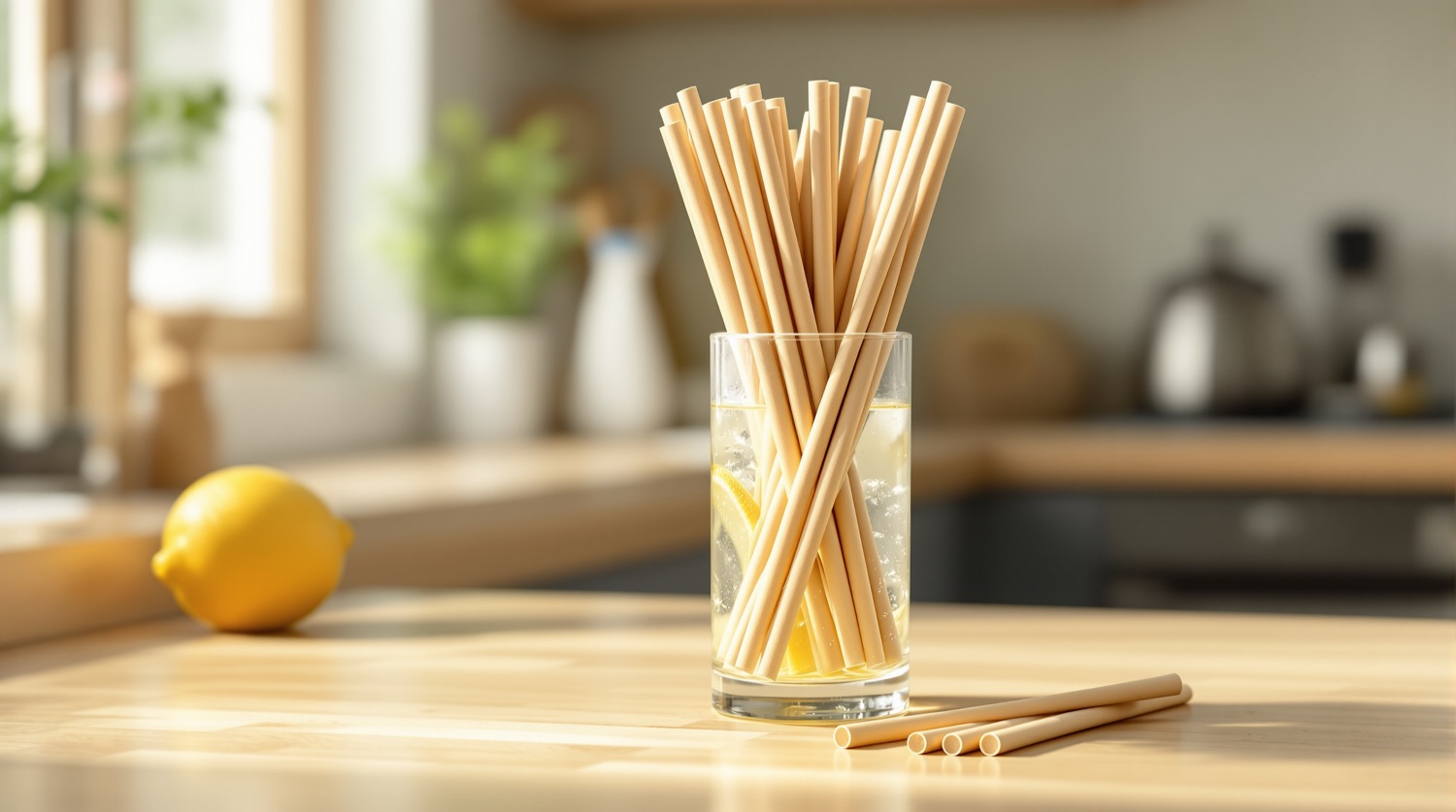
Most paper straws tested positive — 18 of 20 brands, or 90%. In the largest analysis of its kind, researchers at the University of Antwerp bought 39 brands of drinking straw from shops, supermarkets and fast-food outlets and screened them for PFAS, publishing the results in Food Additives & Contaminants: Part A in 2023. PFAS were detected in 27 of the 39 brands (69%), with 18 different PFAS compounds found in total — most commonly PFOA, banned globally since 2020. By material: paper 18/20 (90%), bamboo 4/5 (80%), plastic 3/4 (75%), glass 2/5 (40%), and stainless steel, in which no PFAS were detected in any brand. The researchers were careful to say the concentrations were low and that occasional straw use poses a limited risk on its own. The reason it still matters is that PFAS never break down and accumulate over a lifetime — and the fix costs about a dollar a straw, once.
The paper straw is the most visible environmental swap of the last decade. It is also the one people complain about most, and for a while the complaint was purely about texture: the thing goes limp halfway through a drink. Then in August 2023 a team of environmental scientists at the University of Antwerp published a study that gave the complaint a second, more uncomfortable dimension. They were not testing for sogginess. They were testing for per- and polyfluoroalkyl substances — PFAS, the industrial chemicals nicknamed “forever chemicals” because the carbon-fluorine bond that makes them so useful is also almost impossible to break.
What they found flipped the intuition. The material everyone had adopted because it seemed cleaner tested dirtier than the plastic it replaced. Below are the real numbers, the reason a paper straw needs a chemical coating at all, what the FDA changed in the US in 2024 and where that change stops, and the one straw material in the study that came back with nothing detected.
The bottom line up front: in the 2023 Antwerp study, 90% of paper straws and 80% of bamboo straws contained PFAS, while stainless steel was the only material with no detections at all. Swapping a disposable plastic straw for a disposable paper one trades a microplastics problem for a forever-chemicals one. A reusable steel or glass straw ends both, permanently, for a few dollars. For the full lineup see our guide to the best plastic-free straws and the head-to-head on silicone versus stainless steel straws. If PFAS in the kitchen is your concern generally, start with parchment paper and a certified PFAS water filter.
Do paper straws have PFAS?
Yes — in nine out of ten of the brands that have actually been tested. The study is “Assessment of poly- and perfluoroalkyl substances (PFAS) in commercially available drinking straws using targeted and suspect screening approaches,” by Boisacq, De Keuster, Prinsen, Joeng, Bervoets, Eens, Covaci, Willems and Groffen at the University of Antwerp, published in Food Additives & Contaminants: Part A, volume 40, issue 9, in 2023. The team bought 39 different brands of straw made from five materials — paper, bamboo, glass, plastic and stainless steel — from ordinary shops, supermarkets and fast-food chains, then screened each one for PFAS using both a targeted method (looking for a known list) and a suspect screening method (looking for anything else fluorinated that turned up).
The headline result: 27 of the 39 brands, 69%, contained PFAS, and 18 different PFAS compounds were identified across the set. The single most commonly detected compound was PFOA — perfluorooctanoic acid — a chemical that has been subject to a global ban since 2020, which tells you something about how long these substances linger in supply chains after they are outlawed. Short-chain compounds including trifluoroacetic acid (TFA) and trifluoromethanesulfonic acid (TFMS) also turned up. The breakdown by material is where the story is:
| Straw material | Brands tested | Brands with PFAS detected | Share |
|---|---|---|---|
| Paper | 20 | 18 | 90% |
| Bamboo | 5 | 4 | 80% |
| Plastic | 4 | 3 | 75% |
| Glass | 5 | 2 | 40% |
| Stainless steel | 5 | 0 | None detected |
| All materials | 39 | 27 | 69% |
Read that table the way a shopper would rather than the way a chemist would. The two materials marketed hardest as the sustainable choice — paper and bamboo — are the top two for PFAS. The two materials nobody markets as sustainable because they are simply reusable objects — glass and steel — are the bottom two. One of them is at zero.
Why would a paper straw contain forever chemicals?
Because paper, left alone, is terrible at being a straw. Wet cellulose collapses. Anyone who has watched a paper straw go soft in an iced coffee has watched the engineering problem in real time, and the industry's answer is to treat the fiber so it repels water for longer. PFAS are the chemistry the paper industry has used for decades to make fiber shrug off water and grease — the same family of coatings that went onto fast-food wrappers, microwave popcorn bags and takeout containers.
The Antwerp researchers were measured about intent, and it is worth quoting their reasoning rather than overstating it: the presence of the chemicals in almost every brand of paper straw means it is likely that, in some cases, PFAS were being used as a water-repellent coating. In other cases the contamination could have come in with recycled fiber or from elsewhere in manufacturing. Either way, the practical outcome for a person drinking through one is identical.
The bamboo result points the same way. Bamboo is a plant fiber too, marketed on the same natural credentials, and it came in at 4 of 5. Glass and steel need no coating to survive contact with a drink, because they are not absorbent in the first place — which is the entire reason they tested cleanest. The pattern is the same one behind the plastic lining inside paper cups: a paper vessel that holds liquid is almost never only paper.
Are paper straws worse than plastic straws?
On this one measure, yes: 90% of paper straws carried PFAS against 3 of 4 plastic straws, and the paper category was both the largest sample and the worst performer. But that framing sets up a false contest. Plastic straws have their own well-documented failure — they shed microplastics into the drink and break down into fragments that persist in the environment for centuries, which is why they were banned or phased out in the first place.
So the accurate conclusion is not “go back to plastic.” It is that replacing one single-use straw with a different single-use straw did not fix the underlying problem — it moved it. A disposable straw is an object designed to be manufactured cheaply, used for eleven minutes and discarded, and cheap manufacture is exactly where coatings and additives come from. The material that solves both is the one you wash and use again. That is the same logic behind every swap in our kitchen plastic detox guide, and it is why food packaging rather than food is usually the real source.
Which straw material is actually the safest?
Stainless steel, on the evidence available, followed by glass. Steel was the only one of the five materials in which no PFAS were detected in any brand tested, and unlike paper or bamboo it needs no treatment to survive a wet drink. Glass came second at 2 of 5 — not zero, but far below the plant-fiber materials, and glass straws are inert by nature, so a detection there is more likely to reflect processing or handling than a deliberate coating. Here is how the five stack up on the two things that actually matter in a drink:
| Material | PFAS in the 2023 study | Sheds microplastics? | Reusable | Honest trade-off |
|---|---|---|---|---|
| Stainless steel | None detected | No | Years | Conducts temperature — icy in cold drinks, hot in coffee |
| Glass (borosilicate) | 2 of 5 brands | No | Years | Breakable, and costs more than steel |
| Plastic (single-use) | 3 of 4 brands | Yes | No | Microplastics plus persistent litter |
| Bamboo | 4 of 5 brands | No | Limited | Plant fiber, so it absorbs and can hold flavors |
| Paper (single-use) | 18 of 20 brands | No | No | Worst PFAS rate of any material tested, and it still goes soggy |
Did the FDA ban PFAS in paper food packaging?
It did something narrower, and the distinction matters if you are standing in a store deciding what to believe. In February 2024 the FDA announced that grease-proofing substances containing PFAS are no longer being sold by manufacturers for food-contact use in the United States, completing a voluntary market phase-out the agency had negotiated with manufacturers starting in 2020. The FDA described the completion as eliminating the primary source of dietary exposure to PFAS from authorized food-contact uses — those were the coatings on fast-food wrappers, microwave popcorn bags and takeout paperboard. In January 2025 the agency went further and determined that 35 food-contact notifications covering PFAS grease-proofing agents on paper and paperboard are no longer effective.
That is real progress and worth saying clearly. Here is where it stops. It governs substances sold into the US market for that authorized purpose; it is not a chemical ban, it does not reach into every imported straw already sitting in a warehouse, and it addresses grease-proofing agents specifically rather than every route PFAS can take into a paper product, including recycled fiber. Several states went further with their own rules — California's AB 1200, in force since January 2023, bans plant-fiber food packaging containing intentionally added PFAS or 100 parts per million or more of total organic fluorine. The upshot for a shopper is simple: a US-made paper straw bought today is likelier to be clean than one from the 2023 study, and you still have no way of verifying it at the table.
How much PFAS do you actually get from one paper straw?
Not much, and the researchers said so themselves rather than letting the headlines run. Their stated conclusion was that the PFAS concentrations were low and, bearing in mind that most people tend to use straws only occasionally, they pose a limited risk to human health. We will not inflate that. One iced coffee through a paper straw is not a health event.
The reason it is still worth changing is the word “forever.” PFAS do not metabolize and do not degrade; they accumulate in blood and tissue over years, which is why regulators set limits at almost unimaginably small concentrations. In April 2024 the EPA finalized the first enforceable national drinking water limits for these chemicals: 4 parts per trillion for PFOA and PFOS, and 10 parts per trillion for PFHxS, PFNA and GenX. Four parts per trillion is roughly four drops in a thousand Olympic swimming pools. That is the scale at which a federal agency considers lifetime exposure worth regulating — and it is why the sensible response to a small, avoidable, repeated source is to remove it rather than to calculate it.
That logic applies far more to your water than to your straw. Drinking water is the steady daily channel, and it is the one you can genuinely control at home — see whether tap water is safe to drink and our guide to the best PFAS water filters. The straw is the cheap, one-time fix you can make this week.
The swaps that end the problem for good
Three reusable straws that skip the coating question entirely — two in the material that recorded no detections at all, and one in glass for anyone who dislikes metal against their teeth. Buy once, keep for years.
 Best Value
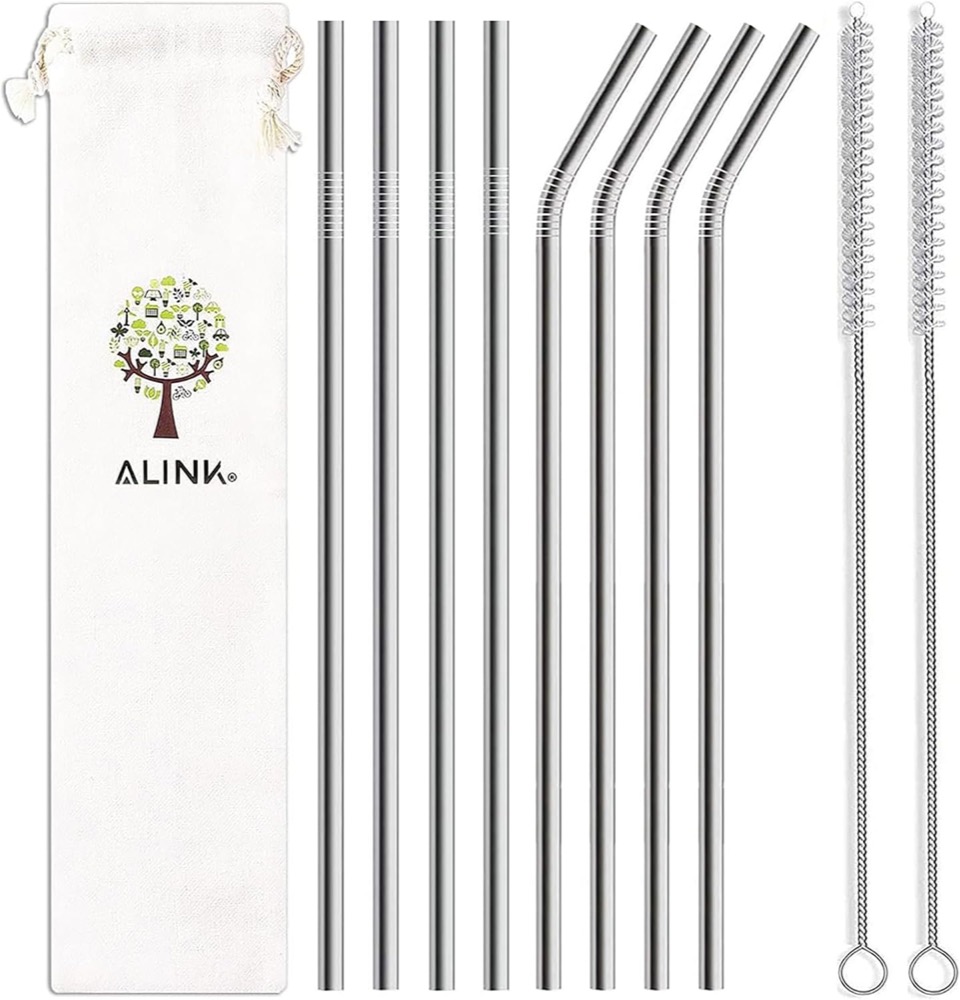
Buyers call these sturdy and are glad they add no taste of their own, unlike a softening paper straw; the steel wipes clean and survives the dishwasher. The honest downsides: bare steel transfers temperature, so the straws feel icy in cold drinks and hot in coffee; you need to run the included brush through them after smoothies or residue dries inside; and the firm cut ends are unforgiving against teeth.
Replace every disposable straw in the house in one purchase, in the only material the 2023 study found no PFAS in.
Why it's safe: Solid 18/8 stainless steel needs no water-repellent coating to survive a drink — there is no treatment layer, no plastic lining, and nothing to shed.
Check Today's Price on Amazon →Amazon prices change daily — tap to see today's price and any active discount.
- Free delivery & returns for Prime members
- Thousands of verified reviews
- Dishwasher safe, cleaning brushes included
 Premium Build
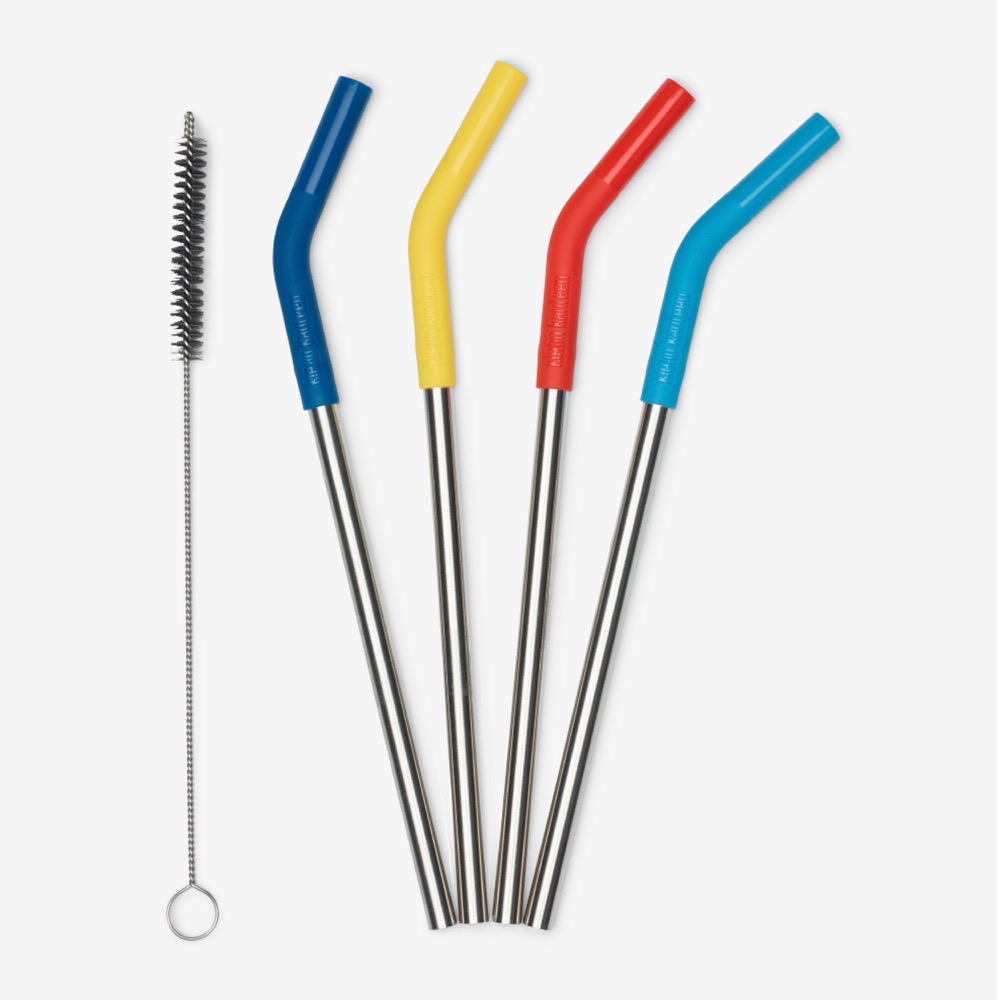
The silicone flex tip is what owners single out — several say they had hit their teeth on solid metal straws before and were afraid of chipping one, and the soft tip solved it. The honest gripes: some buyers find the cut steel edges sharp enough to nick the silicone sleeves; the cleaning brush fits very tightly; and replacement tips are not sold separately.
Steel where it counts, silicone where it touches your mouth — the comfortable version of the material that tested clean.
Why it's safe: 18/8 stainless steel body with food-grade silicone tips. No plastic, no PFAS coating, nothing applied to make it survive a drink.
Check Today's Price on Amazon →Amazon prices change daily — tap to see today's price and any active discount.
- Free delivery & returns for Prime members
- Certified B Corp brand
- Removable silicone flex tips
 Best Taste Purity
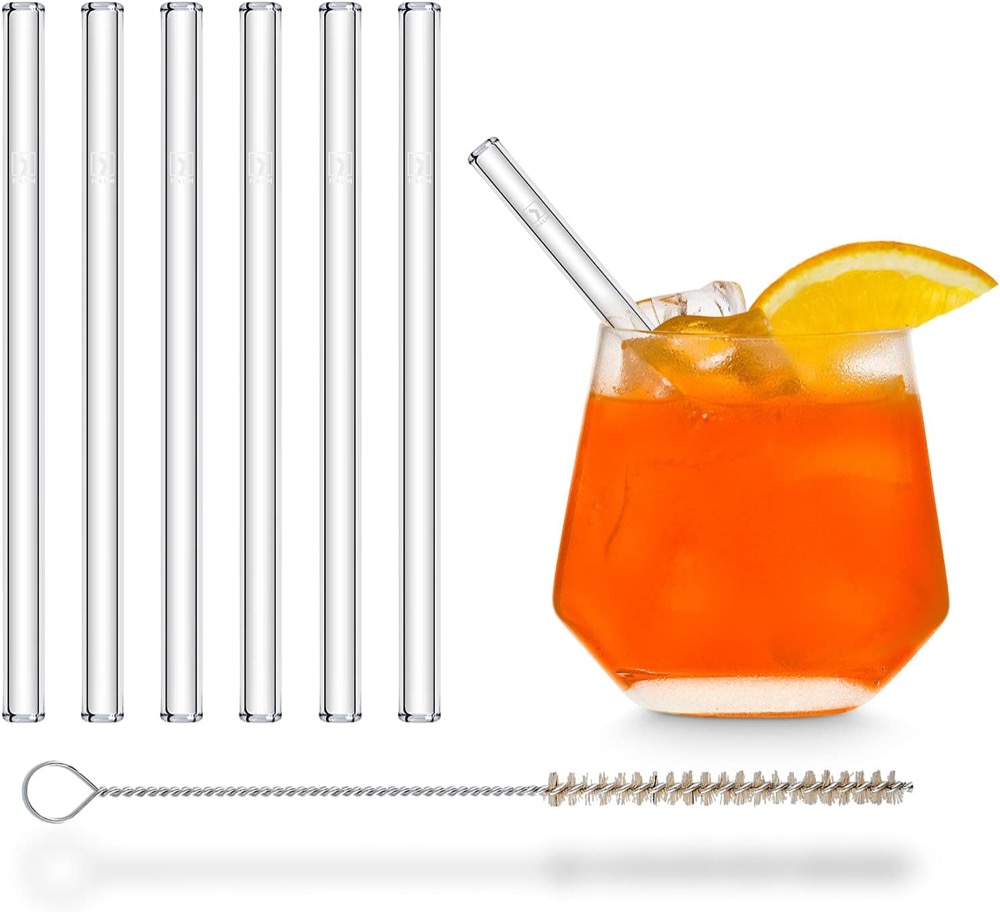
Owners choose HALM for taste above all — the borosilicate glass is taste-neutral, so coffee tastes like coffee with none of the metallic edge of a steel straw, and several report straws surviving falls onto tile without chipping. The honest downsides: it is still glass and not unbreakable, a few buyers report one shattering early, and the German-made set costs noticeably more than steel.
Inert glass that adds no taste and no coating — and shows you when it needs cleaning, which no paper straw ever did.
Why it's safe: Borosilicate glass is chemically inert and non-absorbent, so it needs no water-repellent treatment and has nothing to migrate into a drink.
Check Today's Price on Amazon →Amazon prices change daily — tap to see today's price and any active discount.
- Free delivery & returns for Prime members
- Made in Germany, cleaning brush included
- Dishwasher safe borosilicate glass
If you want the wider comparison — including silicone, bamboo and collapsible travel straws — our guide to the best plastic-free straws ranks the full field, and silicone versus stainless steel straws settles the one question parents ask most.
Want the Full Home Protection Guide?
A coated straw is one plastic touchpoint among dozens in a typical kitchen. The Complete Plasticproof Guide covers every room — kitchen, nursery, bathroom, bedroom — with 80+ product recommendations backed by 47+ studies.
The honest verdict
Do paper straws have PFAS? In the only large test we have, 18 of 20 brands did — the worst rate of any of the five materials examined, above bamboo at 4 of 5, plastic at 3 of 4 and glass at 2 of 5, while stainless steel recorded no detections at all. Eighteen distinct PFAS compounds showed up across 39 brands, led by PFOA, a chemical banned worldwide since 2020. That is not a scare statistic; it is a straightforward measurement of the thing marketed to us as the responsible choice.
Two honest qualifications belong here. The first is the researchers' own: the concentrations were low and occasional straw use poses a limited risk on its own, so nobody needs to feel alarmed about an iced coffee. The second is that the study was conducted in Belgium in 2023, and the US market has since moved — the FDA's grease-proofing phase-out completed in February 2024, and several states now cap total organic fluorine in plant-fiber food packaging. A paper straw bought in the US today is likelier to be clean than one in that sample.
But you cannot check, and you do not have to. The whole question disappears the moment the straw stops being disposable. A steel or glass straw needs no water-repellent treatment because it is not absorbent, costs a few dollars once, and lasts years — which also happens to be the environmental outcome the paper straw was reaching for in the first place. Then spend the attention you were giving the straw on the source that actually runs all day: the water you drink.
The bigger PFAS source is your tap
A straw is an occasional exposure. Drinking water is a daily one — and it is the one you can genuinely make cleaner at home with a certified filter.
Frequently Asked Questions
Most of the ones tested did. University of Antwerp researchers analyzed 39 brands of drinking straw and published the results in Food Additives & Contaminants: Part A in 2023. PFAS were detected in 18 of the 20 paper straw brands — 90% — and in 27 of the 39 brands overall. Eighteen different PFAS compounds were found across the sample, most commonly PFOA, which has been banned globally since 2020. Stainless steel was the only material in which no PFAS were detected in any brand.
Because bare paper goes soggy in a drink within minutes, so paper straws are given a water-repellent treatment to hold their shape. PFAS are the chemistry the paper industry has long used to make fiber resist water and grease. The Antwerp researchers concluded that finding PFAS in almost every brand of paper straw meant the chemicals were, in some cases, likely being used as a water-repellent coating rather than arriving purely as contamination from recycled fiber.
Stainless steel. In the 2023 Antwerp study it was the only one of the five materials tested — paper, bamboo, glass, plastic and stainless steel — in which no PFAS were detected in a single brand. Steel is a solid metal that needs no water-repellent coating to survive a drink, so there is nothing to apply and nothing to shed. Glass came second, with PFAS found in 2 of 5 brands.
On PFAS, paper tested worse: 90% of paper straws contained PFAS versus 3 of 4 plastic straws. Plastic straws bring their own problem — they shed microplastics into the drink and into the environment — so neither disposable option is clean. The honest conclusion is that swapping one single-use straw for another single-use straw does not solve anything. A reusable stainless steel or glass straw removes both issues at once.
Not a ban — a voluntary phase-out that is now complete. In February 2024 the FDA announced that grease-proofing substances containing PFAS are no longer being sold by manufacturers for food-contact use in the United States, which it described as eliminating the primary source of dietary PFAS exposure from authorized food-contact uses. In January 2025 it determined that 35 related food-contact notifications are no longer effective. That covers substances sold into the US market for this purpose; it does not retroactively test every imported straw already on a shelf.
A small amount. The Antwerp researchers stated plainly that the concentrations were low and that, since most people use straws only occasionally, they pose a limited risk to human health. The reason to care anyway is that PFAS do not break down and accumulate in the body over years, which is why the EPA set enforceable drinking water limits of 4 parts per trillion for PFOA and PFOS in 2024. One straw is not an emergency; a coated straw in every drink, every day, is an avoidable source.
Sources
- Boisacq P, De Keuster M, Prinsen E, Joeng Y, Bervoets L, Eens M, Covaci A, Willems T, Groffen T. “Assessment of poly- and perfluoroalkyl substances (PFAS) in commercially available drinking straws using targeted and suspect screening approaches.” Food Additives & Contaminants: Part A, 2023;40(9). (Tested 39 brands across paper, bamboo, glass, plastic and stainless steel; PFAS in 27 of 39 brands overall, 18 of 20 paper straws, and none detected in stainless steel.)
- DOI record for the same study, University of Antwerp, 2023. (Eighteen different PFAS identified in total, most commonly PFOA; the authors note the concentrations were low and that occasional straw use poses a limited risk on its own.)
- US Food and Drug Administration. “FDA Announces PFAS Used in Grease-Proofing Agents for Food Packaging No Longer Being Sold in the US.” February 2024. (Completion of the voluntary market phase-out of PFAS grease-proofing substances on paper and paperboard food packaging, which the agency describes as eliminating the primary source of dietary PFAS exposure from authorized food-contact uses.)
- US Environmental Protection Agency. “Per- and Polyfluoroalkyl Substances (PFAS) in Drinking Water.” (The April 2024 national primary drinking water regulation sets enforceable limits of 4 parts per trillion for PFOA and PFOS and 10 parts per trillion for PFHxS, PFNA and HFPO-DA — the scale at which lifetime PFAS exposure is considered worth regulating.)