
Open almost any American refrigerator and you will find the same two materials holding last night's dinner: rigid clear plastic, and something soft and rubbery sold as food-grade silicone. They look like variations on one idea. Chemically they are not related at all, and the peer-reviewed measurements of what each one puts into your food are not even in the same units — plastic is counted in particles, silicone in micrograms of dissolved compound. That difference is the whole story.
Conventional food containers are polypropylene (recycling code 5) or polyethylene (codes 2 and 4): long chains of carbon atoms. Heat, acid and time break those chains into fragments, and the fragments are microplastics and nanoplastics. Silicone is a polysiloxane — a backbone of alternating silicon and oxygen atoms, closer in chemistry to sand than to a plastic bag. It does not fragment into microplastics. What it does instead is release small ring-shaped molecules called cyclic siloxanes, labeled D4 through D25 by the number of silicon atoms in the ring, and how much it releases depends on one manufacturing step most shoppers have never heard of.
Bottom line: Use silicone anywhere the food will be warm, sealed or squeezed — the measured microplastic release from heated plastic is orders of magnitude worse than anything silicone does. Use glass or stainless steel for anything you will actually cook, reheat or store in oil, because it is the only option with no measured migration at all. And stop microwaving plastic entirely, including containers stamped microwave-safe: that label describes the container's survival, not yours.
Which Leaches Less — Silicone or Plastic?
Silicone, by a wide margin, under every condition that involves heat. The clearest evidence comes from the 2023 study by Kazi Albab Hussain and colleagues at the University of Nebraska–Lincoln, published in Environmental Science & Technology. They took ordinary polypropylene baby food containers and a polyethylene reusable pouch — all FDA-approved, all sold as safe — and measured what they shed into water and into 3% acetic acid, a stand-in for acidic foods like tomato sauce. Microwave heating produced the worst result of any scenario tested: as many as 4.22 million microplastic and 2.11 billion nanoplastic particles from one square centimeter of plastic surface in three minutes. Six months of plain refrigeration or room-temperature storage released millions to billions of particles as well.
The team then modeled what that means for a person. The highest estimated daily intake was 20.3 nanograms per kilogram of body weight per day for infants drinking microwaved water, and 22.1 ng/kg/day for toddlers eating microwaved dairy out of polypropylene. In a companion laboratory test, the extracted particles killed roughly 77% of cultured human embryonic kidney cells at the highest dose tested, after 48 and 72 hours of exposure. That last figure is a cell-culture result at a concentration far above ordinary dietary exposure — it is a signal that these particles are biologically active, not a prediction about your kidneys, and we would rather say so than dress it up.
Silicone has no equivalent number because it does not produce that kind of particle. Its measured exposure is chemical migration, and it is real but far smaller in magnitude — the next section puts an actual figure on it.
Head-to-Head: Silicone vs Plastic
What each material is, and what peer-reviewed testing has measured coming out of it — at a glance.
| Feature | Food-Grade Silicone | Plastic (PP / PE / PET) |
|---|---|---|
| Backbone chemistry | Silicon–oxygen (polysiloxane) | Carbon chains (polyolefin / polyester) |
| Sheds microplastics | No — not a carbon-chain polymer | Yes — up to 4.22M particles/cm² in 3 min microwaved (2023) |
| What it does release | Cyclic siloxanes D4–D25 — avg 105 µg/g into baked food simulant | Micro- and nanoplastic particles, plus additives |
| Microwave | Tolerates it, but heat drives siloxane migration | The single worst-case scenario tested |
| Oven / high heat | Rated to roughly 220°C (428°F) | Warps or melts |
| Freezer and cold storage | Stays flexible, minimal migration | Brittle; still sheds particles over months |
| Fatty foods | Fat pulls siloxanes out fastest | Fat and acid both accelerate release |
| What quality depends on | Platinum cure + a proper post-cure bake | Resin grade and additive package — rarely disclosed |
| Gets better with use | Migratable siloxanes deplete over cycles | Worse — wear and scratches increase shedding |
| The option that beats both | Glass or stainless steel — no measured particle shedding, no siloxane migration, lasts decades | |
Does Silicone Leach Chemicals Into Food?
It does, in measurable amounts, and the honest version of this answer is more useful than either the marketing or the panic. In August 2025, researchers at Health Canada's Environmental Health Science and Research Bureau — Jiping Zhu, Jianjun Niu and colleagues — published the most thorough assessment yet in the Journal of Hazardous Materials. They bought 25 silicone bakeware products off the Canadian market and measured what came out of them during 60-minute bakes at 177°C. Total cyclic siloxanes D4 through D16 in the material itself ranged from 680 to 4,300 micrograms per gram. The average concentration migrating into the food simulant was 105 µg/g, and one-hour indoor air concentrations during baking reached 646 µg/m³ before falling rapidly once the oven was off. As with the plastic study, young children came out highest on a per-body-weight basis.
Two findings from that paper are genuinely reassuring, and they are the ones the scary headlines dropped. Migration declined steadily with repeated baking — the migratable siloxanes deplete, so an old silicone mold is cleaner than a new one, which is the exact opposite of how a scratched plastic container behaves. And migration tracked bakeware type, surface area and fat content, meaning the exposure is controllable by how you use the item.
The other half of the picture is manufacturing quality, and here the numbers are dramatic. A 2025 study by Eckardt, Seidel, Säger and Simat in Food Additives & Contaminants: Part A measured siloxane migration into real shortcrust pastry and found 153 mg/kg from a mold that had not been post-cured, against 9.5 mg/kg from a post-cured one on the first bake — roughly a sixteen-fold difference from a single manufacturing step. The post-cure is a several-hour bake at high temperature that drives the small siloxanes out at the factory instead of into your dinner. Skipping it is how a $6 muffin mold gets to be $6. The same paper found that the heaviest oligomers, above D20, migrate largely regardless of post-curing, and that total migration reached 167 mg/kg by the third baking cycle in one case — above the European Union's 60 mg/kg overall migration limit for food-contact materials.
For context on the regulatory floor: in the United States, silicone used for repeated food contact is governed by 21 CFR 177.2600, which caps total extractives at 20 mg per square inch in water over the first seven hours of testing, and 175 mg per square inch in n-hexane for fatty-food contact. Those are limits on the article, not a statement that nothing comes out.
Is It Safe to Microwave Plastic Labeled Microwave-Safe?
The label is a durability claim, not a health claim — it means the container will not warp, melt or crack at microwave temperatures. Every container in the Nebraska study was an FDA-approved product sold for feeding babies, and microwaving them was still the single worst release scenario the researchers tested. Two habits do most of the work here: move food into a glass or ceramic dish before heating it, and never let hot food cool in a plastic container. The second one matters more than people expect, because contact time at temperature is what drives migration.
Plastic has a second problem silicone does not have at all: the additives. In 2024, Megan Liu and co-authors screened 203 black plastic household items — kitchen utensils, food containers, toys — and published the results in Chemosphere. They found nine brominated flame retardants contaminating consumer products, at concentrations reaching 2.3% by weight, with 11,900 parts per million of the banned flame retardant decaBDE in one black plastic sushi tray — strong evidence that recycled electronic waste is entering food-contact plastic. In fairness to the record, that paper has since carried published corrections to part of its exposure arithmetic; the measured contamination findings stand, the daily-dose comparison drawn from them does not. If you own black plastic utensils, our full breakdown of that study covers what to do about it.
Where Each Material Actually Belongs
The useful conclusion is not "silicone good, plastic bad." It is that these three materials each have a job, and most kitchens have them in the wrong places.
Reach for silicone when:
- You need a flexible, sealing, squeezable, or freezer-to-oven item
- You are replacing zip-top plastic bags or plastic wrap
- The food is cold, low-fat, or briefly warmed
- The item is platinum-cured and states LFGB or FDA food-grade testing
Reach for glass or steel when:
- You will microwave, bake, or reheat the food in it
- The food is oily, fatty, or acidic and will sit for days
- You want one container that never degrades at all
- You are storing anything for a baby or a small child
For the wider field, our ranked guide to the best glass food storage containers covers the plastic-free option in depth, our head-to-head on glass vs. plastic food storage containers weighs the two materials directly, and the best silicone food storage bags ranks the flexible ones. If reheating is the habit you want to fix first, is it safe to microwave Tupperware answers the specific question, and 7 kitchen mistakes that put microplastics in your food covers the rest of the room.
The Four Worth Buying
Two silicone picks for the jobs glass cannot do, and two glass picks for everything you will actually heat.
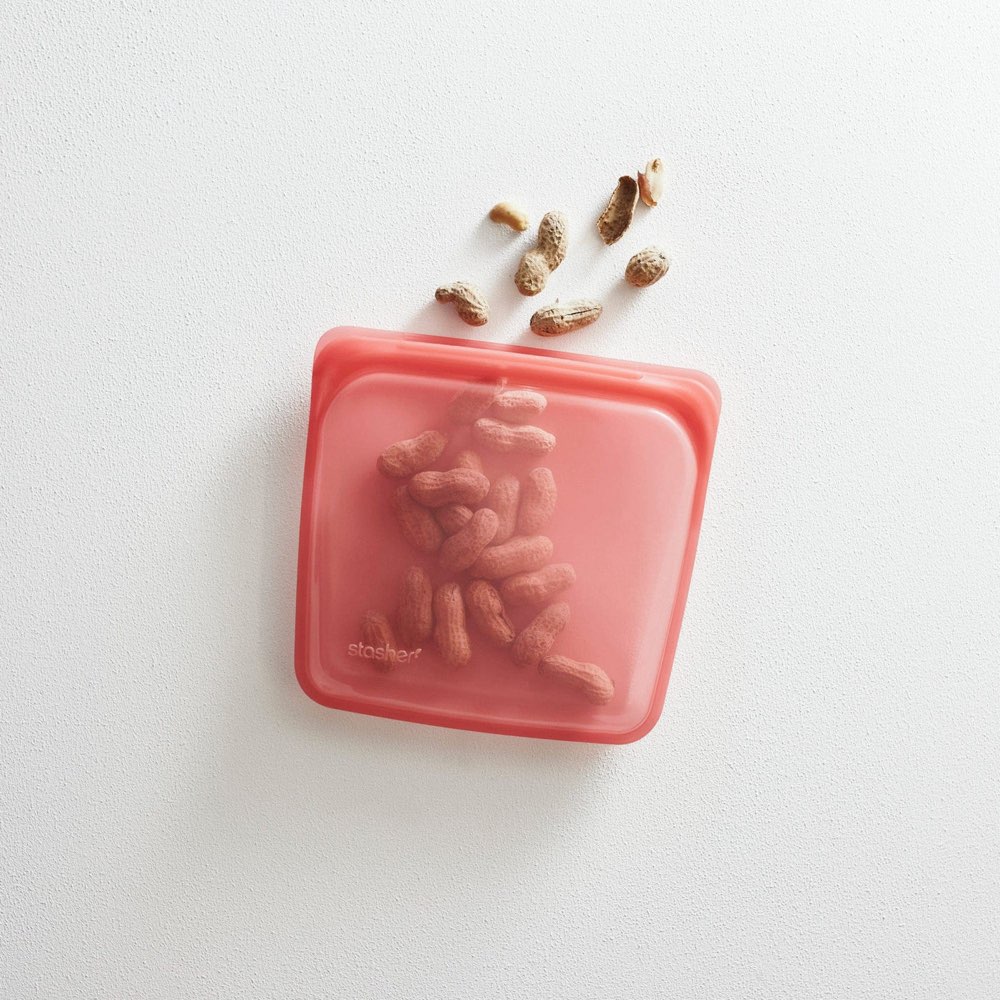 Best Plastic-Bag Replacement
The reason a one-piece design matters is structural: a plastic zip-top bag has a polyethylene film and a rigid plastic slider, and both wear. Stasher is a single molded piece of platinum-cured silicone, which is the higher-purity cure that leaves no peroxide residue. Keep it for cold and room-temperature food and it sits at the low end of the migration range entirely; use it for oven work occasionally rather than daily.
Pros
- Directly replaces the worst-performing material in the study
- Platinum-cured, one piece, no plastic slider to wear
- Migration falls with repeated use rather than rising
Cons
- Costs many times what a box of disposable bags costs
- Fatty foods pull siloxanes out fastest — keep oil in glass
- Takes real effort to dry properly after washing
Retire the plastic bag that your lunch sits in all morning, for good.
Why it's the safer chemistry: Silicone's silicon–oxygen backbone cannot fragment into the micro- and nanoplastics that carbon-chain polyethylene produces.
Check Today's Price on Amazon →Amazon prices change daily — tap to see today's price and any current discount.
- Free delivery for Prime members
- Tens of thousands of verified reviews
- Easy 30-day returns
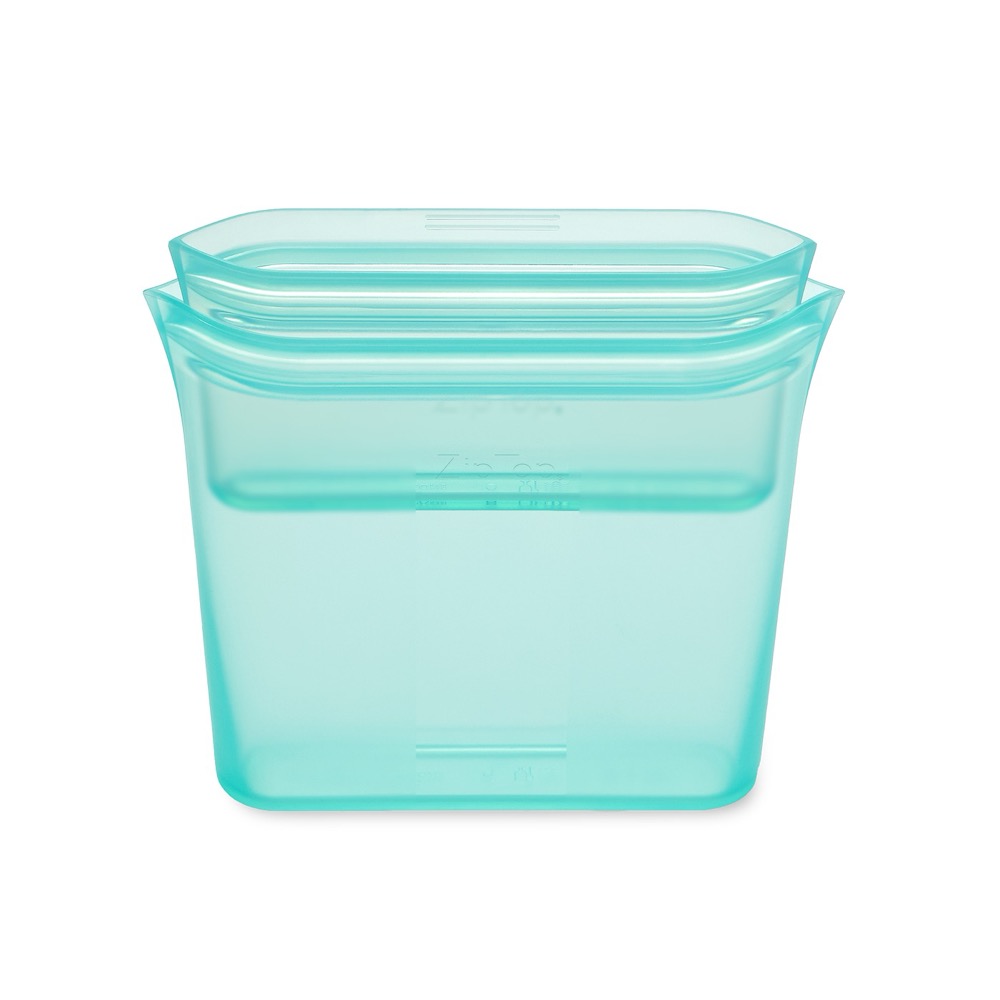 Best for Leftovers
Usability decides whether a swap actually sticks. A bag that collapses gets abandoned within a month and the plastic containers come back out of the cupboard. Zip Top's shape is the whole point — and because the closure is silicone pressed against silicone, there is no rigid plastic component in the food path.
Pros
- Stands open, so it gets used instead of abandoned
- No plastic zipper or slider anywhere on the item
- Freezer, dishwasher and microwave tolerant
Cons
- Bulkier in a drawer than a flat bag
- Seal is splash-resistant, not fully liquid-tight when tipped
- Same fat-and-heat caution as all silicone
A reusable container your household will actually keep using.
Why it's the safer chemistry: Nothing in the food path is a carbon-chain plastic — not the body, not the closure.
Check Today's Price on Amazon →Amazon prices change daily — tap to see today's price and any current discount.
- Free delivery for Prime members
- Thousands of verified reviews
- Easy 30-day returns
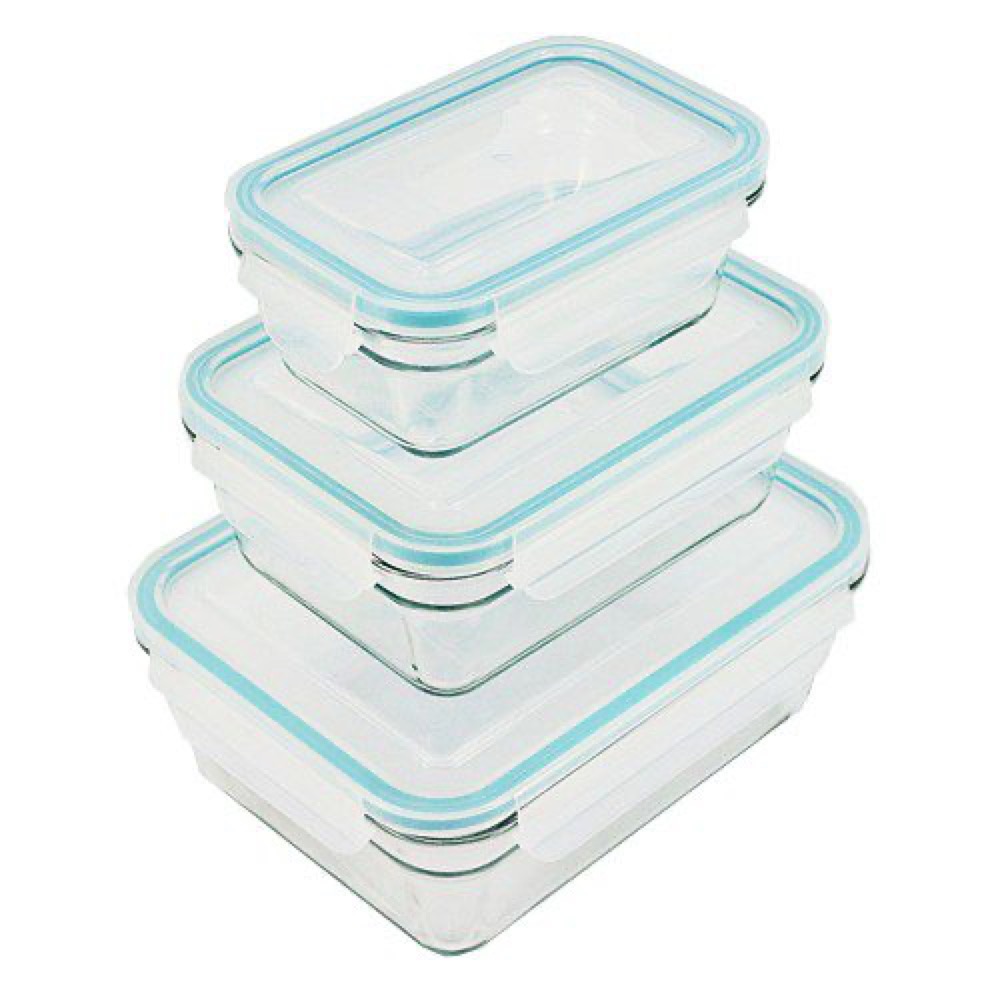 Best Overall
Everything above is a comparison between two materials that both release something. Glass releases nothing measurable, tolerates the oven, and does not stain, warp or hold last week's curry. The lid is still plastic, which is the honest caveat on every glass container sold — so keep food below the lid line and do not put the lid in the oven. That single constraint is far easier to live with than avoiding heat altogether.
Pros
- No measured microplastic or siloxane migration into food
- Oven-safe, so reheating never touches a polymer
- Will not stain, warp, or absorb odors, ever
Cons
- Heavy, and it breaks if dropped
- Lid is plastic with a silicone gasket — keep food below the rim
- Not for a child's lunchbox
Remove the largest measured microplastic source in a normal kitchen in one purchase.
Why it's the safer chemistry: Glass is chemically inert at cooking temperatures. There is no polymer in the food contact surface to fragment or migrate.
Check Today's Price on Amazon →Amazon prices change daily — tap to see today's price and any current discount.
- Free delivery for Prime members
- Thousands of verified reviews
- Easy 30-day returns
 Best Value Glass
Simply Store is the unglamorous option and it does the one thing that matters: it takes the reheat out of plastic. The bowls nest, they go in the oven without the lid, and replacements are available in any supermarket. As with all glass, the lid is plastic — treat it as a cold-storage cover, never as something that goes into heat. For covering bowls and wrapping leftovers with no plastic at all, beeswax and other non-toxic food wraps are a simple swap for cling film.
Pros
- Cheapest credible route out of plastic reheating
- Nests compactly, unlike most glass sets
- Widely available, easy to replace one piece
Cons
- Plastic lids are the weak point and wear out first
- Not leak-proof for a commute
- Avoid sudden temperature swings with any glass
The cheapest way to stop reheating food in plastic.
Why it's the safer chemistry: The food sits on inert glass. Nothing in contact with hot food is a polymer that can shed particles into it.
Check Today's Price on Amazon →Amazon prices change daily — tap to see today's price and any current discount.
- Free delivery for Prime members
- Hundreds of thousands of reviews
- Easy 30-day returns
How to Buy Silicone That Actually Tests Clean
Because post-curing accounts for a sixteen-fold difference in measured migration, the manufacturing details are the buying criteria — not the color, not the brand story. Look for the words platinum-cured (the higher-purity cure, leaving no peroxide residue) and a stated LFGB test, the German food-contact standard that is stricter than the FDA baseline on sensory and migration testing. Then apply two tests at home: unwrap the item and smell it, because a persistent rubbery odor is the signature of a part that was not properly post-cured, and twist a thick section — a white streak indicates plastic filler blended into the silicone, which is not what you paid for.
After that, it is about use. Keep oil and fat in glass; fat content was one of the three factors Health Canada found driving migration. Reserve silicone bakeware for occasional baking rather than daily high-heat work. And take the one piece of good news the studies actually offer: silicone gets cleaner with use as the migratable siloxanes deplete, which is the reverse of a plastic container, where every scratch and every heat cycle makes the shedding worse.
Frequently Asked Questions
Is silicone safer than plastic for food storage?
For anything warm, yes, and the gap is large. The 2023 Environmental Science & Technology study measured up to 4.22 million microplastic and 2.11 billion nanoplastic particles from a single square centimeter of polypropylene after three minutes of microwaving. Silicone does not shed those particles because its backbone is silicon and oxygen, not carbon. What it releases instead is cyclic siloxanes — an average of 105 µg per gram of food simulant in Health Canada's bakeware testing. Neither is inert; silicone is the better of the two, and glass beats both.
Does silicone leach chemicals into food?
Yes, in measurable amounts, and how much depends almost entirely on whether the maker post-cured the part. The 2025 Food Additives & Contaminants paper measured 153 mg/kg migrating into shortcrust pastry from a non-post-cured mold versus 9.5 mg/kg from a post-cured one. Fat and heat drive migration; cold storage of low-fat food releases very little. Repeated use depletes the migratable siloxanes, so a well-made silicone item releases less over time, not more.
Is it safe to microwave plastic containers labeled microwave-safe?
That label describes the container, not your food — it means the plastic will not warp or melt. The containers in the Nebraska study were FDA-approved baby food containers and they still released millions of microplastic and billions of nanoplastic particles per square centimeter in three minutes. Move food to a glass or ceramic dish before heating it. That one habit removes the largest measured microplastic source in an ordinary kitchen.
What is the difference between platinum-cured and peroxide-cured silicone?
They are two ways of hardening the same base polymer, and they leave different residues behind. Platinum cure leaves no peroxide byproducts and gives a higher-purity part; peroxide cure is cheaper and leaves residues that cause the faint rubbery smell some silicone has out of the box. The post-cure bake matters at least as much, because that is the step that drives off the small migratable siloxanes. Buy items stating platinum-cured or LFGB-tested silicone, and treat a persistent rubbery odor as a warning.
Do silicone bags release microplastics?
Not in the way a plastic container does. Microplastics are fragments of carbon-backbone polymers such as polypropylene, polyethylene and PET. Silicone's backbone is alternating silicon and oxygen, which is why studies on silicone report siloxane migration in micrograms per gram rather than particle counts. That is a different exposure with different toxicology, not a smaller version of the same one — which is why silicone deserves an honest read rather than a clean bill of health.
What is the safest food storage container overall?
Glass or stainless steel. Glass has no measured migration of microplastics or siloxanes into food, goes from freezer to oven, and lasts indefinitely; the drawbacks are weight, breakability, and the plastic lid nearly every glass container still ships with, so keep food below the lid line. The practical kitchen answer is a split: glass for anything heated or stored in oil, silicone for the flexible and sealed jobs glass cannot do, and plastic for nothing that will ever be warm.
Sources
- Hussain KA, Romanova S, Okur I, Zhang D, Kuebler J, Huang X, Wang B, Fernandez-Ballester L, Lu Y, Schubert M, Li Y. Assessing the Release of Microplastics and Nanoplastics from Plastic Containers and Reusable Food Pouches: Implications for Human Health. Environmental Science & Technology. 2023;57(26):9782–9792. doi:10.1021/acs.est.3c01942 (PubMed PMID 37343248)
- University of Nebraska–Lincoln. Nebraska study finds billions of nanoplastics released when microwaving containers. news.unl.edu
- Zhu J, Wawrzynczak A, Niu J, Chan WY, Vivas M, Das D, Tourangeau J, Zhang G, Cao XL, Feng YL. Silicone bakeware as a source of human exposure to cyclic siloxanes via inhalation and baked food consumption. Journal of Hazardous Materials. 2025;497:139591. doi:10.1016/j.jhazmat.2025.139591
- Eckardt M, Seidel B, Säger J, Simat TJ. Migration of cyclic dimethyl siloxanes from silicone elastomers into food — determination of D4 to D25 via on-line coupled HPLC-GC-FID. Food Additives & Contaminants: Part A. 2025;42(12):1764–1782. doi:10.1080/19440049.2025.2575928
- Liu M, et al. From e-waste to living space: Flame retardants contaminating household items add to concern about plastic recycling. Chemosphere. 2024;365:143319. PubMed PMID 39271080. (This paper carries published corrections to part of its exposure calculations; the measured contamination findings stand.)
- US Food and Drug Administration. 21 CFR 177.2600 — Rubber articles intended for repeated use. ecfr.gov